Backpacking Tents
Best Solo Backpacking Tent: Three Four-Season Options Compared
Three single-pole one-person tents compared on weight, waterproofing, interior space, vestibules and ventilation, with clear buying advice for winter and summer trips.
Introduction
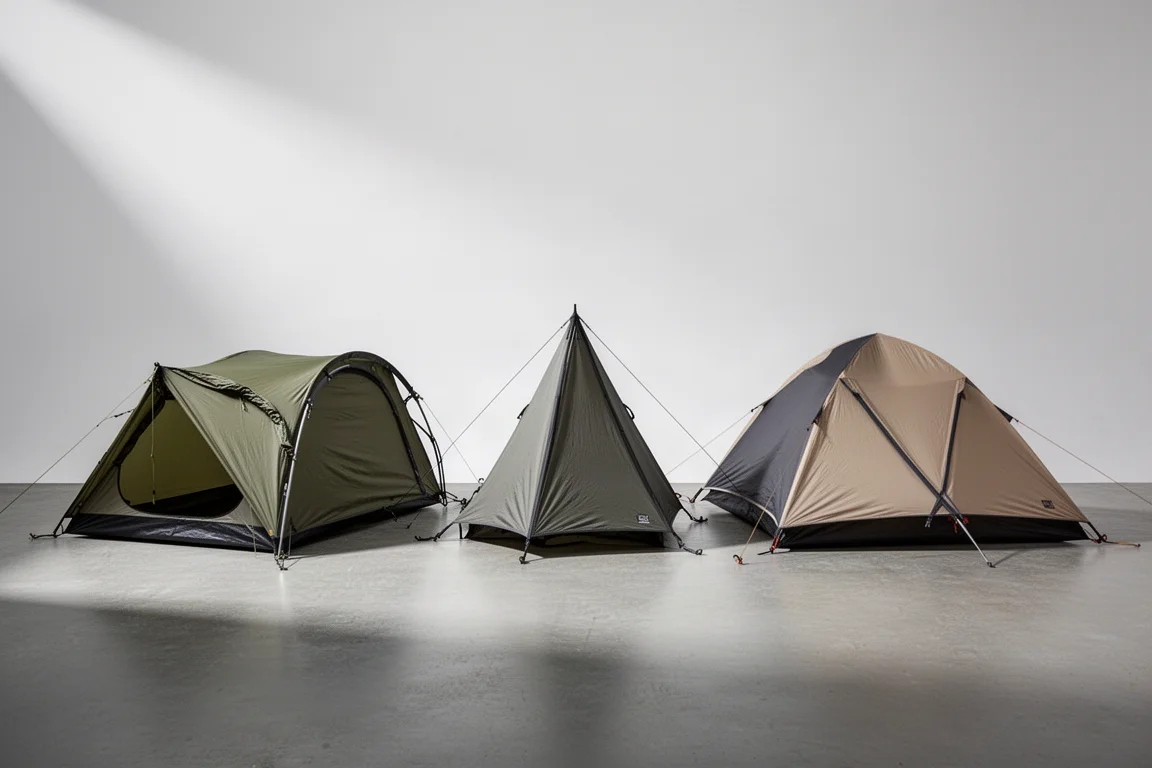
Choosing a solo backpacking tent usually comes down to a handful of trade-offs: how much it weighs, how much weather it can handle, and how much room you actually get once you are inside. This guide looks at three one-person, single-pole, four-season tents that sit at the top of that conversation: the Hilleberg Akto, the Terra Nova Laser Compact AS, and the Tarptent Scarp 1.
All three are genuine backpacking tents rather than general camping tents. Each uses a single central pole, each is light enough to carry on multi-day routes, and each is built to handle wind and rain rather than fair-weather weekends only. That shared foundation makes the differences between them far more interesting than the similarities.
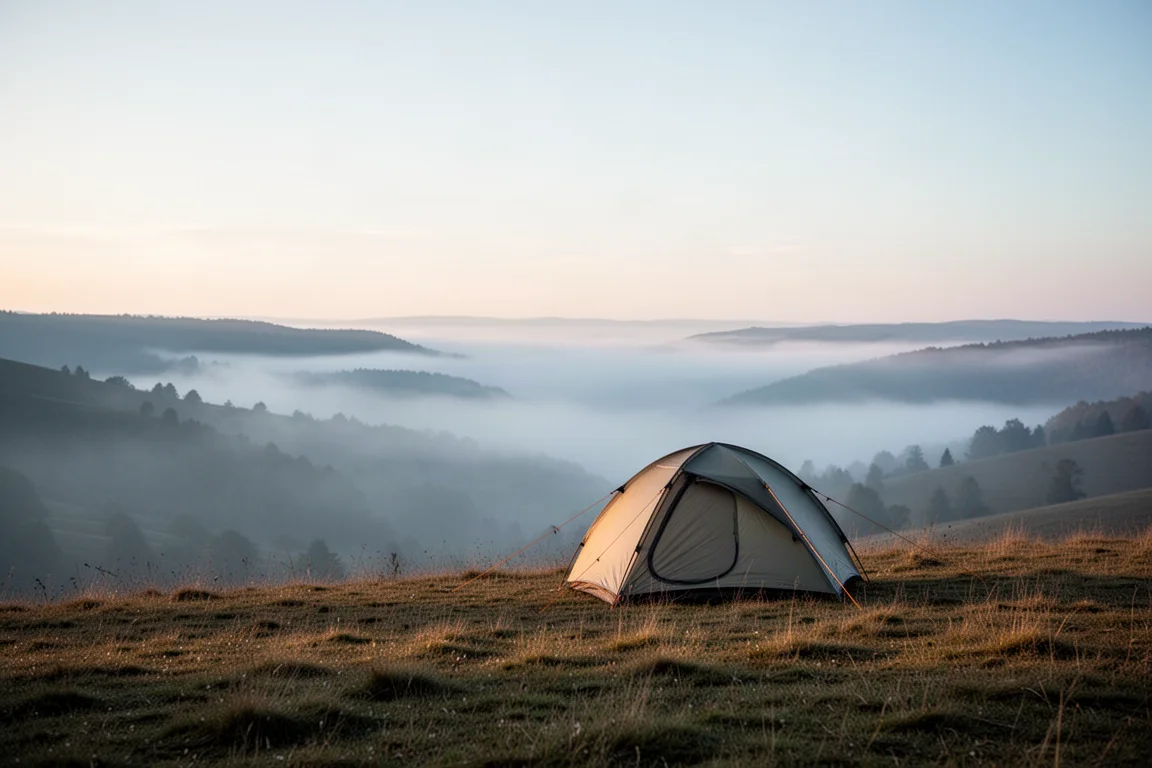
The three tents are much closer in weight than they are in design. Between them you get the largest single vestibule, the smallest packed size, and the only two-door, two-vestibule layout in this group, and each of those choices changes how the tent feels on a real trip. The sections below walk through the details product by product, then pull everything together into practical buying advice.
What Separates a Good Four-Season Solo Tent
Five things decide whether a solo tent earns a place in your pack: fabric and fixings quality, weight and packed size, waterproofing, interior space and vestibule area, and finally ventilation and how easy the tent is to pitch properly.
Waterproofing is usually quoted as a hydrostatic head rating in millimetres, separately for the fly and the groundsheet. Higher numbers mean the fabric resists water pressure for longer, which matters most on the floor, where body weight and ground contact put the material under real load.
Weight only tells part of the story, because a quoted figure may or may not include pegs, guy lines and bags. Packed size matters just as much on a long route, since a tent that swallows half your pack volume is harder to live with than one that slides in alongside everything else.
Interior space is where solo tents differ most dramatically. Width at the ends and headroom at the foot end decide whether you can sit up, change clothes, and keep a sleeping bag clear of condensation on the walls.
Finally, pitching geometry quietly shapes the whole experience. The number of pegging points at each end determines how easily you can get the fly taut on uneven ground, and taut pitching is what keeps a tent stable when the wind picks up.
Hilleberg Akto: The Classic Winter Benchmark
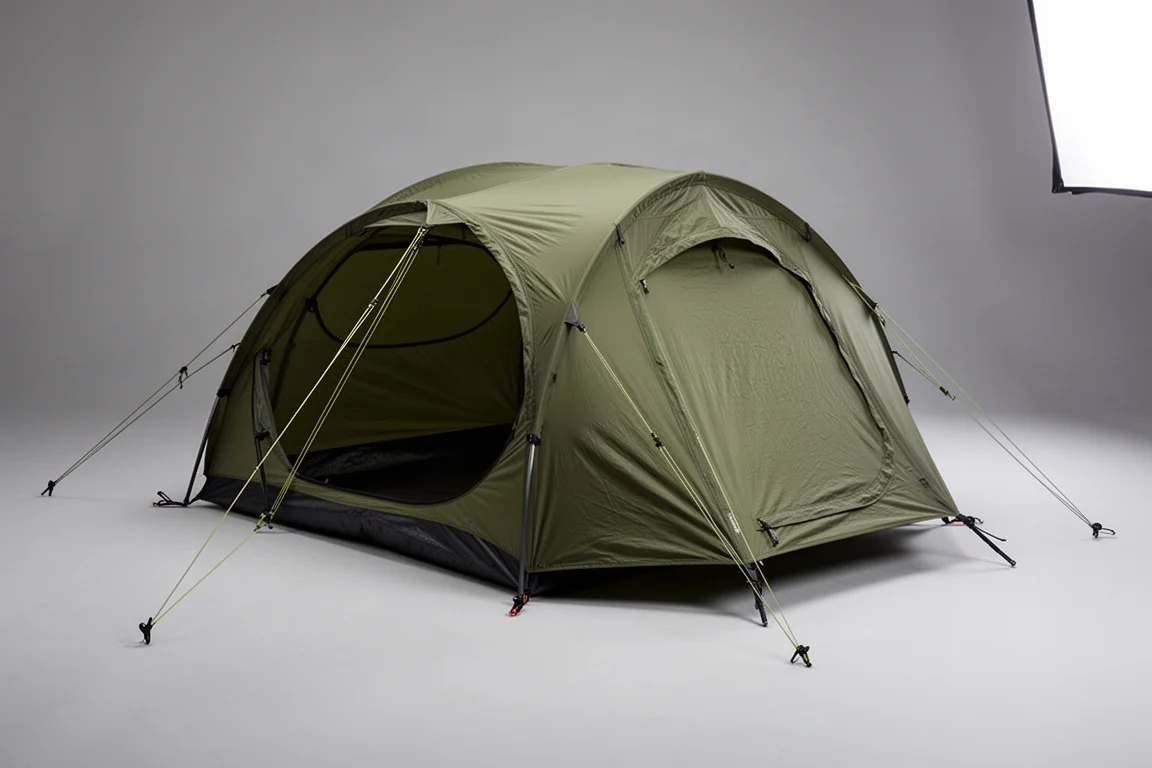
The Akto has been around for roughly two decades and is often described as the classic backpacking tent. It costs around £690 and weighs 1,715 g all in, with a packed size of about 58 x 17 cm. That is the largest packed size of the three, although the tent can be compressed noticeably smaller than the quoted figure.
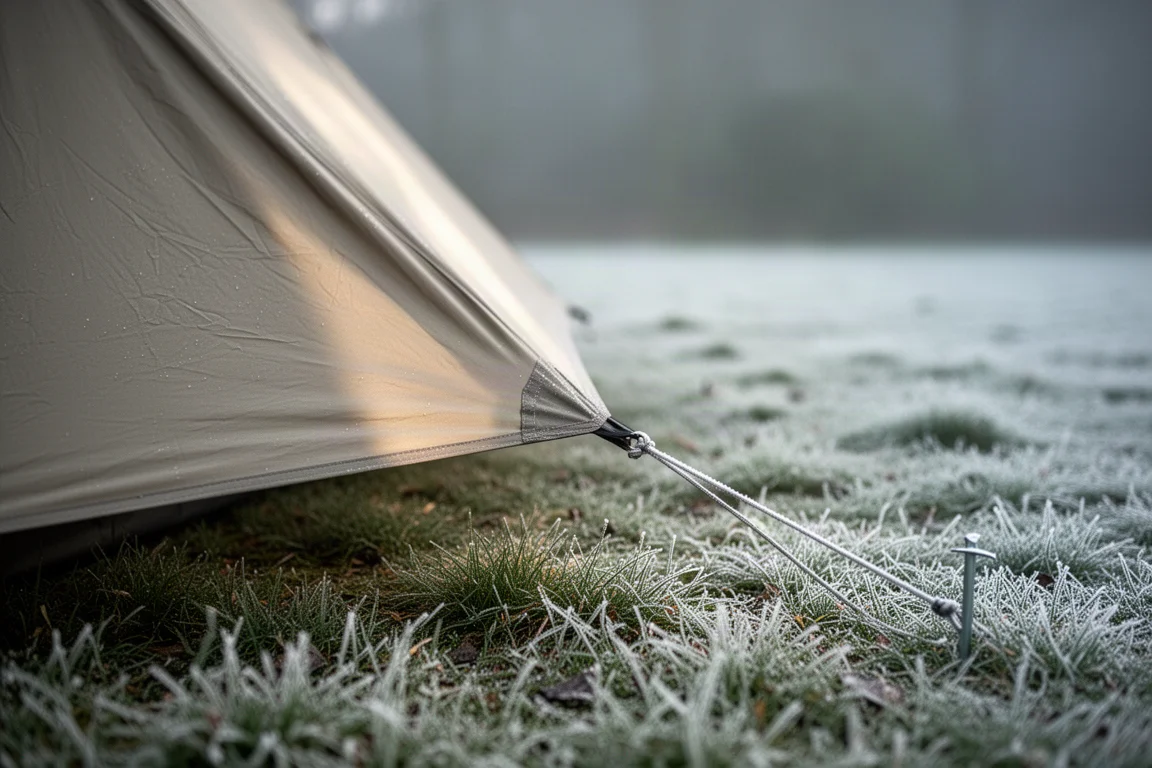
Its fabric specification is the strongest in this group: a 30D fly, a 30D inner, and a 70D bathtub floor. The hydrostatic head rating is the highest here by a clear margin, at 5,000 mm on the fly and 15,000 mm on the floor, which makes it a genuinely reassuring tent in sustained rain. The fly also runs right down to the ground, and that combination of thick fabric and a low hem makes it the warmest tent in this comparison for cold-weather use.
Interior space is where the Akto gives ground away. It measures 220 cm long, but only 90 cm wide at the middle and 62 cm at the ends, with 93 cm of headroom at the centre dropping to 30 cm at the ends. That is the smallest interior of the three, and it is the main reason the design now feels dated next to the alternatives.
The 75 cm vestibule is the largest single vestibule in this group, with plenty of room for a pack, boots and cooking gear. Ventilation comes from a panel that can be pulled back to reveal see-through mesh, plus end vents that zip down, but the tent still gets hot in summer. Pitching uses two pegging points at each end, which makes it harder to get the fly properly taut than the three-point designs. Interior features are minimal: a few loops and one pocket.
Terra Nova Laser Compact AS: The Most Current Design
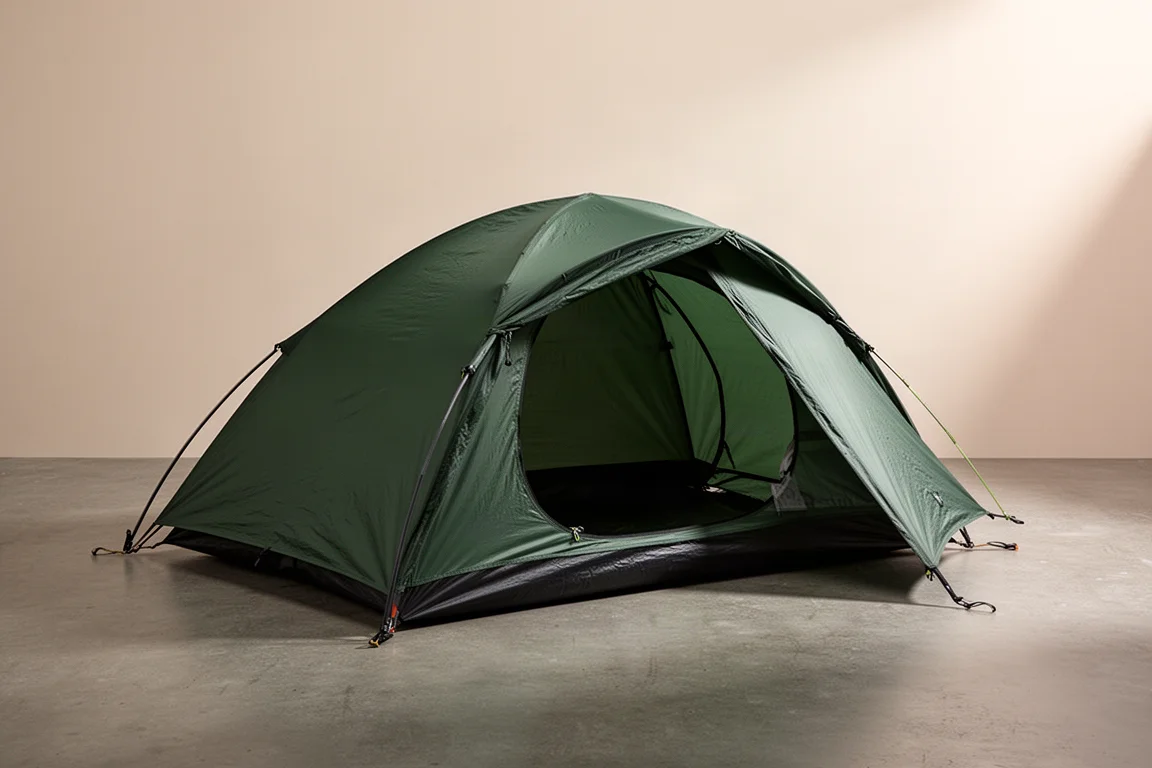
The Laser Compact AS is a newer design, refined from earlier versions of the same platform, and it posts the smallest packed size here at just 33 x 19 cm. It weighs 1,734 g, essentially level with the Akto. The list price is around £690, although discount codes have brought it closer to roughly £550.
The materials are close to the Akto in construction but a step behind in rating: a 30D nylon fly, a 30D nylon inner, and a 70D nylon groundsheet. Hydrostatic head comes in at 3,000 mm on the fly and 10,000 mm on the floor, so it is still a very waterproof backpacking tent, just with less headroom in the numbers than the Hilleberg.
Inside, the difference is immediately obvious. The Laser Compact AS is 220 cm long with 110 cm of width at the middle and 92 cm at the ends, plus 98 cm of headroom at the centre and 48 cm at the ends. That makes it substantially roomier than the Akto in every direction that matters when you are lying down or sitting up.
The vestibule measures 40 cm, the smallest single figure here, but it runs the full length of the tent from end to end, so the usable volume is better than the number suggests. Ventilation is handled by a large window that reveals see-through mesh, plus removable panels at both ends that open up airflow further.
Pitching is a strong point. Three pegging points at each end make it easy to get a taut fly on uneven ground, and the tent ships with 14 pegs and pegging points almost everywhere. The main annoyances are the elastic linking the inner and outer at the corners, and a vestibule that is still a touch small for bulky gear.
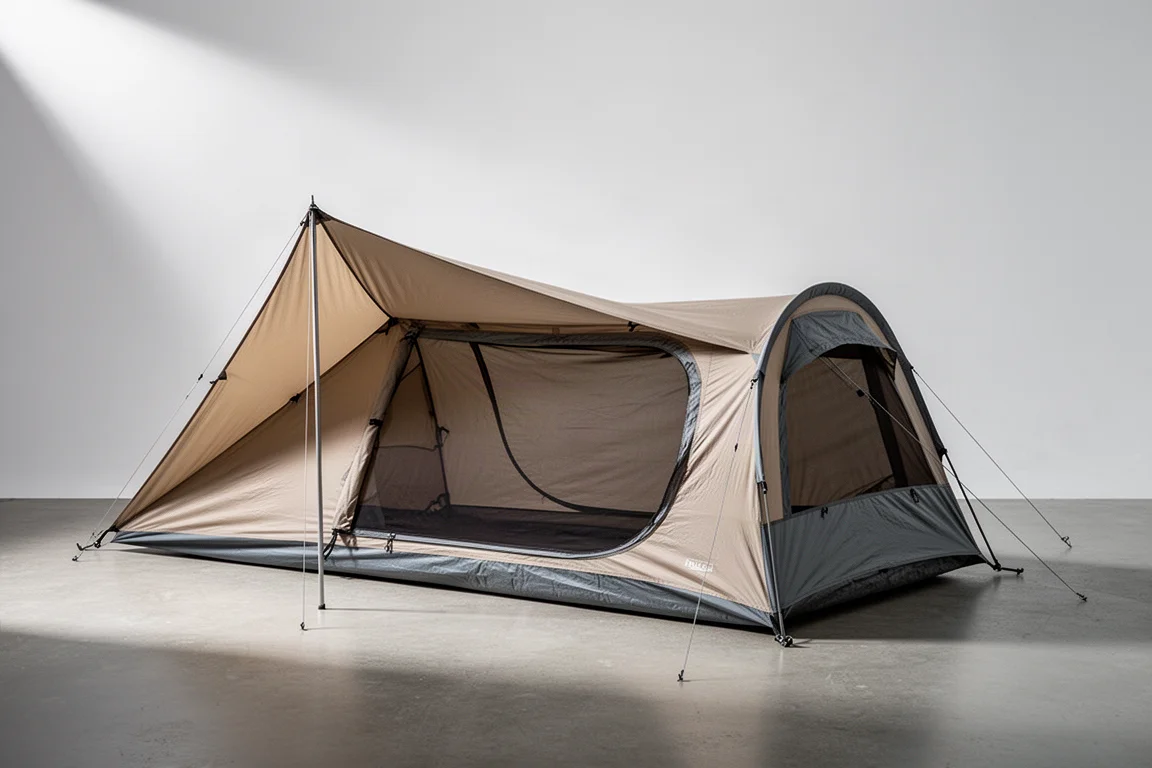
Tarptent Scarp 1: Lightest and Most Flexible
The Scarp 1 is the lightest tent in this group at 1,472 g, and that figure includes pegs, guy lines and bags. Packed size is 46 x 13 cm. It is priced at $459 including the crossing poles, which works out to roughly £550 in the UK once delivery, VAT and duty are added. Adding the crossing poles takes the total weight to around 1,900 g.
It also uses the thinnest materials of the three: a 30D nylon fly, a 10D inner, and a 30D nylon groundsheet, with a 3,000 mm hydrostatic head on both the fly and the floor. The floor rating is the lowest here, which is the trade-off that comes with the lighter carry.
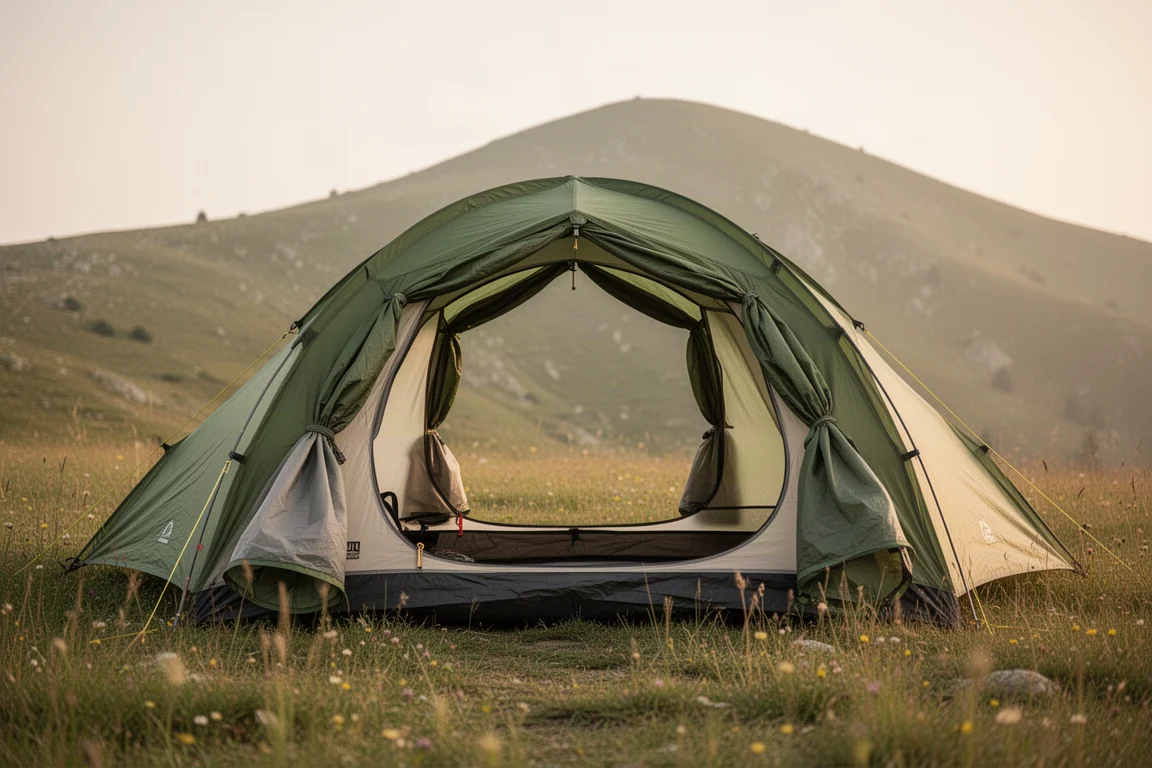
Where the Scarp 1 wins is flexibility. It has two doors and two 51 cm vestibules, a layout that is almost unheard of on a solo tent, so you can keep your pack and boots on one side and your cooking kit on the other, or move to the sheltered side if the wind shifts. The inner can also be shifted across to trade interior width for vestibule space.
Internal space measures 218 cm long, with 81 cm of width when the inner is at its narrowest, expandable well beyond that, plus 99 cm of headroom at the middle and 38 cm at the ends. Three pegging points at each end keep pitching predictable. Ventilation comes from an inner that is described as solid mesh but still includes a fair amount of see-through mesh, along with small end vents that can be pulled open to reduce condensation. A full mesh inner is available separately if you want a summer-focused setup. Inside there are three hanging hooks and two pockets at one end, and the crossing poles are optional, with carbon versions also available. The half-moon doors give less open access than the full-width doors elsewhere, but the second door offsets that.
How the Three Tents Compare
| Tent | Weight | Packed size | Fly hydrostatic head | Floor hydrostatic head |
|---|---|---|---|---|
| Hilleberg Akto | 1,715 g | 58 x 17 cm | 5,000 mm | 15,000 mm |
| Terra Nova Laser Compact AS | 1,734 g | 33 x 19 cm | 3,000 mm | 10,000 mm |
| Tarptent Scarp 1 | 1,472 g (1,900 g with crossing poles) | 46 x 13 cm | 3,000 mm | 3,000 mm |
On paper, the weight spread is modest. The Scarp 1 is the lightest, and the Hilleberg and Terra Nova are close enough that the difference is negligible in a pack.
The gap opens up in two areas. The first is waterproofing: the Akto leads comfortably on both fly and floor, the Terra Nova sits in the middle, and the Scarp 1 trails on the floor rating. The second is liveable space: the Akto has the smallest interior here by a clear margin, while the Laser Compact AS and the Scarp 1 both feel considerably more generous, especially at the ends and overhead.
Cold-weather performance follows the fly design. The Akto’s fly reaches all the way to the ground, making it the warmest option. The Terra Nova and the Scarp 1 can both be pulled closer to the ground, but each leaves a gap, which reduces condensation at the cost of some warmth in genuinely freezing conditions.
Summer behaviour reverses the picture. The Akto offers the least ventilation and gets hot, the Laser Compact AS is better with its large mesh window and end panels, and the Scarp 1 is the most comfortable of the three in warm weather, with the option of adding a full mesh inner.
Pitching is the quiet deciding factor. The Terra Nova and the Scarp 1 both use three pegging points at each end, which makes a taut pitch straightforward on uneven ground. The Akto uses two, and getting the fly properly tensioned is noticeably harder.
Buying Advice: Matching the Tent to Your Trip
If your trips lean cold, wet and exposed, the Hilleberg Akto still has the strongest case on paper. Its 5,000 mm fly and 15,000 mm floor are unmatched here, and the fly that reaches the ground makes it the warmest tent in this group. The caveat is that the interior is genuinely small, with limited width at the ends and modest headroom, and pitching it taut takes more patience than the other two.
If you want the most current all-round design, the Terra Nova Laser Compact AS is the one to look at first. It packs down smallest, matches the Akto on weight, and gives you noticeably more room inside with far easier pitching. The vestibule is the smallest single measurement here, but because it runs the full length of the tent it holds more than the figure implies.
If weight, flexibility and warm-weather comfort matter most, the Tarptent Scarp 1 is the standout. It is the lightest tent here, the only one with two doors and two vestibules, and the only one where you can shift the inner to rebalance interior and vestibule space. The trade-offs are the thinnest materials and lowest floor rating of the three, plus the extra weight of the crossing poles if you choose to run them.
A useful way to decide is to start with the season you actually camp in. Winter campers who expect driving rain and cold will get the most value from the Akto’s fabric and floor ratings. Three-season and summer backpackers will get more day-to-day comfort from the Laser Compact AS or the Scarp 1, both of which are easier to pitch and far more pleasant to spend an evening inside.
It is also worth checking what is included in the quoted weight before comparing figures. The Scarp 1 figure of 1,472 g covers pegs, guy lines and bags, while crossing poles add roughly another 400 g. Deciding whether you need those poles for your terrain is a genuine weight decision, not just a specification detail.
Finally, think about how you store gear. A large single vestibule suits anyone who wants one big, simple space for a pack and cooking. Two smaller vestibules suit anyone who likes to separate wet kit from clean kit, or who wants a sheltered side when the wind changes direction overnight.
Conclusion
All three of these tents are capable, well-regarded four-season solo shelters, and none of them would be a poor purchase. The decision comes down to which set of compromises fits your trips.
The Terra Nova Laser Compact AS is the most well-rounded choice for most backpackers, combining the smallest packed size, generous interior space and easy three-point pitching, and it is the most up-to-date design of the three. The Tarptent Scarp 1 is the lightest and most flexible, with a two-door layout that no other solo tent in this group offers, at the cost of thinner materials. The Hilleberg Akto remains the winter and waterproofing benchmark, but its interior now feels dated and its two-point pitching takes more effort than the alternatives.
Match the tent to the conditions you actually camp in, and any of these three will serve you well for years of backpacking.
Further reading
Related Reviews
Backpacking Tents
3F UL Lanchan Pro 1 Review: A 1 lb 8 oz Single-Wall Trekking Pole Tent
A practical look at the 3F UL Lanchan Pro 1, a single-wall trekking pole shelter with a 1 lb 8 oz weight, 20D silnylon fabrics, and a roomy 90 x 31 x 49 inch interior.
Backpacking Tents
3F UL Taiji 2-Person Tent: A Convertible Backpacking Shelter Worth a Closer Look
A practical look at the 3F UL Taiji two-person tent, covering its materials, true two-person interior, fly-first pitching, and the seasonal inner swap that lets one shelter cover more of the year.
Backpacking Tents
3FUL Lanshan Twoerson Pro Review: A Light Trekking Pole Shelter That Struggled in Rain
A two-person trekking pole shelter with a 2026 redesign, pitched with sticks and put through a night of steady rain. Here is what worked, what did not, and what to check before buying.