Tools
Best Snap-Off Utility Knives: Fiskars Pro, Stanley FatMax, and a Budget Pair Compared
Three snap-off utility knives compared on blade retention, built-in blade breakers, spare blade supply, and overall value.
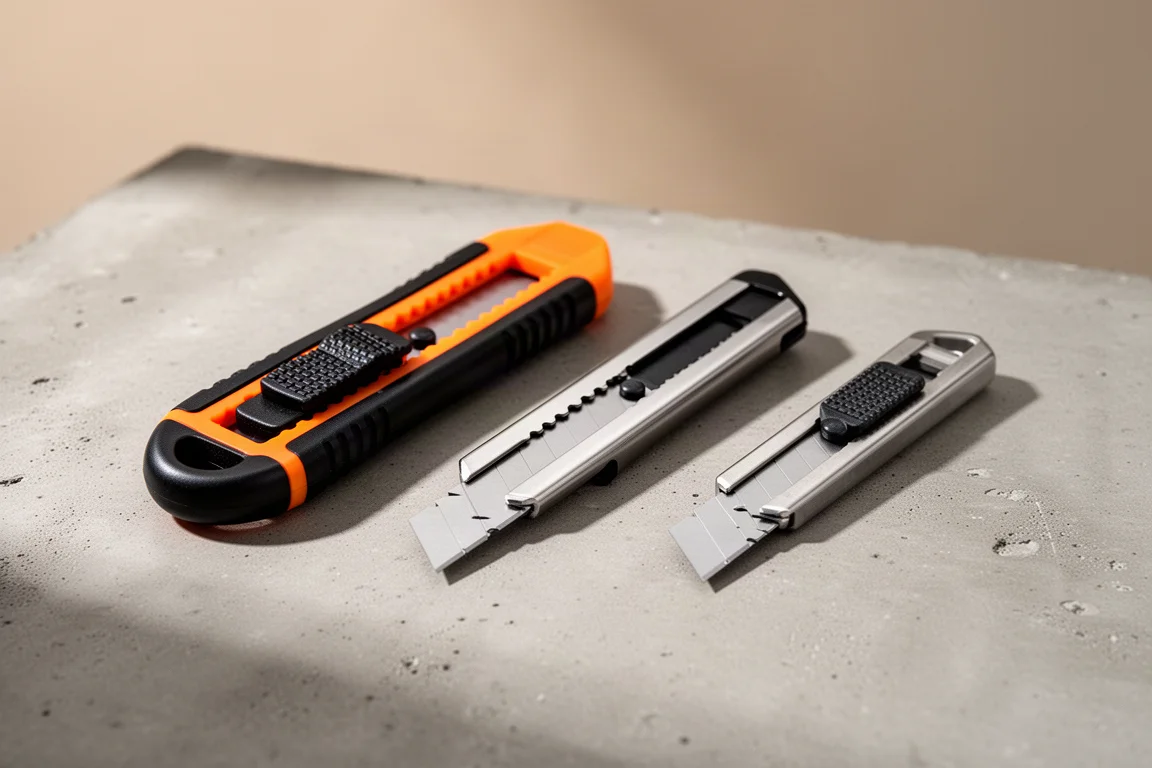
Introduction
Snap-off utility knives solve a simple problem: when the tip of your blade dulls, you do not sharpen it or throw it away. You snap off the worn segment and move on to the next sharp edge. This comparison looks at three options at very different price points, from a premium single knife to a two-knife budget set that costs less than three dollars.
How Snap-Off Knives Work
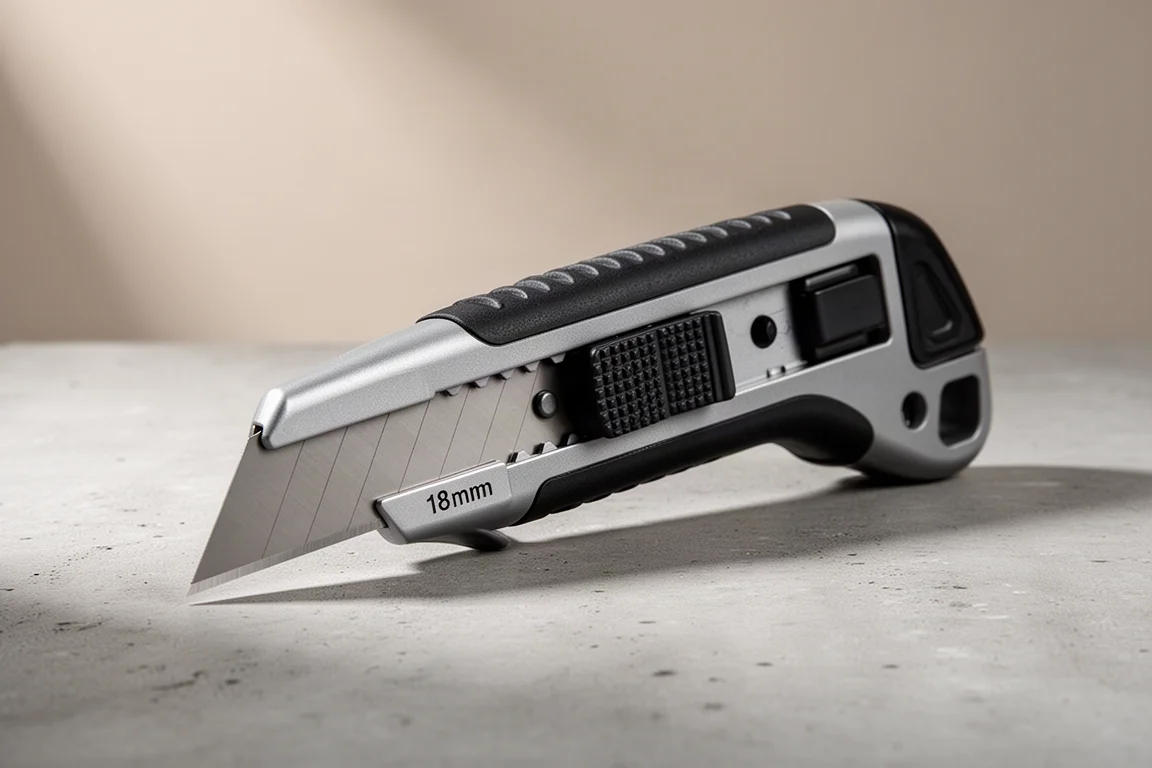
The core idea is built-in weakness. The blade is scored so that the tip can be snapped off with pliers or a built-in tool, revealing a fresh sharp edge underneath, like a shark tooth regenerating. Most models use an 18mm blade, which has become the industry standard width, though larger and smaller sizes exist.
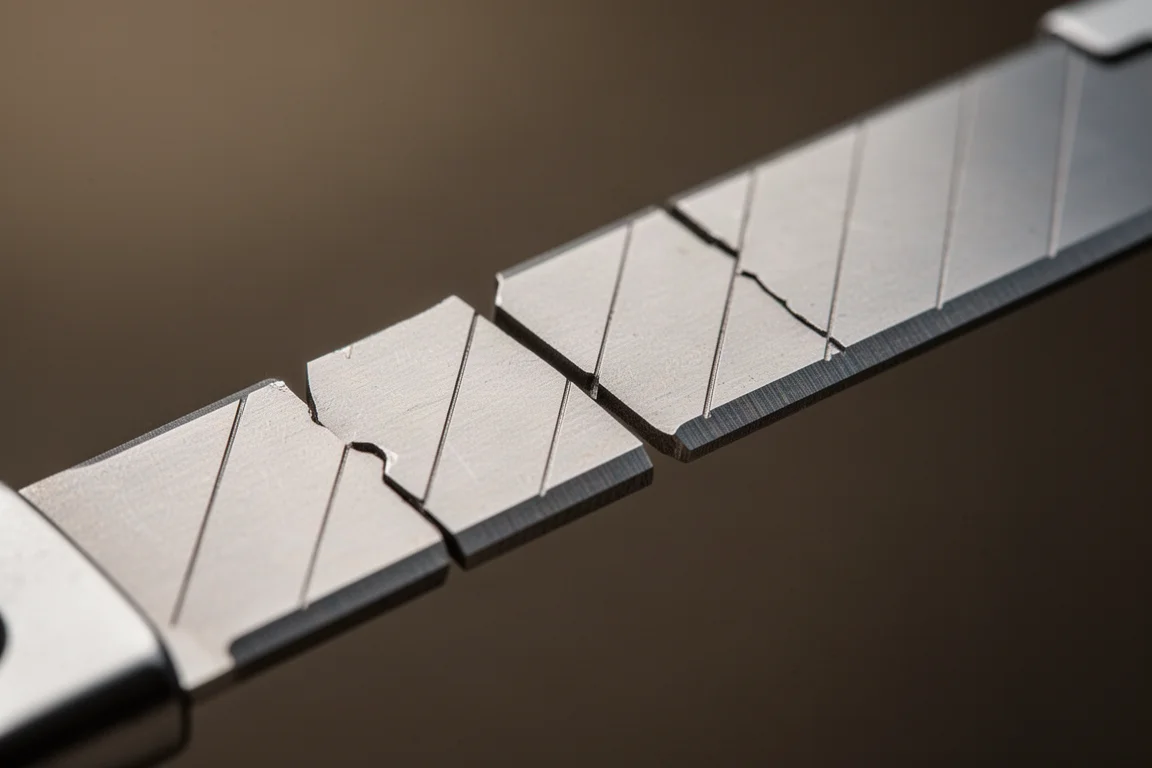
One safety rule applies to every model here: never extend the blade more than one segment length. If two segments are exposed, the blade can snap at an unintended score line and cause injury. These knives are designed around exposing only the functional tip.
A useful feature to look for is a blade lock or tie-down that removes rattle and holds the blade firmly under cutting pressure. Blade retention under load separates the good knives from the frustrating ones.
Fiskars Pro Snap-Off Utility Knife
The Fiskars Pro is one of the most dialed-in snap-off tools available. It uses a standard ratcheting mechanism to hold the blade in place, with protection to keep it from sliding back during use. A tie-down on the body lets you snug the blade down so it does not rattle, and you can slide it with slight resistance and lock it forward a few notches, staying tight in use.
Fiskars also includes a built-in blade snapping tool: extend the blade, slide the tool into position, and twist to break the segment. The catch is that this tool pops out of the body quite easily, and it seems to get looser over time. There is a real risk of it disappearing into the bottom of a toolbox.
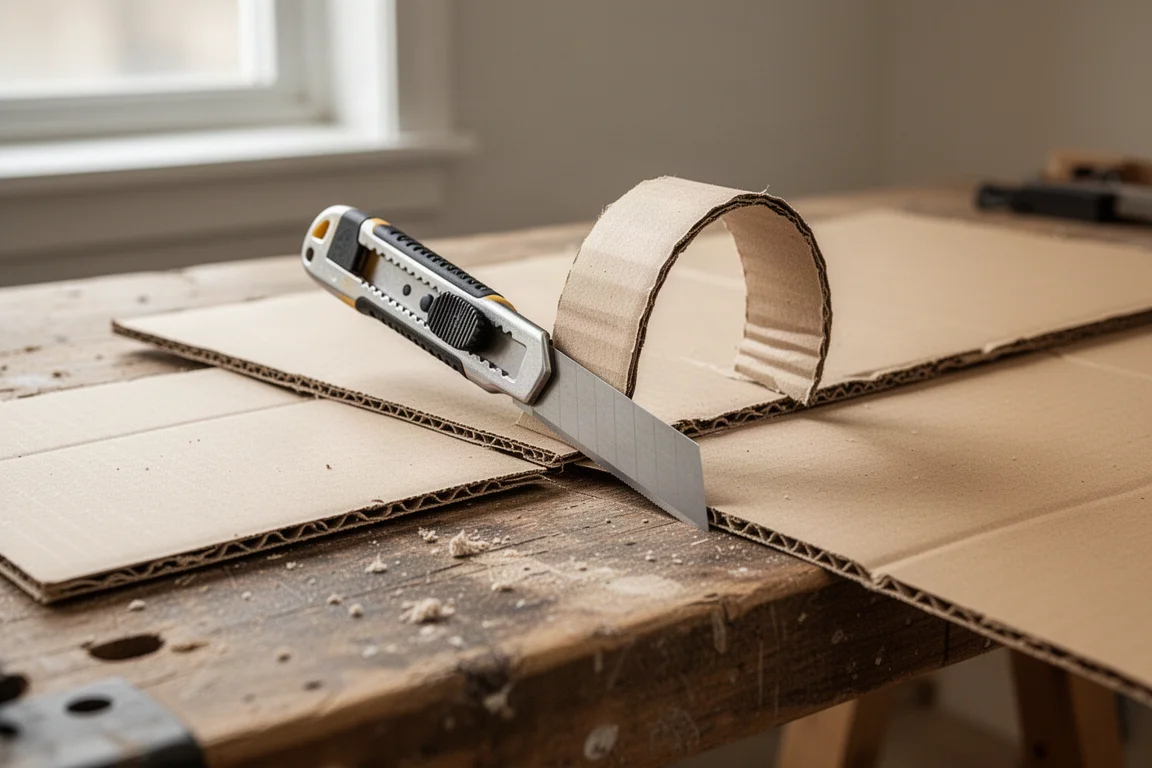
The blade release requires switching to an unlock position before the blade can be removed fully, which is a thoughtful detail. It feels good in the hand and Fiskars is clearly pushing features. The main downsides are price, roughly $20 at a hardware store and around $10 to $12 online, and the loose snap-off tool. Fiskars replacement carbon blades are also not cheap, at close to $20 for a pack.
Stanley FatMax 18mm Snap-Off Utility Knife
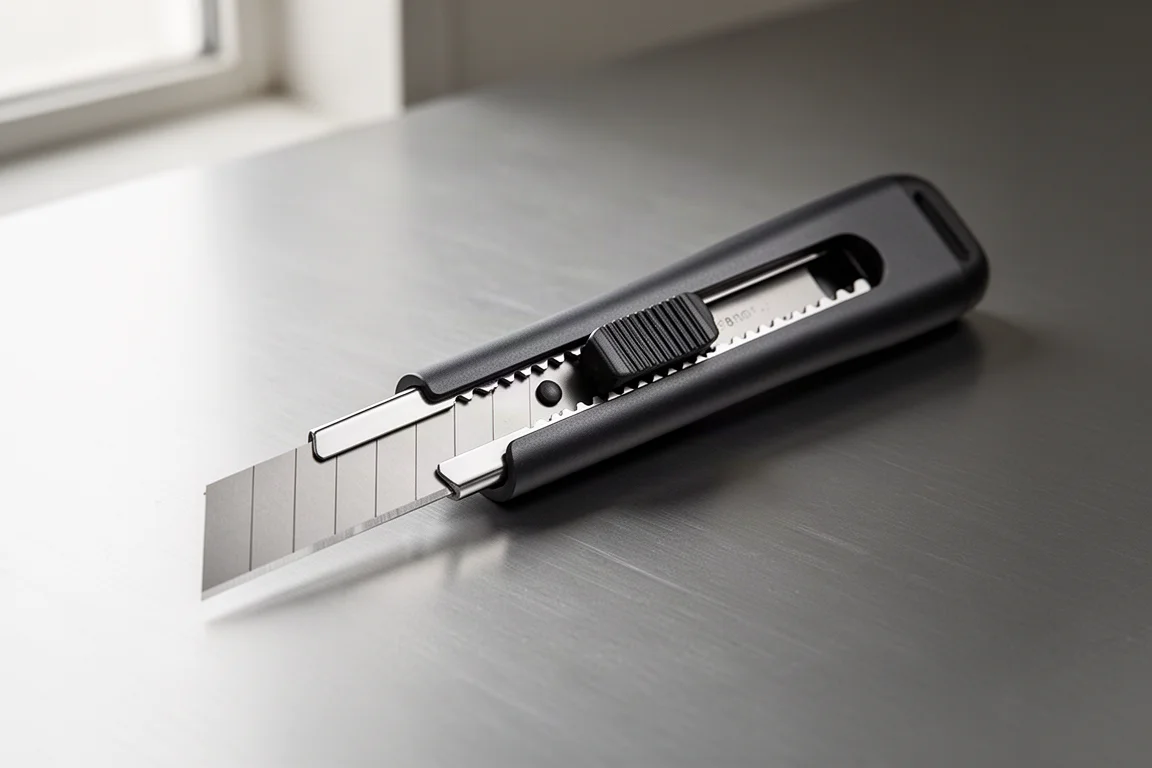
The Stanley FatMax is the heftier option of the group, weighing more than the Fiskars, with a rubberized slider that gives the thumb a solid grip. Its blade retention is the standout: locked forward, the blade sits really solid; loosen the wheel and it wiggles free. That makes adjusting easier than the Fiskars while staying firmly in place when locked.
The FatMax includes a blade snapping adapter that stays in place, unlike the Fiskars tool that pops out. The rear cap pops off to reveal a blade storage bay loaded with spare blades. The included blades have 48 cutting points each, and the math works out to roughly 48 total segments across about six blades, which is generous for an inexpensive tool.
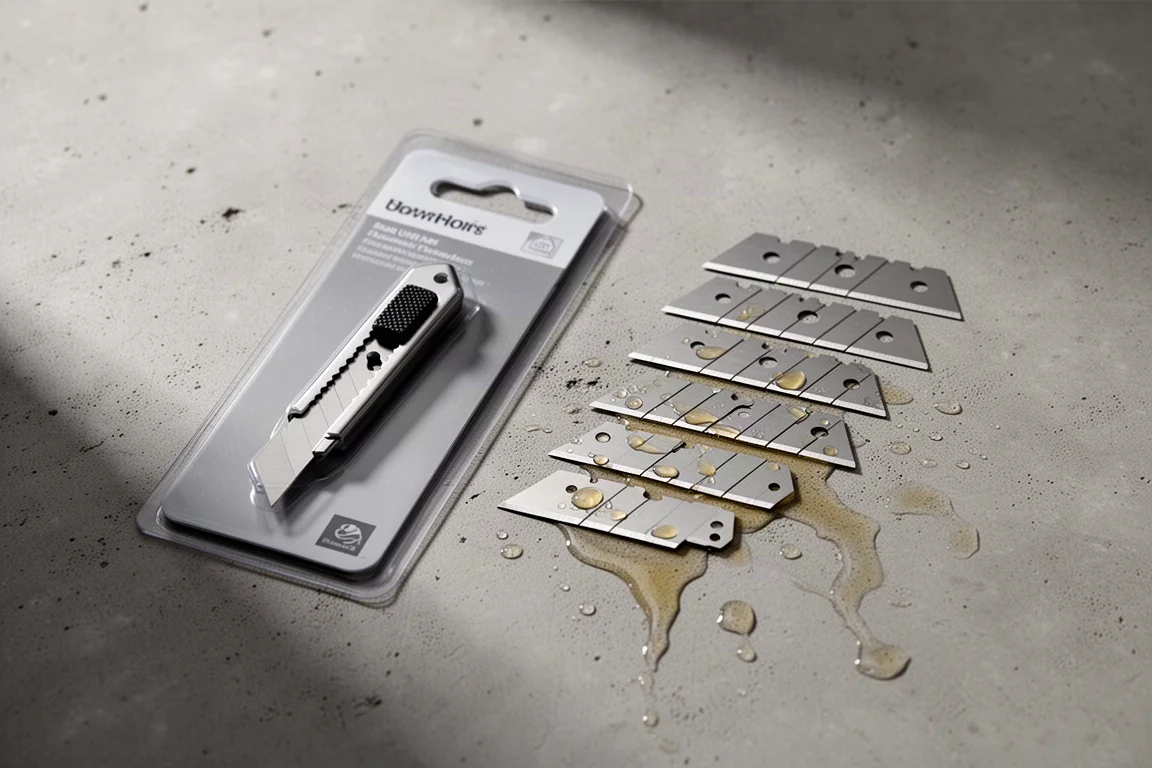
Priced around $16 online, the FatMax also wins on spare blade economics: Stanley sells replacement blade packs with three blades for about $4.75, compared to roughly $20 for the Fiskars pack. With more heft, better retention, a secure built-in breaker, and cheaper refills, this one comes out ahead overall.
Illinois Industrial Tool 90550 Snap-Off Knives
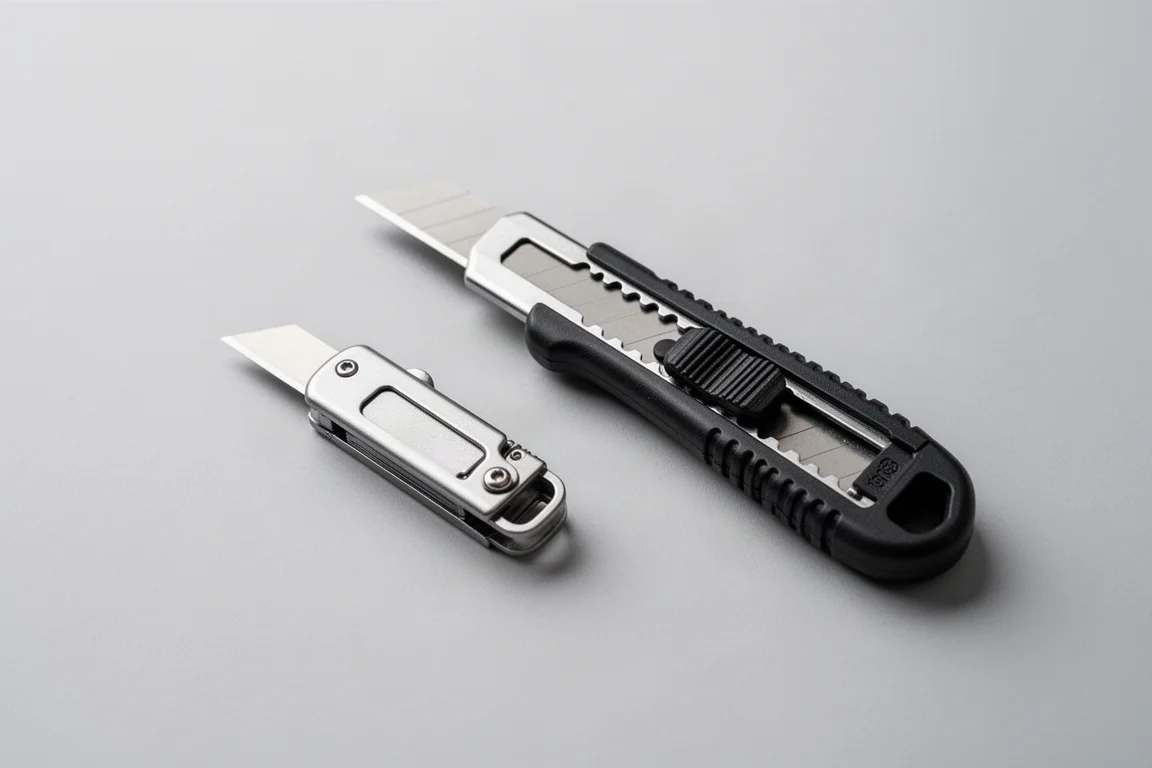
This two-piece set from Illinois Industrial Tool, model 90550, was picked up for about $2.75 for both knives. The smaller of the two is a tiny unbranded knife that retracts fully, so it can be safely tucked into a toolbox. Its blade locks with a little jimping texture on the top and bottom, and it held fairly solidly under hard downward pressure, though getting the blade out looks like it may be single-use.
The larger knife has a more substantial build but a serious flaw: the blade slides right back into the body when pressure is applied. When dropped, it fully retracted on impact. That is dangerous in real use, since you want the blade to resist force while cutting. This larger knife falls into the fail category.
Buying Advice: Which One Fits Your Work
If you want the most refined single knife and do not mind paying for it, the Fiskars Pro is the most feature-packed of the three, but keep an eye on that loose snapping tool. For most people, the Stanley FatMax is the smarter buy: heavier, more solid, a breaker that stays put, and cheaper replacement blades. The Illinois Industrial Tool set makes sense only as disposable backup knives for tasks where losing one does not matter, and the large one is hard to recommend.
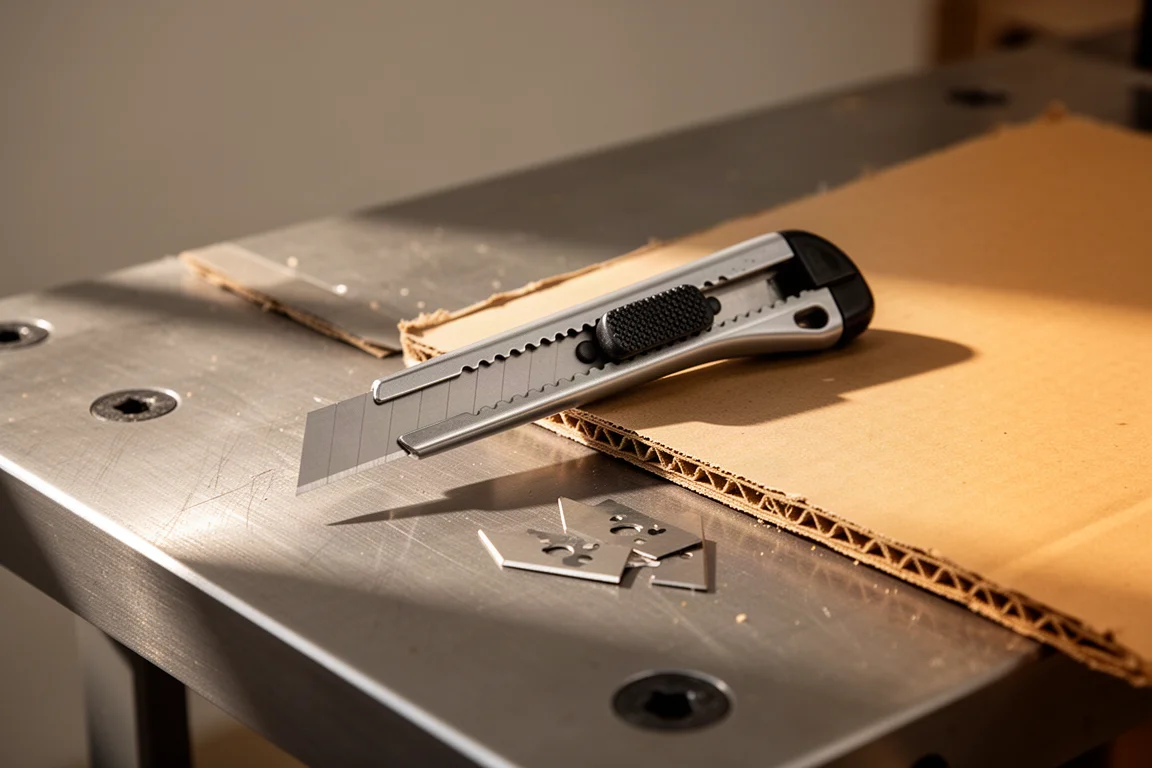
A quick tip regardless of which you choose: do not bother sharpening snap-off blades. The whole point is to snap the dull tip and keep cutting. Also avoid extending more than one segment, no matter how solid the knife feels.
Conclusion
The Stanley FatMax 18mm is the overall winner here thanks to solid blade retention, a built-in snap-off tool that stays in place, and low-cost blade refills. The Fiskars Pro is the premium, feature-rich alternative if you prefer its slimmer feel. The budget Illinois Industrial Tool pair is fine as a throwaway backup, but the larger knife’s blade retraction under load keeps it out of the recommendation list.
Further reading
Related Reviews

Tools
Best Contractor Grade Tape Measures 2026: Eight Models Tested Head to Head
We tested eight contractor grade tape measures from Milwaukee, DeWalt, Crescent Lufkin, Tajima, Stanley, Irwin, Gelan, and Craftsman to find the best value and performance.

Tools
Best Precision Screwdriver Sets 2026: Manual and Electric Options Compared
We compare 19 precision screwdriver sets, from budget manual kits to electric drivers, to find the strongest bits and best value.

Tools
Best Stud Finders 2026: Five Popular Models Put to the Test
We tested five popular stud finders on drywall, firewall, and lath and plaster surfaces to see which ones really find studs and avoid false readings.