Garage Tools
Slide Hammers and Air Pullers Tested: Six Tools Ranked by Real Pulling Power
We look at measured pulling-force numbers for manual slide hammers and push-button air pullers, from a 2.5 lb kit hammer up to the Astro 658 HD.
Introduction
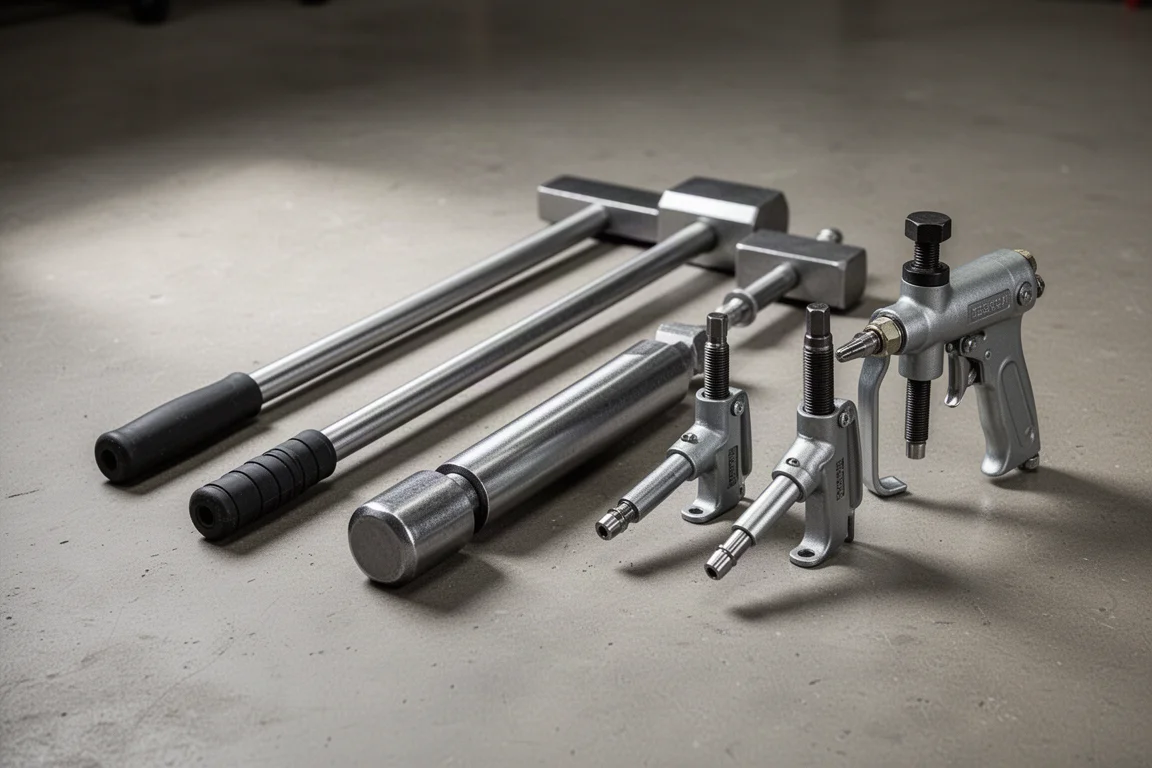
Slide hammers are one of those tools everybody in the shop knows: a heavy slider on a rod, threaded at the end to accept pullers for bearings, hubs, axles, and pulleys. The traditional approach works, but it means swinging a weight over and over until the part gives up. Air-powered pullers promise the same result with a squeeze of a trigger instead.
The interesting question has always been: how much pulling power do these powered tools actually deliver compared to a known hammer weight? Until recently there was no way to put a number on it. Now, with a purpose-built force-measuring rig, there are real figures for both manual slide hammers and the modern air-powered alternatives.
How Pulling Power Was Compared
The testing rig uses four hardened, US-made forged steel equipment wedges stacked in parallel against a hydraulic force gauge, all welded into a frame rated for multiple tons of pulling and spreading force. Pressure reads in PSI and converts to pounds of force, and a T-valve feeding a hydraulic hand pump lets the rig be reset to zero and re-run for repeatable, consistent results.
For the human-powered tools, each slide hammer’s best of three runs was used, with a 5 to 10% buffer added on top to account for differences from one person to the next. Manual results always carry some unavoidable human bias, which is exactly why a rig that just spits out numbers is useful.
The Manual Slide Hammers
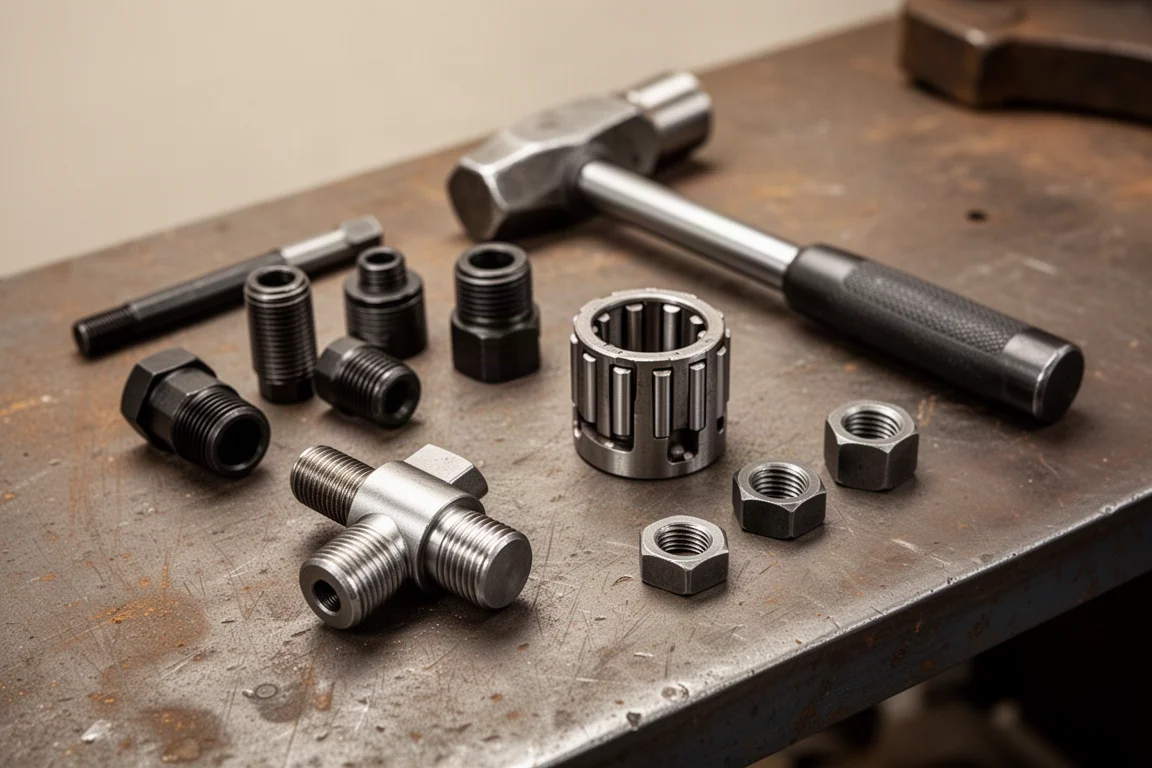
The baseline sizes tend to double as you go up: 2.5 lb, 5 lb, and 10 lb. Most small kits, such as rear axle bearing puller sets, include a 2.5 lb hammer with 5/8 fine thread, which conveniently threads into most common slide hammer attachments. On the dyno it plateaued around 1,850 PSI, or roughly 7,700 to 8,600 lb of force depending on the person. Its main limitation is length: a 2.5 lb slider is shorter than a 5 lb unit, so there is less runway to get the weight up to speed.
A 5 lb slide hammer, such as the ones sold standalone for around $40 to $50, roughly doubles everything: weight and slide length. It peaked around 3,700 PSI, about 15,500 to 16,400 lb of force. The practical reality with any manual hammer is that parts usually come out in the first couple of blows, or you are going to be at it for a while.
OTC 10 lb Slide Hammer
The 10 lb class is the top dog among commonly purchased slide hammers, and options are surprisingly limited once you step outside expensive body-shop kits. The OTC 10 lb with a general-purpose 5/8 thread end costs around $110, and oddly, 10 lb rails are about the same length as 5 lb ones, so you get the same runway but twice the weight to accelerate.
On the rig it climbed steadily into the upper 3,000 to 4,000 PSI range before plateauing at a peak near 4,925 PSI, which works out to roughly 21,000 to 22,800 lb of force once the human factor is added. That is a serious amount of pull, but it demands real effort and usually a sore shoulder the next morning, especially on rust-belt hubs.
Texas Twister Air Puller
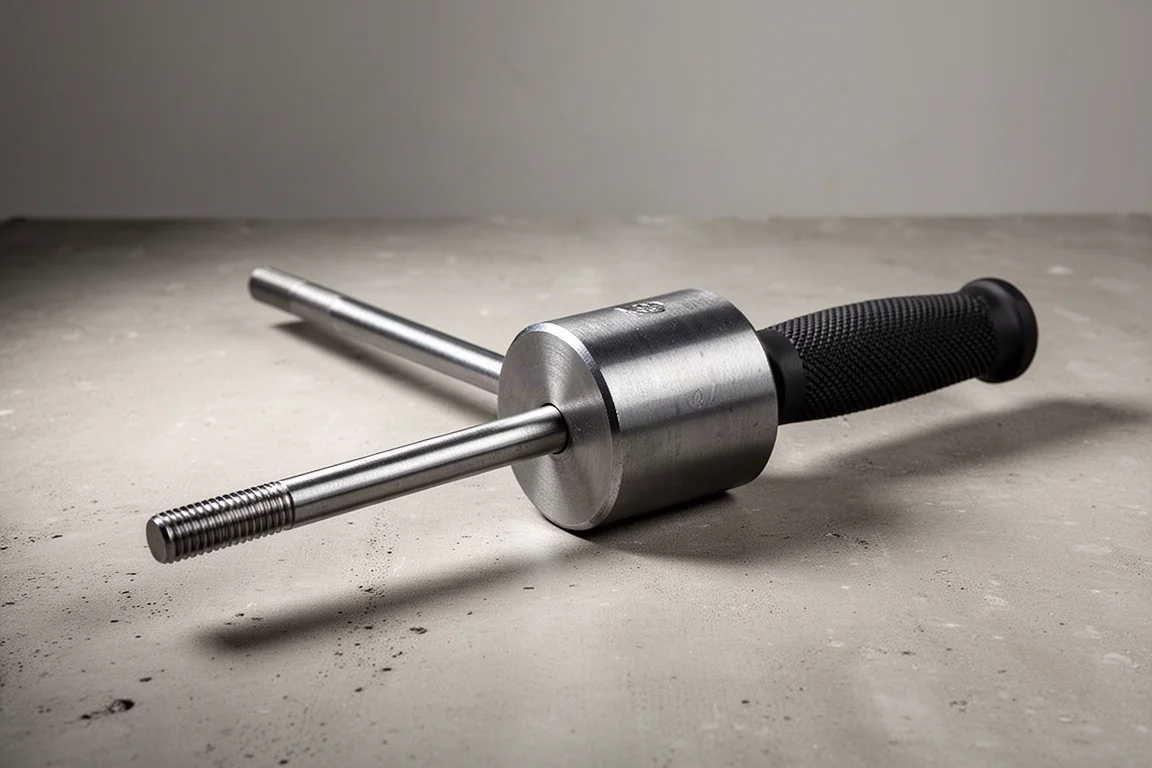
The Texas Twister is an air-hammer-based push-button puller, and its kits include a wide range of pulling attachments and implements, including a combo air hammer that threads in the back to double as a pulling tool. The attachment piece tested here, the one that converts an air hammer into a puller, cost around $80.
Powered by a strong air hammer, its best measured result was 750 PSI, or about 3,200 lb of force, which by the numbers places it roughly in the territory of a 1 lb slide hammer unless it benefits from a looser joint in ways that could not be replicated on the rig. It is a convenient, modern take on the old-school solution, but the raw numbers say it is not built for the biggest jobs.
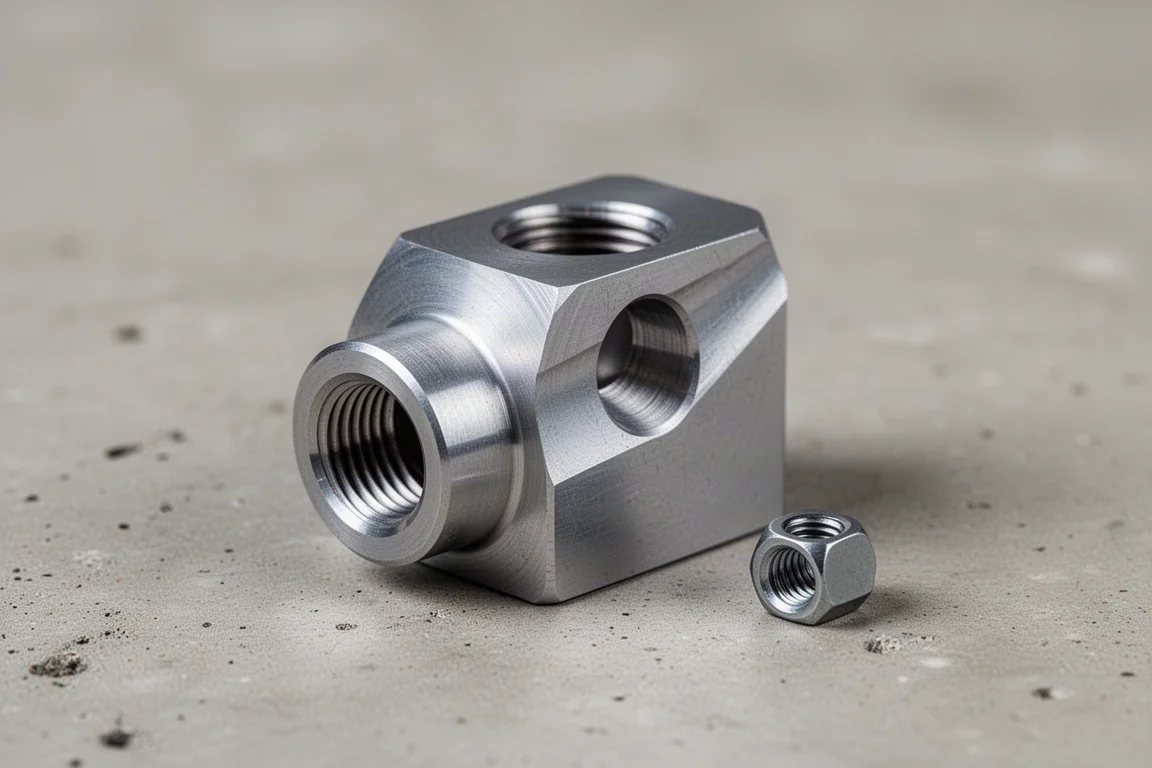
The Texas Twister was run with a SunX air hammer to give it its best shot. The SunX is a genuinely powerful .401 shank air hammer, well suited as the power source behind a puller attachment, though it is worth noting the shaft threads are not universal 5/8 fine thread, so adapting to common slide hammer attachments takes an extra step.
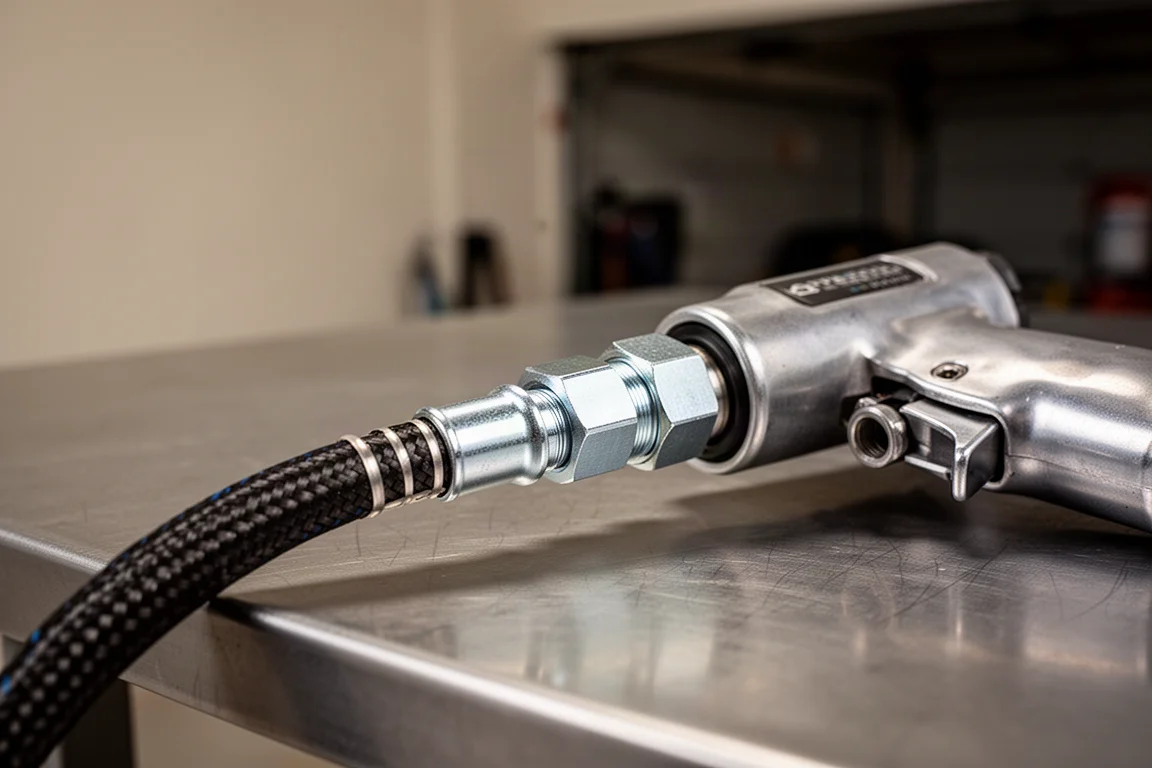
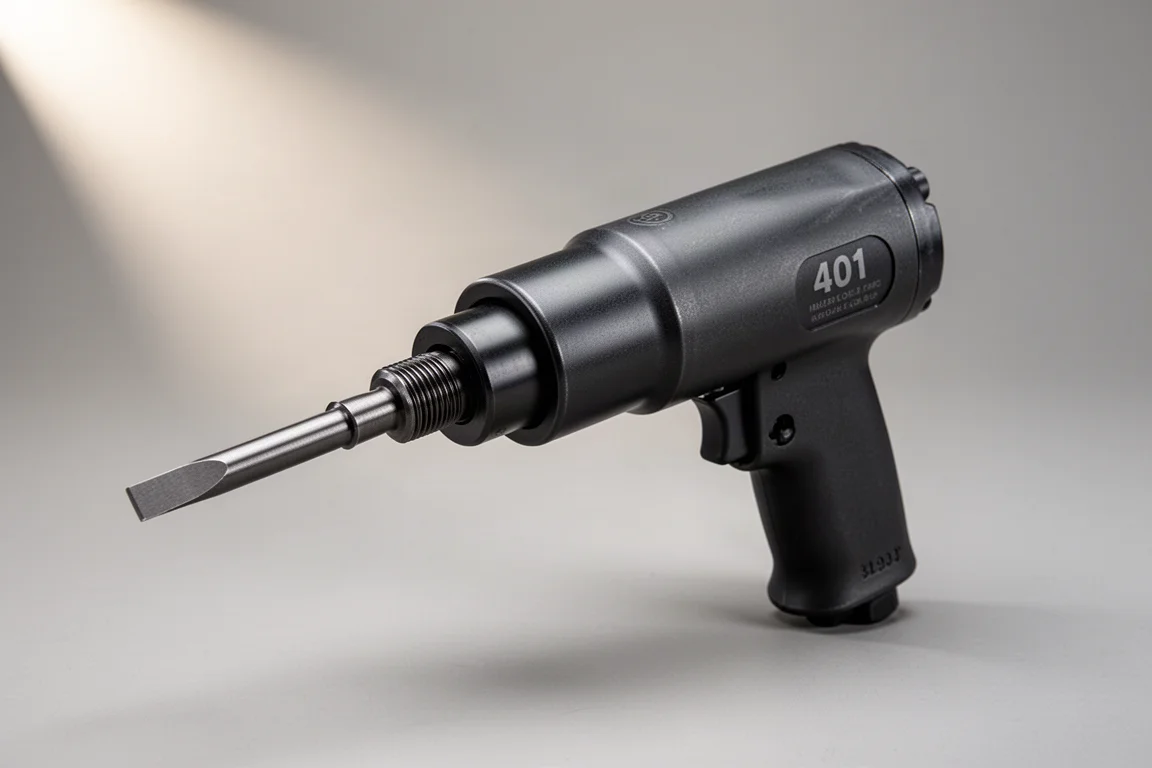
Sunmake 250mm Air Hammer Air Puller
The Sunmake 250mm is a newer design sourced directly from the Taiwan market for around $200, and it looks like exactly what you would reach for when you need a hammer. The trick is that it works as an air hammer but also switches into puller mode with a 5/8 thread attachment ready to go.
It is not the most intuitive tool: a direction switch in the head directs air as hammer or puller, and you can get it stuck in do-nothing positions before locking it in. Once sorted, it put up 1,800 PSI at max, good for about 7,700 lb of force, which is roughly on par with a 2.5 lb slide hammer. Good to know, but it is probably not the right pick for the biggest pulling jobs.
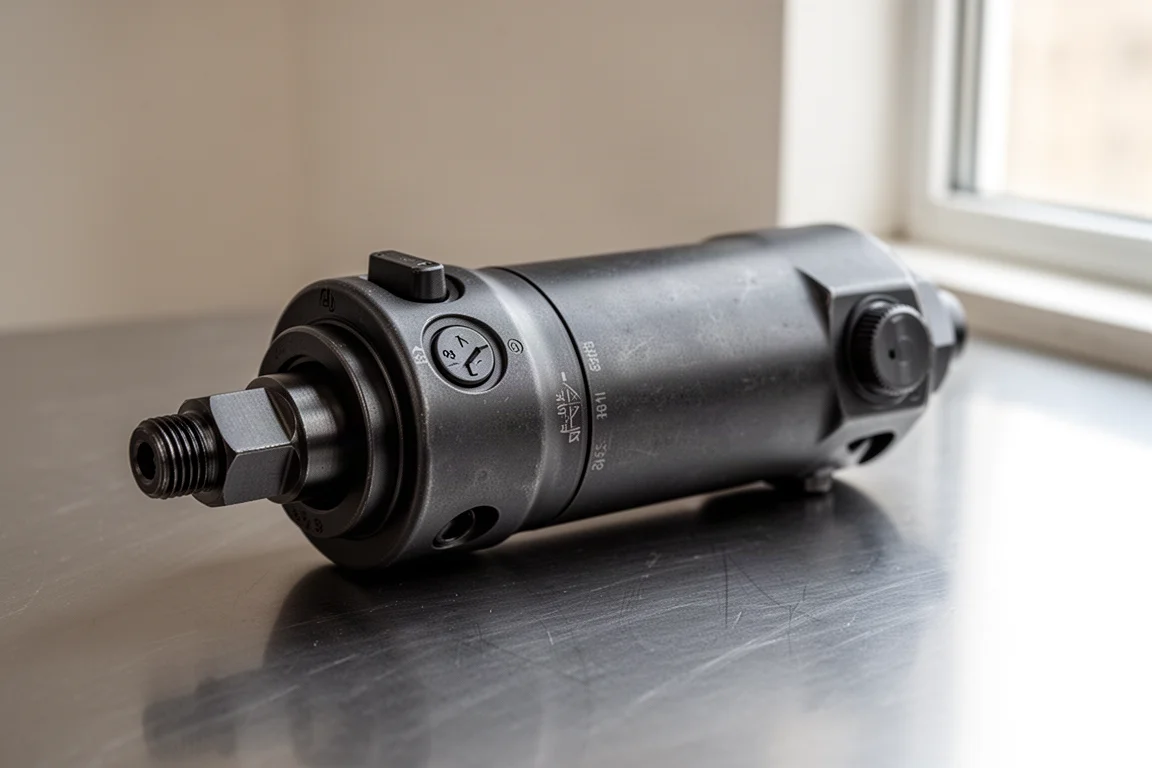
Astro 658 Stubby Slide Hammer
The Astro 658 costs $185 and occupies a middle ground: not as short as the small injector-style pullers, but far shorter than a traditional slide hammer, with 5/8 fine thread on the tool itself plus an extension if you want extra reach. It is advertised to compare to a 4.5 to 6 lb slide hammer on non-hard joints like dent pulling, and 3.5 to 4.5 lb on seized or solid joints, which matches how its behavior changes depending on whether the joint is moving or stuck.
Measured, it reached about 3,540 PSI before impacts stopped making a difference, around 15,200 lb of force. That works out to roughly a 4.5 lb slide hammer equivalent: very close to, but perhaps not quite within the range of, a full 5 lb manual hammer. For pulleys, bearings, and similar pulling tasks where a 5 lb hammer is plausible, squeezing a trigger beats whaling away, and the space savings are real.
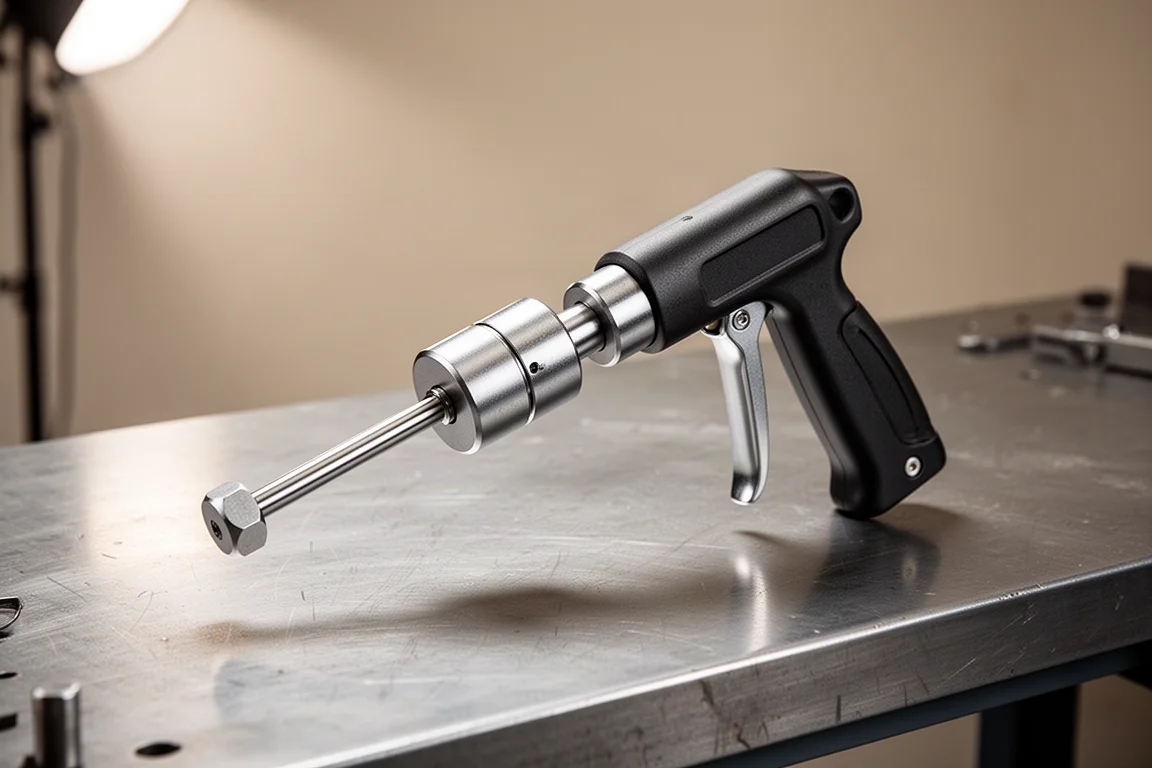
Astro 658 HD
The 658 HD is the heavy-duty version: heavier hammer, longer stroke to build speed, and a beefier handle casting to survive it. It is advertised at one and a half times the power of the standard 658, priced at $245. On the rig it hits slower and skips the fast-slow rhythm of the smaller tool, climbing steadily through 4,000 PSI and into the low 4,000s.
It uses a lot of air, so it was also tried with larger 3/4-inch lines and Chicago fittings, which made little difference; raising line pressure did, bumping results from the 4,200-4,300 range up to 4,425 PSI. With a time limit applied, that is a range of 4,425 to 4,620 PSI, up to about 19,800 lb of force, or roughly an 8 lb slide hammer equivalent with some range to its ability. It does not match a 10 lb manual hammer, but it gets meaningfully closer than anything else with a trigger.
Which One Should You Buy?
If you mostly work on bearings, pulleys, and axle components, the Astro 658 covers most jobs that a 4.5 to 5 lb manual hammer would, with far less effort and a smaller footprint. If your work regularly includes seized hubs and rust-heavy hardware, the OTC 10 lb still has the highest ceiling of anything tested, and the 658 HD is the powered tool that comes closest to it.
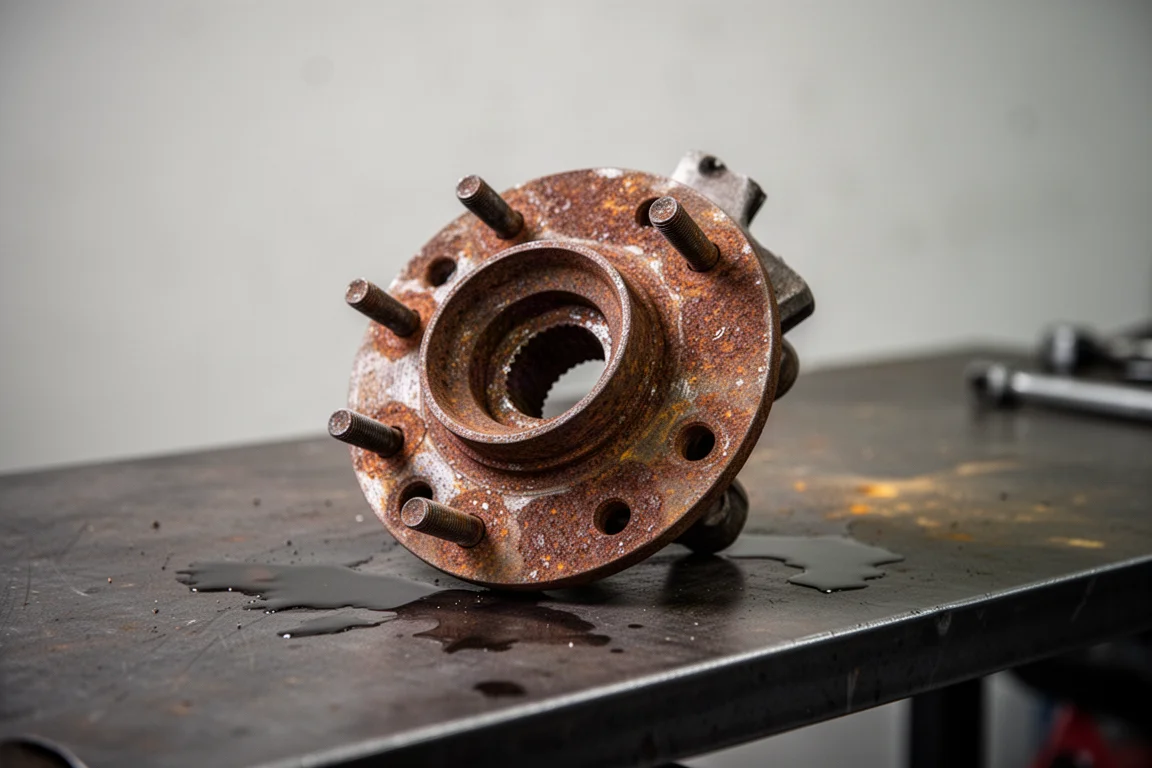
The compact air options make sense in different niches: the Sunmake 250mm for someone who wants one tool that hammers and pulls, the Texas Twister kit for its range of attachments, and the SunX as a serious .401 shank hammer in its own right. Keep in mind that wheel hubs sometimes will not come out even with a 10 lb hammer until you add air hammer work or heat, so no single powered tool is a silver bullet for everything.
Conclusion
The numbers finally put real figures behind these tools. Manual slide hammers still own the top of the power chart, with the 10 lb class delivering over 20,000 lb of force. Among powered options, the Astro 658 HD lands near an 8 lb equivalent and the standard 658 near 4.5 lb, while the compact air pullers trade peak force for convenience and size. Matching the tool to the job, rather than expecting one puller to do it all, is the smartest way to spend the money.
Further reading
Related Reviews
Garage Tools
Badland 3-Ton Off-Road Jack Review: A Shop Jack That Handles Dirt Roads
Harbor Freight's SEMA-buzz Badland 3-ton off-road jack promises rugged build quality and easy mobility. We compare it with the 3-ton Long Reach Daytona to see who it really suits.
Garage Tools
Best 3-Ton Floor Jacks Compared: Four Options for Every Type of Wrencher
A hands-on comparison of the Hyper Tough, Badland, Daytona low-profile long-reach, and Carlisle 3.5-ton floor jacks, with real measurements and buying advice for each type of user.
Garage Tools
Best 3-Ton Floor Jacks: 8 Models Put Through the Same Tests
Eight 3-ton floor jacks from $93 to $1,000, compared on lift height, pump speed, capacity, rolling resistance, and build quality.