Running Headphones
Best Running Headphones 2026: Top Picks for Everyday Training, Budget Runs, and Race Day
A practical guide to running headphones across price points, covering fit, battery life, durability, and sound, with picks for everyday use, budget buyers, race day, and open-ear runners.
Introduction
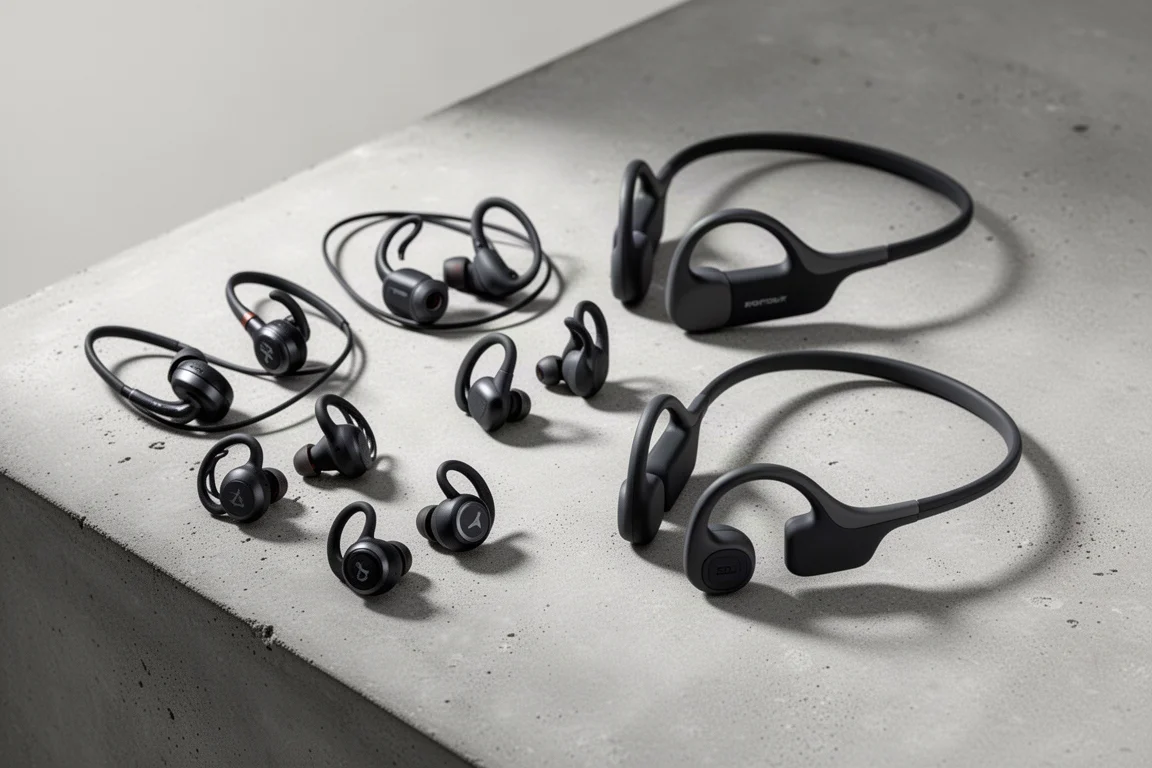
A good running headphone disappears. You put it in, you forget about it, and it survives whatever the session throws at it, from a tempo run in the rain to a marathon and the commute afterwards. The difficulty is that the qualities that matter most on the move, such as fit, battery life, durability, and sound, are exactly the ones that are hardest to judge from a specification sheet.
This guide covers the pairs that stand out across four different jobs: everyday crossover use, the budget end of the market, race day, and the best all-round option. Prices here run from around £40 to around £240, so there should be something useful whether you are buying your first pair or replacing a set that finally gave up.
What We Look For in Running Headphones
Fit is the first thing to get right, because everything else depends on it. If a headphone will not stay put through hard sessions, steep descents, and races, the rest of the package does not matter. Wing tips are a common answer, though they are not the only route to a secure hold. Ear shape varies enormously between runners, so a design that stays stable across a wide range of people is usually the safer purchase.
Battery life comes next. Quick charging has become genuinely useful: a few minutes in the case can be enough for an hour of listening, which covers the morning you forgot to charge. Some designs also let you charge one bud in the case while you run with the other, which is a neat trick for very long efforts. Case capacity counts too, and so does the durability of the case itself if you carry it in a belt or a pocket.

Sound is where personal taste matters most. You want enough power to fill your ears and enough low end to drive a hard session, plus enough detail to keep podcasts clear when you are not chasing a pace. Loudness matters more than you might expect, particularly in the closing miles of a race or in a noisy gym. Active noise cancellation and hear-through modes sit on top of that: cancellation for blocking out the world, transparency for letting it back in on shared paths and parkruns.
Durability is a long-term question. An IP rating tells you how much protection a pair has against sweat and rain, which matters whether you run outdoors in all weather or sweat heavily indoors. More recently, cases have started to carry durability ratings of their own, which is a real bonus if you run with the case in a belt or pocket and get caught in a downpour.
Beyond the essentials, companion apps are now common and often worth using. They typically allow EQ tweaks, control over how aggressive the noise cancellation is, and extras such as a personalised sound test. Find-my style tools for locating a lost bud or a misplaced case are a small addition that becomes very valuable the one time you need it.
Best for Everyday Use: Jabra Elite 7 Active
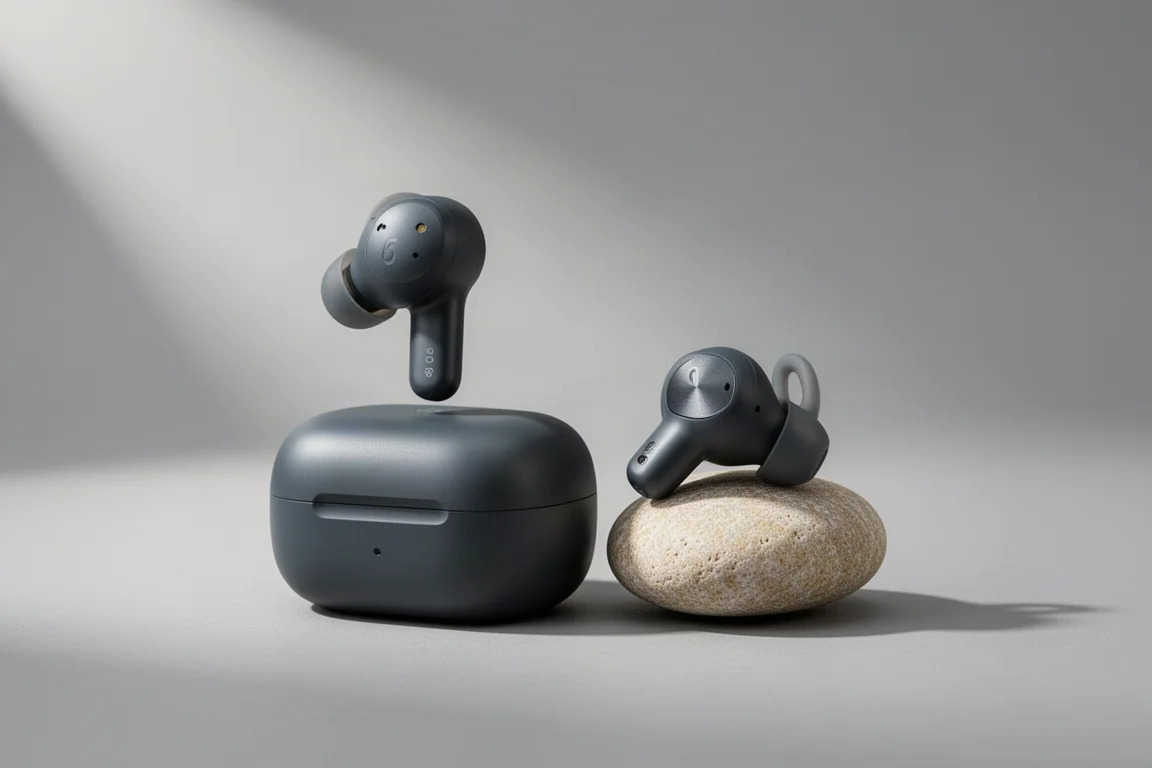
The Jabra Elite 7 Active is the pick for runners who want one pair to cover training and the working day. The buds are compact and sit discreetly in the ear, which makes them comfortable over long stretches and unobtrusive in an office or on a call. That small form factor is the main reason they cross over so well.
Fit is the one caveat. There are no wing tips here, and the shape introduced on this model can feel slightly less locked in than a winged design, even though the buds stayed in place throughout testing and did not work loose on the run. If you know your ears reject plain buds, a wing tip or an ear hook is the safer route.
The feature set is where they earn their place. Battery life runs to around eight hours, active noise cancellation is adjustable so you can dial in how much you want, and the hear-through mode is strong, which helps when you move between busy roads and quiet ones. Quick charging has improved over the earlier 75t generation, and the companion app offers sound personalisation, including a test that tunes the profile to your hearing, plus EQ controls if you want to add or trim bass yourself.
Best for Apple Devices: Apple AirPods Pro
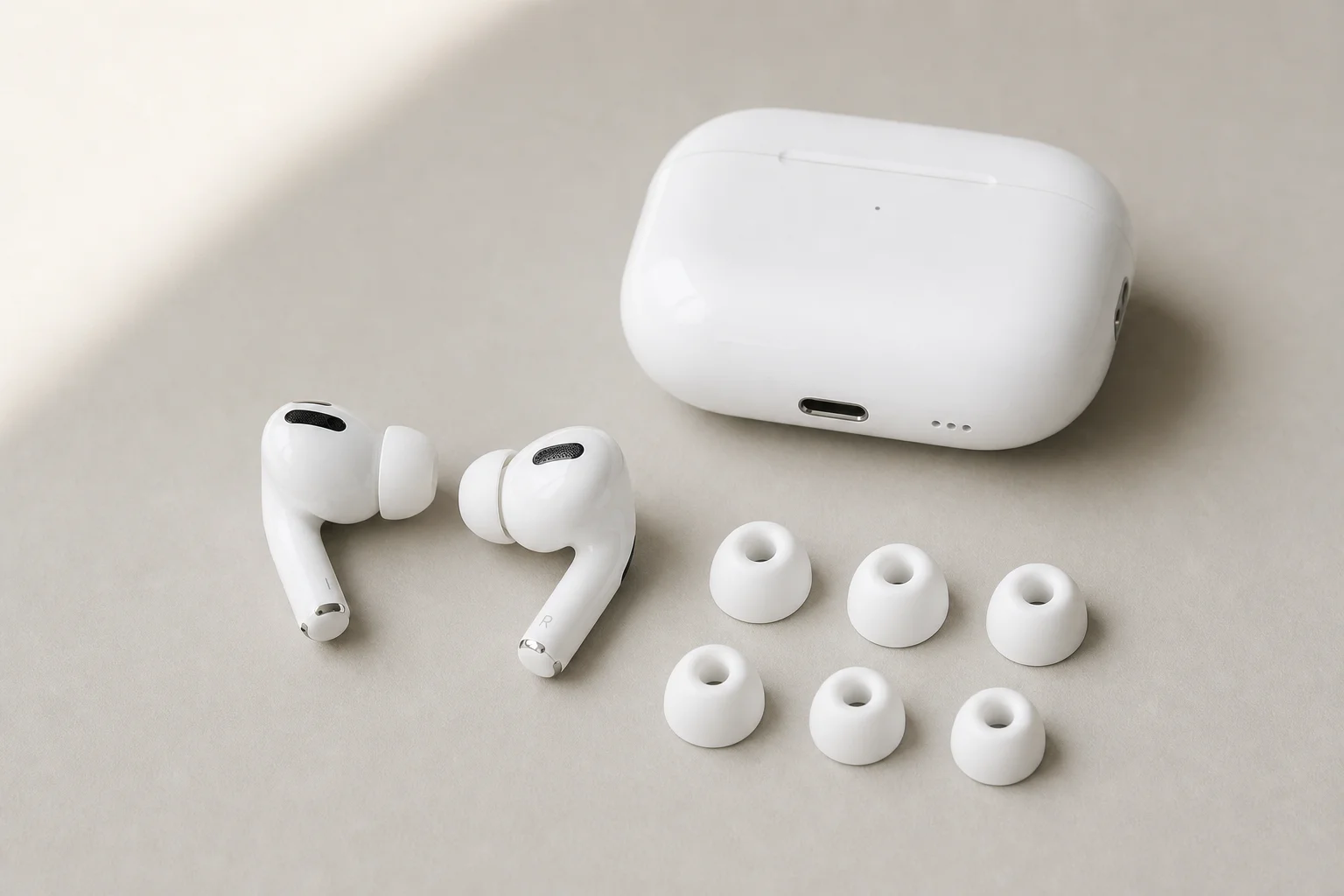
At around £240, the AirPods Pro are the most expensive pick here that is not a specialist sports design, and they make the most sense if you live inside Apple’s ecosystem. Pair them with an iPhone and a Mac and the switching between the two is smoother than anything else on this list, which matters when you finish a run and need to be on a call a minute later.
The noise cancellation is strong, and the case is small enough to slip into a pocket without a second thought. Battery life is good rather than class leading, but the drop-off is manageable in normal use. They were not designed as sports headphones and they do not look like them, yet the fit works well for running and has held up across plenty of miles.
Pairing them with an Android phone works fine, though you lose some of the features that make them appealing in the first place. For anyone who splits the day between running and an Apple laptop, that trade-off is easy to accept.
Best Budget Pick: Tribit FlyBuds 3
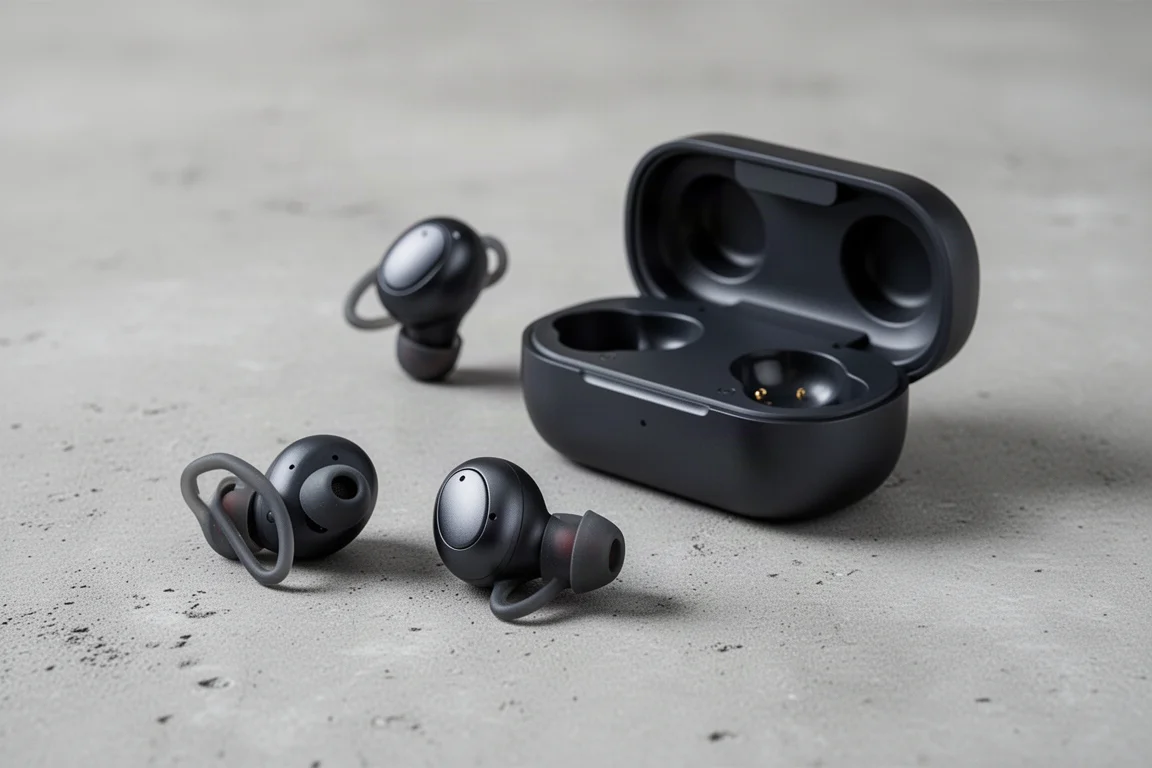
The budget end of the true wireless market used to be a wasteland, and the Tribit FlyBuds 3 shows how much has changed. At around £40 they are the cheapest pick in this guide, and the fit is the first thing that stands out: a reliable in-ear shape with a wing to hold everything in place, helped by silicone tips with a twin-tip structure that grips more securely than a plain tip.
Sound quality is the surprise. It is not the equal of the best pairs here, but it stands up against plenty of headphones costing over £100, and it is far better than the price suggests. Battery life splits neatly: the buds themselves are modest, while the case holds roughly 100 hours of charge, so you can go a long time between visits to a plug.
What you give up is the premium end of the feature list. There is no active noise cancellation and none of the companion app sophistication of the pricier models. What remains is everything a runner actually needs.
Best Lightweight Alternative: Nothing Ear (1)
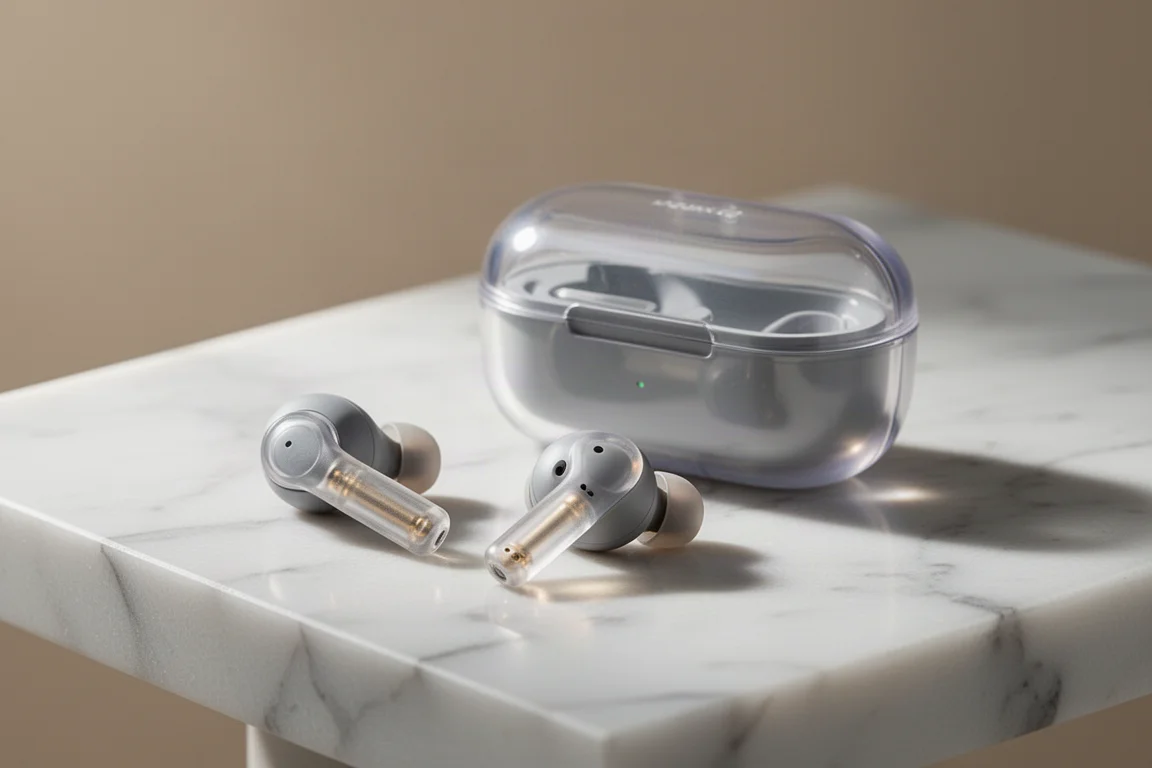
If you like the idea of the AirPods Pro but not the price, the Nothing Ear (1) at around £99 is a credible alternative with a cleaner, more distinctive design. Each bud weighs roughly 4.7 g, so there is no tug and nothing shaking loose on the run, and the fit holds its position well over distance. They also look the part away from running, which is more than can be said for most sport-focused designs.
Noise cancellation is a step down from the more expensive options, though it is good enough to take the edge off an open-plan office. Sound can lean thin, with a slightly tinny edge out of the box, and the EQ in the companion app is worth using to add bass or lift the treble to taste. Battery life is five hours in the buds with another 29 in the case, and the case itself is one of the more distinctive designs around.
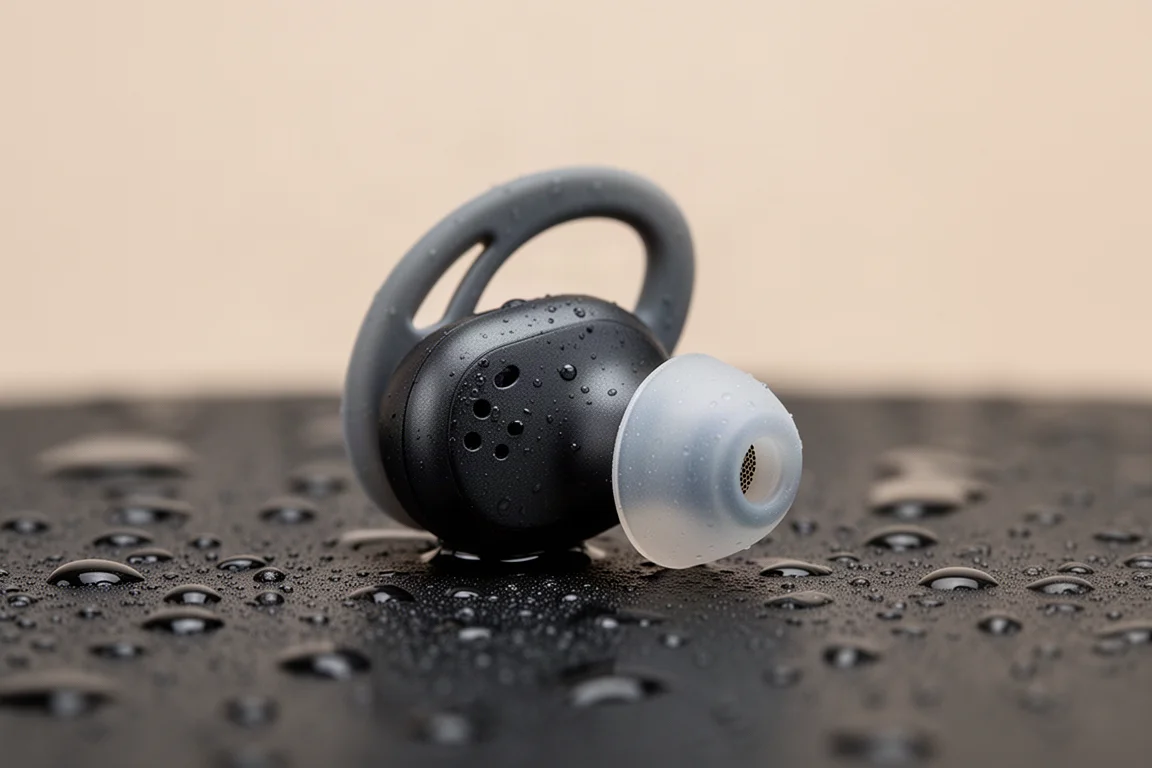
For a runner who wants one lightweight pair for the office and easy runs, and who is willing to spend a few minutes on the EQ, they are a strong buy.
Best for Race Day: Jaybird Vista 2
Race day asks more of a headphone than any training run, and the Jaybird Vista 2 answers most of those questions. It is the pick for racing and also the strongest all-round package here.
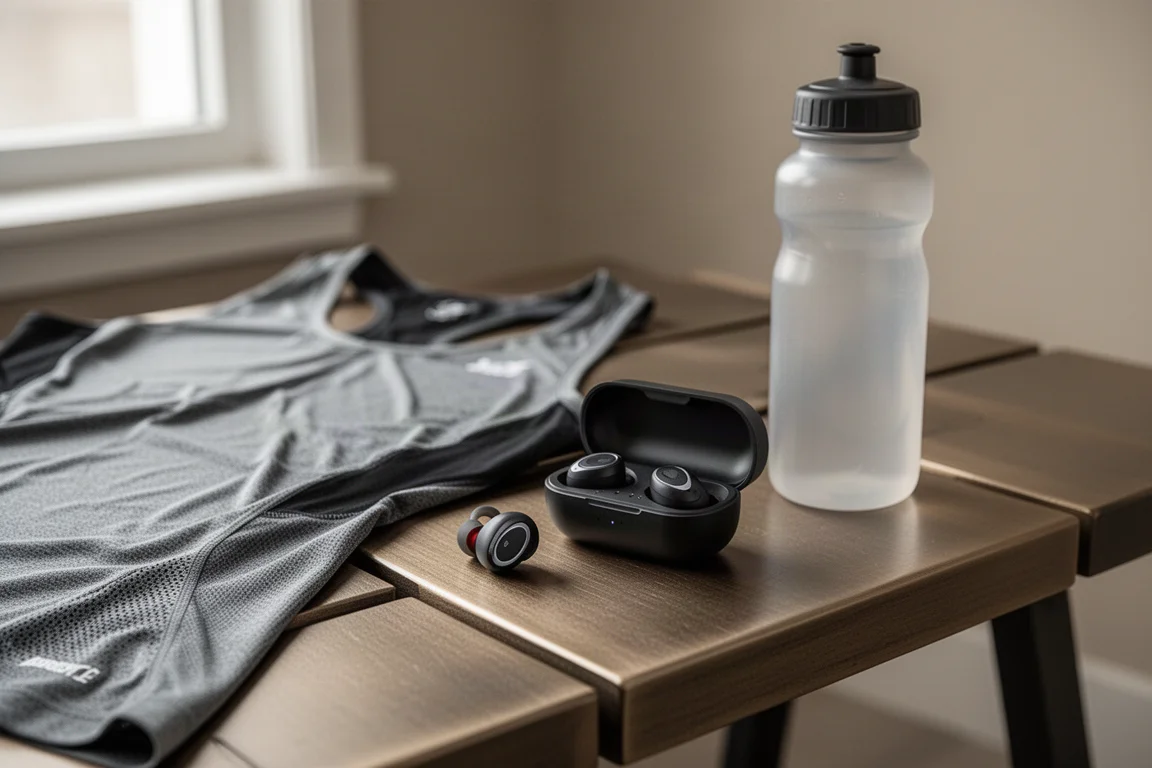
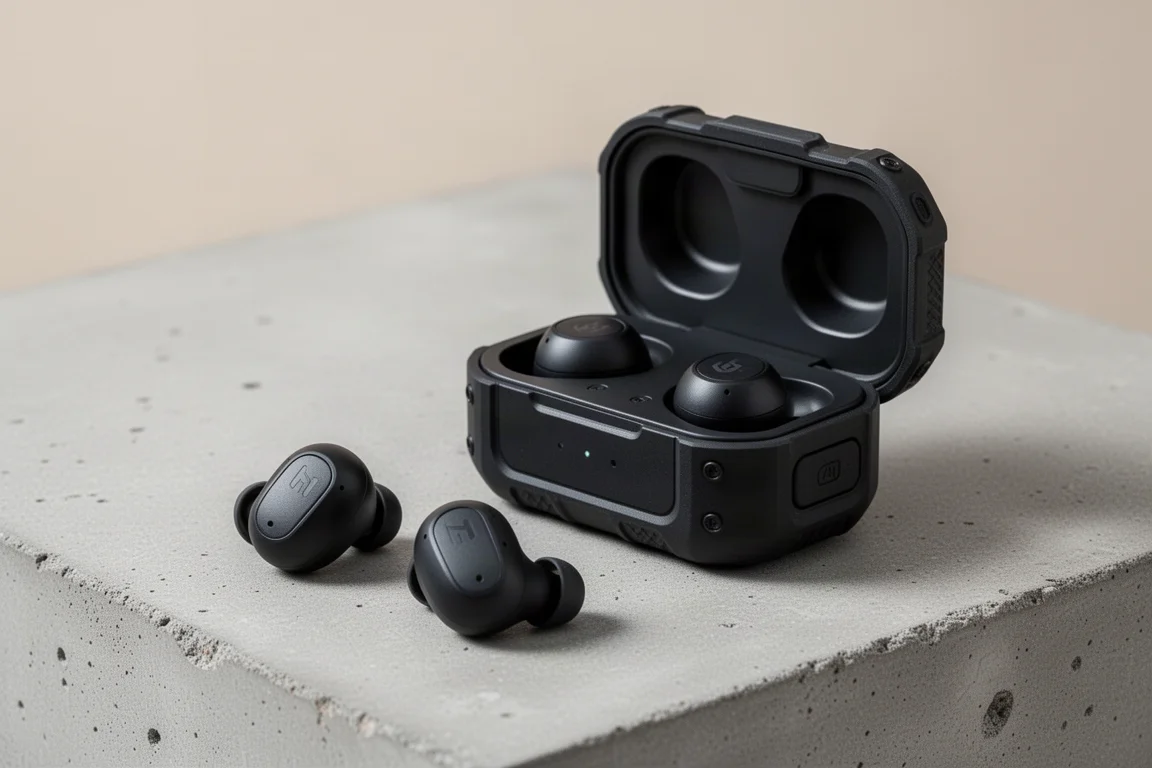
Fit is the headline. The wing tips give extra security, and the buds stayed comfortable over a full marathon distance, which is the reassurance you want when you are reaching for a gel late in a race and cannot afford to fumble. Durability runs through the design, on the buds and on the case, so a downpour mid-race is an inconvenience rather than a disaster. The case is small, rugged, and fitted with a clip that hooks onto a running belt.
Battery life is around eight hours, with plenty more in the case for longer efforts. Sound is punchier than the first generation Vista and carries both power and a little finesse, with custom EQ available if you want to shape it. Find My Buds is split so you can locate the buds and the case separately, which is genuinely reassuring if you have ever lost a pair in a finish-line crowd.
At around £189 to £190 they are not cheap, and the competition at this price is close. The combination of a locked-in fit, a rugged case, and long battery life is what tips it.
Best Open-Ear Option: AfterShokz Aeropex
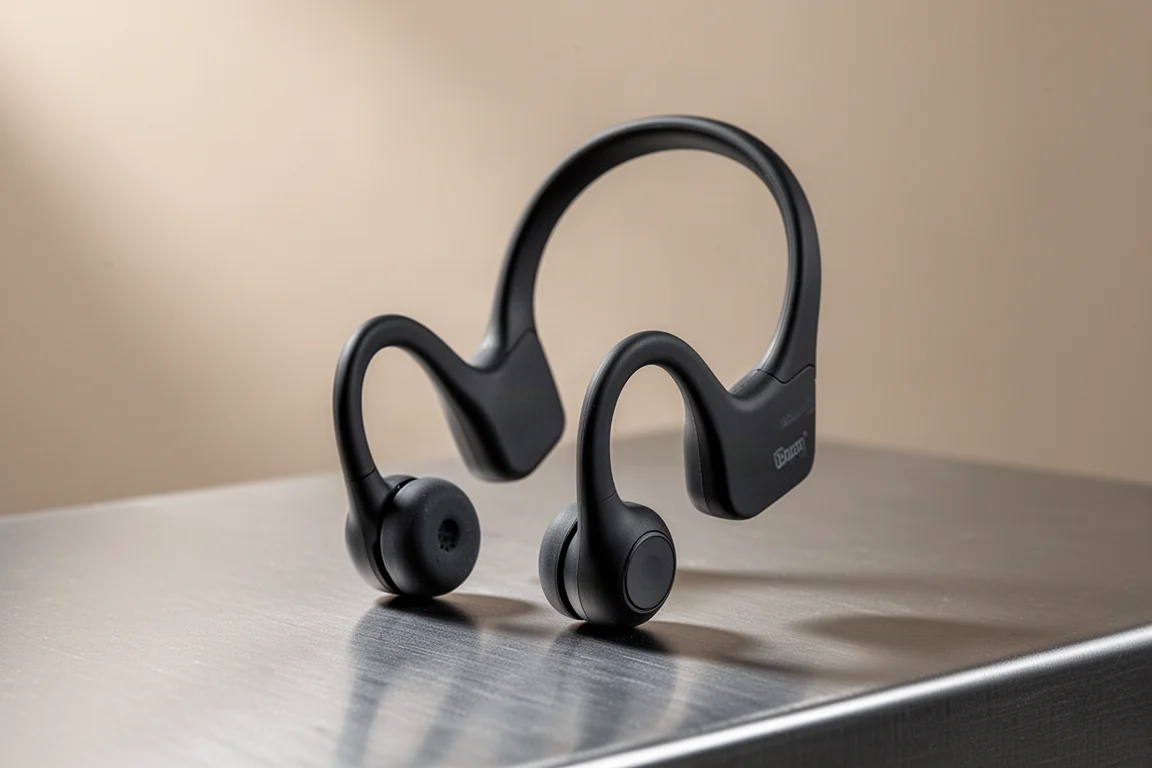
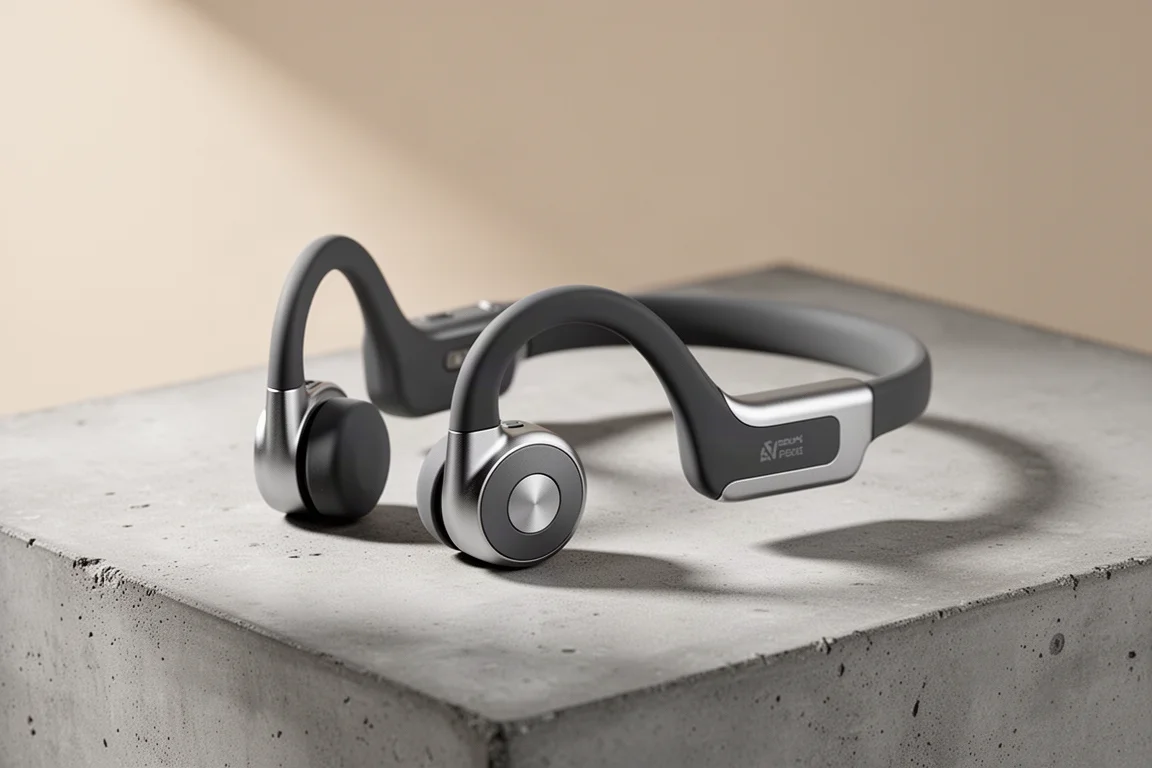
Bone conduction works differently from everything else here. The headset sits outside the ear and sends sound through vibration, via the cheekbones, which leaves your ears completely open to traffic and to other runners. At some races that openness is not a preference but the rule, because open-ear designs are the only approved headphone style while in-ear buds are not permitted at all.
The AfterShokz Aeropex is the lightest and most minimal set in that range, with around eight hours of battery and a comfortable fit you can forget about over long distances. The sound experience is consistent with the rest of the open-ear range rather than a dramatic step up, so the decision comes down to weight and comfort rather than audio.
The trade-off is inherent to the format. There is no active noise cancellation and no isolation, and the low end will not match a sealed in-ear design. What you get instead is situational awareness, which is precisely what many runners want on open roads.
Buying Advice: Matching the Headphone to the Run
Start with the job the headphones need to do. If you want a single pair for training, commuting, and calls, a crossover design makes the most sense, and the Jabra Elite 7 Active is the strongest example here. If you use an iPhone and a Mac all day, the AirPods Pro justify their price through switching alone. If you race, prioritise fit security and battery life, and if you run on open roads, think carefully about whether you want any isolation at all.
Battery is the number that disqualifies otherwise good headphones. A marathon takes most runners somewhere around five and a half hours based on average finishing times at the major races, so anything under five hours of real-world runtime, with features such as noise cancellation switched on, is a risk. If you go beyond marathon distance, quick charging and one-bud-at-a-time charging become genuinely valuable.
Fit is the one thing you cannot judge from a specification sheet. Wing tips and ear hooks add security for runners whose ears reject a plain bud, while a compact, low-profile shape is easier to live with in an office. A design that suits one runner’s ears may not suit yours, so it is worth trying more than one shape if you can.
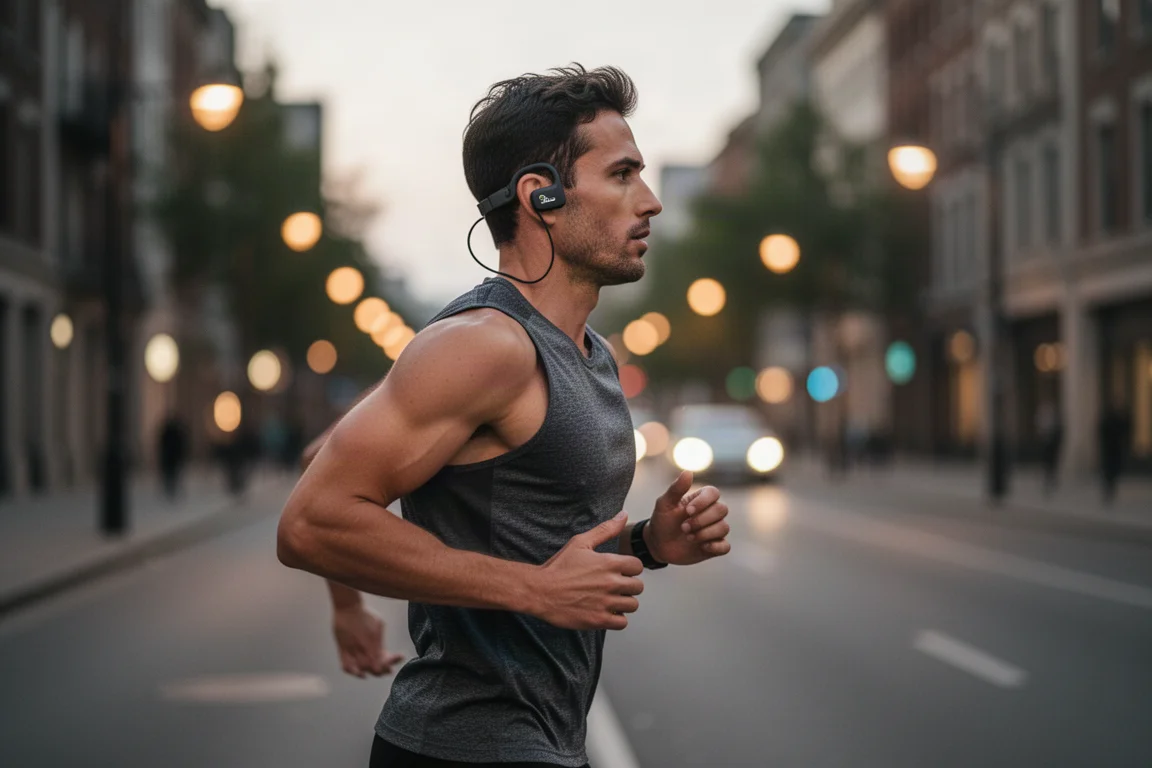
Finally, decide what you want from the outside world. Active noise cancellation is useful in a gym or an open-plan office, while hear-through or transparency modes are better for parkruns, shared paths, and anywhere you need to hear what is coming up behind you.
Conclusion
Running headphones are a fit-first purchase. The Jabra Elite 7 Active remains the most flexible everyday choice, the Tribit FlyBuds 3 proves that a very small budget still buys a genuinely usable pair, and the Jaybird Vista 2 is the one to reach for when the run matters most and everything needs to stay in place. The AirPods Pro and the Nothing Ear (1) sit on either side of the price scale for runners who want their headphones to look as good in the office as they perform on the road, while the AfterShokz Aeropex covers the case where your ears need to stay open.
Further reading
Related Reviews
Running Headphones
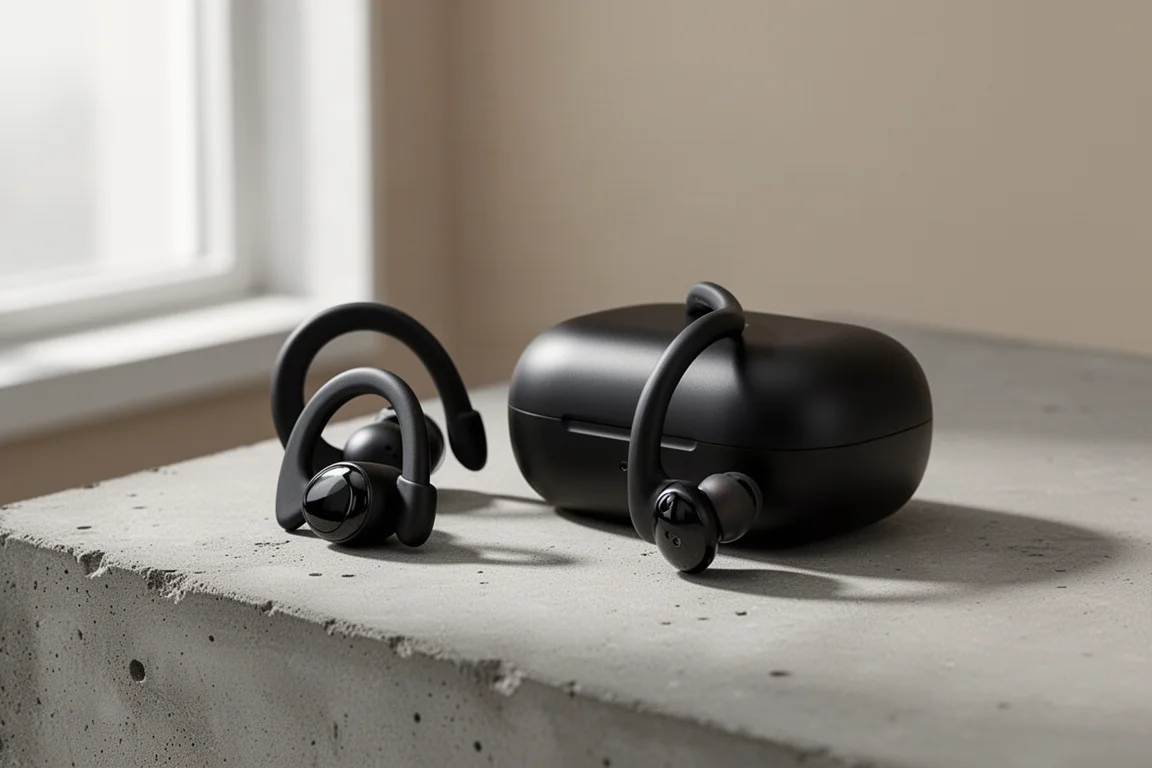
Beats Powerbeats Pro 2 Long-Term Review: Still a Top Pick for Runners
After a year of running, battery cycles, and multi-device pairing, here is how the Powerbeats Pro 2 holds up as a sports earbud.
Running Headphones
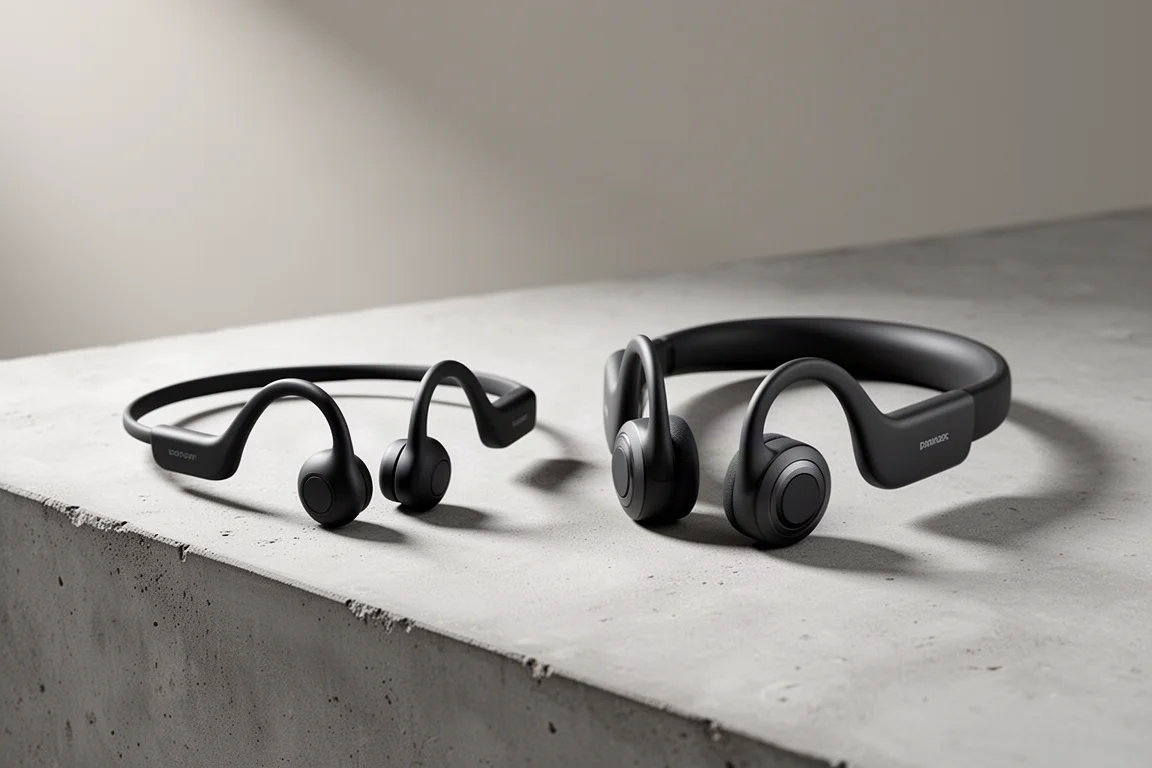
H2O Audio Tri Run vs Shokz OpenRun Pro 2: Which Bone Conduction Headphones Make More Sense?
A value-focused bone conduction option goes up against the best-sounding pair we have tested. Here is how the trade-offs stack up for running and cycling.
Running Headphones
IO Breezy Bone Conduction Headphones Review: Affordable Open-Ear Running Audio
The IO Audio Breezy (IO iT Geo 1) packs Bluetooth 5.3, an IPX6 rating and a 36g frame into open-ear sports headphones that cost about half the price of the leading rivals.