Kitchen Tools
Best Rolling Knife Sharpener: Tumbler vs Horl 2 vs Work Sharp
Three popular rolling knife sharpeners tested side by side with measured sharpness scores, magnet strength comparisons, and a clear overall winner.
Introduction
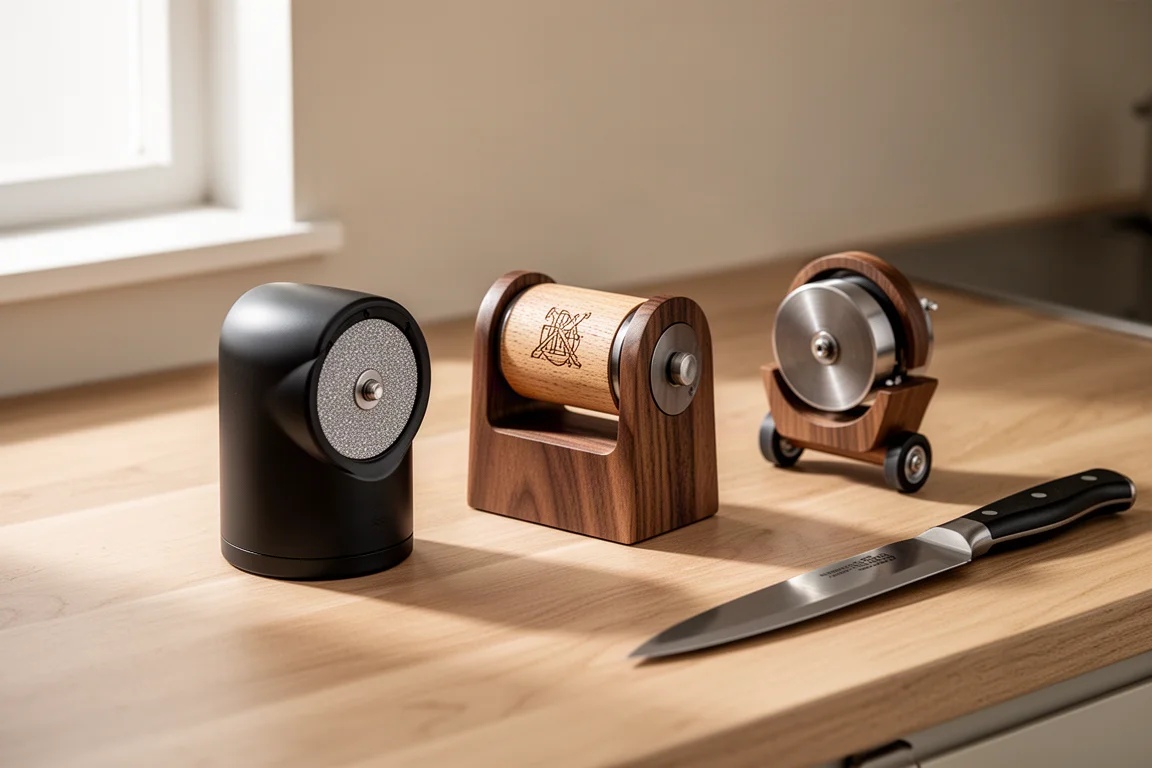
Rolling knife sharpeners promise something every home cook wants: a consistently sharp kitchen knife without years of whetstone practice. Three names dominate the category right now: the Tumbler, the Horl 2, and the Work Sharp rolling sharpener. All three use a similar idea, a rolling abrasive disc held at a fixed angle by a magnetic support, but the details separate them quickly once you start sharpening.
This comparison puts all three through the same gauntlet: identical knives dulled identically, sharpness measured with a BESS Certified Sharpness Tester, plus hands-on checks for ease of use and magnet strength. The results show a clear winner, a clear disappointment, and one solid middle option with a couple of real flaws.
How the Three Sharpeners Were Tested
To make the comparison fair, six chef’s knives made from the same German steel, all with a Rockwell Hardness of around 58, were dulled by sliding each edge 100 times across the side of a whetstone. Sharpness was then measured with a BESS Certified Sharpness Tester, which reports how many grams of pressure it takes for the edge to cut through a wire clip. Lower scores mean sharper knives.
The scoring bands are easy to read: 0 to 400 means the edge is sharp and in good shape, 400 to 800 means the edge needs maintenance, and anything above that is dull or damaged. For context, a butter knife scores around 2000. Every sharpener was used with the same pass counts, the same angles, and the same measurement method, so the numbers are directly comparable.
Tumbler: The Viral Favorite
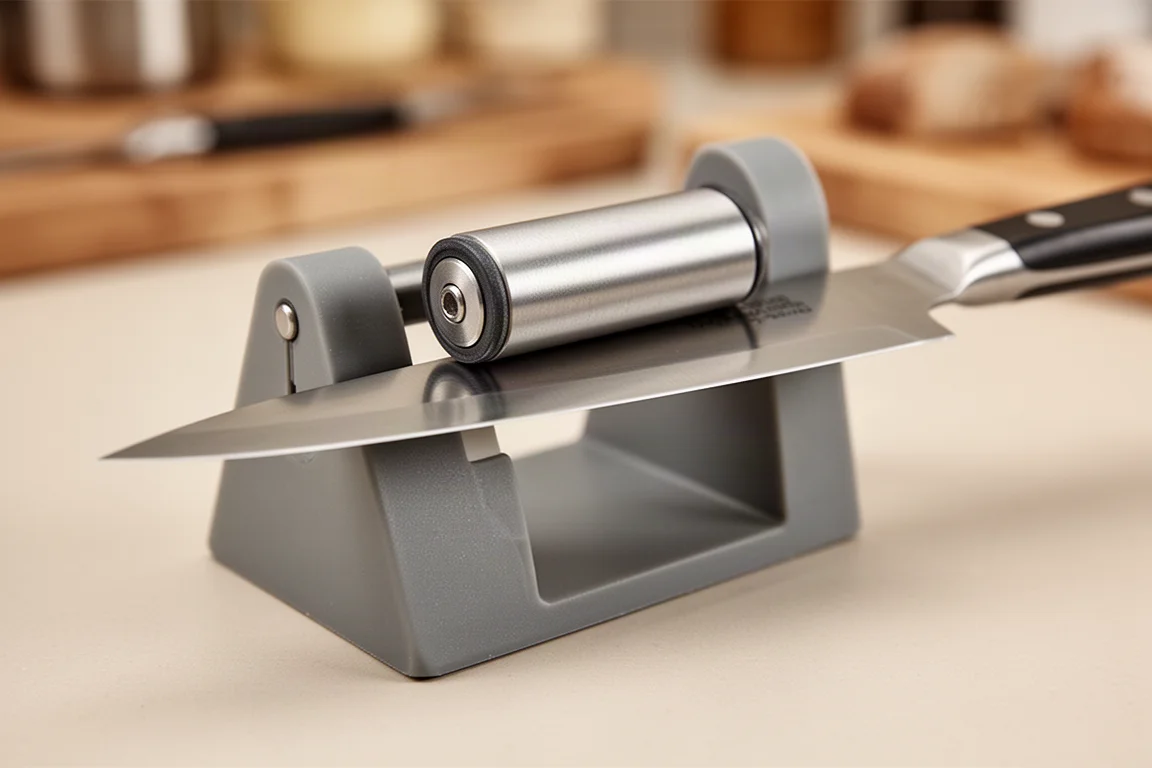
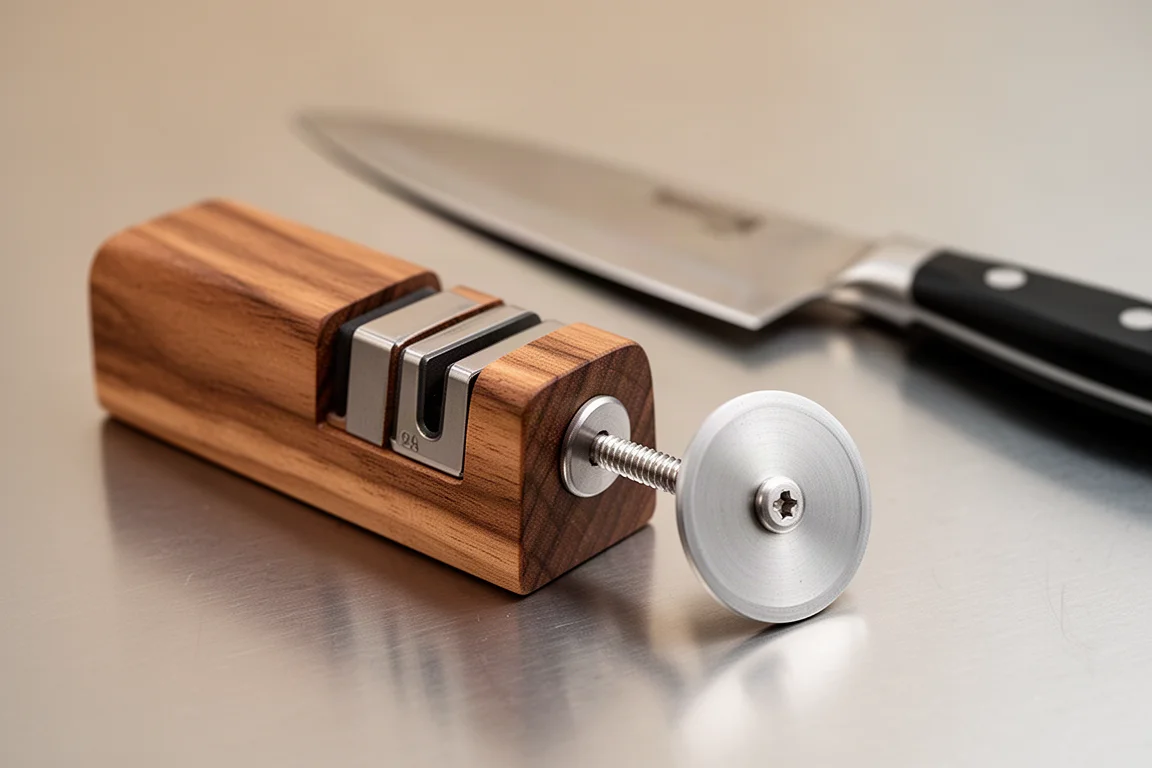
The Tumbler launched in 2022 and became the most popular rolling sharpener largely thanks to viral sharpening clips. It is made in China and lists for $129 on Tumblerware.com. The roller carries a 500-grit diamond disc for sharpening and a metal honing disc for smoothing the edge, and the magnetic angle support offers 15 and 20 degree options.
The big limitation here is that the discs are fixed. Unlike the other two sharpeners, you cannot swap or replace the Tumbler’s discs at all.
In testing, results were mixed. The Cangshan Helena chef’s knife started at a very dull 1,127 and, after 100 passes per side with the diamond disc plus ten with the honing metal, only reached 726. Doubling the passes to 200 per side improved it to 515, a solid gain but still in the needs-maintenance range. The Wusthof Gourmet told a different story: from an initial 1,331, it hit 840 after 100 passes per side, then a razor-sharp 198 after another 200. So one knife did great, one did decently, and consistency is not its strong suit.
Where the Tumbler genuinely excels is magnet strength. In pull-apart tests against both rivals, including tests near the handle and the tip of the blade and a paperclip gap test, the Tumbler’s magnet won every time. Claims that its magnet is much weaker than the Horl 2’s simply did not hold up. The main downsides are the non-removable discs and a roll that feels slightly stiffer and less agile than the Horl 2.
Horl 2: The Premium All-Rounder
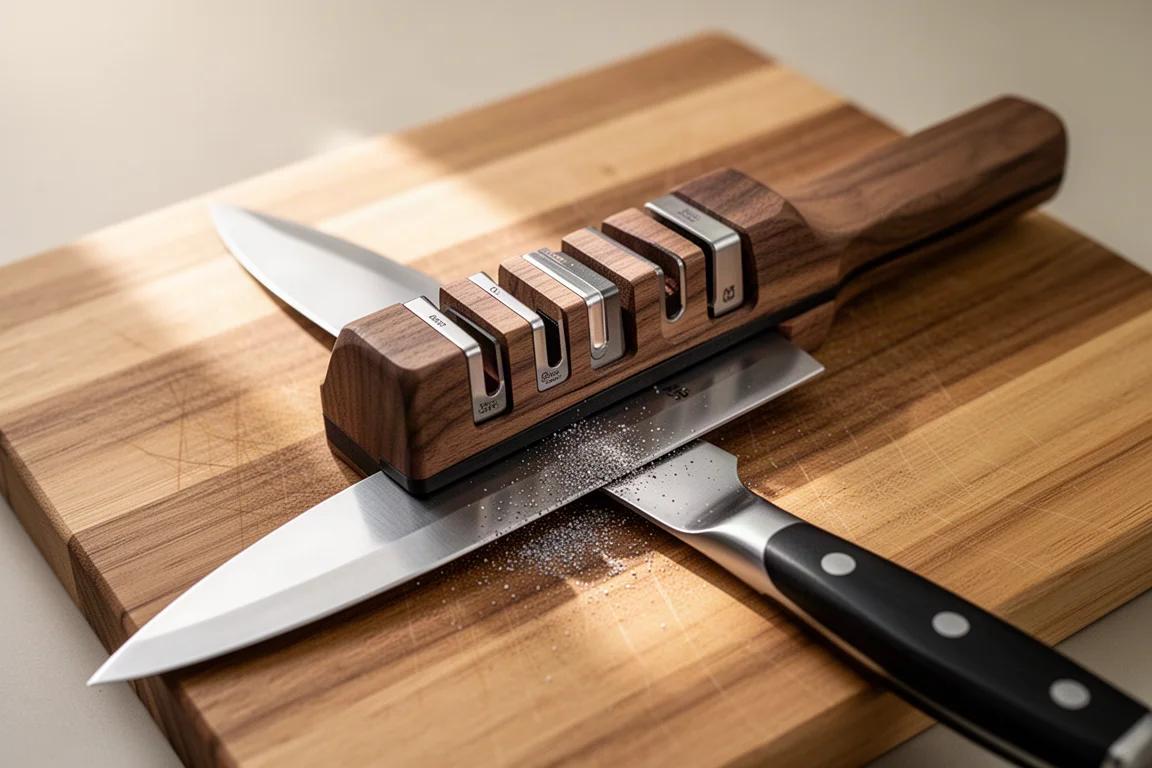
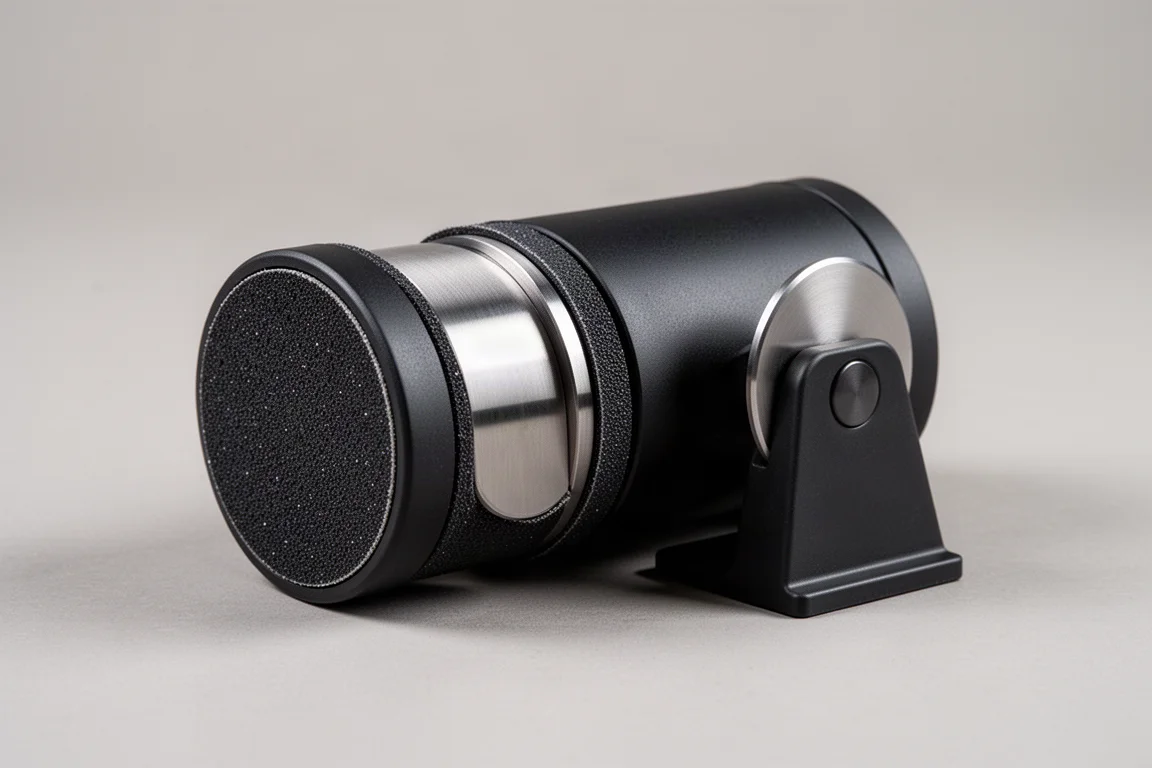
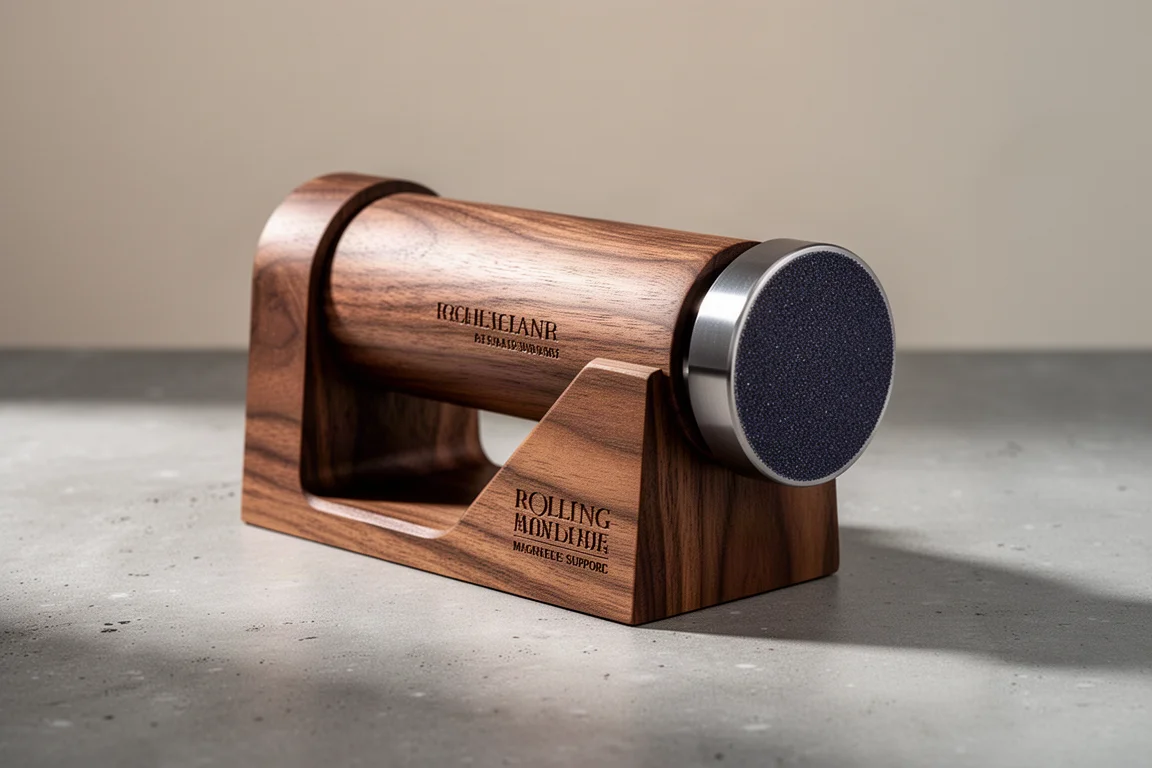
The Horl 2 is made in Germany and is the most expensive of the three at $189 on Horl.com. Like the Tumbler, its magnetic angle support offers 15 and 20 degree sides, but the support is a full inch longer, giving you more to hold and keeping your off-hand further from the edge. It ships with a 420-grit diamond disc and a 1000-grit ceramic honing disc, and Horl sells 3000- and 6000-grit discs separately if you want an even finer finish. The discs unscrew, so swapping them is simple.
The sharpening results were the most impressive of the group. The Ninja Foodi Premium chef’s knife started at 1,047 and, after 100 passes per side with the diamond disc and ten with the ceramic honing disc, scored 248. That is already in the ideal range for high-end cutlery, and a re-measurement confirmed it at 259. The Wusthof Classic Ikon was more stubborn: 1,178 down to only 1,075 after the first 100 passes, but after 200 more per side it landed at 269, right where you want to be.
Beyond the numbers, the Horl 2 rolls much more smoothly than the Tumbler, which gives you better control, especially on knives with thin tips where you need to curve the roller. The engraved wooden finish also gives it a higher-end look. The one weakness is magnet strength: it lost the pull-apart tests to both rivals. That said, it is still a strong magnet, and no knives moved or detached during sharpening.
Work Sharp: A Familiar Brand That Falls Short
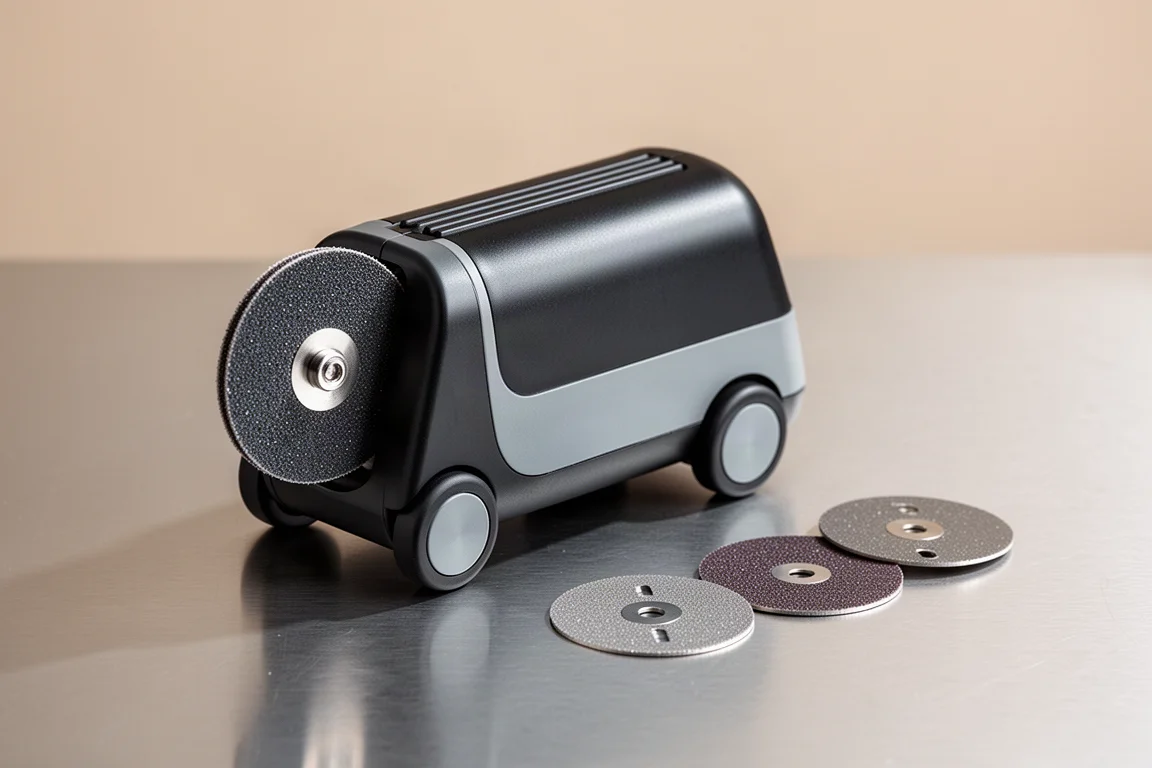
Work Sharp is made in Ashland, Oregon and lists for $150 on WorkSharpTools.com. Its design departs from the other two: instead of a cylinder with discs on both sides, it has a spinning disc on one side, two small wheels on the bottom, and a thinner grip area on top. That design turned out to be the biggest problem. Because the disc and the wheels are different sizes, the roller does not glide straight and drags back toward your hand, so you have to actively keep it on course. During testing it pulled off the blade several times and needed quick correction.
The disc spins a little smoother than the Tumbler’s, but nowhere near as smoothly as the Horl 2. On the positive side, the Work Sharp ships with three magnetic discs (a 320-grit diamond, a 600-grit diamond, and a fine ceramic), offers four angles (15, 17, 20, and 25 degrees), and uses larger 2.25-inch discs instead of the 2.1-inch discs on the others, which helps it reach the top of wider blades without propping the knife on a second board.
The performance, however, was disappointing. The Made In chef’s knife started at 1,266, improved only to 1,048 after 100 passes per side, and still scored 812 after 200 more. The Wusthof Classic barely moved from 1,242 to 1,226 in the first round and finished at 813. Both knives remained in the needs-maintenance range. Magnet strength was only middling as well, stronger than the Horl 2 but weaker than the Tumbler. The small angle support also gives you very little to hold on the 15 and 17 degree sides.
Which Rolling Sharpener Should You Buy?
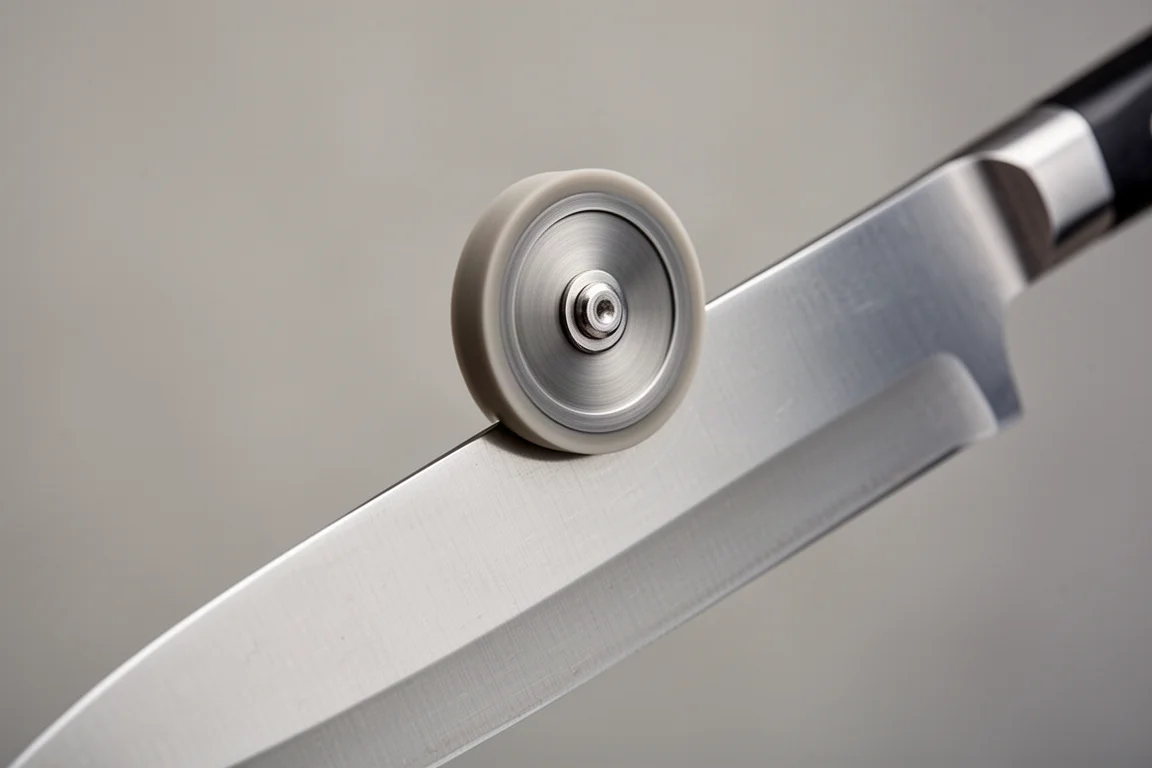
Based on this testing, Work Sharp is clearly the weakest option. Three discs and a larger disc diameter are nice touches, but they cannot offset the worst sharpening results, a weaker magnet than the Tumbler, and a two-wheeled design that is genuinely hard to keep rolling straight. This brand is known for professional-grade sharpeners, but its roller falls short.
That leaves the Tumbler and the Horl 2, and the Horl 2 is the clear winner. It delivered consistently great sharpening results across both test knives, rolls more smoothly for better control, has a longer magnetic angle support, and lets you swap discs for finer grits. The Tumbler’s stronger magnet is a real advantage on paper, but both sharpeners hold knives in place without issue during use, so it does not translate into a meaningful edge. If the budget matters, the Tumbler at $129 remains a solid pick that can produce razor-sharp results with enough passes.
Conclusion
The Horl 2 earns the top spot in this comparison thanks to consistent results, the smoothest roll, and flexible disc options. The Tumbler is a capable runner-up with the strongest magnet and a friendlier price, held back by fixed discs and slightly stiffer rolling. The Work Sharp rolling sharpener trails on sharpening performance and control despite its extra discs and angles. Any of the three beats a dull knife, but the Horl 2 is the one worth stretching for.
Further reading
Related Reviews
Kitchen Tools
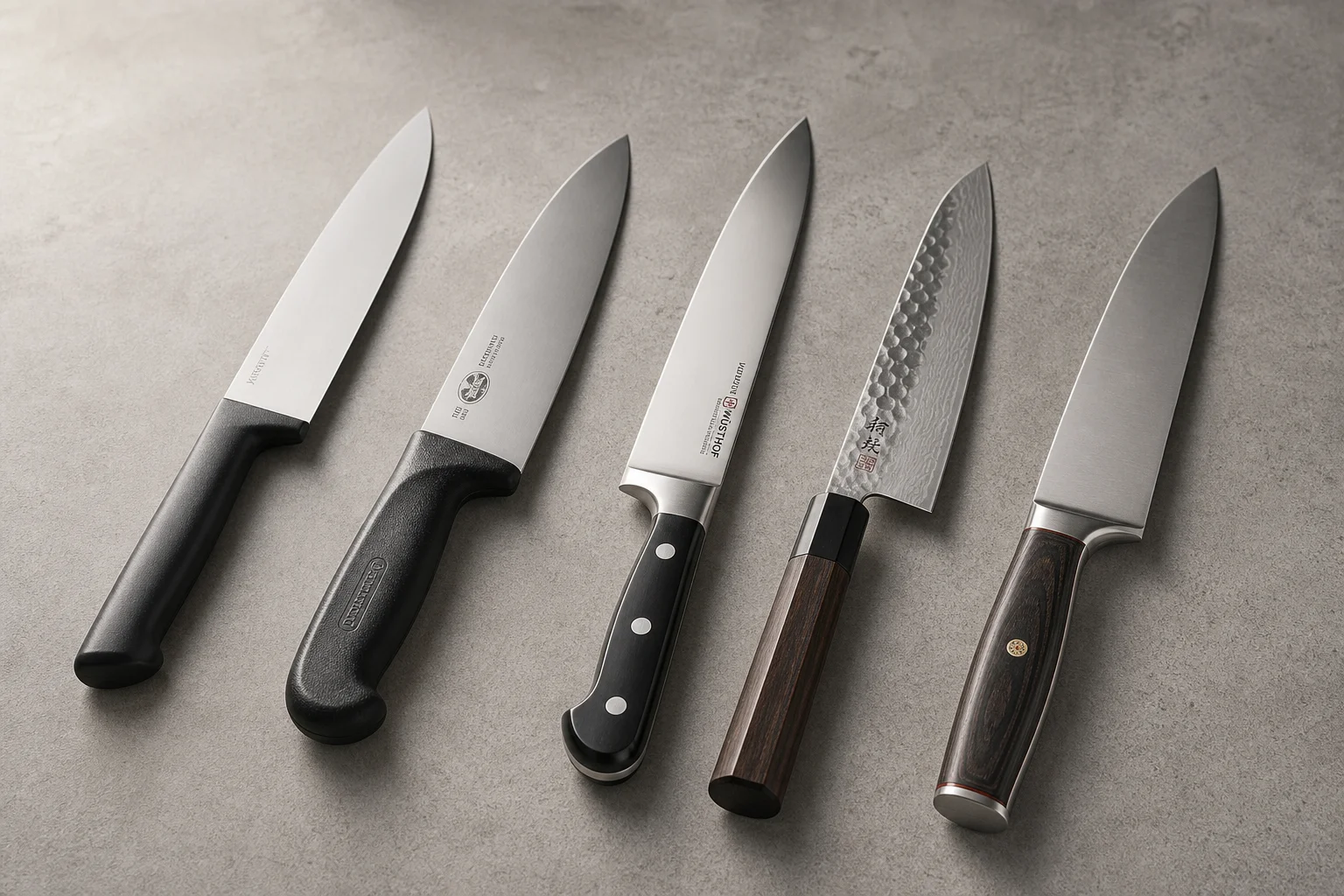
Amazon's Top-Rated Chef Knives Tested: Five Models from £11.50 to £200
We tested five of Amazon's highest-rated chef knives across sharpness, comfort, and versatility to see which delivers the best value and real-world performance.
Kitchen Tools
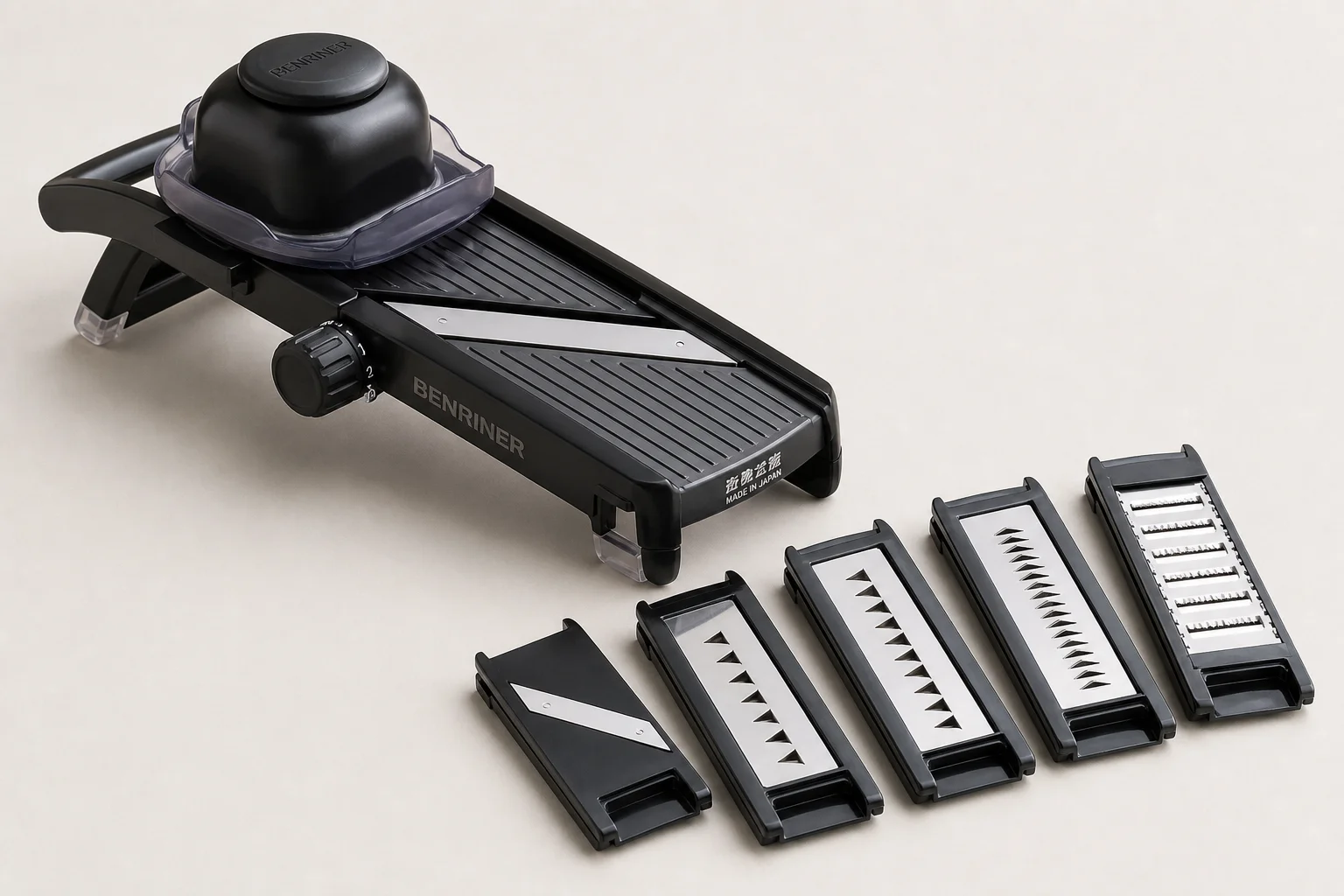
Benriner Japanese Mandoline Review: A Sharp Tool for Precise Vegetable Slicing
A practical guide to using a Japanese mandoline safely and effectively, with tips for achieving consistent, crisp results in the kitchen.
Kitchen Tools
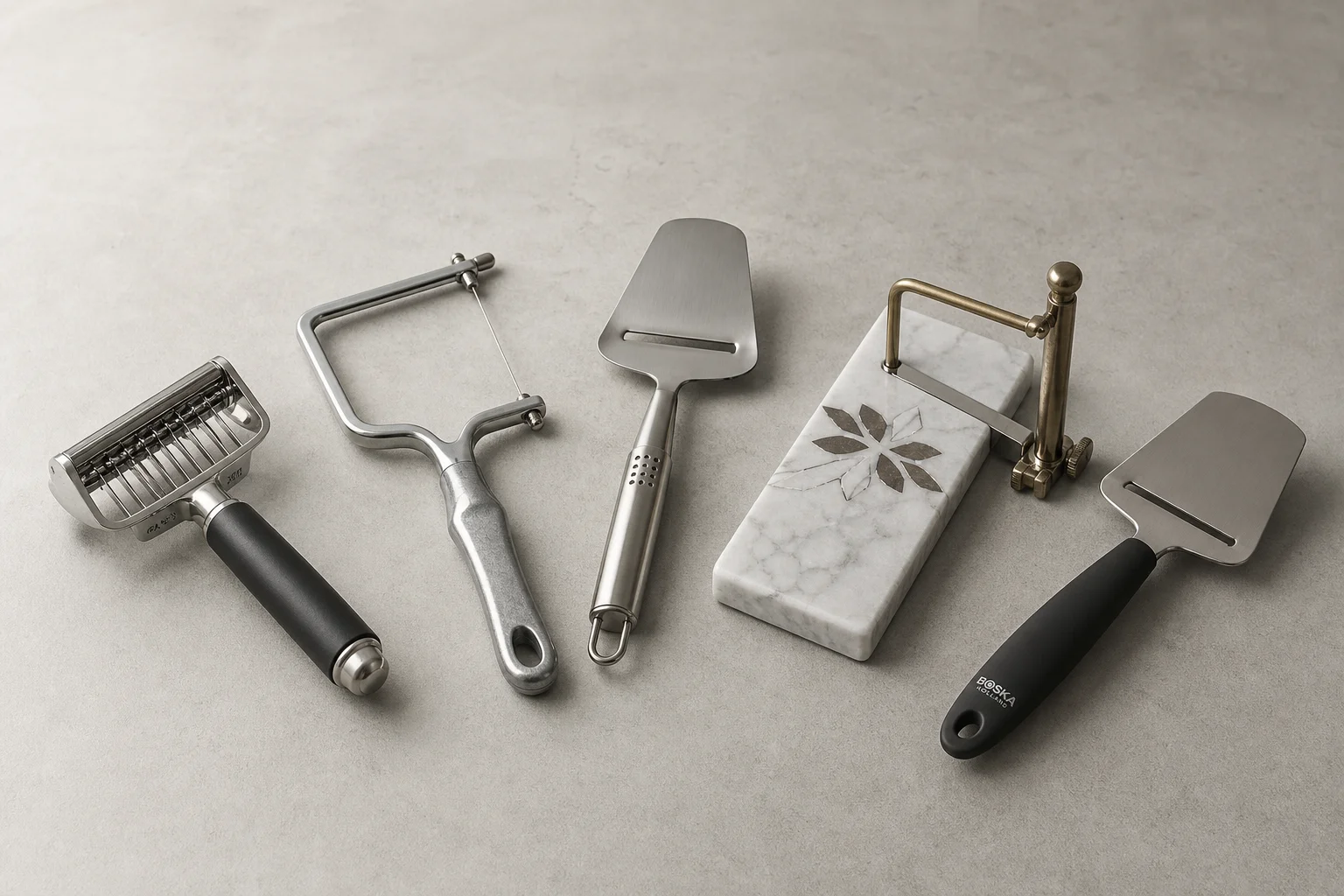
Best Cheese Slicers: Five Practical Options for Consistent Slicing
Five cheese slicers with different designs and features, from multi-blade versatility to wire-based precision, each suited to different kitchen needs and cheese types.