Tools
Pry Bar Utility Knives Compared: Gerber Prybrid vs Milwaukee vs Klein FlickBlade
Three compact pry bar utility knives put side by side, with clear differences in prying angle, comfort, safety, and price.
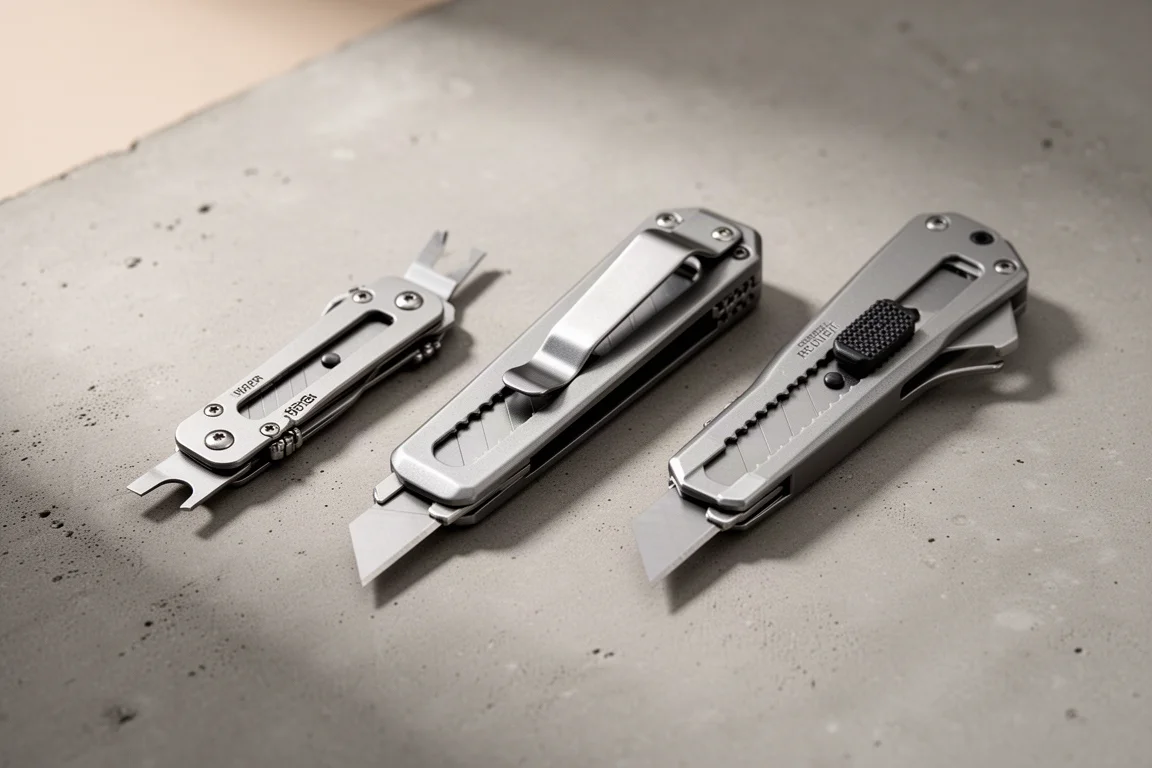
Introduction
Ever since the utility knife was invented, people have misused it as a pry bar. It was inevitable that someone would build a tool with both jobs in mind. Today there are several compact pry bar utility knives on the market, and three of them stand out as very different takes on the same idea: the Gerber Prybrid, the Milwaukee 48-22-1517, and the Klein FlickBlade Prybar Utility Knife.
All three are small, pocketable, all-metal tools that combine a standard utility blade with a prying end. But the way they handle that combination matters a lot in real use, and one of them handles it considerably better than the others.
Evaluation Criteria
The most important question with a hybrid tool like this is simple: when you push hard on the prying end, is there a razor-sharp blade waiting on the other side? Beyond that, the practical criteria are the angle of attack of the prying end, how naturally the knife sits in the hand, how the blade deploys and locks, and whether extras like a bottle opener or pocket clip help or get in the way.
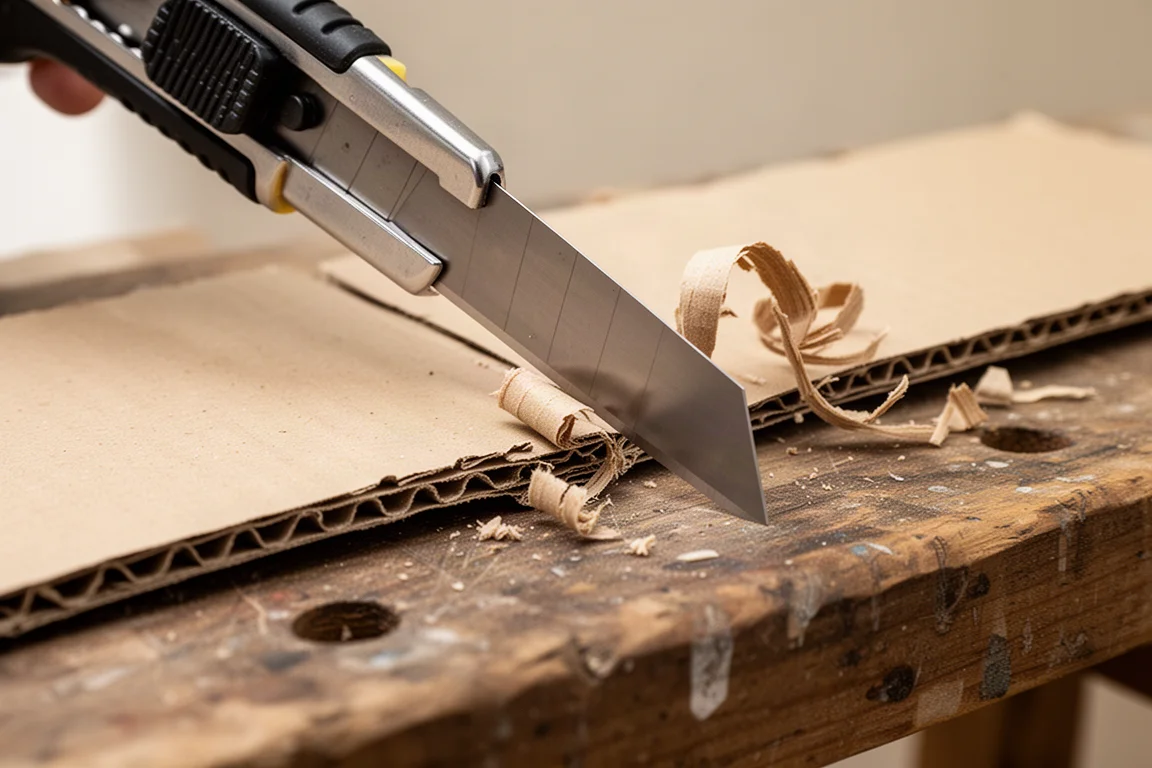
Paint can opening is another classic job for a pry end, so that got tested too, on both larger and smaller cans.
Gerber Prybrid
The Gerber Prybrid runs about 23 dollars at Home Depot, which also sells an exclusive color version, or roughly 30 dollars at sporting goods stores. It has been around long enough to appear in several variations.
One smart choice Gerber made: no pocket clip. On a knife this thin, a clip adds nothing, and on the Milwaukee it turns out to be a genuinely sharp afterthought. Gerber simply left it off. The Prybrid does have a bottle opener at the bottom end, which is handy for indexing but easy to confuse with the blade direction when pulling it out of a bag. The prying angle is noticeably steeper than the Klein’s, which makes it harder to wedge under things like nail heads. For paint cans, it performs poorly, nearly impossible to hold in place compared with a proper lid tool.
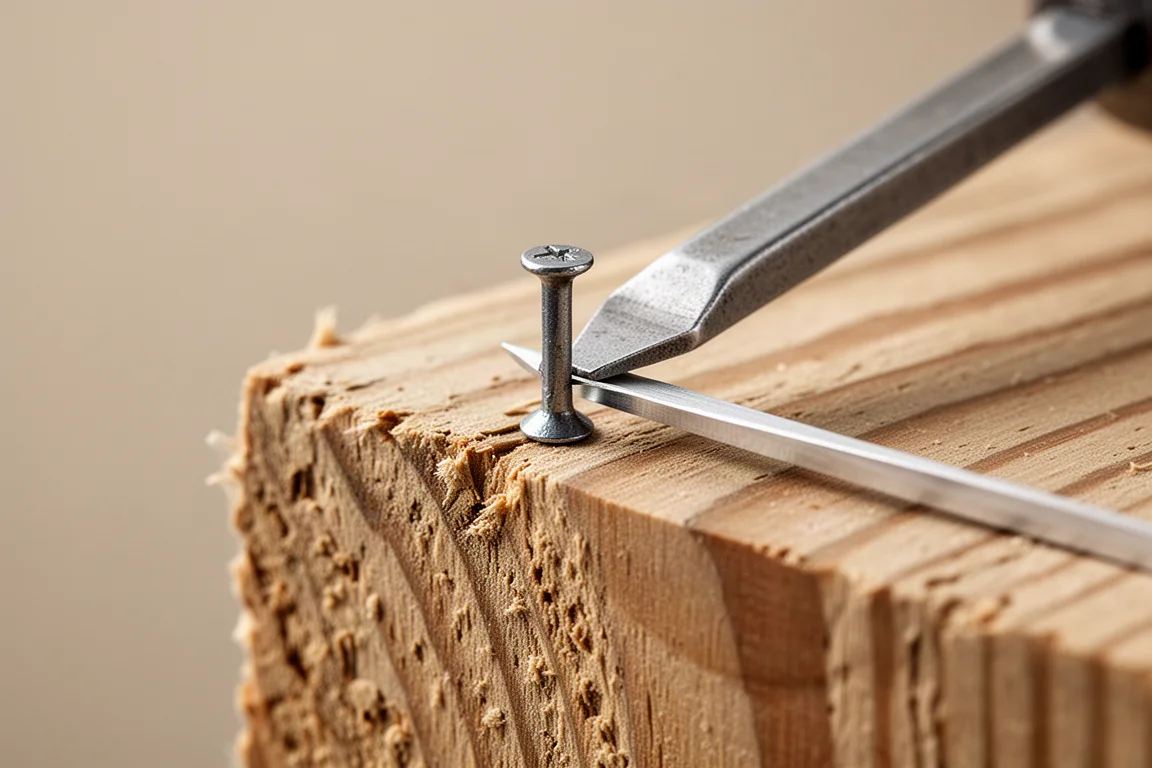
As a utility knife, the blade has one intermediate stop and then full open, with a small thumb ramp that does not interfere once deployed. It is a reasonable design overall, but the prying geometry and paint can performance lag behind the Klein.
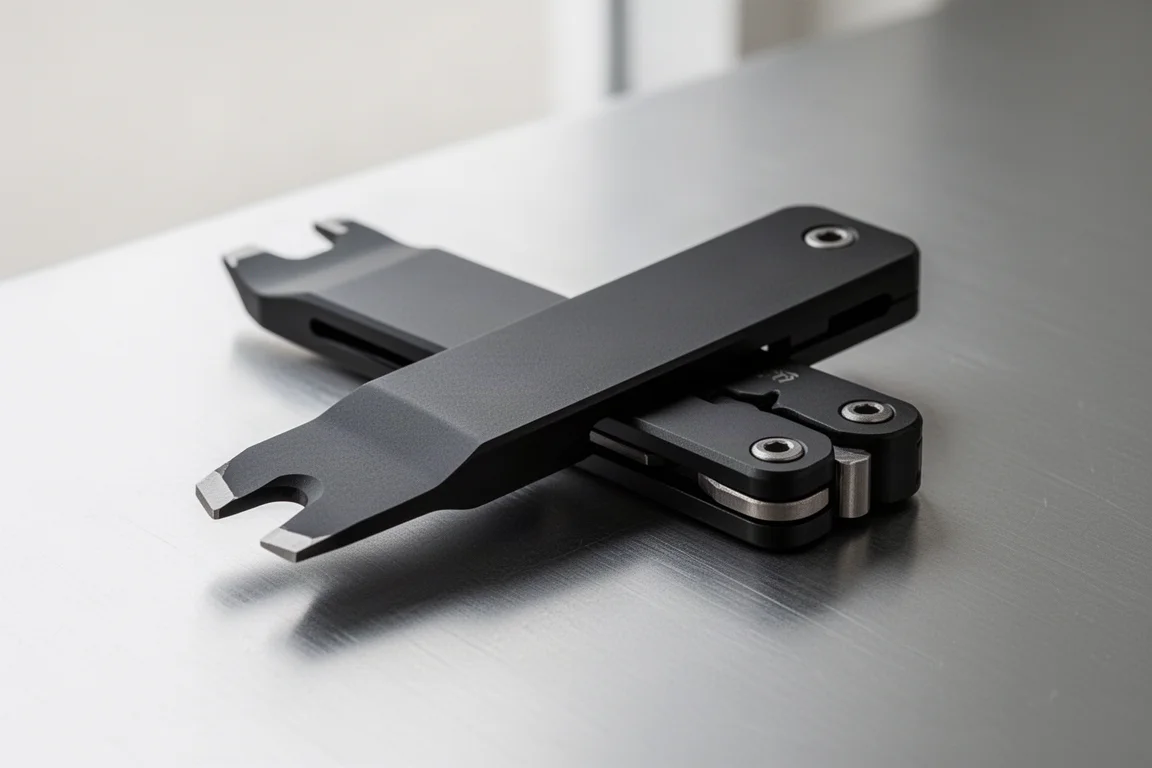
Milwaukee 48-22-1517 Pry Bar Utility Knife
The Milwaukee is the least expensive of the three and it is a genuinely stout little tank of a knife, made of metal as a good pry bar probably should be. But it is by far the weakest execution of the concept.
Two things work against it. First, the prying end is the sharpest of the bunch, almost another knife blade on its own. That sharp edge sits right where your palm wraps the tool when applying force, and you feel it immediately. Second, the reversible pocket clip holder is itself fairly sharp, and there is little reason for a clip on a knife this thin anyway. Carried tip-up in a pocket, the exposed prying end sticks up and feels like a second set of blades.
The blade slide is stiff with multiple stops, and one intermediate position leaves a small blade segment exposed, which feels risky if the tool slips or is not fully locked. The reversed bottle opener, while useful, invites confusion about which end the blade deploys from, which led to pushing the slide backwards while gripping the tool. For prying nails, the thin jaws actually give it the best angle advantage of the three, though there are far better dedicated tools for that job.
Klein FlickBlade Prybar Utility Knife
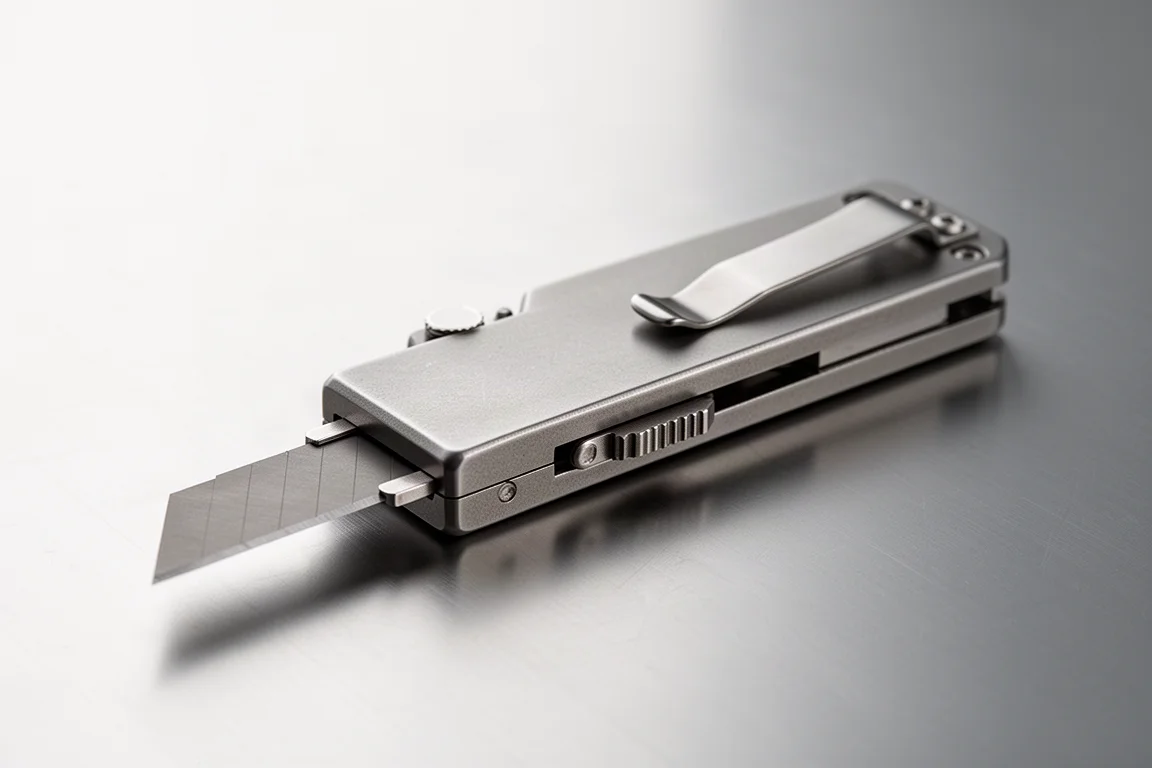
The Klein FlickBlade is the most affordable rethink of the bunch at about 20 dollars, and its key insight is simple: put both the blade and the pry bar on the same side. That locks in the orientation, so both working ends live at the same end of the tool, and there is no confusion about which way the blade comes out.
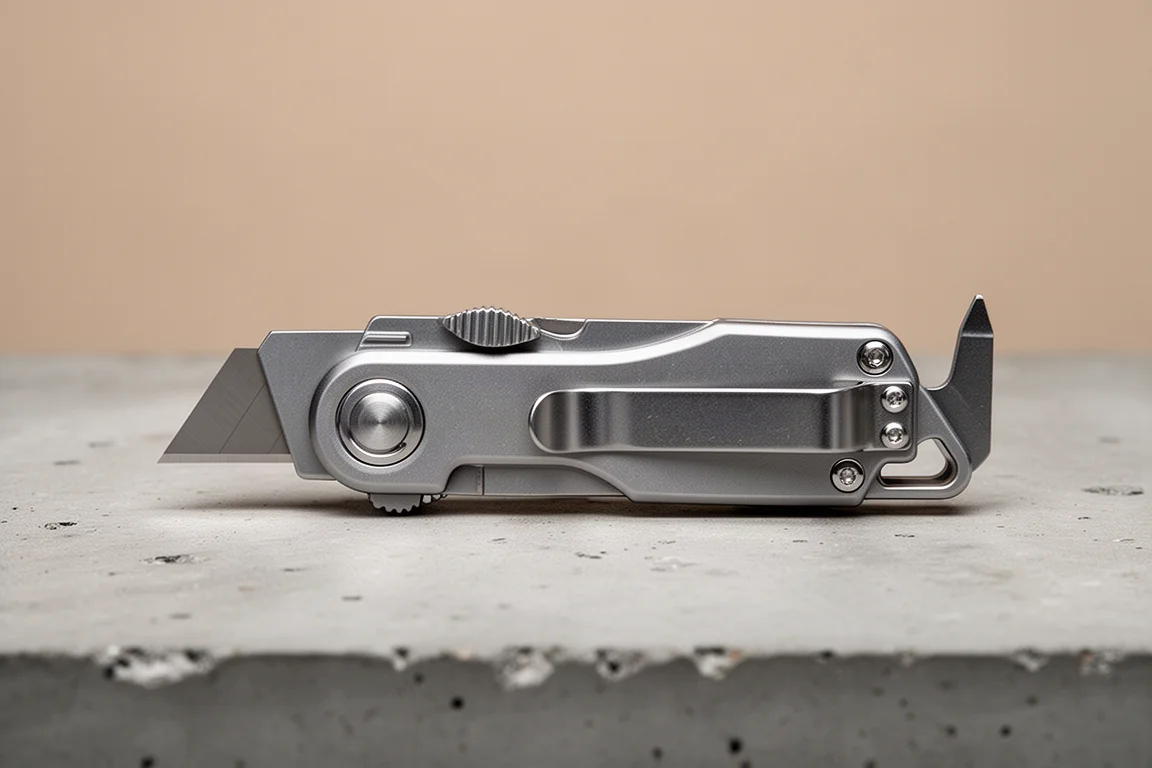
It uses a standard pivot deployment with a satisfying flick, and the blade completely hides when closed with a solid click. The prying end has the lowest angle of attack of the three, thanks to the grind, the tool shape, and an extra little ramp built in for leverage. That lower angle makes it much easier to wedge under nails and other material in the real world.
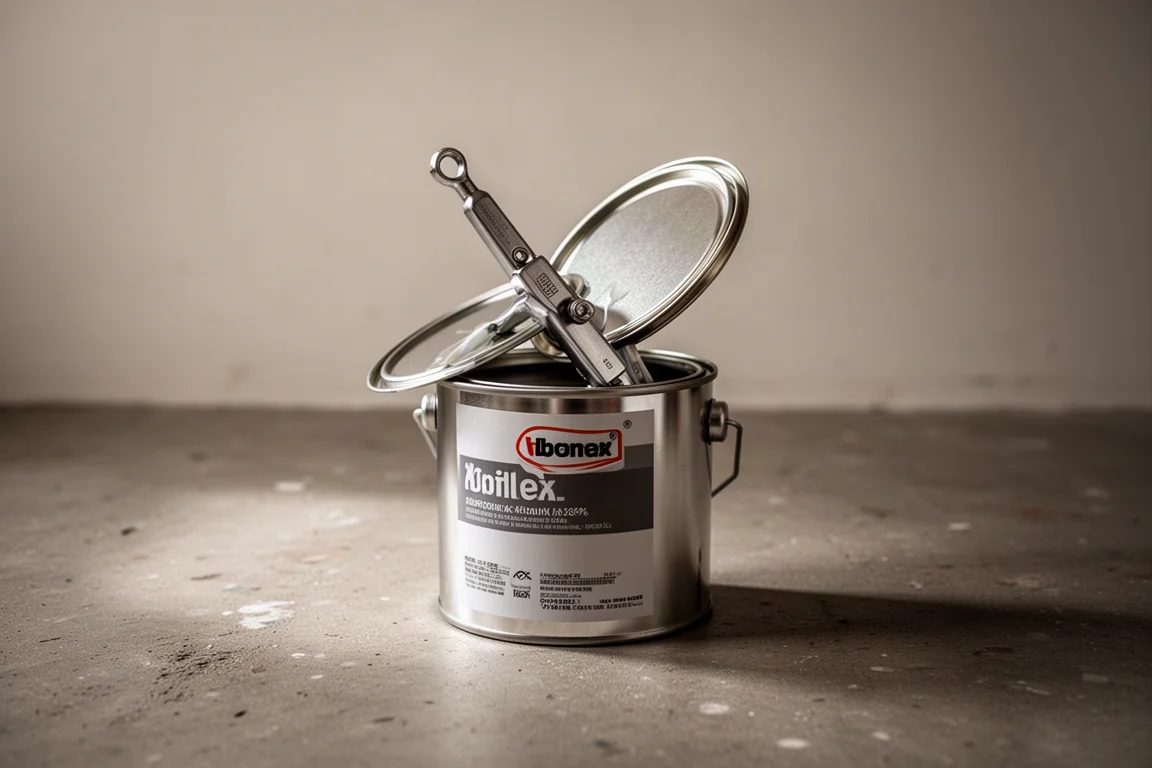
For paint cans, it is the best of the three by a clear margin: it can wedge under and lift larger can lids with a bit of work, and it manages smaller cans too, where the other two offer no joy at all. It has a reversible pocket clip, though tip-down by default, and honestly the tool is probably better kept in a tool bag. There is no dedicated bottle opener, but the pry end can handle one if needed.
The Klein is the tool you can use with confidence and even reckless abandon, because the sharp work ends stay predictable and the hand never rests against an exposed edge.
Buying Advice
If you want the cheapest stout option and mostly need prying leverage with thin jaws, the Milwaukee has some appeal, but the sharp prying end, sharp clip, stiff multi-stop slide, and general unpredictability make it hard to recommend. The Gerber Prybrid is a decent middle ground, especially if you do not want a pocket clip and can accept a steeper prying angle. The Klein FlickBlade is the most thoughtfully designed of the three: same-side blade and pry bar, lowest angle of attack, best paint can performance, and the safest feel in hand for roughly 20 dollars.
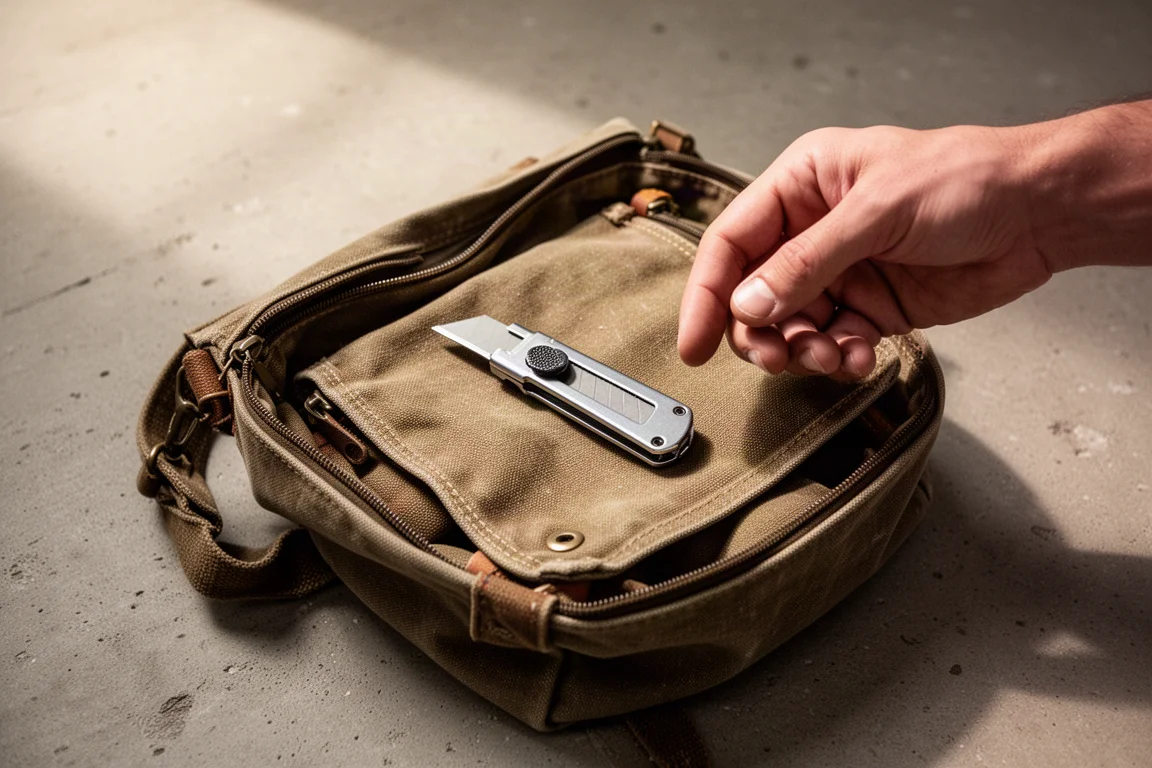
For most people buying one tool to live in a pocket or tool bag, the Klein is the one worth grabbing first.
Conclusion
All three tools solve the same old problem of knives being abused as pry bars, but only the Klein FlickBlade really thinks through where every edge and every end belongs. The Gerber Prybrid is a serviceable alternative, and the Milwaukee, despite being the least expensive, is the one to approach with caution.
Further reading
Related Reviews

Tools
Best Contractor Grade Tape Measures 2026: Eight Models Tested Head to Head
We tested eight contractor grade tape measures from Milwaukee, DeWalt, Crescent Lufkin, Tajima, Stanley, Irwin, Gelan, and Craftsman to find the best value and performance.

Tools
Best Precision Screwdriver Sets 2026: Manual and Electric Options Compared
We compare 19 precision screwdriver sets, from budget manual kits to electric drivers, to find the strongest bits and best value.

Tools
Best Stud Finders 2026: Five Popular Models Put to the Test
We tested five popular stud finders on drywall, firewall, and lath and plaster surfaces to see which ones really find studs and avoid false readings.