Outdoor Power Equipment
Best Pressure Washer by PSI: Matching the Right Machine to the Job
From a budget car washer to a hot-water industrial unit, here is how to pick the right pressure washer for every cleaning job around the home and shop.
Introduction
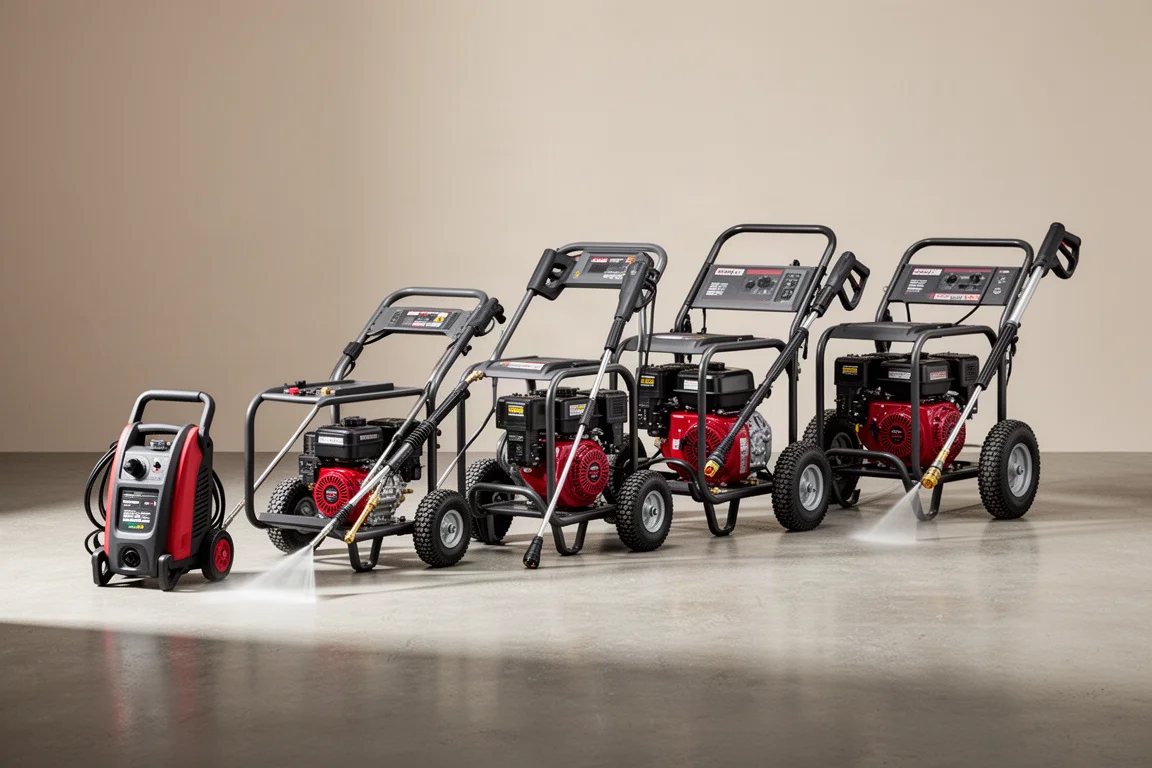
Two questions come up constantly when people shop for pressure washers: which one is the best, and how much pressure do you actually need for a given job? The honest answer is that the best pressure washer is the one matched to the work in front of you. Washing a car and stripping paint from a driveway are not the same task, and the machines built for each are very different.
This guide breaks pressure washers into four power classes and highlights a strong option in each, from bargain-bin electrics to industrial hot-water units.
How to Choose: PSI and GPM Basics
Two numbers define every pressure washer. PSI, pounds per square inch, tells you how much pressure the machine puts out. GPM, gallons per minute, tells you how much water it moves while doing it. Both matter: pressure does the stripping, water flow does the rinsing, and a balanced combination cleans faster than raw PSI alone.
One critical rule applies to nearly every machine here: they are cold water only unless explicitly rated for hot water. Running hot water through a unit with plastic internal parts can melt the impeller and destroy the pump. Even a hose left sitting full of water in the sun can be enough to cause damage, so always run cold water through the system.
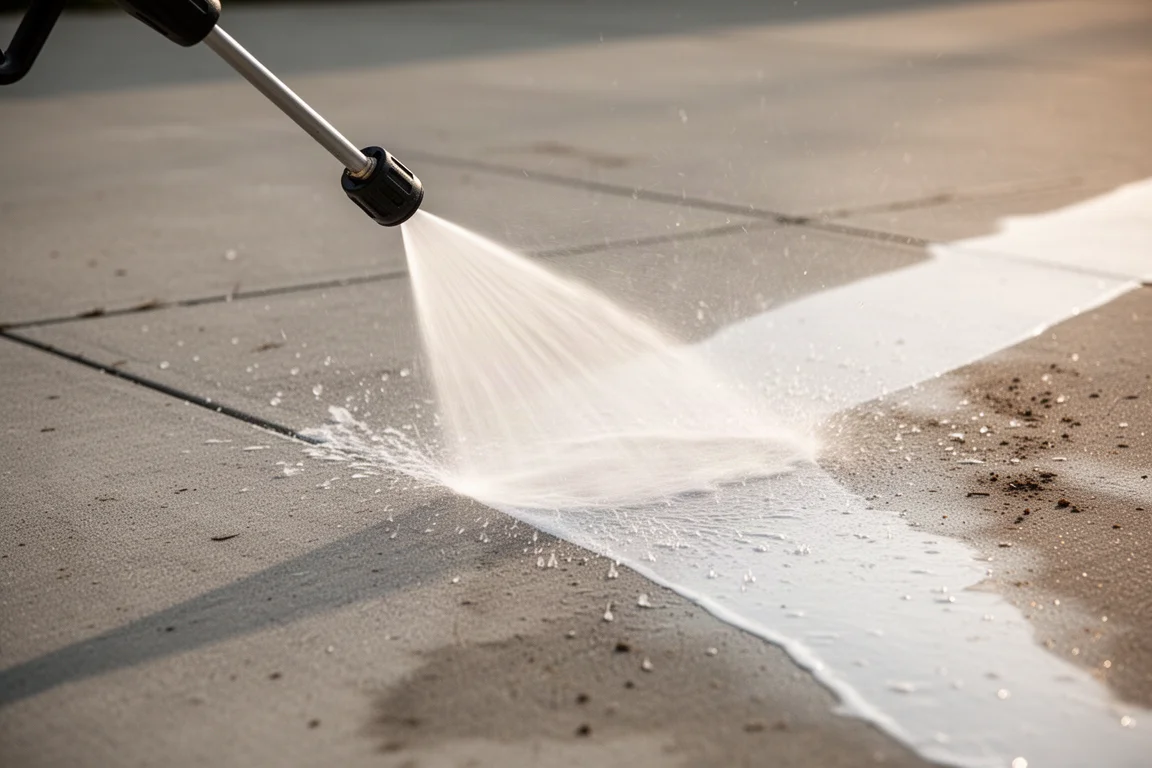
Nozzle choice matters just as much. The zero-degree nozzle concentrates pressure into a pinpoint stream and can damage surfaces or injure you, and it leaves visible lines on whatever you clean. Avoid it unless you genuinely need it. Use 15 degrees for general high power, 25 for medium, 40 for lighter work, and the black or blue nozzle for soap. A turbo nozzle is worth knowing about too: it spirals a high-pressure stream in a circle so you can cover broad areas quickly. Cheaper machines often ship with a single adjustable nozzle instead, and it handles everything reasonably well except the zero-degree tip.
1,000 to 2,000 PSI: Light Duty Around the Home
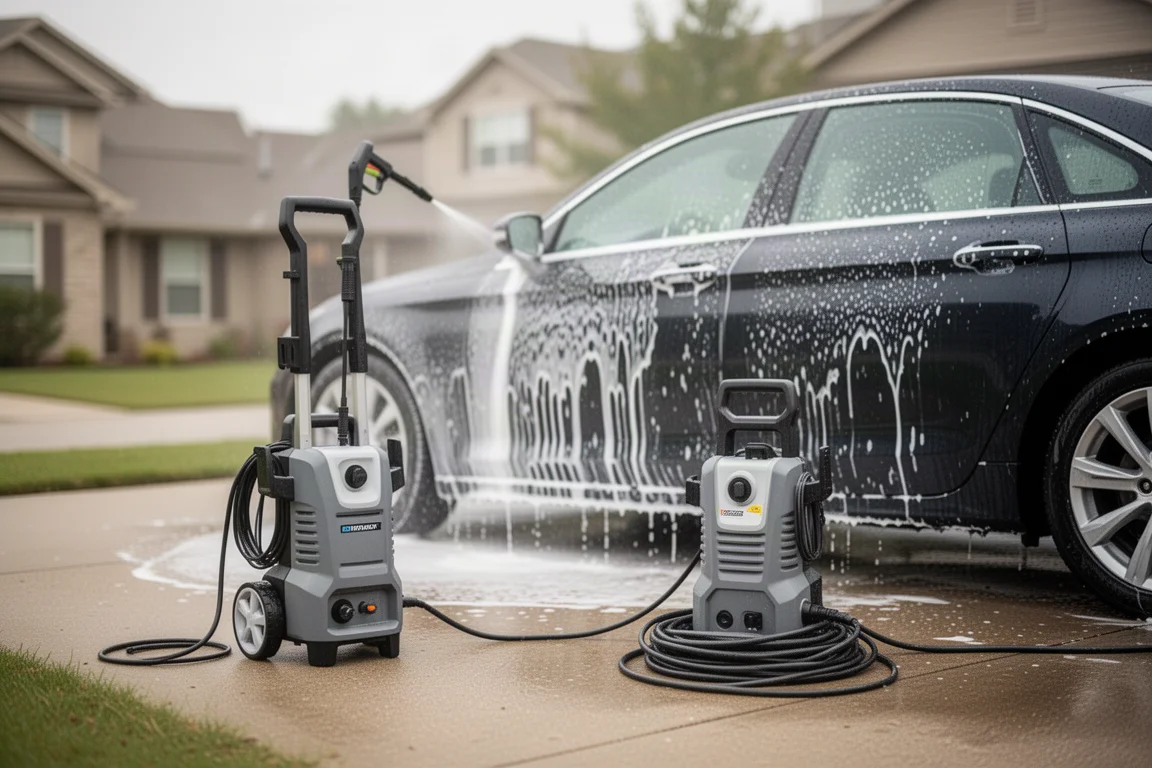
This is the general-purpose class, the step up from a garden hose on full blast. It handles cars, motorcycles, bikes, patio furniture, barbecue grills, and kids’ outdoor equipment without risk of damage.
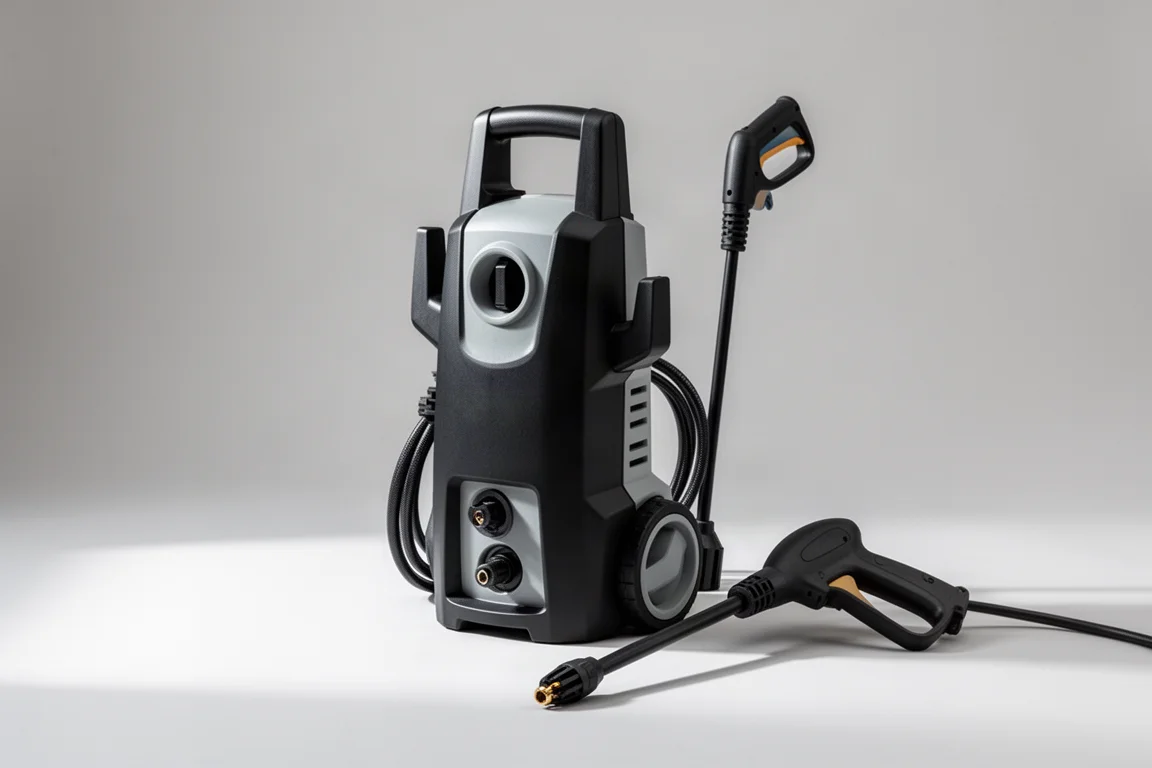
The Harbor Freight Portland pressure washer is the go-to in this class. On sale it runs about 80 dollars, standard price around 100. It is nothing spectacular, but it washes a car just fine and makes a solid basic starter unit for general around-the-house cleaning.
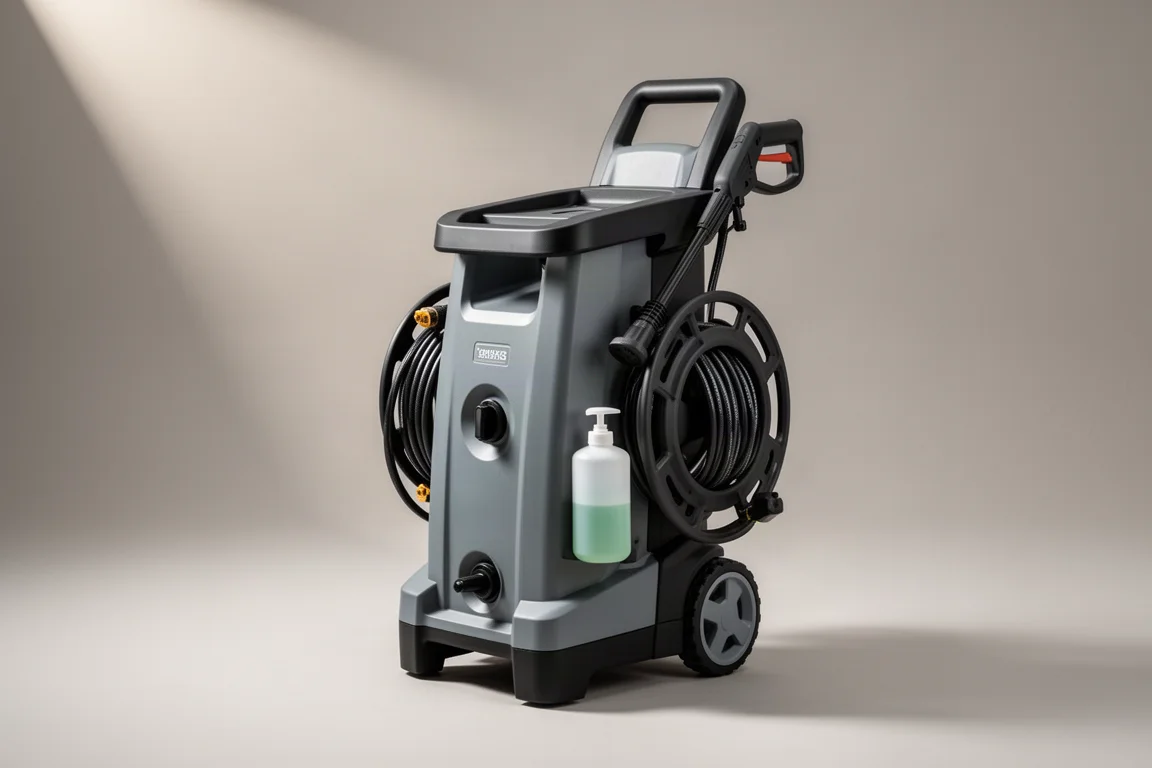
The Yard Force electric pressure washer adds a built-in soap dispenser, a genuinely useful feature at this level. Its real strength is the form factor: dedicated compartments for nozzles, cords, and hose make it neat for compact storage, which is exactly why it suits an RV or tight garage. Expect something in the neighborhood of 109 dollars.
2,000 to 3,000 PSI: The Basic Cleaner Class
Step up to this range and you can tackle fences, garage doors, above-ground pools, docks, and a dirtier truck. The extra pressure gets into wheel wells and lifts grime that lighter machines leave behind.
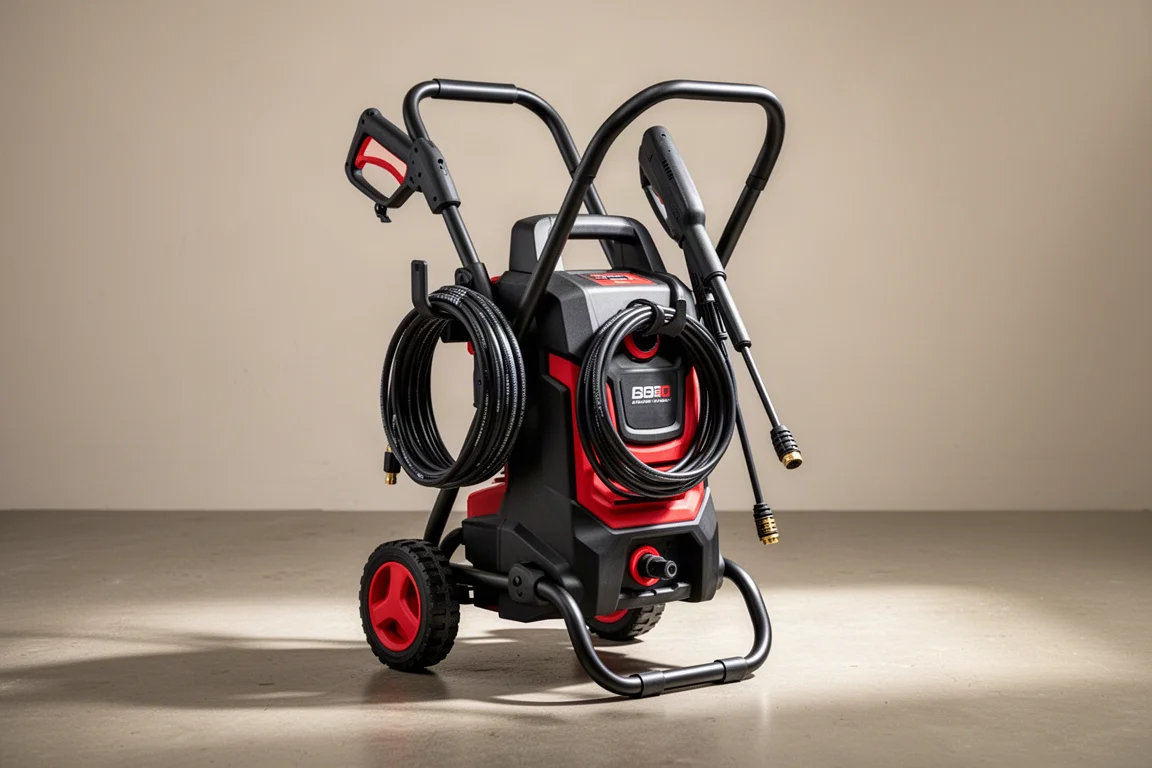
The Harbor Freight Bauer 2300 psi is a dolly-style electric with big wheels, plenty of frame for wrapping cords and hose, nozzle storage, and a soap dispenser. At 239 dollars it is a good option if you want that convenient form factor.
The DeWalt 3000 psi electric plays in the same space at around 300 dollars, and the Hart 2000 psi sits at 209. Honest note: among these higher-PSI electric washers, real-world performance differences are hard to notice, and the rated PSI figures are not rated on identical scales. Choose largely on form factor and price.
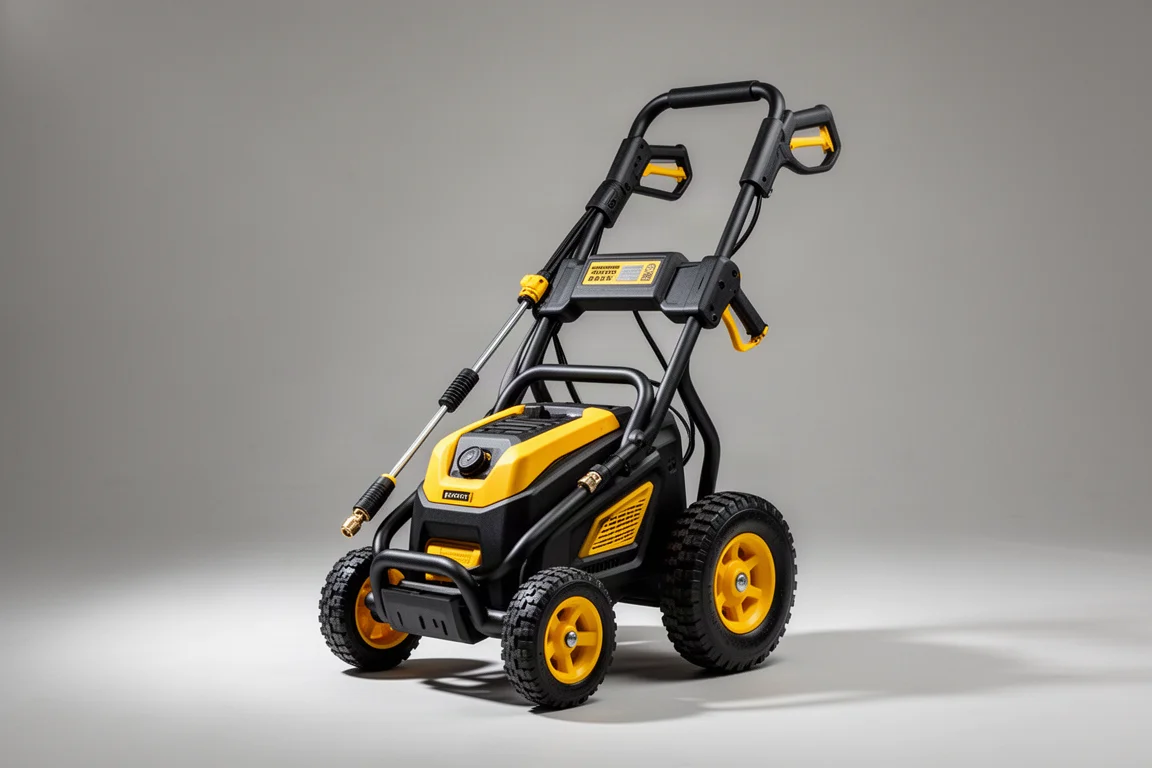
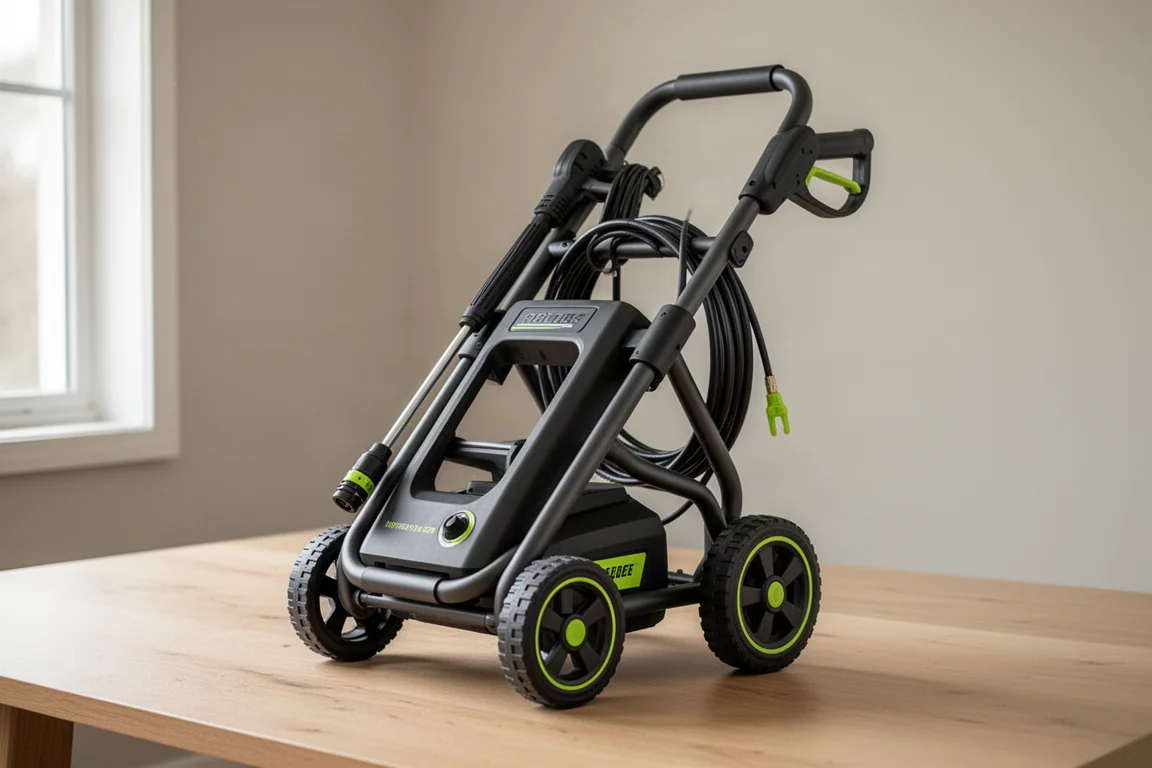
Once you want genuinely sustained cleaning power in this range, gas is the answer. The Predator 2500 psi delivers 2.4 GPM from a 5.6 horsepower, CARB-compliant engine. The number looks like a small step up from 2,300, but sustained gas pressure cleans noticeably better. Predator engines have proven themselves across pressure washers, generators, and even go-kart racing over the years, so they have earned a seat at the table.
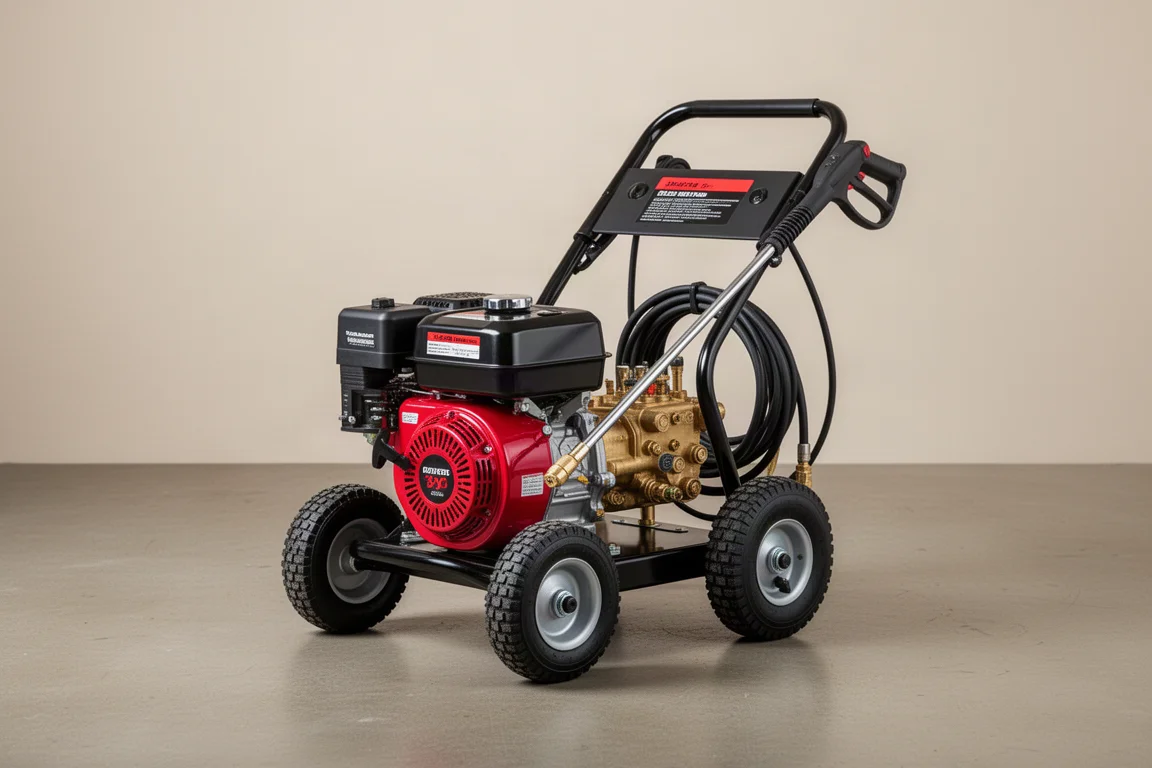
The Champion 2600 psi, at 2.2 GPM in a dolly-style chassis, runs about 394 dollars and comes from a company with a strong generator reputation.
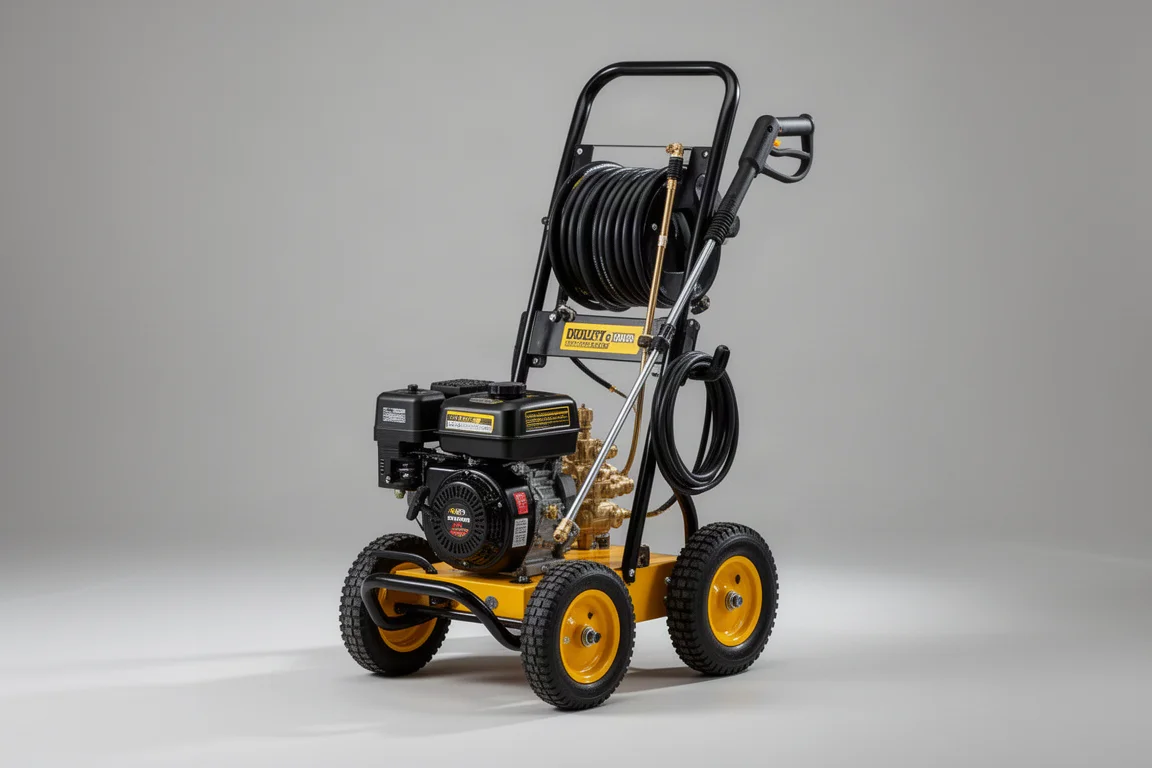
The personal favorite in this tier is the Simpson MegaShot 2800. It pushes 2.3 GPM and, crucially, runs a Honda engine for around 340 dollars. That combination of solid build and a proven engine at that price is hard to argue with.
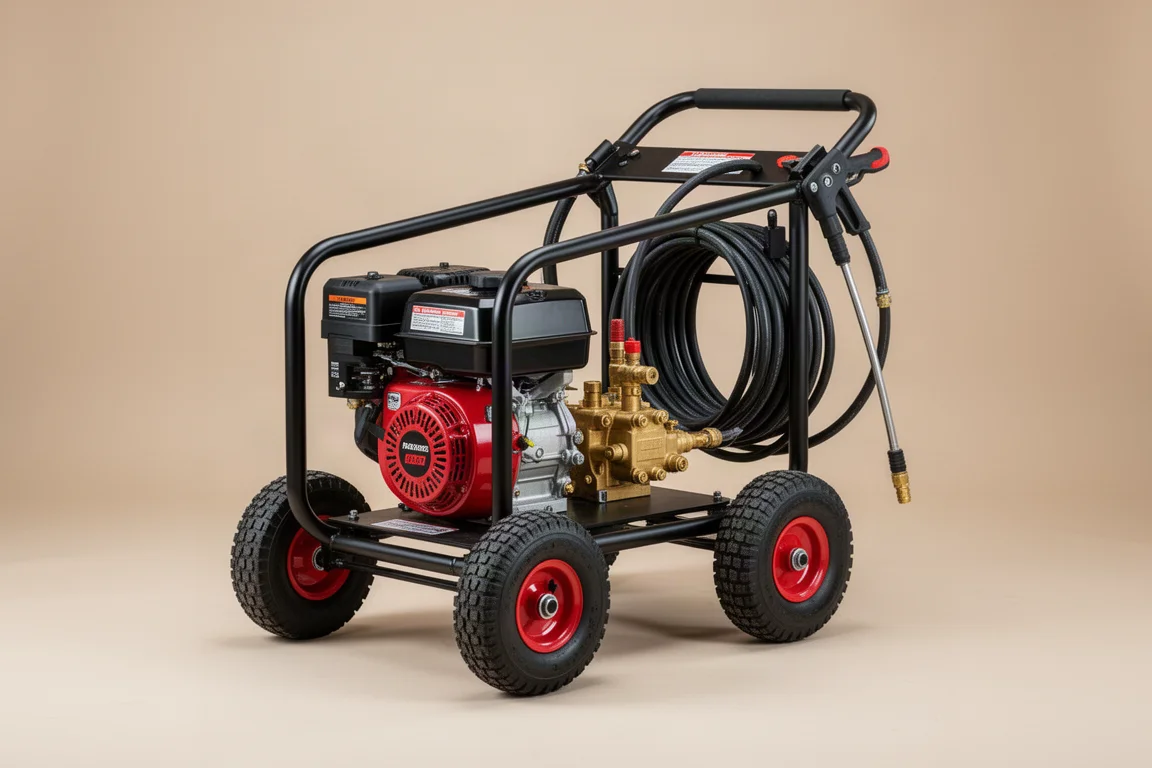
3,000 to 4,000 PSI: Heavy Duty Home and Siding
From 3,000 PSI upward, things get serious. These machines will damage surfaces and injure careless users, so treat them with respect. This is the class for houses, siding, driveways, paint prep, and stripping peeling paint.
The Predator 3200 psi pushes 2.8 GPM from a 6.8 horsepower engine with more robust components throughout, at roughly 400 dollars.
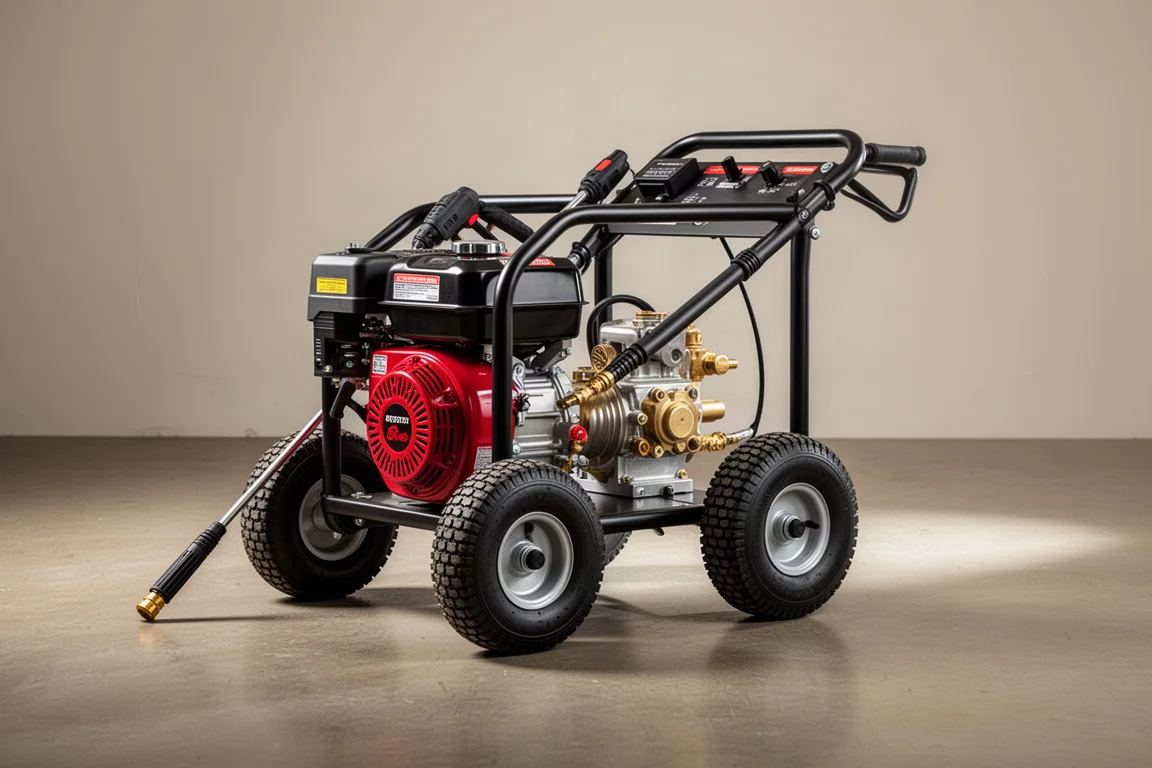
The Lowe’s Kohler 3200 psi entry runs a 196cc Kohler gas engine at 2.3 GPM for 379 dollars, and it comes bundled with a surface cleaner, a genuinely valuable add-on at this price.
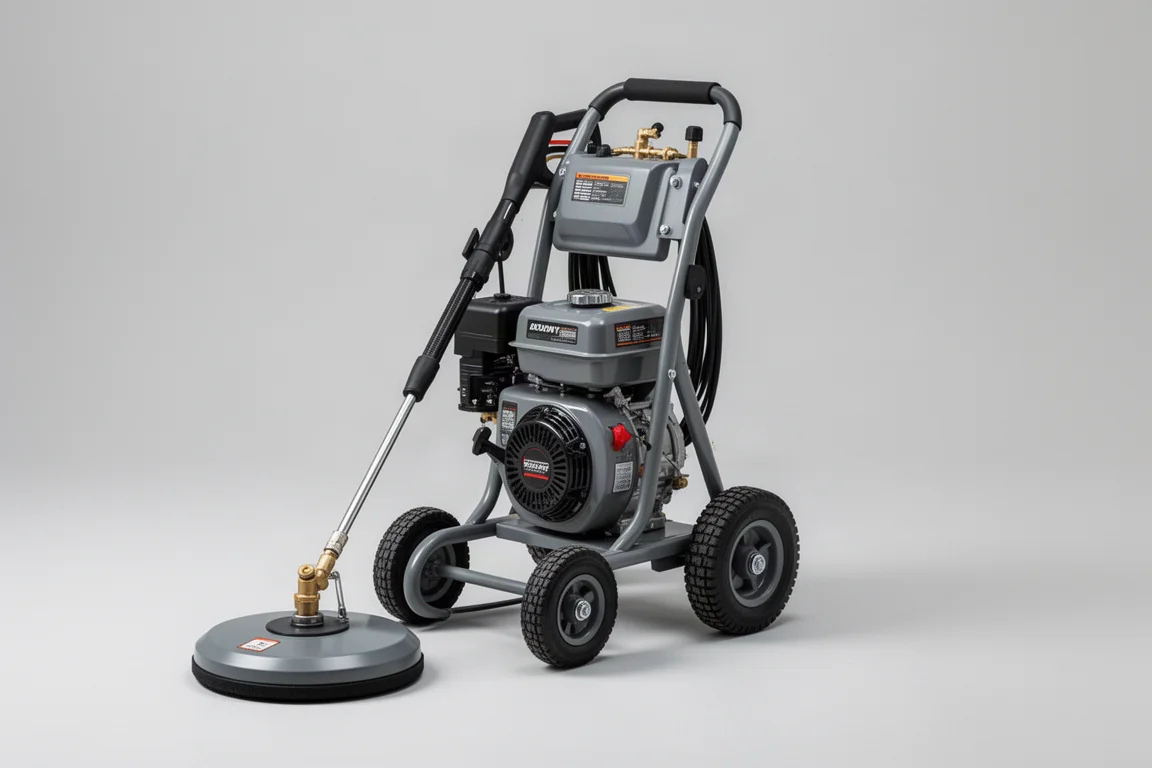
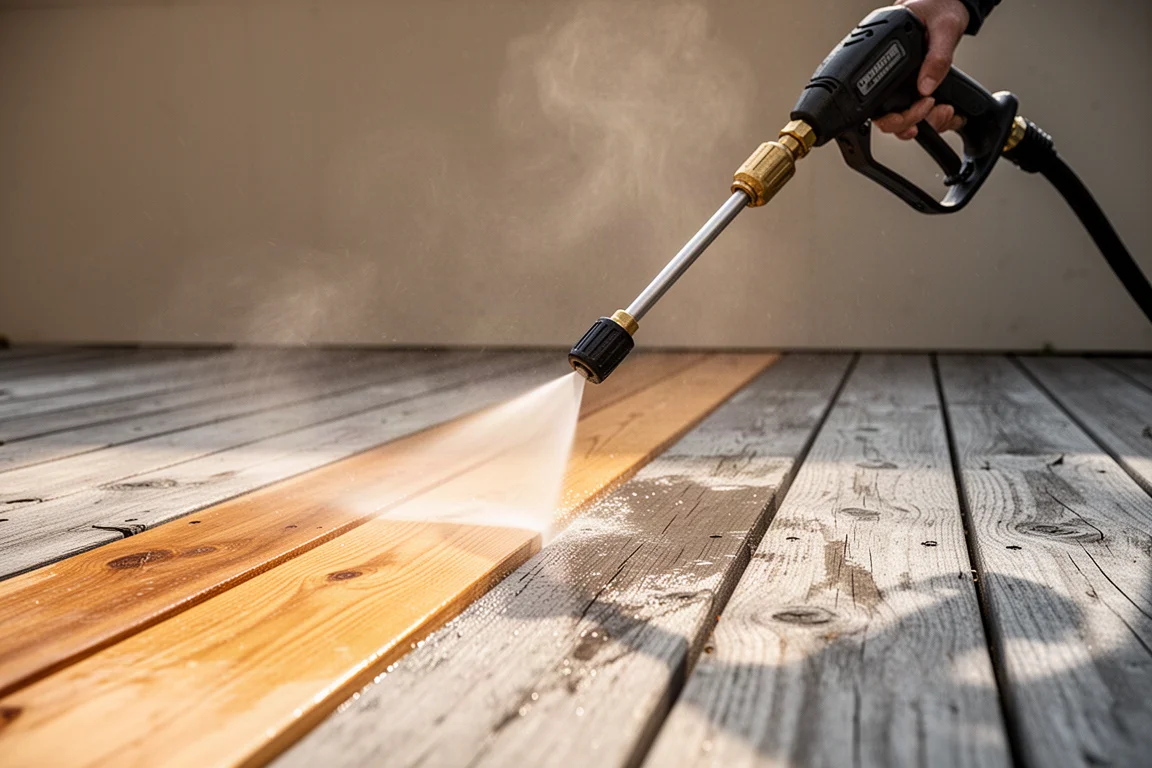
The Westinghouse WPX Max 3400 psi, at 2.6 GPM and 341 dollars, has strong reviews and long-term owner feedback reporting years of reliable running. One caveat worth knowing: Westinghouse is a leased brand name rather than an operating manufacturer, so warranty service goes through an 800 number and authorized service centers rather than a store. If you buy on quality rather than warranty paperwork, it remains a solid choice.
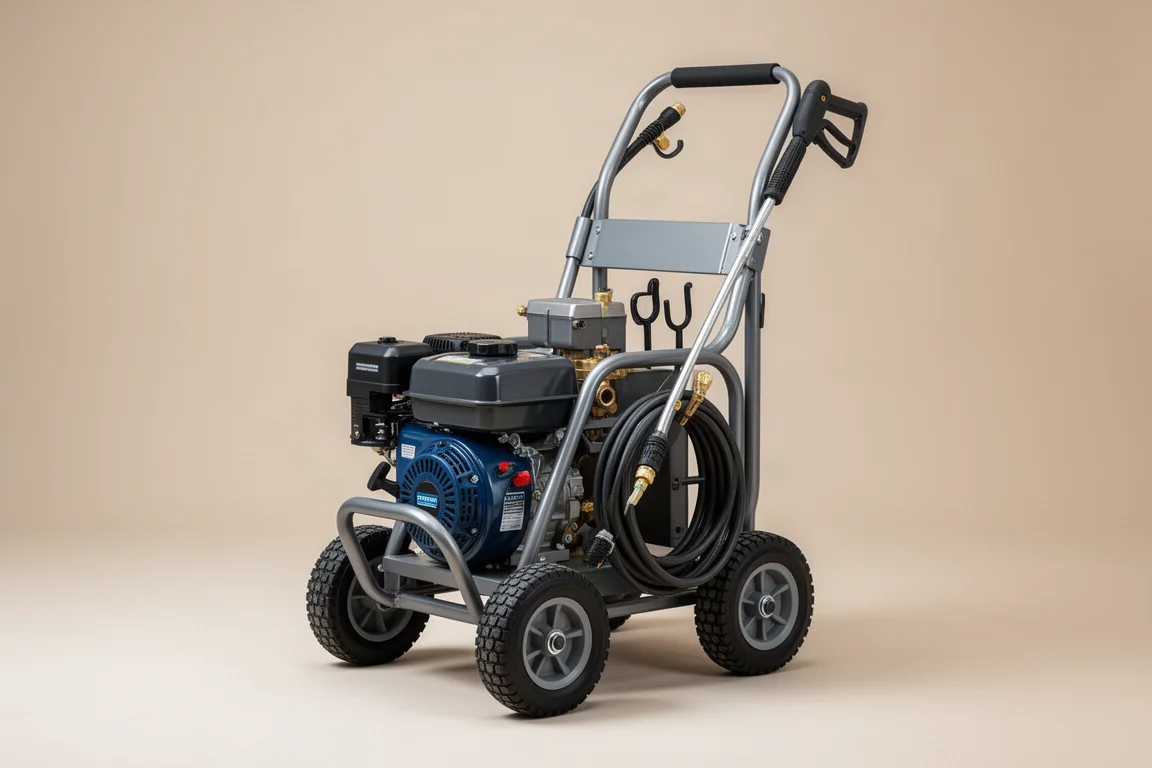
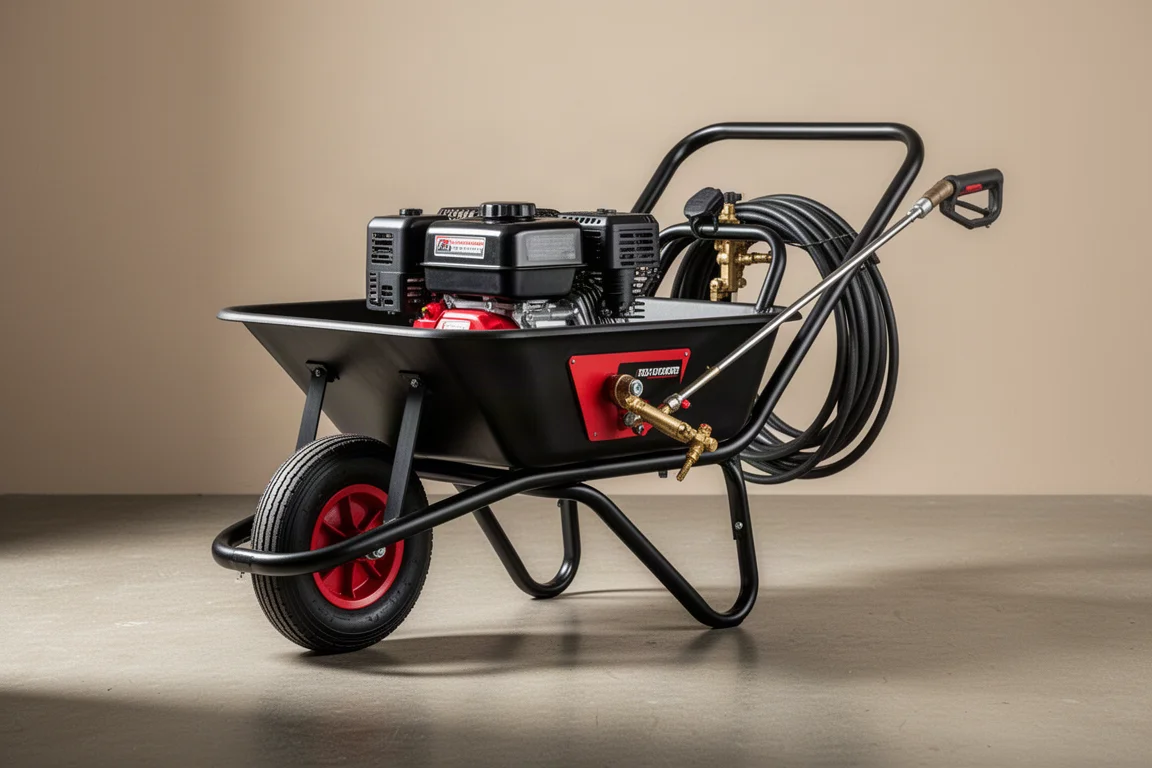
The Simpson PowerShot 3300 steps up in price to about 570 dollars, adds a Honda engine at 2.5 GPM, and shifts to a wheelbarrow-style form factor. This is the serious around-the-house machine for people who do not want to go fully industrial.
4,000 PSI and Above: Not a Joke Territory
This is the professional class: oil stains, graffiti, paint removal, industrial and farm equipment. Safety matters more than ever here.
The Predator 4400 psi is a big machine: a 420cc engine producing 13 horsepower and 4.2 GPM for around 1,000 dollars. The emissions control system carries a two-year warranty while the rest of the unit carries 90 days from purchase, with an optional extended warranty available.
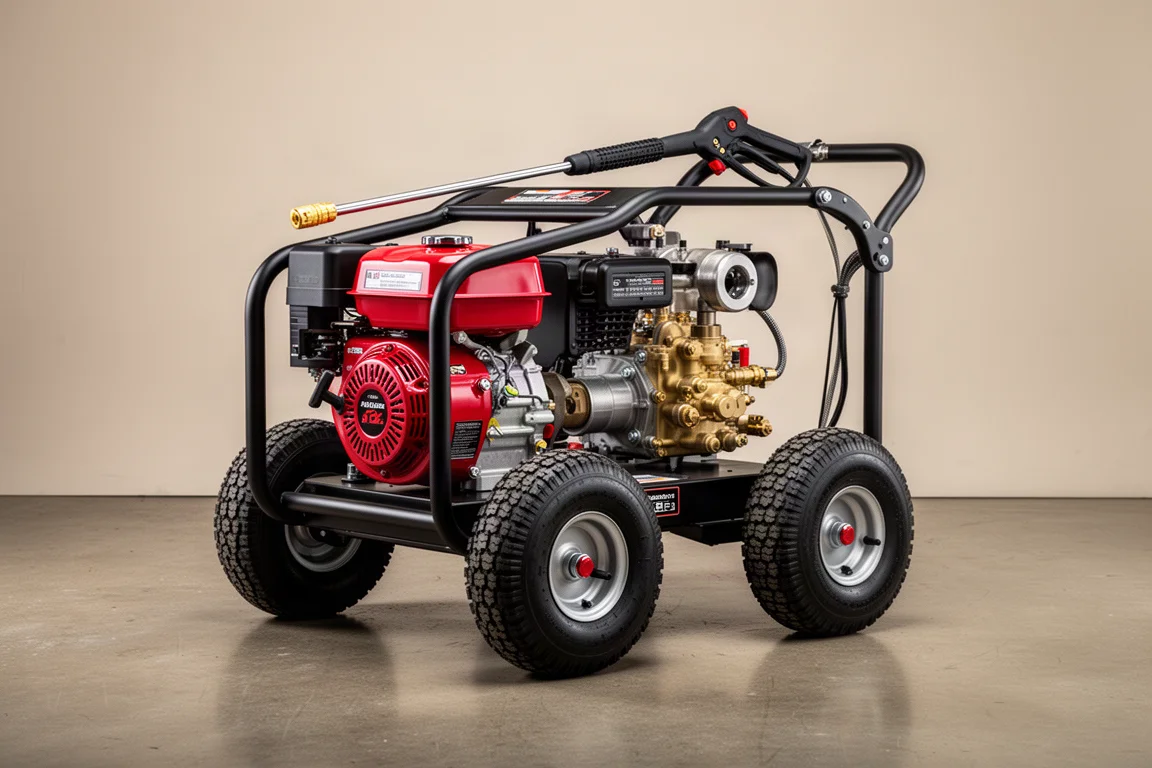
The Simpson Aluminum 4200 psi with a Honda GX390 engine moves 4 GPM at 1,229 dollars. It is 49-state compliant, meaning it is not sold in California, and it has been out of stock at its listed price, so availability may vary.
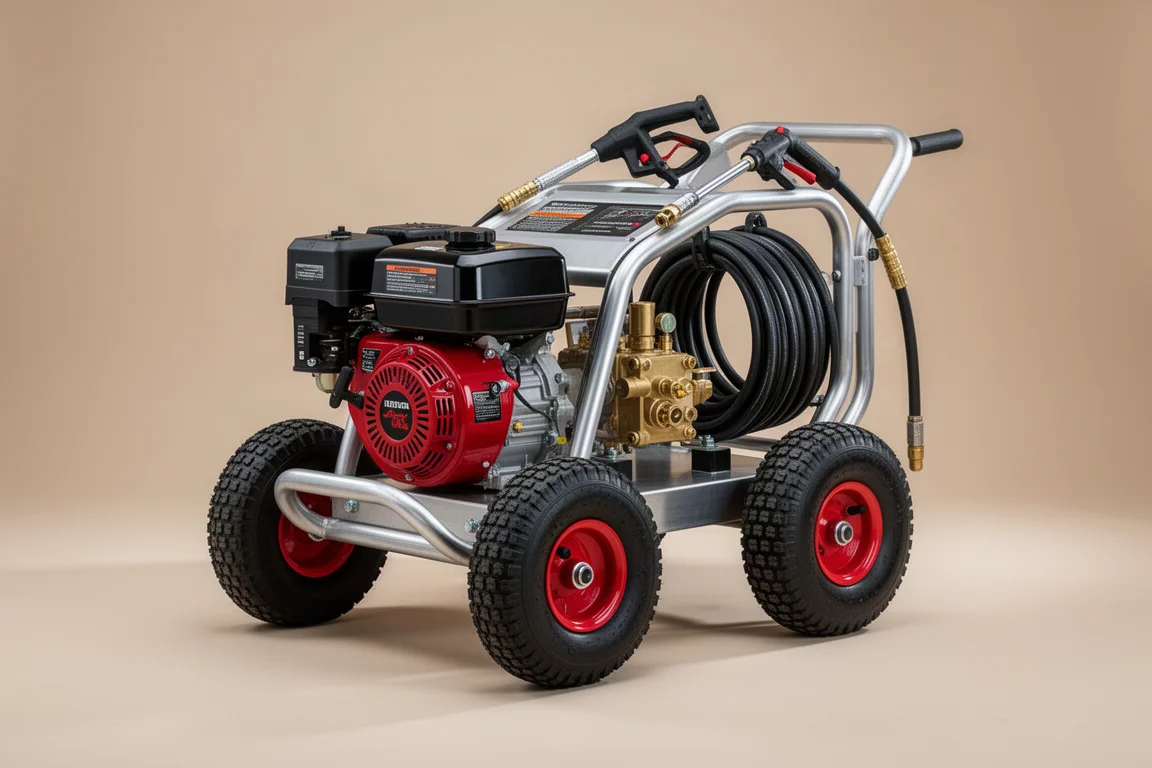
The Generac 4200 is a beefy, well-organized setup with easy nozzle access and the engine mounted right there, at 1,149 dollars and also 49-state compliant. Generac’s cheaper machines have not always lived up to the brand name, but this tier holds up well.
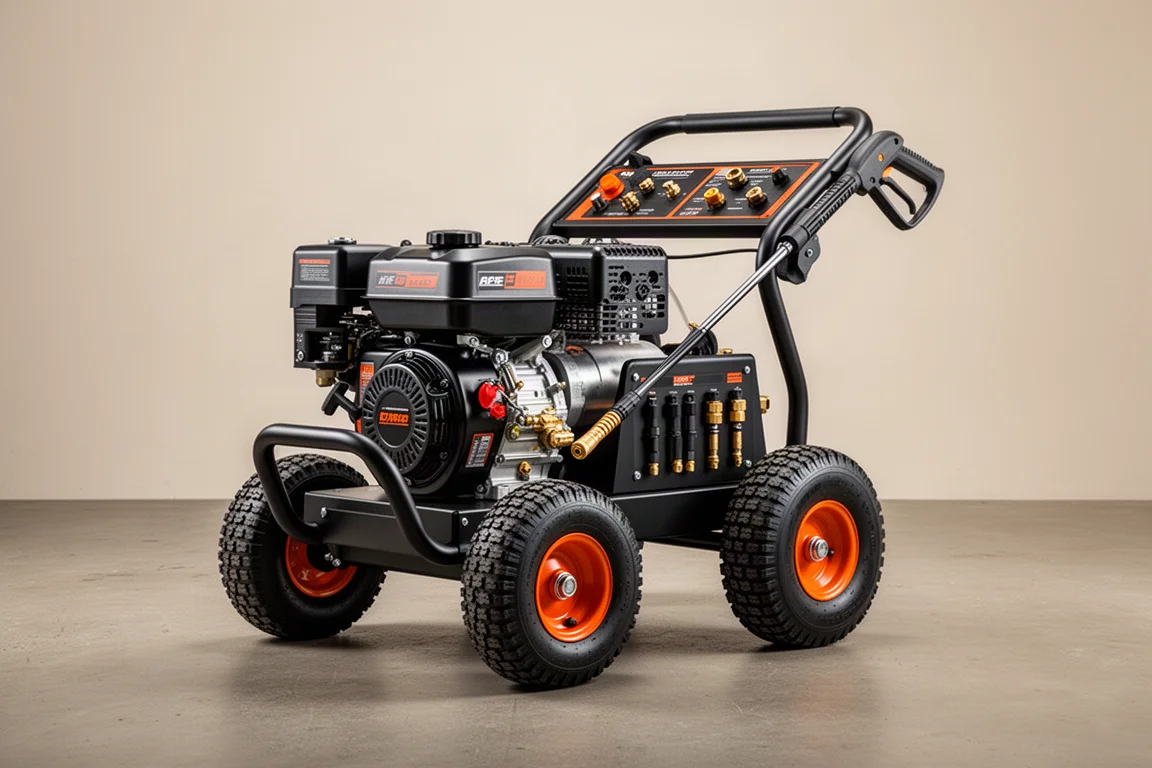
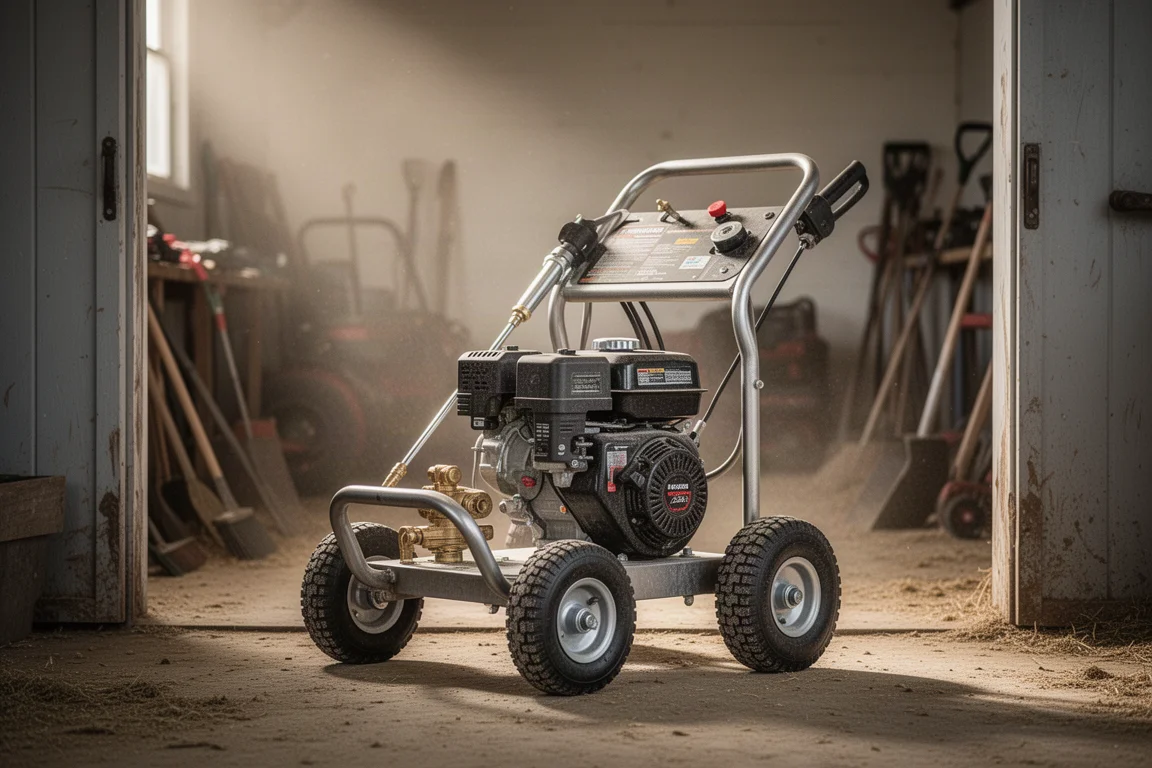
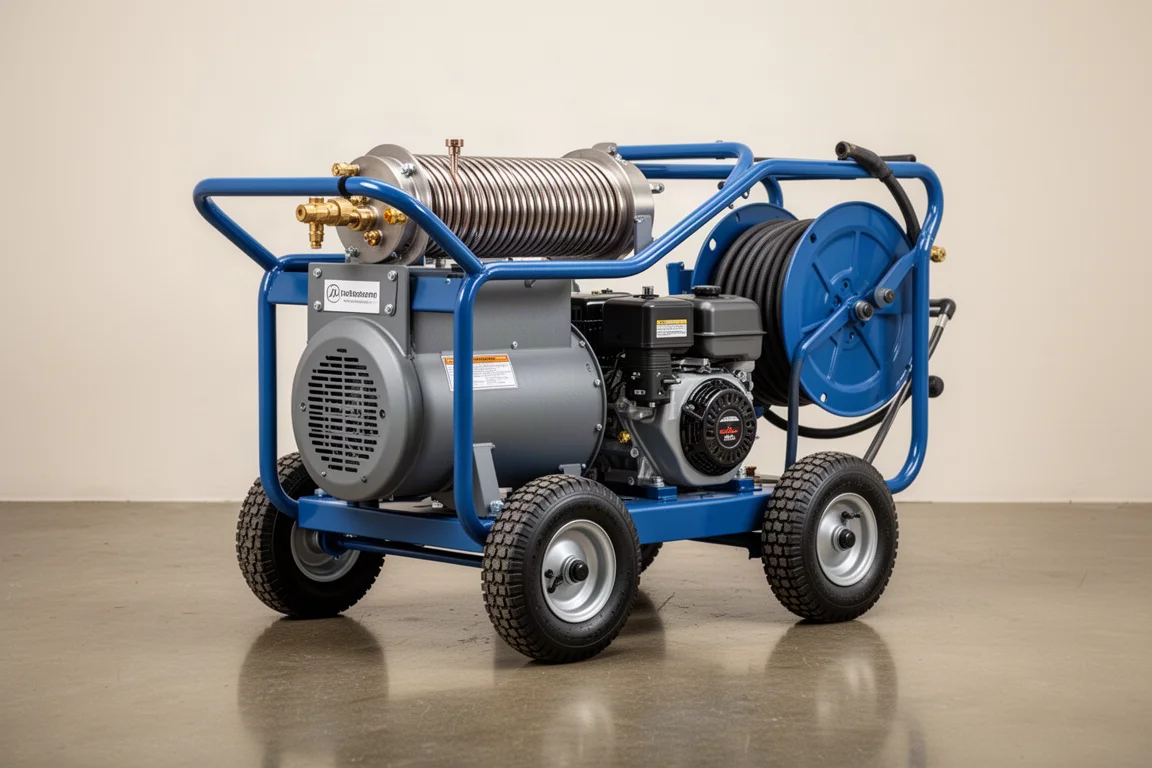
For hot water work, Easy-Kleen is the go-to standard. The 4,000 psi hot water unit, listed around 3,850 dollars, is all-season, heavy-duty serious cleaning power that will take everything off. You pay for it, but nothing in the cold-water world substitutes for it.
Buying Advice
Match the machine to the job, not the biggest number. Under 2,000 PSI covers vehicles and patio gear. The 2,000 to 3,000 range handles fences, decks, and dirty trucks, with gas giving you sustained power once you are serious. From 3,000 to 4,000 you are into siding, driveways, and paint prep, where Honda-powered Simpson machines stand out. Above 4,000 is professional territory. Also weigh hose and cord management, serviceability, and warranty practicality, not just the PSI figure on the box.
Conclusion
There is no single best pressure washer, only the right one for the task. A budget electric washes a car perfectly well, a dolly-style mid-range unit makes yard work convenient, a gas machine in the 2,500 to 3,300 range handles real cleaning, and the 4,000-plus class earns its price on industrial jobs. Pick the class first, then choose the best-built machine in it.
Further reading
Related Reviews

Outdoor Power Equipment
Best Cordless Chainsaws 2026: EGO, Milwaukee, and Stihl Compared
Three flagship battery-powered chainsaws from EGO, Milwaukee, and Stihl go head to head in cutting speed, power, weight, and price.

Outdoor Power Equipment
Best Cordless Leaf Blowers 2026: Nine Models Put to the Test
We tested nine leading cordless leaf blowers from Ryobi, STIHL, Toro, EGO, Husqvarna, DeWalt, Makita, Milwaukee, and Echo to find the best blowing force, run time, and value.
Outdoor Power Equipment
Amazon Big Spring Sale 2026: Best Outdoor Power Equipment and Backyard Deals
Cordless mowers, blowers, grills, and portable power on sale this spring, with practical advice on which packages are actually worth buying.