Camping Gear
Best Portable Heaters for Camping: Mr. Heater Buddy, Kovia Cupid, and NatureHike 3in1 Compared
A practical comparison of three popular portable heaters: what each one does well, where each one falls short, and how to choose the right one for tents, cabins, and vehicles.
Introduction
Portable heaters have become standard equipment for anyone who camps, works, or travels through the colder half of the year. They fit inside vehicles, off-grid cabins, and tents of nearly every size, and they double as emergency heat when the power goes out.
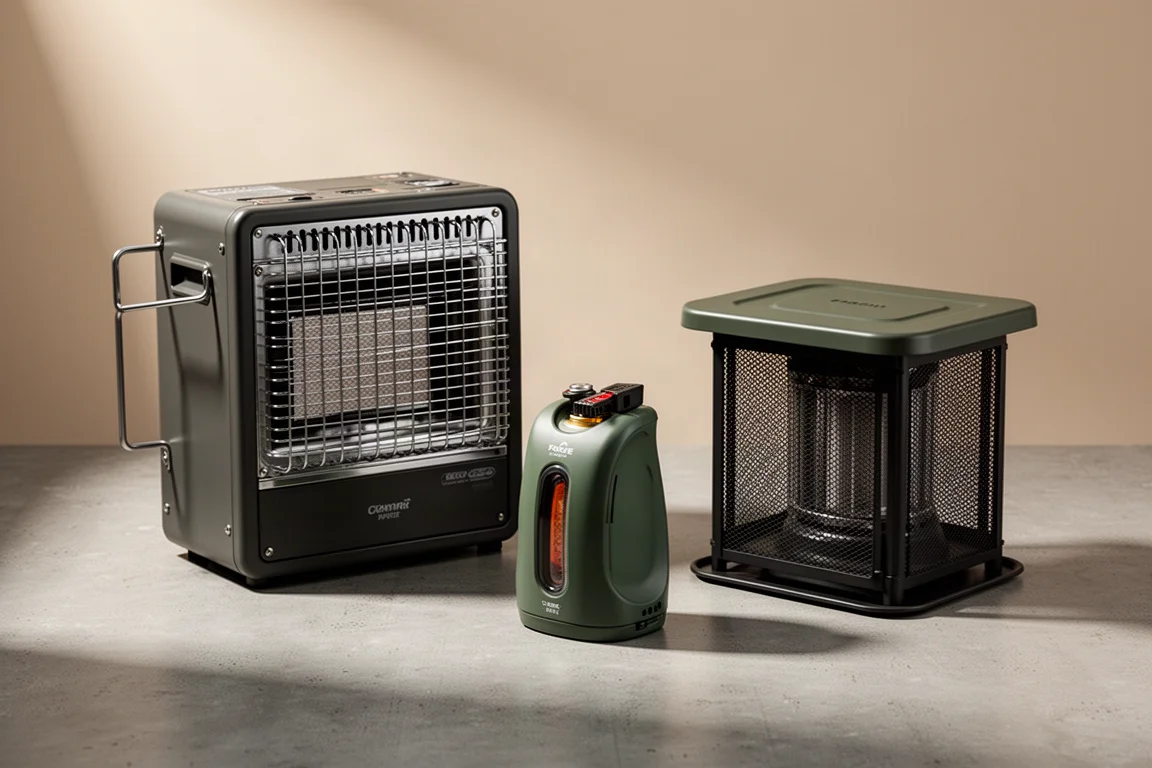
Three models come up again and again in that conversation: the Mr. Heater Portable Buddy, the Kovia Cupid, and the NatureHike 3in1. Each one burns fuel and produces heat, but they are far from interchangeable. Output, fuel type, run time, and the way heat leaves the unit all differ, and those differences decide which spaces each heater is genuinely suited to.
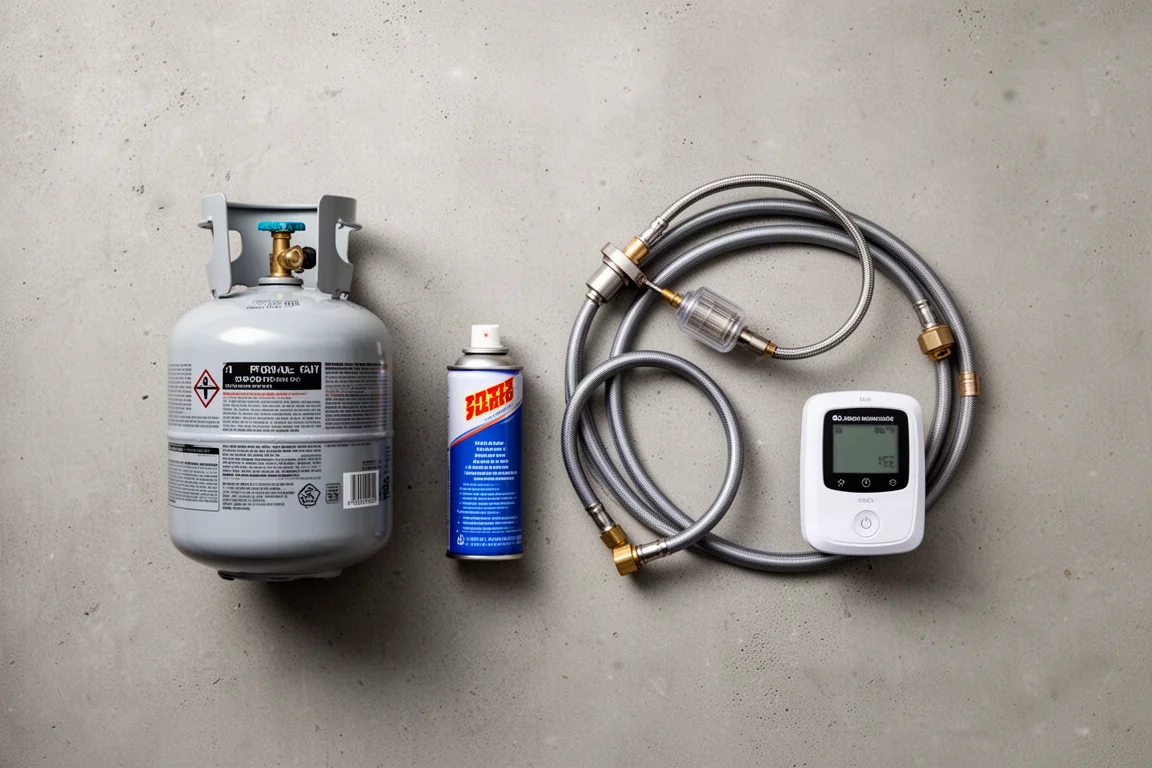
One safety point applies to all three. Any time you burn fuel in an enclosed space, plan for ventilation and use a carbon monoxide monitor. Used properly, these heaters can be run safely inside an off-grid trailer, a cabin, a tent, or a vehicle.
What Matters When Choosing a Portable Heater
The first decision is fuel. The Mr. Heater Portable Buddy runs on propane, while the Kovia Cupid and the NatureHike 3in1 both run on butane. That single difference shapes how you refuel, how long you can run, and where you can buy fuel on the road.
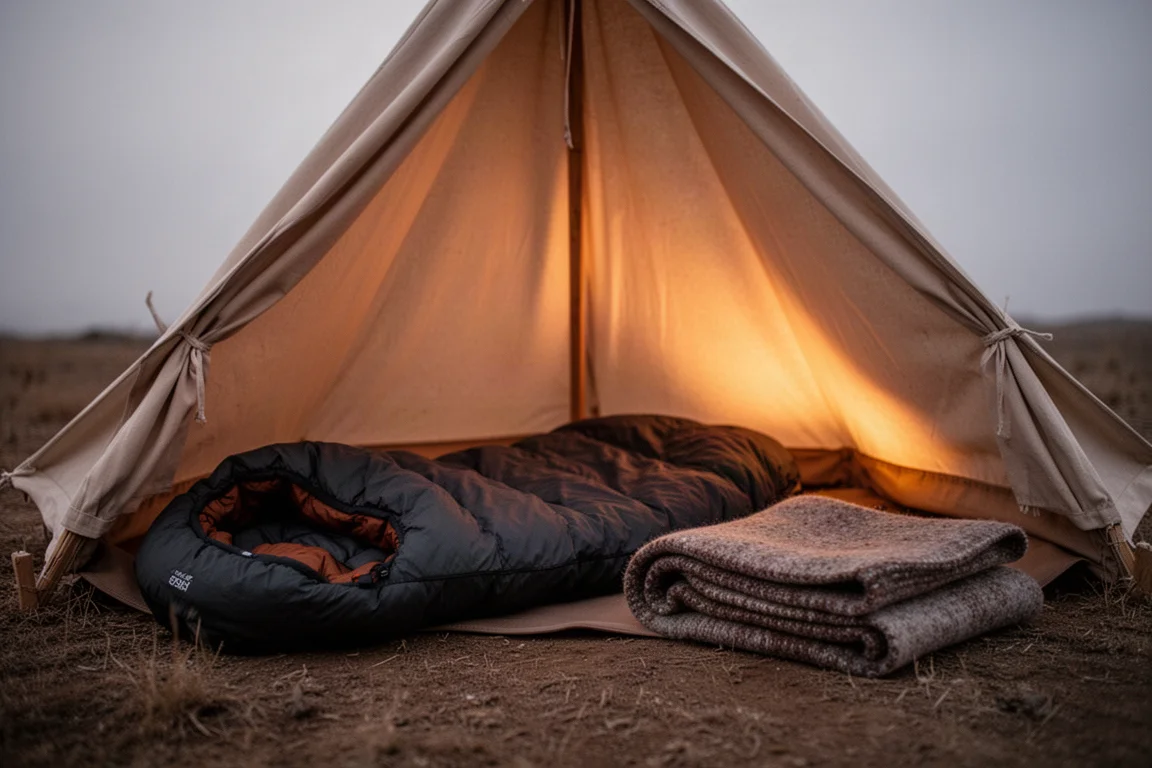
Output and adjustability matter just as much as raw BTU numbers. A heater that is too powerful for a small tent forces an on-off cycle: you get warm, you shut it down, you get cold, you start it again. A heater that can be dialed down to a very low setting keeps a small space comfortable without that constant back and forth.
The remaining criteria are practical ones. How long does a canister last? Does the unit shut itself off if it tips over or if oxygen levels drop? Does heat radiate only from the front, or also from the sides? And do you want a heater that can also warm a pot of water, or is heating the space the only job?
Mr. Heater Portable Buddy: Best for Larger Spaces
The Mr. Heater Portable Buddy, widely known as the Mr. Buddy heater, is the largest and most powerful of the three. It runs on propane only. Fuel connects in one of two ways: a one pound cylinder mounted on the swing-out arm, or a hose and filter running to a 20 pound tank. The filter can stay attached even when you switch back to a one pound cylinder, and the hose can be routed up through the bottom of the housing.
It stands 15 inches tall, measures 14.2 inches wide, and is roughly 9 inches deep. Two settings are available: 4,000 BTU on low and 9,000 BTU on high. It is offered in red and green.
Run time depends entirely on the fuel source. A one pound cylinder gives about 6 hours on low and 3 hours on high. Connect a 20 pound tank through the hose and filter and the run times become dramatically longer.
Two safety systems are built in: a low oxygen sensor that shuts the unit down when oxygen levels drop, and a tip-over sensor that cuts the fuel if the heater is knocked over. Heat leaves the front of the unit and radiates upward, which is enough to warm a mug of coffee placed on top. It is not a stove, though, and cooking on it is not what it is designed for.
Where it shines is volume. This is a heater for off-grid cabins, tents larger than four person models, and enclosed spaces like the back of a truck bed with a camper top. In a small tent it is simply too much heater, even on low.
Kovia Cupid: Best for Small Tents and Vehicles
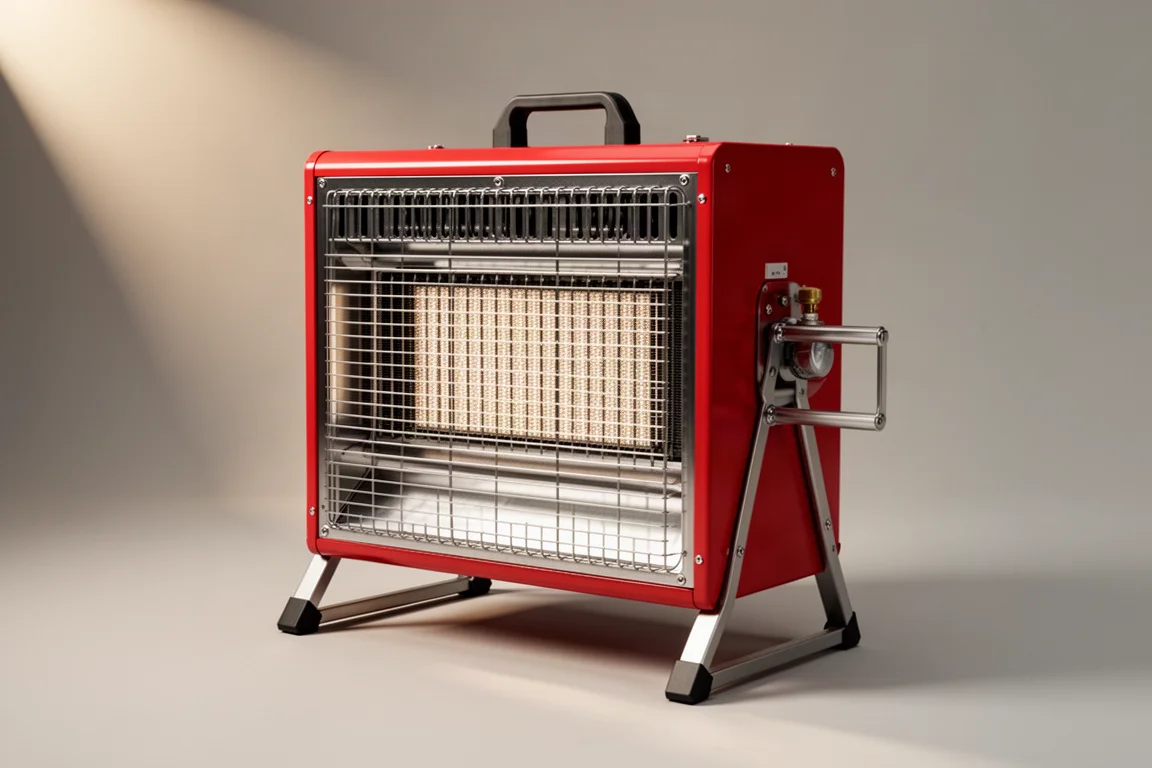
The Kovia Cupid takes the opposite approach. It is a compact butane heater with no propane option, and its footprint is a fraction of the Portable Buddy’s: 10.3 inches wide, 7 inches tall, and 5.3 inches deep.
Two revisions of this heater exist, and the only difference between them is how the fuel canister attaches. One version uses a window and a twist-to-lock connection; the newer version uses a magnet to pull the canister into place and hold it there.
The manufacturer has never published the BTU rating for the Cupid. Based on how it performs next to the other two heaters, the realistic figure sits somewhere in the 3,000 to 4,000 BTU range, with around 3,500 BTU a fair estimate.
Run time on a full canister is about 4 hours on low and 2 hours on high. Because the output cannot be dialed down as far as the NatureHike’s, there is no way to stretch that low setting into a much longer burn.
Safety coverage is limited to tip-over protection, with no low oxygen sensor. The top of the unit does not get hot enough to warm food or drink, so this is purely a space heater.
Its strength is small spaces. An SUV, a two or three person tent, or an off-grid camper are all a good match, and the Cupid will comfortably warm a larger space as long as the outside temperature is not too severe. Below roughly 40 to 30 degrees Fahrenheit it stops being enough heat for a larger area. For a vehicle in particular, it is the safer and simpler of the two butane heaters, since heat does not radiate from the sides.
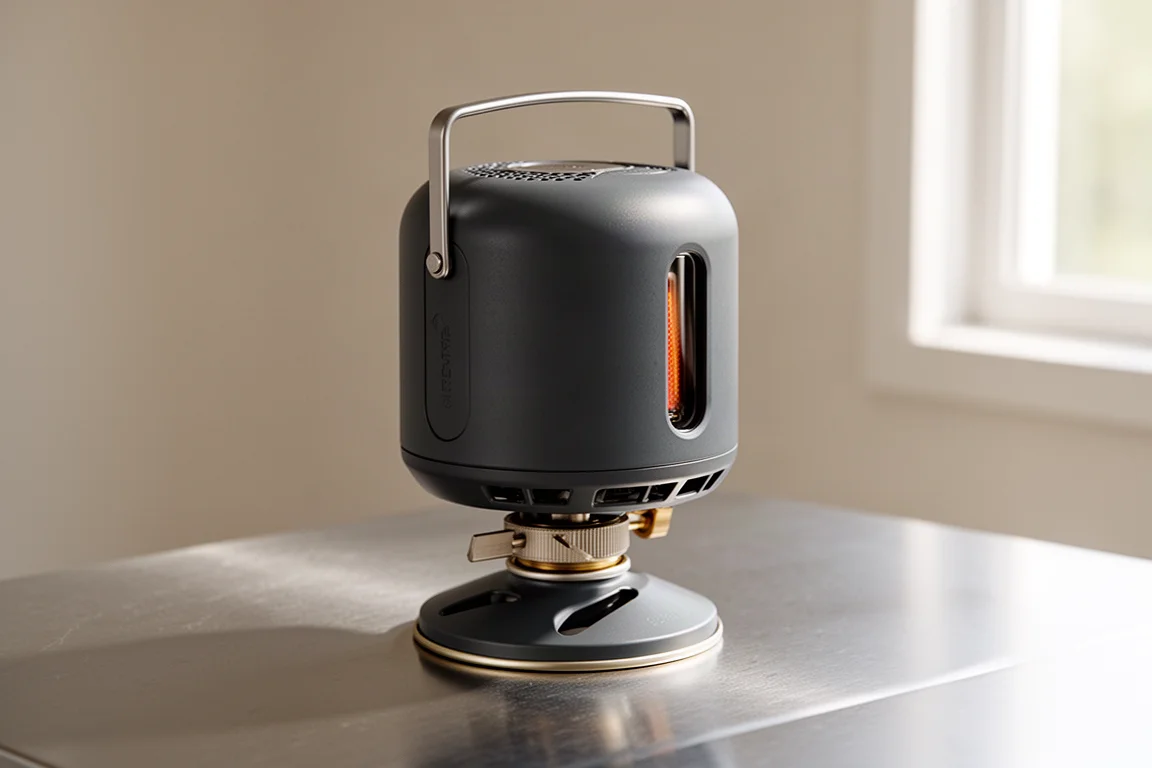
NatureHike 3in1: Best for Cooking and Long Run Times
The NatureHike 3in1 is the most versatile of the three. It runs on butane and comes in a single version, offered in green and in a light khaki that reads almost white. The canister slides in, aligns, and locks into place with a magnet.
Dimensions are 7.6 inches tall, 7.3 inches wide, and 6.5 inches deep, so it sits between the Cupid and the Portable Buddy in bulk. Maximum output is 3,753 BTU, and unlike the Cupid it can be turned down well below that figure.
That adjustability pays off in run time. Expect 3 to 4 hours on high, and as much as 8 hours on low. The very low setting still produces meaningful heat, which is what makes the longer burn possible.
The headline feature is the large flat top. Pans, cups, and pots can sit directly on it, and a tray attaches to the front of the unit. For the best cooking results, fit the tray and place a sheet of foil in front of the heater so the heat is directed up into the base of the pot. It works, and it works well in a pinch, but this is a heater first and a cooking surface second. It is not a replacement for a dedicated stove.
Two things to plan around. First, no built-in safety systems are documented for this unit, so extra care is required. Second, heat leaves the NatureHike in four directions: the front, upward, and out through windows on both sides. In a vehicle or against a wall, that side radiation needs to be accounted for, since it is not a factor with the other two heaters.
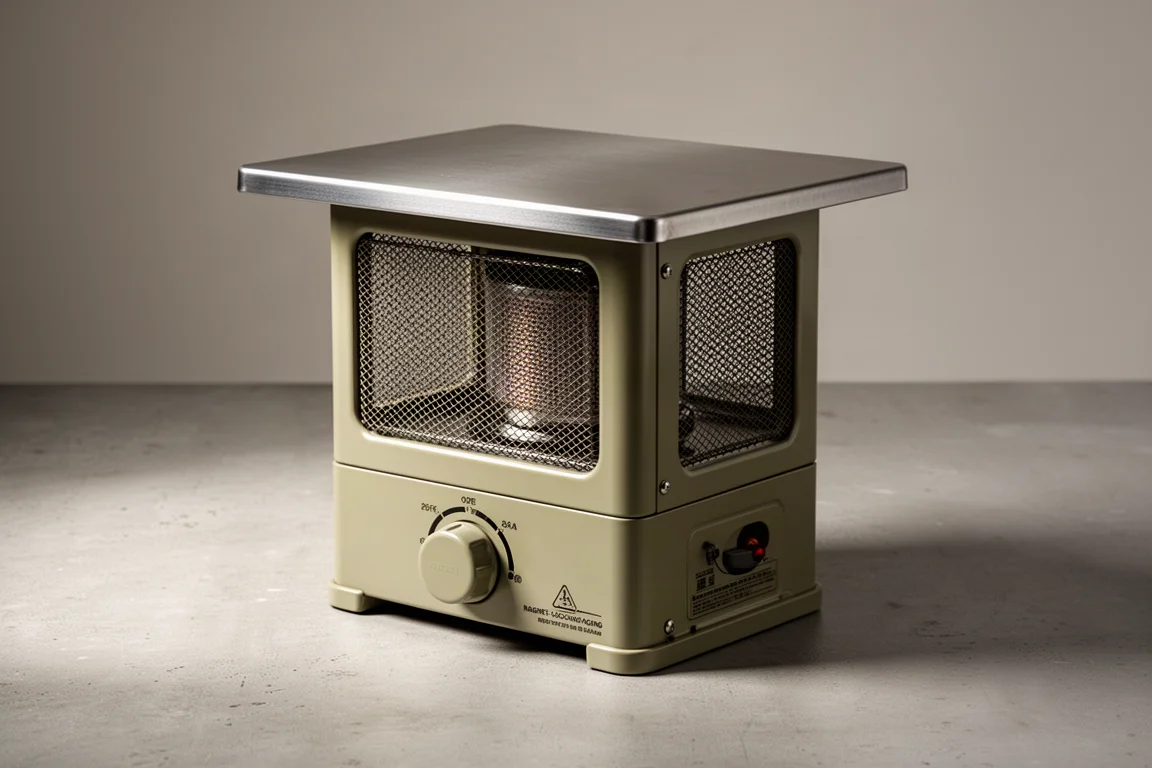
Heat Direction, Fuel, and Run Times Compared
Put side by side, the differences are easy to summarize. The Mr. Heater Portable Buddy is the only propane unit and the only one with a genuine low oxygen sensor. The Kovia Cupid is the smallest and the simplest, with tip-over protection and a butane-only fuel supply. The NatureHike 3in1 offers the widest adjustment range, the longest low-setting run time, and the only cooking surface of the three.
Heat direction splits the group as well. The Portable Buddy and the Cupid both push heat from the front and let it radiate upward. The NatureHike adds side windows that radiate heat outward, which spreads warmth more evenly in an open space but demands more thought about placement.
Safety Features at a Glance
Safety equipment is not equal across the three. The Mr. Heater Portable Buddy includes a low oxygen sensor and a tip-over shutoff. The Kovia Cupid includes tip-over protection only. The NatureHike 3in1 has no documented built-in safety systems, which makes careful placement and supervision especially important.
Whichever unit you run, the same habits apply: keep the space ventilated, never leave a burning heater unattended, and keep a carbon monoxide monitor within reach. Those measures matter more than any single feature on the spec sheet.
Buying Advice: One Heater Is Rarely Enough
The honest answer is that a single heater from this group will not cover every situation. A pair makes far more sense: one unit for larger spaces and one for smaller ones.
The Mr. Heater Portable Buddy is the one to own first if you spend time in cabins, big tents, or camper-topped truck beds. Its 9,000 BTU high setting and long run times on a 20 pound tank make it the only real option here for a large, cold space.
The second heater comes down to how you plan to use it. If a vehicle is part of the plan, the Kovia Cupid is the easier and safer choice, because its heat stays at the front and top of the unit rather than radiating into nearby surfaces. If you want more flexibility, the NatureHike 3in1 gives you a wider adjustment range, up to 8 hours of run time on low, heat from four directions, and the ability to warm a pot or a cup on top. Owning all three is a legitimate strategy if your trips range from mild shoulder-season nights to genuinely cold conditions, and it is the combination that covers the most ground.
Conclusion
None of these three heaters is a compromise on the fundamentals. Each one produces reliable heat, and each one is better than the others in a specific situation: the Mr. Heater Portable Buddy for large spaces, the Kovia Cupid for vehicles and small tents, and the NatureHike 3in1 for long, adjustable, multi-purpose use. Match the heater to the space you actually heat, add a carbon monoxide monitor and proper ventilation, and any of them will make a cold night far more manageable.
Further reading
Related Reviews
Camping Gear
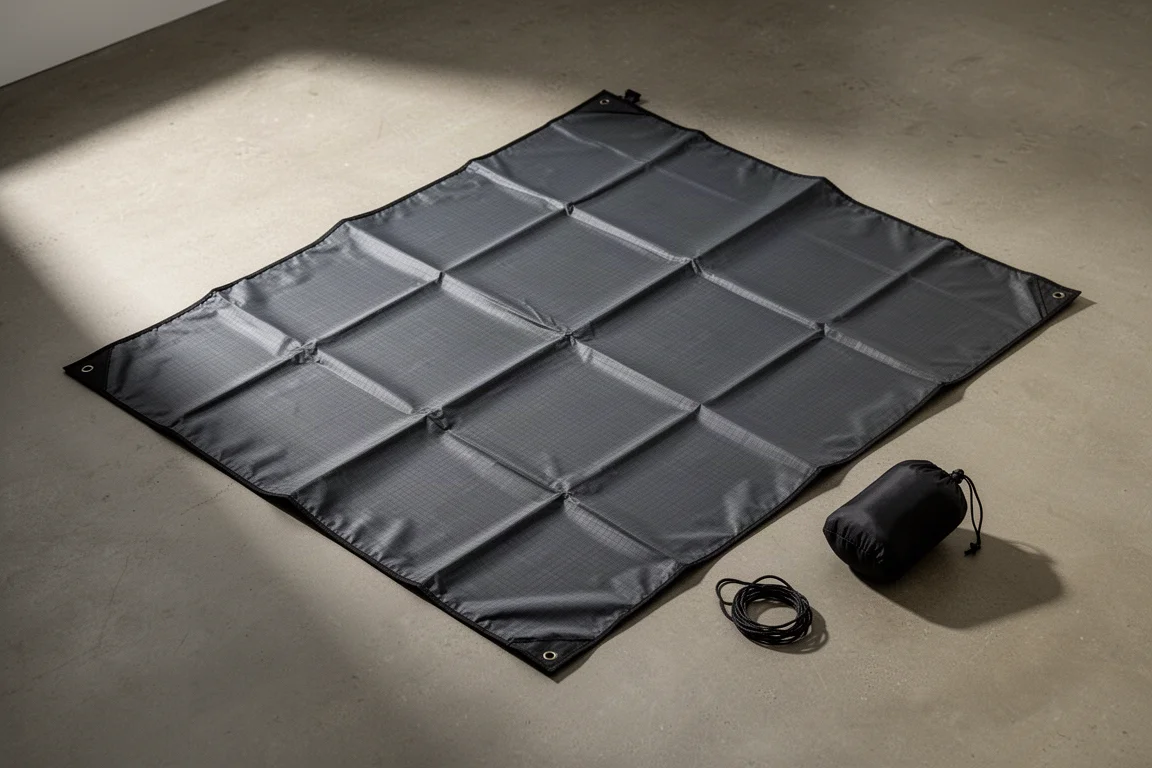
3FUL Ultralight Ground Sheet Review: A Two-Person Footprint Worth Packing
A 6.7 oz two-person ground sheet in ripstop silnylon, priced around $30. Here is what it protects, what it does not do, and who should pack it.
Camping Gear
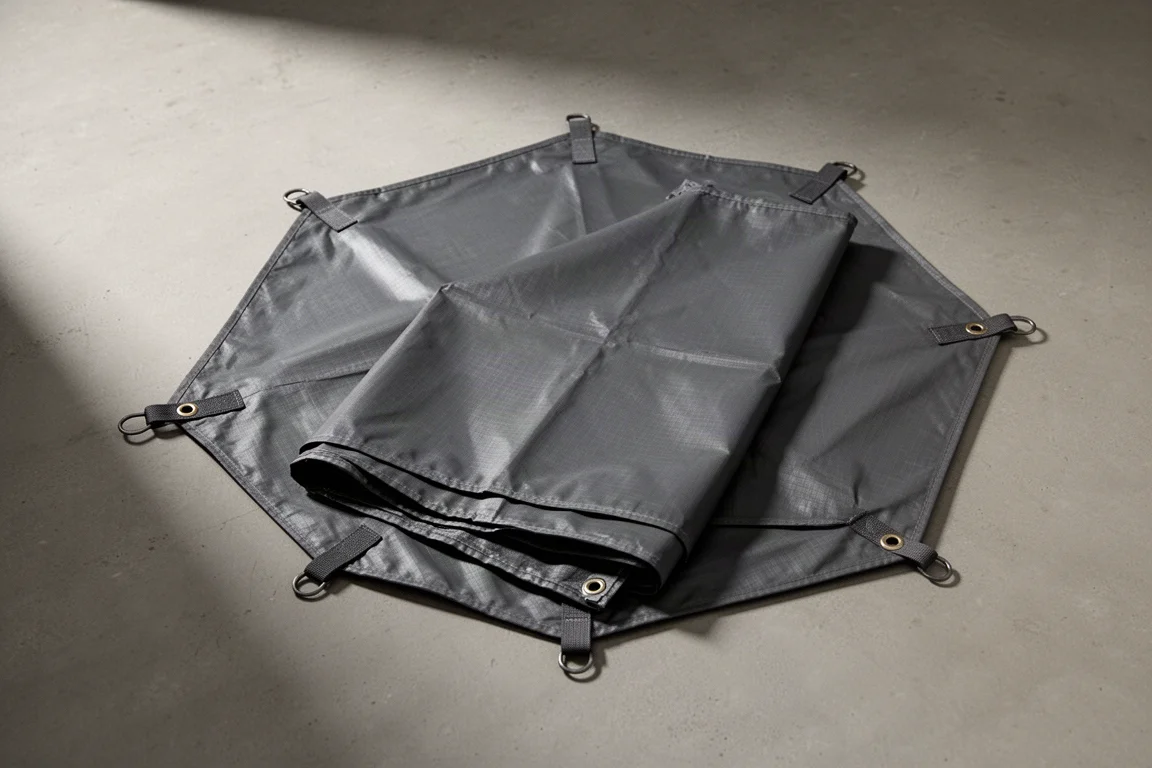
Backcountry Light Dual-Function Tarp and Floor Review: A Footprint First
A dual-purpose tent floor and tarp that keeps falling rain off you, but cannot block wind. Here is where it works and where it does not.
Camping Gear
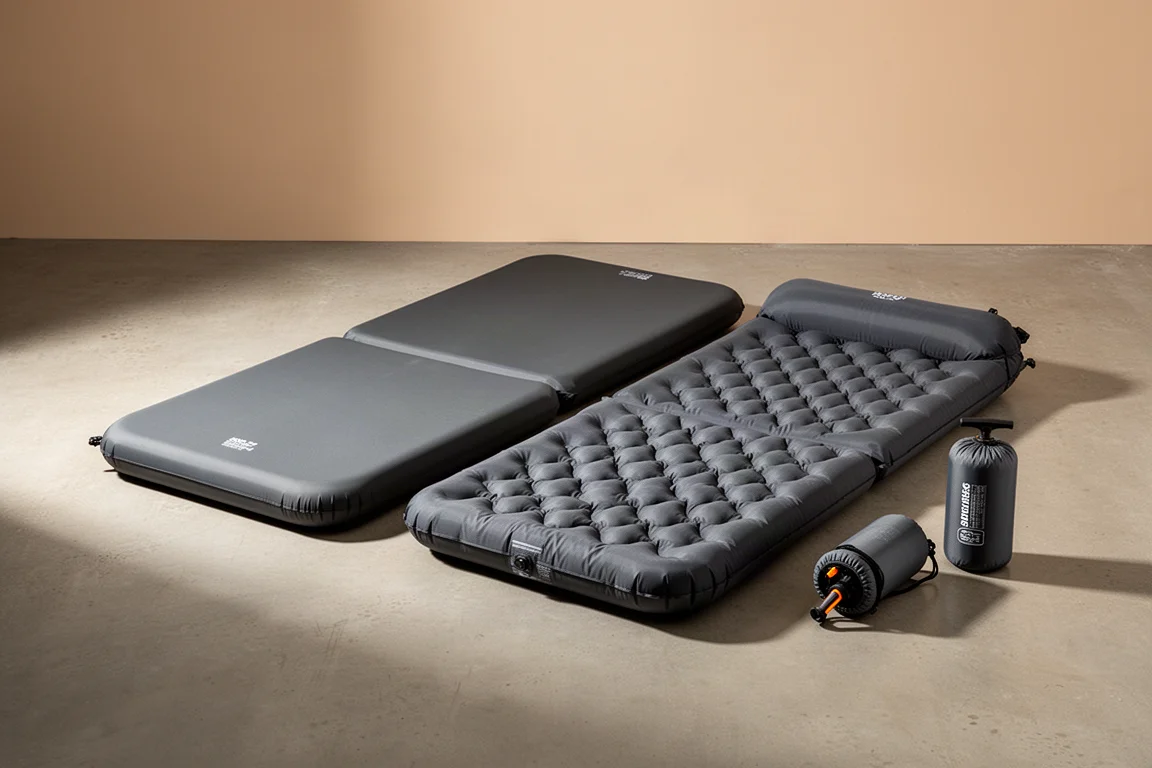
Best 2-Person Camping Mattresses for Couples: 10 Options Compared
A practical comparison of ten two-person camping mattresses, covering self-inflating pads, air pads and air mattresses for couples.