Car Detailing
Best Plastic Trim Restorers: 10 Products Tested for Durability, UV Protection, and Dirt Resistance
Ten plastic trim restoration products put through UV, dust, cleaning, and durability testing to find which ones actually last.
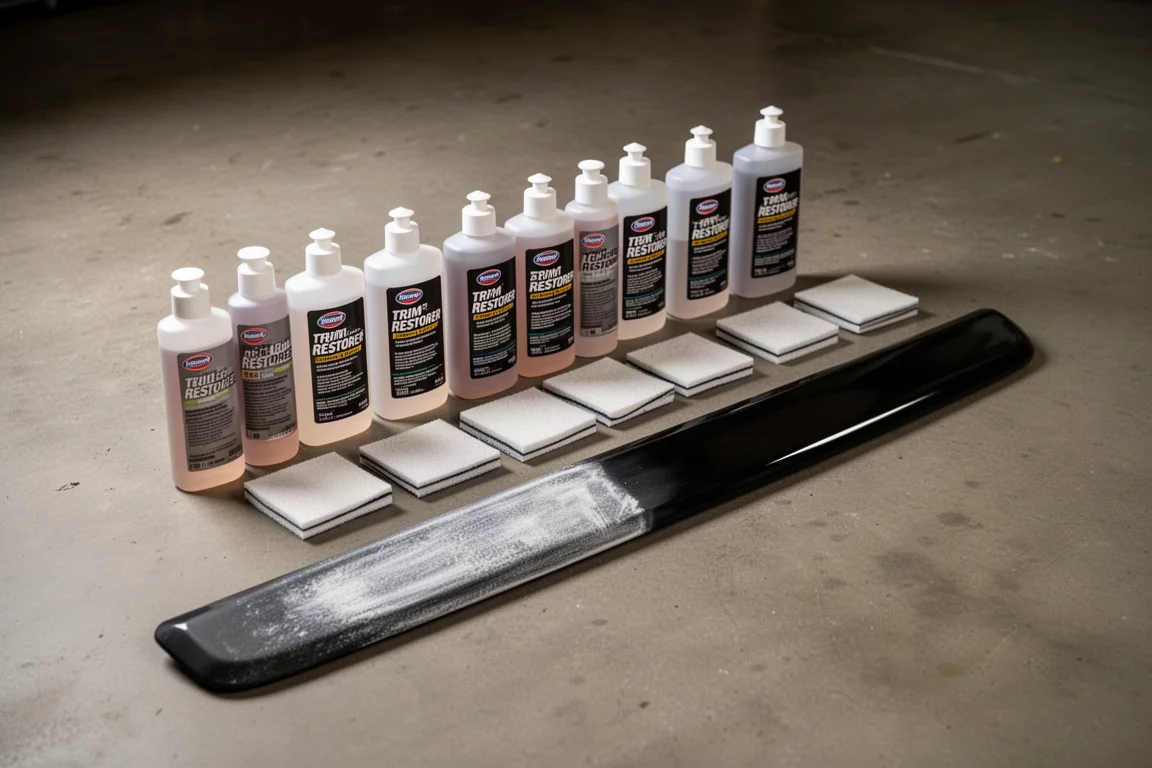
Introduction
Even a car that is only a couple of years old can start looking tired if the plastic trim fades. On older vehicles the effect is worse: chalky grey bumpers and running boards drag down the whole appearance. We put ten plastic trim restoration products through a battery of tests on a 23-year-old vehicle, measuring UV blocking, dust attraction, cleanability, hydrophobic behavior, and durability against bug and tar remover and degreaser.
How the Products Were Tested
Before any product was applied, the test trim was deep-cleaned with bug and tar remover, a pressure washer, and a strip wash to break down contaminants. UV protection was measured on sandpaper-scuffed glass panels (polycarbonate blocks UV on its own, so glass was used instead), with untreated glass peaking at 1,881 microwatts per square centimeter as the control. Dust attraction was judged after driving behind a vehicle down a gravel road, and durability was tested with car wash, bug and tar remover, and finally a degreaser.
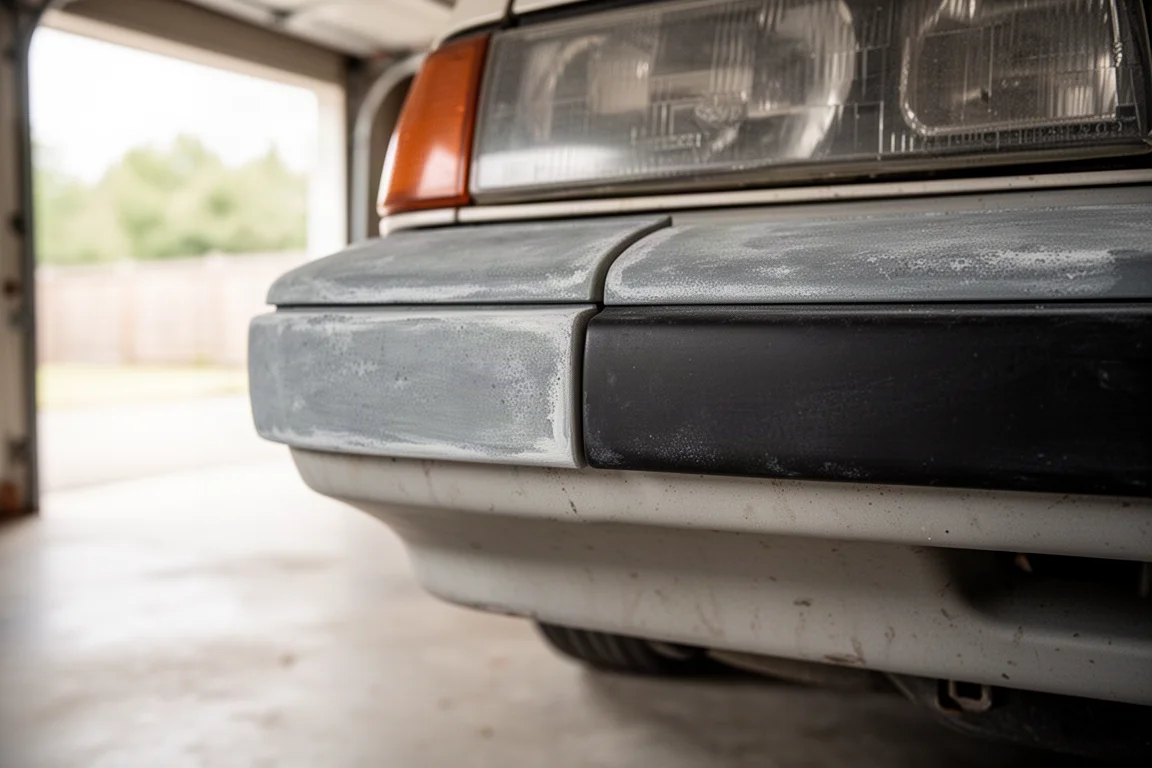
A DIY internet hack using automatic transmission fluid (ATF) was also tested alongside the commercial products. It looked promising at first, but read on before trying it yourself.
Meguiar’s Ultimate Black
At $10 for 12 oz (about 83 cents per ounce), Meguiar’s Ultimate Black claims to make trim look like new with extended durability, outstanding UV protection, a fast-drying non-greasy finish, and it is made in the USA. It should be applied to a clean, cool, dry surface with a cotton terry cloth towel, wiping off excess, with two or three applications for neglected areas.
In testing, Meguiar’s provided essentially no UV blocking (1,873 versus the 1,881 control), collected more dust than untreated plastic, and was wiped out by both bug and tar remover and degreaser. It did look noticeably better than untreated trim, but the finish was inconsistent and not very glossy. Avoid applying it to glass, tires, leather, or clear plastics.
Mother’s Back to Black
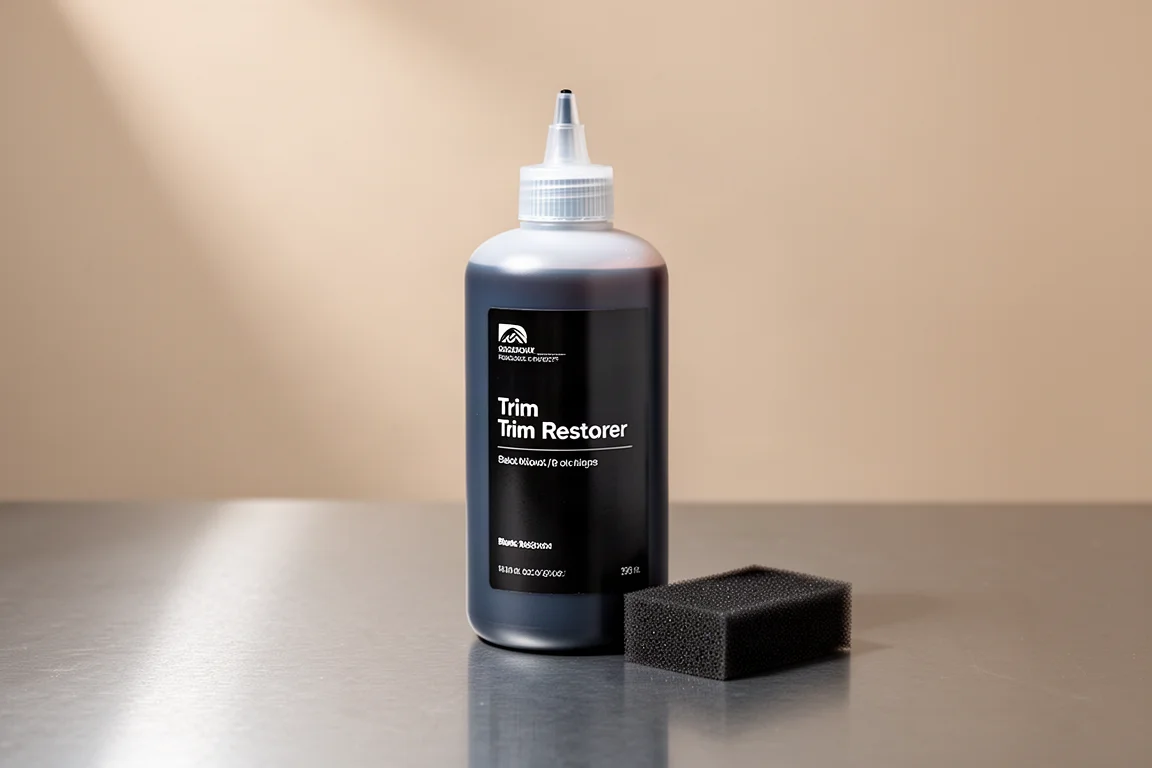
Mother’s Back to Black costs $11 for 10 oz ($1.10 per ounce), is made in the USA, and claims an easy one-step spray-and-walk-away coating. Heavily stained areas may need a second coat after roughly 15 minutes, with 24 hours of cure time for maximum durability.
This one is a real dirt magnet: it collected more dust than any other product in the gravel road test, and it held onto grime even after a water rinse. On the plus side, its hydrophobic behavior was excellent, it had a consistent glossy finish, and it survived the cleaning tests better than most, finishing second overall in durability. It performed about the same as Meguiar’s in the UV test.
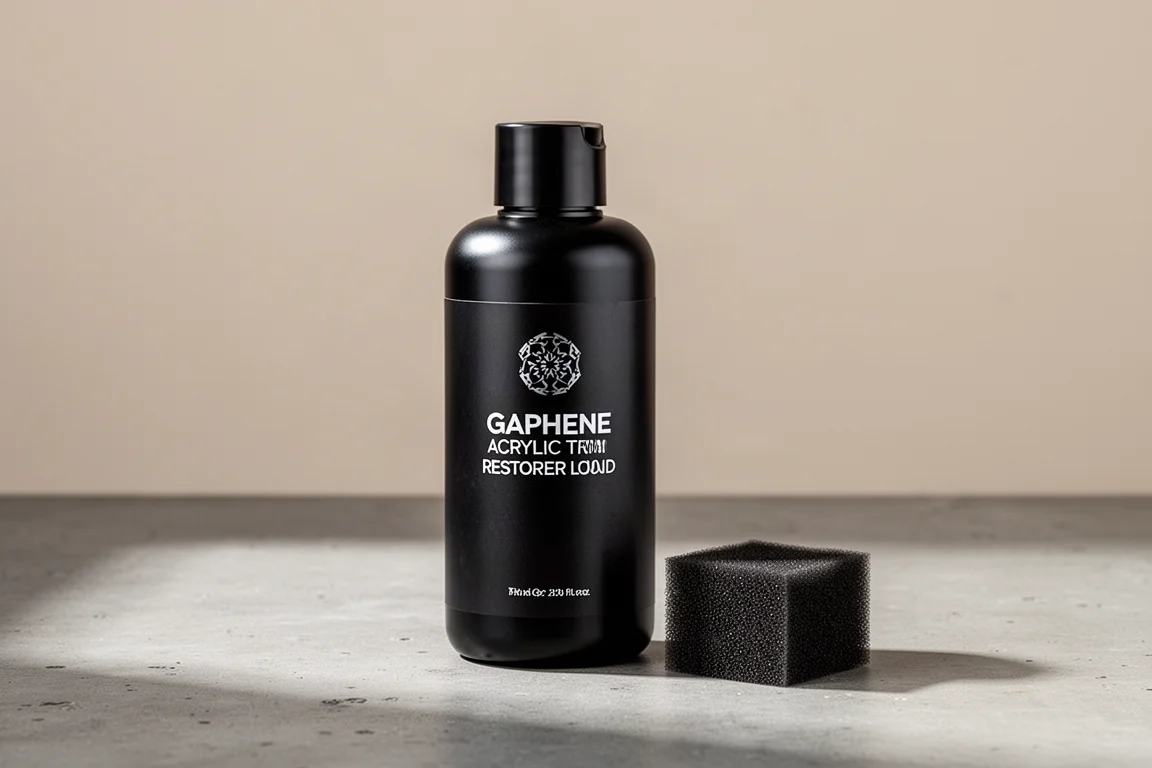
Hybrid Solutions Graphene Acrylic Trim Restore
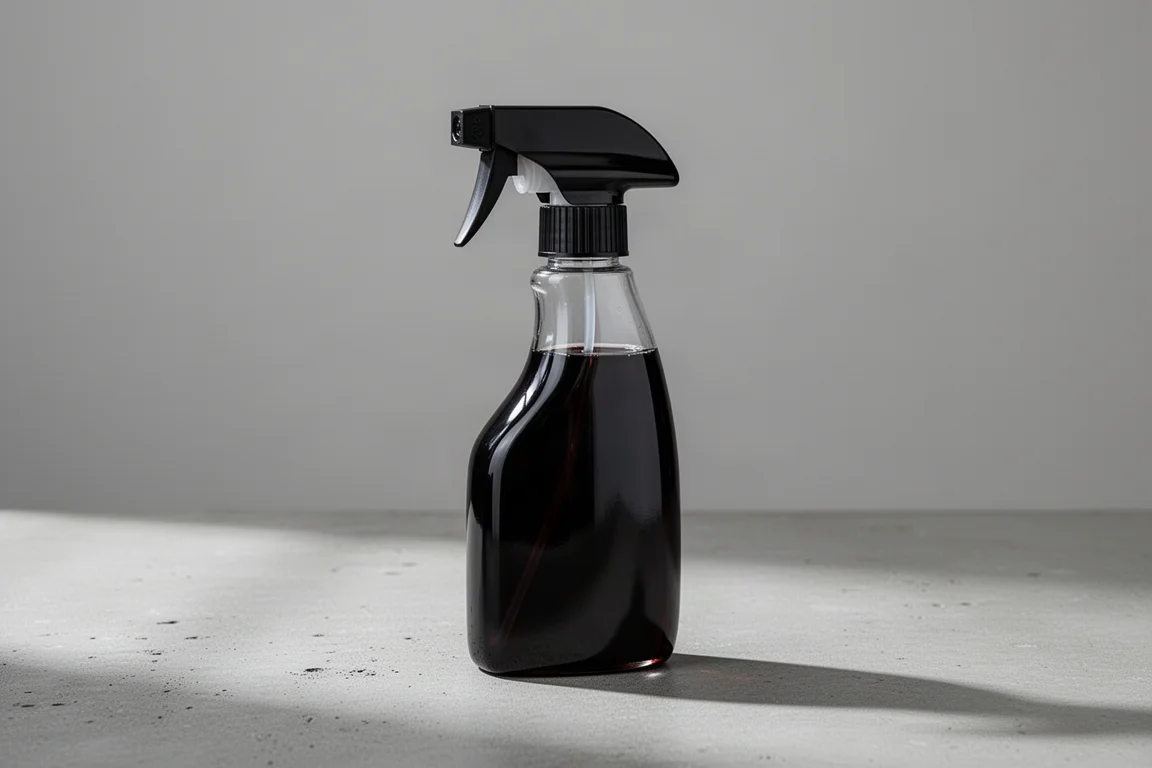
At $16 for 10 oz (about $1.60 per ounce), Hybrid Solutions is a newer graphene acrylic formula that claims to restore and protect faded trim with superior UV protection and a coating that does not wash off. It is applied with a foam applicator or microfiber towel using overlapping back-and-forth and circular motions, drying to the touch in 3 to 5 minutes, with a second application for even coverage. It is made in the USA.
This was the clear UV winner: 1,272 microwatts per square centimeter, roughly 32% less UV passing through than the untreated control. The finish is a convincing new-plastic matte rather than glossy. Its weakness is durability: the degreaser test wiped it out, and it collected somewhat more dust than untreated plastic. It rinsed clean very well and placed third overall.
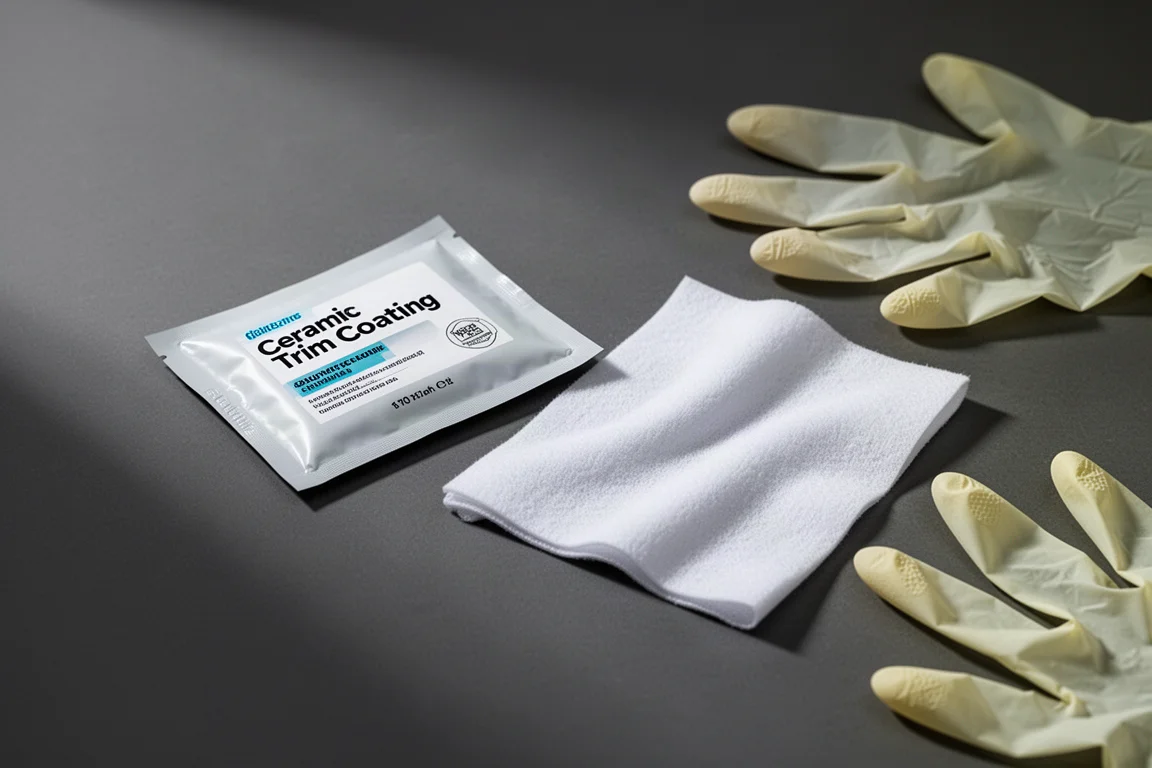
Cerakote Trim Restorer Wipes
Cerakote takes a different approach: $17 for 10 pre-soaked wipes of a ceramic coating, claiming no greasy mess, a 200-wash guarantee, and showroom-new results. Application is simple: wash and completely dry the trim, work between 60 and 75 degrees Fahrenheit, wear the provided gloves, and wipe in overlapping passes, letting each wipe dry before switching packs. Allow 1 hour before driving and 24 hours before moisture exposure. Made in the USA.
Cerakote ran circles around the competition. Its slick, wax-like ceramic finish collected by far the least dust, rinsed almost completely dirt-free, beaded water as well as anything tested, and survived bug and tar remover and degreaser while everything else washed away. It still looked brand new after every test. The only trade-off is a high-gloss finish that may not suit everyone. It finished first in every graded category.
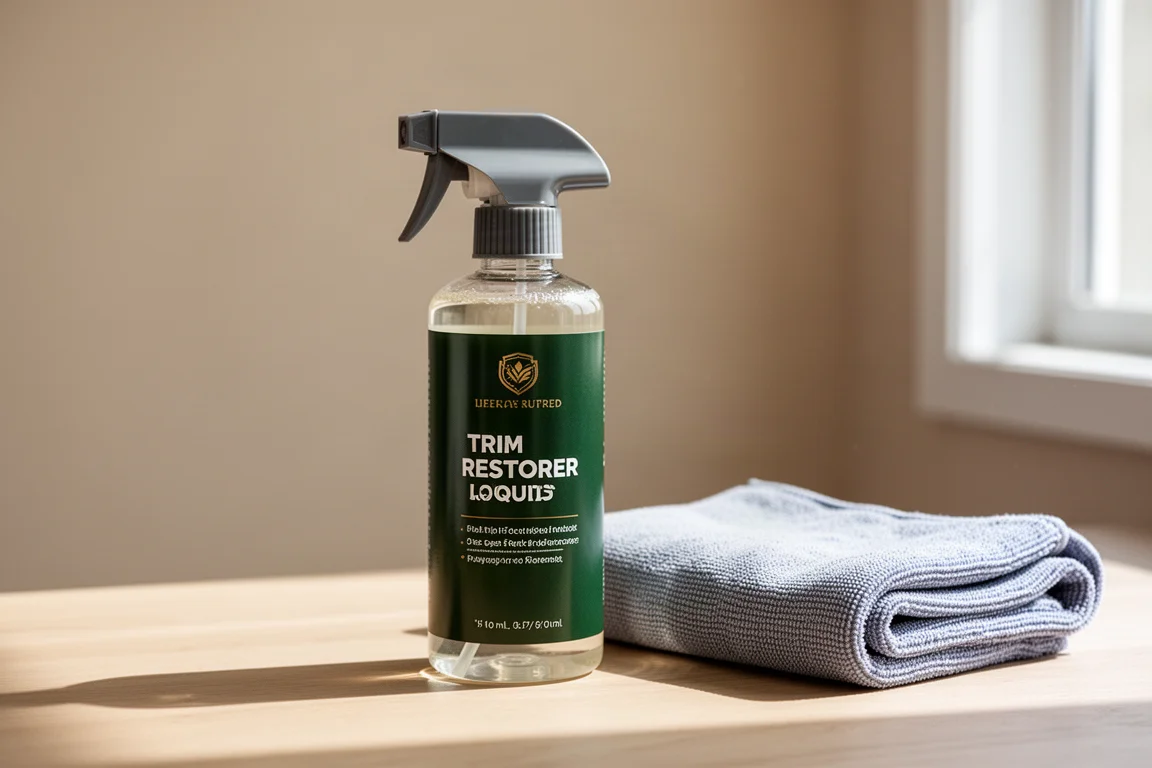
CarGuys Plastic Trim Restorer
CarGuys costs $18 for 8 oz ($2.25 per ounce) and claims to bring plastic, rubber, and vinyl back to life with a long-lasting, easy-to-use formula. Apply a thin even layer with an applicator, let it work 10 to 30 minutes, buff with a clean towel, air dry 10 more minutes, then do a second wipe-down to remove excess and prevent dust buildup. Made in the USA.
The finish is a genuinely nice dark look, glossier than Cerakote but attractive. However, UV protection was minimal (1,879), it gathered quite a bit of dust, it released dirt reasonably well but not at Cerakote’s level, and the bug and tar remover and degreaser tests used it up almost entirely.
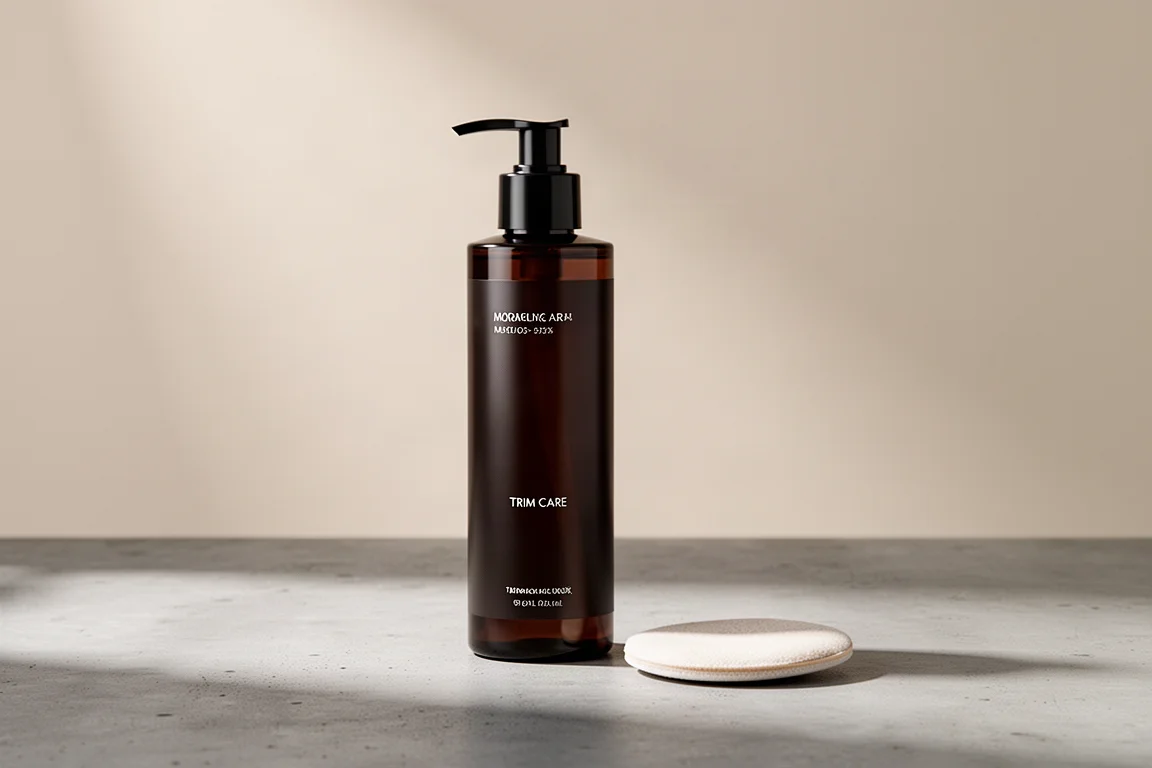
3D Trim Care
3D Trim Care costs $20 for 16 oz ($1.20 per ounce), is made in the USA, and claims a non-greasy, easy-to-apply finish. Apply with an applicator pad or towel until the desired look is reached; on very faded surfaces, let it sit up to 10 minutes and reapply for a darker result.
It had strong initial hydrophobic behavior with nicely beading water, but the appearance was inconsistent, glossier in some areas than others, and it held onto more dirt than CarGuys, looking even worse than Mother’s after the gravel road test. Durability was poor: it was mostly used up after the degreaser test, though it looked slightly better than Adam’s at that point.
Adam’s Black Trim Restore
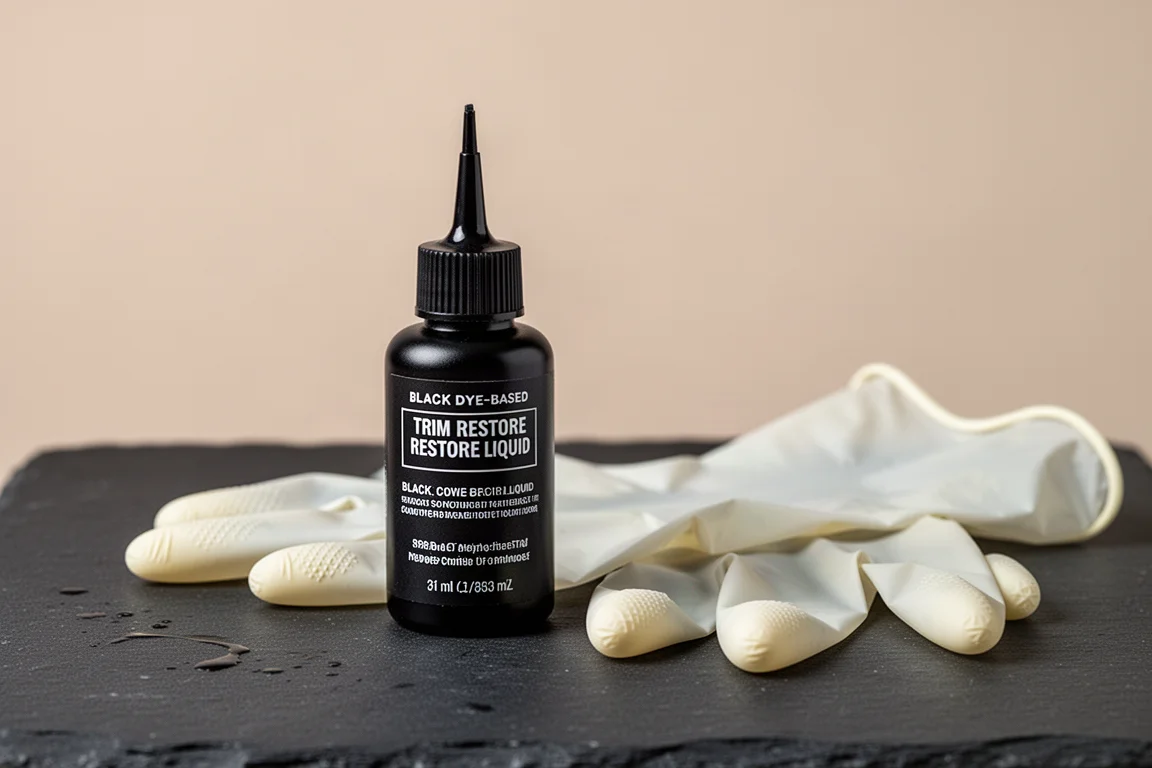
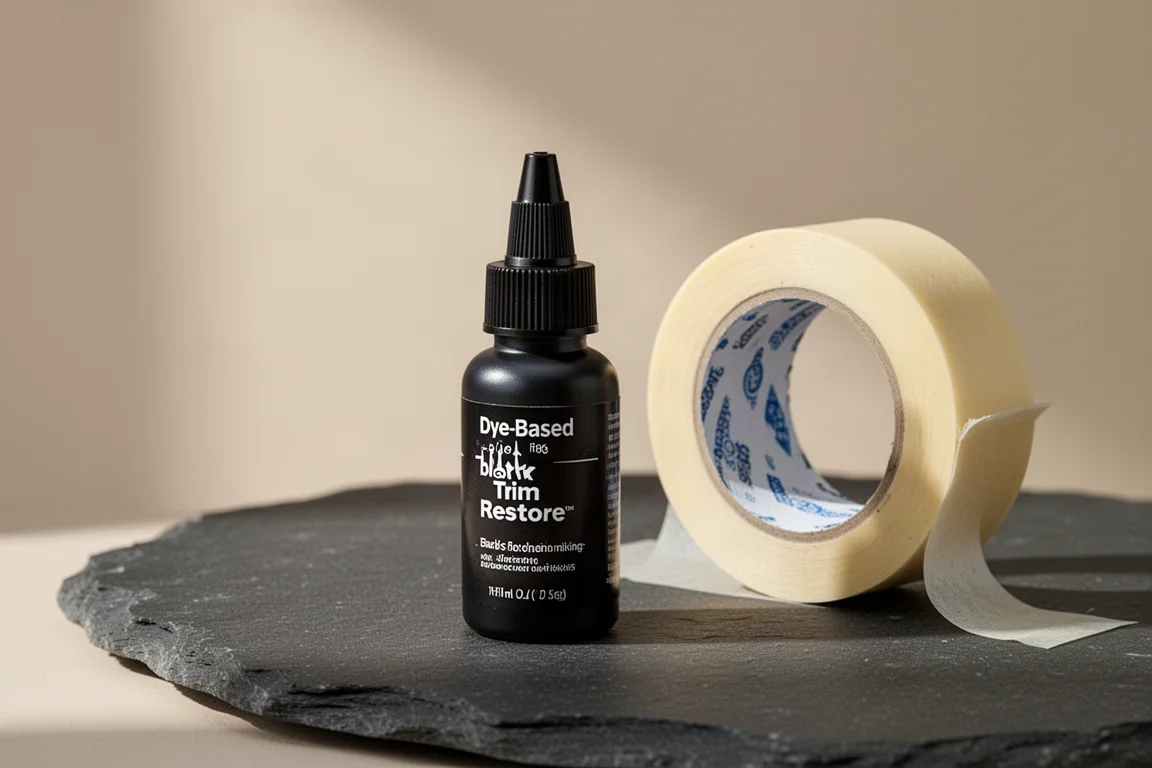
Adam’s Black Trim Restore is the most expensive per ounce at $22 for 4 oz ($5.50 per ounce), made in the USA. It demands care: mask off painted areas with low-tack tape and wear gloves, since it stains skin. Apply a few drops to an applicator, spread a thin coat, and allow 5 to 6 minutes to start curing and about 6 hours to fully cure, reapplying every few months as trim fades.
It produced another nice-looking finish, less glossy than 3D, and it released dirt well after a water spray. But it feels slightly sticky, offered no meaningful UV protection, was destroyed by the bug and tar remover, and was completely used up after the degreaser.
303 Aerospace Protectant
At $22 for 16 oz ($1.38 per ounce), 303 Aerospace Protectant claims to keep vinyl, rubber, and plastic looking newer longer. To be fair, it is not marketed as a trim restorer for faded plastic. Spray onto a microfiber towel out of direct sunlight, apply to the surface, and remove excess with a wet towel if streaking occurs. Made in the USA.
It performed slightly better than average in the UV test at 1,861 and, together with Chemical Guys, was among the best at releasing dirt after a rinse. But the finish was inconsistent, oxidation showed badly after the car wash test, and it was badly cooked by the degreaser. Treat it as a protectant for already-decent trim, not a restorer.
Chemical Guys Silk Shine
Chemical Guys Silk Shine costs $22 for 32 oz (69 cents per ounce), the best value per ounce in the group. It claims to restore and protect vinyl, rubber, and plastic with a silk shine finish that is dry to the touch with no oily, greasy, or sticky residue. Shake well, spray onto an applicator pad, wipe on, remove excess, and reapply as desired. Made in the USA.
It performed identically to untreated glass in the UV test and looked inconsistent compared to untreated plastic, though still better than nothing. It released dirt very well after rinsing, one of the better performers there. But hydrophobic behavior was weak, oxidation was severe after cleaning tests, and the degreaser left it looking cooked. The large bottle keeps the per-ounce cost low.
Xtreme Black Trim Restore
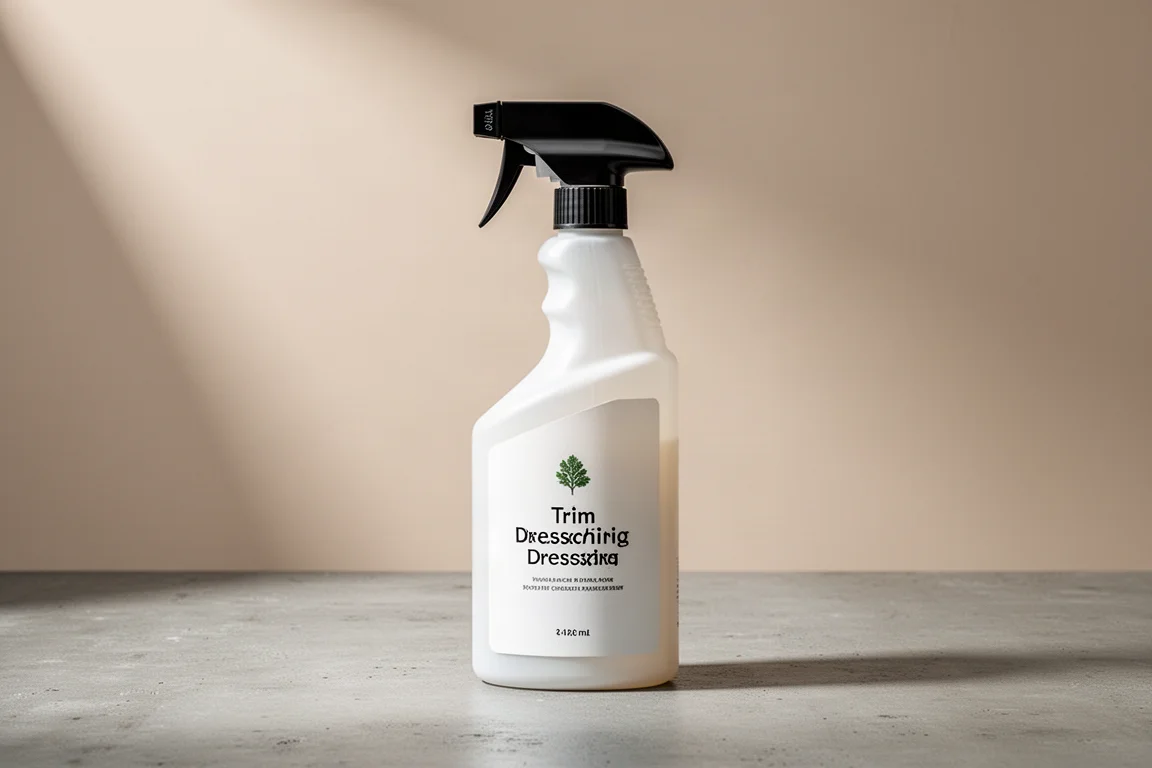
Xtreme is $25 for 8 oz ($3.13 per ounce). It contains a dye that stains hands, so gloves are recommended, and you should tape off adjacent chrome or painted surfaces, wiping off any overspray immediately with a microfiber towel. Apply several drops to an applicator, coat the trim thinly and evenly, wait 4 to 5 minutes, wipe off excess, and cure 4 to 6 hours before water exposure. There is no manufacturing information on the bottle.
Xtreme produced arguably the most natural-looking finish in the visual comparison: not too matte, not too glossy. It had decent hydrophobic behavior, though weaker than Chemical Guys. The downsides are significant: it offered almost no UV protection, it was one of the worst dust magnets in the gravel road test, it held onto grime stubbornly, and the degreaser test used it up.
The DIY Automatic Transmission Fluid Hack
The internet hack of rubbing automatic transmission fluid on faded trim did initially restore a shiny appearance, and it surprised everyone by finishing second in the UV test at 1,739. But it smells like a transmission shop, collected a lot of dust and dirt, and held onto grime even after rinsing. It also survived only marginally better than untreated plastic in some tests before being wiped out entirely. It is not recommended.
Durability: Which Products Survive Cleaning
After 24 hours of curing in a temperature and humidity-controlled environment, each treated panel was washed with car wash, then scrubbed with bug and tar remover, then hit with a degreaser. Water beading served as a quick indicator of remaining protection.
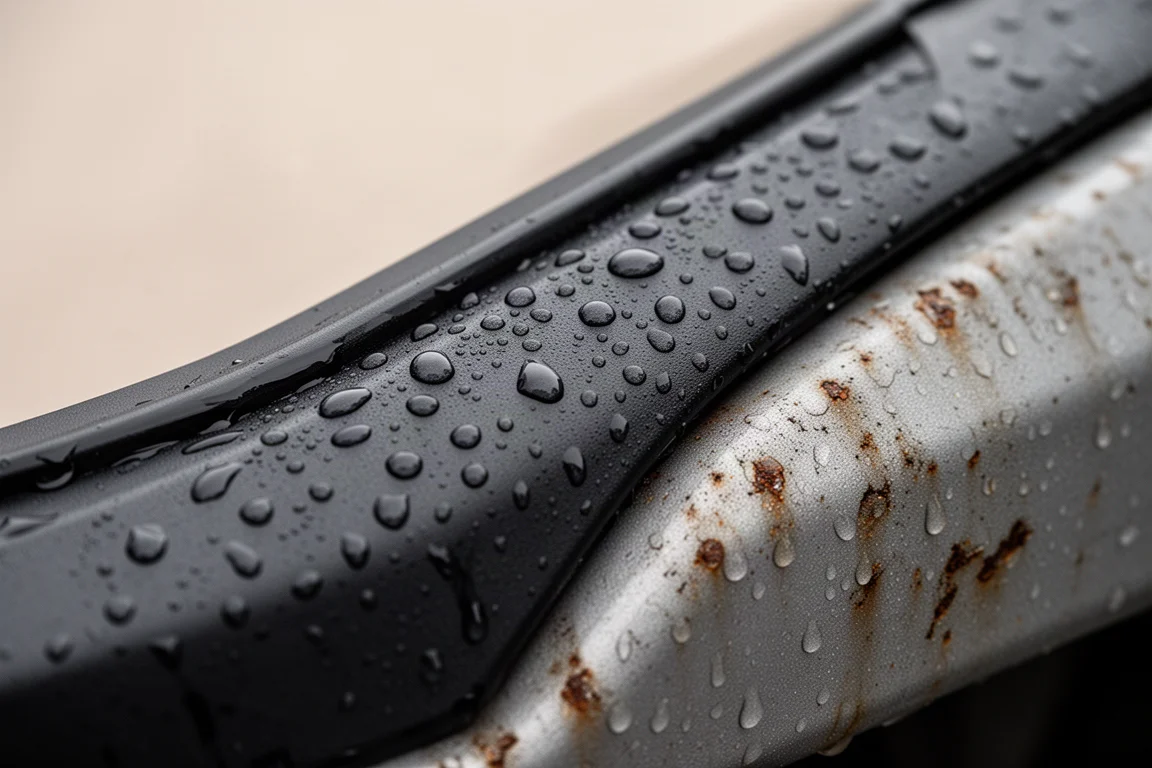
Cerakote was the standout, still beading water and preventing oxidation after every chemical attack. Mother’s held up better than everything else and looked the least oxidized after the bug and tar remover stage. Adam’s was totally cooked after bug and tar remover, while 303, Chemical Guys, Meguiar’s, and the ATF hack were wiped out by the degreaser. Final durability ranking: Cerakote first, Mother’s second.
Dust and Dirt Attraction
Following a vehicle down a gravel road and blowing dust across the trim revealed big differences. Mother’s, Xtreme, and 3D offered excellent initial hydrophobic beading but clung to dust badly, a real trade-off to consider if you drive on dusty roads.
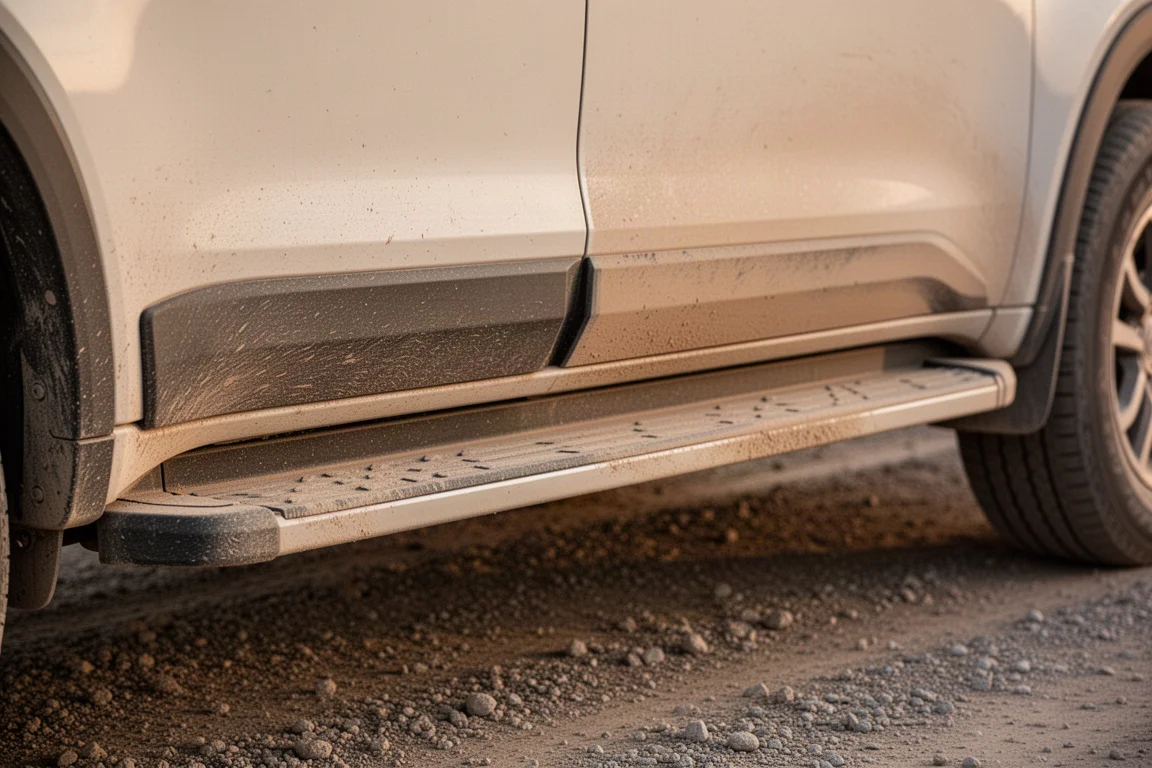
After a simple water rinse, Cerakote earned the best possible rating, almost entirely dirt-free, with Hybrid Solutions, 303, and Chemical Guys close behind. Mother’s, Xtreme, and the ATF hack remained visibly filthy even after spraying.
Final Rankings and Buying Advice
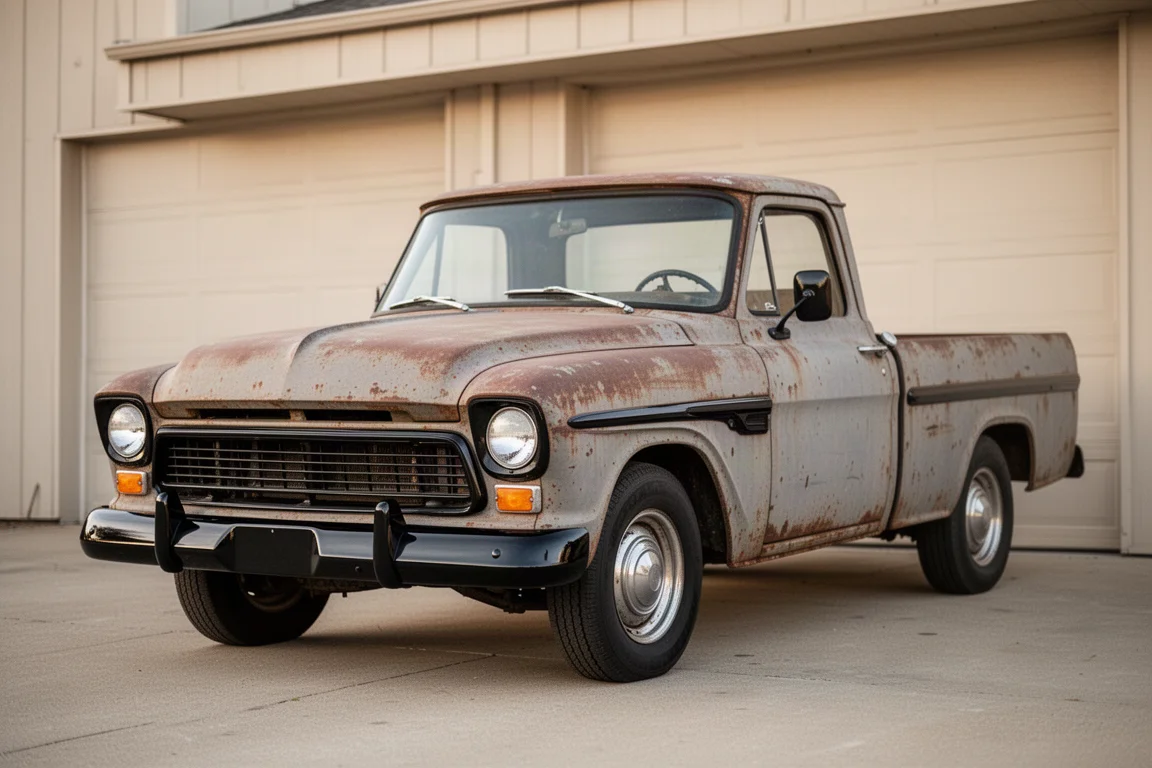
Converting every graded test into a first-through-tenth ranking, Cerakote finished first in every single category. Its high-gloss finish may not suit everyone, but it is practically indestructible, and it was the clear choice for restoring the badly oxidized 30-year-old trim on an old pickup truck, after pressure washing, strip wash, wheel cleaner scrubbing, and a careful heat-gun pass to lift the chalky oxidation.
Hybrid Solutions placed second overall with an average finish of 3.3, a nicer matte look with the best UV blocking, but it simply does not last as long as Cerakote. If a low-gloss finish matters more than longevity, it is the smarter pick.
If dust attraction matters to you, avoid Mother’s, Xtreme, and 3D despite their strong initial water beading. Budget shoppers should note that Chemical Guys offers the lowest per-ounce cost but weakest protection, while Meguiar’s is the cheapest entry point with modest results. Whatever you choose, start with a truly clean, dry surface: every product performed better on properly prepped trim.
Conclusion
Cerakote Trim Restorer Wipes are the overall winner, finishing first in every graded test thanks to a slick, durable ceramic coating that resists dust, rinses clean, and shrugs off chemicals. Hybrid Solutions Graphene Acrylic Trim Restore is the best alternative if you prefer a less glossy, new-plastic matte finish and the strongest UV blocking. Skip the automatic transmission fluid hack, match the finish style to your preference, and prep the trim properly before applying anything.
Further reading
Related Reviews
Car Detailing
Best Car Detailing Products 2026: A Complete Ceramic Coating Kit
A full ceramic coating kit for light-colored cars, including panel prep, coating, towels, tire dressing, and leather protection.
Car Detailing
Chemical Guys Fabric Clean Review: Honest Results From a Real Stain Test
A hands-on test of the Chemical Guys Fabric Clean Carpet and Upholstery Shampoo kit, diluted exactly as directed and used on real carpet stains with mixed, mostly disappointing results.

Backpacking Gear
Building a 10 lb Base Weight: An Ultralight Backpacking Gear List
A practical walkthrough of the ultralight pieces behind a 10 lb base weight, from a 765 g pack and a roomy one-person tent to a full camp chair and a dependable water filter.