Cookware
Four Non-Stick Skillets, Four Marketing Claims: What Actually Holds Up
We score the public marketing claims behind Our Place Always Pan Pro, HexClad, Hestan NanoBond, and Caraway to see which brands earn your trust.
Introduction
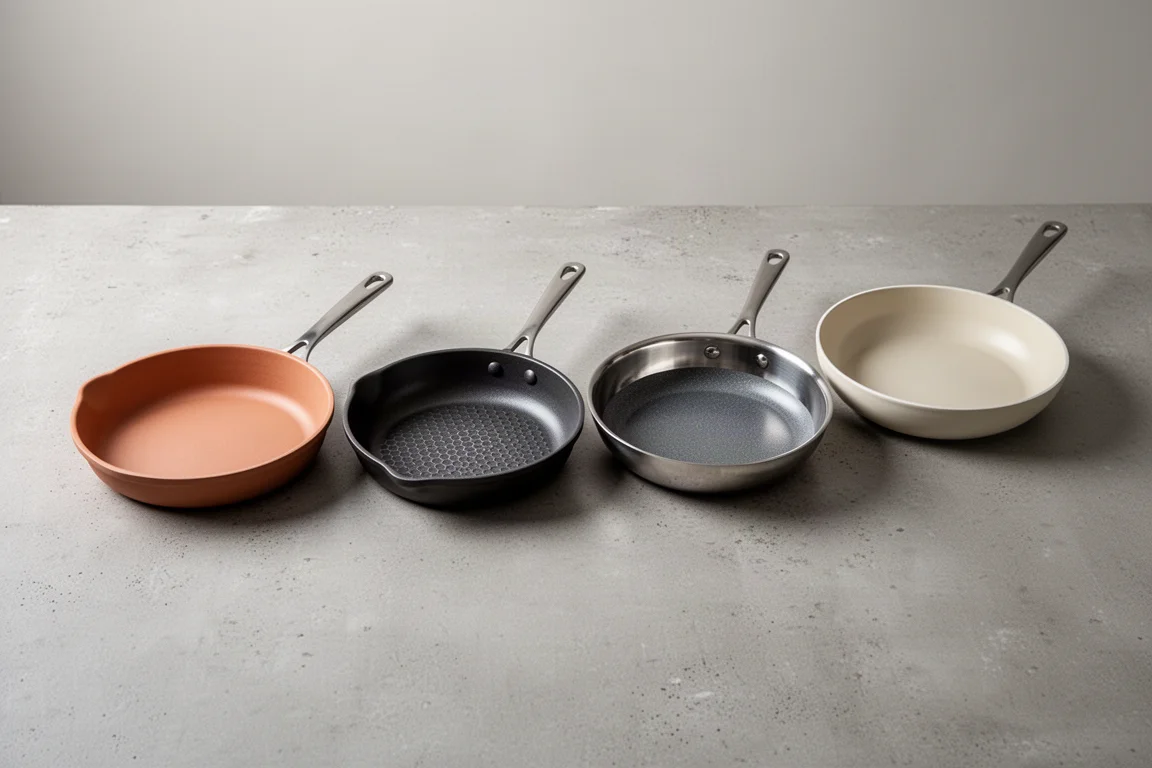
Cookware marketing is full of numbers, and not all of them mean what you think they mean. After a public correction on one detail about Our Place’s Always Pan Pro (its inner ply is titanium, not stainless steel as we first assumed from the brand’s copy), it felt like the right moment to take a more systematic look at how the biggest names in premium non-stick and hybrid cookware describe their own products.
The method is simple: each public claim gets a trust score from 0 to 10 on two axes, how true it is and how honest it is, with the average becoming the overall trust rating. The results reveal a wide gap between brands that describe their cookware accurately and brands that lean on technically defensible wording to imply something the material can’t deliver.
Here’s how four popular options stack up when the claims meet real testing.
Our Place Always Pan Pro: Titanium Claims Under the Microscope
Our Place says the Always Pan Pro’s titanium surface is 300% harder than stainless steel, making it virtually indestructible and able to withstand up to 1,000°F. Three claims, three very different verdicts.
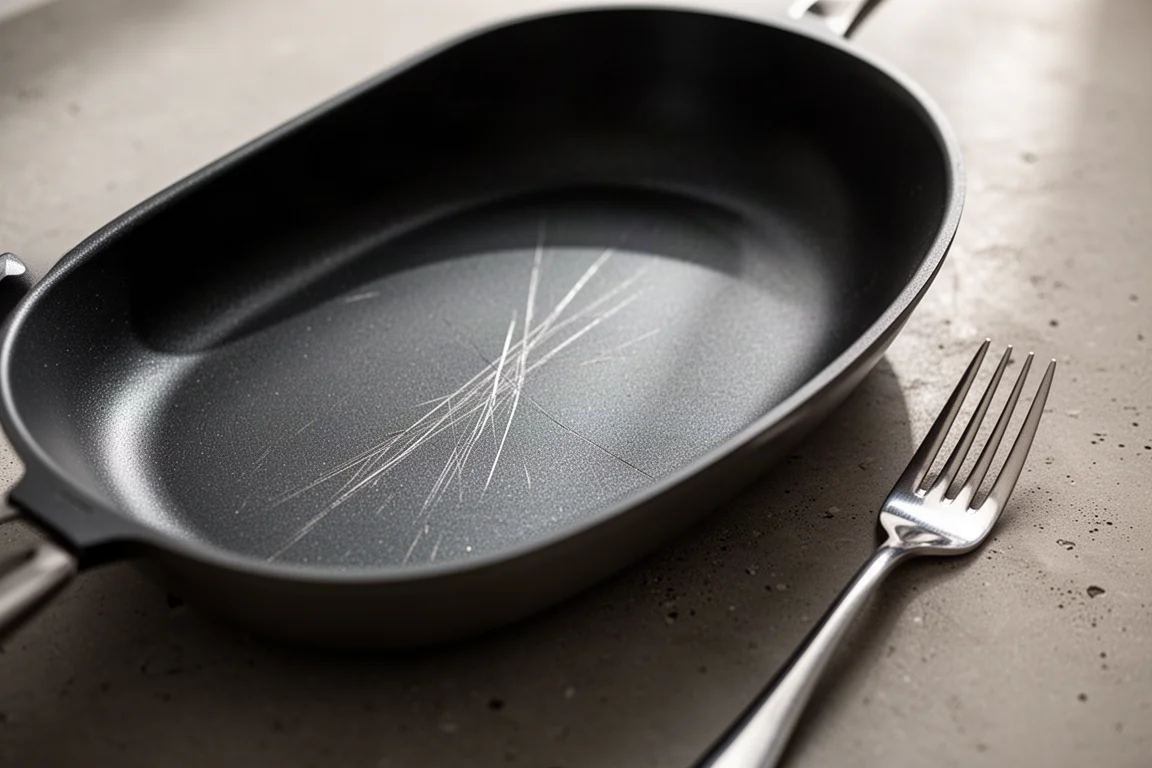
The hardness figure almost certainly comes from the Vickers hardness test, which measures resistance to a probe being pressed into a material. By that narrow measure, the number is plausibly accurate, but puncture resistance is not the kind of damage that matters in daily cooking. The concern with any non-stick surface is abrasion, and in that context the claim is fundamentally misleading: raw titanium is actually easier to scratch than stainless steel, and the oxide coating on top of it can be ruined by an ordinary old stainless steel fork with almost no effort at all.
“Virtually indestructible” is word games. It is technically hard to disintegrate the pan, but it is remarkably easy to destroy the coating and reduce the pan to a far less useful state. The 1,000°F figure appears to be a copy issue related to the aluminum body rather than the titanium surface, and the gold version carries a lower maximum operating temperature, which the claim itself acknowledges with an asterisk.
Our updated materials score for the Always Pan Pro drops from 7 to 4, and the overall review score falls from 3.2 to 2.4 out of 10. The surface is more resistant to damage than PTFE or ceramic coatings, but it is less non-stick than either and still very easy to strip.
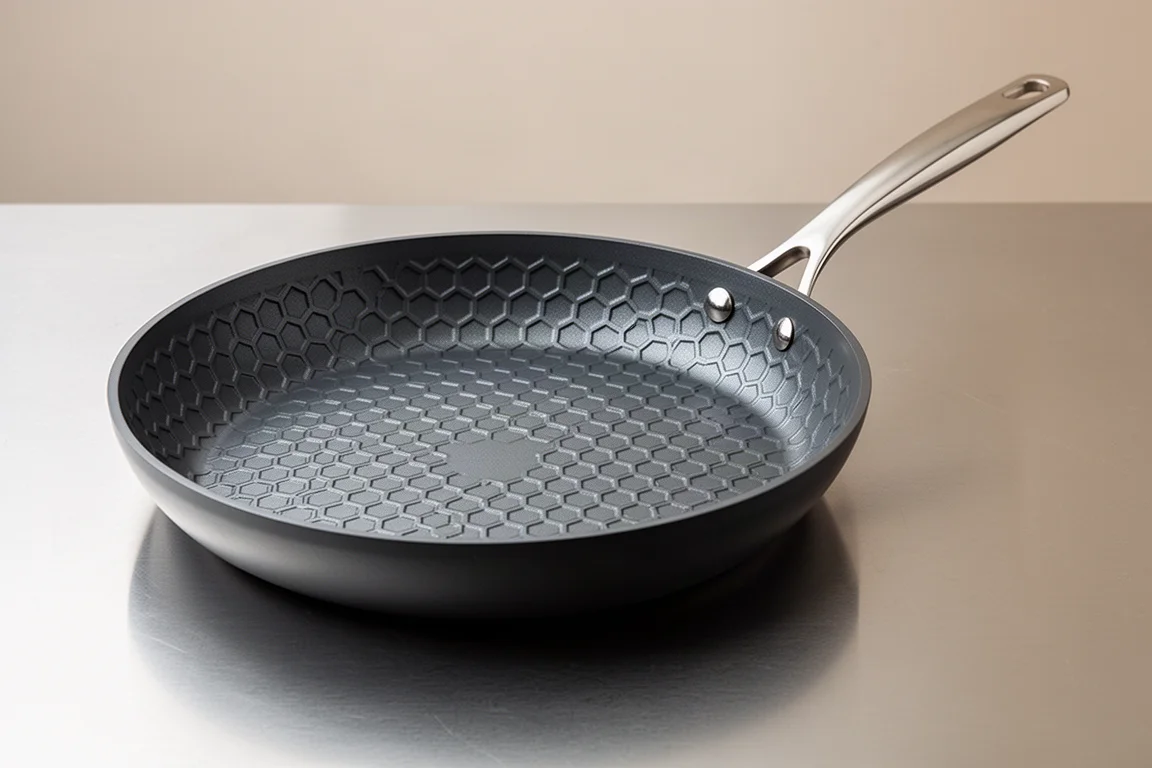
HexClad: The Searing Power Claim
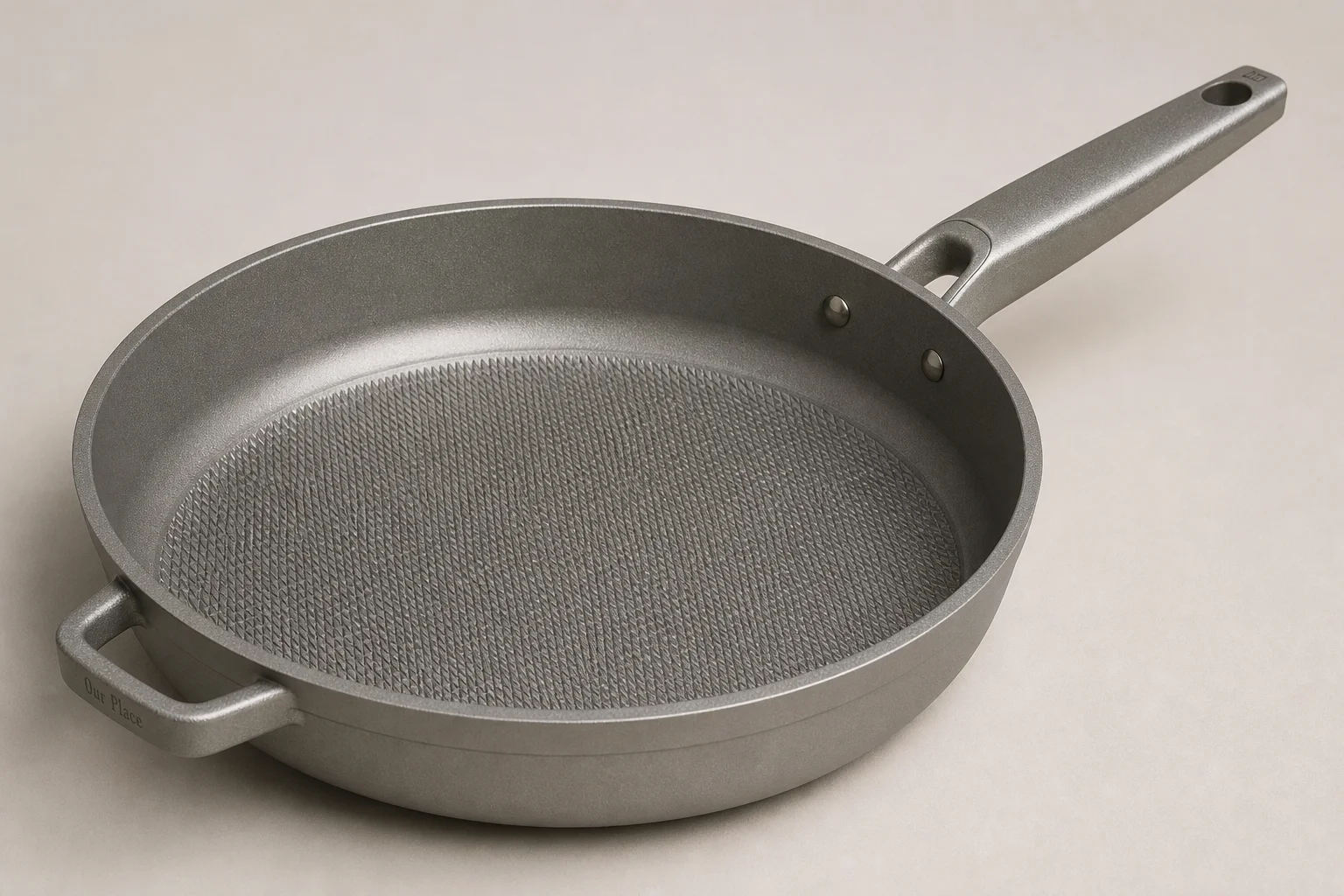
HexClad advertises unbeatable searing power, unmatched by any other pan. As a qualitative statement, it is difficult to disprove, which is exactly why it can exist. As a practical matter, it is abjectly untrue.
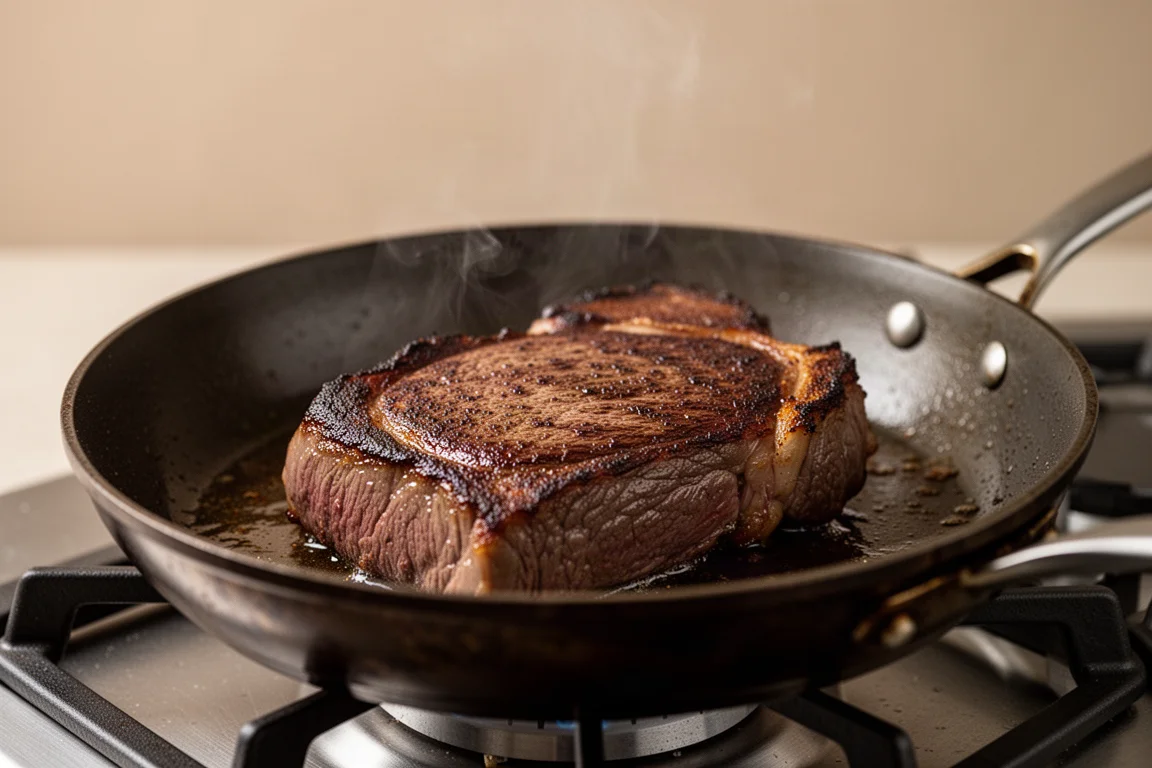
Many other pans share an almost identical hybrid construction, and a PTFE-based skillet, even one reinforced with steel, is not an ideal searing tool. Good searing comes from a surface that can get ripping hot without risk, and PTFE is generally recommended to stay below 500°F. The audience for this claim, home cooks who don’t know how to cook and fans of the brand’s celebrity investor, is precisely the audience least equipped to question it. On the trust scale, this lands at zero for honesty.
Hestan NanoBond: The Hardness and Durability Claims
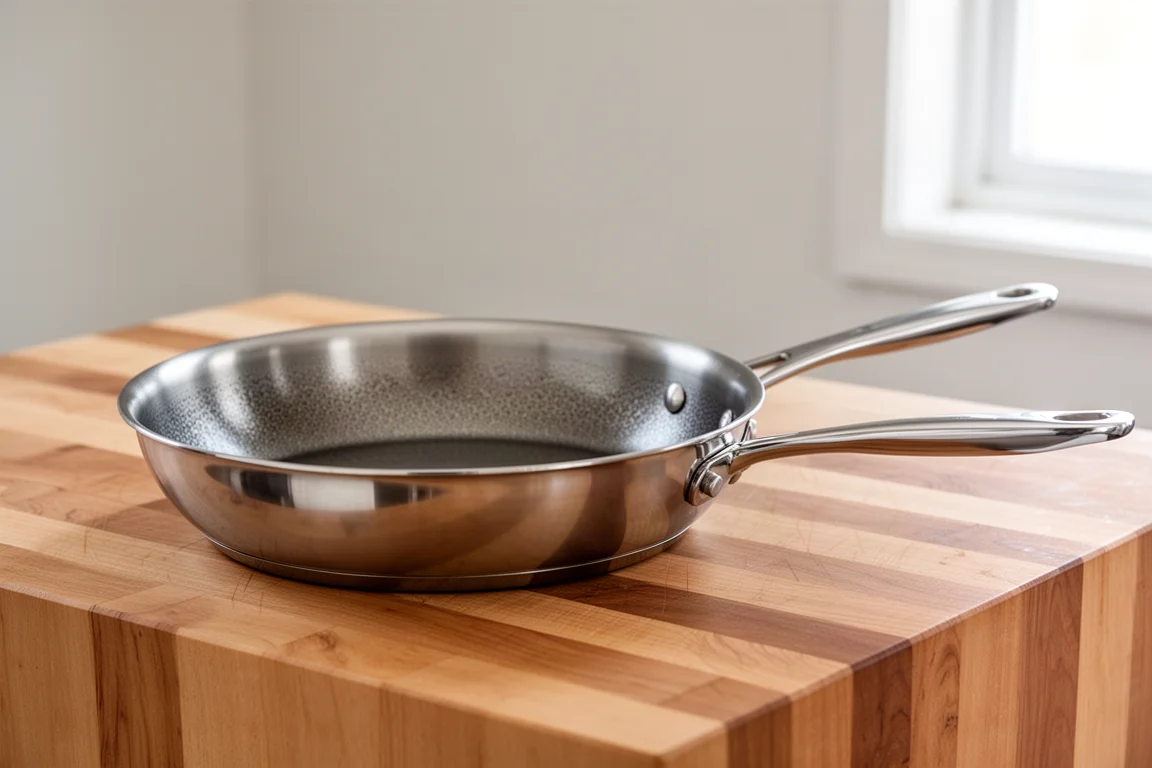
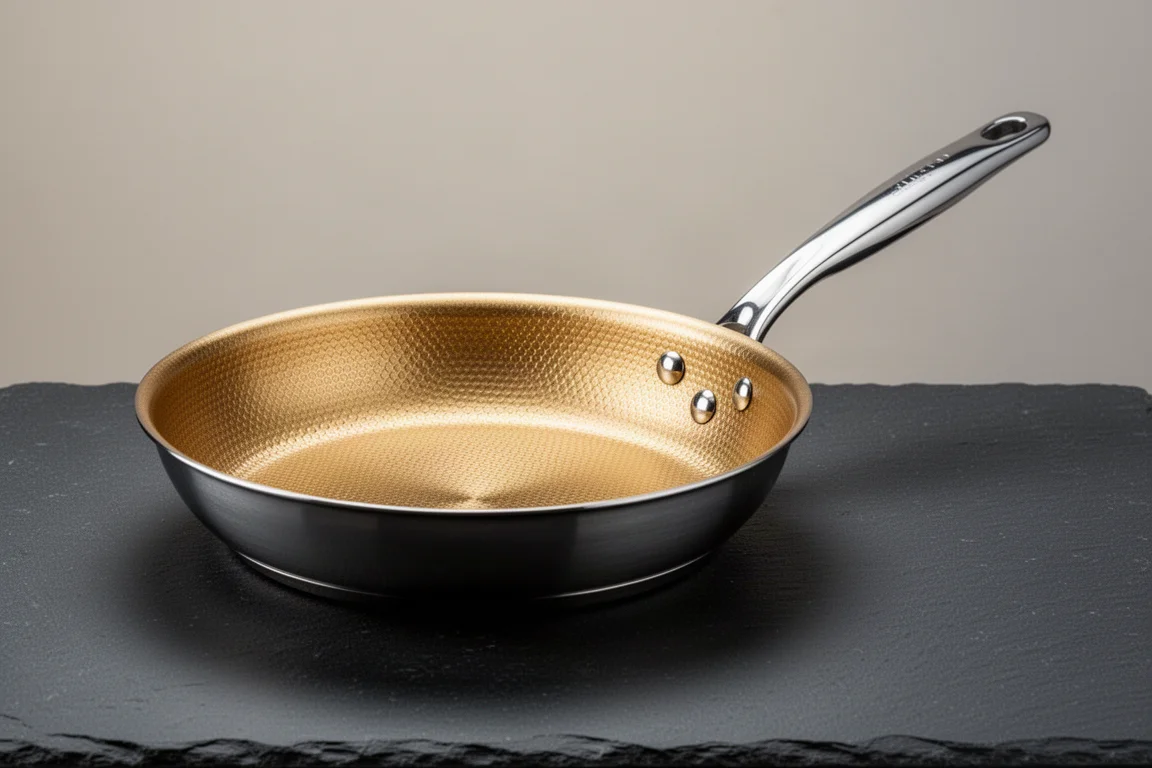
Hestan says the NanoBond line is four times harder than stainless steel, resistant to scratching, staining, and salt pitting. That is four separate claims, and nearly all of them hold up.
In testing, even the hardest calibrated tools could not put a slight scratch in the surface. Salt pitting is a non-issue. The one miss is staining: while there is probably less chromium available at the surface to cause discoloration, the pans remain prone to rainbow staining, and the dark surface makes that staining more visible. Technically defensible, but most consumers would not read it that way. Even so, this is the most honest set of claims of the group, and the product itself performed impressively.
Caraway: A True Claim That Doesn’t Say Much
Caraway advertises PFOA-free ceramic non-stick cookware. The claim is almost certainly completely true, because PFOA has been illegal in cookware for years. It is also utterly irrelevant: you would not expect it to be in these pans anyway in 2026. The risk is that it misleads shoppers into believing competing pans contain PFOA when they do not. True, but not informative, which earns a middling trust score for honesty rather than accuracy.
Which One Should You Actually Buy?
If honest marketing matters to you, Hestan NanoBond is the clear standout, with claims that mostly survive contact with real testing and a surface that resisted every scratch test thrown at it. Caraway’s claims are harmless but empty, which makes it harder to evaluate on trust alone. HexClad’s headline searing claim is the kind of wording that sounds impressive and falls apart under scrutiny. And the Always Pan Pro is the biggest disappointment here: the titanium story is technically true in a way that does not match how the pan actually fails, which is why our review score dropped meaningfully after closer inspection.
The broader lesson is to be skeptical of any cookware claim built on a lab test you cannot see applied to your kitchen. Hardness by puncture is not durability by abrasion, and “withstands 1,000°F” usually says more about the aluminum body than the cooking surface.
Conclusion
Four brands, four very different relationships with the truth. Hestan’s NanoBond claims come closest to clean, Caraway’s are true but vacuous, HexClad’s searing promise is intentionally misleading, and Our Place’s Always Pan Pro leans hardest on technically-true-but-practically-false framing. Let the claims, not the copy, guide your next pan purchase.
Further reading
Related Reviews
Cookware
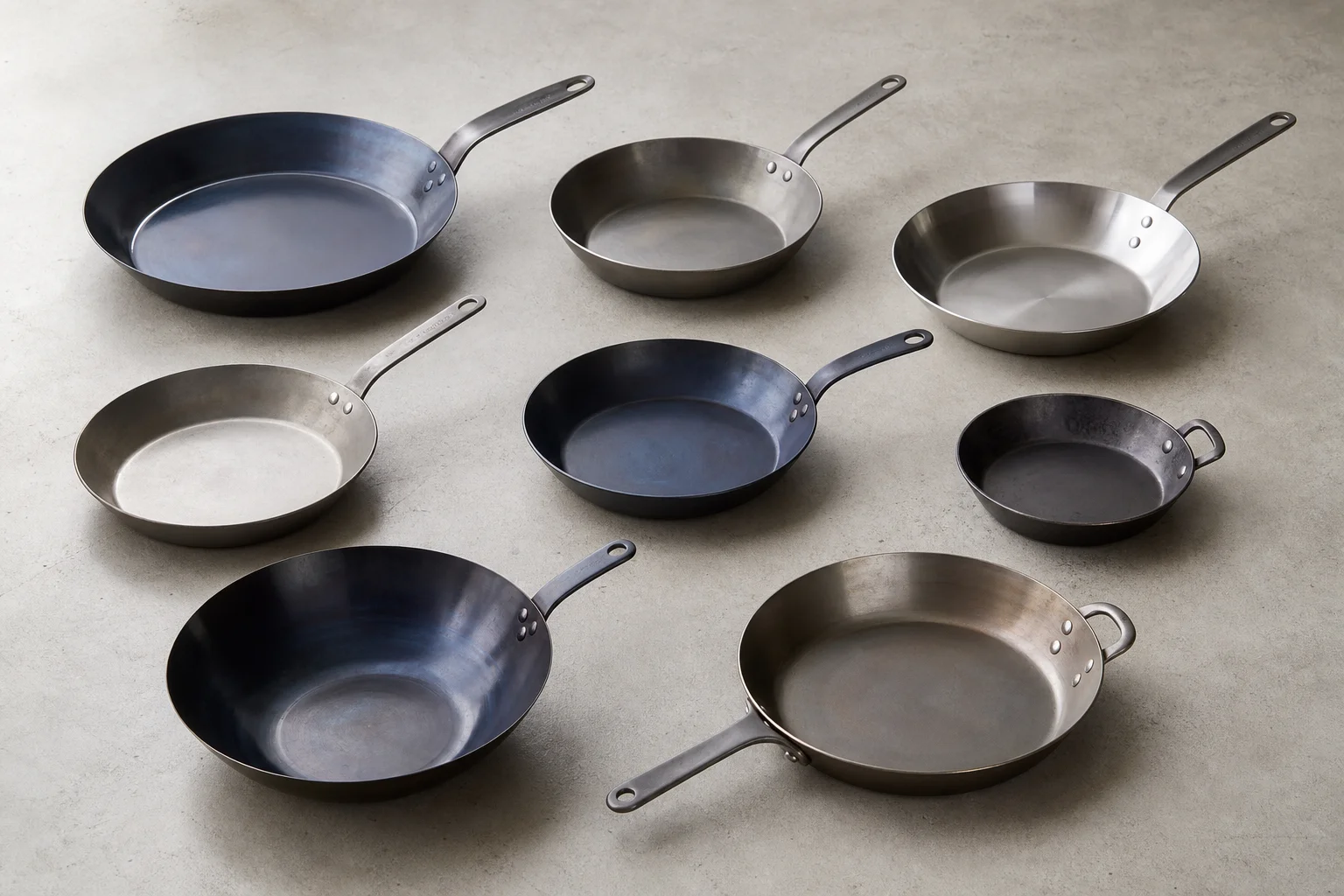
Best Carbon Steel Pans Tested: Which Brands Deliver Real Value
We tested eight popular carbon steel pans with controlled durability, heat, and cooking tests. Here's which ones perform best and which to avoid.
Cookware
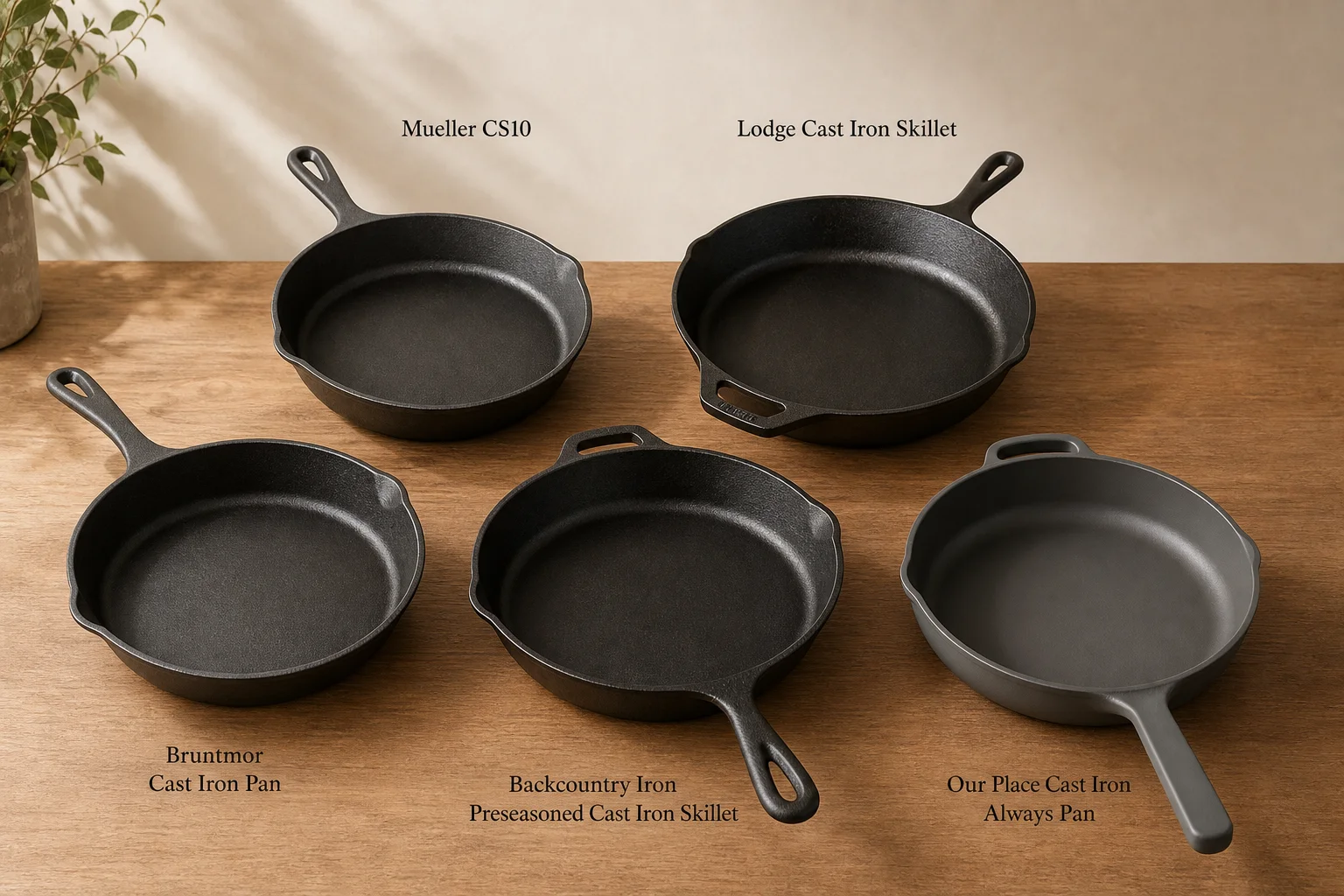
Best Cast Iron Pans 2026: Five Options from Budget to Premium
A practical breakdown of five cast iron skillets, from affordable Mueller to premium Our Place, with clear strengths and trade-offs for different cooking needs.
Cookware
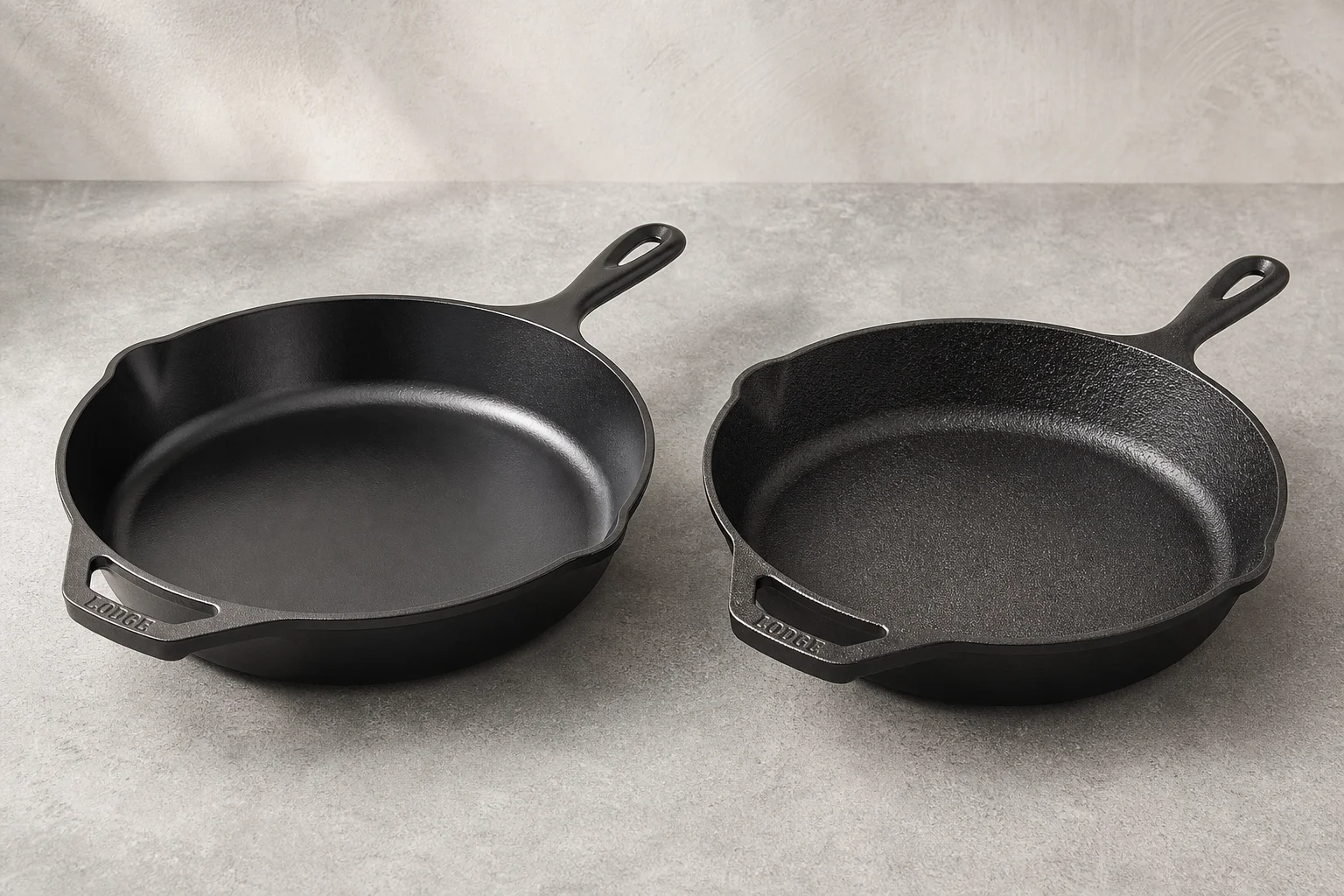
Best 12-Inch Cast Iron Skillets: Premium Craftsmanship vs. Reliable Budget Option
Two standout 12-inch cast iron skillets tested for heat retention, surface finish, and durability. One premium choice and one budget-friendly alternative that both deliver.