Cookware
The Safest Cookware Worth Buying in 2026: Top Picks in Every Category
Stainless steel, cast iron, carbon steel, and ceramic non-stick pans tested for heating, durability, and safety. Here are the brands that earn a spot in your kitchen.
Introduction
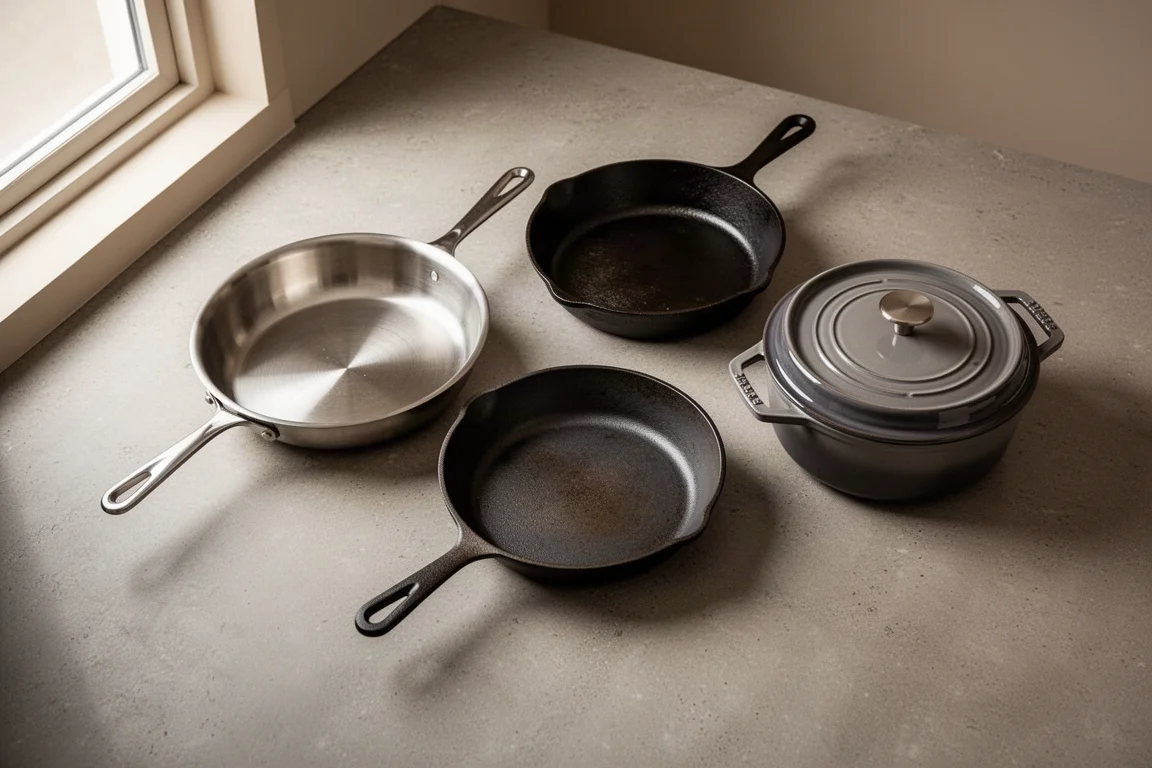
If you are trying to move away from traditional non-stick cookware, the usual advice is simple: switch to stainless steel, cast iron, carbon steel, or ceramic-coated non-stick pans. The catch is that not all brands within these healthier categories are created equal, and some pans have even been found to leach elevated levels of heavy metals under certain conditions.
To separate the good from the merely marketed, dozens of pans across more than 30 brands were cooked with, measured, and stress-tested over several years, covering heating speed and evenness, heat retention, resistance to scratching, chipping, and warping, weight, design, and everyday usability. This guide breaks down the top performers in each safe-cookware category, plus the hidden risks that still exist even with these materials.
Why These Materials Are Considered Safer
Stainless steel has no chemical coating, resists rust and corrosion, and does not noticeably affect the taste of food. Cast iron is roughly 98% iron and 2% carbon, and carbon steel is an even thinner, lighter version at about 99% iron and 1% carbon. All three are durable, handle high temperatures well, and rank among the safest cookware materials available.
That said, none of them are perfect. Studies show that small amounts of nickel and chromium can leach from stainless steel into food, especially with newer pans and acidic ingredients like tomato sauce. Cast iron can leach small amounts of iron, particularly when simmering acidic foods for long periods. The reassuring context: many of these studies use extreme conditions, such as 20-hour simmer times, and under normal cooking the actual risk is extremely low, unless you have a known nickel allergy or a condition where your body stores too much iron. For most people, and especially anyone who is iron deficient, cast iron leaching is arguably a benefit.
Best Stainless Steel Cookware
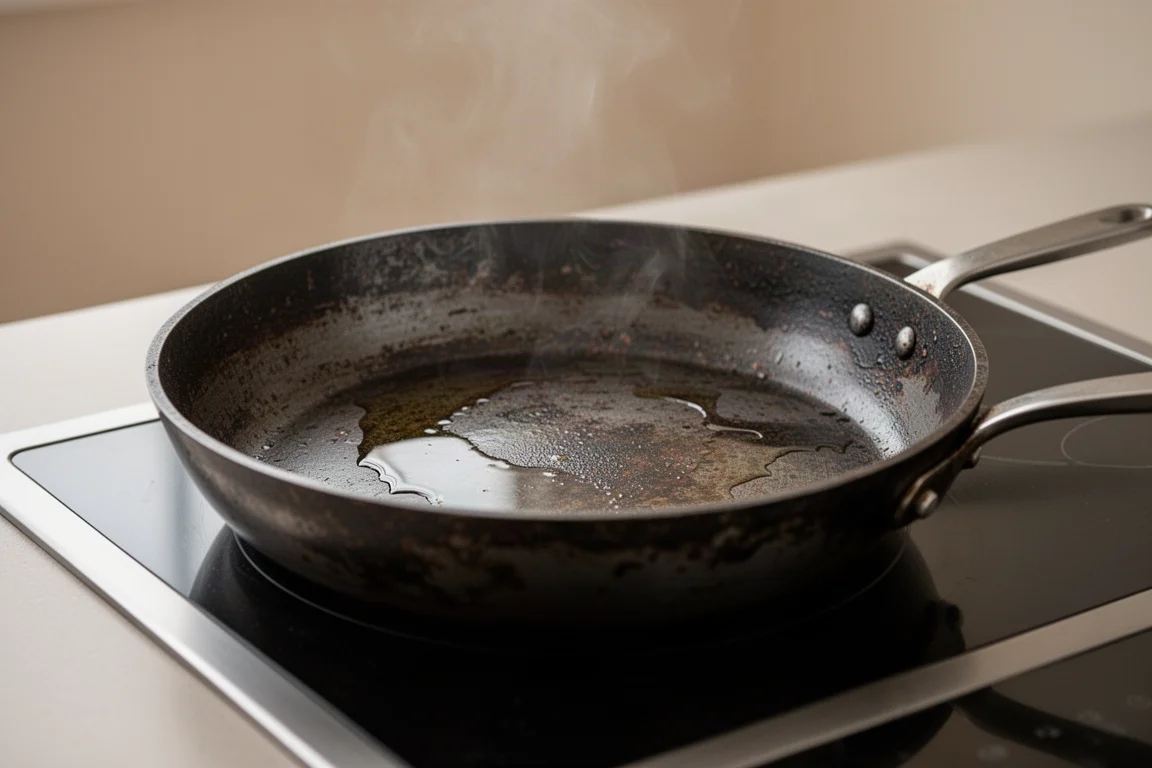
If budget is not a factor, three stainless steel brands stand out. Demeyere Atlantis is the thickest fully clad frying pan tested at 5.5 mm. It heats slowly but retains heat better than nearly every other pan, and it is the best performer on induction cooktops, heating evenly with no warping or buzzing.
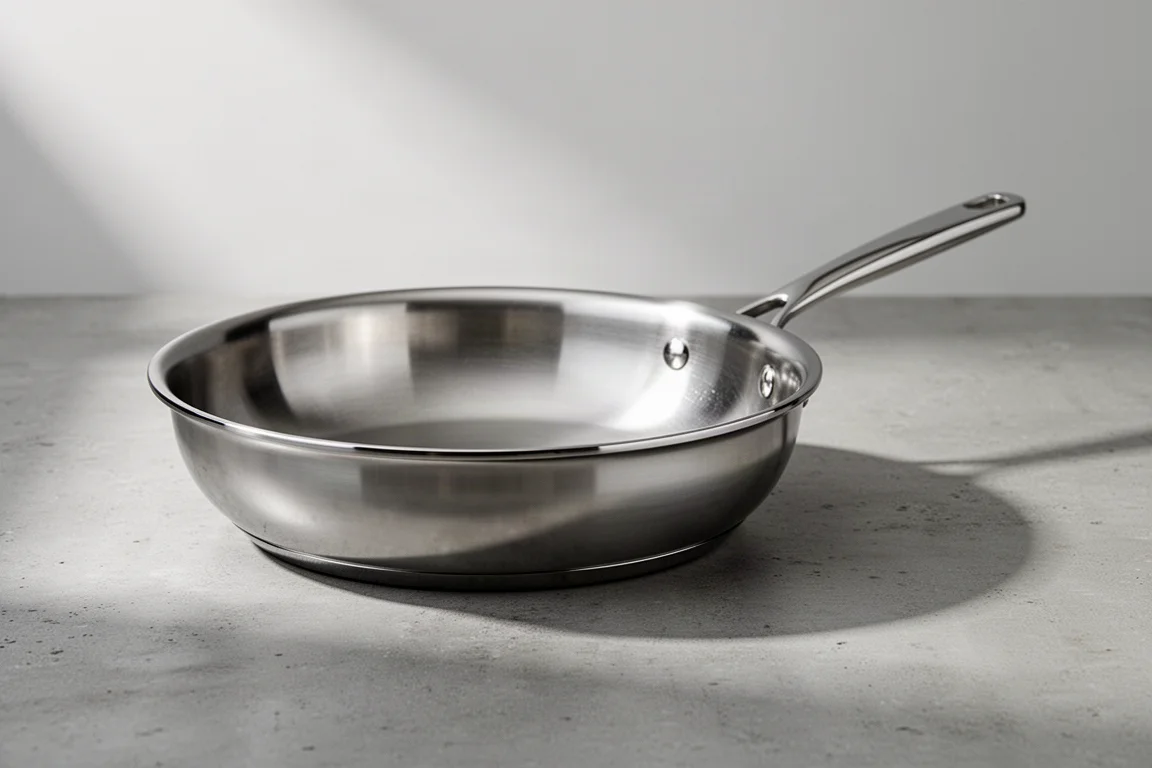
Fissler Original-Profi takes a different approach: thin steel walls paired with a massive 7 mm thick base. That base spreads heat more evenly than any pan tested, with only a 4-degree difference from center to edge after two minutes of preheating, and it retains heat even better than Demeyere.
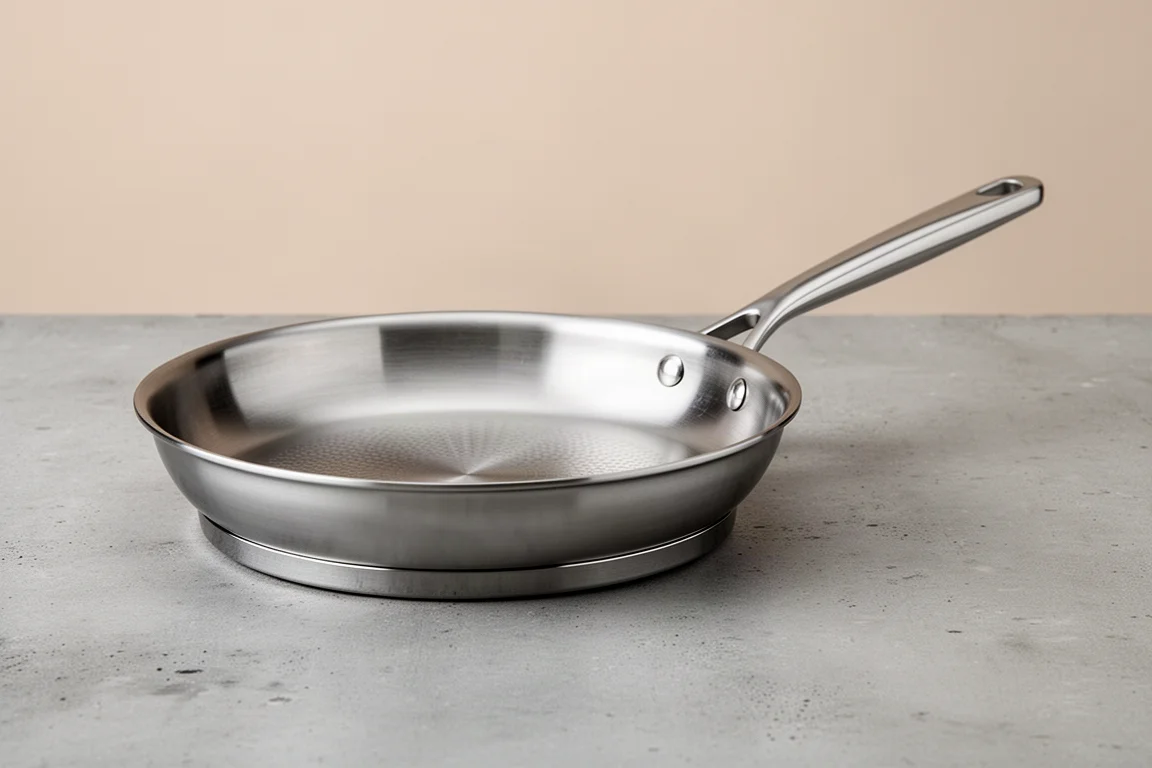
Hestan NanoBond cannot match those two on heat retention, but it is a clear step above typical stainless steel thanks to flush rivets, sealed rims, and a scratch-resistant, titanium-infused surface that shrugs off the micro-scratches most stainless pans develop when scrubbed with the rough side of a sponge.
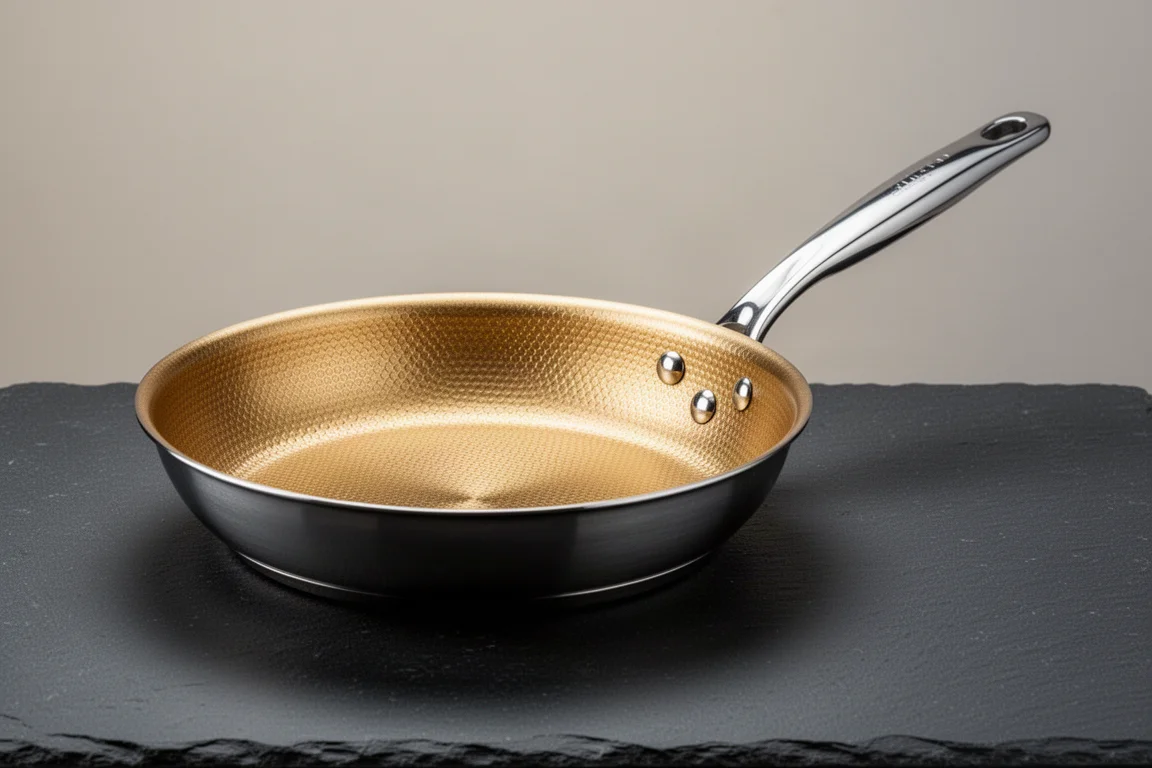
If those are out of budget, the next tier includes Made In, Heritage Steel Eater Series, and All-Clad D3 Everyday. All three are roughly 3 mm thick with wide cooking surfaces and comfortable handles. They do not retain heat as long as the heavier pans, but they heat faster and are easier to handle.
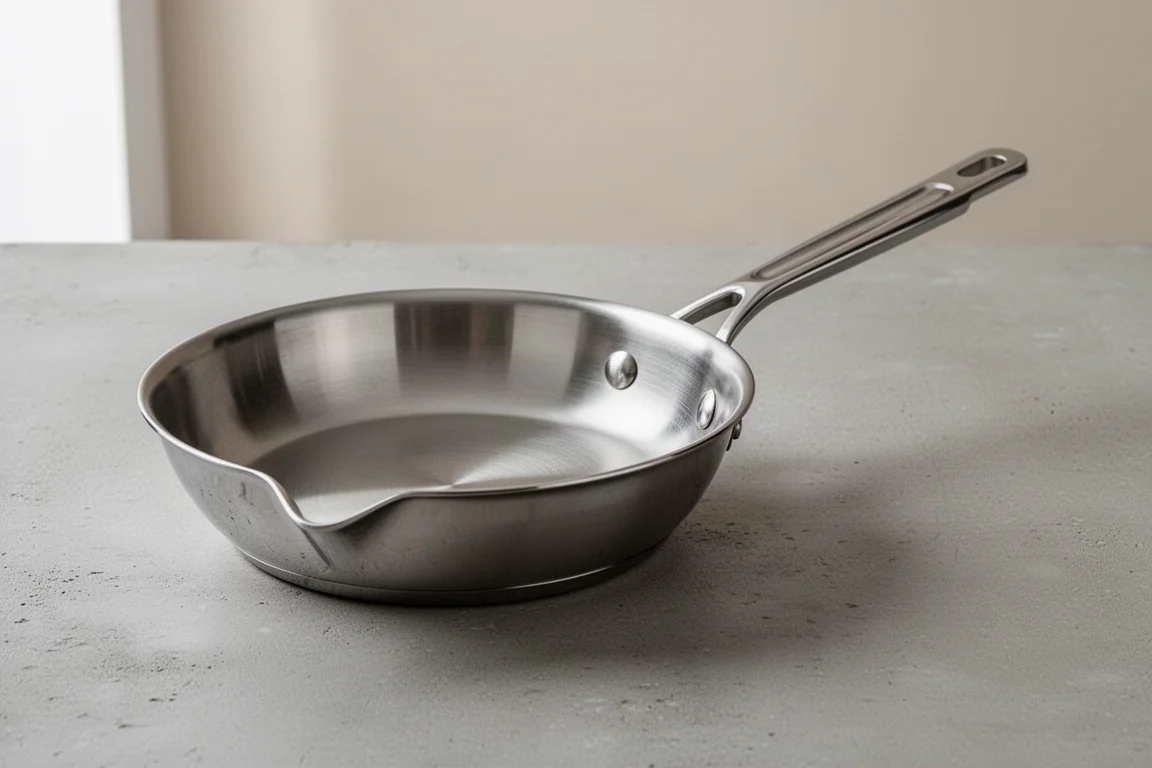
For a fry pan under $100, the strongest values are Cuisinart Multiclad Pro, Misen, and Goldilocks. Cuisinart has the most comfortable and secure handle, Misen is the heaviest and sturdiest with sealed rims, and Goldilocks performs consistently well at a low price.
Best Cast Iron Skillets
Cast iron is considered one of the safest cookware materials, with the main caveat being iron leaching into acidic or long-simmered dishes. Among the highest-rated skillets on the market, Smithey came out on top overall. It delivered the best heat retention, the smoothest non-stick surface, the widest pour spouts, and one of the better-designed handles. It is heavy and expensive, but it will last a lifetime, which makes it worth the investment.
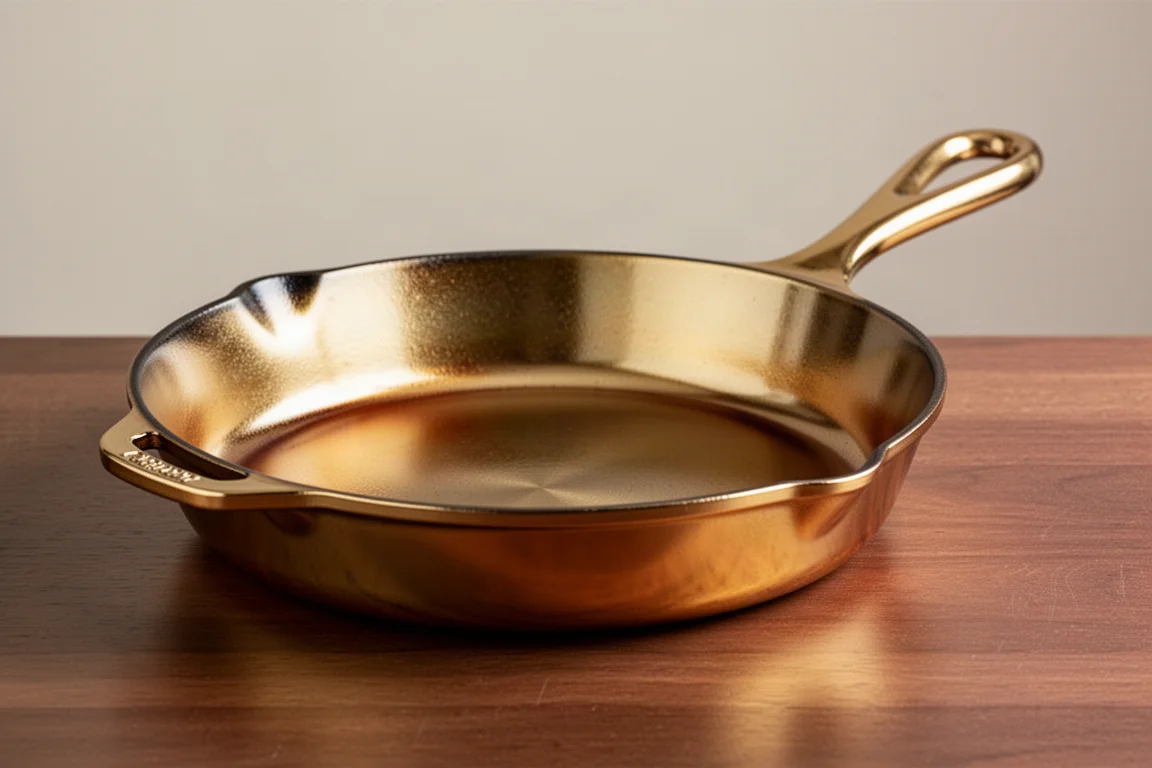
Lodge Classic is the best value pick. It costs a fraction of the price and still performs really well. The surface is rougher and the pan is heavier, but it holds onto seasoning better than smoother skillets and still passed the egg test with no sticking.
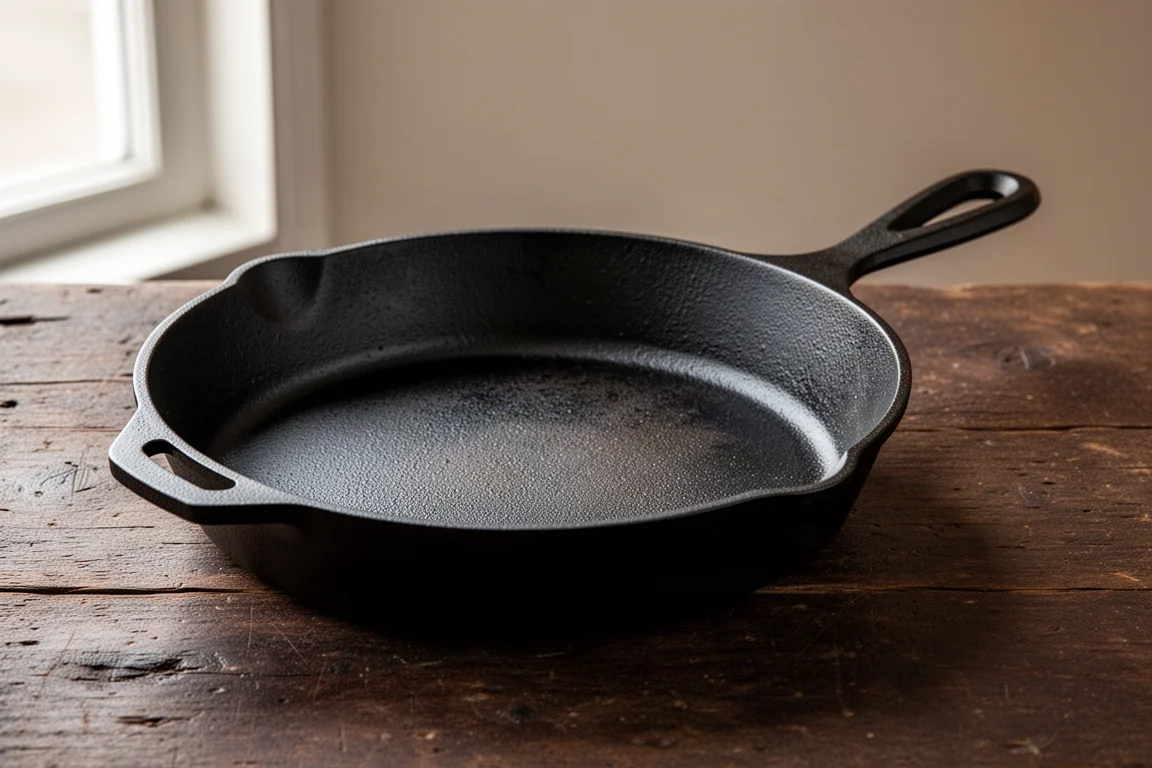
If easy handling matters most, Field Company is worth a look. It has a smooth surface similar to Smithey, weighs significantly less, and heats up faster. The one major downside is that it warped significantly when tested on an induction cooktop, so induction users should look elsewhere.
Best Enameled Cast Iron Dutch Ovens
Enameled cast iron is essentially traditional cast iron coated in a thin layer of hardened glass. The enamel acts as a permanent barrier that prevents rust and eliminates the need for seasoning. Vintage pieces made before the 1970s have some reports of lead in the enamel, but modern enameled cast iron from trusted brands is considered safe.
After months of testing lids, moisture retention, heat distribution, knob temperature, and enamel durability, three brands separated from the pack. Le Creuset is noticeably lighter than the competition, which makes it easier to lift, clean, and store, and it retains moisture well with wide handles, a comfortable knob, and flawless enamel in over 20 colors.
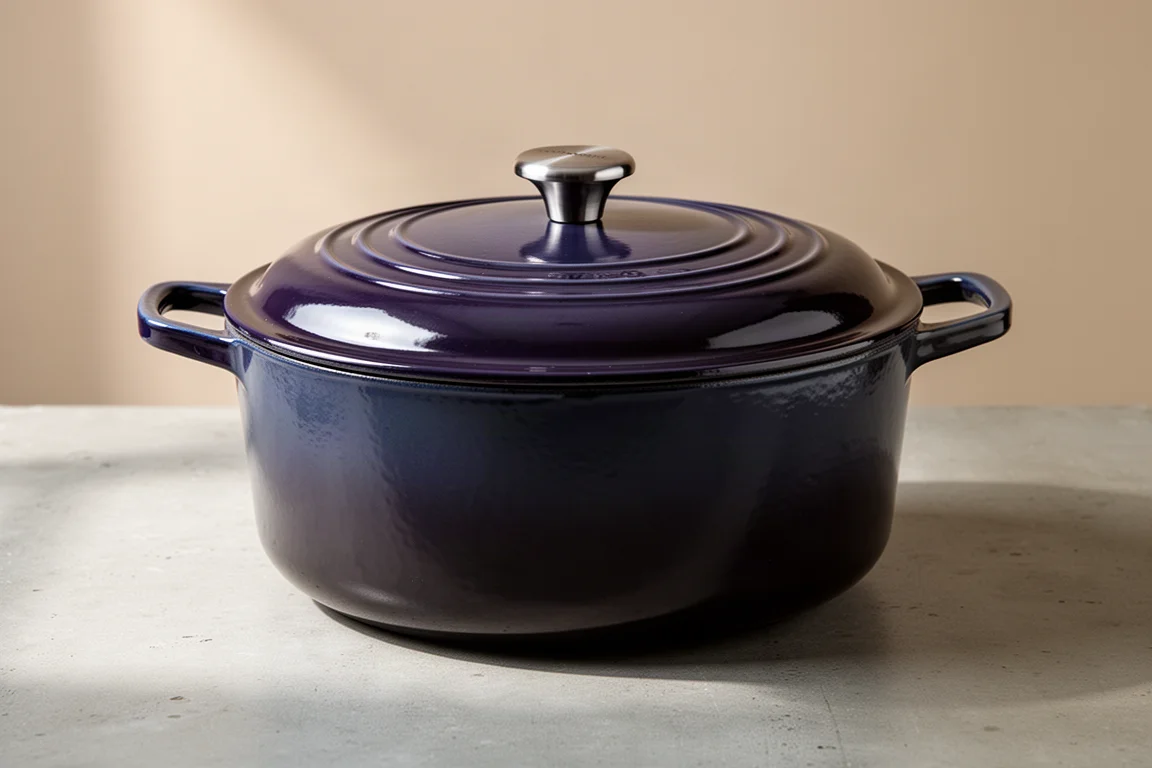
Staub had the best heat retention and excelled at redistributing moisture thanks to its flat lid and large self-basting dimples. The matte black interior hides stains, and the overall look and feel is unmistakably high-end.
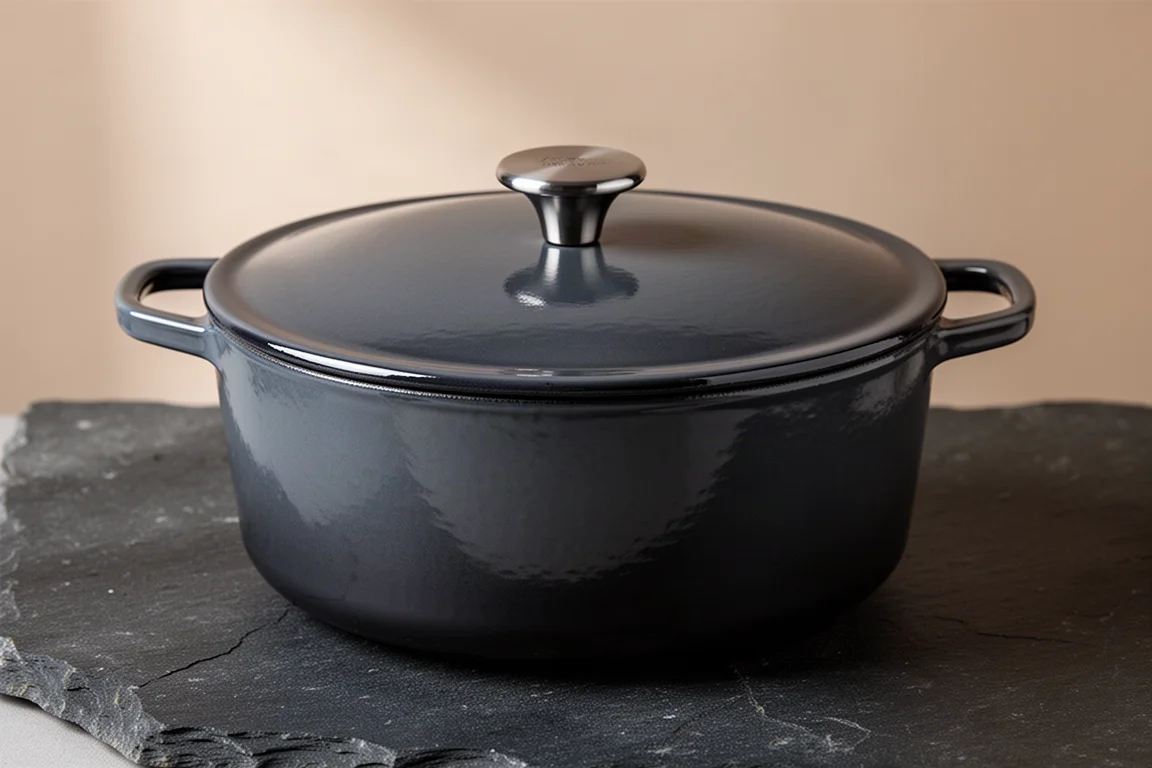
Made In performed well across the board, with the widest cooking surface, the widest and coolest knob, and second place in both heat and moisture retention. It is heavier than Le Creuset but is a solid, well-rounded option. Lodge Essential Enamel is a great value that performs well, though it was the only Dutch oven tested that chipped in the durability test, so factor that in if longevity is your priority.
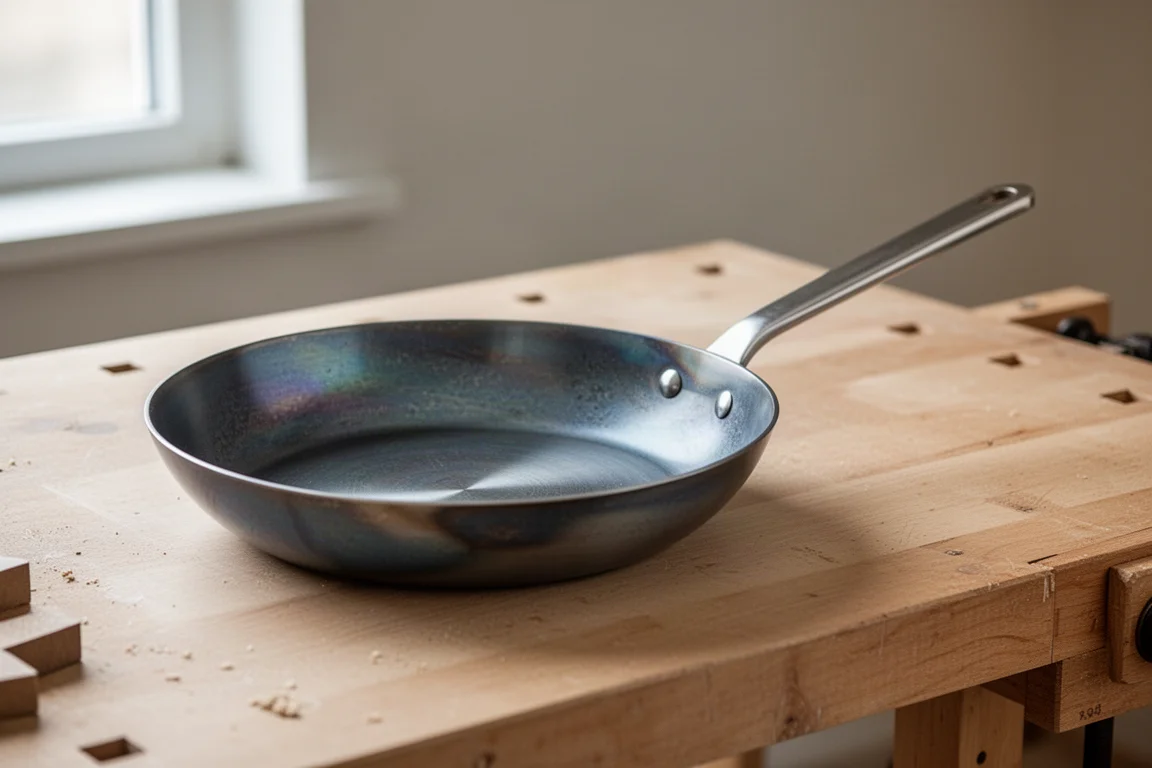
Best Carbon Steel Pans
Carbon steel is the thinner, lighter cousin of cast iron: durable, capable of extremely high temperatures, and naturally non-stick when well seasoned. One brand, however, recently made headlines for the wrong reasons. Matfer Black Carbon Steel pans were recalled in a region of France after testing showed high levels of arsenic, chromium, and iron when the pan was used to boil a highly acidic solution for two hours. Matfer is appealing the decision and says the test conditions do not reflect real-world cooking, pointing out that its pans meet all EU and French safety standards when used as instructed. The ruling may not be entirely fair, but until it is resolved, there are plenty of alternatives without that uncertainty.
Strata is the most unique pan tested. It uses carbon steel on the inside, aluminum in the middle, and stainless steel on the outside, which makes it lighter than traditional carbon steel and more even-heating, with one of the best egg test results and the most comfortable handle. The trade-off is below-average heat retention.
de Buyer Mineral B Pro had the best heat retention of the group and a comfortable stainless steel handle. It is heavy, and seasoning does not adhere well to the slick surface at first, but it performed well across every test.
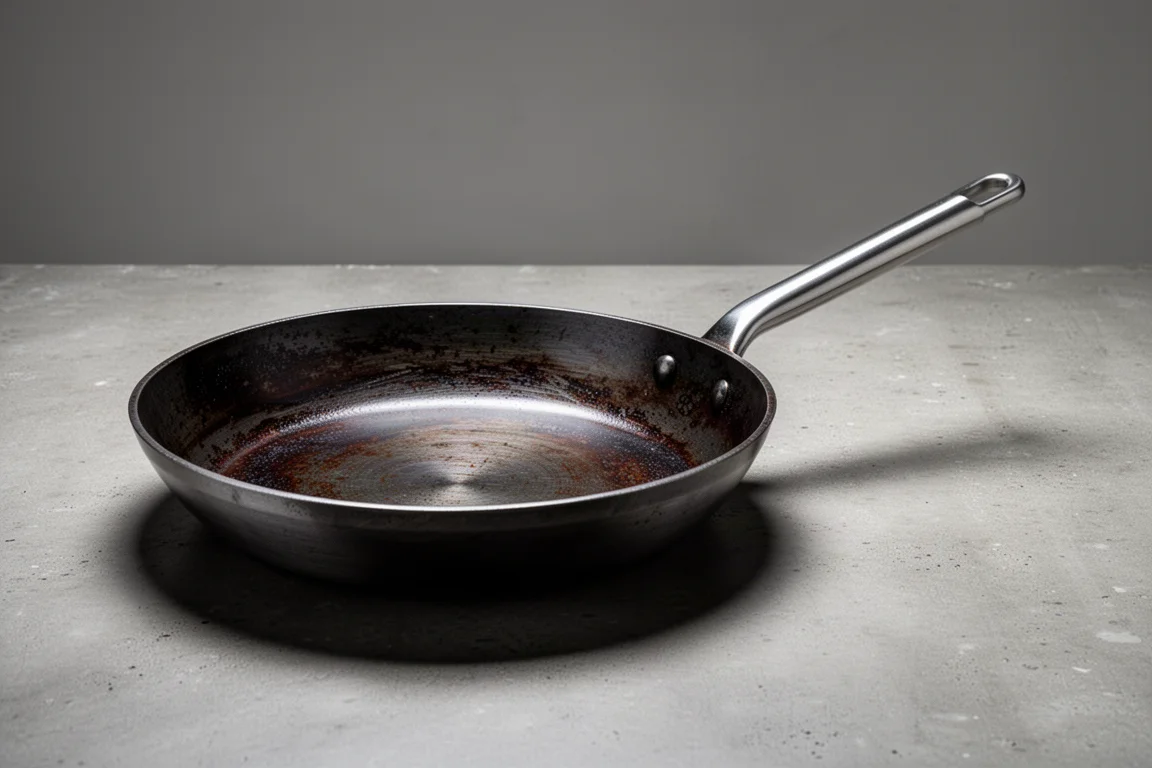
de Buyer Blue Carbon Steel is thinner and lighter, so it does not hold heat as well but heats up fast. It performed great in the egg test and is one of the best values in the category. Just avoid it if you cook on induction, because it warped in induction testing.
Best Ceramic Non-Stick Pans
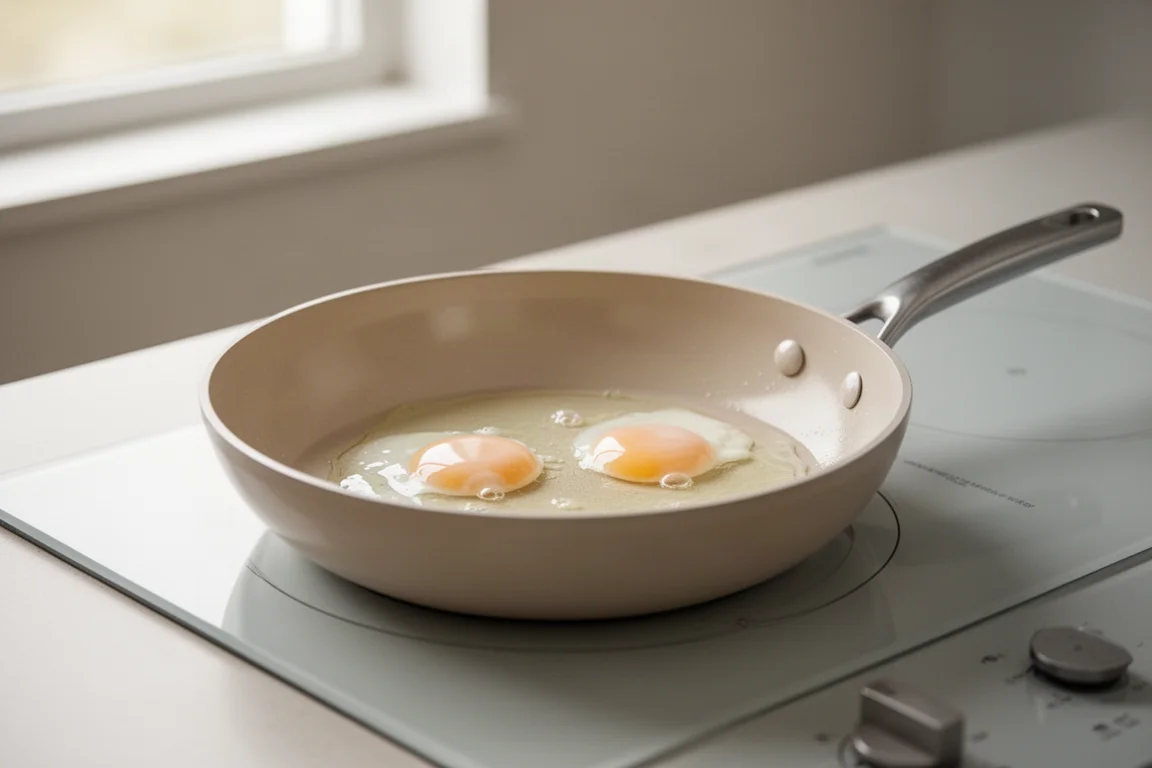
Ceramic non-stick pans pair an aluminum or steel base with a slick, glossy coating made from sand-derived materials like silica. Unlike traditional non-stick coatings, this type contains no PFAS (also known as forever chemicals) and will not release harmful fumes if you accidentally overheat it. The big drawback is durability: ceramic coatings wear down fast, which is why owning just one fry pan for delicate foods like eggs is the sensible approach.
Testing involved cooking with each pan out of the box, running stress tests to simulate months of use, then cooking the same foods again to see how non-stick performance held up. None came out flawless, and all declined to some degree, but a few held up reasonably well. The general advice: go affordable. GreenPan Valencia Pro held up well in the stress tests and performed the best on induction, with no warping or buzzing.
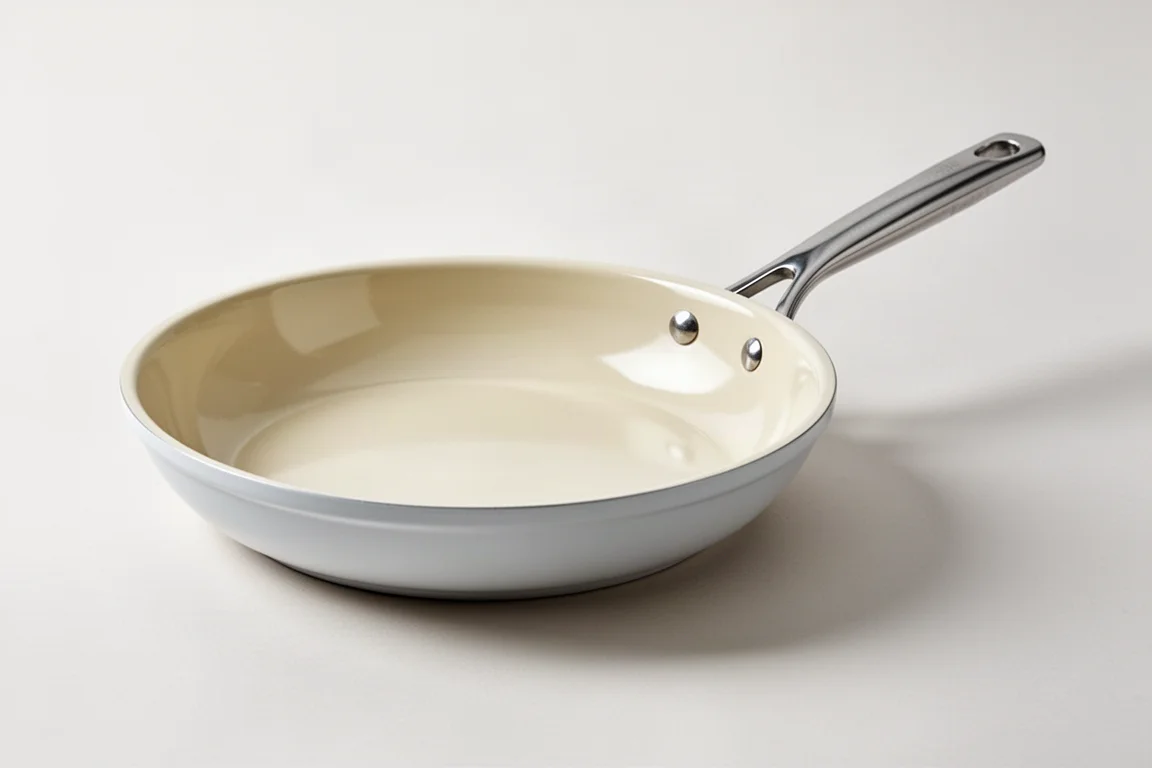
Made In CeramiClad performs well and is made in the USA with a sturdy five-ply stainless steel base, but it is one of the most expensive ceramic non-stick pans available, and if the coating eventually wears out, you are left with an expensive pan you cannot really use. Only buy it if you plan to take good care of it.
One related note: pure ceramic stovetop pans like Xtrema are often marketed as the healthiest option and do pass independent testing, but performance is underwhelming. They heat very slowly, food sticks badly, and they can shatter if dropped.
Buying Advice
Match the material to the job. A quality stainless steel pan is the best all-around everyday choice, cast iron and carbon steel shine for high-heat searing and seasoned non-stick cooking, an enameled Dutch oven earns its keep for braises and bread, and a single affordable ceramic non-stick pan covers delicate foods like eggs. If you cook on induction, pay special attention to the warnings above, since several otherwise excellent pans warped in induction testing. And if you have a nickel allergy or an iron-storage condition, lean toward enameled cast iron or ceramic rather than bare metal pans.
Conclusion
Healthy cookware is not about finding one perfect pan; it is about picking trusted brands within the safe categories. Demeyere, Fissler, and Hestan lead stainless steel, Smithey and Lodge cover cast iron at both ends of the price range, Le Creuset and Staub are the Dutch ovens to beat, de Buyer anchors carbon steel, and GreenPan offers the smartest value in ceramic non-stick. Choose the one that fits your cooking style and budget, and you will have cookware that is both safer and genuinely enjoyable to use.
Further reading
Related Reviews
Cookware
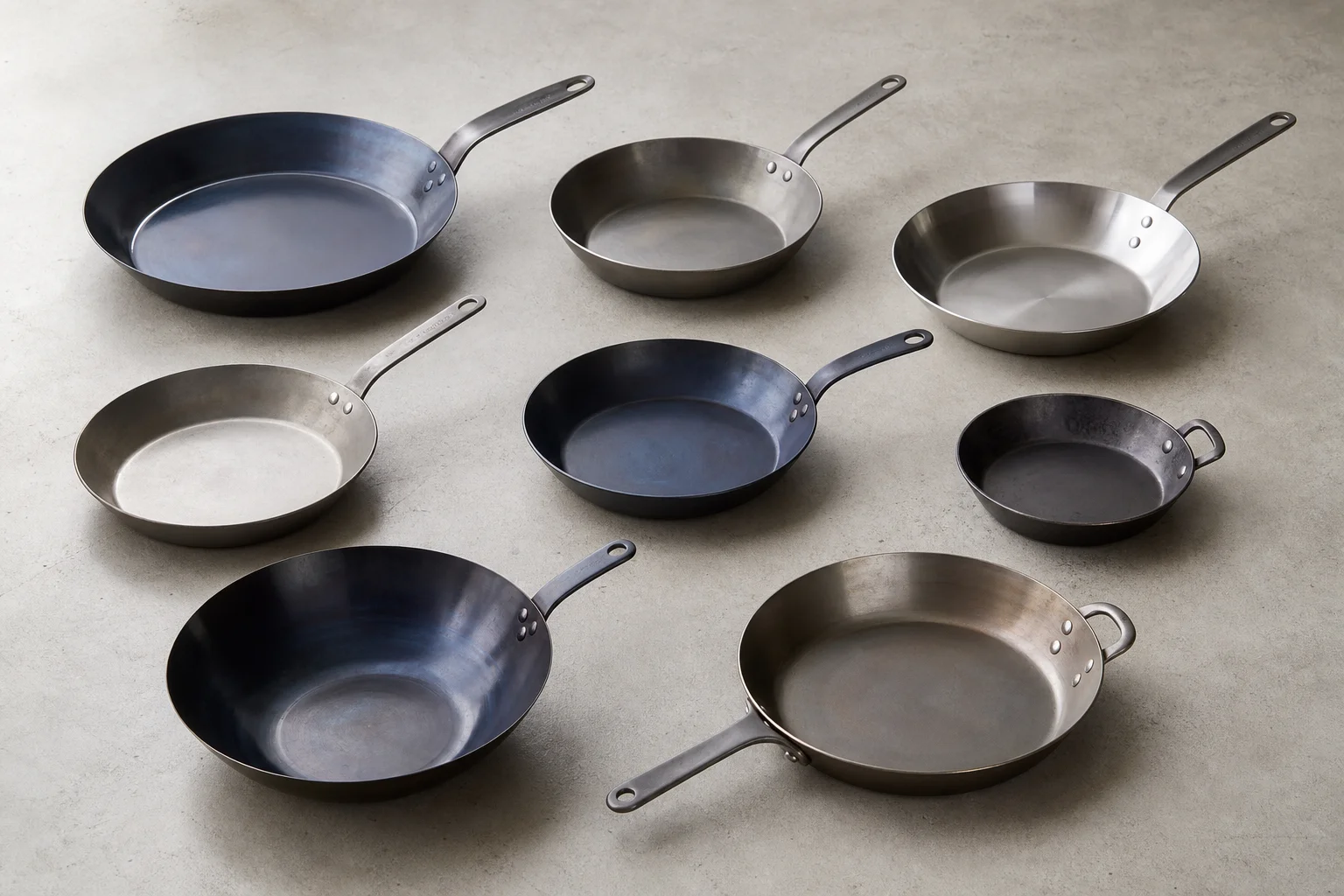
Best Carbon Steel Pans Tested: Which Brands Deliver Real Value
We tested eight popular carbon steel pans with controlled durability, heat, and cooking tests. Here's which ones perform best and which to avoid.
Cookware
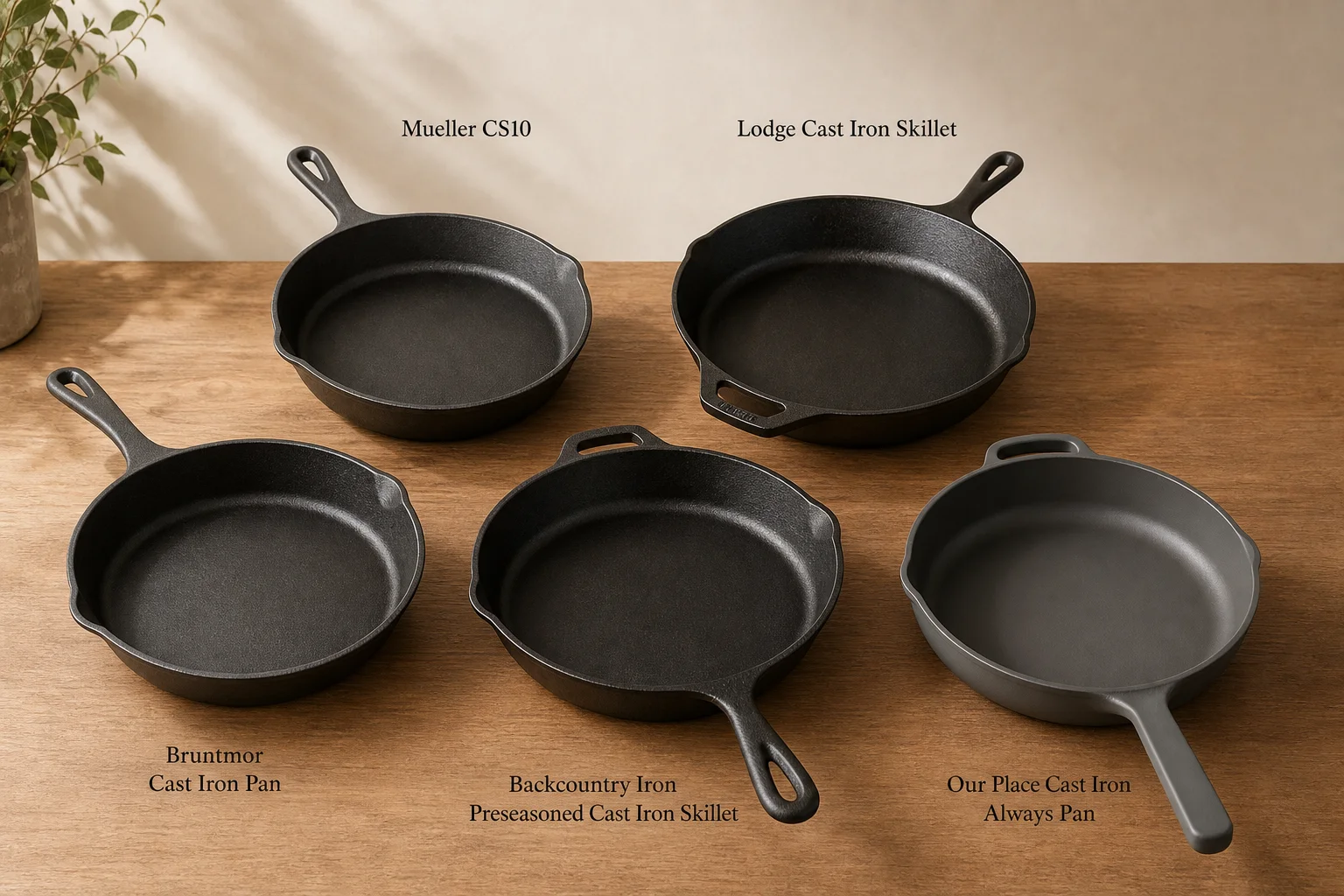
Best Cast Iron Pans 2026: Five Options from Budget to Premium
A practical breakdown of five cast iron skillets, from affordable Mueller to premium Our Place, with clear strengths and trade-offs for different cooking needs.
Cookware
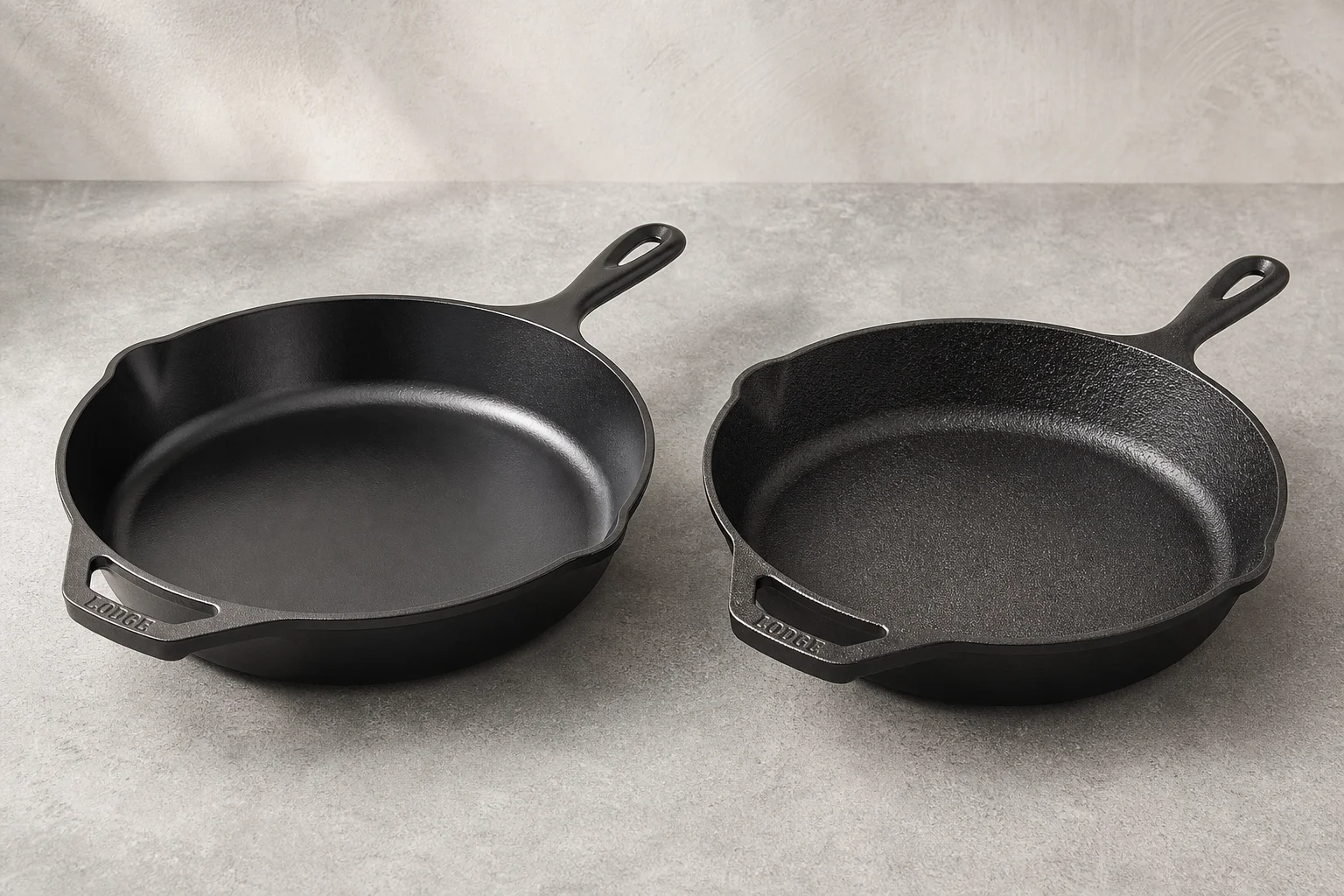
Best 12-Inch Cast Iron Skillets: Premium Craftsmanship vs. Reliable Budget Option
Two standout 12-inch cast iron skillets tested for heat retention, surface finish, and durability. One premium choice and one budget-friendly alternative that both deliver.