Running Shoes
New Balance FuelCell Rebel V3 vs Brooks Hyperion Max: Two Non-Plated Tempo Shoes, Two Very Different Rides
On paper these non-plated tempo trainers look nearly identical. On the road, one is soft and flexible, the other firm and rockered. Here is which one fits your running.
Introduction
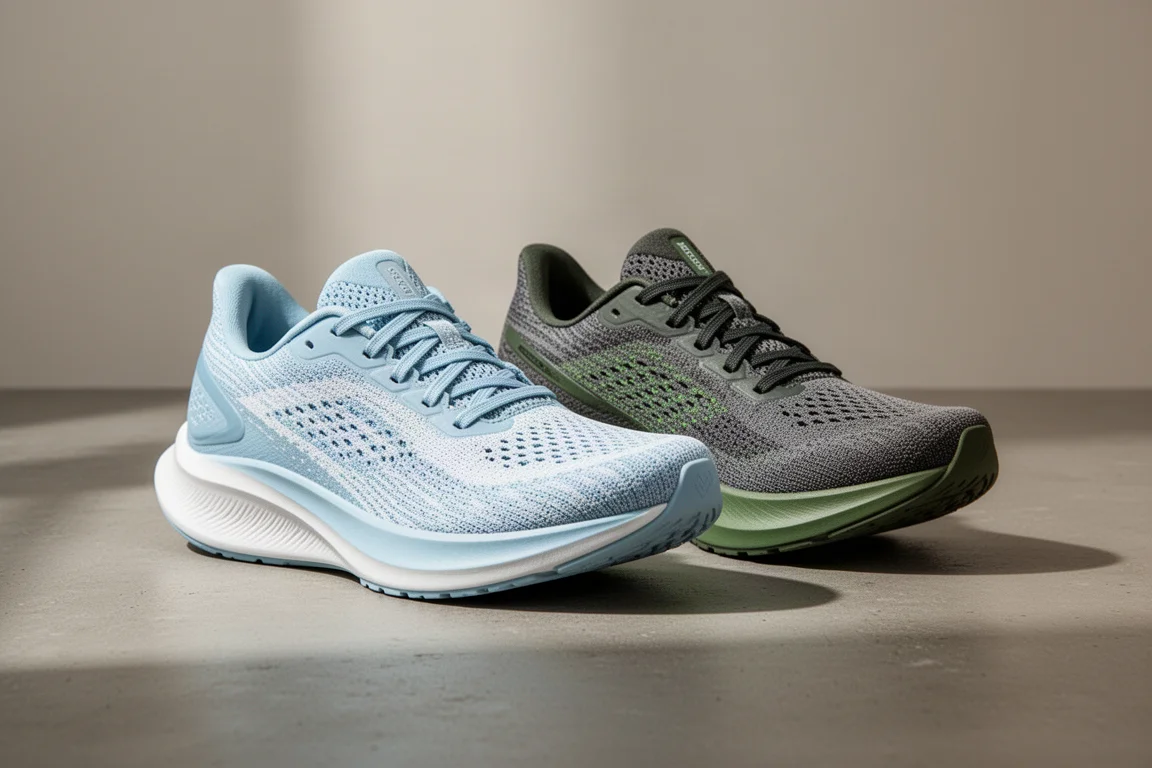
Non-plated tempo trainers have become one of the most interesting categories in running right now: lighter and more aggressive than a daily trainer, but without the plate, the price, or the max-cushion gimmicks. The New Balance FuelCell Rebel V3 and the Brooks Hyperion Max sit right at the center of that category, and they are an especially interesting pair because they are extremely similar on paper while being about as far apart as possible in how they actually ride. This comparison breaks down where each shoe wins so you can pick the right one for your training.
Two Similar Specs, Opposite Rides
The spec sheets barely separate these two. The Brooks Hyperion Max weighs 7.8 ounces in a men’s size 9 sample, with a 26 mm heel stack, an 18 mm forefoot, and an 8 mm drop. The New Balance FuelCell Rebel V3 comes in at 7.1 ounces, about half an ounce lighter and not a difference you will feel on your feet, with a 27 mm heel and a 21 mm forefoot.
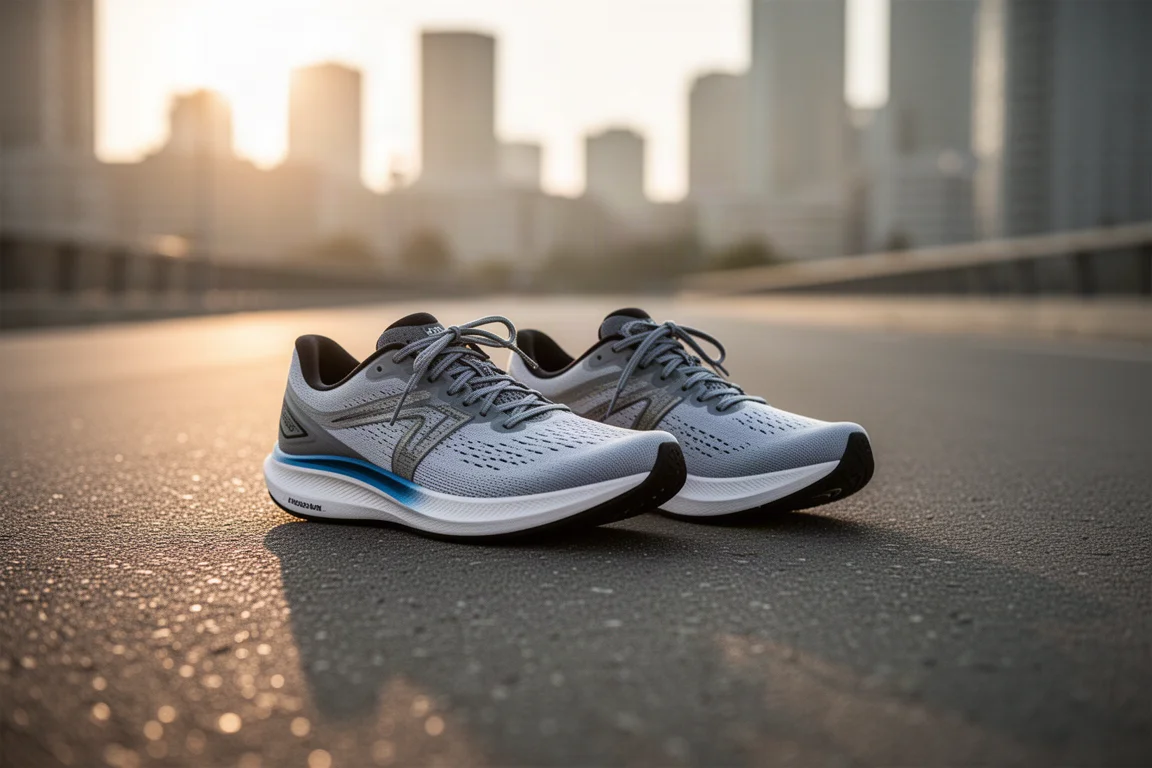
Both are non-plated and both are designed as up-tempo training shoes: usable for everyday running but leaning toward aggressive speed work. Where they diverge completely is the foam character and geometry, which shapes everything about how each one feels on the road.
Midsole: Soft vs Firm
The Hyperion Max uses DNA Flash foam, a supercritical EVA. On a push test it is extremely rigid, one of the firmer midsoles tested recently, firmer than the Lightstrike in the Adidas Adizero SL or the PWRRUN in the Saucony Endorphin Shift 3. That rigidity gives the platform a lot of inherent stability, and the foam still manages a nice responsiveness thanks to its properties.

The Rebel V3 uses FuelCell foam, also a supercritical EVA with some TPU blended in, and on paper it is nearly the same type of foam as DNA Flash. In practice it could not be more different: it compresses very deeply, it is one of the softest foams around, and the platform is very flexible. Notably, the Rebel V3’s forefoot stack is actually three millimeters taller than the Hyperion Max’s, yet it bends far more easily.
Ride Experience: Rocker and Snappiness vs Grounded Softness
The Rebel V3’s softness gives it a more natural, almost ground-contact ride. You can feel a bit of the pavement come through the platform, which creates a nice grounded, connected sensation. That works especially well for shorter efforts, but the shoe holds up well beyond them: it has handled runs up to 16 miles and regularly gets used for 10-milers without leg fatigue. A bit of extra heel stack and a nicely flared platform mean there are no stability issues despite the softness, and the result is a soft, bouncy ride.
The Hyperion Max is the exact opposite. It barely flexes, and that stiffness is exactly what makes it feel so responsive and snappy. It also carries a large forefoot rocker, similar in spirit to the Saucony Endorphin series but starting a bit closer to the toes. That geometry rewards getting up on your toes and pushing off, which is why it initially felt wrong during slower running. This shoe is really at its best at 10K pace and faster: in long intervals ending at 10K pace it felt great, and the combination of rocker and firm foam makes it a particularly strong option for bigger or taller runners with a lower cadence.

Upper and Fit
Both shoes use engineered mesh uppers. The Rebel V3’s material has a slightly scratchy athletic-wear feel, it is reasonably breathable with small holes in the sides, and it is backed by some plastic overlay. There is a structured heel counter and the familiar heel loop that New Balance appears to be dropping on the upcoming Rebel V4. The toe box is a bit wider than many runners are used to, which makes the shoe comfortable and helps it work as a daily trainer on the softer side. Lockdown has been issue-free, and going up a half size gives the toes extra room; that half-size-up pairing has worked perfectly.
The Hyperion Max fit is a bit odd. In a normal US size 10.5, the toe feels long, with more space than needed, while the toe box itself is not overly wide. Lockdown takes effort: cinching the front of the laces tight gets close, but a truly dialed-in fit did not materialize over several runs. Nothing is badly wrong, it simply does not feel as refined as a favorite everyday shoe. The advice is not to size down: keep your normal size, use thicker socks if needed, and work with the long toe.
Outsole and Durability
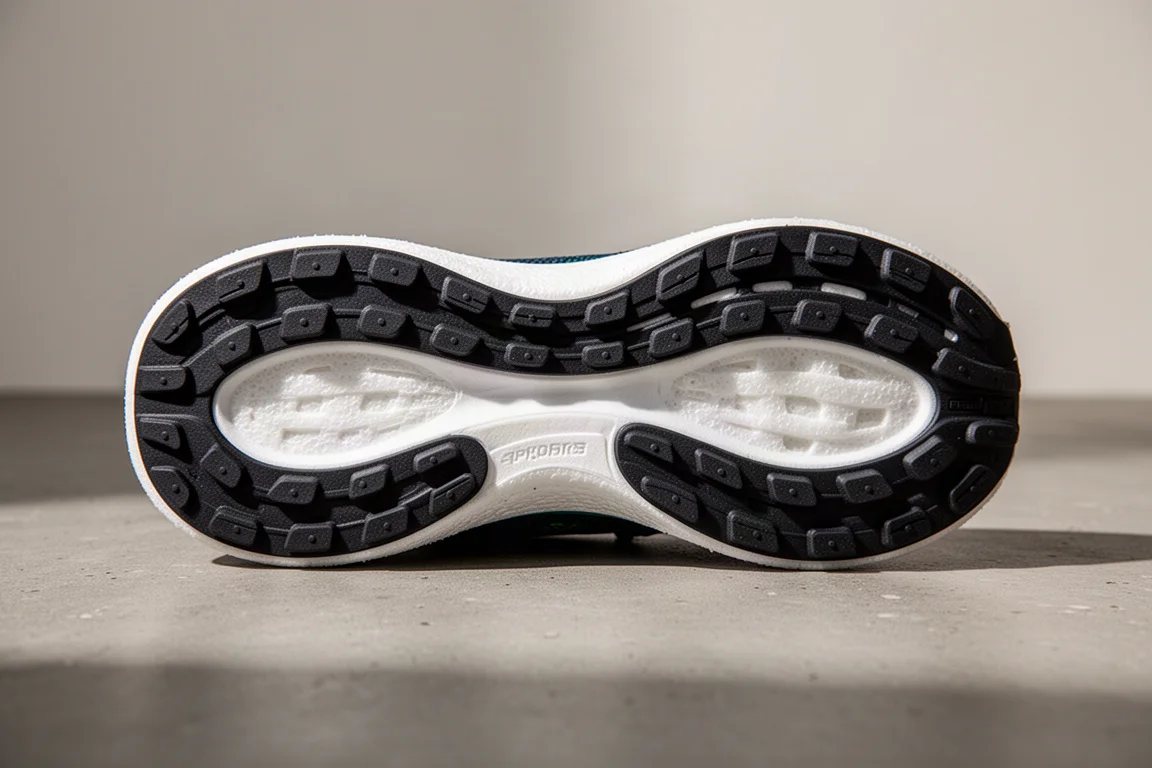
The outsoles look similar at a glance, but up close the Brooks rubber is noticeably thicker and more pronounced around the heel, standing proud of the foam, while the Rebel’s rubber covers well but is thinner. Brooks uses a thick, reportedly environmentally friendly “Green Rubber” layer that appears very durable, though it is still too early to confirm long-term wear. The Rebel V3’s plain rubber has held up well too: at 70 to 80 miles there is some smoothing in the highest-wear heel area, but nothing concerning.
Which One Should You Buy
The Brooks Hyperion Max is the pick if you are a bigger or stronger runner, or if you simply love a firm ride. Firm, non-plated tempo shoes are genuinely hard to find, and this one is pure and simple: a rockered, supercritical EVA shoe best suited to 10K pace and faster, maybe half marathon pace. Anything slower tends to fight easy running mechanics.
The Rebel V3 is the pick if you want a do-it-all shoe that can still handle pace pickups without being max-cushioned. Although it is positioned as a tempo shoe, it is much more agreeable at slower paces: it works for easy aerobic runs, recovery runs, and marathon training, and it doubles nicely as a travel and gym shoe. It is also widely discounted right now, especially with the Rebel V4 arriving soon, which makes it a strong value pick.
Conclusion
These two shoes prove that similar specs do not mean similar shoes. The Brooks Hyperion Max delivers a firm, rockered, snappy ride built for fast work, while the New Balance FuelCell Rebel V3 offers a soft, grounded, flexible ride that covers nearly every run you might throw at it. Choose based on your preferred foam feel, your body type, and the paces you run most, and either one is a worthy non-plated tempo trainer.
Product link
View more details for New Balance FuelCell Rebel v3
This product is mentioned in the review. Check the specifications, options, and compatibility before buying.
View more details for New Balance FuelCell Rebel v3Further reading
Related Reviews

Running Shoes
Best Road-to-Trail Running Shoes: Three Versatile Options for Mixed Terrain
A practical guide to three road-to-trail running shoes that handle both pavement and mild trails, with clear strengths and trade-offs for different runner types.

Running Shoes
Best Running Shoes for Achilles Tendonitis: Three Options Explained
Three running shoes with different heel drops and support features designed to help reduce Achilles tendon pain during walking and running.

Running Shoes
Best Running Shoes for Women: Five Top Choices Ranked
A ranked guide to five women's running shoes, from versatile daily trainers to high-performance racing options, with real strengths and trade-offs for each.