Tools
Three Non-Contact Voltage Testers Compared: Doyle, Klein, and Milwaukee
A side-by-side look at three budget-friendly non-contact voltage testers with built-in infrared thermometers, covering displays, detection behavior, and build quality.
Introduction
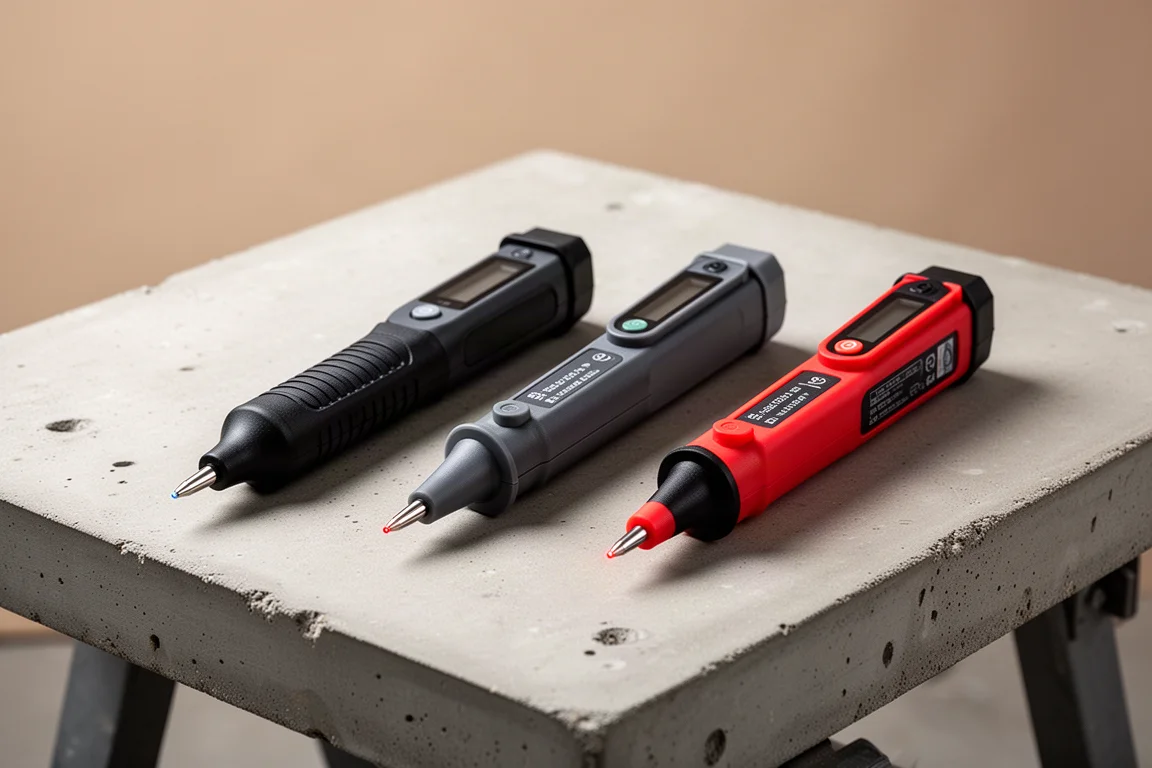
Non-contact voltage testers, sometimes colorfully called “idiot sticks” or “widow makers,” are the pen-shaped tools electricians and DIYers wave near wires to check for live voltage without touching anything. Harbor Freight’s house brand, Doyle, recently entered this space with a non-contact voltage tester that also includes an infrared thermometer, putting it directly against two established players: the Klein NCVT-4IR and Milwaukee’s non-contact voltage tester.
All three sell in a tight price band. The Doyle runs $25, the Klein sits around $40, and the Milwaukee comes in at $45. That $20 spread raises an obvious question: what exactly does the extra money buy? After working with all three side by side, the differences are real but subtle, and they mostly come down to display type, grip, and how each one responds near live wires.
What These Testers Have in Common
On paper, these three are nearly identical tools. All carry an IP54 ingress protection rating, all run on two AAA batteries, and all share a very similar weight and pen-style form factor. They also all pair the voltage detection function with an infrared thermometer, so you can check surface temperatures with the same tool you use to hunt for live circuits.
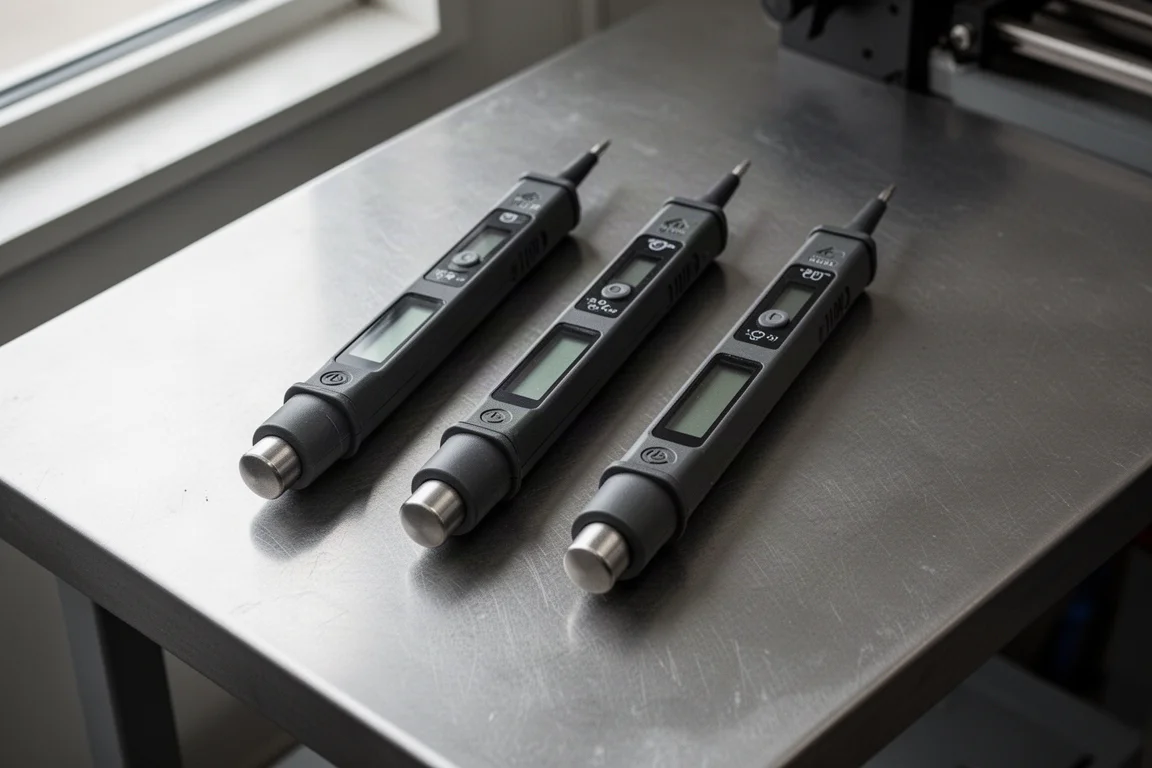
That shared foundation means the buying decision really comes down to the details: how the display reads, how the body feels in hand, and how each tester behaves around actual live wiring.
Build and Grip
Build feel is where the three start to separate. The Klein’s plastic feels the most sturdy of the three, with a slightly more solid impression in the hand. The trade-off is that it is also probably the most slippery of the bunch.
The Doyle counters with a rubber overmold on its body, which makes it noticeably easier to hang on to. If you work with gloves on or in awkward positions, that grip advantage is worth considering. The Milwaukee sits somewhere in between, though its small red indicator light is fairly minimal compared to what the other two offer.
Displays and Thermometer Range
The display is one of the biggest practical differences between these testers. The Klein and Milwaukee both use a traditional backlit LCD, essentially dark characters on a lighter background. The Doyle uses what its maker calls an LED reverse contrast display: white-on-black characters, similar to what many modern multimeters are adopting. In a dark panel or dim basement, that reverse contrast approach is likely easier to read.
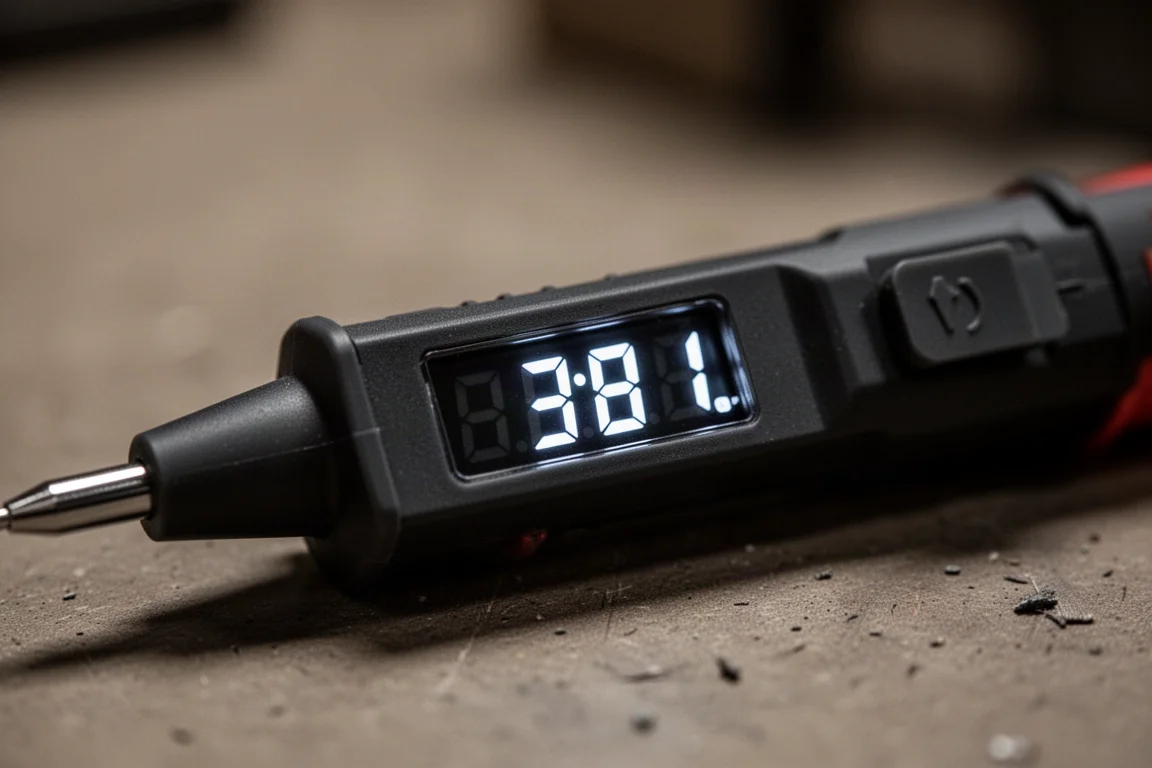
On the thermometer side, the Doyle has a slight edge in range, reading up to about 536 Fahrenheit (280C). Both the Klein and the Milwaukee top out at 482 Fahrenheit (250C). Part of that may simply come down to newer hardware in the Doyle. In quick side-by-side temperature checks pointed at the same surface, all three landed within a couple of degrees of each other, with readings like 62, 58, and 63 Fahrenheit, so everyday accuracy feels comparable.
Switching between Celsius and Fahrenheit works the same way on all three: hold the temperature button and tap another to toggle the unit.
Voltage Detection in Practice
How each tester reacts near live wires turned out to be the most interesting part of the comparison. With nothing detected, the Klein shows blue and the Doyle shows green on their indicators. When a hot wire comes near, all three light up and react, though sensitivity differs noticeably.
The Doyle picked up a live wire from a greater distance than the Klein, and its slightly protruding snout seemed to help when angling into tight spots. The Milwaukee, on the other hand, really required getting close to the source before it registered.
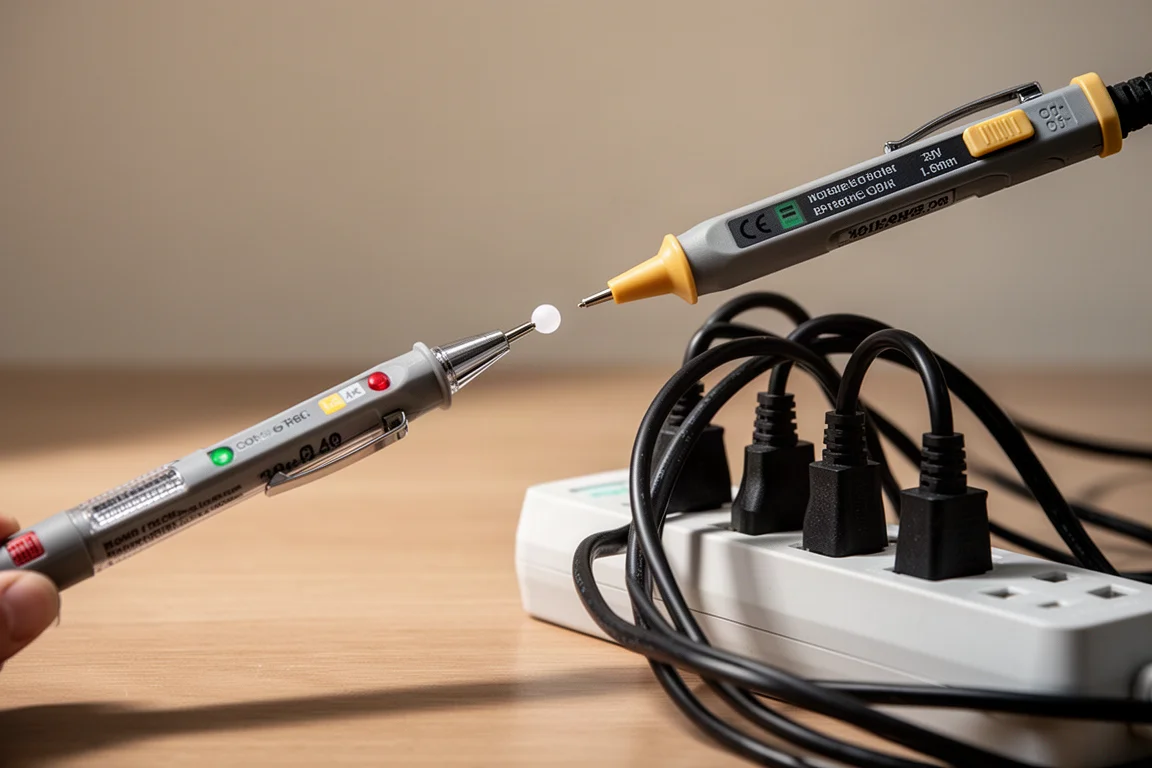
Separating two live cables that sit close together is where these tools earn their keep, and it is also where they can frustrate. A tester that senses a whole area rather than a single wire can make it hard to tell which cable is actually live, and that ambiguity is part of why these tools carry the “widow maker” nickname. A sensible habit is to rub the tester on fabric or another source to trigger it, just to confirm you know what its alert is supposed to sound and look like before trusting it on real wiring.
One quirk worth knowing: the Milwaukee has two sensitivity settings, and on the more sensitive setting it picks up so much surrounding noise that it is hard to tell what is what. Dropping to the lower setting is usually the fix. The Milwaukee also includes a built-in flashlight, a small extra that is genuinely handy inside panels.
Which One Should You Buy
If you want the lowest price and value the thermometer range plus a modern reverse contrast display, the Doyle at $25 is a compelling entry point, and the rubber overmold grip is a genuine plus.
If you are willing to spend an extra $15 for a more sturdy, confidence-inspiring feel in the hand, the Klein NCVT-4IR remains the safe pick for something you may end up trusting on live circuits.
The Milwaukee at $45 brings dual sensitivity settings and a flashlight, but its higher sensitivity can work against it in cluttered wiring situations, and it needs closer proximity to detect.
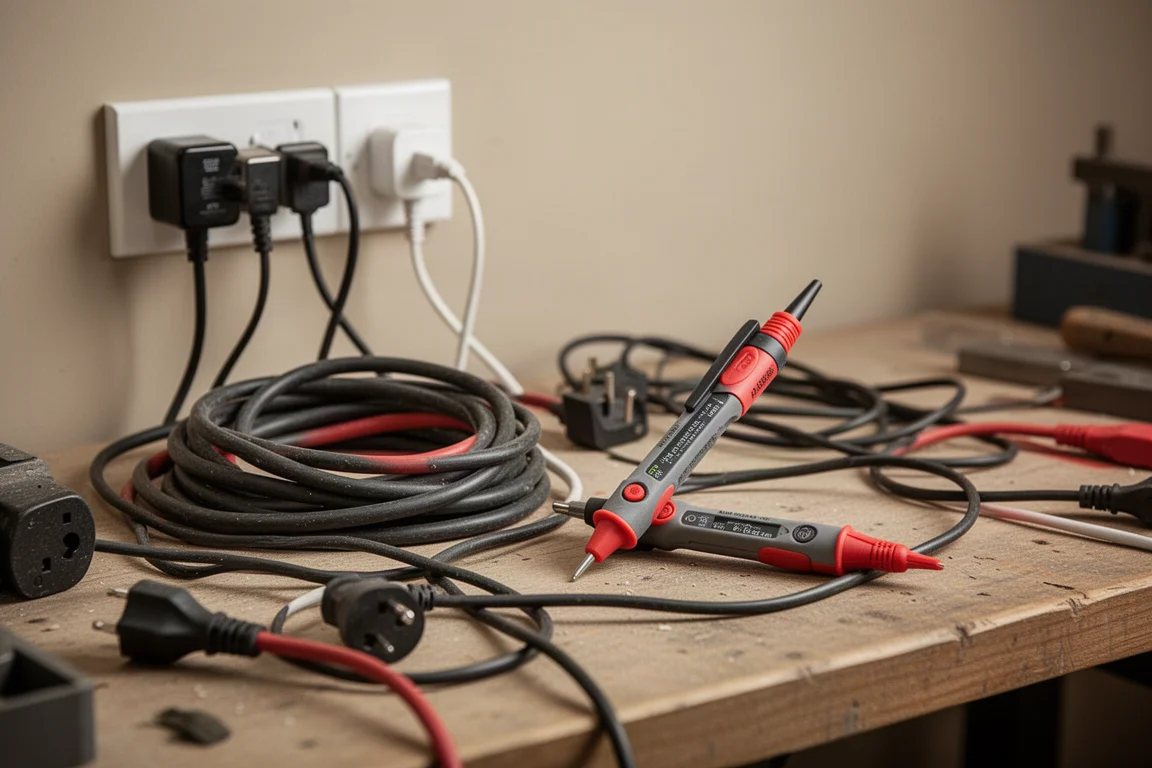
It is also worth noting that other tools exist in this space: a Fluke model, for example, offers directional feedback that some users come to appreciate, though it sits outside this trio’s price range. As for Harbor Freight’s entry into this category, it signals the brand is getting more serious about test equipment, which should only increase competition and choice at this price level.
Conclusion
All three of these testers share the same core specs: IP54 rating, two AAA batteries, similar weight, and an infrared thermometer built in. The Doyle wins on price, display technology, thermometer range, and grip. The Klein wins on build feel and a sense of sturdiness. The Milwaukee adds flexibility with dual sensitivity and a flashlight, at the highest price of the three. Whichever you choose, treat any non-contact voltage tester as a first check rather than a guarantee, and verify with a known-live source before and after you trust it.
Product link
View more details for Doyle Non-Contact Voltage Tester with Infrared Thermometer
This product is mentioned in the review. Check the specifications, options, and compatibility before buying.
View more details for Doyle Non-Contact Voltage Tester with Infrared ThermometerFurther reading
Related Reviews

Tools
Best Contractor Grade Tape Measures 2026: Eight Models Tested Head to Head
We tested eight contractor grade tape measures from Milwaukee, DeWalt, Crescent Lufkin, Tajima, Stanley, Irwin, Gelan, and Craftsman to find the best value and performance.

Tools
Best Precision Screwdriver Sets 2026: Manual and Electric Options Compared
We compare 19 precision screwdriver sets, from budget manual kits to electric drivers, to find the strongest bits and best value.

Tools
Best Stud Finders 2026: Five Popular Models Put to the Test
We tested five popular stud finders on drywall, firewall, and lath and plaster surfaces to see which ones really find studs and avoid false readings.