Work Gloves
Best Nitrile Gloves Showdown: 14 Brands Tested for Durability, Puncture and Chemical Resistance
We put 14 disposable glove brands through abrasion, puncture, tear, grip and chemical testing to find which ones actually hold up in the shop.
Introduction
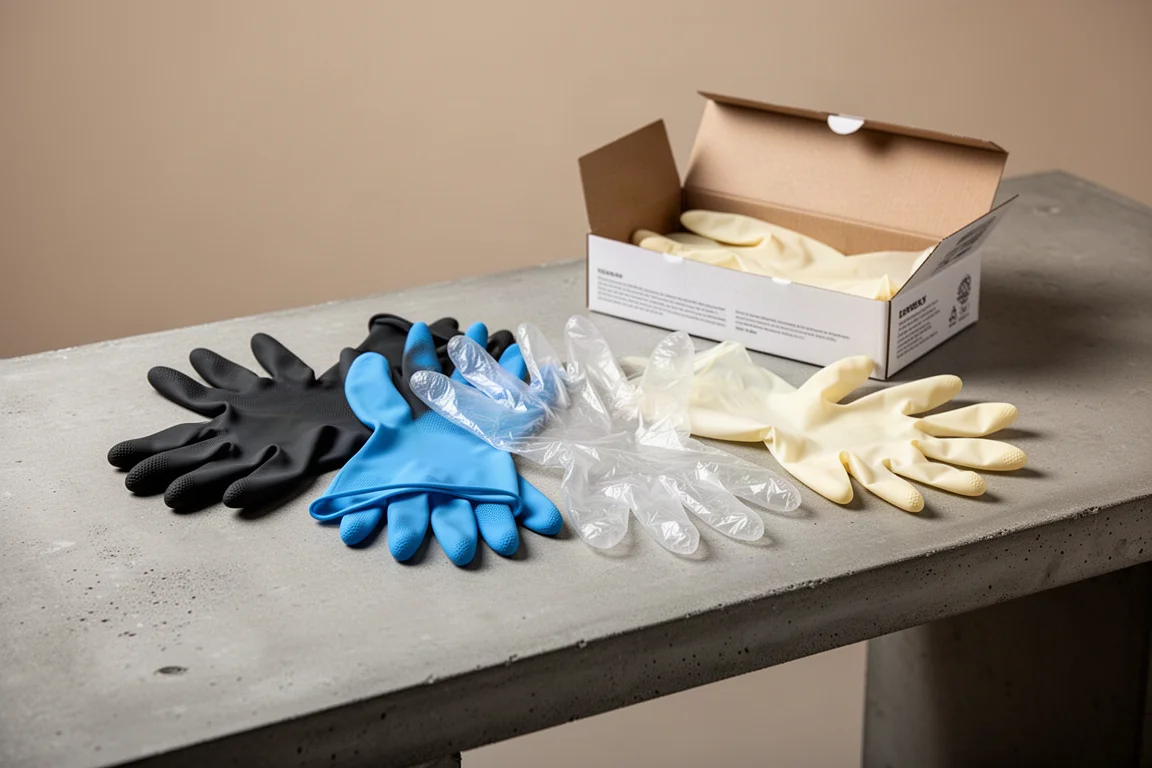
Disposable gloves look identical in the store aisle, but they perform wildly differently once you actually work in them. Some rip the first time you pull them on, others survive an absurd amount of abuse before giving up.
This showdown puts 14 glove brands through a consistent set of tests: abrasion resistance, puncture resistance, tensile strength, grip, cuff durability, and chemical exposure to gasoline and acetone. All gloves tested are size large. Most are nitrile, with a couple of vinyl and latex gloves mixed in to see how they stack up.
Basic Vinyl Gloves: The Budget Baseline
At $9 for a 100-pack, or 9 cents per glove, Basic vinyl gloves are the cheapest in the lineup. They contain no natural rubber latex, but they feel sticky and stiff with very poor flexibility and a weak sense of feel for small fasteners. The packaging lists no thickness, and each glove weighs 5.34 g.
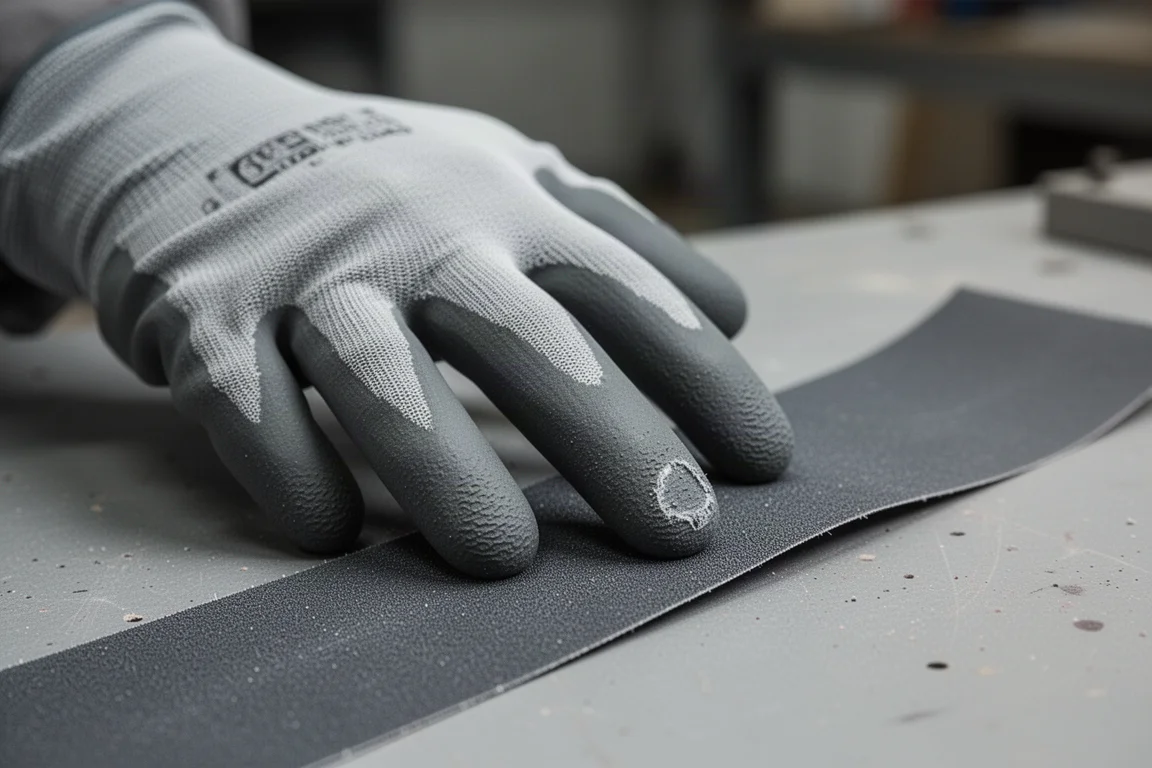
Performance was poor across the board. They tore after just two passes on the abrasion tester, punctured at only 540 g (about 1.2 lb), and completely disintegrated in acetone after an hour. After gasoline soaking they kept a surprisingly high tensile score of 21.1 lb, but the fingers became so hard and stiff the gloves were unusable anyway.

Hardy Nitrile Gloves: The Harbor Freight Value Play
Sold at Harbor Freight, the 5-mil Hardy gloves cost $10 for 100 gloves at 10 cents each. They claim three times the puncture resistance of latex or vinyl, superior chemical resistance, textured palms, and exceptional tensile strength. In hand, they feel far less sticky than the Basic gloves and offer good tactile feel for their thickness, weighing 4.57 g.
Despite the durability claims, they also tore after two abrasion passes, matching the Basic vinyl. Puncture resistance came in at 763 g, about 30% better than the vinyl. Tear strength was a solid 35.2 lb, grip was a strong 12.5 lb, and comfort rated a 2, making them pleasant to wear for fine work.
Harbor Freight also sells a heavier-duty 7-mil Hardy version at $13 for 50 gloves (26 cents each) with textured fingertips and a longer cuff that protects the lower arm. At 9.04 g they are the stiffest-feeling gloves here alongside Venom Steel. The 7-mil version scored 7 abrasion passes, an excellent 1,538 g puncture score, the best grip in the test at 13.5 lb, but only 5.3 lb of strength left after gasoline exposure. Its overall average finish was 6.
Adenna Latex Gloves: Stretchy but Fragile
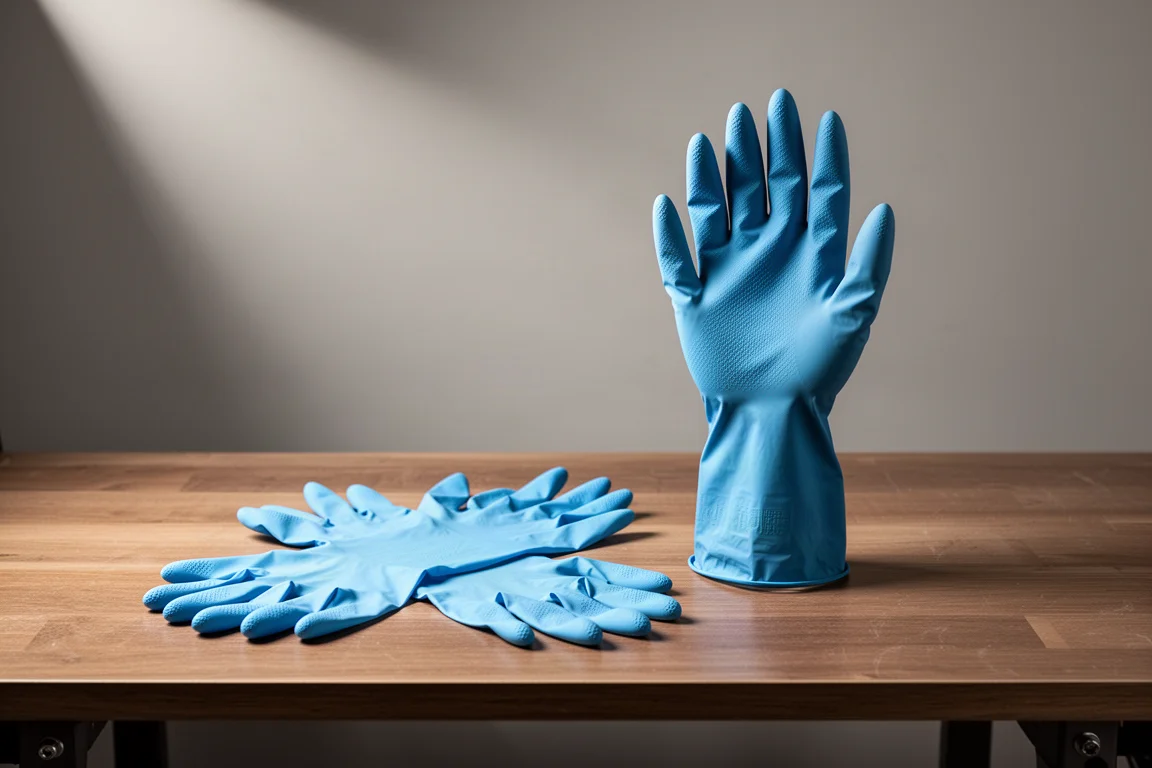
At $12 for 100 gloves, Adenna latex gloves are noticeably stretchier and more comfortable than the nitrile options, with excellent touch and finger dexterity at 6.89 g per glove.
That comfort comes at a cost. Latex is much easier to puncture than nitrile: the Adenna tore after a single abrasion pass, punctured at just 462 g, and after an hour in gasoline the fingers were in terrible shape at only 2 lb of remaining tensile strength. Grip was also the weakest in the test at 7 lb. Tear strength before soaking was good at 37.5 lb, and comfort rated the best possible score of 1. Gasoline completely destroys latex, so avoid these for fuel work.

Comfy Nitrile Gloves: Durable and Cheap
The Comfy package costs $15 for 150 gloves at 15 cents each and claims extra-strength texturing with expanded stretch and no tearing. Finger dexterity is not its strong suit, lagging behind the thinner Hardy and Adenna gloves for very small fasteners. Each glove weighs 5.5 g.
Durability was impressive for the price. The Comfy led the abrasion test early with a hole forming only on the seventh pass, punctured at 840 g (nearly 2 lb), and tear strength came in at 35.9 lb. Grip was middling at 9.5 lb, and after gasoline soaking it retained just 4.9 lb of strength.
RX Pro Nitrile Gloves: Sticky but Solid
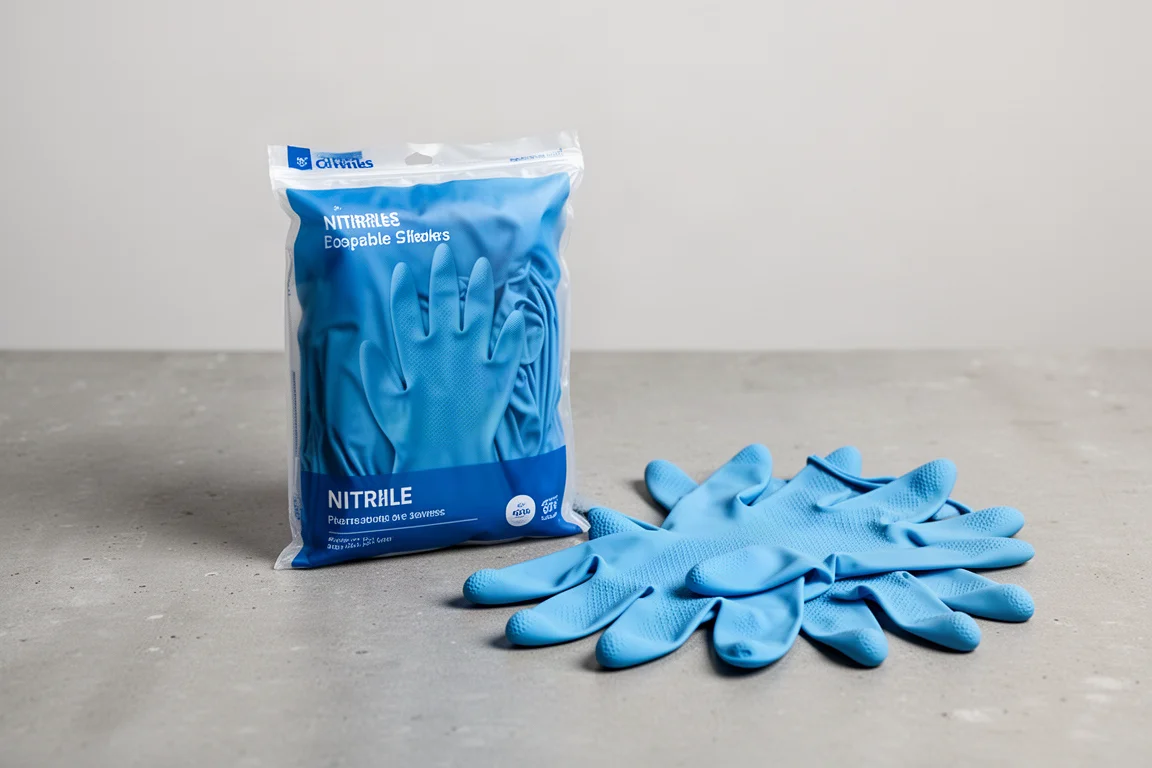
The RX Pro costs the same $15, though for a 100-pack, and specifies 4.5-mil thickness. It feels sticky, so it takes noticeably more effort to put on, and it feels thinner and looser than the Comfy package at 4.55 g.
Abrasion resistance was decent at six passes, puncture resistance came in at 720 g, and grip was good at 11.5 lb. The cuff held to 47.5 lb. Post-gasoline strength fell to 4.9 lb, and the swollen finger section tore off easily after acetone exposure.
GMG Nitrile Gloves: Thin and Tactile
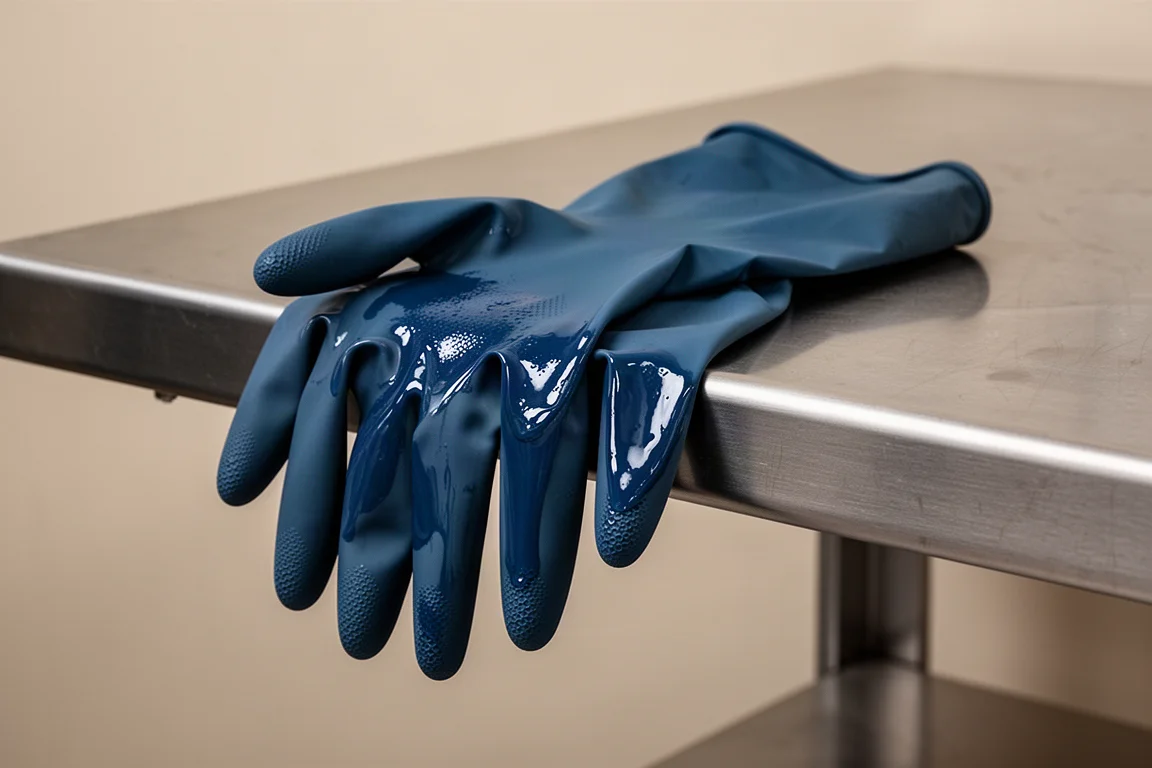
GMG gloves cost $19 for 100 and claim easy on-and-off without sticking to skin. In practice they felt stickier than several rivals, but at only 4-mil thickness they offer genuinely good tactile qualities at 5.47 g.
GMG put up strong tear strength at 38.2 lb, among the best in the test, plus 8 abrasion passes and a respectable 760 g puncture score despite the thin build. Grip was mid-pack at 10.5 lb and the cuff survived to 55 lb. Gasoline exposure cut remaining strength to 3.7 lb.
Grease Monkey Nitrile Gloves: Built for the Garage
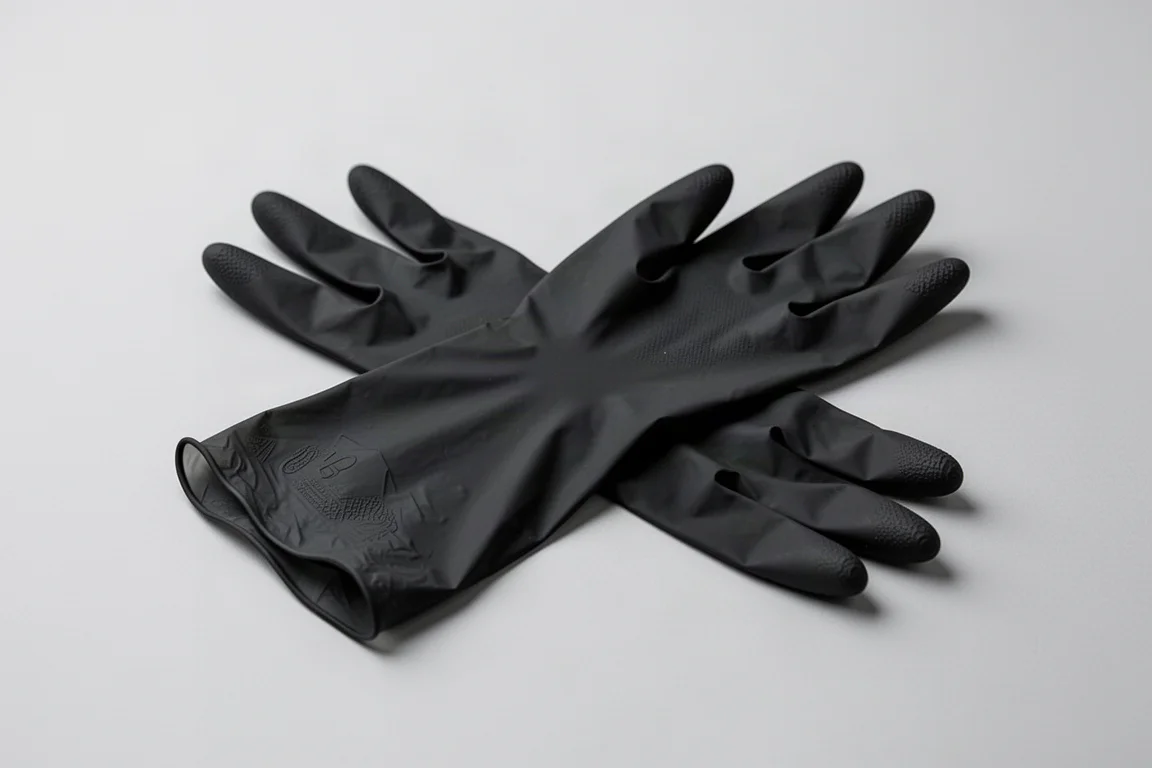
Also $19 for 100, Grease Monkey gloves promise dexterity and a snug fit, and they deliver a slightly tighter but not uncomfortable fit at 5.39 g. Designed with the car enthusiast in mind, they are thin at roughly 4 mil yet punched well above their weight.
The highlight is puncture resistance: 1,491 g, over 3 lb of force, which is remarkable for such a thin glove. Abrasion resistance was strong too at 12 passes. Tear strength was 30.3 lb, gasoline retention was 7.9 lb, and comfort rated a 2. The main weakness is grip, which was the worst in the test at 6 lb.
Grip Protect Nitrile Gloves: Comfort Over Durability
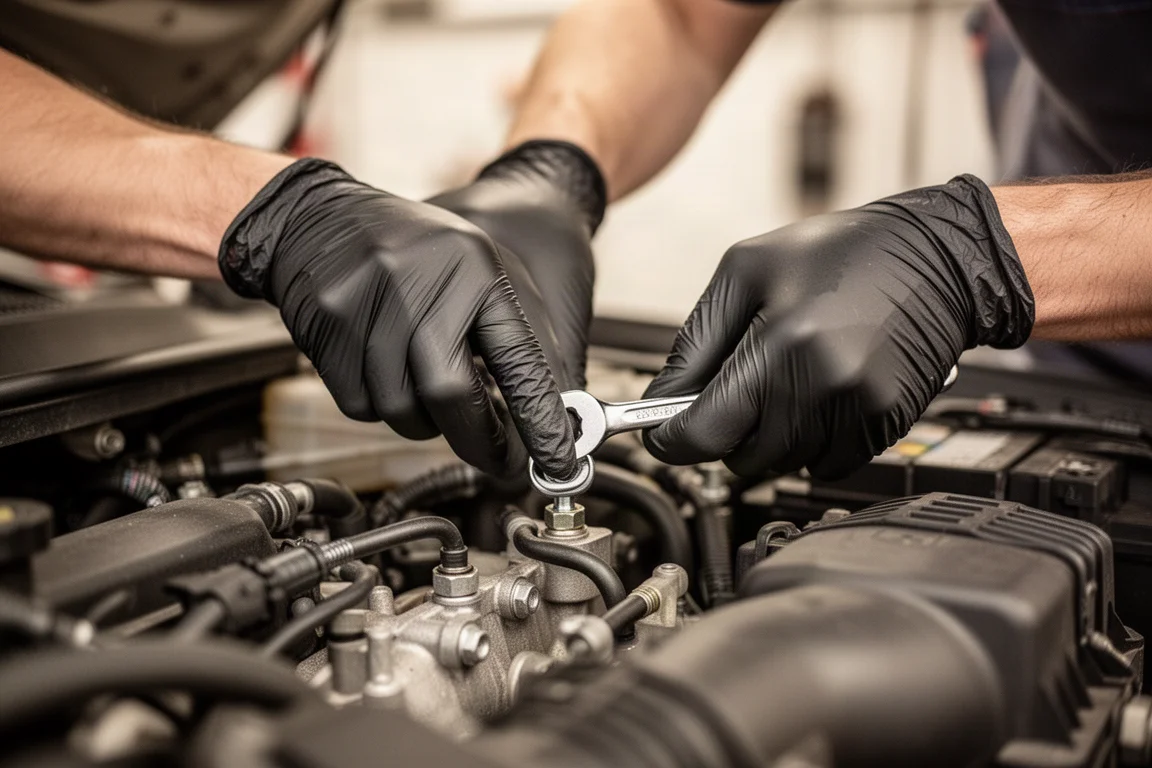
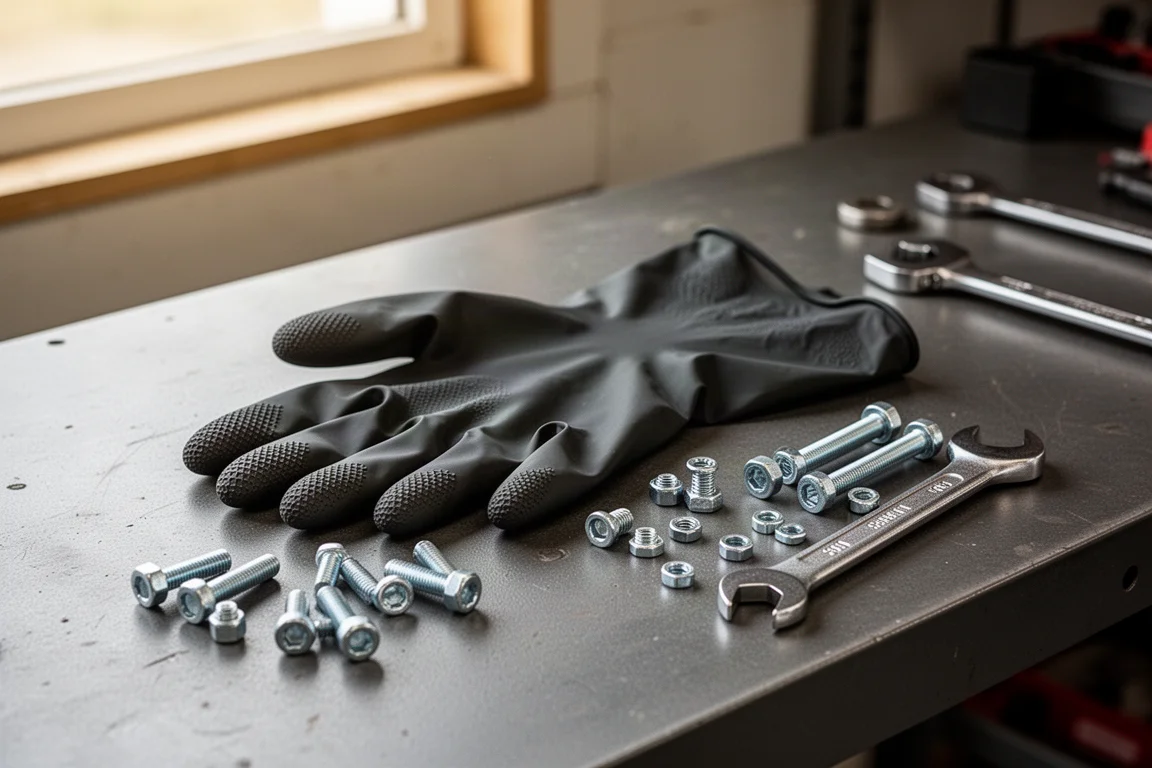
At $20 for 100 gloves, Grip Protect is 100% synthetic and protein free, with the lightest glove in the lineup at just 3.71 g. Tactile qualities and finger dexterity are genuinely excellent, and it shares the top comfort rating of 1 with the Adenna latex.
Durability is the trade-off. Only two abrasion passes, a tear-away score of 18.3 lb that landed it in last place, and a cuff that gave up at 40 lb. Puncture resistance was respectable at 1,016 g for such a thin glove, and gasoline retention was average at 6.5 lb.

Phantom Latex Gloves: Stretch Champion
The Phantom latex gloves cost $25 for 100 and weigh in at 7 g, the heaviest glove at that point in testing. They offer great stretchiness, comfort, and tactile qualities, with a comfort rating of 2.
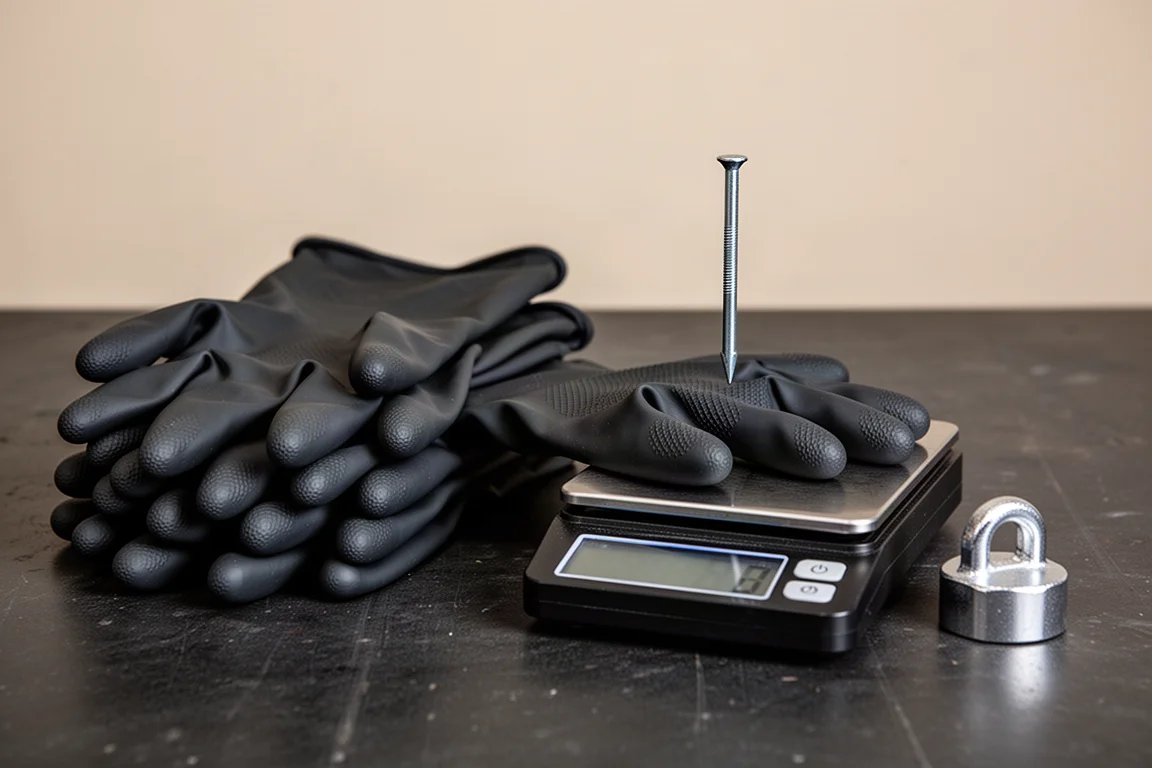
Where the Phantom truly shines is tensile strength: it lifted the entire weight stack at 50.5 lb without ripping, the best result in the test by a wide margin. But like the Adenna, latex proved fragile elsewhere: one abrasion pass, 619 g puncture resistance despite the 7-mil build, and gasoline reduced it to a bloated 1.2 lb. Grip was 10.5 lb.

Silverback Nitrile Gloves: A Quality Control Problem
Silverback nitrile powder-free gloves also cost $25 for 100 and claim puncture resistance. Unfortunately, every glove in the tested box was defective, missing part of the rubber collar, meaning they tear under the slightest pressure.
The defective cuffs tore at only 5 lb. Aside from that flaw, the underlying glove is decent: 1,211 g puncture resistance, four abrasion passes, and 4.96 g per glove. Tear strength of 19.2 lb and gasoline retention of 4.3 lb were below average. If you buy these, check the collars immediately.
Venom Steel Nitrile Gloves: The Overall Winner
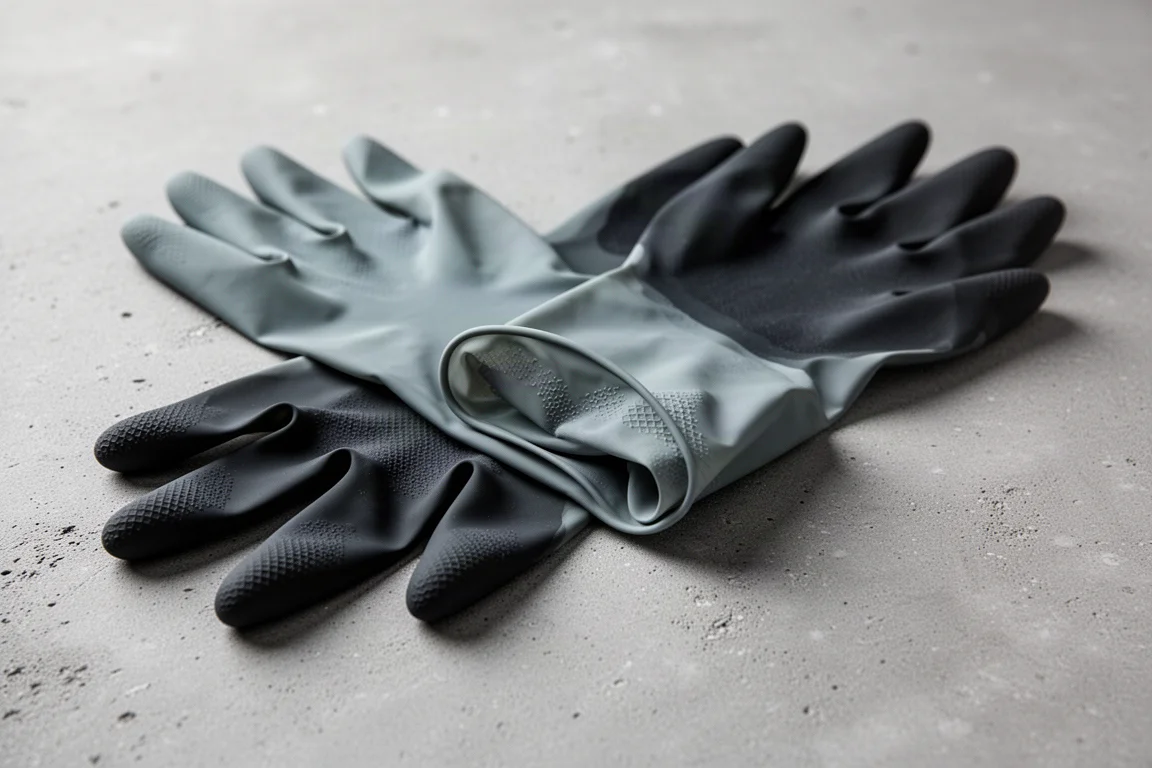
Venom Steel costs $25 for 100 gloves and features heavy-duty two-layer construction marketed as a rip-resistant industrial glove. They are very thick and stiff, and probably not ideal for tiny fasteners, weighing 7.46 g.
The performance, however, is dominant. Forty abrasion passes on fresh sandpaper, four times the next best glove. The best puncture resistance at 1,599 g, roughly 3.5 lb. A strong 32 lb tear score, 53.5 lb on the cuff test, and the best post-gasoline tensile strength of any nitrile at 9.8 lb. Grip was a solid 10.5 lb. With an overall average finish of 3.6, Venom Steel won the showdown outright.
Raven Nitrile Gloves: Thick and Grippier Than Most
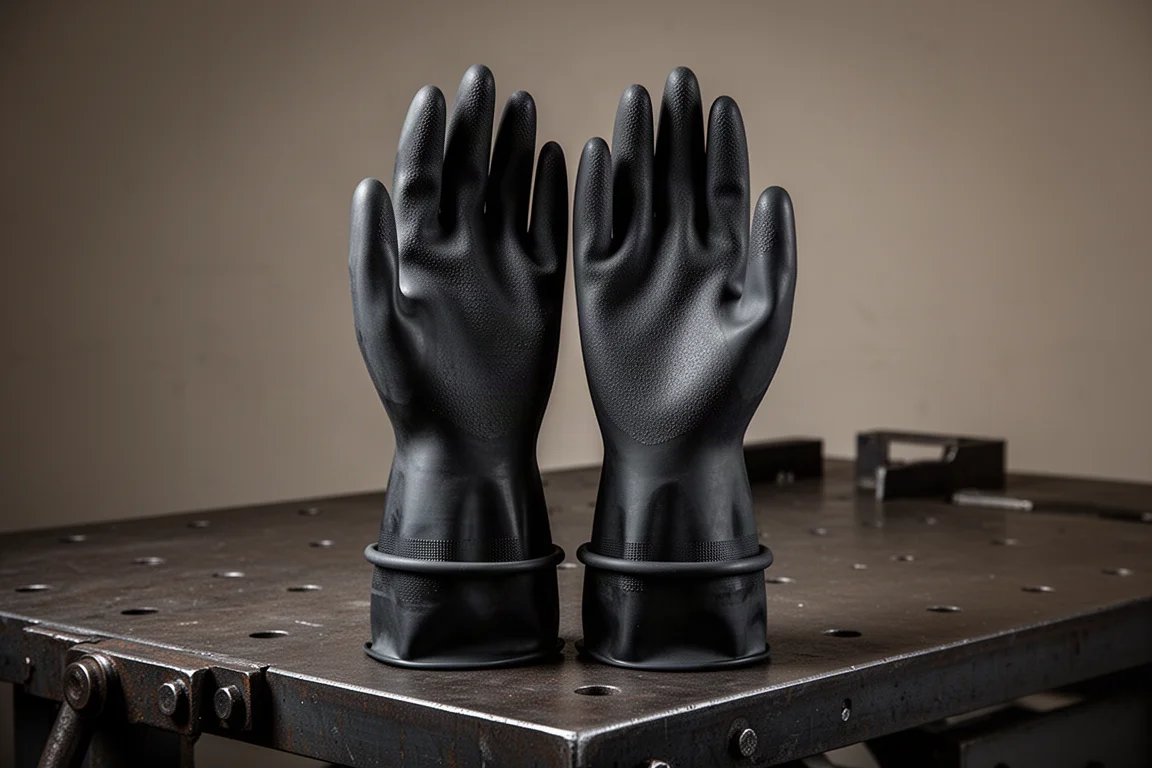
Raven nitrile gloves also cost $25 for 100 and claim textured grip with superior puncture and abrasion resistance. They are very thick and stiff, and at 7.89 g they were the heaviest gloves tested.
The claims mostly hold up. Abrasion resistance was an excellent 19 passes, second only to Venom Steel. Puncture resistance was 1,128 g, grip was a very good 13 lb, and the cuff survived to 52 lb. Tear strength of 26.5 lb was only average, and gasoline retention was 8.8 lb. Overall average finish: 5.3.
GloveWorks Nitrile Gloves: The Thickest of the Bunch
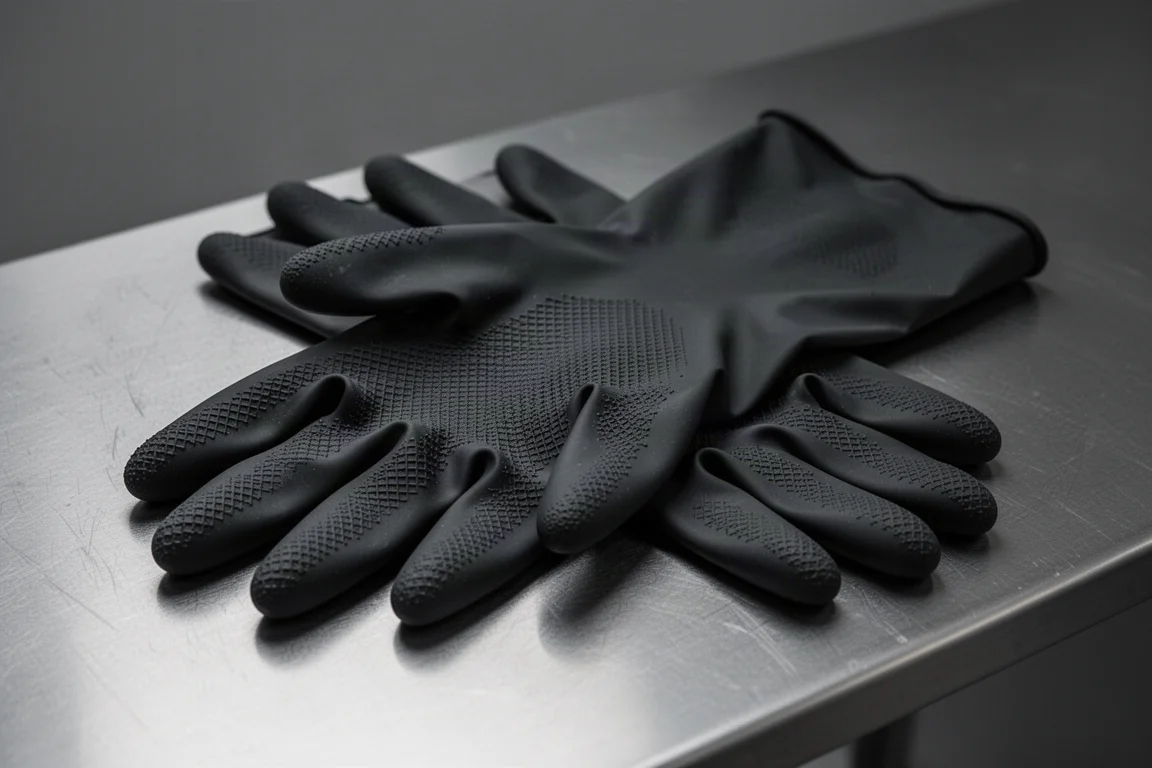
GloveWorks costs $32 for 100 gloves and features 8-mil thickness, the thickest in the lineup, at 9.64 g per glove. The heavy texturing pattern and stiff feel make small fastener work genuinely difficult.
That bulk translates to durability: 16 abrasion passes and a strong 1,341 g puncture score. Tear strength was surprisingly low for the thickness at 24.4 lb, but the cuff held to 52 lb and post-gasoline strength was 9.5 lb, second only to Venom Steel among nitriles. Grip was above average at 11 lb.
HDX Nitrile Gloves: Dual-Layer Grip Leader
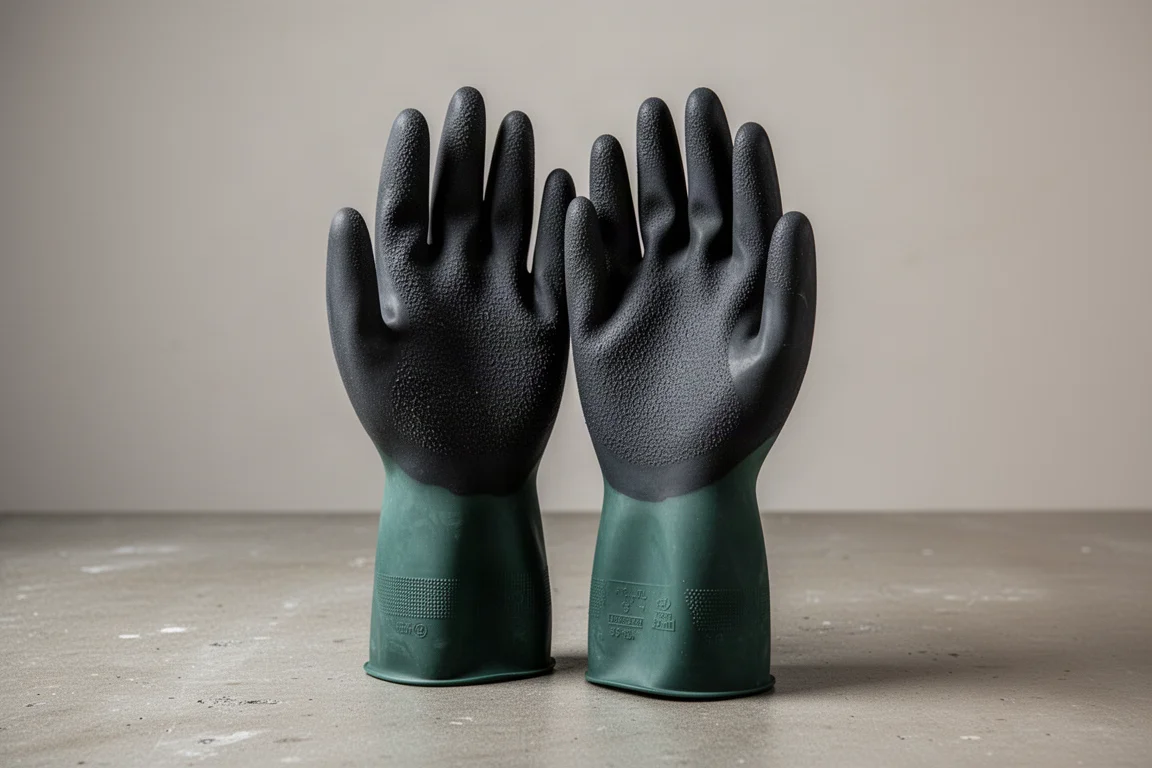
HDX costs $15 for 40 gloves at 38 cents each and claims heavy-duty dual-layer nitrile construction at 6-mil thickness. The fit runs loose for size large, but tactile properties and finger dexterity remain good at 6.95 g.
Grip is the headline: 13.5 lb, tied for the best in the test. The rest is mixed, with six abrasion passes, 1,058 g puncture resistance, 28.9 lb tear strength, and a 42.5 lb cuff score. After gasoline exposure it retained a strong 9 lb of strength. Overall average finish: 6.
SafeSkin Nitrile Gloves: Premium Automotive Focus
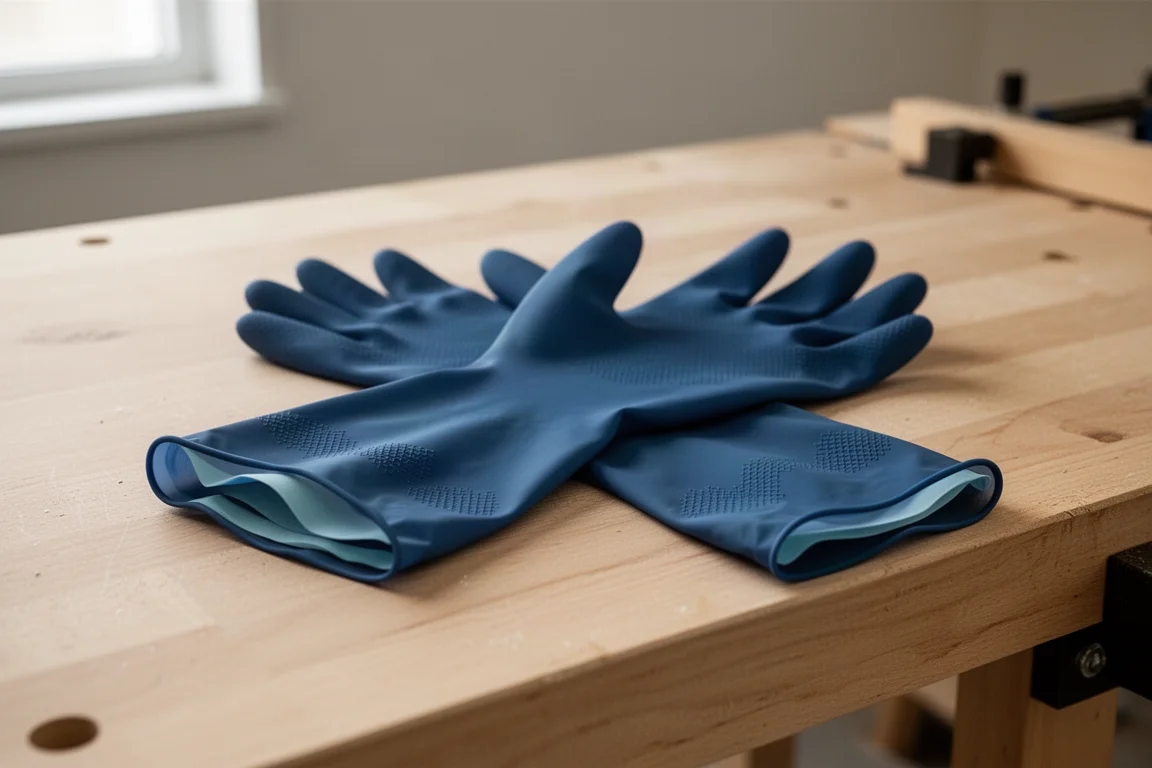
At $16 for 40 gloves, or 40 cents apiece, SafeSkin is the most expensive glove tested and is specifically designed for automotive use. The fit is loose like the HDX, but the sense of touch and finger dexterity are good at 7.17 g.
It performed better than average in most durability tests: 11 abrasion passes, 1,128 g puncture resistance, a 49 lb cuff score, and a strong 9.4 lb of strength after gasoline soaking. The weak spots are tear strength, an early failure at 22.7 lb, and the price, which is hard to justify given the competition.
Chemical Resistance: Gasoline and Acetone
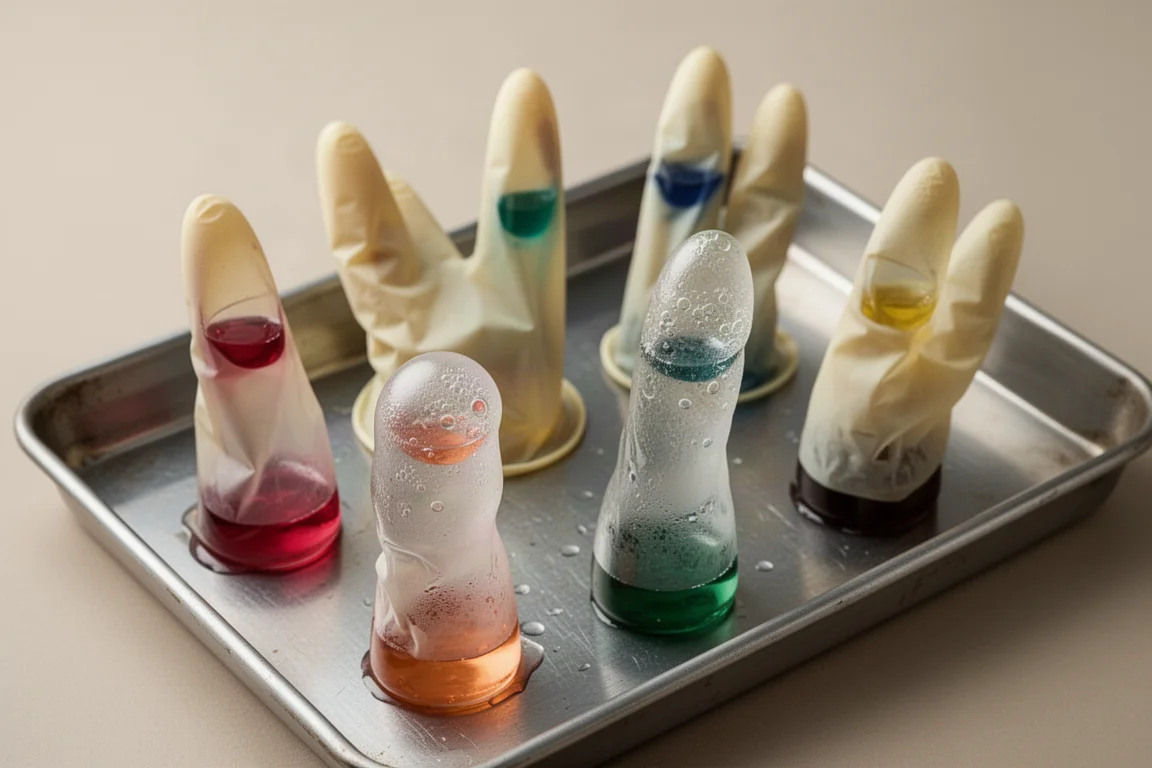
For the chemical test, a rolled paper towel went inside each glove finger, one soaked in acetone and one in gasoline, then checked an hour later. Acetone swelled and weakened nearly every nitrile finger, the Basic vinyl disintegrated entirely, and gasoline destroyed the latex gloves, which bloated dramatically and let fluid through.
After a second hour-long gasoline soak, tensile strength was retested. Venom Steel held up best at 9.8 lb, followed by GloveWorks at 9.5 lb, SafeSkin at 9.4 lb, Raven at 8.8 lb, and HDX at 9 lb. Most ordinary nitrile gloves fell to between 3.7 and 7.9 lb, and the Basic vinyl, while scoring 21.1 lb, was far too stiff and inflexible to use. The takeaway: no disposable glove here is truly chemical-proof, but the heavy-duty nitriles degrade far more gracefully.
Overall Buying Advice
If you want one glove that does everything well, Venom Steel is the clear pick, winning abrasion and puncture resistance, the two categories that matter most for durability, while also holding up well to chemicals. Raven and GloveWorks are strong runners-up for heavy-duty tasks.
For fine motor skill work, thinner gloves like Grease Monkey, Adenna latex, and Grip Protect feel far better on the hands, with Grease Monkey being the best blend of dexterity and surprising puncture strength. Keep two types in the shop: a thin glove for detail work and a thick one like Venom Steel for chemical exposure and rough jobs. And whatever you buy, skip vinyl for anything beyond light, dry tasks.
Conclusion
Thickness mostly predicts durability, but not always: Grease Monkey proved a thin glove can punch hard, while the 8-mil GloveWorks snapped early on tear testing. The Venom Steel’s two-layer build simply outclassed everything, making it the standout pick for anyone tired of gloves that fall apart mid-job.
Further reading
Related Reviews
Work Gloves
Best Work Gloves 2026: Tested for Cut, Impact, and Puncture Resistance
We tested 17 work gloves across cut, impact, puncture, grip, and durability to find the best value for every budget.
Work Gloves
AWP Goatskin Hybrid General Purpose Gloves: First Look and Honest Take
A genuinely soft goatskin work glove with a no-break-in claim, some thoughtful stitching choices, and one design trade-off that could be a dealbreaker depending on the job.
Work Gloves
Best Work Gloves for Jobsite Use: Makita, Milwaukee, Husky, Kobalt and DeWalt Compared
A practical look at cut level, impact rated and demolition gloves from Makita, Milwaukee, Husky, Kobalt and DeWalt, with tips on choosing the right protection level.