Ski Gear
Best Narrow Twin Tip Skis: Park and All-Mountain Models Worth Considering
A practical guide to 17 narrow twin tip skis between 84 mm and 96 mm underfoot, covering construction, flex, mount points, and the trade-offs that matter before you buy.
Introduction
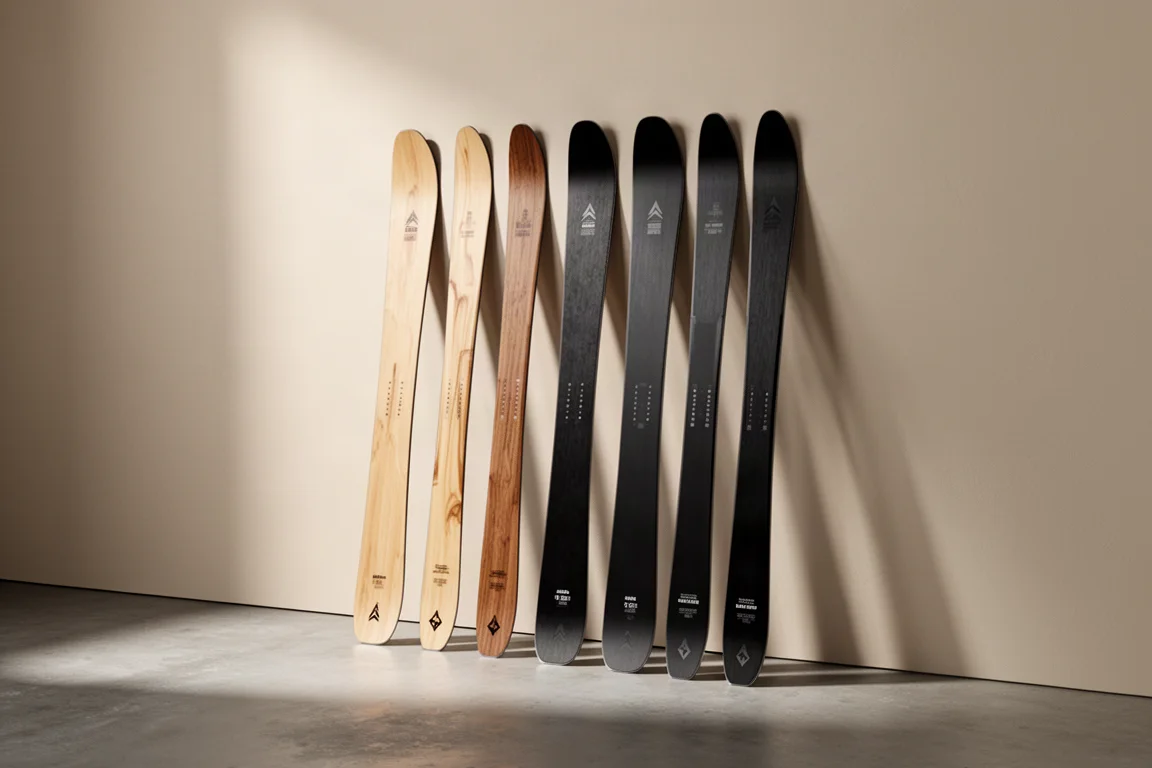
Narrow twin tip skis occupy a specific corner of the market. They are built for park and pipe riding first, yet the best of them stay usable across the rest of the mountain. This guide covers 17 models between 84 mm and 96 mm underfoot, roughly ordered from narrowest to widest, and explains what separates a dedicated competition slopestyle ski from a forgiving all-mountain twin.
The differences between these skis are subtle, but they are real. Core material, sidewall construction, rocker profile, mount point, and weight all shift how a ski feels underfoot, and those shifts matter far more than the numbers on a spec sheet.
How to Think About Narrow Twin Tips
A few construction details do most of the work here. A dense wood core and true vertical sidewalls generally mean a stronger, more precise ski, and the weight that comes with them. A composite or partially capped build tends to be lighter and more forgiving, with a lower performance ceiling.
Rocker and taper shape how a ski behaves in soft snow and on switch takeoffs. Mount points tell you what the manufacturer intends: a ski with a true center line and a narrow range is a park ski, while a ski with a recommended line well behind center is a directional all-mountain ski with a twin tip added.
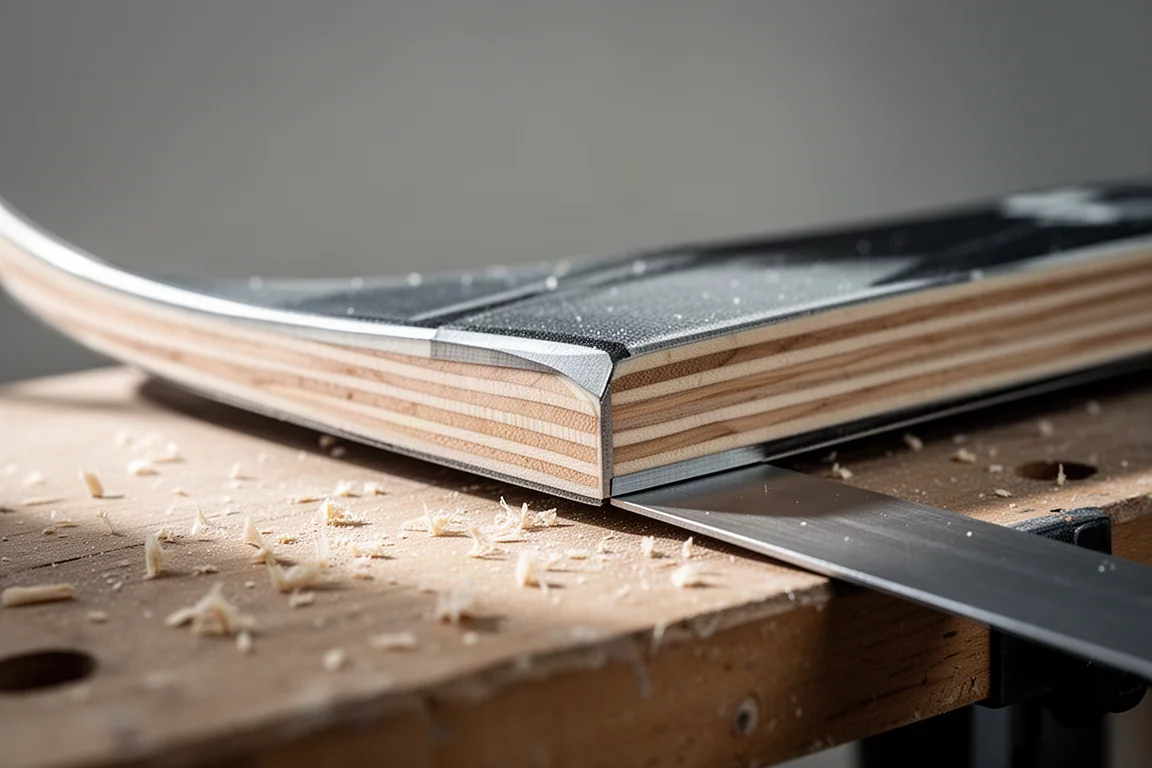
Flex patterns are equally important. A springy, energetic flex rewards quickness and light riders, while a stiffer, damper flex supports bigger landings and heavier skiers. Neither is better in isolation. Matching the feel to your own style is the whole exercise.
Head Oblivion 84: A Traditional Competition Park Ski
The Oblivion 84 is the narrowest ski in this group but far from the lightest. It uses a dense wood core with true vertical sidewalls that run all the way through the tips and tails, and it weighs about 1,960 g. A 20.2 m turn radius, a 121/84/110 shape, and almost no taper give it the feel of a traditional competition twin tip.
Camber is generous, and the flex is noticeably softer in the tips and tails with a thick, stiff section underfoot. Mount points span from true center to 5 cm back, and the sidecut is not symmetrical. Riders who want edge grip, responsiveness, and strength rather than a drifty, buttery feel will get the most from it, including coaches and instructors who want a mobile, durable ski that still behaves like a real ski.
Atomic Bent 85: An Affordable Entry Into Twin Tips
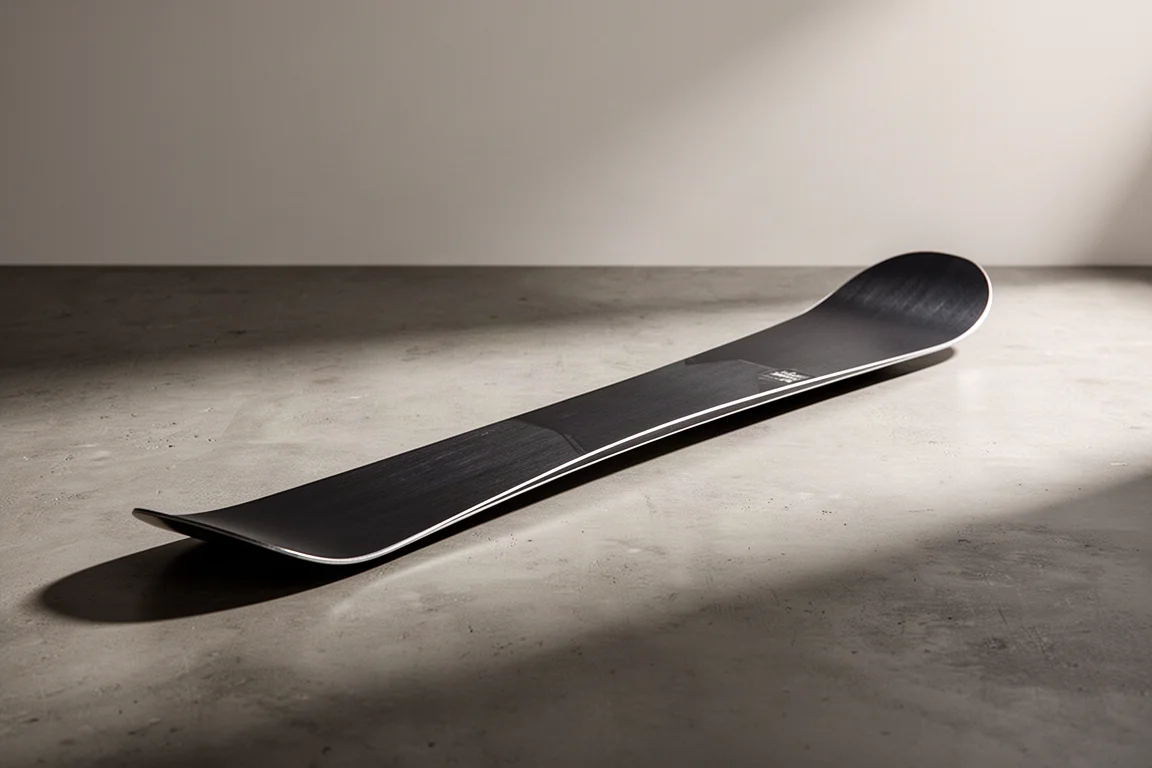
The Bent 85 stands apart from the rest of the Bent collection. It uses a Densolite composite core rather than a dense wood core, which keeps the cost down but pushes weight to about 1,840 g, heavier than the wider Bent 90. Construction is mostly cap with a minimal half sidewall underfoot, and the turn radius is shorter at 17.6 m in the 176 cm length.
There is more rocker and more taper here, and the shape is more directional. It works well as a park-curious ski for newer and younger riders, and it holds up for recreational skiers who want a durable twin tip without spending a lot. System packages that include bindings can be found in the mid $500s.
View more details for Atomic Bent 85
Volkl Revolt 86: A Bridge From System Skis to Park Skis
The Revolt 86 sits between the two skis above. It has a multi-layer wood core, mostly vertical sidewalls with a small amount of cap toward the tips and tails, and dimensions close to the Oblivion 84 at roughly 120/86/110. Tip and tail rocker are more generous than on the Oblivion.
There is a single mount point, 2 cm back from true center, though the shape leaves some room to move. It is not as torsionally stiff or as precise as the Oblivion 84, which limits its all-mountain range, but it is a natural step for developing park skiers moving up from a system ski. Younger riders in particular tend to spend several seasons on this kind of ski before specializing.
View more details for Volkl Revolt 86
Faction Prodigy 1: The Most Well-Rounded Narrow Twin Tip
Poplar and ash give the Prodigy 1 a denser build, and it weighed 1,790 g in the 178 cm length. The shape is 120/88/112 with more tip rocker, around 20 percent, than tail rocker at around 15 percent, which points it toward all-mountain use while keeping a park-leaning flex.
Faction marks both a progressive and a new school mount line on the ski, which makes the intended range of setups easy to see. It is one of the most versatile skis in this width, comfortable as a daily driver on groomers and still capable in the park. Longer lengths are available, including a 185.
Liberty Helix 88: Light, Springy, and Fully Symmetrical
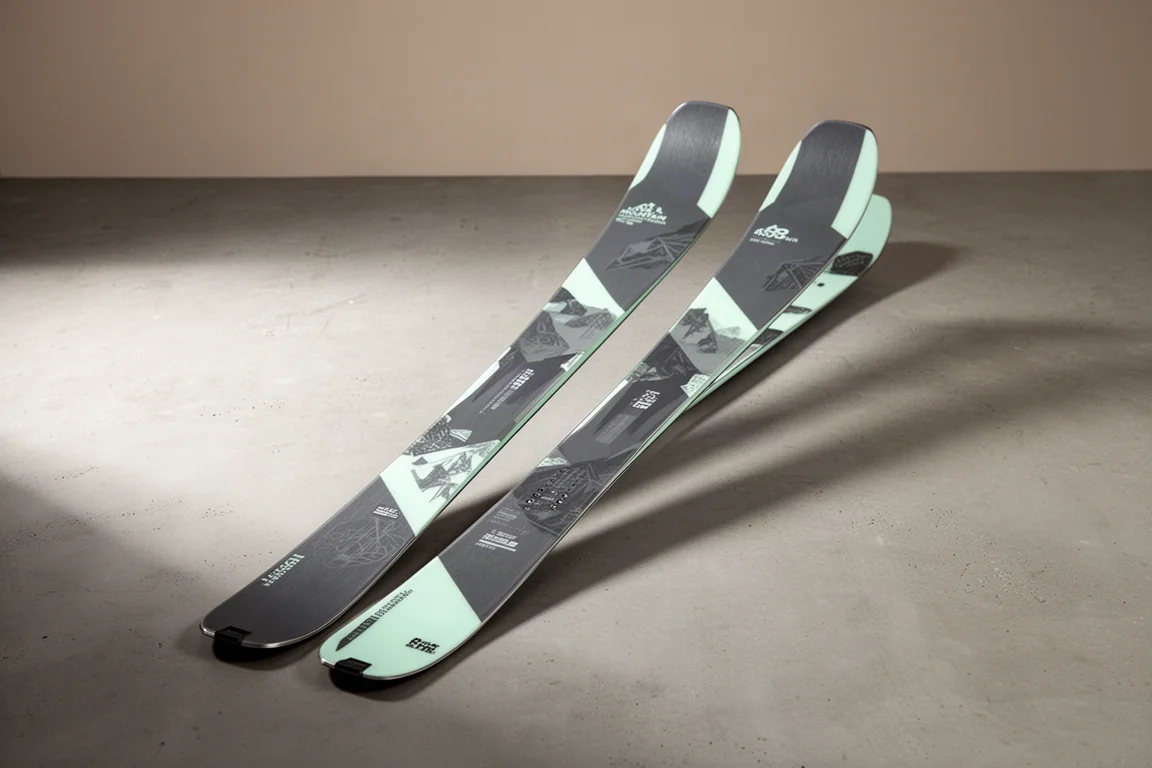
The Helix 88 is fully symmetrical at 118/88/118, and it is one of the lightest and snappiest skis here. A poplar, bamboo, and carbon build keeps it at 1,700 g in a 175 cm, with a springy flex that makes rotations and switch riding feel quick.
That lightness comes with a trade-off. It is not the strongest ski for big landings, and it rewards lighter, technical riders most. It is a strong match for rail-focused riding, spins, and switch-ups where quickness matters more than damping.
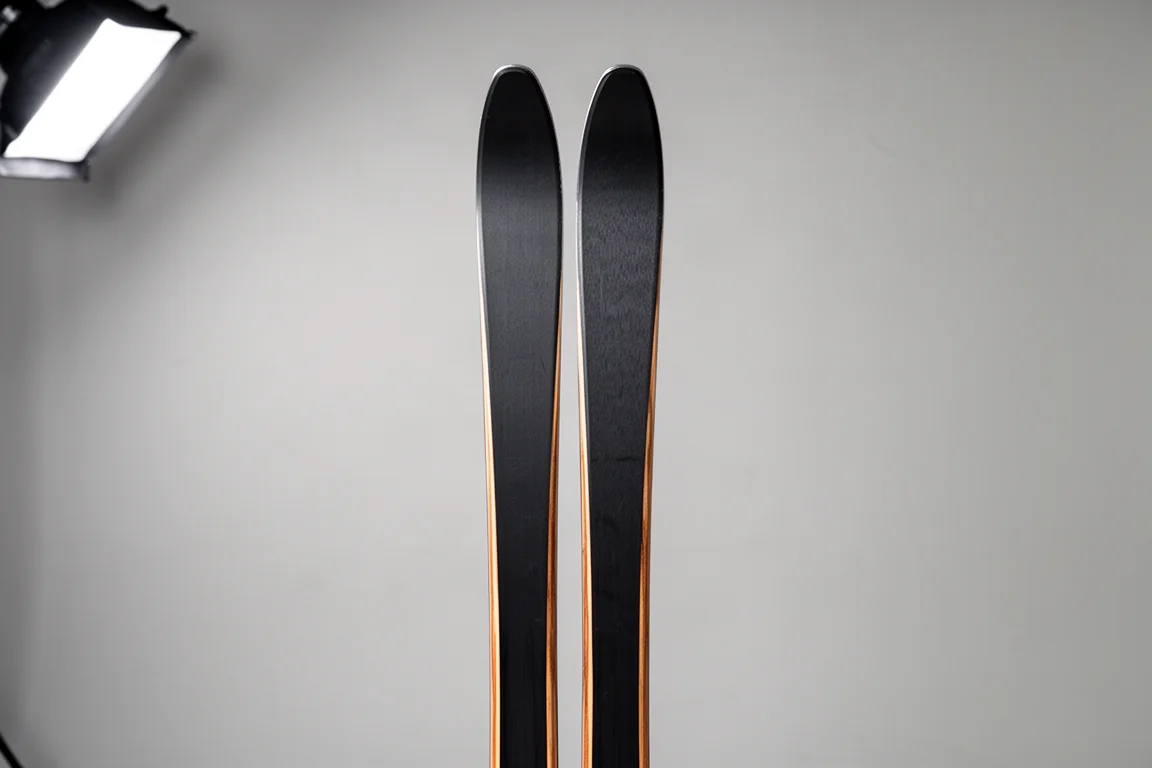
K2 Sight 88: Built for Long-Term Durability
The Sight 88 is a tank. An aspen core wrapped in a triaxial fiberglass sock, plus a full sidewall, brings it to about 1,950 g. The shape is close to symmetrical at roughly 115/88/110 with a more balanced tail, and the midsole sits about 3 cm back from center.
Sizes run from 149 to 179, so it fits a wide range of riders. It is an easy ski to progress onto and one that can stay in a quiver for years. For younger park skiers who are hard on their gear, durability like this matters as much as any performance number.
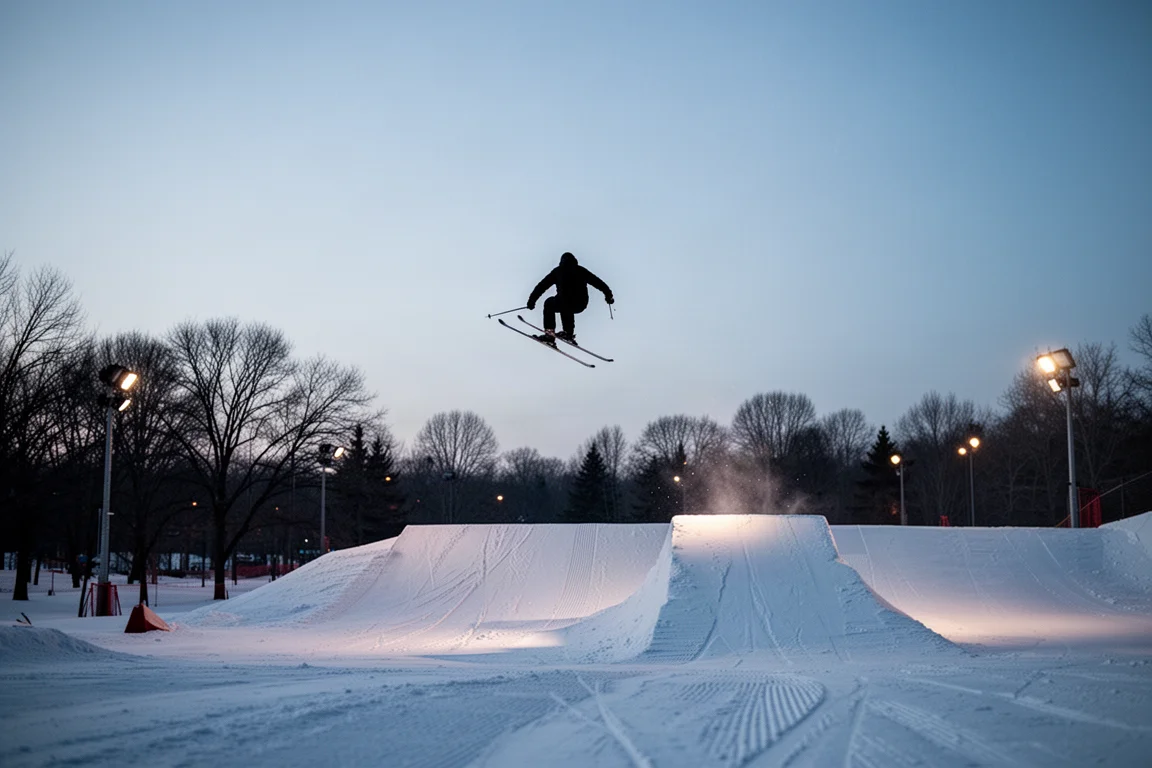
Weight is the price of that durability, and heavier skiers will feel the difference more than lighter ones. Even so, the Sight 88 remains one of the most reliable options for riders who want to keep the same pair for several seasons.
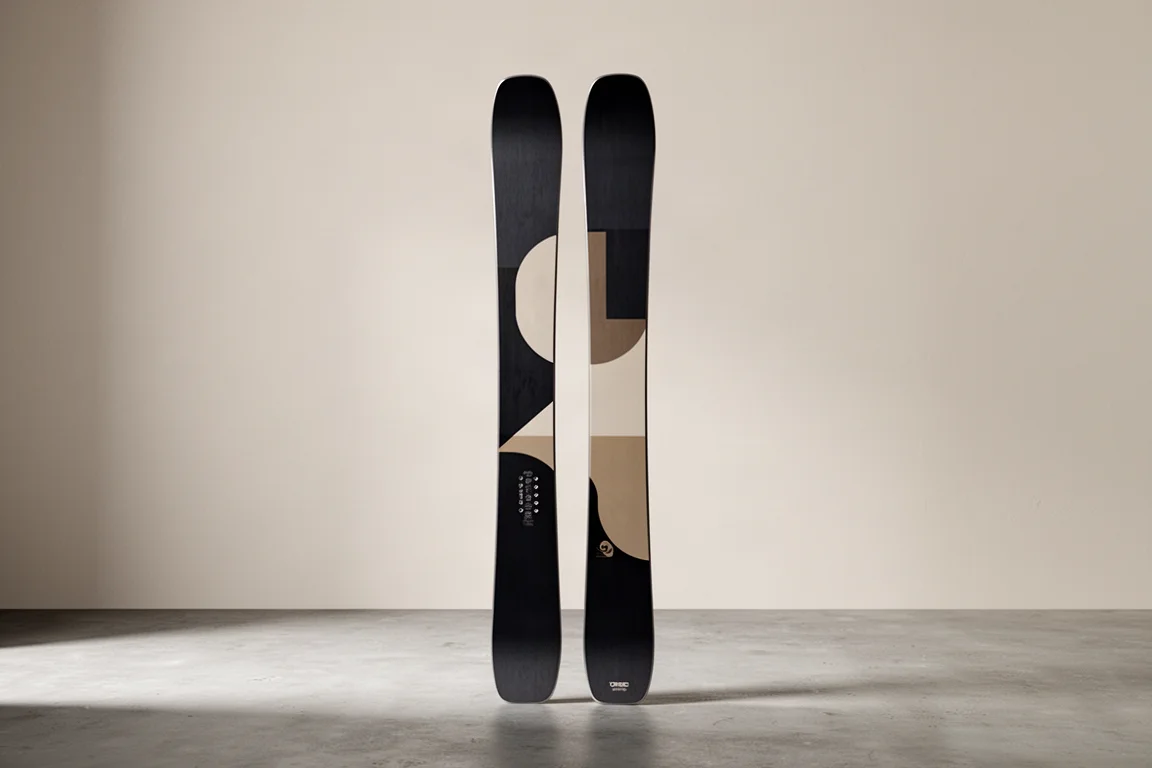
Armada ARV 88: Light and Strong Competition Focus
The new ARV 88 is the most competition-focused ski in the ARV line. A poplar core and a wedge wall, where the sidewall is angled to push into the wood core rather than away from it, bring the weight to about 1,700 g. The shape is 120/88/114.
Compared with the ARV 94, this ski has longer and higher camber with very little tip and tail rocker, plus a small amount of early taper. Mount options include a directional line and a freestyle line roughly 2 to 3 cm back from true center. It is light, strong, and genuinely usable as a cambered all-mountain ski when mounted back.
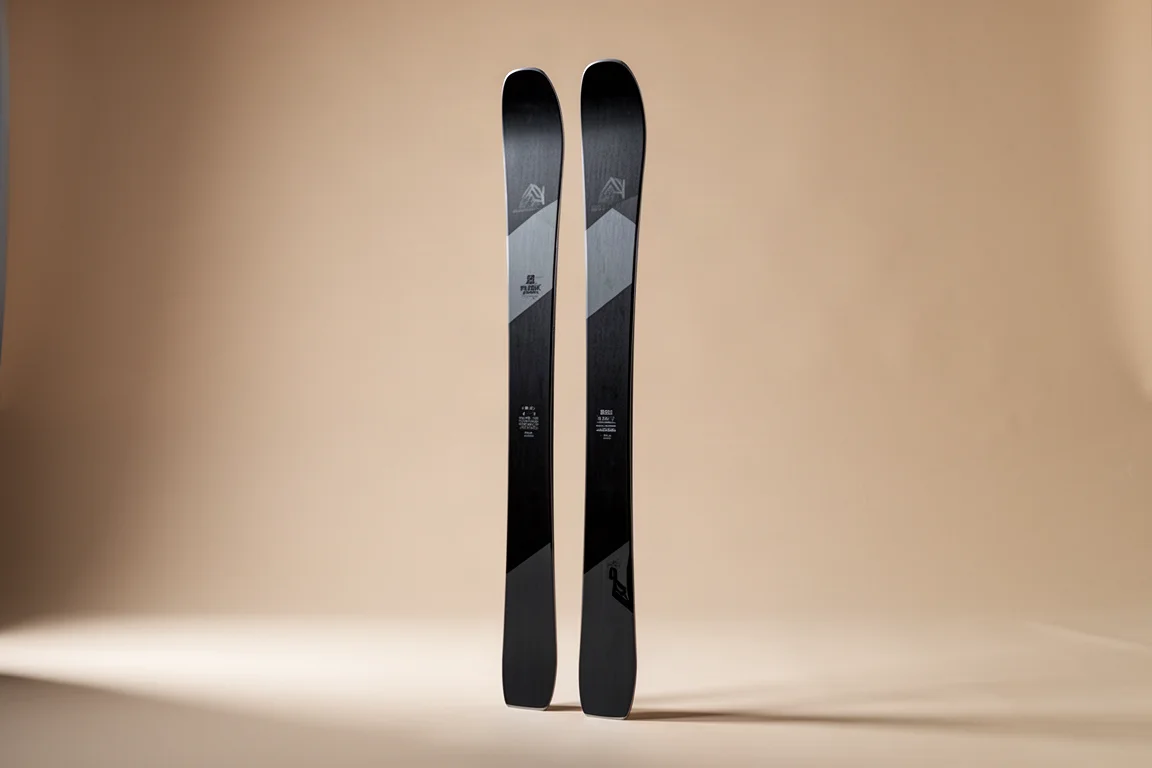
Line Tom Wallisch Pro: Technical Precision in the Park
A maple macro block core gives the Tom Wallisch Pro a round, flexible flex pattern at about 1,760 g. The dimensions are close to symmetrical at 118/90/116, and construction steps from sidewall underfoot to cap in the tips and tails to keep the ends playful.
The tips and tails are among the softest here, which helps with butters and switch takeoffs, while the underfoot section stays grippy and energetic. Mount points are centered, with a second line 2 cm back. This is a dedicated park ski aimed at technical riders, and it is not intended as an all-mountain setup.
Black Crows Captis 90: All-Mountain Character With a Twin Tip
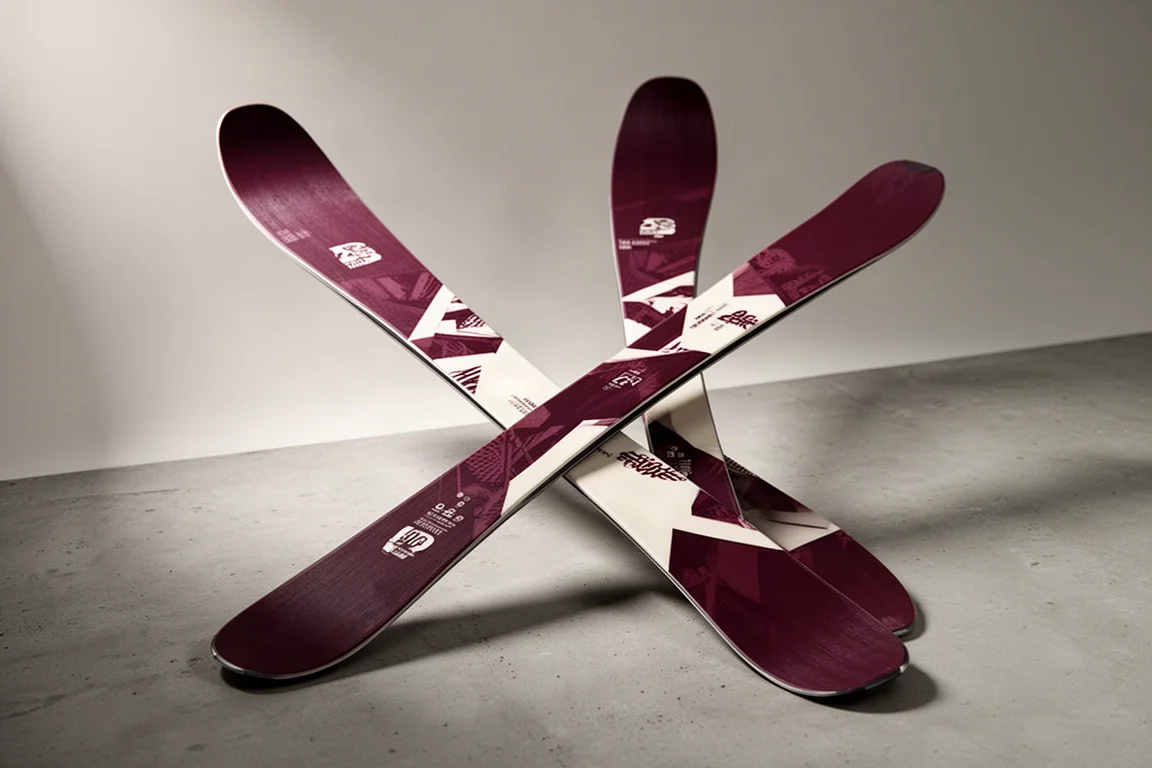
The Captis 90 is arguably the most all-mountain oriented ski in this group. A poplar core, fiberglass, and a full sidewall make it stiff and snappy, with an 18 m radius in the 178 cm length. It has a freeride taper in the shovel and longer tip rocker than tail rocker, which keeps it directional.
The recommended mount point sits well back, around 7 cm behind true center, and that placement reflects what the ski is designed to do. It handles bumps, trees, and soft snow with ease, and it can be taken into the park without feeling out of place. For a one-ski quiver around 90 mm underfoot, it is a very rewarding choice.
Dynastar M-Free 90: A Light Freeride-Oriented Twin
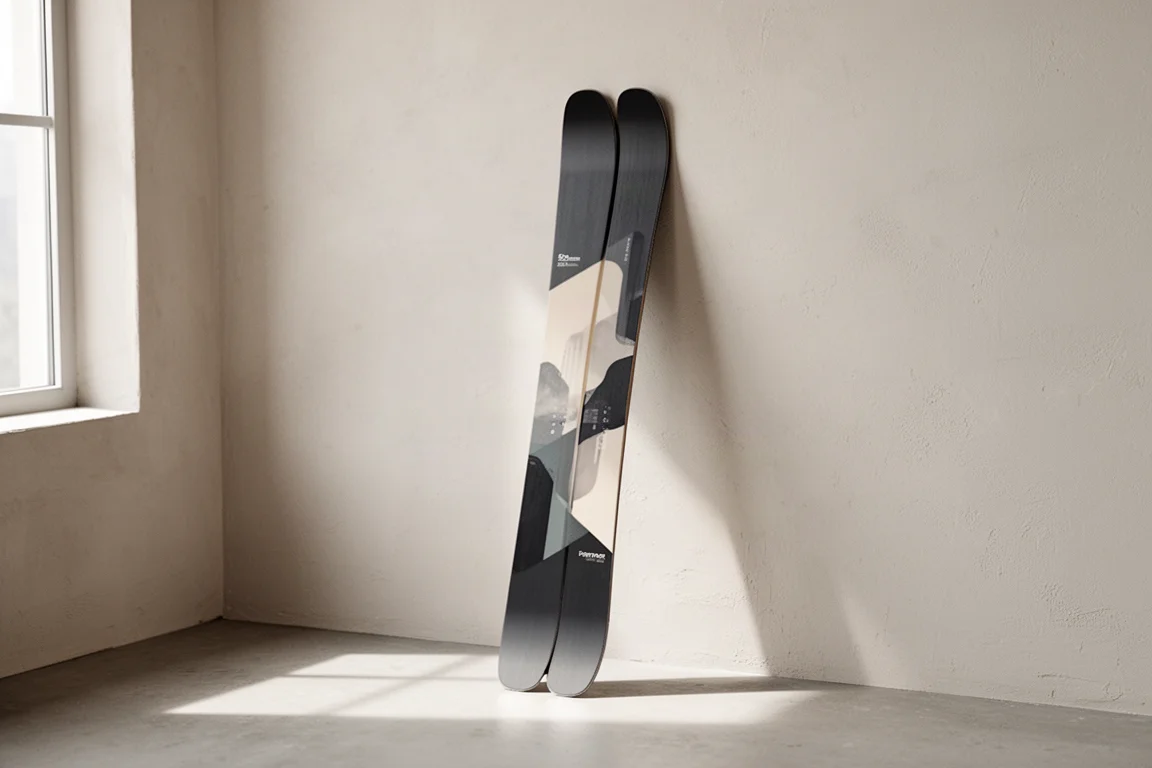
The M-Free 90 is worth including because many skiers assume the M-Free family is fully twin tipped, and this one is not. A paulownia core keeps it very light at 1,630 g, and the shape is directional, with a decent amount of tip rocker and some tail rocker but no real twin tip play in the tail.
The turn radius is around 20 m, which makes it adaptable across turn shapes, and it is available from 137 cm up to 177 cm. It suits progressing freeride skiers, juniors, and lighter adults who want an easygoing all-mountain ski rather than a park ski.
View more details for Dynastar M-Free 90
Faction Studio One: A True Symmetrical Slopestyle Ski
The Studio One is fully symmetrical at 120/90/120 with a 19 m radius and a symmetrical flex that is slightly softer than the Prodigy 1. It weighed around 1,750 g in the 178 cm length. The core is poplar with carbon stringers, and rubber strips run over the edges underfoot for cushioning and durability.
Long, high camber gives it strong energy out of a takeoff, and it is designed to be skied on the centered new school line. This is a dedicated slopestyle and park ski rather than a compromise, and it is at its best with a rider who spends most of the day in the park.
Atomic Bent 90: One Ski, Many Personalities
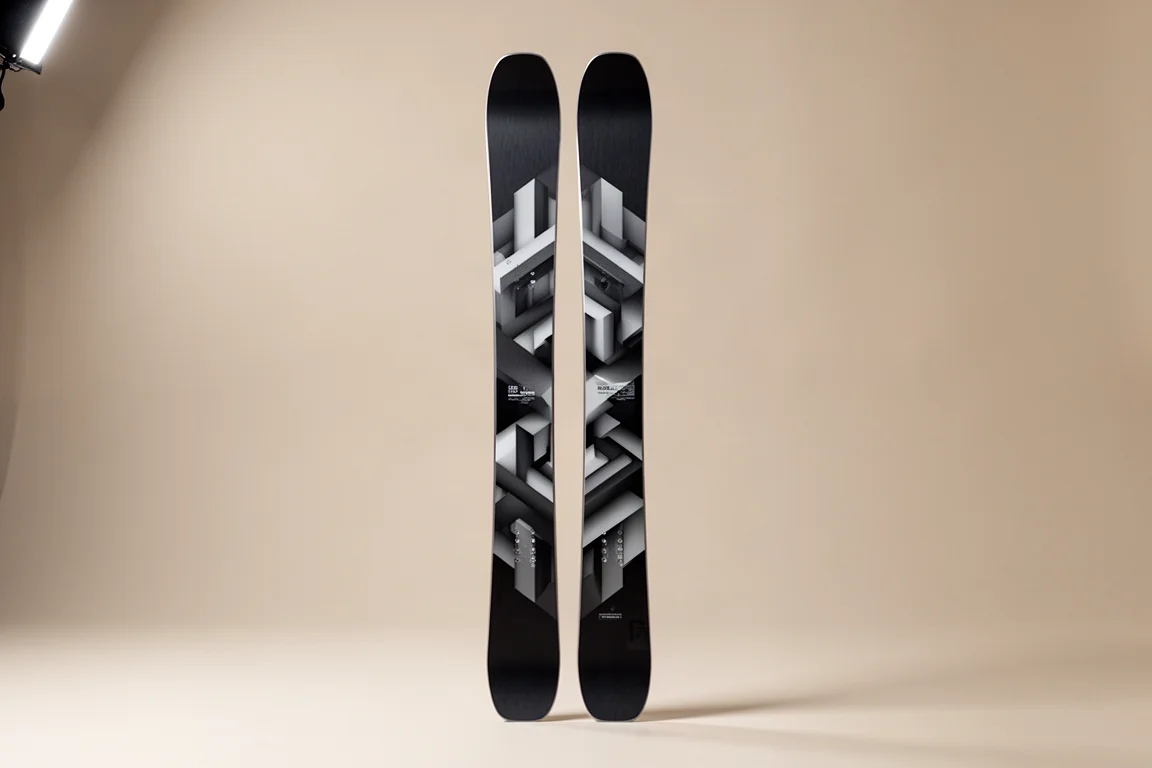
The Bent 90 may be the most adaptable ski here. A lightweight wood core with Horizon Tech in the tips and tails keeps it around 1,800 g, and the recommended mount range is unusually broad at roughly 10 cm. That range lets the same ski behave like a balanced freestyle twin or a much more directional, traditional ski.
The shape is directional, with a lot of tip rocker and very little tail rocker, and dimensions of 119/90/109. It is forgiving and easy to manipulate in trees, bumps, and soft snow. It is not the strongest park ski in this group, but few skis cover this many different styles of skiing.
Elan Playmaker 91: Agile, Soft, and Surf-Friendly
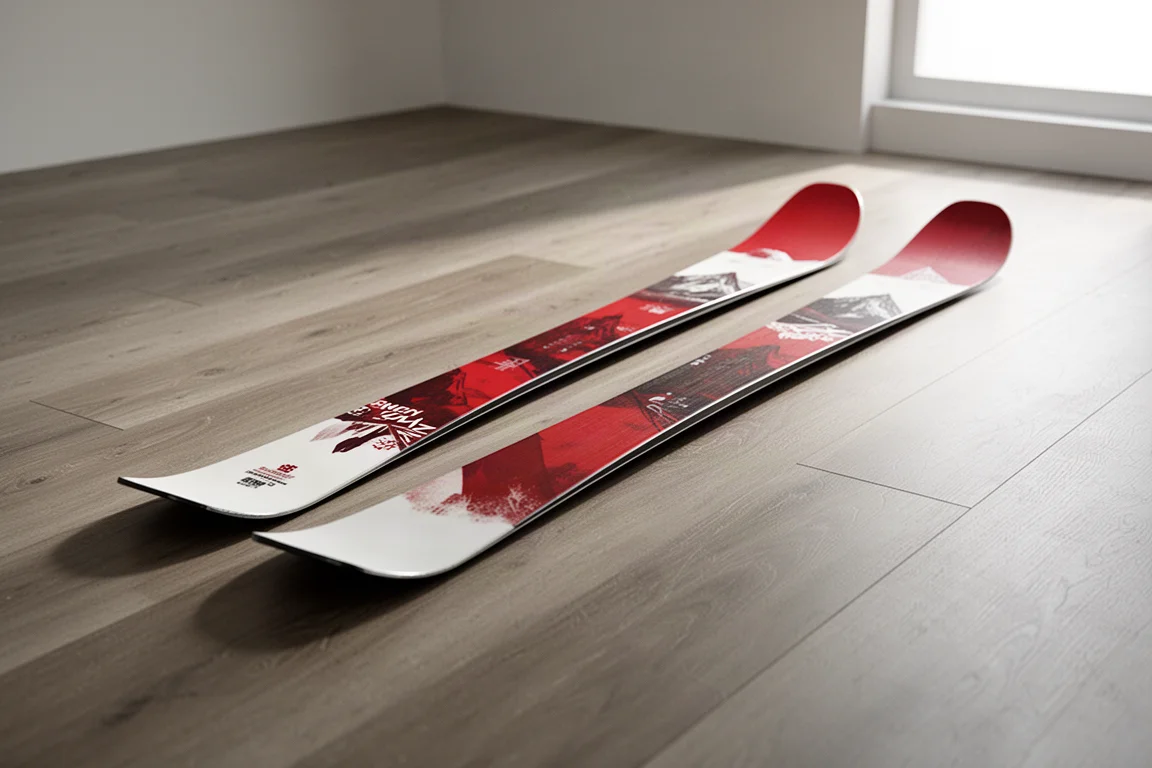
The Playmaker 91 is light at about 1,600 g with an 18.1 m radius in the 180 cm length and a 122/91/116 shape. Carbon tubes underfoot add strength to a midsection that is narrower than the tips and tails, and the rocker profile is flatter than most here, which gives it a surfy, loose feel.
It is one of the softest skis in this comparison, and it is easy to throw sideways. That makes it a good fit for riders who split their time between park laps and all-mountain cruising, especially in narrower, firmer conditions. It is not a dedicated competition ski.
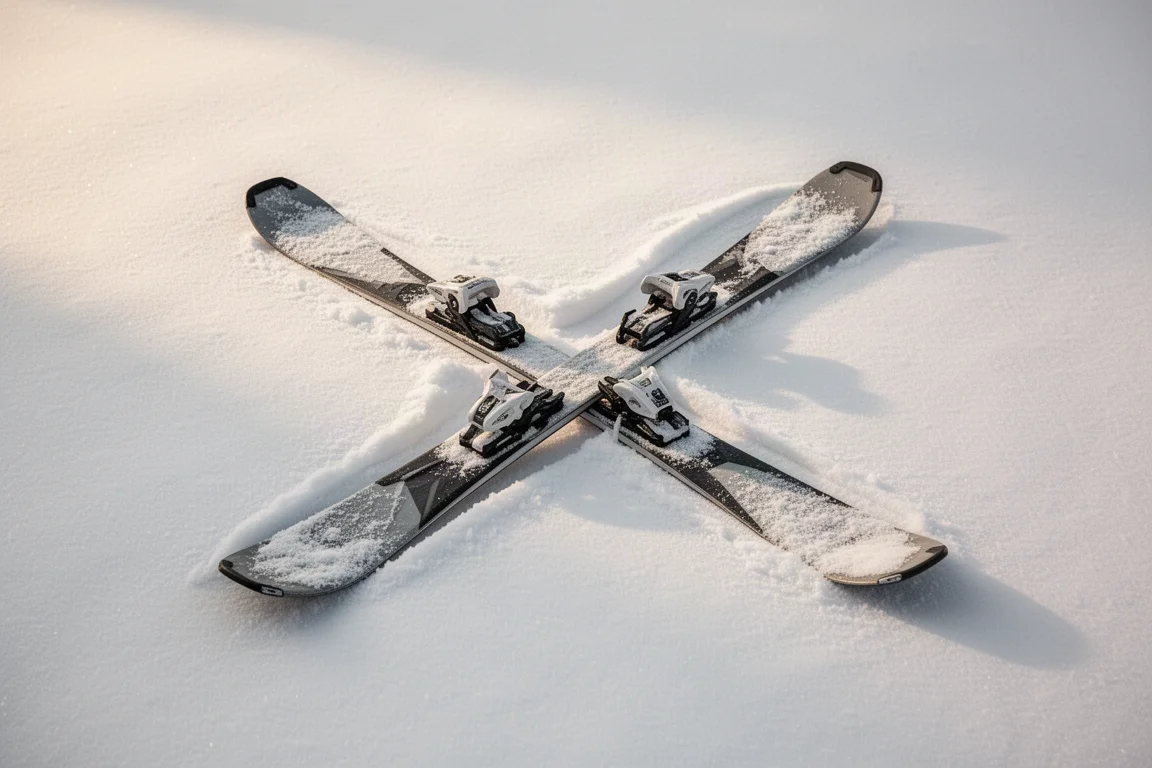
That softness does come with limits on bigger landings, so it is best treated as a playful all-rounder rather than a slopestyle weapon. Riders who want quickness and a low swing weight without a stiff, demanding build will find a lot to like.
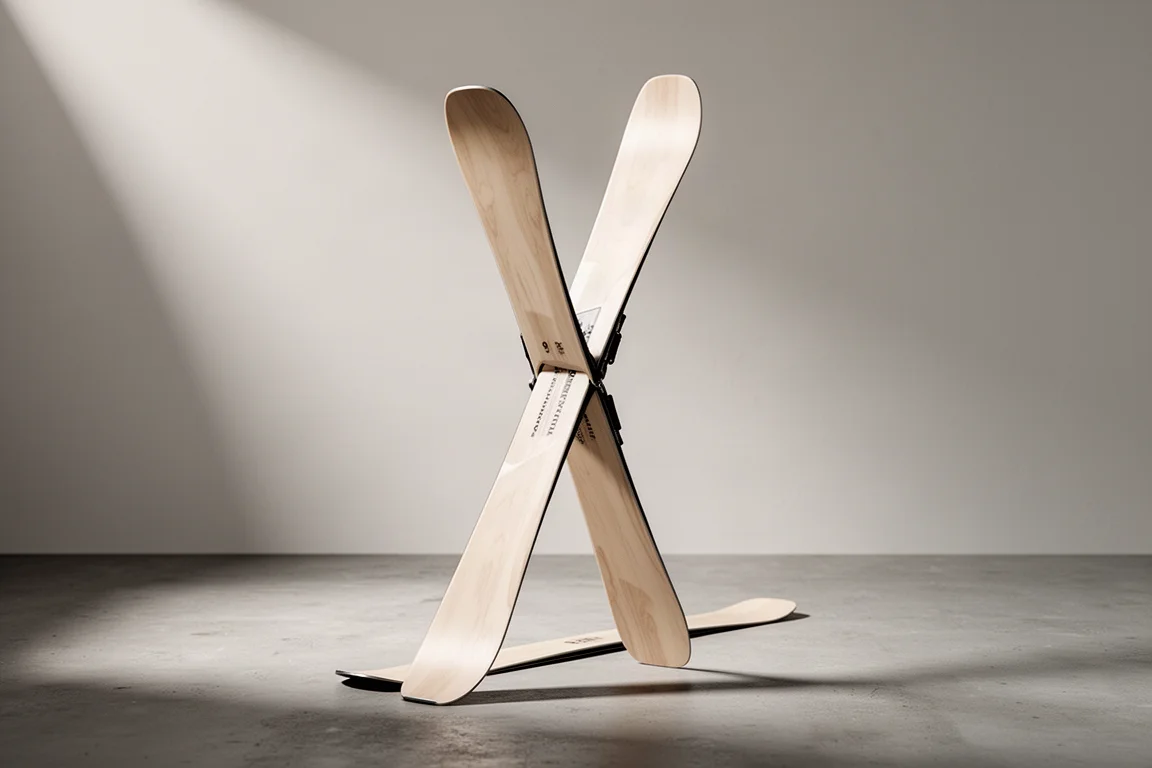
K2 Chronic 94: Playful Soft-Snow Freestyle
The Chronic 94 uses an aspen core and a thin tip construction that softens the flex in the tips and tails while keeping the underfoot section robust. It weighs over 2,000 g in the 185 cm length, so there is real substance to the ski.
The shape carries a lot of tip rocker and a nearly matching tail, with a center line and a second mount line about 4 cm back. It is a playful, drifty ski that works well in soft snow and still holds up in the park. It suits riders who prioritize style, groundwork, and edit-friendly skiing over competition results.
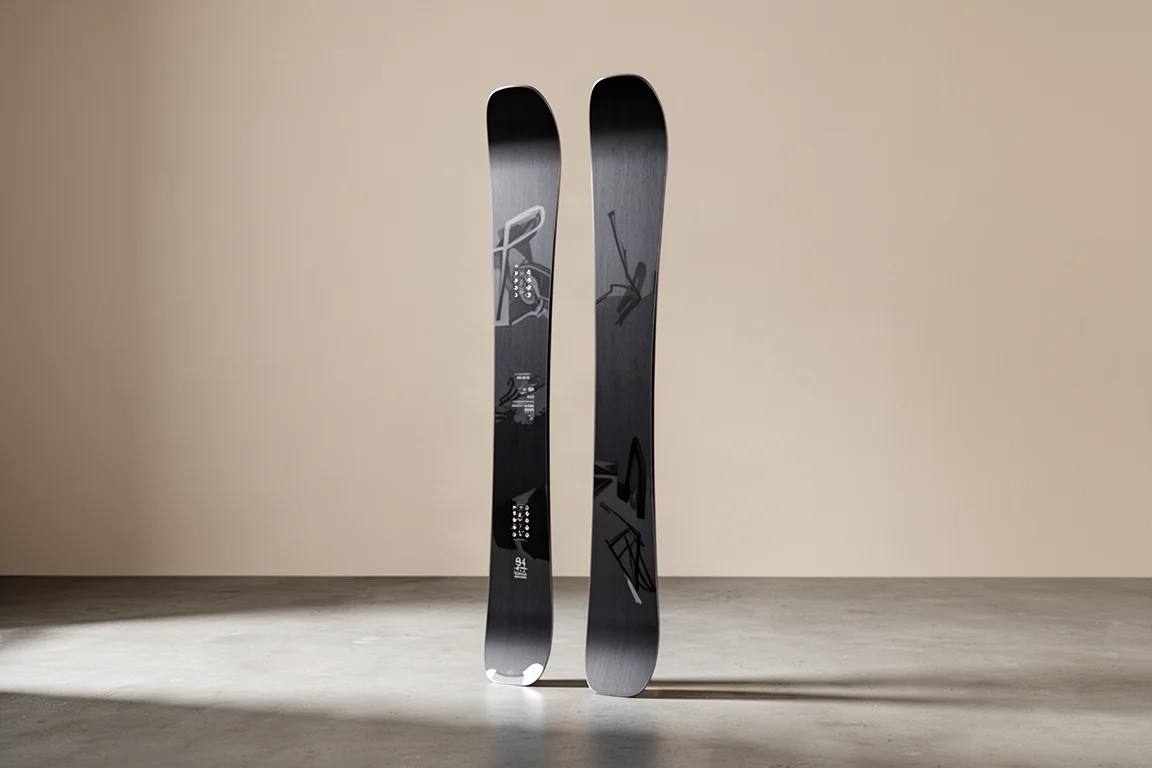
Armada ARV 94: A Wider Take on the Same Formula
The ARV 94 shares its construction with the ARV 88 but adds width and rocker. It weighed about 1,750 g, with a 17 m radius and a 123/94/118 shape. Longer rocker and longer taper make it more catch-free in soft snow than the 88.
The flex is supportive enough for bigger landings but still playful, and the factory recommended line makes more sense here than on the narrower model. It sits between a directional all-mountain ski and a true park ski, which is exactly how it skis. It is a strong choice for riders who want one twin tip to cover park laps and soft snow days.
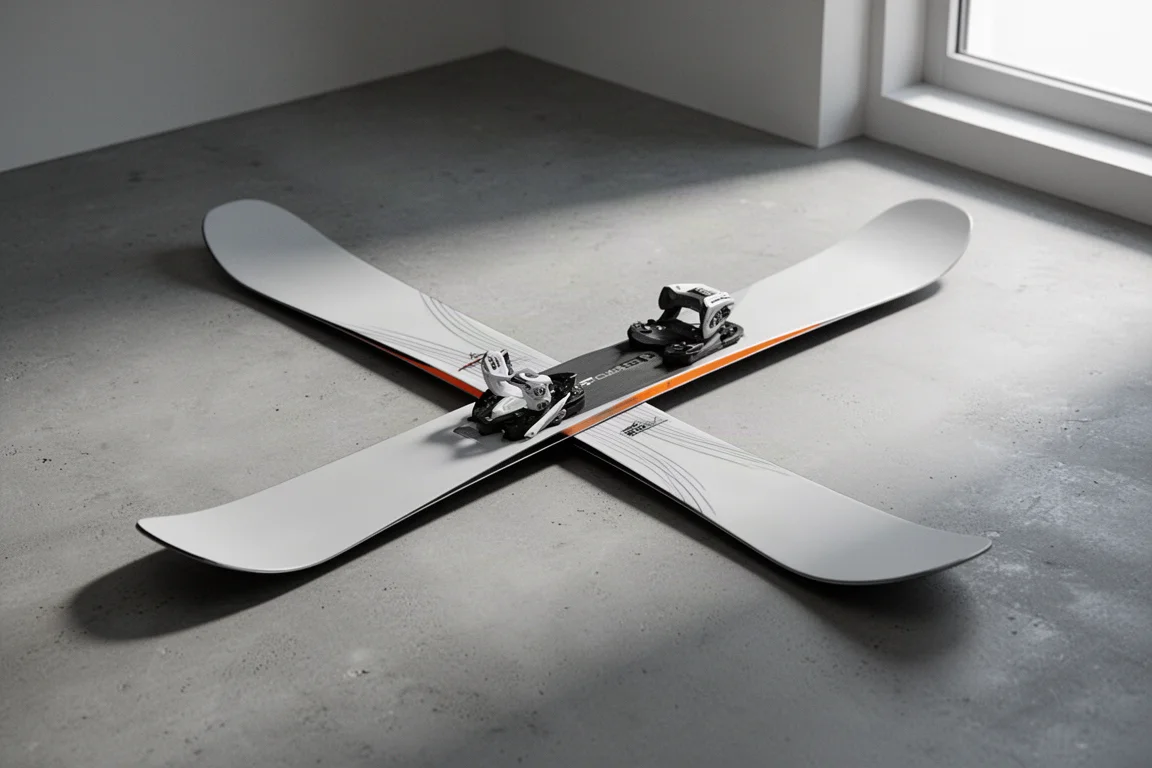
K2 Poacher: Durability and Stability for Big Landings
The Poacher blends fir and aspen with triaxial fiberglass and a carbon boost, and it weighs about 2,030 g. The shape is 124/96/118 with a 19 m radius in the 184 cm length, long rocker in the shovel, long tail rocker, and less camber underfoot than most skis here.
It is about as durable as park skis get, which makes it a sensible pick for heavy or aggressive riders who break gear. It is stable on landings and has been used at the highest levels of competition. The trade-off is weight and a less immediate feel on smaller features.
Volkl Revolt 96: Stable and Forgiving at Width
The Revolt 96 is just over 2,100 g in the 181 cm length, with a 126/96/117 shape and generous tip and tail rocker. The flex is softer than the Poacher, which helps offset the weight and keeps the ski forgiving on landings.
The mount point sits very close to true center without being exactly centered, and moving it further back runs into the tail rocker quickly. It bridges the gap between the narrower Revolt 90 and the wider Revolt 104, doing neither job quite as well as the specialists but handling both comfortably. The longest length is 181 cm.
Buying Advice: Matching a Ski to Your Riding Style
The most useful question is not which ski is best, but which feel you want underfoot. Quickness and energy suit riders who spin, butter, and ride rails, and that points toward lighter builds such as the Helix 88, the Studio One, or the Playmaker 91. Vibration damping and strength suit riders who go big on jumps, and that points toward the Poacher, the Revolt 96, or the Chronic 94.
Mount points deserve attention before you buy. A ski with a true center line and a narrow adjustment range is a park ski, and mounting it far back will feel wrong. A ski with a broad range, like the Bent 90, or a dedicated directional line, like the Captis 90, is designed for a very different kind of day. Talking through the options with a ski technician is worthwhile, because a poorly chosen mount point can hurt the experience more than it helps.
Width matters too. At 84 mm to 88 mm, skis are quicker edge to edge and better suited to firmer conditions and park laps. At 94 mm to 96 mm, they float better and handle soft snow with more confidence, at the cost of some quickness. If you ski a mix of park and all-mountain terrain in narrower, firmer snow, staying closer to 90 mm often makes the most sense.
Conclusion
There is more overlap in this category than in almost any other, but the distinctions are still meaningful. The Oblivion 84, ARV 88, Tom Wallisch Pro, Studio One, and Revolt 90 sit firmly on the park side. The Captis 90, Prodigy 1, Bent 90, and Playmaker 91 lean all-mountain while keeping a twin tip. The Bent 85 and Revolt 86 cover the value and progression end, and the Poacher, Revolt 96, and Chronic 94 handle heavy use and soft snow.
Match the flex and mount point to how you actually ski, and any of these will serve you well for years.
Further reading
Related Reviews
Ski Gear
2023 Blizzard Hustle vs Rustler: Six Freeride Skis Compared
Blizzard's 2023 Hustle collection rebuilds the Rustler shape with a lighter core and no metal. Here is how all six skis differ, and which one suits your riding.
Ski Gear
2023 Skis of the Year: Atomic Maverick 88 TI, Salomon QST 106, and Look SPX 12 Pro
Three standout ski picks for all-mountain carving, powder days, and reliable binding performance, with practical buying notes for 2023 models.
Ski Gear
2025 Nordica Enforcer 104 Review: A Directional Charger Replaces the 104 Free
The 2025 Nordica Enforcer 104 drops the Free name and the twin-tip personality, gaining weight, stiffness and composure in rough snow. Here is what changed and who it suits.