Multi-Tools
Multi-Tool Scissors Put to the Test: 7 Tools Ranked for Real Cutting Performance
Seven multi-tool scissors faced an identical cutting gauntlet. The results upended expectations, with one budget tool beating nearly everything.
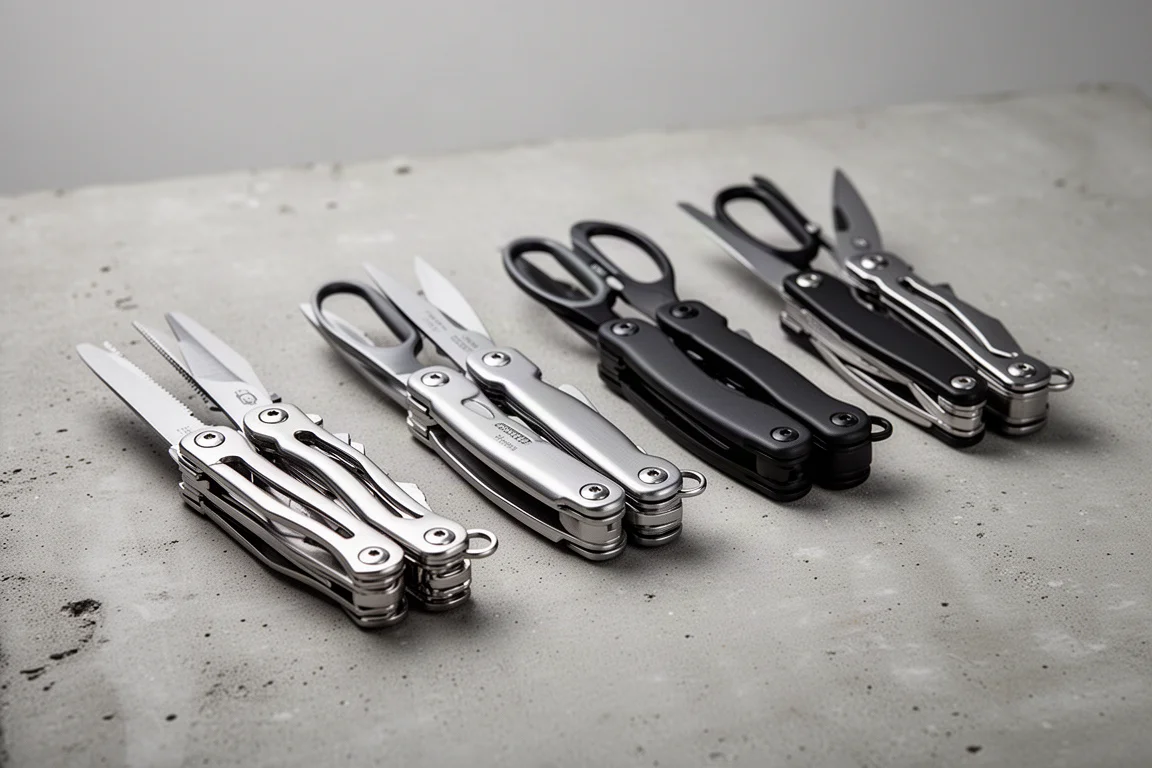
Introduction
Scissors are one of the most used tools on any multi-tool, yet they vary wildly between models. To find out which ones actually cut, seven multi-tools were run through an identical gauntlet of materials, scored point by point: one point for simply cutting a material, two points for a clean cut or a cut close to the tip, and zero if the material had to be forced through, would not cut cleanly, or deformed the scissors. Material was always held loosely with two fingers, with no tension, because the entire point of scissors is that they do not require a rigid surface to press against.
The results genuinely surprised us. A budget tool took a top score, a heavy-duty favorite underperformed, and a well-loved everyday multi-tool struggled badly.
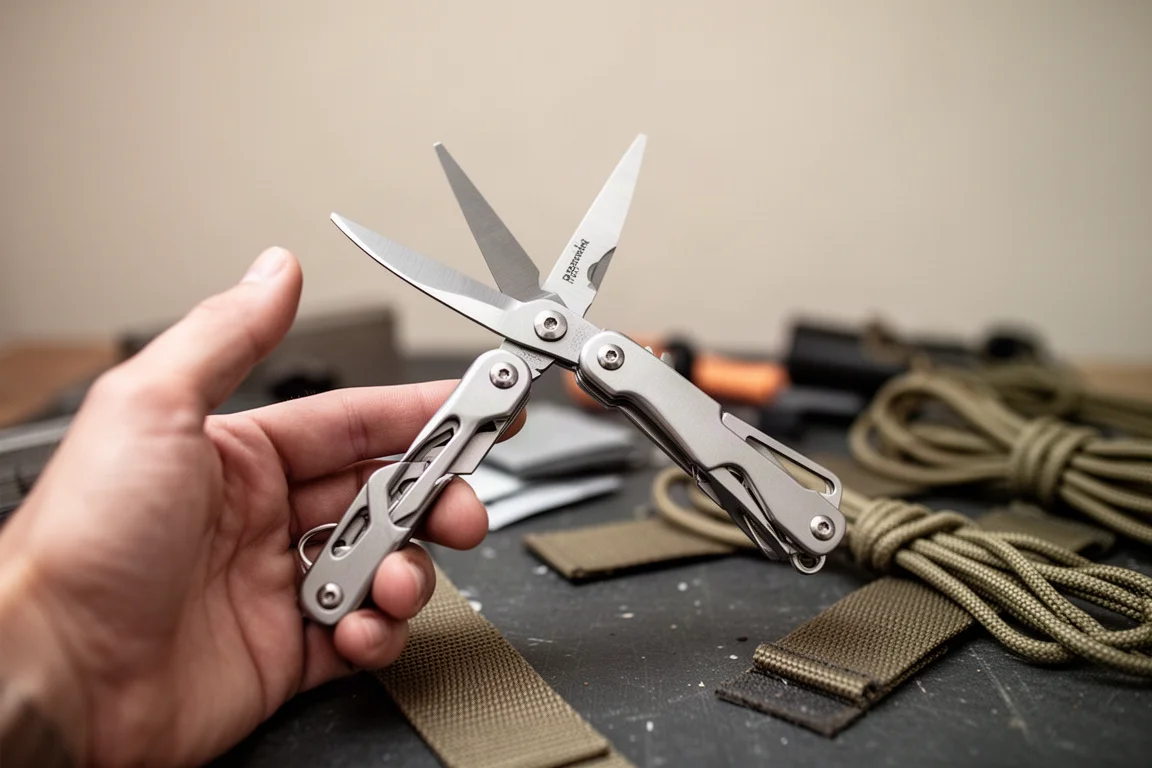
How the Testing Worked
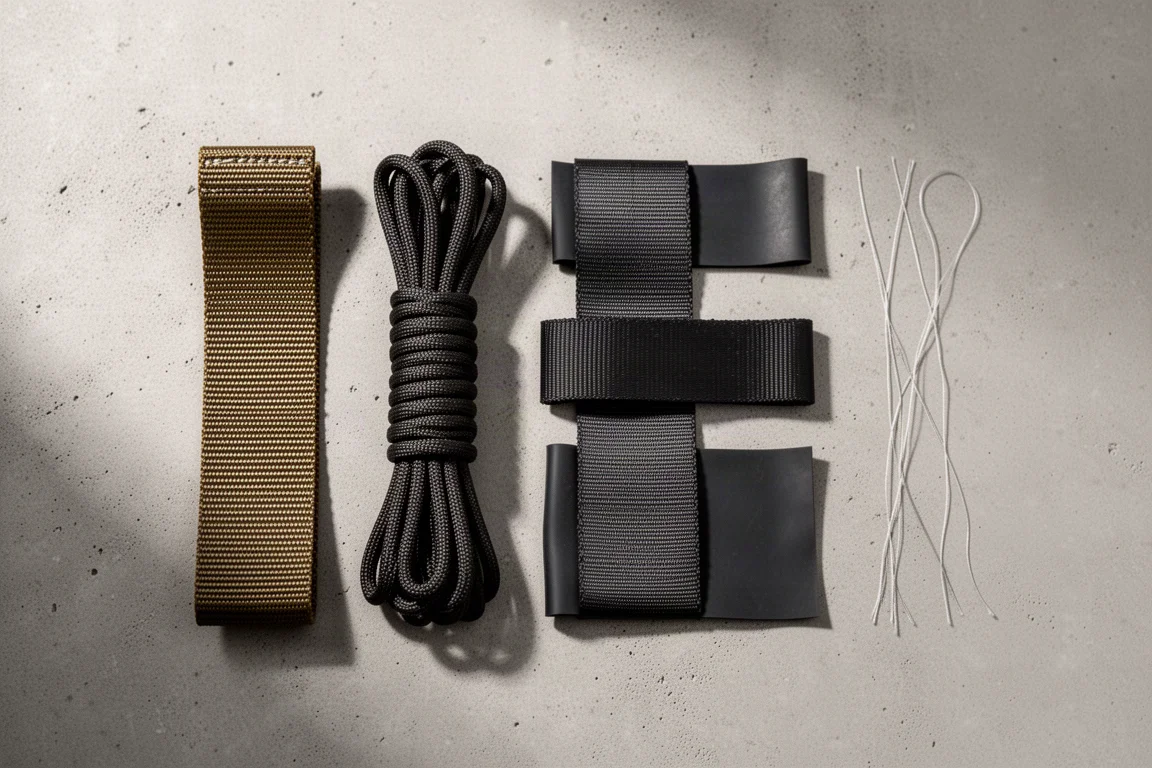
The gauntlet covered eleven everyday materials, including paracord, seat belt webbing, rubber, tie-down strap, and fine thread. Points were tallied after each material, and each tool received a total score at the end of its run. Because the same test was also applied to dedicated scissors in a separate round, there is a direct baseline for comparison. That baseline matters: a well-regarded dedicated scissor benchmark came in at 15 or higher, and a Klein electrician shear dominated the dedicated category outright.
Victorinox 85mm: Serrated and Surprisingly Consistent
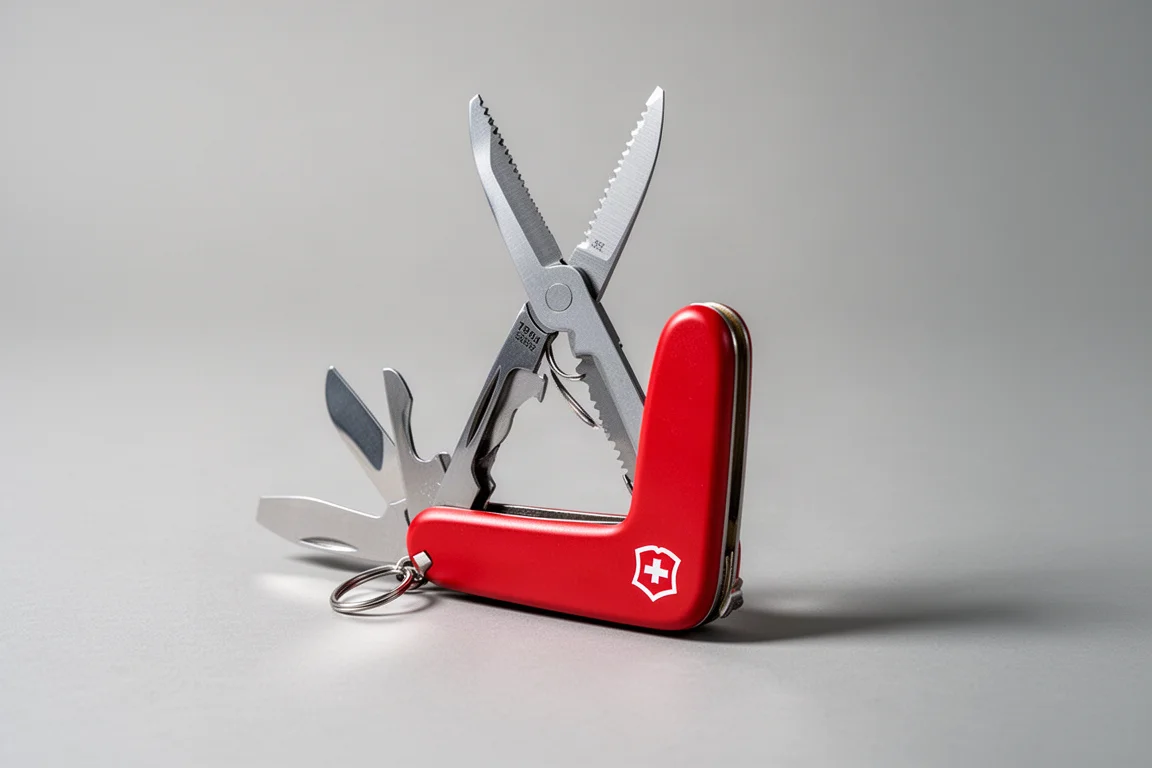
The Victorinox 85mm uses a different scissor design than the familiar 91mm platform: fully serrated blades with an integrated spring bar that works differently from the 91mm arrangement. This style of pocket knife also brings extras like a locking blade and a pressure-locked flathead driver.
It scored 11 out of a possible high-teens total, which sits comfortably as a solid result. It performed a touch worse than the 91mm scissor benchmarked previously, but the serrations cut some materials more effectively where the smoother 91mm blades struggled. The test result could reasonably sit anywhere from 10 to 12, but 11 is a fair call.
Leatherman Curl: Strong Start, Hard Falloff
The Leatherman Curl represents an entire family of scissors found on the Charge, the Wave, and older models like the Blast and Kick, so its results say a lot about that shared scissor design. The blades got off to a strong start with seven points, then fell off completely for the rest of the gauntlet.
The surprise was the precision task: this scissor could not even cut fine thread, which was expected to be its easy win. Whether that varies unit to unit is possible, but on this run it totaled 7. If you own a Wave-family Leatherman, the scissors are serviceable, just not a strength.
Leatherman Wingman: The Polished Blade Problem
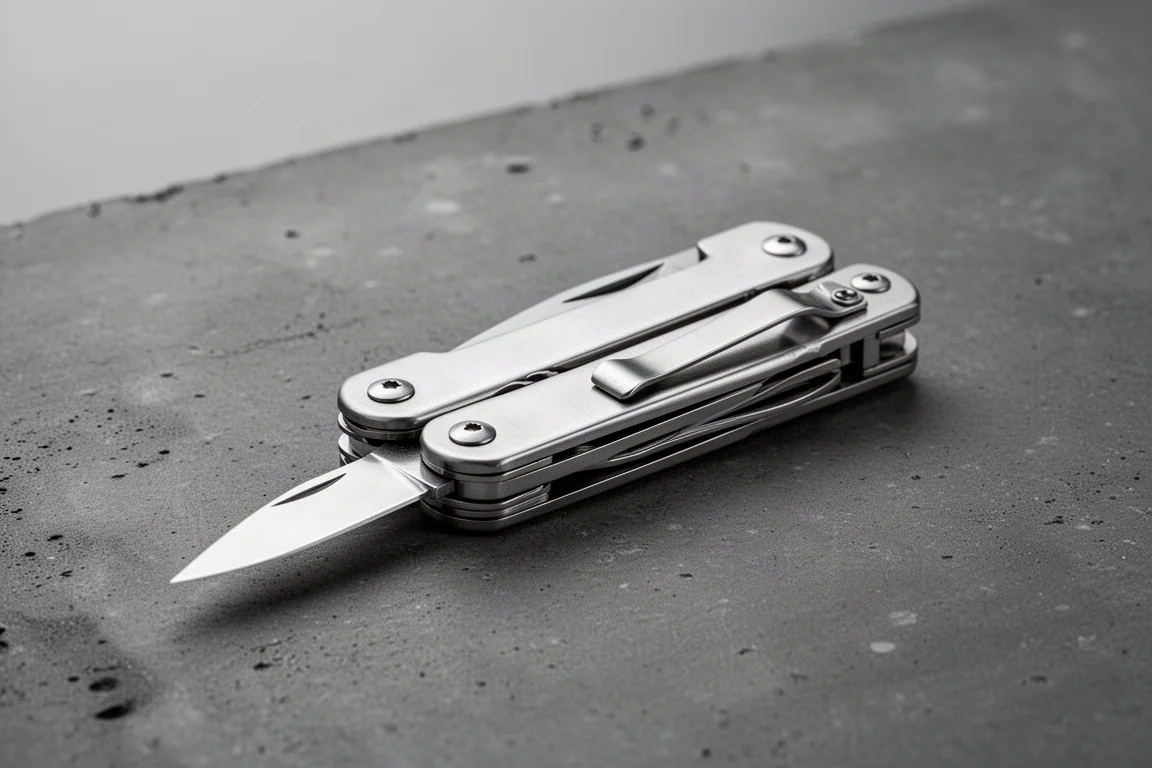
The Wingman belongs to a family of budget Leatherman tools, typically found under thirty dollars, all sharing essentially the same scissor. Going in, that geometry looked promising, and it had performed well in casual use before.
On the gauntlet it scored 4. The problem is consistent across every Wingman scissor we have used: the blades have almost no bite. Material simply slides out of the jaws unless tension is applied, as if the edges were polished smooth. Without something rigid to press material against, the odds of a clean cut are low. One future idea is worth noting: roughening the edge with a coarse grit to create micro-serrations might improve grip enough to help. For now, the scissors are the weak point of an otherwise popular tool.
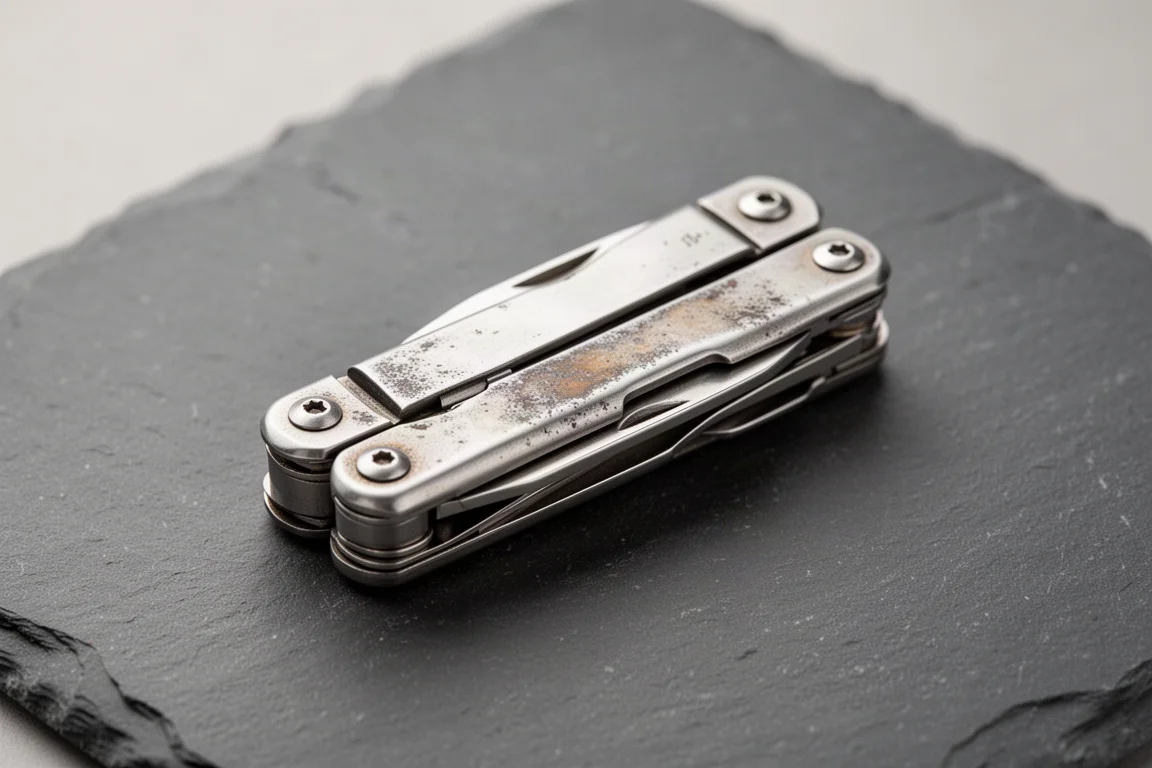
Leatherman Surge: A Heavyweight That Underdelivered
The Surge is the ultra heavy-duty Leatherman, and its scissor has a reputation for being robust. A relatively new unit went into the test with high expectations, especially on paracord, which Surge scissors have handled without trouble in the past.
Something was off with this particular sample. The tip flexed more than expected, and it could not manage paracord the way Surge scissors usually do. It also failed the precision task, though that was anticipated. The strong suspicion is a unit-specific issue, possibly an odd heat treatment or excessive blade flex, rather than a design flaw. Additional testing would be needed to confirm, but as tested, it underperformed badly for a tool with this reputation.
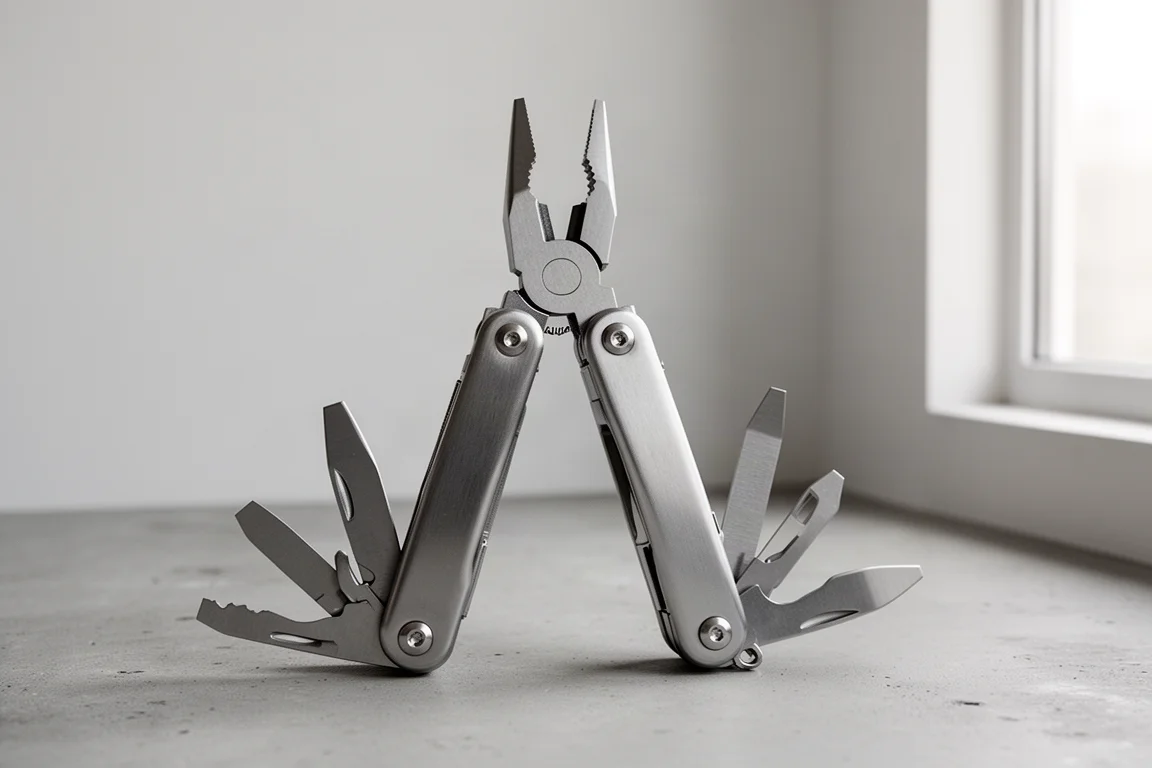
Leatherman Raptor: Great Holster, Disappointing Bite
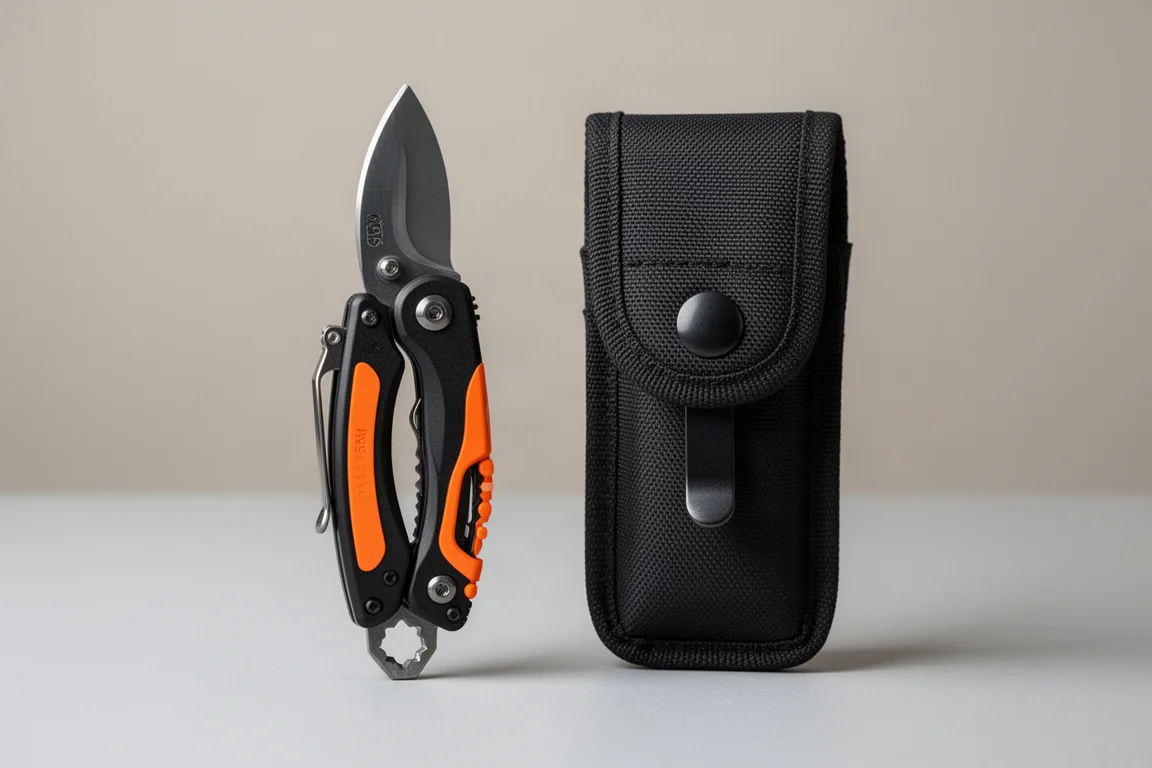
The Raptor, a dedicated trauma-shear style tool, was one of the most requested tools for this round. It is genuinely likable, and the original variant ships with an excellent holster that works both folded and locked open, and even rotates to carry the scissor horizontally.
The surprise came on the strap materials, especially the tie-down strap, which the blades kept catching between rather than cutting. The pivot also feels a little loose from the factory, though tuning it might not change much since the tip contact is already decent. As tested, it fell short of expectations on the heavier webbing materials.
RAKE 5-Layer Pocket Knife: The Sleeper Performer
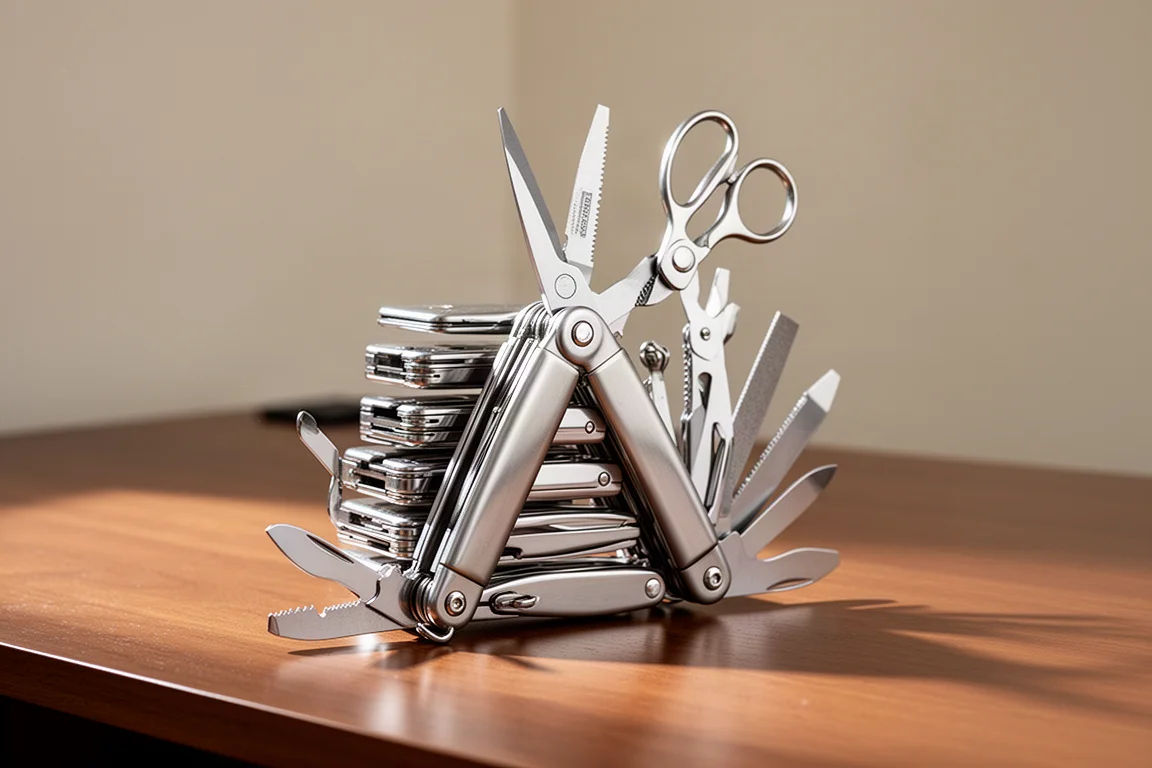
The RAKE 5-layer is a beast of a tool, much larger than expected, and the scissors are no exception. Two design details stood out: the blade stays stationary when the scissors close, unlike the moving spring bar on the Victorinox 85mm, and the main blade is 12C27 steel, which is genuinely high quality for the class.
It scored 13, a very respectable total that beat several better-known multi-tools. It cut through heavier materials with only minor catching, earning points without clean passes. The one wish is a precision tip, but at 13 this is a tool worth taking seriously on scissor performance alone.

Leatherman Free P2: Better Than Expected
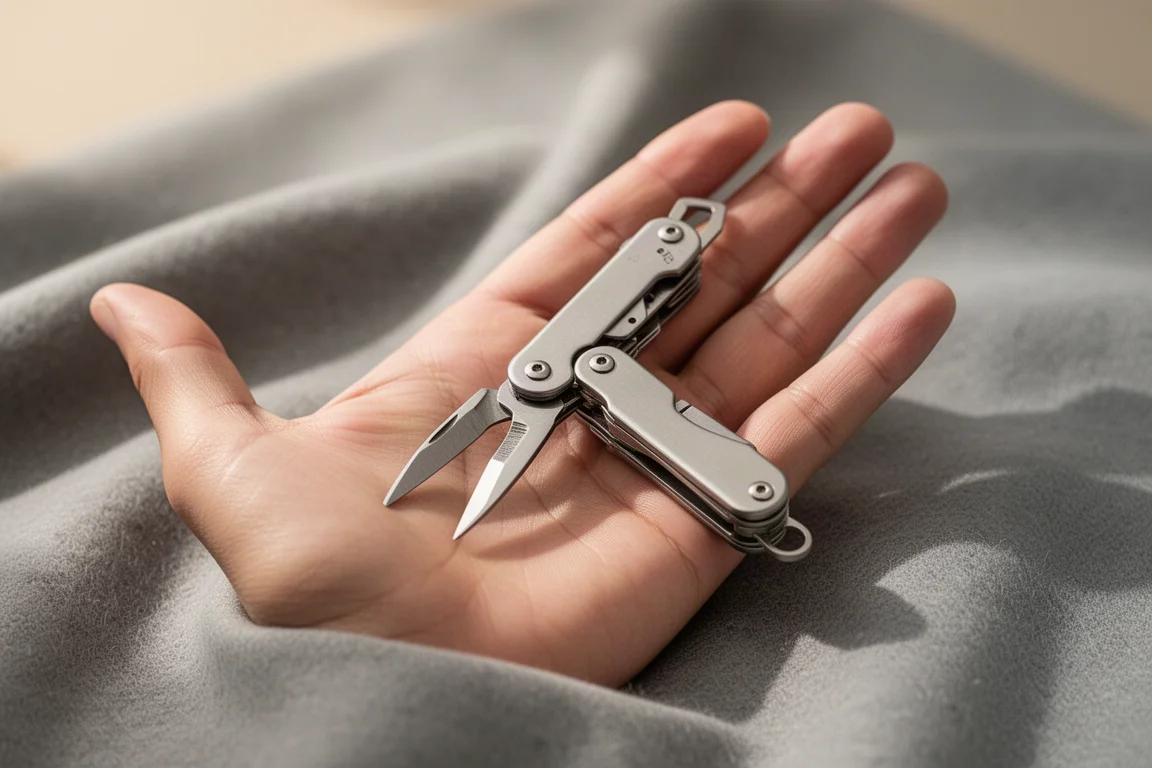
The Free P2 scissor got carried more than expected over the test period; it is a conveniently sized compact tool, and in this size class it is arguably preferable to the larger P4. This particular unit was modified with a Rebar bit holder on the Phillips driver, but the scissor itself is stock.
The result beat expectations. It scored well above the Wave-family scissor, which managed 7 in the same gauntlet. It came close on the seat belt material but could not earn the point: the geometry makes that cut uncomfortable enough that a knife would serve you better. Still, as a compact everyday-carry scissor, it performed admirably.
Buying Advice
Two clear takeaways emerged. First, price does not predict scissor performance: the budget-class tools and the mid-size RAKE outperformed several premium models. Second, geometry and edge finish matter more than brand reputation. A polished edge with no bite will frustrate you on exactly the materials you carry scissors for, like webbing and cord, because scissors are only useful when they cut without tension.
If scissors are a priority, the RAKE 5-layer is the standout multi-tool pick, the Victorinox 85mm is the dependable pocket-knife option, and the Free P2 is the best compact choice. The Wingman remains popular for other reasons, but its scissors should not be the reason you buy it.
Conclusion
The gauntlet flipped the expected hierarchy: a budget-adjacent RAKE took 13, the Victorinox scored a solid 11, and a beloved heavy-duty tool fell short of its reputation. If you want a multi-tool that actually cuts, judge the scissors on their edge finish and geometry first. The spreadsheet of full results across all scissor tests, broken down by weight and cost, is worth checking before you commit to any single tool.
Further reading
Related Reviews
Multi-Tools
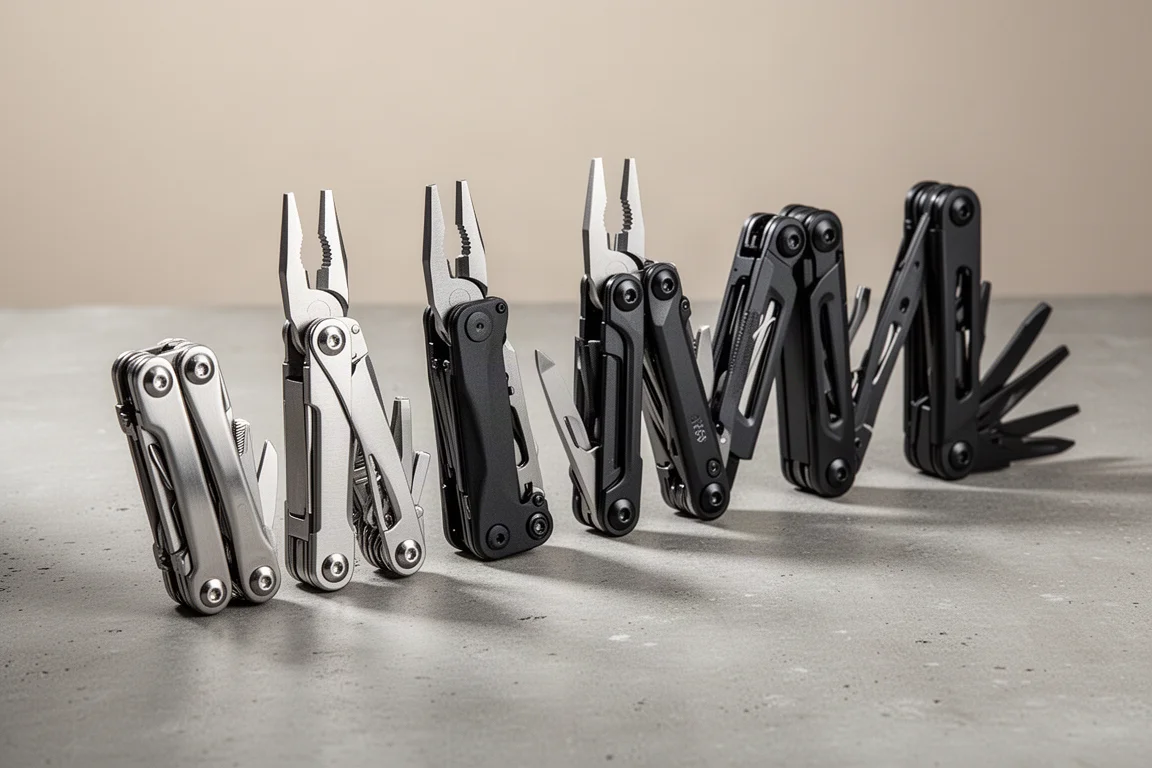
Leatherman Wave Plus Review: A Pliers-First Multitool for Bike Trips
Why a pliers-first multitool earns permanent space in a touring kit, and what to weigh before paying for the Leatherman Wave Plus.
Multi-Tools
Best Budget Multi-Tools Under $50: Four Picks Worth Considering
A compact SOG original and three value-focused clones, with honest notes on which ones deliver real value and where to draw the price line.
Multi-Tools
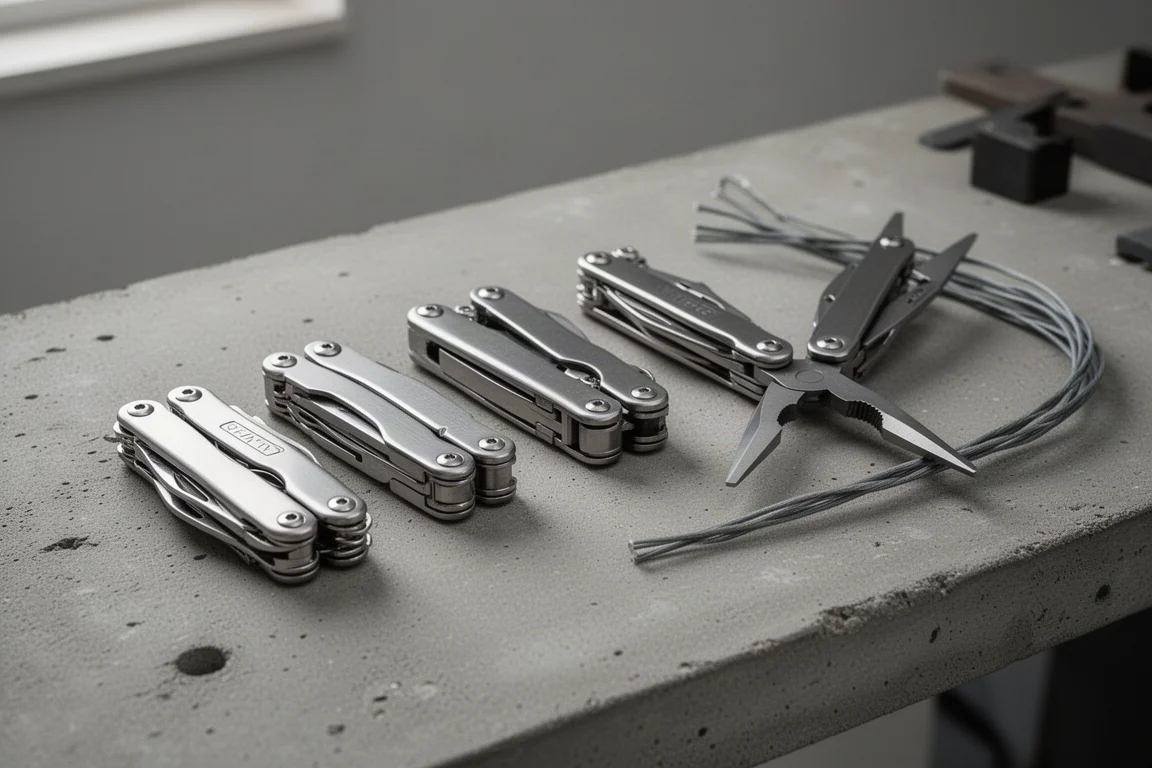
Best Multitools for Hard Wire Cutting: Which Pliers Actually Survive the Test
We put a lineup of classic and modern multitools up against a simple challenge: cutting coat hanger wire cleanly without damaging the cutters.