Ski Gear
Best Mid-80s All-Mountain Skis: A Complete Buying Guide
A practical guide to 14 all-mountain skis in the mid-80s waist range, from sub-$400 value picks to premium carving skis, with notes on the terrain each one suits best.
Introduction
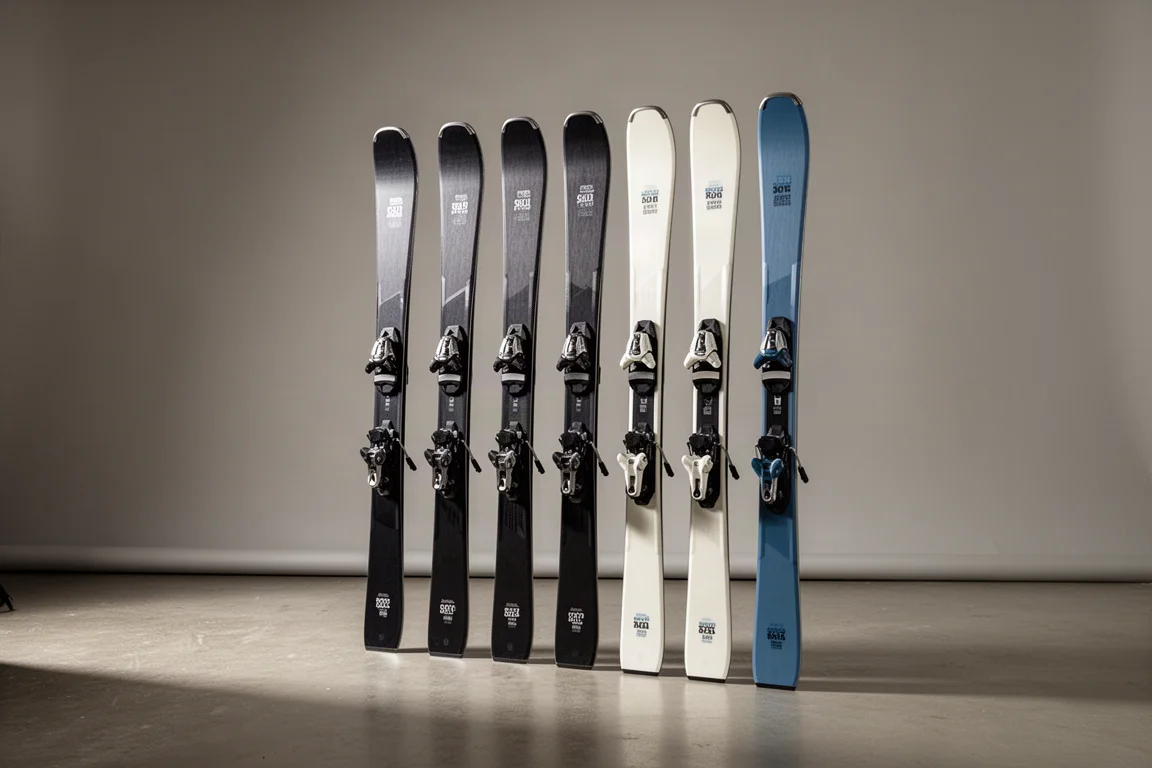
The mid-80s waist width is one of the most useful places to shop for an all-mountain ski, and it is also one of the least discussed. This range sits between the narrow, race-influenced frontside skis and the wider freeride shapes that dominate marketing, so a lot of genuinely capable skis end up overlooked.
The spread within the category is wide. Prices run from around $400 for a ski alone to well over $1,300, and construction changes just as much as the number on the price tag. Some skis here arrive with bindings included, others are sold flat, which makes a straight price comparison misleading.
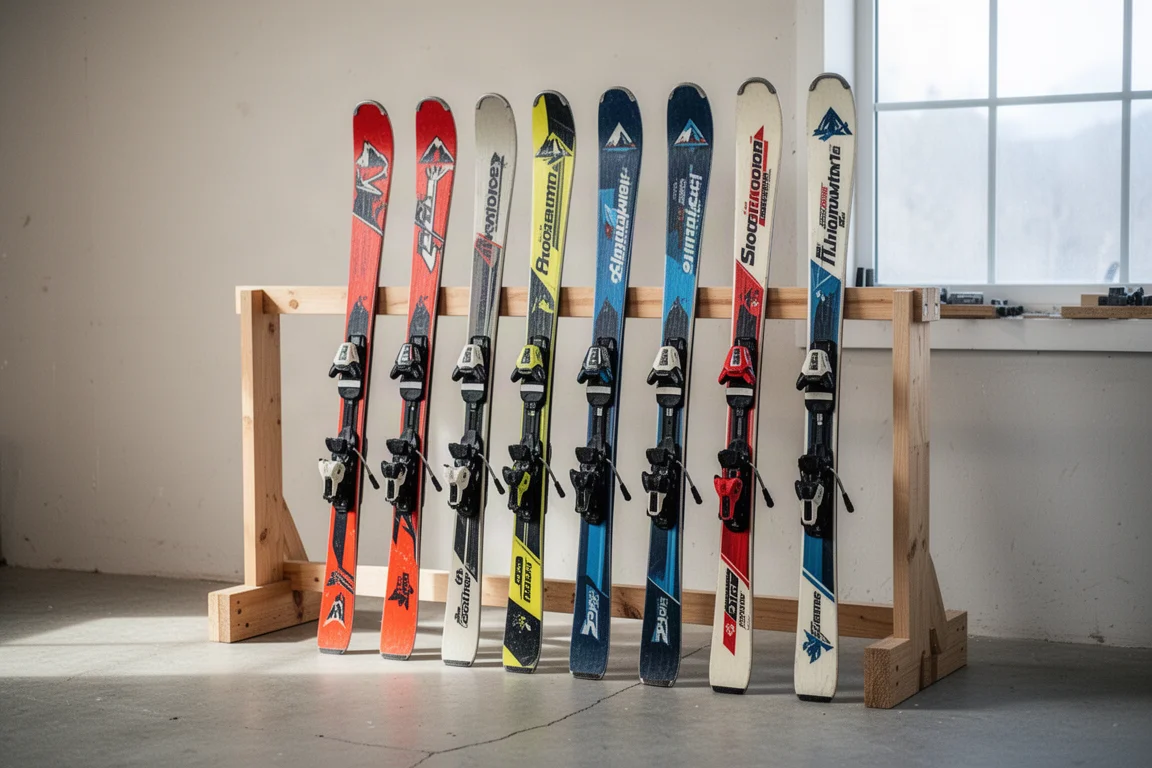
Shapes vary as much as prices. At one end there are skis with heavy tip and tail rocker that pivot and smear easily. At the other end there are mostly cambered skis with two sheets of metal that hold an edge the way a race ski does. Most of what sits between is a deliberate blend of the two.
For a skier who is honest about the terrain they actually ski, something in this width is likely to fit better than either a narrower frontside ski or a wider freeride ski. This guide covers 14 options, ordered from least to most expensive.
How This Comparison Is Organized
Skis are ordered by net cost. Where a ski is sold with a system binding, the value of an equivalent standalone binding is subtracted from the package price, which keeps skis with and without bindings on the same footing. That is why a package that looks more expensive on the shelf can sit lower in this list than expected.
Weight is mentioned where it is notable, either because a ski is unusually light or unusually heavy. Weight comparisons are kept loose, since integrated bindings make direct numbers hard to compare fairly.
The skis here run from 84 mm to 88 mm underfoot, and several of them change footprint slightly depending on length. Terrain preferences are noted for each ski, because in this width the intended use matters more than the spec sheet.
Atomic Bent 85: The Most Affordable Way In
The Bent 85 is the narrowest ski in Atomic’s expanded Bent collection and the cheapest entry on this list. At $399 for the ski alone, it is an unusually low price for a ski with modern shaping. Pair it with an inexpensive binding and the total lands somewhere around $450 to $550.
The build is deliberately simple. Atomic combines a wood core with a Densolite material for a more synthetic construction, which puts the 170 cm length at almost 1,800 g. That is actually heavier than the Bent 90 at the same length. There is no Horizon Tech here, so the bases, tips, and tails are flat, and the construction is essentially full cap with only a small amount of vertical sidewall underfoot.
Tip and tail rocker is still present, which keeps the ski loose and easy to steer. Compared with the Bent 90 or the Head Oblivion 84, it gives up some precision in exchange for a more relaxed feel. It also makes a solid park ski, because cap construction takes abuse well and the shape stays playful.
View more details for Atomic Bent 85
K2 Mindbender 85: Simple, Consistent, Effective
The Mindbender 85 matches the Bent 85 almost exactly on price at $399.95, but it takes a different route. The ski has been unchanged since it was introduced, and its strength is how straightforward it is.
An Aspen wood core sits inside a mid-cap construction, with trapezoidal slant sidewalls underfoot that give the skier more leverage over the edges. The 170 cm length weighs around 1,700 g, a sensible middle ground. K2 puts a lot of energy into the camber profile, and that is how the ski feels more energetic than its price suggests.
All-mountain rocker is present, with less of it in the tail, and the ski keeps a consistent feel from tip to tail. It is not a beginner ski, but it is friendly enough for an athletic newer skier, someone returning to the sport, or anyone stepping up from rentals.
Head Oblivion 84: A Traditional Park Twin With Real Edge Grip
The Oblivion 84 is the narrower of the two skis in Head’s Oblivion line. At $449 it is a clear step up in materials and build quality from the two budget options above.
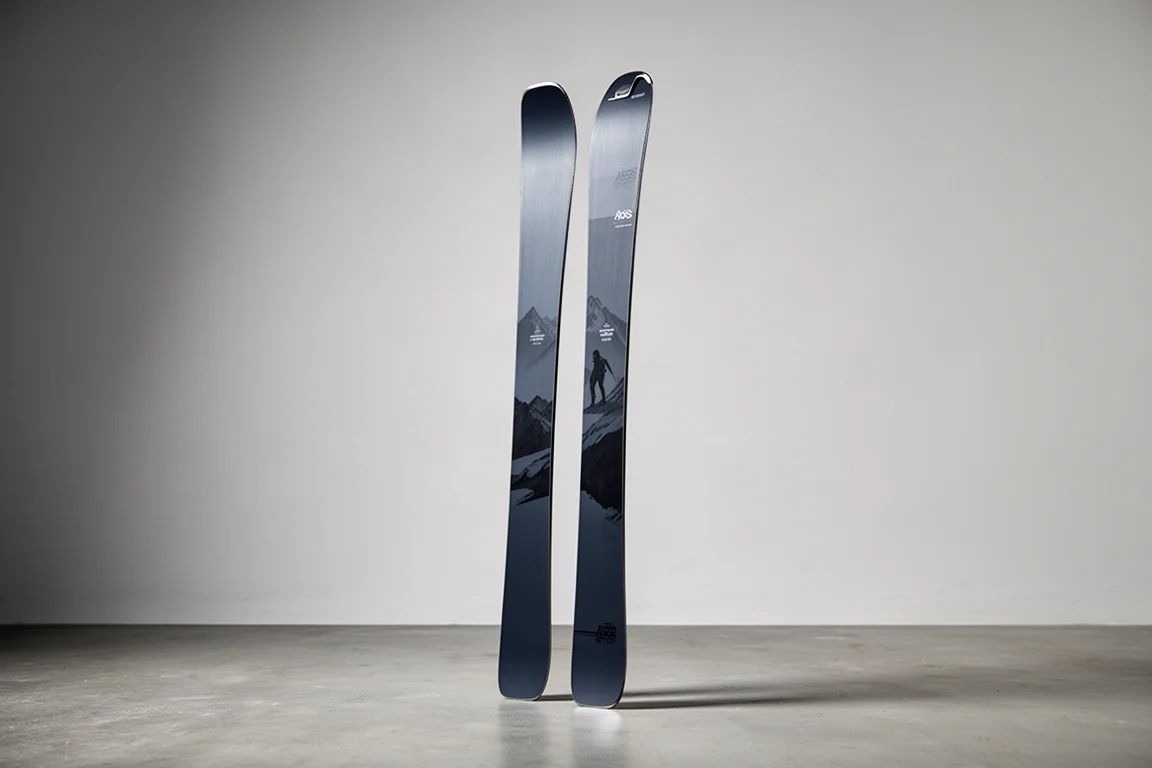
A wood core and the 170 cm length put it just over 1,800 g, so it is not a heavy ski. The shape is what stands out: there is a lot of camber and essentially no early taper, with a true vertical sidewall running the full length of the ski. The result is more precision, more feedback, more edge grip, and more torsional stiffness than the Bent 85.
That makes it a traditional park ski rather than a modern one. It is springy and easy to load up, but it has a long effective edge and true tip-to-tail contact, so it carves well. It is less versatile off piste than the Bent 85 shape, because it lacks the rocker and early taper that make a ski loose in bumps and trees. An on-trail carver could still use it as an all-mountain ski.
Atomic Maverick 86 C: Light, Snappy, and Touring Friendly
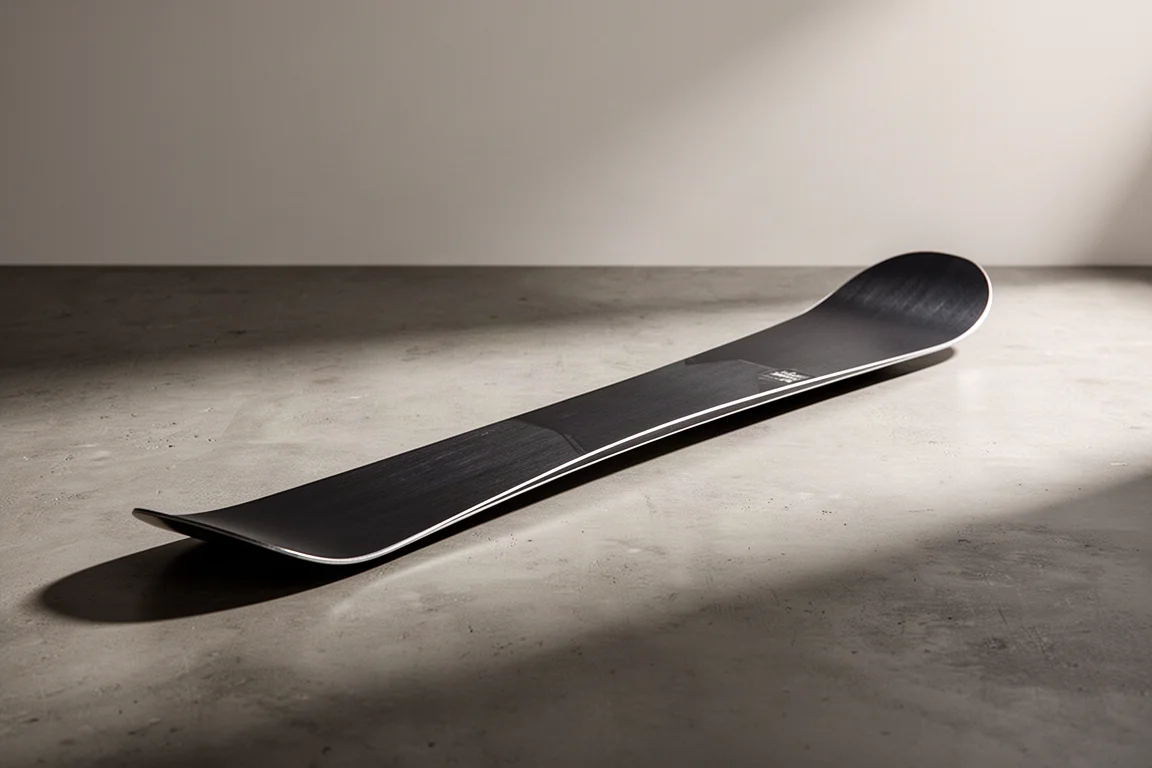
The Maverick 86 C is a directional ski, closer in intent to the Mindbender 85, and it comes with a naming quirk. It shares an exact footprint with the Maverick 88 Ti, and in the 176 it measures 88 mm underfoot, with the footprint shifting slightly by length. Construction follows the 88 Ti as well, using a Poplar wood core, but the two sheets of metal are replaced by a carbon backbone, which drops the weight to roughly 1,600 g.
That weight makes the ski interesting well beyond groomed terrain. It is light enough that a 50-50 setup becomes realistic, and it floats reasonably well for its width. Horizon Tech appears in the tips, and a Dura Cap half sidewall means the sidewall transitions to cap exactly where the rocker begins. The carbon makes the tips a little stiff, but the ski is snappy and energetic, and it works well at slower speeds and shallower edge angles.

Compared with the Maverick 88 Ti, the 86 C is the more forgiving and more agile of the two, while the heavier metal version rewards a steeper, more aggressive approach. At $499.95 it stays under $500, which is unusual for a ski this light.
Salomon Stance 84: All-Mountain Manners at a Friendly Price
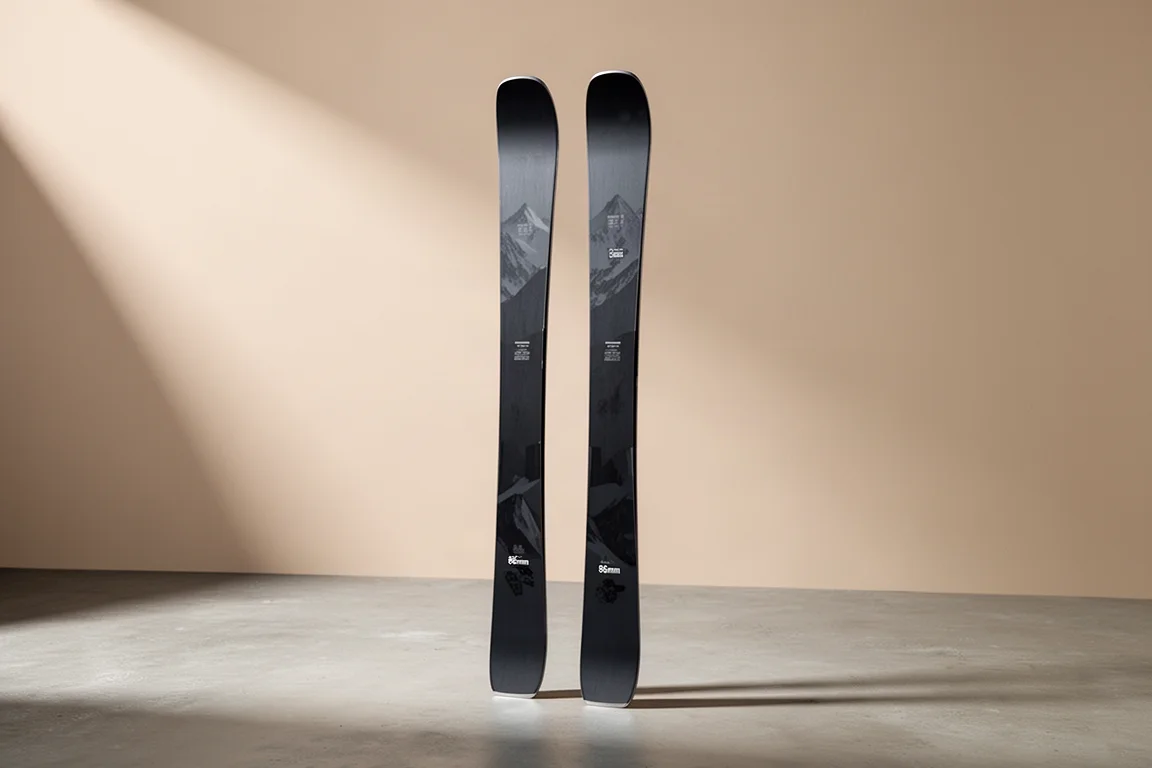
The Stance 84 shares the $499.95 price of the Maverick 86 C, and like that ski it is a narrower take on a wider, metal-laminated family. Salomon uses a Poplar wood core with one sheet of titanal, placed in cutout windows, and fills those windows with carbon rather than the CFX material used higher in the line. That substitution is a large part of how the price stays where it does.
Weight lands just under 1,500 g in the 169, which is impressive for a ski with metal in it. The shape is directional, but it carries a good amount of tip rocker, early taper in the tip, and considerable tail rocker, with a flatter tail that gives you something to push against. It is one of the better bump skis in this group and very easy to move around in trees.
The trade-off shows up at the top of the speed range. Where the Stance 90 and Stance 96 feel quiet and damp, the 84 gets bounced and deflected more easily. If that represents only a small fraction of your skiing, the lighter and quicker feel is likely the better trade.
Völkl Blaze 86: Built Around Maneuverability
The Blaze 86 is the lightest ski in this comparison at roughly 1,450 g, and it borrows heavily from the Blaze 94. The core is a lightweight multi-layer wood build that keeps things simple, and the $549 price reflects the engineering that went into the shape more than expensive materials.
That shape is unusual. There is an enormous amount of tip rocker, enough that it works almost like front rocker across the first half of the ski, plus a substantial amount of tail rocker. Splay is low, so edge contact stays consistent at high edge angles on firm snow. The 3D turn radius runs 28 m in the tip, 15 m underfoot, and 23 m in the tail.
The result is a ski that is extremely agile. The tail releases easily, and it pivots and wiggles with very little effort, which makes it a strong choice for tight trees and for mogul skiers who work deliberately from side to side. Carving is where it gives up ground: the long tip radius does not pull you into a turn, and the ski has clear limitations on groomed terrain.
Nordica Navigator 85: A Friendly Route Into Clean Carving
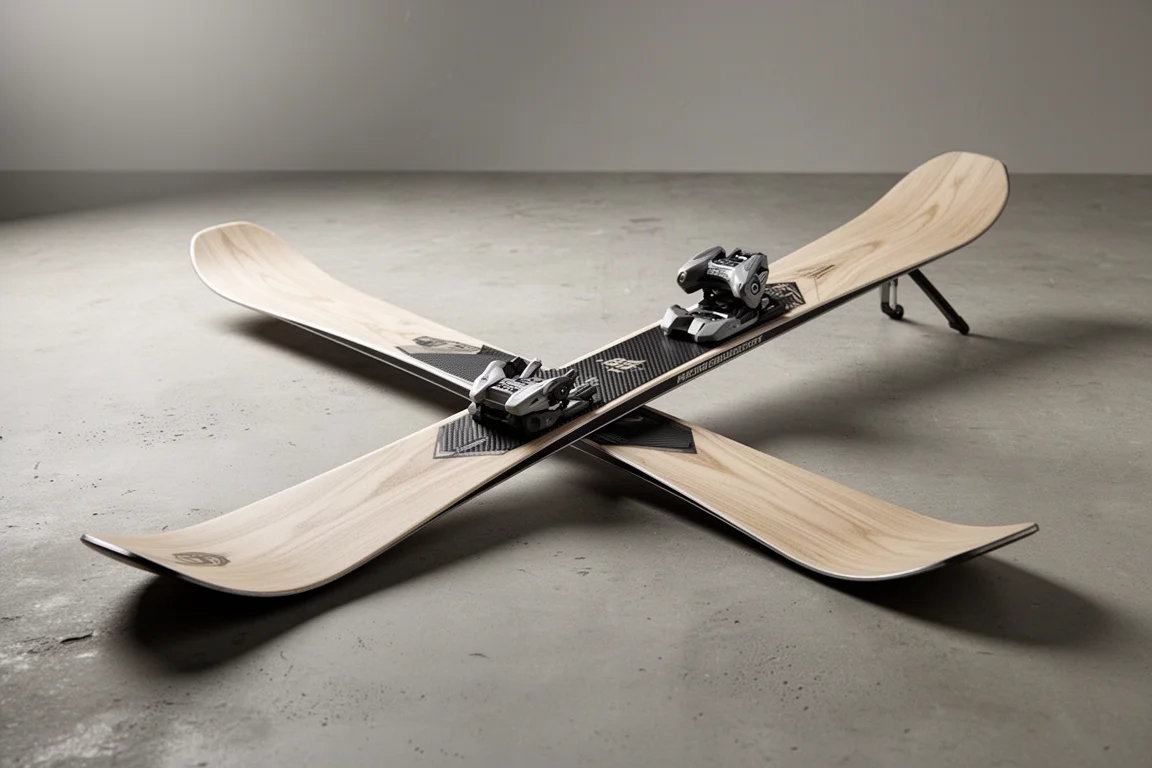
The Navigator 85 is the first ski here that arrives as a package, priced at $650 with a TP 11 binding. On a net basis the ski alone works out to roughly $534. Nordica has kept the shape and replaced the metal with carbon, and the shape is what people liked in the first place: an Enforcer-inspired shovel paired with a Doberman tail.
That combination gives you flotation and ease of use up front, then a strong kick out of the tail. There is camber underfoot and only a modest amount of tail rocker, so the ski behaves predictably and finishes turns cleanly. It is a sharp turner that makes clean, round shapes, and it is a genuinely good choice for a skier who is learning to carve or trying to take carving to the next level.
The TP 11 binding is more than adequate for most skiers, which makes the package easy to recommend to anyone who does not want to think about binding choice.
Dynastar M85: A Strong, Accessible Carver
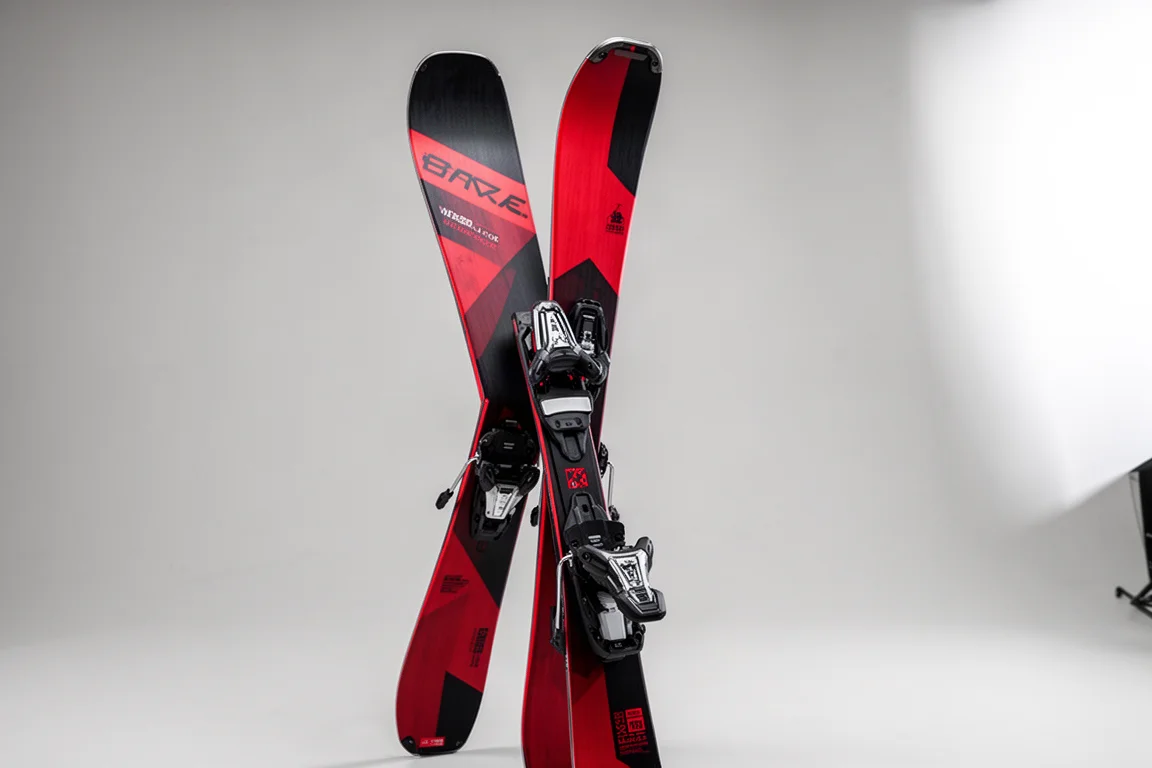
The M85 takes the concept behind Dynastar’s wider M-series skis, drops the waist to 85 mm, and swaps the titanal rocket frame for fiberglass while keeping the rocket frame idea. At $599.95 it is a meaningful step up from the Legend 84.
Versatility comes from the tip. There is a lot of tip rocker with a progressive rise and a good amount of early taper, and the effect is that you stay in control of where the ski goes. It never hooks up and drags you into a turn you did not ask for. The tail is a different story: it is flatter, and the extra fiberglass material back there gives the ski a strong finish to a turn.
The 176 cm length carries a 16 m turn radius, though it can feel shorter because the side cut is so easy to access. The flatter, stiffer tail means the ski asks for some unweighting and an engaged style, so it suits an advanced intermediate rather than a casual cruiser. Paired with a binding like a Pivot, it makes a very complete setup.
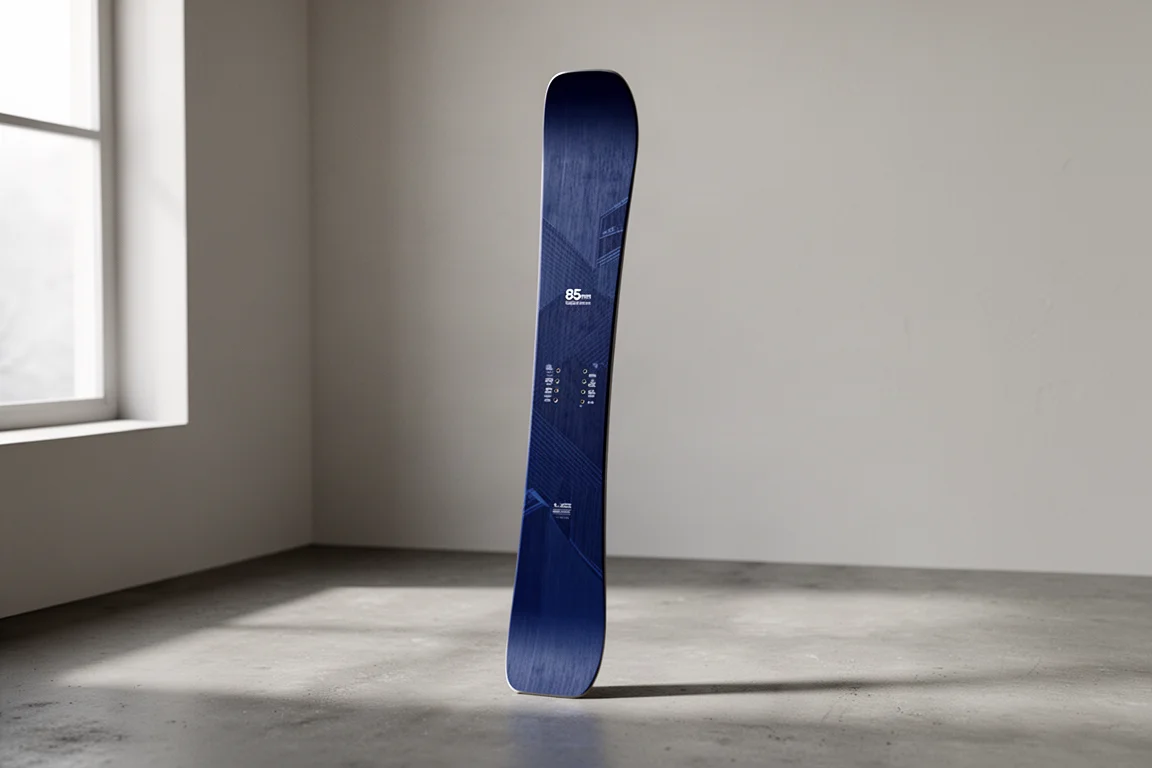
Völkl Kanjo 84: The Middle-of-the-Road Choice
The Kanjo 84 fills a useful spot in Völkl’s range, sitting between the loose, maneuverable Blaze and the carving-focused Deacon. At $649 it sits in the middle of this list in more ways than one.
The build mixes a multi-layer wood core, a titanal binding platform underfoot, and a glass frame in place of the titanal rocket frame used on the Kendo. That keeps the weight under 1,600 g while leaving the ski fairly stiff. It is quick enough for short turns on the side of the trail and can open up into bigger sweeping carves.
Because it is so easy to load with energy, it can occasionally kick back if you push it hard, and heavier or very aggressive skiers may find there is not quite enough mass. On moderate pitches and at moderate speeds it is simply rewarding. It is the kind of ski that sits in the middle no matter how you sort the category, by price or by how loose or precise it feels, which makes it a safe pick for a skier who wants one all-mountain ski without strong preferences.
View more details for Volkl Kanjo 84
Elan Wingman 86 CTI: Fast, Frontside, and Intuitive
The Wingman 86 CTI is the flagship and widest model in Elan’s Wingman line, priced at $699.95. It uses a Carbon Tube-Light wood core with carbon rods running along the sides of the ski, plus metal, and adds Elan’s Amphibio construction, which makes the ski left and right specific.
Amphibio places more material and mass over the inside edge, the downhill side, which improves grip and stability. Combined with a low-profile asymmetrical rocker in the tip, the ski gets on edge very easily. At 172 cm it weighs just under 1,700 g, which is light for a ski with metal in it, and it is one of the fastest skis in this group.
The turn radius is 15.6 m, so it comes across the fall line without much input, and the carbon gives it a lot of snap. Versatility is limited: it is happiest on firm, groomed snow and is not much fun in the woods or the bumps. What it does, it does with confidence, and it is the sort of ski that makes a first run feel effortless.
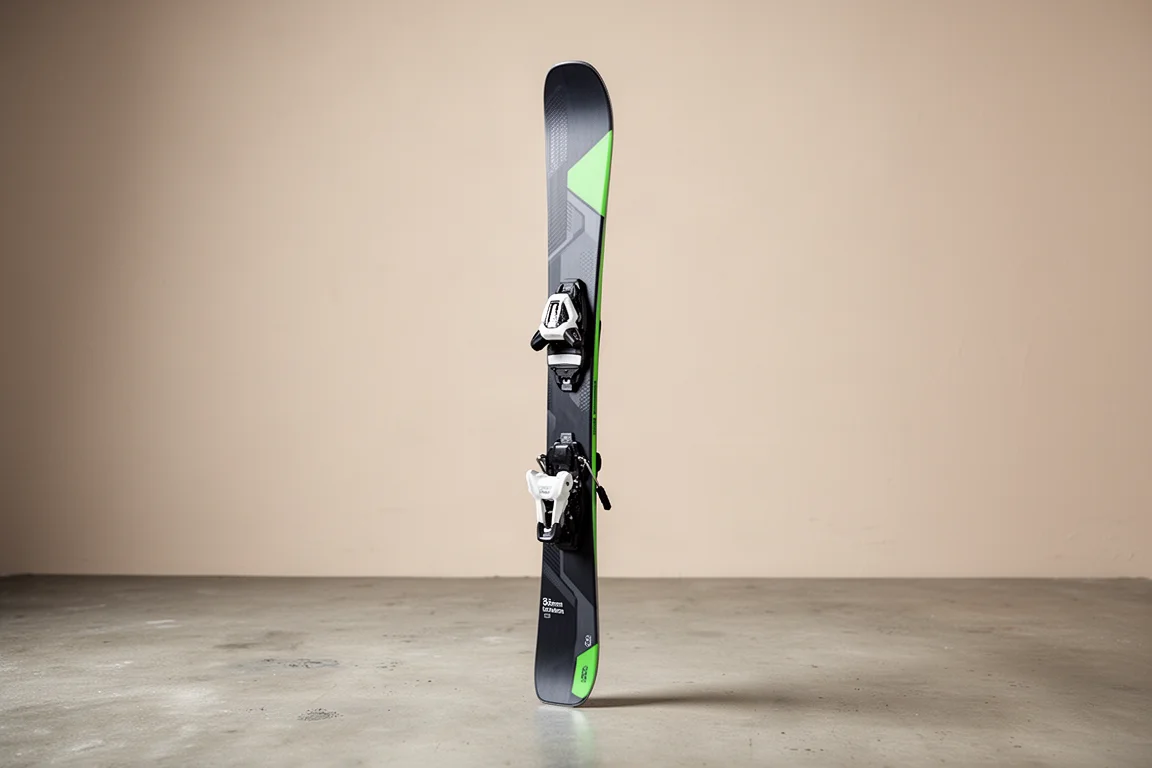
Fischer RC One 86 GT: Race-Rooted Strength
The RC One 86 GT shares the $699.95 price of the Wingman but could hardly feel more different. It is built like a race ski, with a dense wood core and two thick sheets of metal of the same thickness you would find in a race ski. Every run on it is a reminder of how strong it is.
Fischer does build some versatility into the shape. There is more tip rocker than you would find on most carving-focused skis, a straighter cut through the tip, and a little tail rocker with taper. That lets you release the tail edge and make a slashy, smeared turn more easily than on a ski like the Head Super Shape Titan.
The 175 cm length carries a 17 m turn radius, so it does not come across the fall line as readily as something like the Wingman. It asks for more input and is less intuitive, but in return it is very stable at speed with excellent vibration damping. It suits a very aggressive, high-speed skier, perhaps someone with a race background who wants to drive a ski hard but still explore the rest of the mountain.
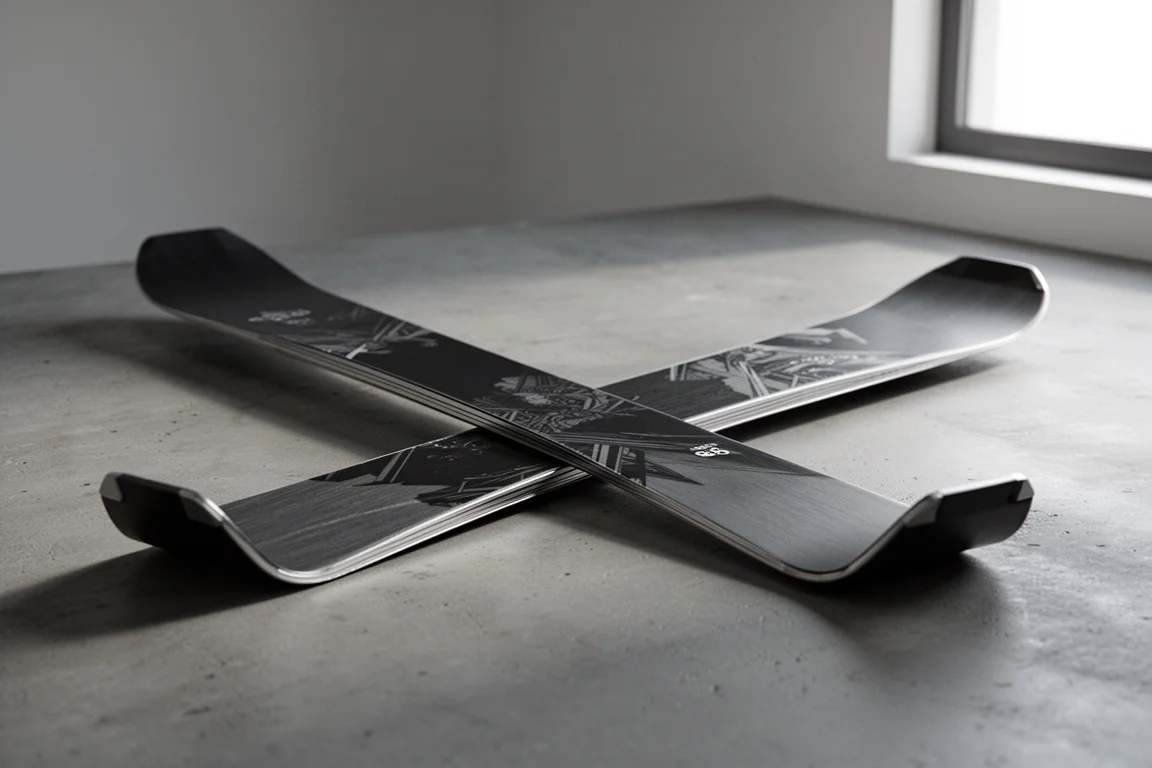
Head Super Shape Titan: Premium Carving Confidence
The Super Shape Titan sits at $899 for the ski alone, or roughly $1,150 with a binding. Like the Fischer, it uses two sheets of metal and a dense wood core, and it adds Head’s Energy Management Circuit, which is intended to filter out unwanted vibration.
The shape is almost entirely camber, with a square, flat finish and a lot of metal. At 84 mm underfoot it is not especially quick edge to edge, but that width means you can reach very high edge angles without worrying about booting out. On edge, the ski does not bounce or waver at all. It tracks from tip to tail.
It is at its best where the snow is soft, variable, or chopped up, which is where a wide carving ski earns its place. The price is a real commitment, and it delivers a premium level of performance in return.
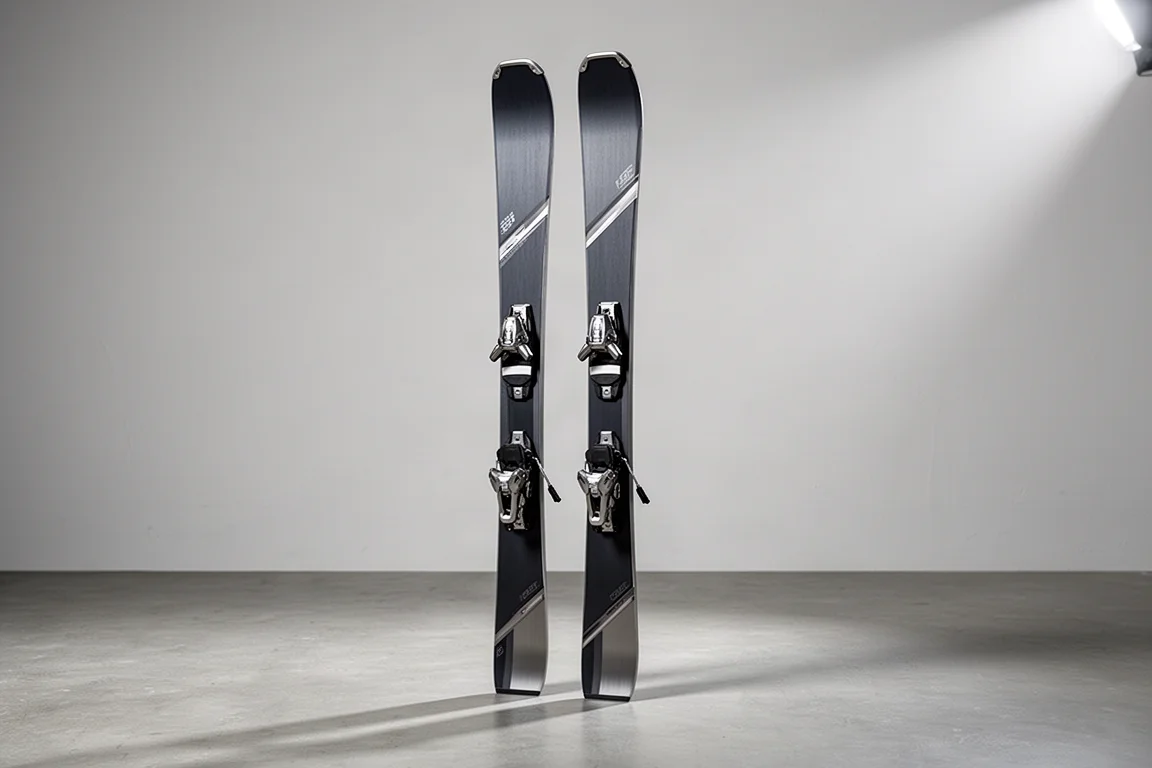
Black Crows Mirus Cor: The Outlier of the Group
The Mirus Cor is the odd one out here, and deliberately so. At $999.95 it reflects Black Crows pricing rather than any particular spec advantage, and it is the longest ski in this comparison at 184 cm, weighing around 1,920 g.
The build uses a Poplar wood core, fiberglass laminates, and a metal beam underfoot for a stronger finish and more torsional stiffness. What makes it distinctive is the side cut: an extremely round profile produces a 13 m turn radius in the 184, which is remarkable for a ski with an 87 mm waist. The tip and tail profile is fairly symmetrical, and a fishtail adds smoothness and playfulness out back.
It is designed as a combination of freeride, park, carving, and all-mountain ski, and it does not slot neatly into any of those categories. The most sensible recommendation is for a skier who already owns several pairs and wants something genuinely different, because nothing else in a quiver behaves quite like it.
Stöckli Montero AR: The Smoothest Ski Here
The Montero AR is the most expensive ski in this comparison at $1,350, and it is an update of the Laser AR rather than a clean-sheet design. The changes are a denser wood core, new fiberglass that adds stiffness, two sheets of metal, an extra millimeter underfoot, and revised lengths and turn shapes.
On snow it feels more quiet and compliant than its numbers suggest. There is a lot of camber, which gives it energy, and a strong, squared-off tail that is very reactive. The front of the ski is the more accessible part, so it rewards a centered stance. At 180 cm it skis without any sense of being too short.
Hand flexing it feels similar to a Kästle MX83, but on snow it comes across as slightly softer and more friendly. It is about as precise and high quality as a ski gets while remaining welcoming, and for a skier with the budget it is the standout of this group.
Buying Advice: Matching a Ski to Your Terrain
The useful question is not which ski is best in the abstract, but which ski matches the terrain you actually ski most of the time. In this width, that usually comes down to how much of your day is spent on groomed snow.
If you carve most of the time, the frontside-leaning options make the most sense. The Head Super Shape Titan, Fischer RC One 86 GT, and Elan Wingman 86 CTI all reward a strong edge angle, and the Head and Fischer in particular have the metal and the stability to hold up at speed. The Wingman is the most intuitive of the three and the least demanding.
If you split your time between groomers and softer snow, the middle of this list is where you want to be. The Salomon Stance 84, Dynastar M85, and Völkl Kanjo 84 all carve well while remaining maneuverable in bumps and trees. The Stance 84 is the lightest and most playful of the three, the M85 has the strongest tail, and the Kanjo 84 sits closest to the middle of everything.
If you spend most of your time off piste, in trees, or in moguls, the lighter and looser skis are more rewarding. The Völkl Blaze 86 pivots more easily than anything else here, the Atomic Maverick 86 C is the lightest directional option and opens the door to a 50-50 setup, and the Atomic Bent 85 is the cheapest way to get a loose, forgiving shape.
On price, the value is concentrated at the bottom of this list. The Bent 85 and the Mindbender 85 both come in around $400 for the ski alone, and the Head Oblivion 84, Atomic Maverick 86 C, and Salomon Stance 84 all stay under $500. At the top end, the Stöckli Montero AR and Black Crows Mirus Cor cost several times as much, and whether that is worth it depends entirely on your budget and how much you value the extra refinement.
Conclusion
The mid-80s waist width does not get the attention of wider freeride skis or narrower race-influenced frontside skis, but it covers more real-world skiing than either. This roundup spans 84 mm to 88 mm underfoot, a price range of roughly $1,000, and a genuine mix of shapes and construction methods.
The budget end of this list is unusually strong. A skier who wants a versatile, capable all-mountain ski for well under $600 has several good options, and several of them offer enough performance to support years of progression. At the other end, the premium skis are more precise, more damp, and more refined, and they cost accordingly.
If you are unsure where to start, decide how much of your skiing happens on groomed snow, then work outward from there. Something in this width is likely to match what you actually do.
Further reading
Related Reviews

Ski Gear
2023 Blizzard Hustle vs Rustler: Six Freeride Skis Compared
Blizzard's 2023 Hustle collection rebuilds the Rustler shape with a lighter core and no metal. Here is how all six skis differ, and which one suits your riding.

Ski Gear
2023 Skis of the Year: Atomic Maverick 88 TI, Salomon QST 106, and Look SPX 12 Pro
Three standout ski picks for all-mountain carving, powder days, and reliable binding performance, with practical buying notes for 2023 models.

Ski Gear
2025 Nordica Enforcer 104 Review: A Directional Charger Replaces the 104 Free
The 2025 Nordica Enforcer 104 drops the Free name and the twin-tip personality, gaining weight, stiffness and composure in rough snow. Here is what changed and who it suits.