Running Shoes
Best Max Cushion Running Shoes 2026: Six Big-Stack Options Compared
Six max stack shoes from New Balance, Puma, Asics, Brooks and Hoka, broken down by feel, use case and value to help you pick the right one.
Introduction
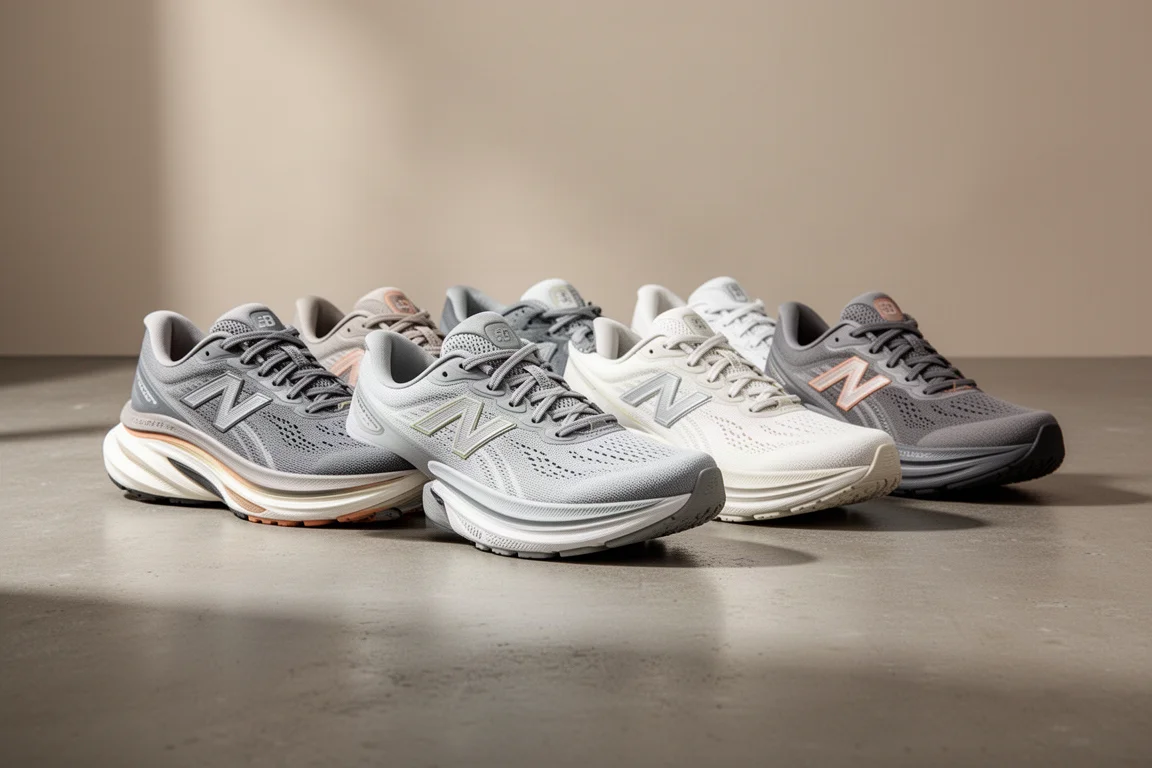
Max cushion shoes have quietly become one of the most popular segments in running, and it is easy to see why. The promise is simple: a huge slab of foam between you and the road, protecting your legs from impact while you rack up the easy miles. What used to be a niche category now has serious options from nearly every major brand, each with a noticeably different ride character.
This guide breaks down six max stack shoes, ordered from cheapest to most expensive, covering what makes each one distinct, where it excels, and the trade-offs to weigh before buying.
Evaluation Criteria
Every shoe here was assessed for real-world running feel, comfort, stability, versatility across paces, and value. These are all big, lofty shoes, so weight and bulk matter too: in this category, the difference between a shoe that hides its size and one that does not can completely change how often you reach for it.
All of these shoes suit easy and recovery running to some degree, but they diverge sharply on grip, responsiveness, fit and price, which is exactly where the comparison below becomes useful.
New Balance More v5
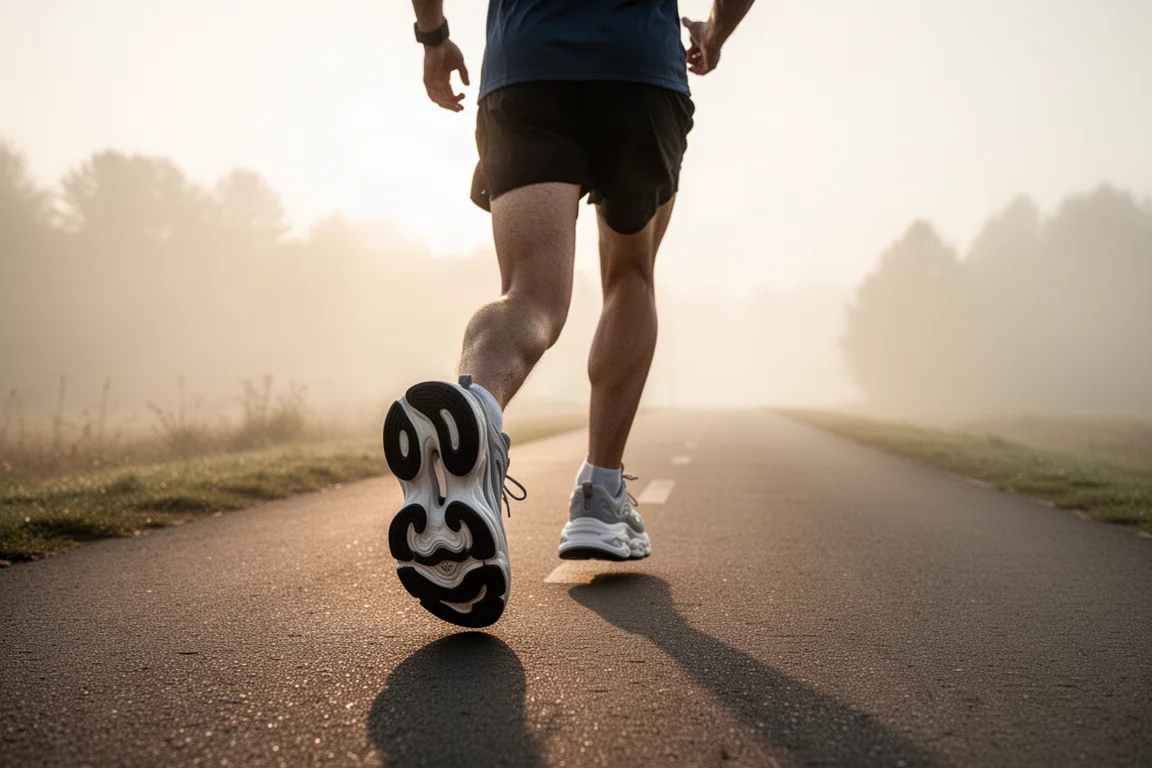
The New Balance More v5 is the cheapest shoe here by a long way at £140, and it leans fully into softness. The Fresh Foam X midsole is extra soft and extra squishy, genuinely feeling like marshmallows underfoot, with a 44 mm stack at the heel, a 4 mm drop and a weight of 374 g in a UK size 12.
Strengths: the ride is supremely comfortable, the wide base makes the shoe surprisingly stable despite all that softness, and a nice rocker at the front helps leg turnover. The accommodating toe box suits wider feet, and an extra wide version is available. It also doubles brilliantly as an all-day comfort shoe for walking, work or travel.
Trade-offs: the upper is fairly thick, so breathability can suffer in hot climates, and this is strictly an easy and recovery run shoe. The foam is so soft that picking up the pace is not realistic, though it will look after your legs superbly on slow miles.
Puma MagMax Nitro
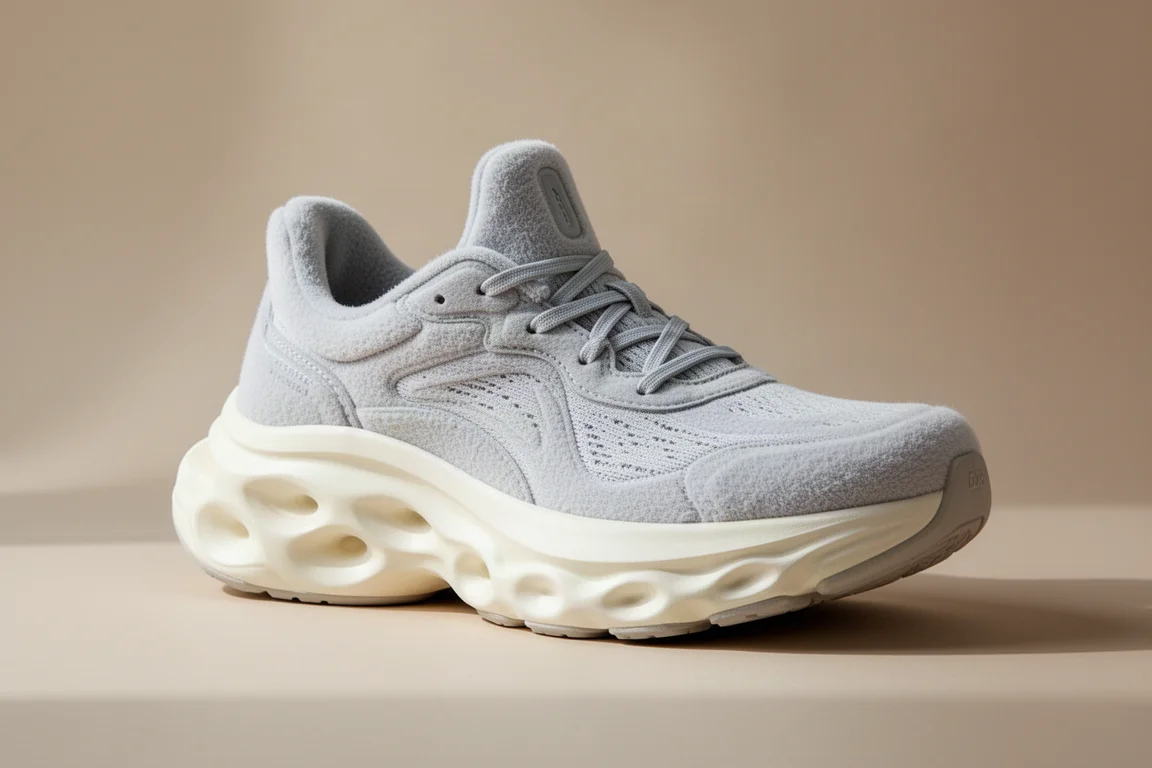
The Puma MagMax Nitro is Puma’s first real contender in the max stack space, and it takes a firmer, more versatile approach. It costs £170, with a 46 mm heel stack, an 8 mm drop and 366 g in a UK size 12, built on Puma’s Nitro foam.
Strengths: the Pumagrip outsole is the best here of all six shoes, making this the clear winter pick. The foam is denser and stiffer than the New Balance, so the shoe feels stable in corners and delivers a surprising amount of energy return and pop, letting you pick up the pace far more than you would expect from a shoe this size. The upper is also breathable for hotter conditions.
Trade-offs: it runs narrow, so wider-footed runners should look elsewhere, and £170 is expensive for a Puma shoe, even if it undercuts most rivals here.
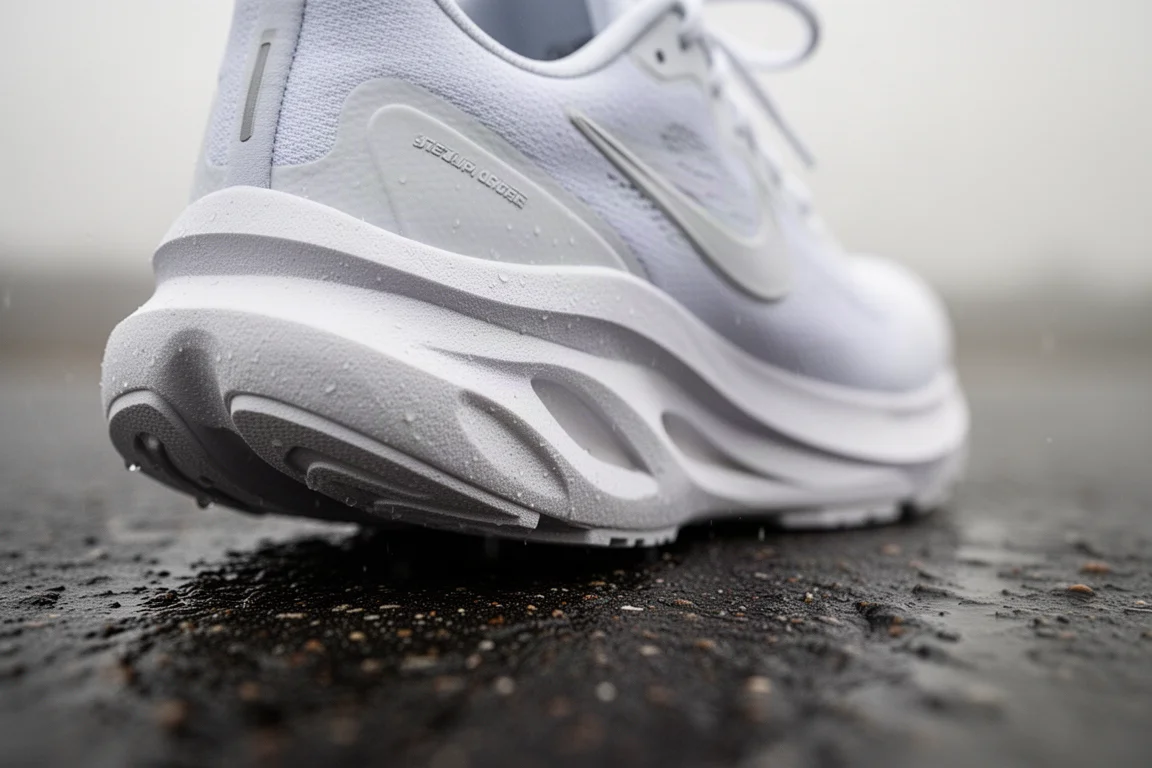
This suits runners who want one big-stack shoe for easy runs, steady runs, marathon pace and long runs, with best-in-class grip as a bonus.
Asics Gel Nimbus 26
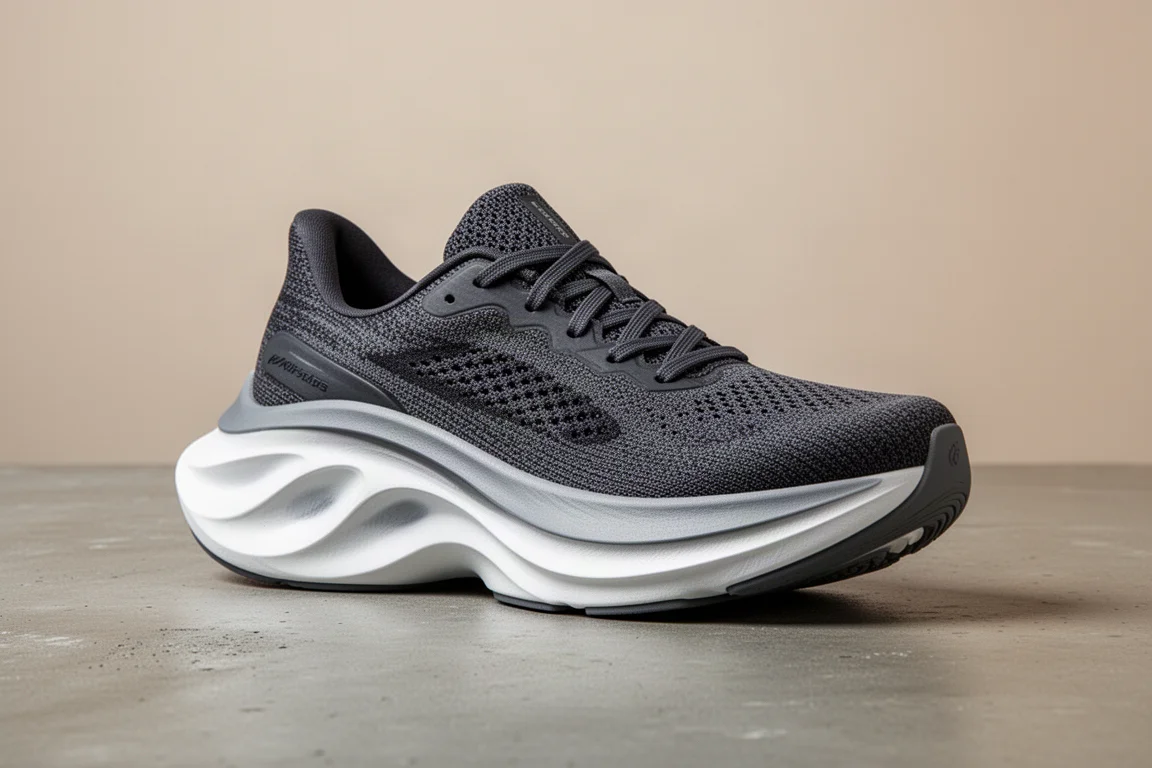
The Asics Gel Nimbus 26 sits at £180 with a 42 mm heel stack, an 8 mm drop and 373 g in a UK size 12, riding on a big slab of FF Blast Eco Plus foam designed to soak up road impact.
Strengths: this is arguably the most comfortable shoe here. The upper is super soft and stretchy, ultra breathable, and gives an excellent lockdown with no hot spots or blisters. It comes in standard, wide and extra wide fittings, which is genuinely rare. It is marketed as the most comfortable running shoe, and it is hard to disagree.
Trade-offs: like the More v5, this is an easy and recovery run shoe. The foam is very soft, if slightly firmer than the New Balance, so do not expect much speed. On the plus side, good discounts are now available since the successor is on the horizon.
Brooks Glycerin Max
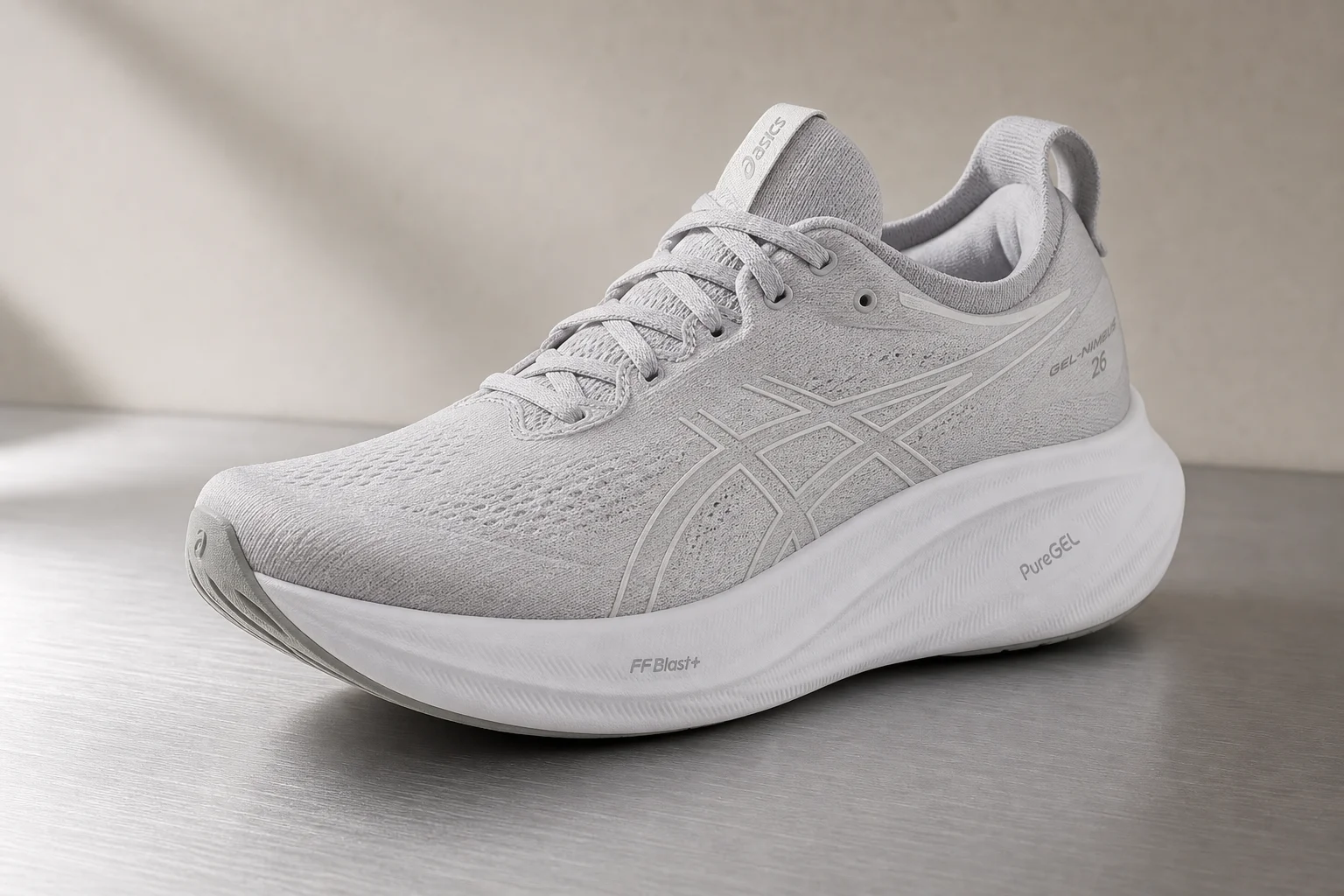
The Brooks Glycerin Max at £180 is one of the best-looking shoes Brooks has produced, and it brings dual-density DNA Tuned cushioning: larger cells at the heel for soft, airy landings and smaller, denser foam at the forefoot for a poppy toe-off. Specs: 45 mm heel stack, 6 mm drop, 375 g in a UK size 12.
Strengths: the midsole feels firmer than you would expect for a 45 mm shoe, but it is bouncy with excellent energy return. The pronounced rocker encourages a smooth transition and good turnover, which helps disguise the bulk. Build quality and durability are excellent, with a rubber outsole providing solid winter grip. The width is surprisingly generous, and sizing goes all the way up to UK 14.
Trade-offs: the weight and bulk are hard to escape. A key rival is nearly 100 g lighter and noticeably quicker when the pace rises. It is also not currently offered in a wide version. Marathon pace and slower, though, it looks after your legs beautifully.
Hoka Skyward X
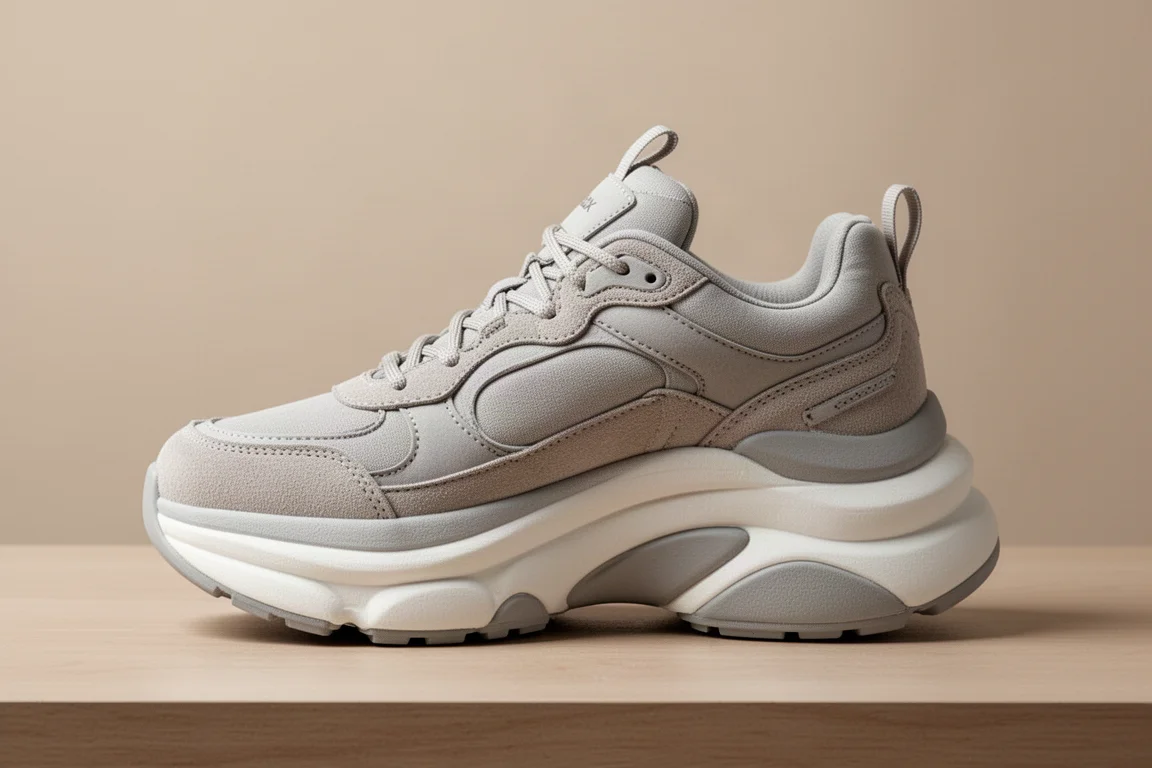
The Hoka Skyward X is the most extreme shoe here, with a towering 48 mm heel stack, a 5 mm drop and 370 g in a UK size 12, at £185. You sit right on top of the stack and feel very little of the ground.
Strengths: this is genuinely fun to run in. Two foam layers combine, one super soft premium PEBA layer and one supercritical EVA layer for durability, with a carbon plate adding stability and structure. The plate makes the shoe much stiffer than the softest options here, so it handles marathon and half marathon pace far better and stays composed as you speed up. Heavier runners considering racing in max cushion will find the foam resists bottoming out. Build quality is excellent, and it is great for long runs and long time on feet.
Trade-offs: it is the heaviest and bulkiest shoe here, and the heaviest ever tested in this segment. If you want a lightweight shoe, this is one to avoid. But with all that foam and that plate, your legs will feel very well protected.
Asics Superblast 2
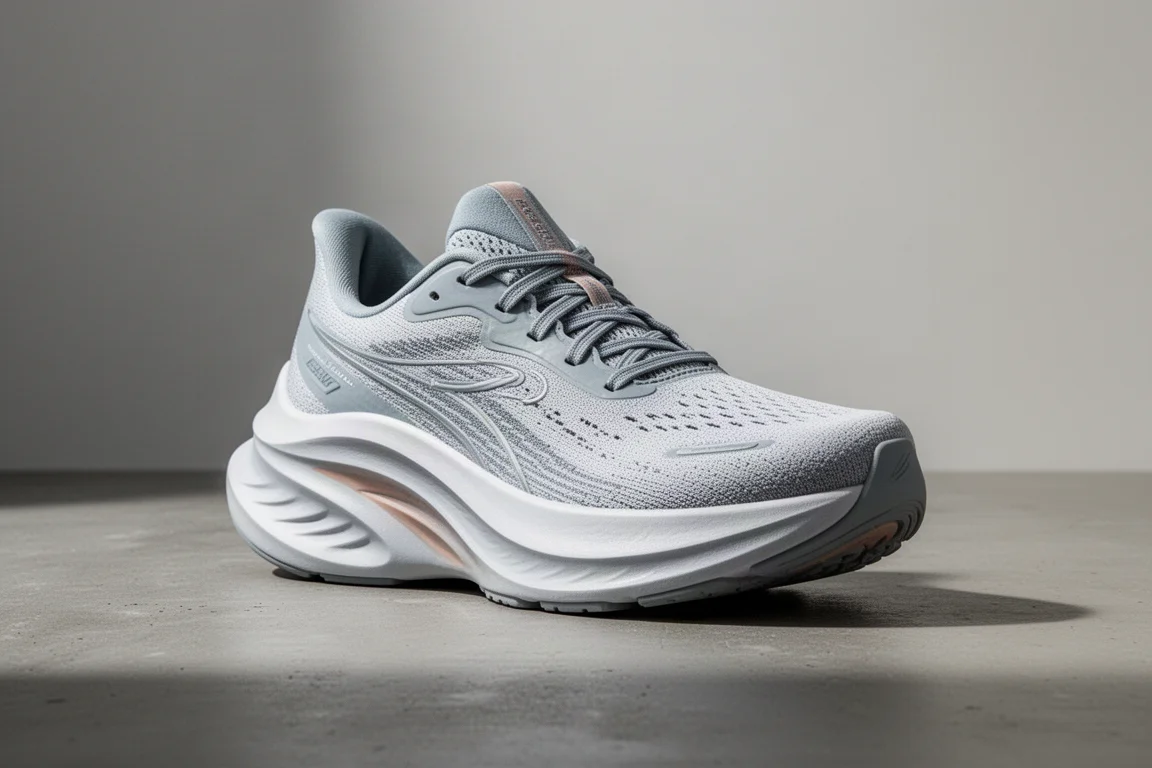
The Asics Superblast 2 is the standout of the group. At around £200 and just 288 g in a UK size 12, it is roughly 90 to 100 g lighter than everything else here while still carrying a 45 mm stack and an 8 mm drop. The midsole is mostly FF Turbo Plus, Asics’ most premium foam, over a more durable FF Blast layer, with a rubber outsole that improved substantially over the original, though it still trails Pumagrip.
Strengths: sheer versatility. Easy runs, long runs, speed sessions and even races all work in this shoe, making it the ideal single travel shoe. It is supremely comfortable, surprisingly durable, with around 1,000 happy kilometres from a first pair, and the firm, responsive ride means you can genuinely pick up the pace.
Trade-offs: it runs firm, so it is not the best pick for plush recovery runs. Sizing runs small, so half a size down was needed. It is the most expensive option here and remains very hard to get hold of, selling out within 24 hours whenever it comes back in stock.
Buying Advice
If you want maximum squish for the lowest price, the New Balance More v5 is the obvious starting point, and it works as an all-day comfort shoe too. If grip and versatility through the winter matter most, the Puma MagMax Nitro is the pick. Comfort-first runners, and anyone needing width options, should look hard at the Gel Nimbus 26.
The Brooks Glycerin Max suits runners who want a firmer, responsive long-run shoe, especially those with bigger feet thanks to its extended sizing. The Hoka Skyward X is for riders of the extreme: the tallest stack, a plate, and a ride that stays stable at faster paces despite the bulk. And if you can only own one shoe and can find it in stock, the Superblast 2 is the wholehearted recommendation, despite the price.
Conclusion
Max cushion shoes have matured into a category where there is a genuinely right answer for almost every runner. Soft and cheap, grippy and versatile, plush and breathable, firm and fast, or extreme and plated: these six cover the full spectrum. Match the ride character to the runs you actually do, and any of them will look after your legs well.
Further reading
Related Reviews

Running Shoes
Best Road-to-Trail Running Shoes: Three Versatile Options for Mixed Terrain
A practical guide to three road-to-trail running shoes that handle both pavement and mild trails, with clear strengths and trade-offs for different runner types.

Running Shoes
Best Running Shoes for Achilles Tendonitis: Three Options Explained
Three running shoes with different heel drops and support features designed to help reduce Achilles tendon pain during walking and running.

Running Shoes
Best Running Shoes for Women: Five Top Choices Ranked
A ranked guide to five women's running shoes, from versatile daily trainers to high-performance racing options, with real strengths and trade-offs for each.