Kitchen Tools
Best Knife Sharpeners Tested: From a $2 Pull-Through to a $1,200 Guided System
Eight knife sharpeners, eight identical knives, and one sharpness tester. We compare edge quality, sharpening time, and durability across every price tier.
Introduction
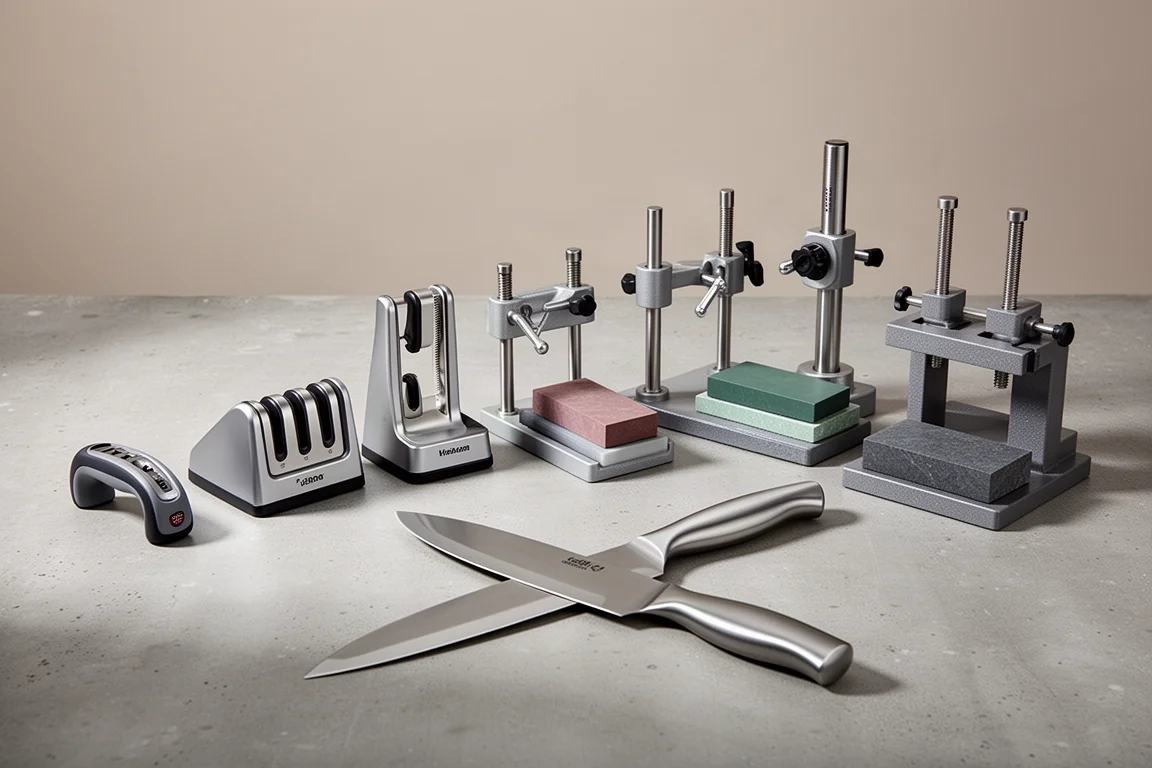
Is a $2 sharpener from Harbor Freight just as good as one that costs $1,200? To find out, eight high-carbon Japanese steel chef’s knives were dulled on purpose, then sharpened with eight very different sharpeners, and every edge was measured with a certified sharpness tester. The results split cleanly into two camps: quick pull-through sharpeners and slower guided rod systems, with a big gap in edge quality between them.
How the Test Worked
A sharpness tester measures the downward force in grams needed for a blade edge to cut through standardized test media, with each test clip used only once. For reference, a double-edged razor blade sits around 50, a utility blade around 150 to 200, a new high-end cutlery edge around 250 to 350, and a butter knife around 2,000. Lower numbers mean a sharper edge.
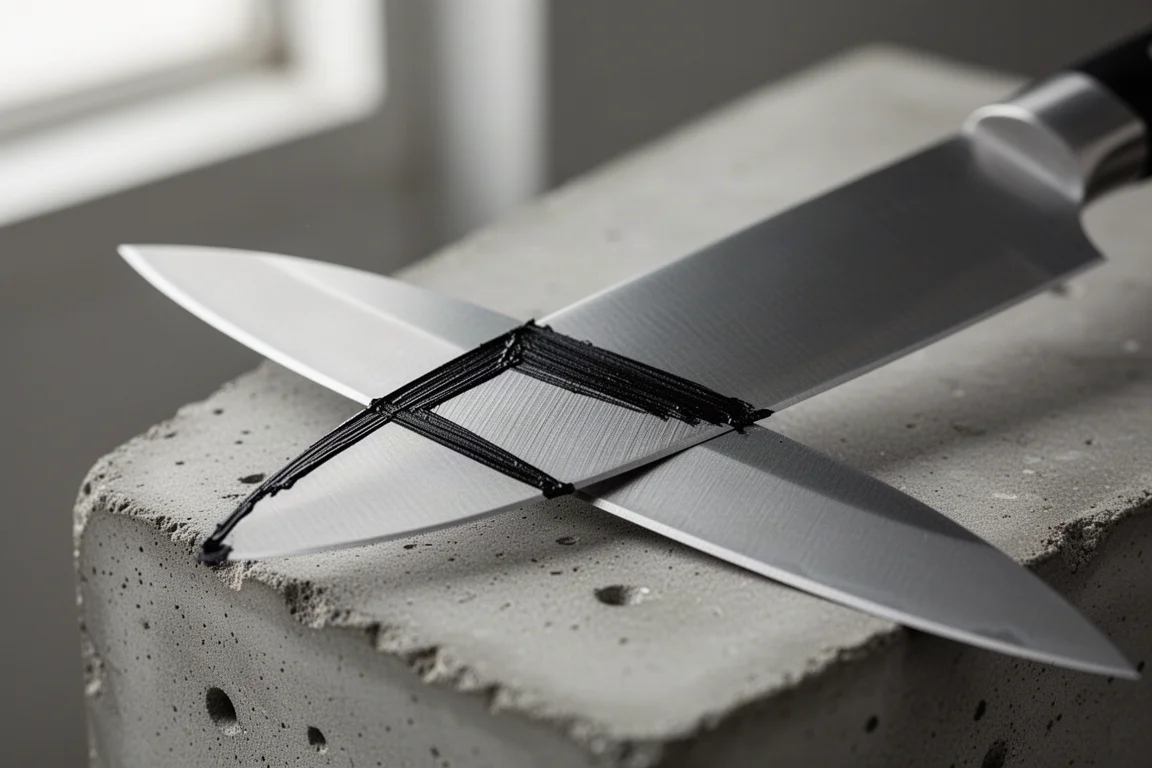
The eight test knives started brand new at a very sharp 140, then were run back and forth five times across a metal pipe with weight added on top, dropping them all to roughly 1,160. Each blade edge was coated with permanent marker so the sharpening result could be inspected up close, and after sharpening, every edge received ten back-and-forth passes on a stropping leather with rubbing compound to remove any burr.
Quick Pull-Through Sharpeners
Gordon: The $2 Bargain
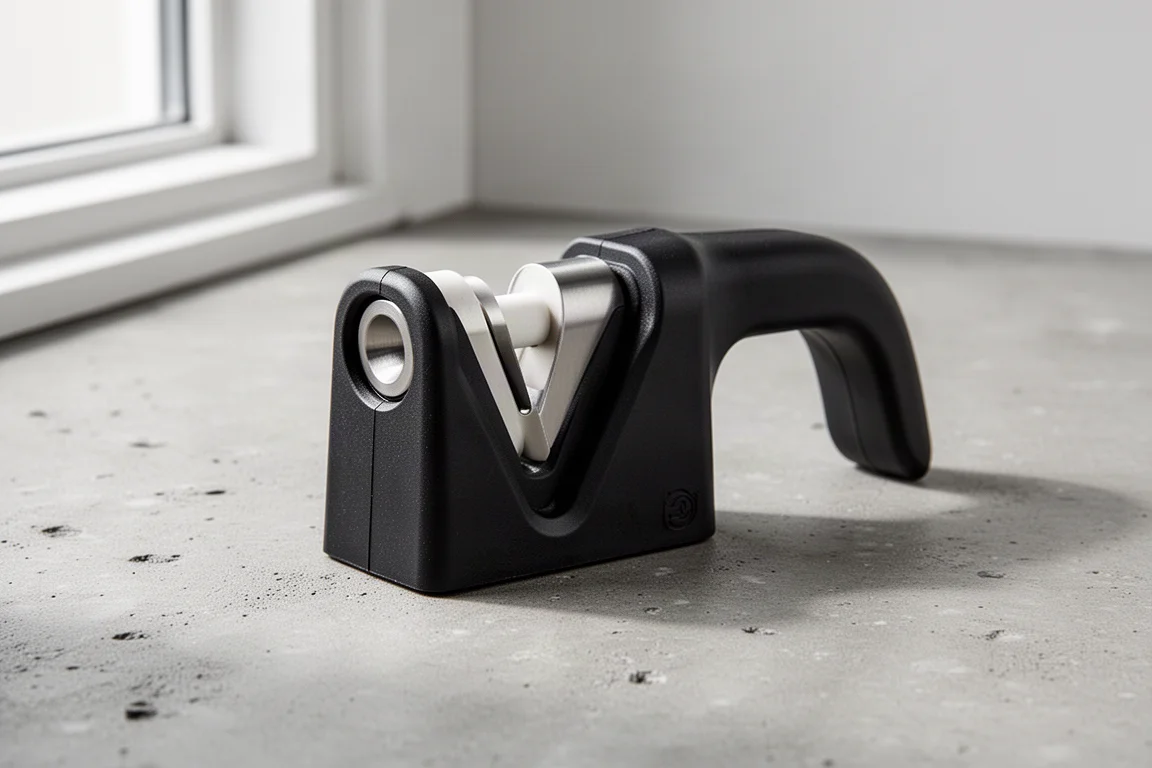
Sold at Harbor Freight, the Gordon has two ceramic rods set in lightweight ABS construction and a V-groove you simply draw the blade through. It is made in China. After 20 passes the edge looked dull under magnification and scored 350, and 20 more passes made no progress at all. It is cheap, but it cannot revive a badly dulled blade.
KitchenIQ: The Amazon Favorite
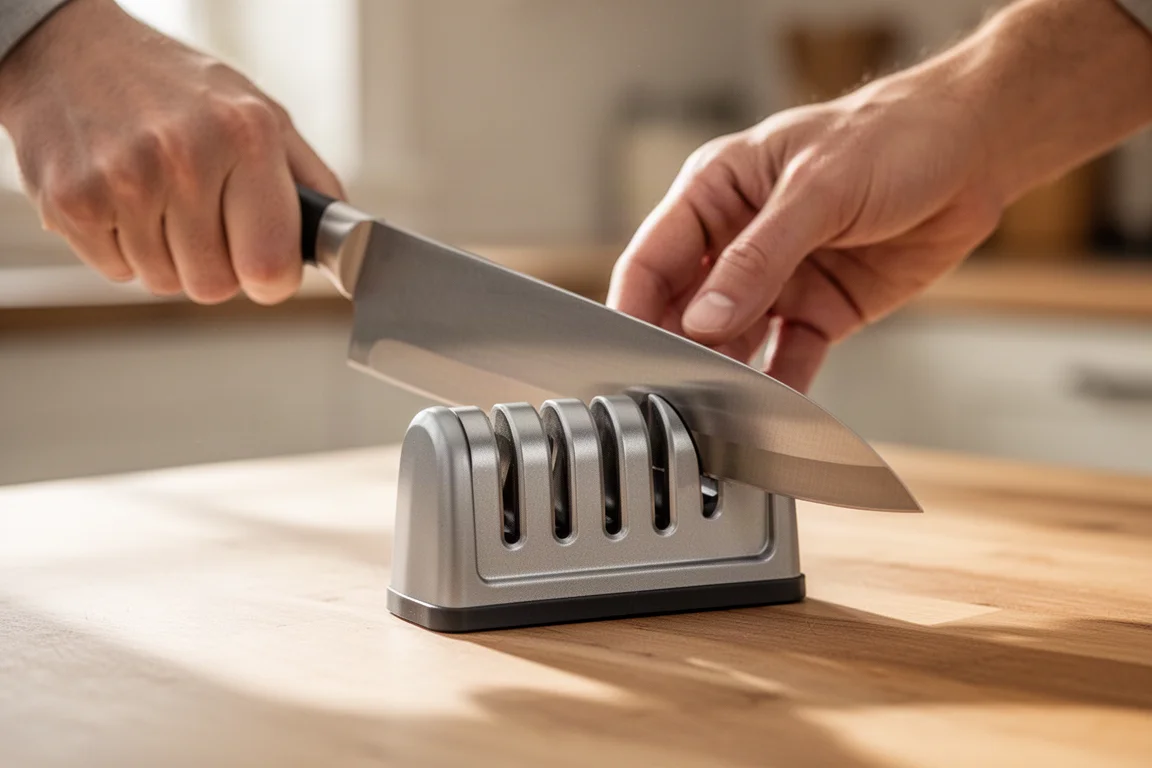
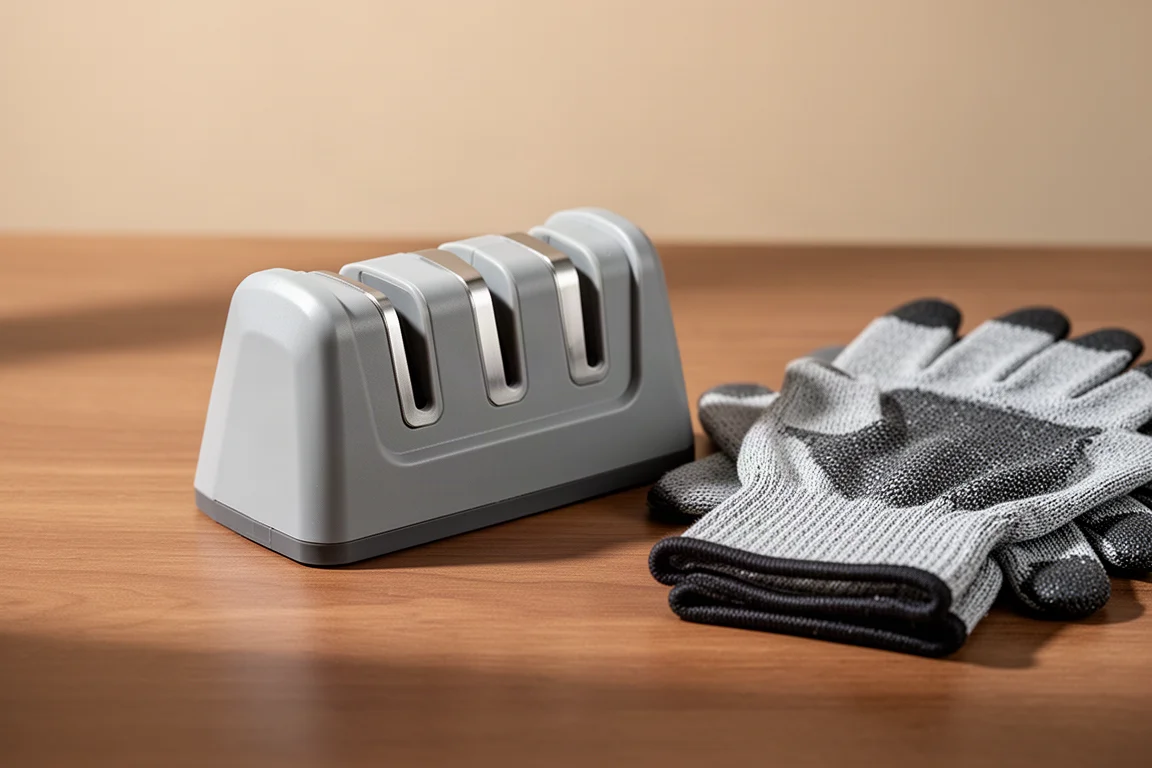
With roughly 30,000 reviews on Amazon, this three-stage sharpener is one of the most popular around. Slot one uses a diamond rod to repair and straighten a damaged blade, slot two restores the V-shaped cutting edge, and slot three fine-tunes for a clean polish. It even includes a cut-resistant glove. Twenty pulls through each slot produced the best pull-through result yet: a score of 265.
Orange Ninja: Adjustable Angles
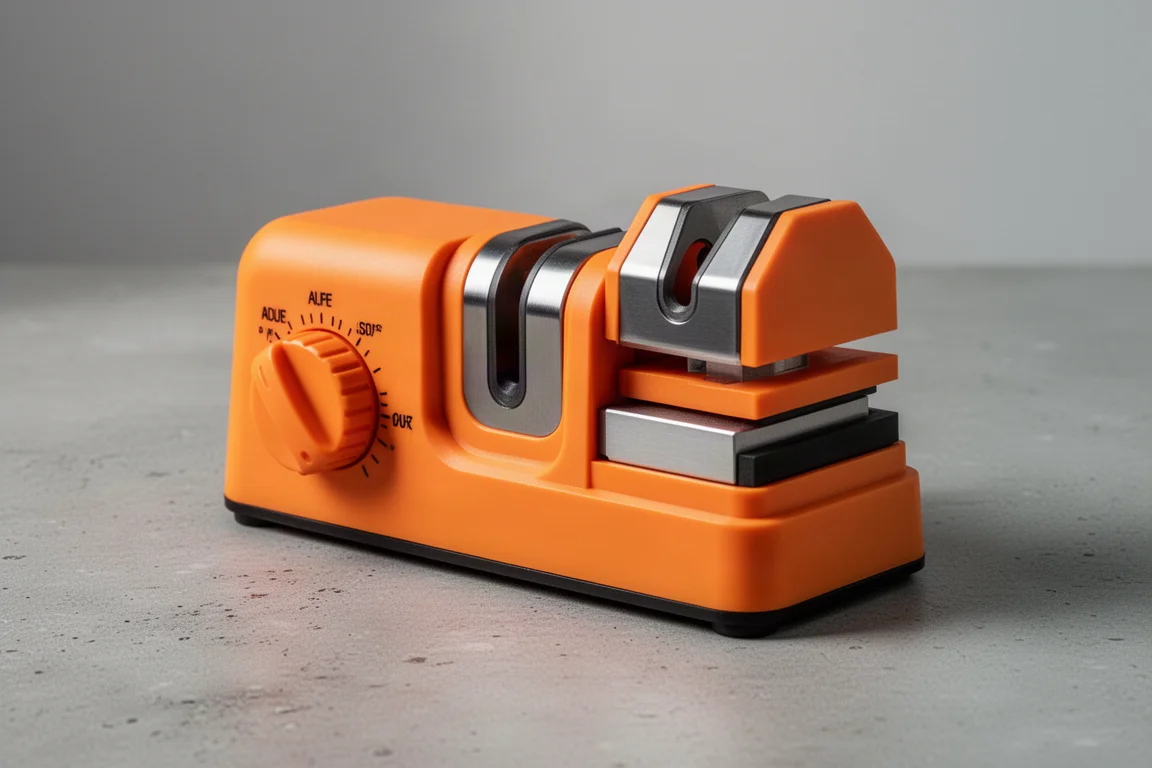
For $36, the Orange Ninja offers five sharpening angles (12, 15, 18, 21, and 24 degrees) selected with an adjustment knob, and it works on kitchen, pocket, and hunting knives. It has coarse, medium, and fine stations. Sharpened at 18 degrees with 20 pulls per station, the first attempt scored a disappointing 410, worse than the $2 Gordon. A second full round improved things, and it narrowly beat the KitchenIQ at 240, though the edge still did not look especially smooth.
Guided Rod Sharpening Systems
Lansky Controlled Angle System
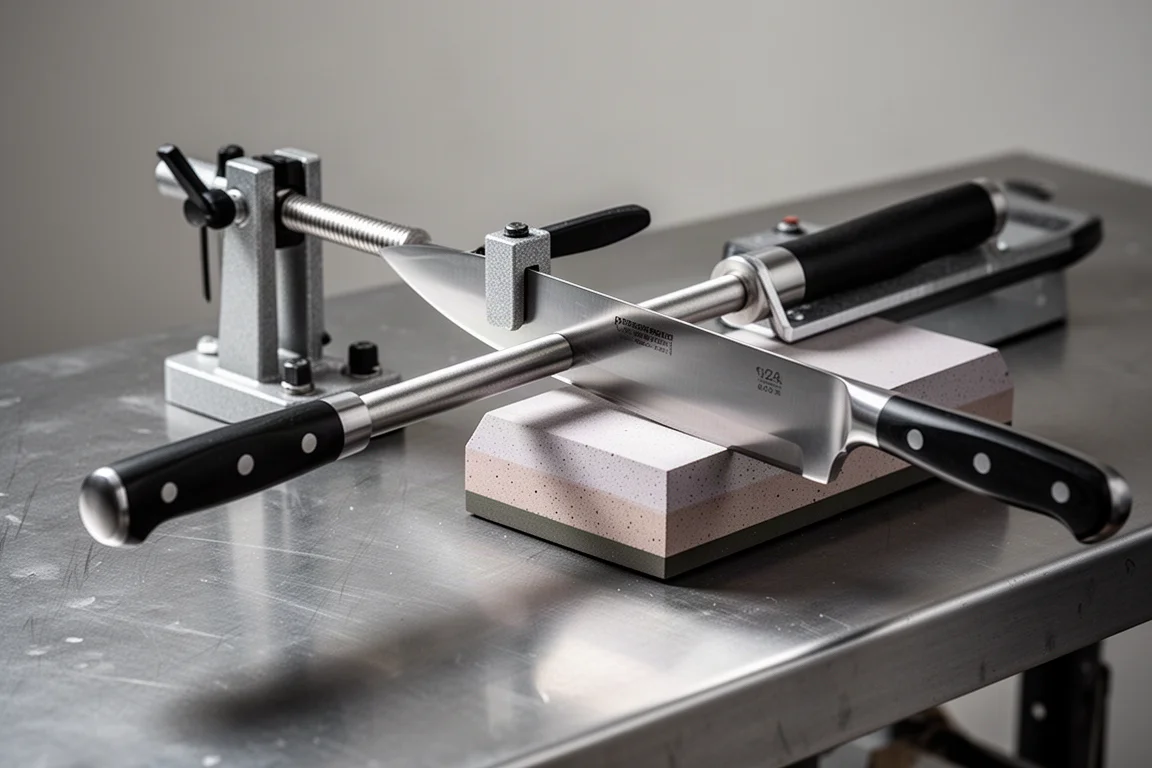
At $88 plus about $15 for the universal mount, the Lansky uses clamped diamond stones to sharpen at 17, 20, 25, or 30 degrees. Setup takes a few minutes: the knife is clamped in the jaws, the hone guide is assembled flush on a flat surface, and you push the hone against the edge in two-inch strokes until a burr forms, then flip the clamp and repeat. The Lansky made fast work of the blade and produced a very sharp, straight edge, though actual sharpening took about 6 minutes, longer than the pull-throughs. It scored an excellent 110.
Work Sharp Precision Adjust Elite
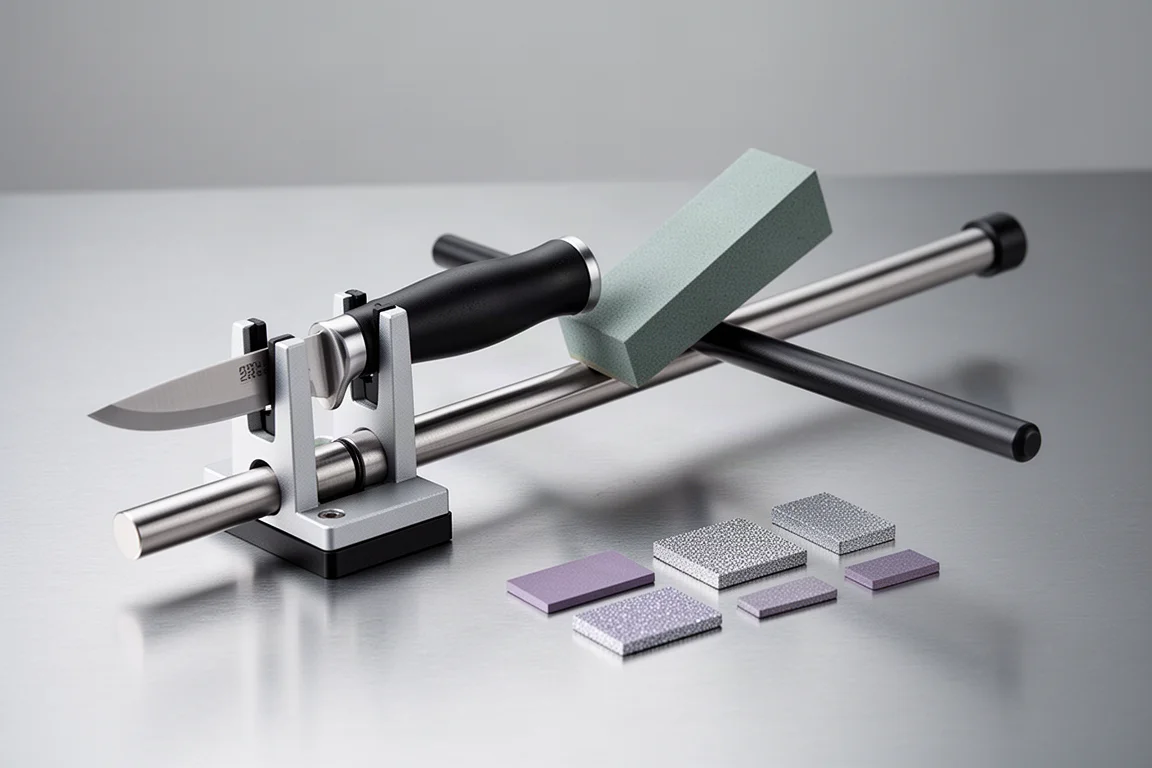
For $120, the Work Sharp Precision Adjust Elite snaps together in about 15 seconds and is made in the USA. It includes seven abrasives: 220, 320, 400, 600, and 800 grit diamond, fine ceramic, and a leather strap, plus a small ceramic rod. Sharpening at roughly 17 degrees with light, long strokes from heel to tip took about 8 minutes thanks to the less aggressive starting grit. The result was one of the straightest, sharpest edges of the entire test, scoring 100.
Hapstone
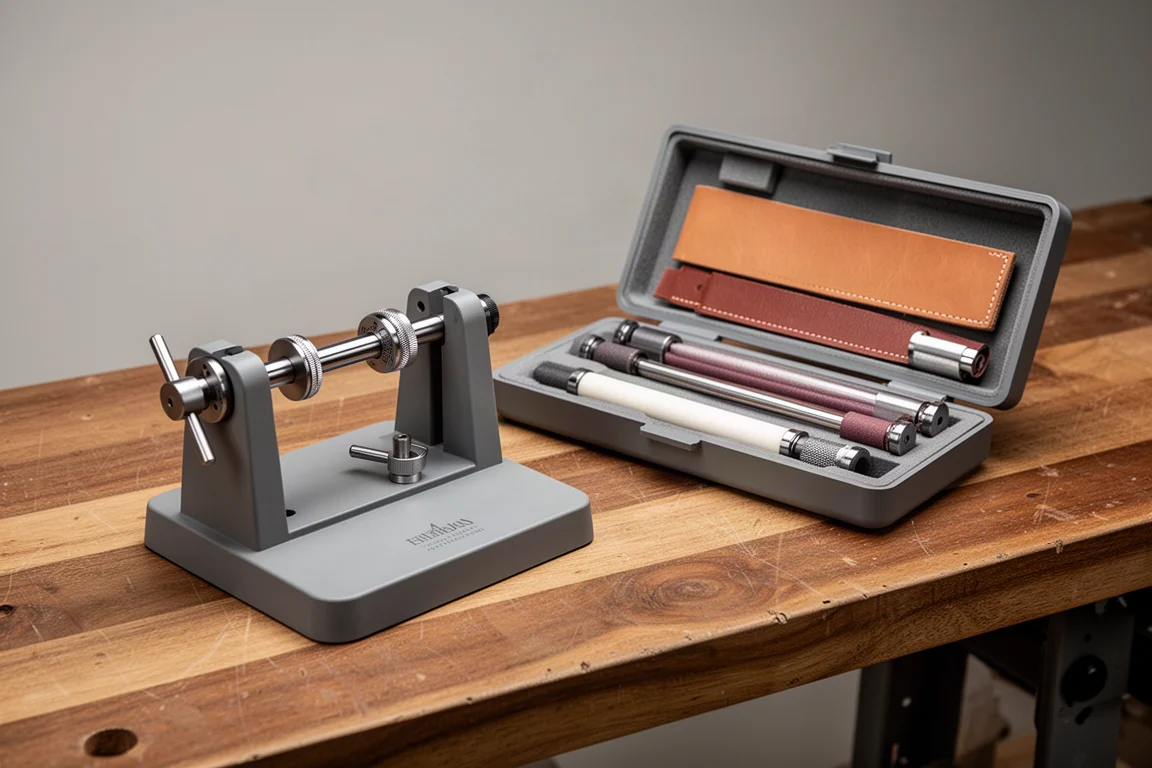
The Hapstone, made in Ukraine, costs $355 and uses 240, 600, and 1200 grit electroplated diamond stones that are about 50% wider and 50% longer than the Lansky or Work Sharp stones, which speeds up sharpening considerably. Stone changes are quick, and the pivot unit offers fine tuning with full 360-degree rotation. Note that it requires an Allen key and an angle finder, neither of which is included. About 5 minutes of sharpening produced a very straight edge scoring 105, nearly matching the Work Sharp.
The Premium Tier: Wicked Edge
Wicked Edge Pro Pack One
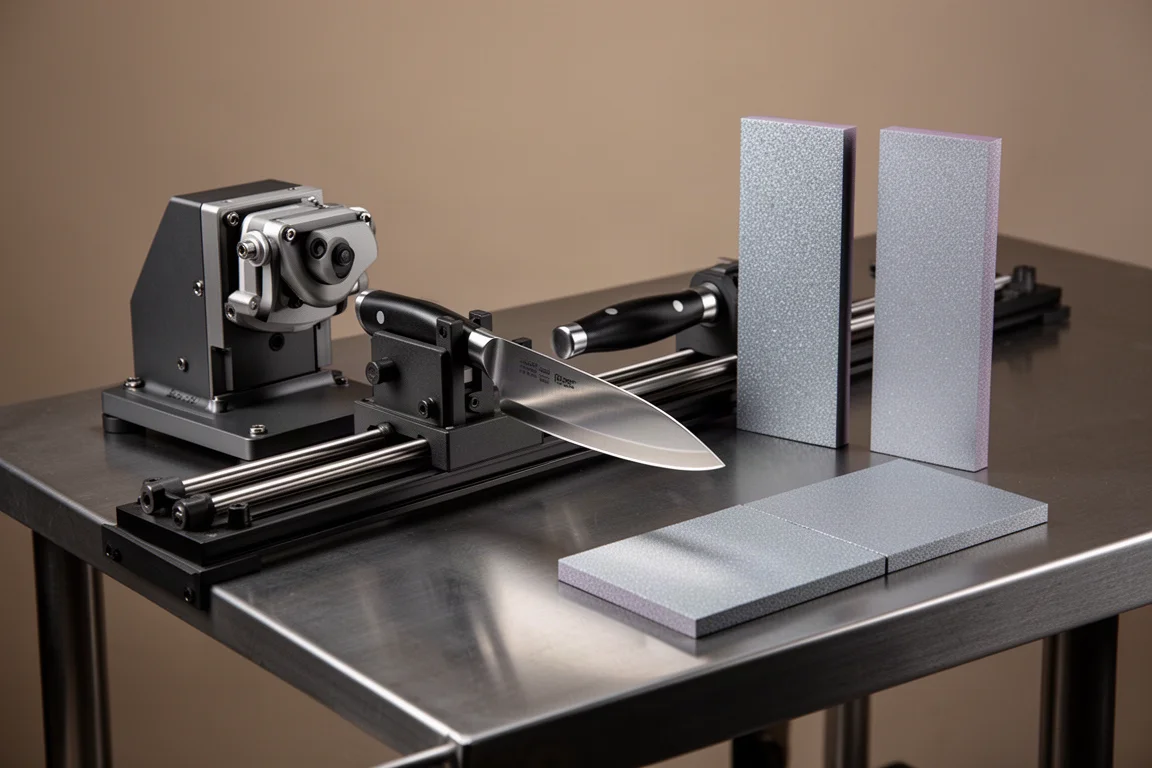
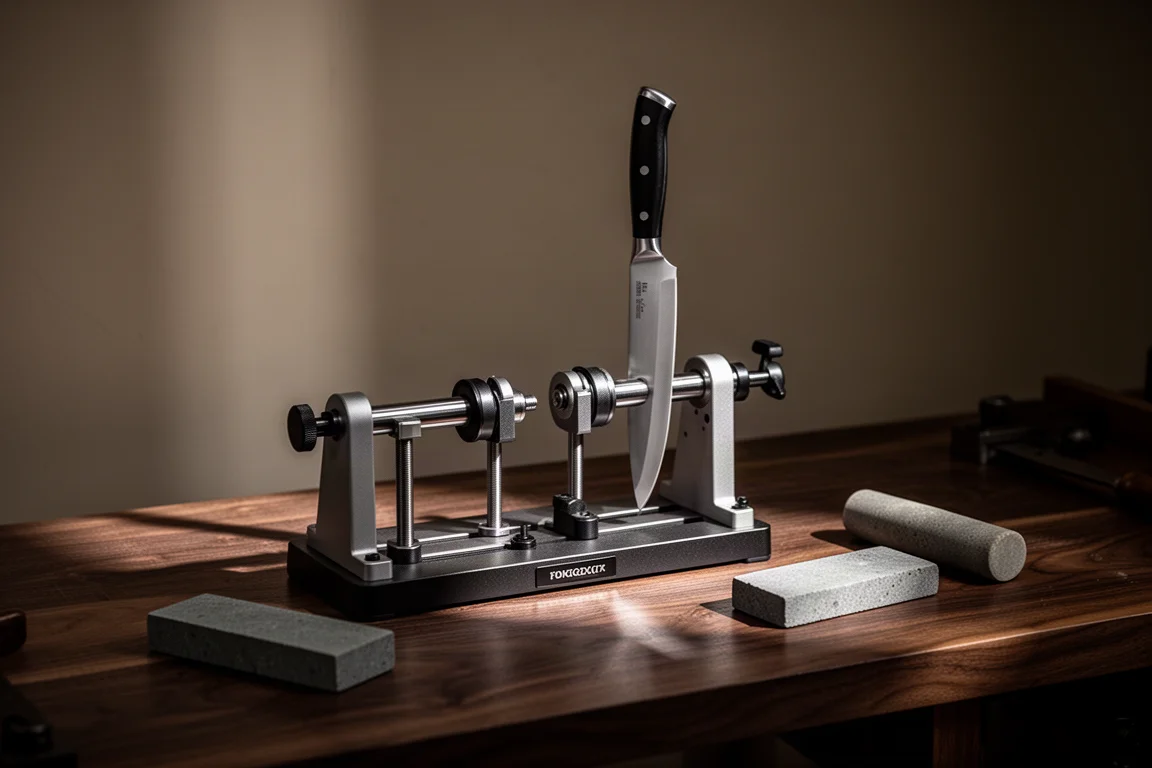
At $600 and made in the USA, the Wicked Edge Pro Pack One includes 100 through 1,000 grit diamond stones plus a 5 and 3.5 micron diamond and leather strop pack, with angles from 15 to 30 degrees in one-degree increments. The knife is clamped in a vise with an alignment guide, and the standout feature is the ability to use alternating back-and-forth strokes on both sides at once. Sharpening took about 4 minutes, the edge looked the sharpest of anything tested to that point, and it tied the Work Sharp with a score of 100.
Wicked Edge Gen 3 Pro
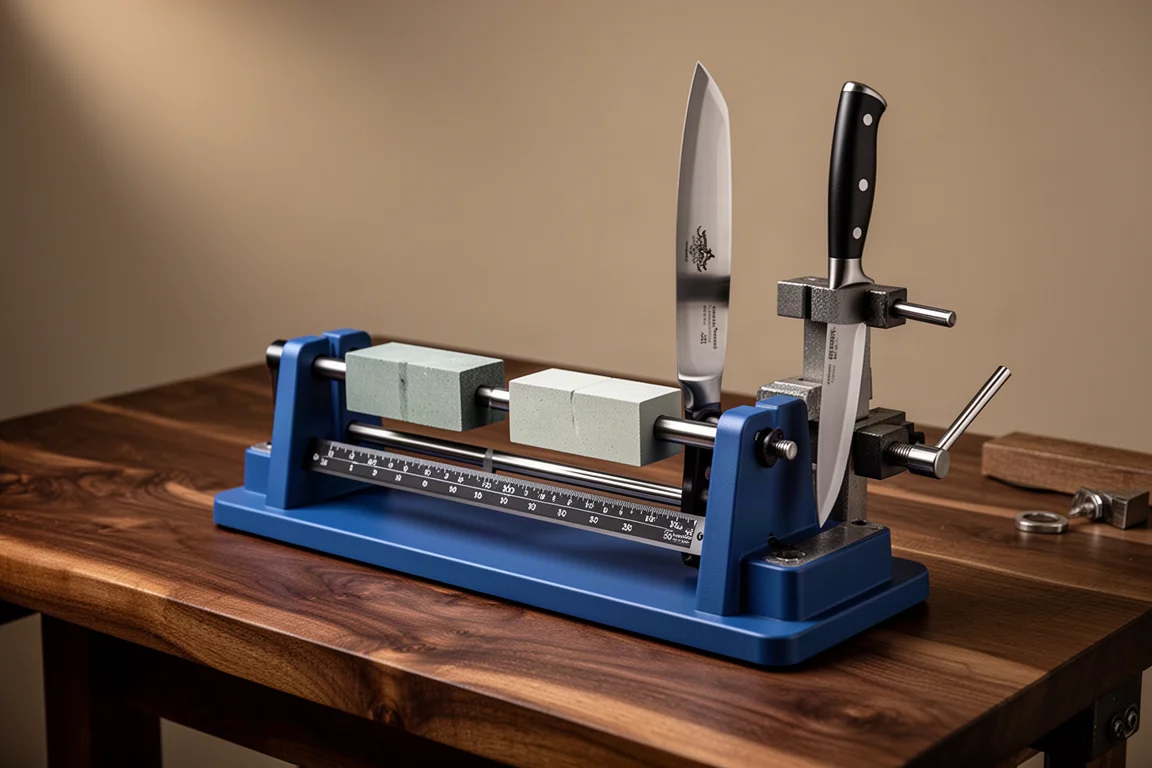
The $1,200 Gen 3 Pro arrives in a proper carrying case and uses the same stone set, but with half-degree increments, 0.05-degree micro angle adjustment, and a lever-adjusted angle system. The key difference: it holds the knife much higher in the vise, which made the sharpening technique feel noticeably more effective. Sharpening again took about 4 minutes, and it narrowly beat the Pro Pack One with the best score of the entire test: 90.
Which Sharpener Holds an Edge Longest?
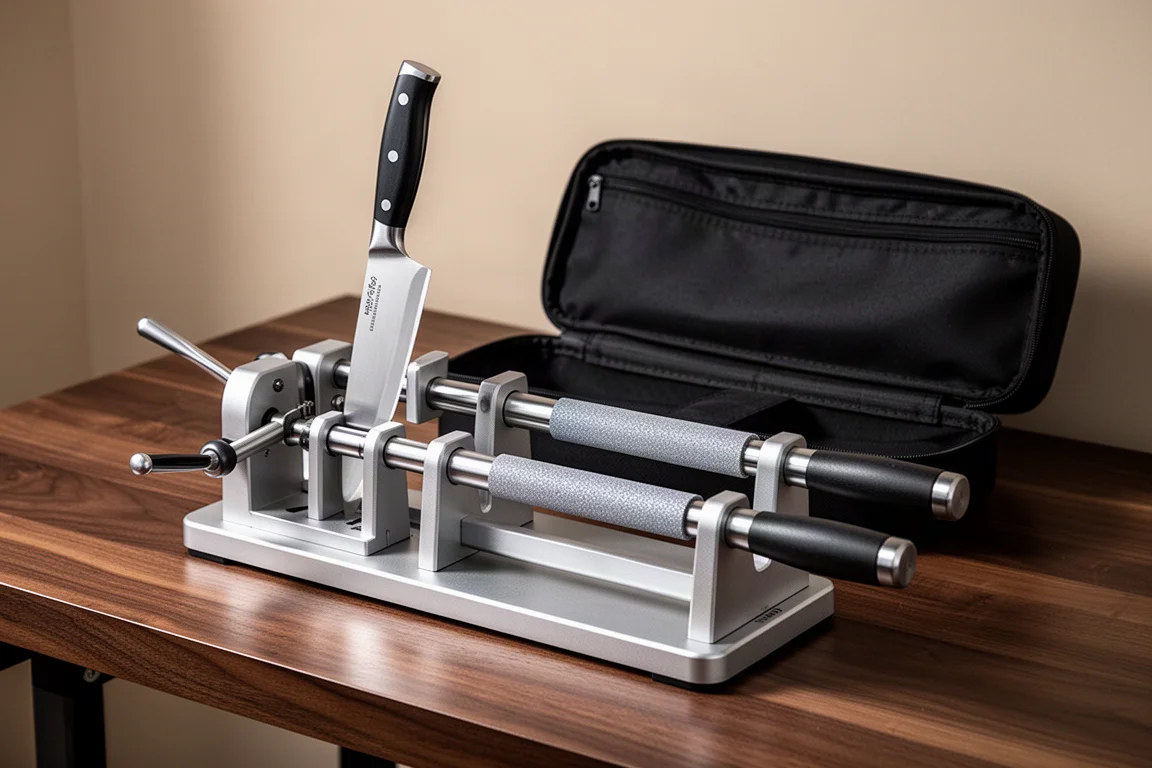
Initial sharpness is only half the story, so the sharpened blades were dragged 40 back-and-forth passes across dense oak with a Janka hardness around 2,500 and 15 pounds of weight on top, then retested. After the abuse, the Gen 3 Pro was still the sharpest at 120, with the Lansky, Work Sharp, Hapstone, and Pro Pack One clustered between 125 and 130.
Measured as a percentage of sharpness lost, the Lansky actually performed best at 13.6% because it started slightly less sharp, while the Hapstone, Work Sharp, and Wicked Edge Pro Pack One also held up very well. The pull-through sharpeners fared much worse: the KitchenIQ collapsed to 575 and the Gordon to 470, while the Orange Ninja held up best of the three at around 245 and left the most polished edge.
Overall Buying Advice
The Wicked Edge sharpeners are excellent, but they are also very expensive. For most people, the Work Sharp Precision Adjust Elite or the Lansky are the sweet spot: both create a genuinely super-sharp edge for a fraction of the price, hold an edge well, and cost about the same as one dinner out. If you only want the cheapest possible fix and accept the limits, the $2 Gordon does little for a badly dulled blade, while the KitchenIQ is the most capable of the simple pull-throughs.
Conclusion
The test confirmed what the price tags hint at: guided rod systems beat pull-through sharpeners on both initial sharpness and edge retention, with the Wicked Edge Gen 3 Pro at the very top and the Work Sharp and Lansky delivering most of that performance for far less money. Match your budget to how often you sharpen, and any of the guided systems here will keep your knives cutting the way they should.
Further reading
Related Reviews
Kitchen Tools
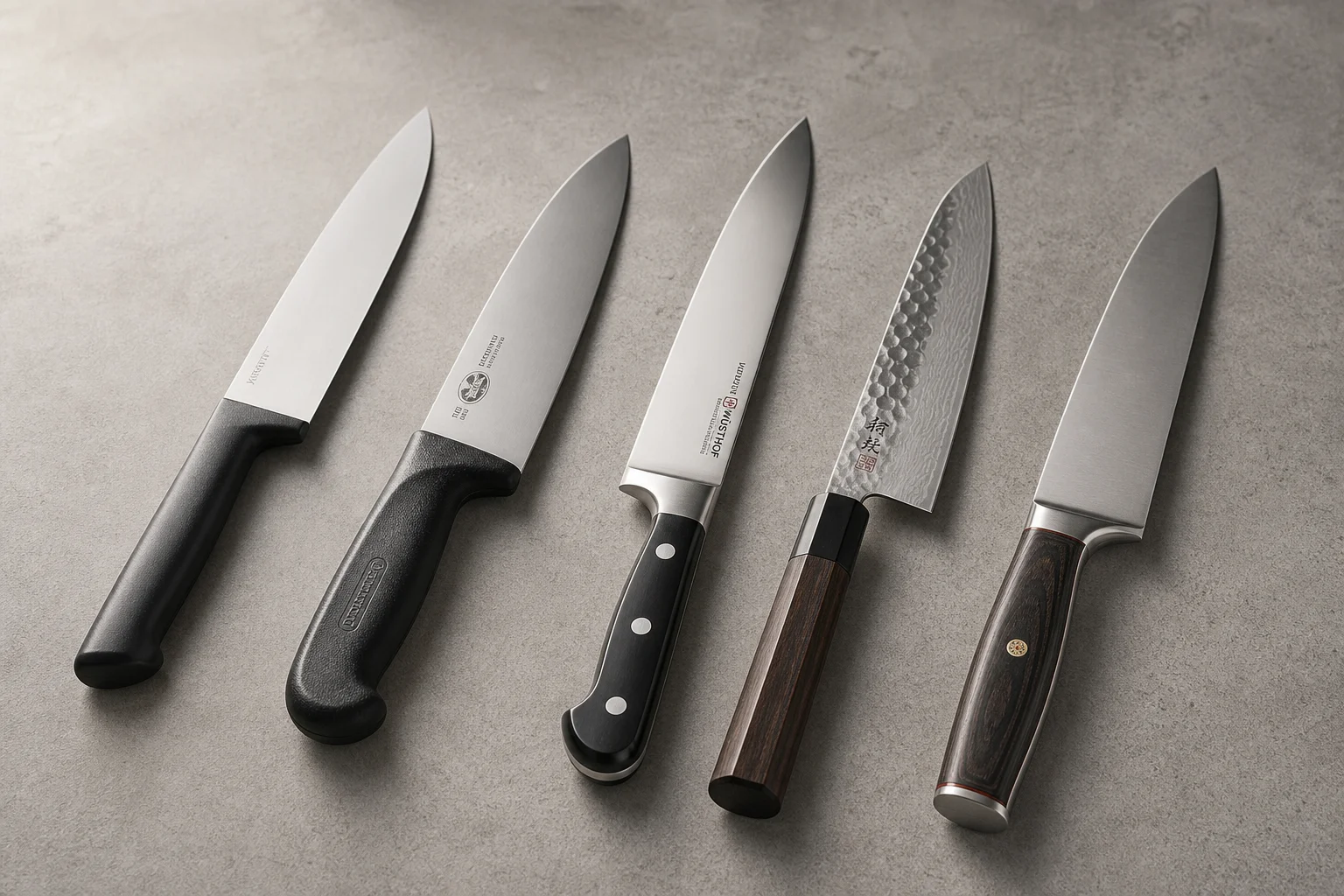
Amazon's Top-Rated Chef Knives Tested: Five Models from £11.50 to £200
We tested five of Amazon's highest-rated chef knives across sharpness, comfort, and versatility to see which delivers the best value and real-world performance.
Kitchen Tools
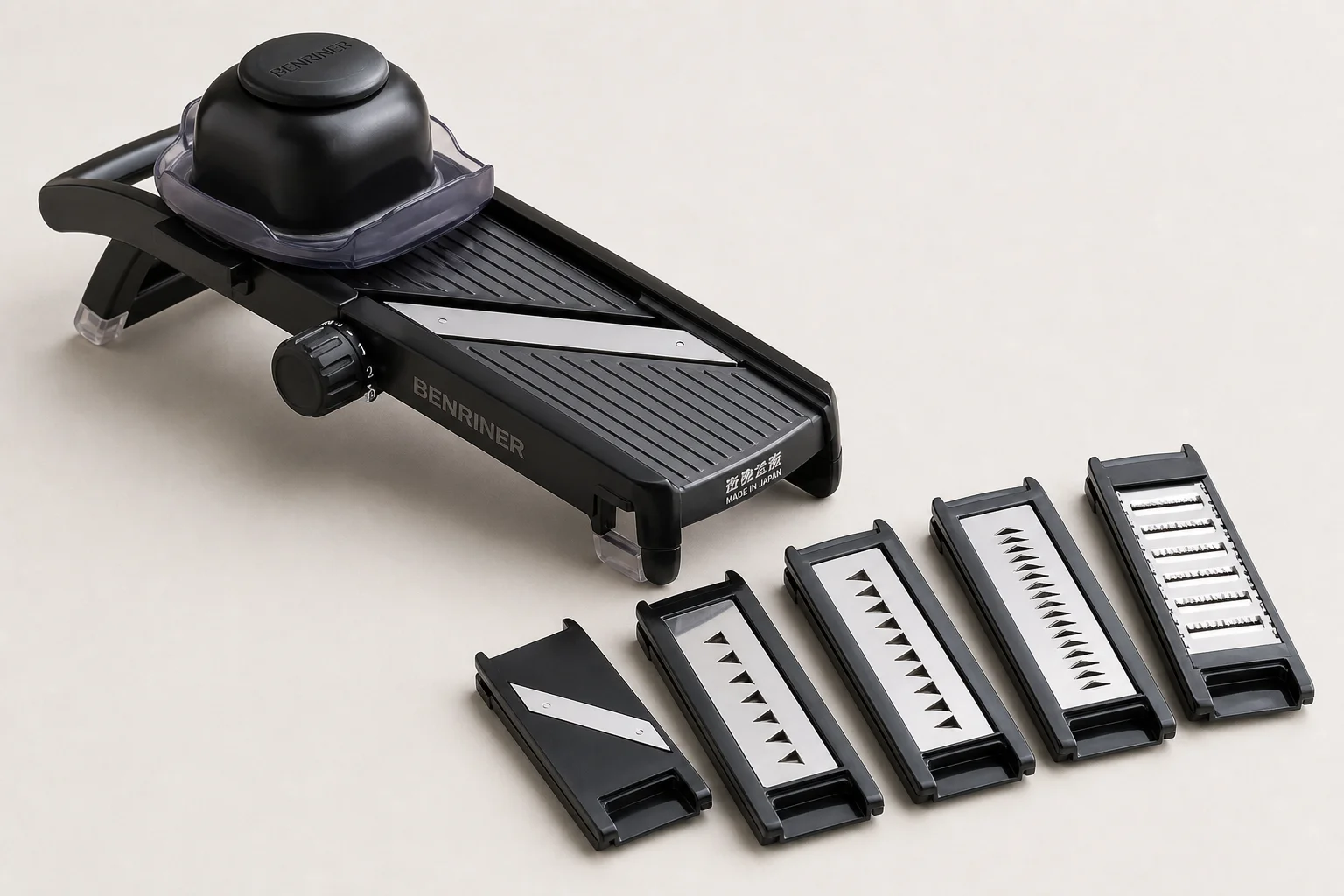
Benriner Japanese Mandoline Review: A Sharp Tool for Precise Vegetable Slicing
A practical guide to using a Japanese mandoline safely and effectively, with tips for achieving consistent, crisp results in the kitchen.
Kitchen Tools
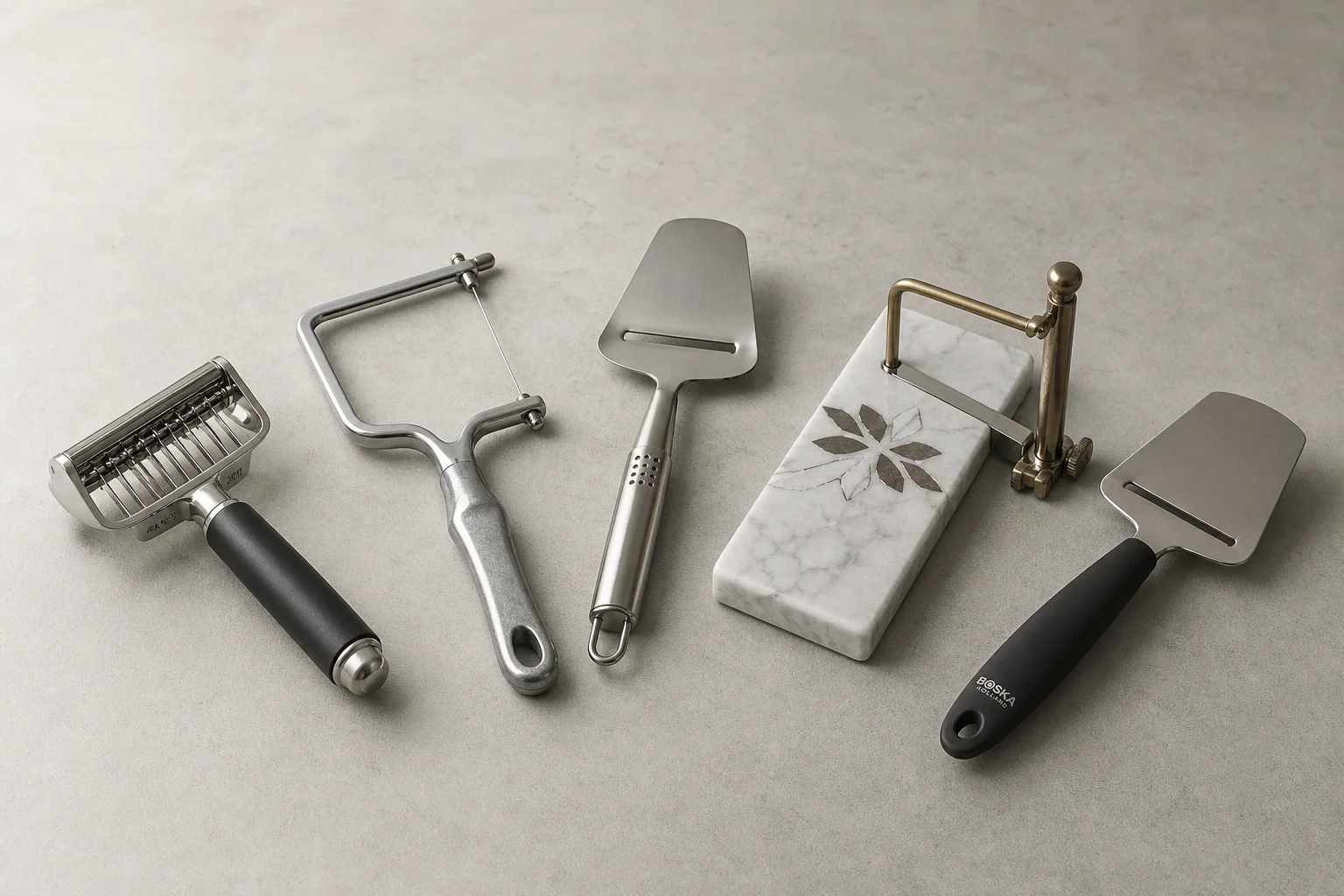
Best Cheese Slicers: Five Practical Options for Consistent Slicing
Five cheese slicers with different designs and features, from multi-blade versatility to wire-based precision, each suited to different kitchen needs and cheese types.