Kitchen Tools
Best Knife Sharpeners for Home Cooks: A Practical Comparison of Five Methods
We tested manual pull-through, electric pull-through, rolling, belt, fixed-angle, and whetstone sharpeners to find which ones deliver sharp knives with the least hassle.
Introduction
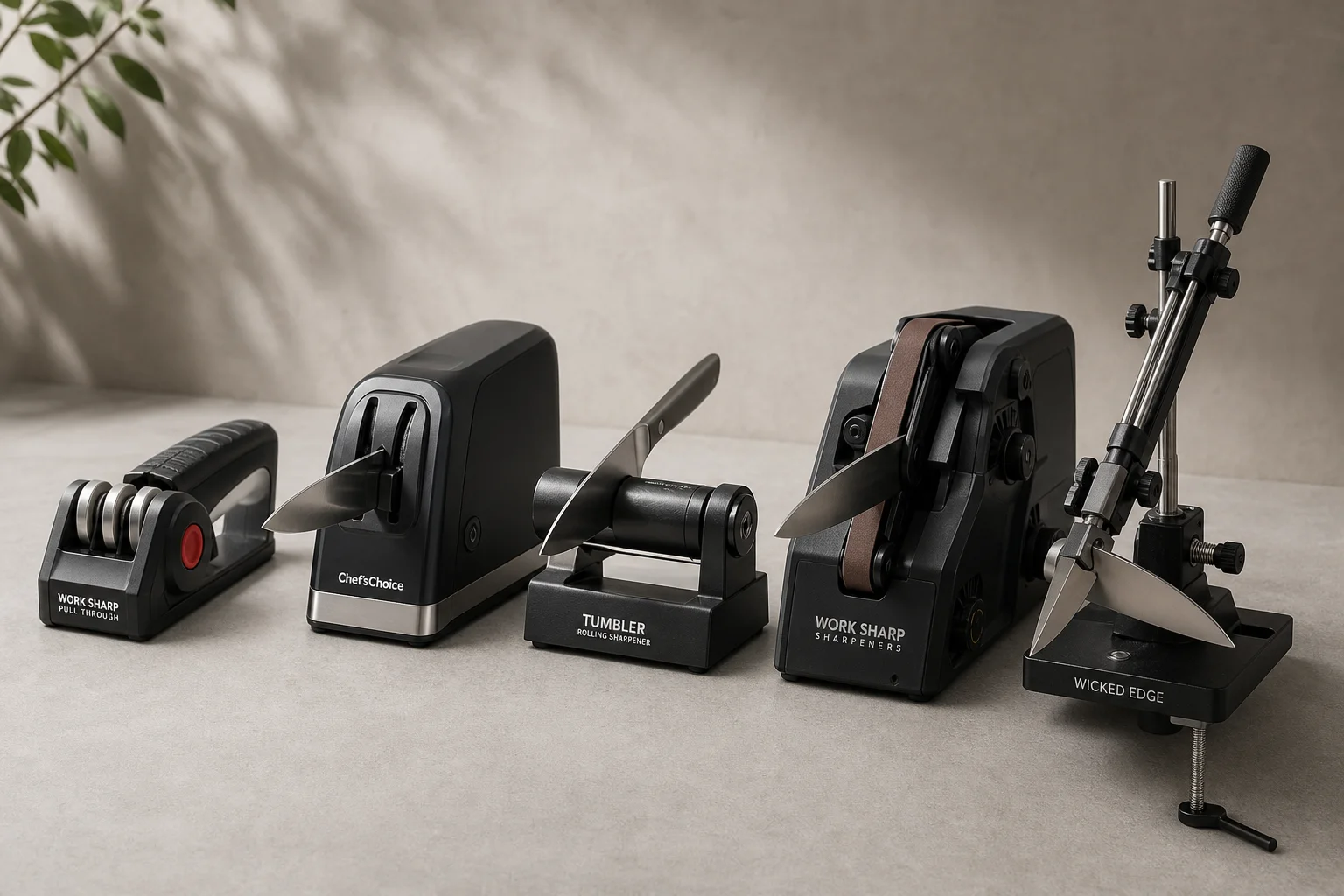
A sharp knife is safer, faster, and more enjoyable to use than a dull one. Yet choosing the right sharpener is confusing because the options range from inexpensive pull-through models to expensive electric systems, whetstones, and newer rolling designs. To find out which sharpeners actually work best for home cooks, we tested six different types across cheap knives, soft Western-style blades, and harder Japanese-style steel. We measured sharpness before and after using a certified sharpness tester, tracked setup time, ease of use, mess, noise, storage, and real-world cutting performance. Here’s what we found.
Manual Pull-Through Sharpeners
Manual pull-through sharpeners are the most beginner-friendly option. You set the device on the counter, insert the knife into a slot, and pull it back and forth. There’s no power, no setup, and no angle to figure out. Most models are small enough to fit in a drawer.
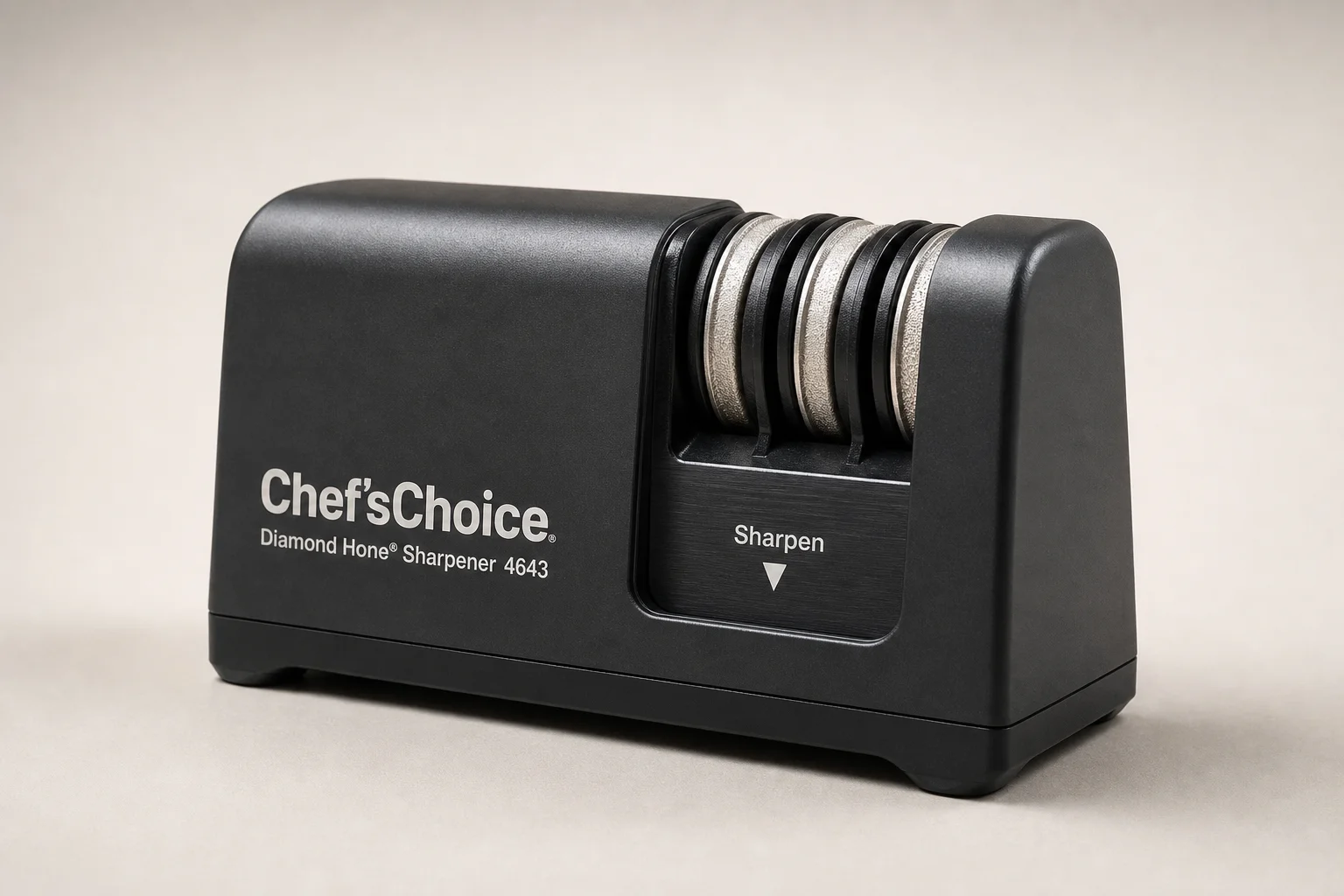
Some use a V-shaped slot with carbide or ceramic pieces that scrape the edge, while others like the Chef’sChoice model use small rotating diamond-coated wheels. The rotating wheel style feels more controlled and less harsh than dragging a knife through a fixed V-shaped scraper.
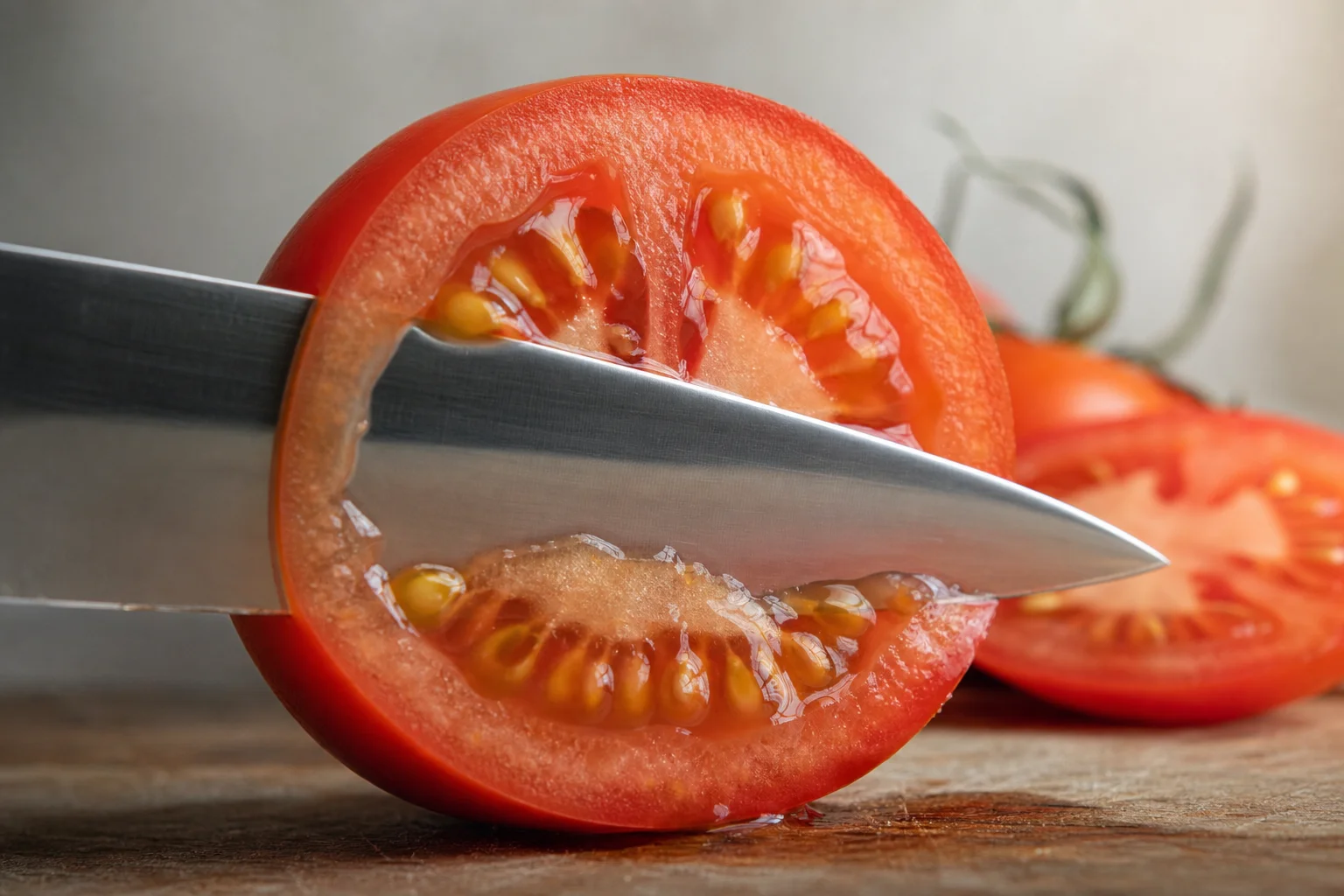
In testing, results were modest. A cheap knife improved from 708 to 415 grams of pressure (lower is sharper). A softer Western-style knife went from 753 to 439. A harder Japanese-style knife improved from 700 to 318. When sharpened a second time, the cheap knife barely changed, the Western knife improved slightly, and the Japanese knife actually got worse. The sharpener is fast and easy, but it’s not the most effective. You cannot adjust the angle on most models, it can remove too much material if you press hard, and it may leave scratches on the blade.
Electric Pull-Through Sharpeners
Electric pull-through sharpeners work like the manual version but use motorized abrasive wheels inside. You pull the knife through each slot, the wheels grind and refine the edge, and angle guides help keep the blade in the right position. The main benefit is speed and minimal setup.
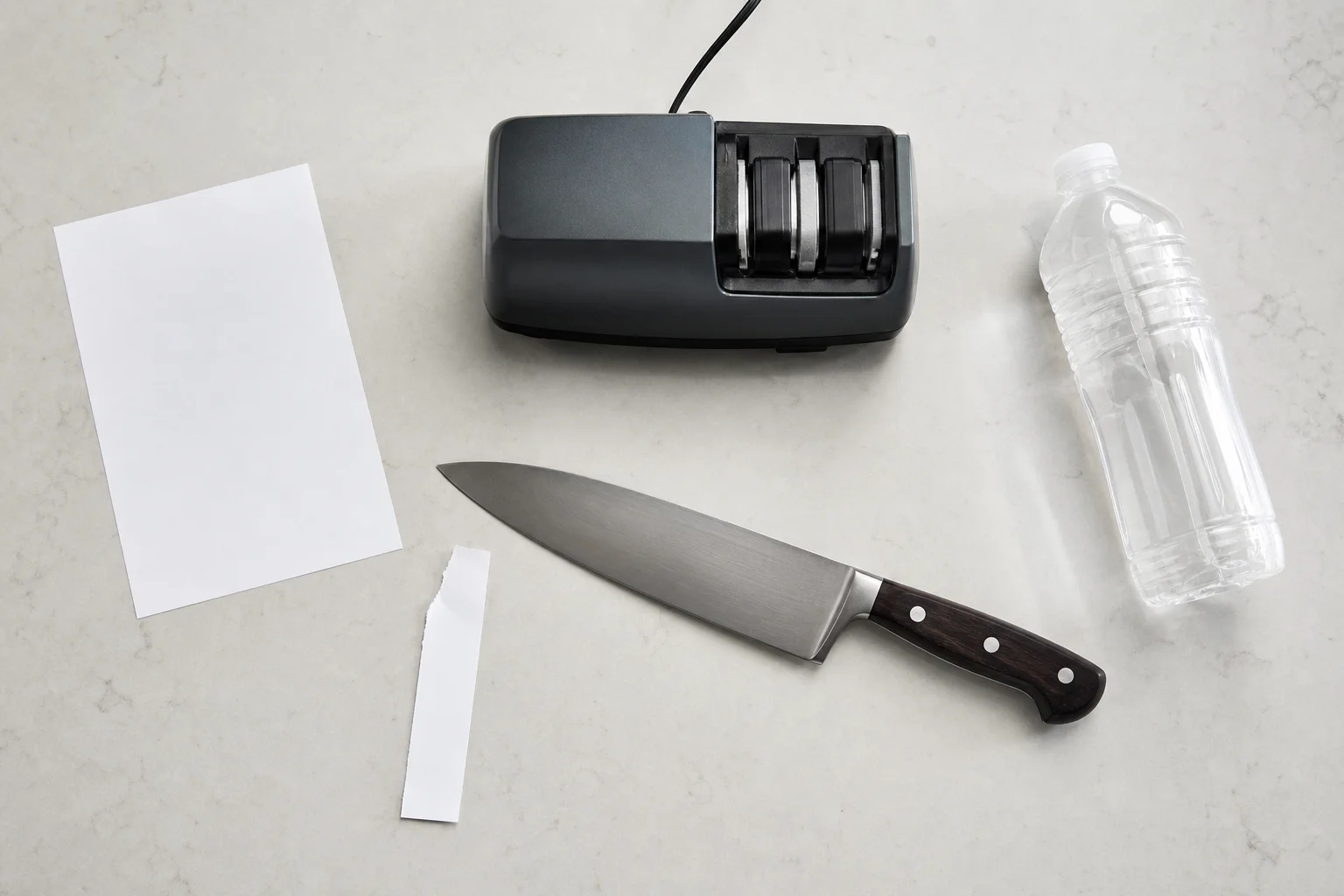
In testing, this type was much more effective than the manual option. A cheap knife improved from 924 to 173. A harder Japanese-style knife went from 598 to 184. A softer Western-style knife finished at 144 after a second pass. All three knives sliced through tomatoes cleanly and passed the paper test. One Western-style blade was sharp enough to cut through two water bottles without knocking them over.
However, there are significant downsides. The sharpener is loud, sounding like a power tool. You have less control than it seems because the blade is hidden inside the slot, so you cannot see what’s happening to the edge. Mistakes matter more because the machine works quickly, and pressing too hard or pulling unevenly can remove more metal than intended. If your knife has a thick bolster or handle close to the edge, the very back of the blade may not reach the sharpening wheels. The motor and abrasive discs can also wear down or get clogged with metal dust over time.
Rolling Sharpeners
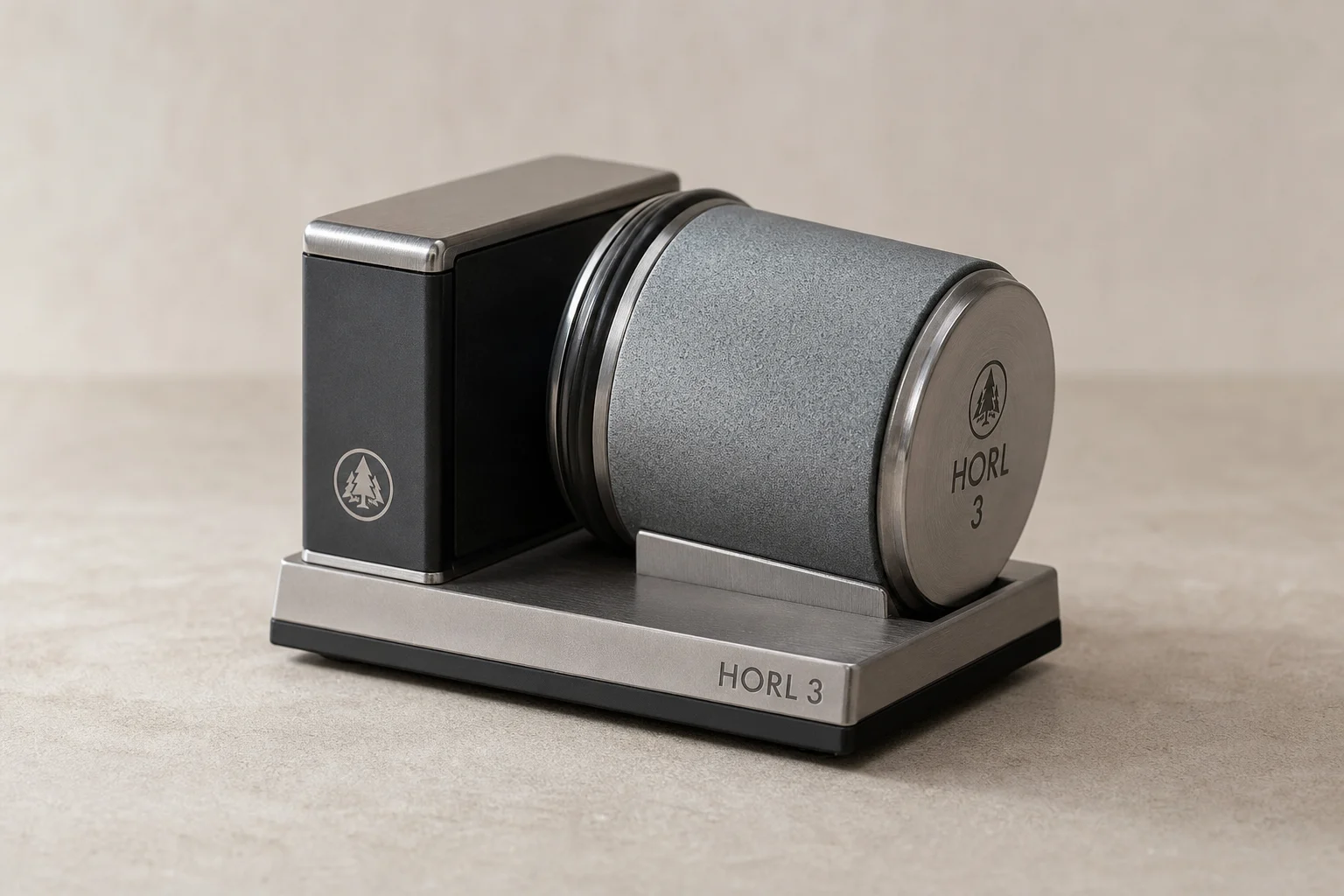
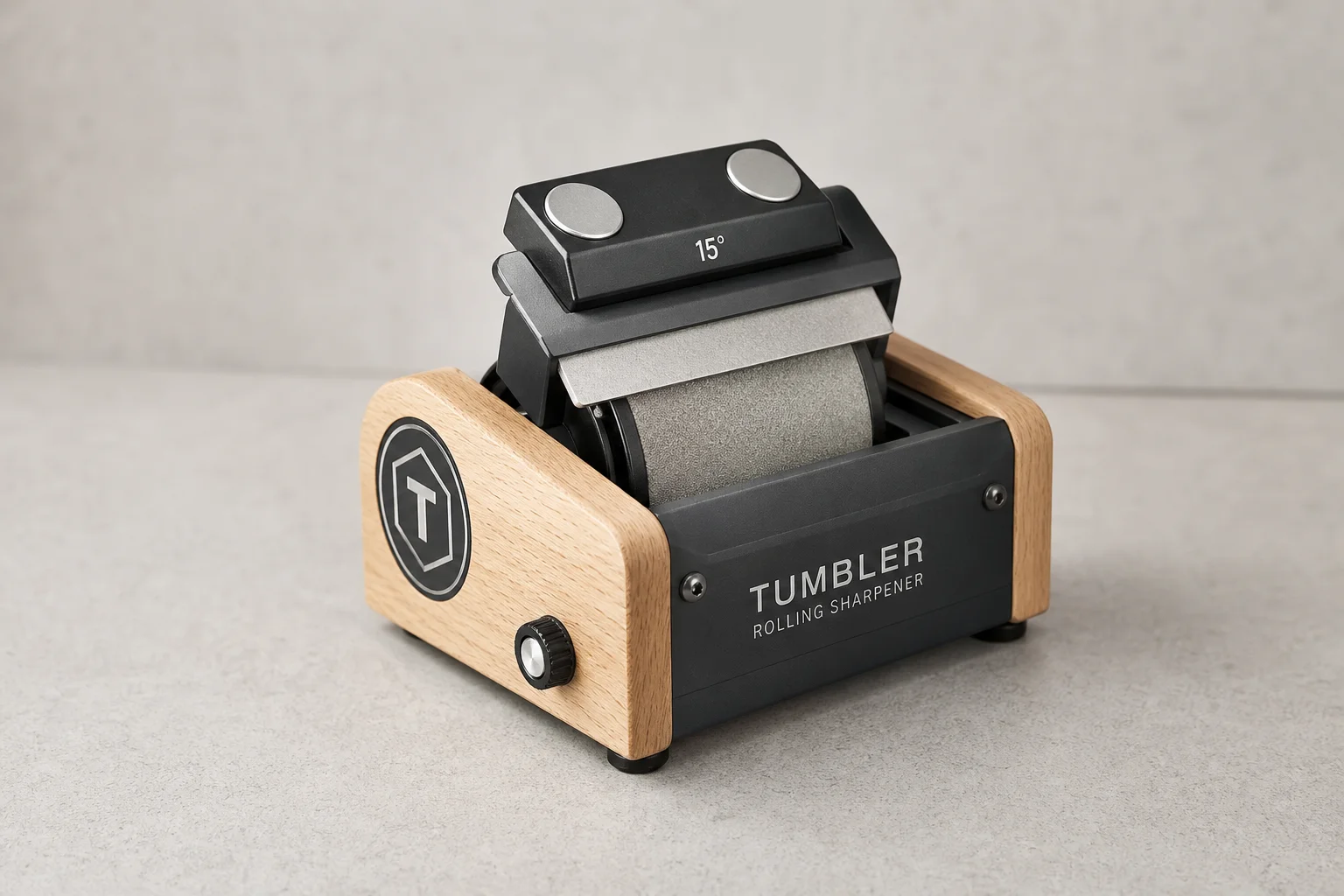
Rolling sharpeners have become extremely popular in recent years. You attach the knife to a magnetic angle support with the edge facing up, then roll the sharpener back and forth along the edge. The magnetic block holds the knife at a consistent angle, the edge stays visible throughout, and switching between coarse and fine sides takes about one second. Some models let you swap in different discs for more control.
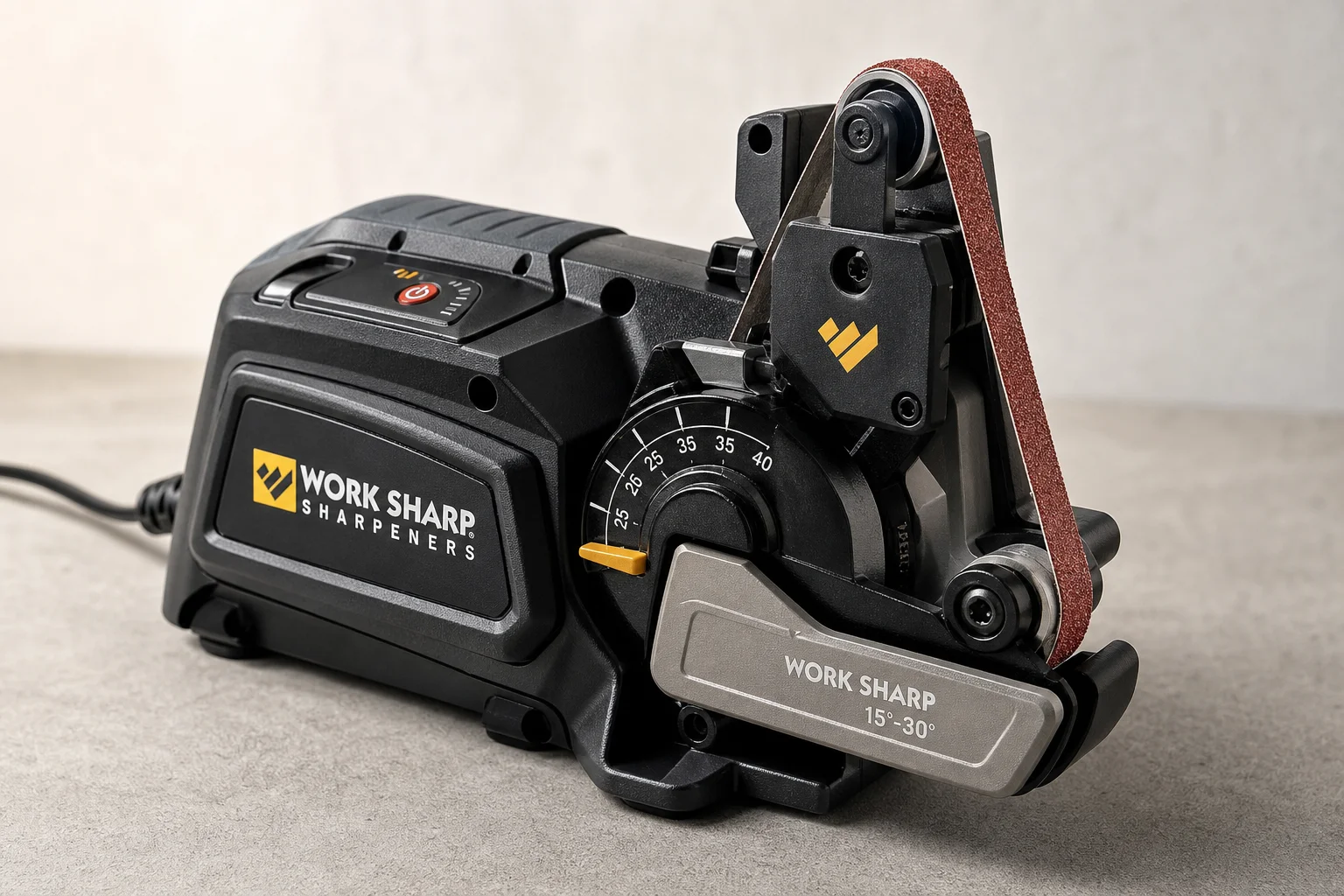
Quality varies significantly among rolling sharpeners. Some roll smoothly while others feel stiff, some have stronger magnets, and some are much easier to control. In testing, the Horl 3, Tumbler, and Work Sharp rolling models showed mixed results. A cheap knife barely improved after more than six minutes of sharpening and failed the paper test. A softer Western-style knife got much sharper, finishing around 300. A harder Japanese-style knife got the sharpest. If the knife is very dull or damaged, the first sharpening can take a while, but patient use can produce good results. One test sharpened a butter knife from extremely dull to under 300 in 15 minutes per side.
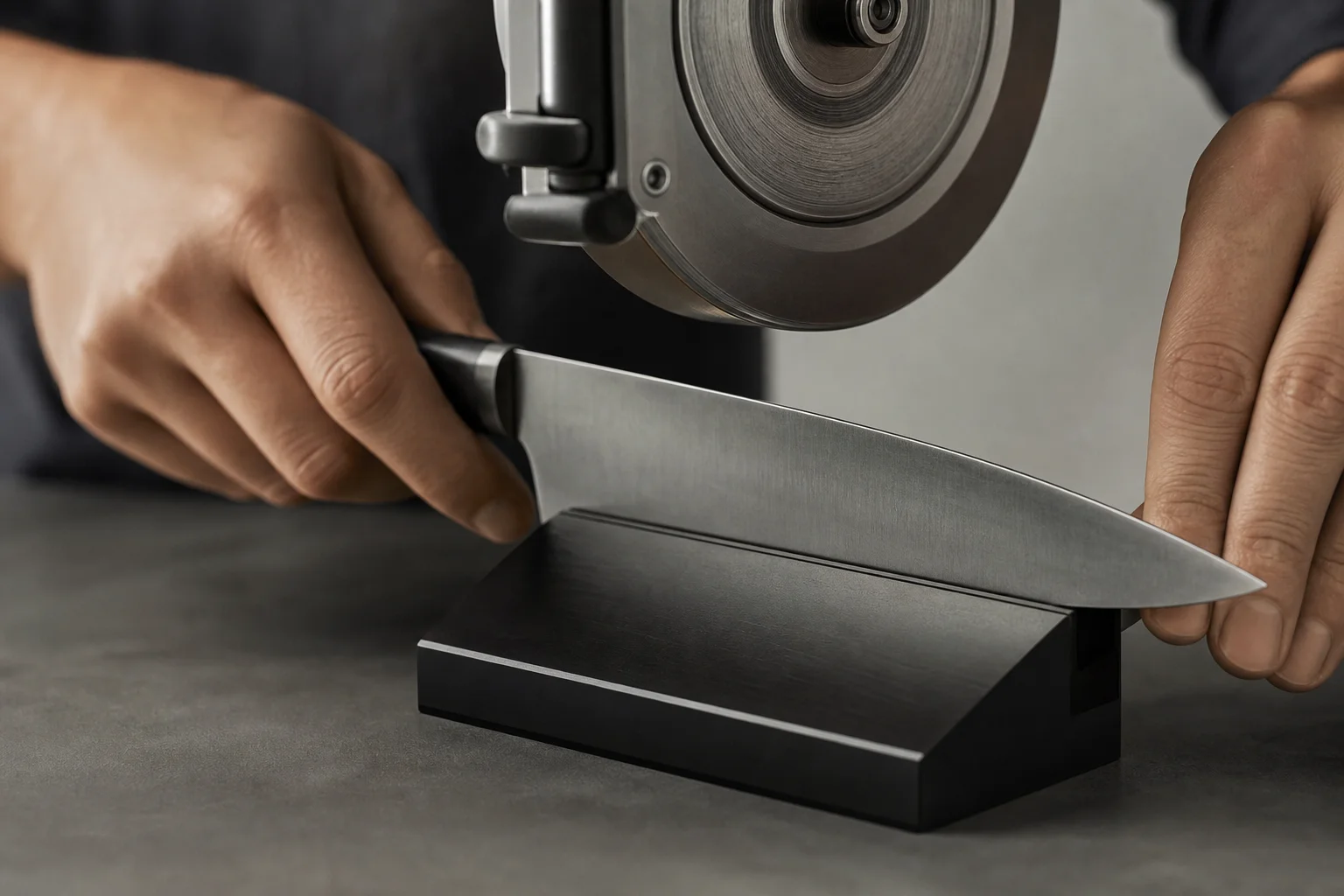
Rolling sharpeners are easy to use, but there are annoying limitations. Near the tip, chef’s knives get thinner and curve, so you must lighten pressure and turn the roller with the blade. Some handles block the roller from reaching the very back of the edge. Because the edge faces up while sharpening, you must be careful that your hand does not slip.
Fixed-Angle Sharpening Systems
Fixed-angle systems let you snap a tower into a base, attach a magnetic sharpening rod, clamp the knife in place, set the angle, and start sharpening. The knife stays stationary while you move the abrasive stone back and forth along the edge, then flip and repeat on the other side. The main benefit is control: you choose the exact angle and the rod holds it for you.
In testing, results were inconsistent. A cheap knife barely improved after the first round and was still not great after a second. A softer Western-style knife struggled and actually got worse after the second sharpening. A harder Japanese-style knife did much better. Beyond sharpening results, the process is tedious. You must clamp the knife tightly, set the angle, sharpen one side, rotate the knife, sharpen the other side, and repeat through the grits. Loosening the clamp when done takes effort. The actual sharpening is repetitive because the stone is short, requiring many back-and-forth passes. For very dull or damaged knives, this can strain your arm and shoulder. Some models have flex and movement in the base and clamp, requiring you to hold them steady. Your hand also moves back and forth close to a sharp edge, and the whole sharpener can tip if not held steady.
Whetstones
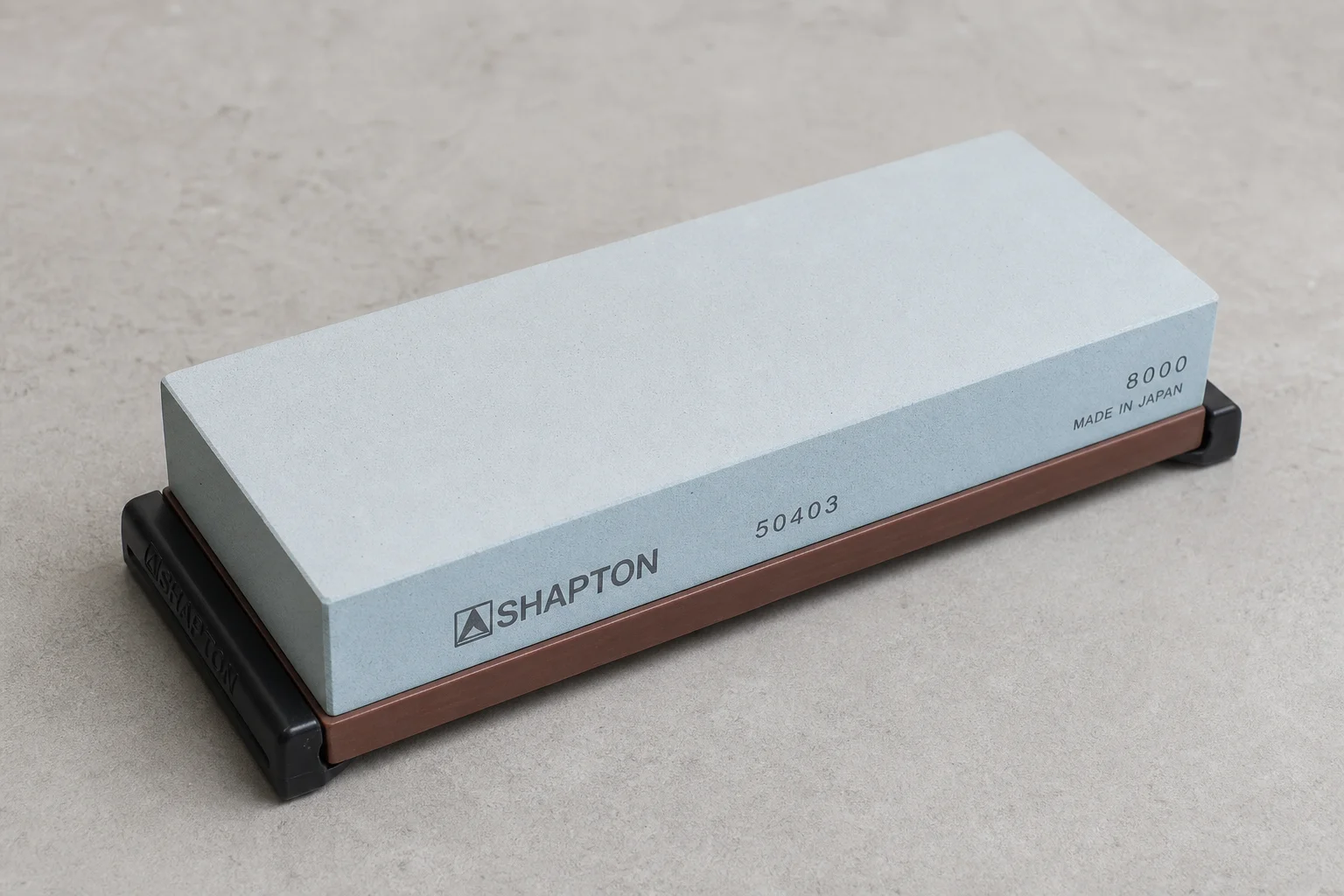
A whetstone is the simplest option but has the highest learning curve. You put it on the counter, add water if required (some stones like Shapton are splash-and-go), hold the knife at the correct angle, and move the blade across the stone to grind a new edge. The biggest advantage is flexibility: you can sharpen almost any knife, any shape, any size, and any angle.
In testing, whetstones worked really well. A cheap knife started over 1,000 and finished around 200. A softer Western-style knife started over 900 and finished at 266. A harder steel knife started at 460 and finished at 250. All three passed the paper test, and tomato and pepper cuts were noticeably cleaner than most other sharpeners.
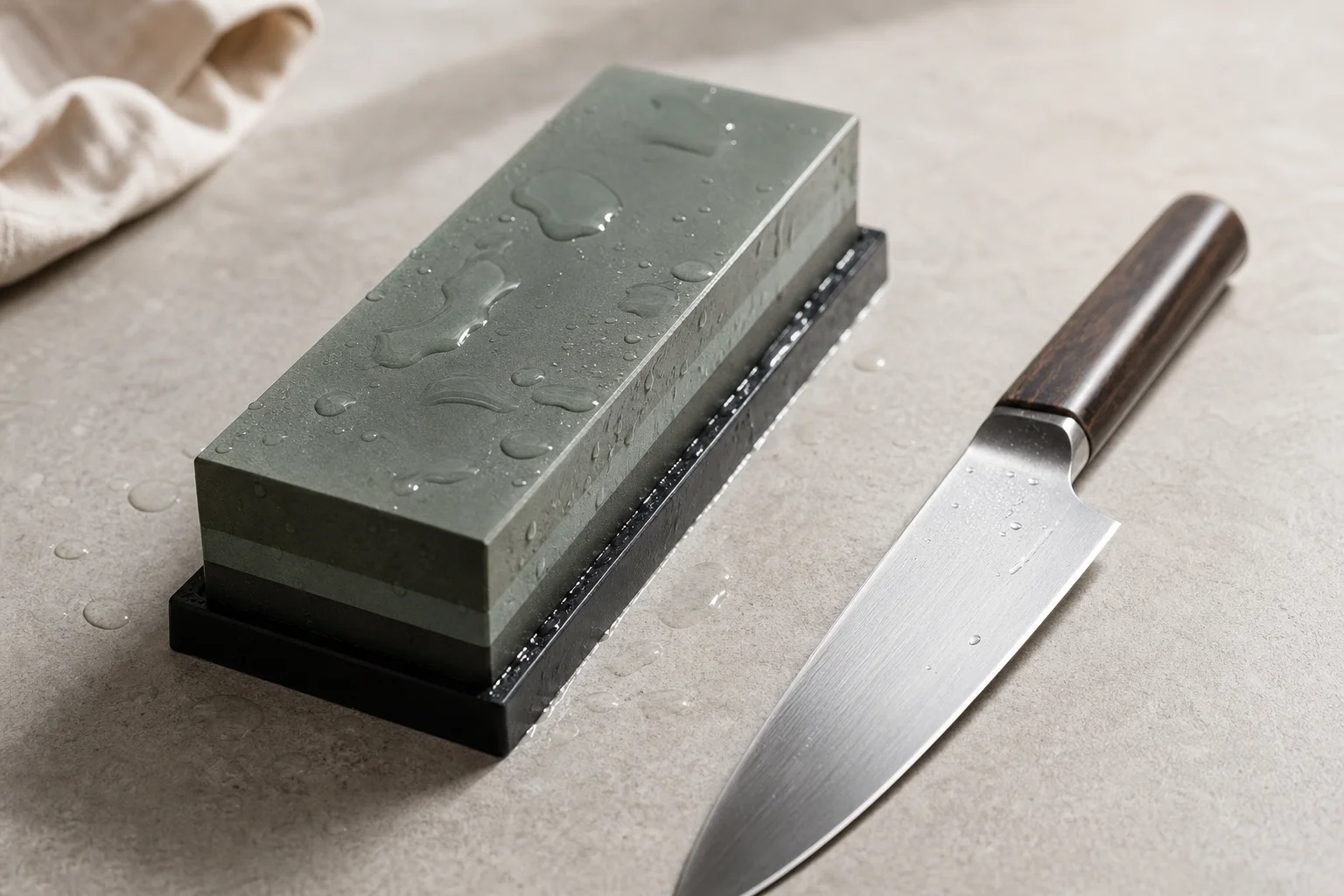
The downside is that whetstones take practice. Nothing holds the angle for you, so you must find the ideal angle and keep it consistent as you move the knife across the stone. If you lift your wrist, tilt the blade, or change the angle, you can sharpen unevenly or remove metal where you did not intend. Whetstones are also messier because you use water, the stone creates a slurry, and you must rinse everything off when done.
Conclusion
If you are willing to spend time practicing and have the physical ability, learning to use a whetstone is worthwhile. They are affordable, easy to store, work on all knives, and produce some of the best results. If you do not have the time, patience, or desire to learn that skill and just want sharp knives fast, an electric pull-through sharpener is the best choice. It was one of the fastest and easiest options to use and delivered excellent results. Rolling sharpeners are easier than whetstones and less aggressive than electric sharpeners, but the best ones are expensive and can take a while on very dull knives. Fixed-angle systems, manual pull-through sharpeners, and electric belt sharpeners all have their place, but they would not be the first choice for most home cooks.
Further reading
Related Reviews
Kitchen Tools
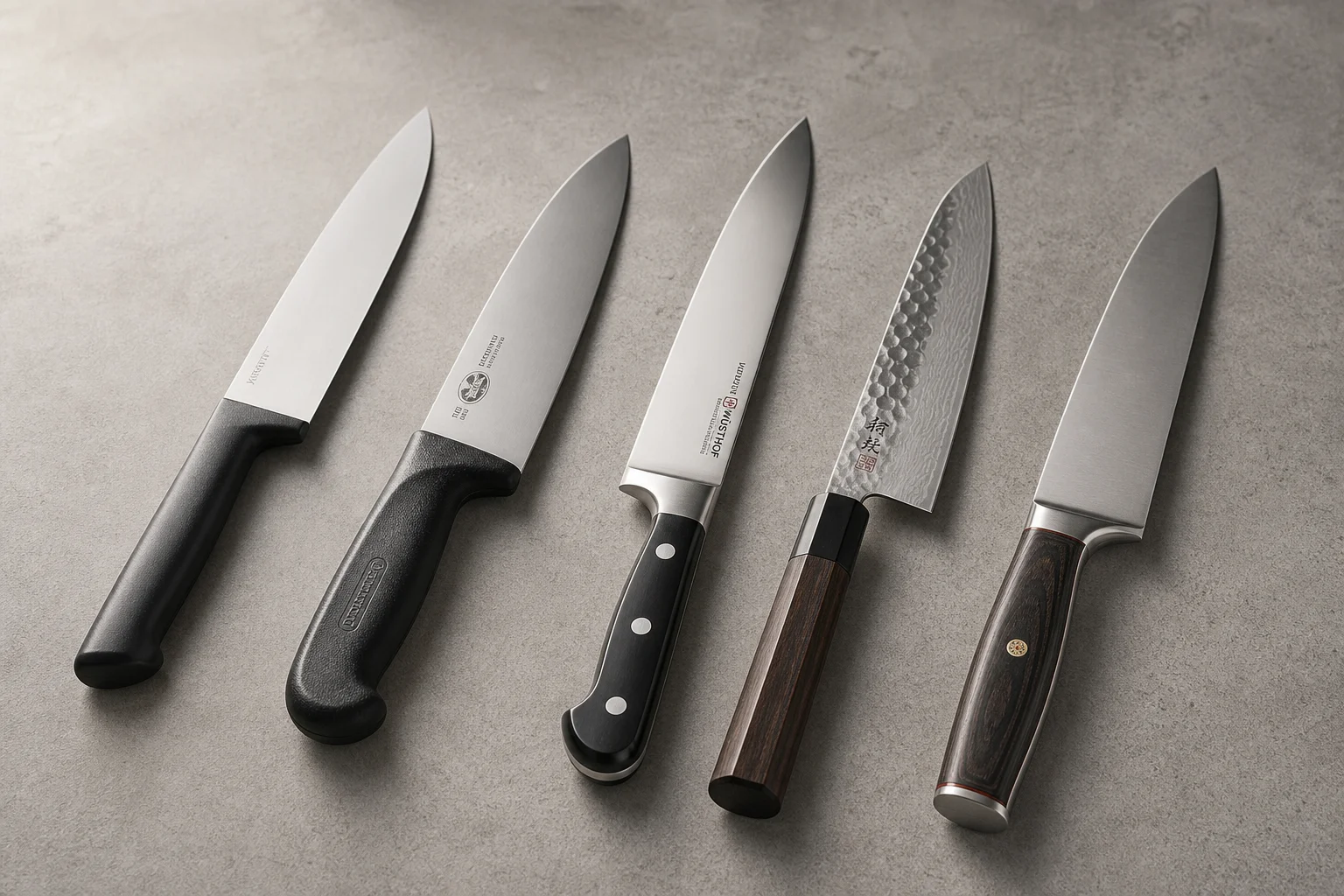
Amazon's Top-Rated Chef Knives Tested: Five Models from £11.50 to £200
We tested five of Amazon's highest-rated chef knives across sharpness, comfort, and versatility to see which delivers the best value and real-world performance.
Kitchen Tools
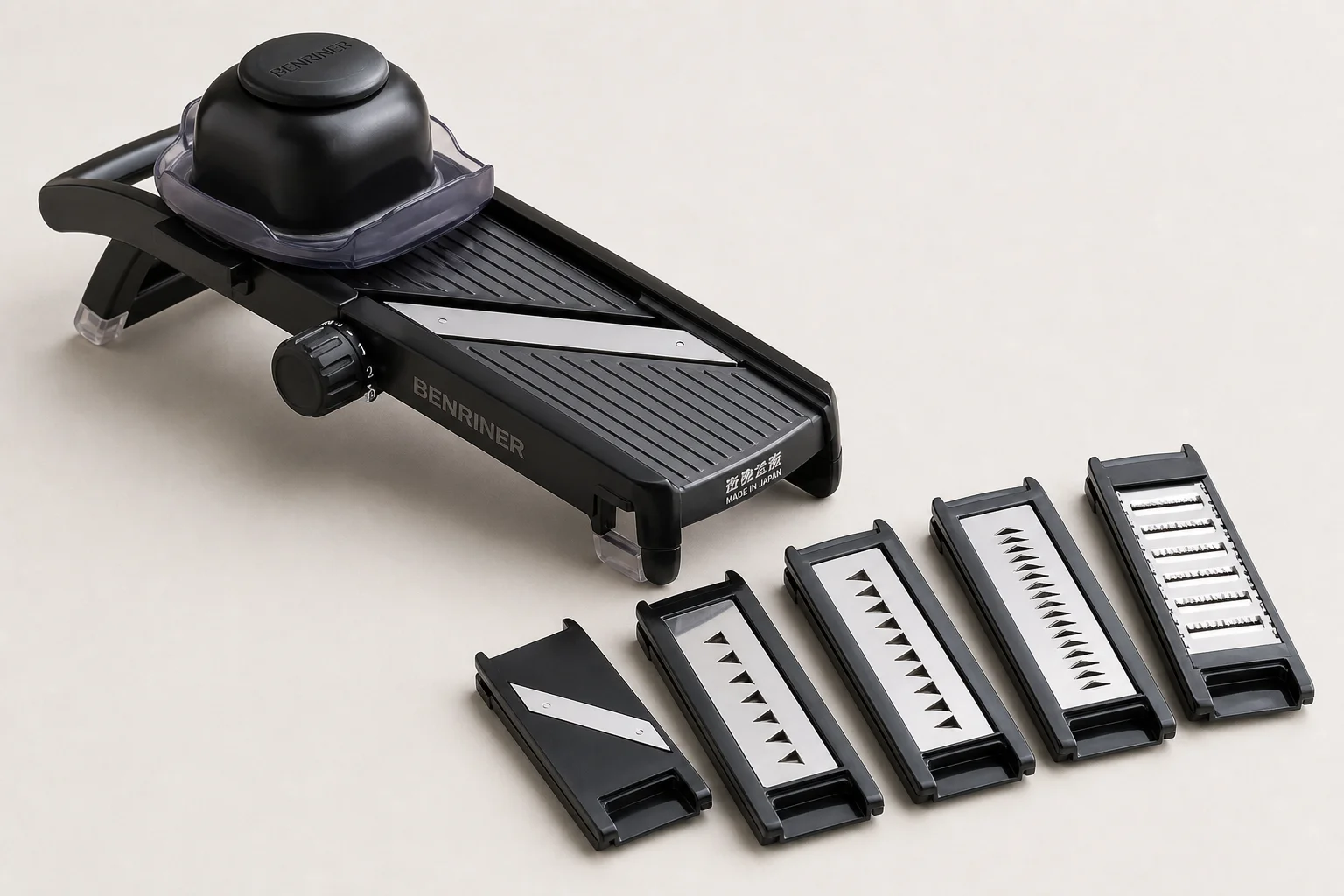
Benriner Japanese Mandoline Review: A Sharp Tool for Precise Vegetable Slicing
A practical guide to using a Japanese mandoline safely and effectively, with tips for achieving consistent, crisp results in the kitchen.
Kitchen Tools
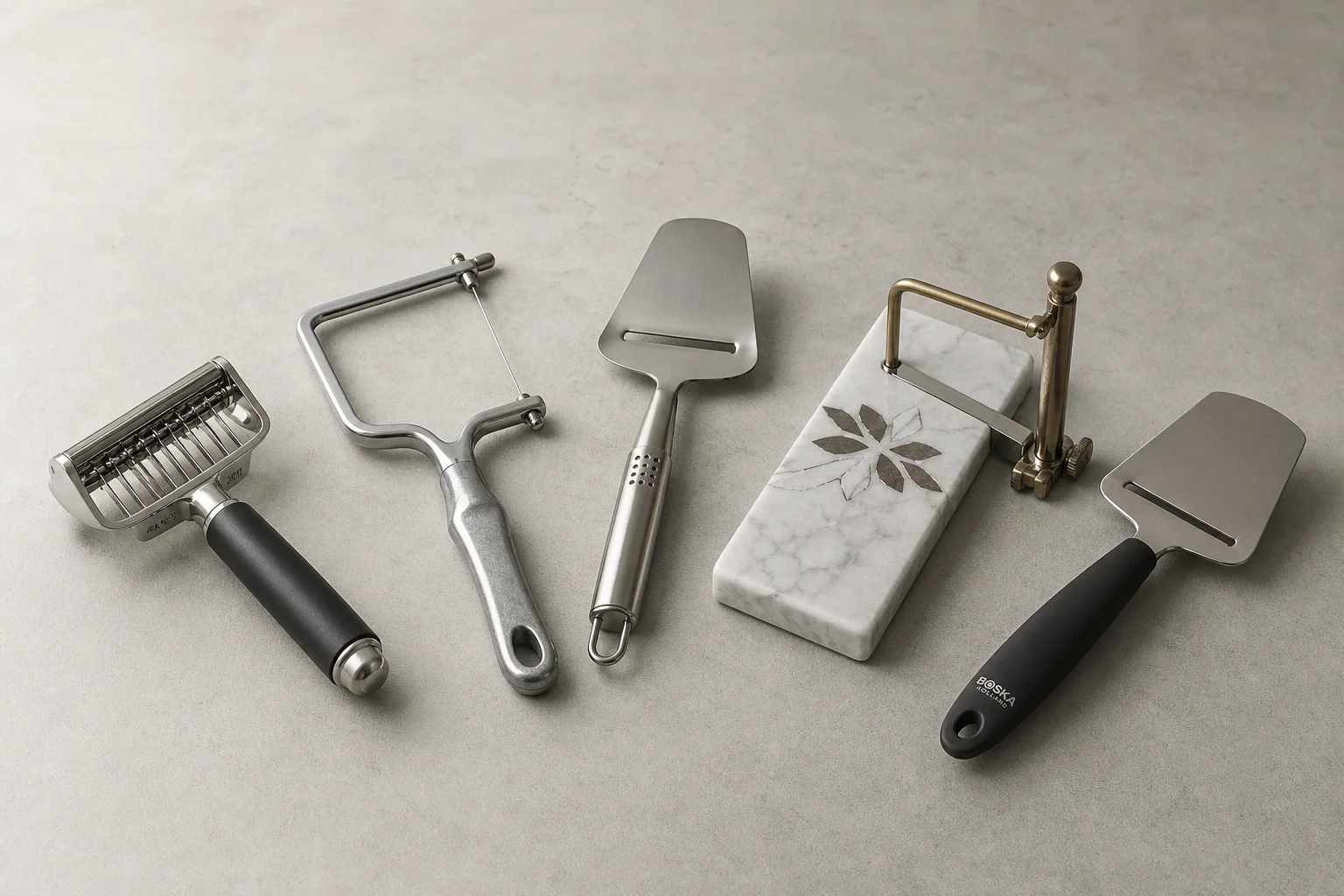
Best Cheese Slicers: Five Practical Options for Consistent Slicing
Five cheese slicers with different designs and features, from multi-blade versatility to wire-based precision, each suited to different kitchen needs and cheese types.