Kitchen Tools
Best Knife Sharpeners Tested: Nine Systems Compared From $4 to $900
Nine knife sharpeners went head to head for sharpness, edge durability, and ease of use. Here is how each one performed and who should buy it.
Introduction
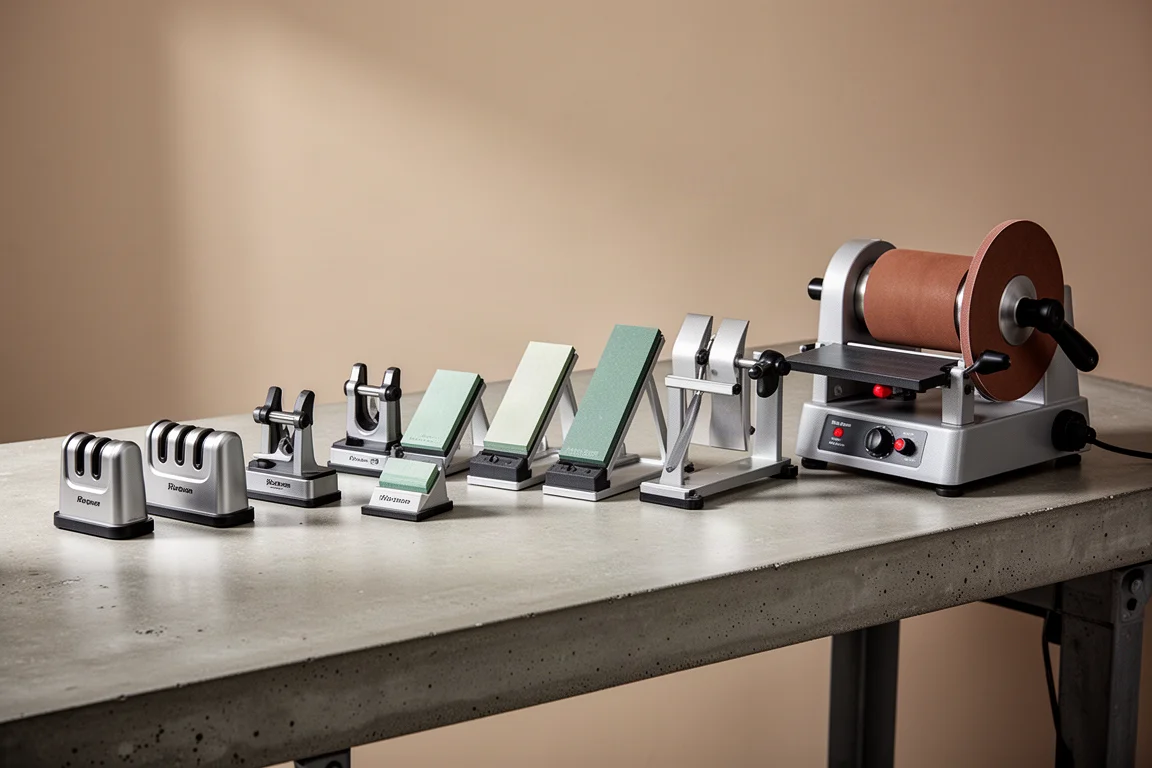
Nine knife sharpeners, from a $4 pocket pull-through to a premium guided system near $900, were tested under the same conditions to answer one question: does an expensive sharpener actually produce a sharper edge? Each sharpener was used to restore the same set of Japanese high-carbon stainless chef’s knives, then the edges were measured, durability-tested, and compared.
How the sharpeners were tested
Sharpness was measured with a certified sharpness tester that records the force needed to cut through standard test media. For context, a double-edge razor blade scores around 50, high-end cutlery sits between 250 and 350, and a knife that needs sharpening reads around 400. A dull butter knife scores near 2000.
The test knives were deliberately dulled by running the blades across an aluminum pipe with added weight, taking them to a uniform dull score of about 1,160. After sharpening, each blade was run 30 passes across hedge apple wood, an extremely hard hardwood, to see how well each edge held up.
Smith’s Knife Sharpener
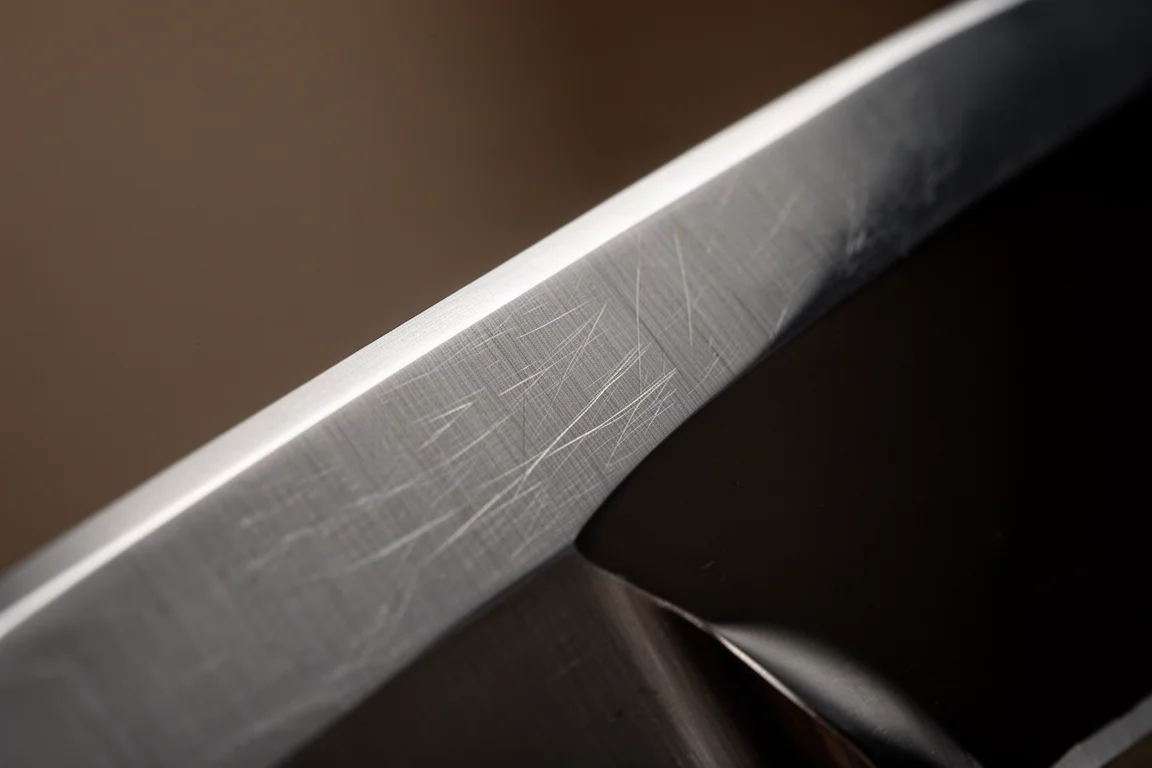
At only $4, this compact pull-through sharpener is the cheapest in the test. Three or four strokes through the carbide slots restore a very dull edge, and about a minute on the preset-angle ceramic rods finishes it. It features non-slip rubber feet for safety, though the edge it leaves looks somewhat jagged up close.
The result was a sharpness score of 175, which is impressive for the price. Durability, however, was the weakest here: after the hardwood test, the score dropped from 175 to 1,040.
Speedy Sharp Knife Sharpener
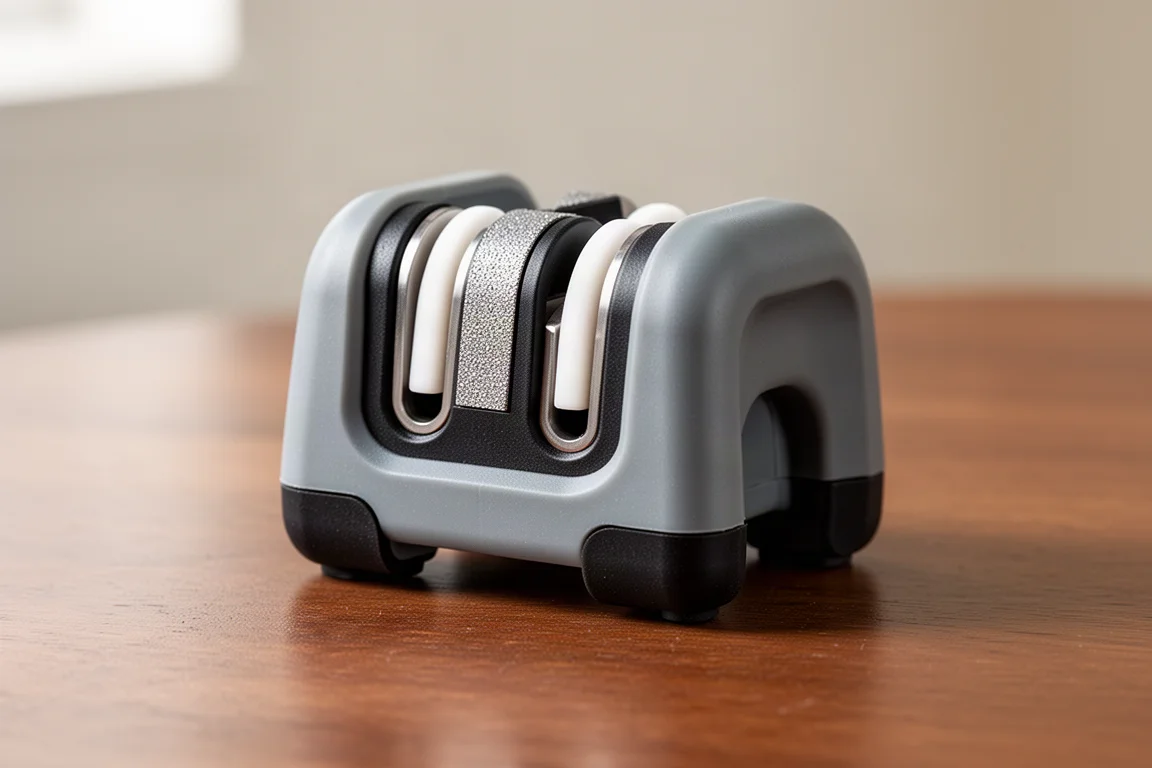
The $12 Speedy Sharp is made in the USA with micro 100 high-grade carbide and is marketed as the world’s fastest sharpener. It is more compact than the Smith’s and can sharpen knives, garden tools, fishing hooks, scissors, axes, and more. Held at a slight angle tilted away from the knife surface, it slides from handle to tip and hones in reverse.
It took only about 15 seconds to work a knife and matched the original bevel closely, scoring 175, nearly as sharp as the factory edge. In the durability test it held up much better than the Smith’s, finishing at 385.
Lansky Knife Sharpening System
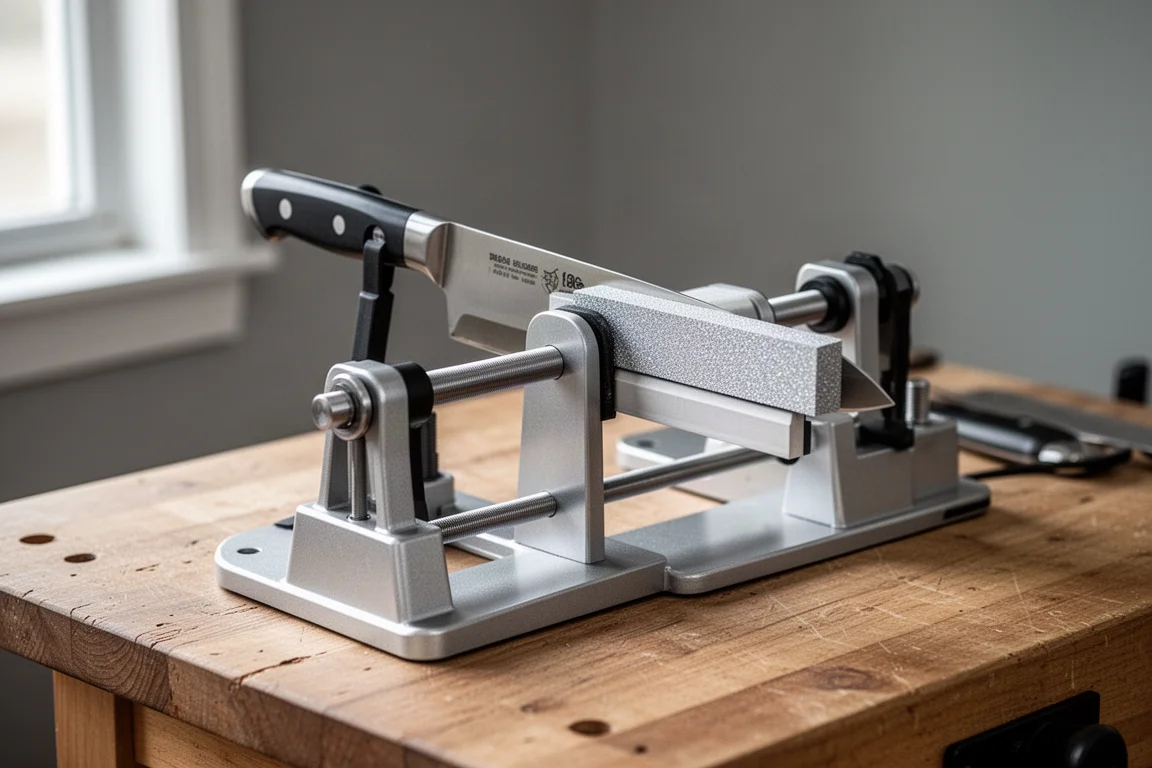
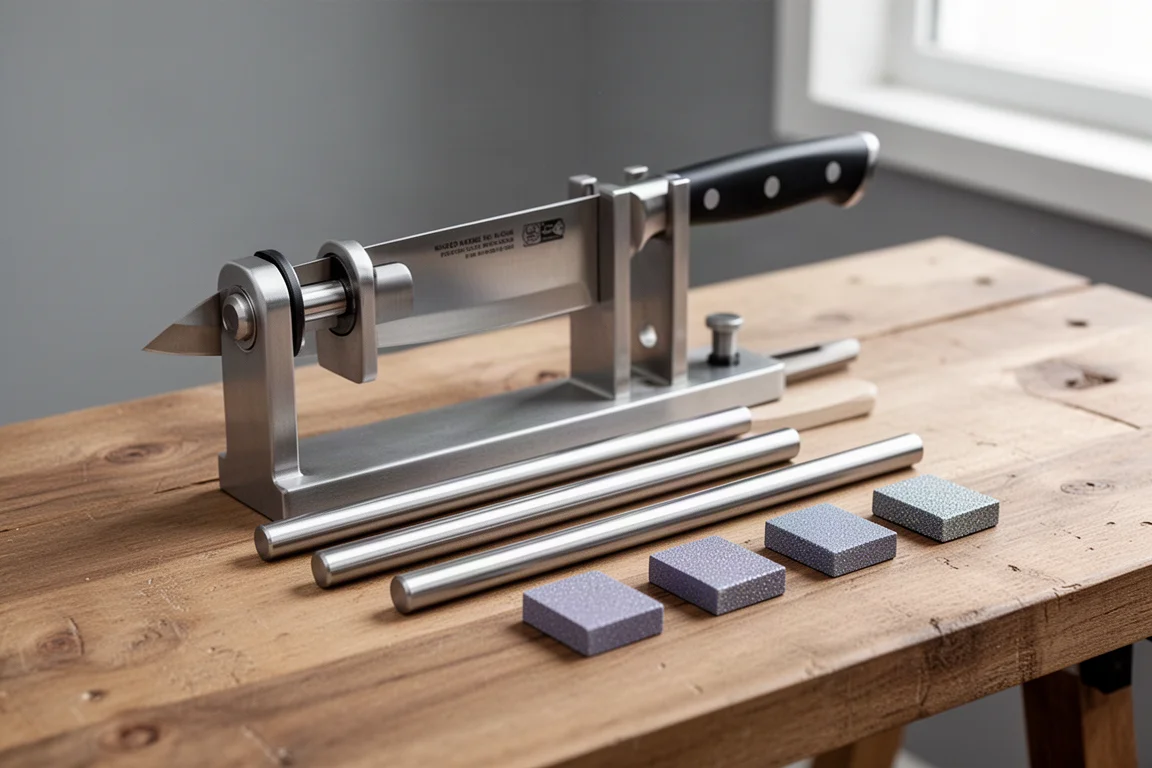
At $78, the Lansky is an American-made guided system with a knife clamp with angle sensor, four guide rods, and four diamond stones. It offers 17, 20, 25, or 30 degree angles, and sharpening one side then flipping the clamp keeps strokes consistent.
The bevel came out looking very clean, and the final score of 95 was very impressive for the price. After the hardwood test it read 135, which is still as sharp as a fresh factory edge. It is the standout budget recommendation for anyone just starting out.
Work Sharp Classic 2 Sharpening System
The Work Sharp Classic 2 costs $85 and is manufactured in South Africa. Its dual rods adjust from 20 to 25 or 30 degrees, and a preset upright blade guide means most knives can be sharpened without adjustment, using a sawing motion of 30 to 40 passes. The built-in steeling rods then push the edge toward a razor finish.
The system reshaped the entire bevel nicely, scoring 260, which is sharp for fine cutlery though not as sharp as the Smith’s or Speedy Sharp. The trade-off paid off in durability: only an 8% sharpness loss, the best edge retention of the entire test.
Work Sharp Ken Onion Edition
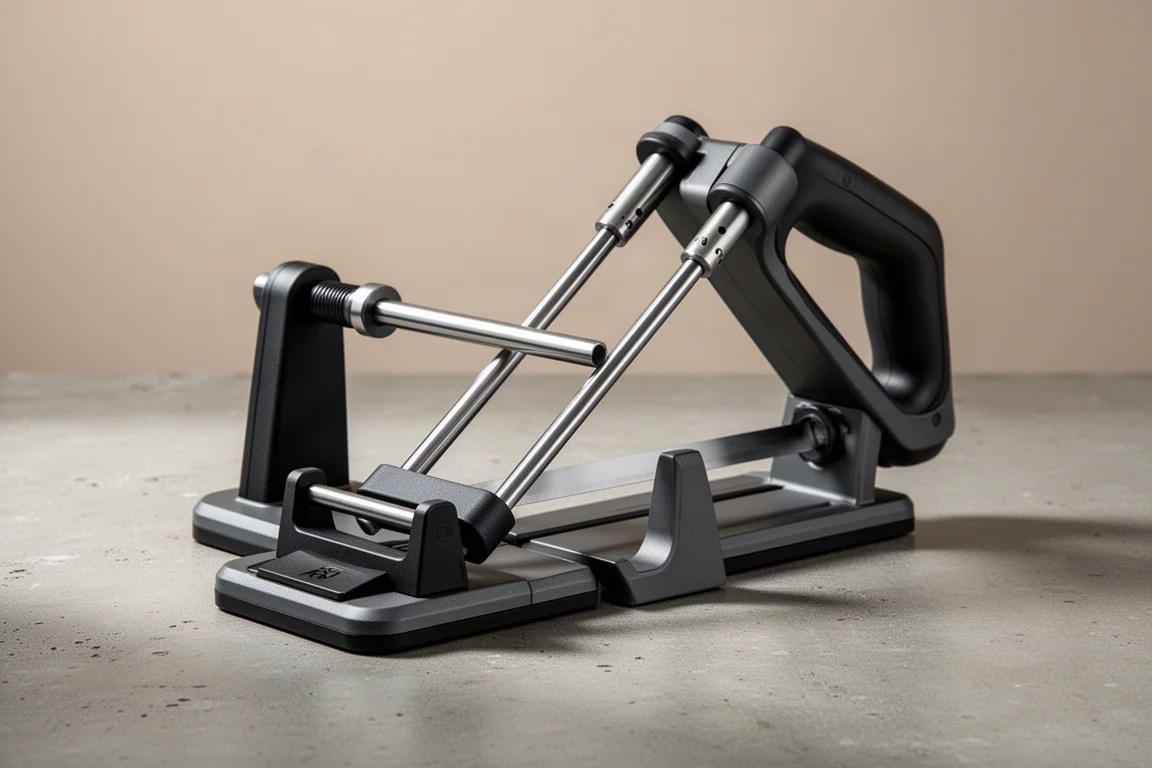
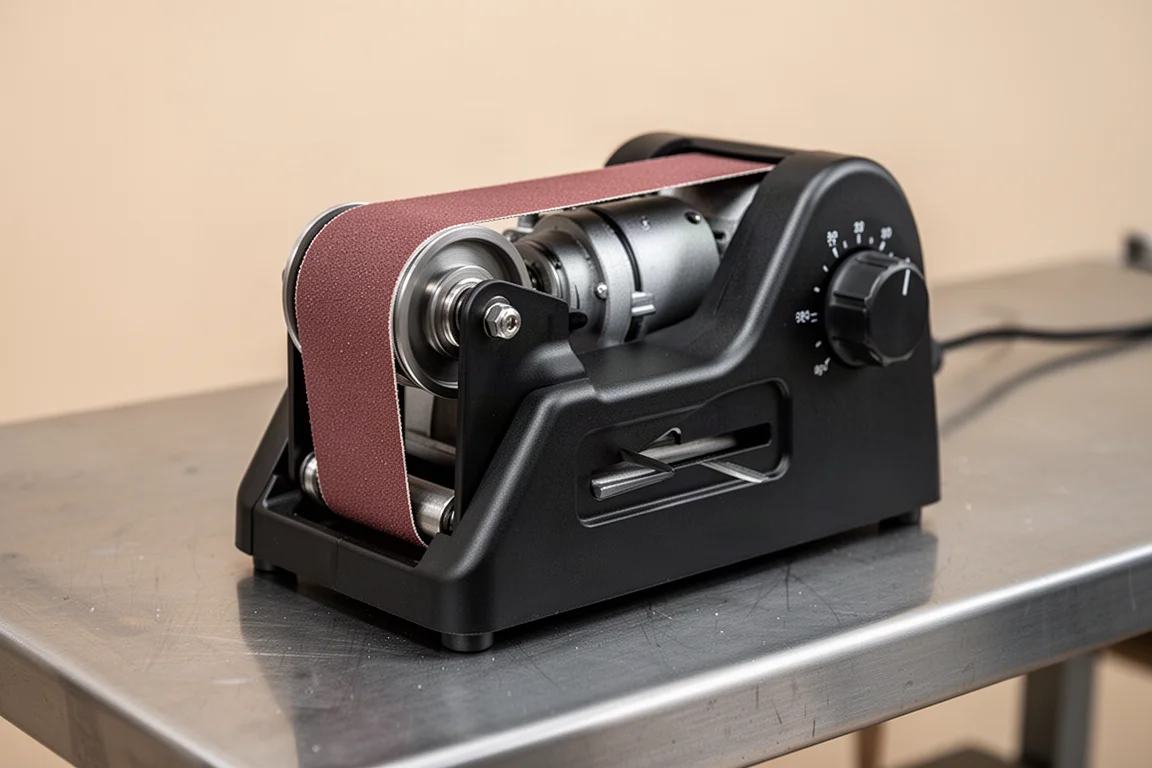
At $130, this American-made powered version of the Work Sharp sharpens between 15 and 30 degrees via a rear dial and comes with five different belts. The recommended finishing sequence uses the X65, X22, and X4 belts, 10 strokes per side, pulling the blade through at about one inch per second.
Unlike the others, it creates a convex edge, which puts more steel behind the edge to support it and keeps it sharper longer. The score of 170 was solid, and durability was excellent with just a 13% loss, aided by the less aggressive starting sharpness.
KME Precision Knife Sharpening System
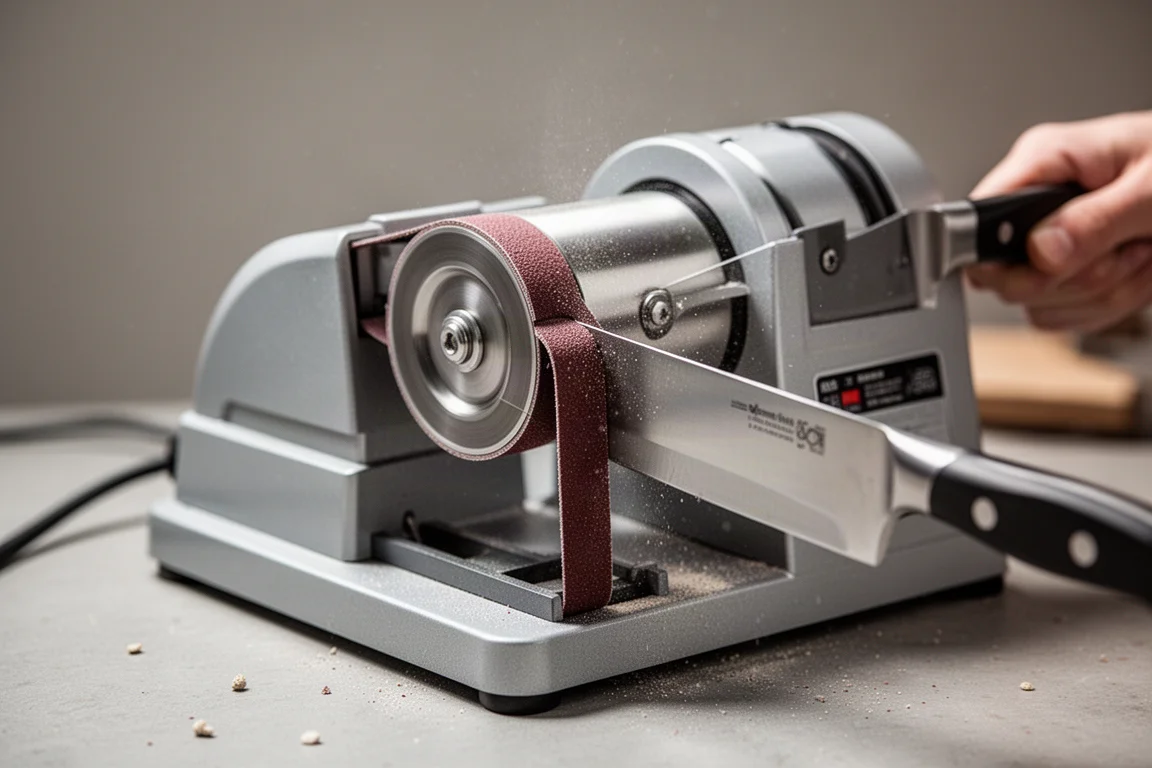
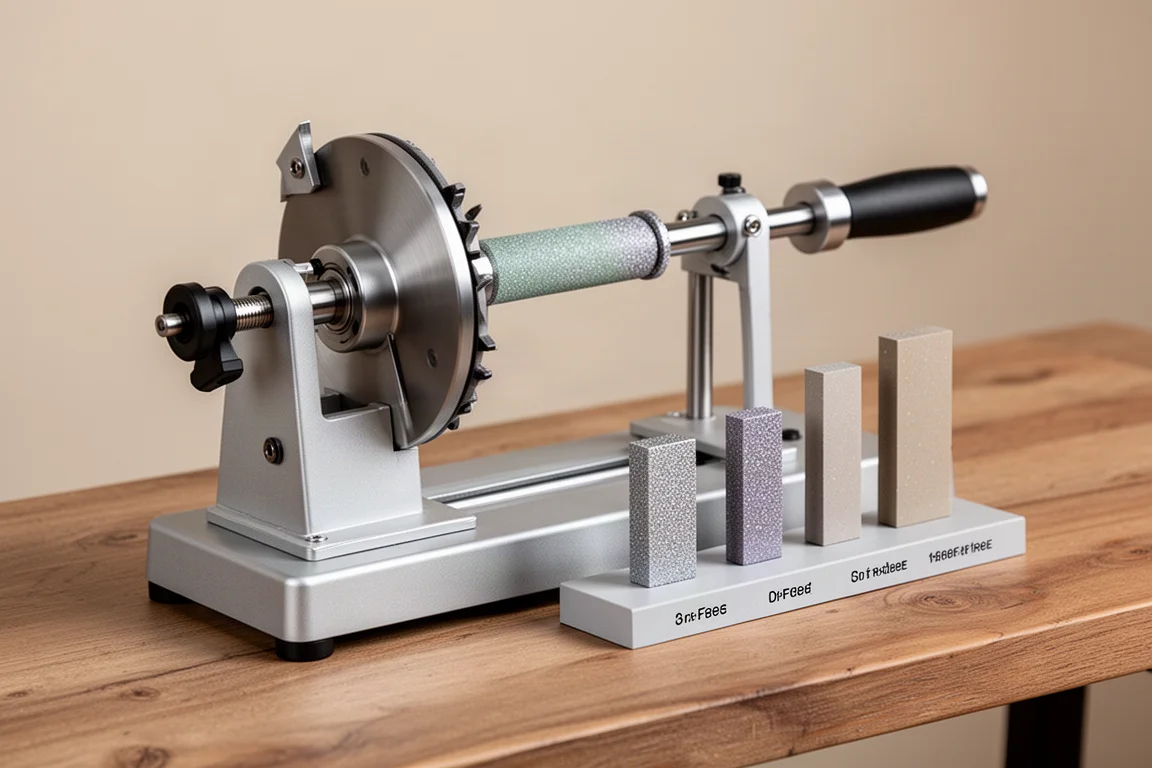
The KME, at $225, includes a diamond stone kit with 140, 300, 600, and 1500 grit stones plus a base. Its clamp jaws are marked with reference lines so blade positioning is repeatable, and the stone carrier works forward and back before finishing with upward-into-the-edge strokes.
It reshaped the bevel beautifully and scored 90, nearly as sharp as the top scorers. In the durability test it moved into the lead at 110, with only an 18% sharpness loss. It is essentially a Lansky with a lot of bells and whistles, and the extra cost feels justified.
TS Prof 360 Blitz
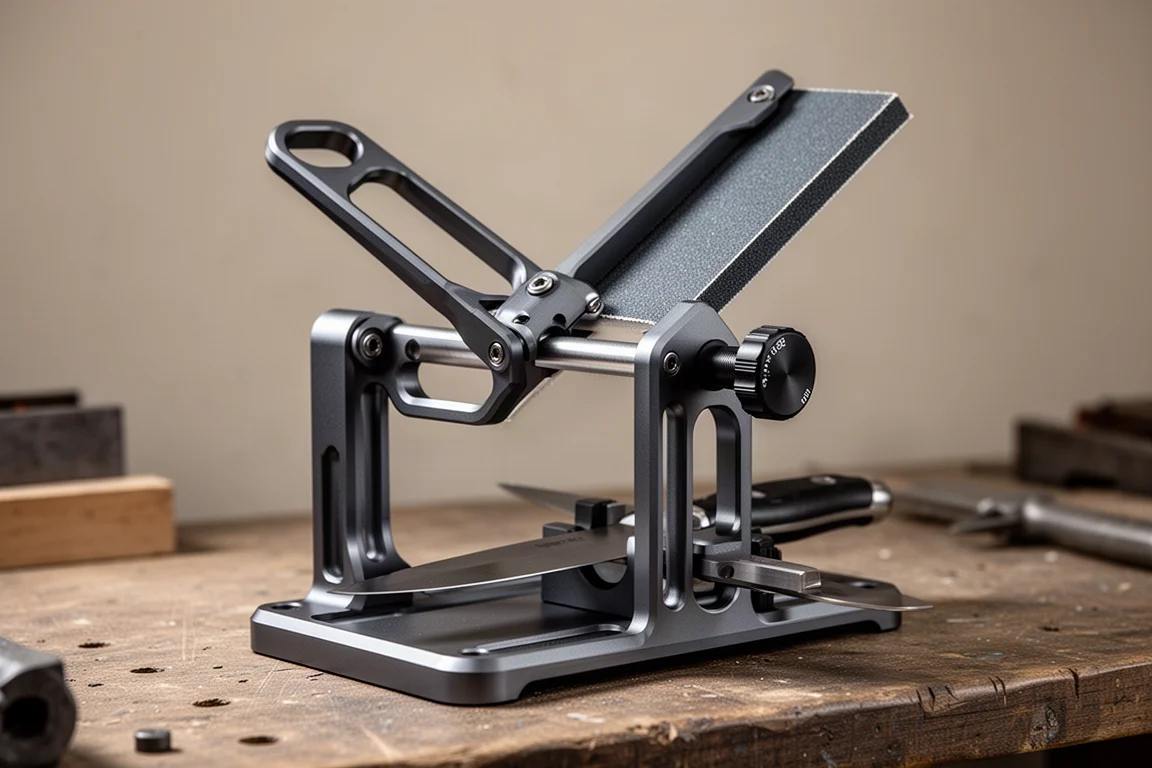
The Russian-made TS Prof 360 Blitz costs $380 and is built mainly from steel and aviation aluminum. Stones come in 150, 220, 400, 600, and 1000 grit, the angle scale maps knife types from fillet (8 to 13 degrees) to kitchen knives (13 to 18 degrees), and the compensator dial adjusts to stone thickness.
There is a noticeably steeper learning curve than with the others, but it becomes simple after setup. The edge scored 85, tied for the sharpest in the test, and stayed sharper than a factory edge after hardwood abuse at 120, with a 29% loss.
Tormek T8 Water-Cooled Sharpening System
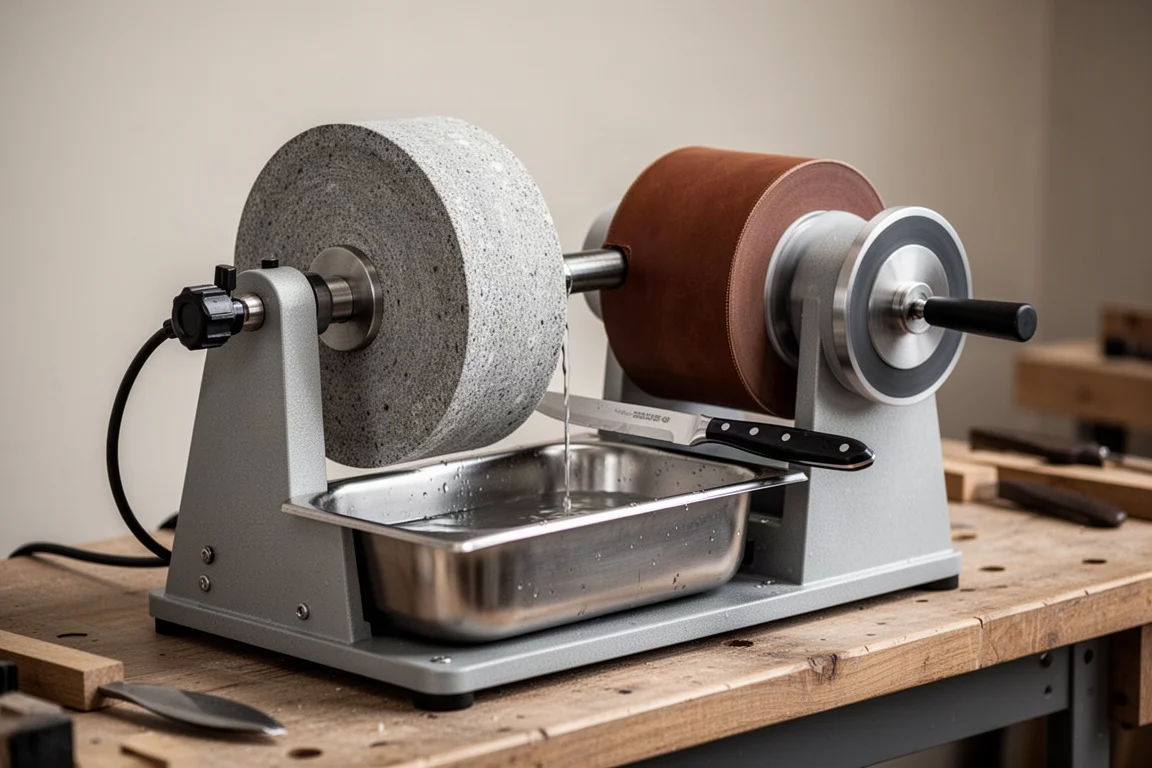
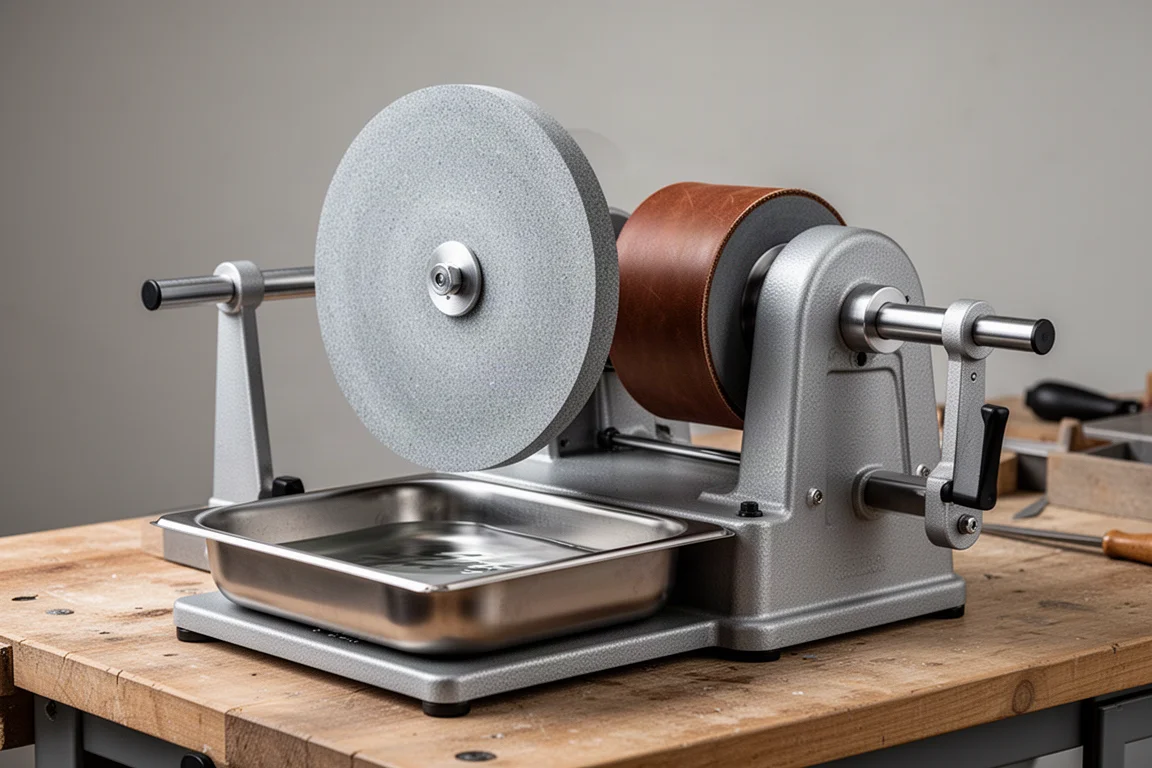
The Swedish-made Tormek T8 costs $750 and uses a water-cooled 250mm grindstone with a leather honing wheel impregnated with oil and compound. Note that the knife attachment is sold separately, though a Lansky clamp works well with it. Sharpening at a set angle uses a continuous back-and-forth motion until a burr forms, then the honing wheel refines the edge.
The final score of 100 was very good, and after the hardwood test it held 135, matching a new blade edge, with a 26% loss. About five minutes on the honing wheel produced a visibly very sharp blade.
Wicked Edge Knife Sharpener
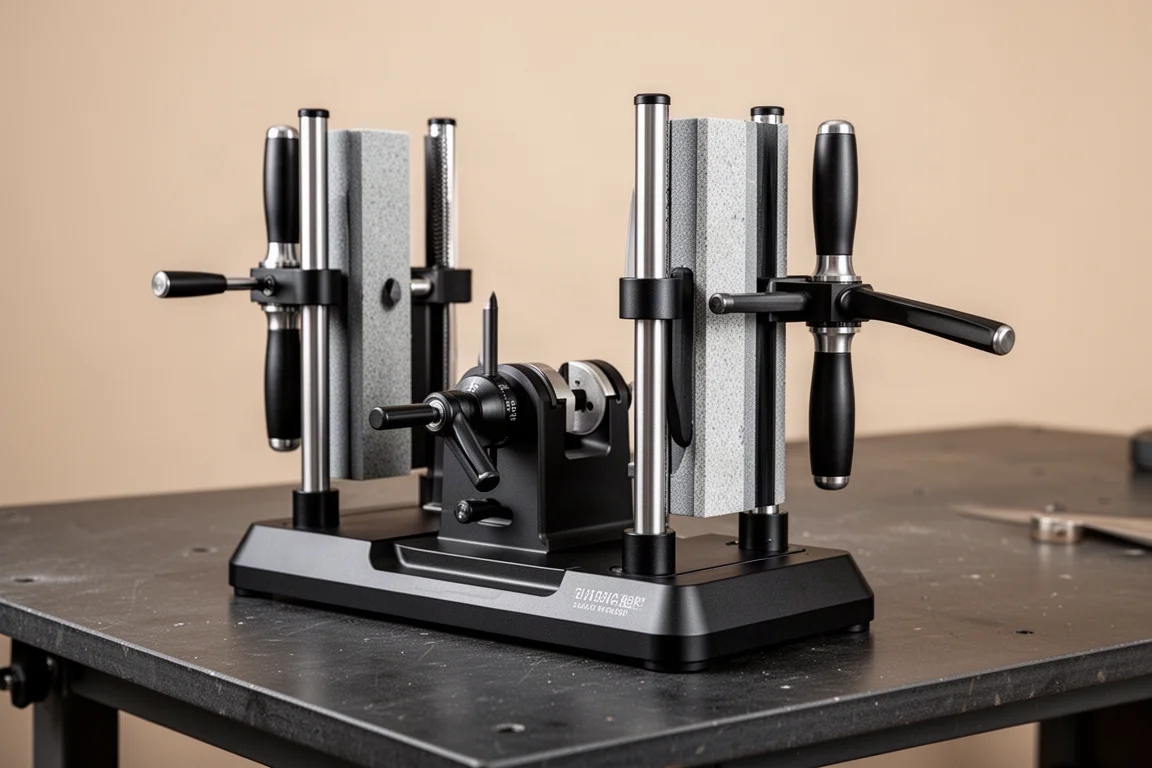
The American-made Wicked Edge, around $900, is the most expensive sharpener tested. It uses six stones with different grits on each side, from 100 to 1,000, and angle adjustment is simple via a lever. The workflow builds a burr on each side with the coarsest stones, then alternates strokes through progressively finer abrasives.
The bevel looked terrific and the score of 85 tied the TS Prof for the sharpest edge. After 30 hardwood passes it remained the sharpest knife in the test at 105, with a 19% loss, despite razor-level starting sharpness.
Which sharpener should you buy
Budget pick: the Lansky delivers a 95 sharpness score for $78 and is the easiest guided system to recommend for beginners. Premium pick: the KME at $225 impressed the most overall, scoring 90 sharp and leading the durability test at 110, while the TS Prof and Wicked Edge both hit the sharpest edge at 85. The TS Prof is more complex to set up, and the Wicked Edge is very expensive but proved the most durable at razor-level sharpness.
If edge retention matters most, the Work Sharp Classic 2 and Ken Onion Edition lose the least sharpness thanks to their less aggressive starting edges. If you want a powered, water-cooled workshop solution, the Tormek T8 is capable but remember the knife attachment is not included.
Conclusion
The sharpest edges came from the TS Prof and Wicked Edge at 85, with KME close behind at 90, and the Wicked Edge held its edge best at razor-level sharpness. But sharpness is not the whole story: the Lansky wins on value for beginners, the KME earns its higher price, and the Work Sharp family offers the best edge retention. Match the sharpener to your budget and patience level and any of the guided systems here will outperform a dull blade.
Further reading
Related Reviews
Kitchen Tools
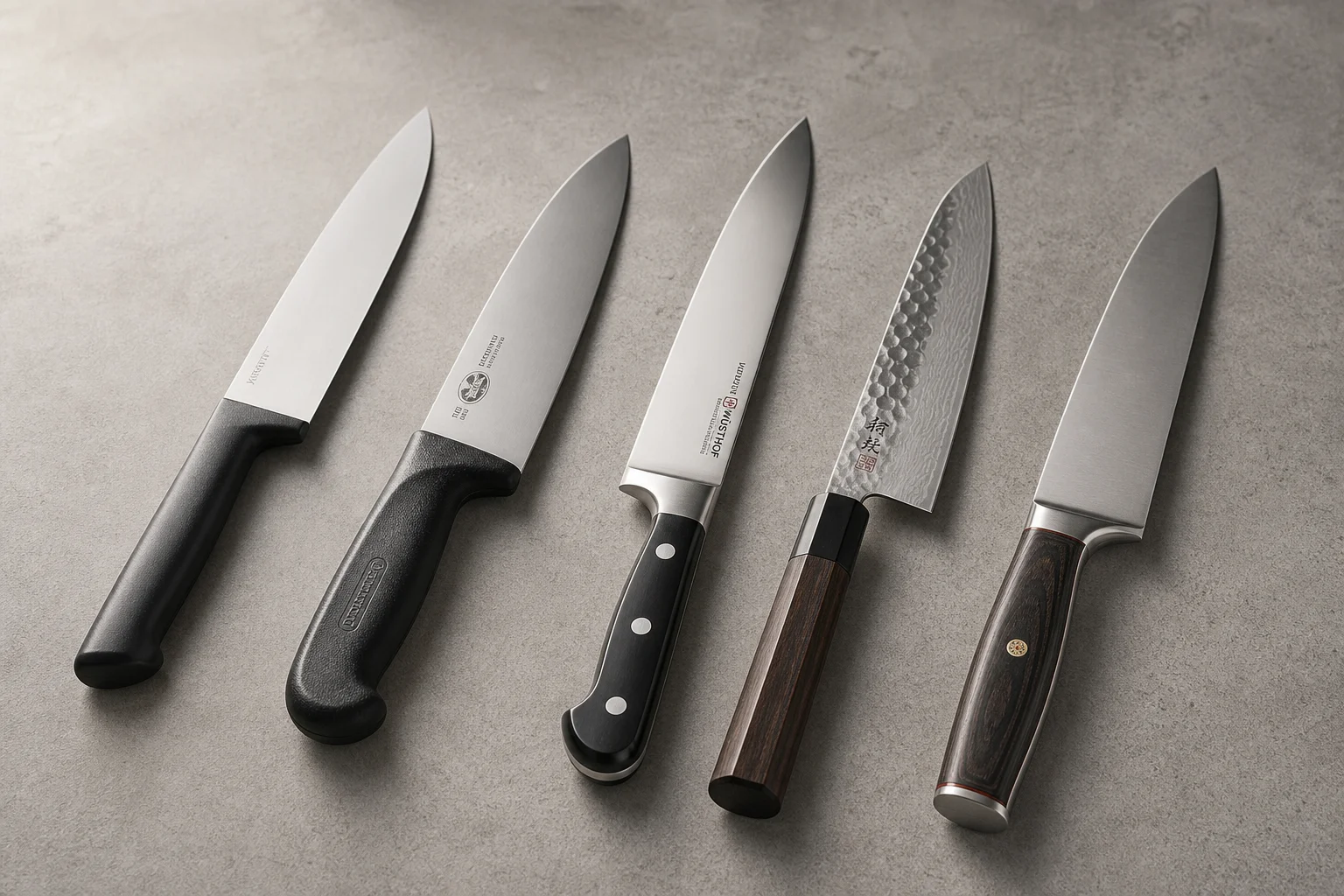
Amazon's Top-Rated Chef Knives Tested: Five Models from £11.50 to £200
We tested five of Amazon's highest-rated chef knives across sharpness, comfort, and versatility to see which delivers the best value and real-world performance.
Kitchen Tools
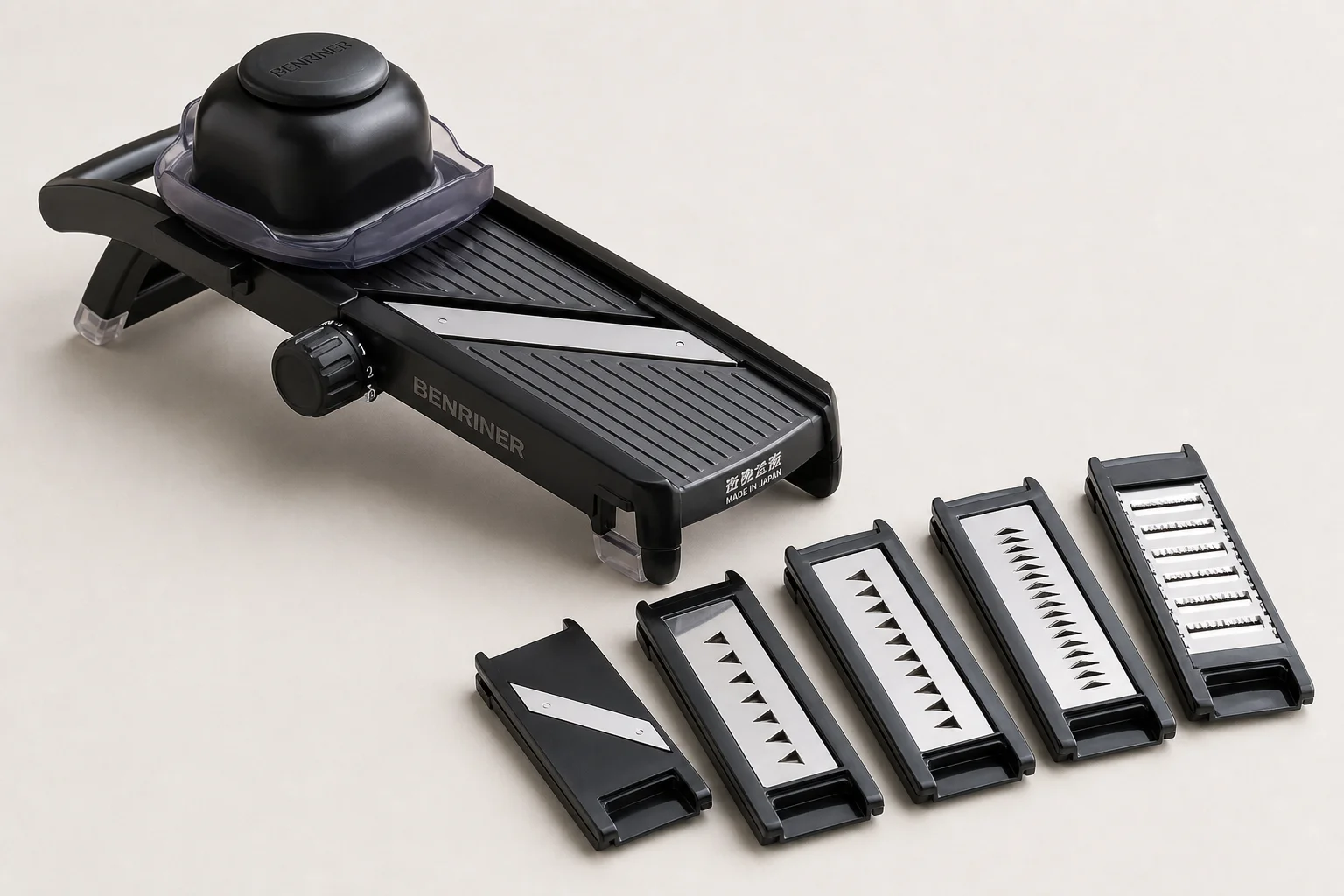
Benriner Japanese Mandoline Review: A Sharp Tool for Precise Vegetable Slicing
A practical guide to using a Japanese mandoline safely and effectively, with tips for achieving consistent, crisp results in the kitchen.
Kitchen Tools
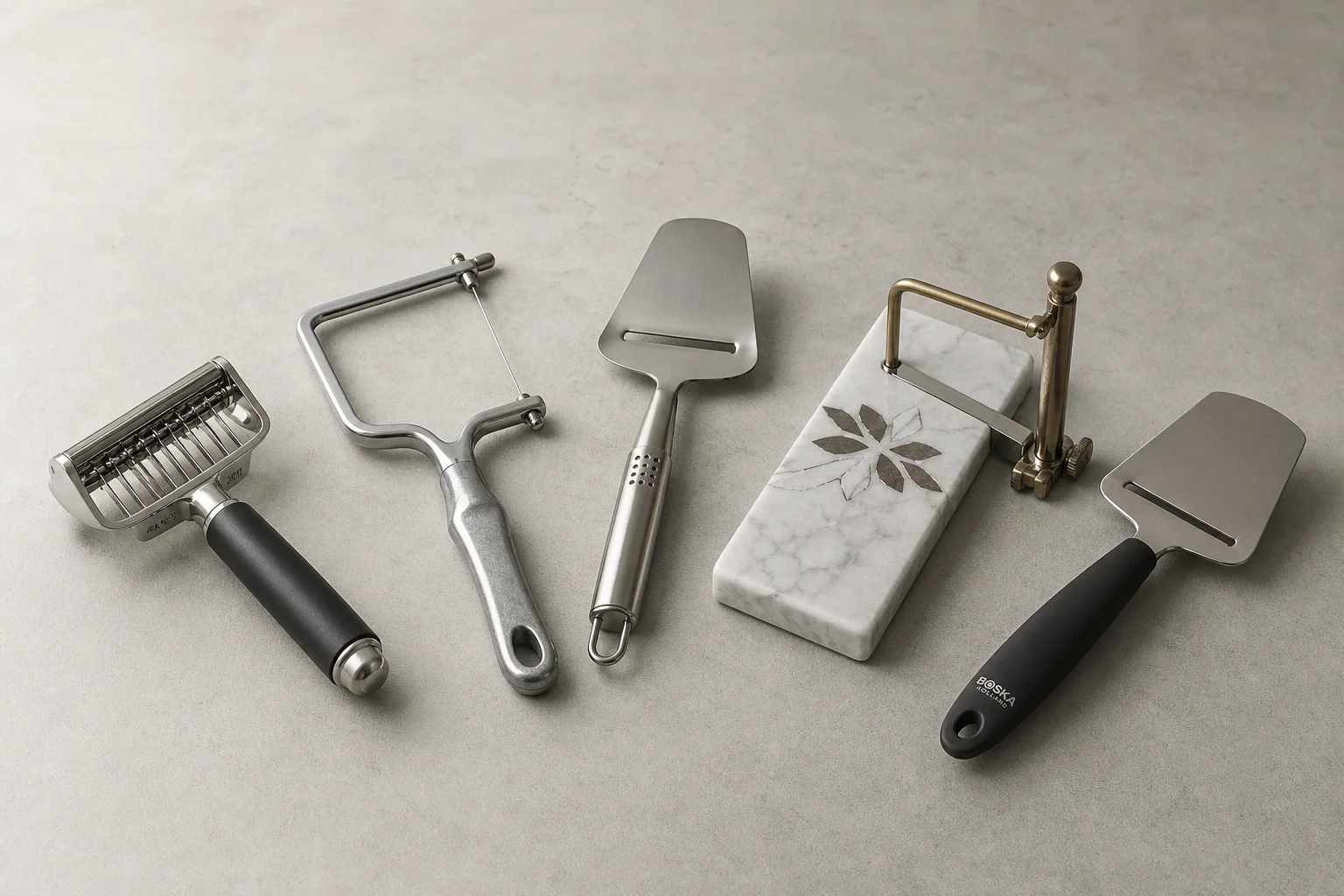
Best Cheese Slicers: Five Practical Options for Consistent Slicing
Five cheese slicers with different designs and features, from multi-blade versatility to wire-based precision, each suited to different kitchen needs and cheese types.