Kitchen
Best Kitchen Dish Towels 2026: Three Picks Worth Buying
After testing 10 dish towels for absorbency, strength, and ease of care, three stood out: a hybrid striped towel, a thirsty terrycloth pick, and a maneuverable linen option.
Introduction
A dish towel is one of those kitchen tools you never think about until it fails. It needs to be absorbent, strong, and easy to clean. To find out which ones actually deliver, we put a lineup of 10 different dish towels through hands-on testing, comparing cotton and linen options that came in sets of two or more, with per-towel costs ranging from $1 to $15.
What Makes a Good Dish Towel
At its most basic, a dish towel has to dry your hands and, as advertised, dry your dishes. The good news: every towel we tested was machine washable, and all but one could go into the dryer.
One important tip before you use any new towel: wash it first. New textiles generally carry a residual protective treatment called sizing, which keeps them in shape during transport and helps prevent pilling. Sizing is water repellent, so your towels will not be as absorbent as they should be until you wash it away.
How Weave Type Affects Performance
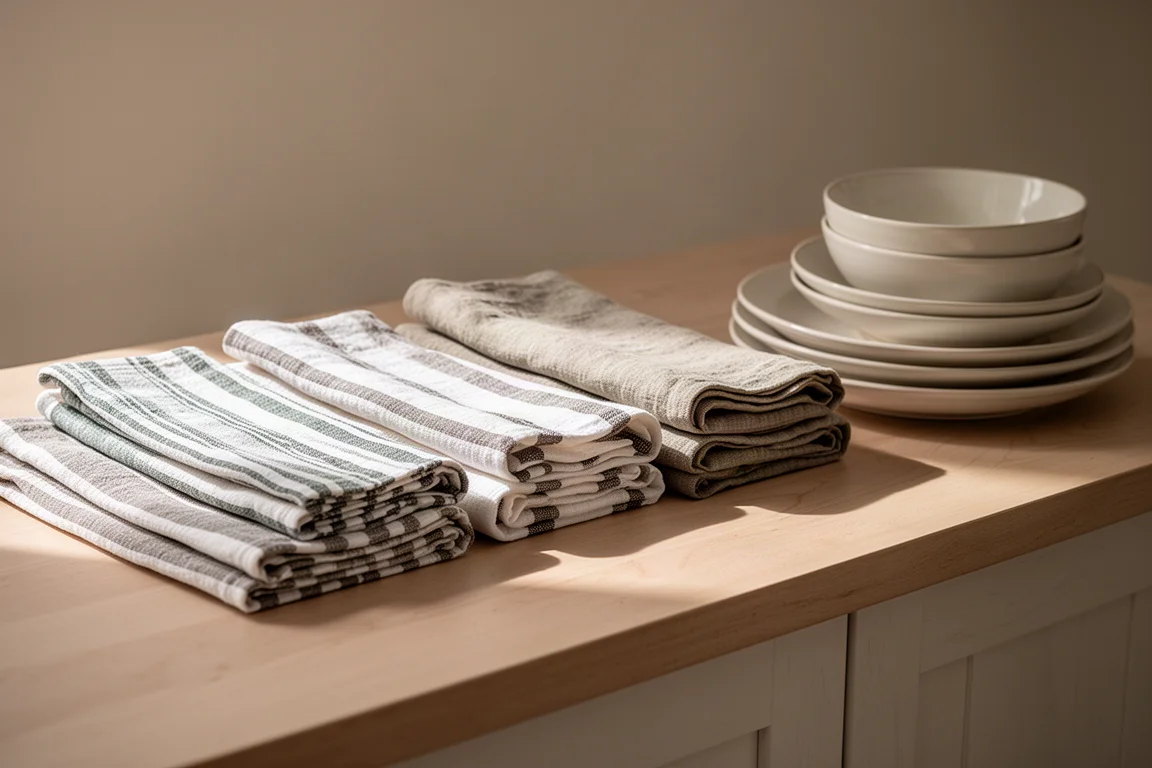
Here is the key finding: absorbency does not depend entirely on the fiber. The weave used to make the fabric matters just as much. The most common weaves are plain, waffle, basket, and terry.
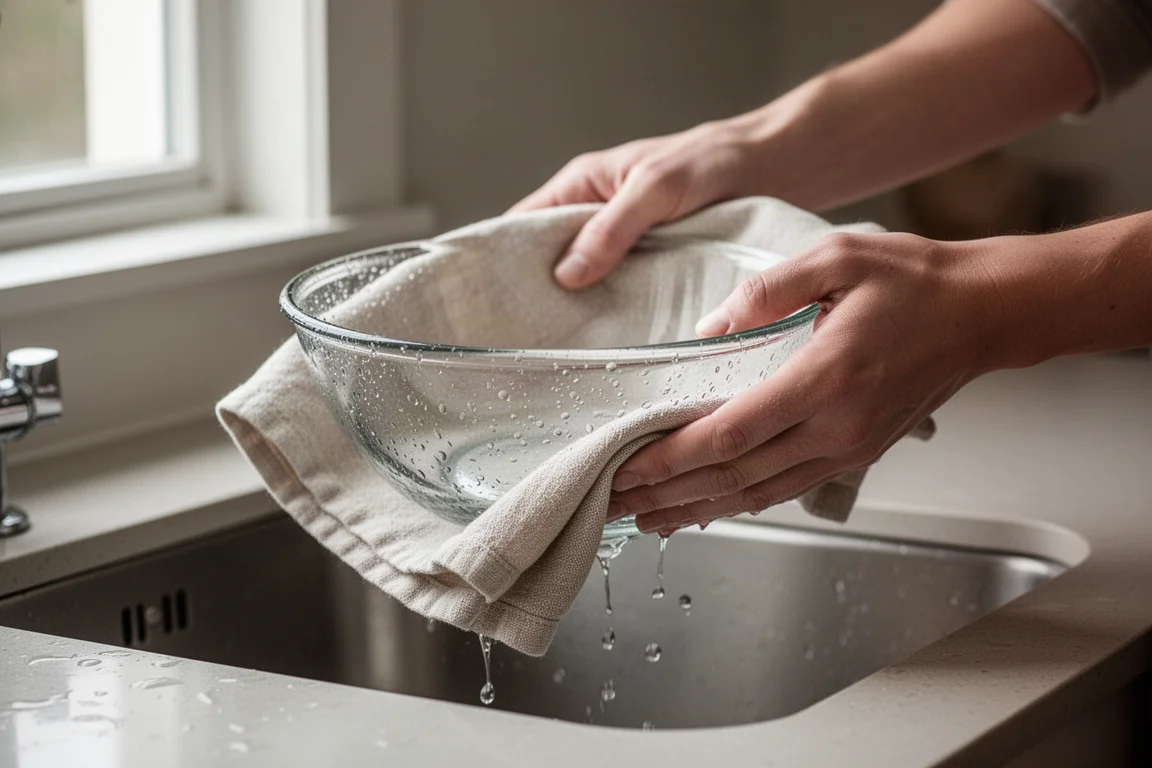
A plain weave creates a flat, thin fabric that is excellent for handling delicate items like champagne flutes or wine glasses because it is maneuverable, but it is not great for absorption. In a soak-and-squeeze test, a plain weave towel held less than half a cup of water.
Looser weaves like waffle, basket, and terry create thicker fabric with more space for water to sit between the fibers. A towel with one of these weaves held nearly a cup in the same test, roughly twice as much as the plain weave. Looser, thicker fabric also simply feels better in your hand.
Heat Protection and Everyday Comfort
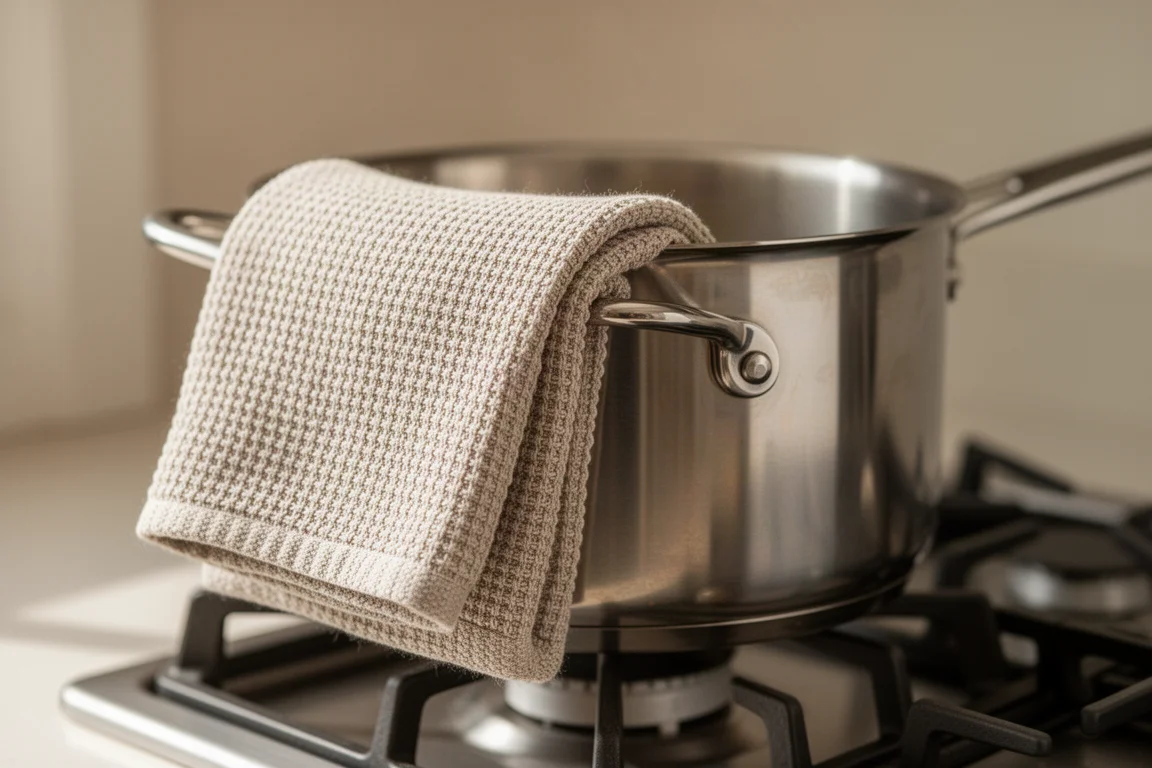
Thicker fabric offers another overlooked benefit: heat protection. Many people fold a dish towel over their hand and grab a hot pan instead of reaching for oven mitts or a pot holder, and the thicker the fabric, the more protection it provides. Terry, waffle, and basket weaves hold up noticeably better here than thin plain weaves.
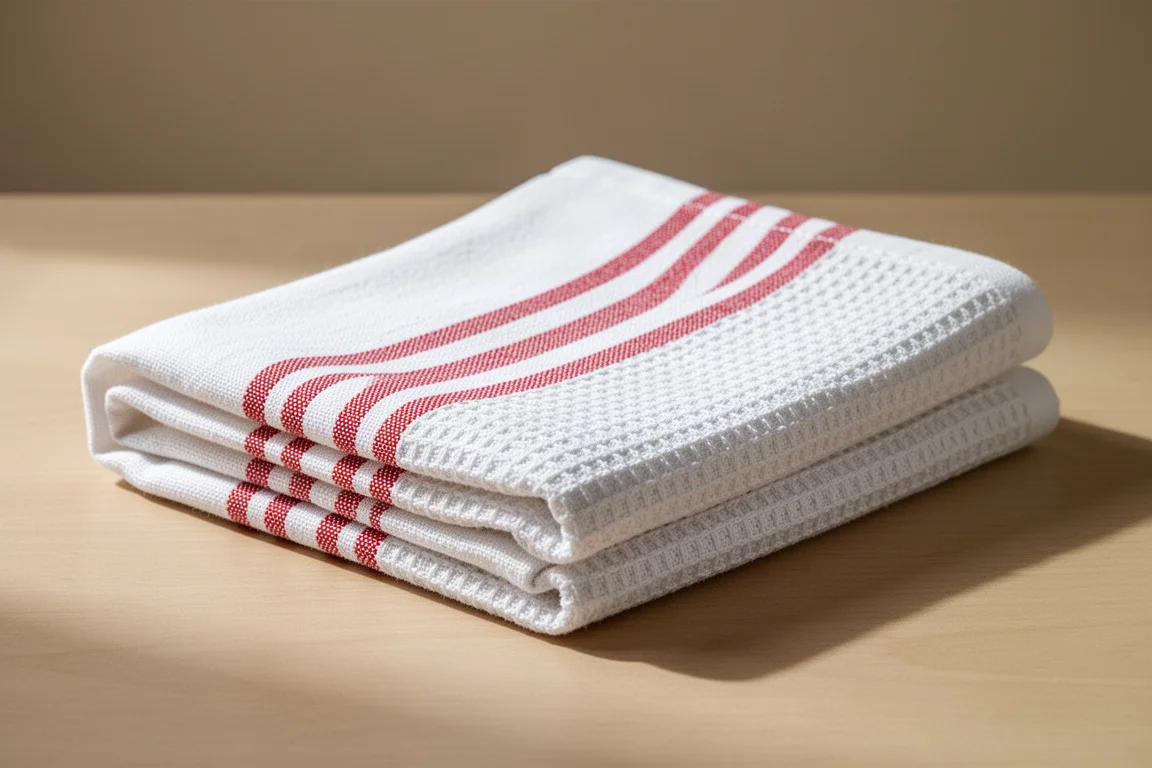
Best Hybrid Pick: Williams Sonoma Classic Striped
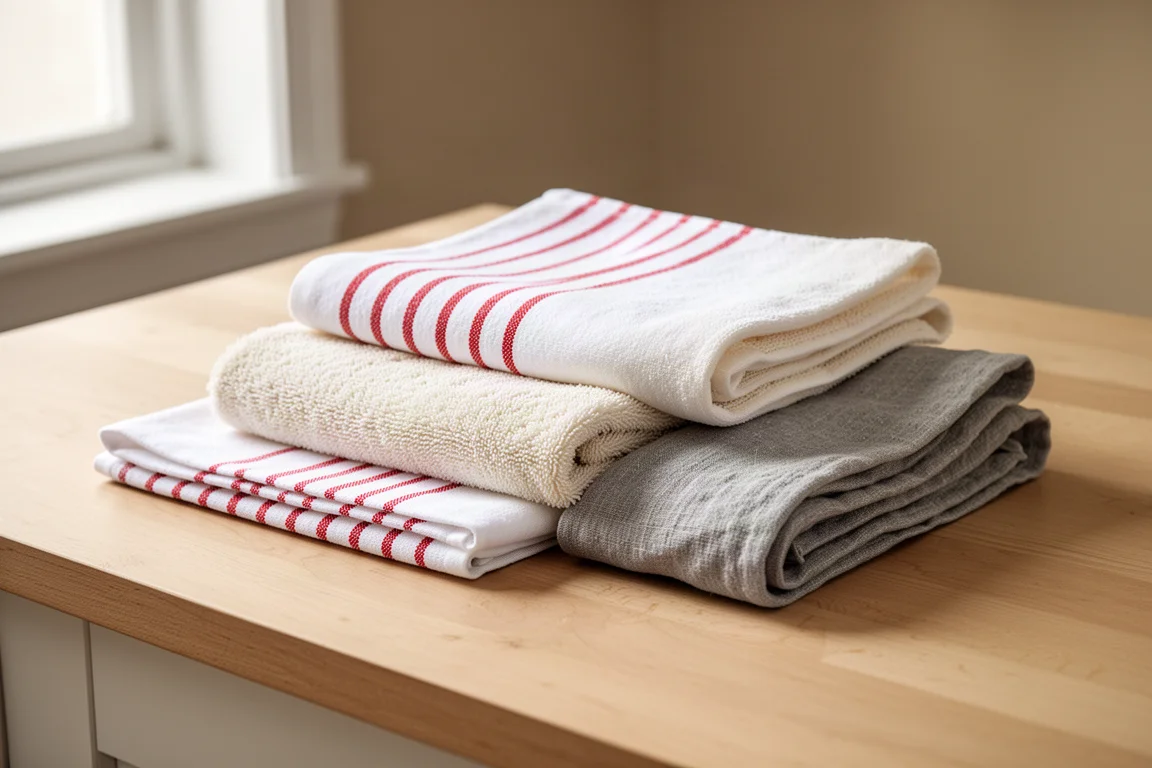
The Williams Sonoma Classic Striped towel, a set of two for $23, combines two different weaves in one cloth. The red stripes are plain weave, so they are flat and give really good handling on delicate glassware. The white parts are a basket weave, which is a little thicker, making the towel both absorbent and heat protective. If you want one towel that can dry a wine glass and double as a pot grabber, this is a smart pick.
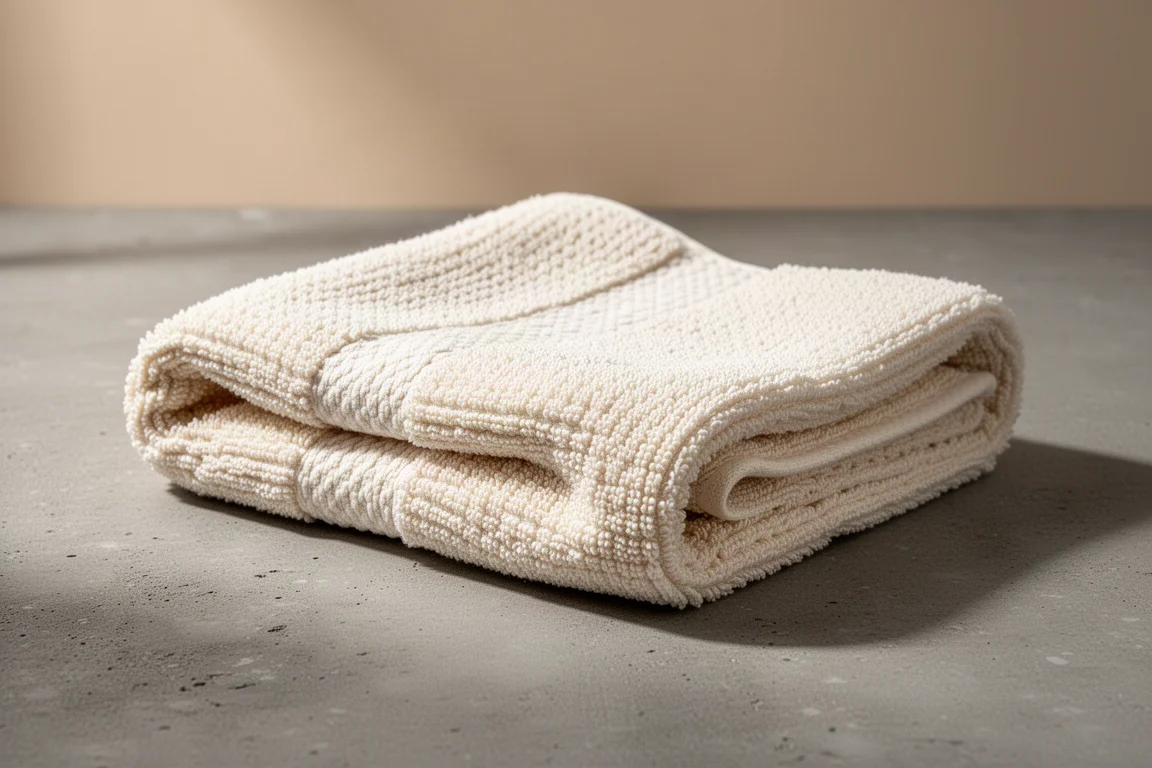
Most Absorbent Pick: Now Designs Ripple Kitchen Towel
If you prefer terrycloth, the Now Designs Ripple Kitchen Towel is the one to beat. It comes as a set of two for $18 and was the most absorbent towel in the entire lineup, wringing out 2.3 cups of water in testing. For drying large quantities of dishes or anything that soaks, this is the standout.
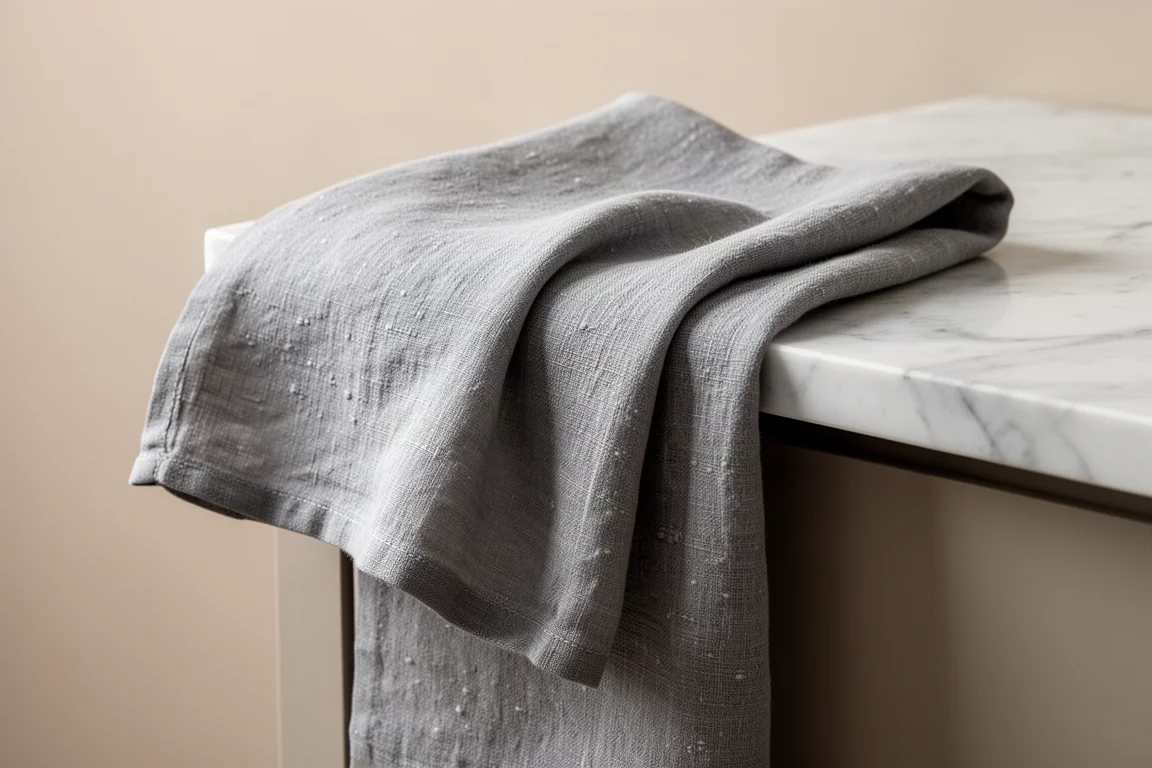
Best Maneuverability Pick: Linen Vibe Pure Linen Tea Towel
If you are a linen type who values maximum maneuverability over absorption, the Linen Vibe pure linen tea towel is the pick, at $30 for a set of two. Linen’s flat, smooth handle makes it the choice for polishing glassware and handling delicate items with precision.
Buying Advice
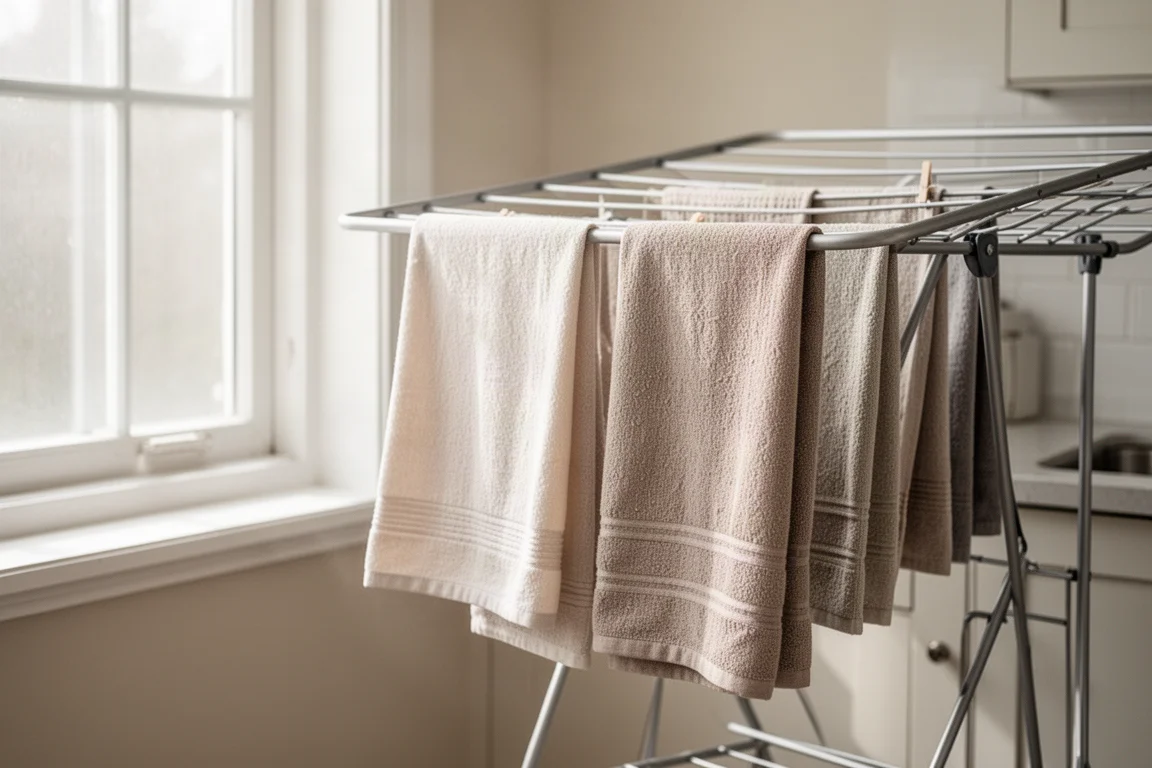
Match the towel to the task. A hybrid woven towel covers the most ground if you want a single set. If absorption is your priority, go terrycloth. If you mostly polish glassware and value a light, nimble cloth, choose linen. Whichever you pick, remember to wash it before first use to remove the sizing and unlock full absorbency.
Conclusion
Absorbency, heat protection, and maneuverability all come down to weave as much as fiber. The Williams Sonoma Classic Striped blends the best of two weaves, the Now Designs Ripple is the absorbency champion, and the Linen Vibe tea towel wins on handling. Pick the one that matches how you actually work in the kitchen, and wash it before its first job.
Further reading
Related Reviews
Kitchen
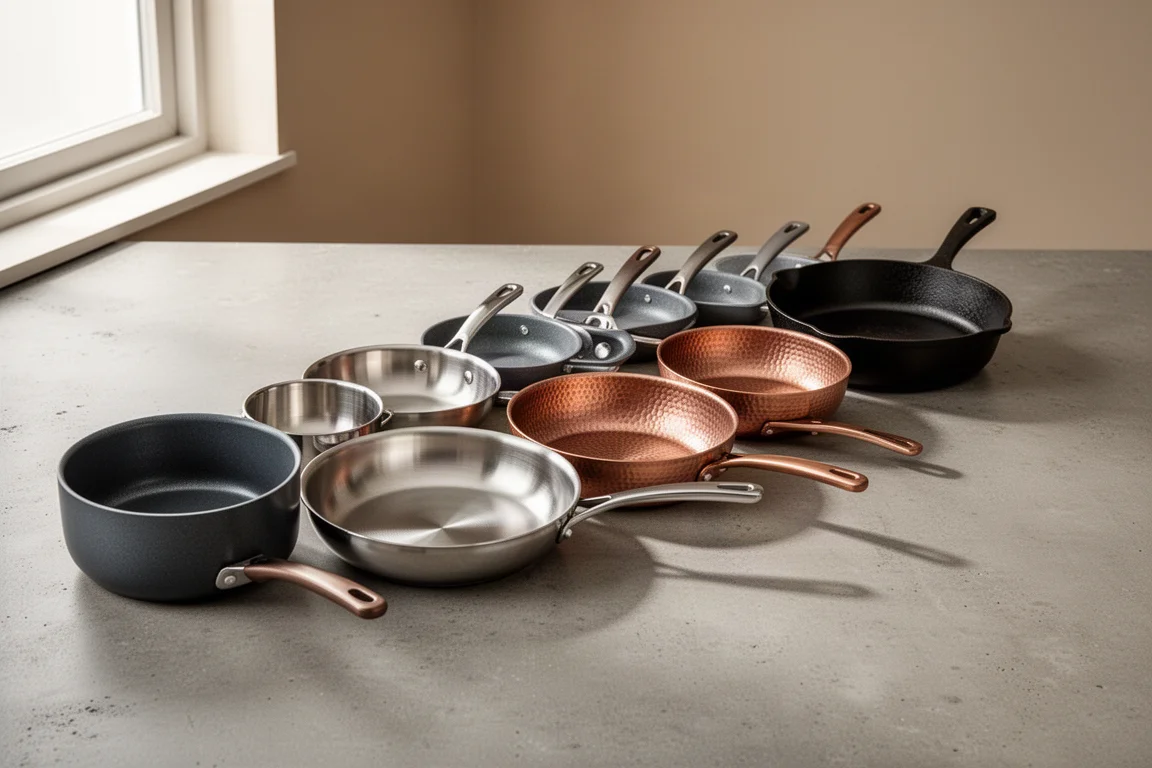
Best Nonstick Frying Pans Compared: 11 Skillets From $16 to $185, Tested
Eleven nonstick frying pans go head to head in pancakes, eggs, heat distribution, thermal efficiency, and scratch resistance to find out whether a cheap pan can really compete with a premium one.
Kitchen
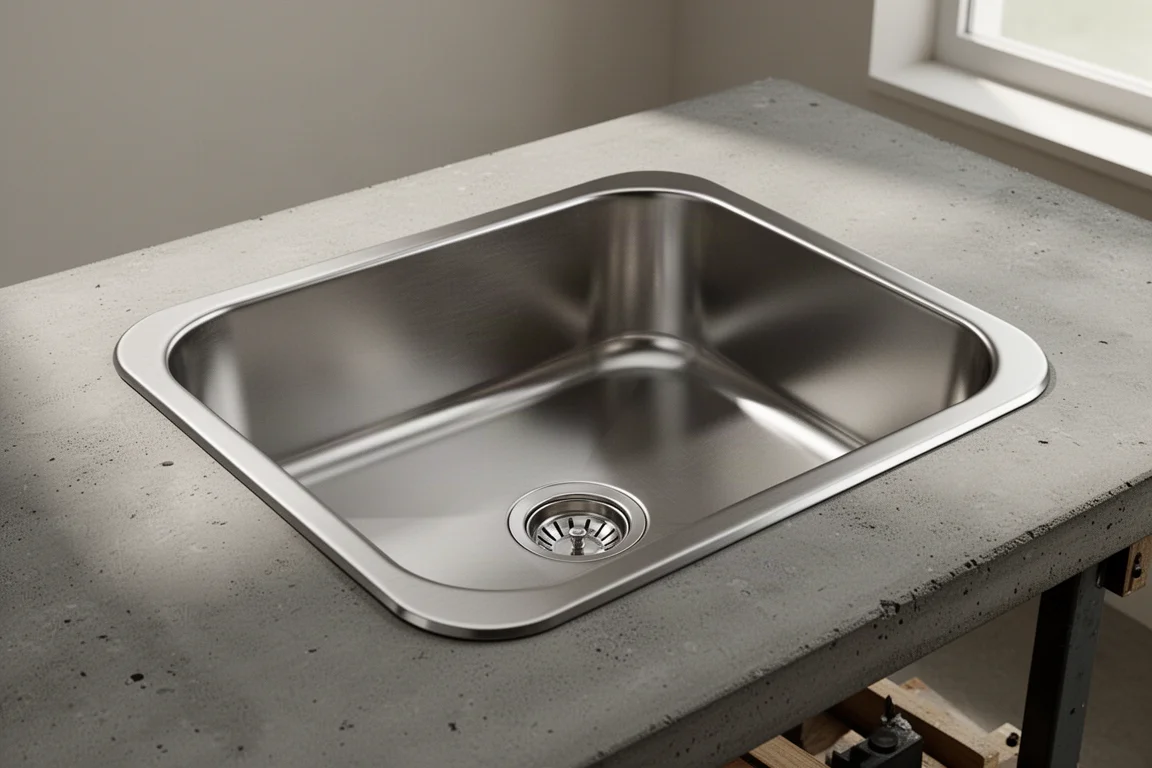
Vivor Stainless Steel Kitchen Sink Review: A Solid Drop-In Upgrade With One Weak Spot
An all-stainless single-basin drop-in sink with easy-clean rounded corners and a drain-sloped base, at a roughly $200 price point.
Kitchen
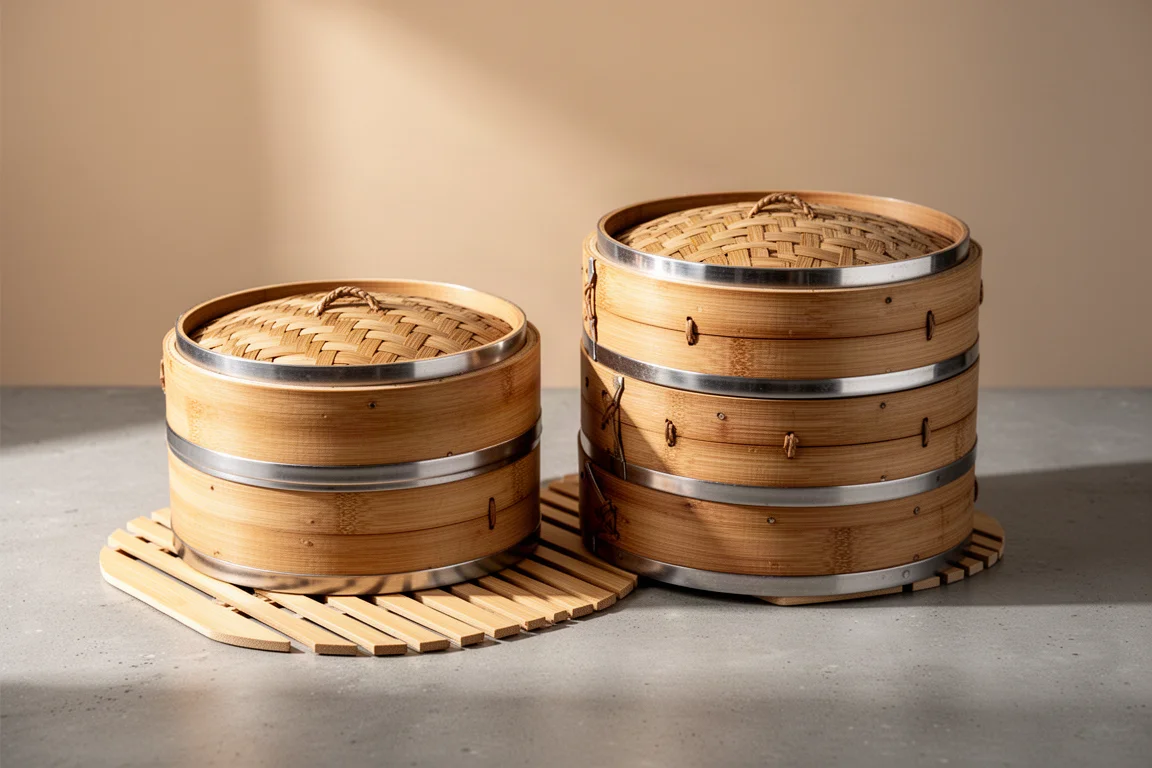
Best Bamboo Steamers: Two Tested Picks for Dumplings, Bao, and More
After hands-on steaming tests with dumplings and bao, two bamboo steamers stood out for build quality and staying in alignment.