Automotive Tools
Best Jump Starter Power Station: 10 All-in-One Units Tested and Ranked
Ten jump starter power stations with built-in air compressors and inverters, compared on tire inflation, cranking power, inverter output, and battery capacity.
Introduction
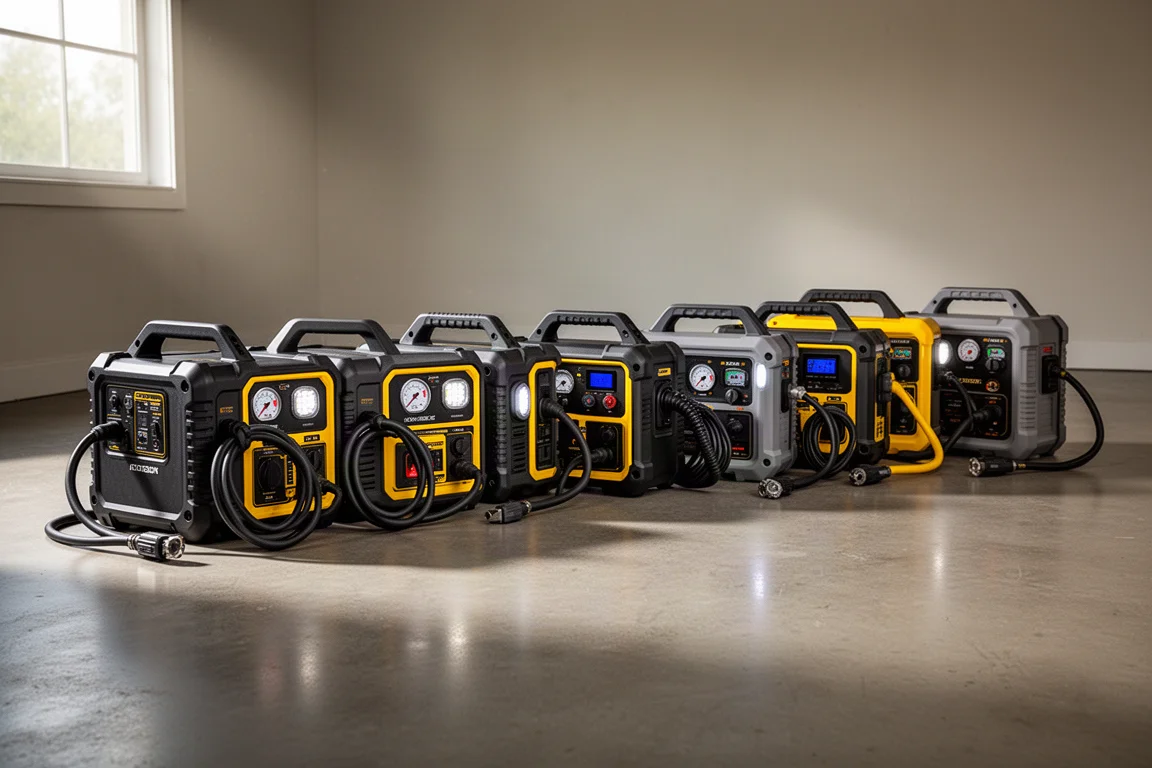
An integrated jump starter power station promises to replace three separate trunk items: a jump starter, an air compressor, and a power inverter. Ten different units were put through the same battery of tests to find out which ones actually deliver, covering tire inflation speed, cranking output, inverter load handling, dead-battery starting, and overall battery capacity.
How the Units Were Tested
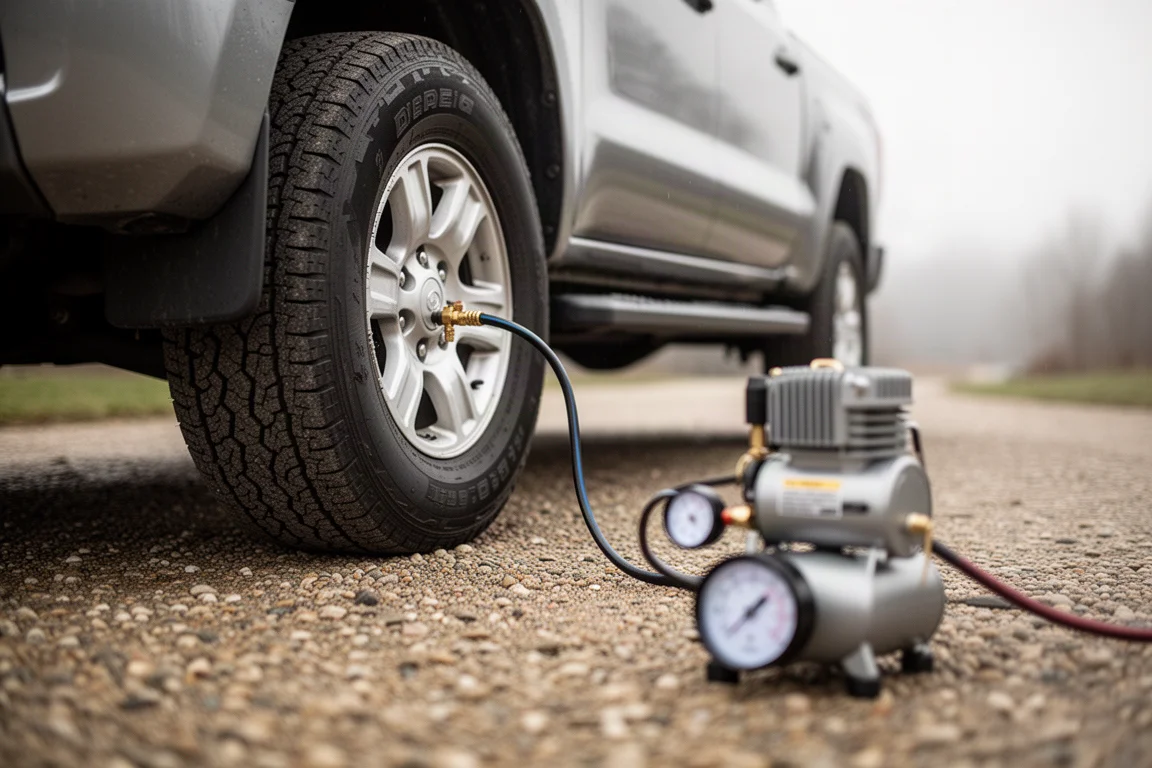
Every unit was fully charged before each test. The air compressor test measured how quickly each unit could inflate a tire on a small pickup truck to 35 PSI, with compressor noise measured from one metre away and case temperatures checked after use. Jump starter output was measured with a carbon pile load tester and clamp meter, and each unit then faced a Ford Ranger V6 with the battery drained to just 2 volts. Finally, inverter performance was tested with incremental loads up to 500 W, and battery capacity was measured by running a 500-W bulb until the inverter cut off at 10.5 volts.
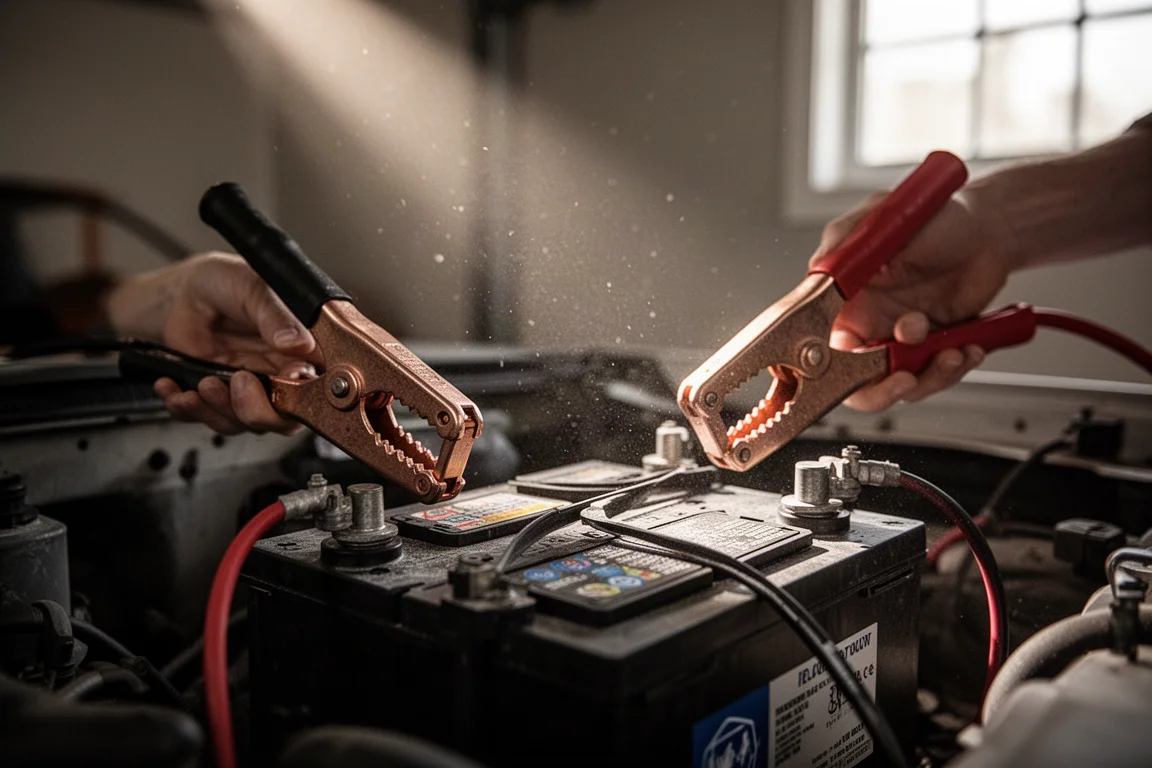
Only six of the ten units managed to reach 35 PSI without shutting down early, and only one managed to crank a completely dead battery. The differences between the marketing numbers and real performance were significant across the board.
Stanley Jump Starter Power Station ($118)
The least expensive unit tested, the Stanley packs a 1,200-peak-amp (600 instant amp) jump starter, a 500-W power inverter, a 120-V outlet, three USB ports, and a 270-degree LED light into a 17 lb package with a sealed lead acid battery. Its gauge proved accurate during inflation, and it charged to 20.4 PSI on its own gauge in ten minutes before powering down from heat. It is also loud at 85 dB. The inverter peaked at 477 W, just short of its 500-W rating but still the best inverter result of the group. However, the jump starter performed poorly under load at 388 amps, then powered down and began smoking, and never functioned again even after cooling.
Potek Jump Starter Power Station ($134)
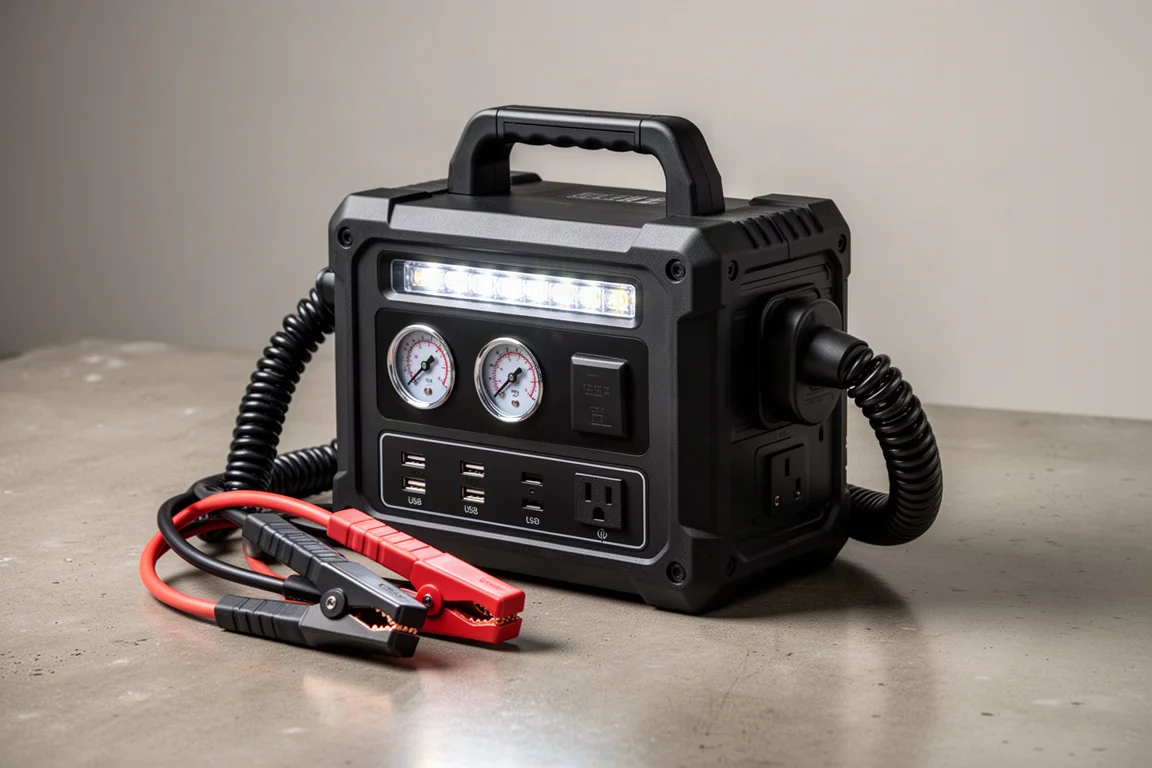
The Potek offers a 1,500-peak-amp jump starter, a 150 PSI compressor, and a 300-W inverter with both 120-V and 12-V charging options. It reached 35 PSI in 15 minutes with decent charge remaining, though its small analog gauge is hard to read precisely and reads about 2 PSI off. It was quieter than the Stanley at 81 dB. The inverter exceeded its rating at 337 W before shutting down on overload. Under the jump starter load test it produced 404 amps at 4.8 volts, but like the Stanley it began to smoke under the extreme load, and it could not crank the dead-battery test vehicle.
Costway Jump Starter Power Station ($140)
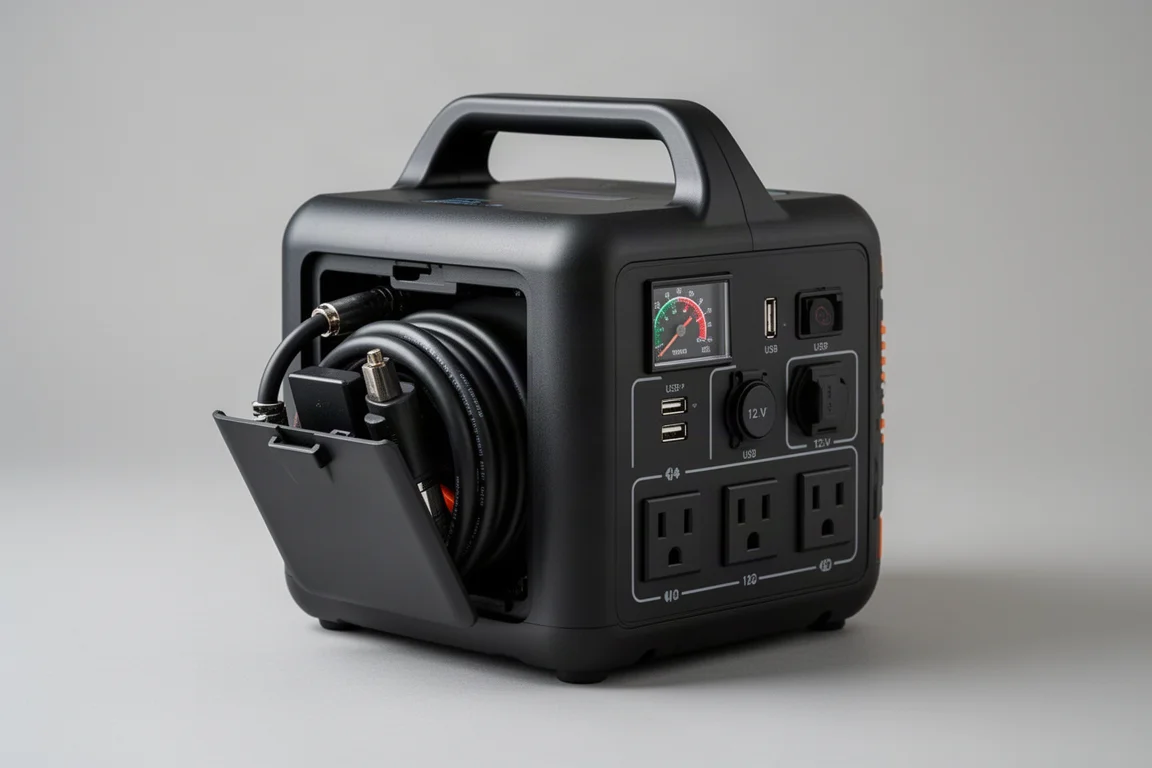
The Costway is the heaviest unit at 20 lb and the loudest compressor at 86 dB, but it dominated nearly every performance test. With a 1,500-peak-amp jump starter and a 200-W inverter, it produced by far the strongest measured output at 445 amps and 6.6 volts, roughly 2,937 peak watts, and survived the load test without damage or smoke. It was the only unit that successfully cranked the Ford Ranger V6 with a battery drained to 2 volts, spinning the engine strongly for nearly 18 seconds. Its compressor took the longest at 19 minutes, but its pressure gauge was accurate. On battery capacity it lasted 14 minutes 33 seconds under a 35-A load, nearly three times some competitors.
If raw performance matters more than weight or noise, this is the standout of the group.
Schumacher Jump Starter Power Station ($140)
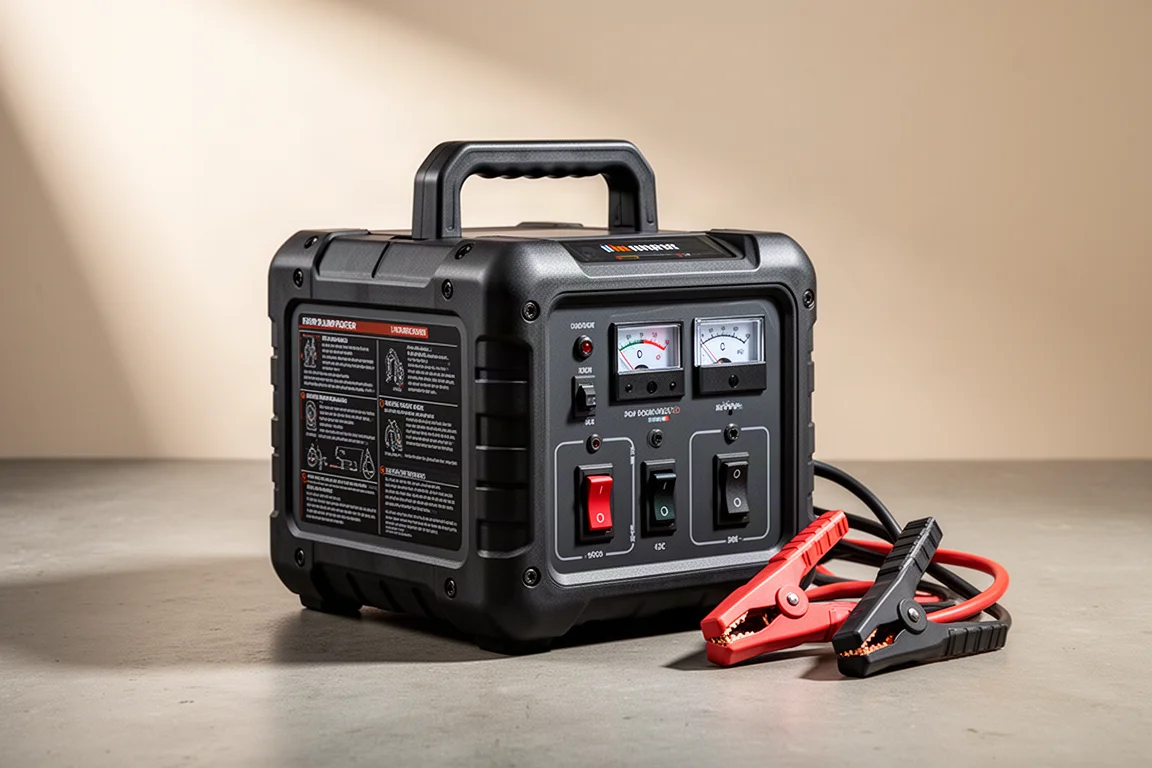
The Schumacher combines a 1,200-amp jump starter, 200-W inverter, 150 PSI compressor, and LED light, with a USB port, two 12-V sockets, and two 120-V outlets in a 17 lb body. Its compressor was initially the fastest to 35 PSI at 12 minutes, but a gauge reading about 7 PSI low pushed the true time to 15 and a half minutes. Noise matched the Stanley at 85 dB. The inverter exceeded its 200-W rating at 211 W, though its own display read 195 W. Under load it managed only 361 amps at 4.7 volts, and its voltage dropped to around 7 volts on the dead-battery test, far too low to start the engine. Battery capacity was below average at 5 minutes 20 seconds.
DeWalt Jump Starter Power Station ($149)
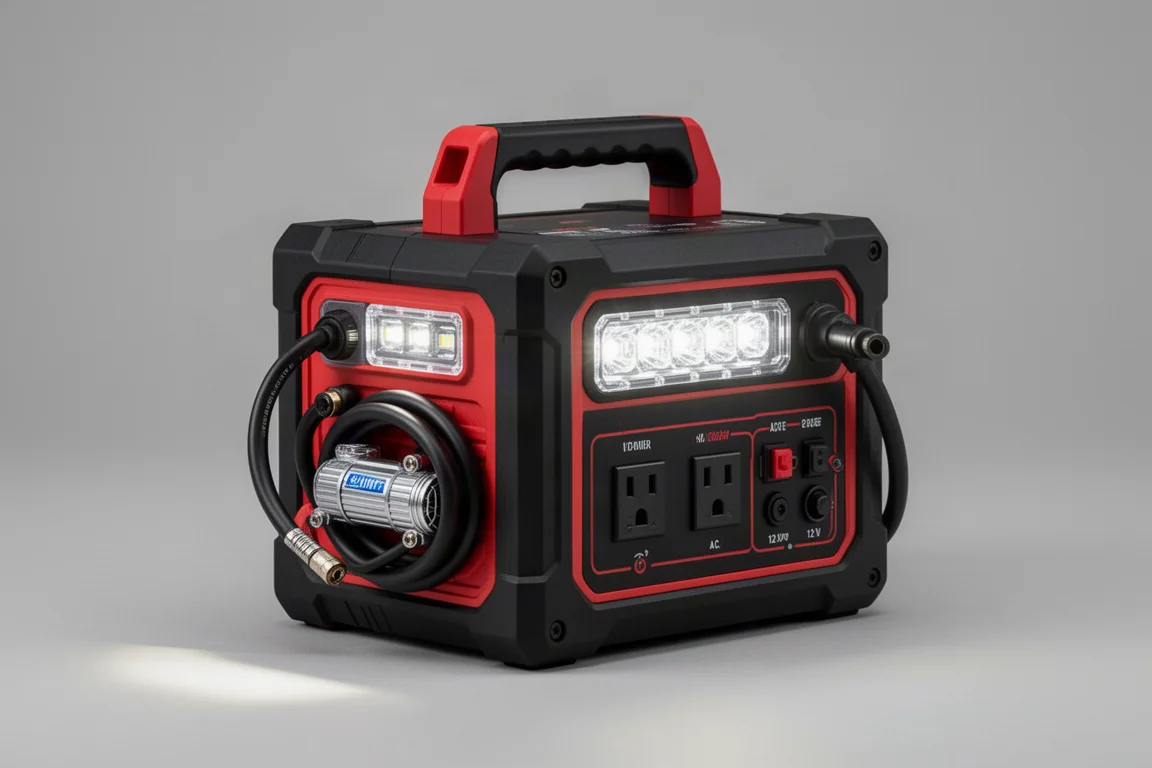
The DeWalt is the only unit tested without a power inverter, but it brings a 1,400-peak-amp jump starter, a 120 PSI compressor, two USB ports, and a useful alternator test function. It is the quietest compressor so far at 80 dB and one of the heaviest at 18 lb. Its electronic gauge proved accurate as the compressor shut off at about 29 PSI after ten minutes. Under load it reached 395 amps at 4.2 volts, and on the dead-battery test its voltage fell to around 8 volts, not enough. Battery capacity was a strong third place at 9 minutes 19 seconds.
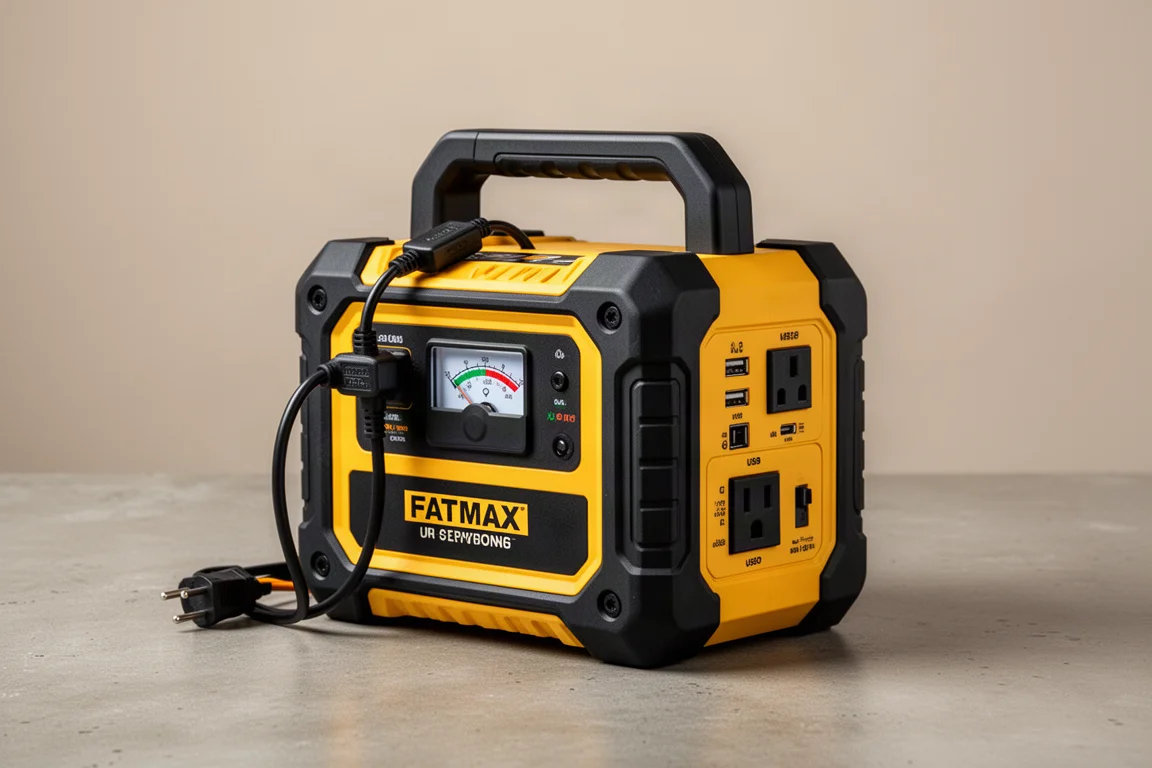
Stanley FatMax Jump Starter Power Station ($150)
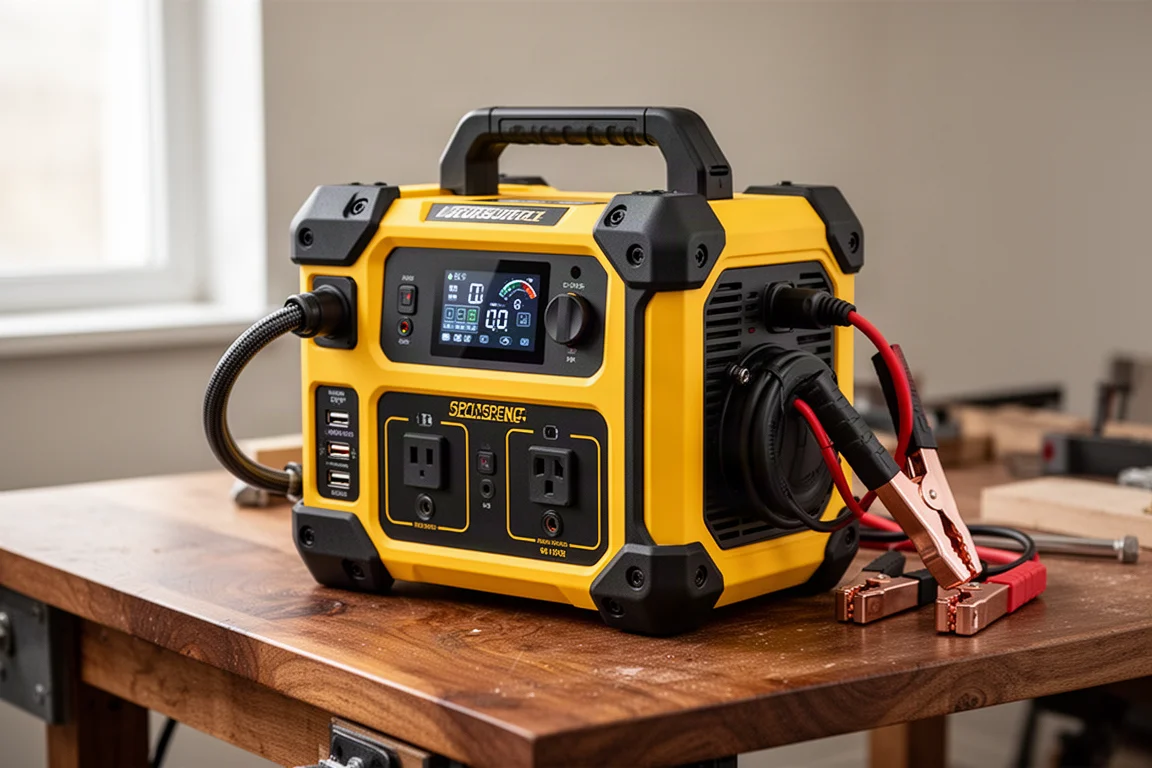
The Stanley FatMax offers a 1,400-peak-amp jump starter, a 120 PSI compressor, a 500-W power supply, and a 12-V port, USB port, and two 120-V ports with a built-in charge adapter. At 19 lb it has some heft, but it posted the quietest compressor of the entire group at just 79.5 dB, and its case stayed the coolest at only 95 degrees F. Both the pressure gauge and voltmeter proved accurate. It shut off after ten minutes of inflation at 26.5 PSI on its gauge. The inverter briefly reached 435 W, under its 500-W rating. Under load it managed 391 amps before letting off a puff of smoke, though the unit still functioned afterwards. It could not crank the dead battery, but battery capacity was solid at 8 minutes 56 seconds.
Cat Jump Starter Power Station ($153)
The Cat is rated at just 1,000 peak amps and a 200-W inverter, the lowest cranking spec of the group, yet it punched well above its numbers. It reached 405 amps at 5.8 volts, about 2,349 peak watts, with no smoke or distress, placing near the top of the load test despite the lower rating. Its compressor reached 27.3 PSI in ten minutes with an accurate gauge, noise was a moderate 81 dB, and the case stayed at a cool 112 degrees F. The unit includes four USB ports, a 120-V outlet, a built-in charge port, and simple arrow-button pressure setting. It could not crank the dead battery, but battery capacity placed fourth at 8 minutes 11 seconds.
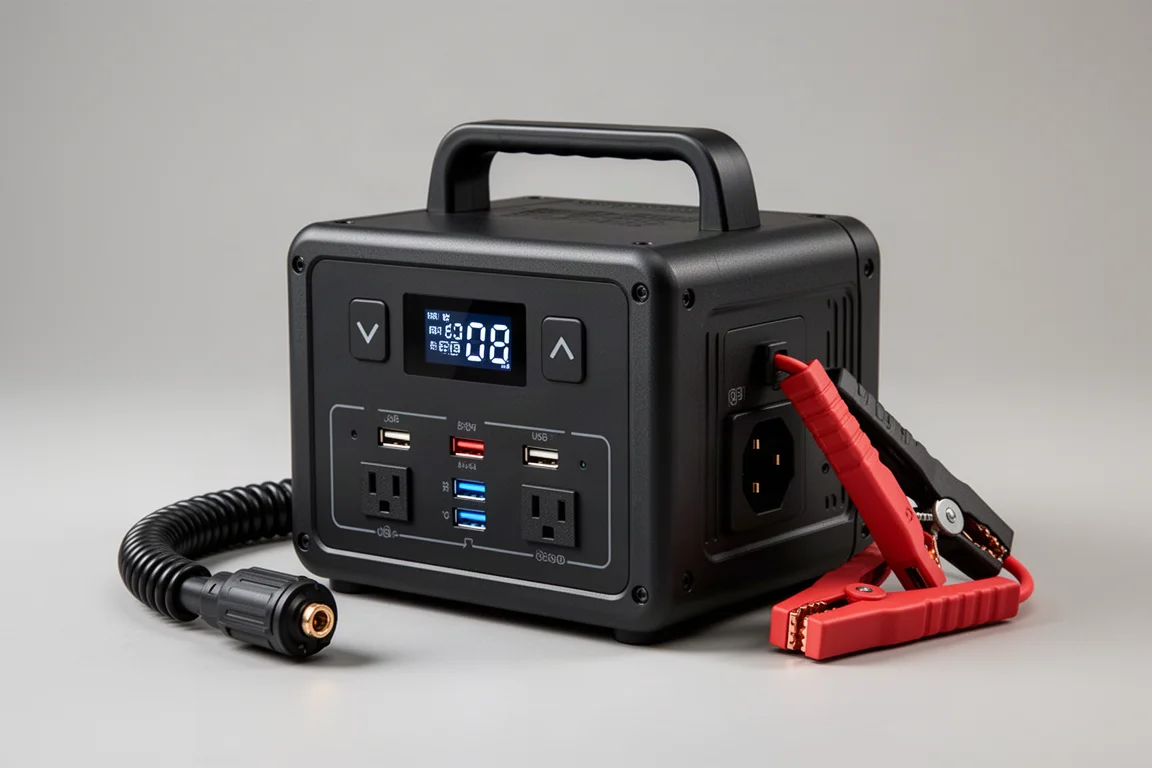
DieHard Jump Starter Power Station ($170)
The DieHard is the lightest unit tested at just 16 lb, with a 1,150-peak-amp jump starter, 400 W of AC power, two USB ports, two 12-V sockets, two 120-V outlets, and a built-in charge port with a battery percentage readout. Its compressor is quiet at 80 dB and it reached 35 PSI in 18 minutes, with voltage holding strong at 12.74 V afterward. Its gauge reads about 3 PSI low. Under load it delivered 421 amps at 6 volts, roughly 2,526 peak watts, second only to the Costway, though it arrived slightly overcharged at 13.9 V. It came close on the dead-battery test but could not quite spin the engine fast enough, and battery capacity was modest at 5 minutes 39 seconds.
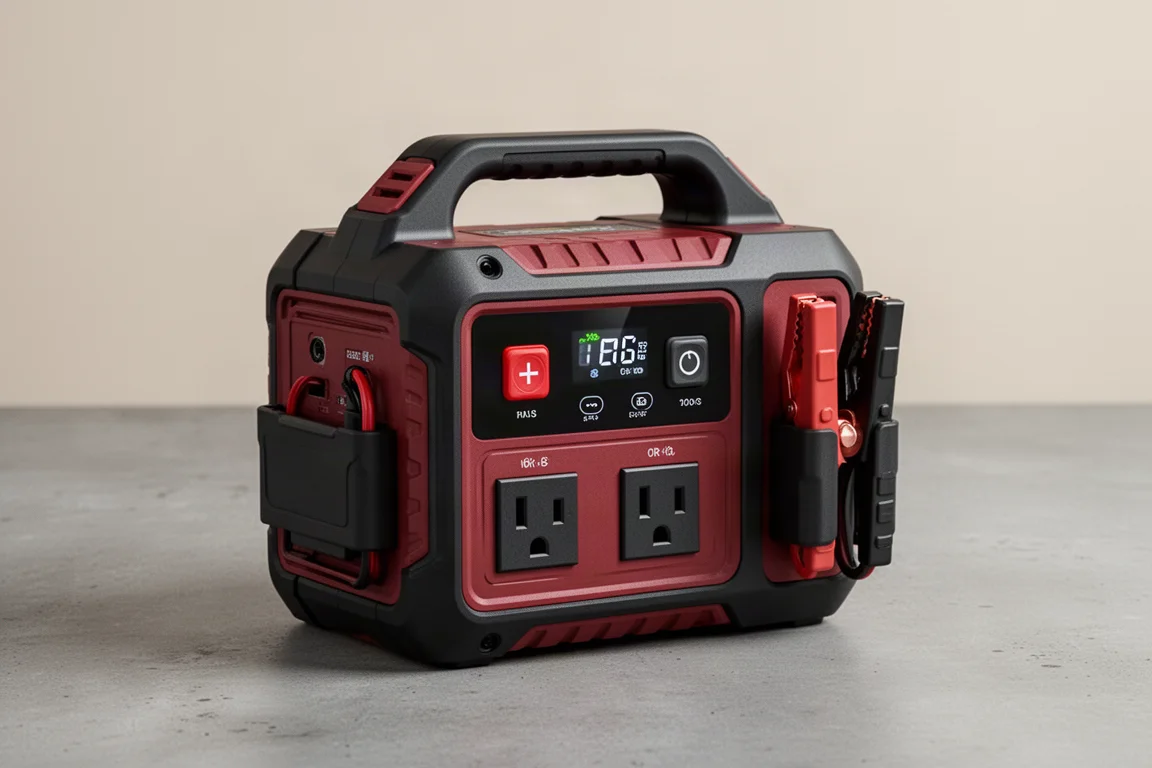
Michelin Jump Starter Power Station ($170)
The Michelin stands out with an included radio, alongside a 1,000-peak-amp jump starter, 200-W inverter, two 120-V outlets, a USB port, and a 12-V port in a 16 lb body. Its compressor reached 35 PSI in 18 minutes without shutting down, one of the few that finished the job. Noise was 82 dB and the case topped out at 120 degrees F. Beyond inflation, though, it struggled everywhere: it managed only 317 amps at 4.4 volts under load, last place in the group, its inverter briefly touched 200 W before powering down, its gauge reads about 3 PSI low, and it lasted just 3 minutes 1 second on the capacity test.
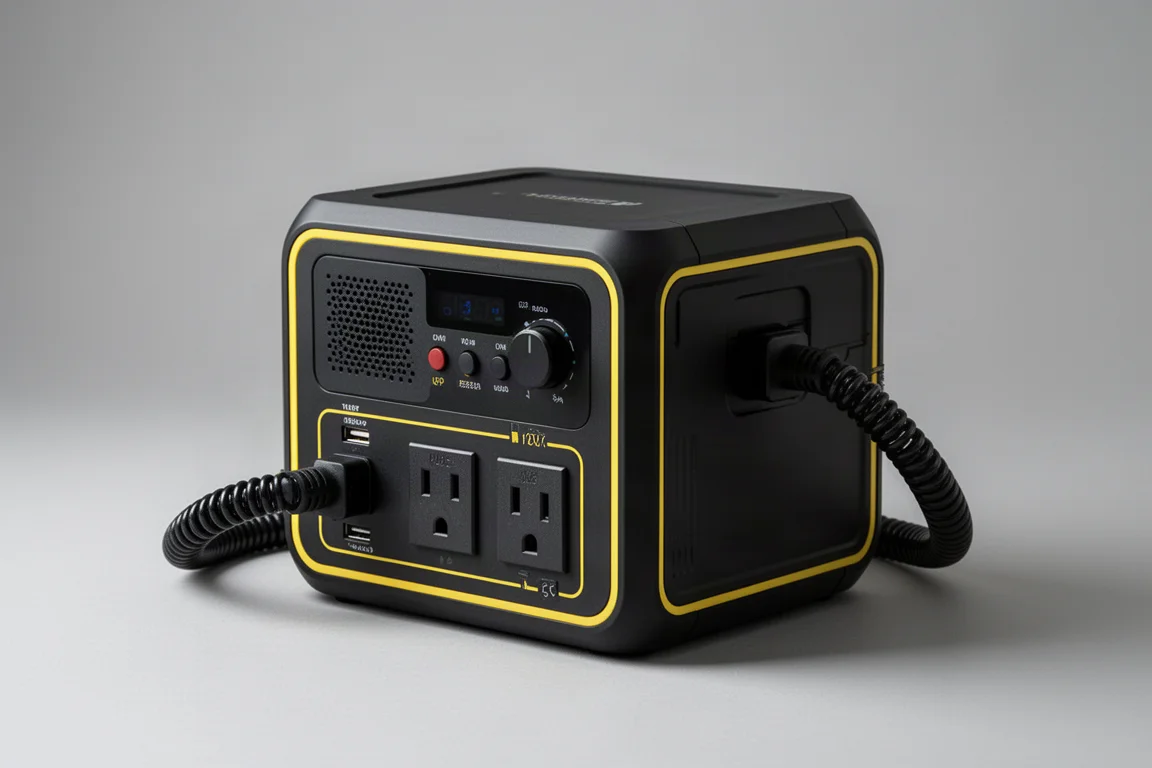
Zoom Dion Jump Starter Power Station ($170)
The Zoom Dion brings the highest-pressure compressor spec of the group at 260 PSI, plus a 1,400-peak-amp jump starter, 400-W AC power, a USB port, two 120-V ports, and two 12-V sockets with analog gauges. It tied the fastest inflation time at right around 13 minutes to reach 35 PSI, and its case stayed among the coolest at 95 degrees F. Noise was 83 dB and the battery held 13.06 V after inflation. Its inverter performed very well, exceeding its 400-W rating at 438 W, second best overall. Under load it managed 362 amps at 4.4 volts, mid-pack, and it could not crank the dead battery, but battery capacity was second place at 10 minutes 45 seconds.
Inverter Output: Which Units Handle the Load
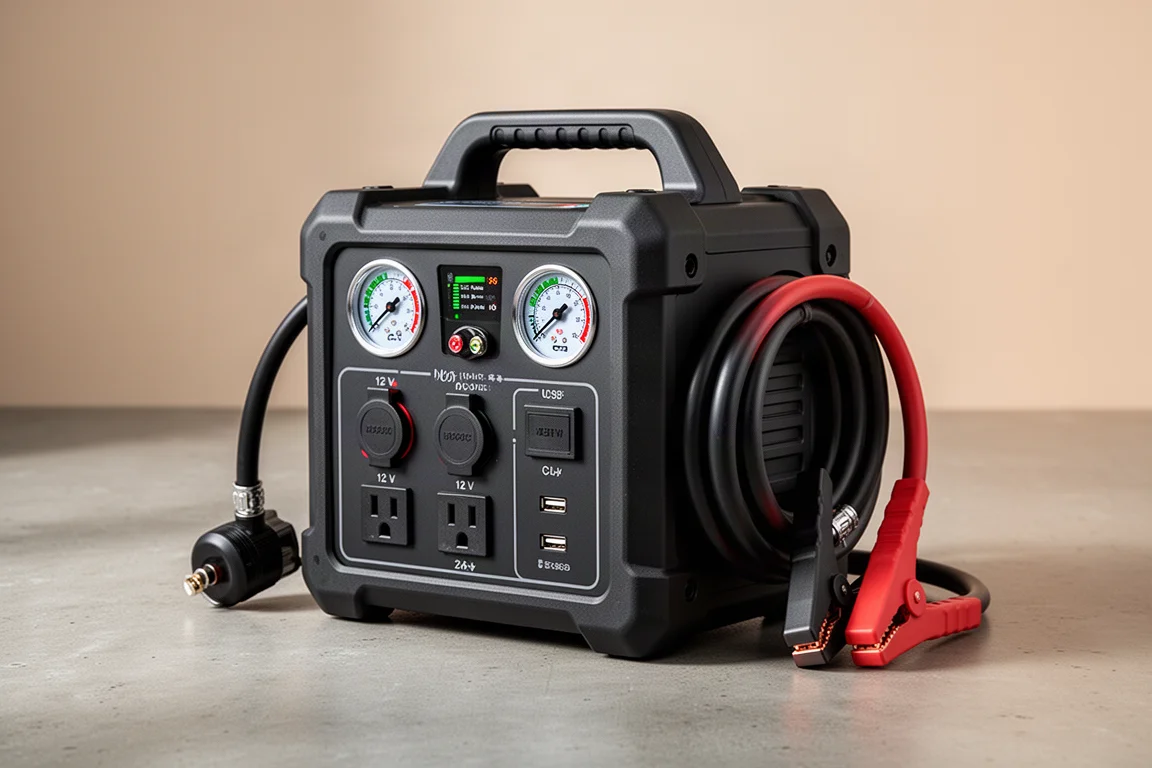
Inverter results varied widely. The Stanley came out on top at 477 W, followed by the Zoom Dion at 438 W, Stanley FatMax at 435 W, DieHard at 397 W, and Potek at 337 W. Most 200-W-rated units met or slightly exceeded their ratings, with the Costway reaching 194 W, Schumacher 211 W, Cat 211 W, and Michelin 200 W. If you plan to run real appliances, the 400 W-plus units are the ones to shortlist.
Battery Capacity Results
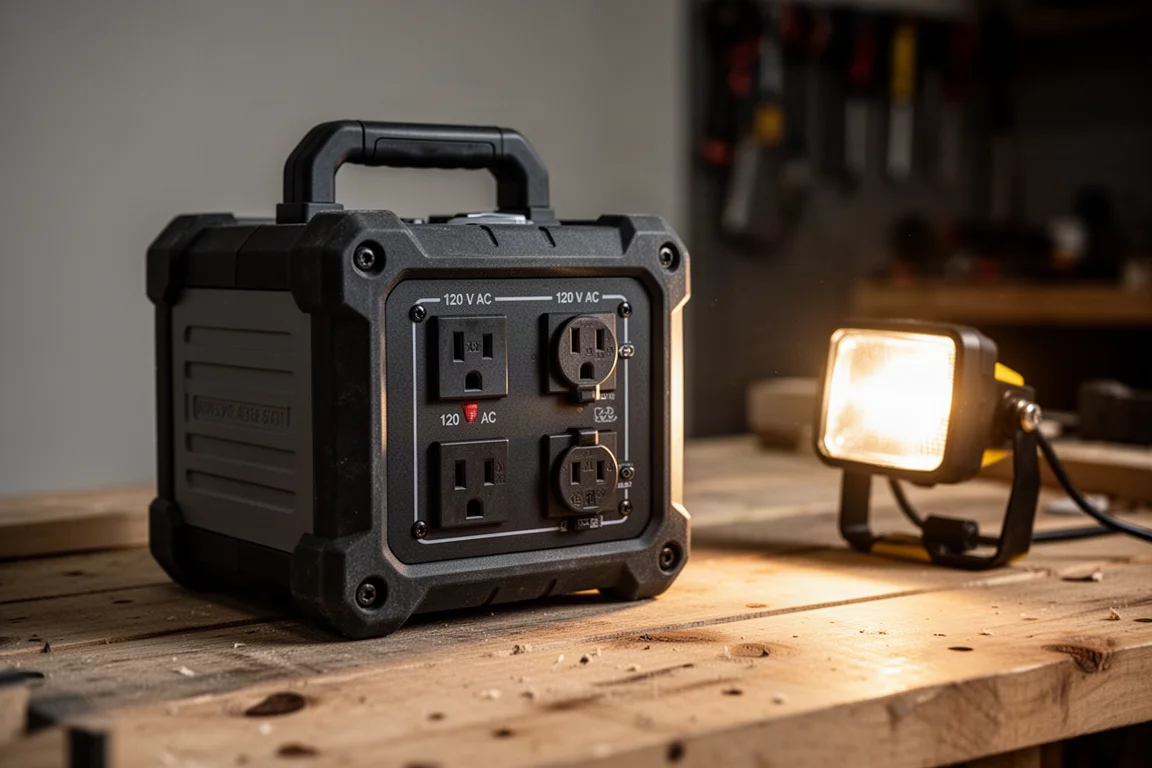
Under a sustained 35-A load powering a 500-W bulb, the Costway dominated at 14.6 minutes, nearly four minutes ahead of the Zoom Dion at 10 minutes 45 seconds. The DeWalt took third at 9.3 minutes, the Stanley FatMax managed 8.9 minutes, and the Cat 8.2 minutes. The Schumacher, DieHard, and Potek clustered in the five-minute range, while the Michelin lasted only about three minutes.
Starting a Vehicle With a Completely Dead Battery
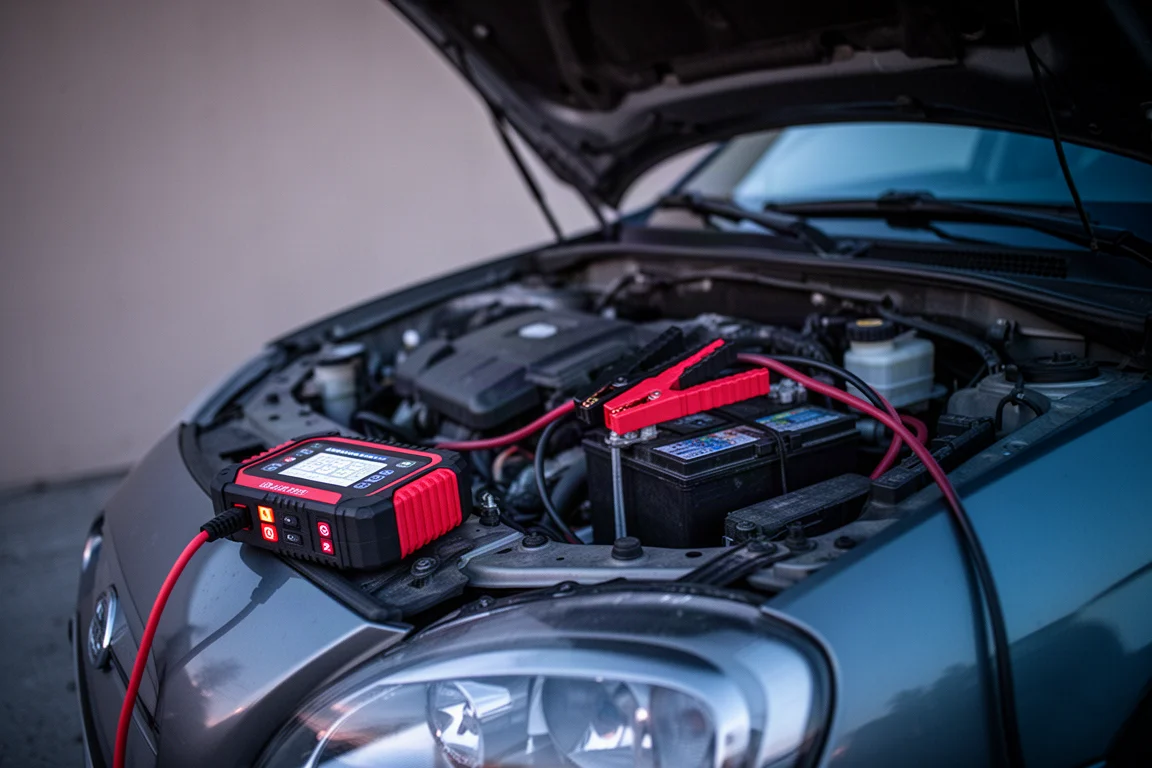
This was the harshest test: a Ford Ranger V6 with the battery drained to 2 volts and the ignition disabled. The Costway was the only unit that produced enough current to spin the engine properly, which lines up with its dominant load test result of nearly 3,000 peak watts. The DieHard came closest among the rest, while the Schumacher, DeWalt, Stanley FatMax, Cat, and Zoom Dion all saw voltage collapse to 7 or 8 volts, too low to crank. The Potek smoked during the attempt and the original Stanley no longer functioned at all by this point.
Buying Advice
For buyers who want maximum performance in one box, the Costway is the clear overall winner despite being the heaviest and one of the loudest. The Zoom Dion offers the best blend of fast inflation, strong inverter output, and second-place battery capacity at the same price. The DieHard and Cat both delivered impressive cranking results for their specs, with the DieHard adding the advantage of the lowest weight. Quiet operation points to the Stanley FatMax at just 79.5 dB, while the DieHard and DeWalt are nearly as quiet. Budget shoppers should note that the cheapest units, the Stanley and Potek, both failed under extreme load, so the lowest price carries real risk here.
Conclusion
Integrated jump starter power stations are genuinely useful, but the gap between spec sheets and real performance is wide. The Costway proved that one unit really can jump a dead battery, inflate a tire, and run AC loads reliably, while the Zoom Dion, DieHard, and Cat each earned places on the shortlist for different strengths. Match the unit to what you will actually use most, whether that is cranking power, inflation, or running appliances, and the rankings above should make the choice straightforward.
Further reading
Related Reviews
Automotive Tools
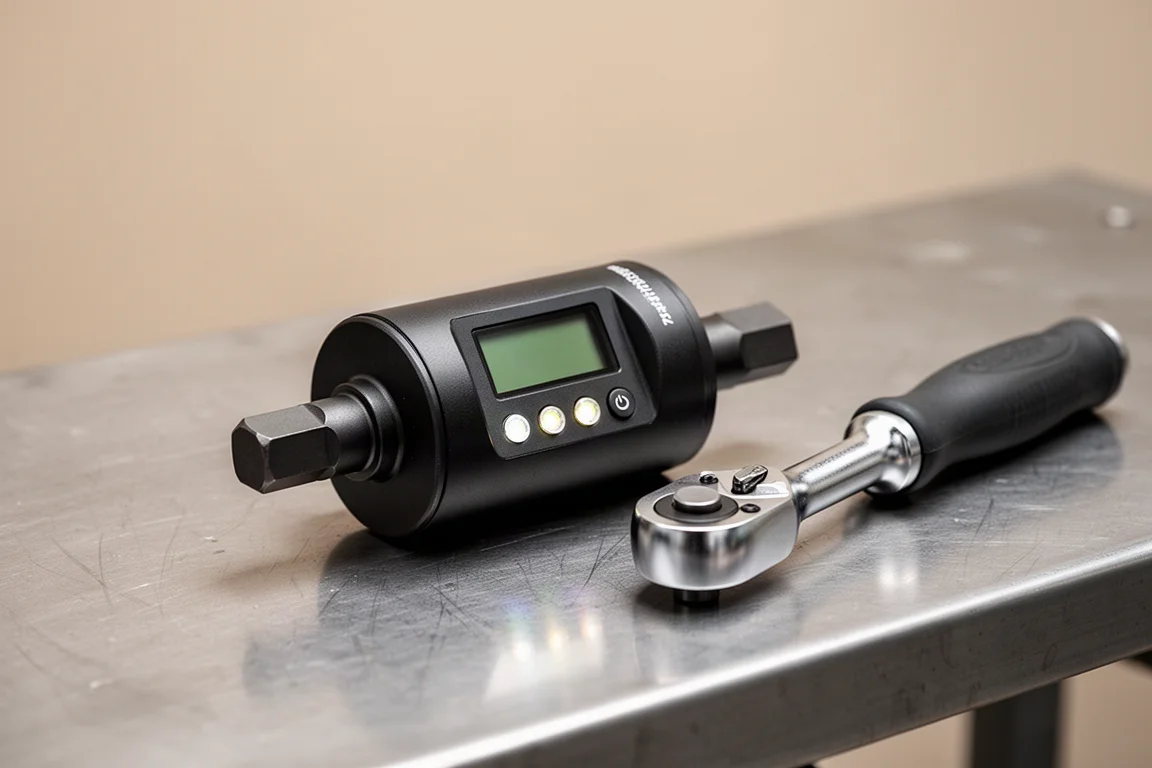
ALAIAL 1/2" Digital Torque Adapter Review: Turn Any Ratchet Into a Precision Tool
A practical look at the ALAIAL 1/2" digital torque adapter, an affordable way to add torque measurement to your existing ratchet.
Automotive Tools
ALAIAL 3/8" Digital Torque Wrench Review: Accurate Fastening Made Simple
A practical look at the ALAIAL 3/8" digital torque wrench, covering its features, ease of use, and real-world performance for vehicle maintenance.
Automotive Tools
Best Gear Pullers 2026: 2-Ton and 5-Ton Options Compared
We compared nine gear pullers across 2-ton and 5-ton classes to see how design, build quality, and price affect real-world pulling performance.