Kitchen Tools
Benriner vs Chiba: Two Japanese Mandolines Worth a Spot in Your Kitchen
A practical look at two respected Japanese mandolines, what makes a mandoline safe, and which one fits your kitchen best.
Introduction
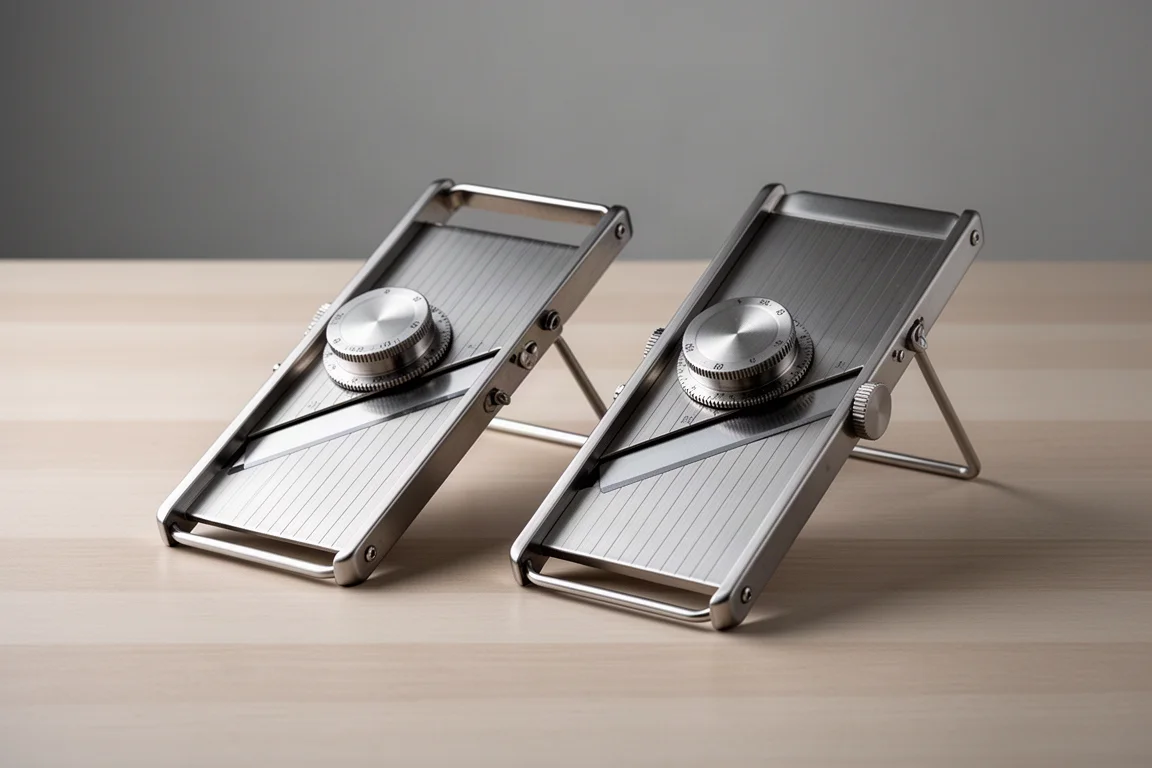
Mandolines have a reputation for being one of the most feared tools in the kitchen, and the fear is not entirely misplaced: nearly everyone who cooks professionally has a story about a close call. But a good mandoline is also one of the most useful tools you can own, and the risk is mostly a matter of equipment and technique.
Why a Mandoline Is Worth Having
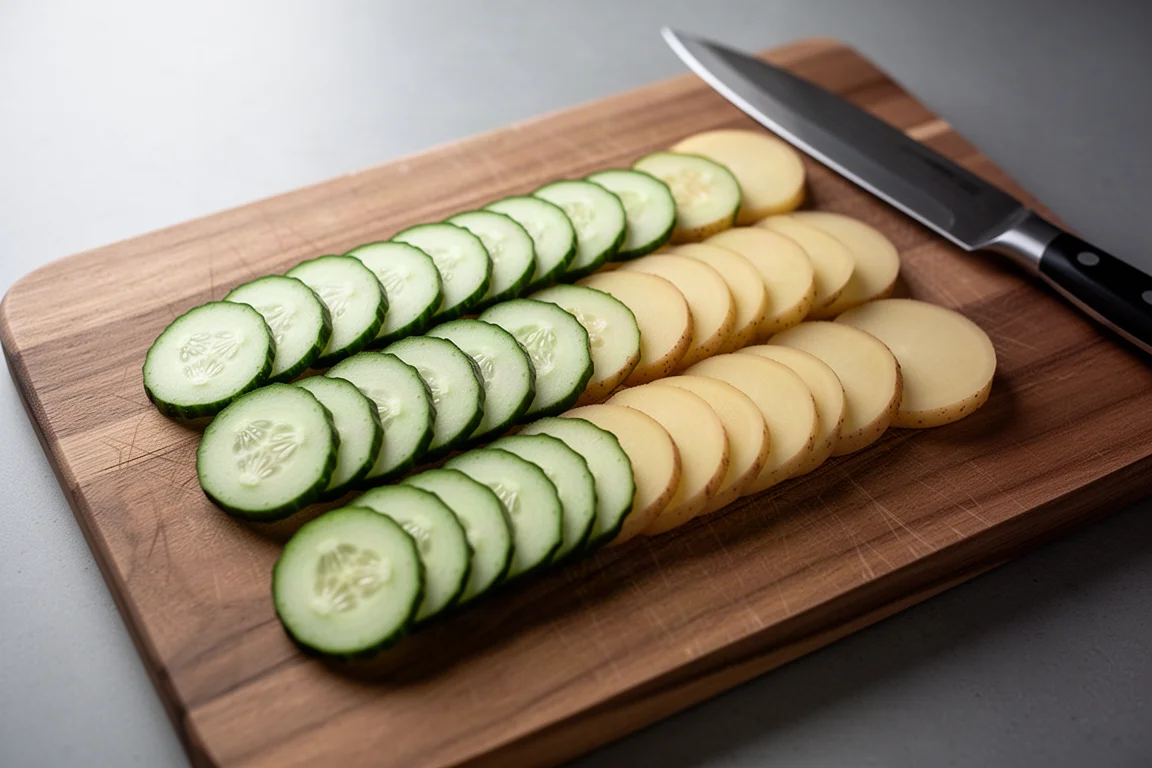
The case for a mandoline comes down to two things: speed and consistency. Cutting every potato slice by hand can be satisfying if you have the time, but when you are preparing a large meal, a big batch of coleslaw, or a whole bag of onions for caramelizing, a mandoline cuts thin, uniform slices quickly.
Uniformity is the part that is genuinely hard to replicate with a knife. For dishes like scalloped potatoes where even slices matter, a mandoline gives you precision that hand cutting rarely matches.
How to Choose a Mandoline
Your choice of mandoline does about half the work of staying safe. The counterintuitive rule: avoid cheap models. A dull blade makes vegetables fight and then release unpredictably, while a sharp blade goes exactly where you point it and needs less pressure. Skip the $10-20 single-setting slicers from grocery stores, and skip grater-side attachments and food processor slicers, which offer very little control over thickness.
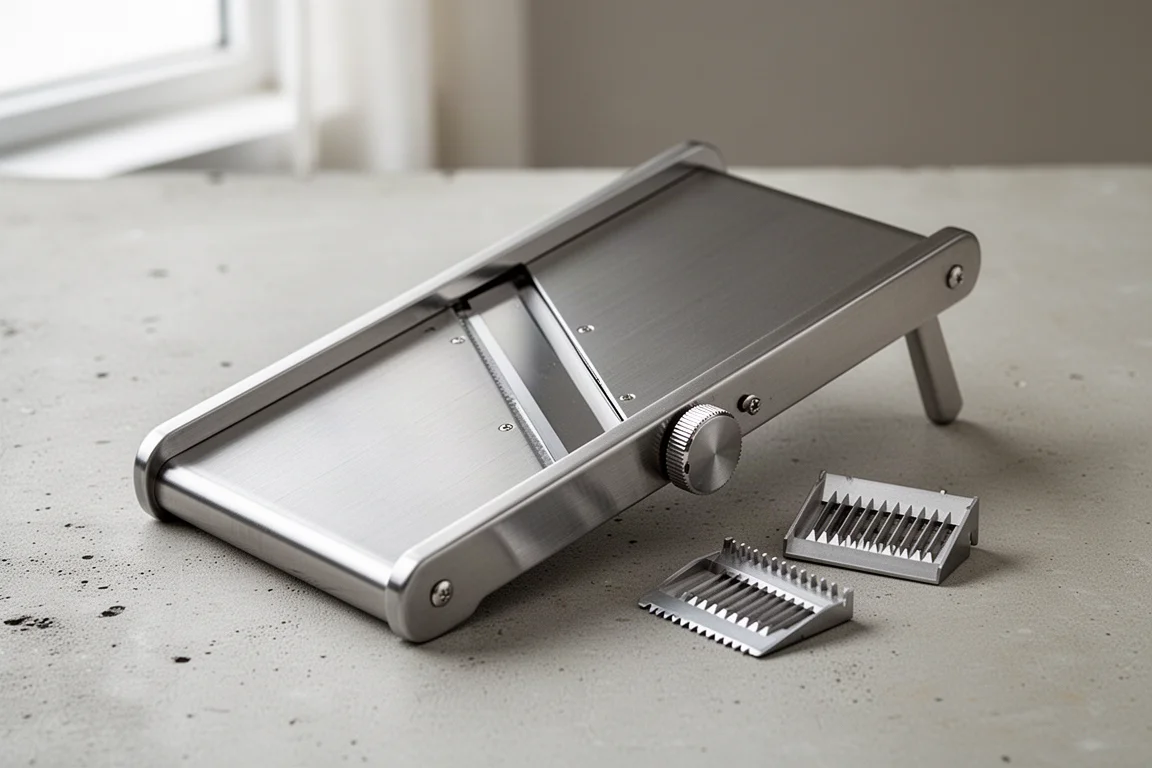
Look for a traditional mandoline with a removable blade you can sharpen yourself or have professionally sharpened. If you plan to julienne, choose one with a genuinely sharp julienne blade. Two brands stand out: Benriner and Chiba.
Benriner Mandoline
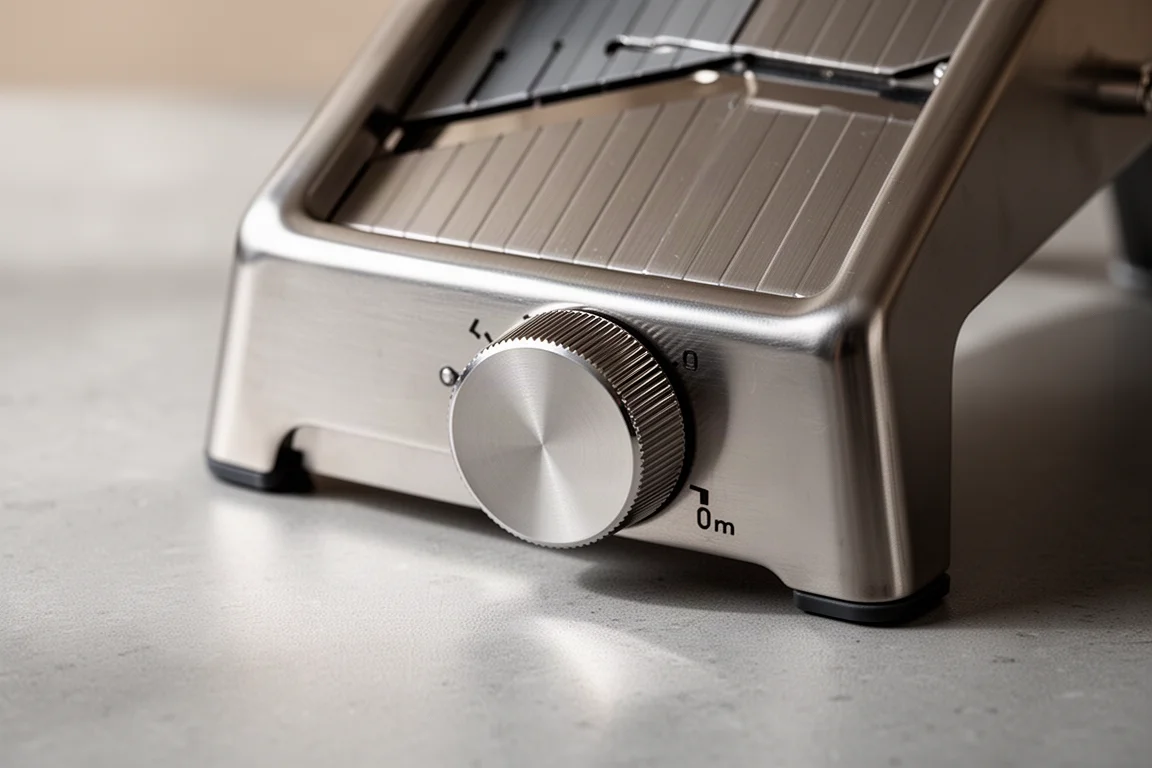
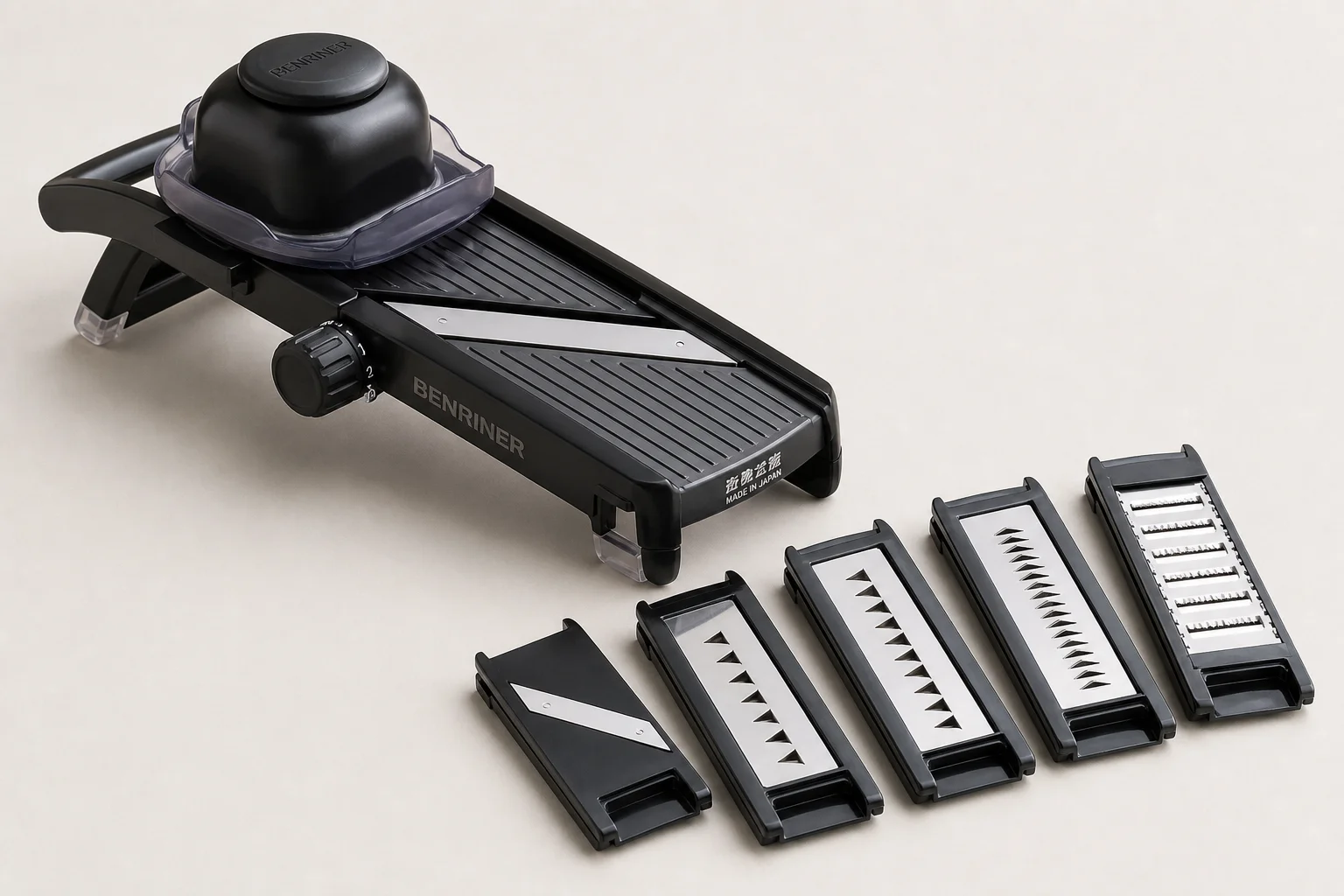
Benriner is the classic name that nearly every chef knows, and the classic model is the one most people have used in a restaurant kitchen at some point. Its main advantage is a large dial on the underside that makes thickness adjustment quick and easy, which is a real benefit if you adjust on the fly. The Benriner also has rubber feet on the bottom, so it sits securely when cutting over a cutting board rather than over a bus bin. The trade-off is in the julienne blades: they are thin pieces of steel rather than true blades, so they require more force to push through.
Chiba Mandoline
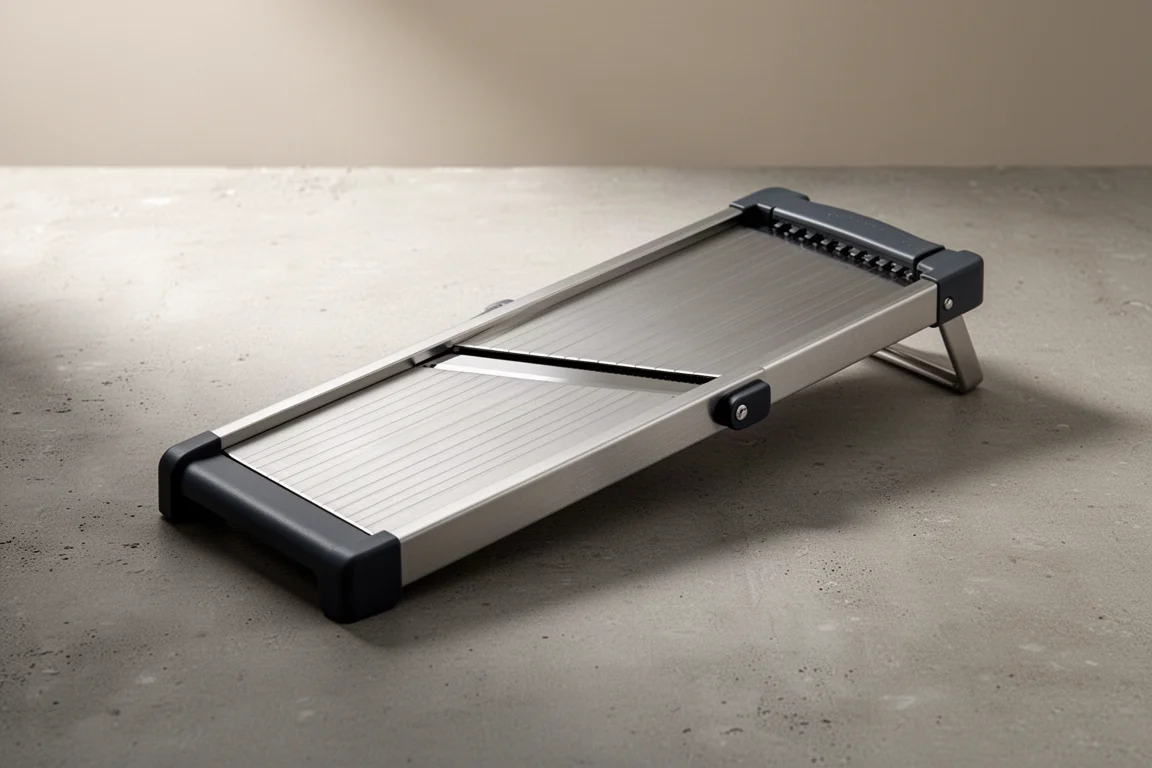
Chiba is the lesser-known brand, but arguably just as good or better. The basic Chiba model is compact, similar in size to the mini Benriner, good for travel, and available in pink, black, or beige. It also adjusts from the bottom. The larger Chiba adjusts with a dial on the side, which is slightly less convenient but not difficult to use.
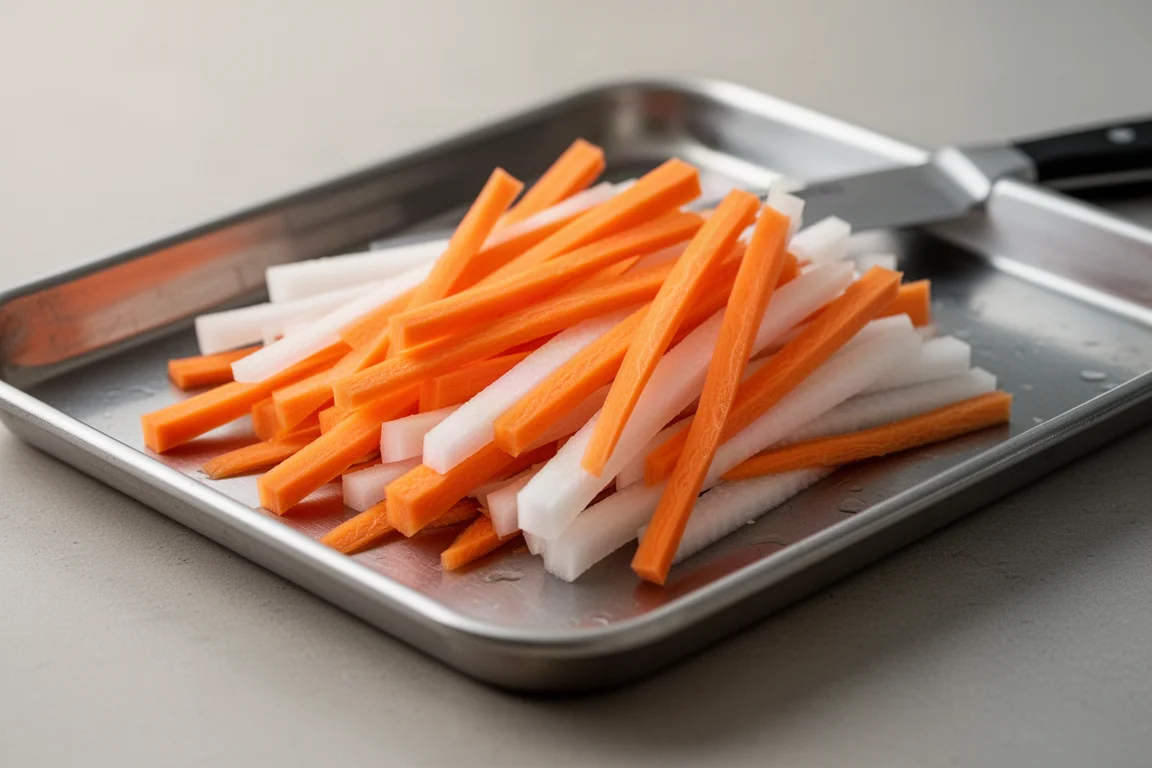
Where the Chiba pulls ahead is in the details. Its deck is wider than the Benriner’s, giving you more runway for cabbage, large onions, or wider vegetables. More importantly, the julienne blades come in a cartridge, and each tooth is a tiny sharp blade. That means far less pressure when cutting julienne, which makes dense vegetables like carrots effortless rather than a fight, and less pressure means more safety. It is also easy to swap between a fine julienne blade for delicate cuts and a larger one for a more substantial crunch.
Safe Mandoline Technique: Blade, Guard, Glove
Even with a sharp mandoline, technique matters. For larger vegetables like a potato, bare hands are fine as long as you keep attention on the task and simply slide the vegetable back and forth without pressing down, much like grating cheese.
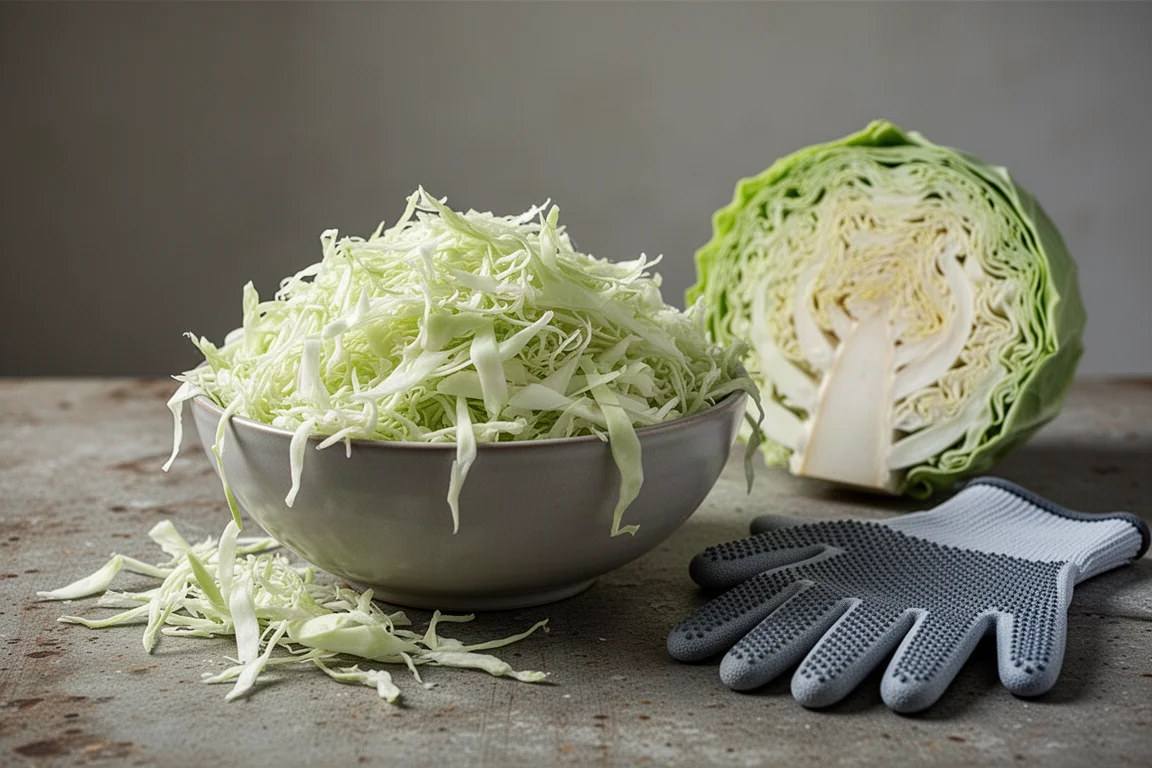
The danger zone is the end of the cut, when your fingers get close to the blade. The rule is simple: when your fingers are about to reach the blade, stop. Do not push for the last two slices. Use the guard instead, even if it wastes a small piece of vegetable. Wasted cabbage or carrot can go into soup or mashed potatoes; a sliced fingertip cannot. A cut-resistant glove, which is cut resistant rather than cut proof, adds confidence for those last slices, but never place a gloved finger directly against the blade.
What You Can Do With a Sharp Mandoline
A genuinely sharp blade unlocks cuts that a dull slicer cannot handle. Delicate items like mushrooms can be sliced into thin, pretty sheets for pickling. Fine julienne carrots work well for pickles, and larger julienne strips suit a banh mi or a rice bowl. Fine julienne zucchini, salted and rested for 20 minutes to soften, makes a good low-carb pasta stand-in.
For big jobs, the mandoline is a lifesaver: a couple of heads of cabbage become a mountain of coleslaw in a few minutes. For extra-thin work, Chiba also makes an unusual oscillating slicer designed to produce katsuramuki-style paper-thin vegetable sheets, the cut normally done with a usuba or yanagiba knife.
Conclusion
Both Benriner and Chiba are well-built Japanese mandolines with similar blade and construction quality, so you can choose based on how you work: pick the Benriner for its quick bottom-dial adjustment, or the Chiba for a wider deck and exceptionally sharp julienne blades. Whichever you choose, a sharp blade, the guard, and a bit of caution are what keep the tool fun instead of frightening.
Further reading
Related Reviews
Kitchen Tools
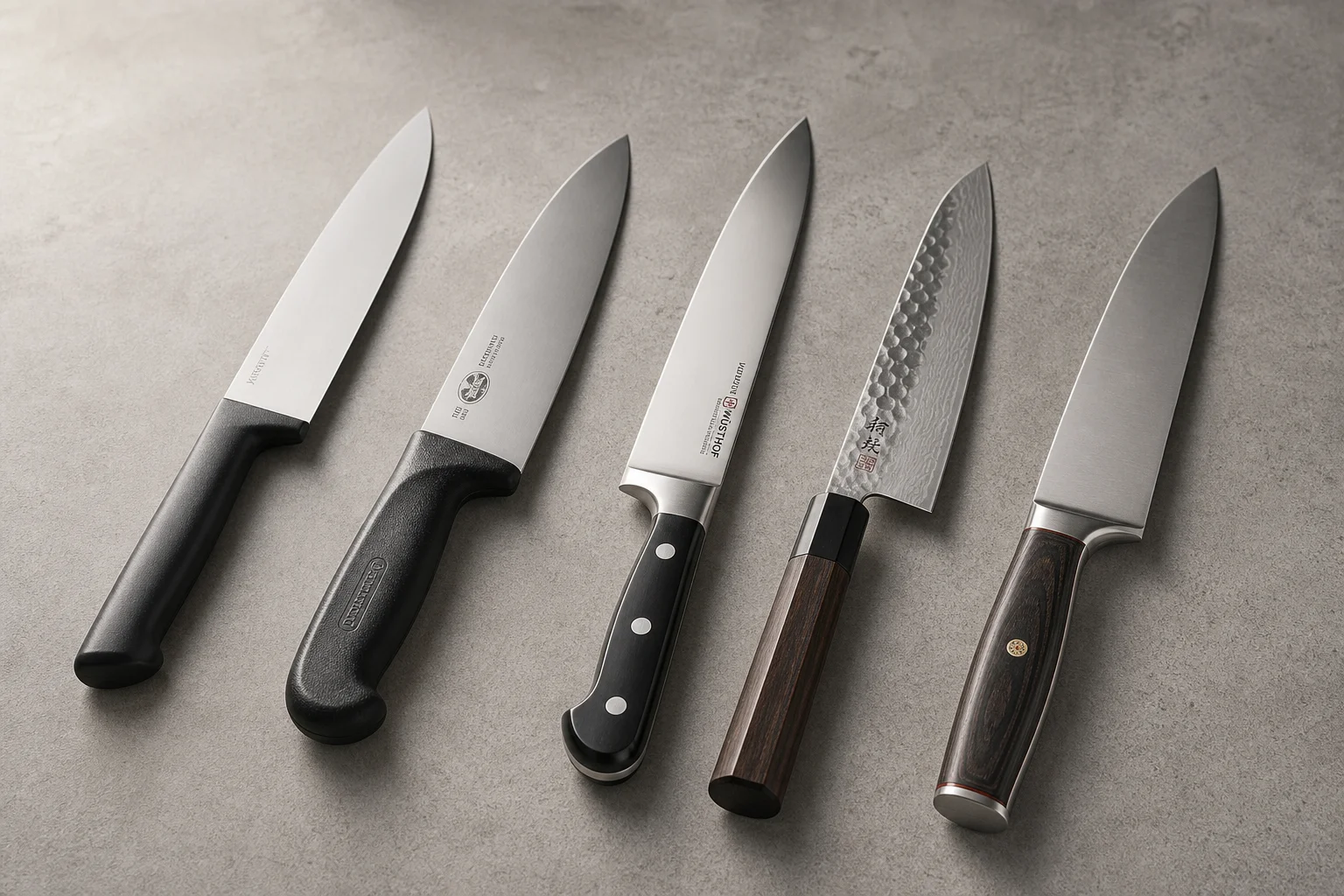
Amazon's Top-Rated Chef Knives Tested: Five Models from £11.50 to £200
We tested five of Amazon's highest-rated chef knives across sharpness, comfort, and versatility to see which delivers the best value and real-world performance.
Kitchen Tools
Benriner Japanese Mandoline Review: A Sharp Tool for Precise Vegetable Slicing
A practical guide to using a Japanese mandoline safely and effectively, with tips for achieving consistent, crisp results in the kitchen.
Kitchen Tools
Best Cheese Slicers: Five Practical Options for Consistent Slicing
Five cheese slicers with different designs and features, from multi-blade versatility to wire-based precision, each suited to different kitchen needs and cheese types.