Tools & Workshop
Teslong vs Milwaukee Inspection Camera: Which Borescope Is Worth the Money?
A hands-on comparison of two inspection cameras after a real job on a snowmobile engine, covering image quality, articulation, and value.
Introduction
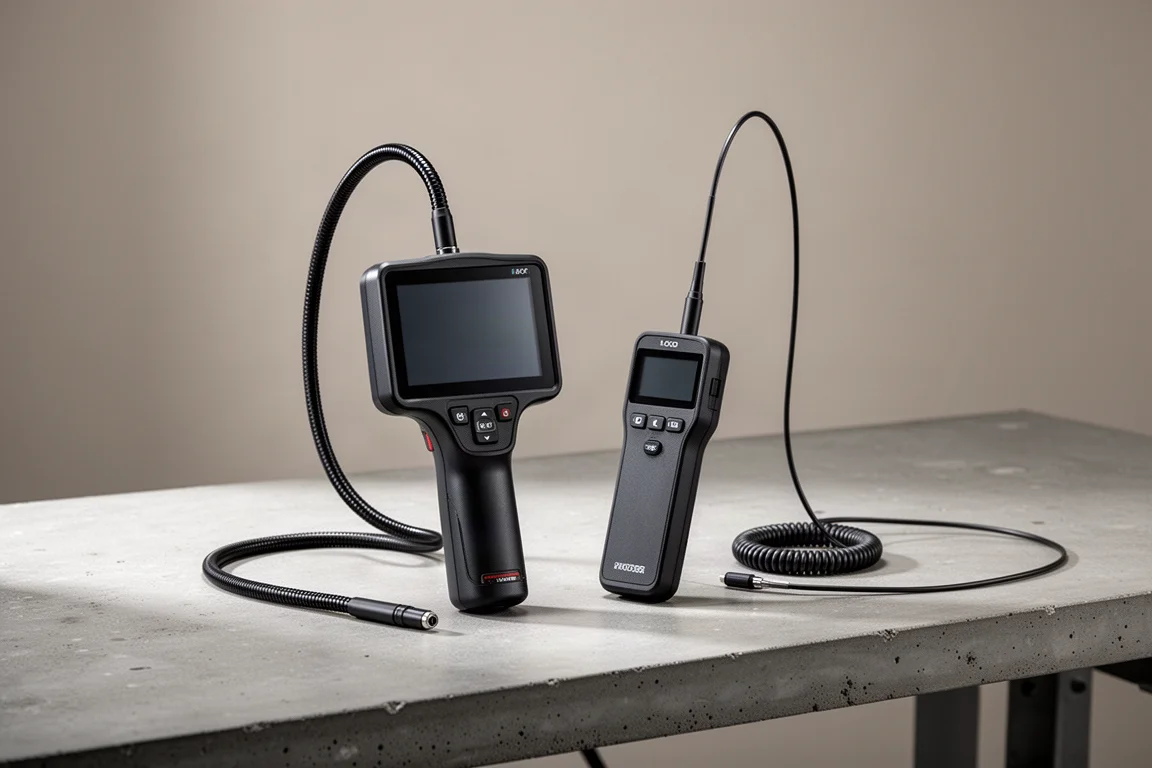
Inspection cameras, borescopes, and endoscopes are the kind of tool most people do not use every month, but they are invaluable when you need one. The problem is choosing between a professional-grade unit and something a quarter of the price. This comparison looks at two very different options: an $800 Milwaukee inspection camera and a $250 Teslong unit, tested on a real job rather than on a spec sheet.
The Case for Both: Two Very Different Approaches
An $800 Milwaukee is arguably overkill for occasional home-shop use, especially when some of its quirks become frustrating with infrequent use. The Teslong, at $250, still counts as an expensive off-brand unit, but it was purchased to answer a specific question: can a cheaper unit actually deliver better picture quality?
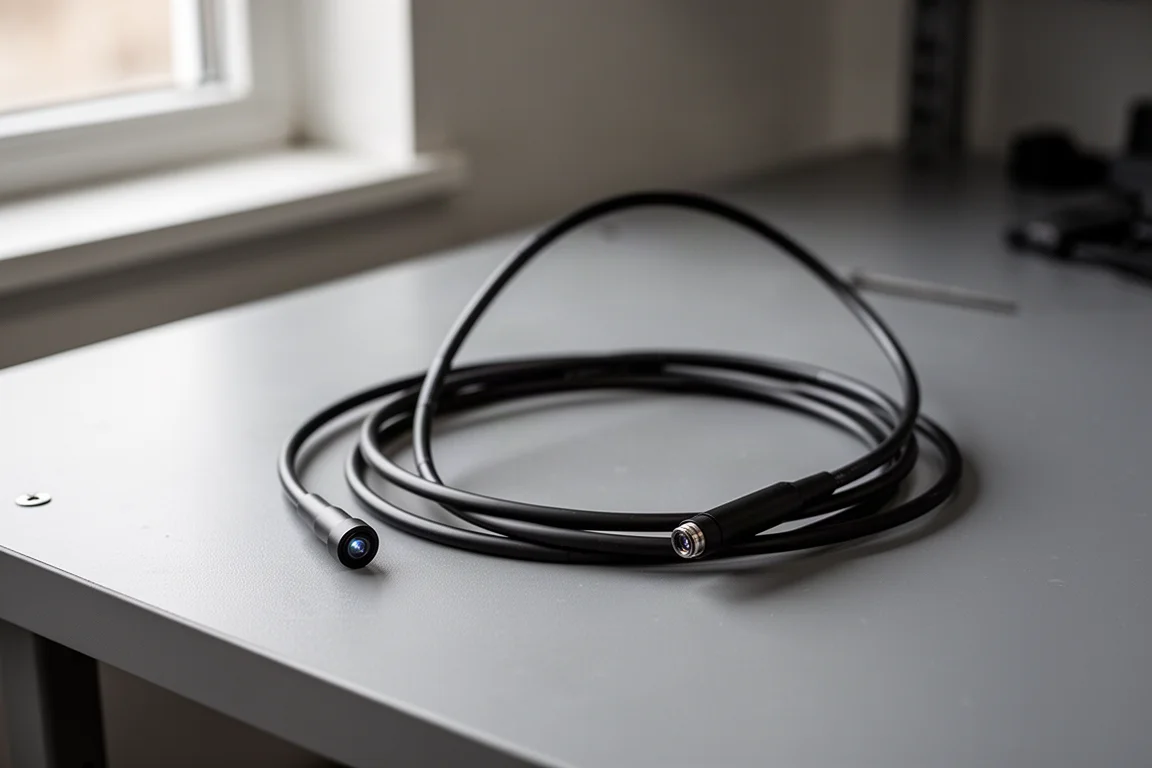
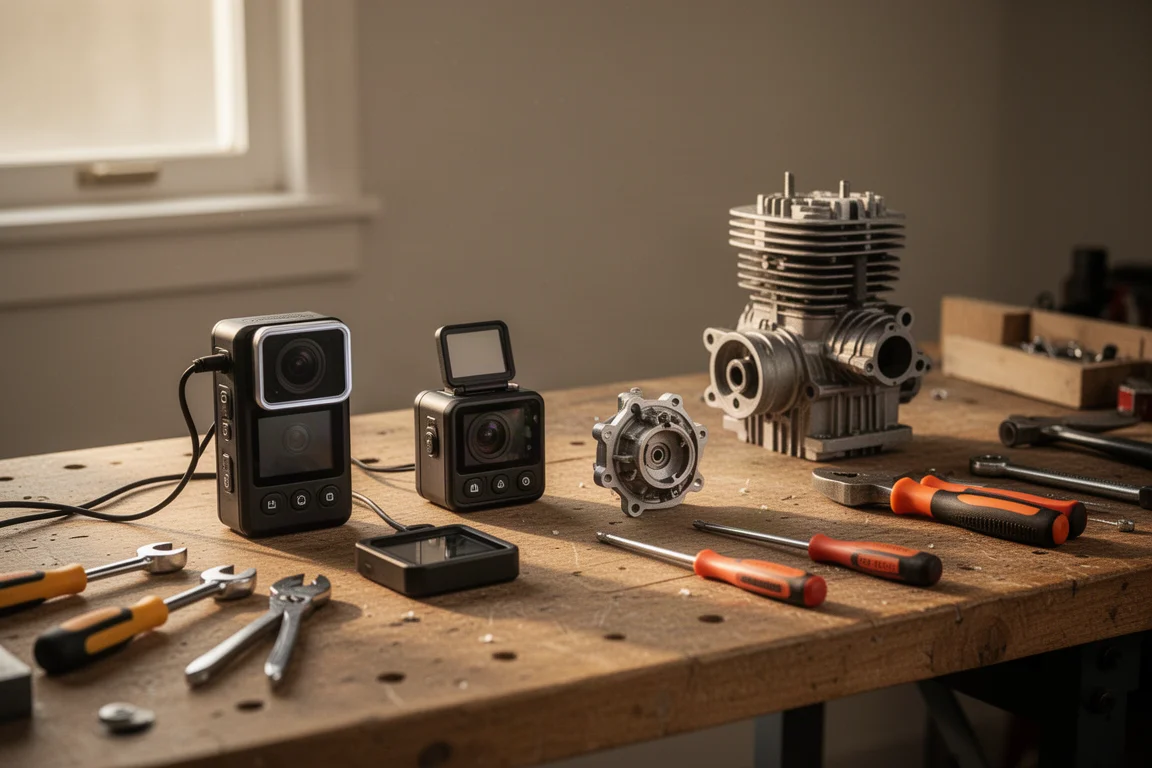
The two also differ in camera layout. The Teslong model tested uses a triple-camera design, with a forward camera plus one on each side. The Milwaukee uses two forward-facing cameras. Both can capture photos and video, and both do their core job well.
Real-World Test: Chasing an Oil Leak on a Snowmobile
The test job was simple in theory: locate a spark plug that had worked loose on a running snowmobile and inspect the surrounding area. With the Milwaukee, seeing inside the engine was possible, but getting the probe into the right position was awkward. Movement is hard to control, the probe tends to get knocked around once inserted, and there was no way to keep it stationary at the angle needed. The picture is also noticeably more grayscale and less bright.
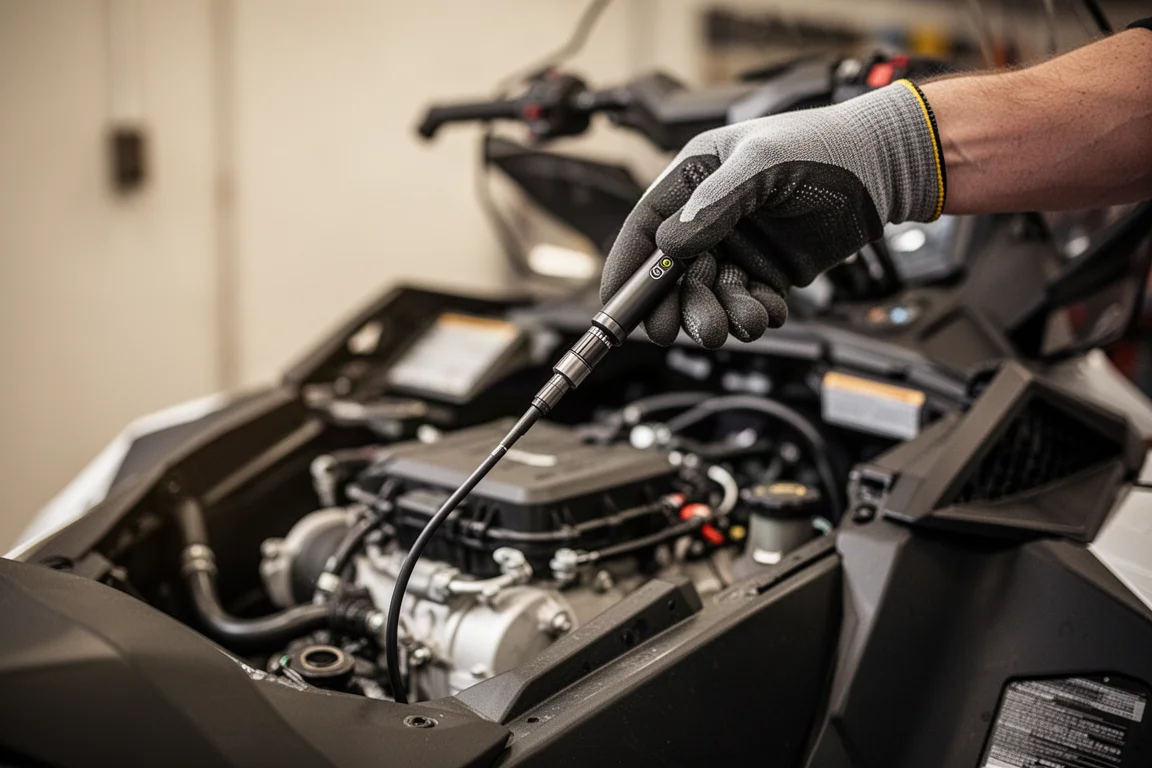
The triple-camera Teslong changed the experience. With cameras facing forward, left, and right, each with its own light, it became possible to look around obstructions instead of fighting to angle a single probe. Switching camera views is just a button press away, and the screen is brighter with far less of a gray cast. On this job, the spark plug that was invisible with the Milwaukee was easy to find, and visible oil around the plug boot and running down the case was immediately clear.
Image Quality: The Biggest Difference Between the Two
The Teslong’s image is the standout. Views are clear and bright across the whole engine bay, revealing details that simply never showed up on the Milwaukee. The only issue is that image can wash out when the probe gets very close to an object, because the light is too strong at close range. That is adjustable: the light toggles between high and low, and dimming it brings back a usable view up close.
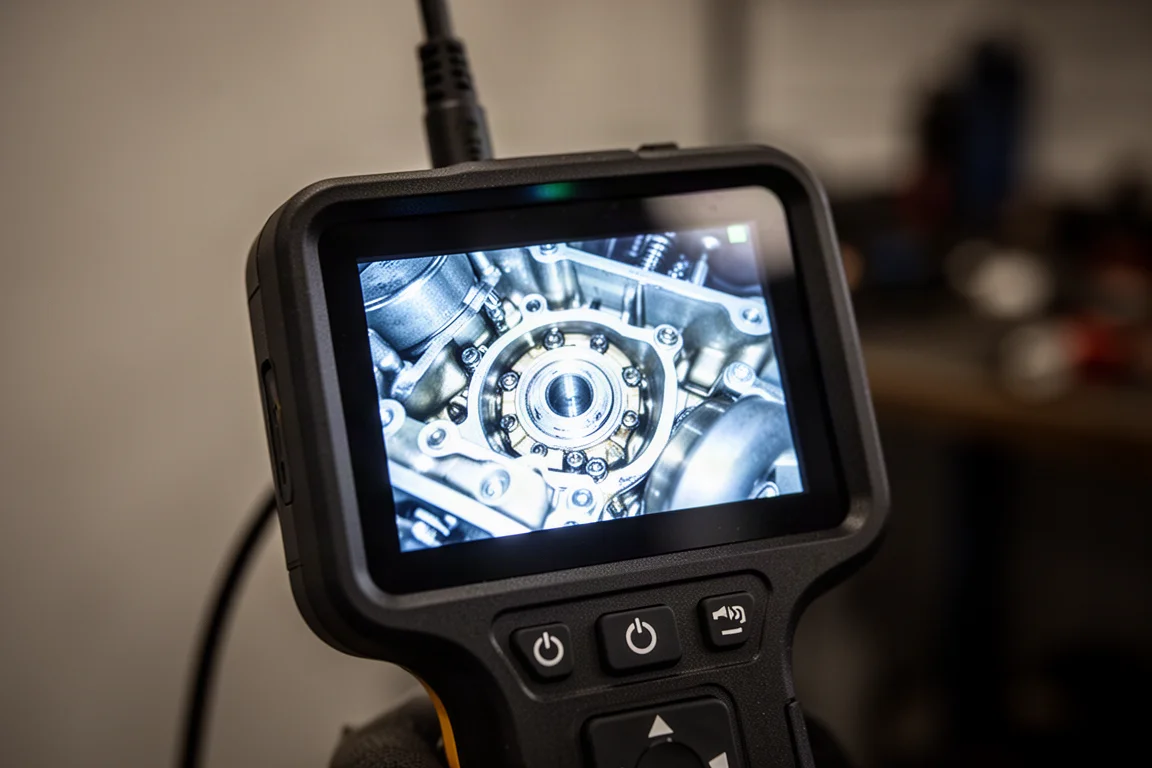
The Milwaukee is not a bad unit. Its picture is fair once you get the probe placed, and the ability to look right and left is genuinely useful. It just does not produce the same clarity, and for a quarter of the money the Teslong matches or beats it where it matters most: what you actually see on the screen.
Buying Advice: Matching the Tool to Your Budget
For professionals in the trades, the Milwaukee’s build and dual-camera setup may justify its price in daily use. But for a home shop, $800 is hard to swallow for a tool used a few times a year, and $250 is still steep. If you only need to see what is going on, without capturing photos or recordings, there is a real argument for spending $50 to $80 instead. At that price you will lose some options and some image quality, but the core job of seeing into tight spaces is still covered.
Conclusion
For occasional home use, the Teslong’s triple-camera design, brighter and clearer picture, and lower price make it the more compelling pick here. The Milwaukee remains a solid choice for tradespeople who need left-and-right visibility daily and can justify the premium. Either way, think first about how often you will actually use it, and buy accordingly.
Product link
View more details for Teslong Inspection Camera
This product is mentioned in the review. Check the specifications, options, and compatibility before buying.
View more details for Teslong Inspection CameraFurther reading
Related Reviews
Tools & Workshop
Three Tools That Saved a Tight Dishwasher Installation
A long-reach hose clamp tool, a locking ratcheting bit driver, and a flip socket that earned their spot during a cramped appliance install.
Tools & Workshop
Banggood WB0102 Pro Workbench Review: A Stable, Height-Adjustable Bench for Small Workshops
A heavy, well-priced workbench with a pine top, built-in power strip, height adjustment, and a straightforward assembly that takes under 30 minutes.
Tools & Workshop
Best 50 ft Extension Cords: 15 Cords Put Through Real-World Testing
Fifteen 50 ft extension cords compared on blade strength, abrasion resistance, voltage drop, plug retention, and cold weather flexibility.