Tools & Workshop
Best Infrared Thermometers Compared: Budget Picks vs the $245 Fluke
Fifteen temperature guns tested against calibrated references on concrete, hot steel, frozen metal, and polished aluminum. Here are the standouts.
Introduction
Infrared thermometers are deceptively simple. Point, pull the trigger, read a number. The catch is that two guns aimed at the same spot can disagree by several degrees, and when you are diagnosing engine components, checking HVAC registers, or verifying a grill surface, those degrees matter. That raises an obvious question: is an $8 temperature gun really as good as one that costs $245?
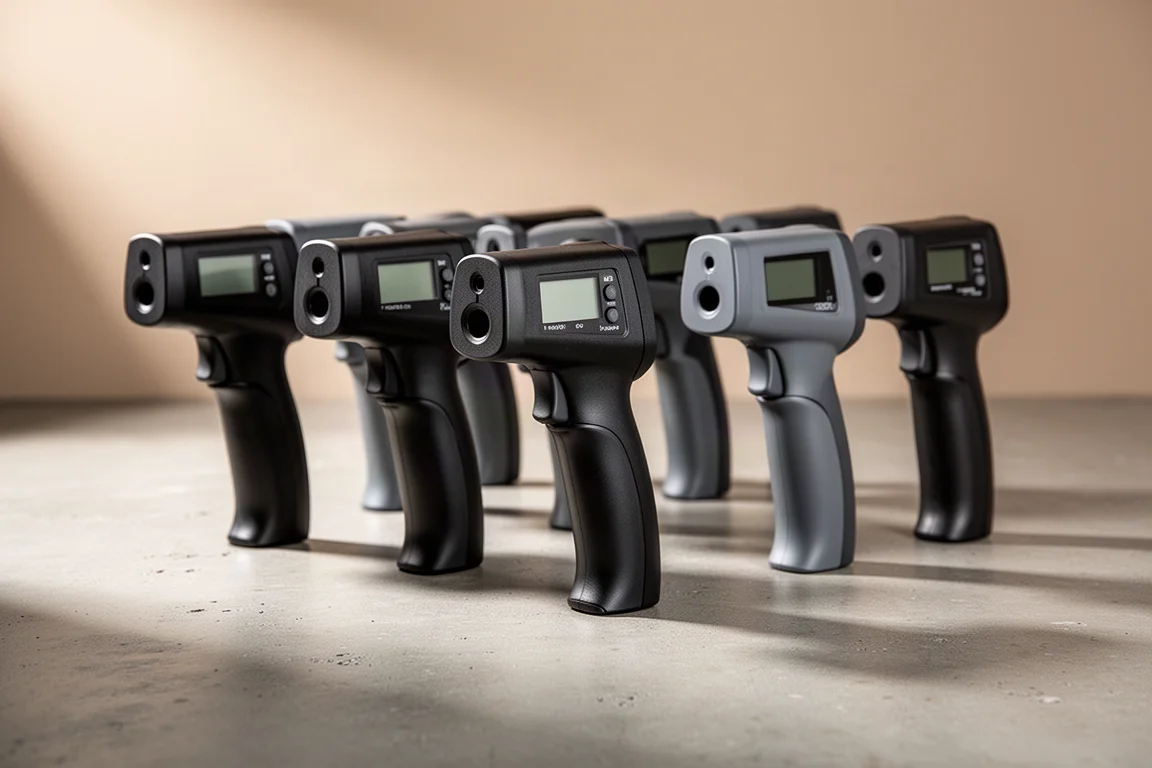
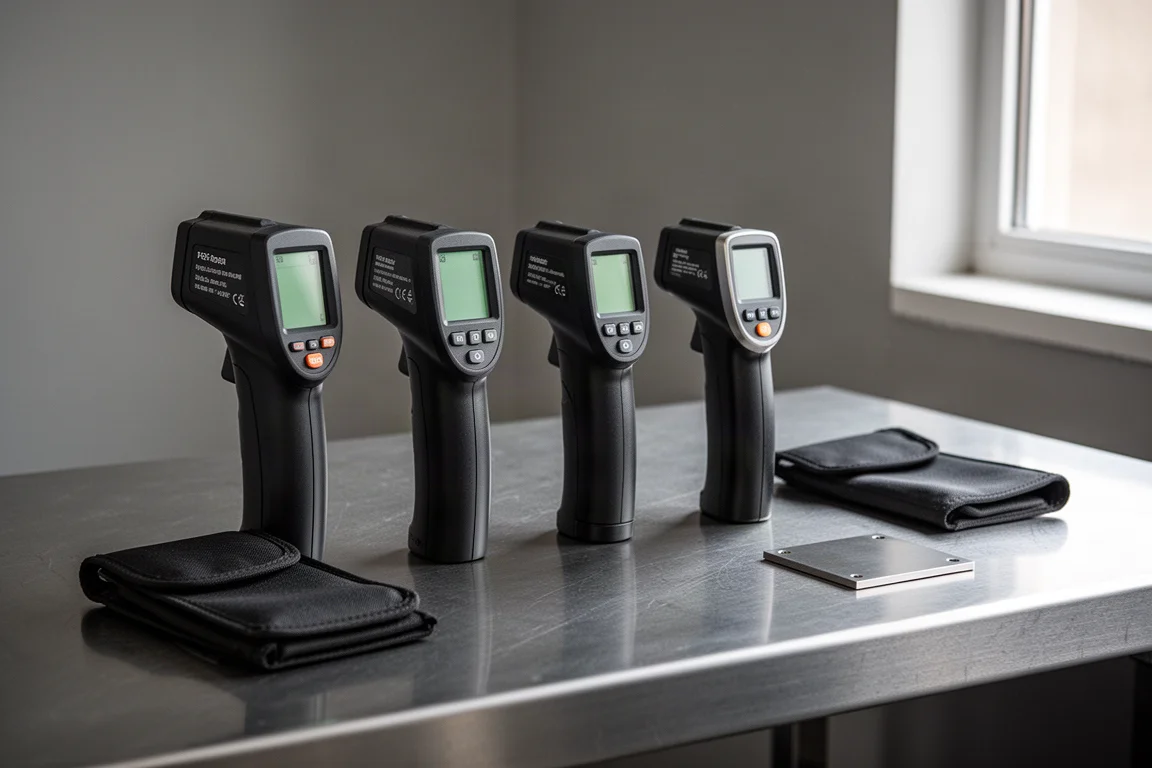
Fifteen infrared thermometers went head to head, from the cheapest Sunnota to a premium Fluke, with prices ranging from $8 to around $245. Each was checked against calibrated contact references on a concrete floor, a hot steel plate, frozen steel, and polished aluminum, then judged on measurement speed and how easy the display is to read in direct sunlight.
How the Testing Worked
Accuracy was verified with a contact thermometer that ships with a certificate of calibration, tested and certified as accurate to within a tenth of a degree. Four temperature scenarios were used: ambient concrete held at 69.4°F, a steel plate soaked on a hot plate at a stable 386°F, steel left in a freezer at -6°F for 12 hours, and a polished aluminum surface at 71.3°F. Polished and shiny surfaces are notoriously difficult for infrared measurement, so they were treated as a separate challenge.
Response time and direct-sunlight display visibility rounded out the scorecard. One quick note on terminology: the distance-to-spot ratio describes how large a measurement circle the gun covers at a given distance. A 12:1 ratio means a 1-inch circle from 12 inches away, like a flashlight cone; the higher the ratio, the smaller the area you can measure from farther away.
Sunnota: The Cheapest Contender
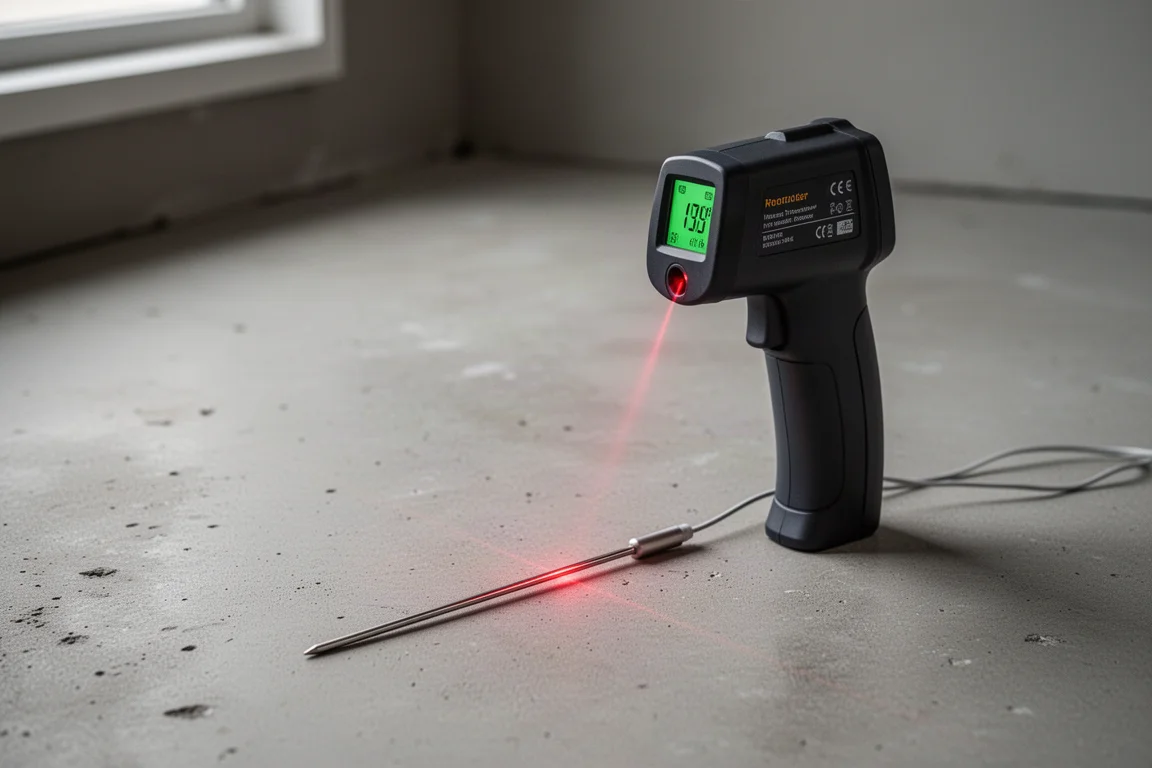
At $8, the Sunnota is the least expensive gun in the field. It claims a range of -58°F to 932°F, an accuracy of plus or minus 1.5%, and a 12:1 distance-to-spot ratio. On the ambient concrete test it read 71.1°F against the 69.4°F reference, an error of 1.7°F too high, which is respectable for the price. Its display is also easy to see in direct sunlight.
The weaknesses showed up elsewhere. On hot steel it came in about 12.7°F below the target, and on the frozen steel it was off by nearly 10°F. On the polished aluminum it read 11.7°F too high, and its measurement speed was the slowest tier at 2.46 seconds. Since its emissivity is fixed at 0.95, there is no way to compensate on reflective surfaces. As an ultra-budget option for rough ambient checks, it does the job; just do not expect precision across extreme temperatures.
Best Budget Pick: NJT T600
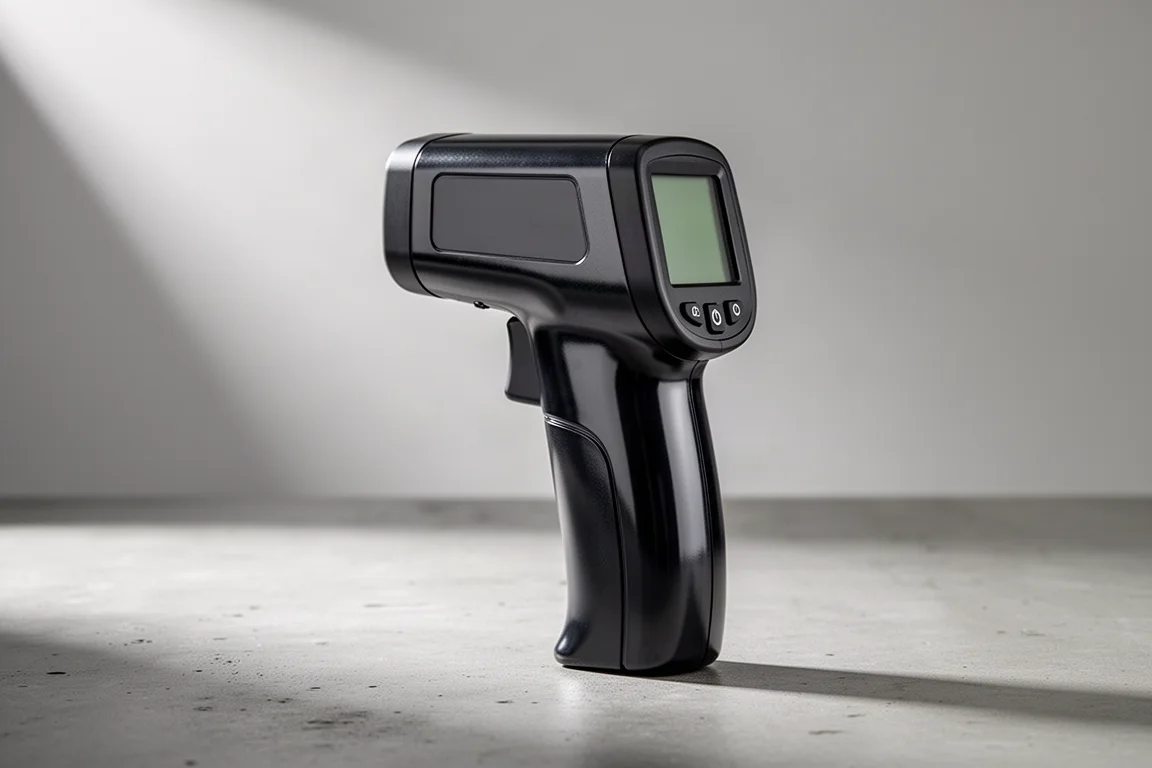
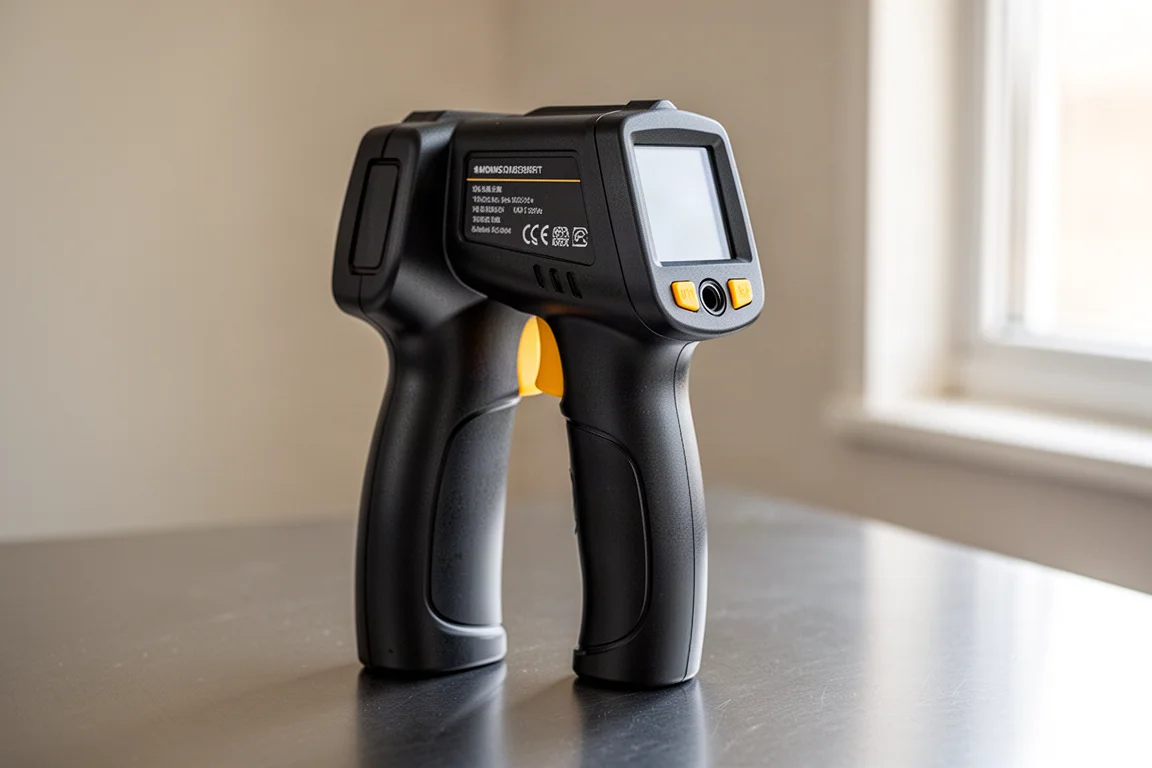
The NJT T600 lists for $9 and claims a range of -58°F to 1112°F with an auto-off feature to preserve battery life. On ambient concrete it read just 0.2°F above the reference, one of the two best results in the entire test. On the hot steel plate it was off by only 1.5°F, again near the top of the field. Its display is easy to read in sunlight, and it measured in 1.17 seconds, more than twice as fast as the Sunnota.
Its coldest readings lagged, finishing off by 11.3°F on the frozen steel, and on polished aluminum it was 0.7°F off, still very good. There is no adjustable emissivity, though in practice tuning emissivity rarely improved results for the other units either. Overall it tied for second place on the combined ranking, and for the money it is hard to argue with: a strong performer in nearly every category, and the clear choice if budget is the deciding factor.
Best Long-Range Value: Vivor
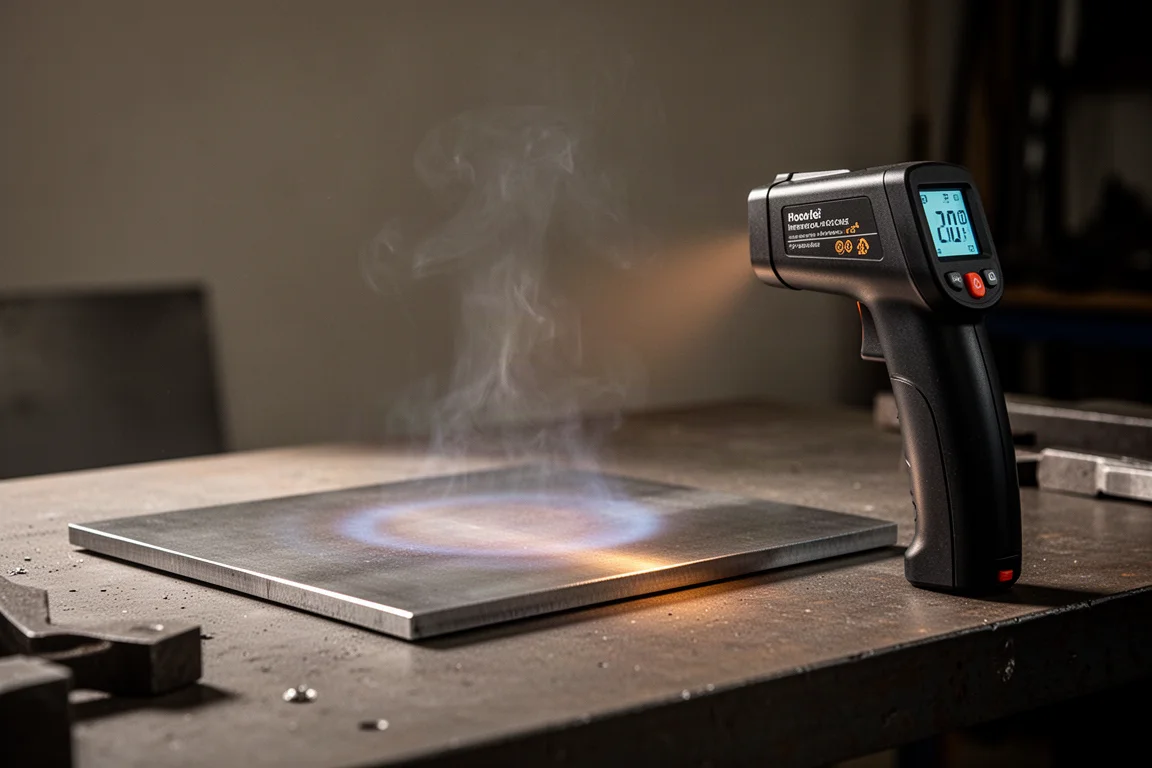
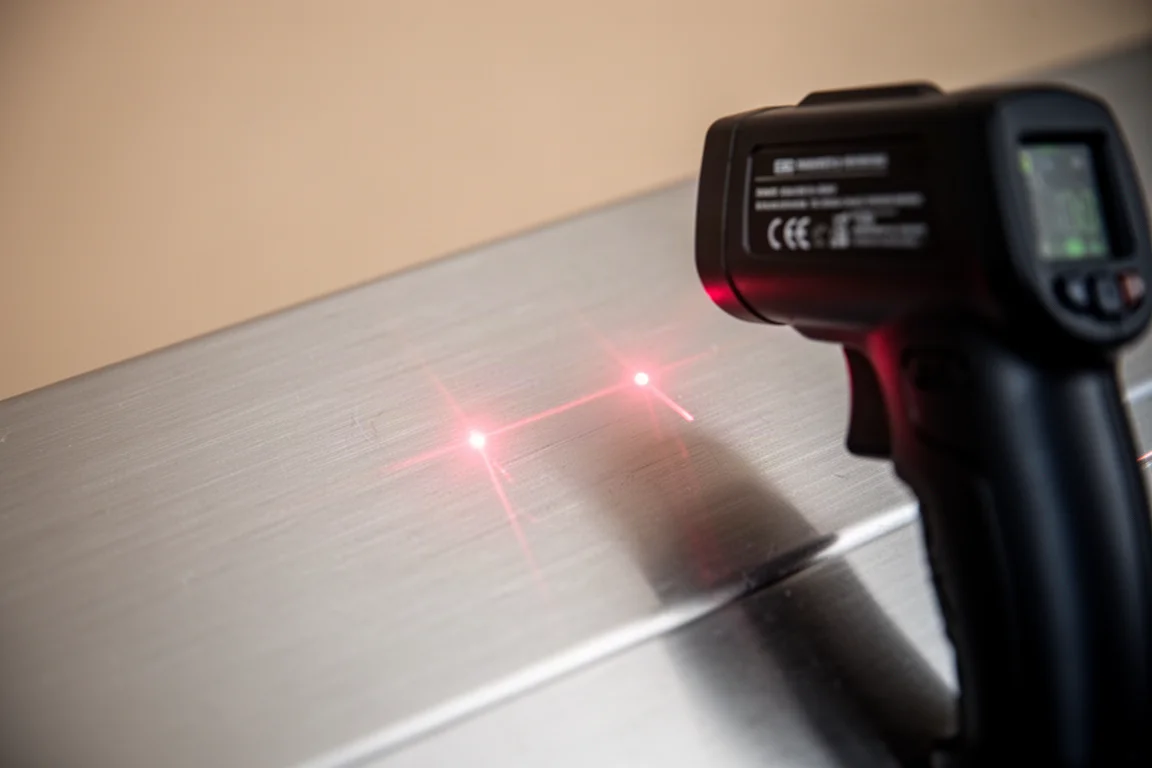
At $38, the Vivor brings specs that outclass most of the field: a huge range of -40°F to 2732°F, a dual laser configuration, adjustable emissivity from 0.1 to 1.0, automatic power-off after 35 seconds, and a 50:1 distance-to-spot ratio, by far the best in the test. That ratio means it can measure a small area from over four times the distance of a 12:1 gun like the Fluke.
Its ambient reading was the single most accurate in the whole comparison, just 0.1°F off, and on polished aluminum it was only 0.5°F off. It is also very fast at 0.7 seconds. The trade-offs: it struggled badly on hot steel with roughly a 22°F error, its cold reading was about 6.7°F off, and its dark display is genuinely difficult to read in direct sunlight. It tied for second place overall on average finish, and if you need to measure small targets from a distance, the long-range capability is unmatched at this price.
Premium Benchmark: Fluke
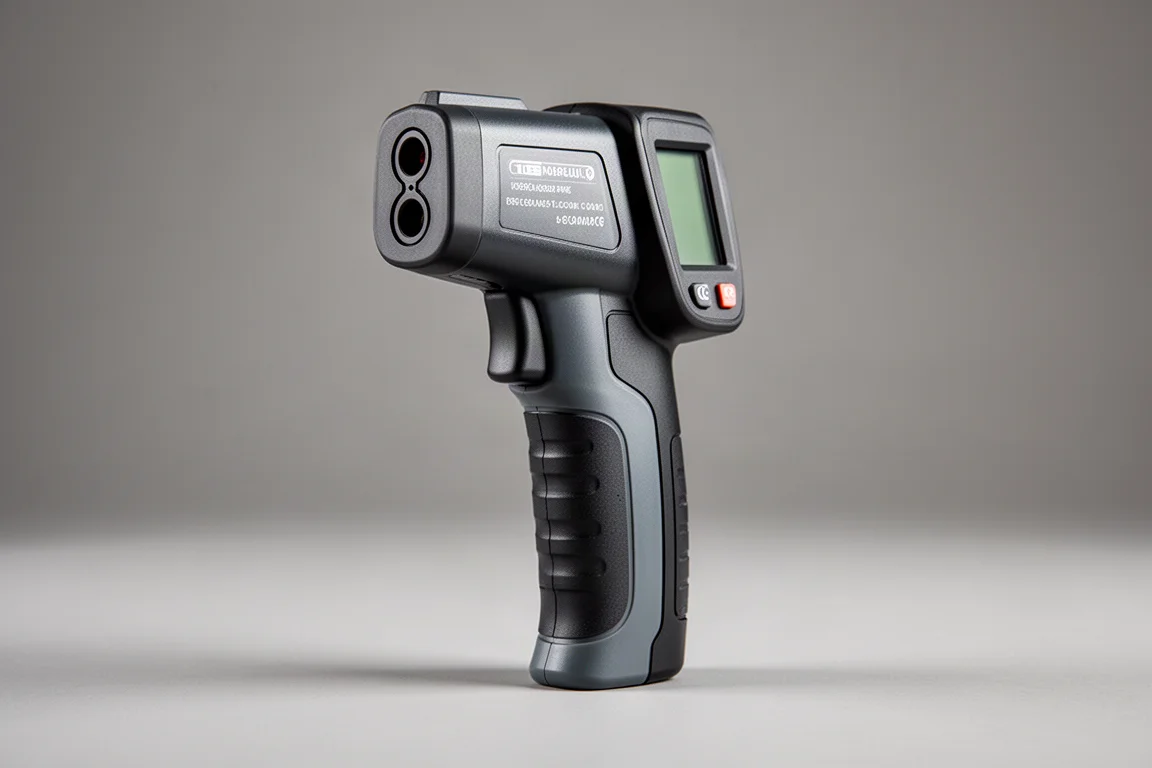
At around $245, the Fluke is the most expensive gun tested, and it earned the best overall score with an average finish of 2.5 across all categories. It performed consistently well everywhere: 0.7°F high on ambient concrete, only about 3°F off on hot steel, 2.6°F off on frozen steel, and a best-in-test 2.4°F error on the difficult polished aluminum. Its display is very easy to see in sunlight, and it responded in 0.3 seconds, second fastest overall.
The limitations are worth knowing before you buy. The distance-to-spot ratio is only 12:1, so you need to get close to measure small areas, and emissivity can only be set to low or high rather than fine-tuned. If you want consistent accuracy across every scenario and the budget allows it, this is the benchmark the others were measured against.
Other Notable Performers
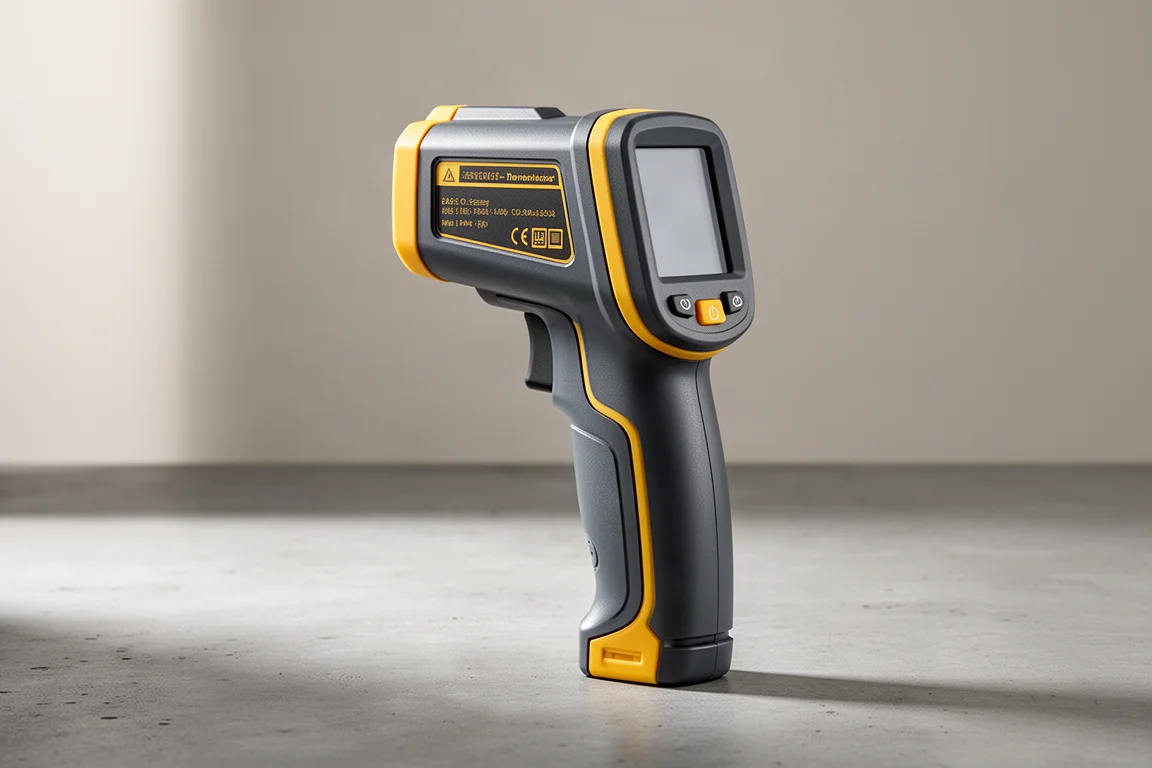
The rest of the field had moments worth noting. The Putt River gun ($63) won the hot-steel test with just a 1.2°F error and finished second overall on cumulative error. The Harbor Freight AIM ($50) tied the T600 for second on ambient accuracy at 0.2°F and did well in the cold test. The ThermoPro ($17) was nearly perfect on frozen steel, missing by only 0.4°F, though it struggled on hot metal. The Kaizen ($19) tied the Fluke for the best polished-aluminum reading and had the clearest display in sunlight. The Klein Tools IR10 ($104) was the fastest unit tested at 0.2 seconds, while the Milwaukee ($86) handled cold temperatures well. The Surer, Silotti, FKM, Mestic, and Klein Tools IR5 each had at least one strong test but could not sustain accuracy across the full scorecard.
Final Verdict
The combined results were clear. The Fluke topped the ranking with a cumulative error of 8.8°F across all five tests and the best average finish, and it is the pick if consistency across every scenario matters and the price fits. The Vivor and the T600 tied for second overall with an average finish of 5.3, each with a distinct strength: the Vivor for its 50:1 long-range measuring ability, the T600 for near-flagship accuracy at a $9 price.
If you want one recommendation, the T600 is the value pick of this comparison. It performed well in nearly every category except cold-steel measurement, and adjusting emissivity on other units rarely improved results anyway. For most household and workshop tasks, spending more than $9 buys diminishing returns unless you specifically need the Fluke’s consistency or the Vivor’s reach.
Conclusion
Cheap infrared thermometers have closed much of the gap, but not all the way. The $9 NJT T600 matched or beat several units costing five times more, the $38 Vivor offers unmatched measuring range for the money, and the $245 Fluke remains the accuracy benchmark. Match the gun to your actual use: budget ambient checks, long-range small-target work, or all-around precision.
Further reading
Related Reviews
Tools & Workshop
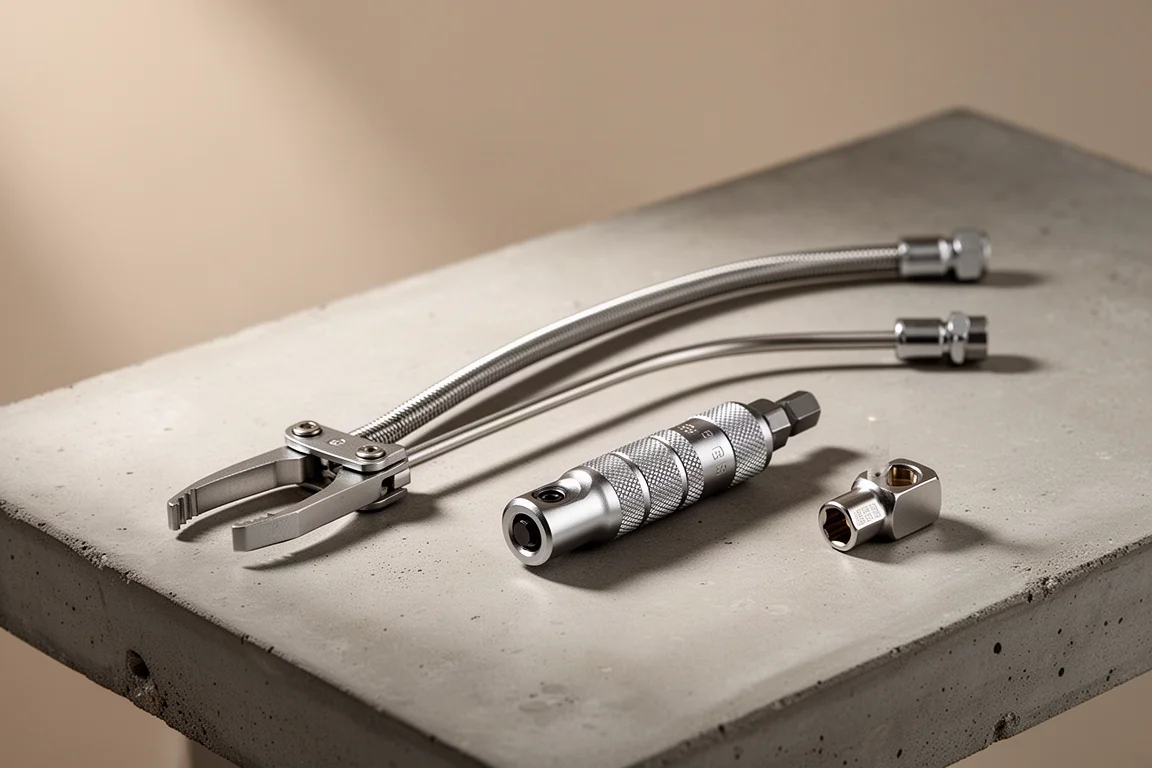
Three Tools That Saved a Tight Dishwasher Installation
A long-reach hose clamp tool, a locking ratcheting bit driver, and a flip socket that earned their spot during a cramped appliance install.
Tools & Workshop
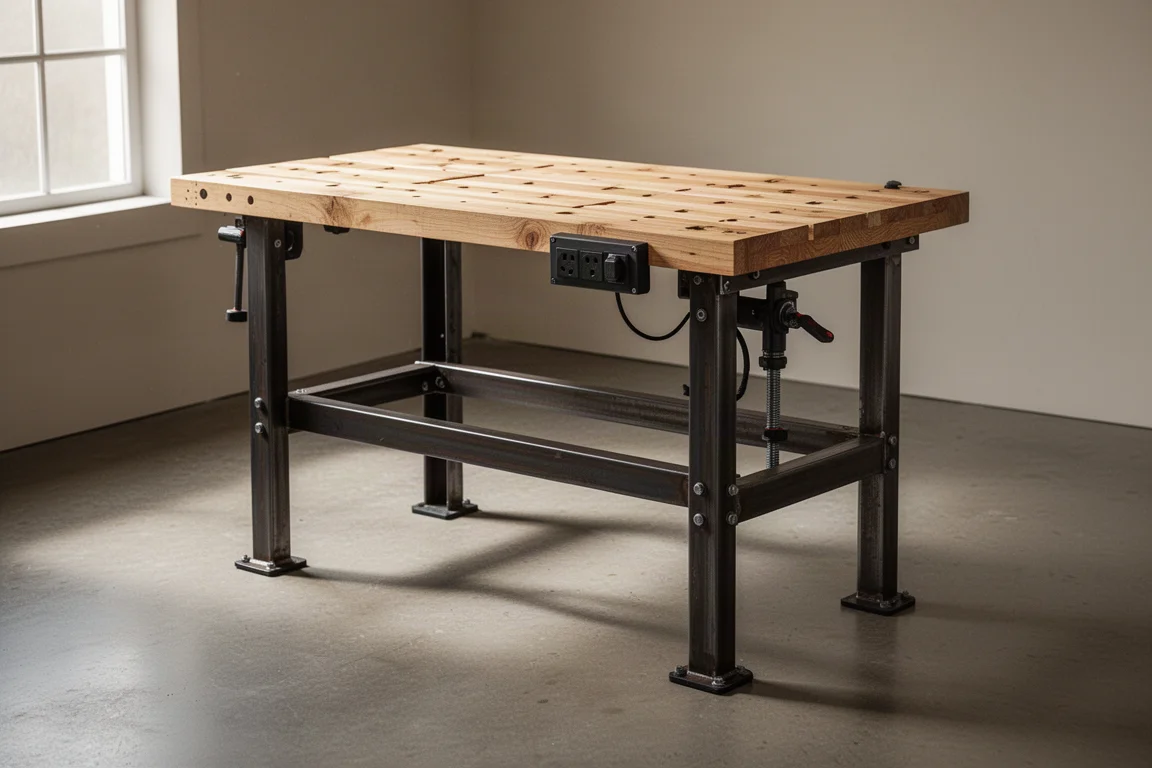
Banggood WB0102 Pro Workbench Review: A Stable, Height-Adjustable Bench for Small Workshops
A heavy, well-priced workbench with a pine top, built-in power strip, height adjustment, and a straightforward assembly that takes under 30 minutes.
Tools & Workshop
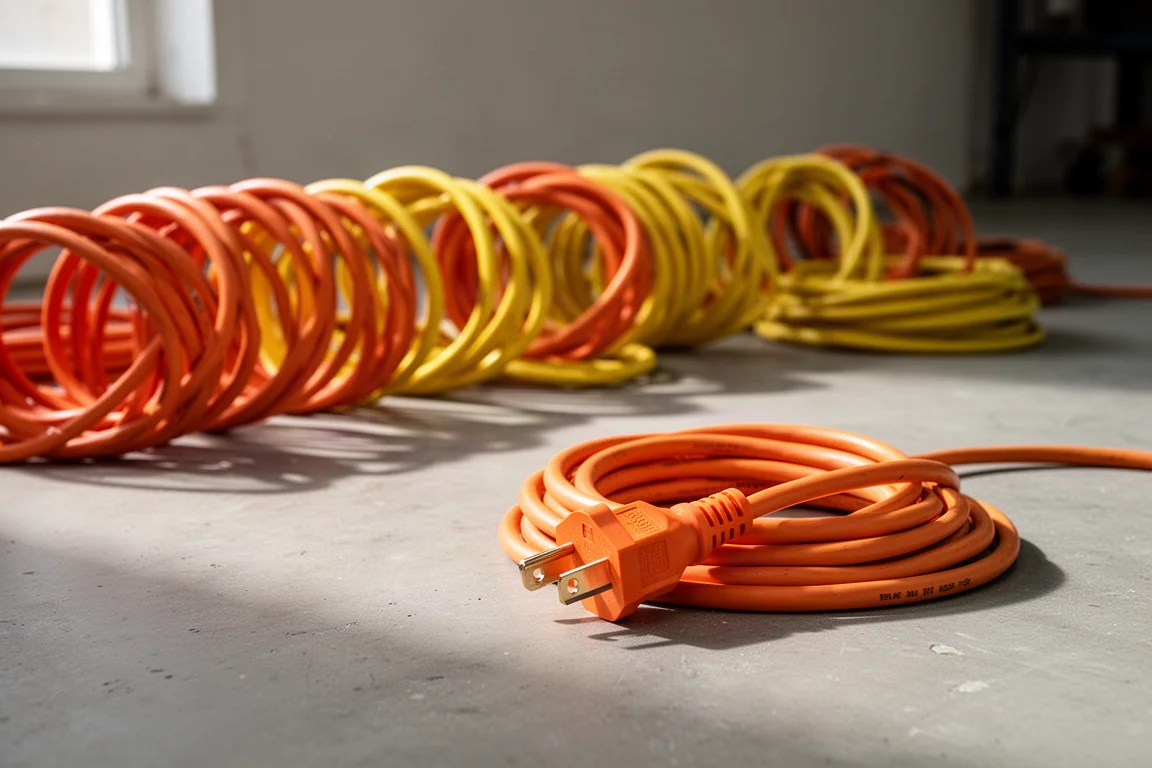
Best 50 ft Extension Cords: 15 Cords Put Through Real-World Testing
Fifteen 50 ft extension cords compared on blade strength, abrasion resistance, voltage drop, plug retention, and cold weather flexibility.