Kitchen Tools
Best Home Knife Sharpeners: Our Top Picks for Every Kitchen
From honing rods to electric sharpeners, five tested picks to keep your knives cutting cleanly from heel to tip.
Introduction
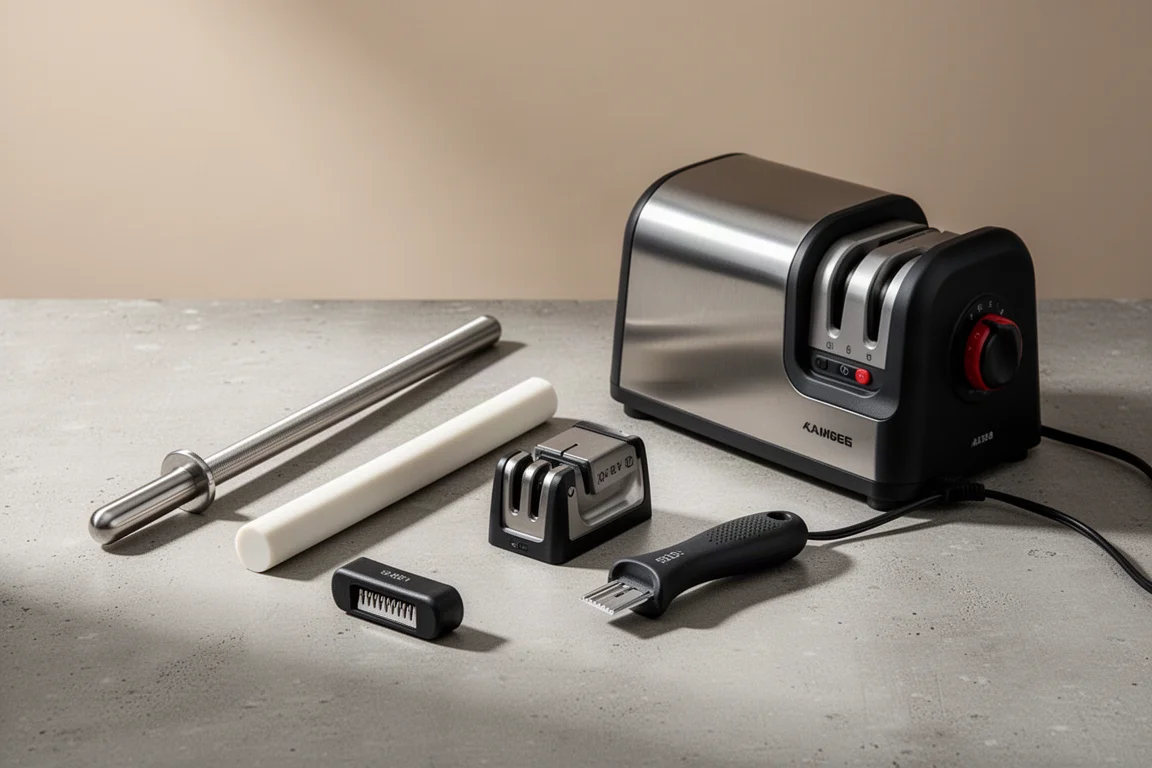
Everyone asks what the best knife sharpener is, but the real question is what the best sharpener is for you. It comes down to your space, your budget, and how much time you want to spend on maintenance. After extensive testing across styles and prices, five picks stand out: two honing rods, two manual sharpeners, and one electric model that has kept beating new contenders for years.
First, Know When Your Knife Is Actually Dull
You can feel it, especially if you have been using a sharp knife and it starts to go dull. If you are pushing too hard, the blade is denting food instead of cutting it, or the knife slides on the surface, your edge is done. A truly sharp knife slides right through exactly where you put it, and that makes it much safer.
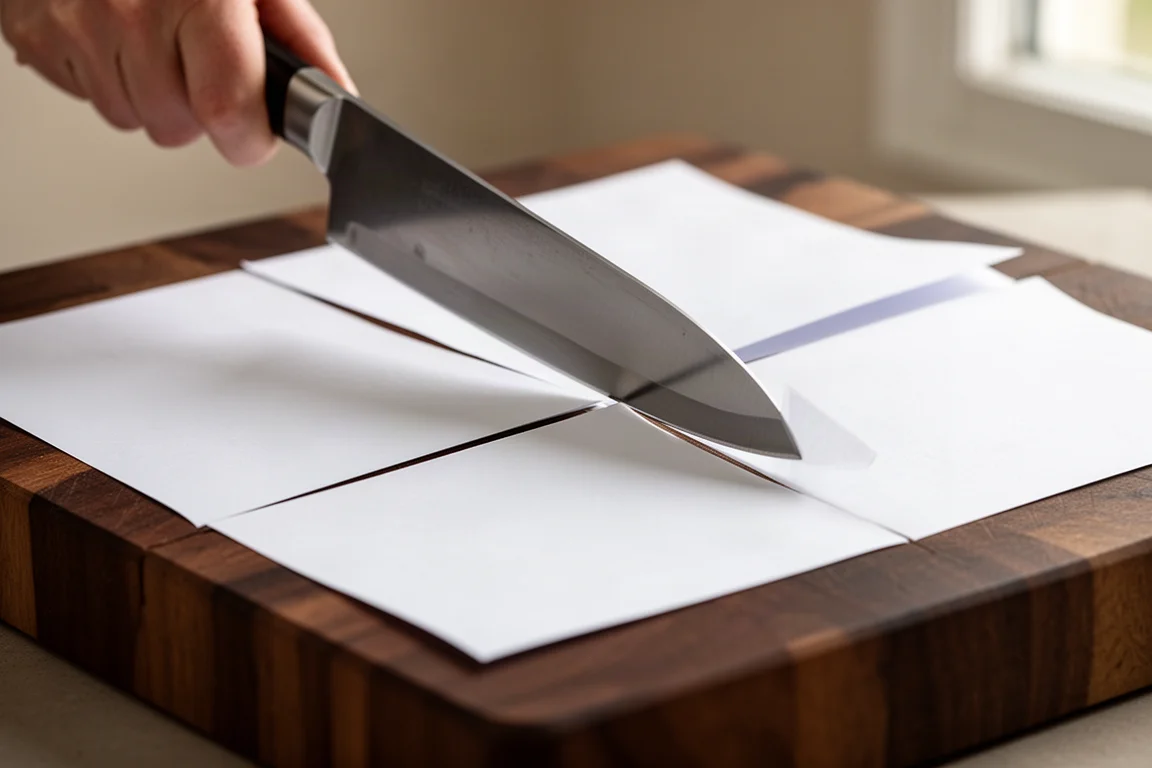
The simplest at-home check is the paper test. Hold a sheet of paper horizontally, start at the heel of the knife, and draw the blade down to the tip. A sharp knife cuts through like butter with no effort. A dull one snags, rips, and you can hear it sawing. And remember, sharpness matters across the entire blade from heel to tip. You need every part of that knife when you are cutting.
Honing Rods: Realignment, Not Sharpening
Let’s be clear: honing is not sharpening. Honing takes the delicate point of the edge, which gets rounded off or bent to one side as it bangs against hard cutting boards, and straightens it back out. The knife feels a little off and a little dull, but it does not need a full sharpening. It just needs realignment, and that is exactly what a honing rod does.
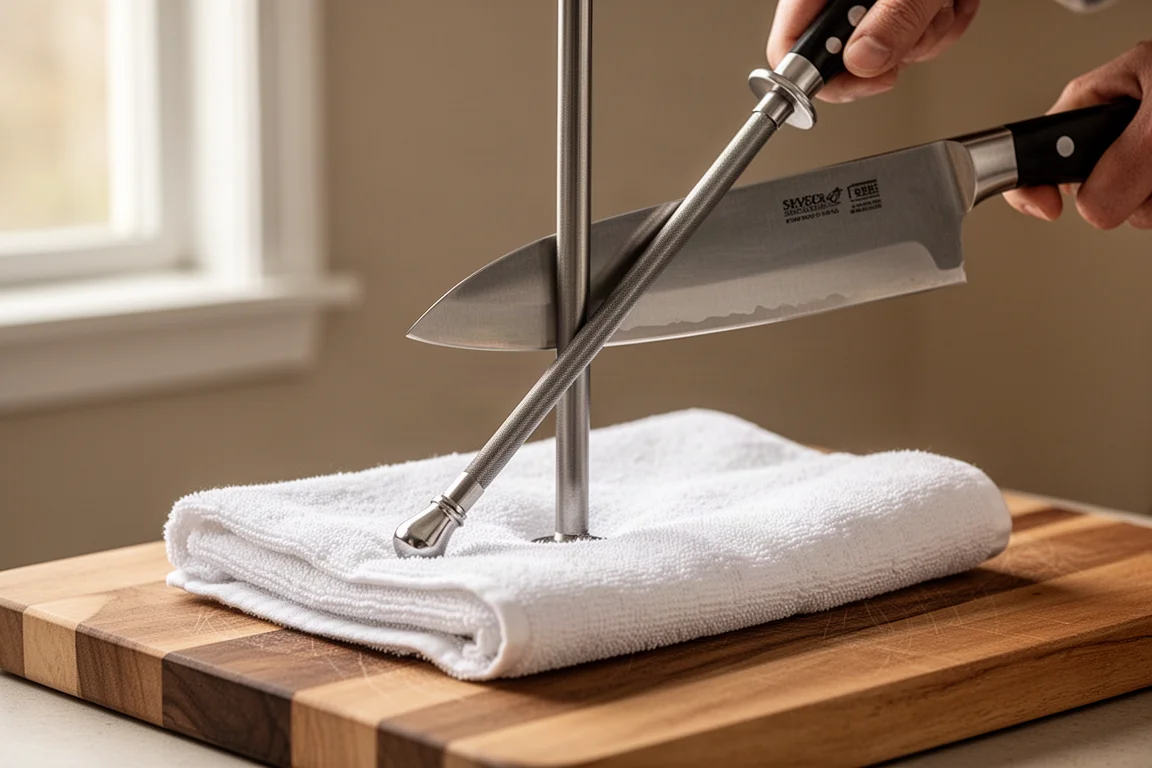
For home use, skip the theatrical air-honing you see at holiday dinners. A safer, repeatable method works better: lay a towel on the cutting board, anchor the tip of the hone on the towel so the rod stays stationary, and move only the knife. Hold it at roughly a 15-degree angle. To estimate it, start at 90 degrees, halve it to 45, halve again to about 20, then come in a bit further. That is close enough to 15. Stroke from the heel down to the tip, then repeat on the other side. Ten seconds of this brought a paper-failing knife back to cutting cleanly in testing.
One warning from testing: rods sold as “sharpening steels” with rough diamond coatings did nothing but chew up the knife. Avoid them.
Our Favorite: Kramer by Zwilling Honing Rod
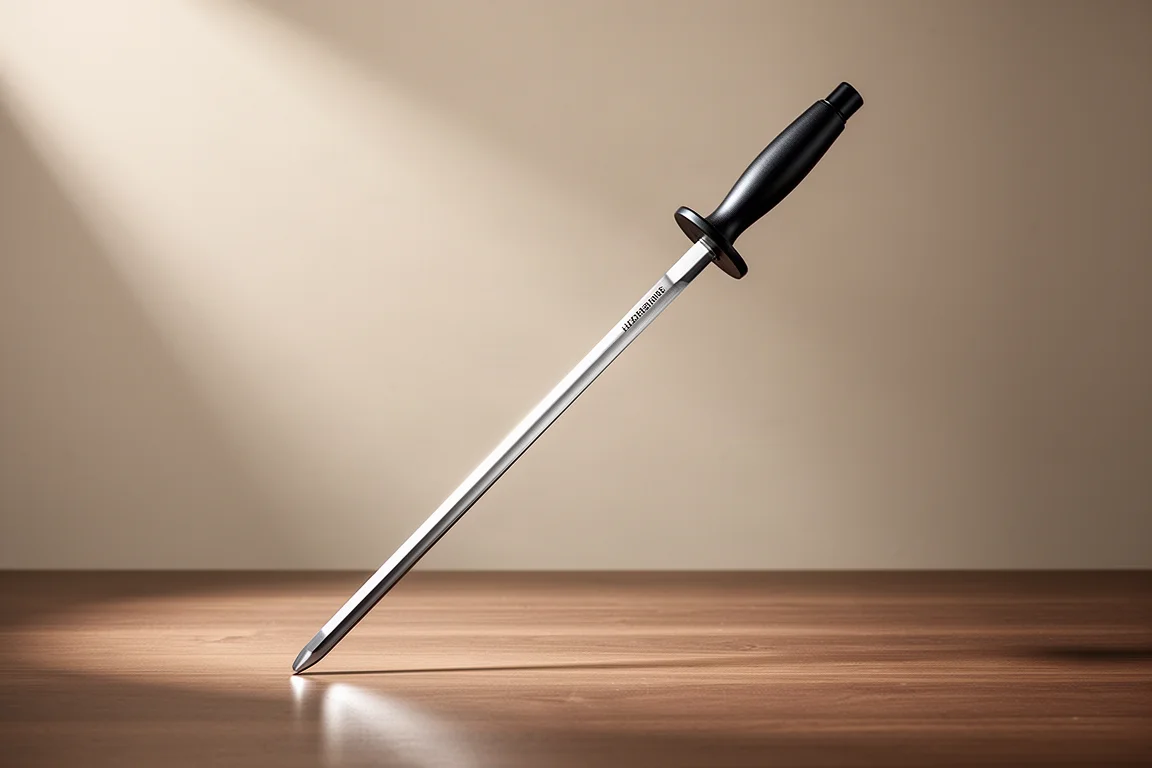
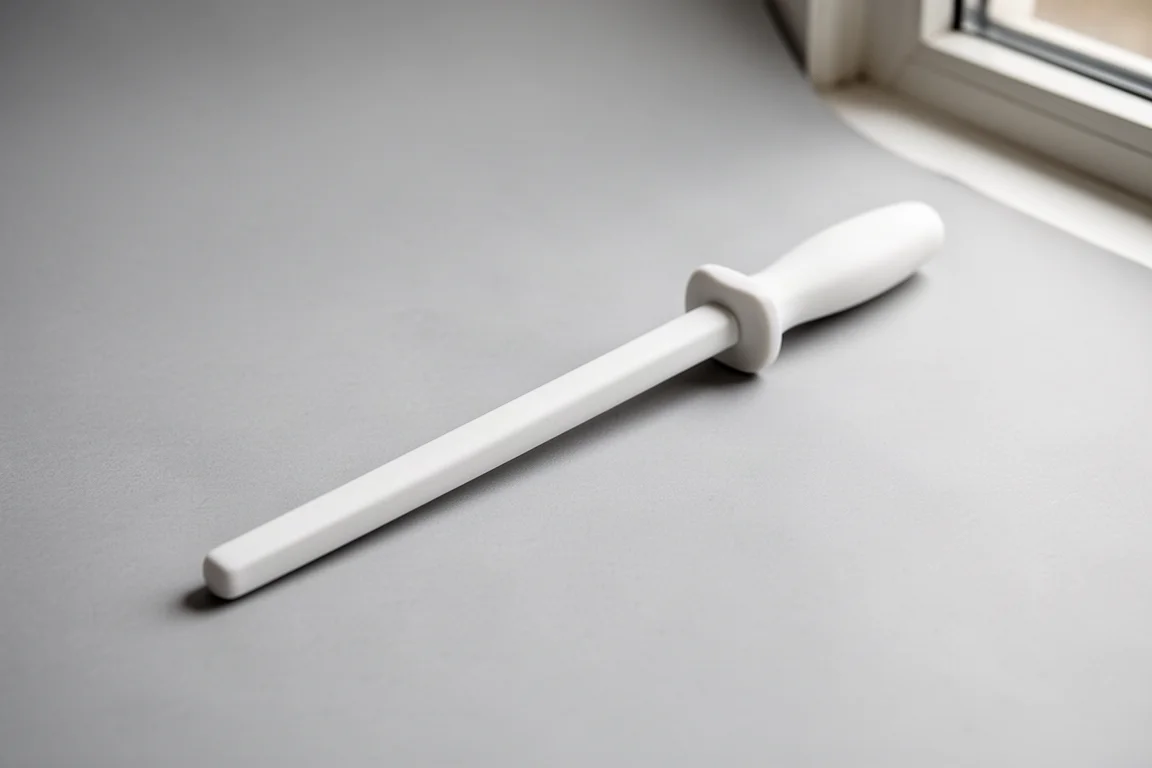
The Kramer by Zwilling is a stainless steel honing rod and a wonderful tool to have in the kitchen. Its advantage is the finish: it has two different textures, which makes it a bit more effective than single-texture alternatives.
Best Buy: Idahone Ceramic Honing Rod
The Idahone ceramic rod is a little less effective than the Kramer because it has a single texture throughout rather than two, but it still performs really well and comes at a much lower price. As a value pick for everyday realignment, it is hard to beat.
Manual Sharpeners: Our Two Winners
Manual sharpeners are the non-motorized option, and after testing a large number of them across styles and prices, two stand out. Under a microscope, the difference between winners and losers was obvious: the best units left edges clean, crisp, and polished.
Top Pick: Chef’sChoice Model 463
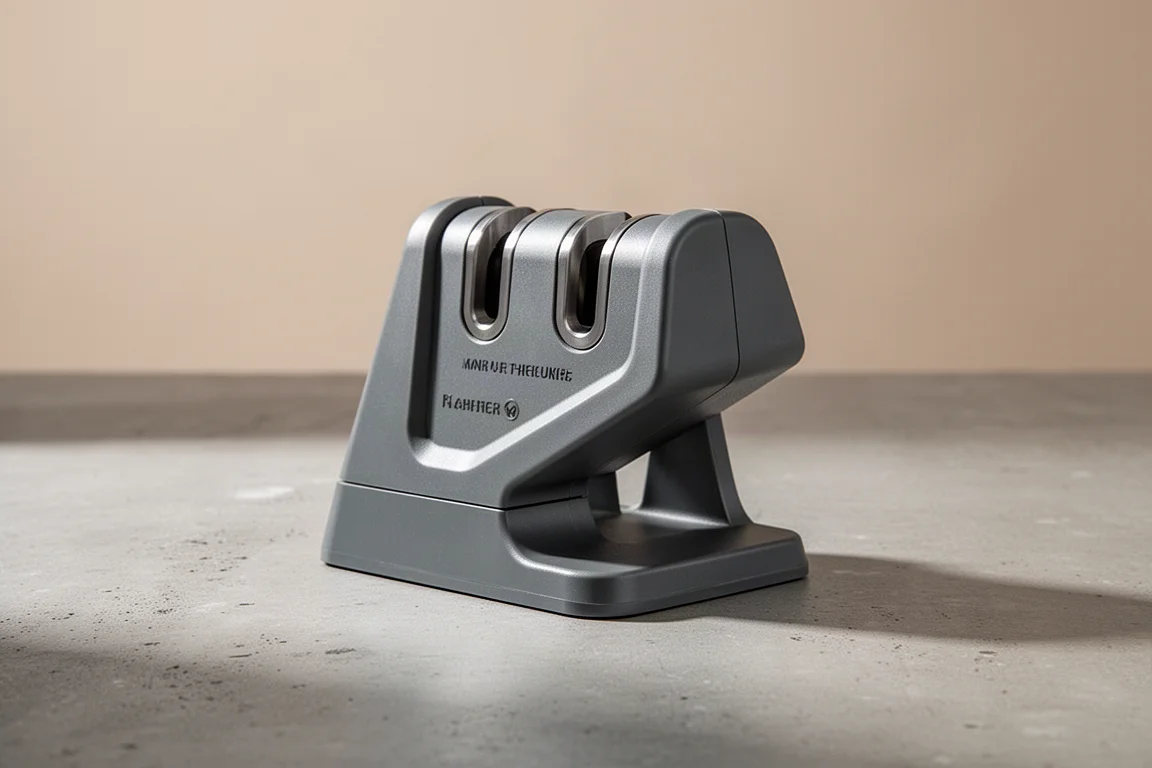
The Chef’sChoice Model 463 uses deep slots that help you align the blade at the correct angle. There are two slots, coarse and fine: the first reshapes the edge and the second polishes it. Each slot holds two wheels for four total, all with a diamond grit that testing found exceptionally good at sharpening, polishing, and leaving behind a really keen edge. The deep slots make it easy to keep the knife positioned correctly and to sharpen the full length of the blade, something shallow-slot competitors struggled with. It is sturdy, well made, and durable.
Best Buy: AccuSharp 15-Degree Sharpener
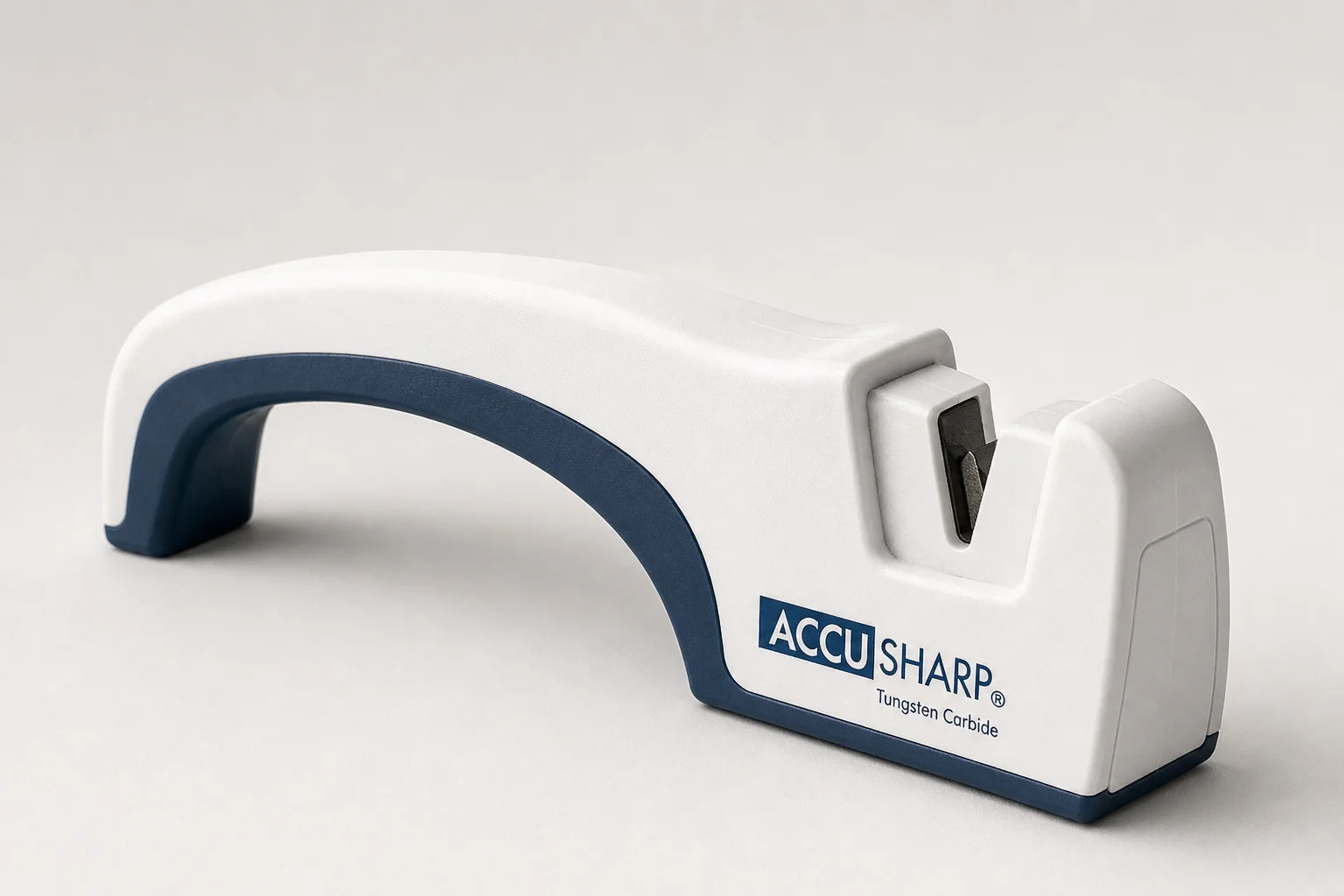
The AccuSharp 15-degree model, called their gourmet 15-degree, comes from a company that has made a well-liked 20-degree version for years. The 15-degree angle is a great match for modern favorite knives. It uses tungsten carbide in a V-shape, a sharpening medium stronger than most knife metals, which you drag over the blade to strip it into a 15-degree V. It is the quickest way to take a knife from dead to sharp, and it is very lightweight, very inexpensive, and highly portable. It is a great option for quick touch-ups, vacation homes, or a relative whose knives never get sharpened.
Skip the Rolling Sharpeners
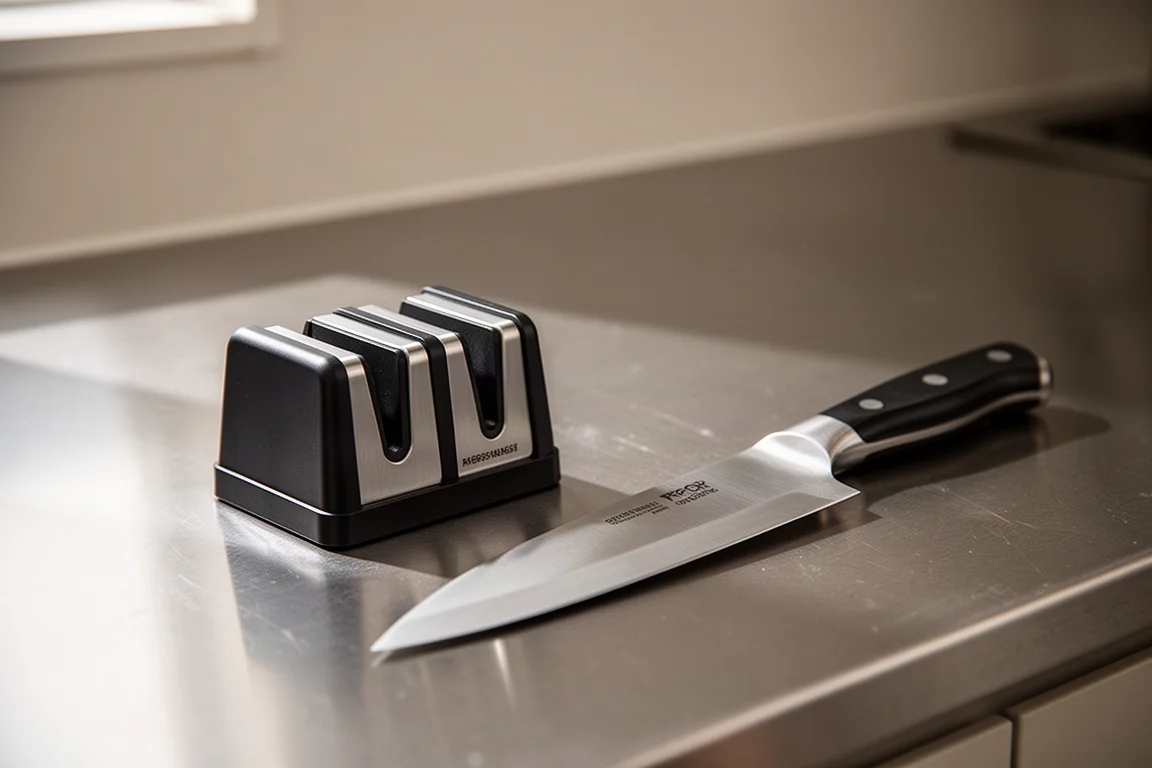
The rolling style sharpeners heavily advertised on social media come with a magnetic block and a wheel you roll along the edge. They seem fun, but there is a real problem: the roller hits the handle before it reaches the heel, leaving about an inch unsharpened, and it also fails to reach the tip. When a sharpener cannot contact the whole knife, it is no good. These can roll on out of here.
Electric Sharpeners: Minimal Effort, Great Results
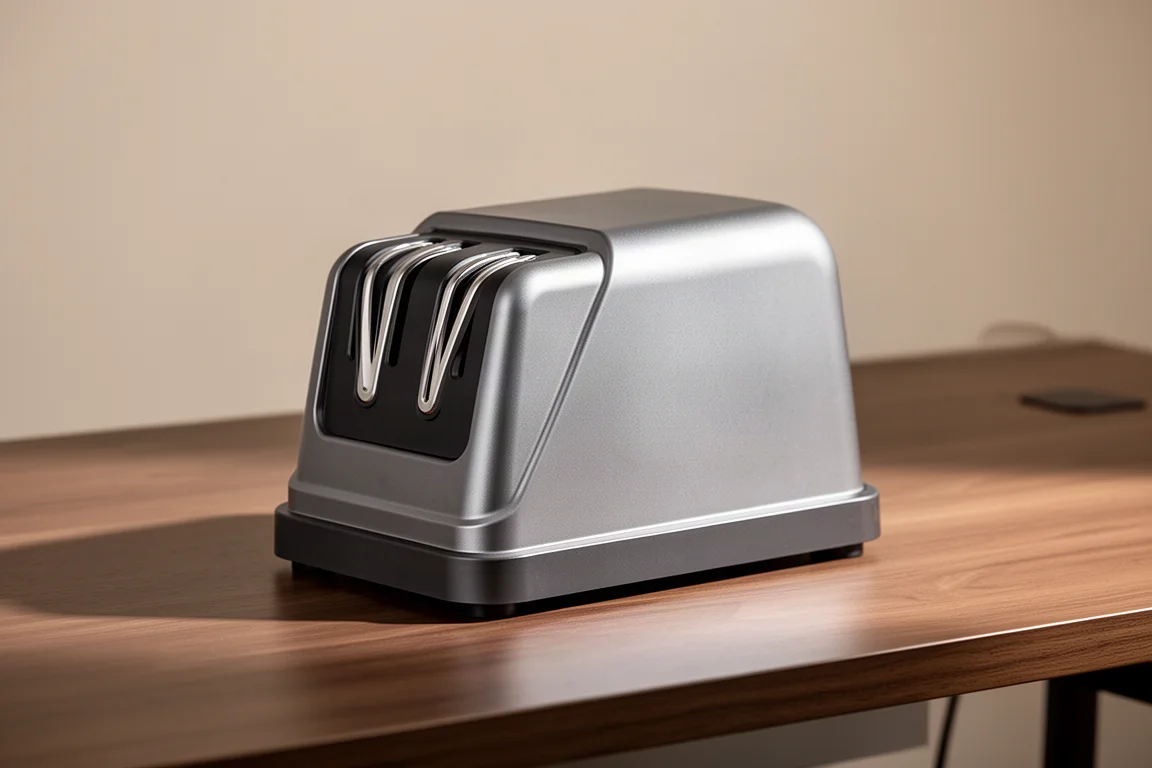
If you want to get right back to cooking with minimal time spent sharpening, an electric sharpener is a great choice. The motor does the work you would otherwise do by hand, so it is much quicker. It costs a bit more than most manual sharpeners and takes a bit more space, about the size of a loaf of bread, but it can do an amazing job.
Our Electric Winner: Chef’sChoice Model 15
The Chef’sChoice Model 15 has been a longtime favorite that keeps beating new contenders. Made by the same company as our favorite manual sharpener, it uses three sets of slots: slot one is the most coarse with a diamond grit, slot two is a finer diamond grit, and slot three is a stropping or polishing disc that polishes and doubles as a hone. If you do not own a hone, use that third slot as your first stop for touch-ups.
It can even regrind an edge past a visible nick in the blade, something that normally means sending the knife out to a professional. Sharpened-on-this knives held up impressively in testing: most people could not tell them from factory-new edges, and some tasters actually picked them over the factory edge.
There is a persistent claim that electric sharpeners are too rough on knives. Used correctly, this one does not remove any more metal than other methods and is very effective. The key is to read the manual: weight, timing, and how you move through the slots all matter. It is not complicated, but following the process is what gets you such a nice, easy sharpen.
Whetstones: For the Committed Knife Nerd
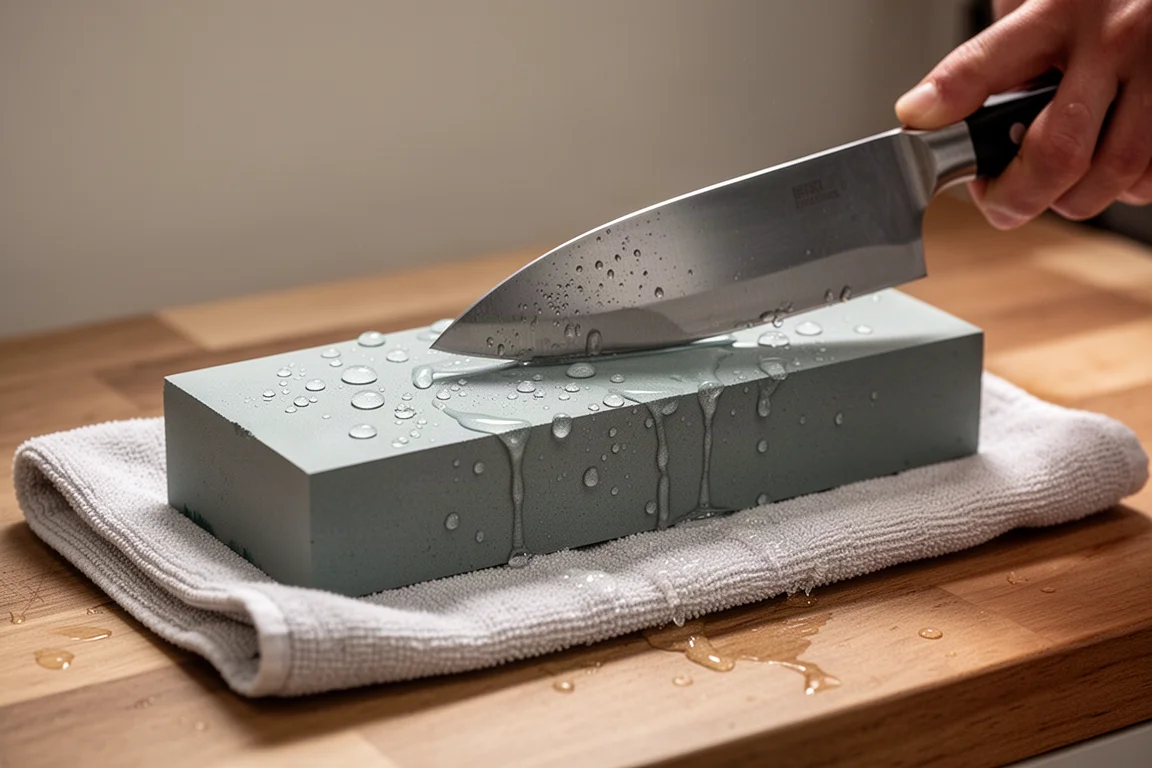
Whetstones intimidate a lot of people, but none of the required motions are especially tricky; it just takes practice to do well. The basics: soak the stone fully until water beads on the surface rather than absorbing. Set the knife at 45 degrees, then tilt up to your target edge angle, whether that is 15, 17, or 20 degrees. Fingers go right above the section being sharpened, press with roughly five pounds of force on the upstroke only, then flip and repeat on the other side, pressing as you drag the knife toward you. Keep the stone’s bevel maintained so it does not dig into your edge.
The honest bottom line: whetstones are for knife nerds who want to really get to know how their tools work and are willing to put in the time and effort. For everyone else, the picks above cover the job.
Buying Advice
Match the tool to your lifestyle. If your knives just need a touch-up between real sharpenings, a honing rod is the fastest fix. If you want a genuinely sharp edge without electricity, the manual sharpeners are the sweet spot. If you have counter or cabinet space and want near-zero effort, the electric model earns its higher price. And if you enjoy the craft itself, a whetstone will reward the patience you put into it.
Conclusion
A sharp knife is a safer knife, and keeping one sharp at home is easier than it looks. Whether that means ten seconds on a honing rod, a few passes through a manual sharpener, or a motorized machine that does the work for you, there is a well-tested option here for every kitchen and every budget.
Further reading
Related Reviews
Kitchen Tools
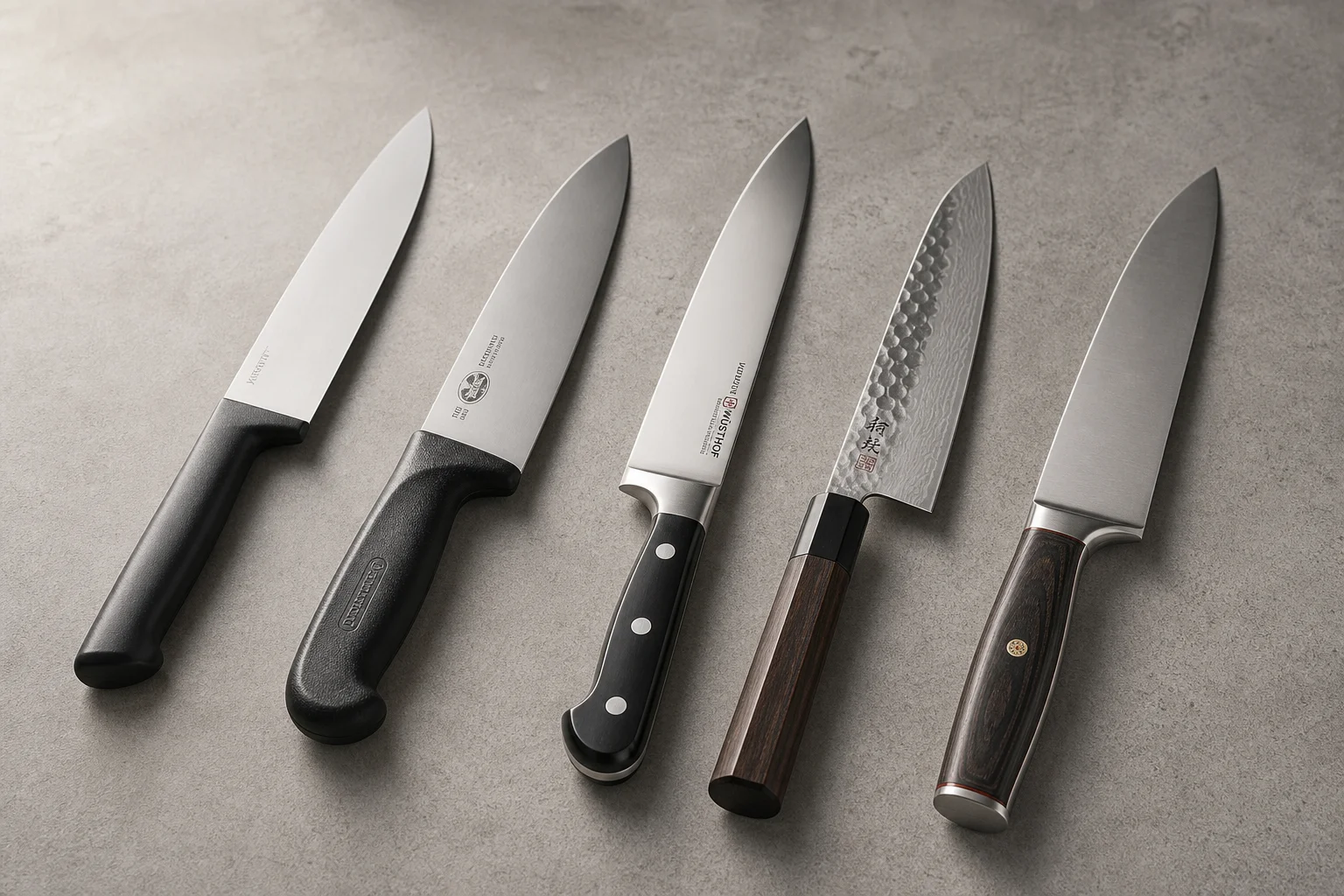
Amazon's Top-Rated Chef Knives Tested: Five Models from £11.50 to £200
We tested five of Amazon's highest-rated chef knives across sharpness, comfort, and versatility to see which delivers the best value and real-world performance.
Kitchen Tools
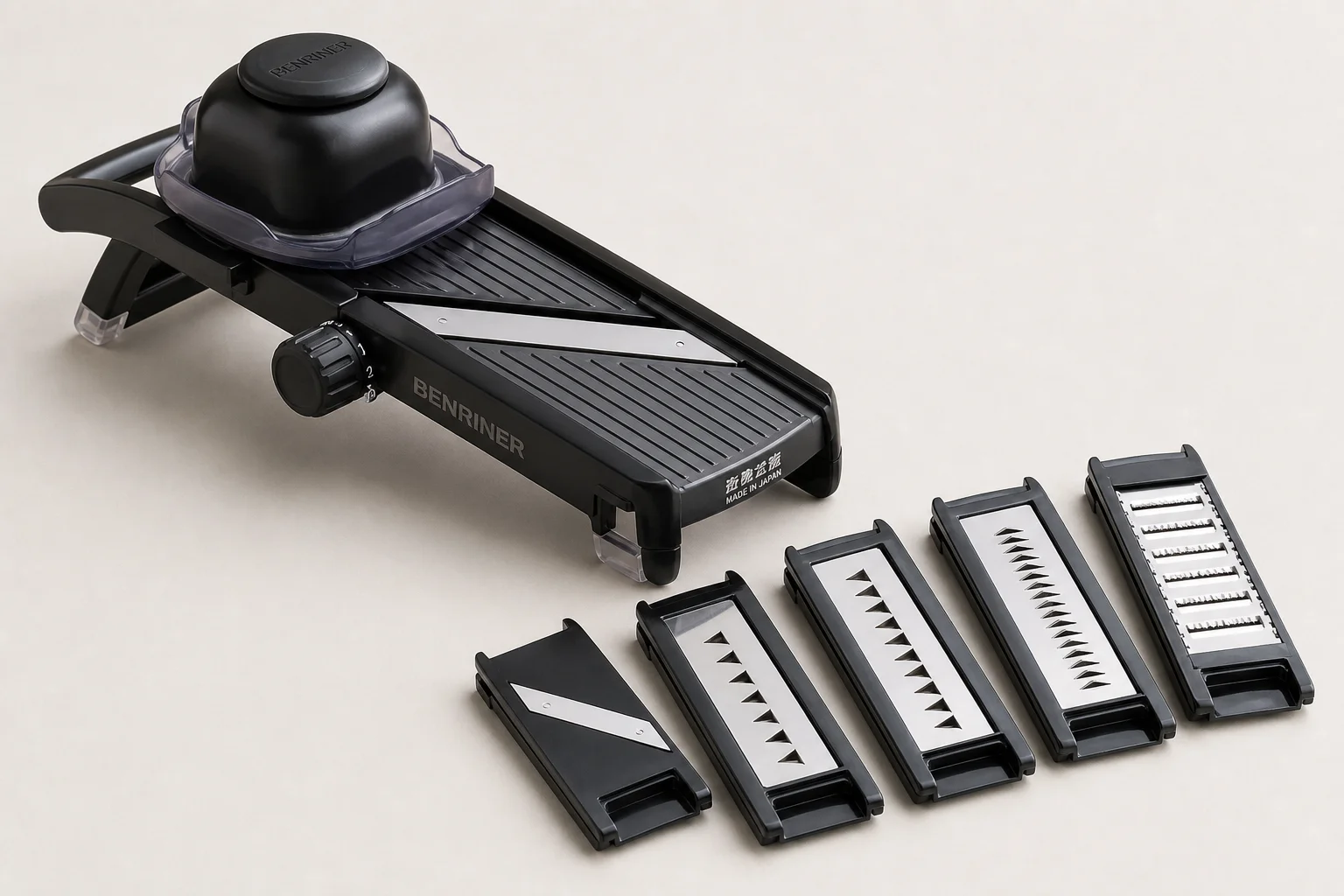
Benriner Japanese Mandoline Review: A Sharp Tool for Precise Vegetable Slicing
A practical guide to using a Japanese mandoline safely and effectively, with tips for achieving consistent, crisp results in the kitchen.
Kitchen Tools
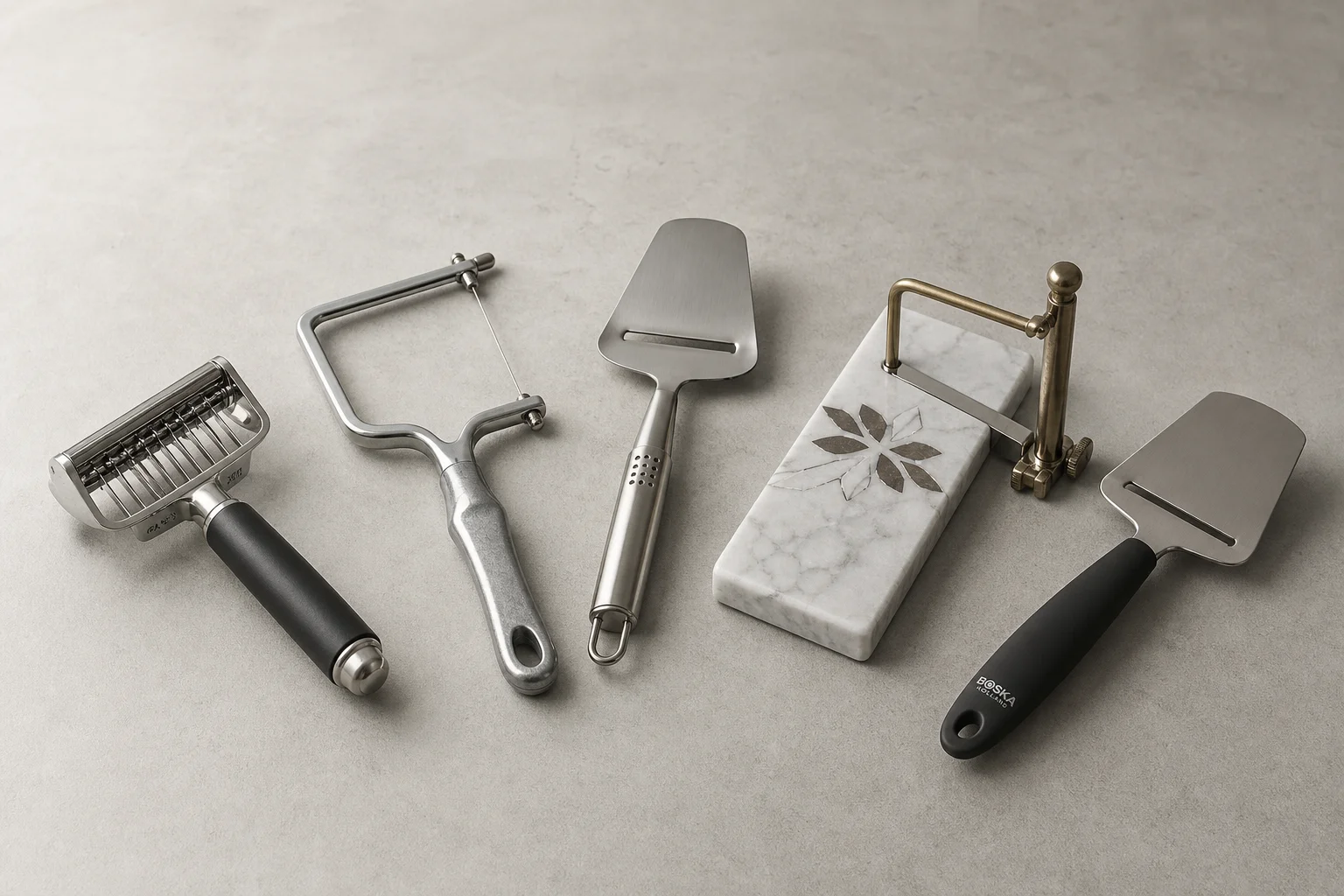
Best Cheese Slicers: Five Practical Options for Consistent Slicing
Five cheese slicers with different designs and features, from multi-blade versatility to wire-based precision, each suited to different kitchen needs and cheese types.