Hiking Boots
Best Hiking Boots Compared: Six Models for Fast Hiking, Trekking and Backpacking
Six hiking boots and trainers tested across a season of trail use, from a 309 g waterproof trainer to a 640 g full-height backpacking boot, with the real strengths and trade-offs of each.
Introduction
Hiking footwear is one of the few pieces of kit where the right answer depends almost entirely on your feet and on the ground you actually walk on. This roundup covers six models used across a season of trail walking, from low-cut waterproof trainers at 309 g per shoe to a full-height backpacking boot at 640 g per boot.
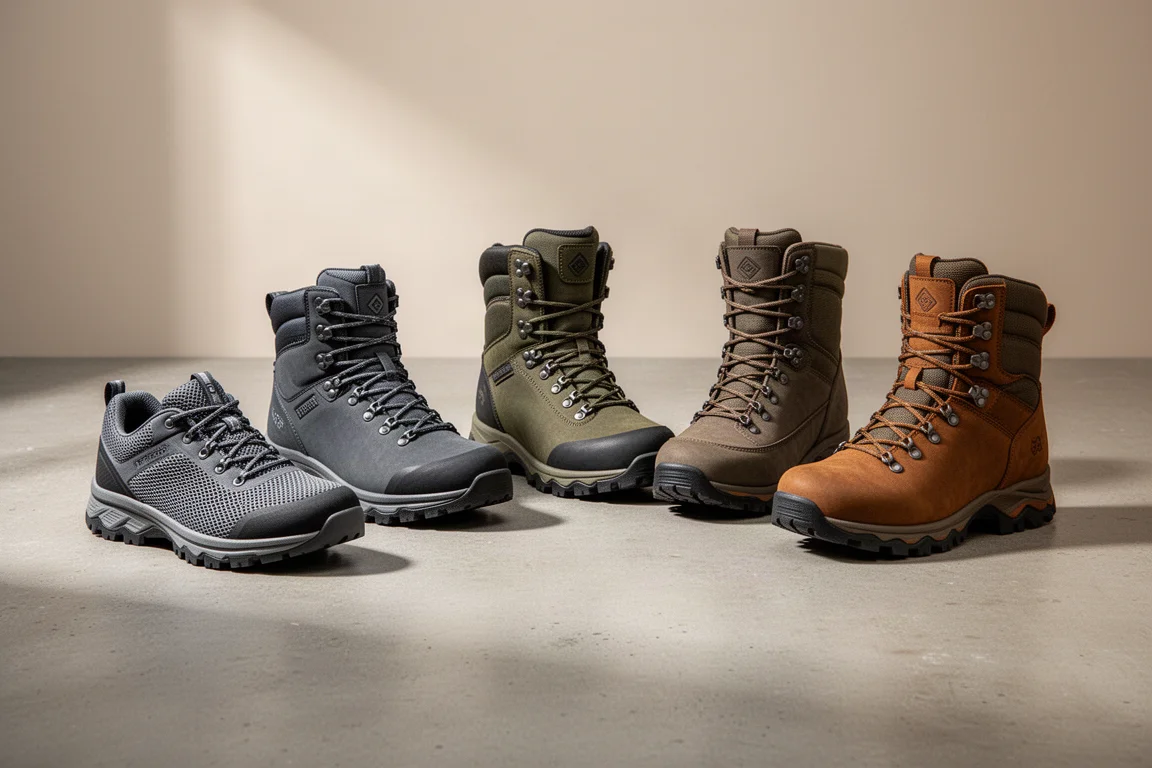
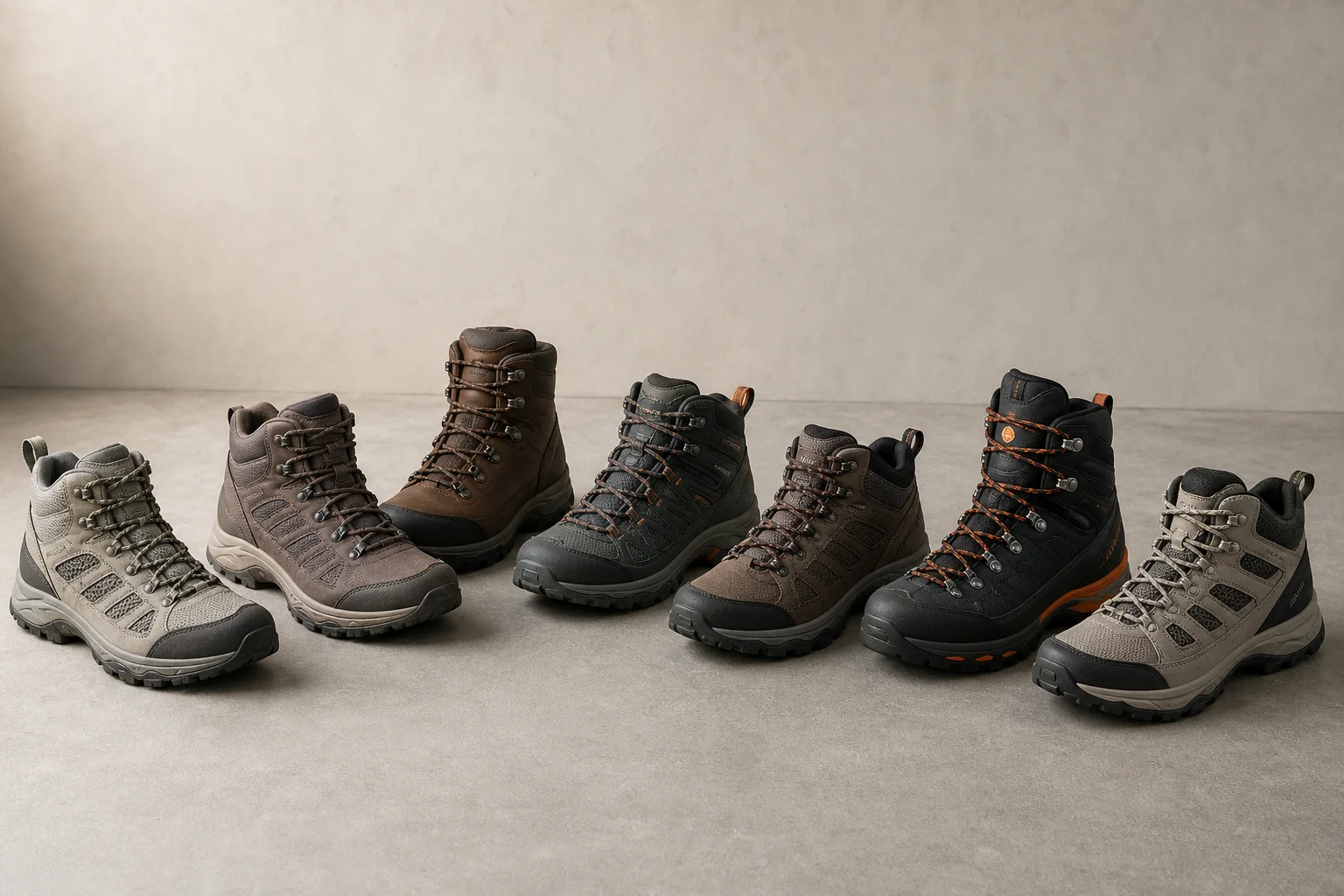
The range spans running-friendly hiking trainers, fast hiking boots, a mid-height trekking boot and two full-height boots built for carrying loads. Each one has a clear character: some reward a quick pace, some handle weight and rough ground better, and one stands out on rock.
Because foot shapes vary so much, treat the notes below as guidance rather than a verdict. A boot that suits one walker can be the wrong choice for another, so the aim here is to explain what each model does well and where it asks for a compromise.
How These Boots Compare
Weight is the most visible difference in this group. The lightest option weighs 309 g per shoe, while the heaviest full-height boot weighs 640 g per boot, more than double. That gap shows up over a long day: lighter footwear reduces the effort of every step, but it also tends to offer less support and less protection underfoot.
All six models use a waterproof membrane, which matters most in wet grass, dew and shallow puddles rather than in heavy rain. Height splits the group into three rough tiers: low-cut trainers and fast hikers, mid-height trekking boots, and full-height boots that wrap the ankle.
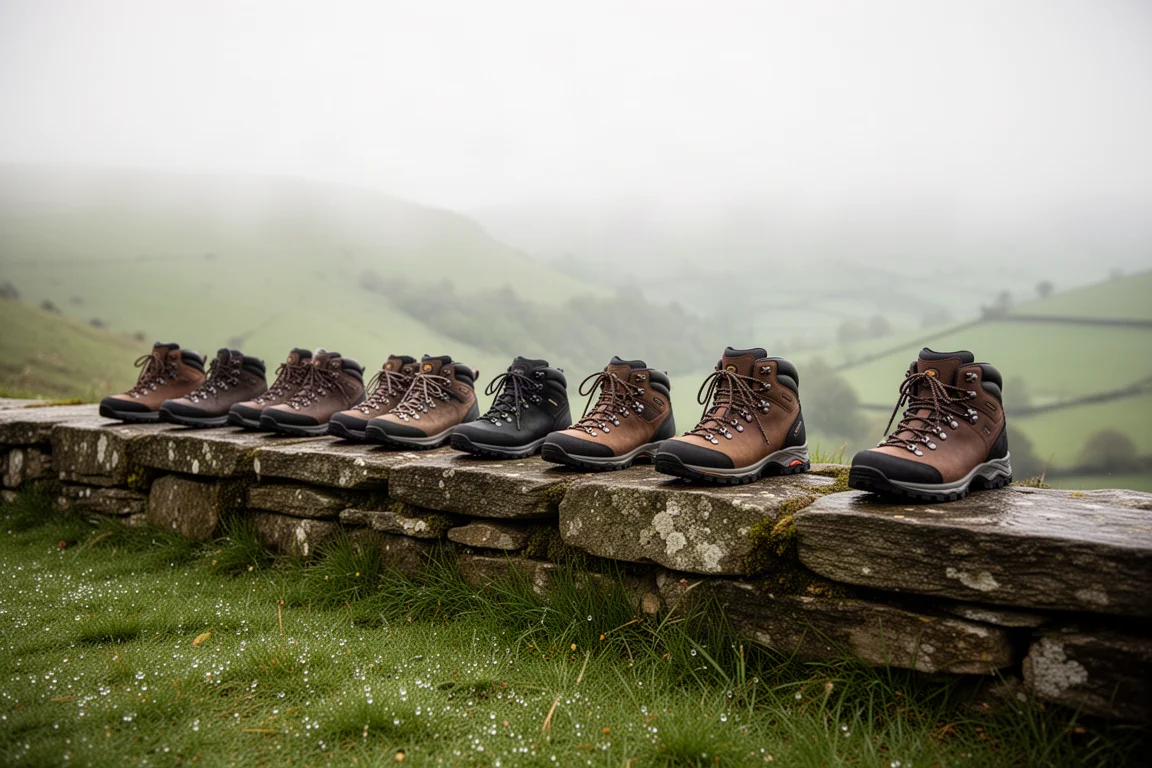
Sole stiffness is the other major dividing line. Softer, flatter soles suit fast walking on smooth trails, while stiffer soles with deeper lugs come into their own on rock and steep ground. Break-in time also varies more than expected: several boots here needed a short adjustment period, and one needed a genuine 15 miles before it settled.
Ankle support deserves a mention if you walk rough ground regularly. Full-height boots add a layer of protection on uneven terrain, and that becomes more valuable as the day goes on. It is also worth noting that comfort does not automatically come from the smaller, lighter shoes: in this group, the larger boots were consistently more comfortable over long distances than the lightest ones.
ASICS Gel-Cumulus GTX: Lightweight Hiking Trainers
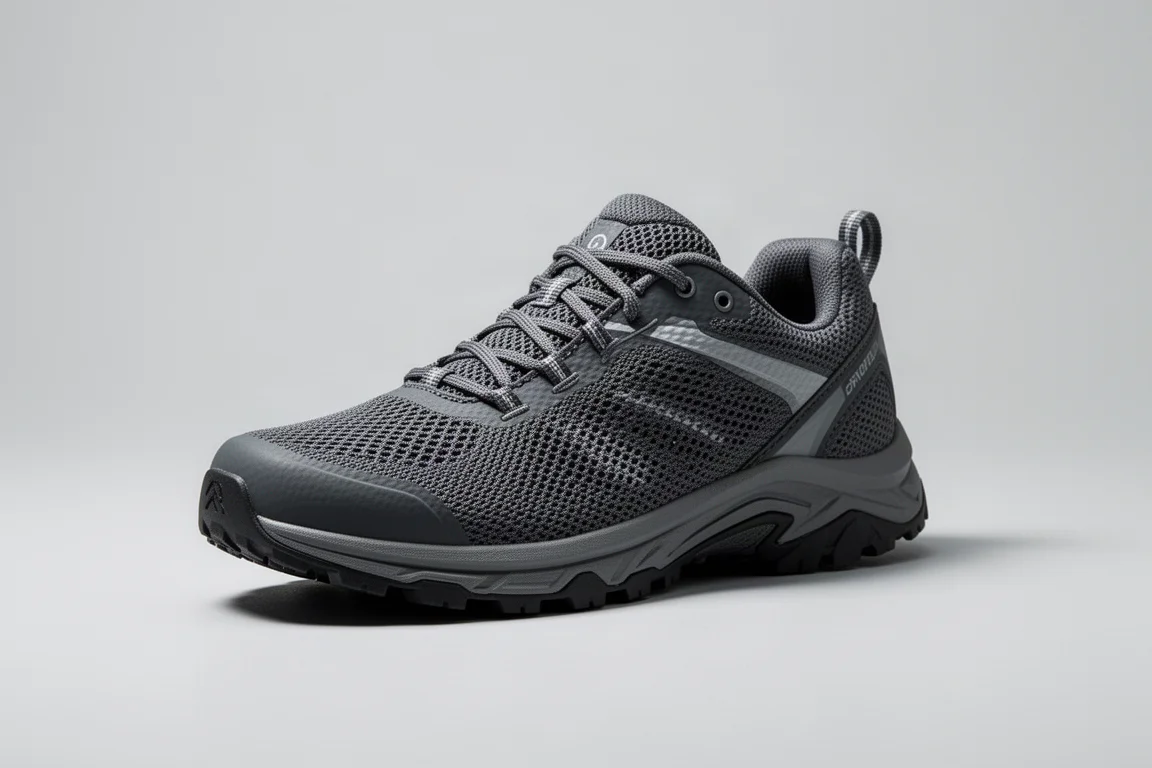
At 309 g per shoe, the Gel-Cumulus GTX is the lightest option here and the only model designed to work as a running shoe as well as a walking shoe. The waterproof liner solves a very specific problem: on summer mornings with heavy dew, an unprotected trainer soaks through at the front within minutes and leaves you with damp feet all day.
The trade-off is underfoot feel. The sole is firmer and more rigid than a standard running sole, so it is less comfortable for pure running, and the liner is audible while walking, producing a light flapping sound. It is a practical choice for mixed run-and-walk routes and dewy morning walks rather than a specialist trail shoe.
Inov-8 Roclite G 345 GTX: Fast and Light
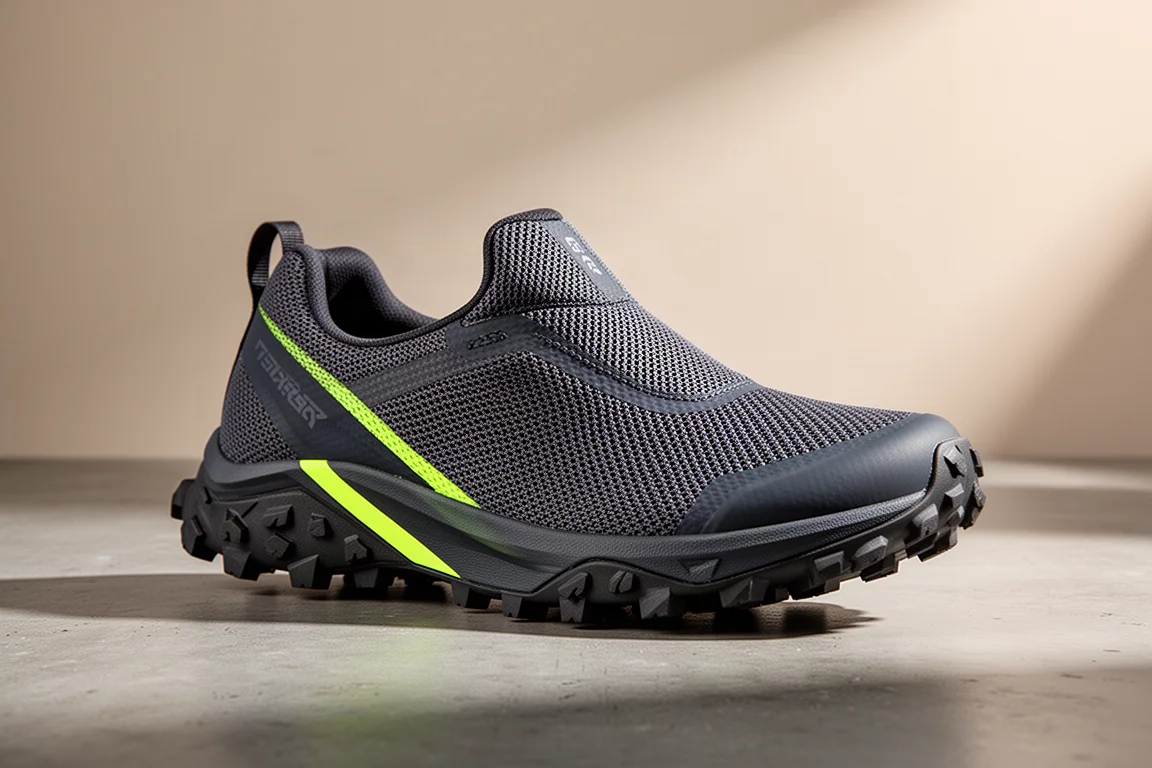
The Roclite G 345 GTX is a fast hiking boot at 345 g, with graphene technology in the build and a mesh-heavy upper. Grip is a clear strength, and the low weight makes it easy to hold a quick pace over long distances.
Comfort is more complicated. It needed thick socks to avoid pressure points under the foot, and on one wet outing the feet still ended up damp. There is a wider lesson in that: trimming weight reduces fatigue because you are carrying less, but if your feet hurt, the fatigue comes straight back. This is a boot for walkers who want speed and grip and are willing to tune the fit carefully.
Keen NXIS Evo: Fast, Light and Worth Breaking In
The NXIS Evo is a waterproof fast hiking boot at 418 g, and it ended up being the most worn pair in the group. The sole unit is not flat: it is slightly raised, and once you pick up speed the design starts to make sense, carrying you along quickly on mixed trails.
It was not immediately likeable. The heel-lock at the rear was stiff at first and needed a proper break-in period before it softened up. After that adjustment it became excellent, which is a useful reminder that a short try-on does not always predict how a boot performs after a few weeks of walking.
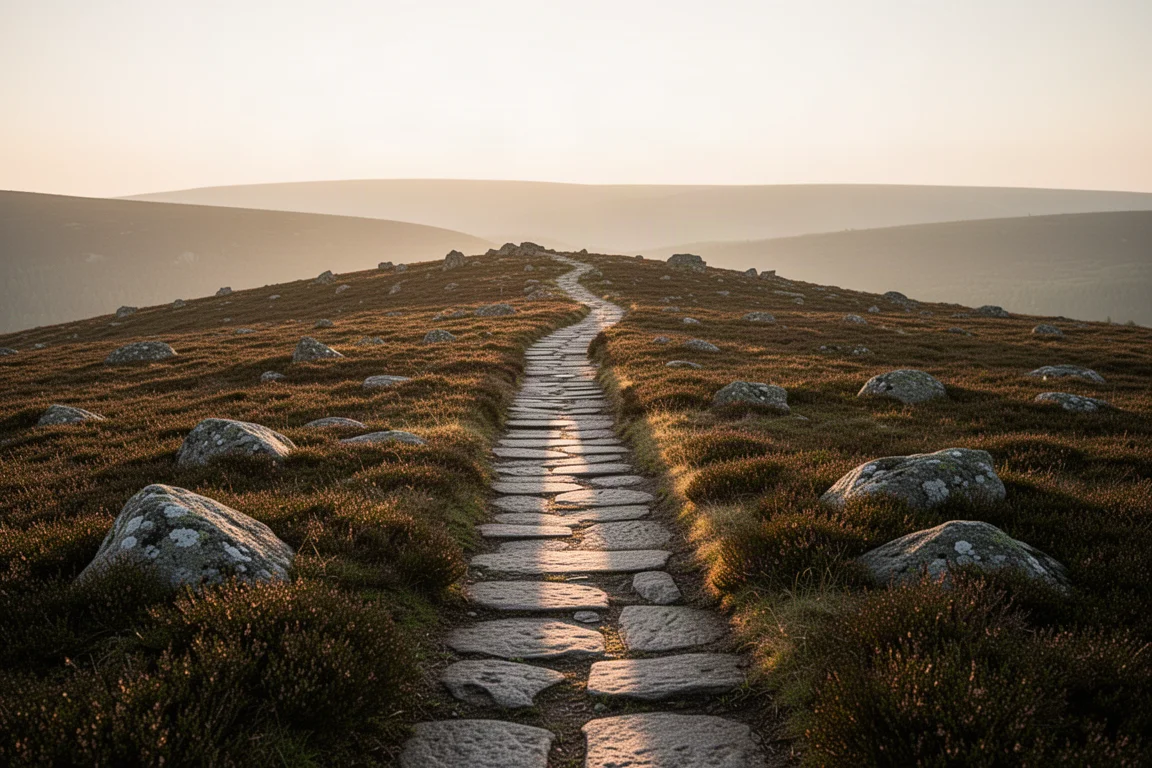
For walkers who naturally move quickly and want a light boot for day routes, this is one of the strongest options in the group, as long as you allow for that initial stiffness.
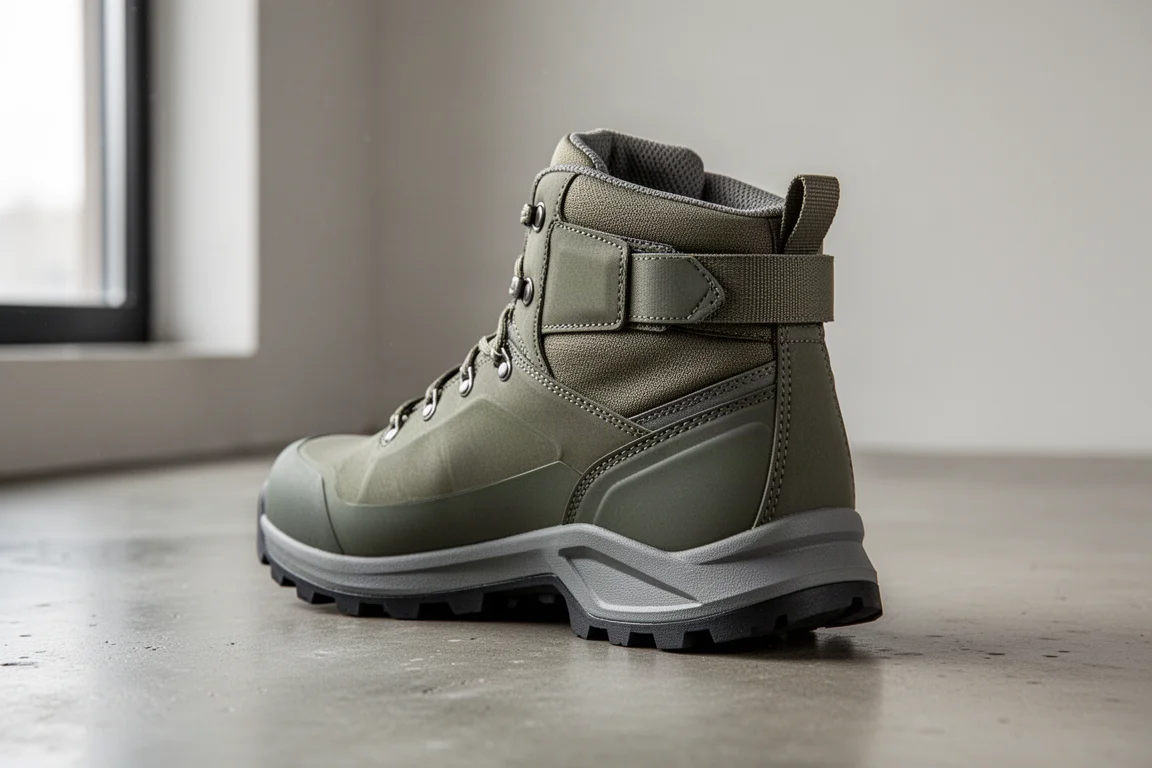
AKU Trekko Lite III GTX: The Standout Performer
The Trekko Lite III GTX is a trekking boot from an Italian brand known for handmade hiking footwear, and it was the standout of the group. It weighs 570 g per boot and sits between a mid-height and a full-height design, with a Vibram sole, plenty of mesh and fabric in the upper, and a fully waterproof construction.
It was comfortable straight out of the box, which is unusual for a boot with this much underfoot stiffness. The sole is firm and delivers a huge amount of grip on rock and mountain ground.
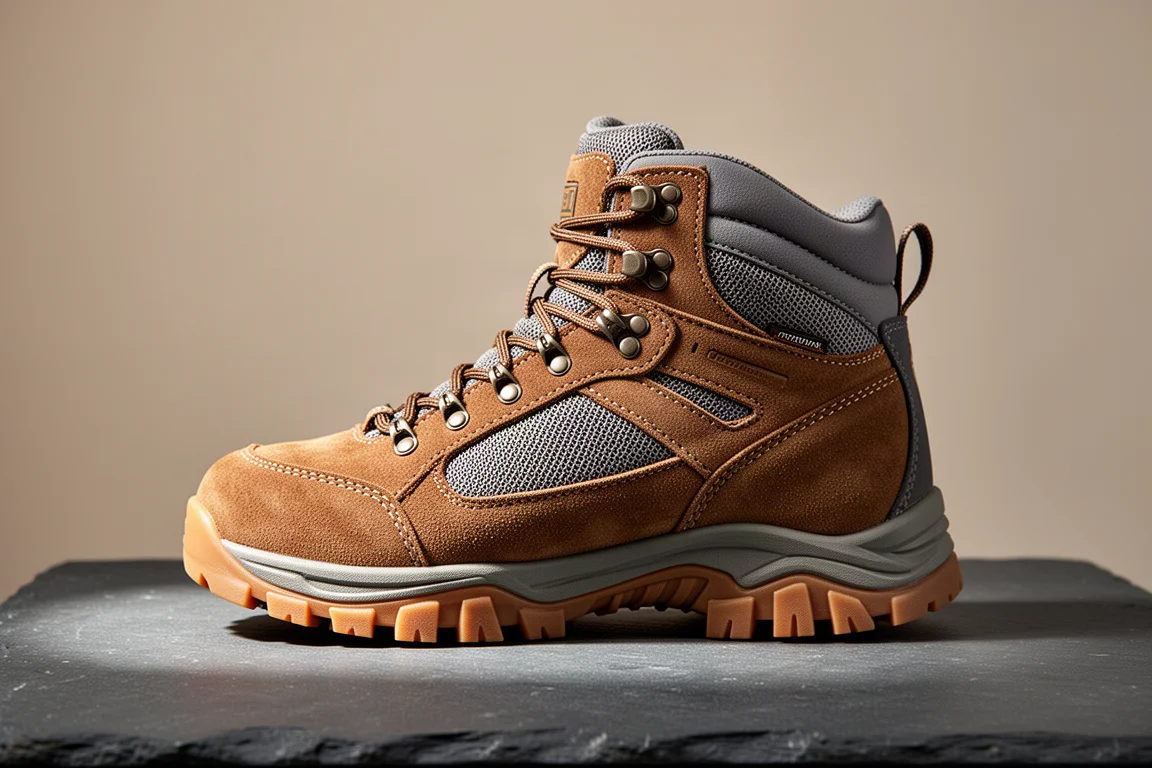
Salomon Quest 4D 3 GTX: The Rugged Classic
The Quest 4D 3 GTX is the rugged option: a full-height boot at 640 g that has proven dependable on demanding routes across multiple seasons. It is built to take punishment and to keep supporting the foot and ankle when the ground turns rough.
Its weakness is wet rock, where grip is noticeably less secure than on the AKU. Everything else about the boot holds up well, and for walkers who want a long-lasting full-height boot for rough terrain, that single limitation is the main thing to weigh up.
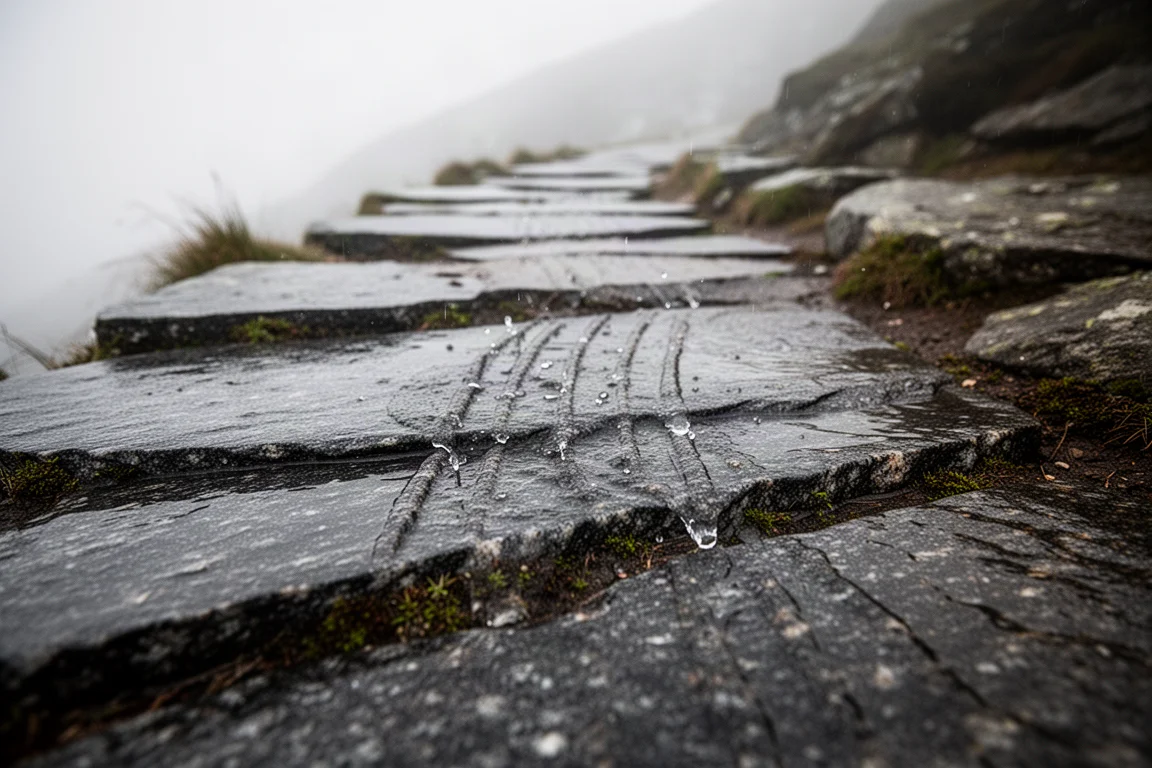
It is the heaviest boot in this roundup, and it carries that weight deliberately: the payoff is stability and durability rather than speed.
Salomon Quest Element GTX: Built for Backpacking
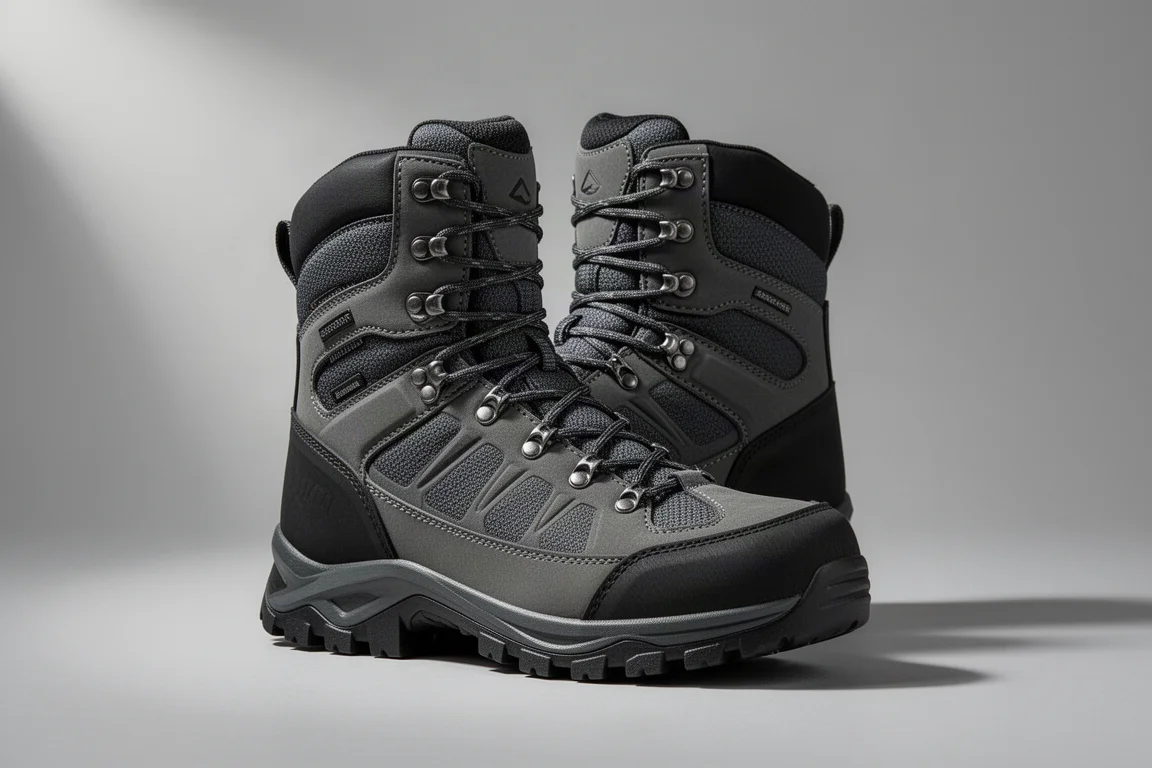
The Quest Element GTX is a full-height boot aimed specifically at backpacking. It weighs 545 g per boot and is essentially a lighter version of the Quest 4D, using more fabric and less leather in the upper. It is waterproof throughout.
Break-in took roughly 15 miles, with minor pressure at the top of the boot in the early stages. Once that passed, it became superb and is easy to recommend for backpacking, particularly for walkers who want full-height support without the weight of the heavier 4D.
Buying Advice: Matching Boots to Terrain
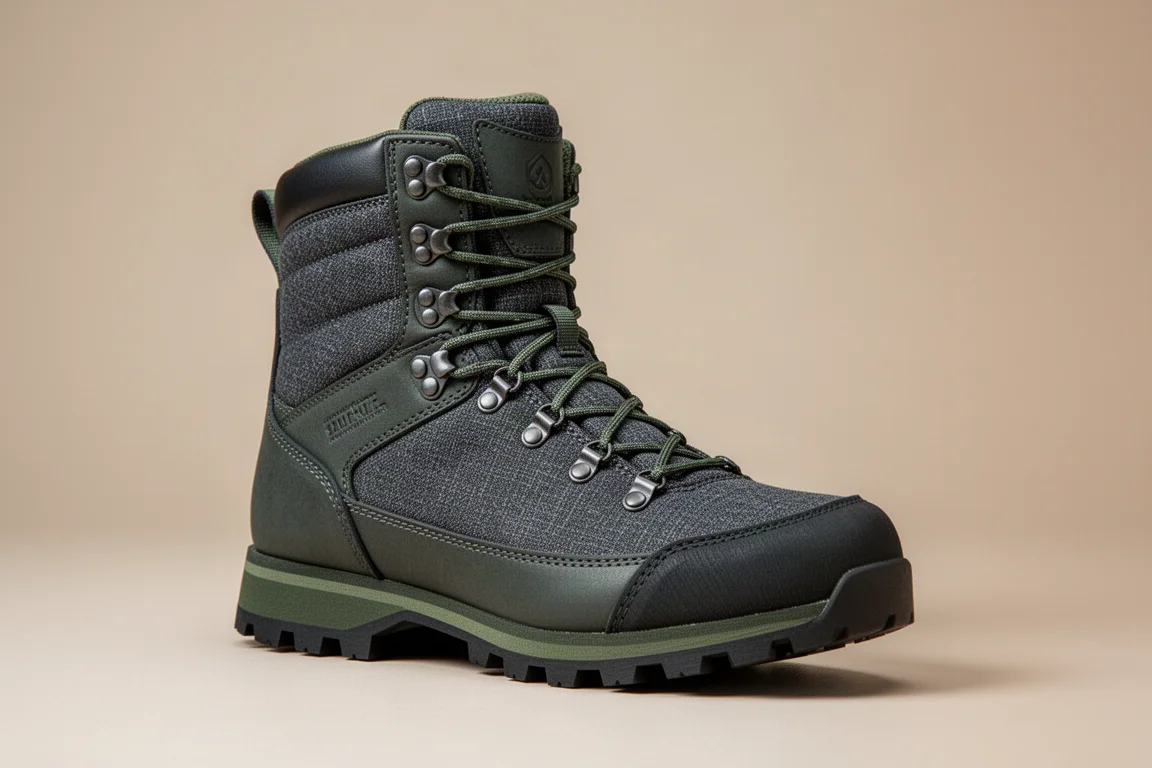
Fit matters more than any specification. A gusseted tongue, for example, keeps water out, but the ridges running down it can press into the top of the foot; one mid-height boot in this group caused exactly that kind of discomfort and became unwearable as a result. If a boot creates pressure across the instep in the shop, it is unlikely to resolve itself on the hill.
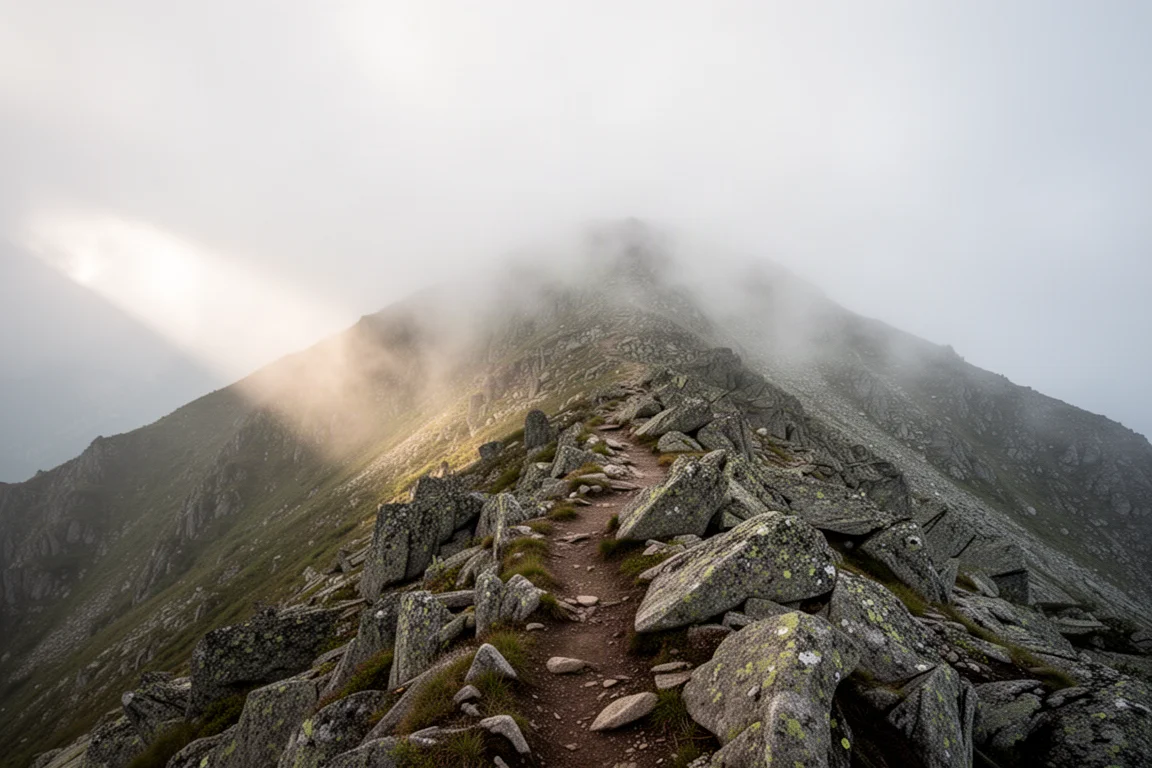
Match the sole to the ground you actually walk on. Stiff, deeply lugged soles are excellent on rock and steep terrain and less pleasant on gentle paths, while lighter, softer footwear is quicker on smooth trails but gives up protection underfoot. The AKU is the clearest example: it is exceptional on mountains and rock, yet it makes little sense on ordinary public footpaths.
Weight should be judged against the load you carry and the distance you cover. Lighter boots reduce fatigue step by step, but full-height boots add ankle support on uneven ground, and that becomes more valuable as the day goes on. Walkers who roll their ankles on rough terrain in particular tend to benefit from the extra height.
Finally, allow for break-in. Several boots here needed a short adjustment period, and the two most comfortable over the long run were the heavier ones.
Conclusion
The right boot depends on where you walk. For rock and mountain terrain, the AKU Trekko Lite III GTX is the standout, comfortable from day one with a stiff, hugely grippy sole. For fast day hiking, the Keen NXIS Evo rewards a quick pace once the heel-lock has softened, and the Inov-8 Roclite G 345 GTX is the lightest route to speed if you are prepared to fine-tune the fit.
For backpacking, the Salomon Quest Element GTX offers full-height support at 545 g and settles into a superb boot after a short break-in. The Salomon Quest 4D 3 GTX is the rugged, durable choice for rough ground, with wet rock grip as its one real caveat. And for mixed running and walking on dewy mornings, the ASICS Gel-Cumulus GTX adds a waterproof liner to a familiar trainer shape.
Whichever you choose, prioritise fit above all else, and give any boot enough miles before judging it.
Further reading
Related Reviews
Hiking Boots
Best Hiking Boots 2025: Seven Options for Different Trail Needs
A practical guide to seven hiking boots spanning lightweight day hikes, comfort-focused designs, rugged terrain, budget options, and alpine performance.
Hiking Boots
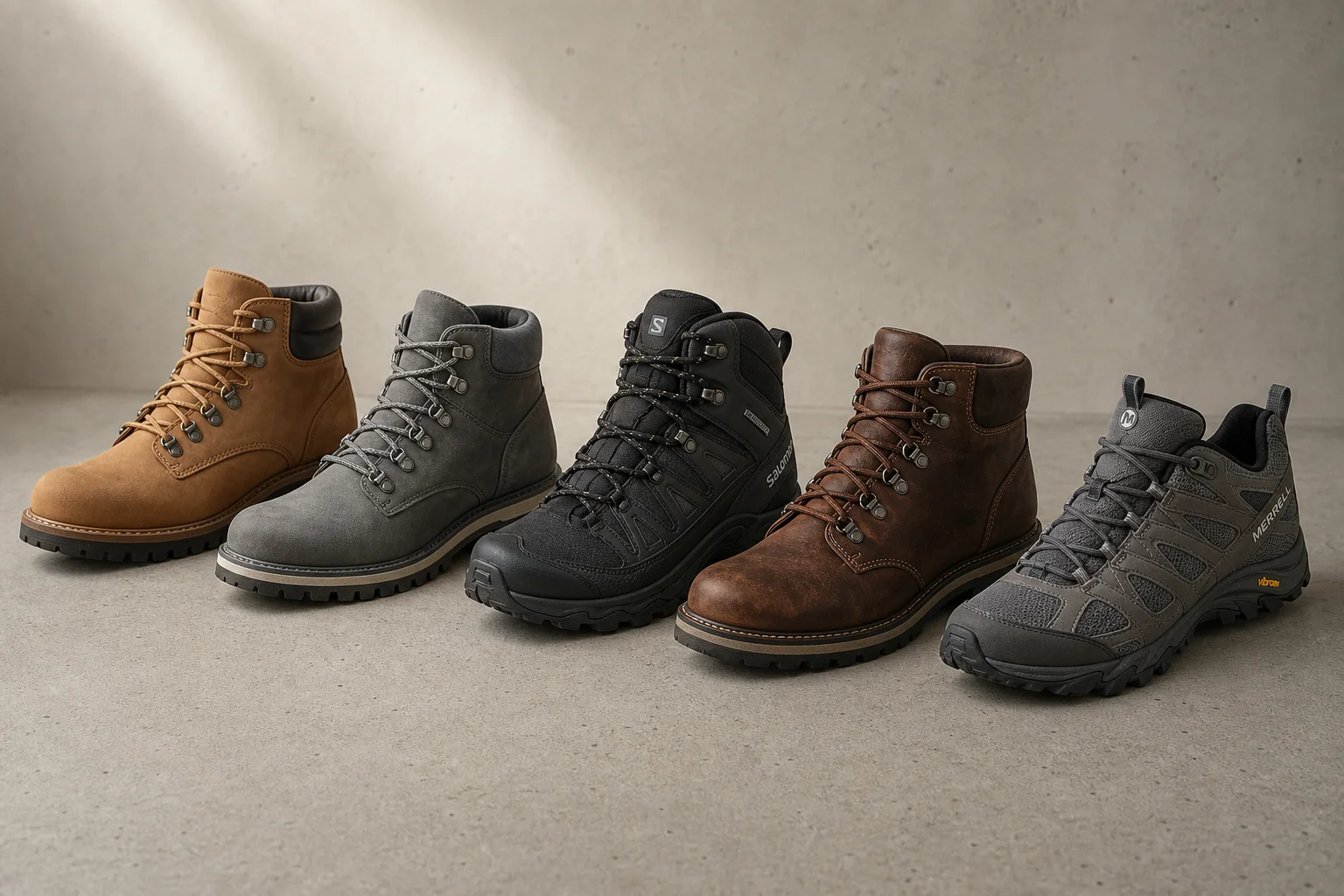
Best Hiking Boots 2026: Five Reliable Options for Different Trail Needs
Five hiking boots that balance waterproofing, comfort, and durability across casual day hikes and serious backpacking trips.
Hiking Boots
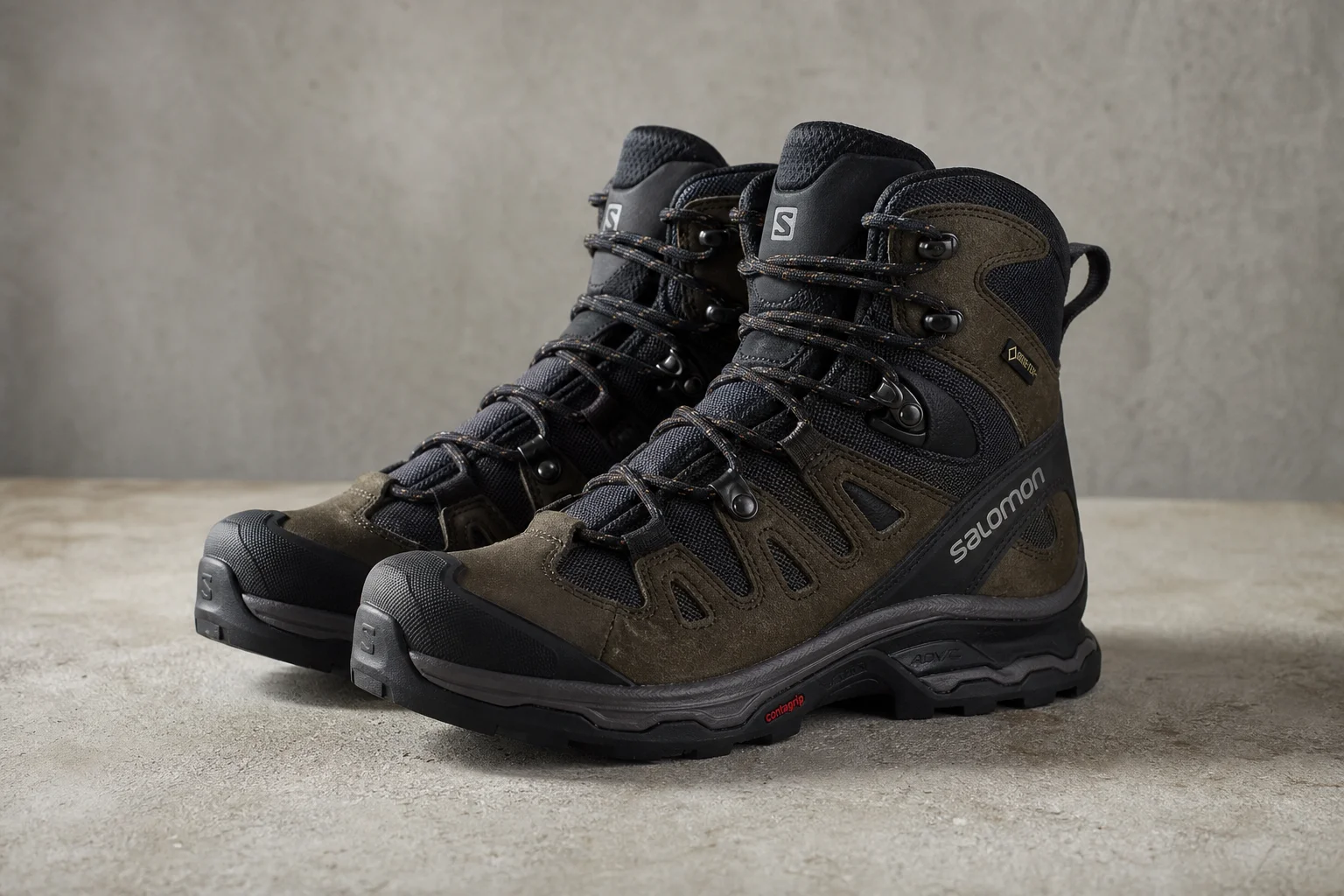
Salomon Quest Element GTX Review: A Reliable Hiking Boot for Serious Terrain
After 30+ kilometers of testing in varied conditions, the Salomon Quest Element GTX proves itself a capable, comfortable hiking boot with genuine waterproofing and solid long-term value.