Running Watches
Best High-End Running Watches: Premium Picks from Garmin, Polar, Coros and Suunto
Seven premium running watches compared: top specs, big batteries, rugged builds and the trade-offs to weigh before you spend.
Introduction
High-end running watches are where the big brands show what they can really do: the best screens, the longest batteries, the most complete training and navigation tools, and build materials like sapphire crystal and titanium. The trade-off is price, with most of these watches starting north of £500 and the very top models creeping close to £1,000.
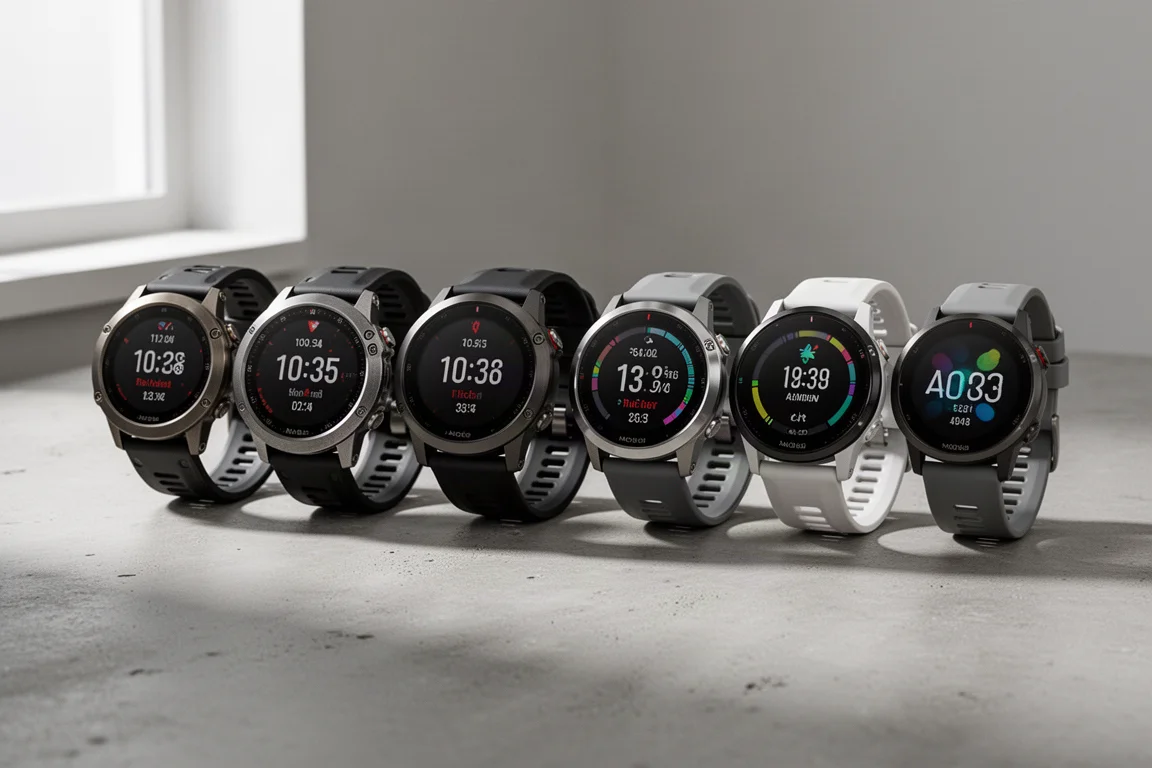
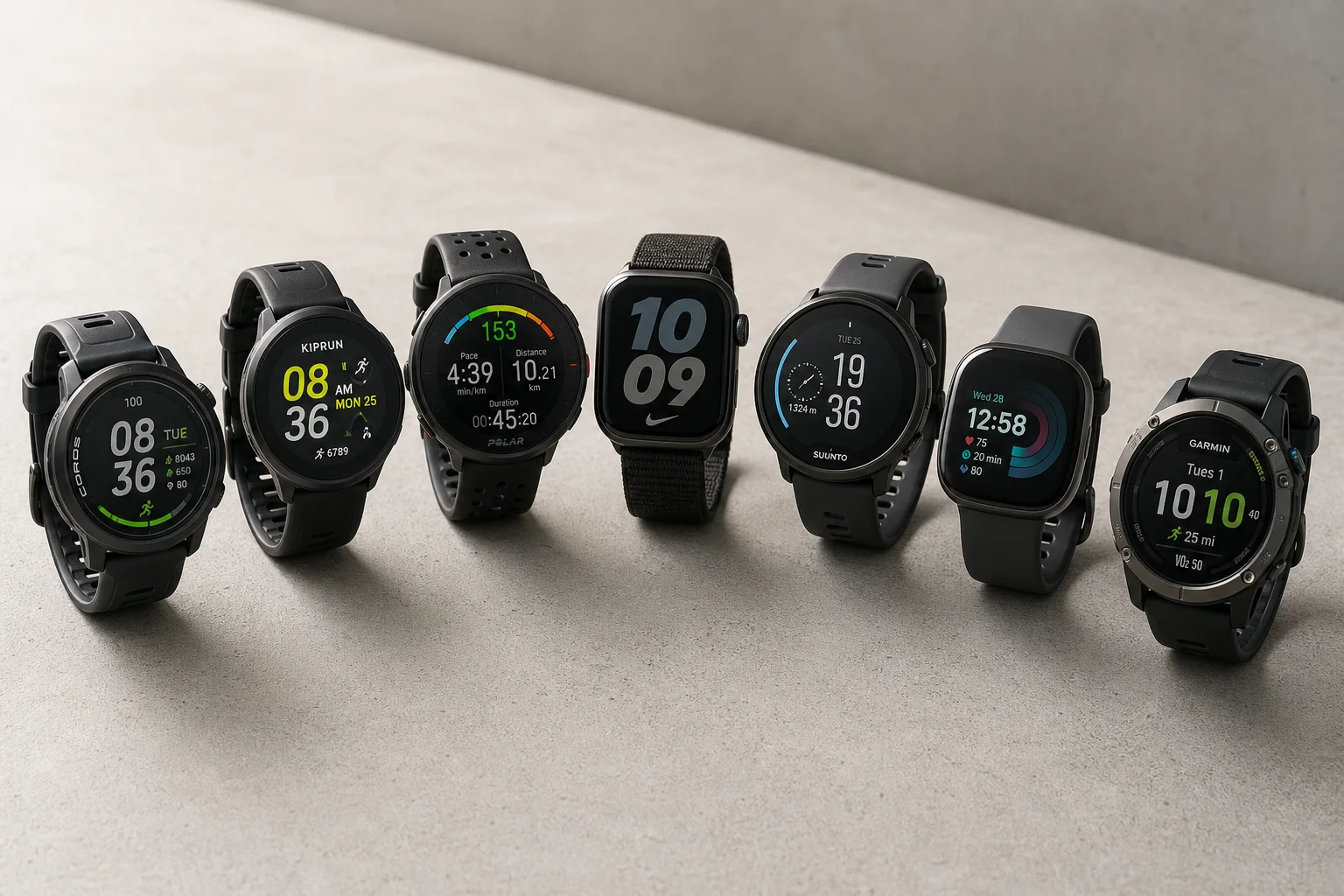
We put seven flagship watches head to head: three from Garmin, two from Polar, plus the Coros Vertix 2S and Suunto Race. Here’s how they split up, and who each one actually suits.
What Makes a High-End Running Watch
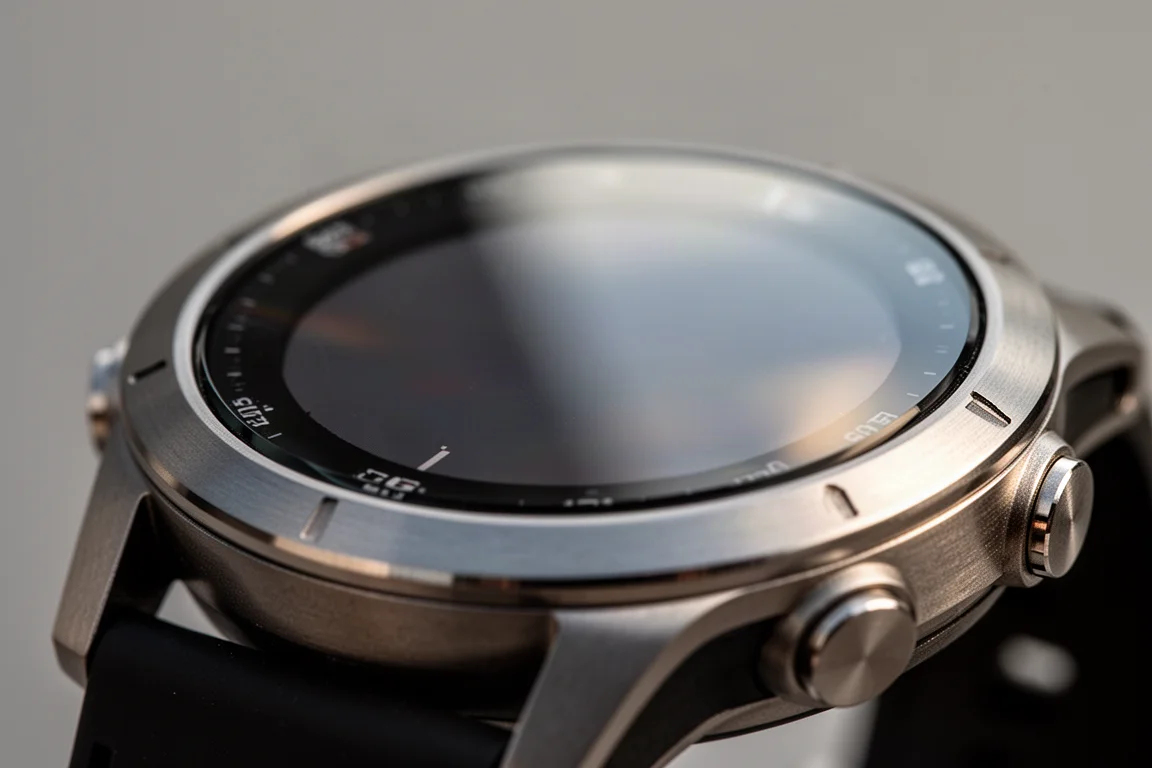
These are the watches with the biggest, highest-quality displays, the latest sensor hardware, and rugged cases built to survive more than daily runs. Premium materials like sapphire crystal displays and titanium or aluminium cases make them tougher and give them a more stylish finish, while helping offset size on the wrist.
Expect the most comprehensive feature suites here: full training analysis, onboard maps and navigation, and genuine smartwatch extras. That combination is exactly why these models command such high prices.
Garmin Fenix 8: The Do-Everything Flagship
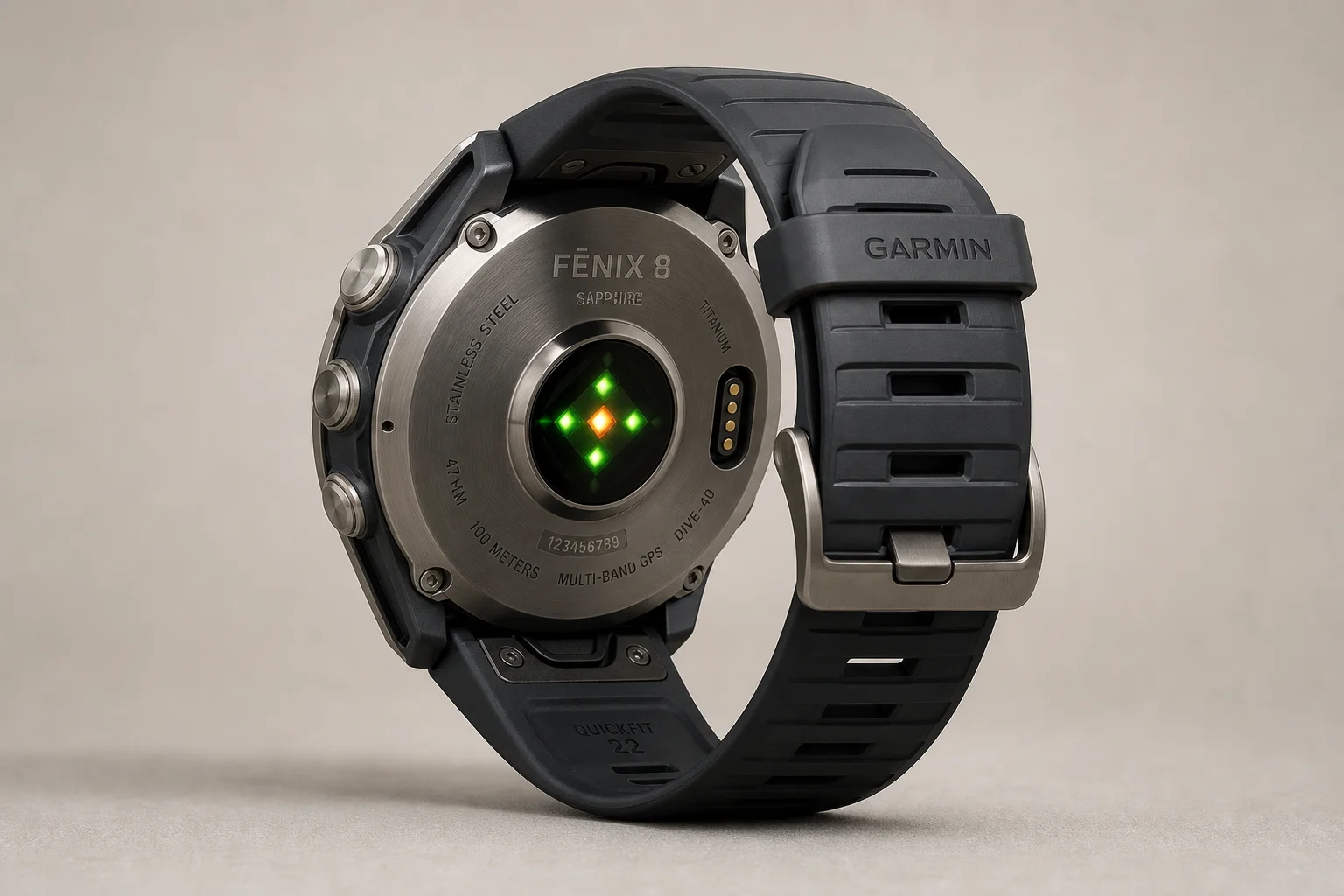
The Fenix 8 sits at the top of Garmin’s line, available in multiple sizes with either AMOLED or solar displays, in steel or titanium with a sapphire screen on the higher models. It’s heavier and bigger than the rest of this list, but it’s the most adventure-proof option and the only one here with a mic and speaker, a dive-proof design, and Garmin’s new user interface.
That new interface is shared with the Enduro 3 but not the Forerunner 965. Garmin’s strengths run deep across this category: the best navigation tools in the business with exceptional maps, plus intensive training analysis common to all three of its watches here.
What makes the Fenix 8 stand apart is that it gives you the best of everything Garmin offers in one watch: the best sports tracking, navigation, training analysis and smart features. Crucially, battery life holds up well despite the AMOLED display. Run side by side with the Enduro 3 in 51mm form, weekly training battery drop-off between the two was minimal.
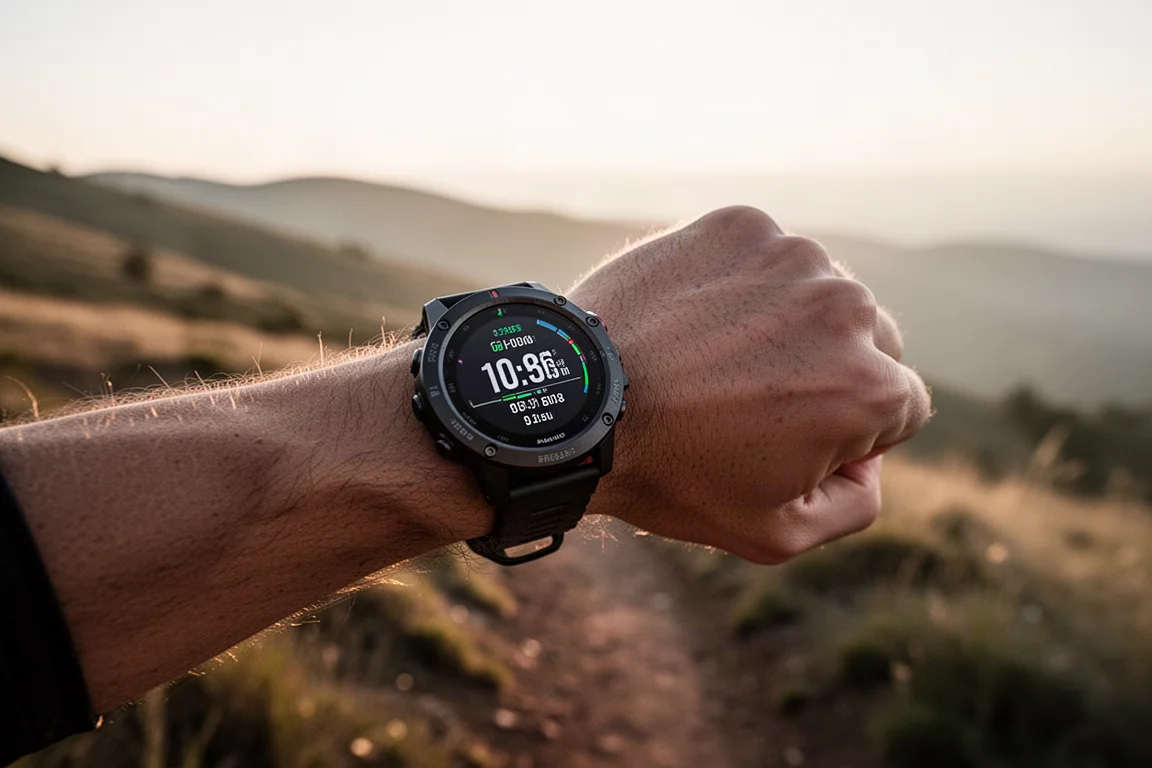
If you want a watch that can genuinely do everything, this is it. The question is simply whether that premium is worth it over other high-end watches, or even older Fenix models on sale.
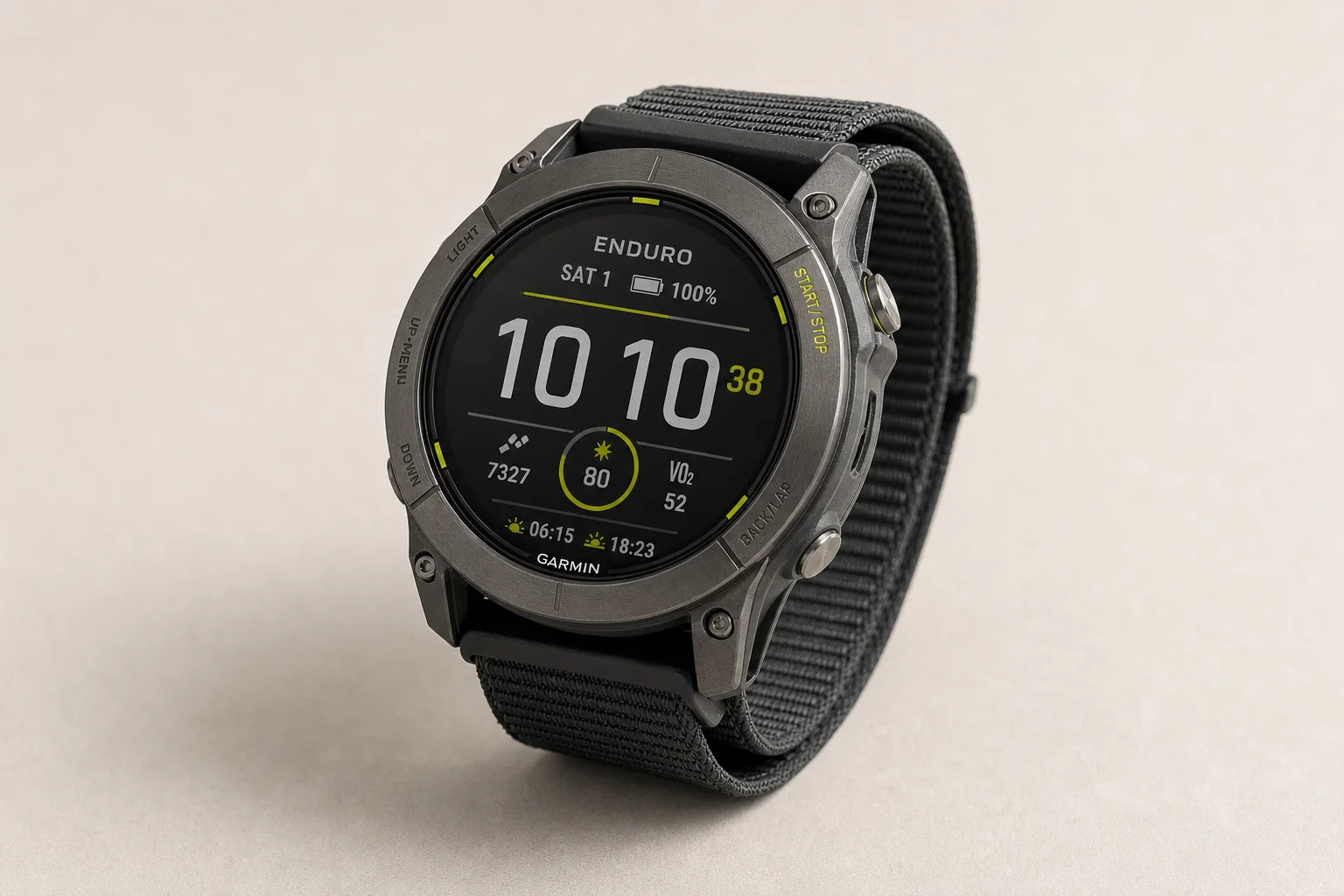
Garmin Enduro 3: The Battery Champ
The Enduro 3 is the lighter, more comfortable answer within Garmin’s premium range. It delivers the full mapping and navigation suite and long battery life in a build that’s easier to wear 24/7, at the cost of the AMOLED screen and some of the Fenix’s smartwatch extras like voice tools and voice notes.
Garmin listened to what people want from the Enduro line: huge battery life, a rugged but lightweight design, and no smarts they don’t need. Then it brought the price down, which almost never happens at this level. That makes it arguably the best-value Garmin in the top-end bracket right now.
Garmin Forerunner 965: The Road Runner’s Watch
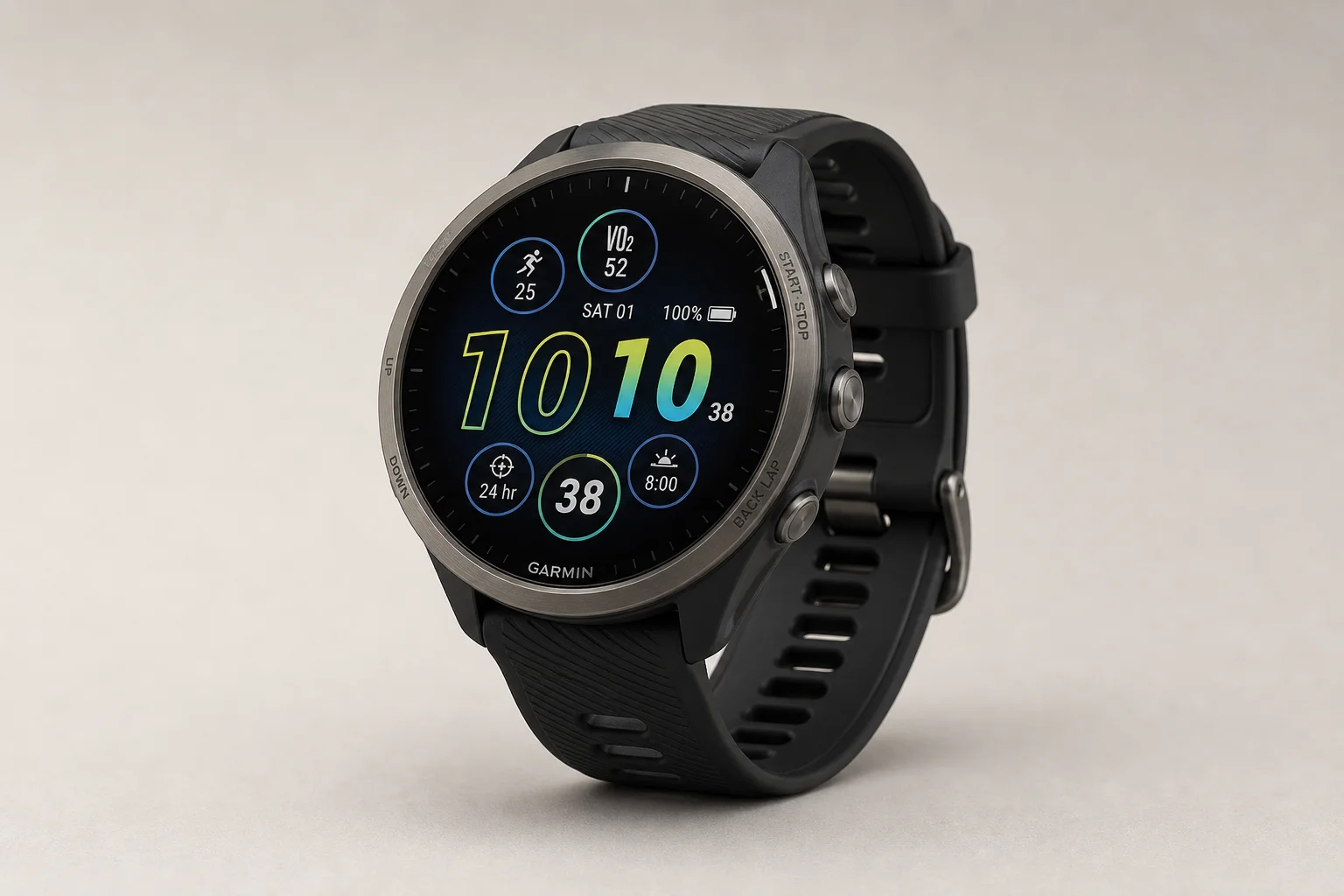
The Forerunner 965 drops well below the other two on price and weight while keeping the same size screen in a much smaller, lighter design. It was one of the first Forerunners to get an AMOLED display, and it still holds up as a strong all-rounder, mixing sports tracking, training analysis and smartwatch features.
The compromises: it runs slightly older software that won’t be rolled back, the screen isn’t as durable, and max-accuracy battery life falls to around 19 hours for a single activity. Day-to-day it still lasts a respectable six or seven days, making it more of a marathon and training watch than an ultra watch. It’s also a genuinely good-looking watch, and for anyone with slimmer wrists who found the rugged watches too hulking, it may be the favourite of the three.
Polar Vantage V3 and Grit X2 Pro: One Platform, Two Builds
Polar’s two premium watches share the same software and feature suite across training, performance, navigation and fairly limited smartwatch tools. You’re really choosing between the lighter Vantage V3, Polar’s first with an AMOLED screen, and the more rugged Grit X2 Pro, which adds durability and a bit of extra battery life but is pitched as a Fenix 8 rival without quite matching that watch’s full capability.

Polar has quietly built a solid foundation here: mapping support has finally arrived, there’s accurate dual-band GPS, and the Flow software ecosystem remains a long-standing strength. The new Elixir sensor array hasn’t dramatically lifted sensor accuracy, but it brings new daily metrics that feed into Polar’s strong training analysis, and sleep tracking proved the most reliable on test, no small claim for any running watch.
Unique features are worth noting too: FuelWise fuelling recommendations simplify racing strategy, especially for ultras, and Hill Splitter breaks down climbs, descents and speeds after an event.
The downsides are real, though. The user interface feels slightly tired and harder to use than rivals that update faster, there’s no offline music, and battery drains faster outside of activities, so even ultra runners will be charging every five to seven days. One quirk: the watch stops you starting a workout at 9% battery. Polar also resolutely sticks to high prices, which is tough when going toe-to-toe with the Fenix 8 or even a discounted Fenix 7.
Coros Vertix 2S: Rugged, Reliable, Not Quite Complete
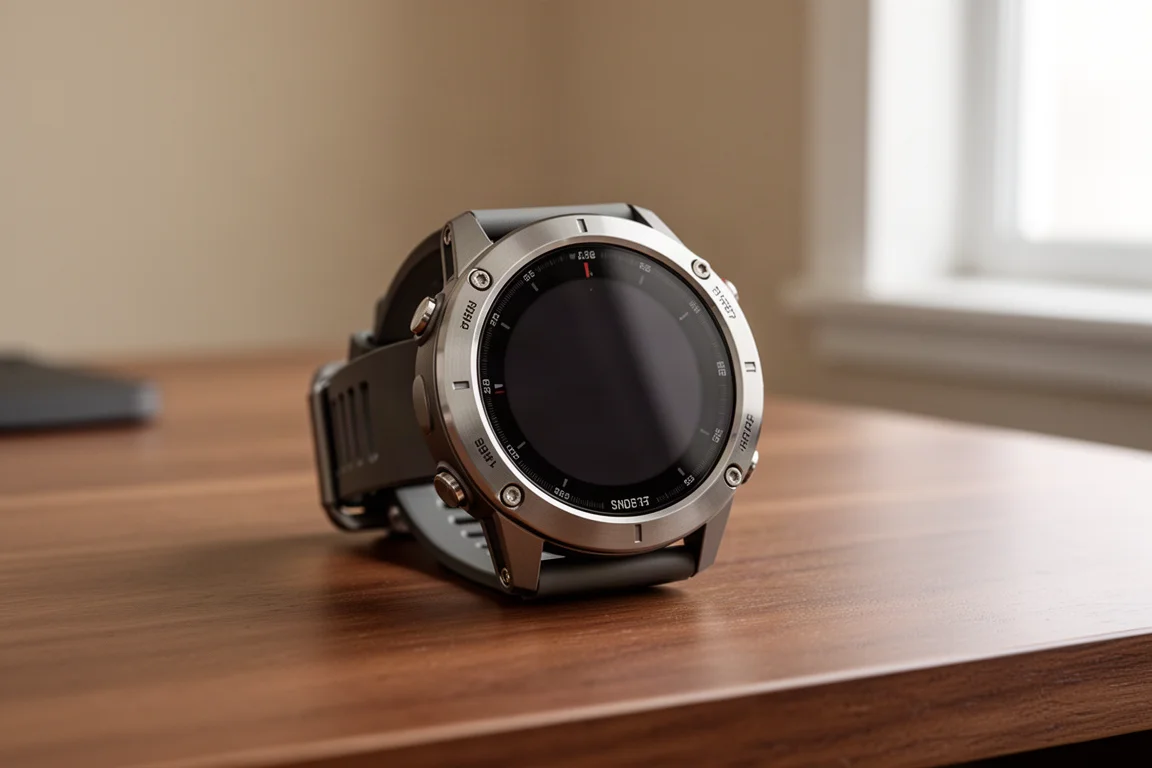
The Vertix 2S is not the compact Vertix many hoped for. The S stands for a small step up from the Vertix 2, with a genuine accuracy boost where it counts: the multiband GPS went from underwhelming to very accurate. Heart rate accuracy was meant to improve too, though the difference wasn’t obvious in testing.
What you keep is the classic Coros formula: a tank-like watch that shrugs off rock strikes in the mountains, enormous battery life, and the same training analysis and software Coros offers right down its range. In max-accuracy mode you get 43 hours, and it even outlasted the Enduro 3 in testing.
Gaps remain. Offline music exists but it’s a faff with no Spotify support, and there’s no flashlight like the Fenix offers. At a lower price than other titanium, sapphire models in this category it’s excellent value, but the full package, especially navigation tools, doesn’t quite match Garmin, and a discounted Vertix 2 or older Fenix may serve just as well.
Suunto Race: The Value Play
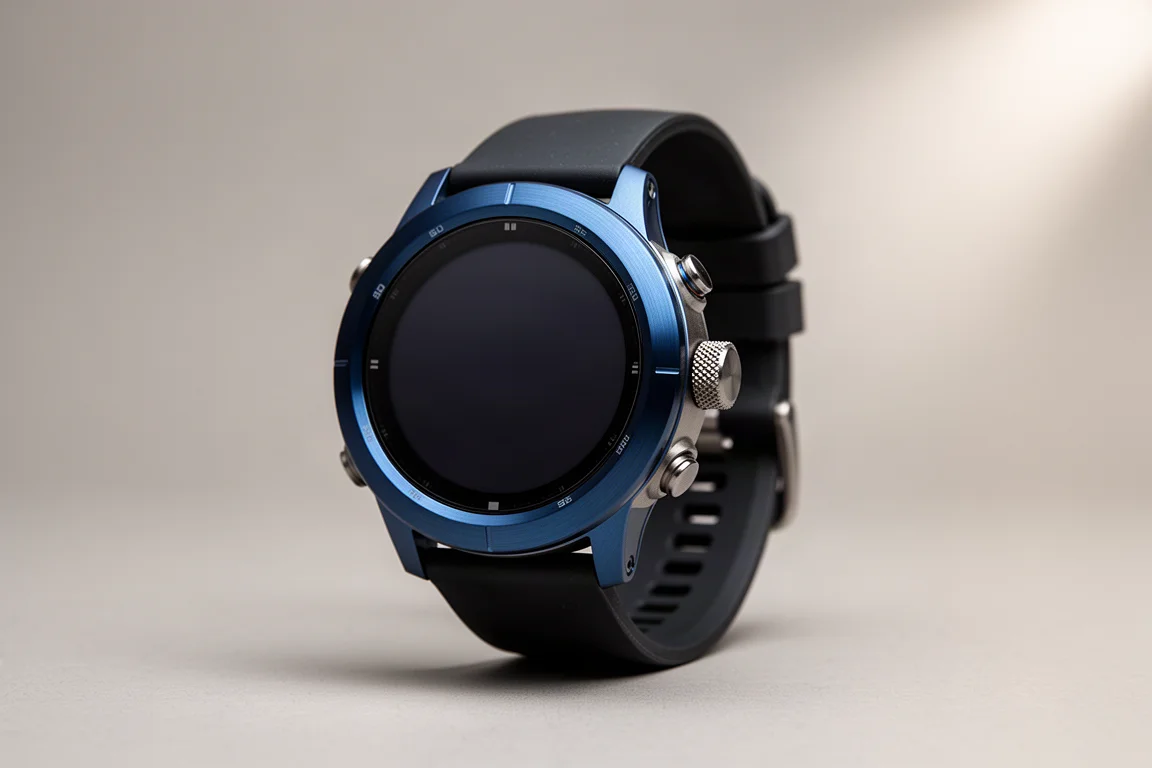
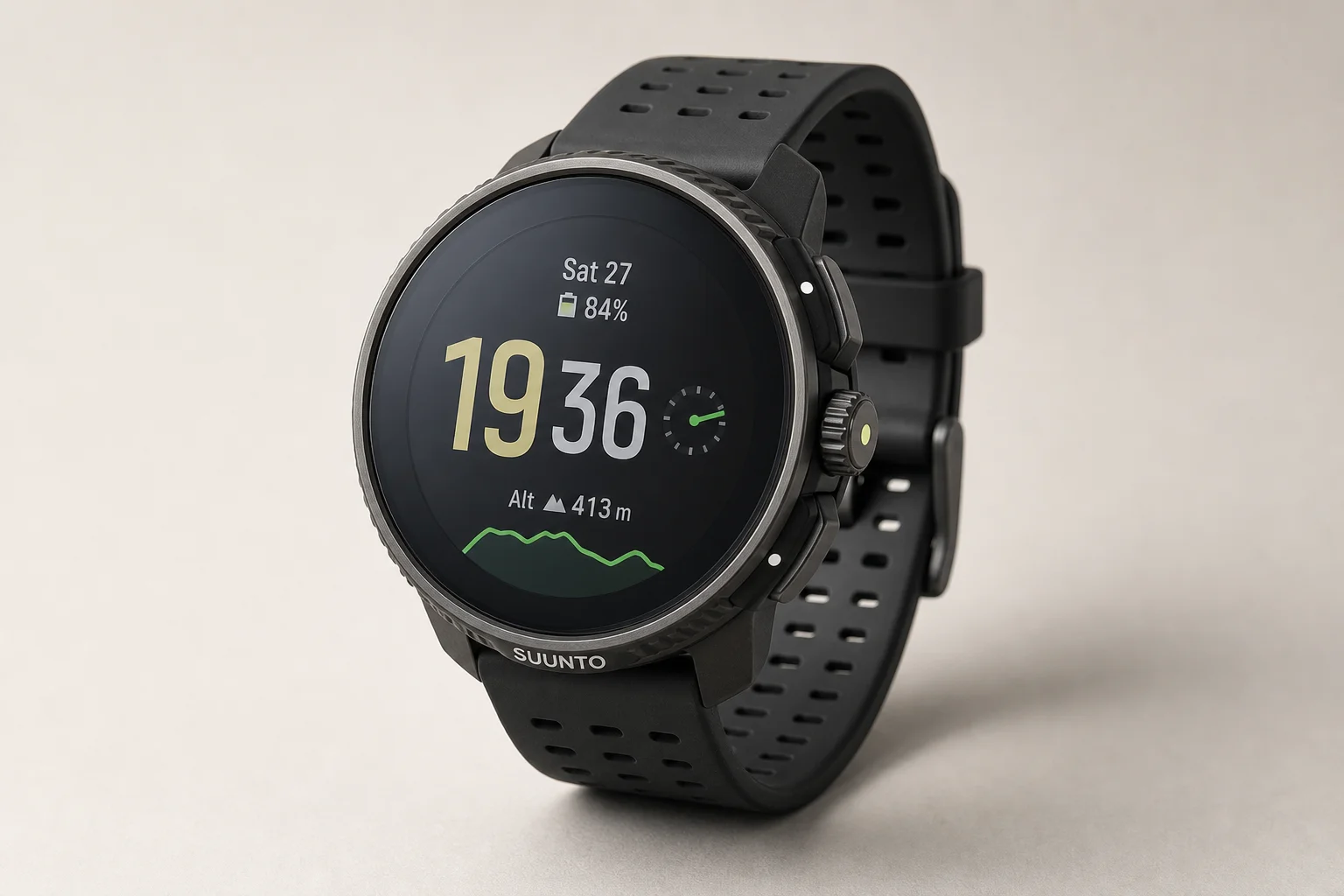
Suunto is the comeback story here. The Race delivers an AMOLED screen, dual-frequency GPS with genuinely excellent accuracy, good onboard maps, and a TrainingPeaks-style training analysis familiar to many runners, all at a price that keeps dropping in deals. There’s also a titanium version if you want more premium materials and durability.
It’s not the lightest watch, and the software has rough edges: the UI lags behind rivals and guided workouts are handled oddly. But Suunto has picked the essentials, nailed them, and competed on price, exactly the playbook needed against Garmin’s years of feature work. Update pace has picked up too, smoothing some of the early lag.
Battery life is strong for both single activities and day-to-day use, and while the styling won’t suit everyone, the beveled metal ring and rugged look has its fans. For runners who care about accuracy, maps, training analysis and price rather than music and smarts, it’s increasingly hard to dismiss.
Which One Should You Buy?
If money is no object and you want one watch that does everything, the Fenix 8 is hard to argue with. If you want Garmin’s navigation and battery without the price or the smarts, the Enduro 3 is the value pick in that range. Road runners and anyone with slimmer wrists should look hard at the lighter, cheaper Forerunner 965.
Polar’s pair suits runners who value sleep and recovery insights and a clean, consistent platform, with the Vantage V3 for lighter wrists and the Grit X2 Pro for tougher use. The Vertix 2S is the rugged, long-lasting pick if Coros’s feature gaps don’t bother you. And the Suunto Race is the smart-value shout: nails the essentials, skips the extras, and undercuts the rest.
Conclusion
The premium running watch market is genuinely competitive right now. Garmin still leads on features and navigation, Polar has the fundamentals in place but needs a software refresh, Coros delivers rugged reliability and huge battery, and Suunto has forced its way back into the conversation on value. Match the watch to what you actually use, and any of these can be a great choice.
Further reading
Related Reviews
Running Watches
Coros Pace 3 Running Watch Review: Why Software Matters More Than Specs
The Coros Pace 3 prioritizes runner-focused design and intelligent software over expensive hardware. Here's why it outperforms watches that cost twice as much.
Running Watches
GPS Running Watch Accuracy Test: Seven Watches Compared Across Urban, Trail, and Race Conditions
We tested seven popular running watches from major brands in three different environments to find out which delivers the most accurate GPS tracking for distance and pace.
Running Watches
Garmin Forerunner 70 Review: Garmin's Cheapest Forerunner Is More Capable Than You'd Expect
The new entry-level Forerunner 70 brings an AMOLED screen, a fresh interface, and real training analysis for £219/$249, with a few trade-offs to weigh before buying.