Hi-Fi
Best Hi-Fi Streaming Gear 2026: Five Components Worth Considering
A practical look at three Innuos Pulse network players, the HiFi Rose RS520 streaming amplifier, and the PSB Passif 50 anniversary speaker.
Introduction
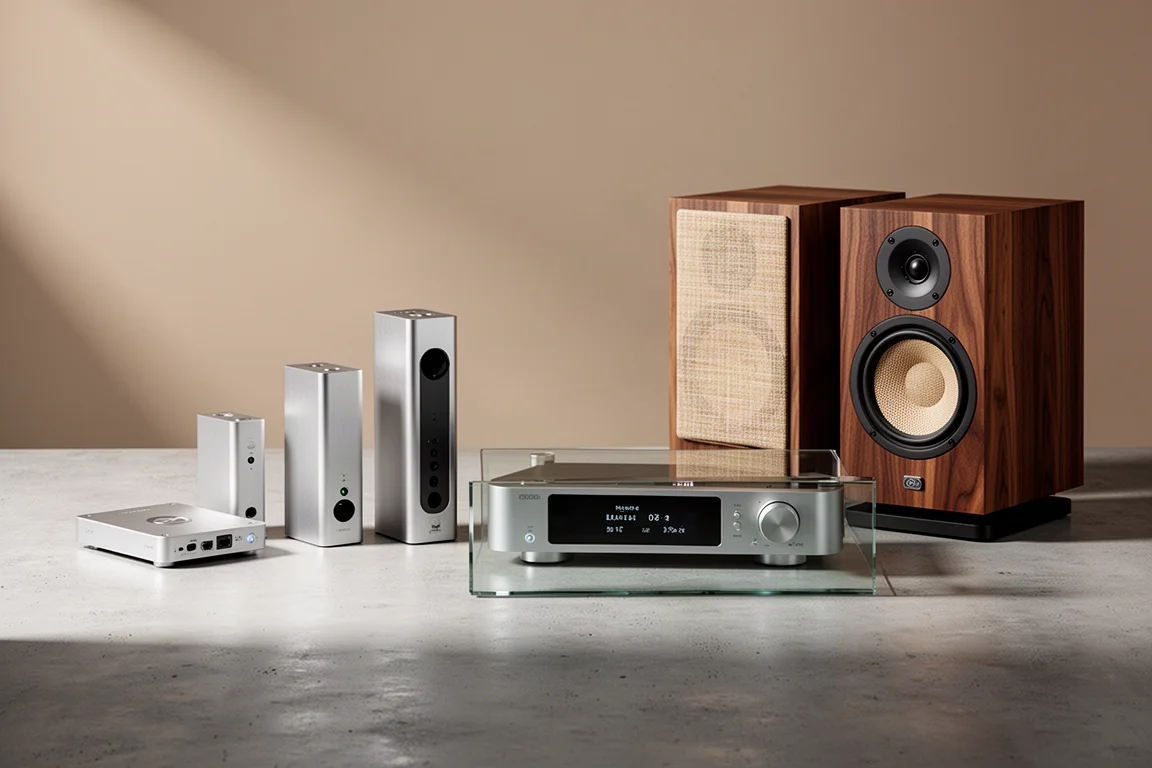
Streaming has become the default way a lot of listeners reach their music, and the hardware built around it keeps getting more specialised. The five components in this roundup cover three quite different approaches: a family of network players with no CD ripper on board, a streaming amplifier with a very large touchscreen and a high-end DAC chip, and a 50th anniversary stand-mount speaker that mixes retro cabinet work with modern driver design.
Each one is aimed at a slightly different system, so the sections below focus on what each product actually does and where it makes the most sense.
What to Look For in a Streaming Setup
The first decision is how you want a network player to operate. In standalone mode, an app such as Innuos Sense becomes the digital hub for the system: it plays music from streaming services, internet radio, and music stored on a NAS drive, and it can also serve other streamers on the same network. In endpoint mode, the player connects to a main music server instead, which could be an Innuos music server, a Roon Core, HQPlayer, or Logitech Media Server.
Power supply design is the next thing to compare. At the entry level you will typically find a compact processor and a solid-state drive module for the operating system, while the more expensive models move to linear supplies, larger transformers, and far more filter capacitance. Those changes are aimed at lowering electrical noise rather than adding features.
It is also worth deciding how many boxes you want. A network player still needs a DAC and an amplifier somewhere in the chain, whereas a streaming amplifier combines all three, and a pair of passive speakers needs an amplifier of its own. Matching the number of components to the space you have is often more useful than chasing the longest specification sheet.
Innuos Pulse Mini: The Entry Point to the Pulse Range
The Pulse Mini is the most affordable member of the new Pulse network player range at 899 pounds in the UK. It uses an Intel quad-core processor, a solid-state drive module for the operating system, and 4GB of RAM.
Like the rest of the range, it does without a CD ripper, which is a deliberate change from the Zen models. That makes sense for listeners who buy high-resolution downloads directly, or who access everything through a streaming service and keep no physical media at all.
Innuos Pulse: The Mid-Range Step Up
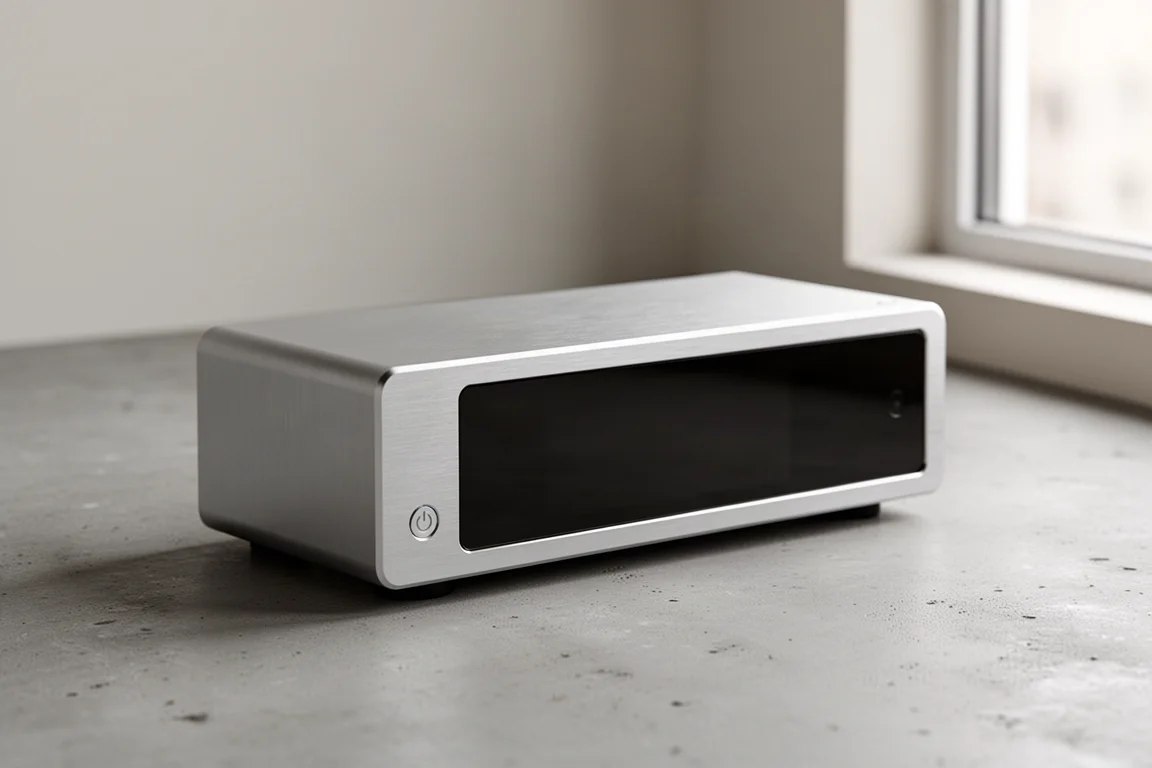
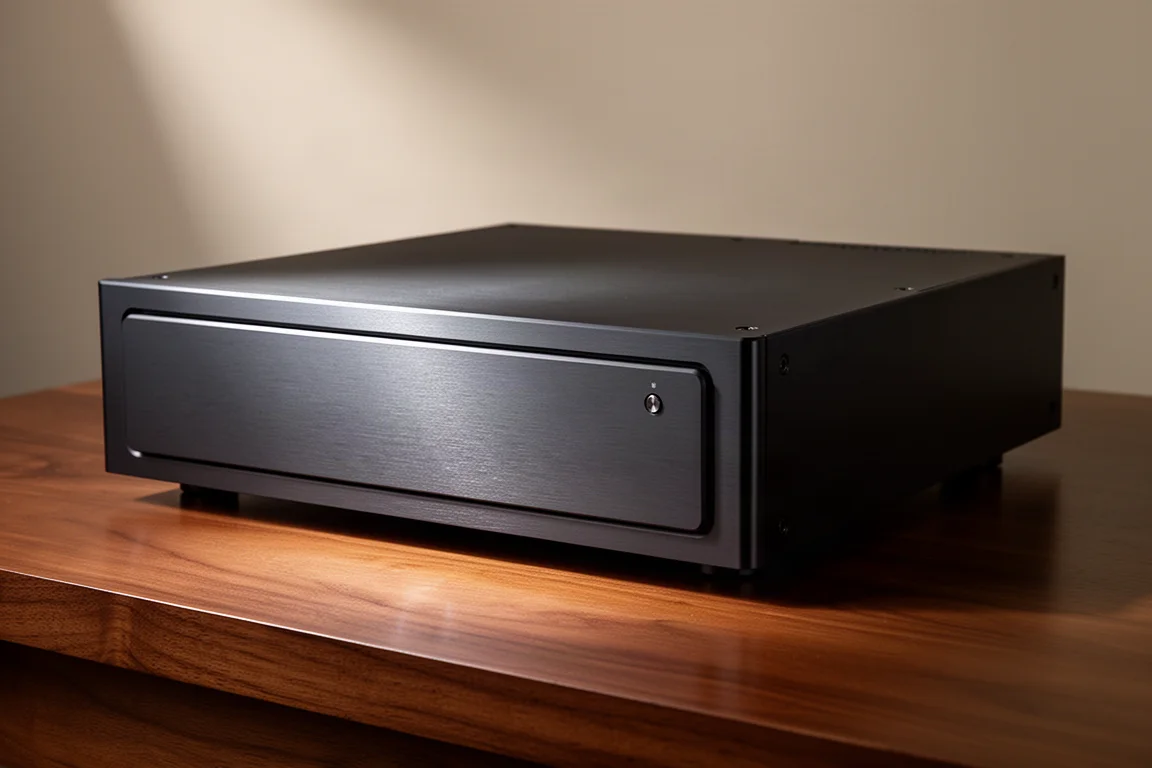
The Pulse sits in the middle of the range at 2,299 pounds in the UK, and the extra money goes into the power supply. It uses a custom linear supply with a medical-grade filtered IEC terminal, an epoxy-potted high-grade toroidal transformer, and more than 40,000 microfarads of Mundorf filter capacitance. RAM increases to 8GB.
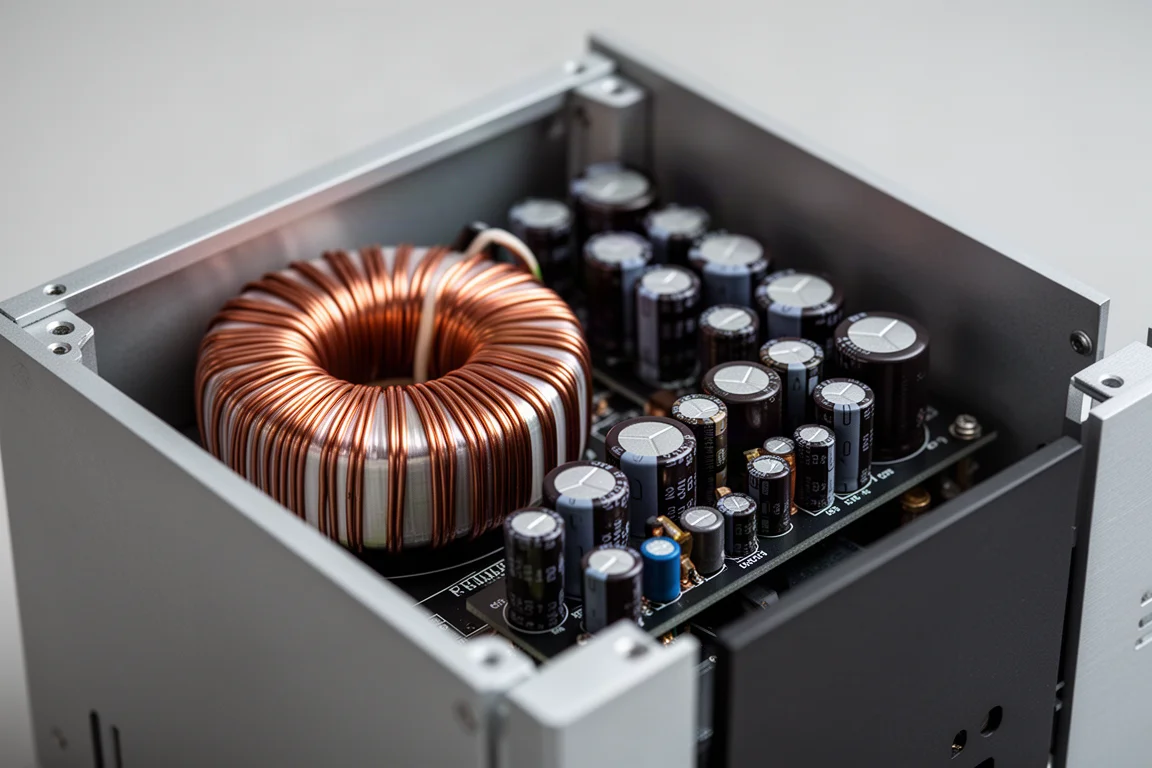
For most systems, this is the point where the player stops looking like a computer with an audio output and starts behaving like a dedicated piece of hi-fi equipment. Buyers who already run a separate DAC and amplifier will get the most from it.
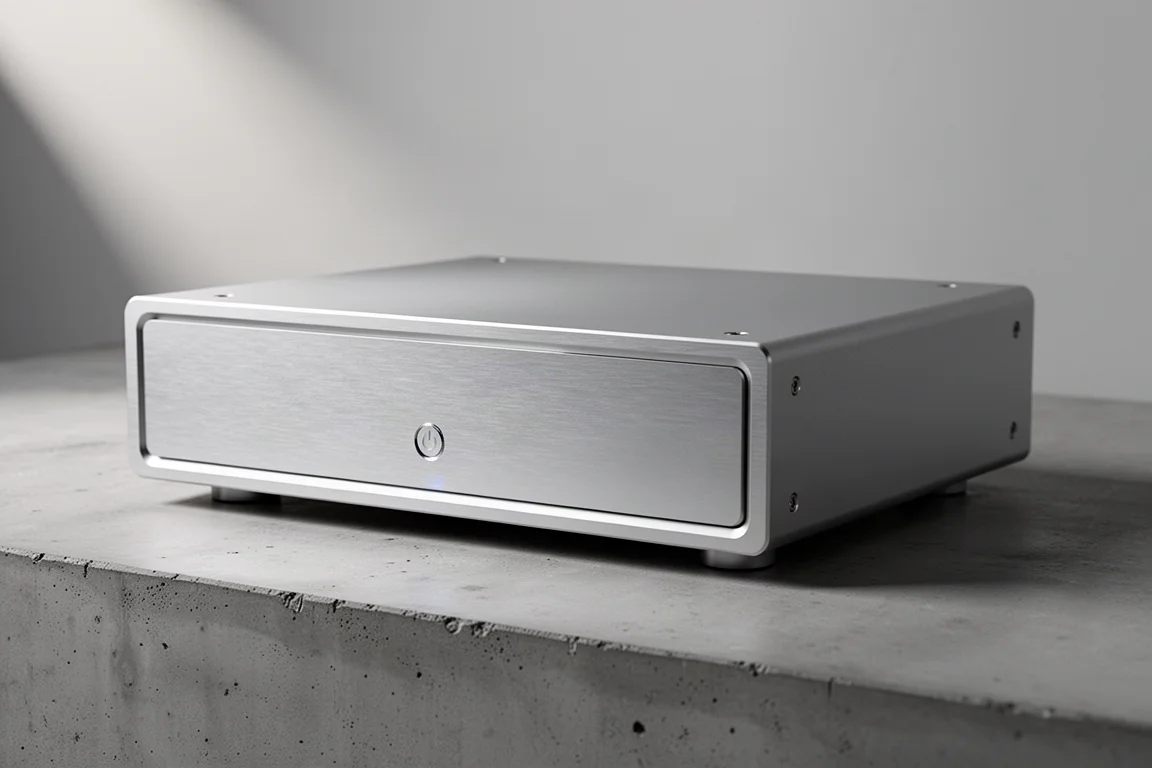
Innuos Pulsar: The Flagship Network Player
At 4,949 pounds in the UK, the Pulsar is the flagship of the three. Its Mundorf filter capacitance rises to 130,000 microfarads, which is more than you will find in most amplifiers, and the toroidal transformer grows to 300VA.
The Pulsar is optimised for USB output and includes a re-clocker to reduce jitter. It also swaps the single-level-cell SSD used for the operating system in the lower models for a triple-level-cell drive, a change intended to lower electrical noise inside the chassis.
HiFi Rose RS520: A Streaming Amplifier With a Large Touchscreen
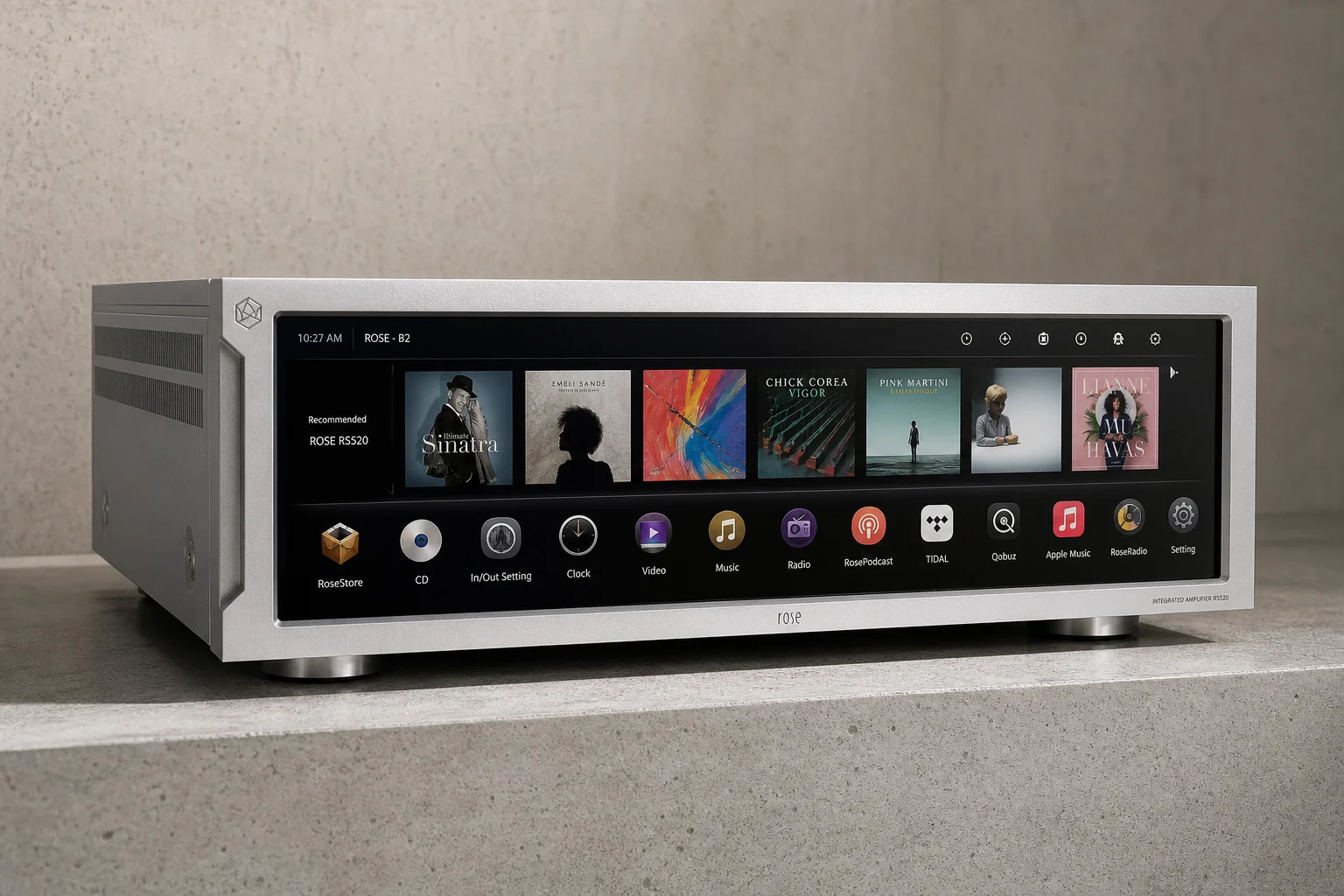
The RS520 is a streaming amplifier priced at 3,399 pounds in the UK, and its most striking feature is a 12.6-inch LCD touchscreen with a resolution of 1920 by 515 running across the front panel.
Inside, the DAC section uses the ESS 9038 Pro chip, which has a dynamic range of 140 decibels and handles bit rates up to 768kHz at 32-bit as well as DSD512. HiFi Rose developed discrete op-amps for the I/V stage to feed current to the DAC section, and says these reduce noise and open-loop distortion compared with off-the-shelf designs. The amplification is described as Class AD, using gallium nitride field-effect transistors rather than conventional silicon devices, which are said to reduce dead time and let the Class D switching stage transition more quickly for better linearity. The claimed output is 250 watts into both 8-ohm and 4-ohm loads.
Connectivity covers an eARC HDMI input so a television can control volume and switch the amplifier on and off automatically, an analogue RCA input, an HDMI output, a pre-out, and three USB 3.0 ports. One of those ports is used for the Bluetooth and Wi-Fi dongle, leaving two free for external media storage. A five-band parametric EQ allows adjustments of plus or minus 10 decibels along with control over the Q factor, which sets how steep or gradual each filter slope is.
The built-in streamer is Roon Ready and also supports Spotify Connect, while the proprietary Rose Connect app runs on iOS, Android, and PC. The app adds features including CD ripping, and the RS520 can play video files up to 4K on its display from connected storage.
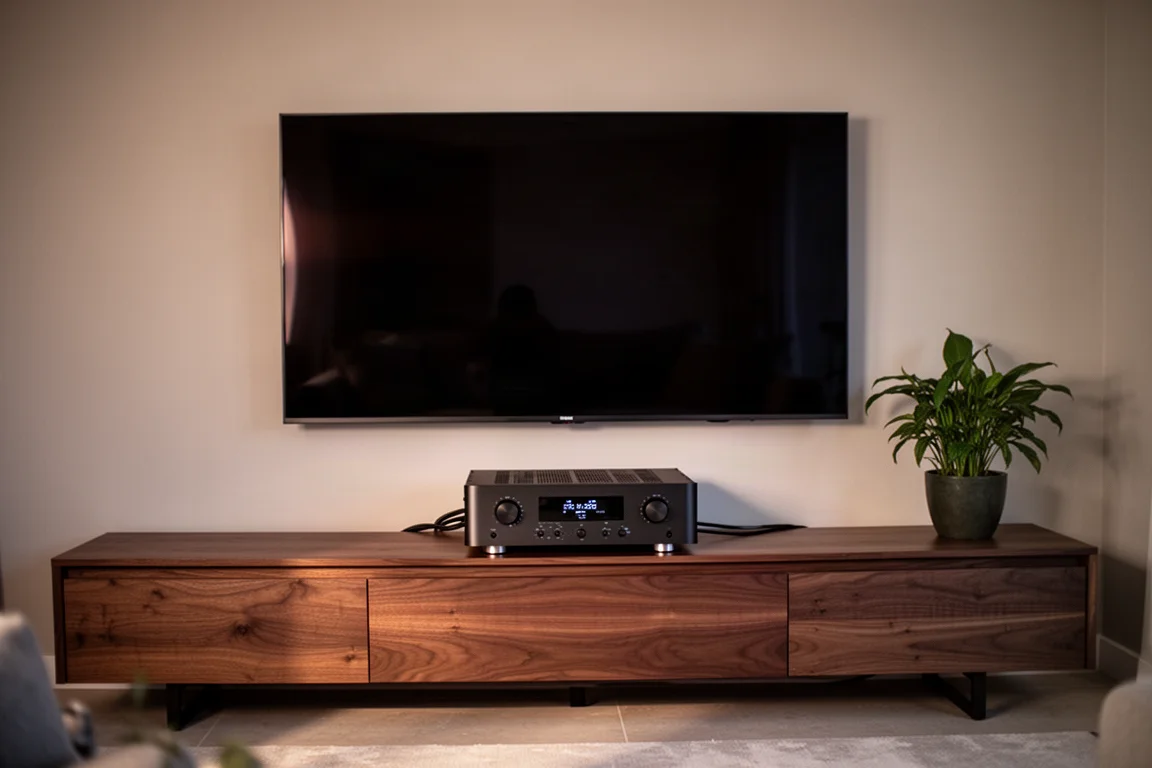
For buyers weighing it against the Naim Uniti Atom or the NAD M10, the RS520 offers substantially more power and a much larger display. Its build quality and the feel of the touchscreen interface are among the strongest parts of the package.
PSB Passif 50: A 50th Anniversary Stand-Mount Speaker
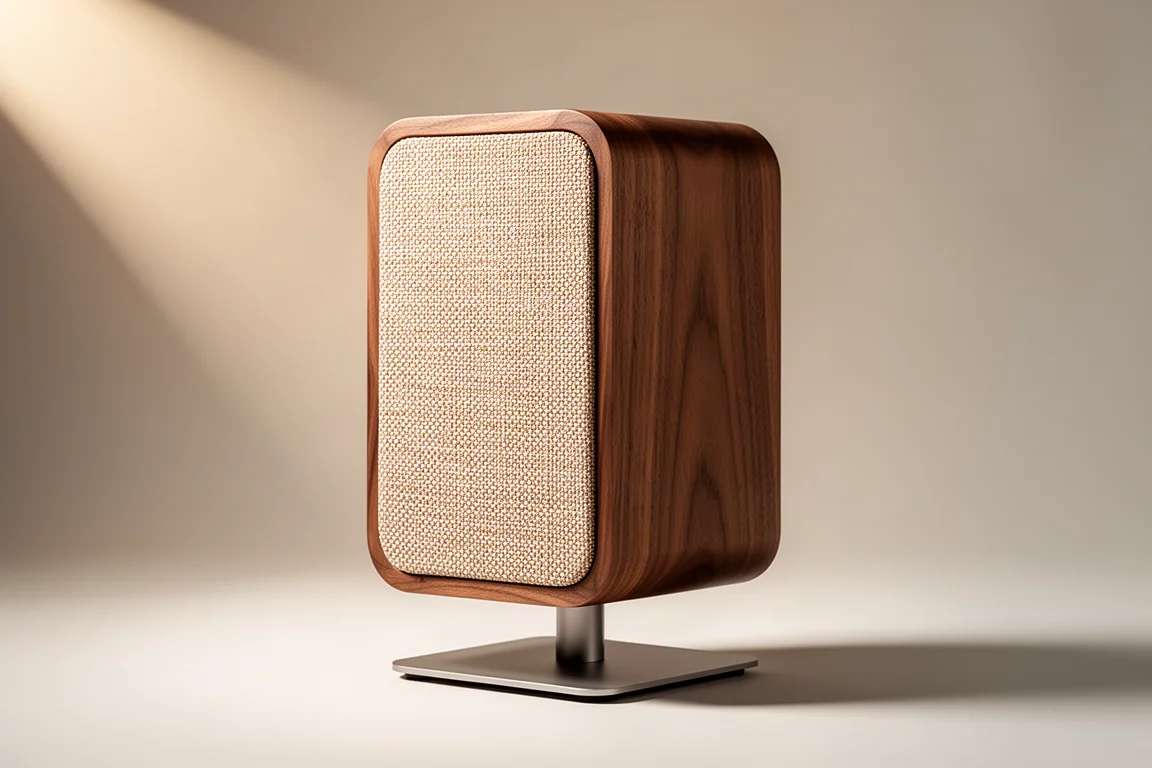
The Passif 50 is a passive stand-mount speaker selling for 2,499 pounds in the UK, released as part of PSB’s 50th anniversary celebrations. The open-grained walnut veneer cabinet, magnetically attached woven cloth grilles, and dedicated stands are all meant to evoke the original Passif Two, which first appeared in 1974.
PSB founder and chief designer Paul Barton has described the Passif 2 as the first speaker to truly embody the company’s design philosophy of tonal accuracy, spatial realism, and freedom from distortion, principles developed through research at Canada’s National Research Council.
The design itself is thoroughly modern. A 1-inch titanium tweeter sits above a 6.5-inch midwoofer and an 8-inch passive radiator, so the speaker looks like a three-way design but is actually a two-way. The tweeter uses a powerful neodymium magnet with ferrofluid damping to improve power handling and reduce distortion, and a phase plug in front of the dome directs its output for wide, consistent dispersion. A felt pad around the tweeter minimises edge diffraction.
The midwoofer and passive radiator use cast aluminium baskets for structural integrity, and a filleted rubber surround damps resonances from the paper cones, a combination claimed to lower distortion and produce a smoother response.
Specifications quote a low-frequency on-axis response of 50Hz at minus 3 decibels, an in-room sensitivity of 89 decibels, and a nominal impedance of 6 ohms that dips to a minimum of 4 ohms. The crossover is a Linkwitz-Riley fourth-order design set at 1,800Hz. The 50Hz figure is modest for a cabinet of this size with a passive radiator, which may simply reflect a conservative approach to published specifications.
Buying Advice: Matching Components to Your System
Start with the mode you actually need. If you already own a music server, a Roon Core, HQPlayer, or a Logitech Media Server, any of the three Pulse players can act as an endpoint. If you would rather have one box that handles streaming services, internet radio, and locally stored files, standalone operation with the Sense app covers that.
The budget tiers line up fairly neatly here. The Pulse Mini is the sensible entry point for a first dedicated network player. The Pulse adds a linear power supply and more memory for listeners who want a quieter foundation. The Pulsar is for USB-based systems where jitter reduction and a larger power supply are the priorities.
If you want to reduce box count, the RS520 folds streaming, conversion, and amplification into a single chassis, and its HDMI eARC input makes it straightforward to share a room with a television. If you already have an amplifier you like, the Passif 50 is a passive speaker that needs a suitable partner, and its 89 decibels of sensitivity and 6-ohm nominal load are undemanding enough for a wide range of amplifiers.
Conclusion
The three Pulse players give streaming-first listeners a clear path from a compact entry model up to a flagship with a serious power supply and USB-focused output. The RS520 answers a different question by combining a high-spec DAC, a 250-watt amplifier, and a large touchscreen in one unit, while the Passif 50 brings a heritage cabinet and modern driver engineering to systems that already have amplification. Pick the one that matches the way you listen and the equipment you already own.
Further reading
Related Reviews
Hi-Fi
Award-Winning Hi-Fi Components: Ten Standout Pieces Worth Auditioning
Ten hi-fi components recognised by an international panel of specialist publications, with the strengths and trade-offs that matter before you buy.
Hi-Fi
Best Hi-Fi Products of 2022: Award Winners and Value Picks
A curated look at the standout hi-fi components of 2022, from floorstanding speakers and bookshelf kits to integrated amplifiers and DACs.
Hi-Fi
Best Hi-Fi Gear: Standout Amplifiers, Speakers, DACs and Streamers
A curated roundup of standout hi-fi components, covering amplifiers, speakers, DACs and streamers from around $30 to $2,500.