Car Care
Best Headlight Restoration Kits 2026: 7 Kits Tested and Ranked
We compared seven headlight restoration kits on badly UV-damaged lenses and controlled polycarbonate test sheets. Here is how each one performed and which is worth your money.
Introduction
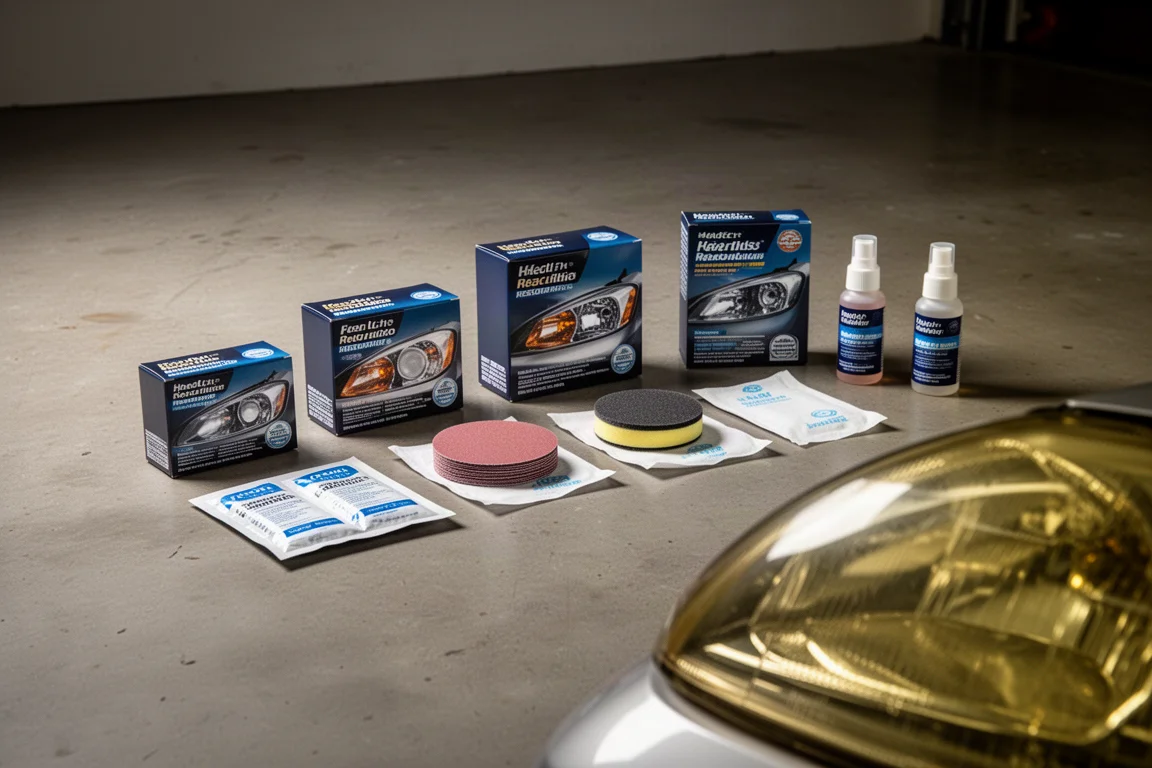
Yellow, oxidized headlights make night driving genuinely difficult. Modern headlight covers are made of polycarbonate because it survives impacts far better than glass, but polycarbonate oxidizes under UV exposure. Restoration kits promise to cut that oxidation away and seal the lens against future damage, so we put seven of them head to head to find out which ones actually work.
How the Kits Were Tested
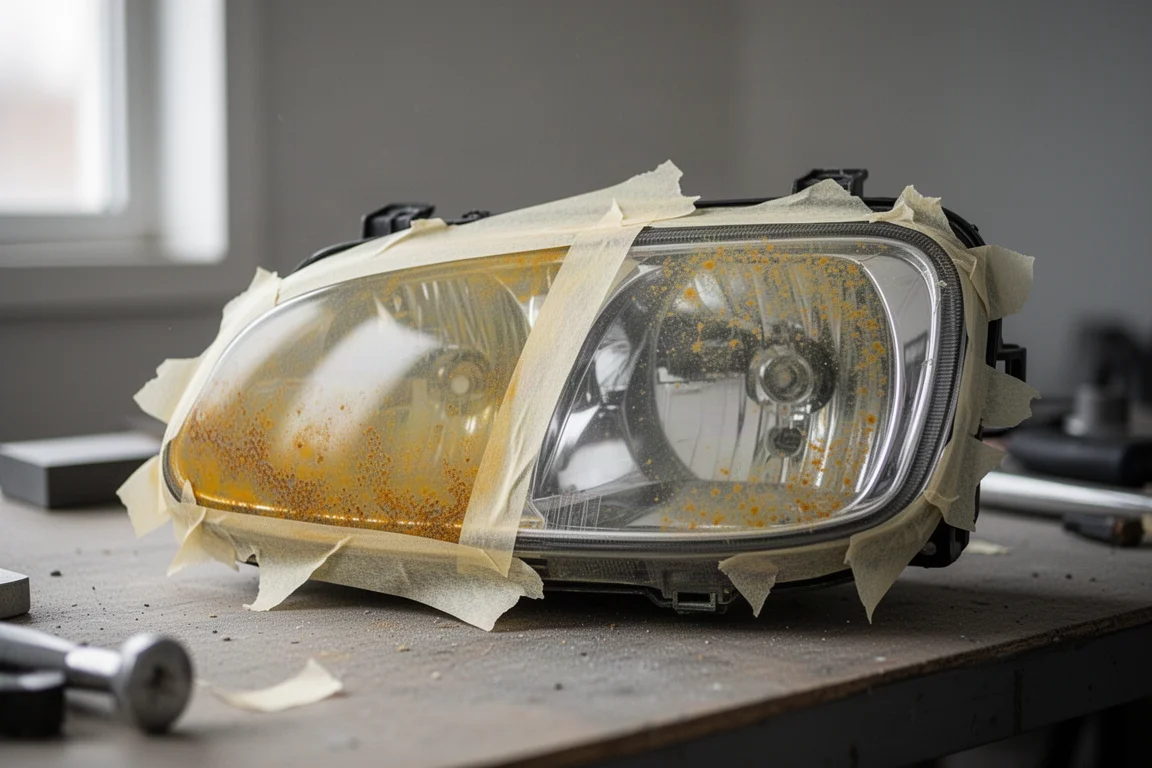
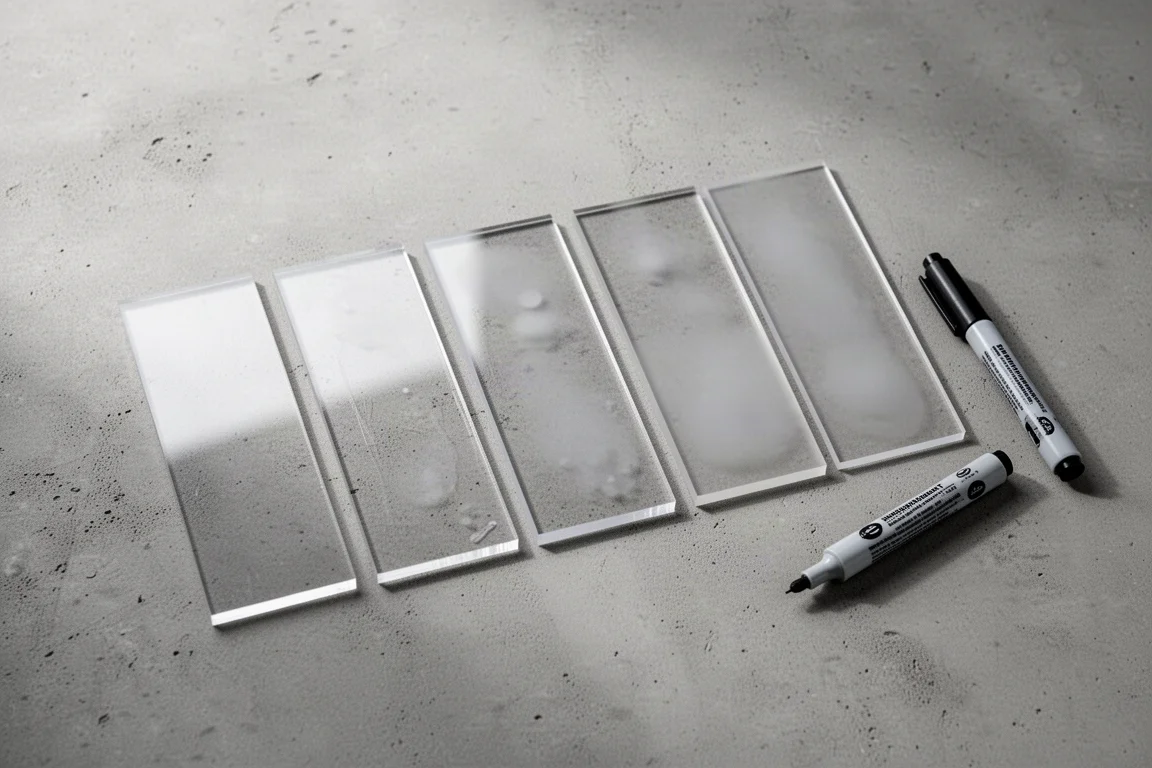
We sourced badly UV-damaged headlight assemblies and restored one lens from each pair with a different kit, taping off half of each lens for before-and-after comparison. Because no two used headlights are in exactly the same condition, we also ran a more controlled experiment: brand-new polycarbonate sheets sanded with 220 grit to simulate heavy oxidation, then treated with each kit while timing how quickly the damaged layer was removed.
Every kit was judged on three things: how effectively its abrasives removed the damaged layer, how good the protective coating looked once fully cured, and how resistant that coating was to scratching. All finished lenses were given 24 hours to cure before final judging.
Sylvania Headlight Restoration Kit
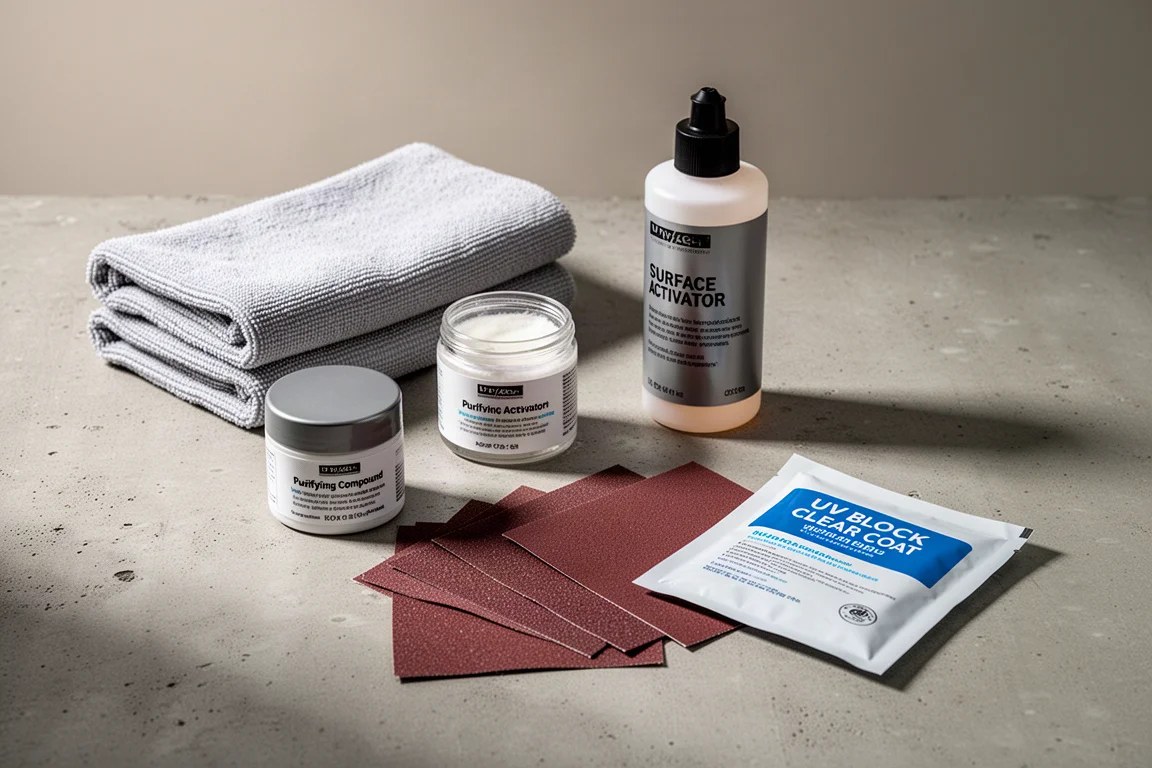
The Sylvania kit is made in the USA and takes a multi-step approach: a surface activator that loosens corrosion, three grades of sandpaper (400, 1,000 and 2,000 grit), a clarifying compound, and a UV block clear coat applied with a soaked towel edge. The process takes the longest of any kit tested at around 21 minutes, but the payoff is real. Sylvania notes that an aged headlight can reduce visibility to as little as 145 feet, while a properly restored lens can push that to 363 feet or more than twice the distance.
In our testing the finished headlight covers looked as good as new, and on the controlled polycarbonate sheets it removed the damaged layer in about 45 seconds. The one caveat: while the result was the best overall, the cured coating was not quite as scratch-resistant as the Cerakote finish.
Cerakote Headlight Restoration Kit
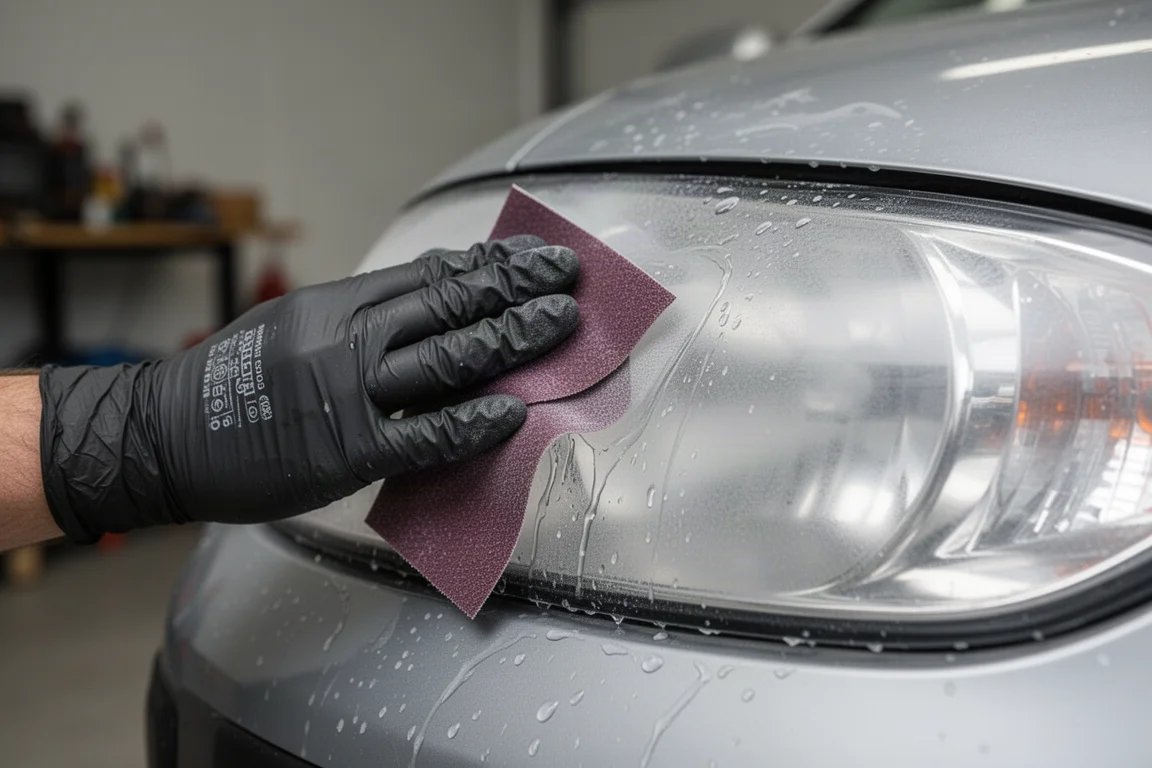
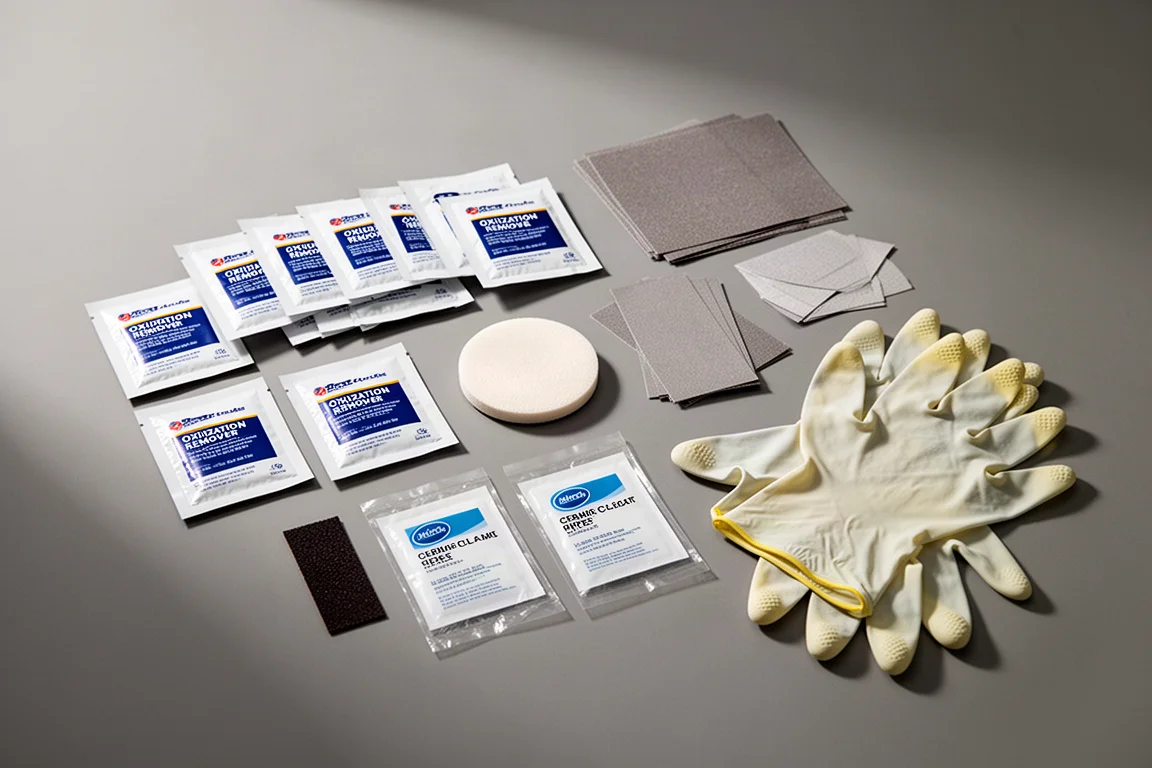
Cerakote’s made-in-USA kit includes eight oxidation remover wipes, a surface prep pad with discs, 2,000 and 3,000 grit sandpaper, two ceramic clear coating wipes and gloves. The wipes extract oxidation as you scrub, turning yellow as they lift it from the lens, followed by wet sanding and a single-direction ceramic coat application that needs at least 60 minutes to dry before driving.
Cerakote finished second overall and performed strongly in the abrasive test, cutting through the damaged polycarbonate in about 35 seconds despite being worked by hand rather than with a drill. Its real strength is the coating: it was very difficult to scratch, noticeably tougher than every other finish we tested. If long-term durability is your priority, this is the kit to watch.
Rain-X Premium Headlight Restoration Kit
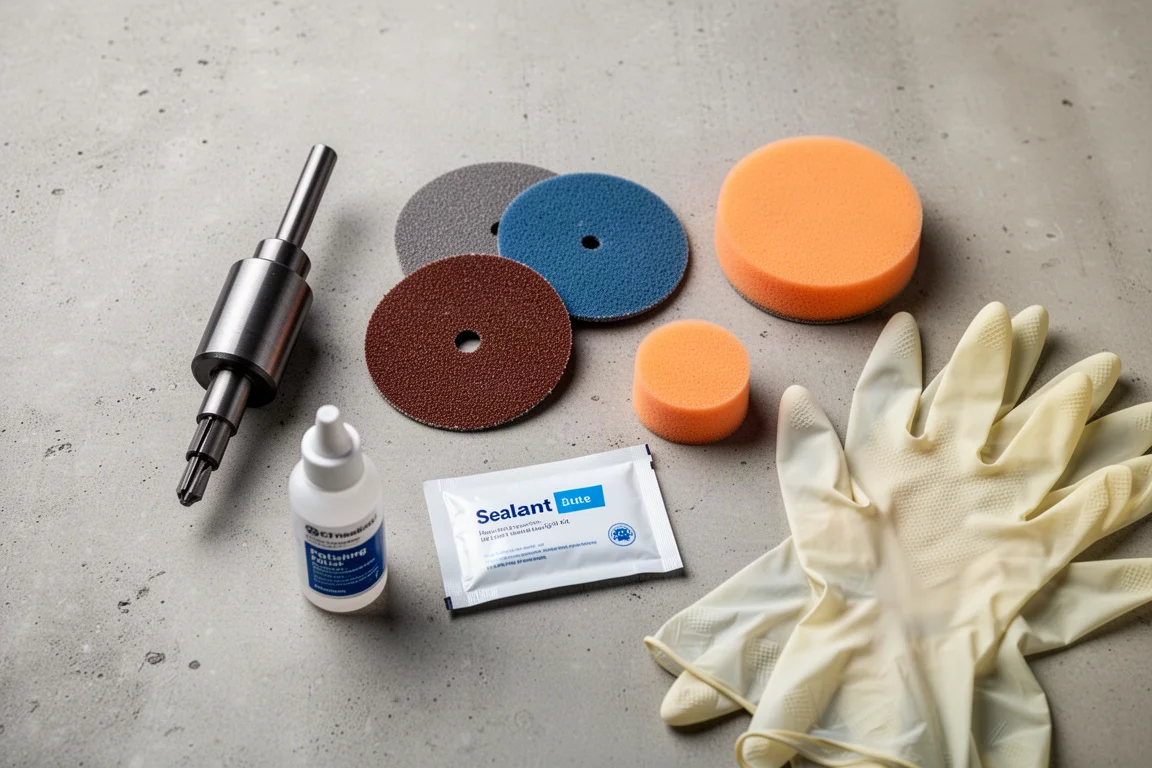
The Rain-X Premium kit is made in the USA and is drill-driven, with a drill attachment, 1,500, 3,200 and 4,000 grade sanding discs, a polishing pad, buffing polish, a protectant sealant wipe and gloves. The workflow is straightforward: progressively sand the lens wet, polish until clear, then wipe on the sealant in one complete motion with no dry spots.
It took about 9 minutes per lens, and the sealed result looked good enough to share third place with 3M. The protective coating genuinely helps its appearance, though on the control sheets some scratches were still visible and the coating rated as soft and inconsistent in the scratch test.
3M Headlight Restoration Kit
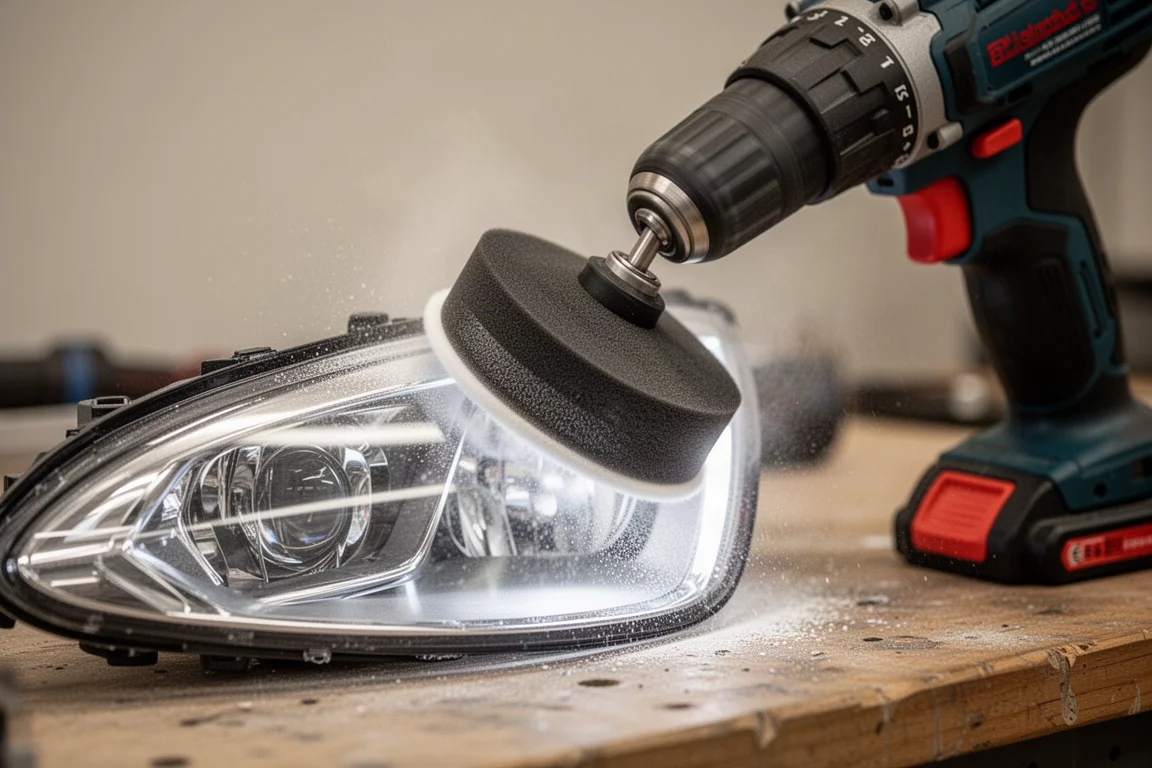
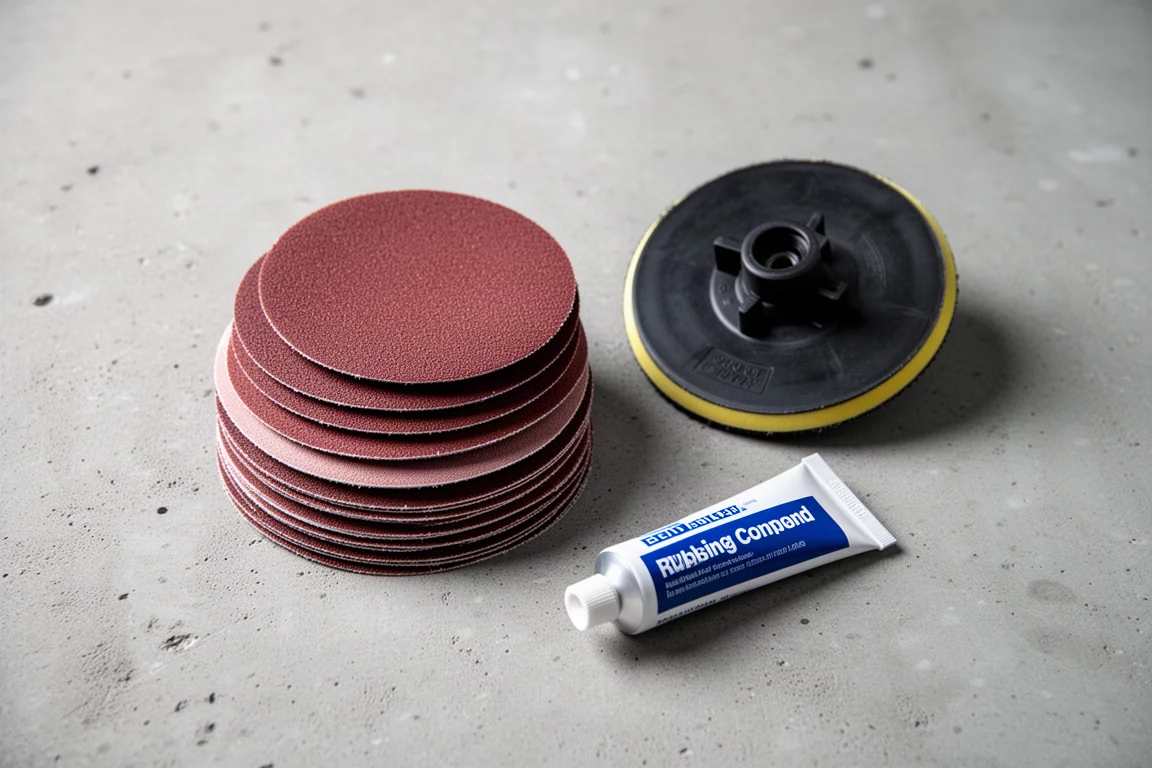
The 3M kit is made in the USA, Canada, the UK and China, and includes a disc pad holder, 500 and 800 grit sanding discs, a 3,000 grit refining disc and rubbing compound. You need to supply your own drill. It is a pure sand-and-polish system with no protective coating included, worked in four progressive stages from heavy defect removal through compounding.
The abrasives are the story here. In the controlled test, 3M removed the damaged polycarbonate in roughly 20 seconds, the fastest of any kit, and it did by far the best job of removing deep scratches from the test sheets. The lack of a included coating is the trade-off; pairing it with a ceramic coating afterward would produce a near-new result. It tied for third place overall.
Rust-Oleum Headlight Restoration Kit
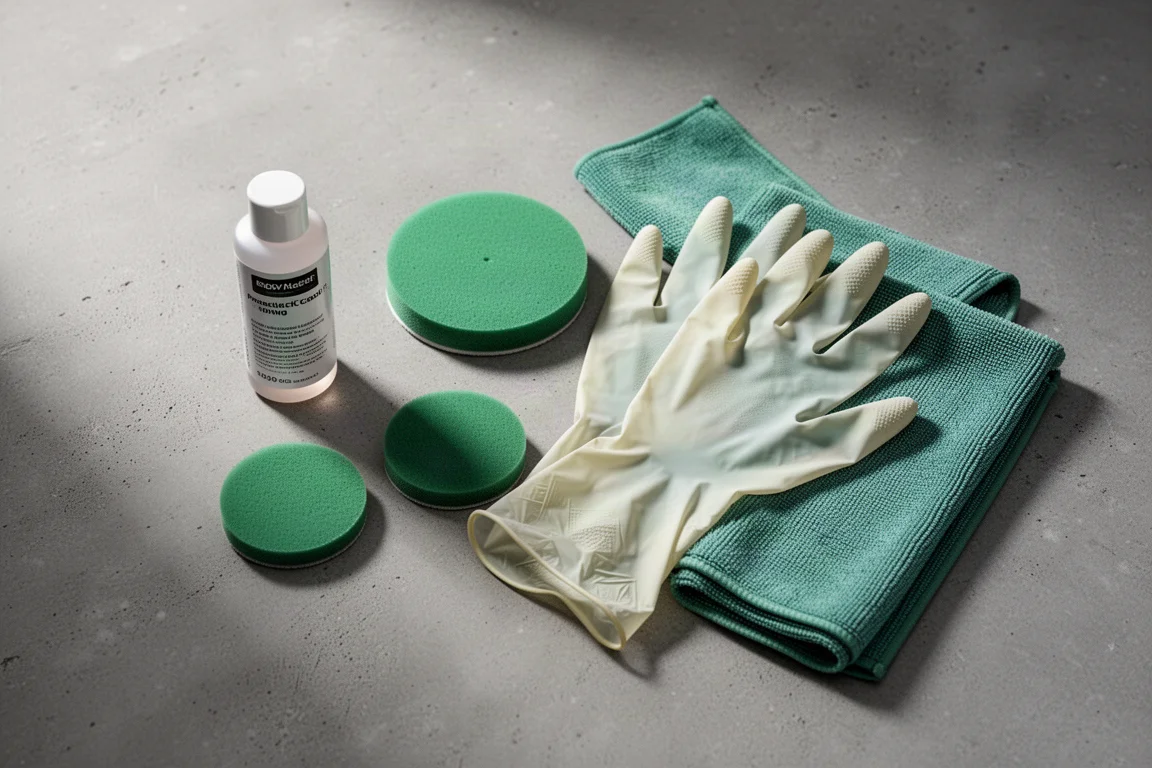
Rust-Oleum was the least expensive kit in the test and is made in the USA. It includes a professional lens polishing pad with two abrasive sides, gloves, a microfiber towel, and an applicator cloth that applies a single wipe-on coating. You wet sand with the green side, polish with the gray side, dry thoroughly, then wipe the coating on exactly once, with the lens dry to the touch in an hour.
The whole process took about 11 minutes. It placed fifth: the oxidation removal was better than the wipe-based kits, but the cured coating did not look as smooth or transparent as the top performers, and residual scratches remained visible on the test sheets.
Armor All Headlight Restoration Kit
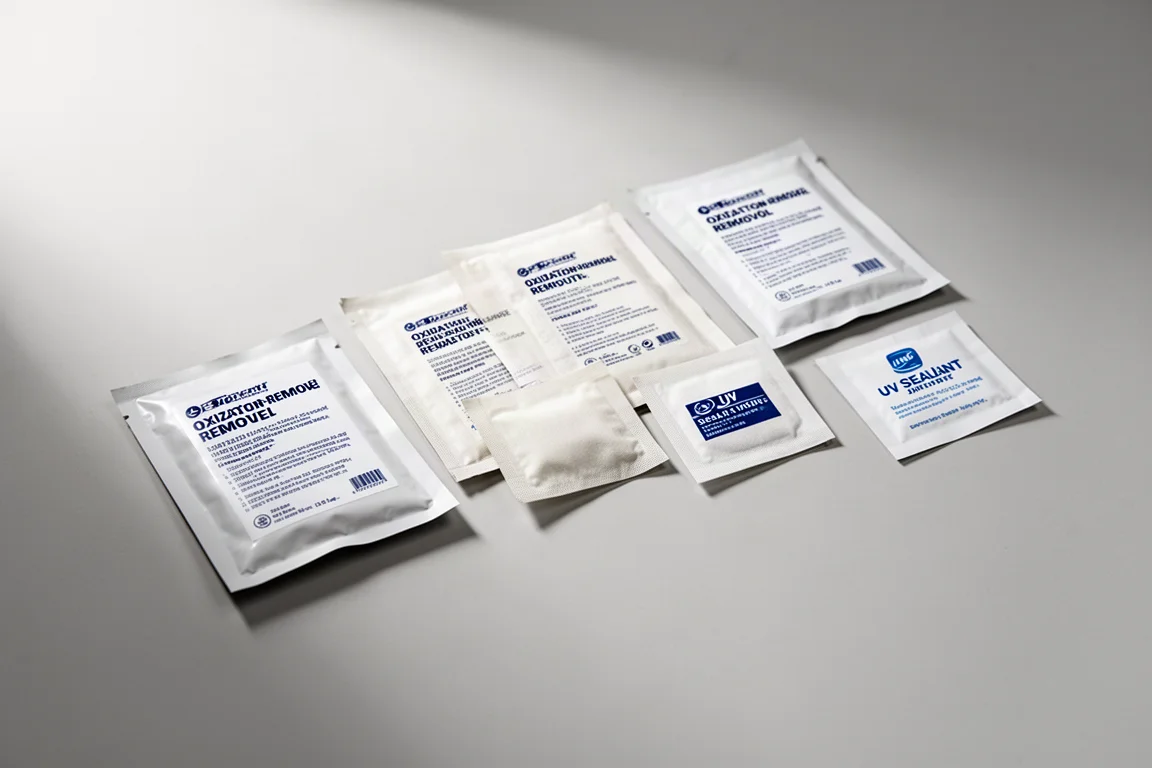
The Armor All kit costs $13, is made in the USA, and is the simplest wipe-based system here: four oxidation removal pouches and two UV sealant pouches. Step one is a firm back-and-forth scrub for about five minutes total using two wipes, and step two is a one-direction sealant wipe that dries to the touch in three hours. Total time was around 7 minutes, the fastest of any kit.
Fast did not mean effective. The wipes could not remove the oxidized material on badly damaged lenses, and the solvent-based chemistry that makes it good at dissolving marker residue is not what cuts damaged polycarbonate. It placed sixth.
Meguiar’s Headlight Restoration Kit
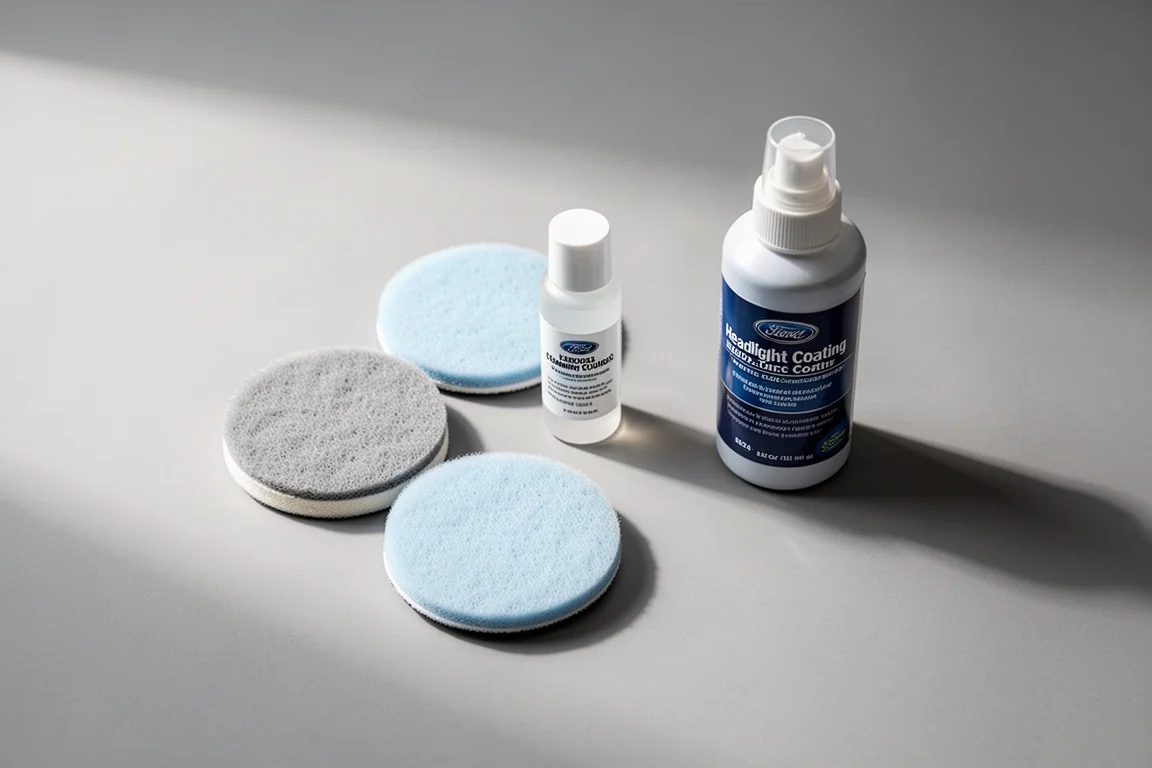
Meguiar’s kit, made in the USA and priced at $22, includes two cleaning pads, cleaning solution and a headlight coating. The process is gentle by design: work the solution into the lens until it reaches a uniform frosted appearance, wipe clean, then apply two coats of coating with 50 percent overlap and a 3 to 5 minute dry between coats.
Unfortunately it came seventh. After 10 minutes of effort the cleaning solution simply lacked the abrasive strength to remove badly oxidized material, so the coating sat over damaged plastic rather than restored clarity. On lenses with only light oxidation this may be less of an issue, but for heavily yellowed headlights it is not the right tool.
The Controlled Abrasive Test Results
On the sanded polycarbonate sheets, the abrasive rankings were clear: 3M cut through the damaged layer in about 20 seconds, Rain-X in 30, Cerakote in 35, and Sylvania in 45. Armor All and Meguiar’s failed to fully remove the marked, damaged layer even after six minutes of effort. In the scratch-resistance check after curing, Cerakote’s ceramic coating proved the hardest, Sylvania looked the best overall but scratched more easily, and 3M left the cleanest bare surface. Rust-Oleum, Armor All and Meguiar’s all left softer, more damage-prone coatings.
Buying Advice
If you want the single best all-around result and do not mind spending extra time, the Sylvania kit is the one we would choose. If you want the toughest, most scratch-resistant finish, Cerakote is the standout and a very close second. Riders of the middle path can pick either Rain-X for a coated finish in under 10 minutes or 3M for the fastest, deepest oxidation removal, keeping in mind that 3M includes no protective coating. The wipe-only Armor All and Meguiar’s kits make sense only for lightly hazy lenses, and Rust-Oleum is a budget option that works but with a less impressive finish.
Conclusion
Headlight restoration genuinely works when the kit has the abrasives to match the damage. Sylvania delivered the best-looking restored lenses, Cerakote the most durable coating, and 3M the most effective abrasives, while the fastest wipe-based kits fell short on heavily oxidized plastic. Match the kit to how yellowed your lenses actually are, and either Sylvania or Cerakote will leave you with headlights that look and perform close to new.
Further reading
Related Reviews
Car Care
Best Ceramic Coatings 2026: Seven Options Tested for Durability and Shine
We tested seven ceramic coatings from budget sprays to premium hand-applied formulas to see which ones truly protect your paint.
Car Care
Best Windshield Water Repellents 2026: Top Picks for Rainy Driving
We tested ten windshield water repellents for water beading, bug removal, and chemical resistance to find the best options for clear visibility in the rain.
Car Care
Car Wax Comparison 2026: Seven Waxes Tested From Budget to Ultra Premium
A blind test of seven car waxes from $26 to nearly $2,000 reveals which ones deliver the best gloss, filling, slickness, and hydrophobics.