Outdoor Gear
Best Head Torches for Winter Trails: Ledlenser NEO6R and Petzl Iko Core
A practical guide to choosing a winter head torch, plus how the Ledlenser NEO6R and Petzl Iko Core compare on beam shape, runtime and comfort.
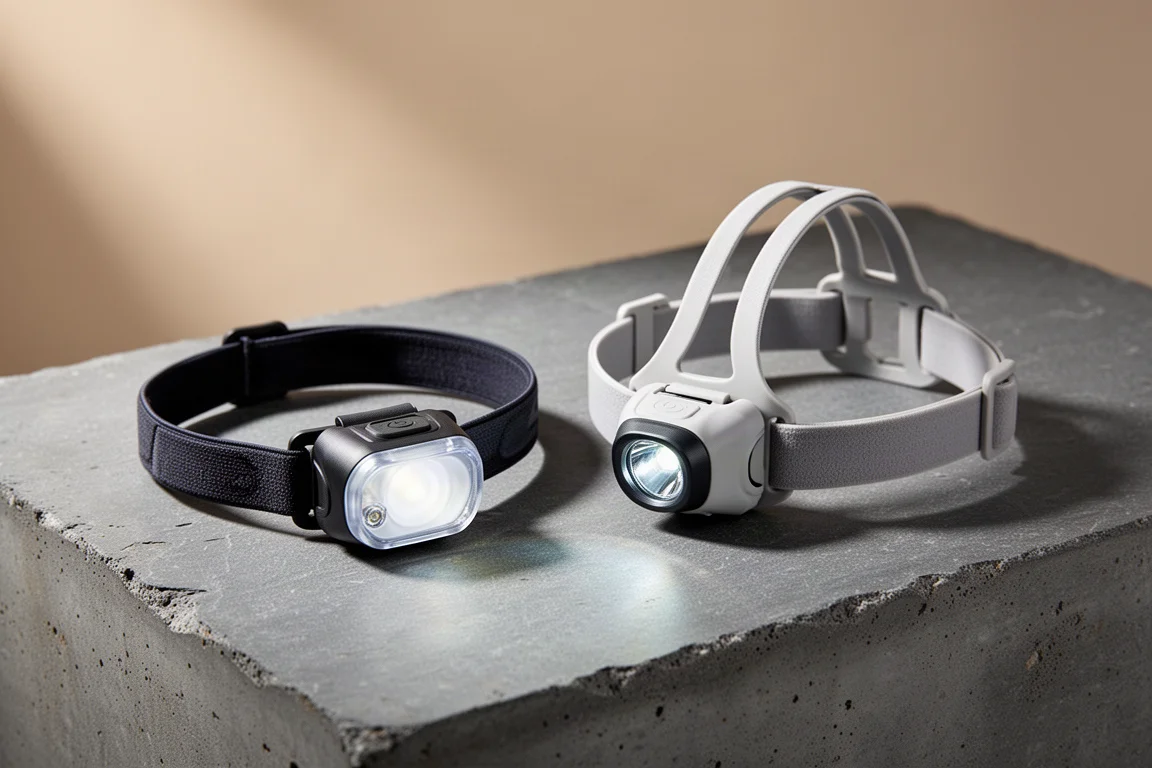
Introduction
When the days shorten and evening runs start and finish in the dark, a head torch stops being optional kit and becomes the piece of equipment that decides how confident you feel on the move. The market is crowded, and the numbers on the box rarely tell the whole story.
This guide covers what actually matters when you are choosing a torch for winter use, then compares two models that sit at very different points on the spectrum: the Ledlenser NEO6R, a compact flood beam torch for everyday routes, and the Petzl Iko Core, a very light option with a brighter spot beam for rougher ground.
What to Look For in a Winter Head Torch
Brightness is measured in lumens, and it is the first specification worth understanding. As a practical floor, avoid anything below 200 lumens. Output between roughly 200 and 450 lumens gives a comfortable glow for tracks, trails and quiet roads. The 450 to 650 range reads as genuinely bright, and 650 to 1,000 lumens is beacon territory for the hills.

Those bands are broad strokes rather than rules. Well-defined paths rarely need more than a few hundred lumens, while open hillside and vague, less-defined ground reward a brighter torch. Matching the output to the terrain you actually use is far more useful than chasing the biggest number on the shelf.
Brightness and Beam Style: Flood Versus Spot
Two torches with identical lumen ratings can behave completely differently, because beam shape matters as much as raw output. A flood beam spreads light wide and gently, illuminating a broad area without pinpointing anything. A spot beam concentrates light into a tighter, longer throw that picks out whatever sits directly ahead.
Flood beams suit well-defined trails, local roads and campsite pottering, where general awareness matters more than a hard-edged hotspot. Spot beams come into their own off trail, on rugged ground, or anywhere you need to read the detail of the surface in front of your feet.
Battery Life and Cold Weather Performance
Cold conditions drain batteries faster, so runtime deserves as much attention as brightness. Every feature stacks on the others: a lower output torch will usually run longer on the same cell, while a brighter beam eats through capacity quickly.
Rechargeable batteries are the practical default, but the ability to swap cells matters on long outings. Carrying two or three spare rechargeable packs, and possibly a few AAA cells as a last resort, is a simple way to cover a full night in the dark.
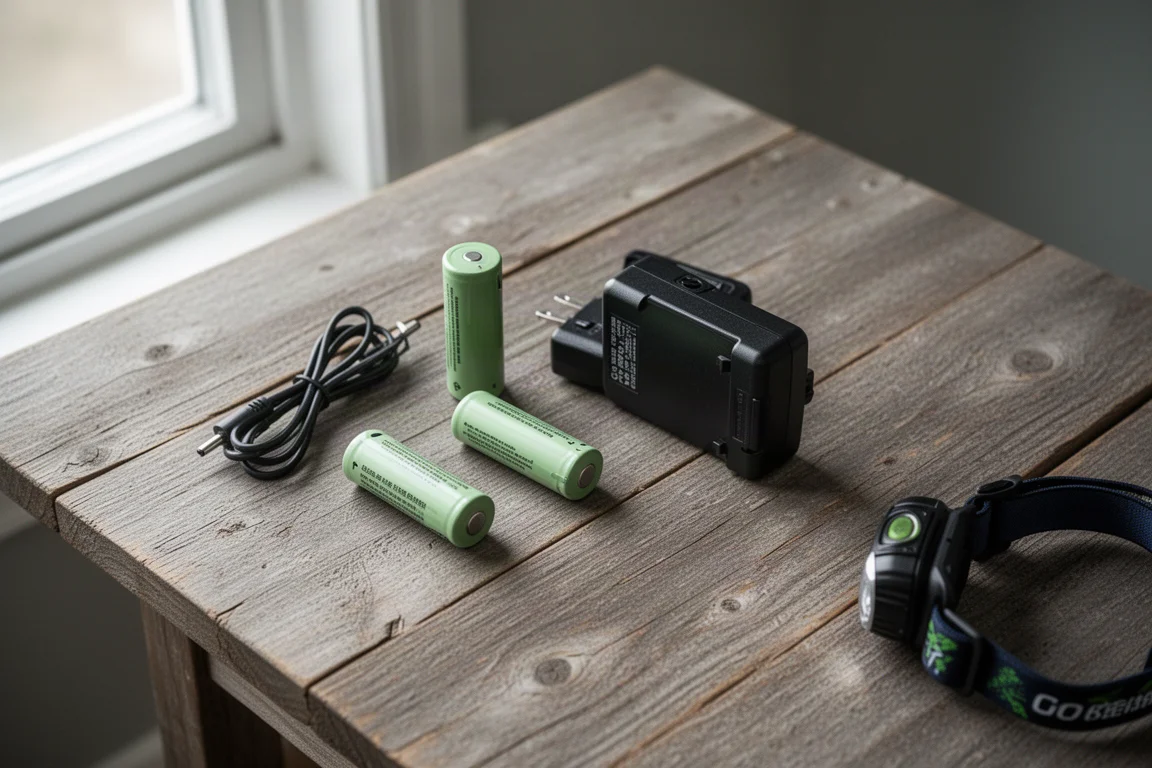
It is also worth knowing what happens when a torch falls back to disposable cells. Some models reduce their maximum output when running on AAA batteries, so the brightest mode may only be available on the rechargeable pack.
Ledlenser NEO6R: A Dependable Flood Beam for Everyday Runs
The Ledlenser NEO6R is a compact 240 lumen torch built around a flood beam. That combination produces a wide, diffuse pool of light rather than a concentrated hotspot, which makes it well suited to evening runs on well-defined trails and local roads where you mainly need to see the surface and your surroundings.
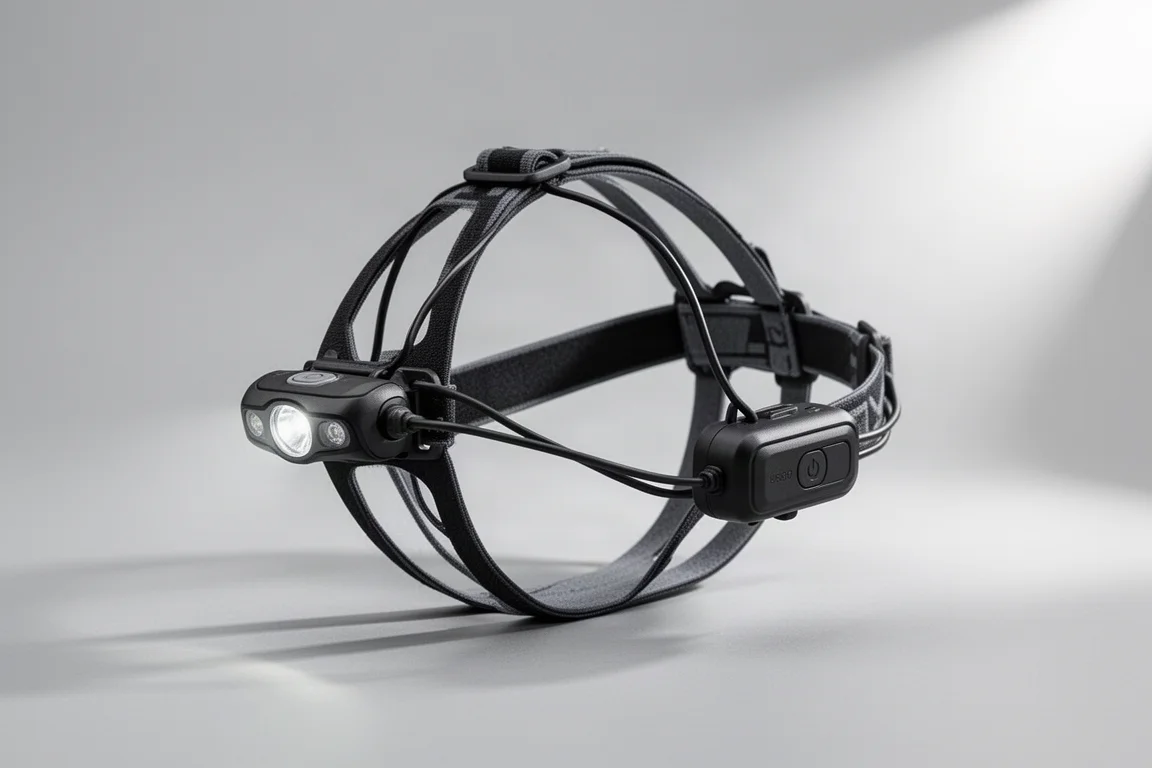
Because the output is modest, the rechargeable battery lasts a long time between charges, a real advantage for short, regular outings. Its single headband is straightforward, with the battery sitting at the back of the head and a short cable running to the lamp at the front. It also works well as a light you simply leave in a pack as a backup.
Petzl Iko Core: Lightweight Comfort for Rugged Trails
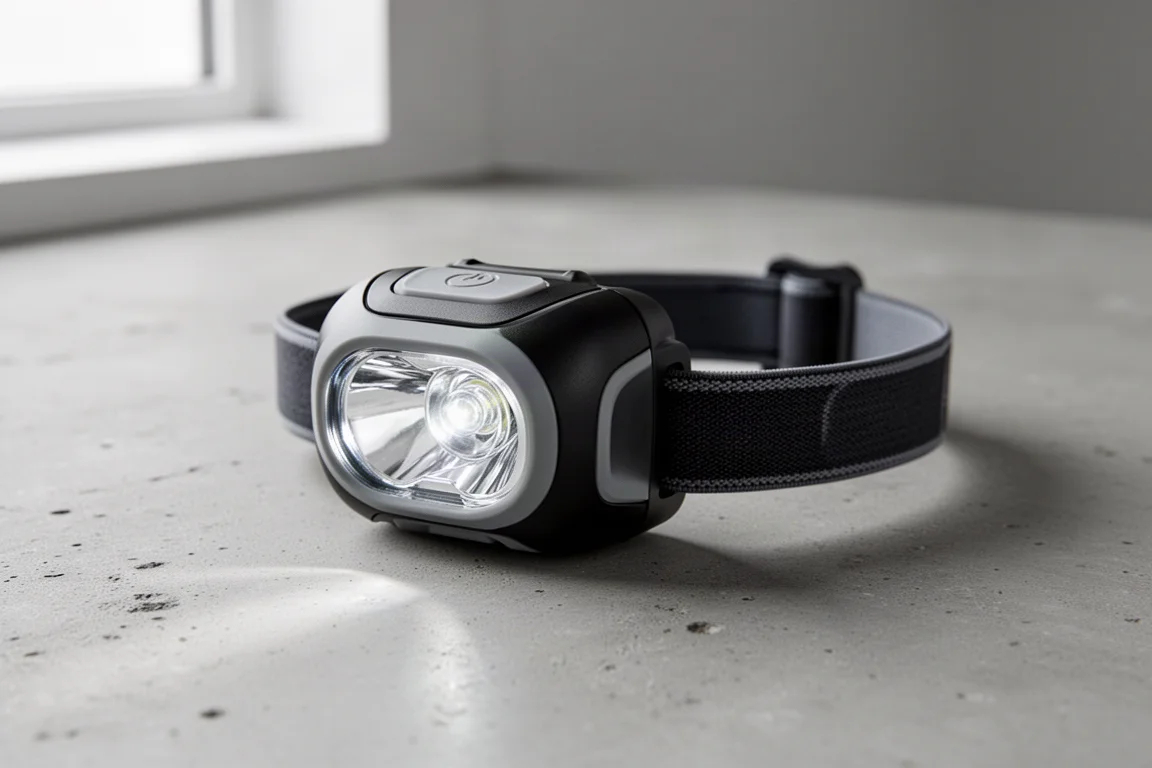
The Petzl Iko Core takes the opposite approach. It is brighter, with a more focused spot-style beam that throws light further ahead, making it the better choice for off-trail sections, rugged ground, and anywhere you want the terrain in front of your feet properly illuminated.
Its standout quality is comfort. A wide frame wraps around the head and spreads pressure instead of concentrating it into a single band, and the torch itself is very light. That comfort comes with a trade-off: runtime is shorter, so long nights in the dark call for two or three spare rechargeable batteries. It can also run on AAA cells, though output is lower in that configuration.
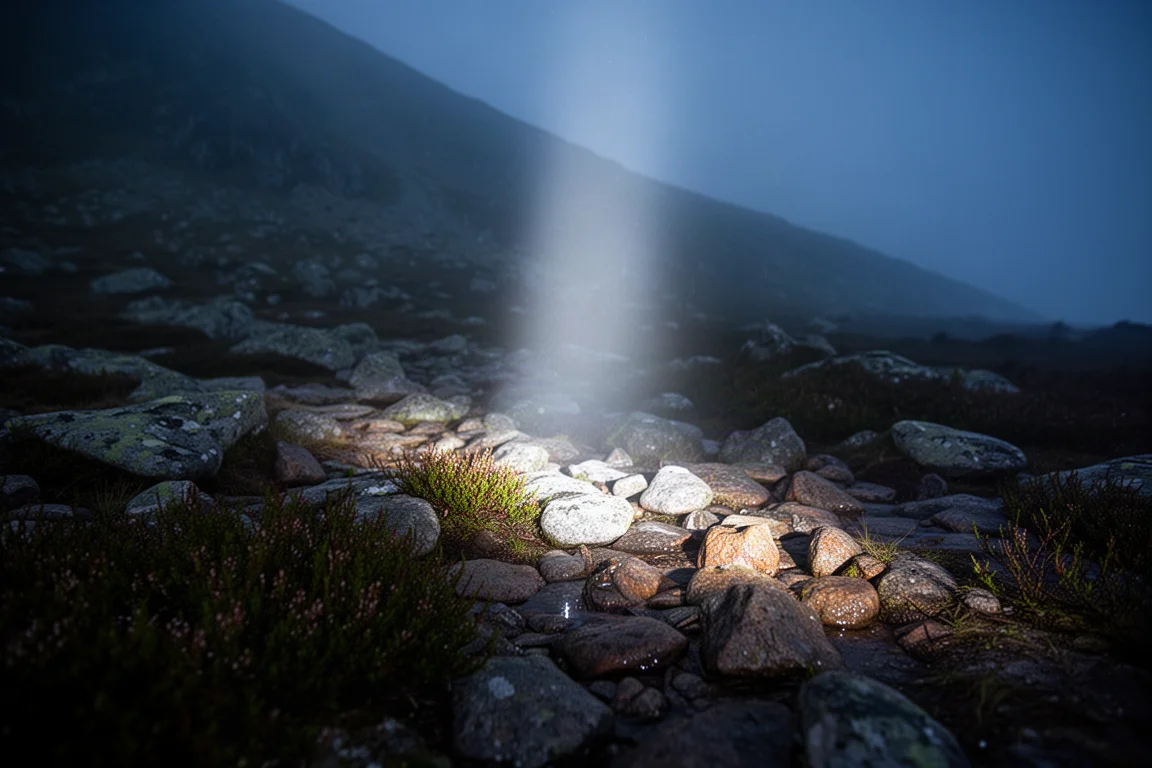
For runners who prioritise a stable, barely-there fit over maximum runtime, that balance makes sense. For anyone planning many hours of navigation in the dark, the spare battery pouch simply becomes part of the routine.
Weather Resistance, Comfort, and the Red Light Question
Water and dust protection is described by an IP rating, which is standardised across brands. The first digit covers protection from dust and grit, and the second covers water. A second digit of 4 means the torch handles splashes, while a rating of 7 means it can be submerged. In consistently wet conditions, aim for something in that range and choose based on how wet you expect to get.
Comfort deserves more attention than it usually receives. Adjustable straps are essential, and a headband that splits into two bands spreads weight across the top and back of the head. Even a single-band design can be comfortable if the battery sits neatly at the rear and the cable does not tug.
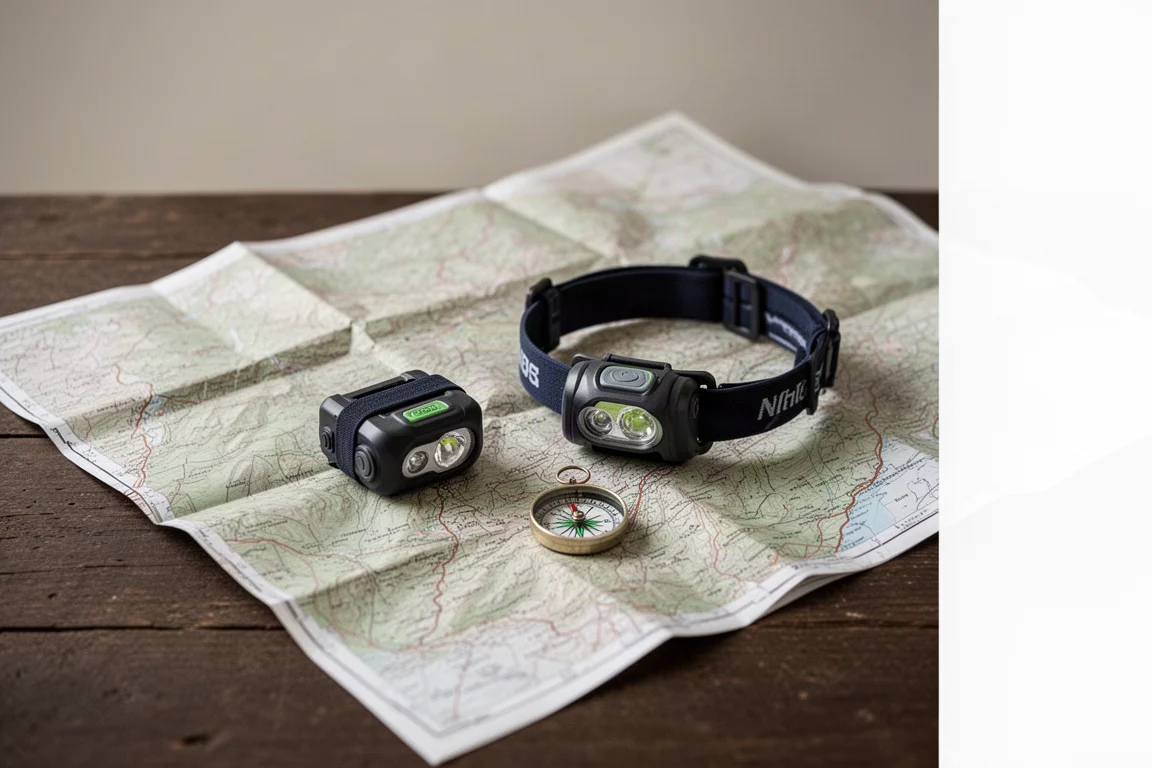
A red light is a nice extra rather than a necessity. It is designed to preserve night vision and is genuinely useful around a busy campsite, where a white beam would spill into other tents. One caveat worth knowing: red light makes some colours on a paper map harder to distinguish, so contour shading and colour changes can blur together when you navigate by it.
Buying Advice: Matching a Head Torch to Your Winter Use
The honest answer is that many people end up better served by two torches than one. A light, wide-beam model for short evening runs on familiar ground covers the majority of winter outings, while a brighter spot-beam torch handles the hills, long nights and less-defined terrain.
If you are choosing a single torch, start with the terrain. Defined paths and roads point towards a flood beam in the 200 to 450 lumen range with long runtime. Off-trail ground and long winter days point towards 500 to 1,000 lumens with a spot beam, a comfortable harness, and enough spare batteries to see you through. Weight and fit matter less if the torch is doing a demanding job, and much more if you are running with it several times a week.
Conclusion
A winter head torch is a small purchase that changes how much time you spend outside once the daylight disappears. The Ledlenser NEO6R covers everyday runs and backup duty with a wide, efficient beam, while the Petzl Iko Core trades runtime for a brighter spot beam and a very comfortable, lightweight fit. Decide which of those two profiles matches your winter, and the specification list becomes much easier to read.
Further reading
Related Reviews
Outdoor Gear
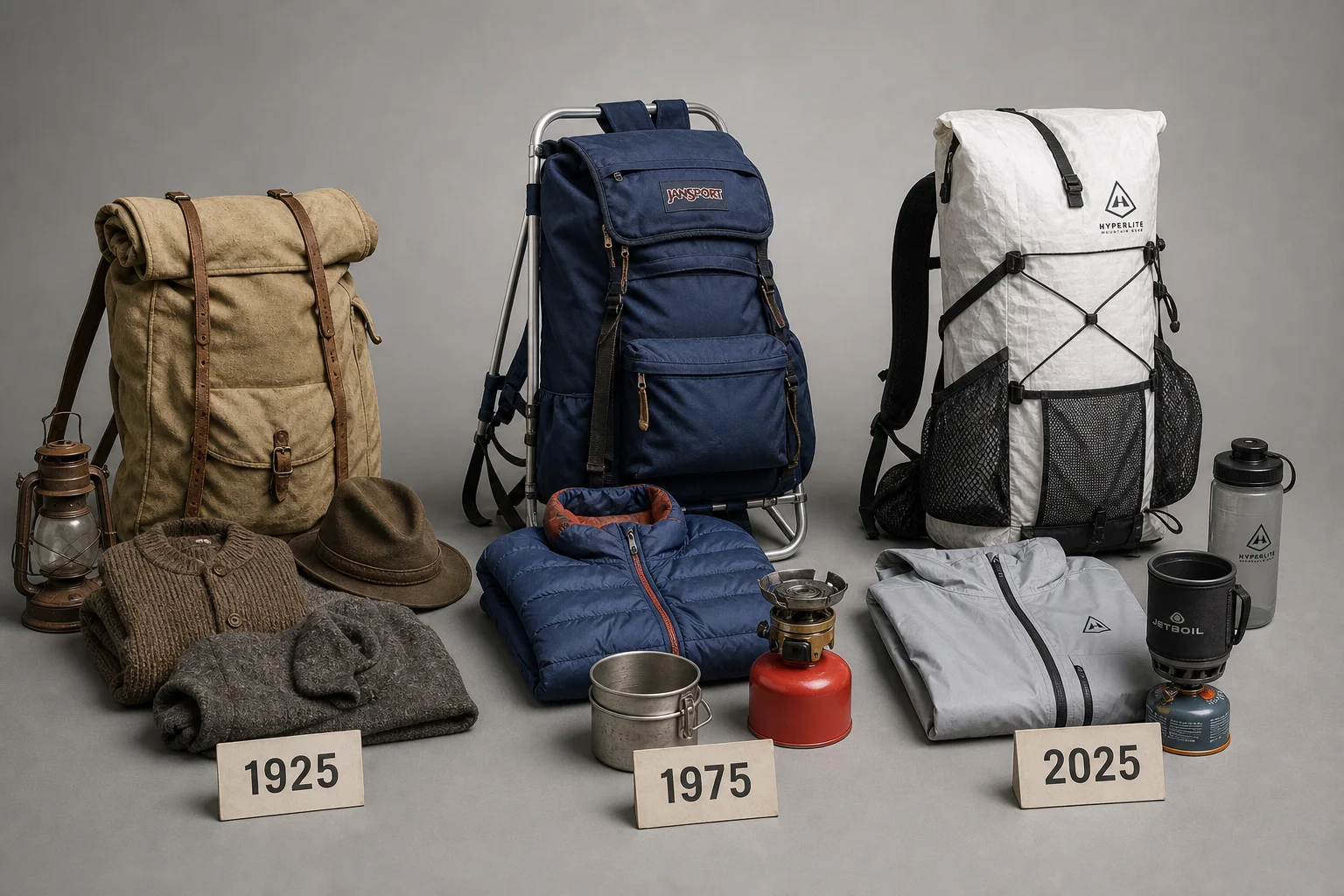
Backpacking Gear Evolution: 100 Years of Technology Compared
We tested backpacking gear from 1925, 1975, and 2025 across a three-day hike in Yosemite. Here's how technology has transformed comfort, weight, and the outdoor experience.
Outdoor Gear
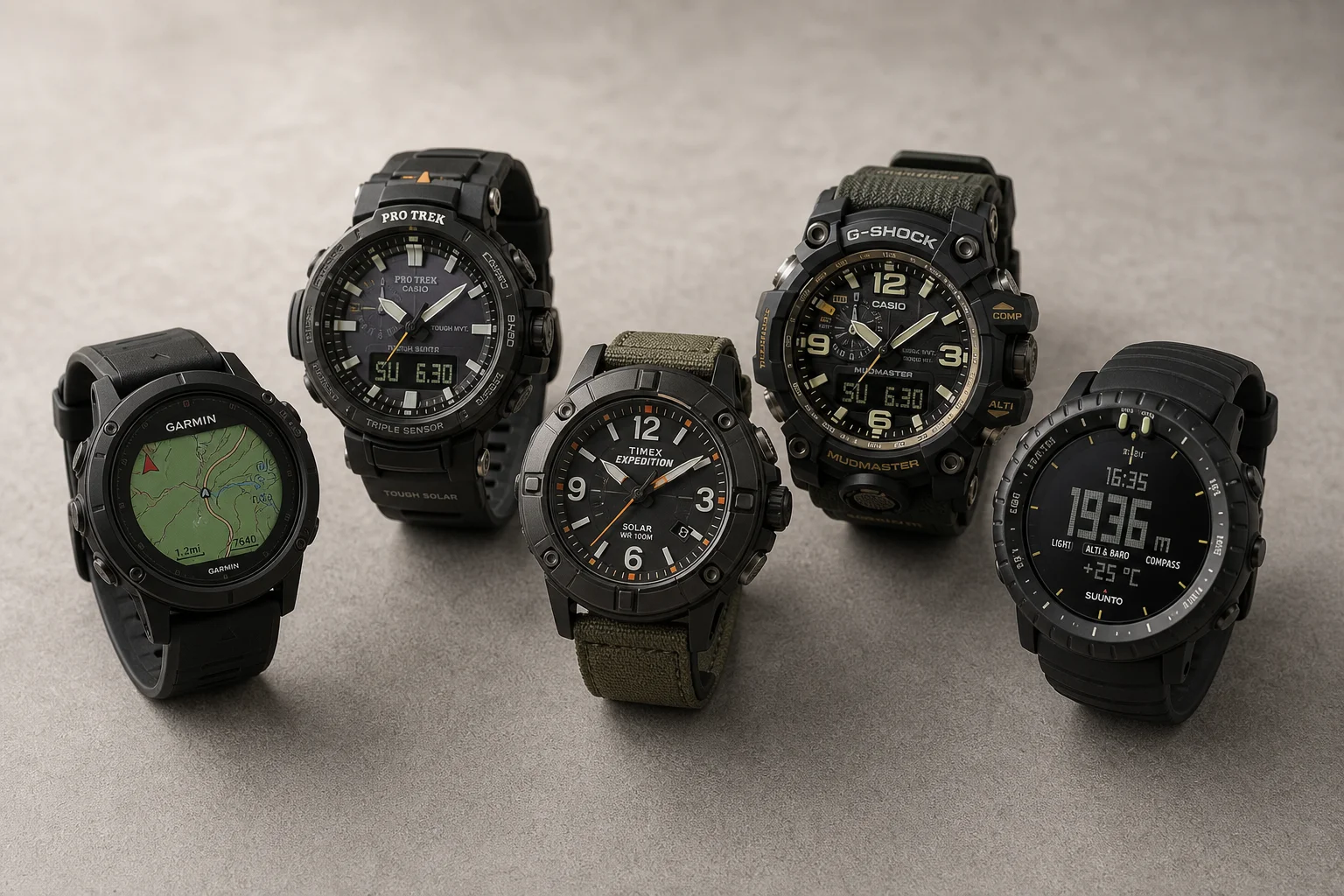
Best Affordable Hiking Watches: Five Rugged Options for Outdoor Adventures
Five durable hiking watches that balance ruggedness, functionality, and value for outdoor enthusiasts who need reliable GPS tracking and weather resistance.
Outdoor Gear
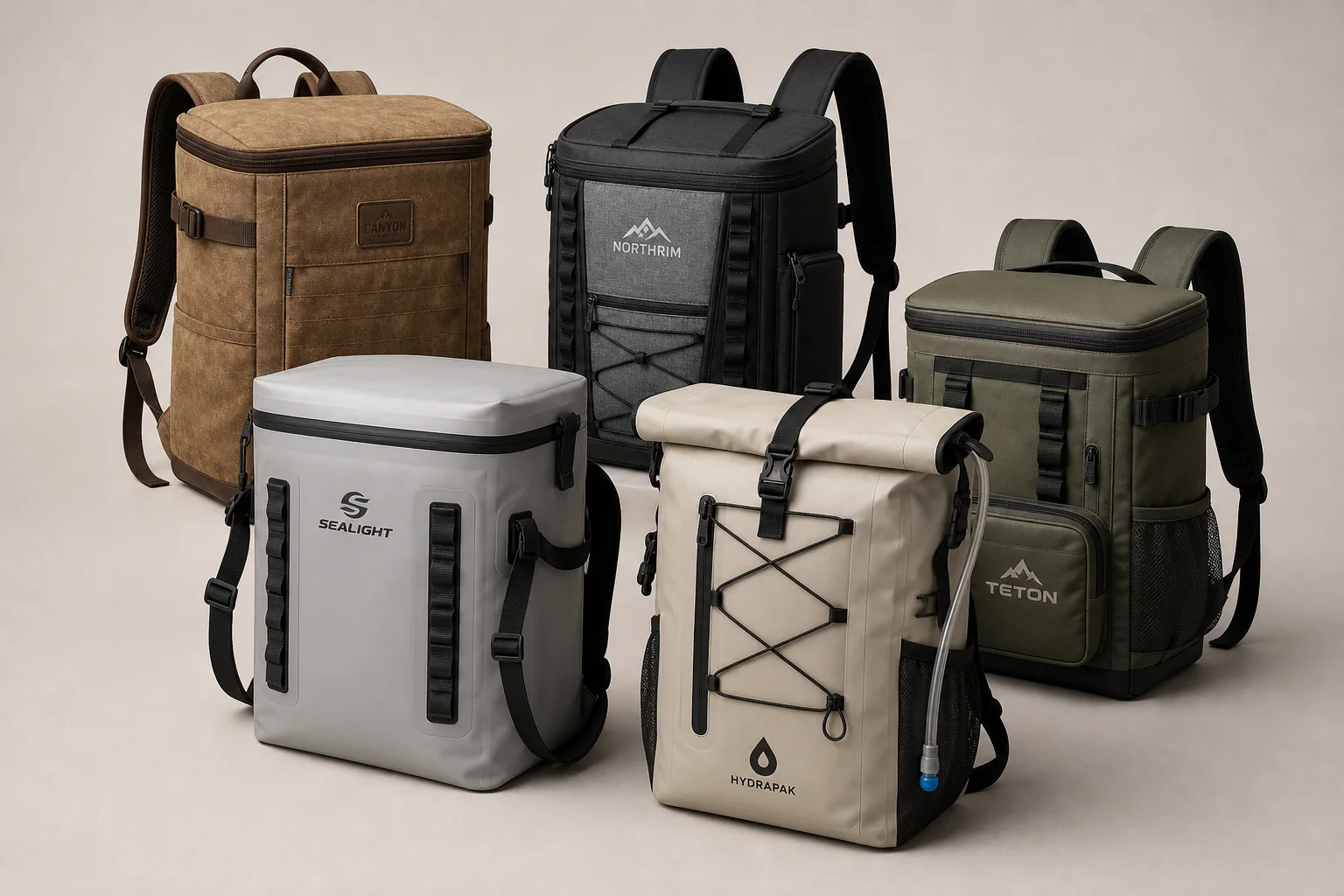
Best Backpack Coolers 2026: Five Practical Options for Outdoor Adventures
Five backpack coolers with distinct cooling capabilities, storage features, and design trade-offs to help you choose the right one for your outdoor needs.