Coffee Equipment
Best Hand Grinders 2026: Seven Premium Models Tested and Ranked
A comprehensive comparison of seven high-end hand grinders, from budget-friendly options to premium builds. Real-world testing reveals which models deliver the best grinding experience and coffee quality.
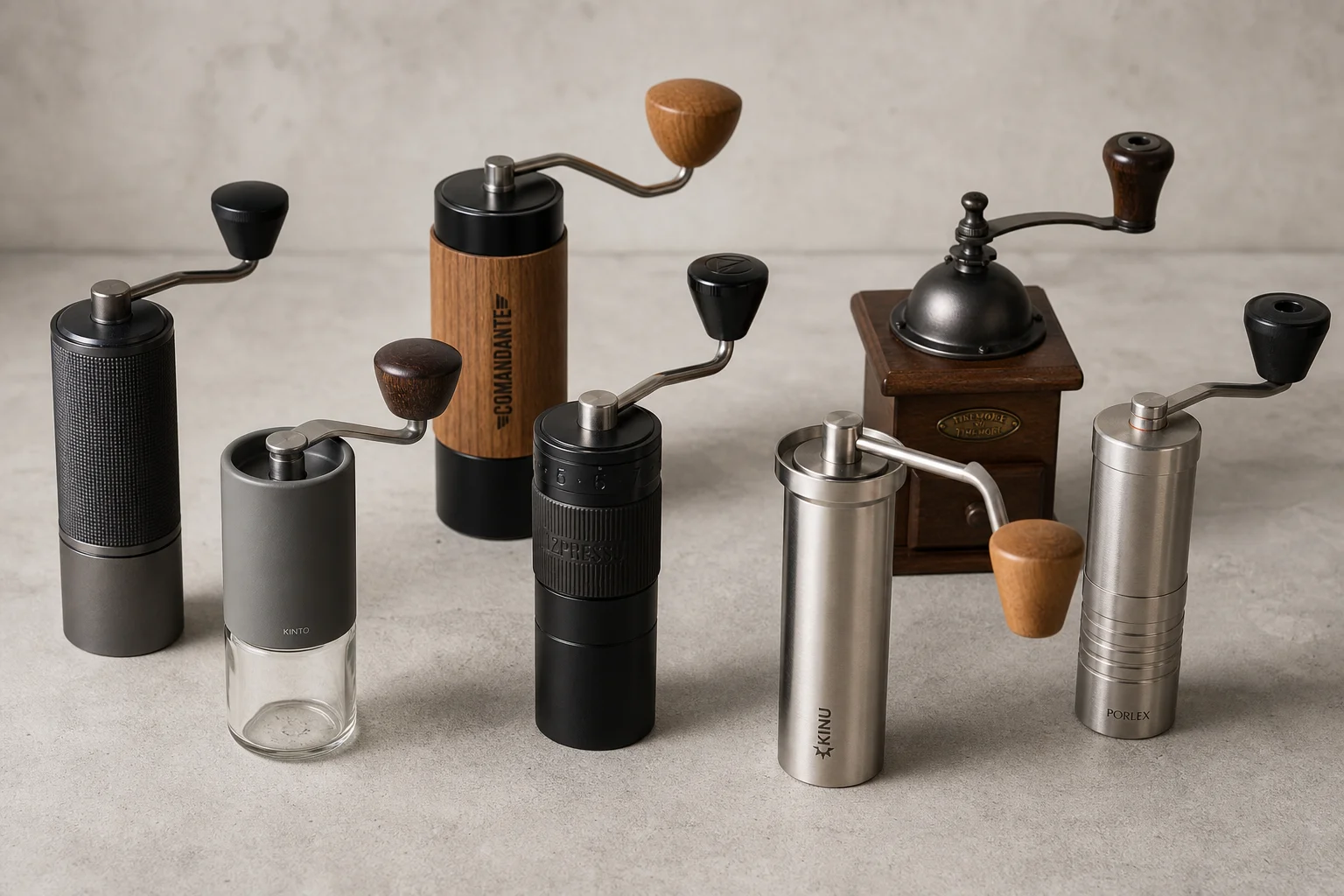
Introduction
Hand grinders have evolved from budget curiosities into serious coffee equipment. Seven models tested here represent the current landscape of premium hand grinding, from the affordable Aergrind at under 100 pounds to the precision-engineered Kinu M47 at 329 euros. This comparison covers real-world performance across espresso and filter coffee, build quality, usability, and grinding consistency.
Testing Methodology
Each grinder was dialed in for espresso across multiple coffees, with detailed notes taken throughout. For filter testing, all grinders were adjusted to extract at a 30-gram-to-500-gram water ratio, targeting approximately 21% extraction. Ground samples were analyzed using particle-distribution software to assess burr quality and consistency. This approach reveals how each grinder performs under demanding conditions and where design choices either enhance or compromise the user experience.
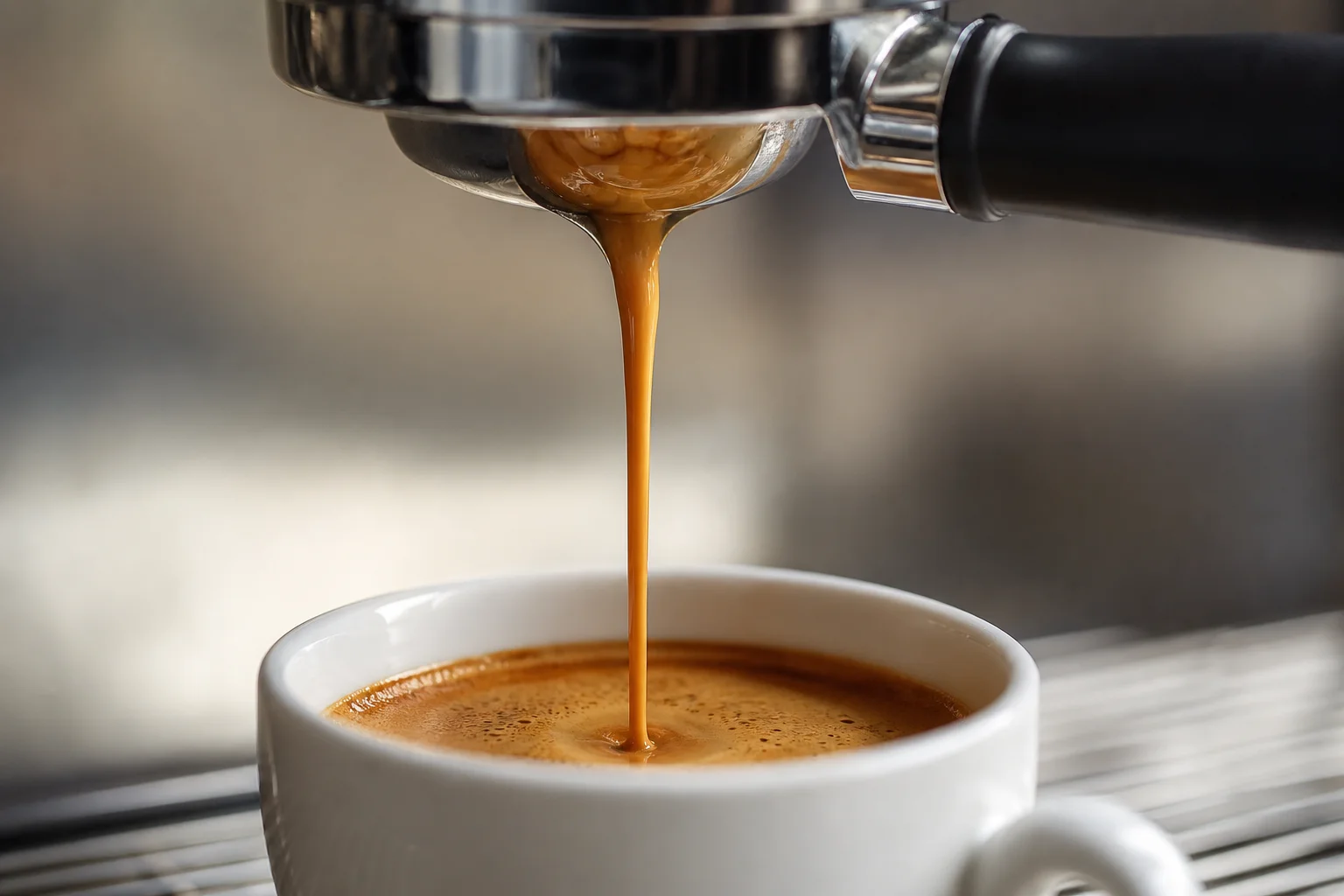
The testing process was extensive: dialing in seven hand grinders for espresso proved physically demanding and time-consuming, but necessary to understand each model’s capabilities and limitations. The results show clear differences in how each grinder handles the precision required for espresso versus the more forgiving demands of filter coffee.
Lido 3: Large Capacity, Quick Grinding
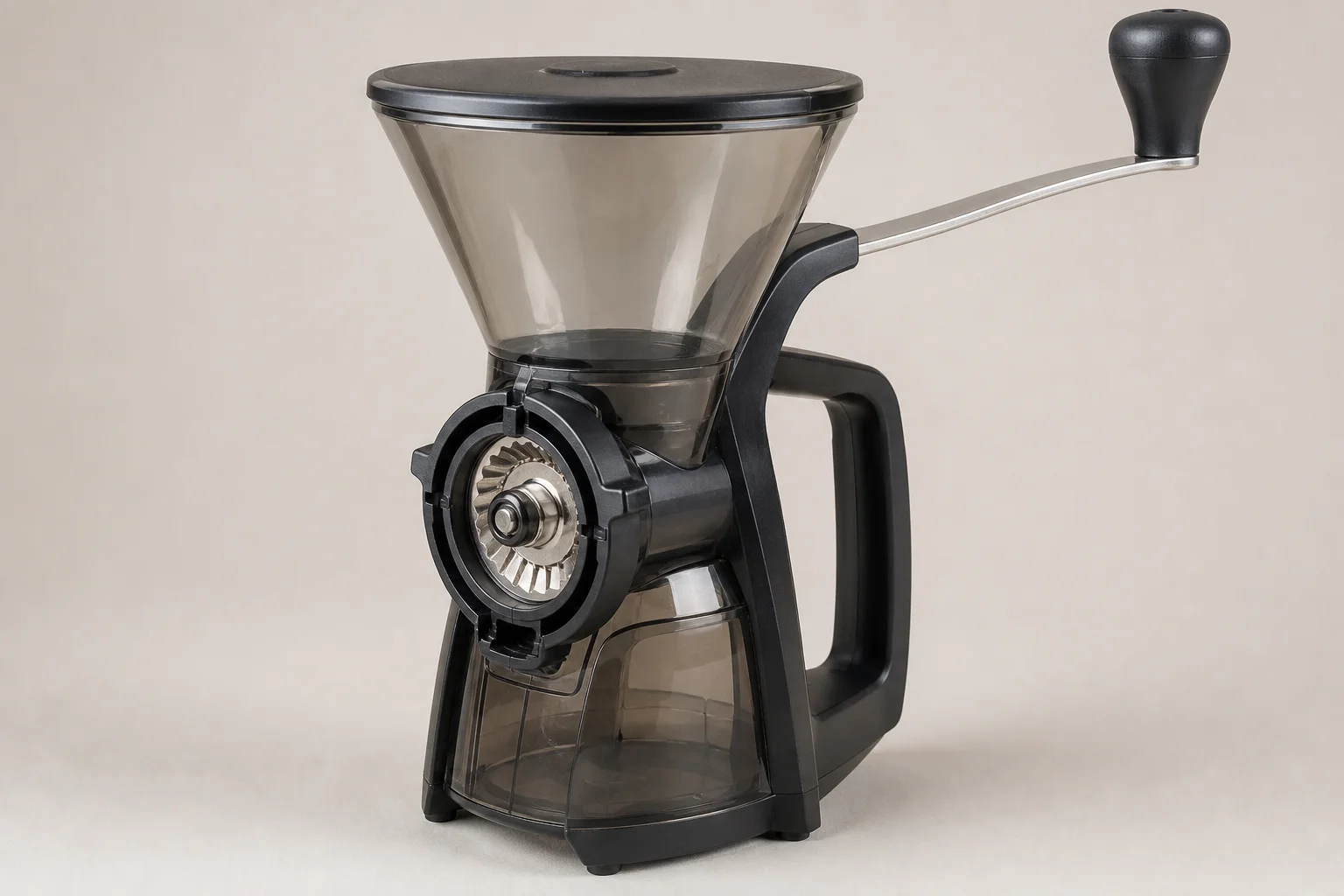
The Lido 3 from Orphan Espresso is immediately striking for its size. The large plastic body houses substantial burrs that grind quickly, which is genuinely pleasant when processing coffee. The stepless grind adjustment works via a locking ring mechanism that compresses against the adjustment dial, allowing fine control once unlocked. However, the locking action feels unintuitive and the adjustment mechanism lacks the tactile satisfaction found in other models.
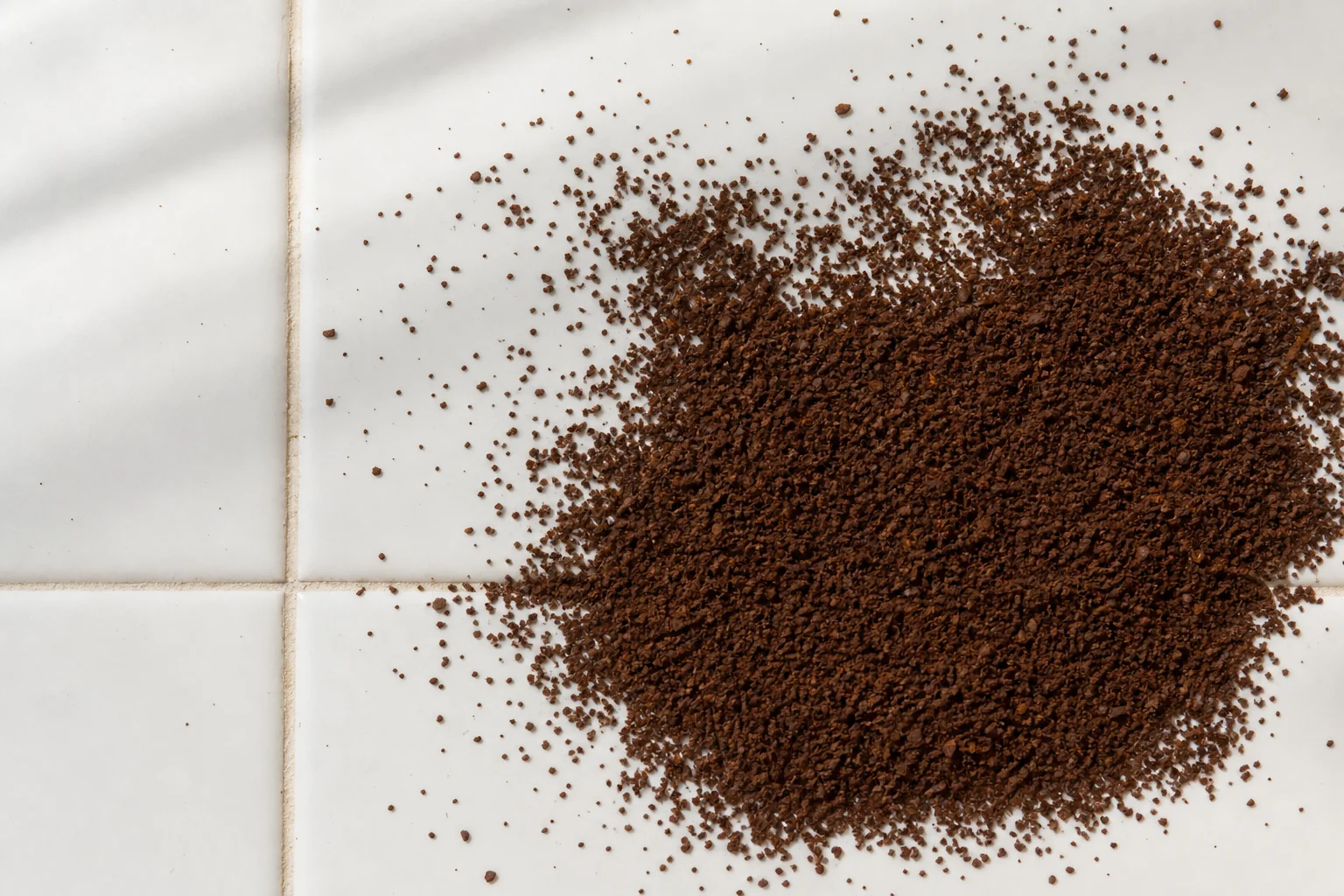
The hopper capacity is generous, easily holding 60-70 grams of beans. The bean hopper design minimizes bounce-out, a persistent problem with several competitors. Espresso shots pulled from the Lido 3 were good, though the grinder’s size and plastic construction feel less premium than the price suggests at 180 pounds. For filter coffee, it produces a pleasant cup, though dialing in requires patience. The grinder excels at speed but sacrifices the refined feel that justifies premium pricing.
Comandante C40: The Standard-Bearer
Comandante essentially created the modern premium hand grinder category. The C40 feels exceptionally well-made, with a beautiful aesthetic and solid construction. The main drawback is the plastic piece connecting the crank handle to the lid, which feels cheap relative to the rest of the grinder. The stepped grind adjustment is straightforward, though the stabilizing point sits high enough to cause occasional bean bounce-out.
The glass collection chamber is unique among these models, which creates a minor concern: breakability. While durability is generally good, the glass chamber adds fragility to a tool you might travel with or store in a bag. The espresso from the Comandante was excellent, arguably the best shot produced during testing. Filter coffee is equally impressive, with the stepped adjustment providing sufficient control for dialing in. The grind analysis shows consistent particle distribution. At its price point, the Comandante remains a gold standard, though newer competitors now challenge its dominance.
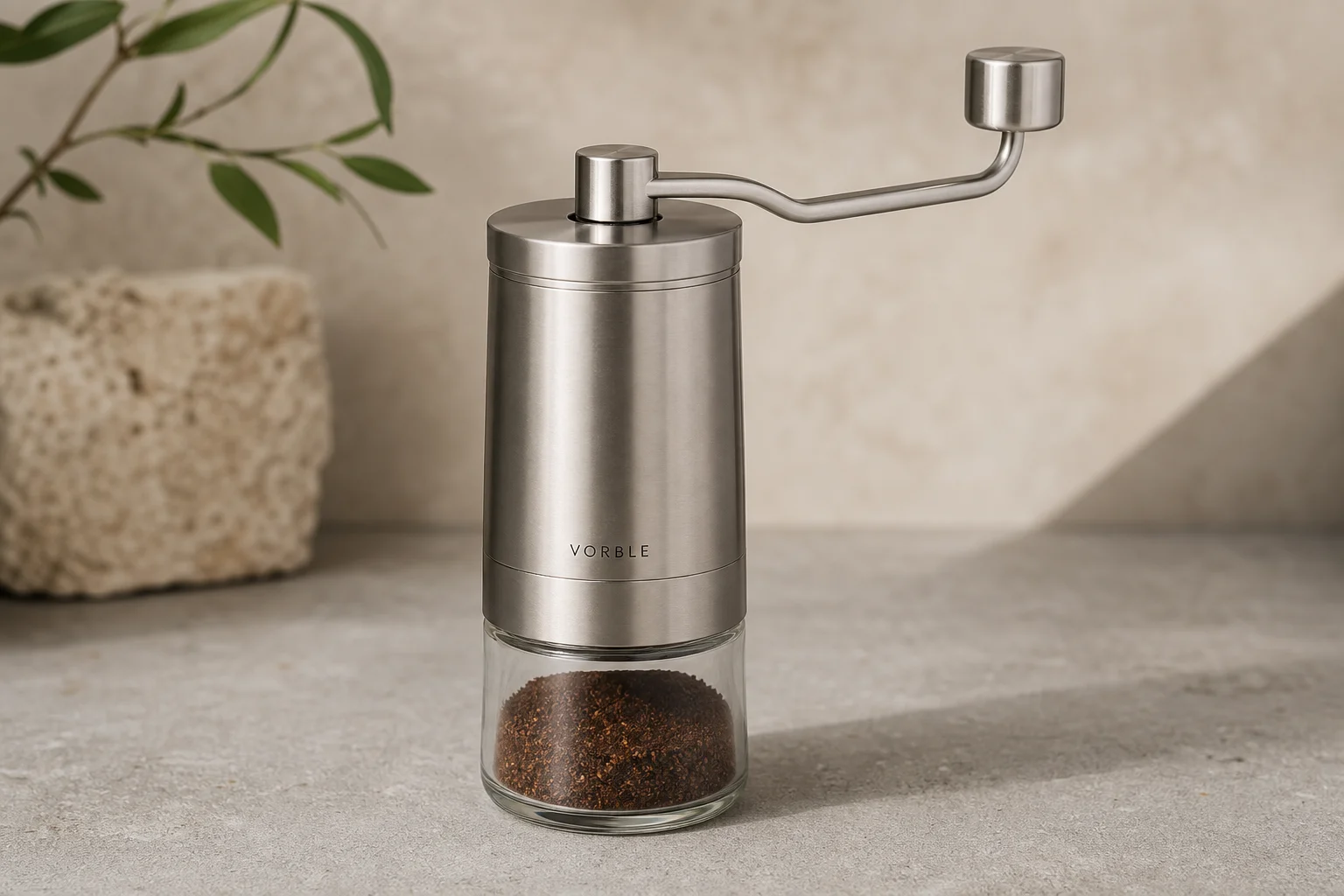
Helor 101: Beautiful Engineering
The Helor 101 is a beautifully machined grinder with a unibody metal design that feels premium throughout. The lid is integrated into the handle as a single milled piece, creating a cohesive aesthetic. The stepless grind adjustment at the base is intuitive and responsive. The friction-fit grounds bin is solid and secure.
However, the stabilizing piece sits relatively high, causing minor bean bounce-out during loading. More frustratingly, the grounds collection bin sometimes sticks during grinding and refuses to spin freely, though this improves with use, suggesting a fit tolerance issue. The Helor 101 produces good espresso and excellent filter coffee, with grind analysis showing solid performance. It performs well across all metrics but lacks the standout quality that would make it a clear winner. For those prioritizing aesthetics and overall build quality, it remains a strong choice.
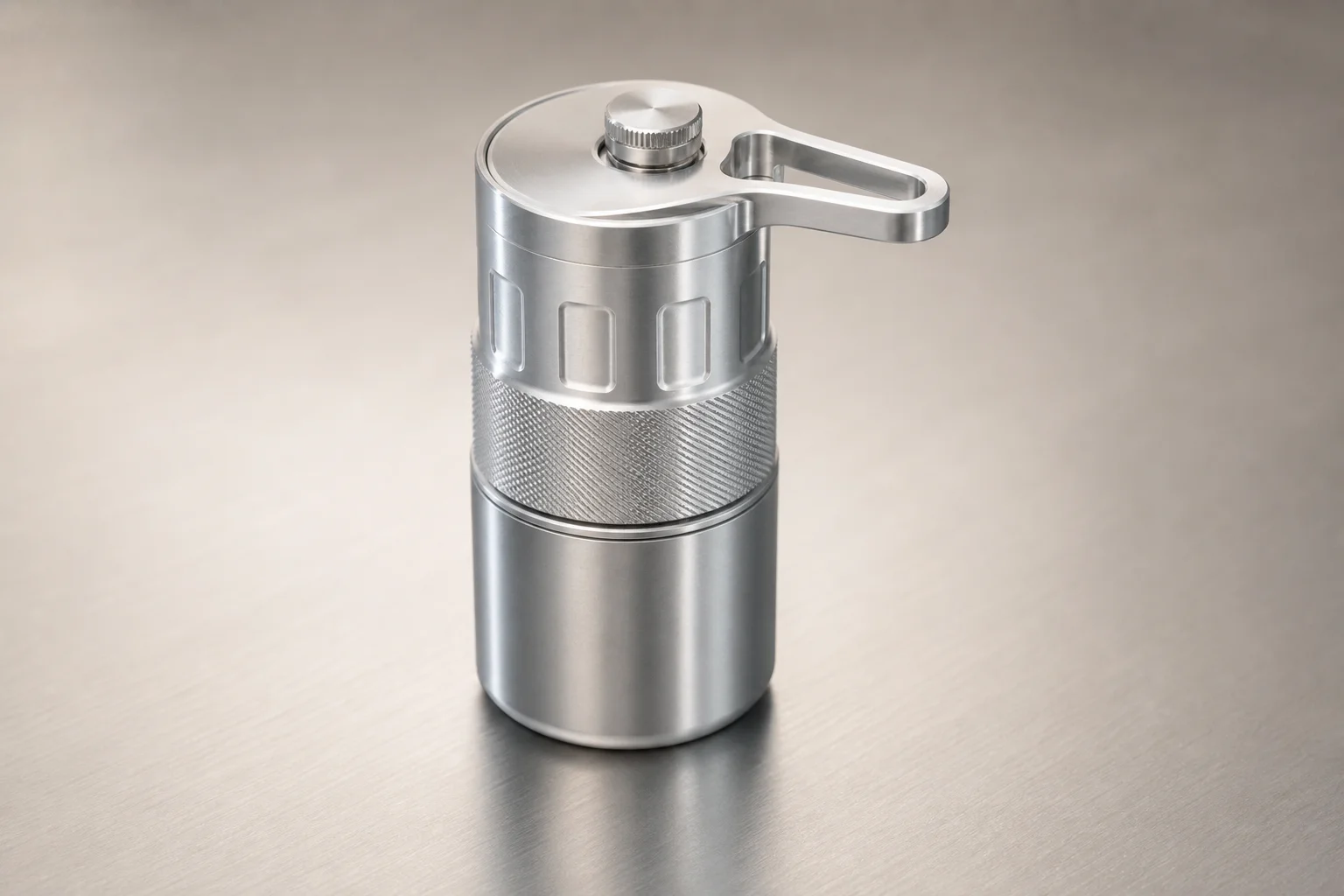
Timemore Chestnut: Speed Over Refinement
The Timemore Chestnut grinds exceptionally quickly, which is genuinely enjoyable. However, several design choices undermine the experience. The wooden base option (the premium version) feels wrong to grind into, creating an unsettling sensation that’s difficult to articulate but impossible to ignore. The magnetic connection between the handle and base is weak, causing the handle piece to detach during grinding, which is irritating and breaks the flow of use.
The stepped grind adjustment has very large steps, making espresso dialing-in difficult and imprecise. The connection between the base and main body uses ball bearings and springs that are easy to disconnect if you hold the grinder with both hands, creating an unpleasant grinding experience. While the filter coffee is decent, the espresso is mediocre. The grind quality is good but not exceptional. The Timemore Chestnut prioritizes grinding speed over refinement, and the design compromises make it frustrating to use regularly.
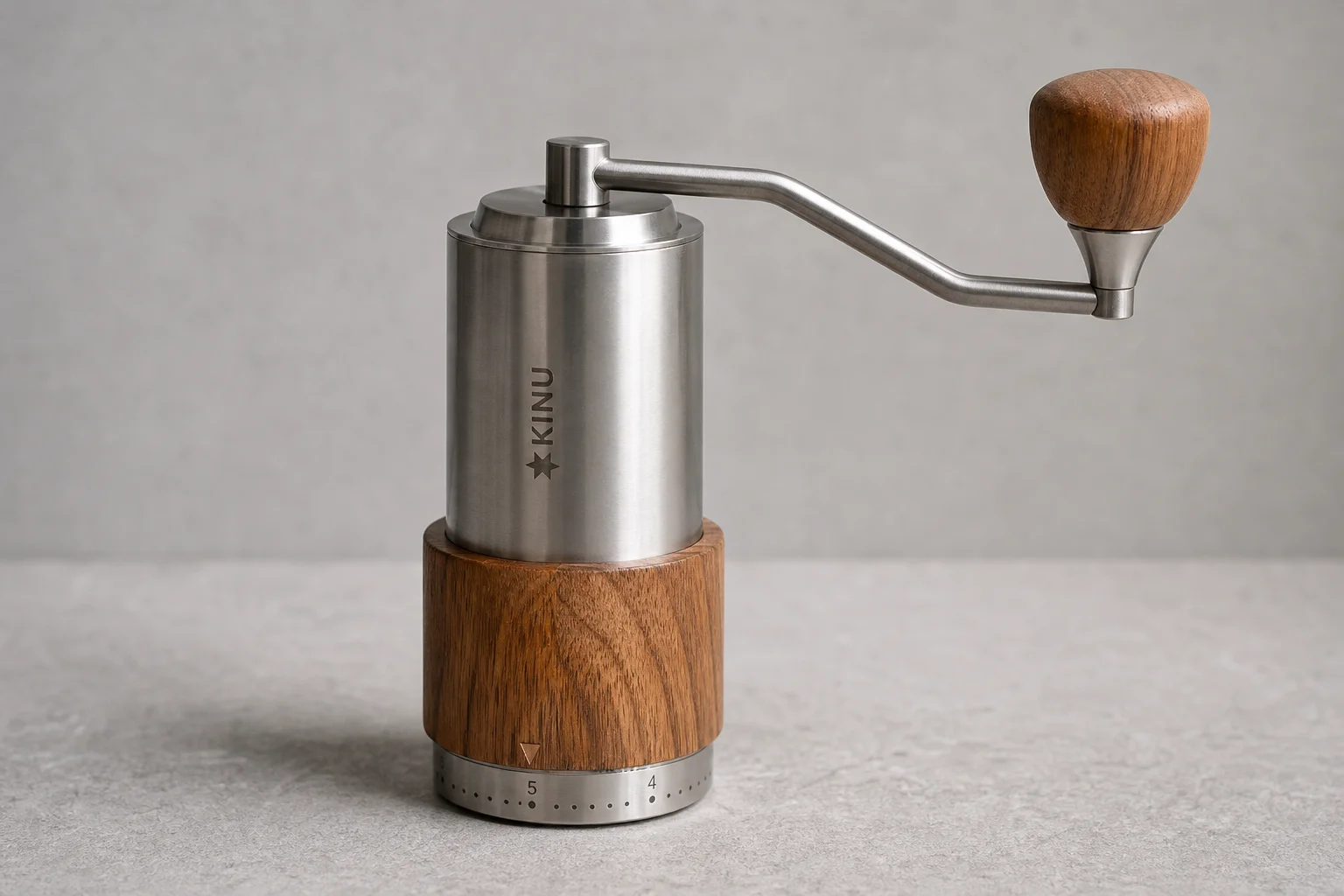
Aergrind: Exceptional Value
At 99 pounds, the Aergrind from Knock is easily the cheapest grinder here, yet it delivers remarkable value. The grind adjustment is unconventional: you hold the lid and move the handle to adjust the burr setting via numbered markers. This feels counterintuitive at first, but it works reliably with no slippage. The stabilizing piece sits low, eliminating bean bounce-out entirely. Loading is a pleasure.
The friction-fit grounds bin is secure, sometimes almost too secure, requiring effort to remove. The Aergrind struggles with espresso, offering a narrow window between too coarse and too fine. The hopper capacity is small, requiring two loads for 30-gram filter doses. However, for filter coffee, the Aergrind is very good, and at this price, it represents outstanding value. The grind quality is respectable, and the compact size is practical for travel. If this grinder had competed in budget testing, it would have dominated.
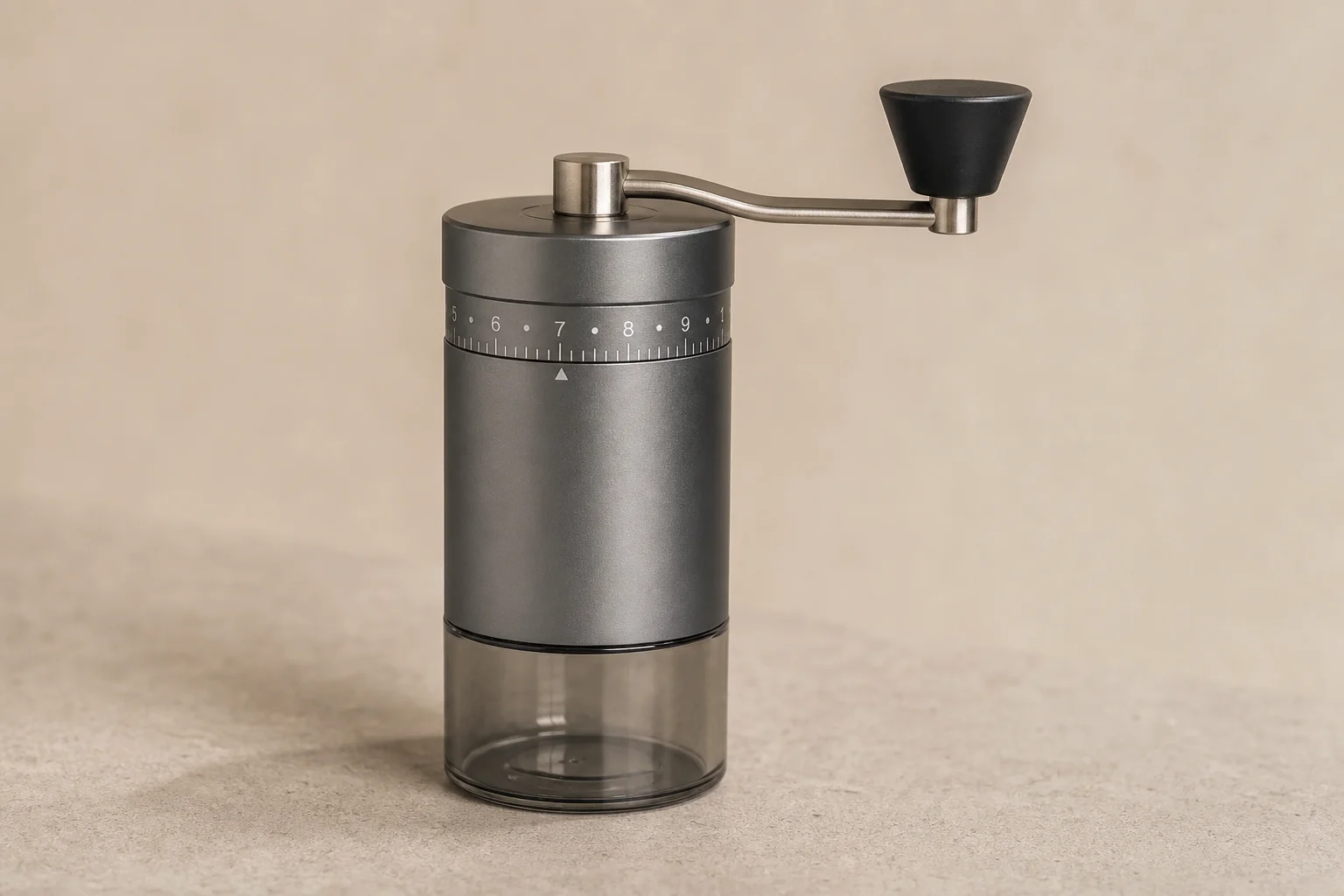
Timemore Chestnut: Fast Grinding, Stability Concerns
The Timemore Chestnut grinds exceptionally quickly, which is genuinely enjoyable. However, several design choices undermine the experience. The wooden base option (the premium version) feels wrong to grind into, creating an unsettling sensation. The magnetic connection between the handle and base is weak, causing the handle piece to detach during grinding.
The stepped grind adjustment has very large steps, making espresso dialing-in difficult. The connection between the base and main body uses ball bearings and springs that are easy to disconnect if you hold the grinder with both hands. While the filter coffee is decent, the espresso is mediocre. The Timemore Chestnut prioritizes grinding speed over refinement, and the design compromises make it frustrating to use regularly.
View more details for Timemore Chestnut
Kinu M47: Premium Build and Usability
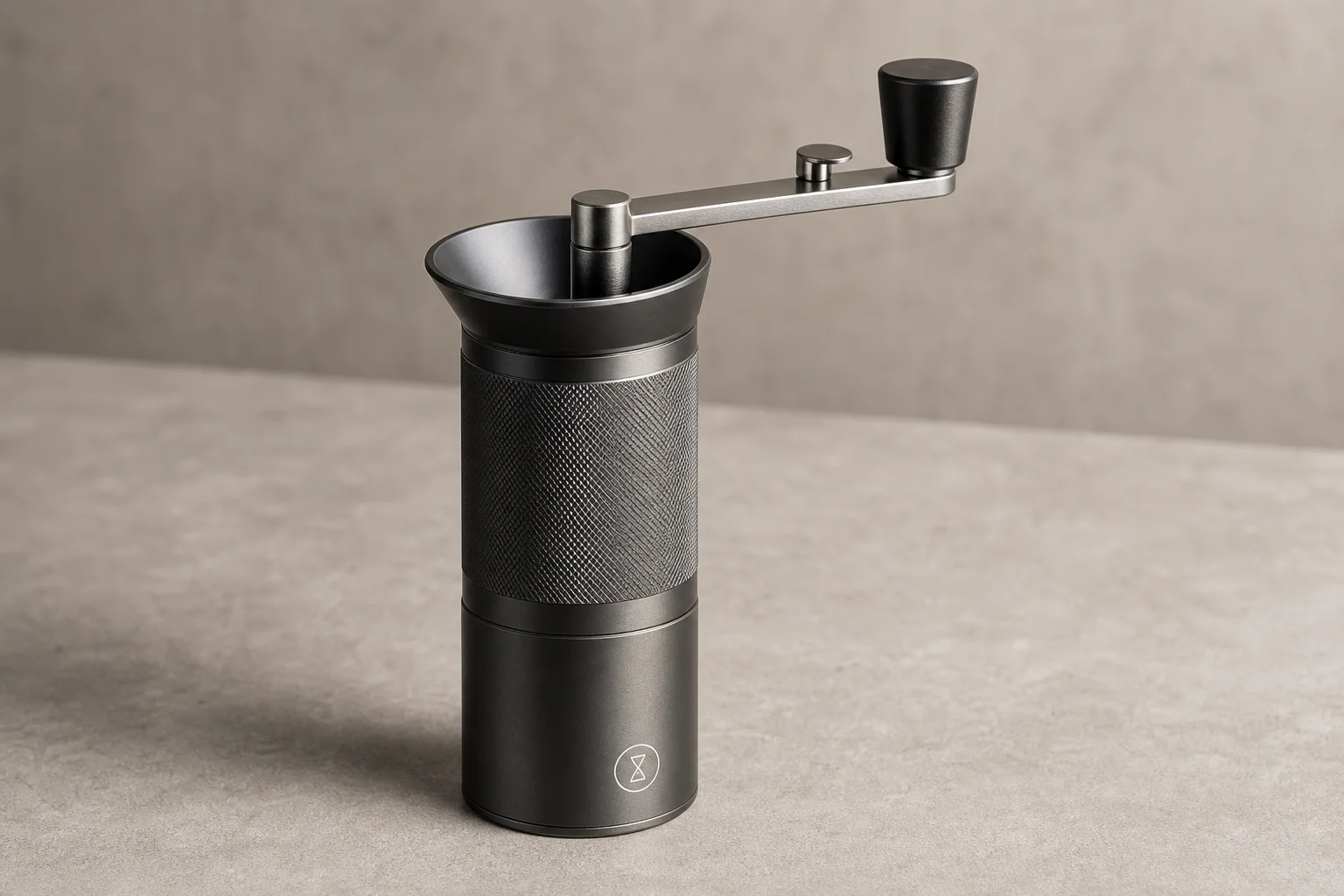
The Kinu M47 is the most expensive grinder tested at 329 euros, and it justifies the premium through exceptional build quality and thoughtful design. The grinder is substantially heavier than competitors, built like a tank with precision engineering throughout. There is no lid, but instead a clever lip and half-funnel design that makes loading an absolute pleasure. Bean bounce-out is eliminated entirely despite the small opening.
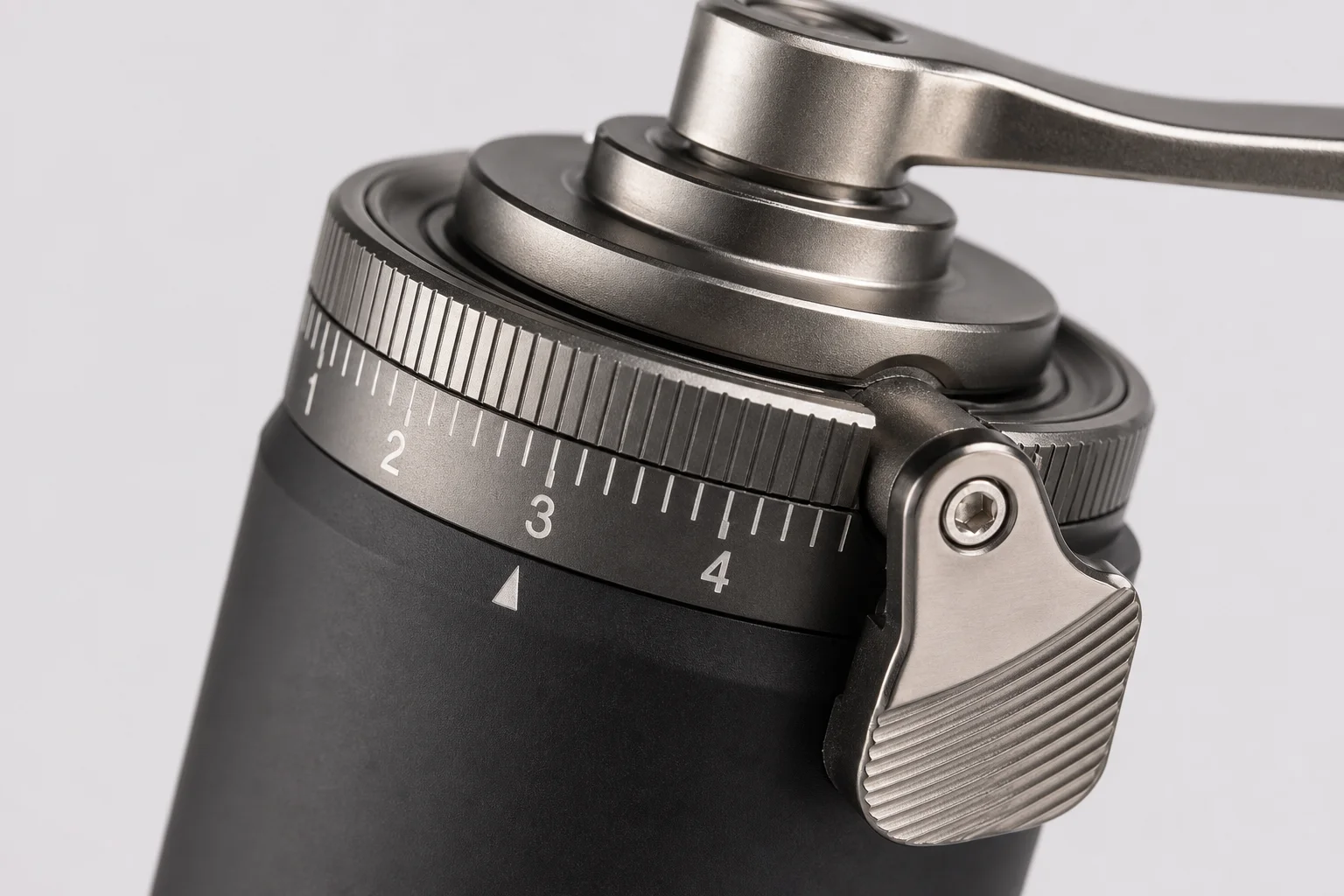
The grind adjustment is particularly clever: Kinu specifies that each step moves the burrs by 1/100th of a millimeter, providing precise control with clear reference points. The locking mechanism is simple and intuitive. A nice thumb stop on the handle makes grinding comfortable and prevents slippage. The magnetically attached base is secure and well-designed, never shifting during grinding.
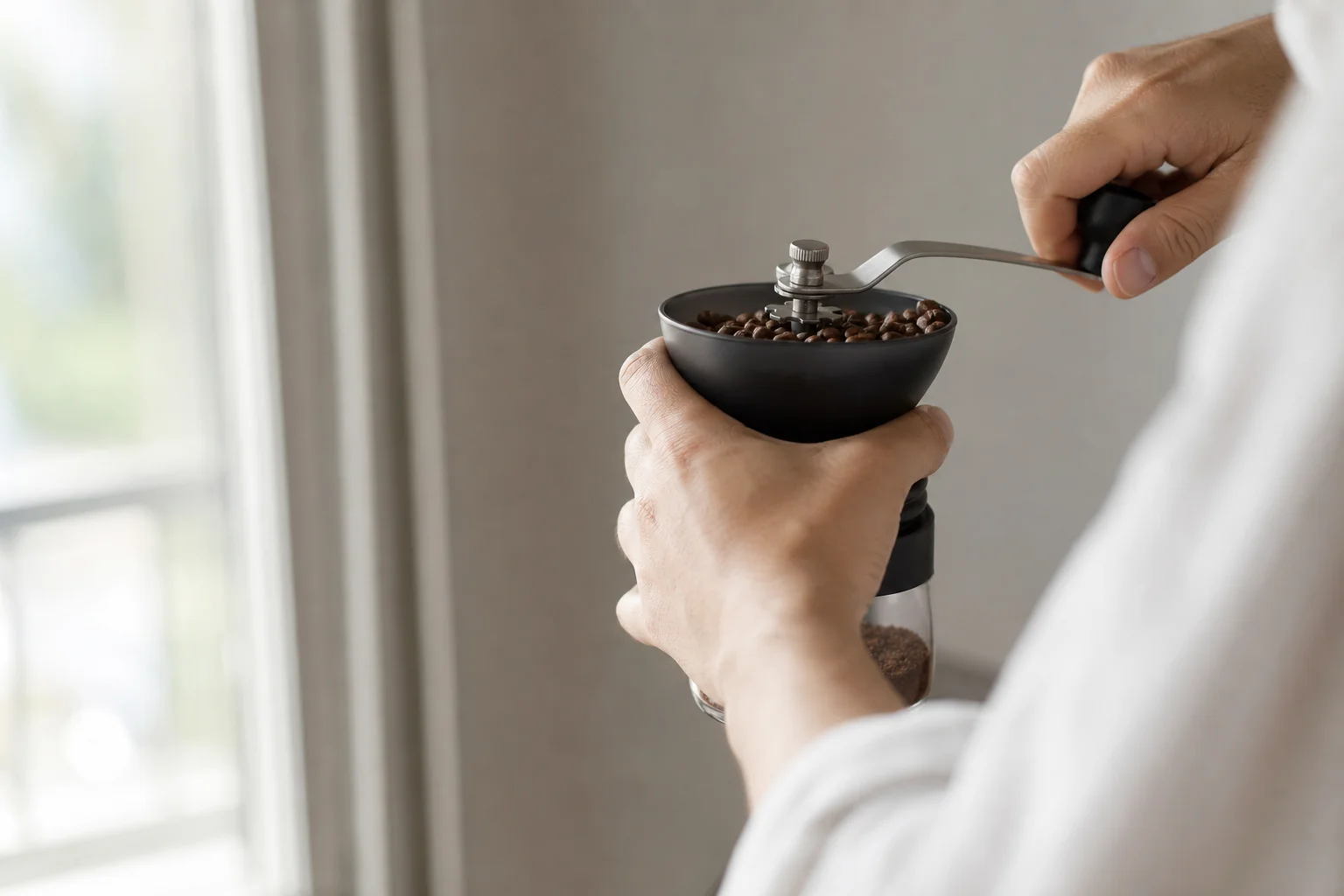
The capacity is modest but adequate. The grinding action feels beautiful, and the overall usability experience is exceptional. Espresso from the Kinu M47 is excellent, with some testers rating it the best shot produced. Filter coffee is very good, and grind analysis shows solid performance. The primary drawback is weight, which limits its appeal as a travel grinder. Despite the high price, the Kinu M47 delivers on every front: build quality, usability, design, and cup quality. This is the grinder most worth keeping.
Porlex Mini: Budget Baseline
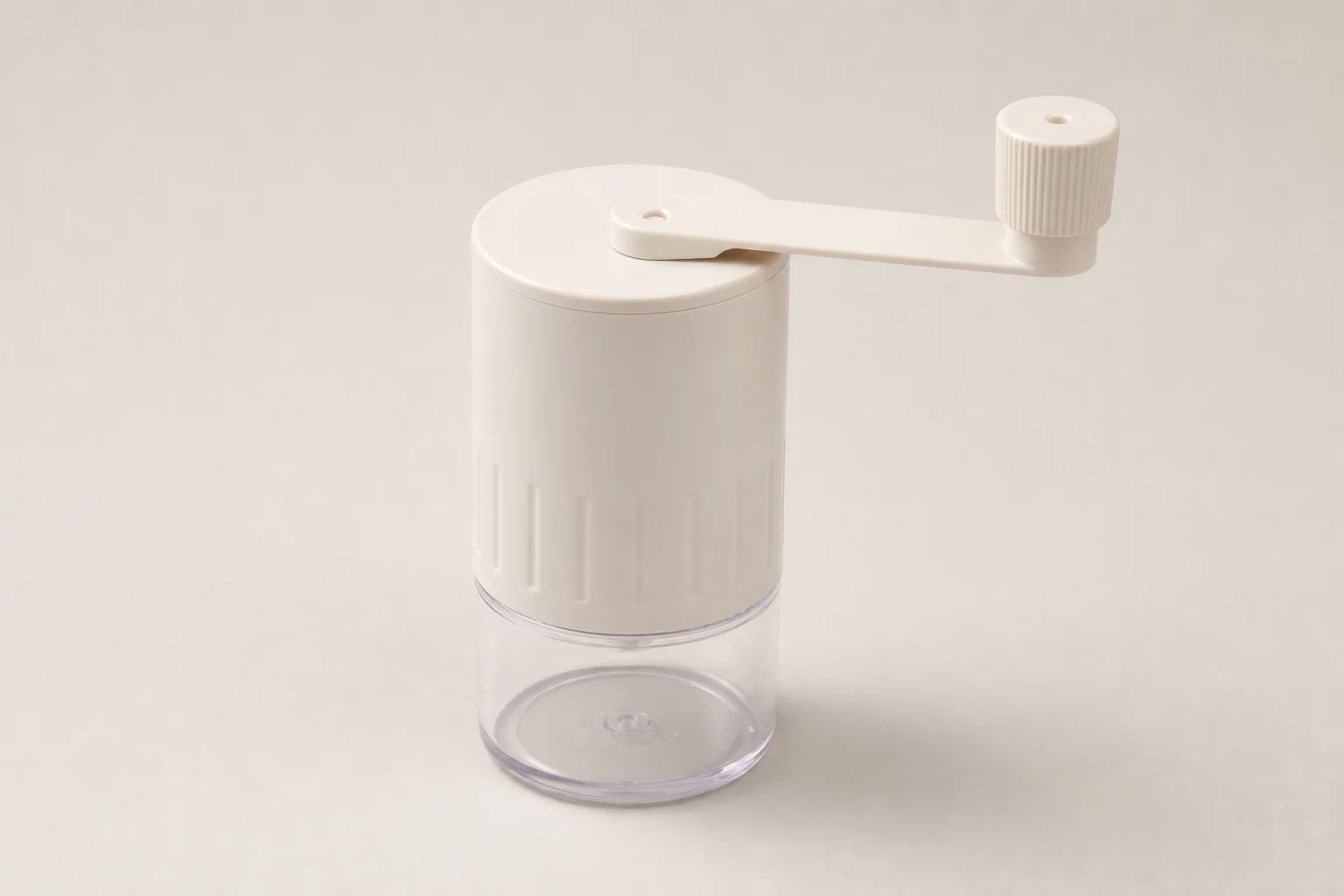
The Porlex Mini, included from previous budget testing, feels like a toy compared to these premium models. The material gauge is light, the construction feels plasticky, and the overall quality gap between this and the Aergrind is substantial despite a modest price difference of around 40 pounds. Dialing in for espresso is difficult, and the resulting shots are noticeably worse than every other grinder tested.
Filter coffee from the Porlex Mini is muddier and dustier, lacking the clarity of better grinders. At 57 pounds, it is not bad value for money, but it is simply not in the same league as the other models. The grinding action sounds and feels cheap in comparison. For anyone considering hand grinding, the Aergrind at 99 pounds is a far better investment.
Overall Recommendations
If you already own one of these six grinders, upgrading is rarely justified. The returns diminish significantly once you’ve invested in quality equipment. Each of these models represents a good hand grinder, and the differences between them are refinements rather than revolutionary improvements.
For espresso, the Comandante C40 and Kinu M47 stand out. The Comandante offers excellent results at a lower price point, while the Kinu M47 provides superior usability and build quality if budget allows. For filter coffee, the Helor 101, Comandante C40, and Kinu M47 all excel. The Aergrind punches well above its weight at 99 pounds and is the best budget option by a significant margin.
The Kinu M47 emerges as the overall winner, not necessarily for particle uniformity alone, but for the complete package: fit, finish, build quality, usability, and cup quality. It is the grinder most worth wanting to use, which matters more than marginal performance differences.
Conclusion
Hand grinder quality has reached a point where even budget options deliver respectable results. The choice between these models depends on your priorities: budget-conscious buyers should consider the Aergrind, espresso enthusiasts should lean toward the Comandante C40 or Kinu M47, and those valuing overall experience and build quality should invest in the Kinu M47. Each grinder tested here represents a genuine improvement over entry-level options, and choosing among them is a matter of matching your specific needs and preferences to the strengths of each model.
Further reading
Related Reviews
Coffee Equipment
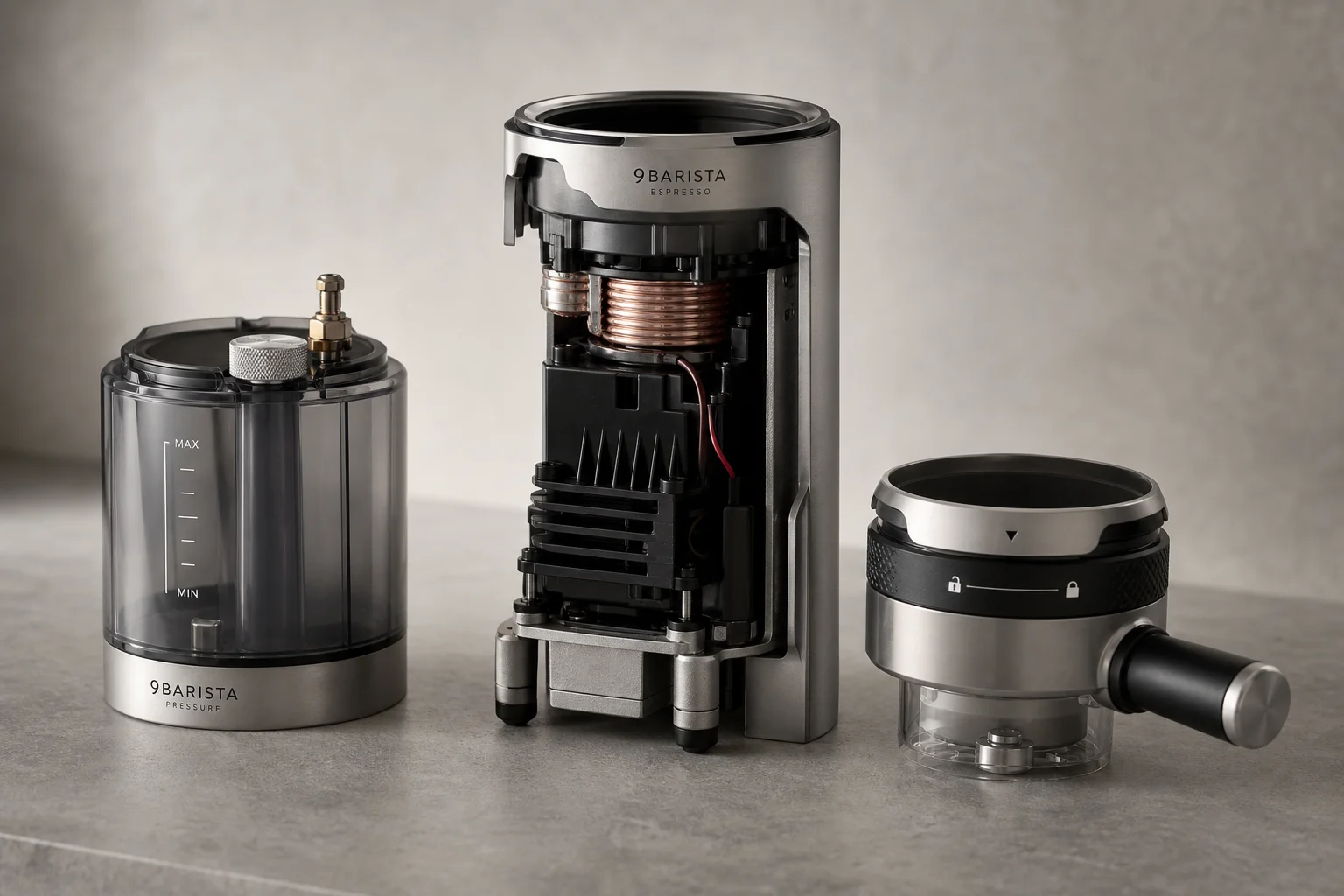
9Barista Espresso Machine Review: Stovetop Espresso for Single-Cup Enthusiasts
A cleverly engineered stovetop espresso maker that generates nine bars of pressure without electricity. Excellent coffee quality, but requires patience and suits solo drinkers only.
Coffee Equipment
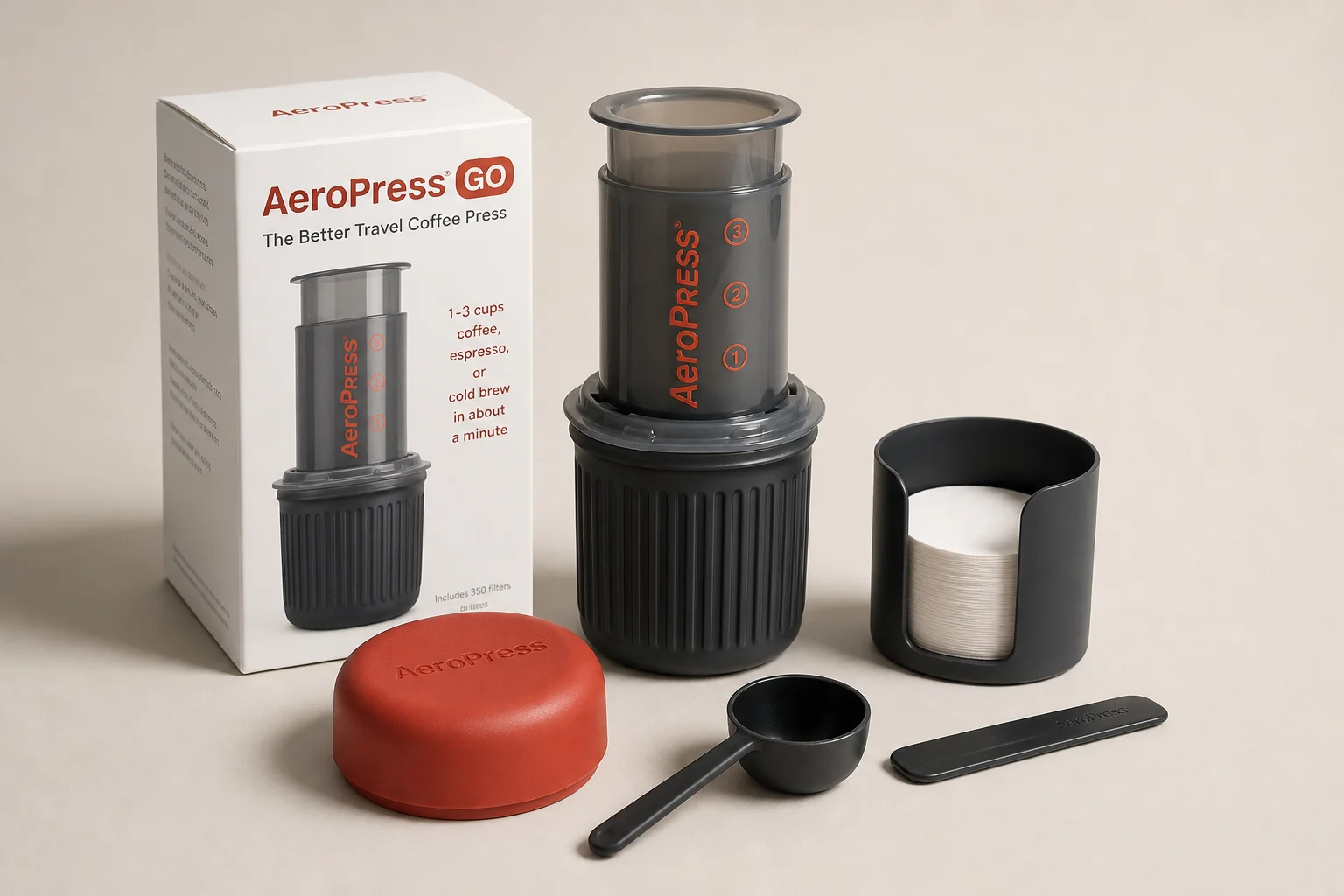
Aeropress Go Review: A Compact Travel Brewer That Solves One Specific Problem
The Aeropress Go shrinks the original design and adds an integrated cup, but it may not address the travel challenges most coffee enthusiasts actually face.
Coffee Equipment
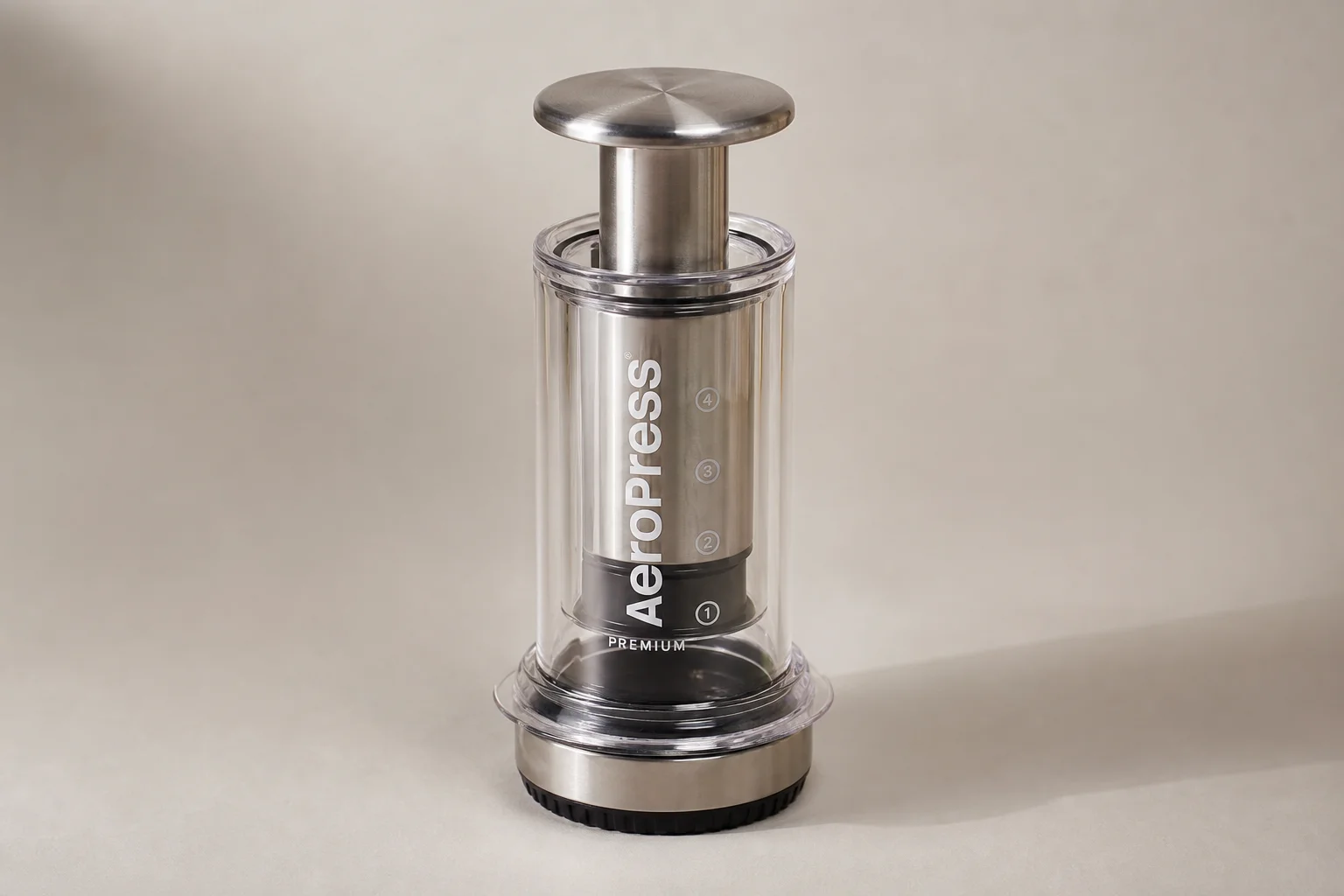
AeroPress Premium Review: Premium Materials, Practical Trade-offs
The AeroPress Premium brings glass and metal construction to a beloved brewer, but trades portability and durability for a more refined feel. Here's what changes in the cup and what matters before you buy.