Running Shoes
3 Running Shoes With Real Forefoot Stability: New Balance 860 v14, Mount to Coast P1, and Puma ForeverRun Nitro
Most stability shoes focus on the heel and midfoot. These three models actually address the forefoot, each with a different approach worth understanding before you buy.
Introduction
Most stability shoes on the market concentrate their support in the heel and midfoot. Sidewalls, posts, and geometry changes tend to live in the back half of the shoe, while the front half often gets left behind, sometimes helped only by a stiffening agent or an aggressive rocker.
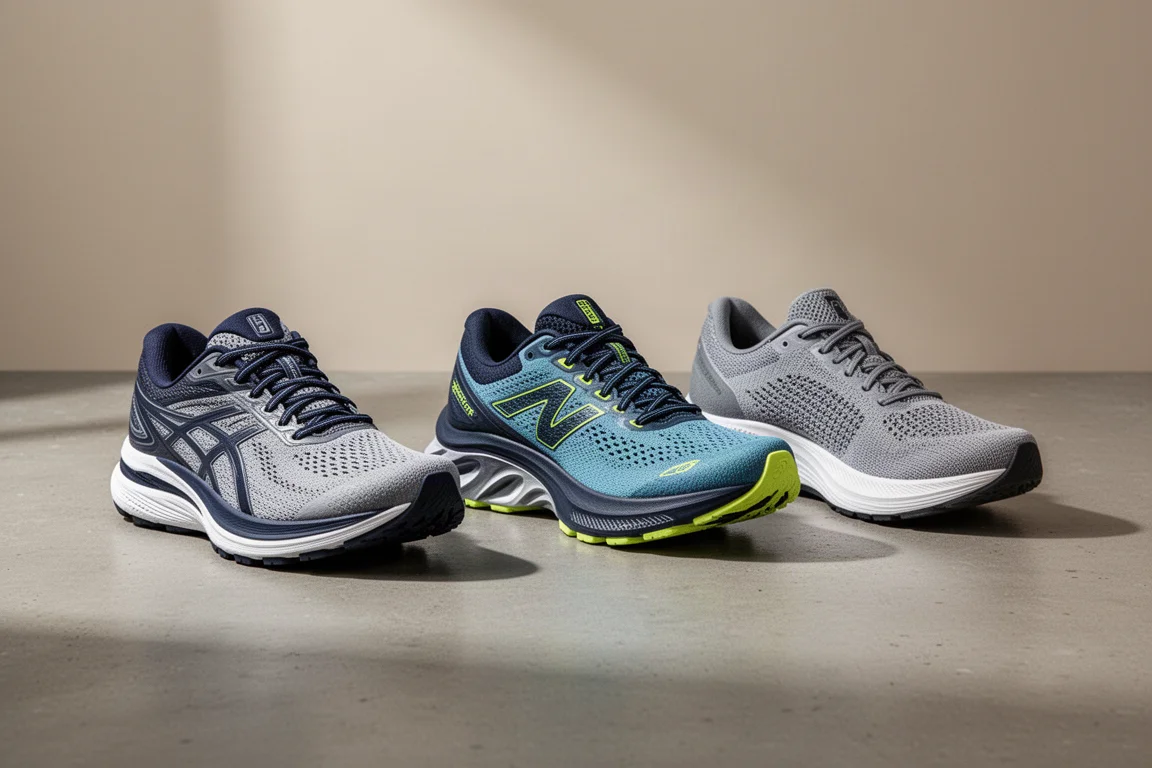
That works for many runners, but it may not be enough if your forefoot collapses inward side to side and you need real control in that area. A small group of models provides genuine forefoot stability methods, and three of them stand out: the New Balance 860 v14, the Mount to Coast P1, and the Puma ForeverRun Nitro.
Who These Shoes Are For
One important note before comparing them: all three of these shoes address medial forefoot stability, not lateral. They are designed to hold up the inner part of the forefoot, near the first metatarsal, where many runners collapse as they toe off.
If you tend to roll too far toward the outside of your forefoot and toe off excessively on the fifth metatarsal, these are not good options. They would push you further in that lateral direction. But if the inner edge of your forefoot collapses and you need something that helps hold you up so you can roll forward and toe off properly, all three deserve a look.
Why Forefoot Stability Matters
When the inner forefoot collapses mid-stride, energy leaks out of your toe off and the motion can contribute to discomfort over long miles. A shoe that brings the ground up to meet that collapsing side, or gives it a firmer structure to roll into, keeps the foot supported through the entire gait cycle.
It can be especially helpful for runners with an elevated first ray or first metatarsophalangeal joint, where the front of the foot sits slightly higher on one side.
Specs at a Glance
In men’s size 9 (women’s size 10.5 equivalent), here is how the three compare:
- New Balance 860 v14: 10.5 oz (about 298 g), 38 mm heel / 30 mm forefoot, 8 mm drop
- Mount to Coast P1: 9.9 oz (about 280 g), 37 mm heel, 10 mm drop
- Puma ForeverRun Nitro: 9.6 oz (about 274 g), 36 mm heel / 26 mm forefoot, 10 mm drop
The 860 is the heaviest of the group but also has the lowest drop. The ForeverRun Nitro is the lightest. The P1 sits between them and is the only one of the three with a PE-based foam.
How Each Shoe Builds Forefoot Stability
The 860 and the ForeverRun Nitro both use a wedge design. The inner, medial part of the forefoot is raised slightly above the lateral side, giving collapsing runners something to fall into that is already holding them up.
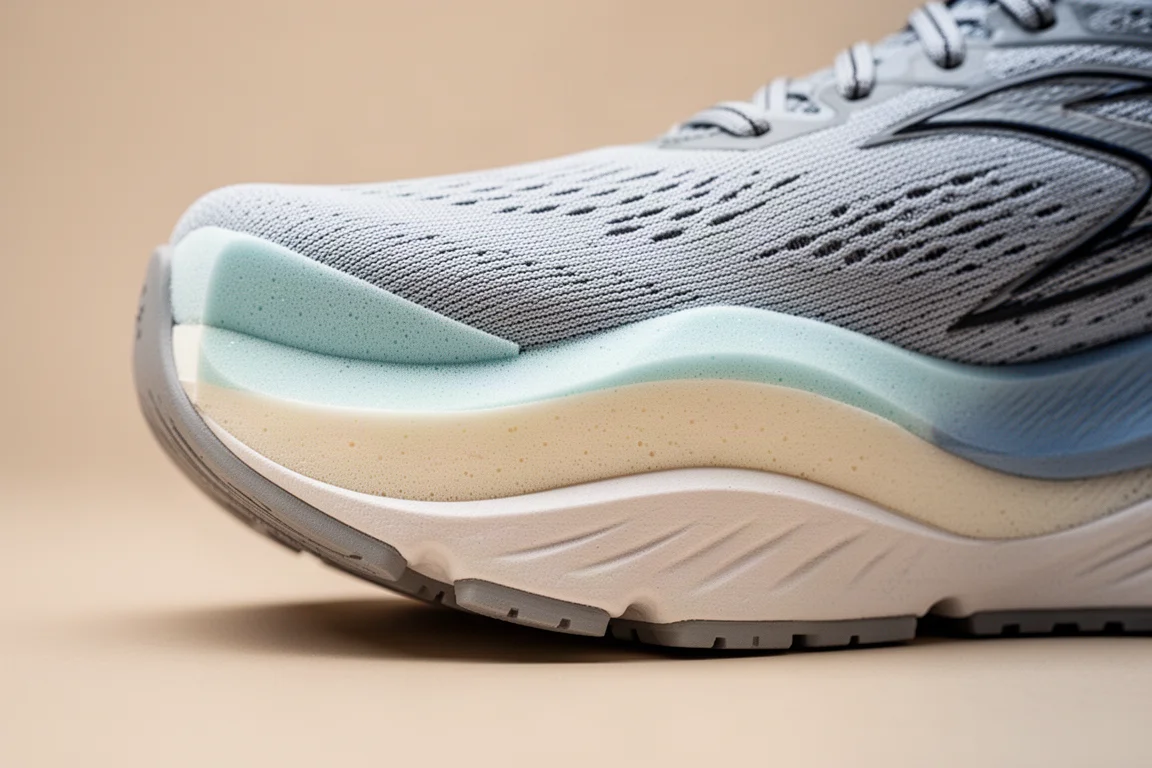
The 860 does this with softer material on top and firmer material beneath, elevated on the medial side only. The ForeverRun Nitro does it more mildly, with the medial forefoot raised about 1 mm above the lateral side. In practice, the 860 feels like the more aggressive option, sitting in the moderate to higher stability range, while the ForeverRun Nitro behaves more like a mild guidance shoe.
The Mount to Coast P1 takes a different route. Instead of a wedge, it uses an arch rail, a stiff rail piece that runs inside the sole and becomes very thick on the medial side of the forefoot. You will not feel it standing still. It only engages when you are running and compressing the sole, giving you a firmer, post-like structure to roll into and helping keep you from collapsing inward.
If you want the ground coming up to meet you, choose the 860 or ForeverRun. If you prefer a firmer medial structure you only notice under load, the P1 is the better mechanical match.
New Balance 860 v14: The Trainer With the Best Heel
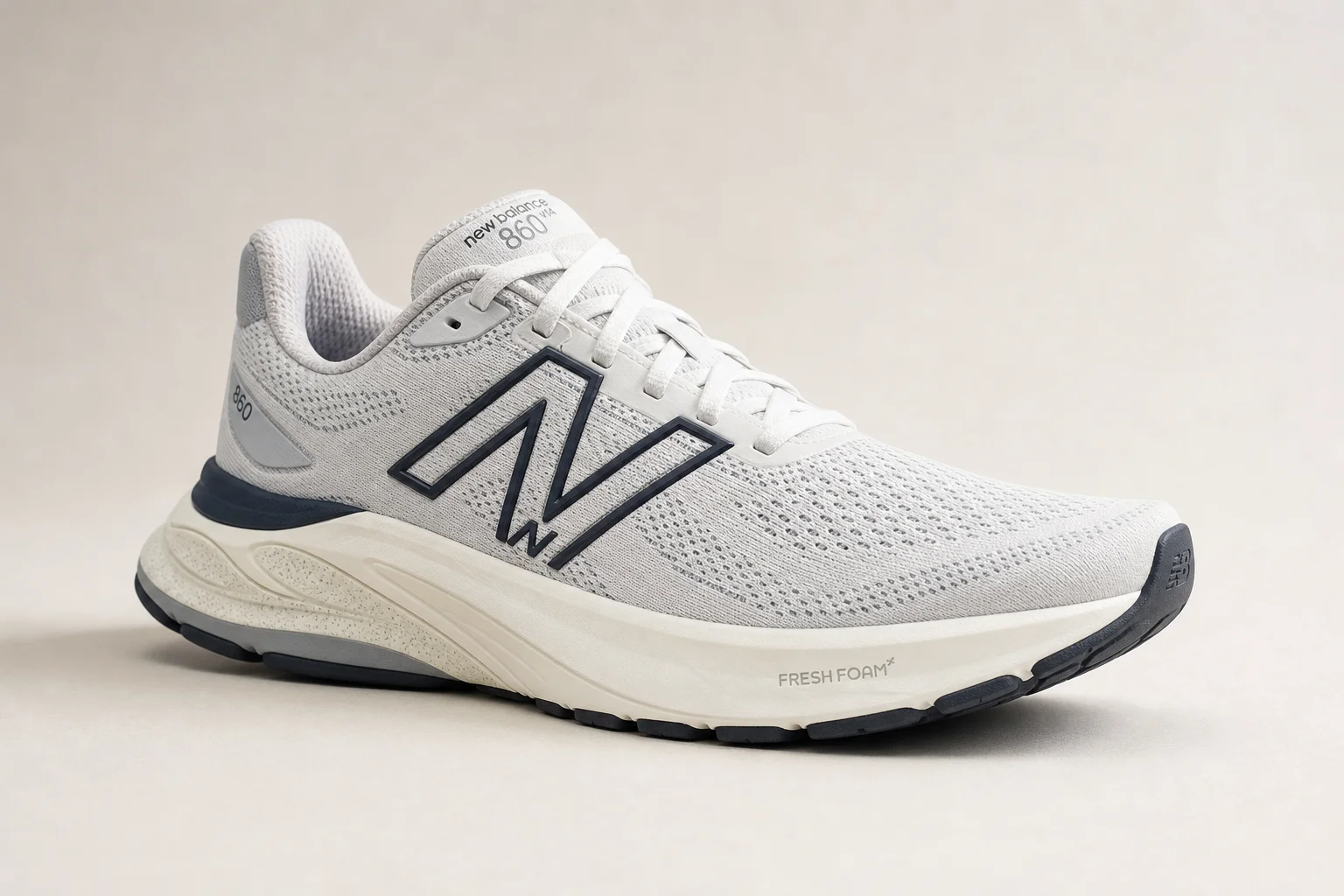
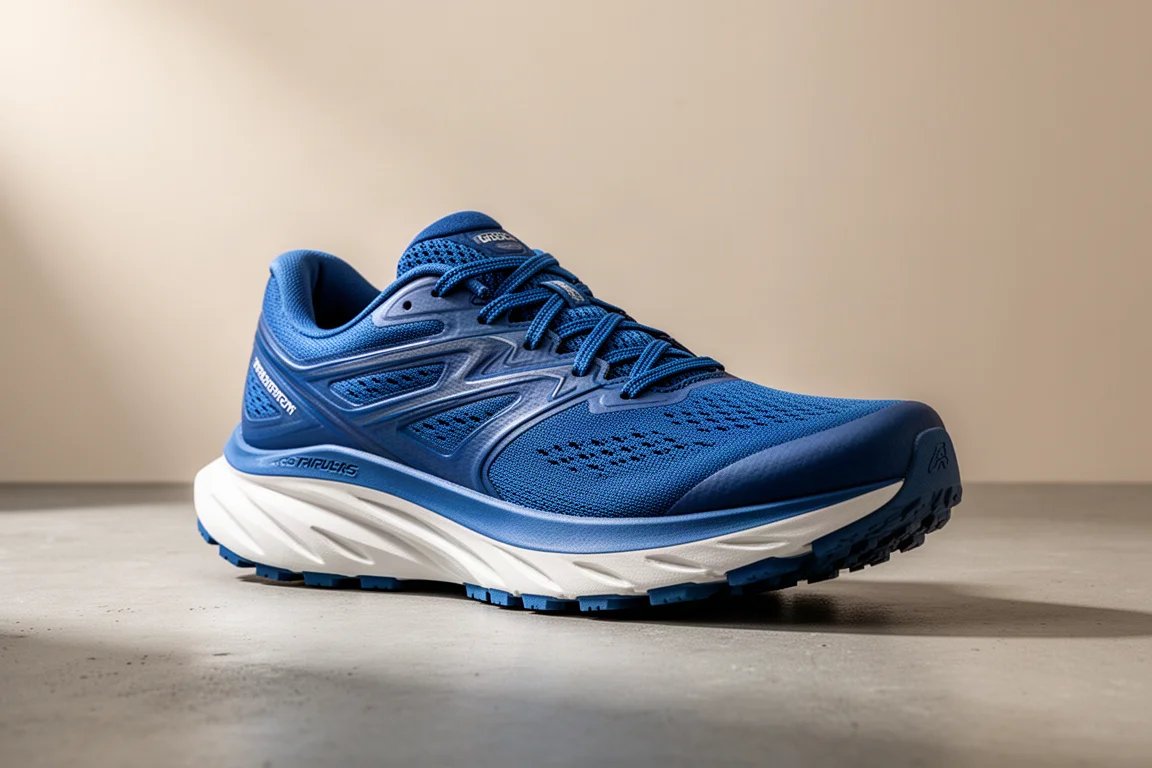
The 860 v14 is the true trainer of this group. It is the heaviest, has the softest and most compliant midsole of the three, and it is simply not built for speed. What it does offer is the best heel of the group: the bevel is done really well, making it the strongest pick if you need full-length stability or you are still a heel striker who needs a smooth transition from heel to toe.
It is also the more aggressive forefoot wedge of the two wedge shoes, so if you want prominent support rather than gentle guidance, this is the one.
Mount to Coast P1: The Long-Distance Specialist
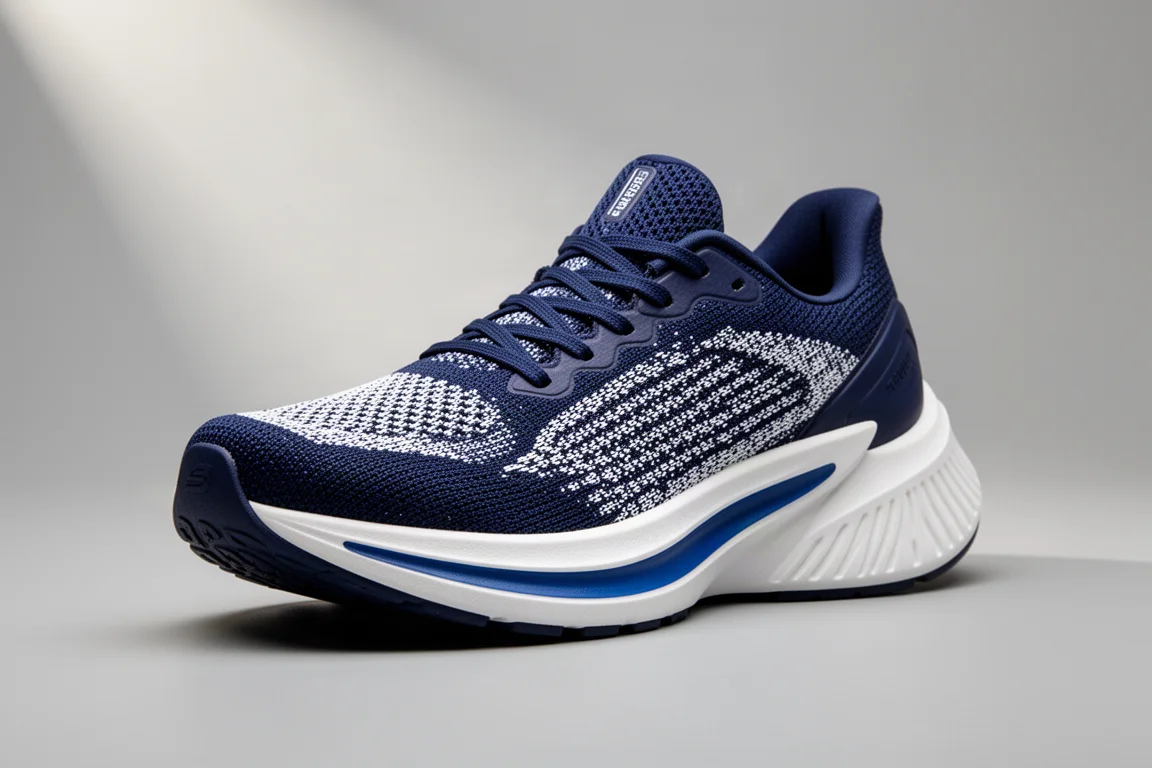
The P1 is built like an ultramarathon racing and training shoe, and it is the only one here with PE-based foam, which means it can pick up the pace a little. Its heel has a fairly large posterior flare and feels a bit clunky back there, so it suits runners landing midfoot or forward.
Initially it seemed limited on uptempo efforts, but around 50 miles the foam breaks in and it can handle some faster running. Holding an uptempo pace for long distances is where it genuinely works well, though it feels best at training paces.

Puma ForeverRun Nitro: The Light, Mild-Guidance Option
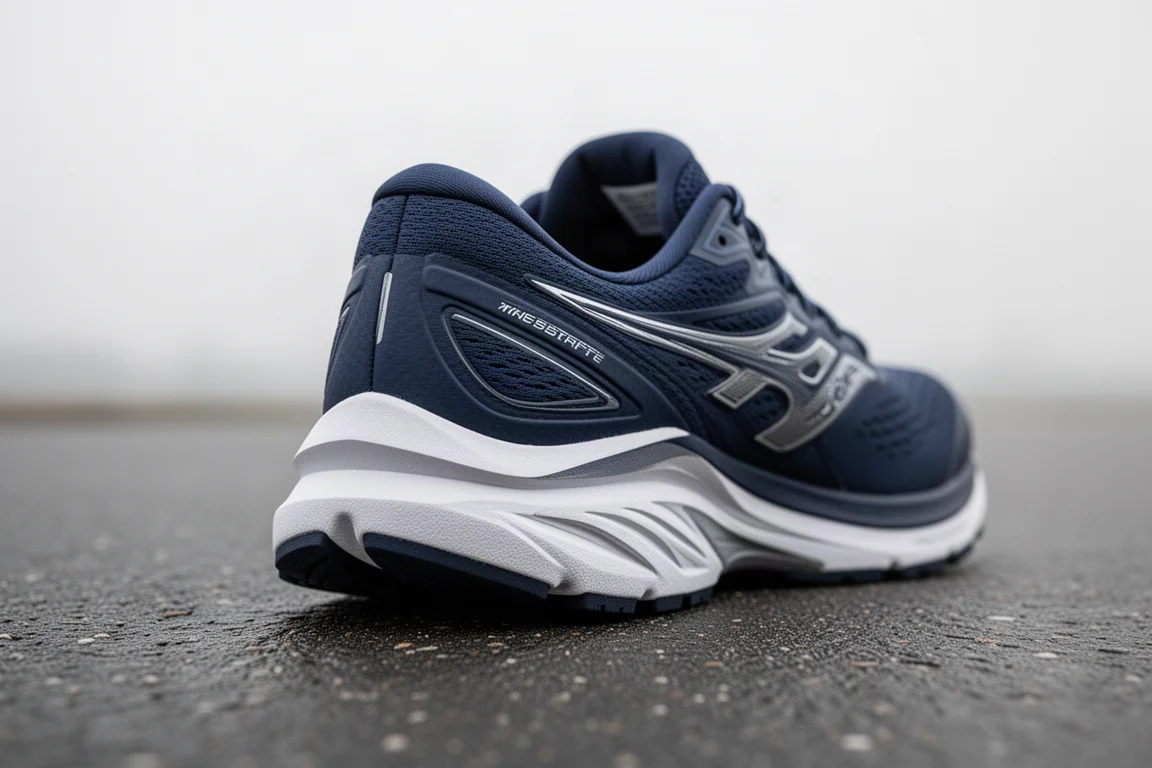
The ForeverRun Nitro is the lightest of the group and the mildest forefoot stabilizer, thanks to its subtle 1 mm medial wedge. It has a slightly softer sole than the P1, a really nice toe off, and an overall gentle ride, which makes it a strong pick for pure training, especially for forefoot strikers who want mild guidance.
The trade-offs are a very large, clunky heel and a thicker, lower-volume upper, with some initial heel slippage that broke in over time.
Upper Fit and Volume
All three fit fairly true to size. The Mount to Coast P1 runs just a touch short and has since broken in, though for ultras it is worth trying a half size up. The P1 and the 860 both fit on the wider side with more volume, so if you need width or room, choose between those two. The ForeverRun Nitro has a lower-volume upper with more normal width but sits low against the foot, making it the better choice if you need less volume.
Things to Consider Before Buying
A few practical points to weigh before committing:
- Stability intensity: mild guidance (ForeverRun), moderate to higher stability (860), or firmer roll-in structure (P1)
- Foot strike: heel strikers get the best experience in the 860 thanks to its excellent heel bevel; midfoot and forefoot strikers will prefer the P1 or ForeverRun
- Fit volume: wider and roomier in the 860 and P1, lower volume in the ForeverRun
- Purpose: pure training (860 or ForeverRun), longer runs and some uptempo work (P1)
Buying Advice
If you need prominent medial forefoot support and a smooth heel-to-toe transition for everyday training, the New Balance 860 v14 is the strongest overall pick. If you want mild guidance in a lighter package for forefoot-strike training, go with the Puma ForeverRun Nitro. And if you want a long-distance shoe with firmer roll-in forefoot structure and the ability to handle occasional uptempo efforts, the Mount to Coast P1 is the one to choose.
Conclusion
There has never been a huge selection of true forefoot stability shoes, which makes these three models the main options worth considering. Match the mechanism to your collapse pattern, your foot strike, and your fit preferences, and each of them can do a genuinely good job of controlling medial forefoot motion.
Further reading
Related Reviews

Running Shoes
Best Road-to-Trail Running Shoes: Three Versatile Options for Mixed Terrain
A practical guide to three road-to-trail running shoes that handle both pavement and mild trails, with clear strengths and trade-offs for different runner types.

Running Shoes
Best Running Shoes for Achilles Tendonitis: Three Options Explained
Three running shoes with different heel drops and support features designed to help reduce Achilles tendon pain during walking and running.

Running Shoes
Best Running Shoes for Women: Five Top Choices Ranked
A ranked guide to five women's running shoes, from versatile daily trainers to high-performance racing options, with real strengths and trade-offs for each.