Aquarium Nutrition
Best Foods for a Small Beginner Reef Tank: Four Practical Picks
A practical look at four foods that keep small reef fish and inverts well fed without pushing nitrates and phosphates out of control.
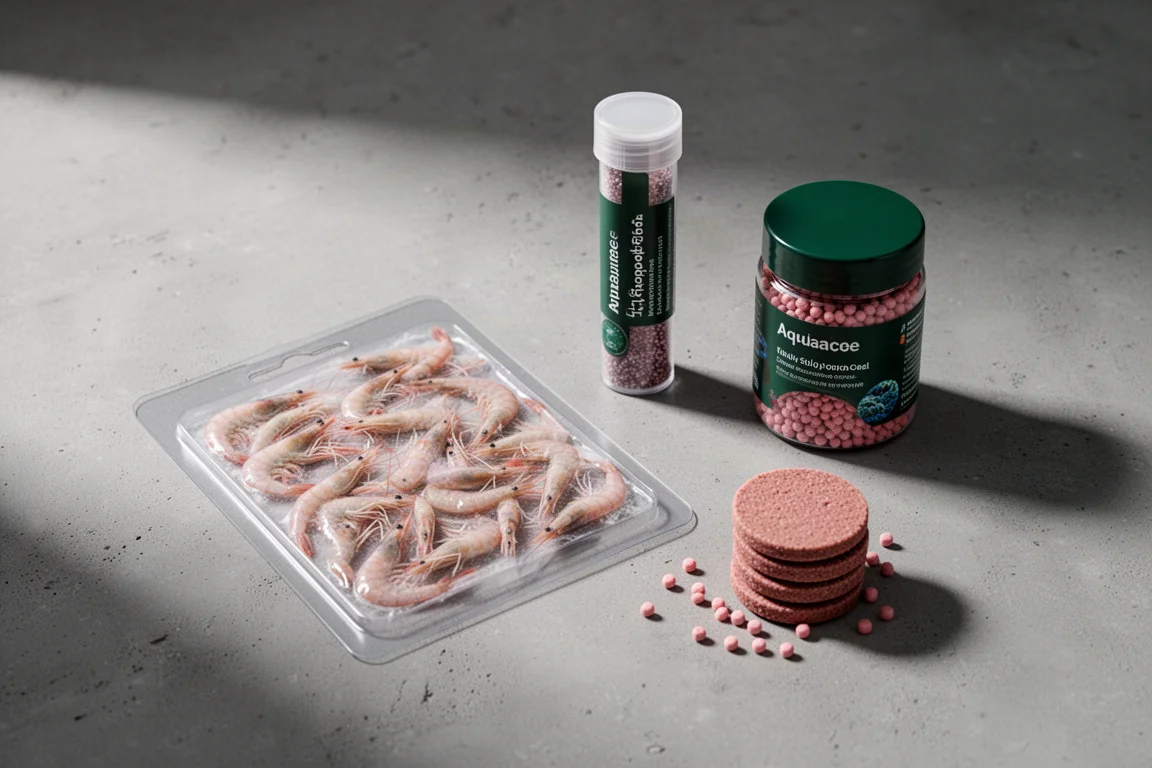
Introduction
Ask a group of new reef keepers what to feed their tank and the answers tend to circle the same two questions: which food is the best one, and how many times a day should the fish be fed. Both sound reasonable. Both cause a lot of trouble. A mixed tank is not a single animal with a single diet. A blenny, a pygmy filefish, a dottyback, a grazing snail and a hermit crab all feed differently, and a single best-food answer ignores that entirely. The better question is what each animal in the tank actually needs, and then how those needs fit around the tank’s ability to process the waste that feeding creates.
That second part matters most in a small system. A 40-gallon tank running on automatic water changes and a macro algae refugium has limited room for error, and food that nobody eats does not simply disappear. It breaks down and shows up as nitrate and phosphate, which is how nuisance algae outbreaks begin. The four foods below cover the practical bases for a small community of captive-bred fish plus a couple of herbivores, with frozen food doing most of the work and pellets adding density.
What Really Matters When Feeding a Small Reef Tank
Three things decide whether a feeding plan holds up: how much waste the tank can absorb, how nutrient-dense each food is, and whether the food physically suits the animals eating it.
Filtration capacity is the first limit. Once fish and inverts go in, the bioload jumps immediately, so ammonia should be tested until the biological filter proves it can keep up. After that, testing nitrates and phosphates every few days shows the trend that actually matters. Rising but flattening numbers mean filtration is coping. Numbers that keep climbing mean the tank is out of balance, and the response is more filtration and less food. If phosphates climb above roughly 0.3, a couple of large water changes followed by a hard look at the food list is the sensible order of operations. A refugium full of macro algae helps, but only once it has grown in.
Nutrient density is the second limit, and it splits the two food types cleanly. Pellets are far more nutrient-dense by weight than frozen food, so they deliver more nutrition in a smaller amount. That same density means they are also much more likely to add unwanted nitrate and phosphate. Frozen food pollutes far less and carries none of the fillers common to pellet recipes. In a small tank, that makes frozen food the backbone of the diet and pellets the supplement rather than the other way around.
The third limit is size. Small captive-bred fish are already used to prepared food rather than live prey, which helps, but they still have very small mouths and need a small particle. Herbivores need plant matter on top of that. Get the particle size wrong and most of the food is either ignored or swept straight into the filter.
Hikari Frozen Mysis Shrimp: A Reliable Frozen Staple
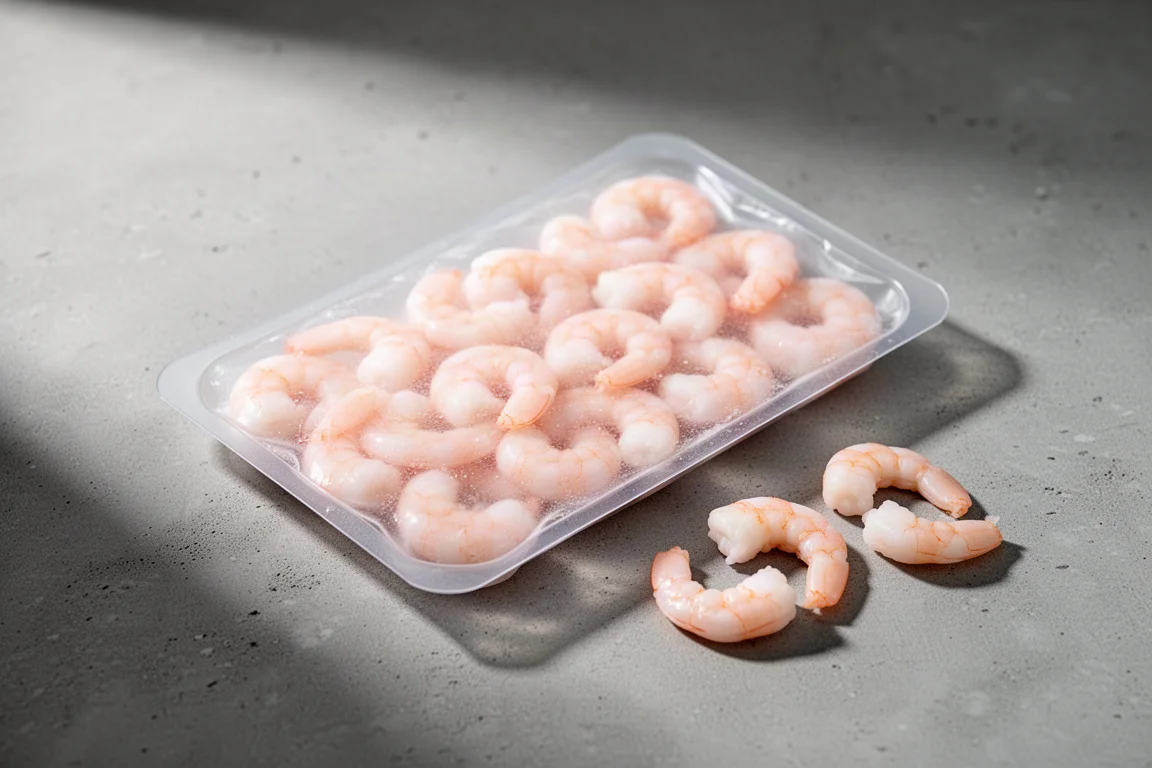
Frozen mysis shrimp is the default frozen food for good reason. It is accepted by a wide range of small marine fish, it holds together in the water column long enough for fish to pick it off, and it adds little in the way of fillers. The Hikari version is worth singling out for one practical reason: the shrimp run on the smaller side compared with some competing brands, which makes them easier for small fish to swallow rather than tear apart.
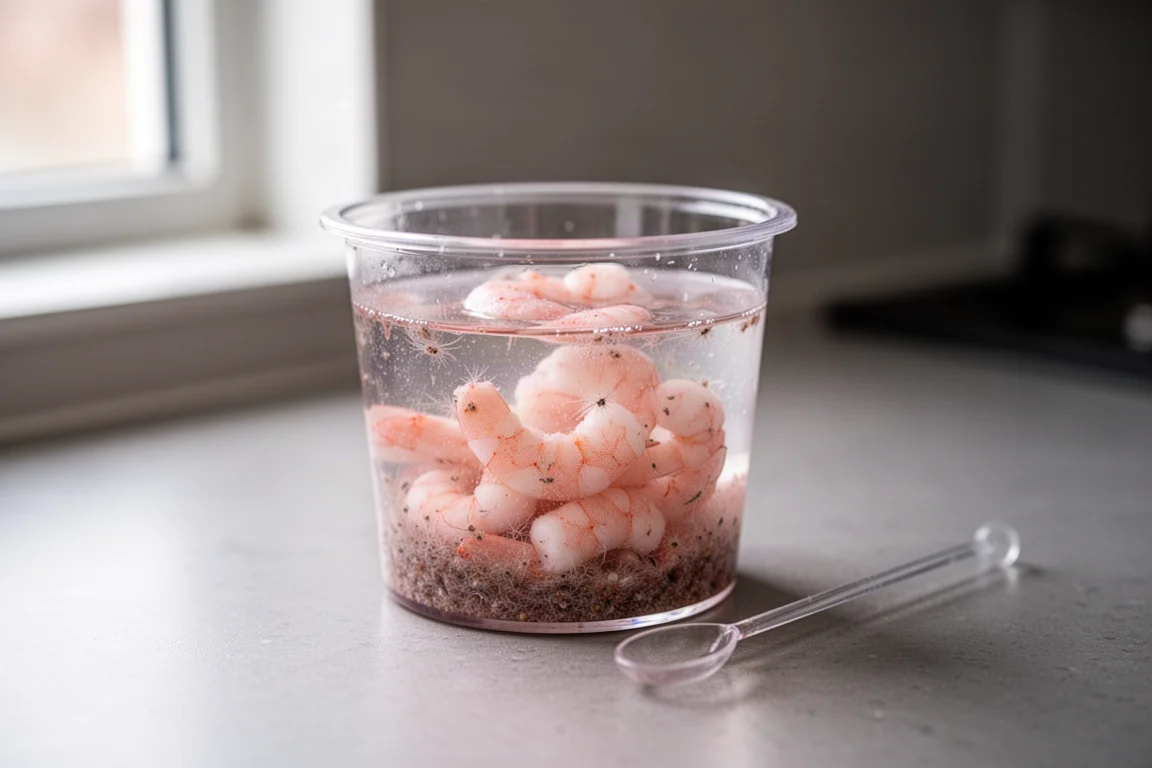
In a small tank, mysis works well as the base of the daily ration. Thaw a portion in a cup, pour off most of the liquid, and add it in small amounts rather than one large dump. Anything that reaches the sandbed still has value, because gobies, snails and hermit crabs will work through it before it has a chance to break down.
Portion control is the main thing to watch. Mysis is easy to overfeed because it looks harmless sitting in the cup, and a small system notices the excess quickly.
Piscine Energetics Cyclops: Small, Protein-Rich, and Color-Boosting
Cyclops fills a gap that mysis cannot. The particles are extremely small, which suits fish with the tiniest mouths and lets them feed in the water column for longer instead of chasing individual pieces. Nutritionally it is a strong performer, high in both protein and fat, and it carries an added pigment that supports richer coloration over time.
Because it is such a fine food, cyclops is best mixed with mysis in the same thaw cup rather than fed on its own. The combination gives small fish two particle sizes to work with in a single feeding, and the cyclops keeps them actively feeding after the larger pieces have been picked off. If richer color in a small fish is a goal, this is the food that supports it.
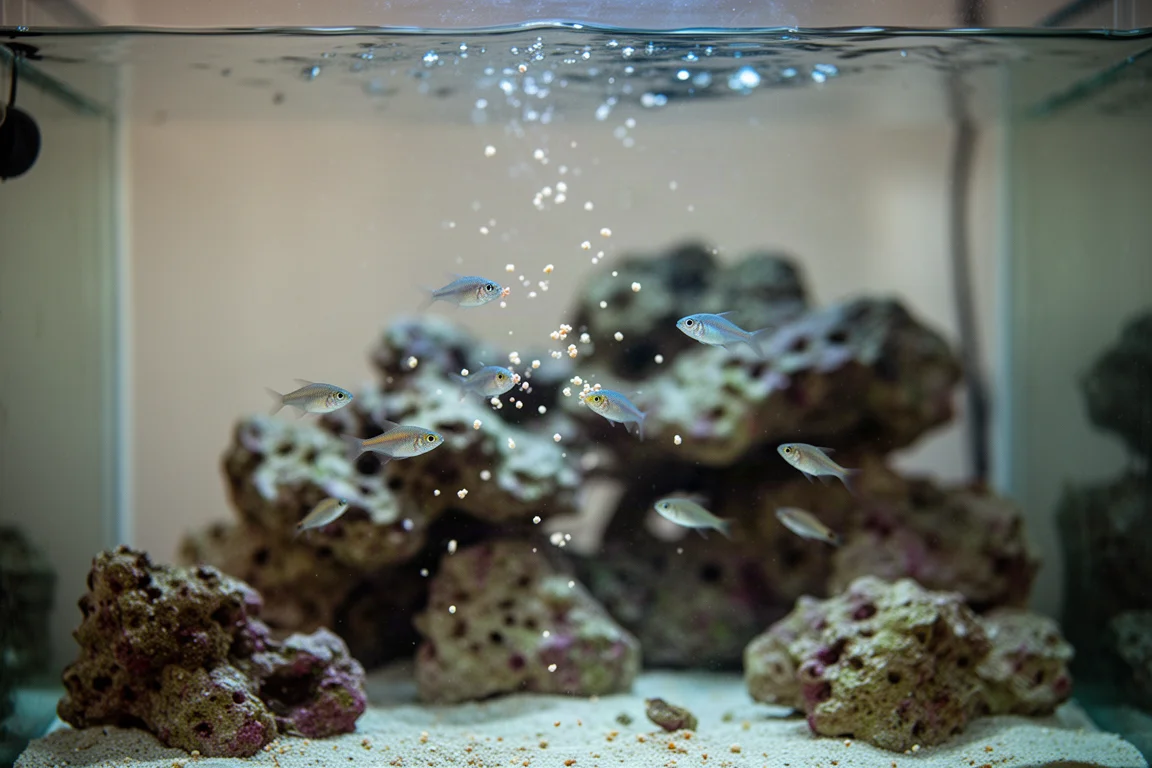
One caveat: fine particles stay suspended and travel further through the tank, so cyclops is a food to feed in modest amounts. It should be thawed and rinsed the same way as any frozen food, which keeps unnecessary liquid and waste out of the system.
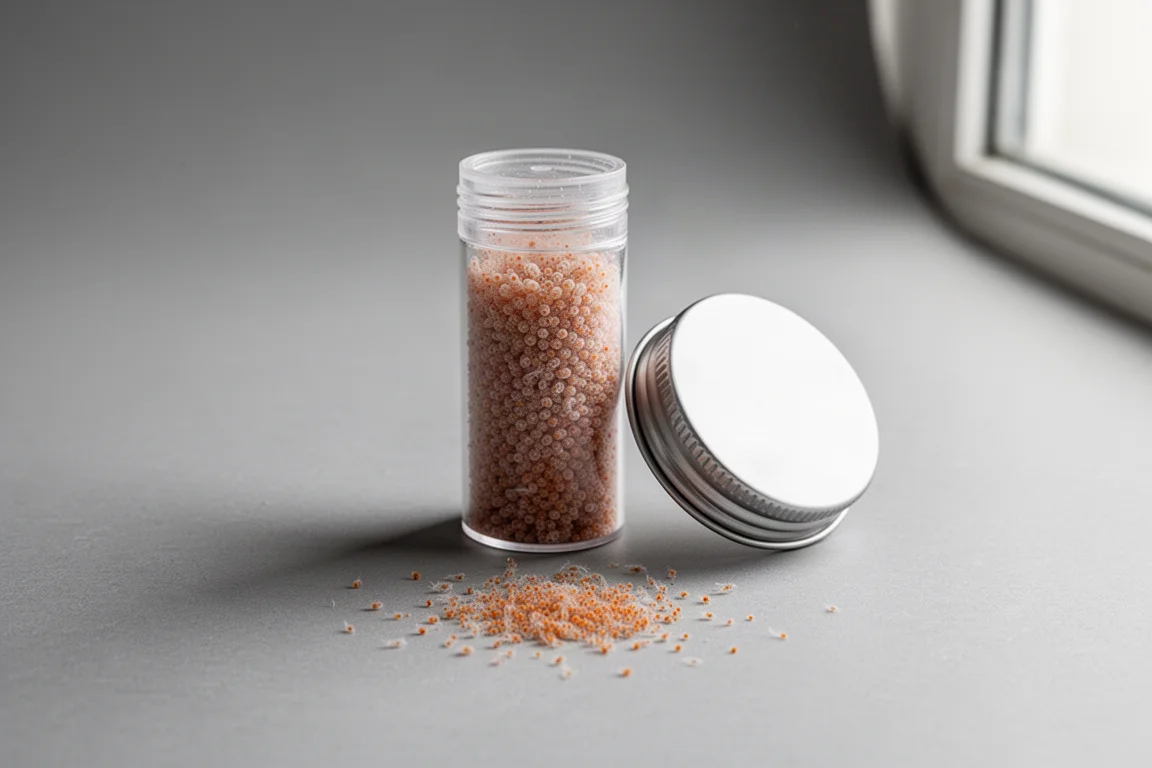
TDO Chroma Boost: A Nutrient-Dense Pellet for Small Mouths
Pellets earn their place in a small tank by doing something frozen food cannot: packing a lot of nutrition into a very small volume. TDO Chroma Boost is one of the most widely used pellets in the hobby, and the small pellet size is the version that makes sense for small fish. Breeders use it as well, which is a reasonable sign of how consistently it gets accepted.
The trade-off is the one that applies to all pellets. Because the food is dense, a small pinch goes a long way, and that same density means unused pellets contribute nitrate and phosphate quickly. Treat pellets as a supplement to the frozen rotation rather than a replacement, and keep the pinch genuinely small. A little scattered at the surface gives fish something to pick at while the frozen food thaws, and it means the tank is not relying on a single food type.
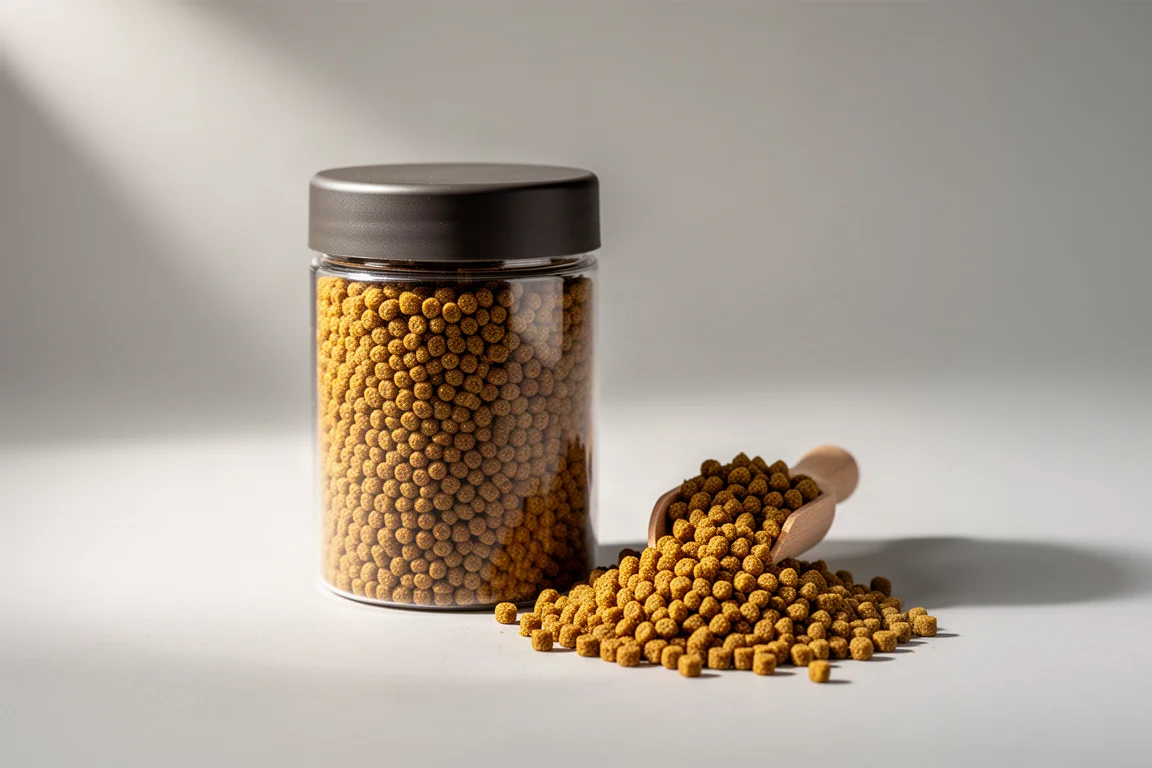
Hikari Algae Wafers: Supplemental Food for Herbivores
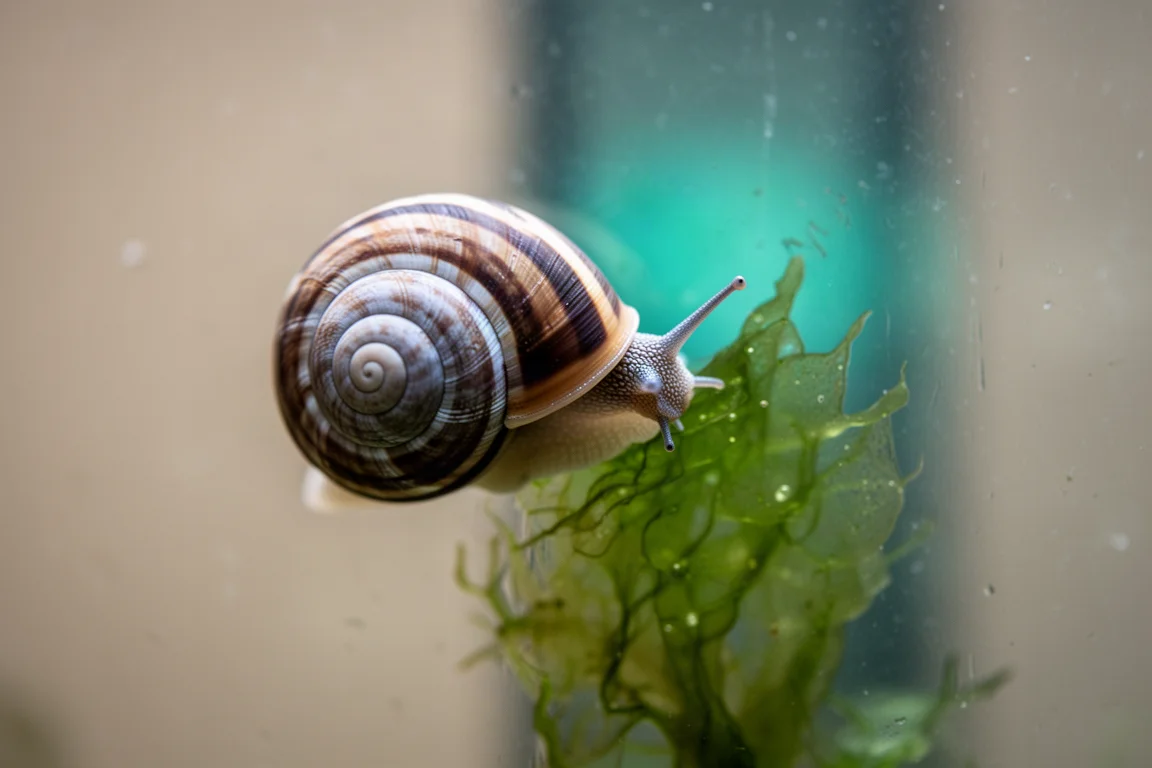
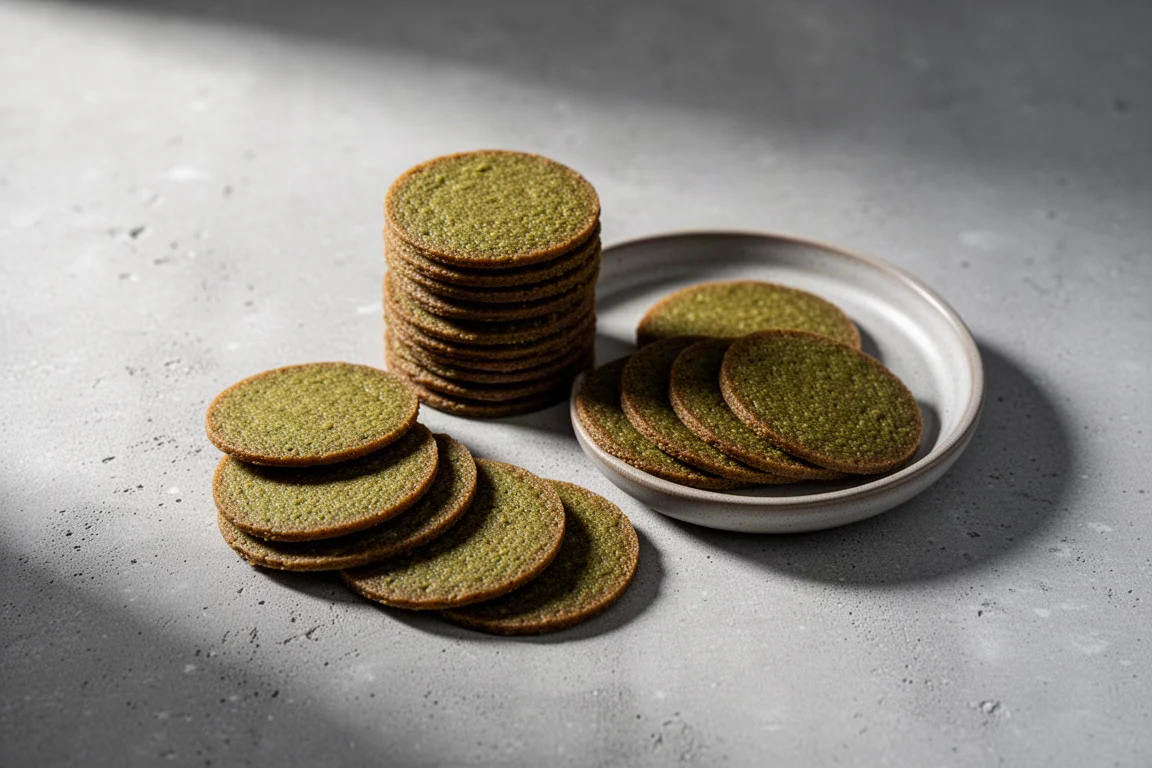
Everything above is aimed at the fish. Herbivores sharing the same tank need plant matter, and in a small mixed community that usually means a banded trochus snail and a variegated sea urchin doing the grazing. Algae wafers exist for exactly that gap, alongside seaweed sheets for the same purpose.
The important nuance is that herbivore food is often unnecessary. If there is a visible film of algae growing on the glass, the snails and the urchin already have a food source, and adding wafers mostly adds waste. Offer wafers when natural grazing thins out or when the glass stays noticeably clean, and treat them as a supplement rather than a scheduled daily feed.
Placement matters with wafers. They sink, so they should land where the herbivores actually graze, and any that sit uneaten should be removed rather than left to break down in a corner of the tank.
How Much and How Often to Feed
The standard beginner advice is to feed twice a day and give the fish as much as they can consume in two minutes. That advice fits a narrow set of animals. Feeding habits vary enormously between species, and a single rule cannot cover both an animal that grazes constantly and one that eats rarely. Both the amount and the frequency have to follow the livestock in the tank.
For a mixed community of small fish, snails and hermit crabs, twice a day works, but the two-minute rule does not. Food should stay available for longer than two minutes so that slower animals get a share, and very little of it should end up in the filter socks, where it feeds nothing and simply decomposes into nitrate and phosphate.
A practical routine for a small tank looks like this. Set a 15-minute feed mode on the return pump and wavemaker, with a 10-minute delay on the return pump so it stays off longer. In the morning, thaw a small amount of mysis and cyclops mixed together in a cup and add a small pinch of pellets. Some of the food settles on the sandbed for the gobies, snails and crabs while the fish pick off the rest. When the wavemaker restarts after 15 minutes, the settled food lifts back into the water and the fish get a second pass at it. Ten minutes later the return pump comes back on, and anything still drifting goes over the overflow into the filter sock. Repeat the same sequence once in the afternoon.
The routine is worth adapting rather than copying. Fewer fish, a smaller tank, or a refugium that has not grown in yet all argue for less food rather than more, and the nitrate and phosphate tests are what confirm whether the amount is right.
Buying Advice
For a small community tank, build the plan around frozen food first. It is the safer foundation because it pollutes less and contains none of the fillers common to pellets. Mysis shrimp and cyclops complement each other well: one gives fish a substantial piece to work on, the other gives the smallest fish something to feed on in open water. Buy both and mix them.
Pellets come second, as a dense supplement rather than a staple. A small-size pellet keeps tiny mouths in mind, and a genuinely small pinch is enough to add nutrition without loading the tank. If nitrate and phosphate readings keep climbing despite moderate feeding, the pellet portion is the first thing to trim.
Herbivore food is the most conditional purchase of the four. When film algae is growing on the glass, snails and urchins are already eating. Keep algae wafers or seaweed on hand for the periods when natural grazing thins out, and feed them sparingly.
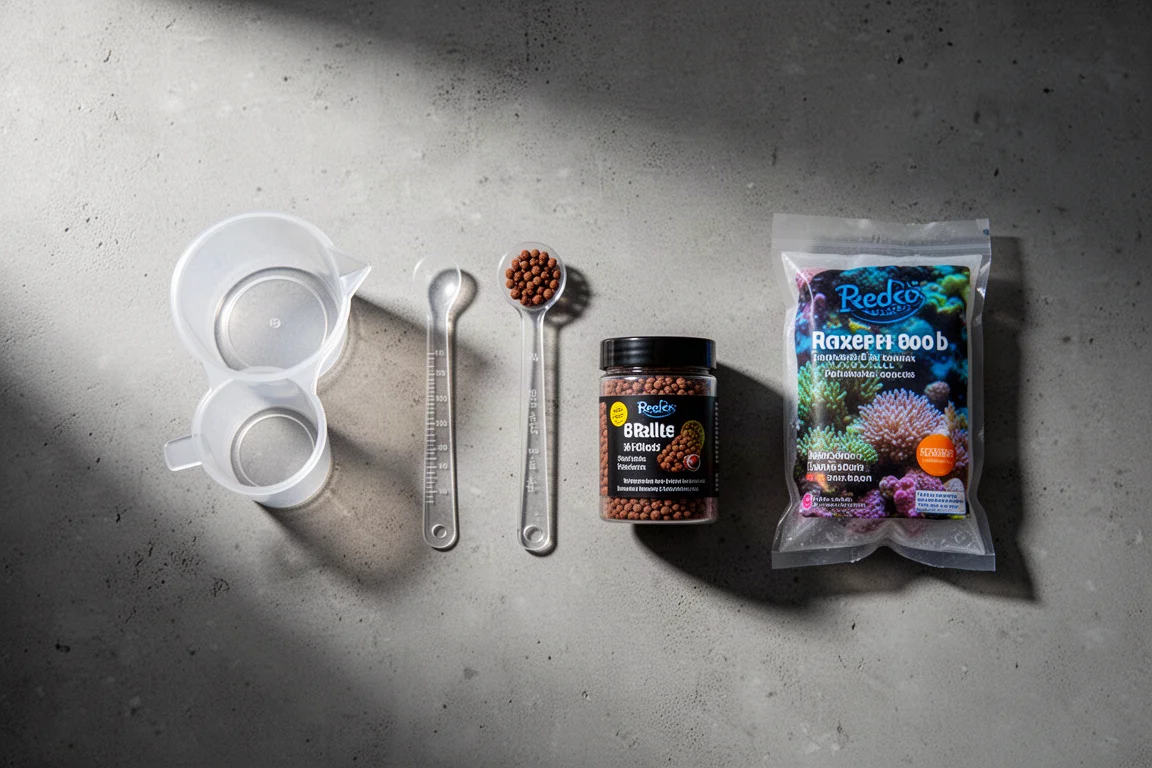
Whatever the combination, the routine only holds up with testing behind it. Ammonia checks in the first weeks after stocking, followed by regular nitrate and phosphate testing, tell you whether the food going in matches what the system can process.
Conclusion
Nobody should be looking for the single best fish food. The diet has to fit the animals in the tank and the tank’s ability to handle what they leave behind. For a small system with captive-bred fish and a couple of herbivores, frozen mysis and cyclops as the daily base, a small-size pellet as a dense supplement, and algae wafers held in reserve for the herbivores cover the essentials. Feed twice a day in amounts the tank can actually process, keep food in the water long enough for every animal to get a share, and let the test results decide when to cut back.
Further reading
Related Reviews
Saltwater Aquarium Setup
10 Questions About Cycling a Saltwater Aquarium: What You Need to Know
Essential questions and answers for cycling a reef tank or saltwater aquarium, from biome building to light management and bacterial supplements.

Aquarium Equipment
Adaptive Reef Hybrid Algae Reactor Review: One Reactor, Three Ways to Grow Algae
A close look at the Adaptive Reef Hybrid Algae Reactor, which runs as an algae turf scrubber, a macro algae reactor, or a refugium, and pairs with the AI Blade Refugium LED.
Aquarium Filtration
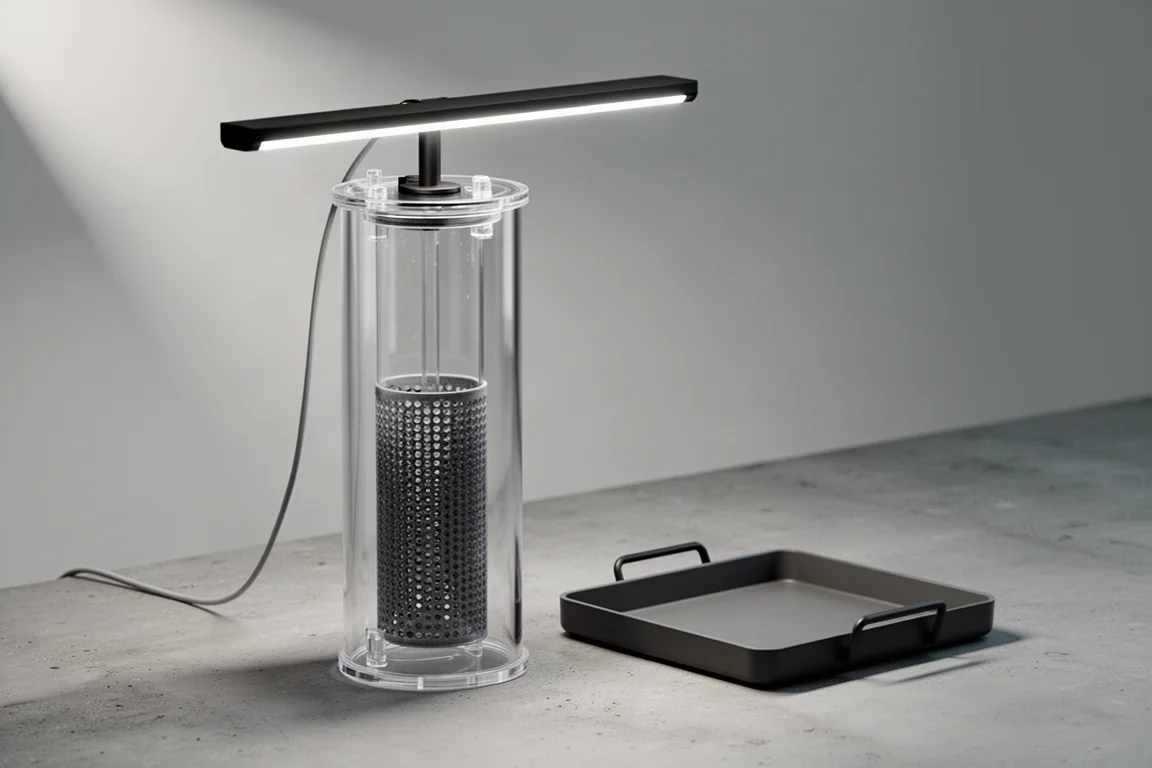
Adaptive Reef Refugium Reactor Review: A Simple Way to Grow Nuisance Algae Outside Your Display
A vessel designed to grow nuisance algae in a controlled space so it stops taking over the display tank, with an adjustable stand, a removable basket, and a single LED light on top.