Tools
Best Folding Utility Knives: DeWalt, Milwaukee Fastback, and Klein Compared
Three folding utility knives, three different approaches to blade handling, storage, and lockup. Here is how they stack up for jobsite and everyday use.
Introduction
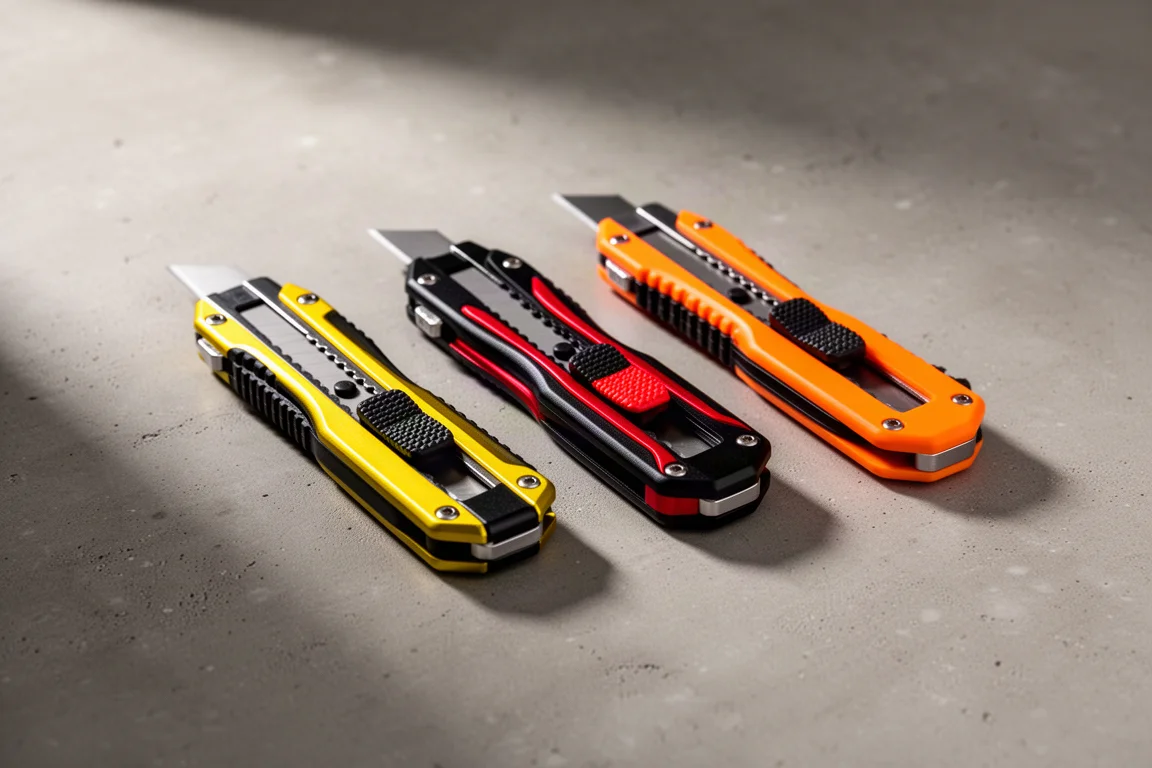
Folding utility knives have quietly become one of the most contested corners of the hand tool market. DeWalt has recently joined the party with a new folding utility knife that leans heavily on one-handed convenience, while Milwaukee’s Fastback and Klein’s entry have each built loyal followings with their own takes on fast blade deployment and onboard blade storage.
This comparison looks at all three with a focus on the details that actually matter day to day: how the blade locks up, how quickly you can swap blades, whether the cord-cutting notch does its job, and how the knife carries in a pocket.
What to Look For in a Folding Utility Knife
Before diving into the individual knives, a few criteria are worth keeping in mind. Lockup solidity matters most: a blade that flexes or shifts under pressure is a safety problem, not just an annoyance. Blade change speed comes next, since a good jobsite knife lets you swap dull blades without fumbling with tools or multiple hands.
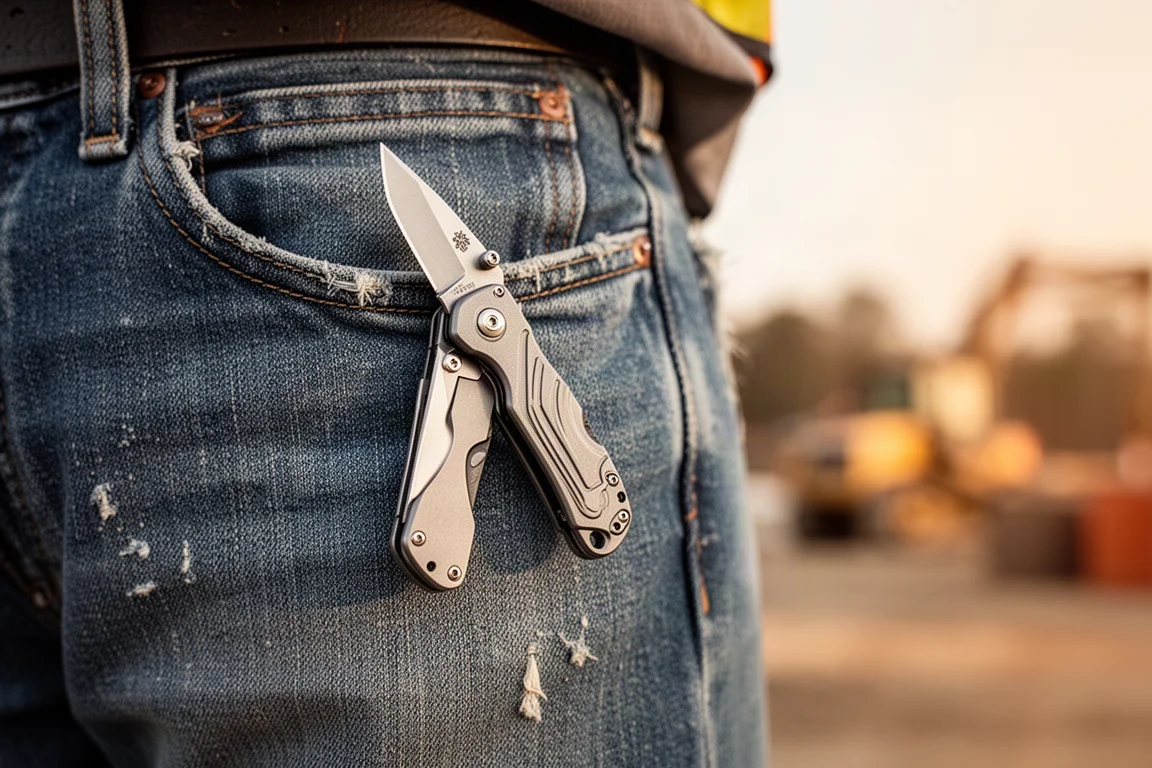
Carry and storage round out the list. Some designs hold spare blades onboard, some include a lanyard, and some clip securely to a pocket. None of these are dealbreakers on their own, but together they determine whether a knife earns permanent pocket space or lives in a tool bag.
DeWalt Folding Utility Knife
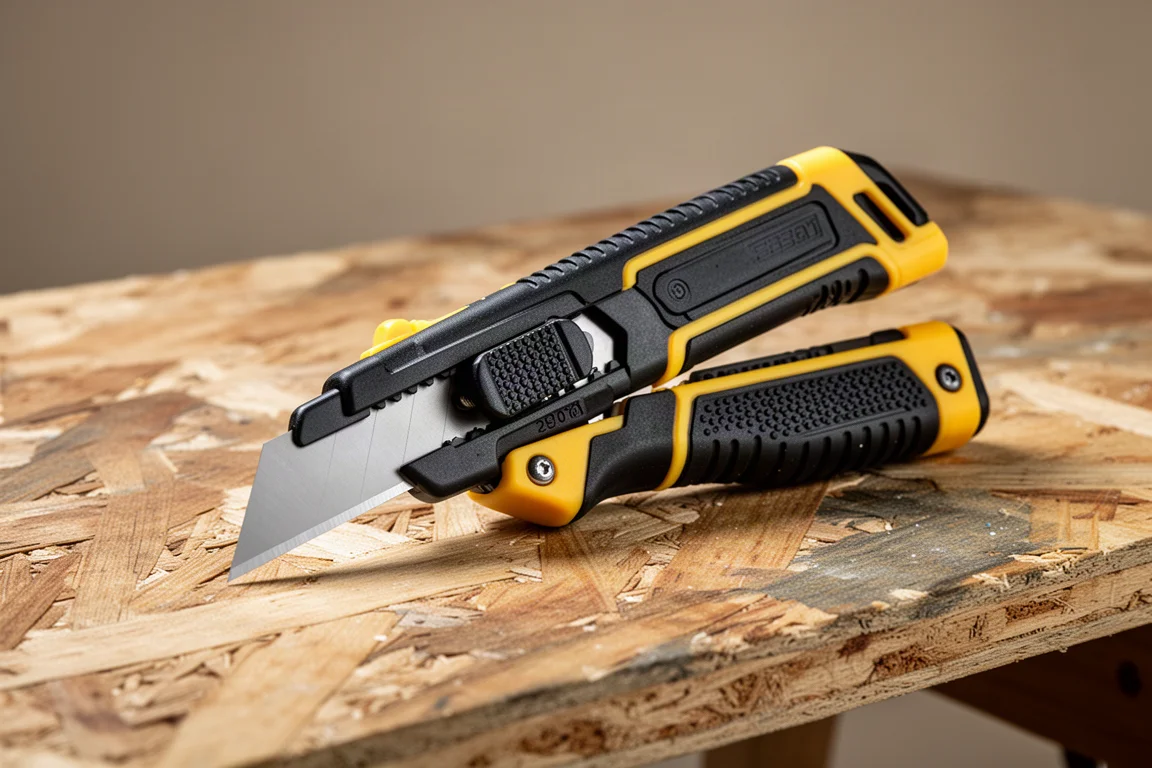
DeWalt’s folding utility knife sits at roughly $14 and earns its name the obvious way: it is a folding knife that uses standard utility blades, with a push-button release for both opening and closing. Once you get the rhythm down, you can flick it open quickly, assuming your jobsite environment is permissive enough for that kind of carry.
The handle is aluminum with a heavily molded plastic insert, and it feels stout for the money. A lanyard is built in, and the whole knife is held together with Torx screws. The bright yellow and black color scheme gives it a distinctive look, and the thin profile is genuinely appealing compared to bulkier competitors.
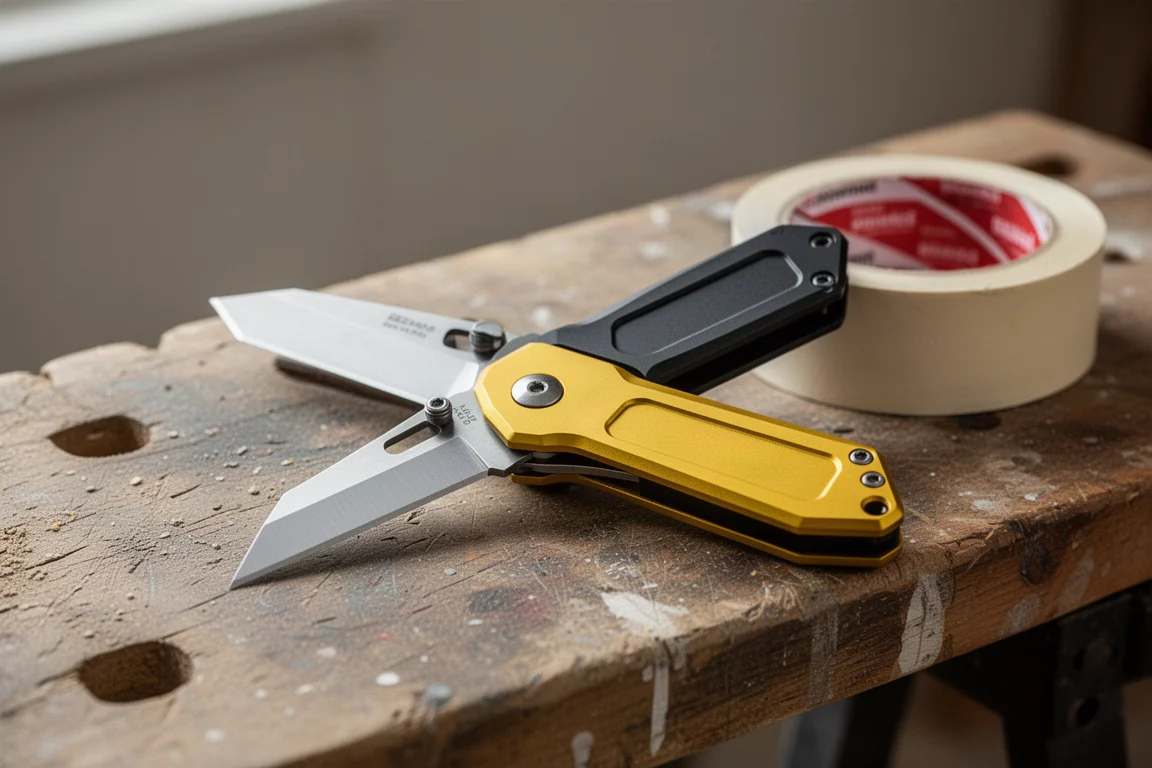
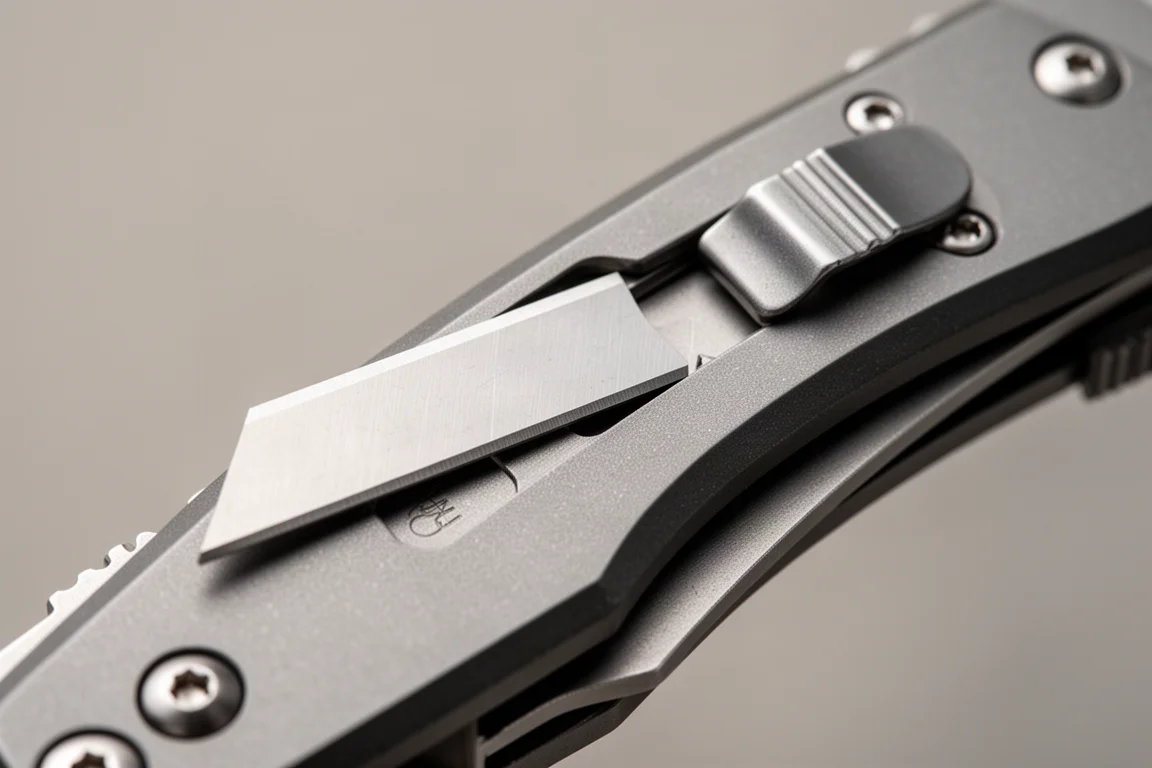
Blade handling is mostly well thought out. The lockup is fairly solid, with two teeth that drop into the top of the utility blade, and the thin acceptance ramp means standard drop-in blades slide right in without needing to lift anything first. It ships with one blade installed, and there is magnetic storage for five more inside the handle. The trade-off is compatibility: the acceptance slot is thin enough that thicker carpet knife blades and ceramic blades will not fit.
There are a couple of idiosyncrasies worth knowing about. The cord-cutting notch does not work that well: if you pull on a cord placed in the notch, the blade can simply pivot out of the way unless you apply corresponding upward pressure at the bottom of the knife. That play may or may not be a deliberate safety feature, but it is something to think about. Some users also feel the design is not quite ready for prime time, and there is room for improvement in that space. Still, there are no giant weaknesses here, just quirks.
Milwaukee Fastback
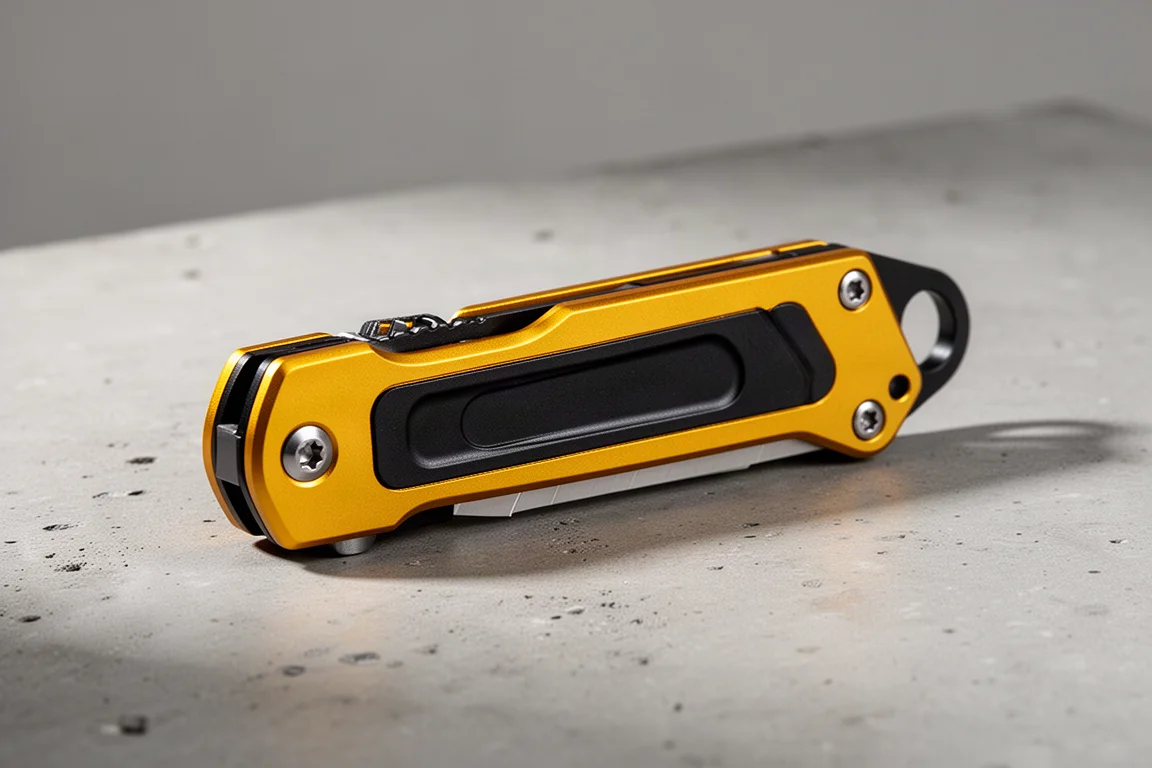
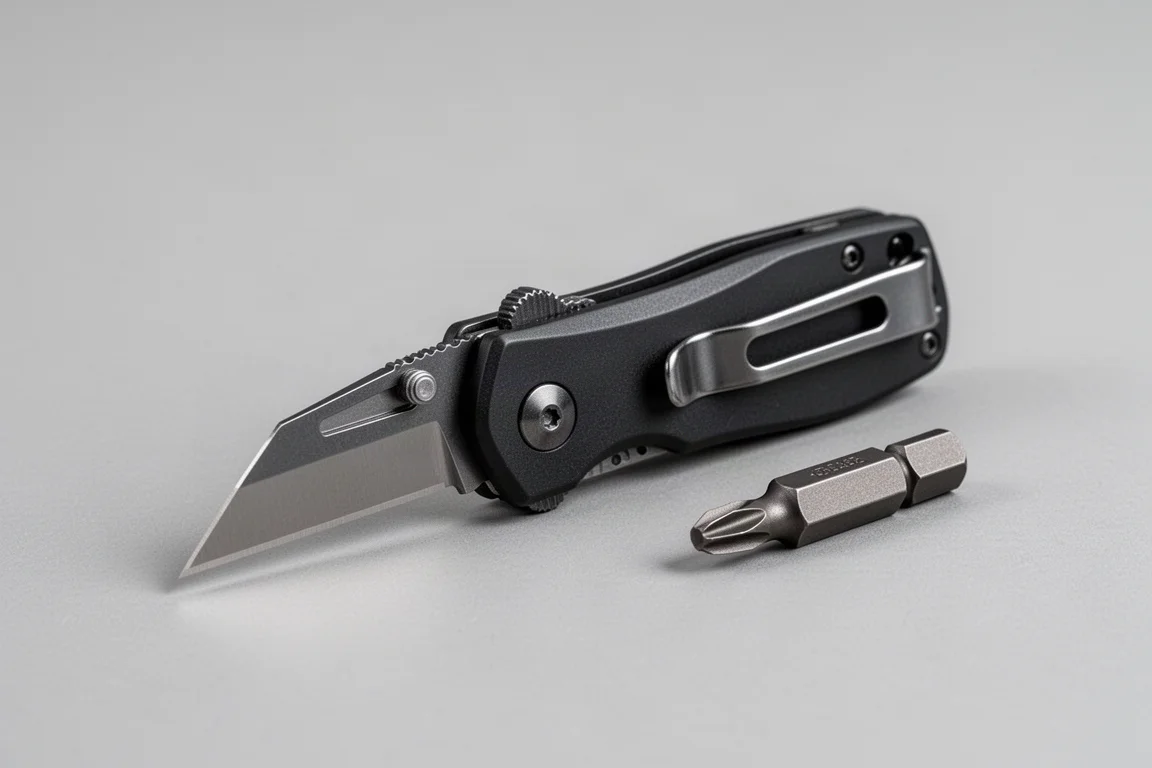
The Milwaukee Fastback is the knife that seems to draw the most attention in this category, largely because of its reversible bit and the ability to carry five standard blades onboard. That storage arrangement is reminiscent of some other designs in the space, but the Fastback packages it with Milwaukee’s signature fast one-handed opening.
The blade-change mechanism works differently from the DeWalt: you kick the blade out to lock it in place, and the harder you push on the front end during use, the more the design locks the blade in. It is a different philosophy from some of the other knives here, and the overall mechanism is nearly identical in spirit to Klein’s approach. If you want maximum onboard blade capacity and a reversible bit, the Fastback makes a strong case for itself.
Klein Utility Knife
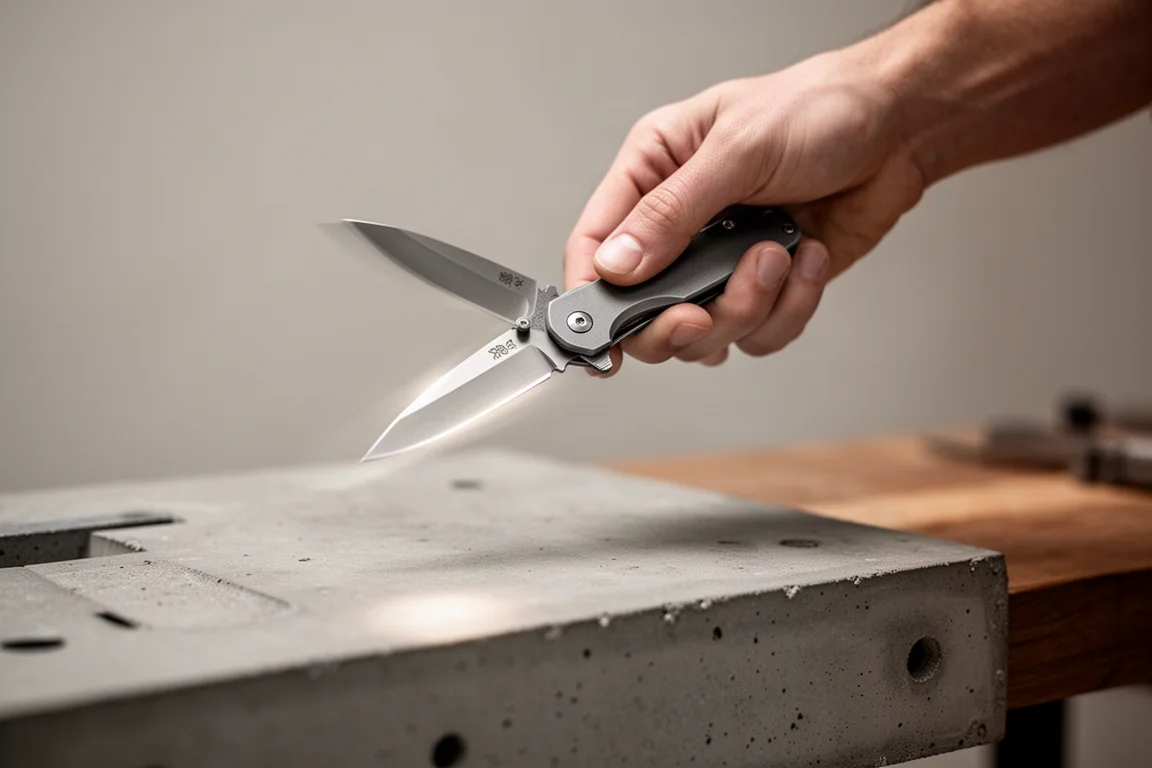
Klein’s entry into the folding utility knife space impressed with how silky smooth it operates. The bright orange color is easy to spot in a tool bag or on a bench, and the lockup is good and solid. For many users, the way this knife works simply feels right, and it is easy to see why Klein has found fans with this design.
Like the Milwaukee, Klein uses a kick-out mechanism to lock the blade into position. The two designs are almost identical in that regard, which suggests both brands have converged on an approach that works. The stronger you push on the front end, the more firmly the blade stays seated, which is reassuring under load.
Which One Should You Buy
If you are shopping in this category, the choice comes down to priorities. The DeWalt is the budget-friendly newcomer at around $14, with a thin, stout aluminum handle, magnetic storage for six blades total, and a distinctive look, balanced against a cord-cutting notch that needs better play control and a blade slot that rejects thicker blade styles. The Milwaukee Fastback remains the crowd favorite thanks to its reversible bit and five-blade onboard storage. The Klein trades on silky-smooth operation, a solid lockup, and bright high-visibility orange.
One honest note: there is room for improvement across this entire space, and some of these designs are nearly interchangeable in how their blade locks work. If you already own one of these, it may be worth trying a second design before deciding the whole category is settled.
Conclusion
All three knives are legitimate options. The DeWalt folding utility knife is a strong value pick if you like the thin profile, bright colors, and push-button convenience, provided you can live with its quirks. The Milwaukee Fastback suits users who want onboard storage and a reversible bit, while the Klein is the smooth operator with an excellent lockup. Match the knife to how you actually work, and none of these should disappoint.
Further reading
Related Reviews

Tools
Best Contractor Grade Tape Measures 2026: Eight Models Tested Head to Head
We tested eight contractor grade tape measures from Milwaukee, DeWalt, Crescent Lufkin, Tajima, Stanley, Irwin, Gelan, and Craftsman to find the best value and performance.

Tools
Best Precision Screwdriver Sets 2026: Manual and Electric Options Compared
We compare 19 precision screwdriver sets, from budget manual kits to electric drivers, to find the strongest bits and best value.

Tools
Best Stud Finders 2026: Five Popular Models Put to the Test
We tested five popular stud finders on drywall, firewall, and lath and plaster surfaces to see which ones really find studs and avoid false readings.