Music
Five Electronic Dub Releases That Reveal What Your Subwoofer Is Really Doing
Five electronic dub records, from contemporary dub techno to dense industrial ambience, that double as practical tests of what a subwoofer adds to a system.
Introduction
Dub music traces its roots to Jamaican reggae, where a studio producer would take an original track, extend it, strip the vocal down to fragments and dissolve everything in a pulsating wall of echo. The result is immersive, bass-heavy and deeply repetitive in the best possible way. It is music that does not ask for your attention. It quietly steals it.
Electronic dub is one of the most useful things you can play when you are folding a subwoofer into a hi-fi system. These records consistently cover everything from 20 Hz at the bottom up to roughly 250 Hz and above, which is about the upper limit of the bass region. Listening to dub through a system that does not reach below 30 Hz is like watching a film with the bottom quarter of the screen cut off. Most stand-mount speakers cannot be described as accurate for this material because they miss the bottom octave, and some capture none of it. You generally do not miss what you never had. If you come to dub without a subwoofer, or without loudspeakers that dig close to 20 Hz, you are missing the foundation the music is built on.
The five releases below were chosen because each one works as a listening experience and as raw material for judging what a system does in the low and sub-bass regions.
How These Releases Were Selected
Every release here had to do two jobs. First, it had to hold up as music you would genuinely want to play, not just a test tone with a groove. Second, it had to put real information into the bottom octave, so that changes in subwoofer integration, room placement or crossover settings are audible rather than theoretical.
The list also spans a useful range of eras and approaches: a contemporary entry point, a foundational cornerstone, a transatlantic collaboration, a veteran traditional dub pairing and a newer, darker take on ambient dub. One release is a CD and the rest are vinyl.
That mix matters because each record uses bass differently. Some lean on sustained sub-bass notes, others on echo tails that decay into the room, and others on distortion and texture that sit above the deepest frequencies but still depend on a system’s low-end composure. Between them, they cover the range a subwoofer is meant to handle.
SND/RTN Echo Limited 004: The Most Accessible Entry Point
If you have never gone near dub techno before, this is where to start. Echo Limited 004 is a six-track mini LP and a modern love letter to the genre’s moody, textured atmosphere.
Deep, throbbing basslines carry the record, with spacious echoes and textures that shift slowly enough that you can lose track of where one element ends and another begins. It is music built simultaneously for huge club sound systems and late-night home listening sessions, and the sub-bass is positively physical.
It is as accessible as it is well executed, and it is the most immediate test of whether your subwoofer is earning its place in your playback chain.
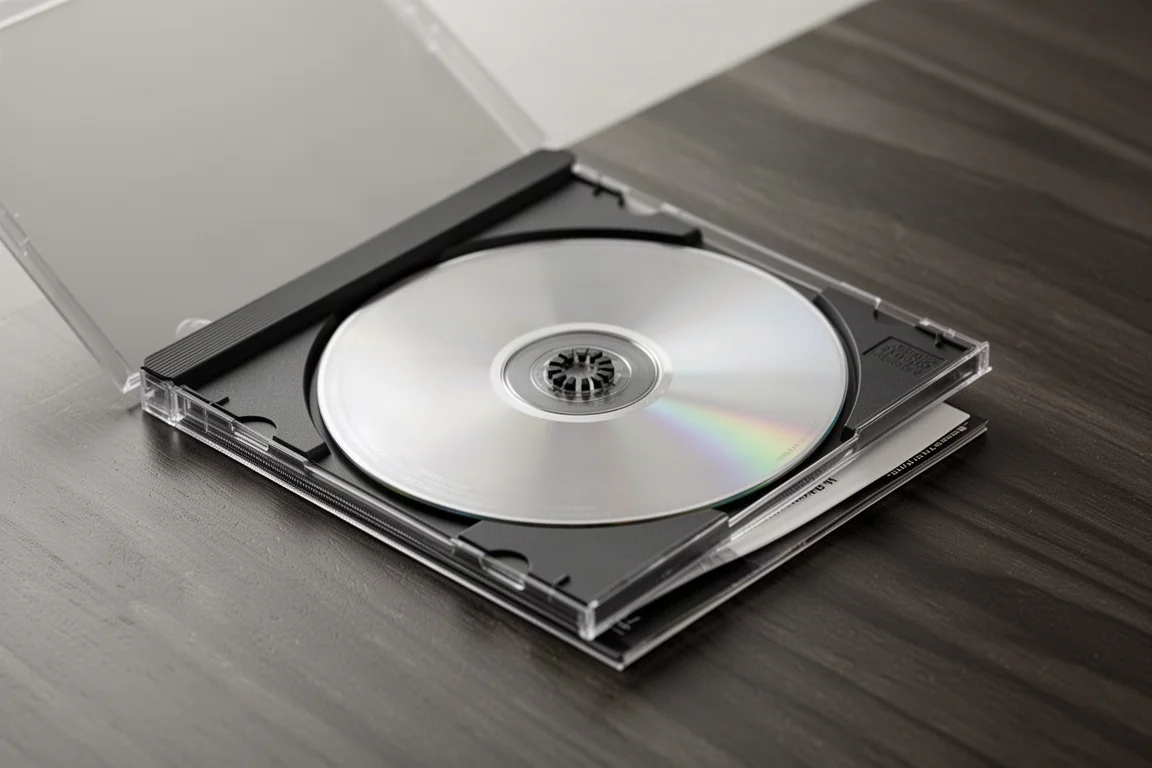
Rhythm & Sound: The Cornerstone of Dub Techno
If the SND/RTN record is the contemporary entry point, this self-titled compilation from Moritz von Oswald and Mark Ernestus is the cornerstone. The Berlin-based duo are widely credited with inventing dub techno through their Basic Channel alias, and their murky, mechanical sound submerged Detroit techno in traditional dub processing.
Rhythm & Sound came later and took a different direction, with slower tempos, warmer sub-bass and a heavier focus on Jamaican and Dominican vocalists, including Paul St. Hilaire and Cornell Campbell. Where Basic Channel was techno mimicking dub, Rhythm & Sound is dub made with techno tools.
The arrangements strip everything back to the bare essentials: a thumping bassline, an echoing rhythm and sometimes a layer of crackling background static that sounds like vinyl surface noise used as a compositional choice. The groove is relentless and soothing in equal measure, and the low-end translation on a well-mastered CD like this is excellent. The bassline will tell you immediately whether your subwoofer is dialled in or not.
Deadbeat and Om Unit: Root, Stalk, Leaf, and Bloom EP
This four-track EP captures the slow, creeping collision of two very different electronic traditions. Deadbeat is the moniker of Canadian producer Scott Monteith, who brings the patient, atmospheric dub techno of the Berlin school. Om Unit is UK artist Jim Coles, better known for jungle and dubstep, and he brings a heavy dose of bass culture from Bristol.
Together they have made something that feels organic and futuristic at once. Acid bass synthesizers ripple over sub-bass frequencies that need a subwoofer to reproduce properly, and the result has a physical presence that is hard to shake.
This is the record on the list most likely to rattle something in the room when the volume goes up. Treat that as both a recommendation and a stress test for your subwoofer and your room.
Double Standard and Lee Scratch Perry: Return from Planet Dub
There is a different kind of energy here. Where most dub techno sits in cool, nocturnal spaces, Return from Planet Dub is dense, layered and a little eccentric, and it is probably the most traditional dub record of the five.
It is a collision between Double Standard, a veteran Austrian dub band who have been pushing the boundaries of European reggae since the late 1980s, and Lee Scratch Perry, one of the original Jamaican pioneers of dub from the 1970s. Perry’s early studio work treated echo, delay and multi-tracking as compositional tools rather than mere effects, and that approach laid the foundation for more modern dub music. It is a contribution the genre does not credit loudly enough.
The album pairs nicely with Planet Dub, a digital-only companion of stripped-back instrumental versions that remove the vocal chants and let the basslines breathe more freely. If you want to understand what Lee Scratch Perry contributed to the history of electronic music, this collaboration is a great place to start.
Ghost Dubs: Extended Damaged Versions
The final stop is the most sinister-sounding record of the group, and also the newest. Ghost Dubs is Michael Fiedler, working with the UK-based Pressure label, and his music sits at the intersection of ambient dub and something far more industrial: heavy distortion, massive echoing spaces and tempos slow enough to feel like tectonic plates shifting.
Extended Damaged Versions arrived in early 2025 as a follow-up to Fiedler’s Damaged album, and it pushes further into the same brooding darkness. Think of an abandoned warehouse at night, rendered as sound. This is not traditional dance music by any measure. It is closer to a film score for a gritty imagined city.
It is designed to vibrate your chest and fill a room rather than move a dance floor, and without proper sub-bass extension it loses some of its menace.
How to Choose Your First Electronic Dub Release
Start with the SND/RTN mini LP if the genre is new to you, since it is the most accessible of the five and the quickest way to hear what a subwoofer adds. Choose Rhythm & Sound if you want the historical cornerstone, and the Deadbeat and Om Unit EP if you want the most physical low-frequency pressure here. Return from Planet Dub suits anyone drawn to traditional dub and to Perry’s role in its history, while Extended Damaged Versions is the pick for late-night, room-filling atmosphere.
Format is worth a thought as well. Four of these releases are vinyl records, and one, Rhythm & Sound, is a CD with excellent low-end translation, which makes it a convenient reference disc if you would rather not handle records while adjusting a system.
Whatever you choose, the practical test is the same. Play a track with sustained sub-bass and listen for whether the foundation is there. If the lowest notes are missing, the music will sound thinner than it should, and the fix is usually integration rather than volume.
Conclusion
Five releases, four on vinyl and one on CD, and each earns its place for a different reason: accessibility, historical weight, bass pressure, traditional dub craft and sheer atmosphere. Good electronic dub tells you everything you need to know about what a system is doing in the low and sub-bass regions, and these records do it while remaining music you will want to return to.
Further reading
Related Reviews

Music
Kunaki Lathe Cut Record Review: The Cheapest Way to Put Music on Vinyl
A hands-on look at Kunaki, the most affordable lathe cut record service, covering packaging, sound quality, and whether a one-off vinyl pressing is worth it.
Music
10 Perfect Albums Worth Owning: Timeless Records With No Skip Tracks
Ten albums that hold up from the first track to the last, plus two bonus picks and practical advice on which record to start with.

Music
Rush 50th Anniversary Vinyl Record Box Set: A Deep Dive Into the Presentation and Sound
A hands-on look at the Rush 50th Anniversary vinyl box set, covering the packaging, the seven discs, the booklet, and how it sounds on a turntable.