Tools & Workshop
Best Drill Attachments Tested: 9 Tools That Turn Your Drill Into Something Else
We put nine drill-powered attachments through hands-on testing, from chainsaw and metal-cutting heads to pumps, augers, and scrub brushes, to see which ones are actually worth the money.
Introduction
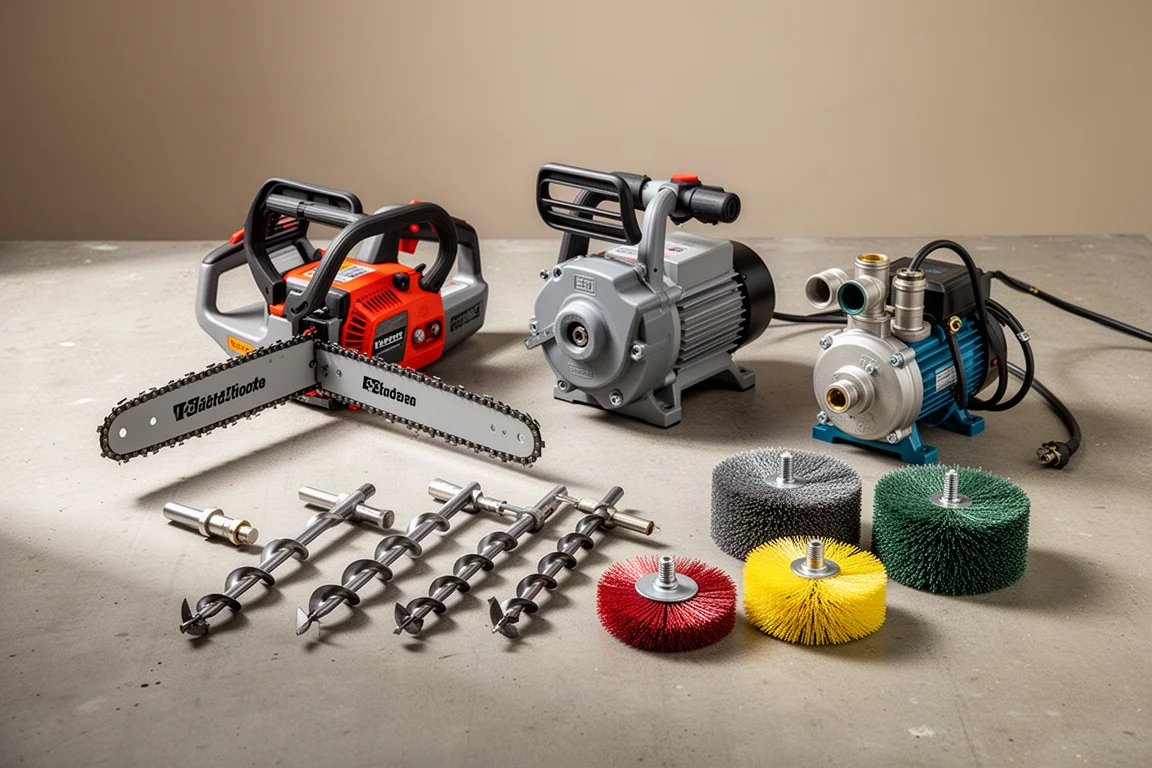
Drill attachments promise a simple deal: instead of buying a dedicated power tool, you bolt a head onto the drill you already own. Some of these attachments genuinely deliver, a few come surprisingly close to a purpose-built tool, and others are a waste of money. We put a full bench of them through hands-on testing, comparing cut times, edge quality, and durability against both manual tools and proper power tools, and scored each one on a one-to-five scale.
How We Evaluated These Attachments
Every attachment was tested on the material it claims to handle, with timed cuts or tasks and a comparison against a reference tool such as a handsaw, manual snips, an orbital sander, or a dedicated power saw. Beyond raw speed, we looked at build quality, blade or bit retention, safety, and whether the result matched what a purpose-built tool produces. Each product received a score from one (sketchy) to five (legit).
Cutting Wood With a Drill
Drill Chainsaw Attachment
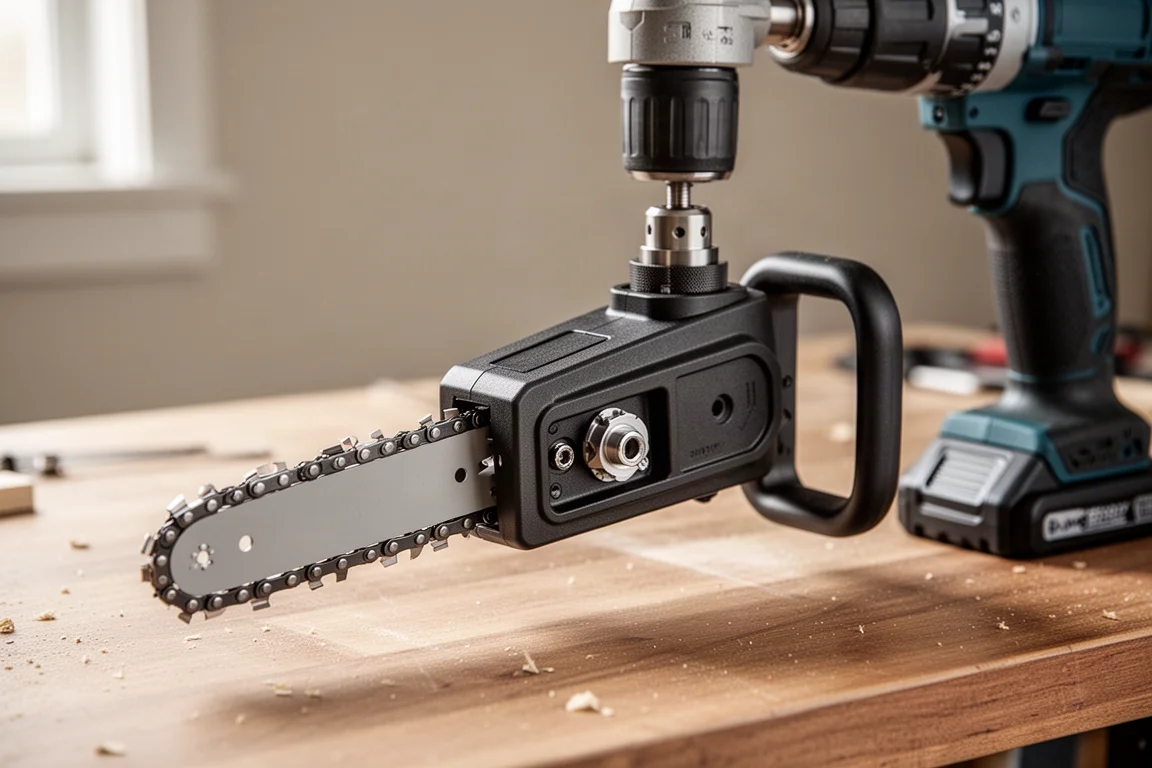
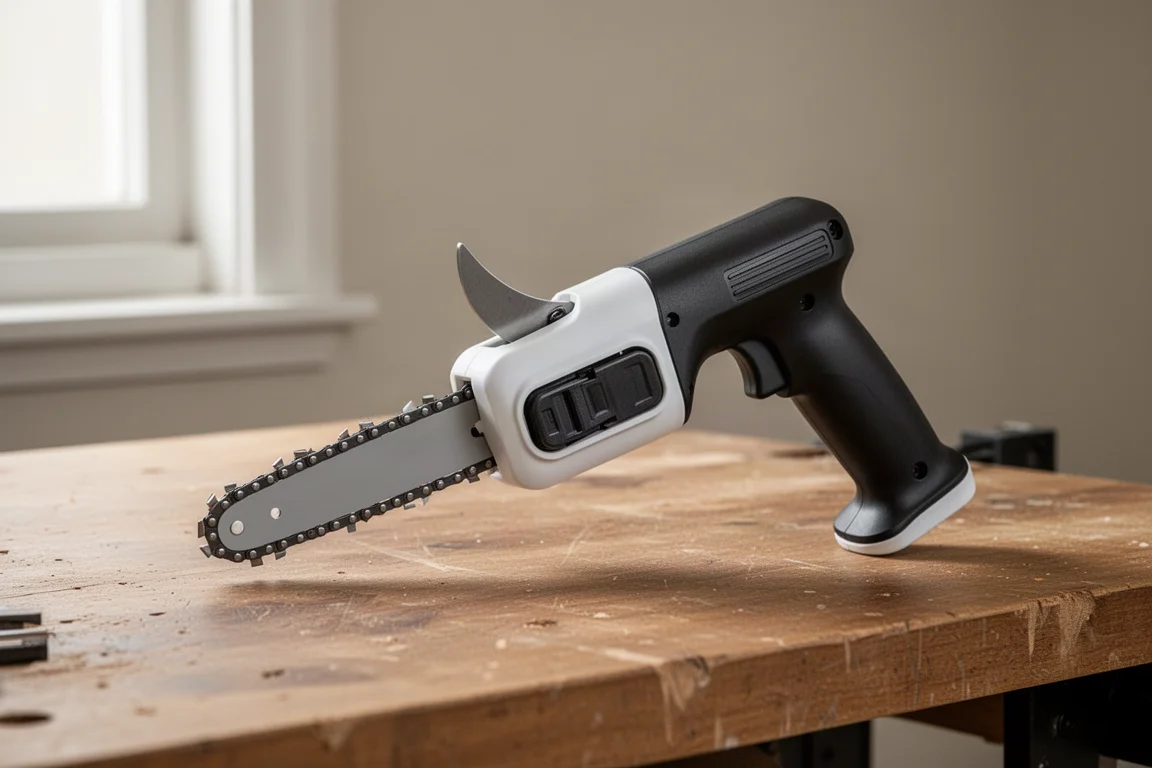
For about $24, this attachment converts an electric drill into a compact chainsaw. It is built from ABS and alloy steel, the handle can be mounted in two different locations, and the manufacturer claims it can cut wood, plastic, and even steel pipe.
Against a manual handsaw that needed 6.34 seconds to cut a 2x4, the chainsaw attachment averaged 3.3 seconds across three cuts with moderate force. It then survived a torture test with heavy force, cutting in around 2 seconds per pass when paired with a powerful drill. The key caveat: it is very light duty and simply will not last forever, but under $20 it is a solid deal.
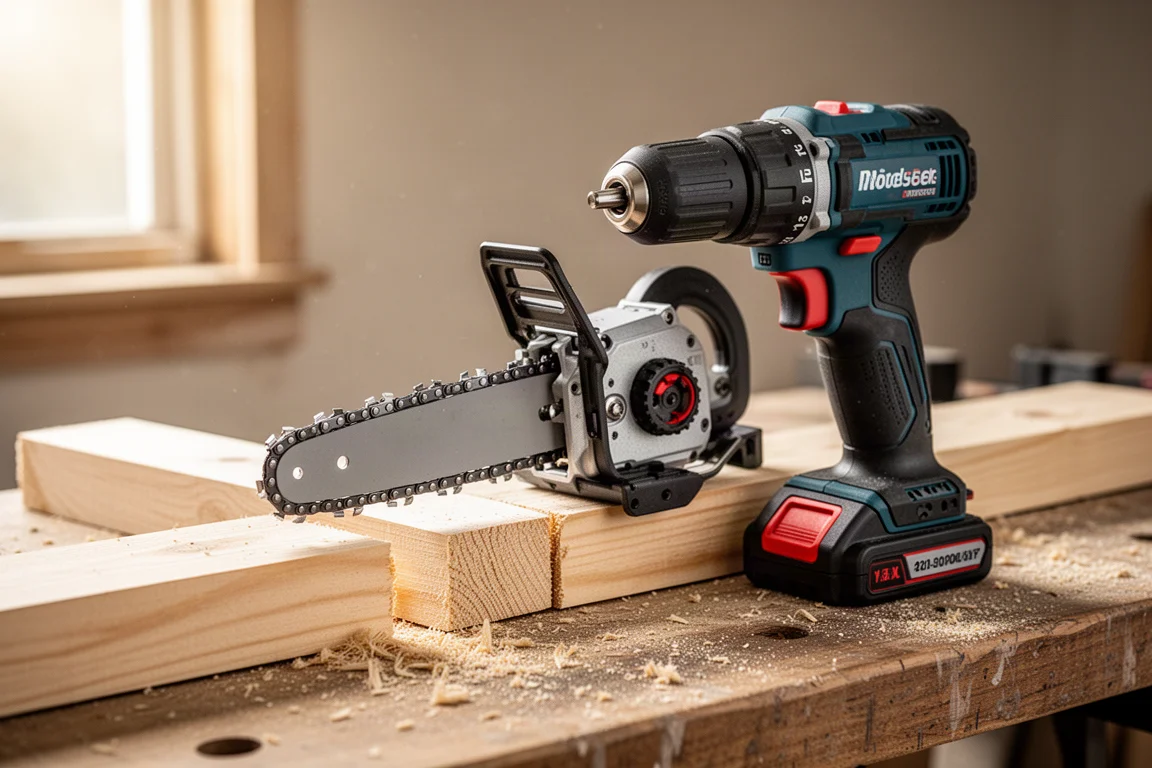
For comparison, the Stihl GTA 26, a dedicated compact chainsaw costing around $180, averaged 3.5 seconds on the same 2x4. It has more chain speed but noticeably less power than a strong drill driving the attachment, and like the attachment it lacks an automatic chain oiler, so the bar and chain must be oiled before use. The four-inch bar model performs well for its size.
Cutting Sheet Metal
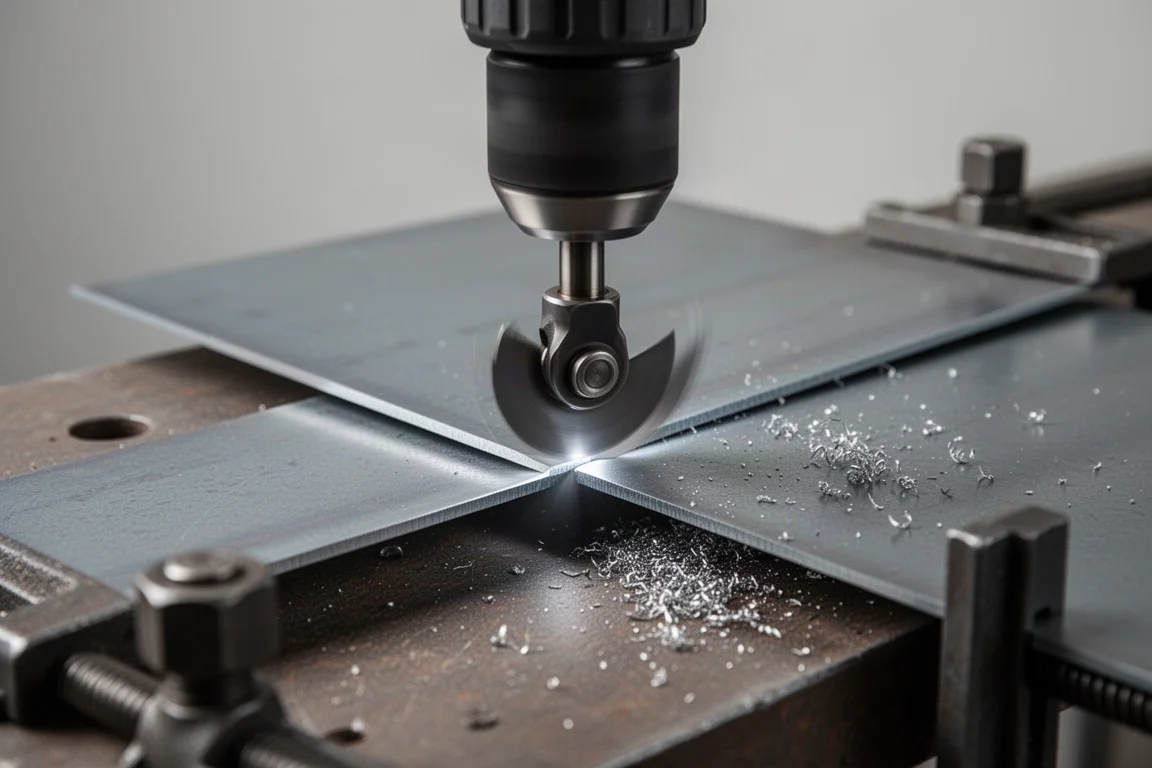
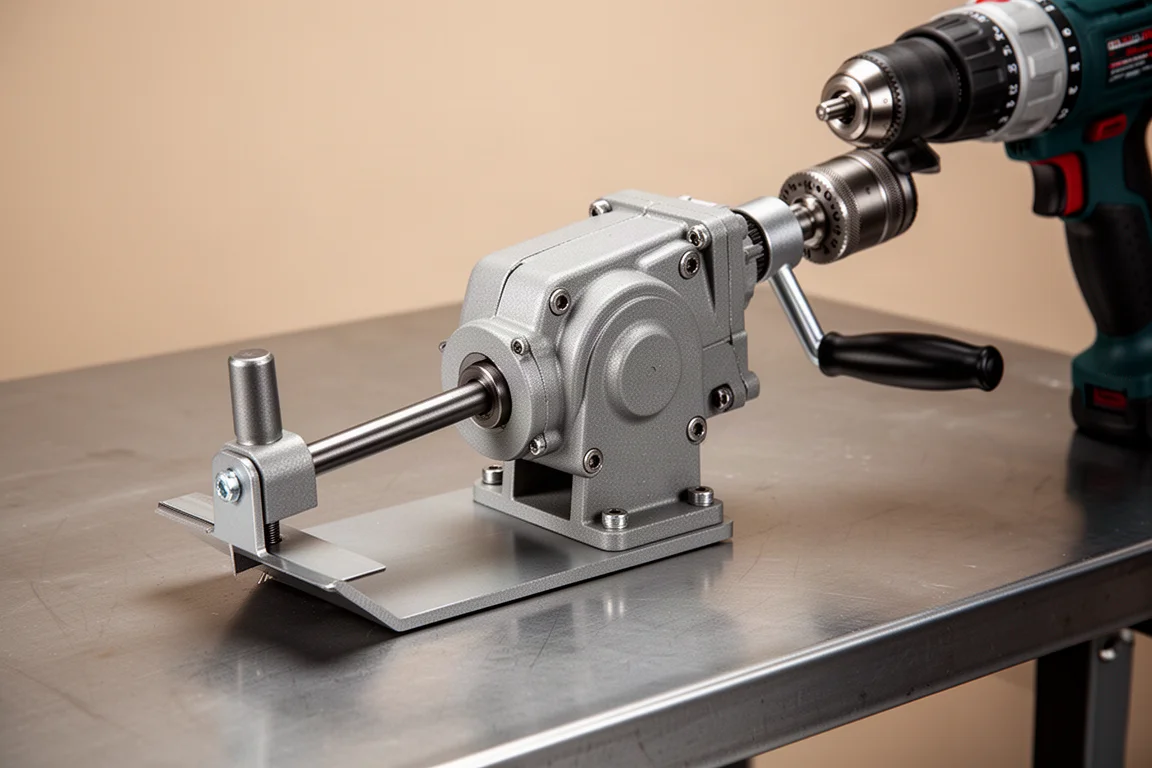
Malco TS1 Turbo Shear
The Malco TS1 Turbo Shear costs around $63 and turns a power drill into a power shear for sheet metal up to 20 gauge. It claims it can navigate tight patterns and square cuts, and it requires a drill running at 1,200 RPM. Unlike most of the products tested, it is made in the USA.
Cutting with the Malco felt just as easy as cheaper heads, but the edge quality is where it separates itself: near-perfect, with no wrinkles. At high speed the edge is slightly less smooth than at a slower feed rate, and on very thick 16-gauge landscape edging it takes more effort, but the tool held up fine. Well designed and clearly built to last, this one earns a five.
Midwest Aviation Snips
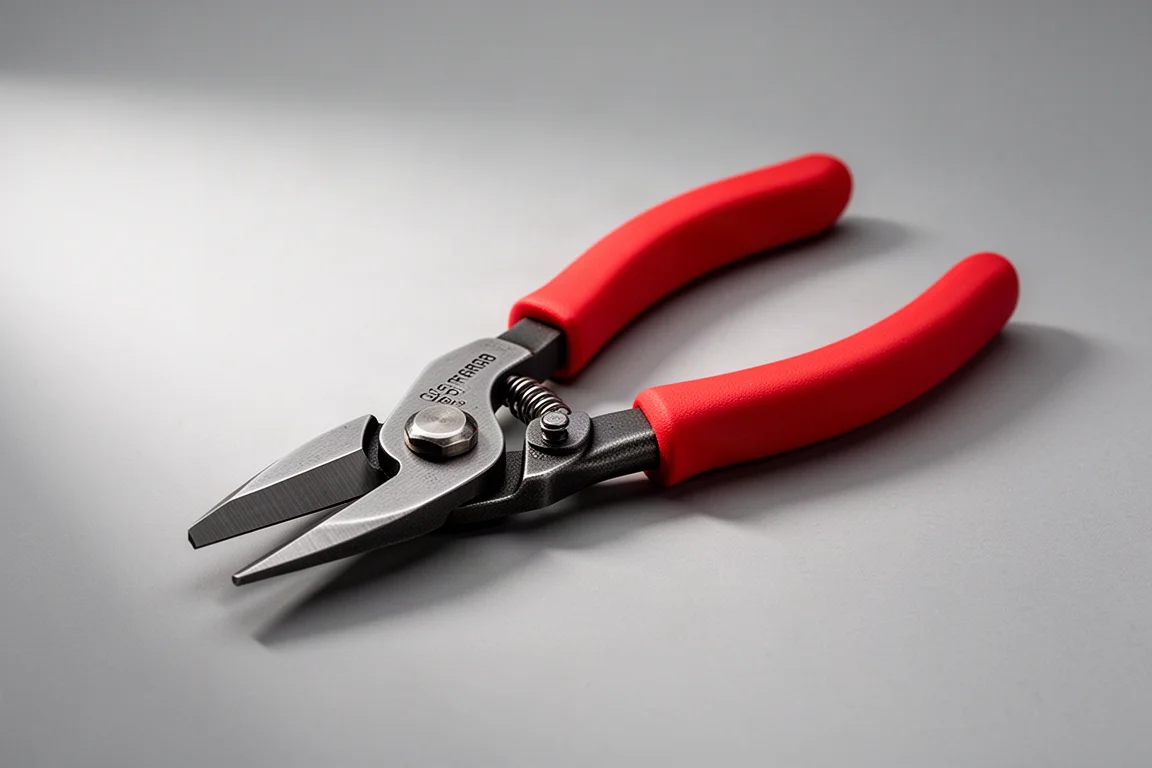
At $38, the Midwest Aviation Snips are a manual option rather than a drill attachment, made in the USA with a forged blade and cushioned power comfort grips. They made very easy work of aluminum flashing and 20-gauge steel, leaving smooth cuts with no wrinkled edges and no track marks.
The trade-off is speed and effort: cutting takes noticeably longer than with the drill-powered shears and requires real hand strength, and on thicker 16-gauge edging they take considerable effort even though they held up. For clean, controlled cuts where edge quality matters most, they absolutely deserve a five.
Reciprocating Saw Attachments
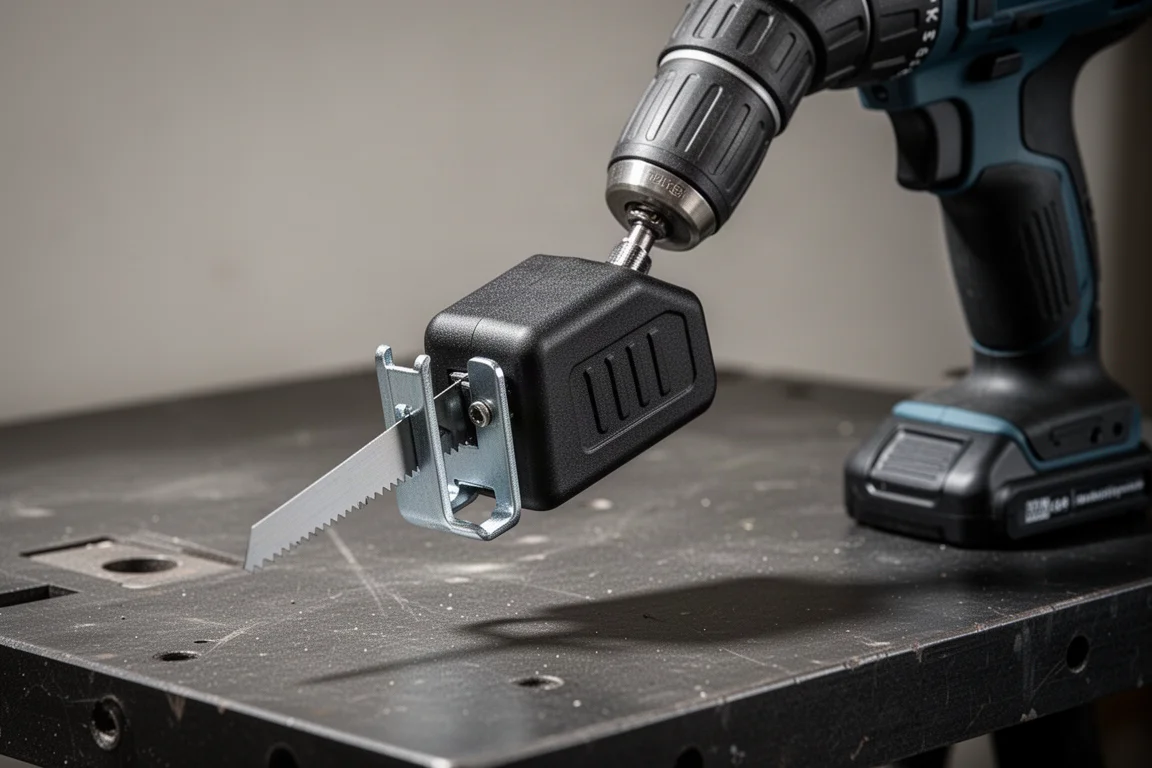
Humdinger Reciprocating Saw
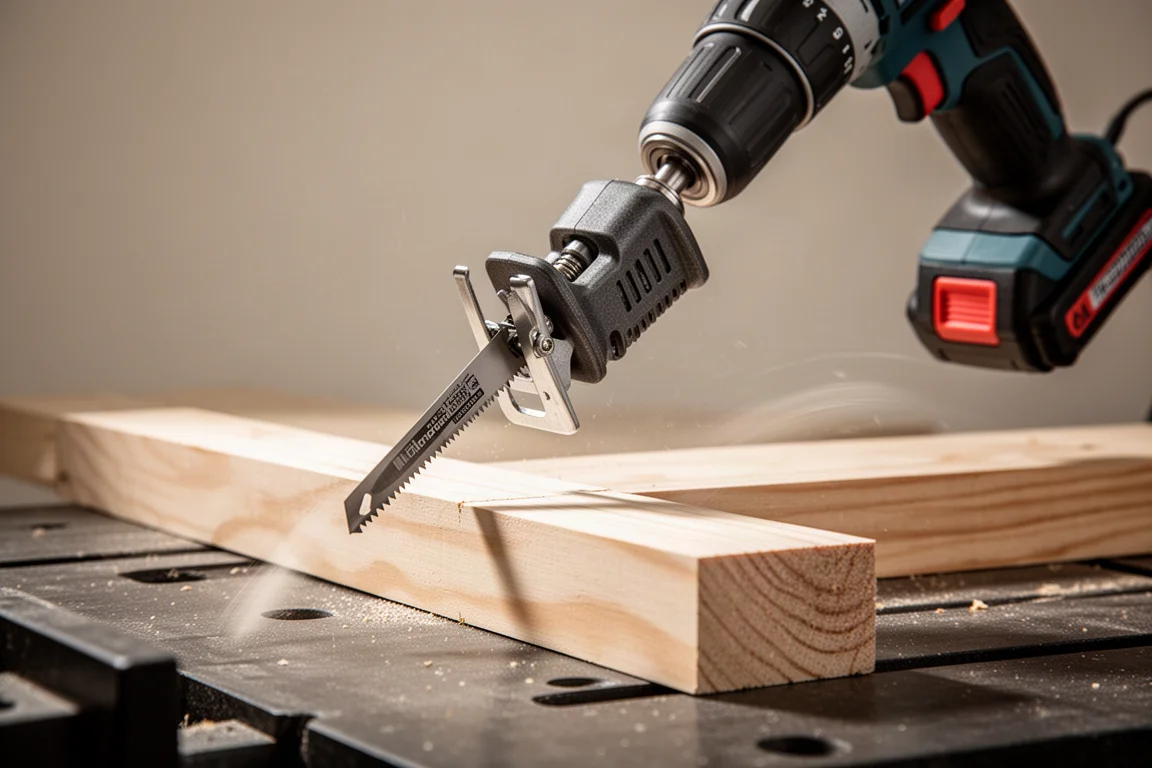
Around $20 buys this Humdinger reciprocating saw attachment, which the manufacturer claims is durable and hard to break, built from high-hardness ABS plastic and steel. It uses a t-shank jigsaw blade, and the tool survived every test even when the blade did not.
Performance is the weak point. The position of the drill and side handle makes the setup inefficient, wood cuts take around 23 seconds (about 3 seconds slower than a competing attachment), and metal-cutting blades run out of steam quickly. With a quality Milwaukee AX blade it cut a board in 5.6 seconds, and with a Diablo carbide blade it handled a metal dowel in 3.3 seconds, but the chuck struggled to hold onto the blade. It is better designed than cheaper clones but still light duty, earning a three.
Paint and Rust Removal
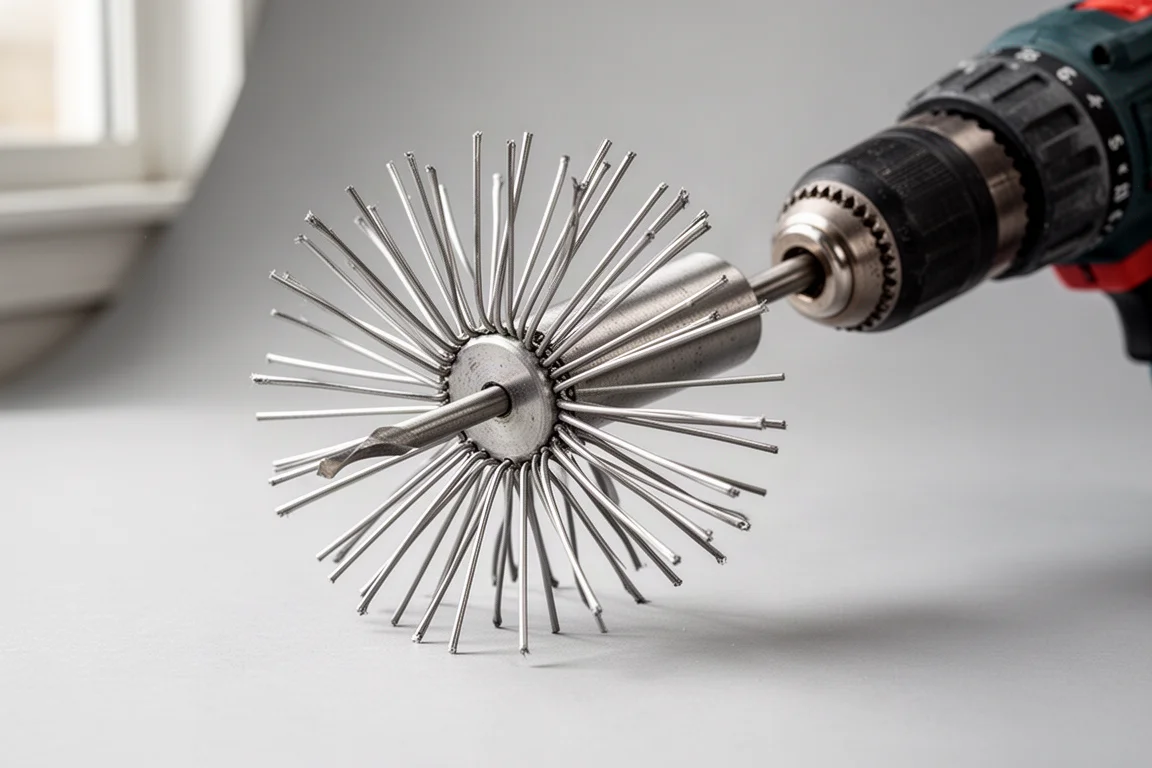
Roto Stripper
The Roto Stripper, an as-seen-on-TV product at $25, claims to turn your drill into a fast, efficient paint stripper for wood, metal, and masonry, with flexible fingers of a carbon steel alloy. Safety glasses are highly recommended here, because the setup is genuinely sketchy.
On wood, it is fast but destructive: it removes a lot of wood along with the paint, leaving visible damage. On painted metal it is more than twice as fast as an 80-grit flat brush attachment, but it causes pitting in the metal, and an ordinary orbital sander with 120-grit sandpaper matched its speed while leaving a far smoother finish. On rusty metal it performed about the same as the flat brush, which is to say poorly. It scores a one for paint on wood and a two for paint or rust on metal.
Drilling and Water Pumping
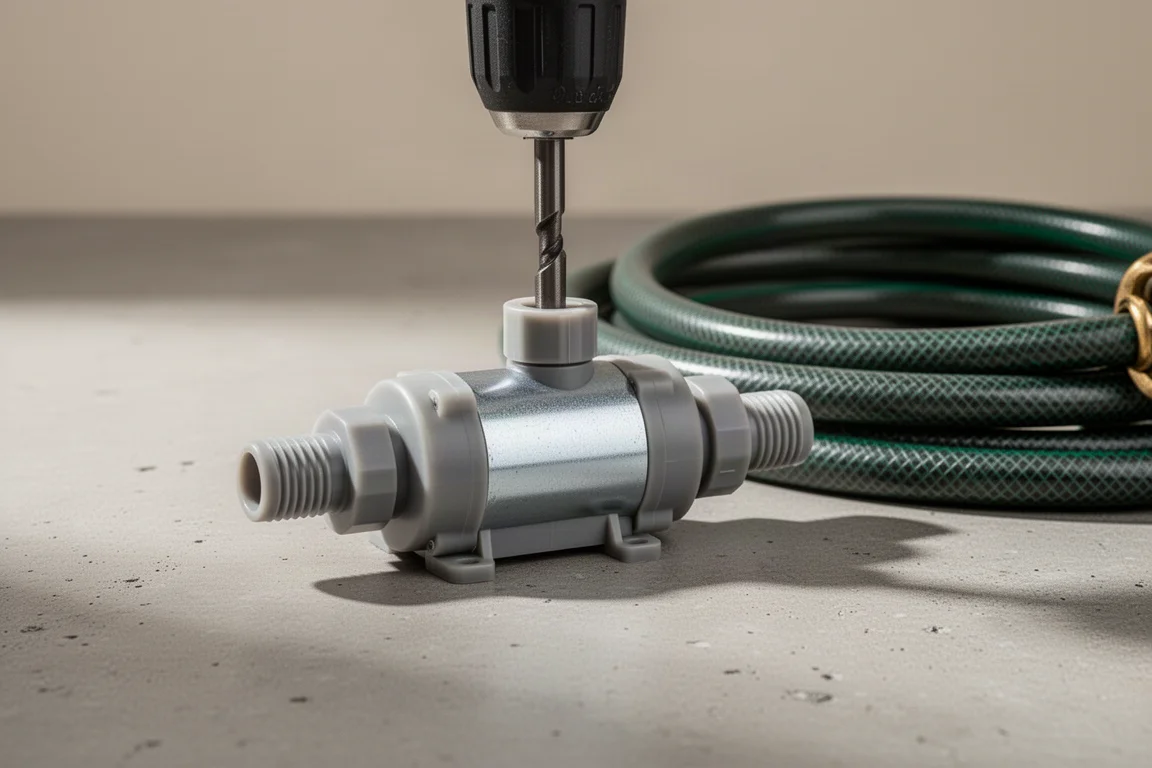
Drill Pump 750
For around $12, the Drill Pump 750 is claimed to move 750 gallons per hour, self-prime up to 12 feet, lift water from 4 feet deep, and fit a standard garden hose. The instructions call for disassembling it after each use and applying silicone grease rather than spray lubricant.
In testing, it moved close to 5 gallons in about 37 seconds, which works out to roughly 500 gallons per hour, not the claimed figure but respectable. A stronger drill held RPM slightly better and finished in about 35 seconds. It is very compact and handy to keep around, a good value at the price, but it is not designed to last. Score: four.
Jay’s Rod Auger
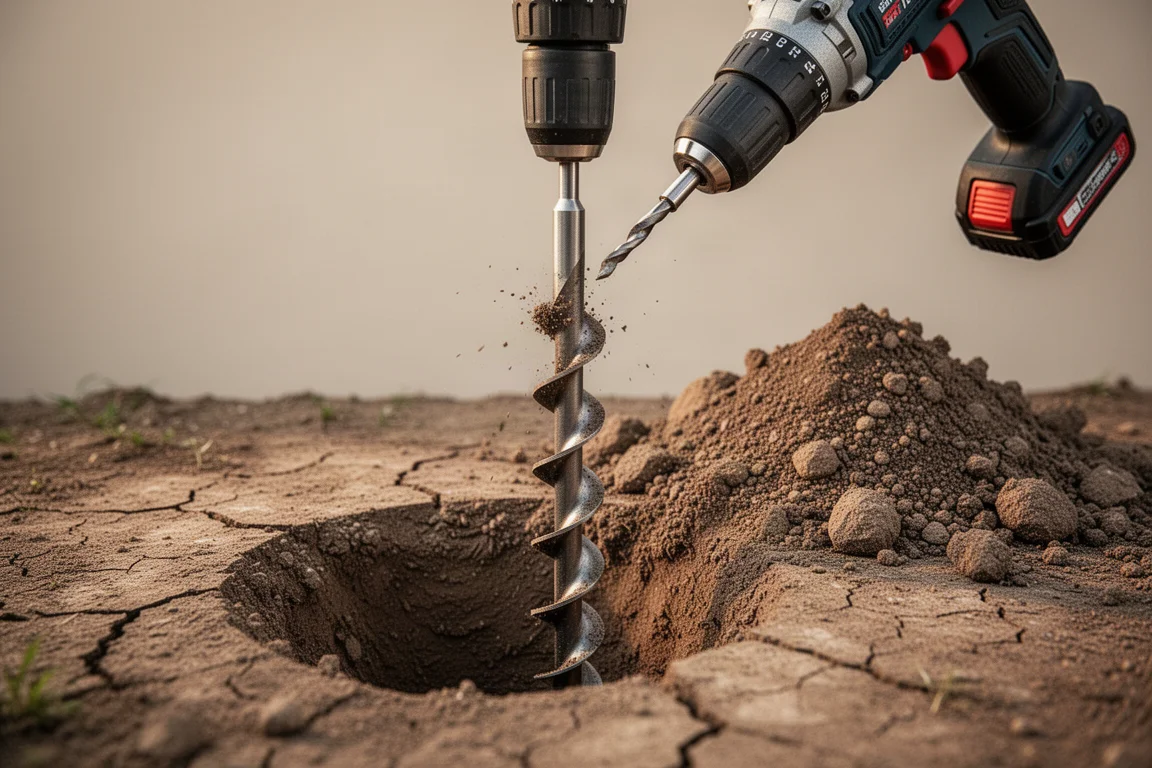
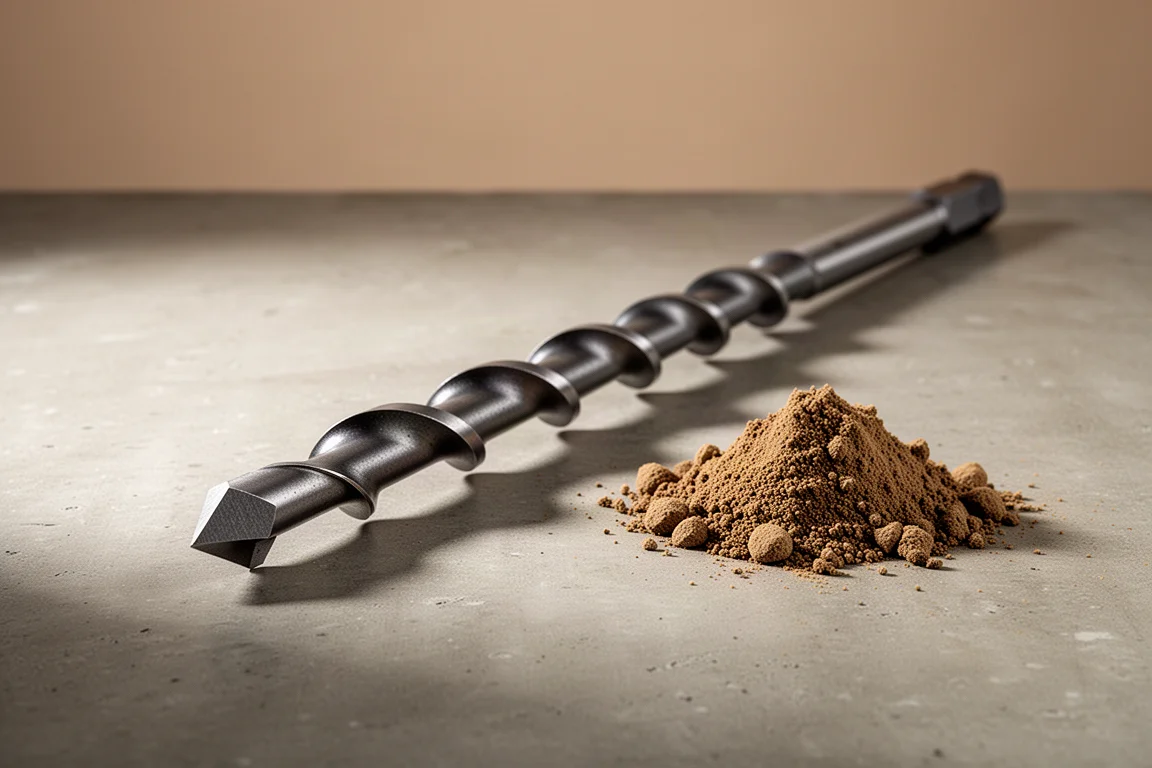
A $24 Macino set includes four auger bits, and in very dry, hard ground the smaller bits dug a hole in about 24 seconds, though the largest bit has a rounded tip that performed poorly in hard soil. You will definitely want a powerful drill with a side handle.
The Jay’s Rod auger at $34 is the more serious option: 18 inches long, boring holes 4 inches wide, with a flat, pointed tip that made real progress in ground where other bits stalled. Considering how hard the soil was, the performance was genuinely impressive, and compared to digging with a post-hole digger it is a much faster approach. It does take some patience and a very large drill, and it earns a five.
Cleaning With a Drill
Drill Brush Attachment Set
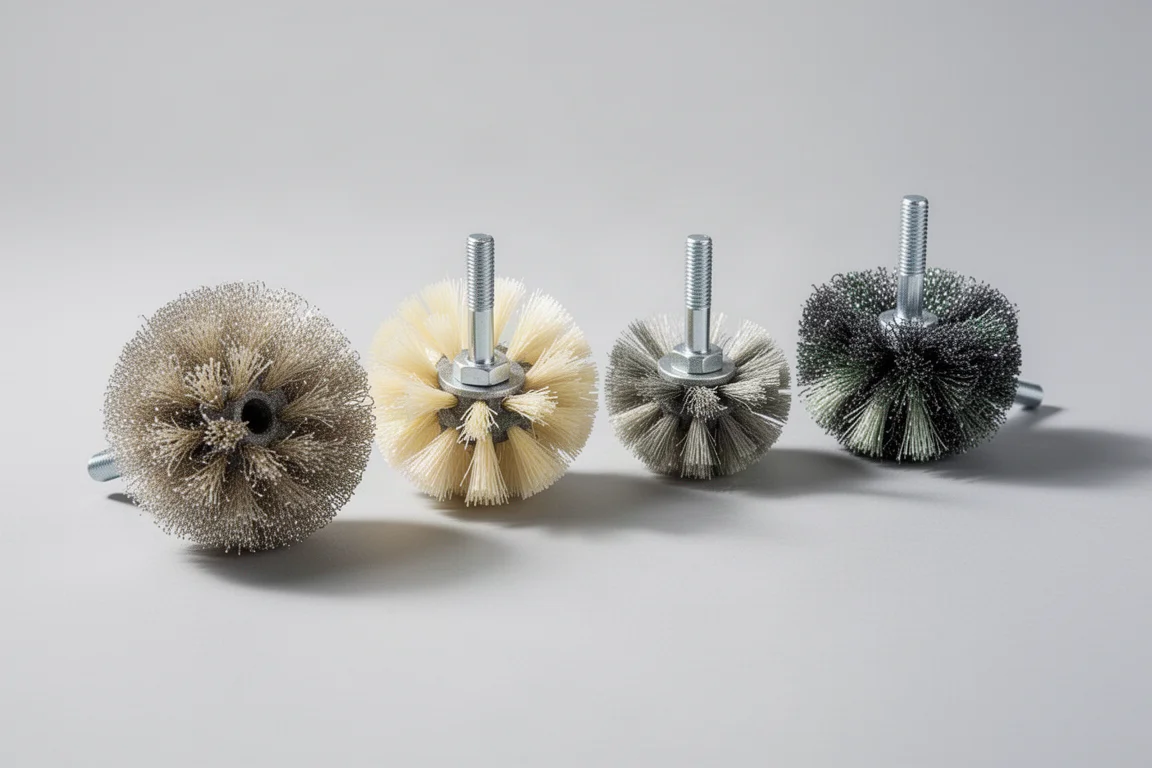
A manual scrub brush needed around 25 seconds of hard work to clean a very small patch of sidewall using water alone. At only $6, this four-piece drill brush attachment set, which claims it can scrub anything from your bathtub to your car wheels, did about twice the work in less than half the time.
The difference is dramatic on jobs like cleaning tires, and the value for money is hard to argue with. Considering the $6 price and the performance, this is one of the easiest recommendations in the entire category, earning a five.
Which Attachments Are Worth Buying
A few patterns emerged from the testing. The winners are attachments that do a simple job a drill can handle: the chainsaw attachment for quick light cuts, the Malco TS1 for clean sheet metal work, the Midwest snips for finish-quality manual cuts, the Drill Pump 750 for occasional water transfer, the Jay’s Rod auger for planting holes in tough soil, and the $6 brush set for cleaning. The clear avoid list includes the sketchy circular saw attachment, the poorly retained reciprocating saw clones, the destructive Roto Stripper, and the small cutting wheel and cut-off wheel kits that are nearly impossible to control on a drill.
Conclusion
Drill attachments are not a replacement for a good tool bench, but the right ones save real money and time. Match the attachment to the job, invest in quality blades where the tool needs them, and pair everything with a powerful drill that has a side handle. Tested on real materials against real tools, these nine earned their place on the shopping list.
Further reading
Related Reviews
Tools & Workshop
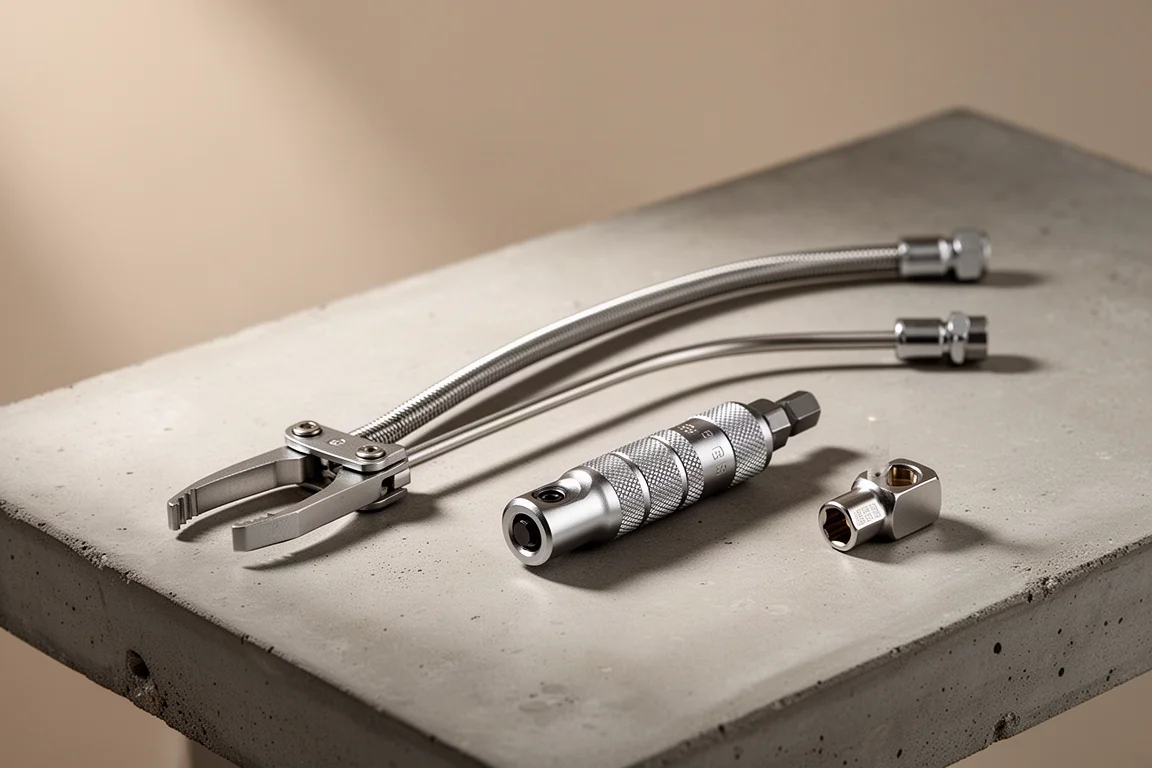
Three Tools That Saved a Tight Dishwasher Installation
A long-reach hose clamp tool, a locking ratcheting bit driver, and a flip socket that earned their spot during a cramped appliance install.
Tools & Workshop
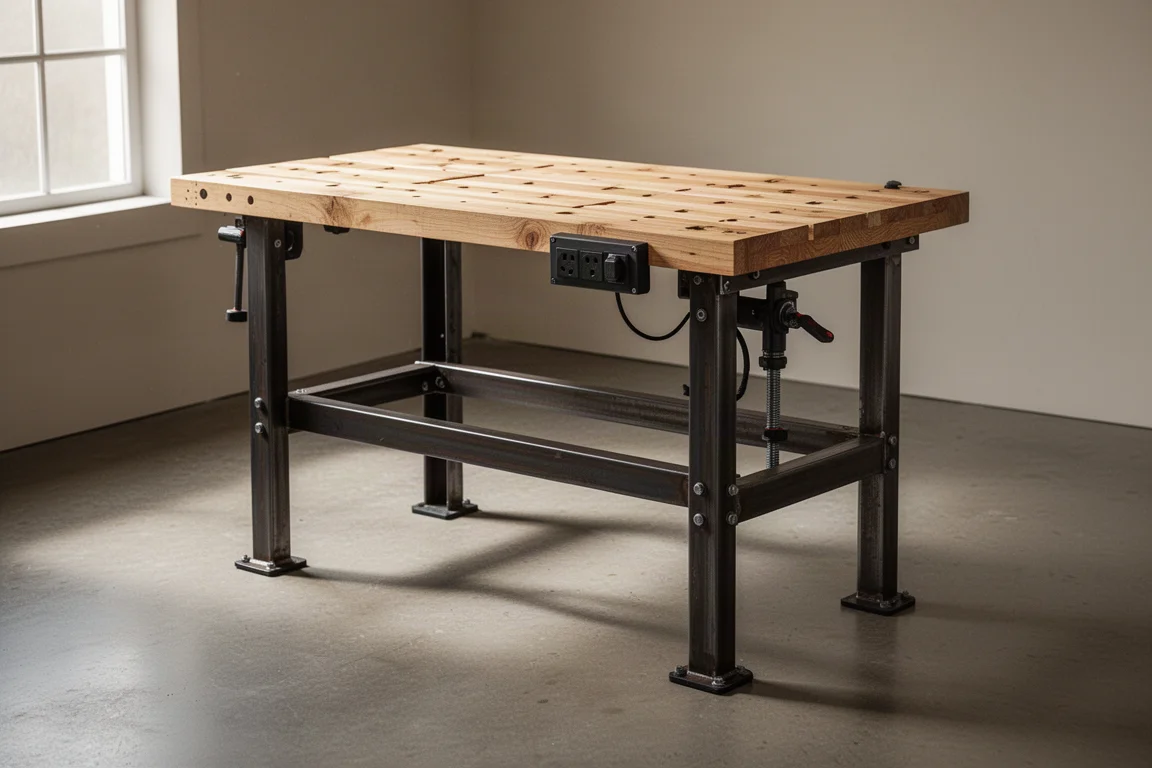
Banggood WB0102 Pro Workbench Review: A Stable, Height-Adjustable Bench for Small Workshops
A heavy, well-priced workbench with a pine top, built-in power strip, height adjustment, and a straightforward assembly that takes under 30 minutes.
Tools & Workshop
Best 50 ft Extension Cords: 15 Cords Put Through Real-World Testing
Fifteen 50 ft extension cords compared on blade strength, abrasion resistance, voltage drop, plug retention, and cold weather flexibility.