Garage Tools
DIY Oil Change Essentials: Three Tools That Make the Job Easier
Doing your own oil changes can save serious money and time. Here are the gloves, funnel, and drain pan that make it simple, plus a few tips that prevent expensive mistakes.
Introduction
With vehicle maintenance costs climbing, more owners are looking at the work they can safely handle at home. Oil changes are one of the easiest wins: one recent brake job on a Ram 2500 saved around $1,000 in labor, and changing oil on two trucks at home saves roughly $100 per service and about two and a half hours of waiting around each time. Over roughly four oil changes a year, that is around $400 back in your pocket, and the entire tool kit pays for itself in about one oil change.
This guide covers the tools that actually make the job easier, because most how-to content focuses on the procedure and skips the gear. The picks below come from real use on a Ram 1500 and a Ram 2500, and they apply just as well to cars.
Why Do Your Own Oil Changes?
The math is simple. Shops charge for labor, and that is the bulk of the bill. Doing the job yourself eliminates that cost entirely, and the process on most trucks is straightforward enough to learn from a few walkthroughs before you start.
One caveat: if your vehicle is not lifted or unusually tall, plan for ramps or jack stands to get enough clearance underneath. Neither of the trucks involved here needs them, but a standard car usually does. Safety comes first before anything else on this list.
Best Gloves: Cool Job Disposable Gloves
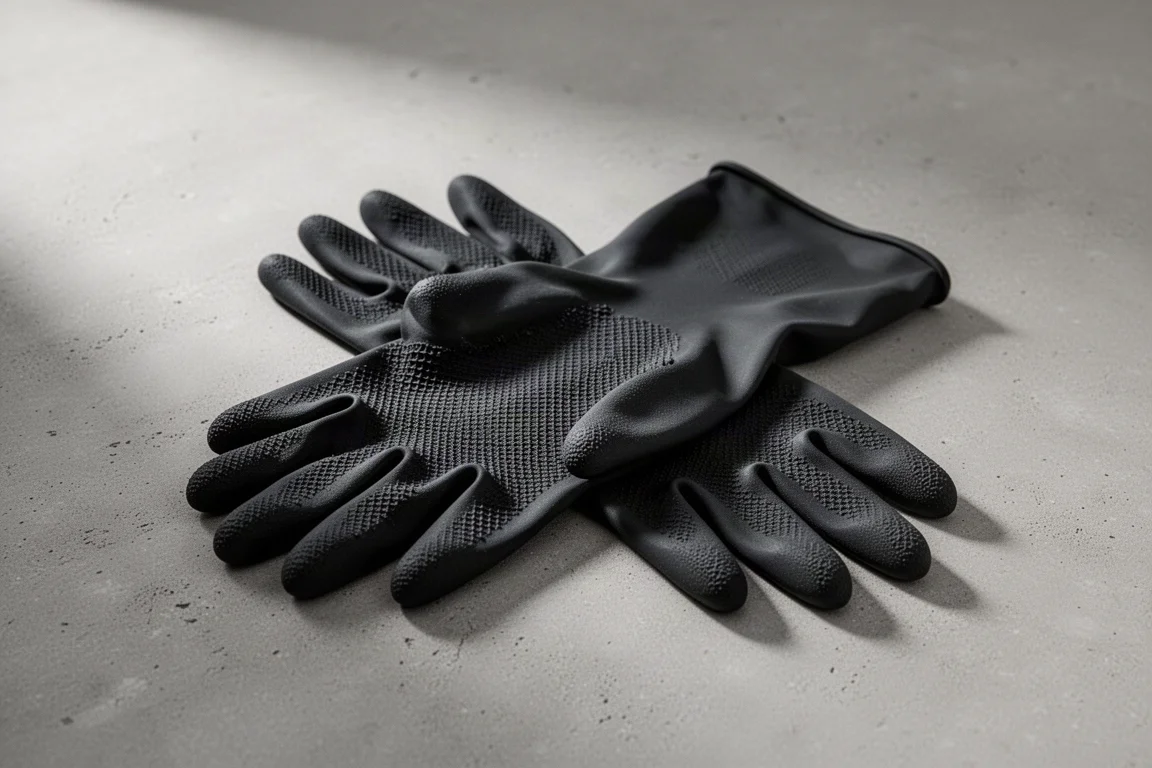
Disposable gloves seem like a trivial purchase, but the right pair makes the whole job noticeably easier. The Cool Job gloves stand out for two reasons: they are thickened, and they have genuine grip texture on the surface. Even when your hands are coated in oil or grease, you can still hold onto bolts, filters, and drain plugs without things slipping.
Durability has been impressive. Across multiple boxes of use, they have yet to rip during a job. A single box covers roughly 30 or more oil changes depending on how many pairs you use per service, and they work for plenty of other garage and household tasks too. For around the cost of a small accessory, clean hands for the life of the box is an easy call.
Do Not Forget the Oil Filter Wrench and Drain Plug Technique
Two more items belong on every shopping list even though they are not featured picks here.
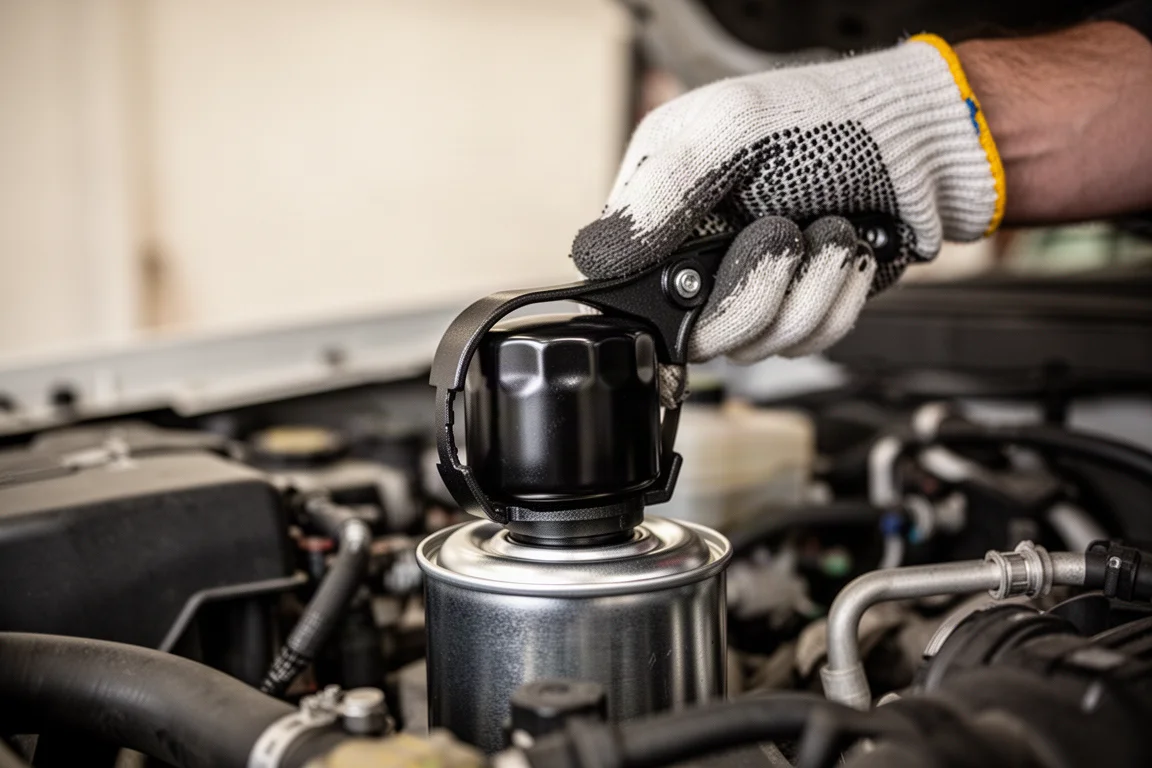
First, an oil filter wrench. Three styles were tried: a cap-style wrench, a strap type, and a top-mounted contraption. The cap-style came out clearly ahead for filters with open access. It does not crush the filter and it turns it cleanly, which is exactly what you want. If your filter sits in a tight spot, one of the other styles may be the only way to reach it, so know your engine before buying.
Second, use the correct tool on the drain plug. Always use a six-point socket or the six-point end of a wrench. Never use a 12-point socket or the open end of a wrench on a drain plug. Rounding off that bolt underneath your vehicle turns a 15-minute job into a frustrating repair or a shop visit, so this one detail matters more than almost anything else on this page.
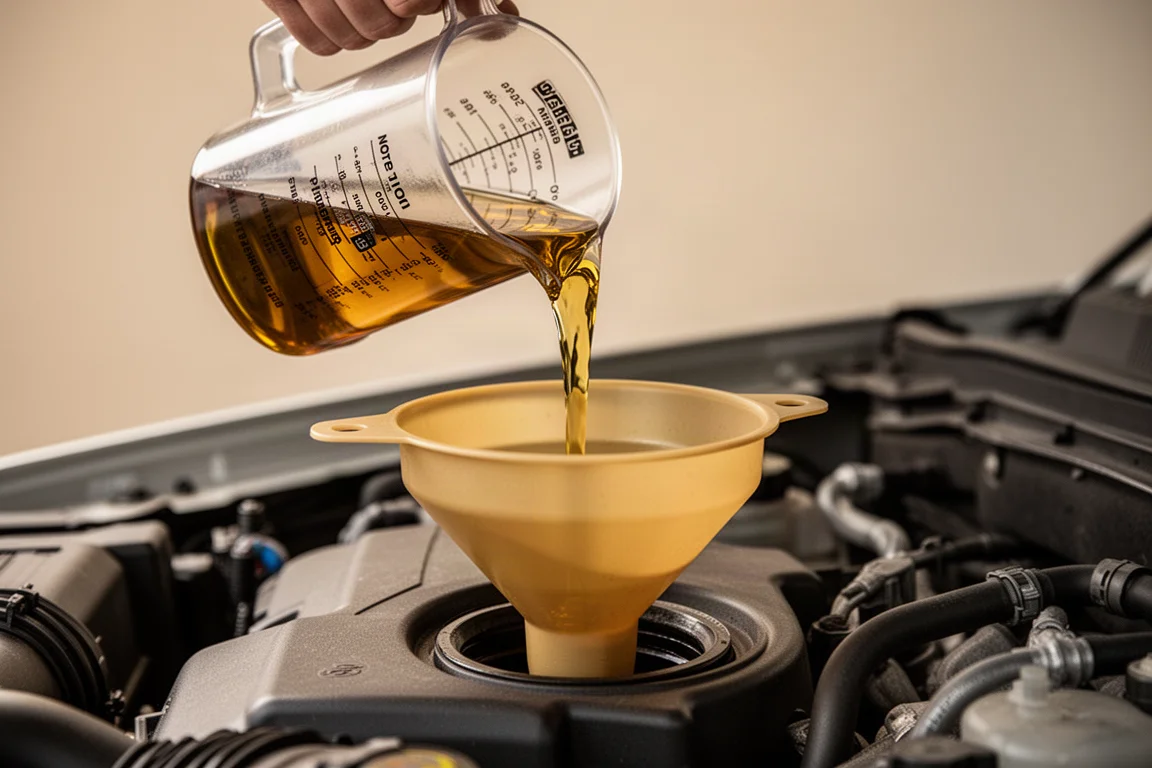
A Garage Measuring Cup Sounds Unnecessary, But It Is Not
This one seems like a novelty until you use it. A garage-specific measuring cup that holds one quart or one liter makes filling far easier, especially if your vehicle is lifted or has a deep engine bay. Both trucks here take seven quarts, which means standing on a ladder and hoisting a five-quart jug over the engine bay repeatedly to check the level.
Instead, fill the cup one quart at a time, pour it in, repeat. It is light, controlled, and eliminates the fumbling. It is strictly optional, but it is one of those small buys that makes the job feel easy rather than awkward.
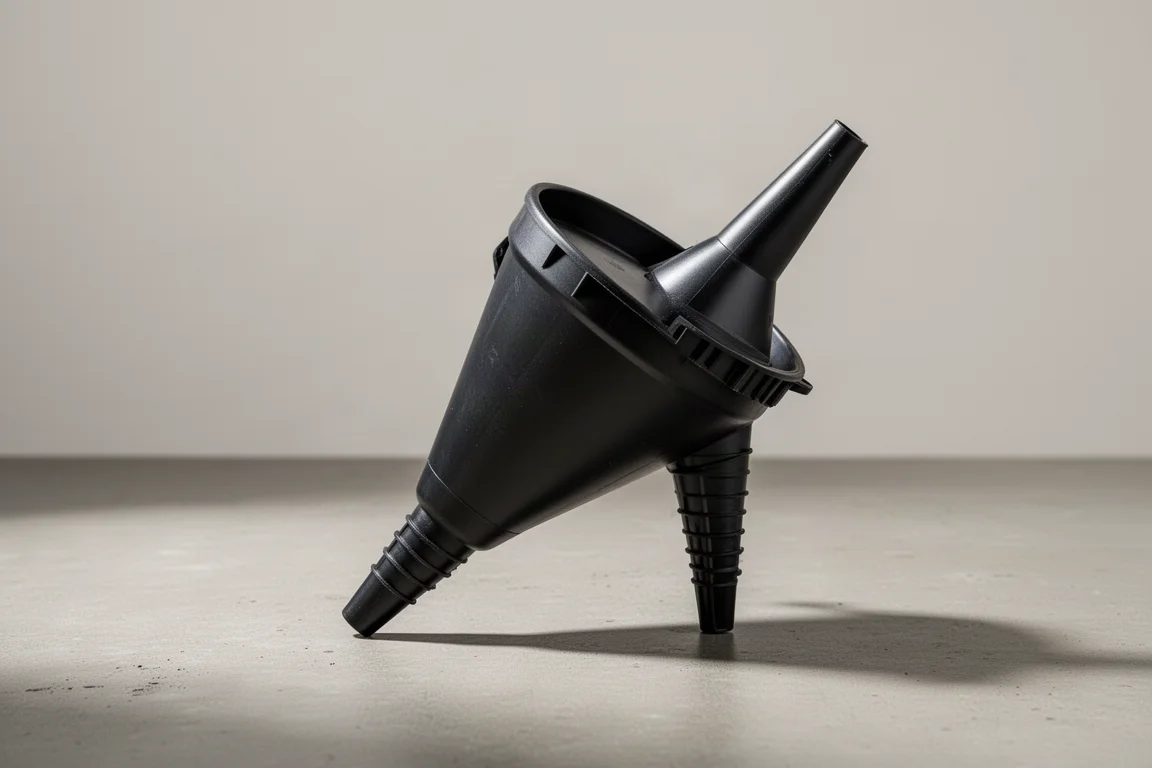
Best Funnel: FloTool Quick Fill Funnel
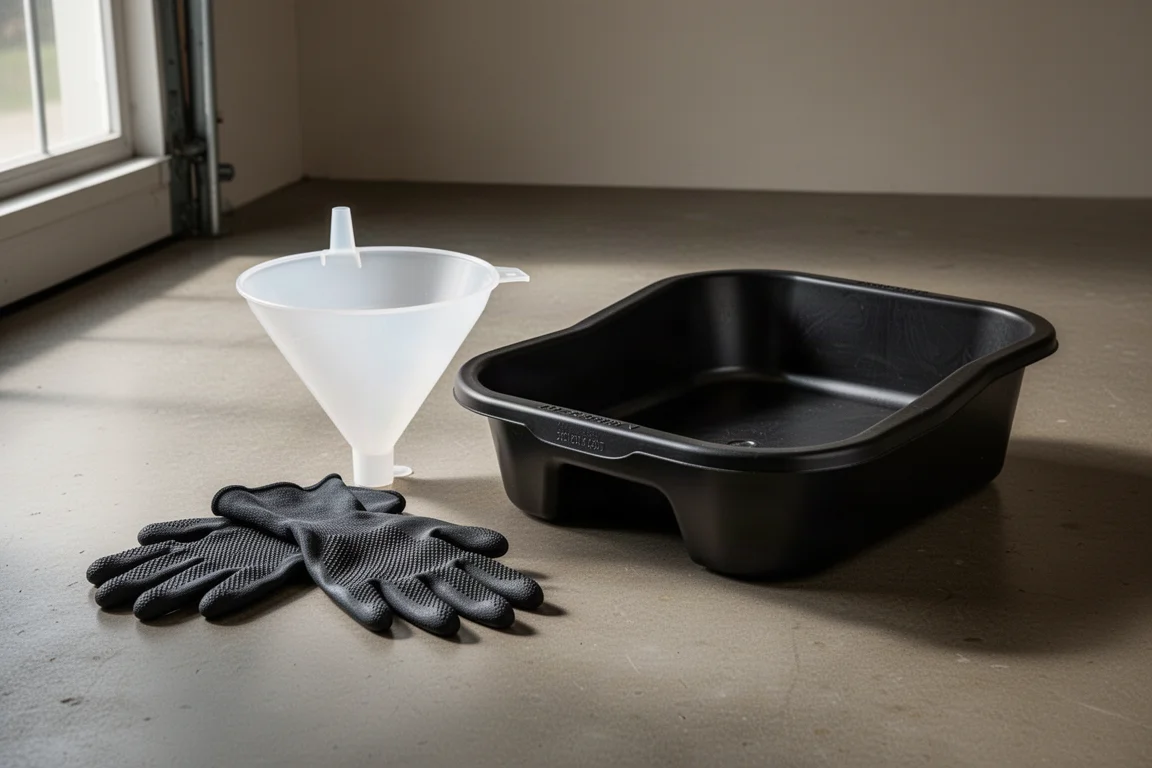
A funnel is a funnel until it tips over mid-pour. The FloTool Quick Fill funnel fits neatly into the oil fill ports on both trucks, stays put while pouring, and feels appropriately heavy duty. It handles the two-quart-per-service pour without any fuss.
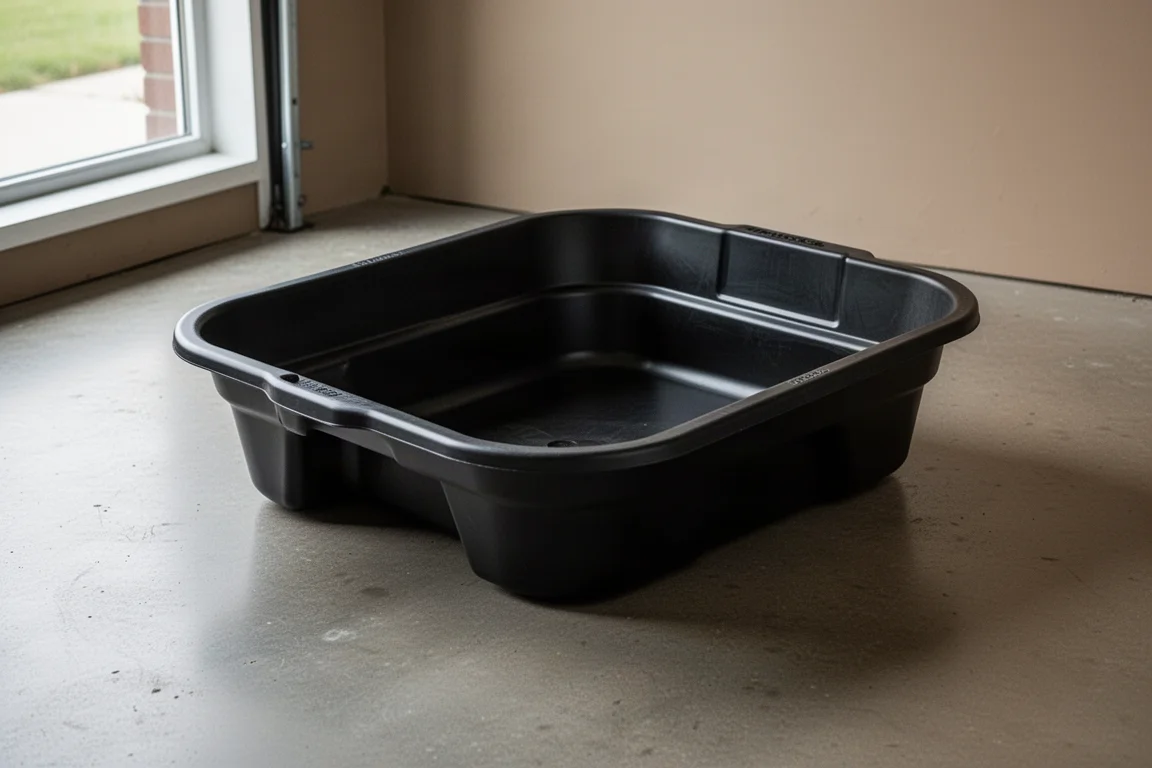
Best Drain Pan: FloTool 20 Quart Less Mess Drain Pan
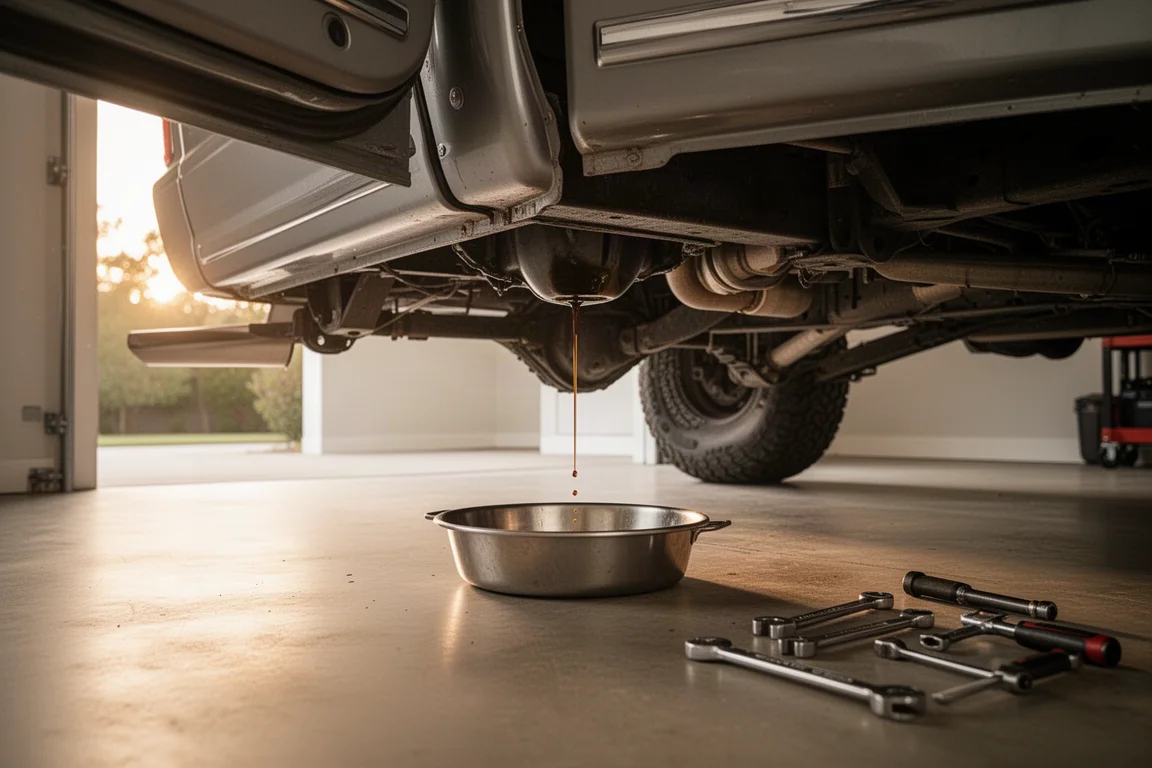
Here is the most counterintuitive tip: buy a drain pan much larger than you need. Both trucks hold seven quarts, but the FloTool 20 quart less mess pan only fills about a quarter of the way during a drain. That extra capacity matters because a nearly full pan is miserable to move without spilling.
With headroom left, you can slide the pan across the floor and pour the used oil back into empty bottles for safe transport and disposal. A smaller 10-quart pan filled nearly to the top leaves no room for that. The oversize pan turns cleanup from a careful balancing act into a simple transfer.
Cheap Insurance: Keep a Spare Drain Plug
This final tip sounds ridiculous until the day it saves you. Keep an extra oil drain plug on hand for each vehicle, gasket included. They cost about five dollars, and if you damage the threads, mar the gasket, or lose the plug mid-job, a spare turns a potential disaster into a non-event.
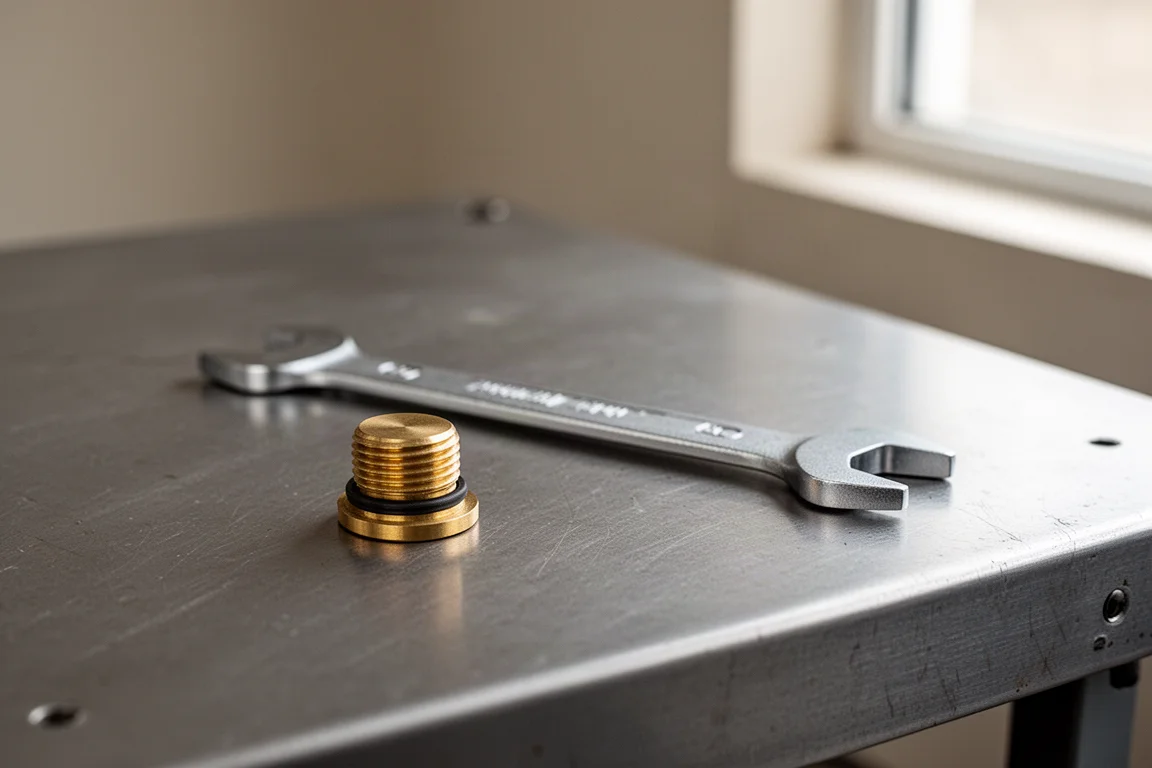
Paired with the six-point socket advice above, this covers the two most common ways a simple drain plug job goes wrong.
Buying Advice and Final Thoughts
The full setup pays for itself in roughly one oil change, so cost is rarely the obstacle. What matters is buying the right versions of each item: thick grippy gloves instead of thin ones, a cap-style filter wrench if your filter is accessible, a heavy funnel that stays put, and a drain pan significantly oversized for your sump capacity.
If you are still on the fence, start with the gloves and the drain pan. Those two remove the messiest parts of the job, and everything else builds from there. Watch a walkthrough for your specific vehicle first, then gather the tools listed here, and the job will go far more smoothly than you expect.
Further reading
Related Reviews
Garage Tools
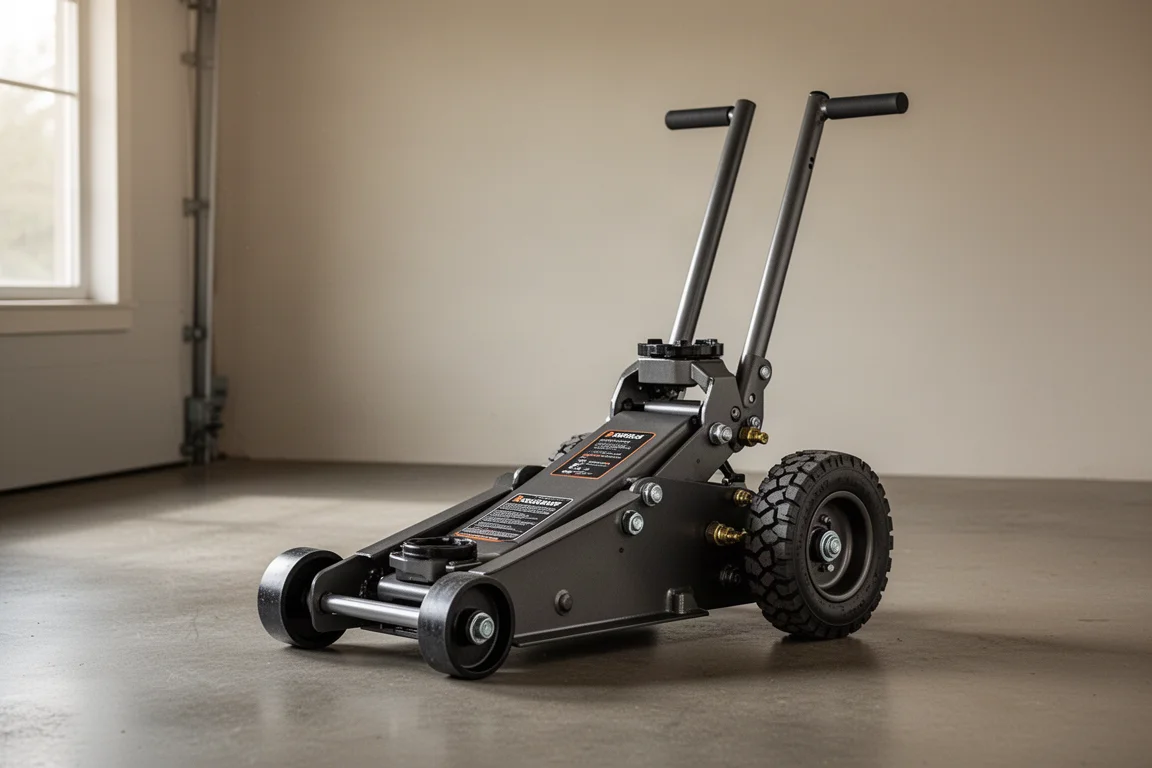
Badland 3-Ton Off-Road Jack Review: A Shop Jack That Handles Dirt Roads
Harbor Freight's SEMA-buzz Badland 3-ton off-road jack promises rugged build quality and easy mobility. We compare it with the 3-ton Long Reach Daytona to see who it really suits.
Garage Tools
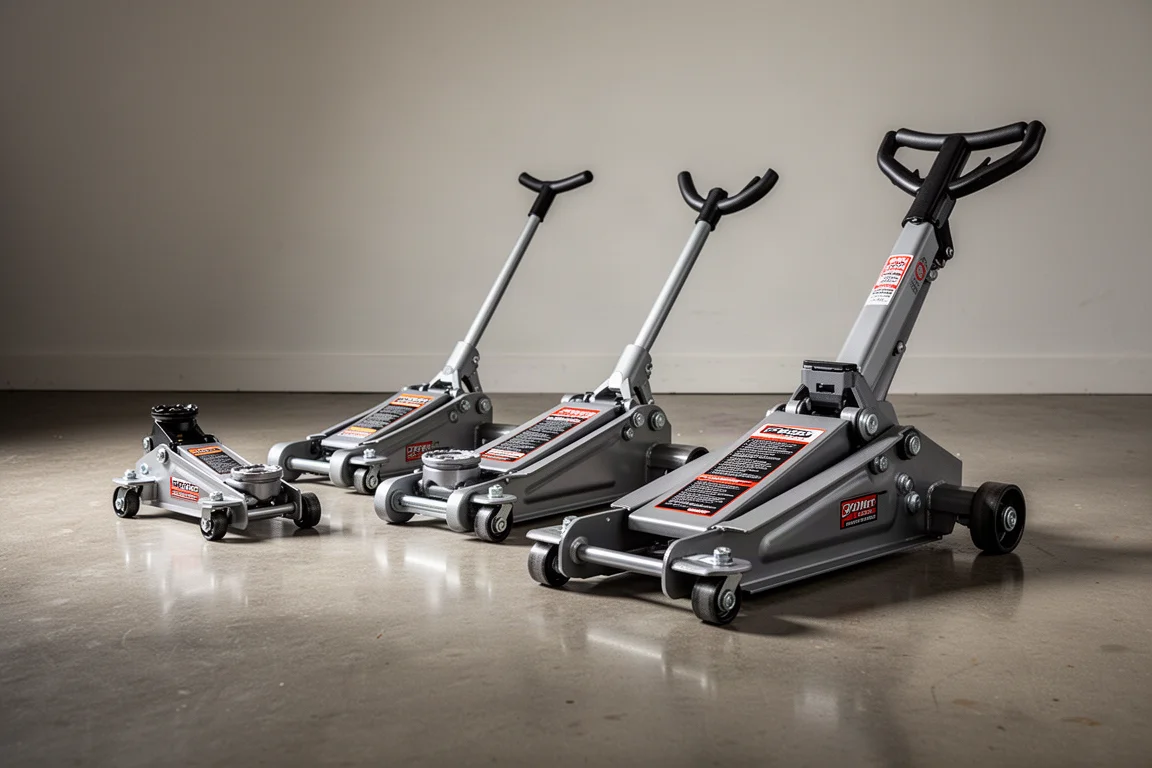
Best 3-Ton Floor Jacks Compared: Four Options for Every Type of Wrencher
A hands-on comparison of the Hyper Tough, Badland, Daytona low-profile long-reach, and Carlisle 3.5-ton floor jacks, with real measurements and buying advice for each type of user.
Garage Tools
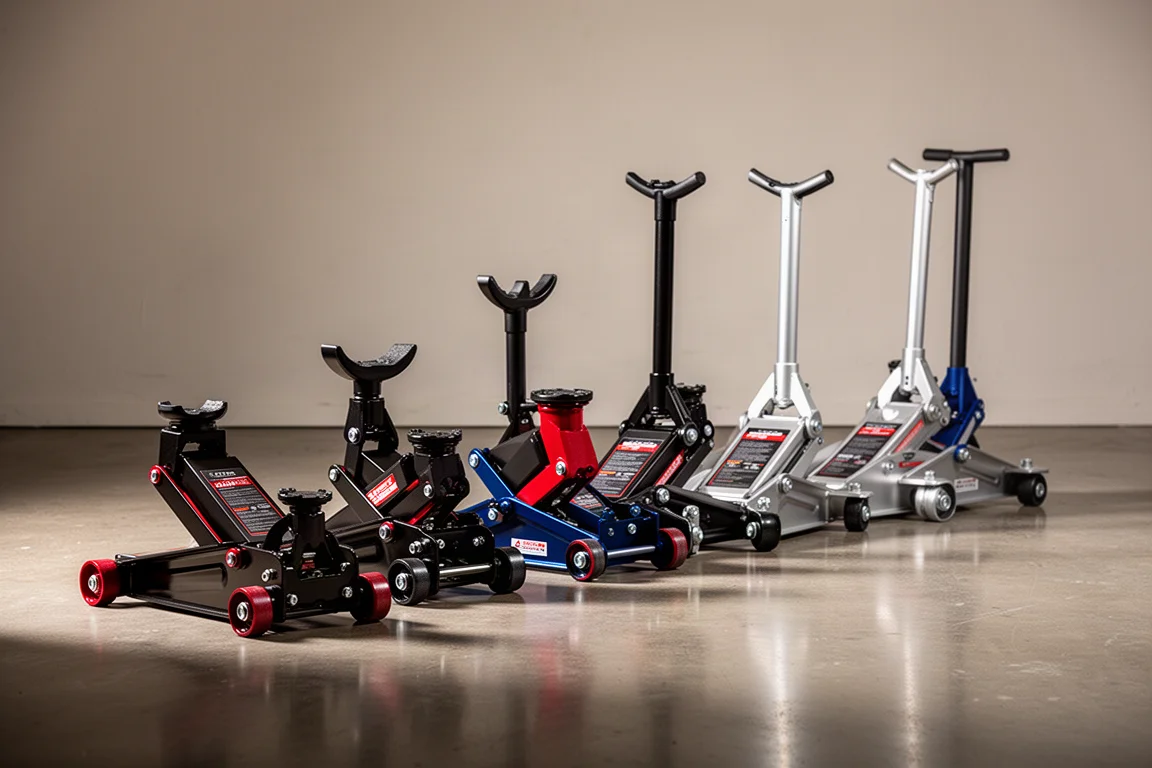
Best 3-Ton Floor Jacks: 8 Models Put Through the Same Tests
Eight 3-ton floor jacks from $93 to $1,000, compared on lift height, pump speed, capacity, rolling resistance, and build quality.