Tools
Digital Angle Gauges Compared: Klein, Milwaukee, Johnson and Sin Tools 935 DL
Four budget-friendly magnetic digital angle gauges tested side by side, plus a feature-packed favorite that avoids their biggest annoyance.
Introduction
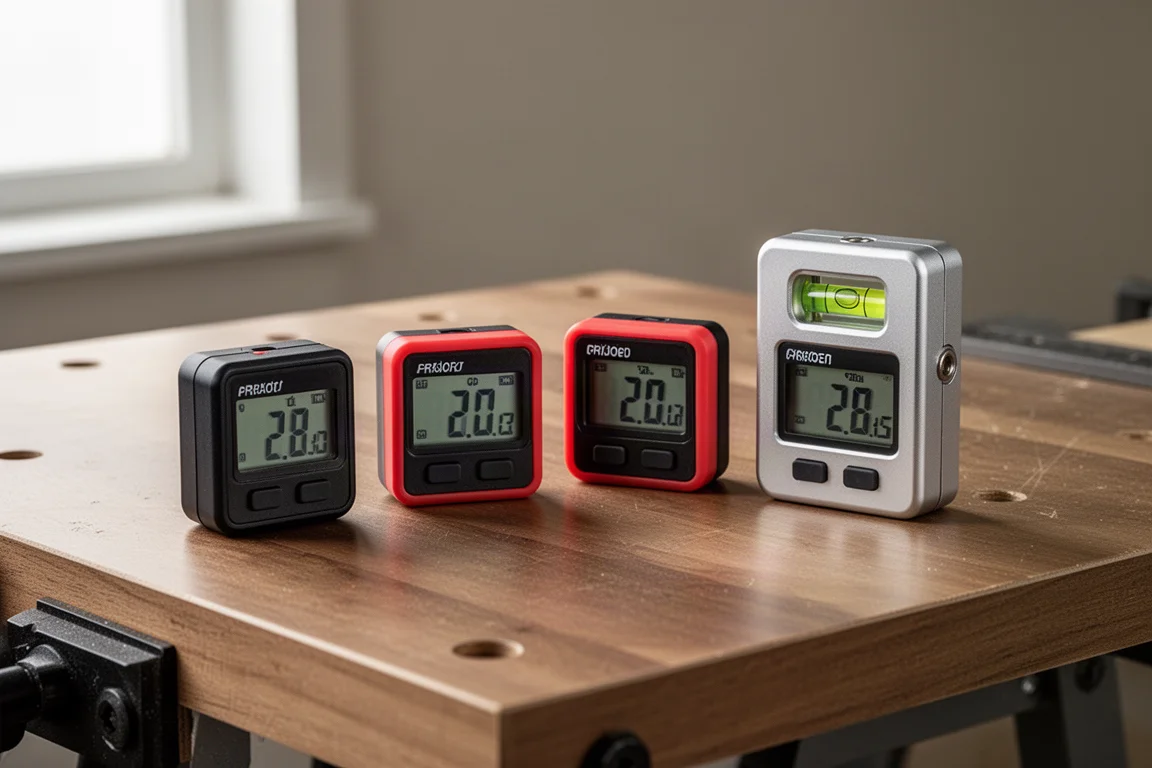
Small, square, battery-powered digital angle gauges are one of those tools that sound like a gimmick until you actually use one. They snap onto saw blades, table surfaces, or anything magnetic, and give you a fast angle reading without fumbling with a protractor. This comparison looks at three similarly priced models from Klein, Milwaukee and Johnson, plus one step-up option from Sin Tools that has earned a permanent spot in the toolkit.
All three of the budget gauges sell for roughly $25 to $30, maybe a dollar or two over depending on where you shop, so the differences come down to accuracy quirks, usability and the small details like the included case.
What They Share
The Klein, Milwaukee and Johnson gauges are built around the same basic idea. Each one measures angles in different orientations, each has a magnetic base that snaps onto metal surfaces, and each offers a zero function, which is handy when you want to measure a change in angle rather than an absolute value.
They all also ship with small velcro-style cases, though the quality differs. Klein’s is the softest and heaviest of the three, Milwaukee’s is a solid second, and Johnson’s case feels like almost an afterthought.
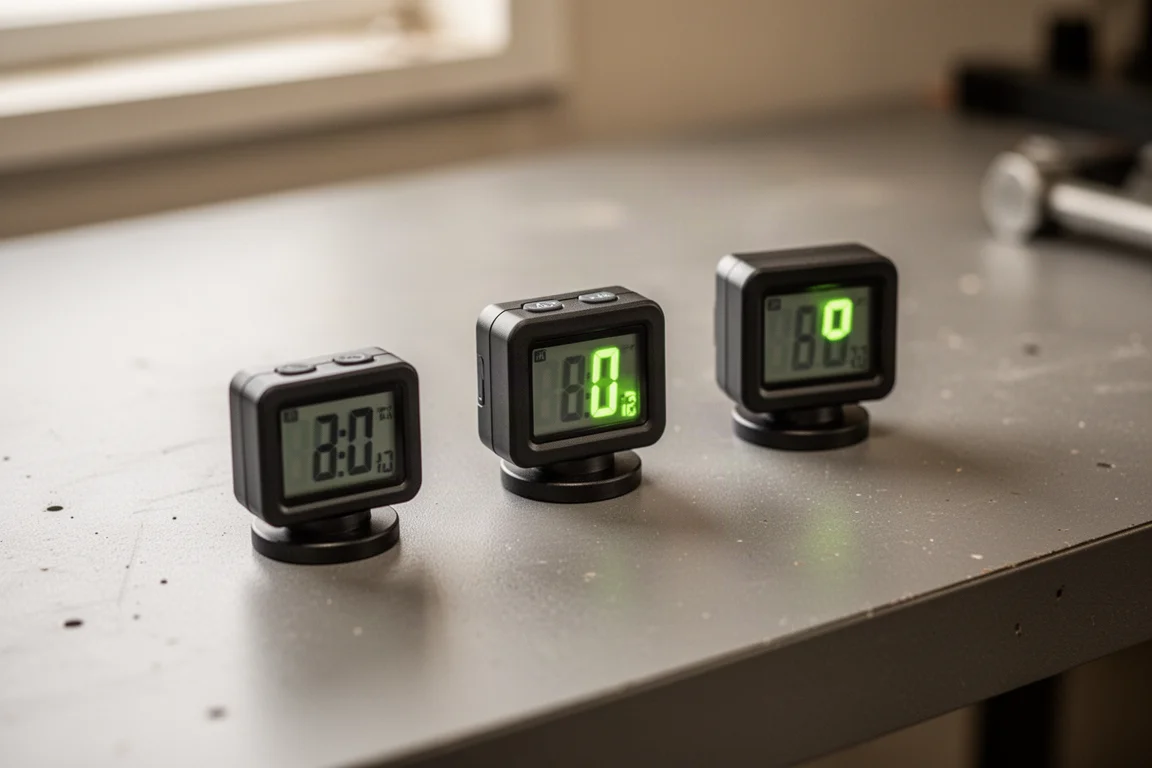
In quick testing on a flat surface, all three produced readings in the same general neighborhood, with only tenths of a degree between them. For quick, non-critical work, any of them will do the job.
Klein Digital Angle Gauge
Klein is the pick of the budget trio here. Its case is clearly the nicest, and the unit itself handles awkward positions better than the others. Notably, it works upside down, continuing to display a readable number when flipped, which matters more than you might expect when you are checking an under-surface angle in a tight spot.
Lined up against the others on a flat reference, its readings stayed in close agreement, and when the gauges were leaned against a tilted reference at around 15 degrees, Klein’s number tracked closely with the group.
If you want the cheapest way in and you care about the small details, Klein is the one that really killed it in this comparison.
Milwaukee Digital Angle Gauge
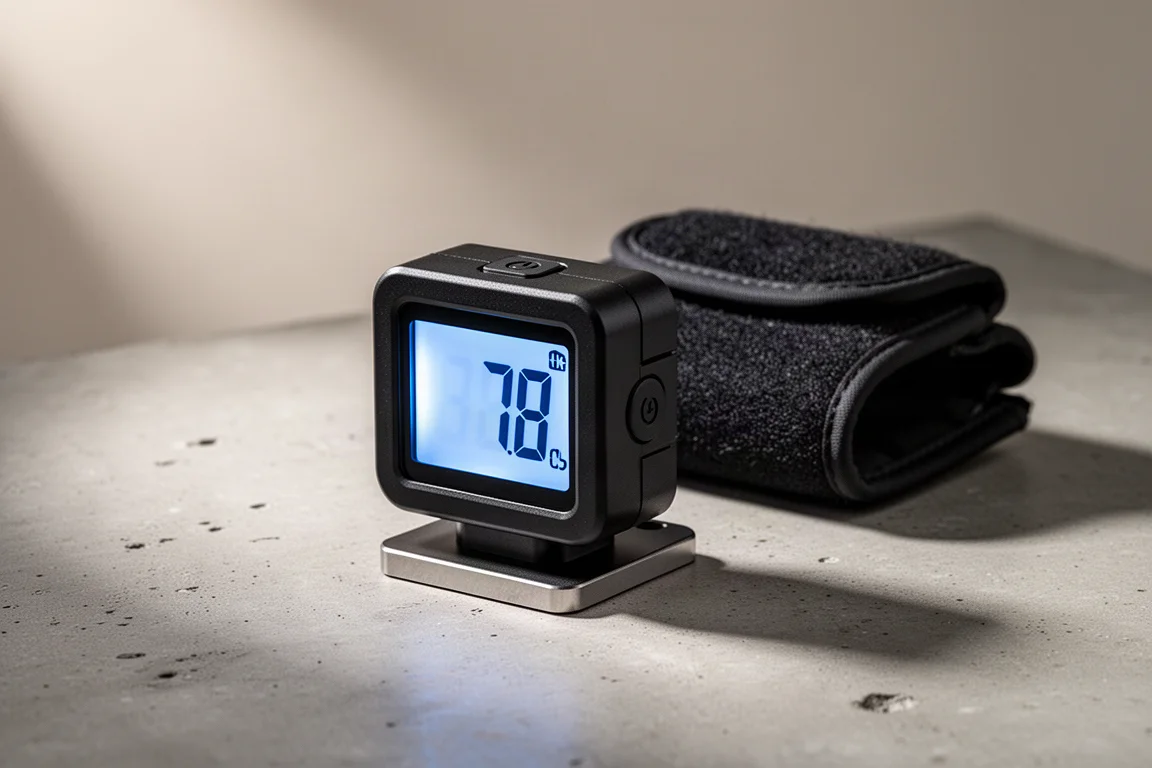
Milwaukee’s gauge performs very similarly to Klein’s, which will surprise nobody who has compared the two brands. Its case is a step behind Klein’s but still well made, and it handled being turned upside down without issue.
One small practical win: when tilted while upside down, the Milwaukee unit kept working smoothly. Where it stumbles slightly is in sideways orientation, where its own magnets appear to cause a bit of interference with the reading, and like the others it throws an error message when tilted too far off the flat reference plane.
Johnson Digital Angle Gauge
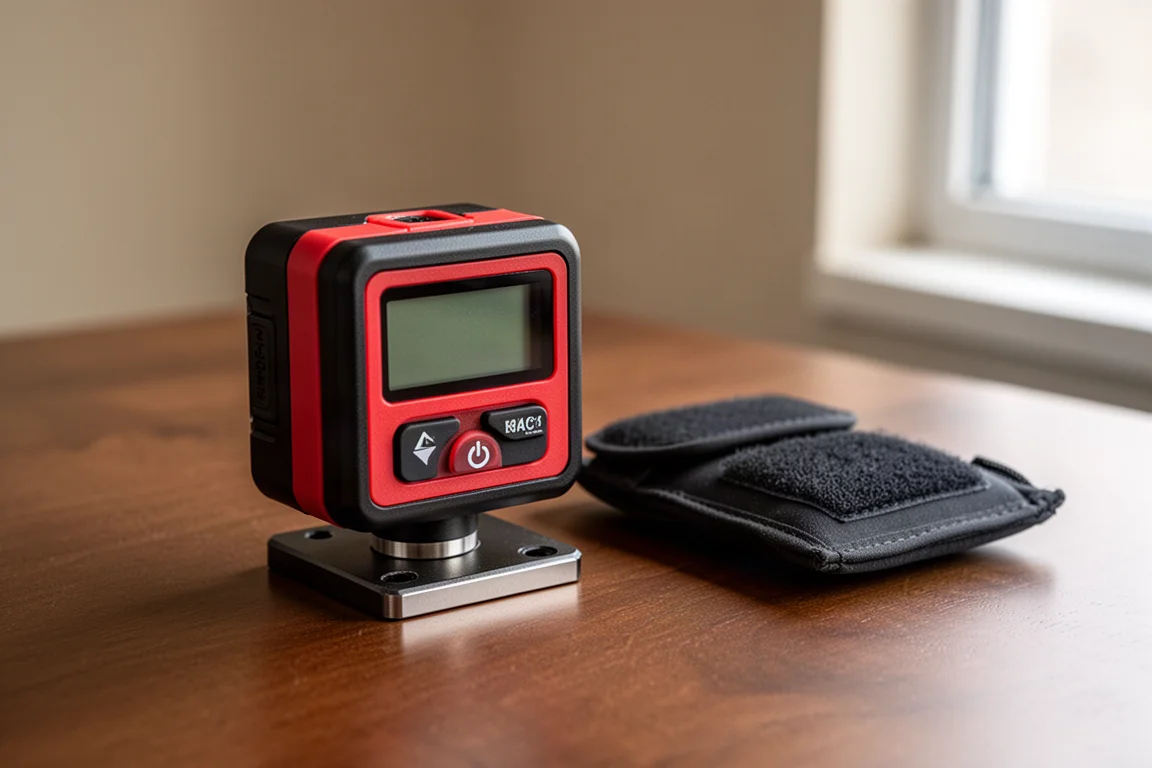
Johnson rounds out the budget trio at a similar price. On a level surface it took a moment longer to settle on a reading than the other two, and when leaned against the tilted reference it appeared to read slightly differently, suggesting a little less agreement with the group.
Its velcro case is the weakest of the three and feels tacked on. That said, it still offers the same core functions: magnetic base, multiple measuring orientations and a zero button. If the price is right in your area, it remains a workable option for occasional use.
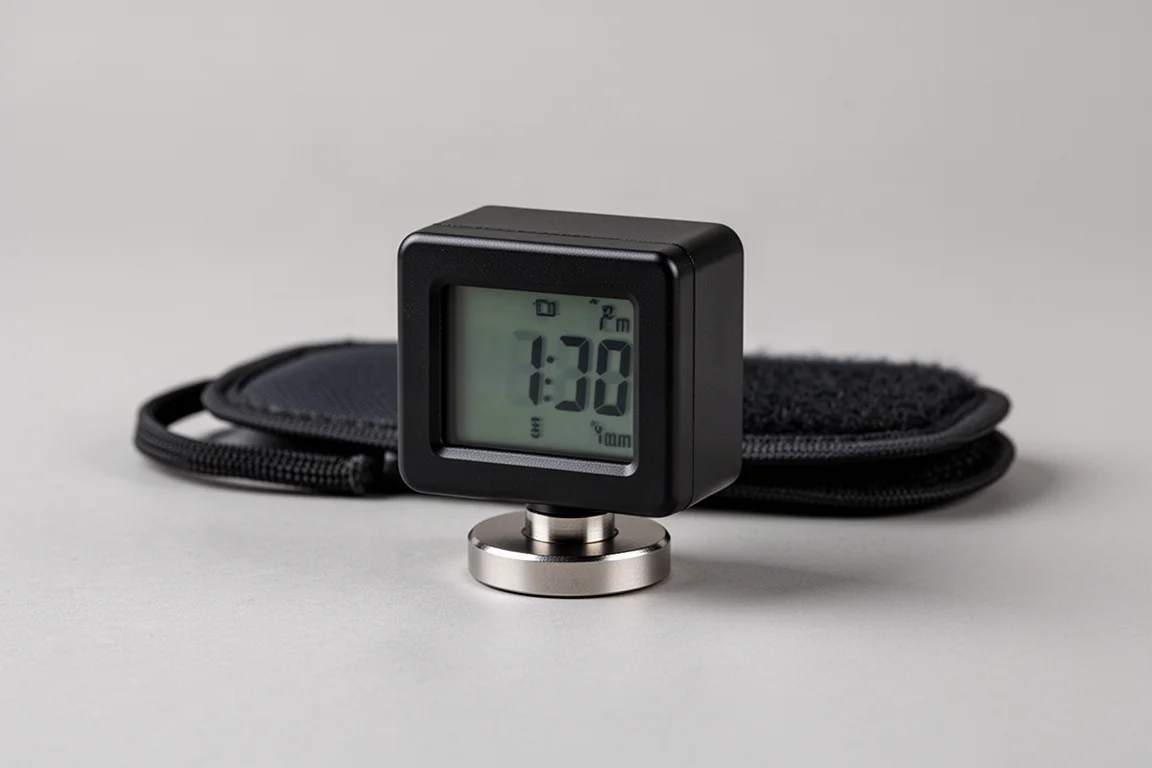
Things to Check Before Buying
The most maddening shared trait of all three budget gauges is the error message. As soon as you start rotating them off a flat surface and add any tilt, they can throw an error because the reading is considered too far out of range. Klein tends to hit that error first, followed by Milwaukee, then Johnson. The tolerance is not large, but it shows up during normal use.
They also work sideways to a degree, which is a nice bonus, though you may notice some interference from their own magnets in that orientation. If your work involves lots of off-axis readings, that limited tilt acceptance is worth thinking about before you buy.
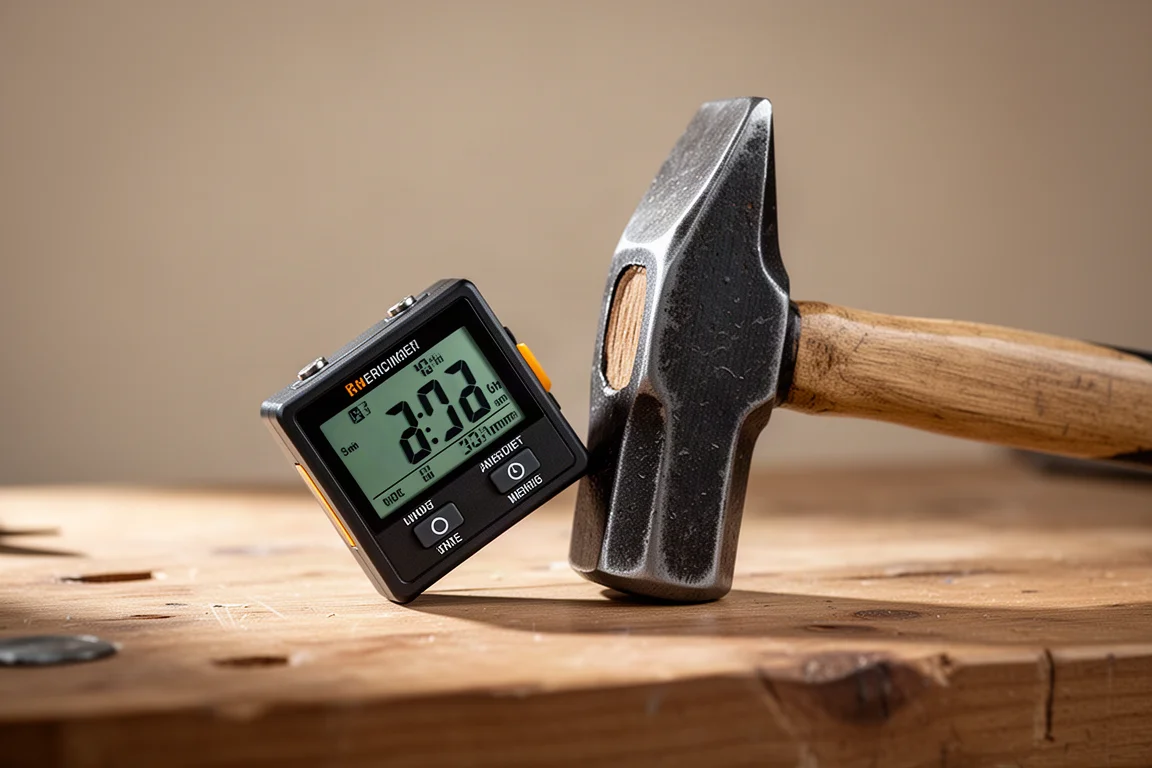
Sin Tools 935 DL
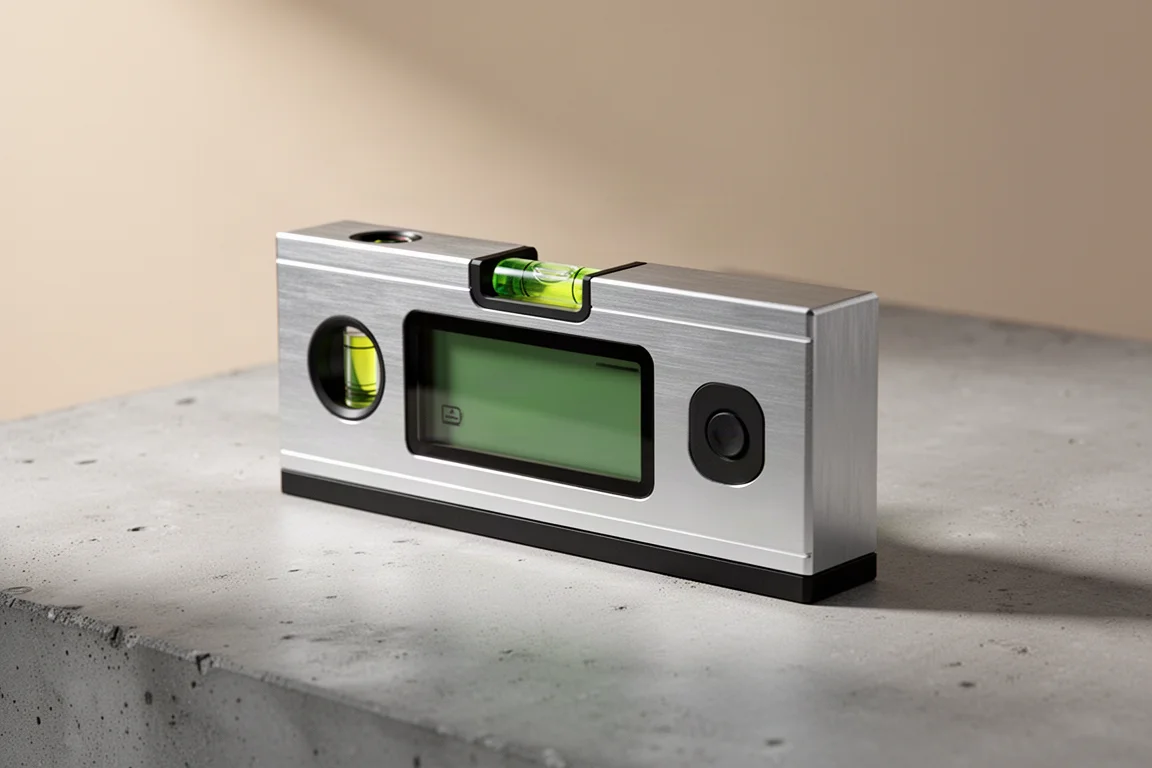
If you are going to buy one of these, the Sin Tools 935 DL is the standing recommendation, and it is the all-time favorite here. It does everything the budget gauges do, snapping onto metal surfaces and reading angles quickly, but it sidesteps the error problem entirely. Instead of throwing a message when tilted too far, it switches over to a bubble level display.
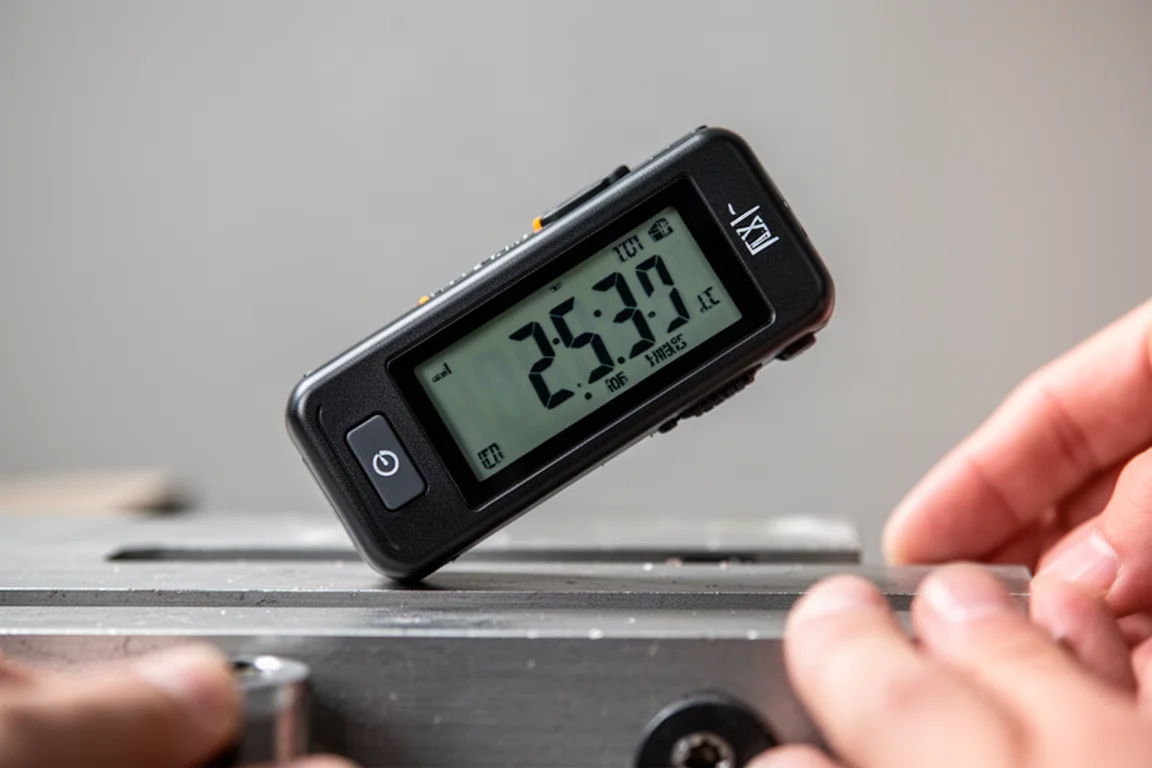
It also offers a whole bunch of different settings beyond the basics. It costs more than the $25 to $30 trio, but given the feature set and the frustration it avoids, that extra spend is easy to justify. It has proven especially useful for leveling work on campers and trailers, where surfaces are rarely sitting at a tidy zero.
Which One Should You Buy?
For occasional, quick, inexpensive angle checks, any of the three budget gauges will serve you fine, and the Klein edges out the group on case quality and upside-down usability. Milwaukee is a near-equal alternative if you prefer that brand. Johnson is serviceable but trails on settling time and the included case.
If you use an angle gauge regularly, or if the error-message behavior would drive you up the wall, skip straight to the Sin Tools 935 DL. The bubble-level fallback and extra settings make it the more complete tool for a modest price bump.
Conclusion
Digital angle gauges are cheap, handy and genuinely quick to use, whether you are leveling a table or setting a saw blade. The Klein, Milwaukee and Johnson gauges all do the core job for around $25 to $30, with Klein the standout of the three. For anyone who wants to avoid their shared tilt limitations, the Sin Tools 935 DL is the one worth the extra money.
Further reading
Related Reviews

Tools
Best Contractor Grade Tape Measures 2026: Eight Models Tested Head to Head
We tested eight contractor grade tape measures from Milwaukee, DeWalt, Crescent Lufkin, Tajima, Stanley, Irwin, Gelan, and Craftsman to find the best value and performance.

Tools
Best Precision Screwdriver Sets 2026: Manual and Electric Options Compared
We compare 19 precision screwdriver sets, from budget manual kits to electric drivers, to find the strongest bits and best value.

Tools
Best Stud Finders 2026: Five Popular Models Put to the Test
We tested five popular stud finders on drywall, firewall, and lath and plaster surfaces to see which ones really find studs and avoid false readings.