Tool Care
Best Diamond Sharpeners 2026: Fast Field Touch-Ups for Knives and Tools
Five diamond sharpeners worth a look, from a pocket folder sharpener to guided two-sided options, and why diamonds beat stones when you just need a working edge fast.
Introduction
Most sharpening advice assumes you have an afternoon to spare. If you do, stones are wonderful. But when a knife, hatchet, or pair of garden shears stops doing its job halfway through a task, you usually want a useful, safe working edge again in minutes, not a razor edge by dinner. That is exactly the gap diamond sharpeners fill, and it is why they have become the first thing many tool users reach for in the field.
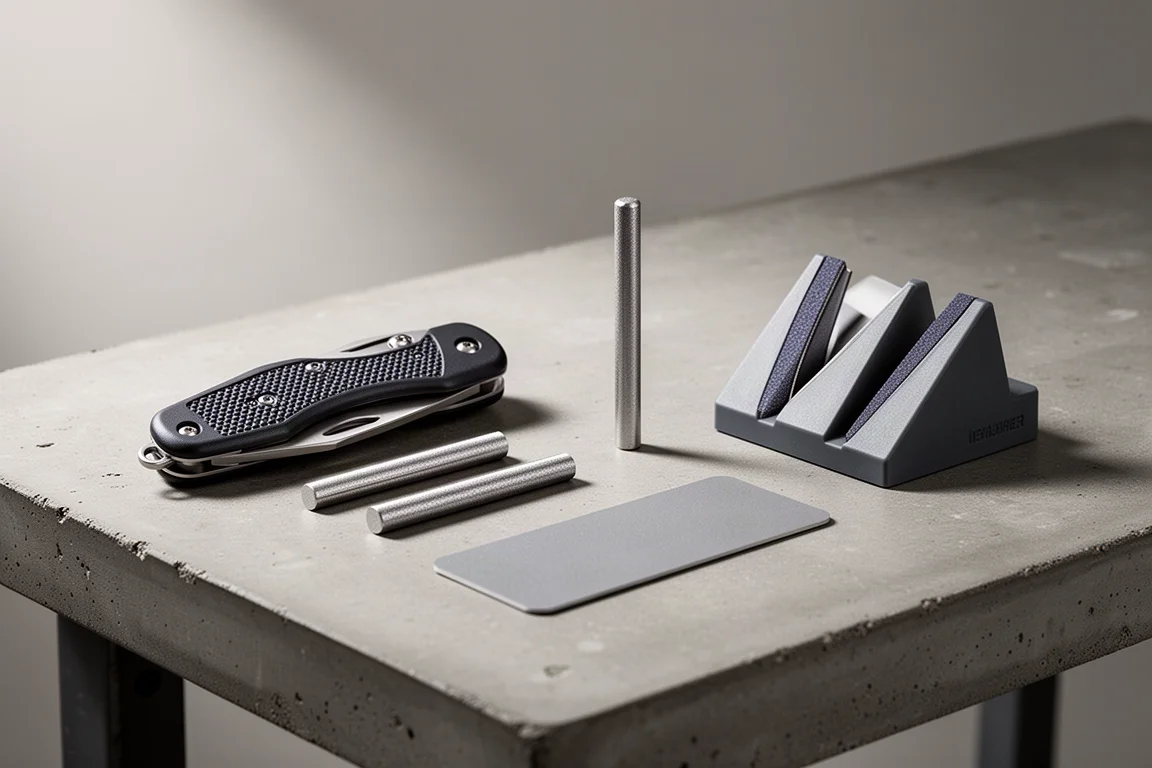
We looked at five options that cover the practical range: a pocket folder sharpener, handheld rods, a flat card, and two guided sharpeners. Here is what each does well and where it fits.
Why Diamond Sharpeners Earn Their Place
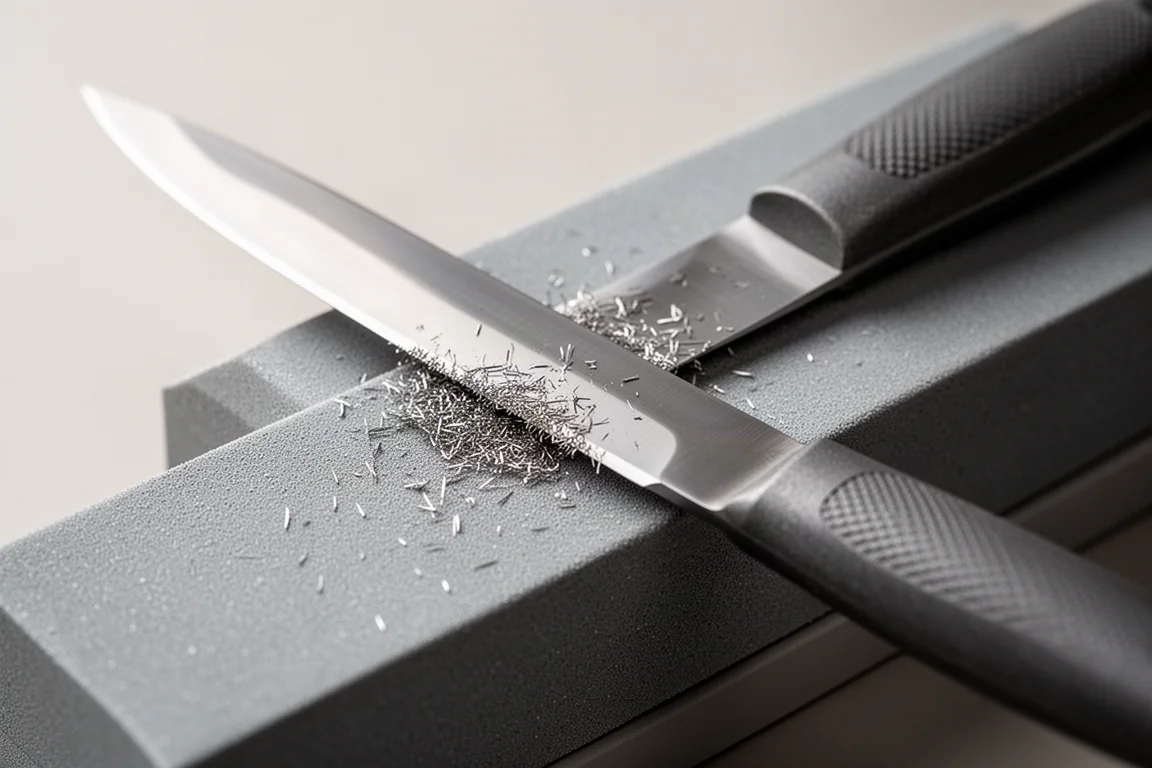
The core advantage is simple: a diamond plate can have a very fine grit, in the region of 25 micron, and still remove metal quickly. A fine stone at 600 grit or higher takes far more strokes to move the same material. Coarse stones remove metal fast but leave you with a lot of cleanup work to get a smooth blade.
Diamonds also suit the “get tools back in the fight” mindset. The goal is not sharpening for its own sake, it is restoring a functional cutting edge so you can keep working. There is one caveat worth understanding: on cheap diamond tools, particles are held to the plate by little more than lightweight adhesive, sometimes on flexible plastic, and the sharpener can go effectively out of service after a few uses. How well the diamonds are bonded into the metal matrix determines how long the tool lasts. The good options below use diamonds embedded through a titanium aluminum nitride type process, which is what makes them hold up under real use.
One more habit worth adopting: touch edges up early and often rather than letting them get so bad that you have to remove serious metal. It is faster, gentler on the blade, and keeps every tool in the drawer safe to use.
Fallkniven DF-24: The One to Grab First
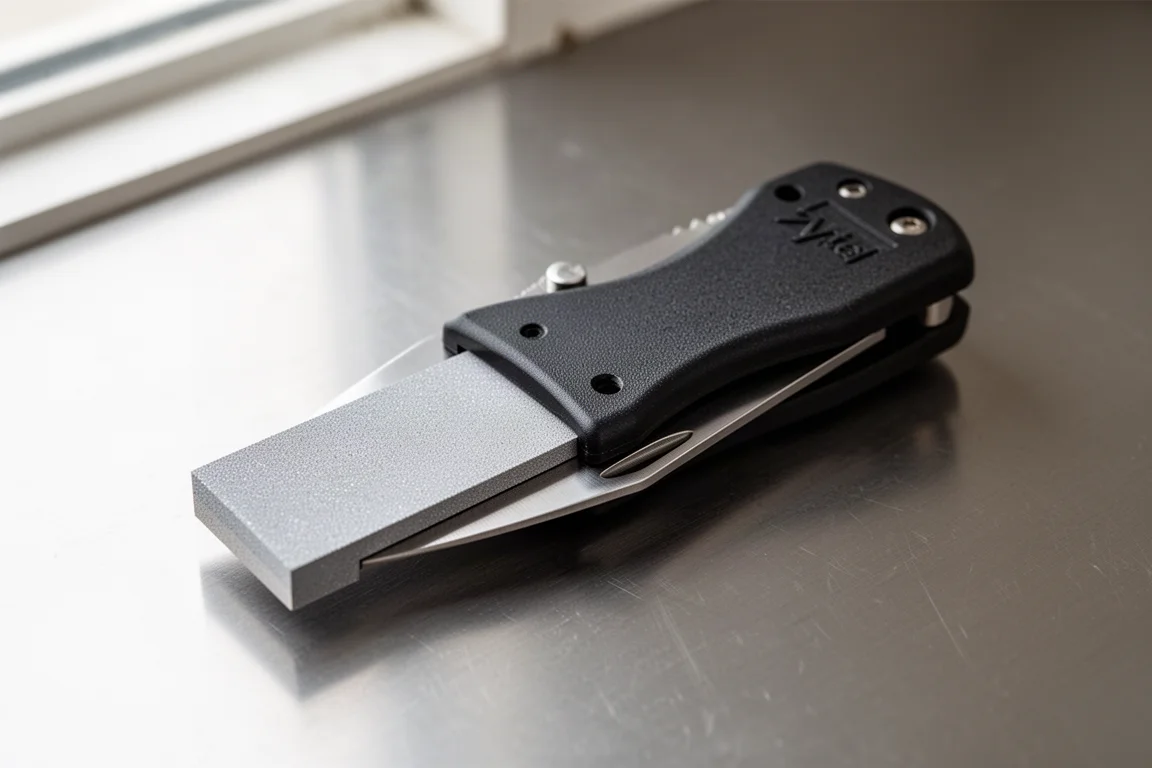
The Fallkniven DF-24 is a folding diamond sharpener with a Zytel plastic handle, and Zytel is the same tough synthetic the brand uses for its knife sheaths. Inside, synthetic diamonds are embedded into a metal matrix using a titanium aluminum nitride process, which is the key to long-term durability. This is the style of sharpener that rises to the top when you can only take one tool on a trip: quick, simple, and effective at bringing neglected blades back to a working edge.
It does a lot by itself and costs considerably less than a full multi-surface setup. For anyone building a small field kit, this is a sensible starting point.
Lansky Diamond Sharpener: Small Rods for Tight Spots
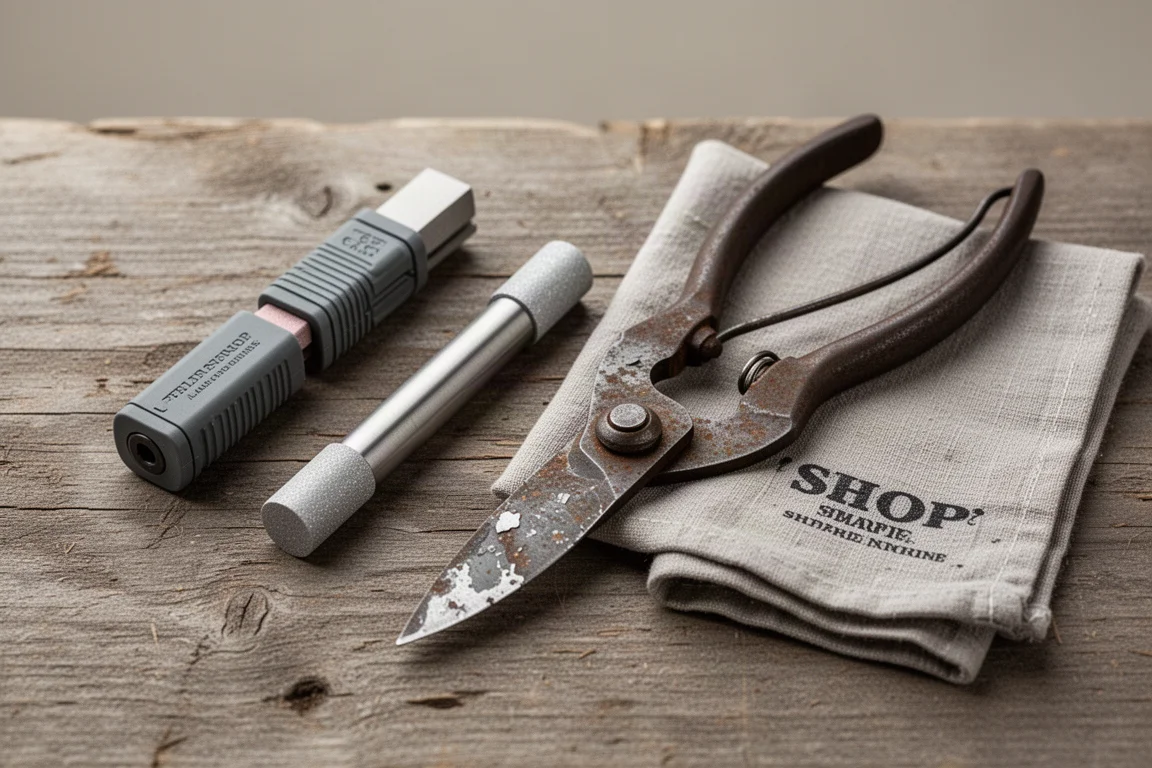
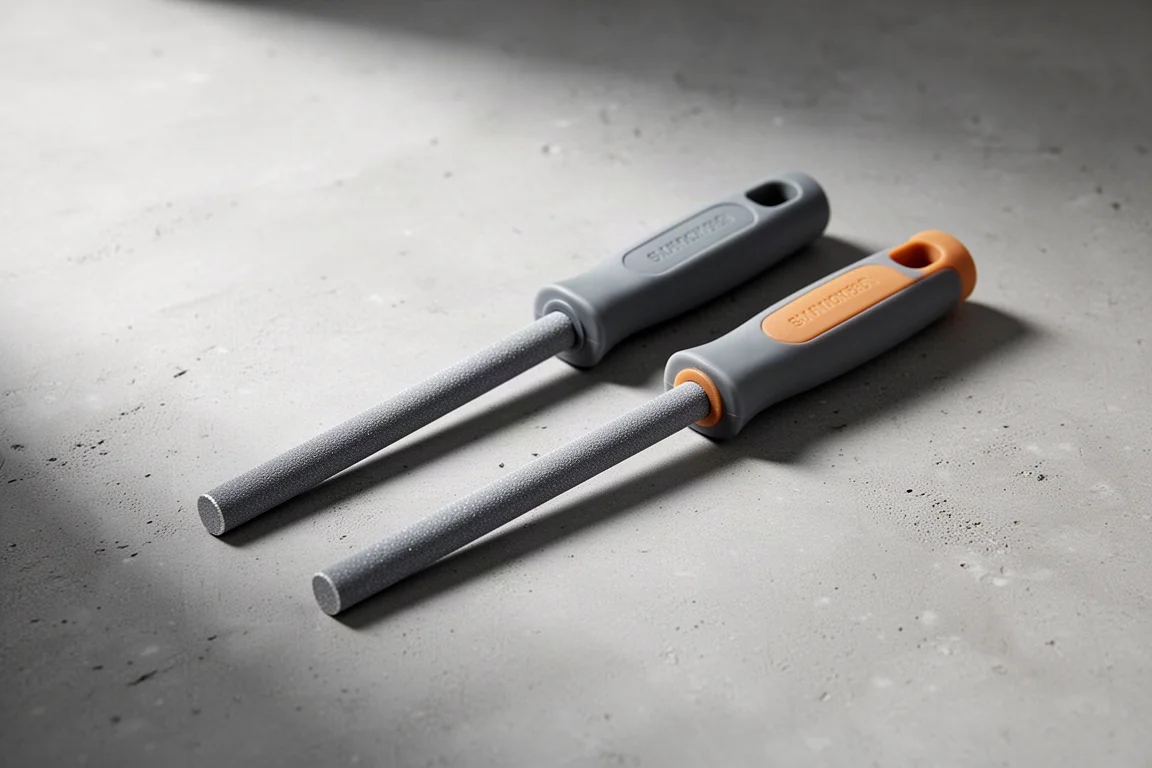
Lansky’s handheld diamond sharpeners are compact rods that shine in tight or awkward places. They are genuinely useful for things like garden shears that have been roughed up at the tips, where a larger stone cannot reach the damage properly. They slip into a pocket, get an edge back in order, and go straight back into the kit.
They also stay easy to live with: the surfaces do not hold grime the way you might expect, and a quick wipe brings them back to looking clean. For home use on bigger jobs you may want more surface area, but as field and spot-treatment tools they are hard to beat.
DMT Diamond Sharpening Card: Pocket-Size Metal Recovery
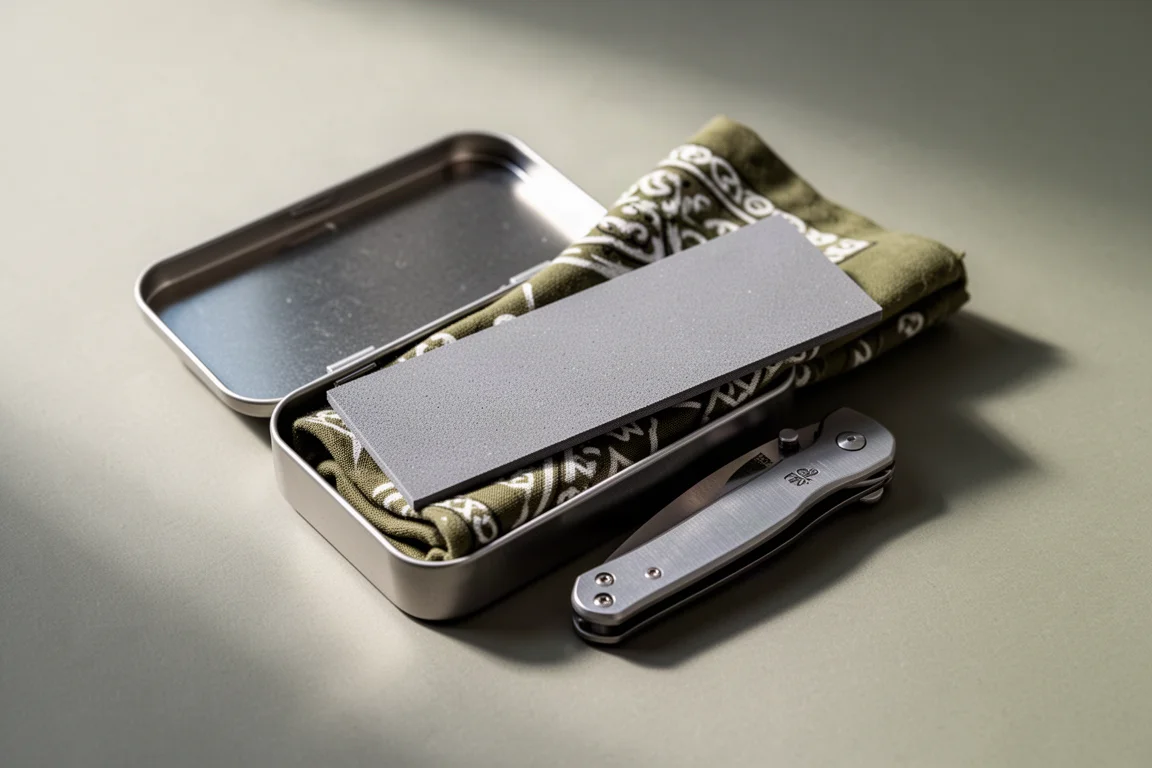
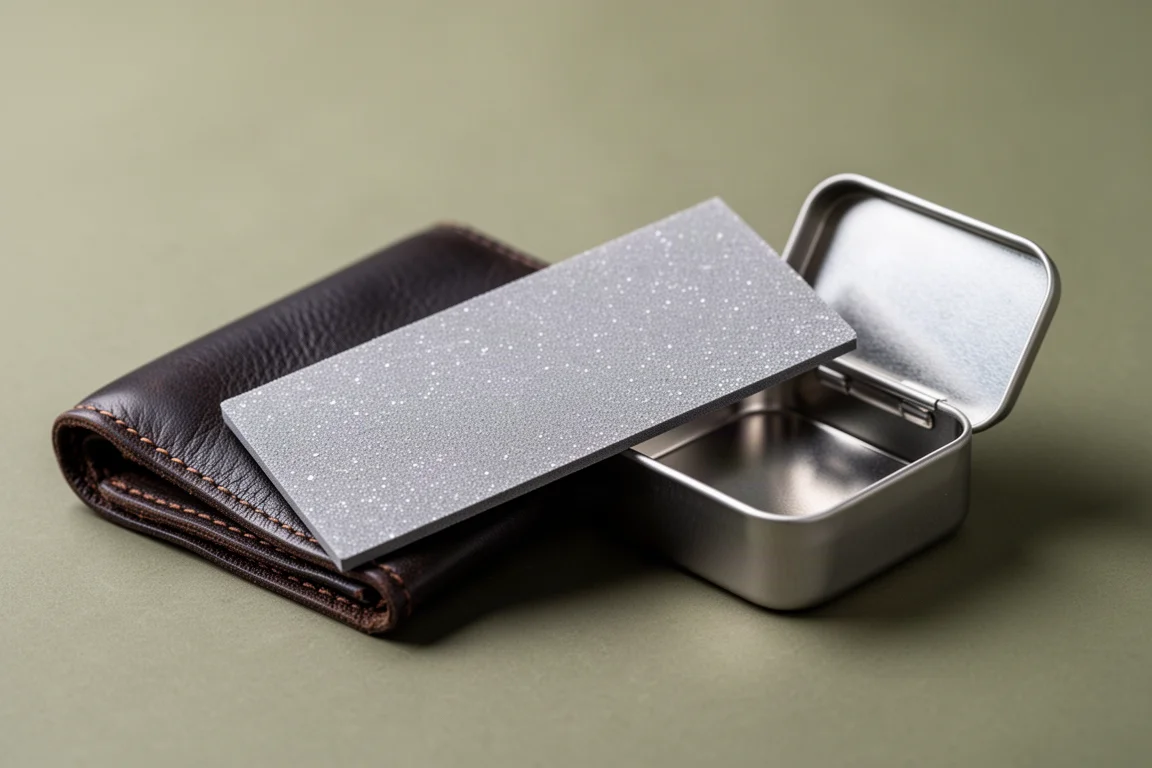
The DMT sharpening card is a flat diamond plate the size of a card, which makes it a natural fit for small survival kits. The thin profile is the point: it reaches smaller spots, works an edge quickly, and can take a ding out of a blade without carrying a full-size stone.
Anyone who has maintained ski edges will recognize the workflow. You feel the edge, notice something off, and hone it immediately before it becomes a real problem. A flat diamond card is exactly the right tool for that kind of constant light maintenance, and it is one of the easiest sharpeners to keep on your person at all times.
Guided Sharpeners: Work Sharp and Benchmade
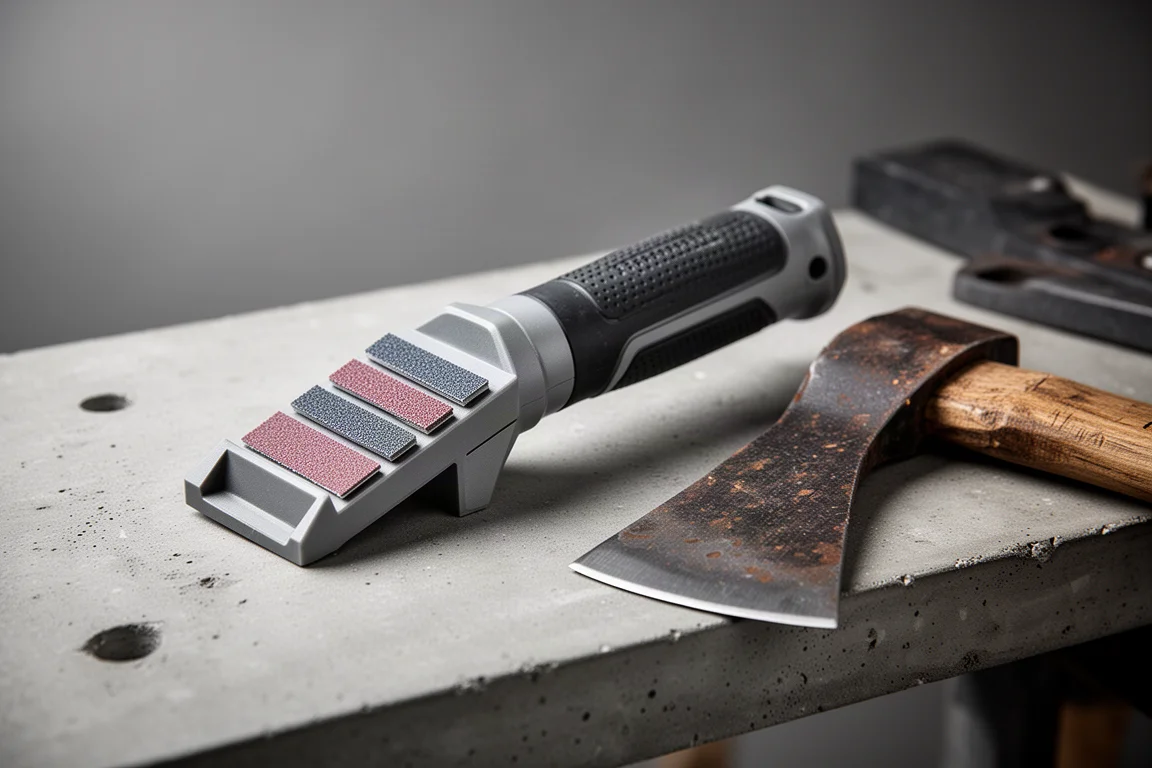
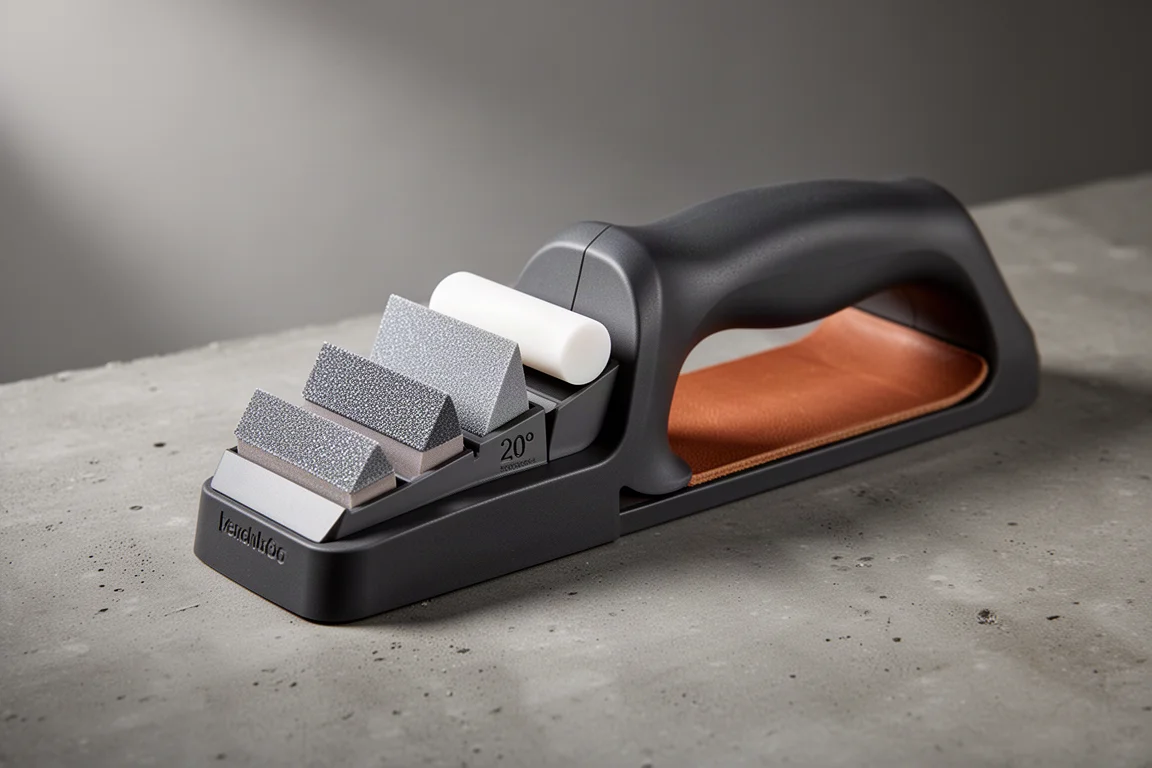
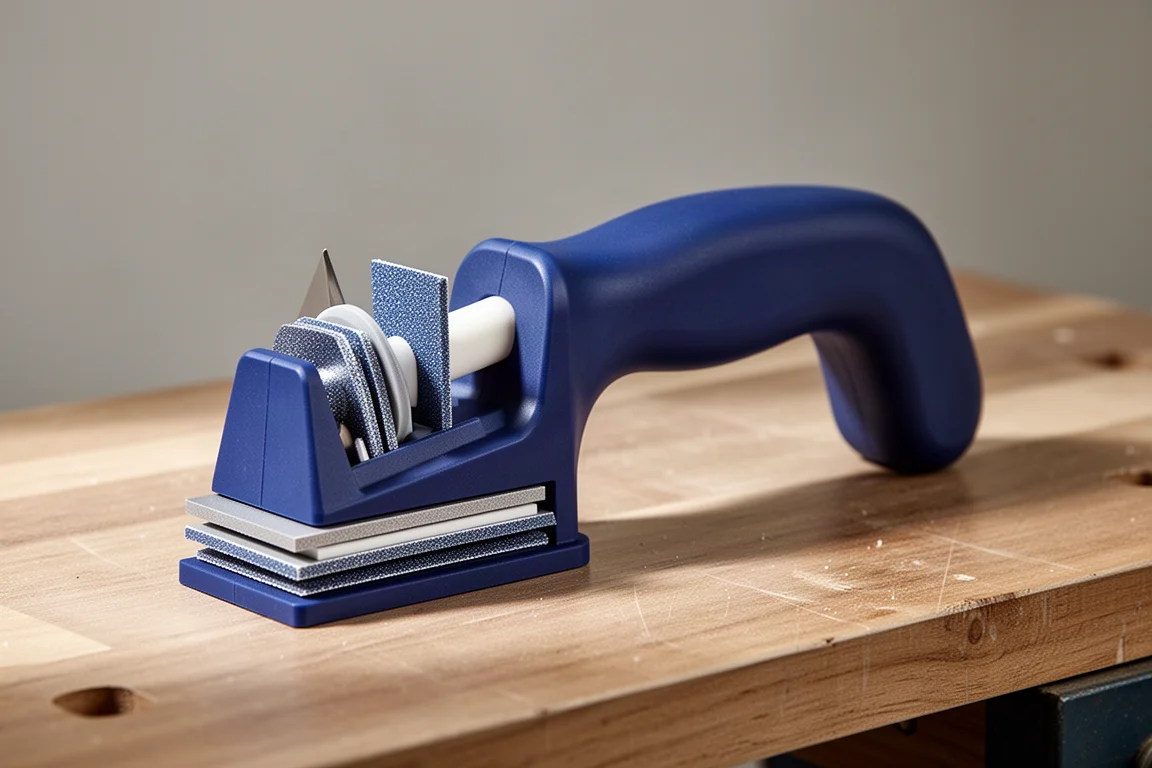
If freehand angle control is not your thing, guided sharpeners solve it. The Work Sharp guided sharpener packs four working surfaces into one tool: a coarse diamond, a fine diamond, a ceramic, and a stropping surface, with a 20-degree blade guide to hold your angle consistently. That range lets you do a considerable amount of sharpening across many different platforms, from small knives up through heavier edges. The abrasive surfaces pop out for cleaning or swapping, and the coarse diamond plate handles heavier work when a blade needs it.
The Benchmade guided sharpener is the same tool in Benchmade’s own finish, so the choice largely comes down to brand preference. Either one covers a lot of sharpening situations with very little technique required.
Buying Advice: Matching the Sharpener to the Job
A few principles pull this list together. First, decide what edge you actually need. A utility knife can be brought to a razor edge, but that edge will not last, and many working tools should not be razor sharp at all. A hatchet with a working edge, for example, cuts far more predictably than one honed to hair-popping sharpness. A slightly convex edge, which many people produce naturally by hand anyway, is a very strong edge and perfectly fine for field knives.
Second, know your tools’ personalities. Ceramics are extremely fine, almost one step down from a strop, so they help a barely dull blade but will not rescue a genuinely dull one. Carbide pull-through sharpeners with fixed V angles remove a lot of metal very fast, which makes them an emergency option for machetes, axes, or badly neglected edges, but not something you want working on your good knives regularly. Diamond sits in the sweet spot: aggressive enough to matter, controllable once you learn to feel the blade.
Finally, on sharpening direction: most diamond surfaces are non-directional, since the abrasive has no grain orientation. What matters is holding a consistent angle. Wandering angles tend to round the edge into a convex profile, which is sometimes exactly what you want and sometimes not.
Conclusion
If you only buy one, the Fallkniven DF-24 is the pick: durable construction, genuinely useful on a wide range of blades, and friendly on the budget. Add the Lansky rods or the DMT card if you work in tight spots or want something that lives in a pocket kit. And if you would rather let a guide hold the angle for you, the Work Sharp and Benchmade guided sharpeners turn a multi-stage sharpening session into a straightforward routine. Pick based on where your edges actually go dull, and keep them touched up before they get bad.
Further reading
Related Reviews
Tool Care
Build a Better Multi-Tool Maintenance Kit for $70 or Less
A Leatherman-branded maintenance kit costs $70, but a smarter DIY setup covers more ground for less money. Here is what goes in it and why.
Tool Care
Best Axe Sharpening Pucks: Four Solid Options for Keeping Hatchets and Axes Sharp
Four sharpening pucks, from budget-friendly to premium, that make maintaining axe and hatchet edges far easier than a flat stone.
Tool Care
Snap-on Formula 1920 Steel Wipes CLRPW75: A Handy Tool-Cleaning Wipe Worth Testing
Snap-on's Formula 1920 steel wipes promise to strip oil, dirt, metal shavings, and contaminants from hand tools. We put the CLRPW75 tub to work on grimy pliers to see if the convenience justifies the cost.