Car Care
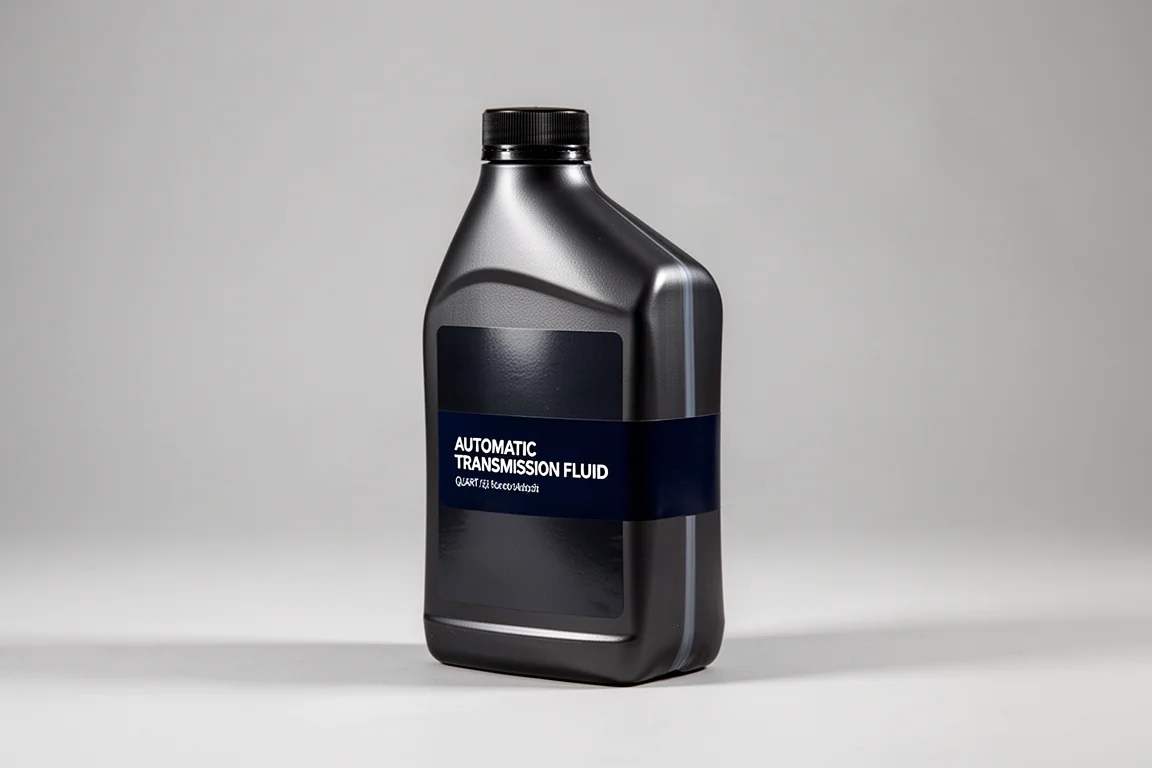
Best DEXRON VI Transmission Fluid: Four Brands Put Through Real Testing
ACDelco, Supertech, Mobil, and Red Line DEXRON VI fluids compared on cold flow, wear protection, evaporation, and foaming resistance.
Introduction
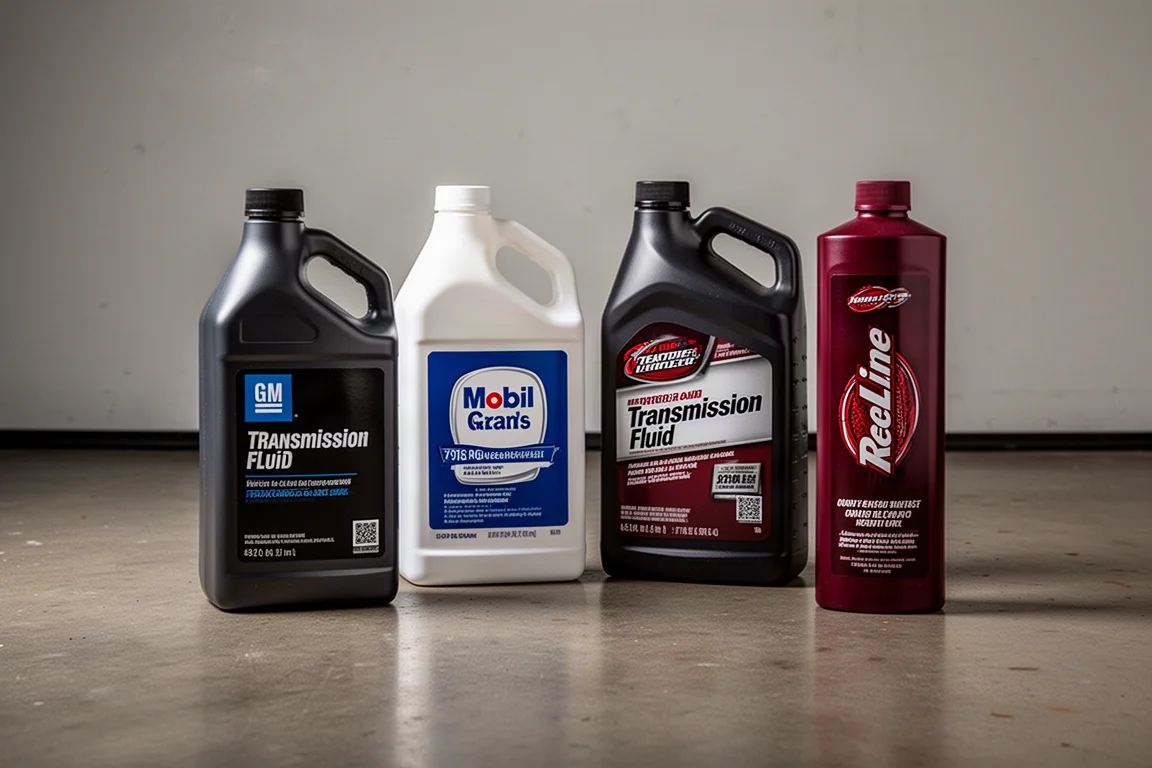
If you drive a GM vehicle with an automatic transmission, DEXRON VI is the fluid spec you need to shop for. But does the official ACDelco bottle justify its price, or do alternatives from Supertech, Mobil, and Red Line hold up just as well? To answer that, all four fluids were sent to an independent oil testing lab and then run through a series of hands-on tests covering cold flow, wear protection, evaporation loss, and foaming resistance.
All four products in this comparison are DEXRON VI fluids. ACDelco, Supertech, and Mobil market theirs as full synthetics (though the Mobil is actually a synthetic blend), and all claim improved oxidation and thermal stability. DEXRON VI is recommended for GM transmissions model year 2006 and newer, and ACDelco states its fluid is backward compatible with earlier DEXRON automatic transmissions.
How We Tested
Each fluid was weighed out precisely at 200 g and heated to around 410 degrees Fahrenheit for two hours to simulate extreme heat exposure, with containers rotated every ten minutes to even out burner differences. That cooked fluid was then reused for wear, flow, and cold-temperature testing to see how much performance each fluid loses under stress.
The lab reports covered the anti-wear additive package, detergent and dispersing content, and the total acid number, which measures corrosiveness from acids in the fluid. Iron and tin wear metals were only present at trace levels in all four fluids, which is reassuring.
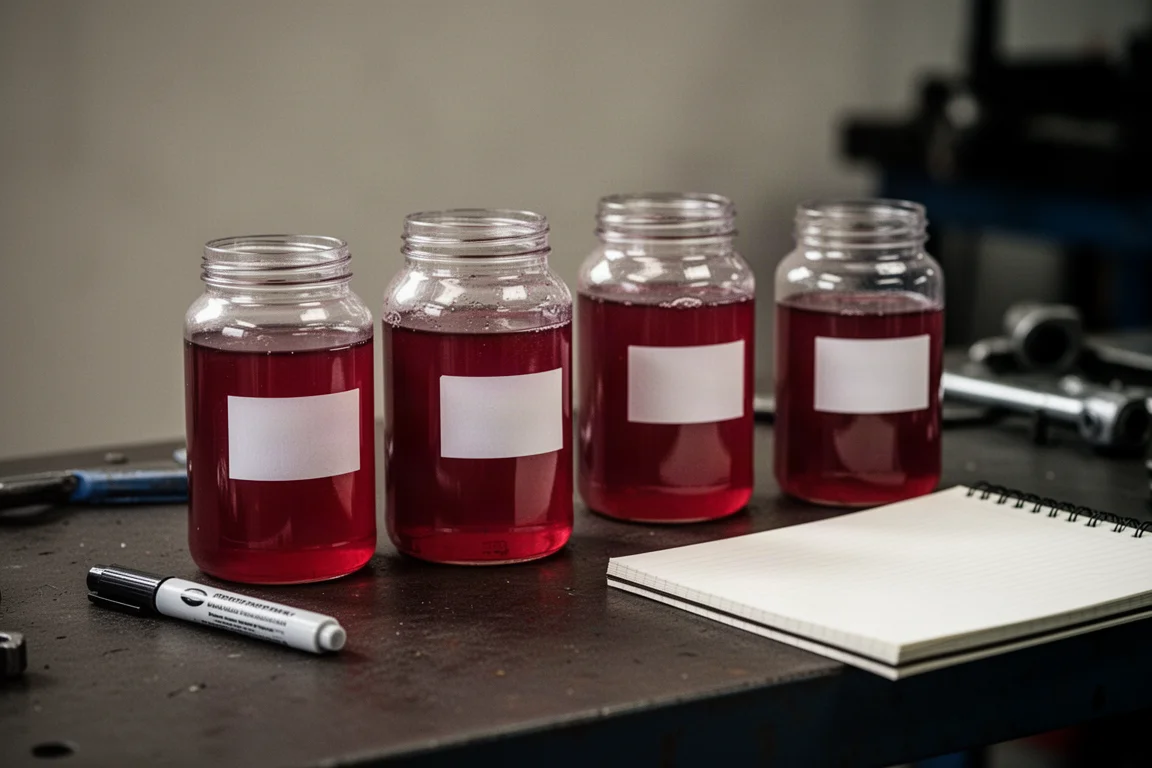
One practical tip worth noting: shake any fluid container before sending or drawing a sample, because part of the additive package can settle out of suspension at the bottom.
Evaporation and Thermal Breakdown
The Noack volatility test measures how much fluid evaporates after the two-hour heat exposure. Here the results separated the field dramatically. Red Line lost just under 7 g, the best result, followed by Supertech at 8.34 g and ACDelco at 9.63 g. Mobil, the synthetic blend, lost 20.61 g, more than twice as much as any other fluid, and darkened visibly during the test. If thermal breakdown resistance matters to you, this is the test where the budget and premium full synthetics shine and the blend falls behind.
Wear Protection: The Friction Test
A four-ball style lubricity test measured film strength using the cooked fluids, with wear scars on the test pins measured under a microscope with calipers. Automatic transmission fluid naturally offers far less wear protection than motor oil, so the scars are comparatively large, but the relative results still tell a clear story.
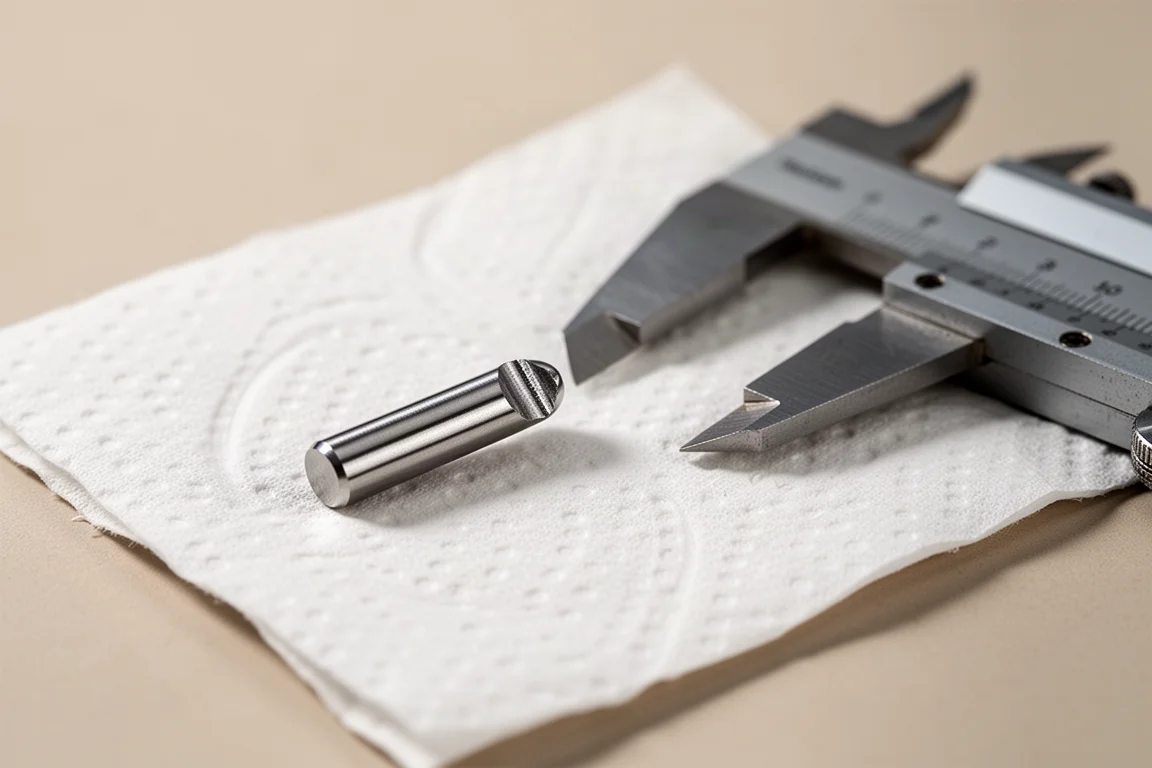
Red Line delivered the smallest wear scar, though only by less than 1% over the next best. ACDelco and Mobil finished in a precise tie for second, with Supertech about 5% behind ACDelco at 8.44 mm, its weakest result. The lab data backs this up: Red Line carries two and a half times more anti-wear additives than the competition, while the other three sit at similar levels.
Cold Temperature Flow Test
After 10 hours in a freezer at -40 degrees Fahrenheit, each fluid was raced down a track to measure how quickly it flows when truly cold. New fluid ran first, then the cooked fluids, to see how heat exposure changes cold performance.
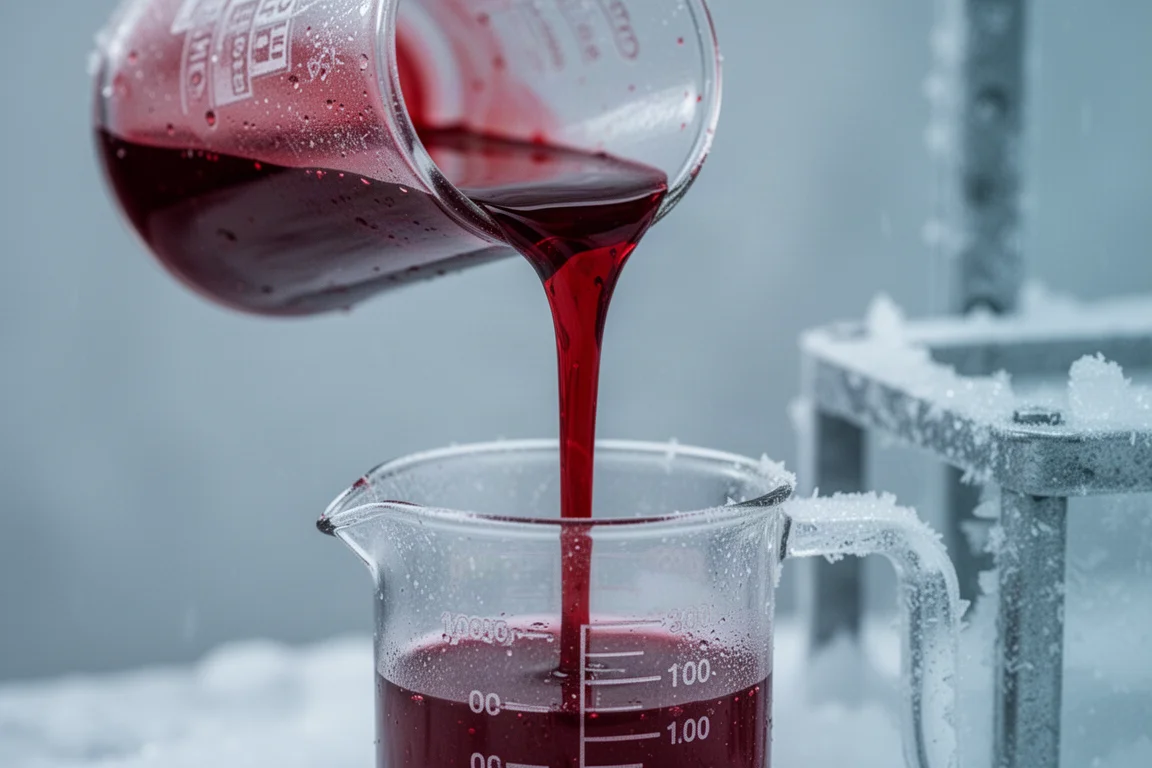
With new fluid, Red Line won by just over 3 inches at 24.53 seconds, with Mobil second at 30.16 and ACDelco and Supertech close together around 34.5 seconds. After cooking, Red Line still dominated at 27.37 seconds, ahead of Mobil at 39.88, Supertech at 40.14, and ACDelco at 42.78.
Measuring the performance drop between new and cooked fluid, Red Line lost only 10.4%, Supertech 14.2%, ACDelco 19%, and Mobil 24.4%. That consistency after heat exposure is one of Red Line’s strongest credentials.
Room Temperature Flow
At around 70 degrees Fahrenheit, all four fluids flowed nearly identically, finishing between 1.17 and 1.22 seconds. Supertech won the new-fluid race by less than an inch, and also won the cooked-fluid race, though Red Line held up best, slowing by only 1.6% compared to 7.7% for ACDelco. In everyday driving conditions, the differences here are negligible.
Foaming Resistance Test
All four fluids passed the foaming test, holding up for the full five minutes without air bubbles forming. Bubbles in a transmission can cause oil starvation or clutch slippage, so this is a test every fluid should pass, and they all did. Red Line performed best by a clear margin, but there is no reason to worry about any of the four here.
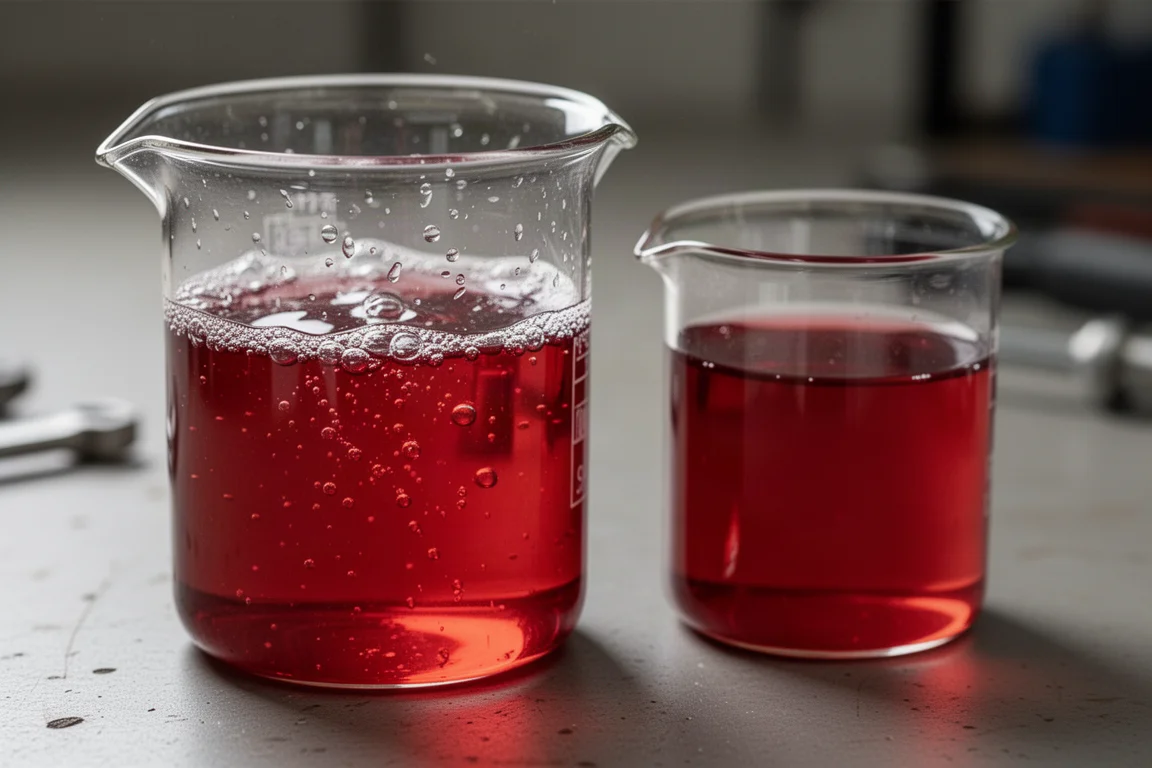
Best Overall: Red Line D6 ATF
Red Line D6 ATF finished first in every category: evaporation resistance, wear protection, cold flow, and consistency after heat exposure. The lab reports showed the most robust detergent and anti-wear additive package by a wide margin, and the fluid retained its dark red color through testing while the others darkened. At around $23 per quart, it costs almost three times as much as ACDelco, so the question is whether your driving justifies the premium. For severe service, towing, or extreme climates, the numbers make a compelling case.
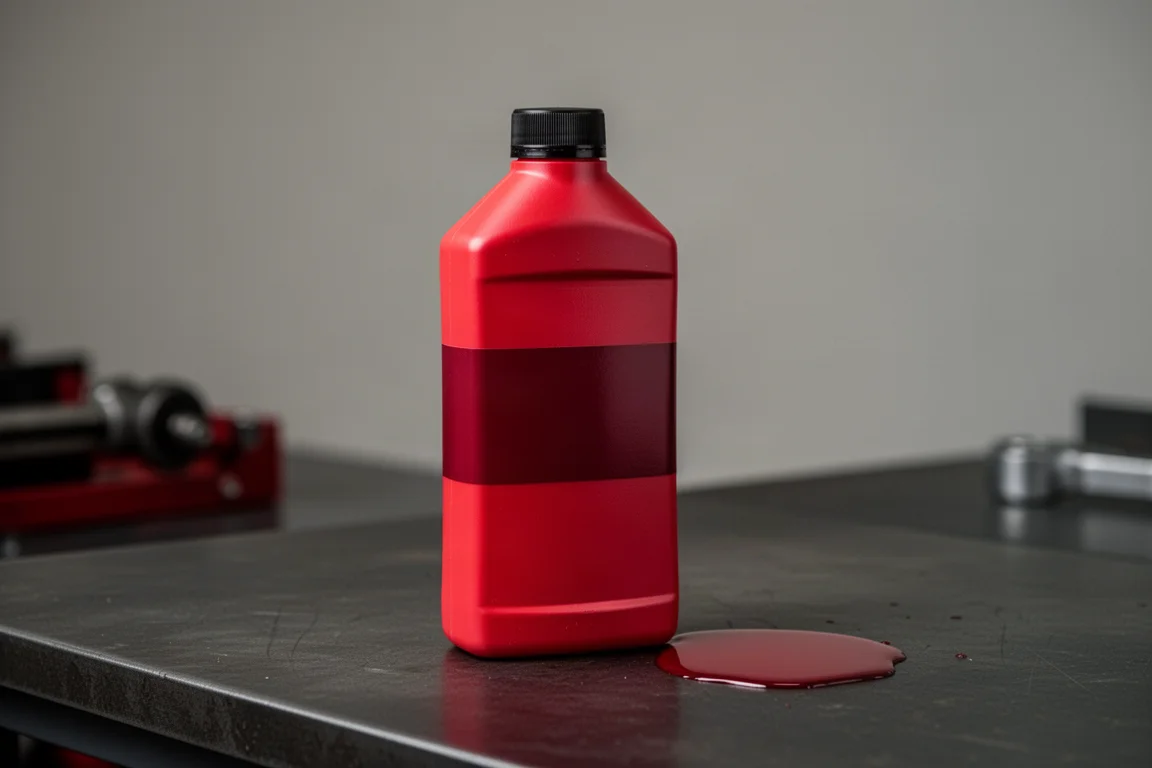
Strong Value: ACDelco DEXRON VI
ACDelco, distributed by General Motors, is the OEM choice and costs around $8 per quart. It tied Mobil for second in wear protection and delivered solid, middle-of-the-pack results everywhere else. It lost more to evaporation than Supertech, and its cold flow slowed by 19% after heat exposure, but for a factory-spec fluid the overall package is dependable and priced right.
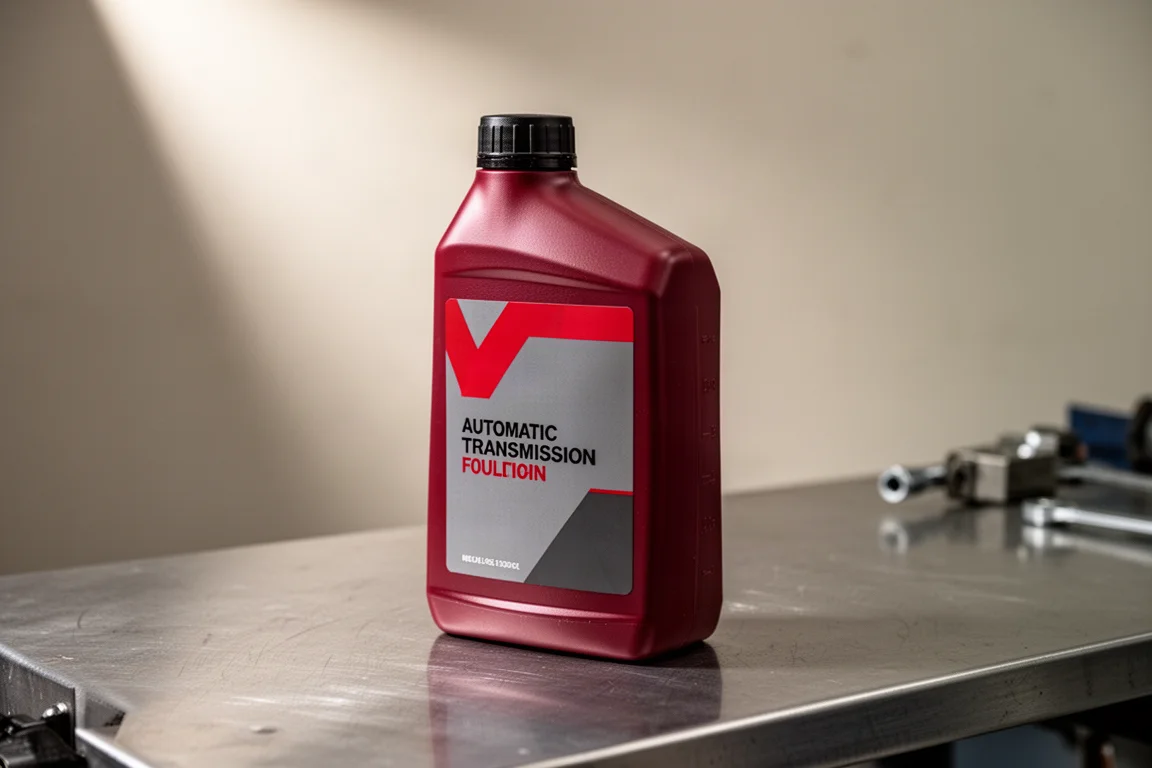
Surprising Contender: Supertech DEXRON VI
Supertech, at around $9 per quart, is the value story of this comparison. It edged out ACDelco in evaporation loss, won both room-temperature flow races, and passed every test comfortably. The one caution is wear protection, where it finished fourth with roughly 5% more wear damage than ACDelco. For normal daily driving, that trade-off may be easy to accept at the price.
The Disappointment: Mobil DEXRON VI
Mobil, at around $13 per quart, was the letdown despite a solid tie for second in wear protection and strong cold flow with new fluid. Its 20.61 g evaporation loss, darkening under heat, and 24.4% cold-flow performance loss after heat exposure were the worst in every test where heat mattered. As a synthetic blend rather than a full synthetic, it simply could not keep up.
Conclusion
Red Line dominated across every category and earns the top spot for anyone who wants the best protection and cold-weather performance, provided the price fits the budget. ACDelco is the dependable OEM pick at a reasonable price, and Supertech is a strong value alternative if wear protection is not your top concern. Mobil is the one we would steer away from for GM DEXRON VI applications given how poorly it handled heat. Whichever you choose, match the DEXRON VI spec to your vehicle and, for older vehicles, confirm backward compatibility before you buy.
Further reading
Related Reviews
Car Care
Best Ceramic Coatings 2026: Seven Options Tested for Durability and Shine
We tested seven ceramic coatings from budget sprays to premium hand-applied formulas to see which ones truly protect your paint.
Car Care
Best Windshield Water Repellents 2026: Top Picks for Rainy Driving
We tested ten windshield water repellents for water beading, bug removal, and chemical resistance to find the best options for clear visibility in the rain.
Car Care
Car Wax Comparison 2026: Seven Waxes Tested From Budget to Ultra Premium
A blind test of seven car waxes from $26 to nearly $2,000 reveals which ones deliver the best gloss, filling, slickness, and hydrophobics.