Tools
Best Cutting Shears for Cardboard, Carpet, and Kitchen Work: Four Pairs Compared
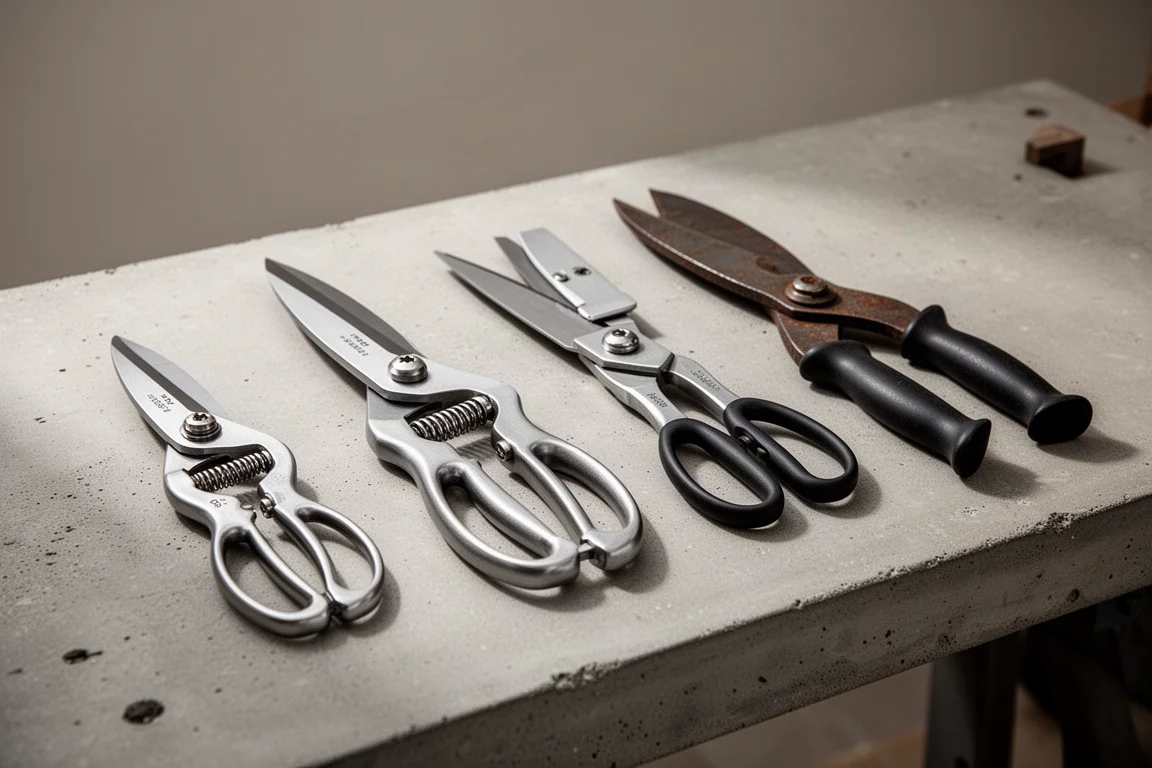
From dedicated C-Jet carpet and cardboard shears to Fiskars take-apart kitchen shears and Milwaukee shop shears, four cutting tools for different jobs compared side by side.
Introduction
Most households and workshops already own at least one pair of scissors, but thick materials like corrugated cardboard, carpet, and rubber expose their limits quickly. Blades fold, grips cramp, and simple cuts turn into two-handed battles. This roundup covers four cutting tools that take different approaches to the problem: two dedicated C-Jet carpet, rubber, and cardboard cutting shears, a pair of Fiskars take-apart kitchen shears, and the Milwaukee shop shears that served as the everyday baseline.
Why Regular Scissors Struggle with Thick Material
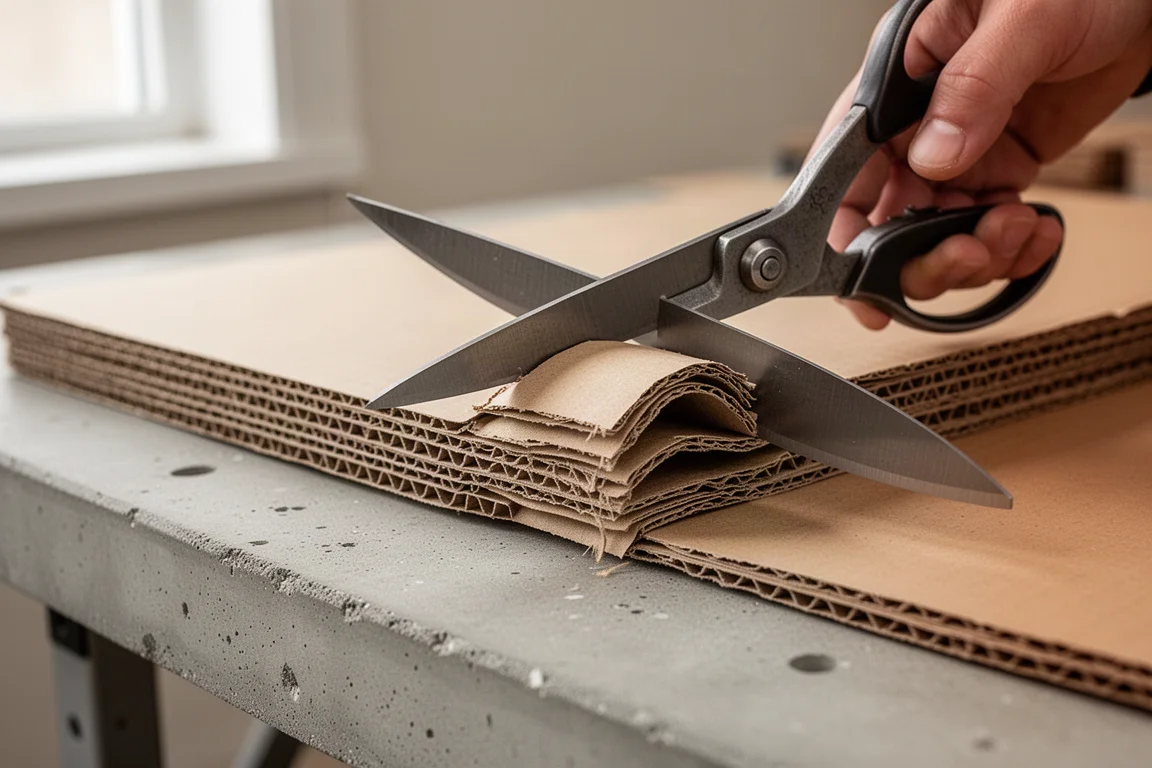
Conventional scissors force you to cut in the same direction your hand is pushing, and the blades tend to bog down and fold the material at the tip when you try to cut a corner. With multi-layer cardboard, folding it in half before slicing takes noticeable effort, and intricate shapes are almost impossible.
The tools below keep your hand out of the direction of the cut, which opens up cuts you simply cannot make with ordinary scissors, and their stronger blades and springs motor through layered material with far less effort.
C-Jet 8-Inch Carpet and Cardboard Cutting Shears
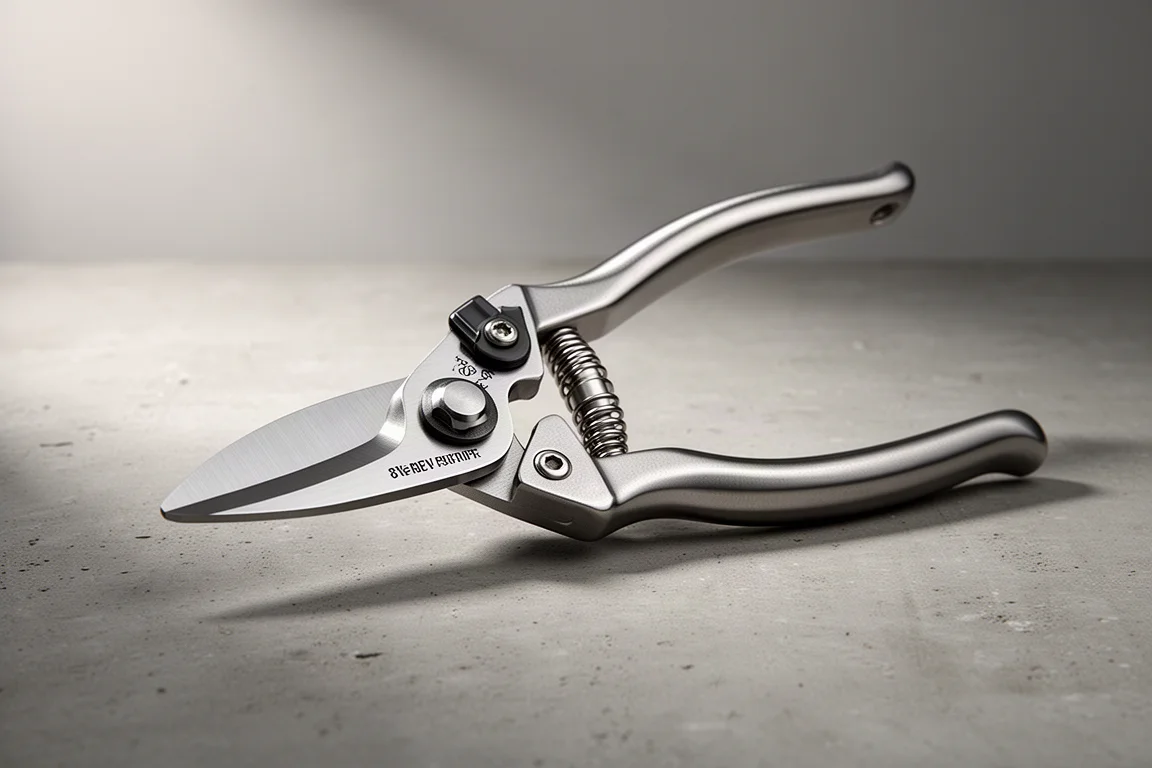
The 8-inch C-Jet is the more dexterous of the two dedicated shears. If you need to cut out a shape rather than just slice material into strips, the smaller size makes intricate work noticeably easier. It shares the core design of its bigger sibling: stainless steel blades, a strong return spring, an open-angle limiter that restricts how far the blades open, and a collar that locks the halves tightly together.
It sells for around $22, and the two sizes are priced very closely. Like the 10-inch version, these shears arrived tight out of the box and loosen into smooth one-handed operation with use, even controllable with a single finger.
C-Jet 10-Inch Carpet and Cardboard Cutting Shears
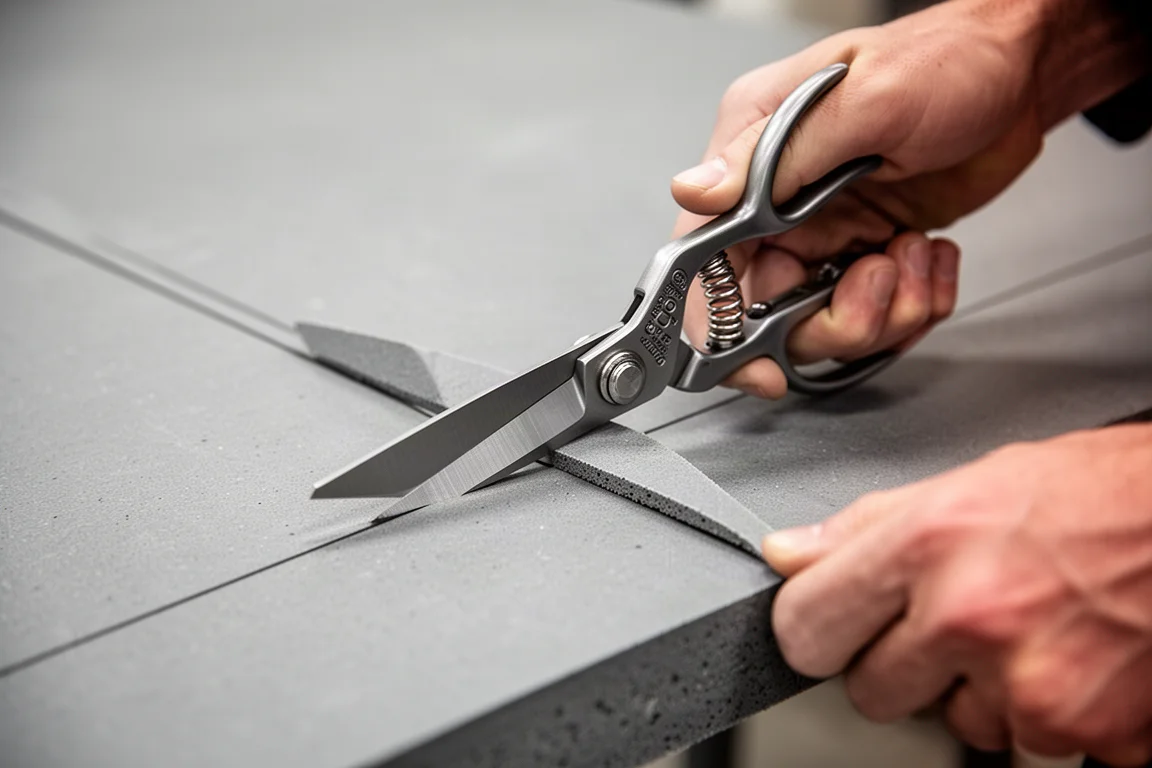
The 10-inch version trades some dexterity for more raw cutting power. On double-layered corrugated cardboard it simply zips through, and long slices across thick stock require dramatically less effort than a conventional pair of scissors. It is priced at roughly $23, making it barely more expensive than the smaller model.
Both C-Jet shears are clearly designed for a specific job: carpet, thick rubber, and thick multi-layer cardboard. They look specialized, and it would be easy to dismiss them for that, but for the tasks they target they cut faster and with far less effort than general-purpose alternatives.
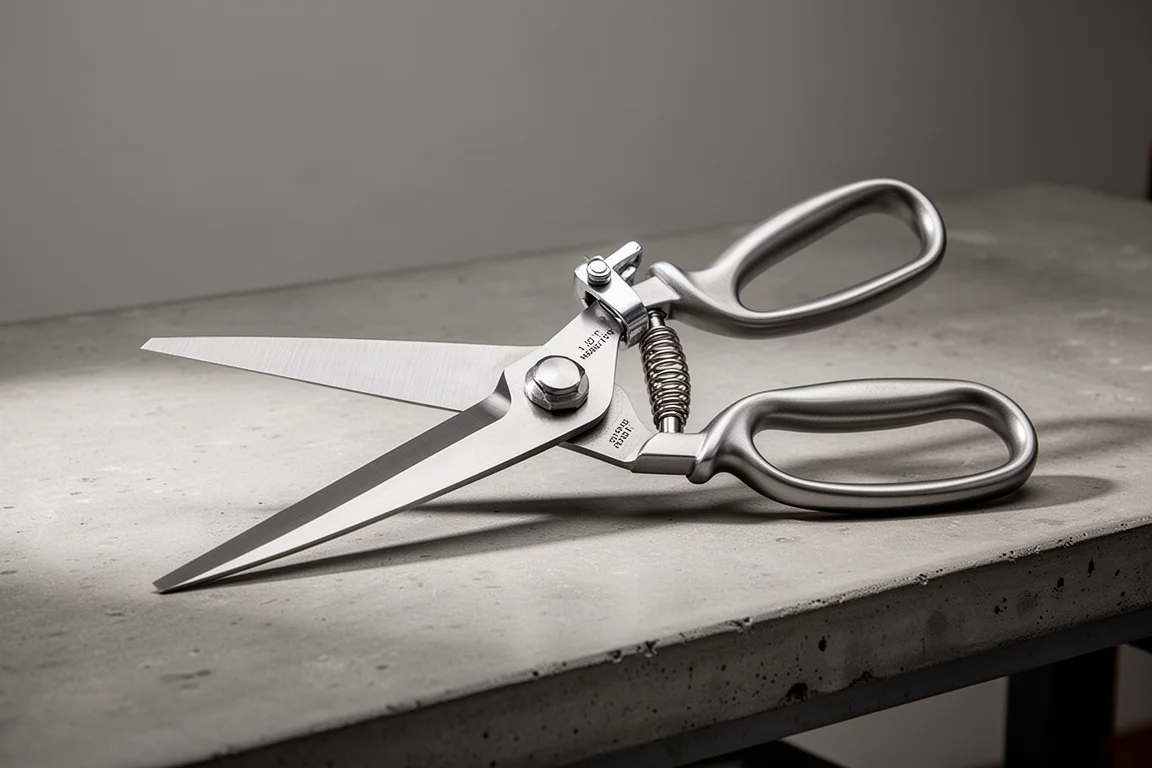
Fiskars Take-Apart Kitchen Shears
The Fiskars take-apart design lets you separate the blades for cleaning, which makes sense for kitchen and game-processing hygiene. The trade-off is the joint: the cross-hatch style mechanism can feel a little loose, and lining the blades back up for reassembly can produce some resistance if they are not quite right.
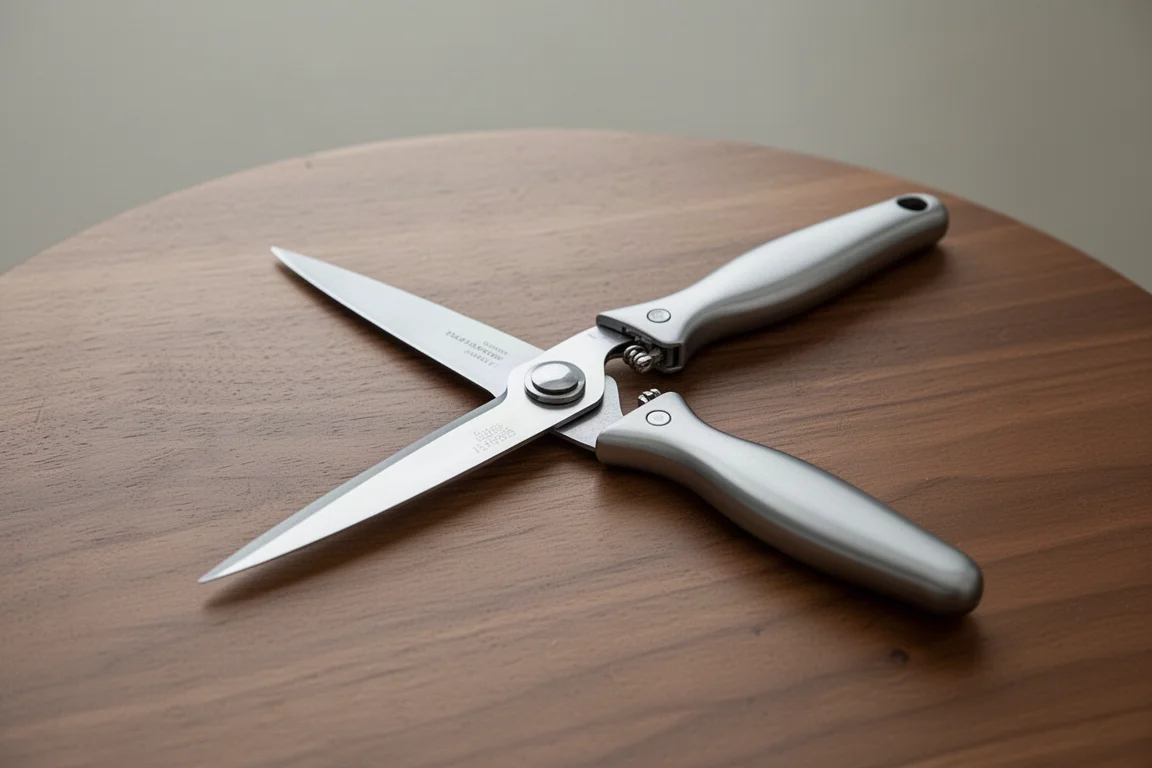
For dedicated kitchen duty, especially game processing where easy cleaning matters, the take-apart feature may still justify the compromise. For general cutting, a solid one-piece design avoids the alignment issue entirely.
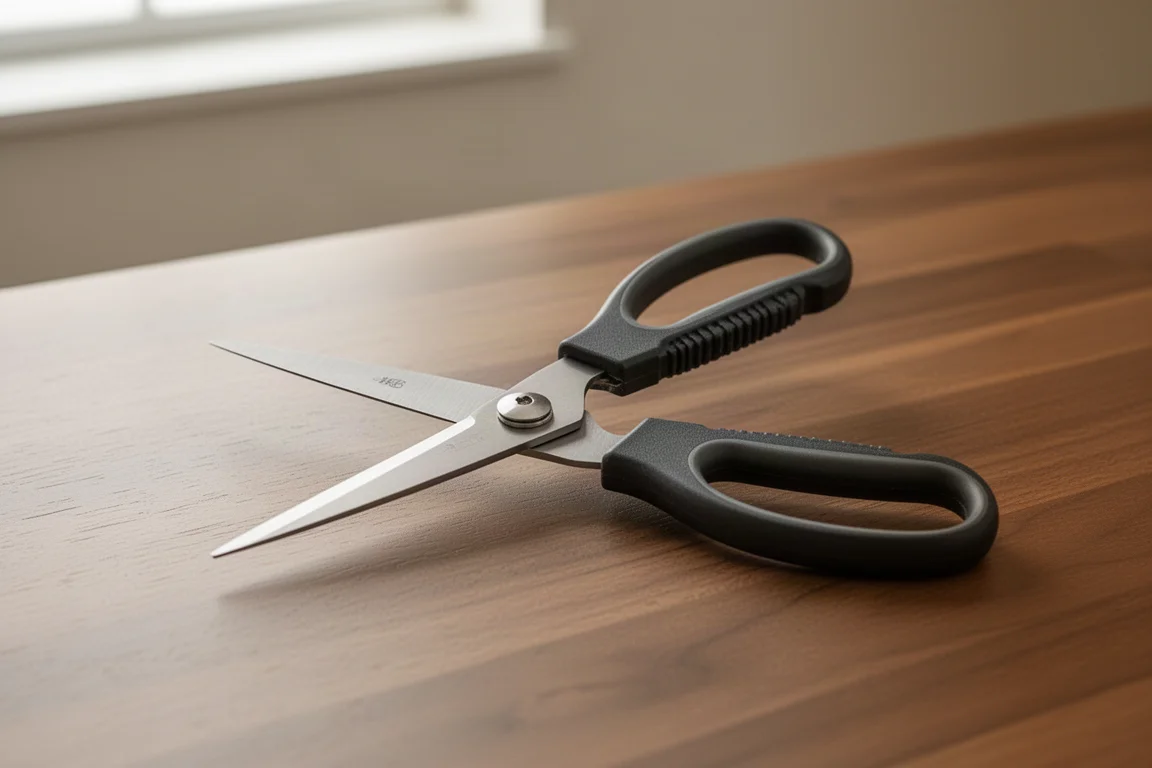
Milwaukee Shop Shears
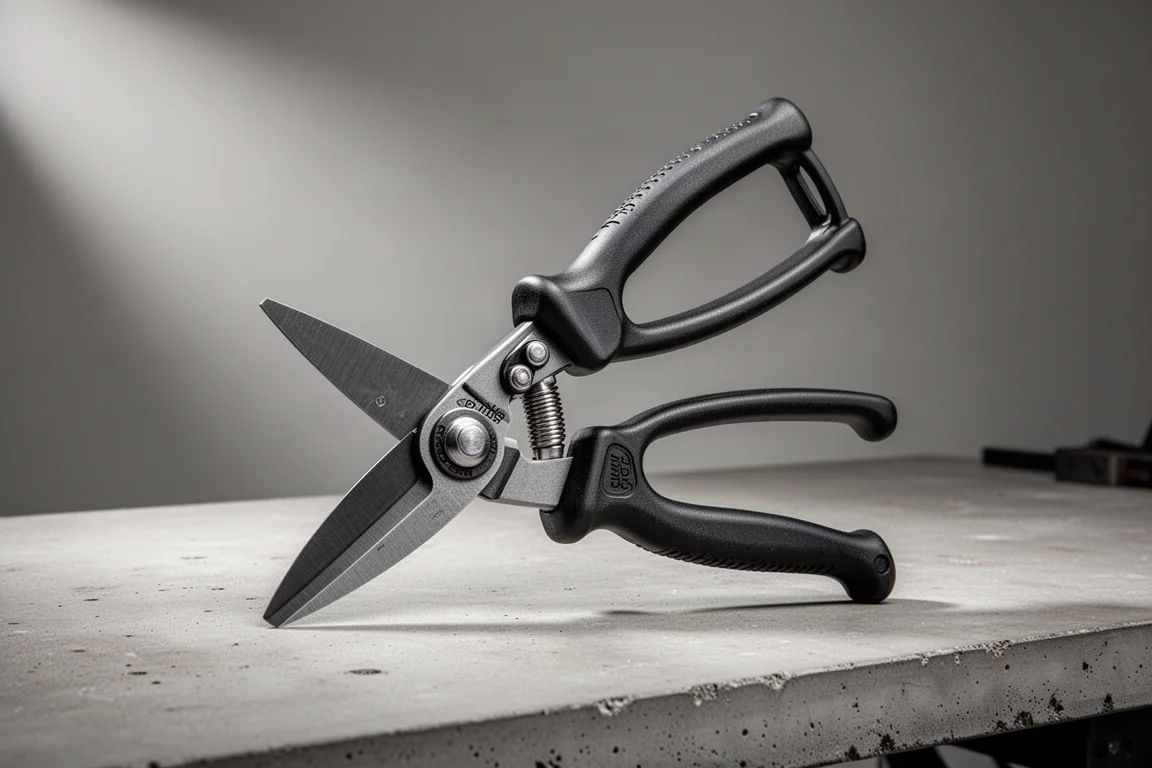
The Milwaukee shop shears were the starting point for this whole comparison, and they remain a solid general-purpose shop tool with a large, comfortable handle and simple construction. On ordinary corrugated cardboard a couple of layers thick, they cut acceptably, though the blades can bog down when the material grabs and folds at the tip.
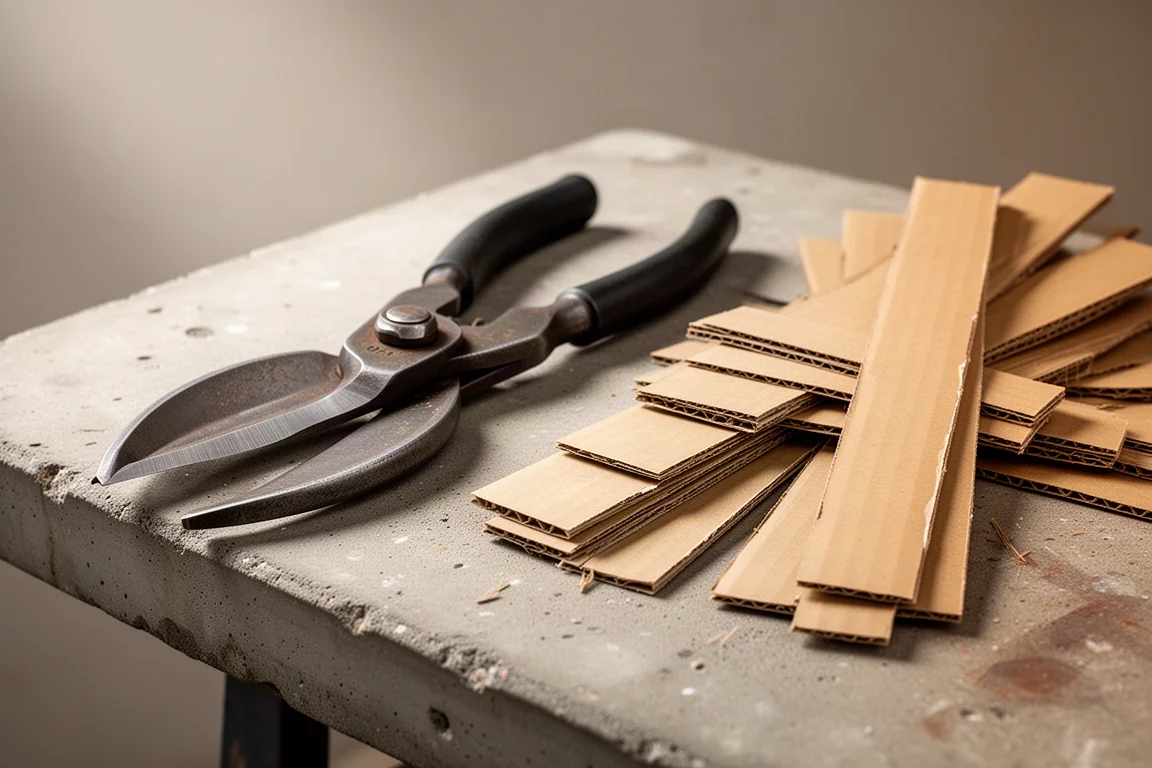
On genuinely thick, multi-layer cardboard the difference becomes obvious: the Milwaukee takes more effort, struggles with the small handle grip, and the material folds at the tip in a way the dedicated C-Jet shears never do. As a versatile shop shear it holds its own, but as a heavy cardboard and carpet cutter it is outclassed.
Overall Buying Advice
Match the tool to the job. If your cutting needs are mostly carpet, thick rubber, or thick multi-layer cardboard, the dedicated C-Jet shears are remarkable for what they do, and the choice between them comes down to power versus dexterity: the 10-inch for slicing through thick stock, the 8-inch for intricate shapes. If hygiene and easy cleaning matter most, the Fiskars take-apart shears earn their place, accepting a slightly fussy joint. For a general-purpose shop shear, the Milwaukee remains a reasonable everyday pick.
Conclusion
Dedicated cutting tools genuinely change how a job feels. The C-Jet shears turn a two-handed struggle into an effortless glide, and that alone makes them worth taking seriously even if they look overly specialized at first glance. Pick the size that matches your typical cut, keep a take-apart pair for the kitchen, and let a general-purpose shop shear handle everything else.
Further reading
Related Reviews

Tools
Best Contractor Grade Tape Measures 2026: Eight Models Tested Head to Head
We tested eight contractor grade tape measures from Milwaukee, DeWalt, Crescent Lufkin, Tajima, Stanley, Irwin, Gelan, and Craftsman to find the best value and performance.

Tools
Best Precision Screwdriver Sets 2026: Manual and Electric Options Compared
We compare 19 precision screwdriver sets, from budget manual kits to electric drivers, to find the strongest bits and best value.

Tools
Best Stud Finders 2026: Five Popular Models Put to the Test
We tested five popular stud finders on drywall, firewall, and lath and plaster surfaces to see which ones really find studs and avoid false readings.