Kitchen Accessories
Best Cutting Boards for Knife Lovers: My Favorite Picks and What to Skip
From budget plastic boards to end grain wood, here is what makes a cutting board kind to your knife edges, and which board earns favorite status.
Introduction
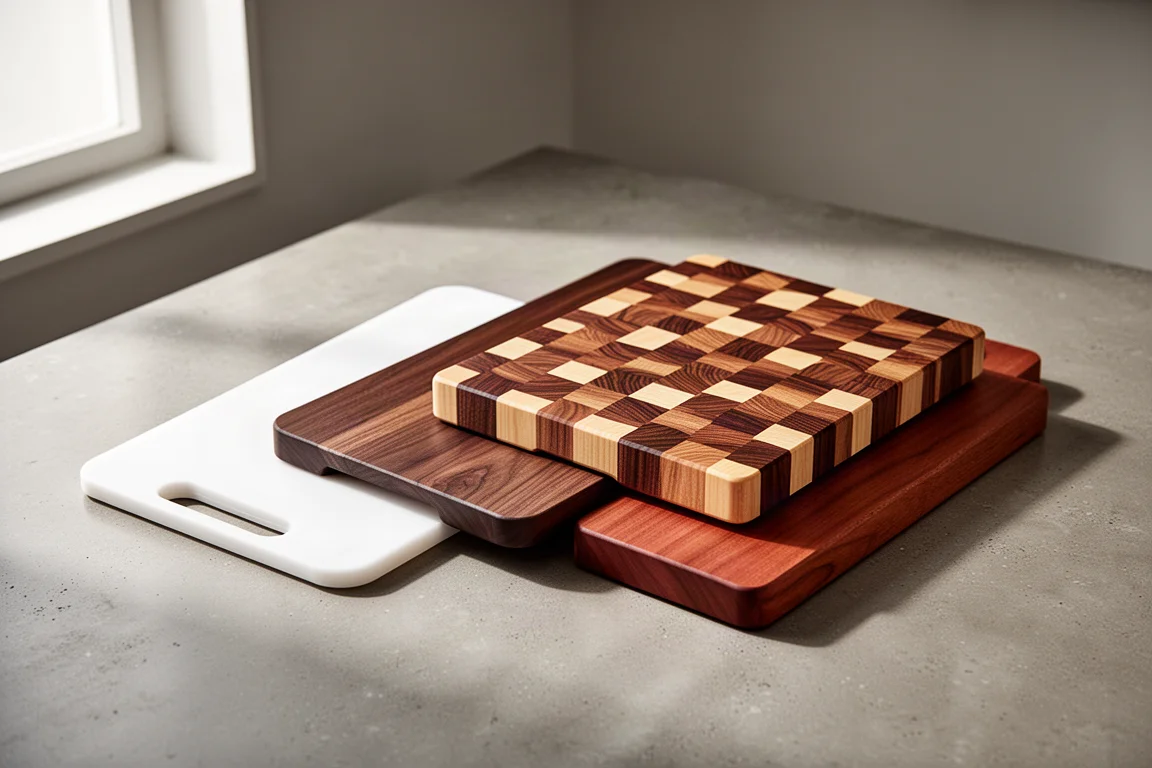
Few kitchen questions come up more often than “what is your favorite cutting board?” It is a fair question, because the board under your knife does more work than most people realize. The right surface helps your knife stay sharper for longer and reduces the chance of edge chipping. The wrong one can quietly destroy a blade you paid good money for.
This is not a definitive ranking of every cutting board on the market. These are the boards actually used, tested, and lived with in a working kitchen, plus a couple of materials that should never touch your knife. If you invest in quality kitchen knives, choosing the right board is one of the cheapest ways to protect that investment.
Boards to Avoid Completely
Before the recommendations, two hard rules. Never buy a glass cutting board, and never buy a bamboo cutting board. Harder materials always do more damage to a softer one, which is why industries use diamond to cut other stones. Glass and bamboo will chew through your knife edge far faster than they add any benefit to your cooking. And whatever you do, never cut directly on your countertop.
A rolled-up newspaper would honestly be safer than glass or bamboo.
The Plastic Boards: Where Budget Meets Compromise
The cheapest option on test is a plastic cutting board from Ikea. It is about as inexpensive as cutting boards get, and the problem is not the price. It is the texture. The surface has a distinct pattern of little squares, as if soft molten plastic was pressed into a mold. Rest a blade on it and you can feel it wedge into the gaps between those little squares without even pushing. If you twist by accident, the edge can chip, because it is literally being pinched between tiny plastic cubes. Plenty of visible knife marks on the surface are another clue that the material does not bounce back between cuts.
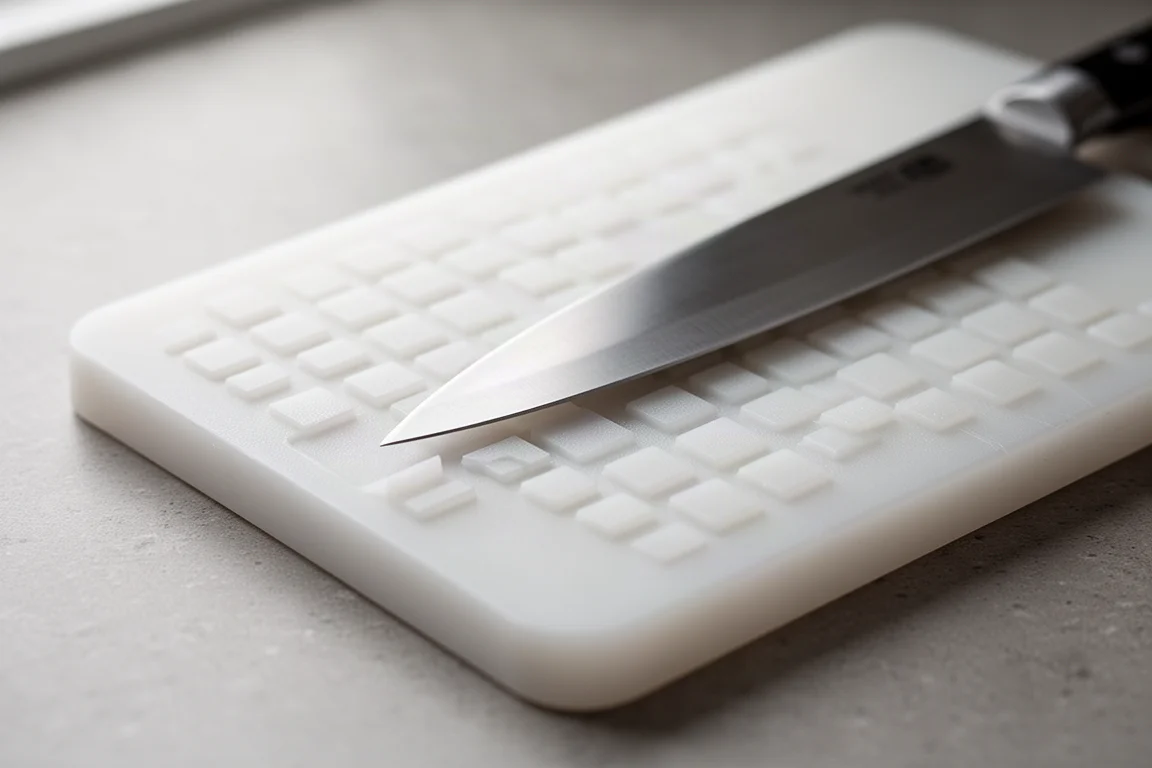
It is still better than glass or bamboo, and it has its place: pair it with a cheap knife you do not care about, and it is a perfectly acceptable throwaway combo for tasks like chopping chocolate. Just do not put a nice edge anywhere near it.
The Reliable Workhorse: Costco Polyurethane Plastic Cutting Board
The second plastic board is a high quality polyurethane board from Costco, and this one earns a permanent spot in the kitchen. It is completely smooth, with no molded pattern, and the plastic is soft enough that it would rather take the knife cuts itself than dull your edge. Yes, it accumulates visible knife marks and does not heal back, but it is gentle on the blade.
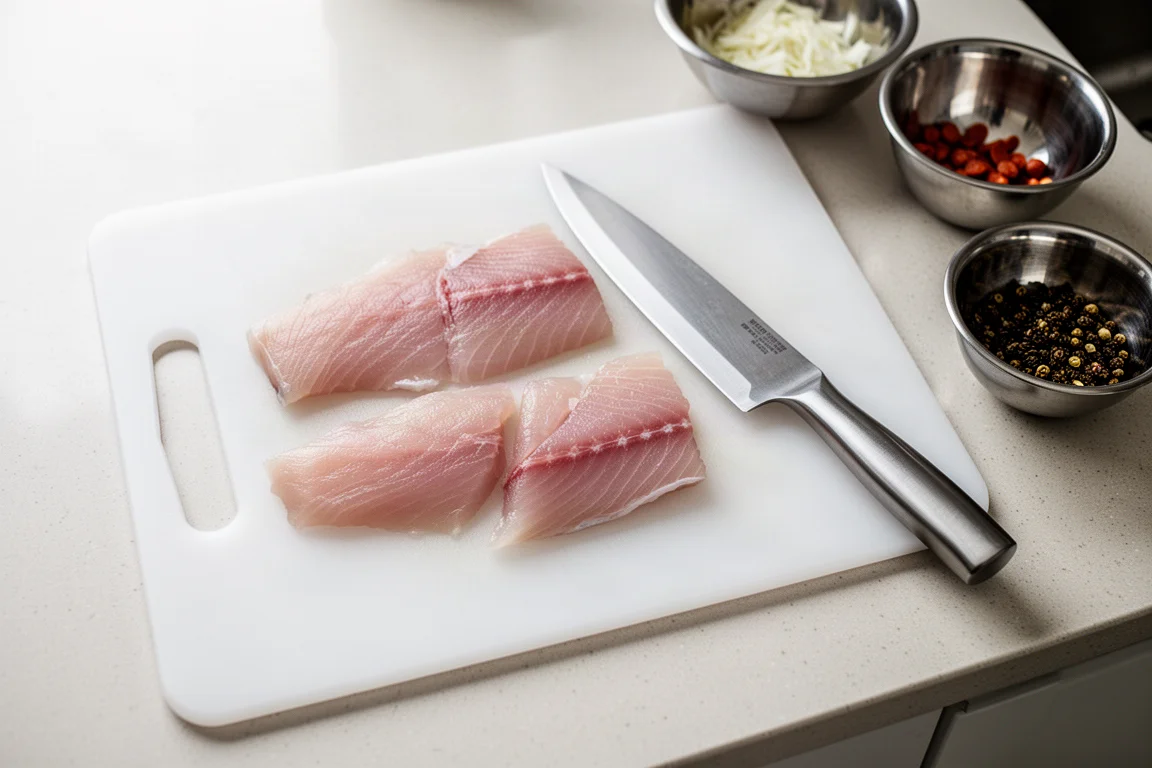
This is the go-to board for raw protein: chicken butchering, fish filleting, and anything else that needs a proper hot water and soap scrub. That is the real division of labor in this kitchen. Wooden boards are babied with oil and wax, so anything involving raw meat goes on plastic. One smooth, soft plastic board dedicated to raw protein is one of the smartest purchases you can make.
Edge Grain Explained: Where Wood Cutting Boards Begin
The first wood board on test is an edge grain walnut board, originally found at a market in Guelph, Ontario. It is genuinely attractive, which counts for more than people admit when choosing a favorite, and for a long time it was the main daily driver.
Edge grain means the tree was sawn into planks and turned on its side. The wood fibers run from left to right across the surface, so every time the knife comes down, the edge cuts perpendicularly across the fibers, slicing into them. Over time, especially with aggressive chopping, you end up with visible chunks of wood missing from the surface.
Because of that, this board has been demoted to serving duty. It handles pizza portioning and the finishing touches on dishes like beef wellington, where a handful of knife cuts on a gorgeous board is worth more than worrying about edge retention. As a presentation piece, it still shines.
End Grain Explained: Why Grain Direction Matters
End grain construction changes everything. Take two discs from the tree, look down between the fibers, and cut those discs into little cubes, then glue those cubes together into a checkerboard surface. When the knife cuts into an end grain board, the blade slips between the wood fibers at the microscopic level rather than slicing through them, which is far kinder to the edge.
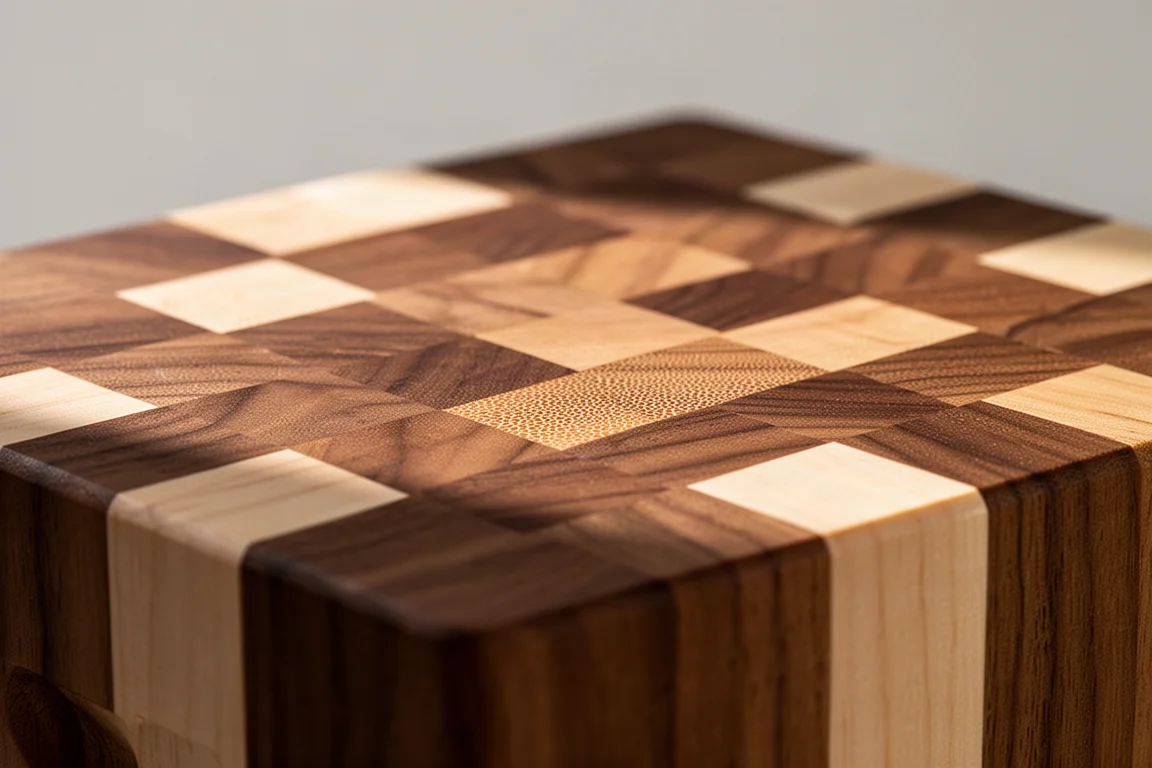
There is typically more glue involved in this kind of construction than in an edge grain board, but the tradeoff is a surface that closes back around the blade. End grain is almost always better for both edge retention and edge durability.
Bograng Atelier End Grain Walnut Cutting Board
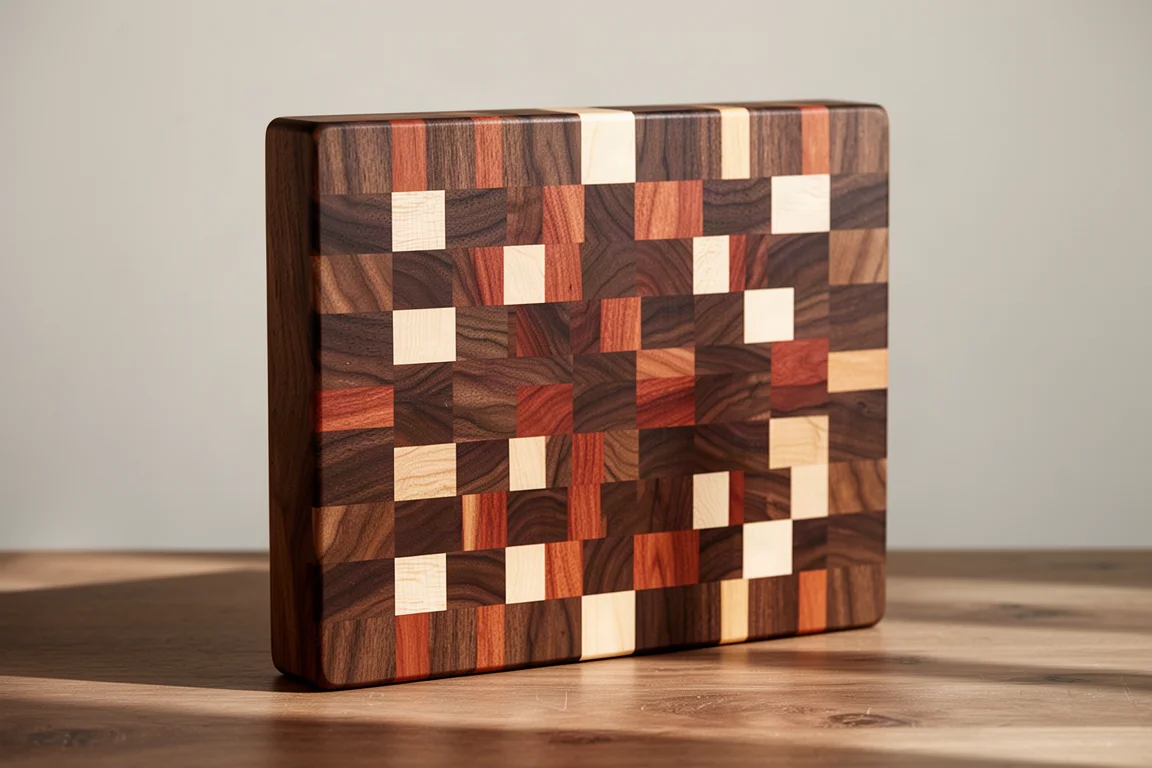
This end grain board from a maker in Quebec combines three hardwoods: walnut as the dominant surface, with accents of maple and cherry. It is a genuinely gorgeous board, and end grain construction puts it a clear step above any edge grain board for knife-friendliness.
So why is it not the favorite? The answer is the walnut itself. Walnut is a very dense hardwood, and in practice this board has developed a reputation for chipping blades. Every time it comes out, the story repeats: beautiful board, careful technique, chipped edge. The common denominator is always the density of that walnut. When the blade hits the surface there is a distinct snappy sound, the sound of a board offering real resistance, and that hardness translates into more edge damage over time.
Larch Wood Canada End Grain Cutting Board
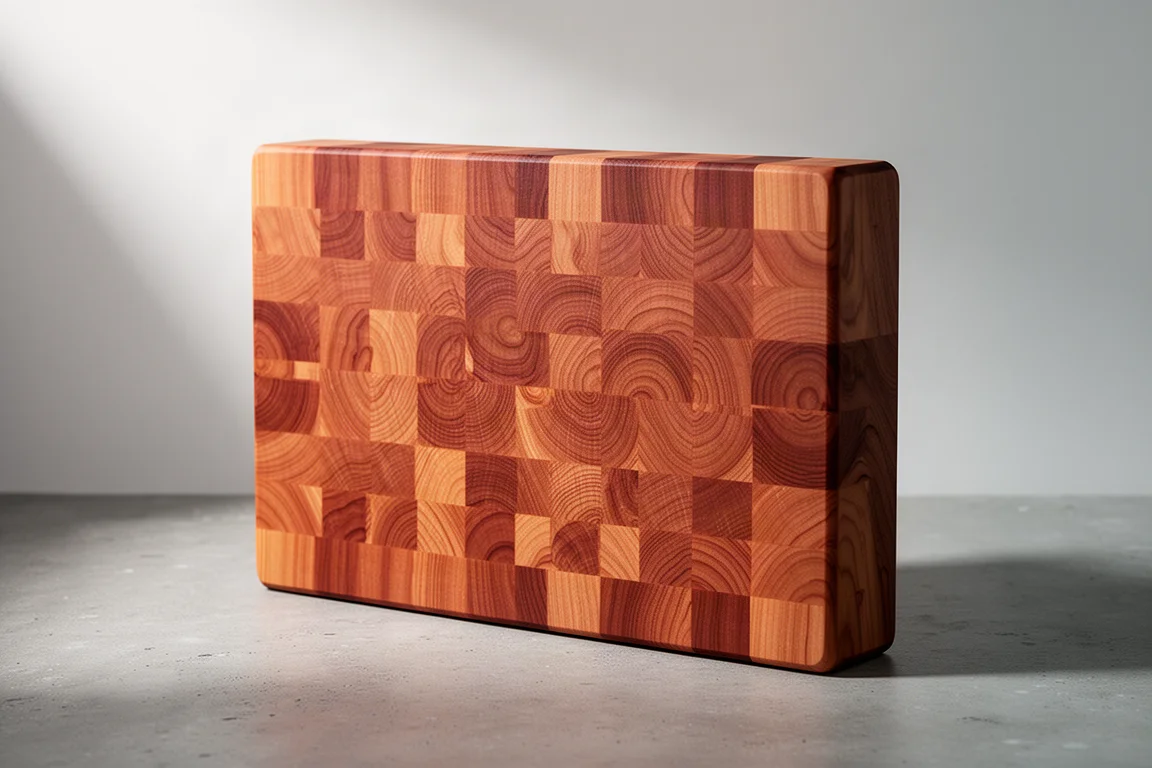
And here it is, the favorite. The Larch Wood Canada end grain board checks every box that matters. It is end grain, built in much the same checkerboard manner as the Bograng board, but the wood itself is the difference maker.
Larch, also known as tamarack, is a softwood, and a fascinating one. Unlike most softwoods, it is deciduous, losing its needles seasonally, which makes it a genuinely unusual material for a cutting board. Softwood simply means softer on the edge of your blade. Cutting into this board feels like the surface puts a little pillow under the blade edge every time, protecting the sharpened steel rather than fighting it.
The bonuses keep coming. Larch has natural antimicrobial properties built into the wood itself, no treatment required, and it ranks among the strongest antimicrobial woods of all, second only to cedar. That matters in a food setting: even if juices from a roast seep into the surface, the wood resists microbial growth and rot naturally. The headquarters in Wolfville, Nova Scotia, is a nice touch, but the material science is why this board wins.
Caring for a Wooden Cutting Board
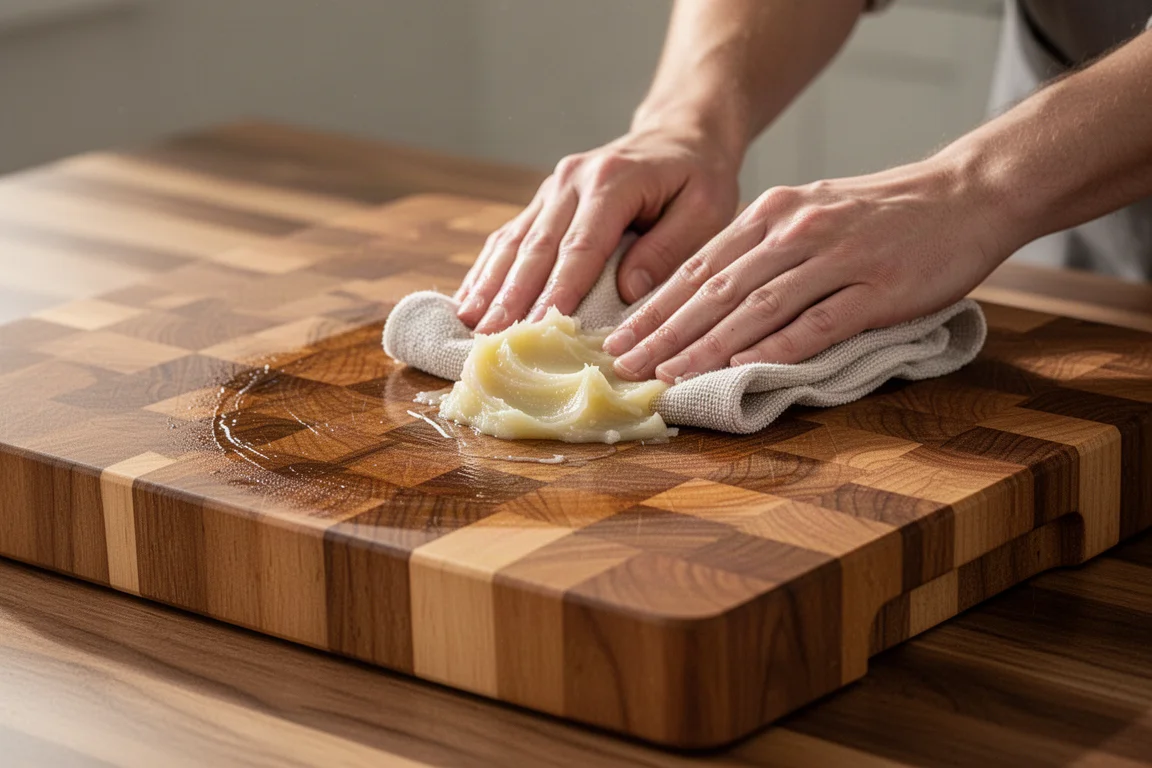
Wooden boards are living products, and they need a little routine care. Once a month, give them a treatment with a mineral oil and beeswax compound. This keeps the wood moist and traps that moisture within the board, preventing drying and cracking over time.
That maintenance ritual is also the reason raw protein stays on plastic. No amount of hot water and soap will damage a polyurethane board, and harsh washing is exactly what you want to avoid on wood.
Two small wishes remain for the favorite board. A slightly larger size would help when prepping big salads in one go, and the brand’s more chaotic, less uniform pattern series has serious appeal for anyone who likes a wilder look in the grain rings. Neither is a flaw, just personal preference, and both are easy fixes on a future purchase.
Buying Advice
Match the board to the task. A smooth, soft plastic board for raw protein and heavy scrubbing. An end grain board in a softer wood for everyday knife work, because your edges will thank you. Edge grain wood for serving and presentation. Skip glass and bamboo entirely, no matter how good they look on a shop shelf.
If edge retention is the priority and only one board makes the cut, a softwood end grain board like Larch Wood Canada is the one that keeps knives sharper longest.
Conclusion
The favorite cutting board question comes down to what the surface does to your knife edge over hundreds and thousands of cuts. Glass and bamboo actively damage blades. Textured budget plastic risks chipping. Smooth plastic is a brilliant, cheap partner for raw protein. End grain hardwood is beautiful and better for edges, though very dense woods can still be unforgiving. The softwood end grain construction of Larch Wood Canada combines the gentlest cutting surface, natural antimicrobial properties, and everyday practicality, which is exactly what a favorite board should do.
Further reading
Related Reviews
Kitchen Accessories
SunnyPoint NeverRust Kitchen Sink Suction Sponge Holder: The Sponge Holder That Stayed Put
In side-by-side testing of six sponge holders, one suction model stood out for fast drying and a grip that actually lasts.
Kitchen Accessories
Best Kitchen Accessories Beyond the Knife Block: A Curated Kitchen Tour
From a travel konro grill to end grain cutting boards and sharpening stones, these kitchen accessories are hand-picked by people who cook for a living.
Kitchen Accessories
Parker Asahi Cutting Boards Review: Consumer vs Professional Compared
Seven boards, two lines, two colors. A hands-on look at Parker Asahi's synthetic rubber cutting boards and which three are worth keeping.