Kitchen
Best Cutting Board Materials: TeakHaus Wood, Epicurean Composite, and Hasegawa Rubber
After testing ten board materials for knife wear, noise, staining, and long-term durability, three boards stand out for most home cooks.
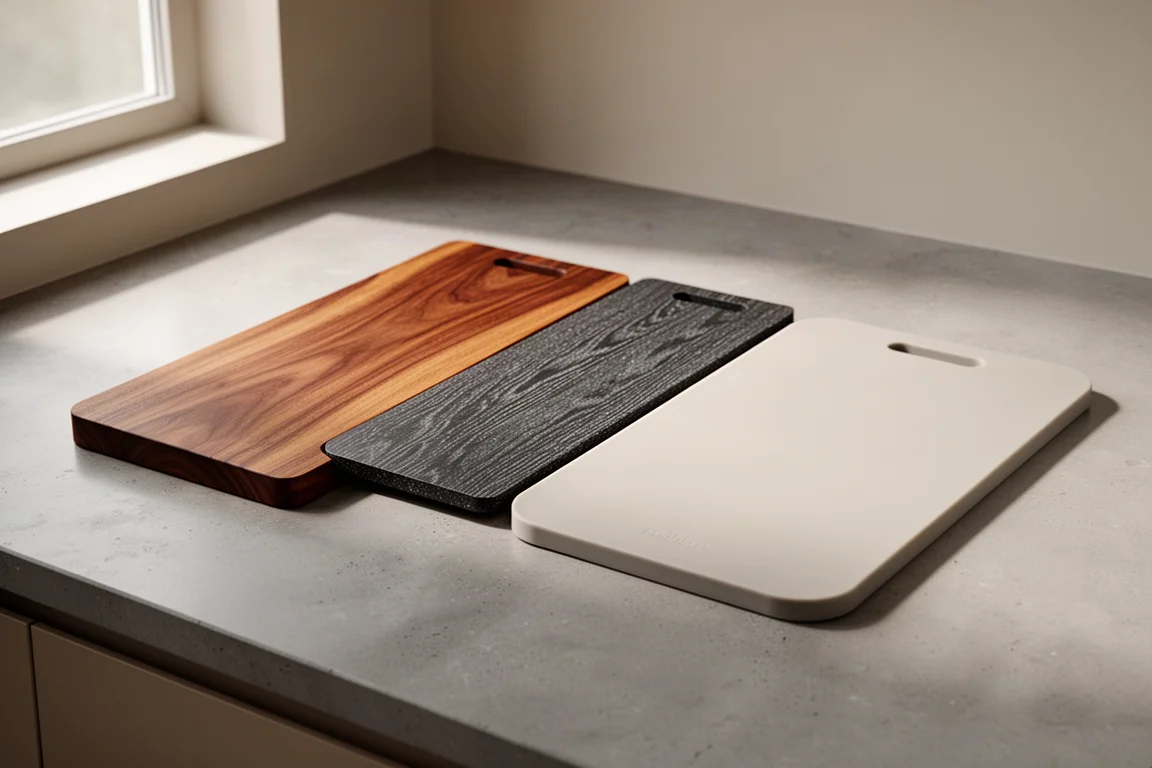
Introduction
Most people shop for cutting boards by size and price, but the material you choose affects far more than looks. It determines how fast your knives dull, how loud your prep work is, whether stains and odors linger, and even how sanitary the surface stays over time.
To separate marketing claims from reality, we looked at hands-on testing across ten board materials: plastic, several types of wood, bamboo, composite, rubber, stainless steel, and titanium. Knives were dulled with hundreds of identical cuts and re-measured on a certified sharpness tester, sound levels were compared, and each board was stained with garlic, beets, and chipotle peppers, then checked over months of use for warping, cracking, and slipping. Three boards came out ahead for most home kitchens.
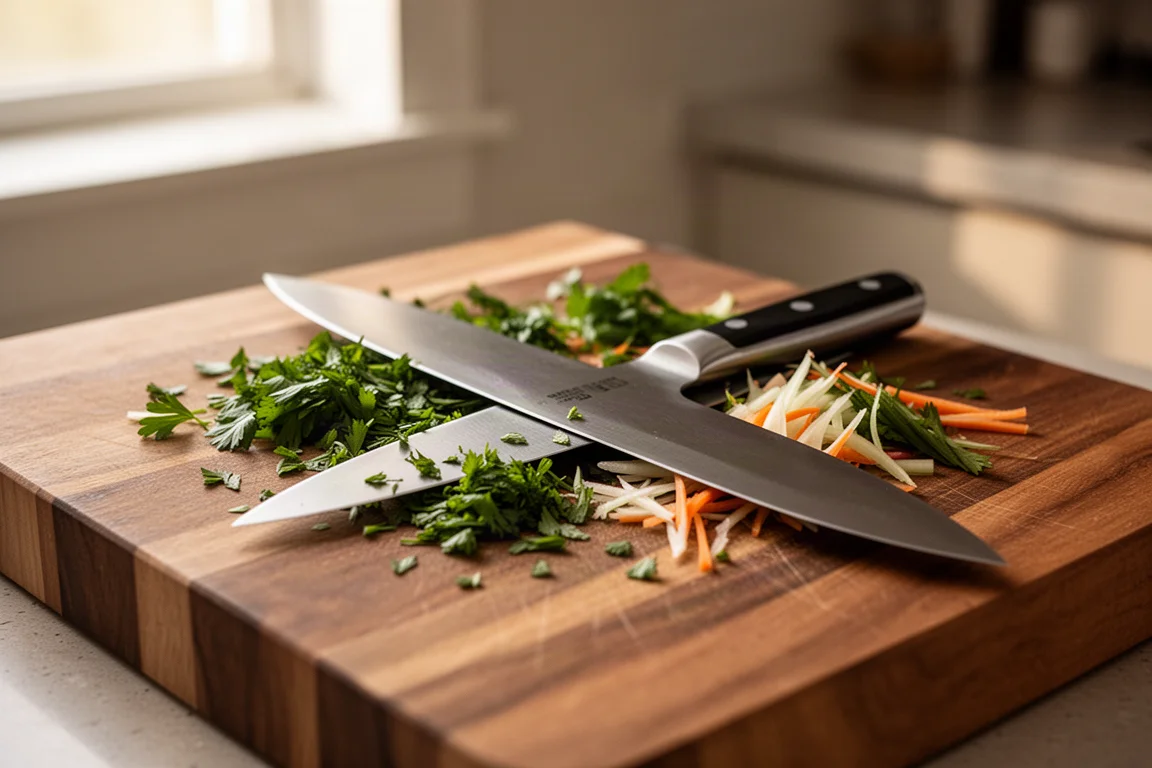
Why the Board Material Matters
The biggest surprise from the testing is that the most popular option is not the safest one. Plastic boards are inexpensive, lightweight, and dishwasher safe, but the surface scars quickly. Once deep grooves form, bacteria can survive in them for hours even after washing, according to a University of Wisconsin study. A 2023 study from North Dakota State University also found that chopping on plastic can release millions of microplastic particles into food every year. The human health impact is still unknown, but the findings are enough reason to consider alternatives.
Metal boards are another case where the marketing does not match the results. Stainless steel and titanium boards are sold as durable and sanitary, but they were the worst performers in knife-preservation testing. The titanium board dulled a knife edge by 444 points, the single worst result out of ten materials, and a controlled comparison with two identical knives confirmed it. Both metal boards were also the loudest surfaces tested, and their thin construction makes food harder to scrape off, causes sliding on the counter, and leaves edges sharp enough to require careful handling.
How the Materials Compare
Wood performed exceptionally as a group, second only to rubber at preserving knife edges, and all wood boards tested were noticeably quieter than plastic, composite, and metal. Bamboo, despite its eco-friendly reputation, ranked in the middle for knife wear, was one of the loudest surfaces at over 75 dB, and is prone to warping and seam splitting because it is made from thin glued strips.
Composite boards are dense and durable, resist cut marks, and are dishwasher safe, but they dulled a knife by 117 points, ranked eighth out of ten, and are louder than plastic, wood, or bamboo. They almost always need a non-slip mat or wet towel underneath to stay put.
Wood: The Best Overall Material
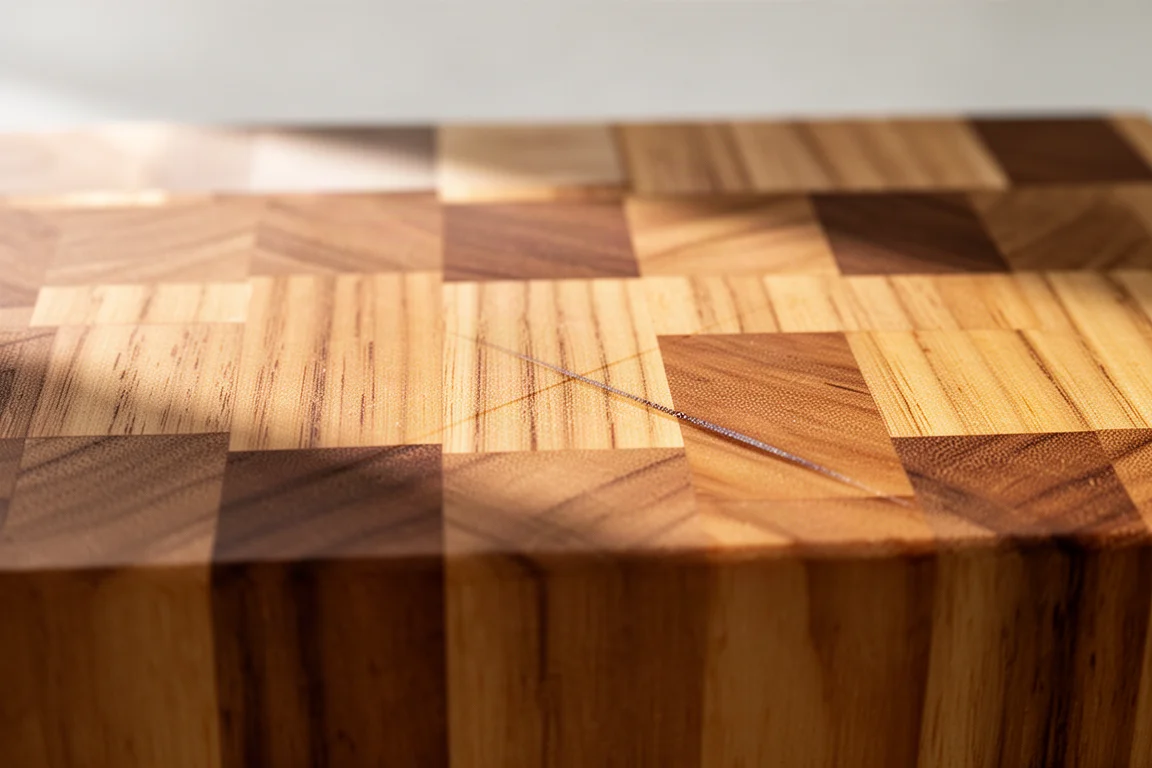
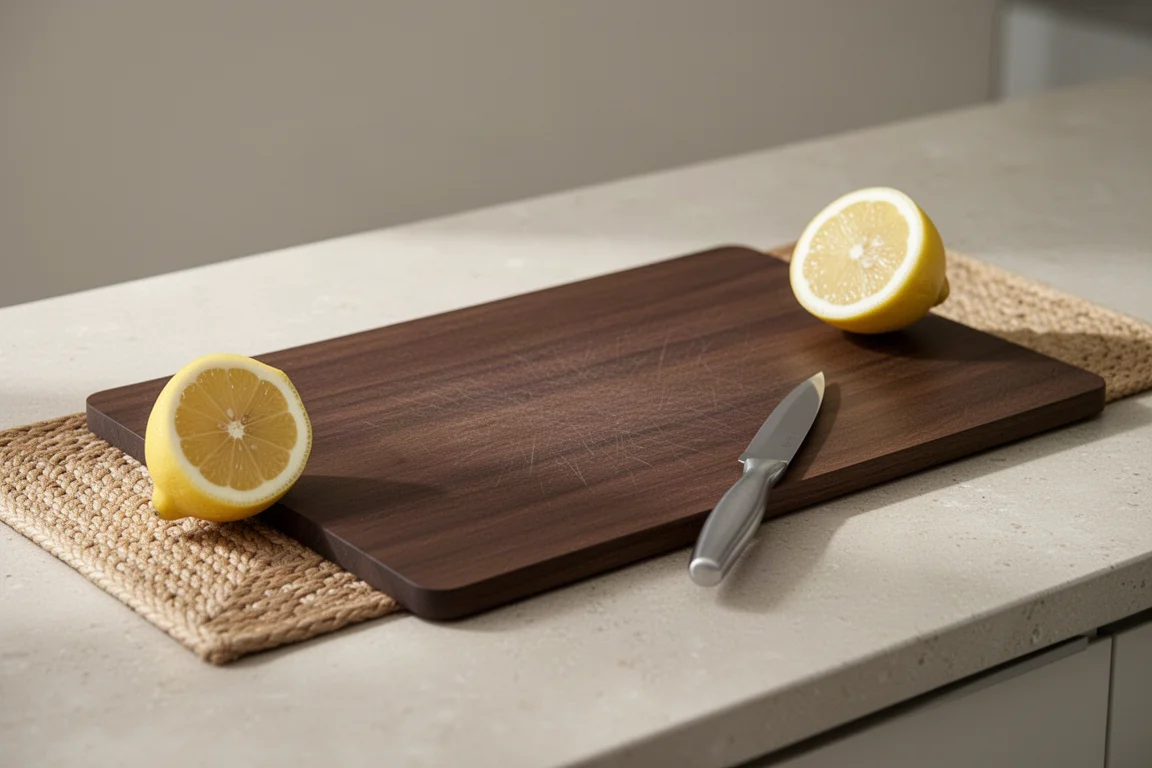
Wood boards come in edge grain and end grain construction. End grain boards have vertical fibers, so the knife edge slips between them instead of cutting through, which theoretically preserves sharpness and lets the surface self-heal. In practice, the difference was minimal: end grain had a slight edge in the dulling tests, but not enough to justify the premium on performance alone. If you like the checkered look, go for it, but do not expect a major functional difference.
The real advantages of wood are feel, sound, and sanitation. The surface feels soft and smooth under the knife, and cutting is noticeably quieter than on harder materials. On the sanitation front, the same University of Wisconsin research found that bacteria get absorbed below the surface of wood and do not survive, while they multiply in plastic grooves. With thorough washing after each use, either material carries minimal risk.
The trade-off is maintenance. Wood needs regular oiling, hand washing, thorough drying, and upright storage while it finishes drying. Because wood absorbs moisture, it expands and contracts, which can crack or split a neglected board. It is also prone to staining and odor retention, though a few washes usually remove both.
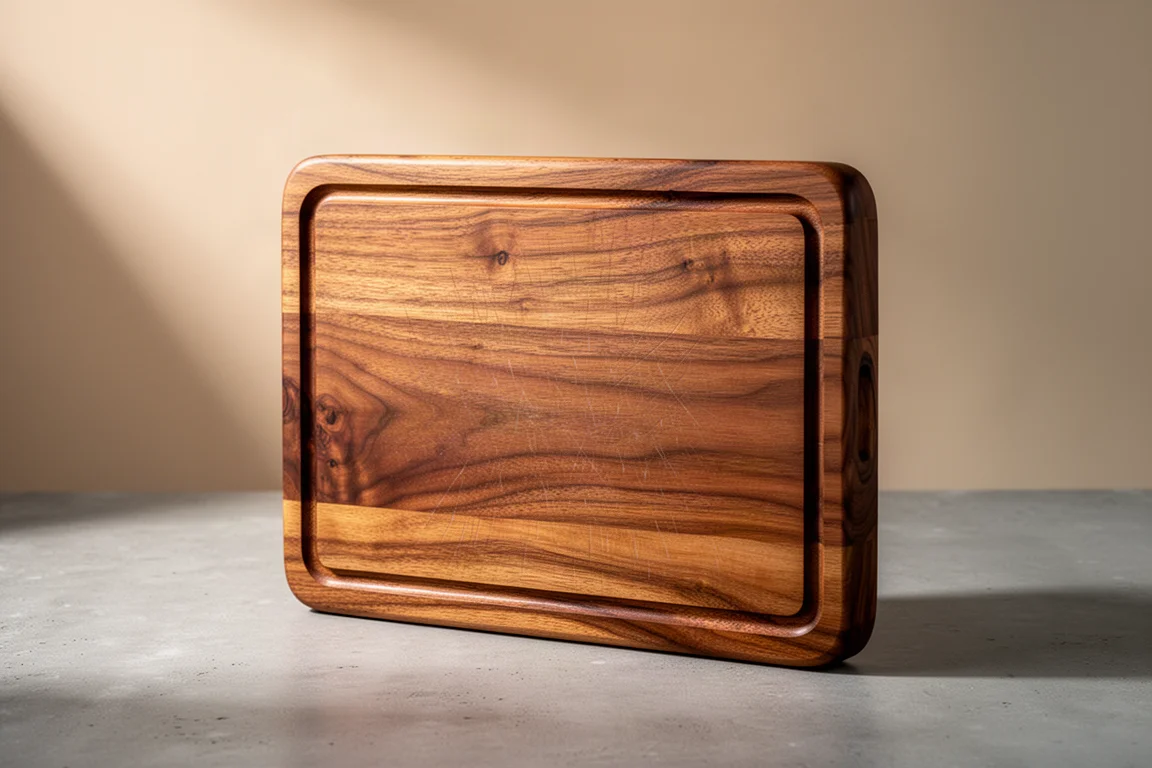
Our top pick is the TeakHaus wood cutting board. It performed well across every test and is relatively inexpensive for its size, making a thick, large wood board a worthwhile primary board despite the upkeep.
Composite: The Low-Maintenance Second Board
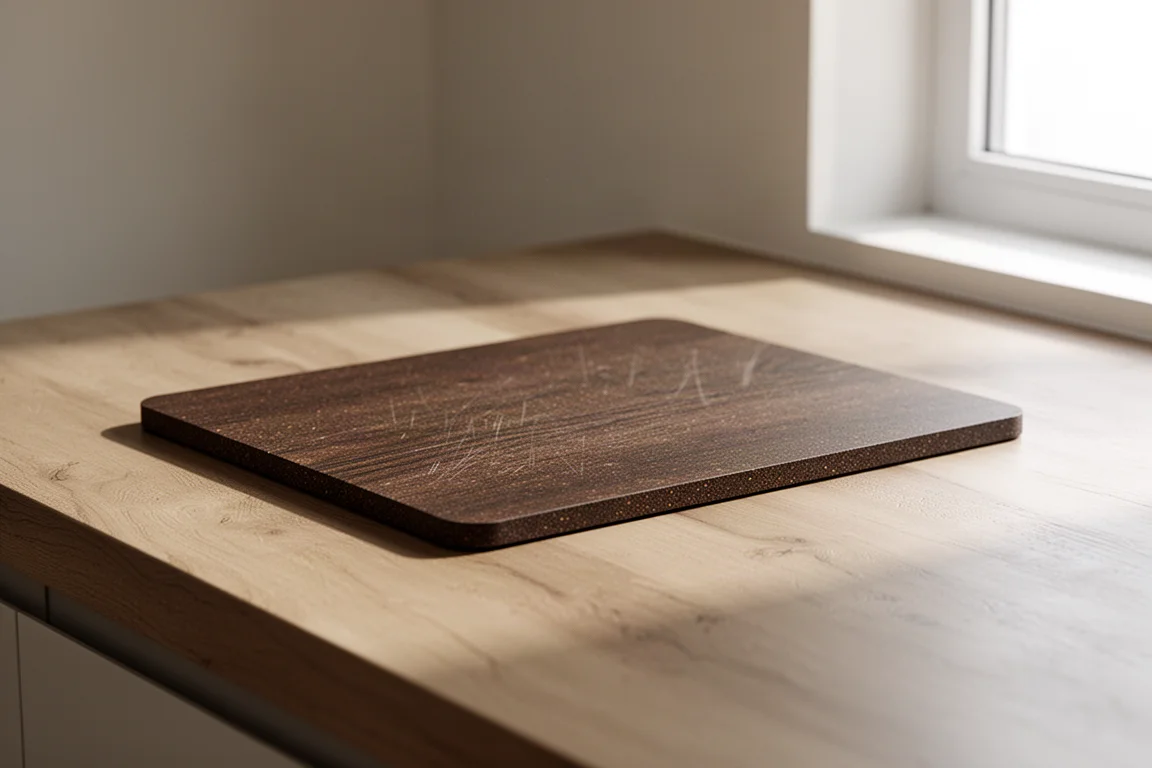
Composite boards are made by compressing layers of paper or wood fiber with food-safe resin into a thin, dense panel that resembles wood but feels harder and slicker. Because they are a single solid piece rather than glued strips, they resist warping and cracking, and they do not stain or hold odors. Dishwasher safe is another practical bonus.
The downsides are real but manageable: composite is hard on knives, louder than wood, and needs a non-slip mat or wet towel underneath to prevent sliding. Still, as a smaller second board for quick prep work, it is hard to beat. The Epicurean composite cutting board is thinner and lighter than a wood board, so you can grab it for a fast job without hauling out the big board.
Rubber: The Knife-Friendly Specialist
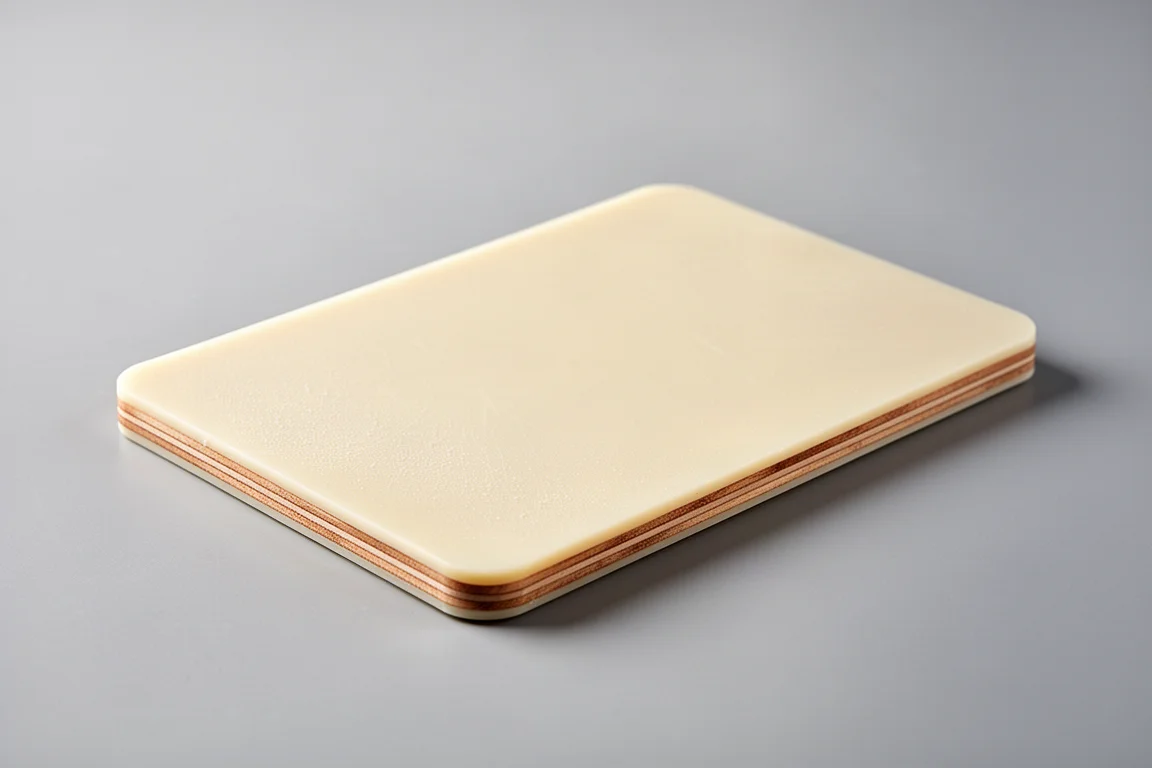
Rubber boards are uncommon in home kitchens but extremely popular in Japanese restaurants, where chefs use exceptionally sharp knives. The Hasegawa board pairs a wood core for stability with a soft rubber outer surface, and it was the standout of the entire test: the knife lost only 10 points of sharpness, the best result of all ten materials, and it was by far the quietest board.
The soft textured surface also keeps the knife stable and stops food from sliding around, and the board held up well against stains and odors. This Hasegawa board is dishwasher safe, though not every brand in the category is. The main adjustment is technique: because the surface absorbs the force of the knife, fast chopping and rocking motions do not work as well. It is designed for slicing, not rocking.
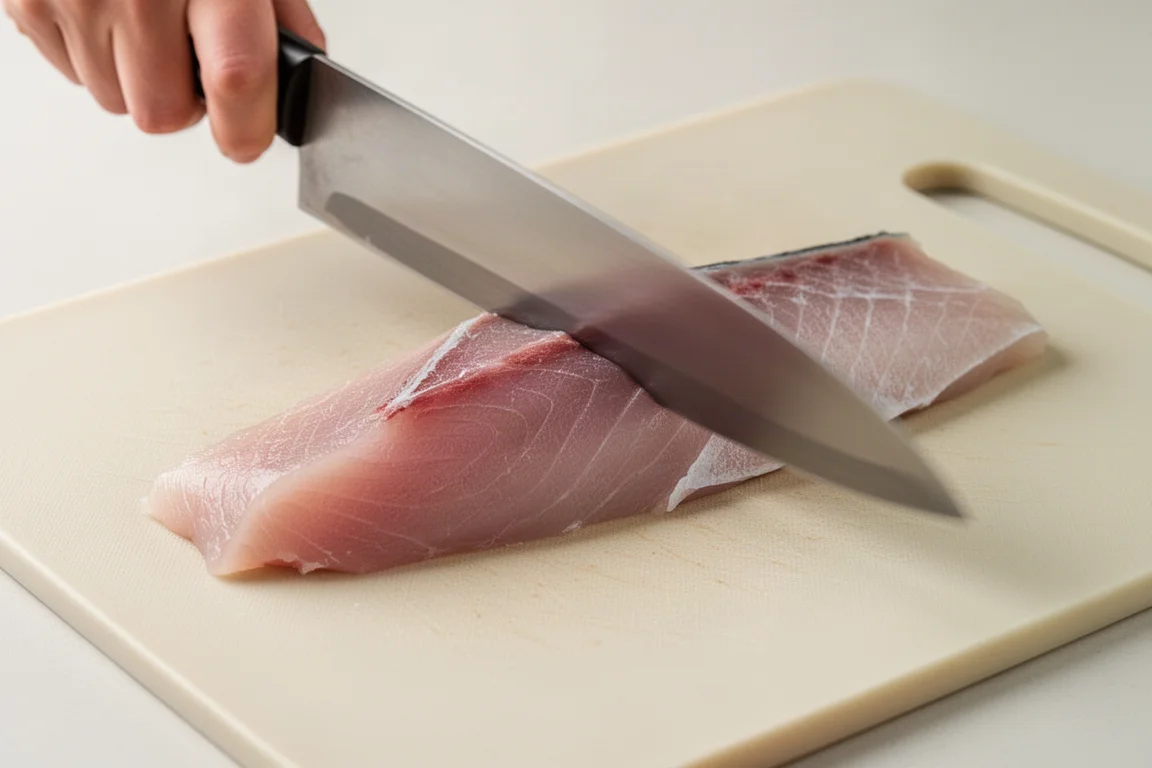
If you mostly slice proteins or care deeply about edge retention, a rubber board is a genuinely useful specialist tool rather than a novelty.
Buying Advice
For most home cooks, the ideal setup is a two-board system. Make your primary board a thicker, larger wood board: it requires some maintenance, but it is safe, relatively quiet, gentle on knives, and simply more pleasant to cut on than any hard material. Add a smaller composite board as the low-maintenance workhorse for quick jobs and easy cleanup. If knife-edge preservation is your top priority, a rubber board earns its place as a slicing-focused third option.
Skip bamboo if you want to protect your knives, and avoid stainless steel and titanium boards entirely unless you never sharpen your blades and do not mind a very loud workspace.
Conclusion
The best cutting board is not the cheapest or the most hyped. A quality wood board like the TeakHaus makes the best daily driver, an Epicurean composite covers quick prep with zero fuss, and a Hasegawa rubber board is unmatched for protecting sharp edges. Match the material to how you actually cook, and your knives will thank you.
Further reading
Related Reviews
Kitchen
Best Nonstick Frying Pans Compared: 11 Skillets From $16 to $185, Tested
Eleven nonstick frying pans go head to head in pancakes, eggs, heat distribution, thermal efficiency, and scratch resistance to find out whether a cheap pan can really compete with a premium one.
Kitchen
Vivor Stainless Steel Kitchen Sink Review: A Solid Drop-In Upgrade With One Weak Spot
An all-stainless single-basin drop-in sink with easy-clean rounded corners and a drain-sloped base, at a roughly $200 price point.
Kitchen
Best Bamboo Steamers: Two Tested Picks for Dumplings, Bao, and More
After hands-on steaming tests with dumplings and bao, two bamboo steamers stood out for build quality and staying in alignment.