Tech
Best Cordless Air Dusters Tested: Six Compressed Air Alternatives Compared
Six cordless dusters and blowers measured on air volume, speed, force, noise, and battery life, with a corded DataVac and a canned air comparison.
Introduction
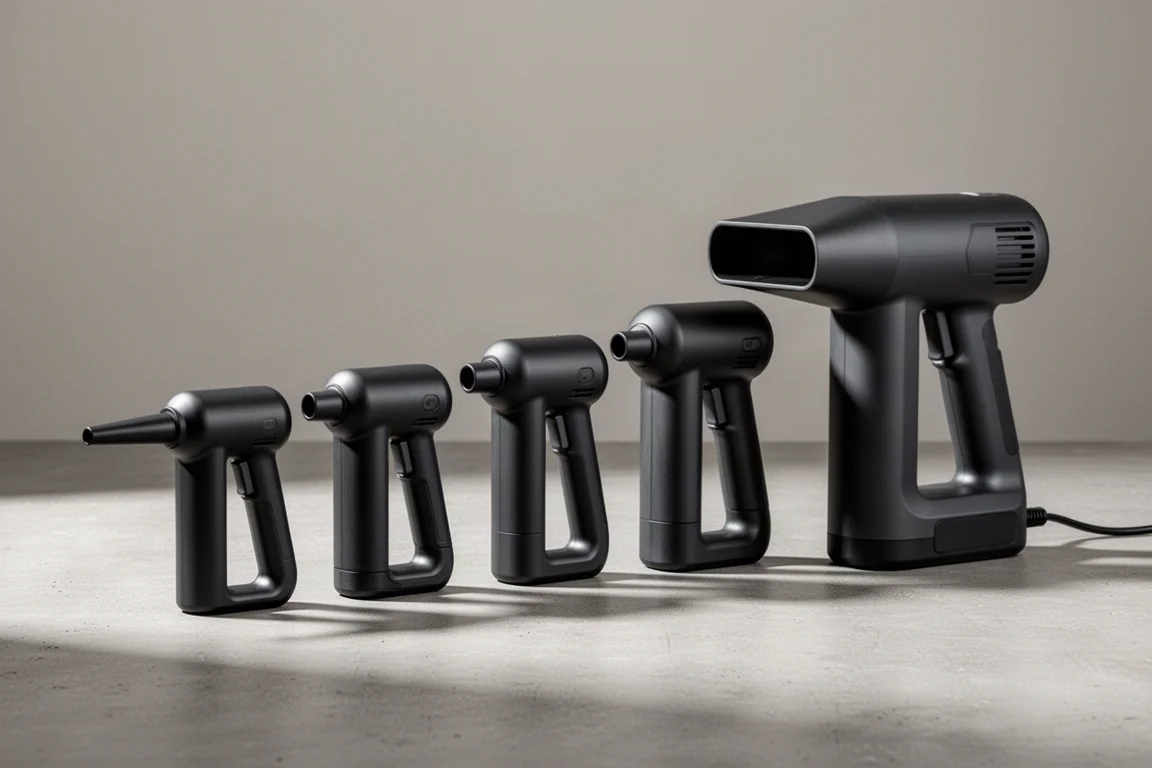
Cordless air dusters promise to replace canned compressed air, and they love to back that up with wild spec sheets: 270 mph wind speeds, 180,000 RPM, even 350,000 RPM claims. We bought six of the most talked-about models and measured what actually matters: air volume in CFM, air speed, force in grams, noise in dB, and battery capacity. We also tested them against a can of compressed air and against the Metrovac DataVac, the long-standing corded standard for PC cleaning.
How We Tested
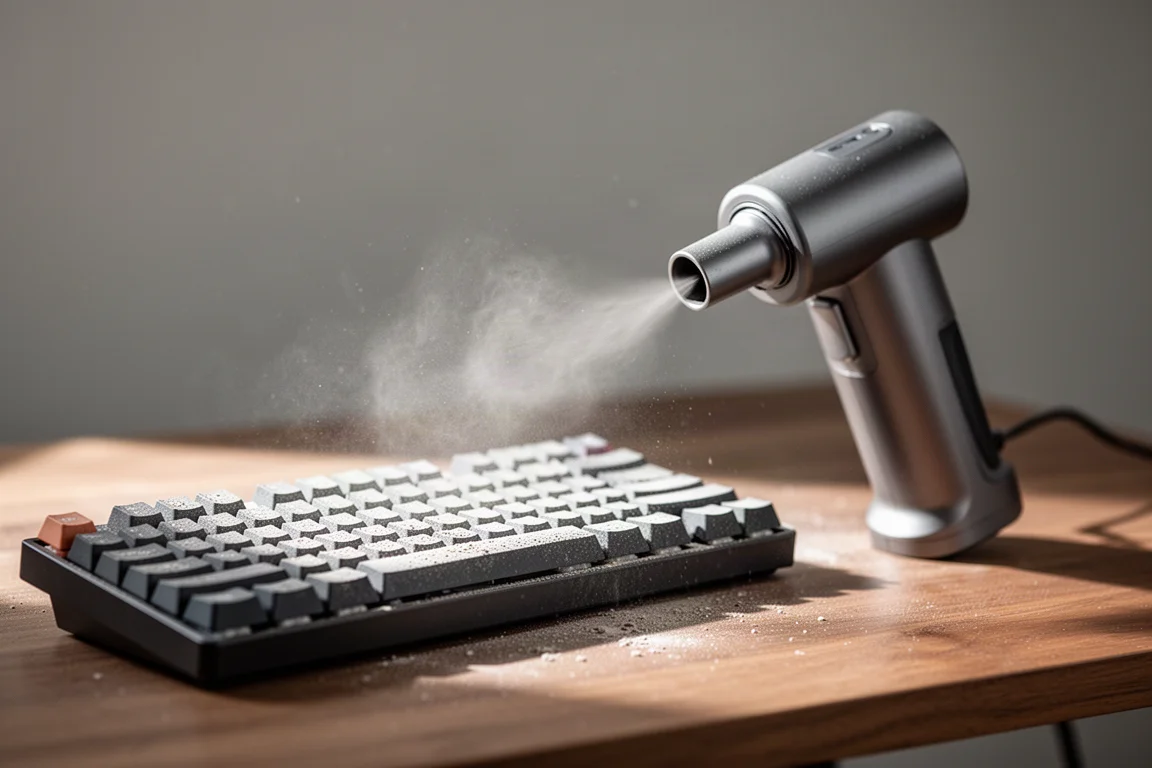
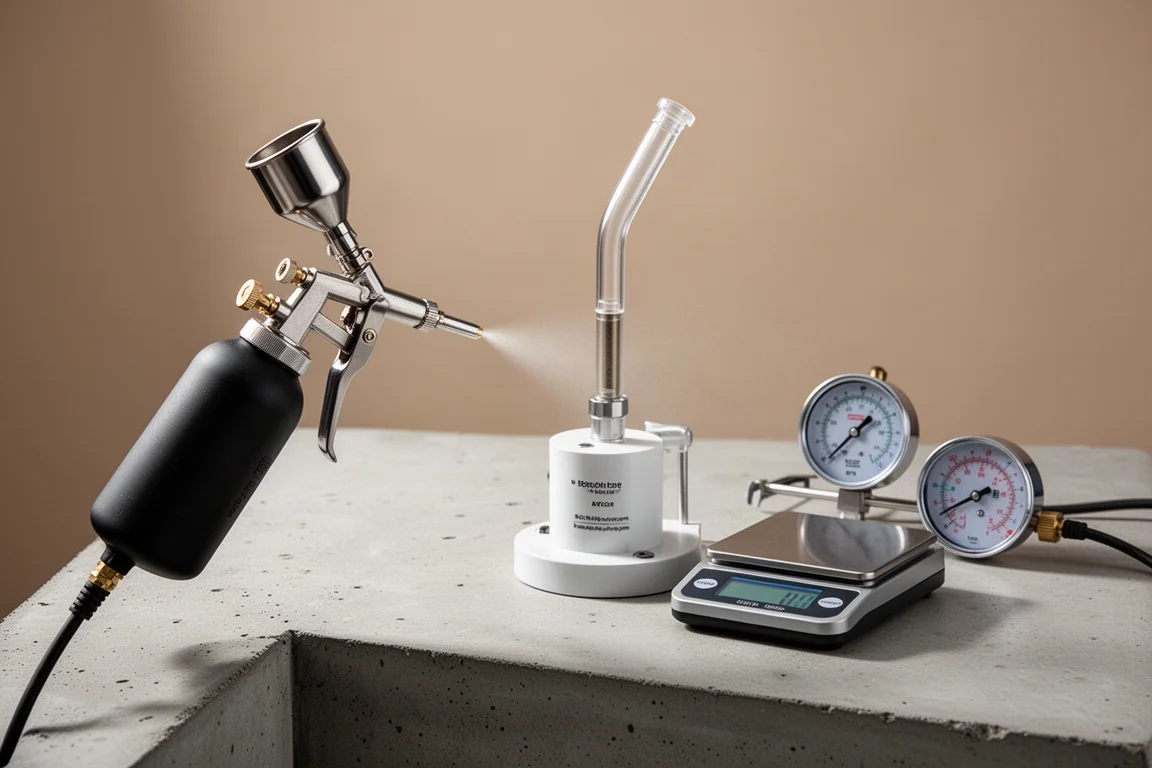
Each duster was fully charged before testing. Air speed was measured with a sensitive meter raised off the table, and the nozzle opening diameter was plugged into a gauge to calculate air volume. Force was measured in grams, and noise was recorded at one meter. For the canned air comparison, the results depend heavily on how the can behaves: just after opening, a can puts out extreme speed (155 to 180 mph, with some sources measuring near the speed of sound) but only about 1 CFM of volume and around 50 grams of force, and the numbers drop off a cliff within seconds as the can gets cold.
Kieho Cordless Air Duster
The Kieho is the most affordable example here at around $30. It advertises a 3,300 mAh battery and 180,000 RPM, charges over USB-C, and feels quite light. Noise is its weak point: it is quiet on its own but gets rough with a nozzle attached, hitting 86 dB, the second highest we have measured to date. Performance is solidly average, at 35 CFM, 35 mph, and 53 grams of force that does not improve with the nozzle.
Because the Kieho sold out after a wave of buyer interest and then returned to stock, we bought a second unit to check for any quality drop. Testing both back to back showed consistent results.
Nitecore Cordless Air Duster
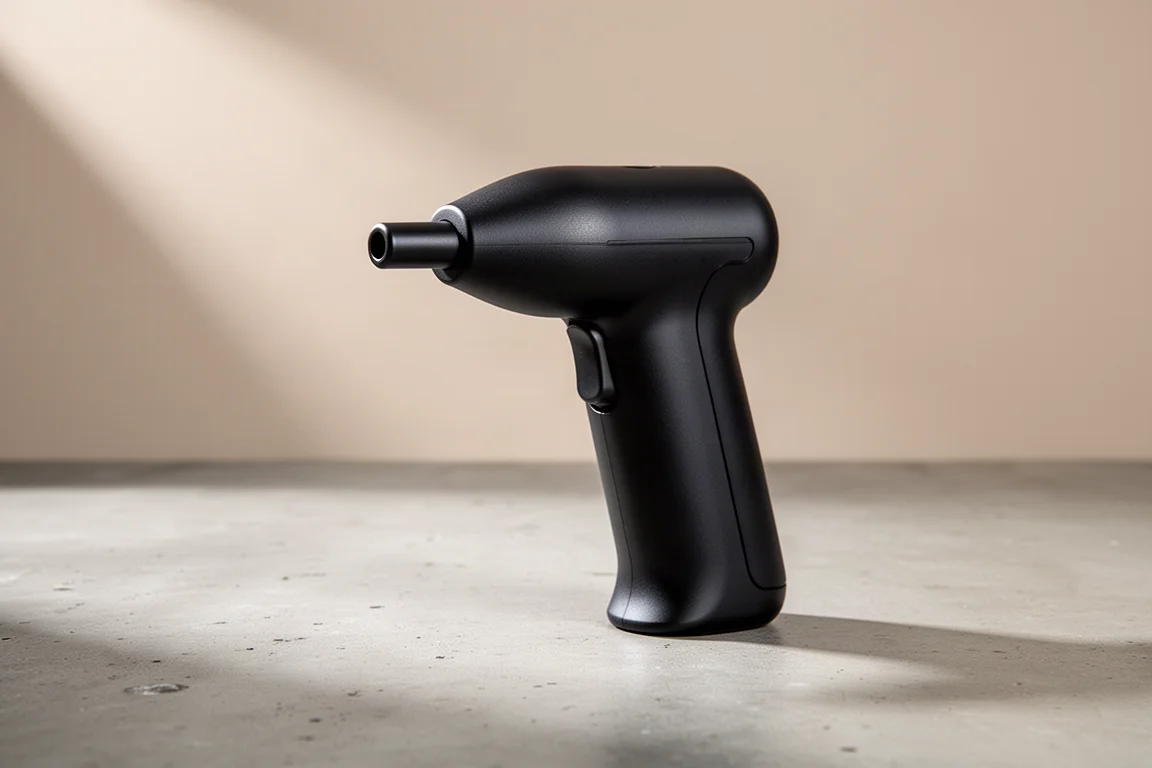
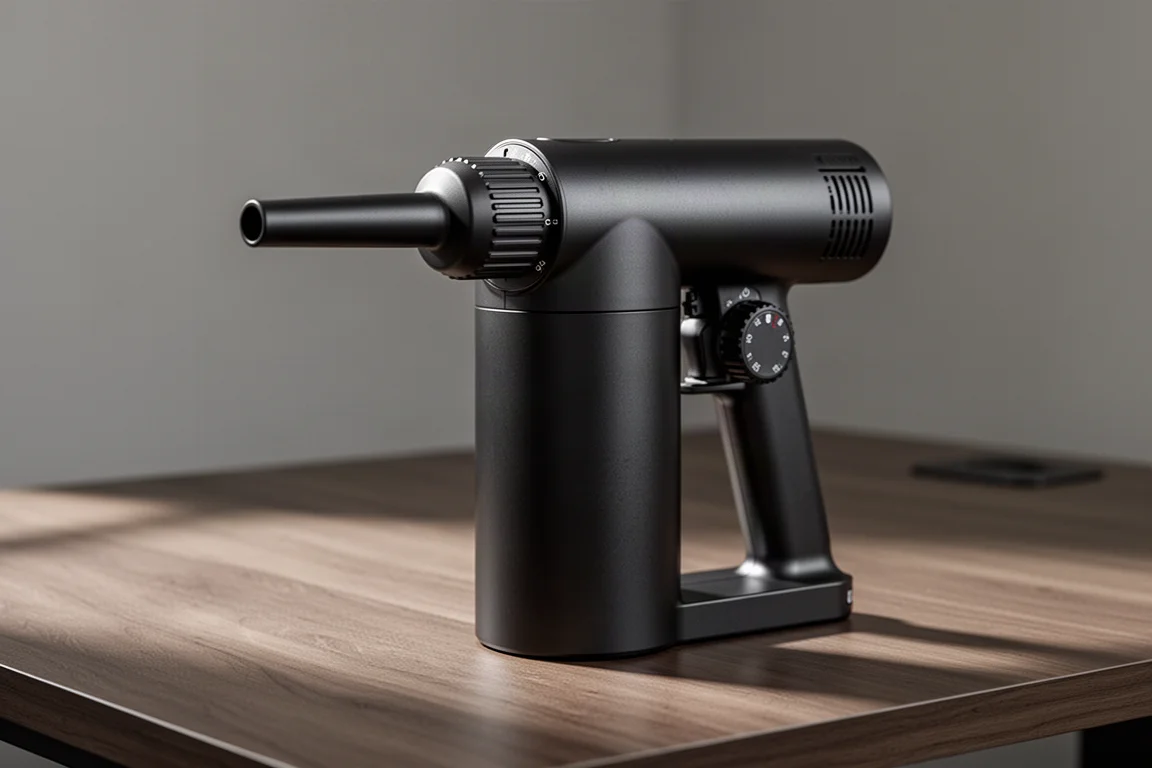
We did not expect a well-known flashlight brand to make one of these, but the Nitecore is one of the more interesting entries at around $60. It feels stout, has a lockout button for shipping, and uses a chunky progressive dial for power levels. Most notably, its claims are modest: 98,000 RPM and 94 mph, numbers that sound like an actual engineering brand wrote them. In reality we measured 95,500 RPM and, even without the nozzle, 111 to 115 mph, peaking around 165 mph, well above the stated figure.
It also nearly doubled the Kieho’s force at 97 grams, and its 6,500 mAh battery is the largest measured to date, matching its advertised claim exactly. On average it hit 77.2 dB, which is very good. It is a noticeably better user than the cheaper units and arguably has the best overall design and fit and finish of the group.
Metrovac DataVac: The Corded Standard
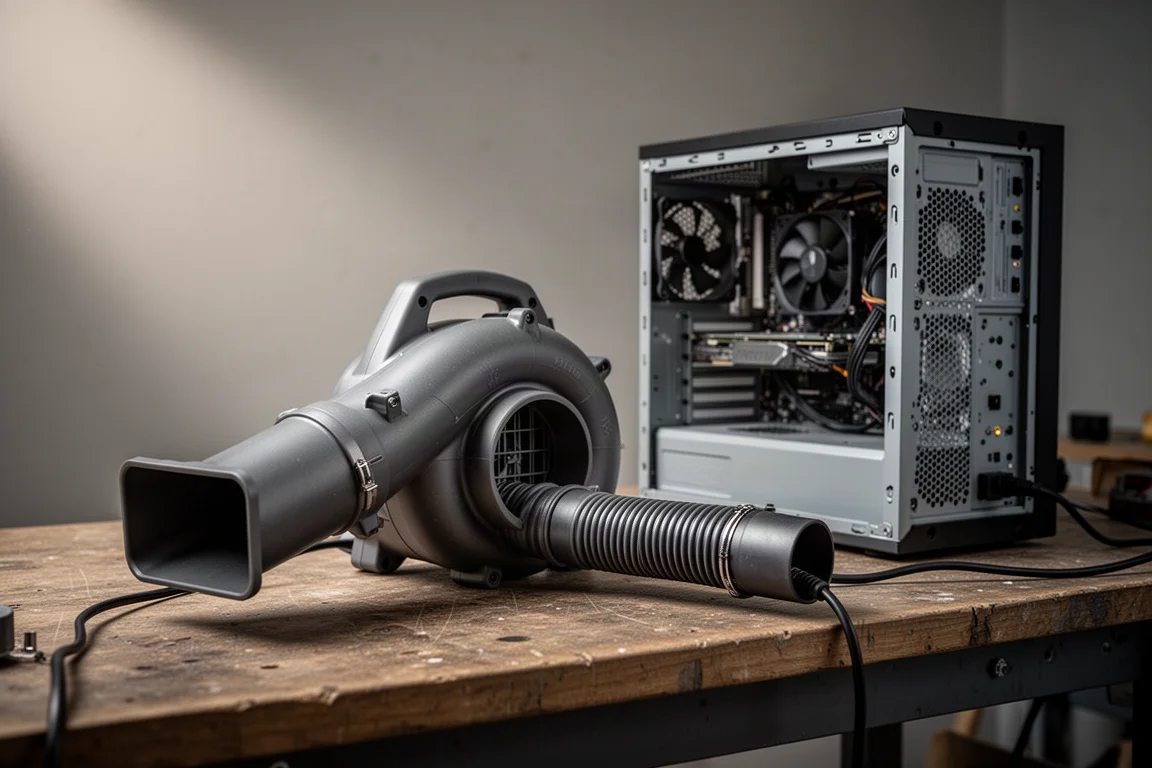
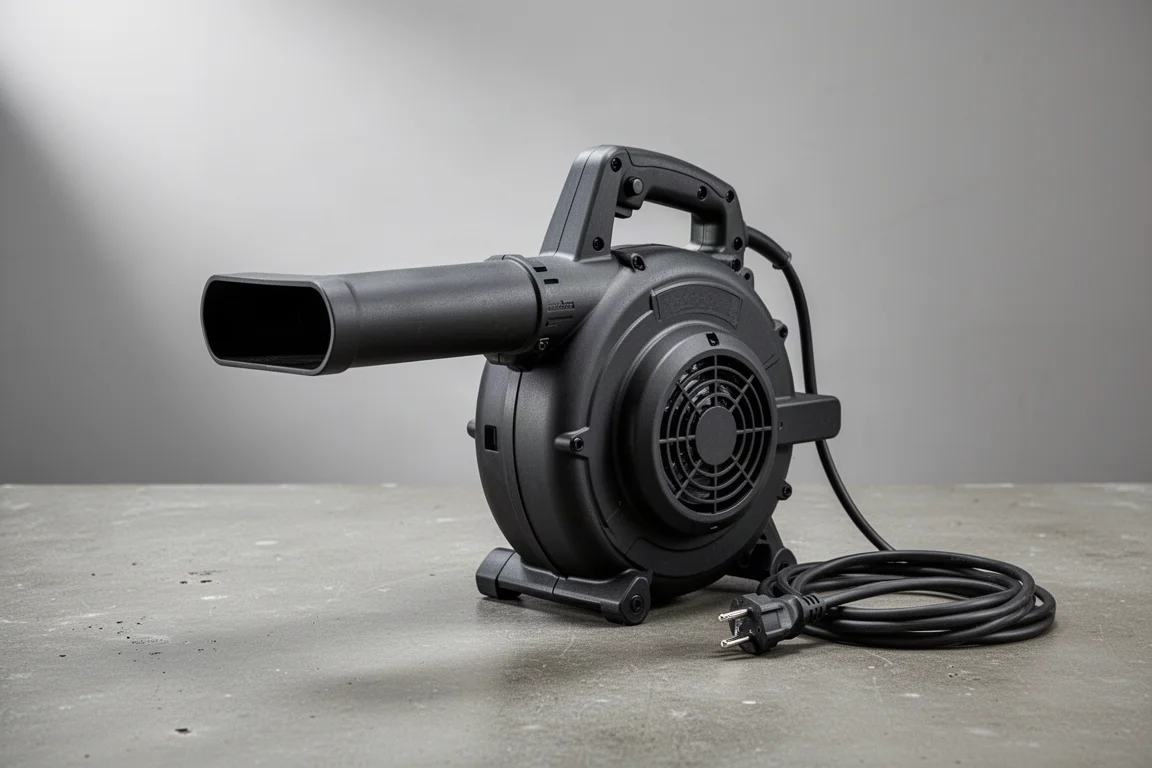
The DataVac is the go-to corded replacement for canned air in PC cleaning, and it is made for the task, including minimizing static charge around electronics. It is made in the US, feels more powerful than expected, and its downsides are obvious: it is fairly large, it needs a plug, and it has exactly one speed. It is also the loudest duster we have measured at 88 dB at one meter.
The performance is real, though. We measured 60 to 62 CFM, the second highest we have recorded, around 180 mph, and roughly 186 grams of force with the nozzle. Few dusters can push that much volume through a smaller exit the way the DataVac does. It can feel overly aggressive around exposed electronics for the uninitiated, but as a bench tool it earns its place.
Lor Turbo Fan Mini Blower
At around $70, the Lor claims 350,000 RPM, which is a stretch: it maxed out our 100,000 RPM gauge only at the top of its max mode. The real-world numbers are strong anyway, at roughly 61 to 70 CFM, somehow beating the DataVac on volume, 168 mph, and 120 to 122 grams of force whether or not the nozzle is attached.
It is one of the nicer-feeling dusters we have bought, with a soft over-molding sleeve and a simple one-two interface that lets you click to its high setting instead of holding the power button down. It is also one of the quietest dusters we have tested at this performance level, which is genuinely rare. Be ready to feed the battery: the high setting draws enough power to drop a charge bar even at full charge.
TR Turbo Fan Blower
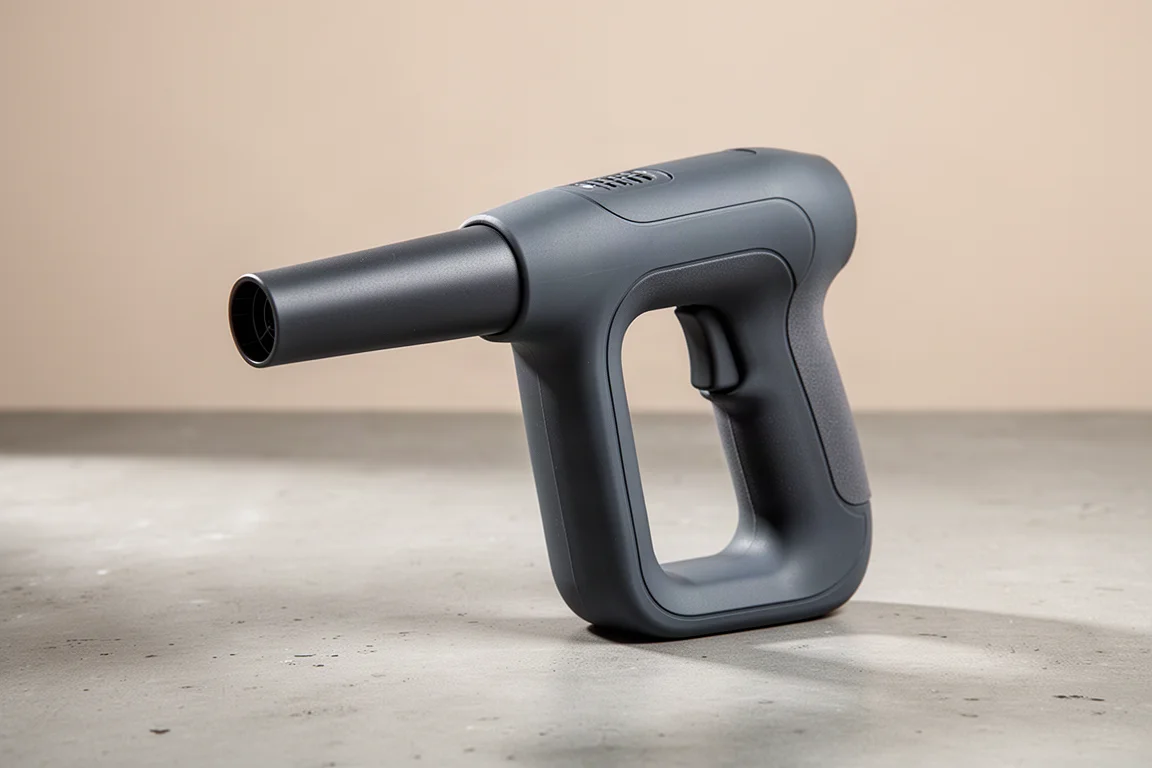
Here is the open secret: the TR is the same product as the Lor under a different brand. We found it advertising a more honest 130,000 RPM, which matches what the Lor actually produces, and it looked awfully similar. We bought it because it was cheaper, around $55 at the time and sometimes less, and the performance is the same.
It comes with the same strengths: strong volume, good force, quiet operation at this power level, and a fast-charging 6,000 mAh battery that neither brand advertises. That battery charges at around 3.5 amps, enough that it gets warm, and a full charge took only two hours where most of these take four to five. Make sure you have a quick-charge adapter if you pick one up.
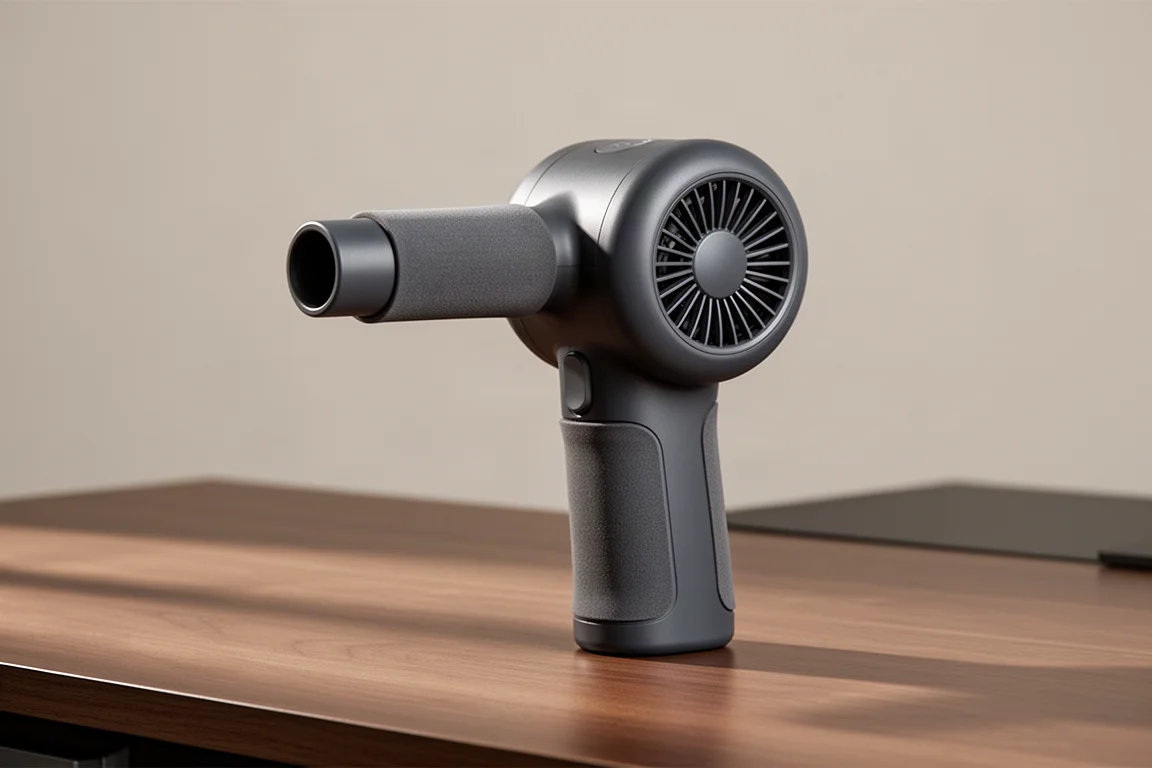
Ra Cordless Air Duster
The Ra is the most expensive cordless duster we have bought to date at $90. It feels very solid, with a weight that suggests more battery cells inside than the advertised 3,300 mAh, and it has a nice slide adjustment. But by the numbers, it behaves a lot like the $30 Kieho: 35 CFM and 135 mph. It does push more force through the nozzle at 76 grams and is noticeably quieter at 78 dB, a massive reduction on a logarithmic scale. Still, at $90 it should be more of a standout than it is.
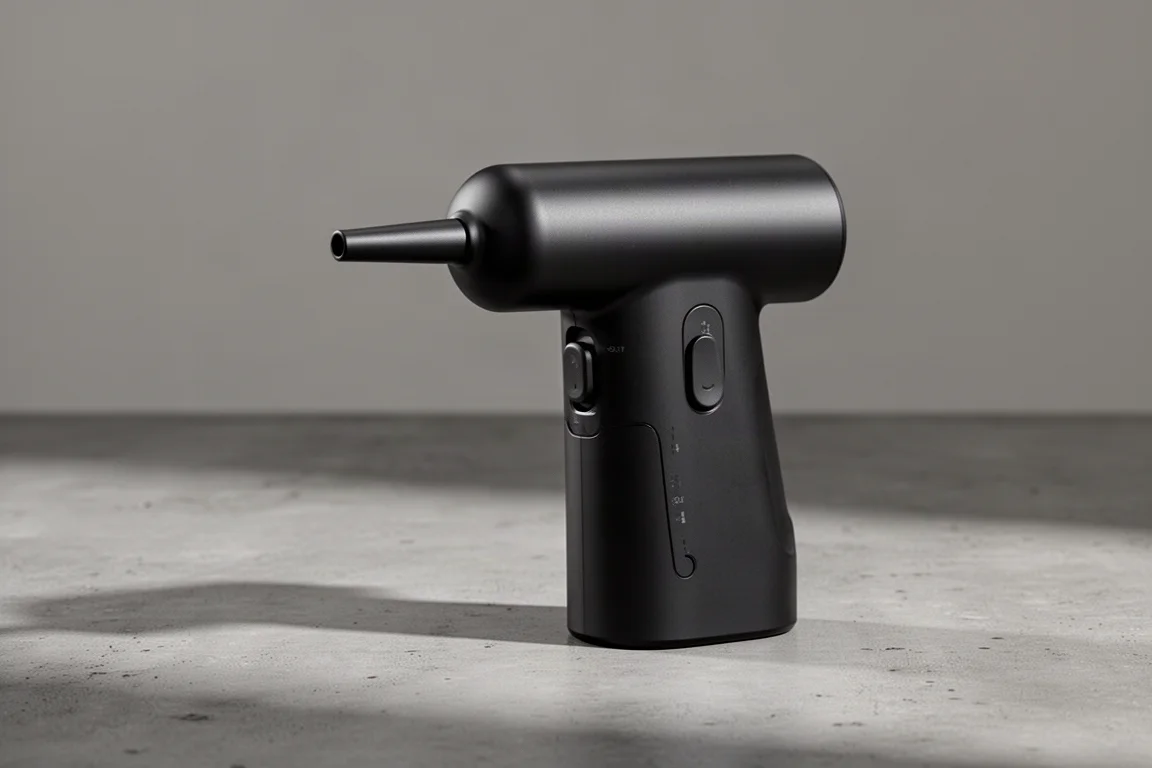
Rankings and Battery Reality
Scoring each model across air volume, speed, force, noise, and battery gives an average rank per product: the Lor/TR lands at 2.8, the DataVac at 3.0, the Nitecore at 3.8, the Ra at 5.6, and the Kieho at 6.6. Across everything we have tested to date, including the Wolfbox from our first round, the Wolfbox still edges out first place, followed by the DataVac, the Lor/TR, and the Nitecore. The Lor/TR and Nitecore are the only two that have beaten the corded DataVac standard, which is not easy to do.
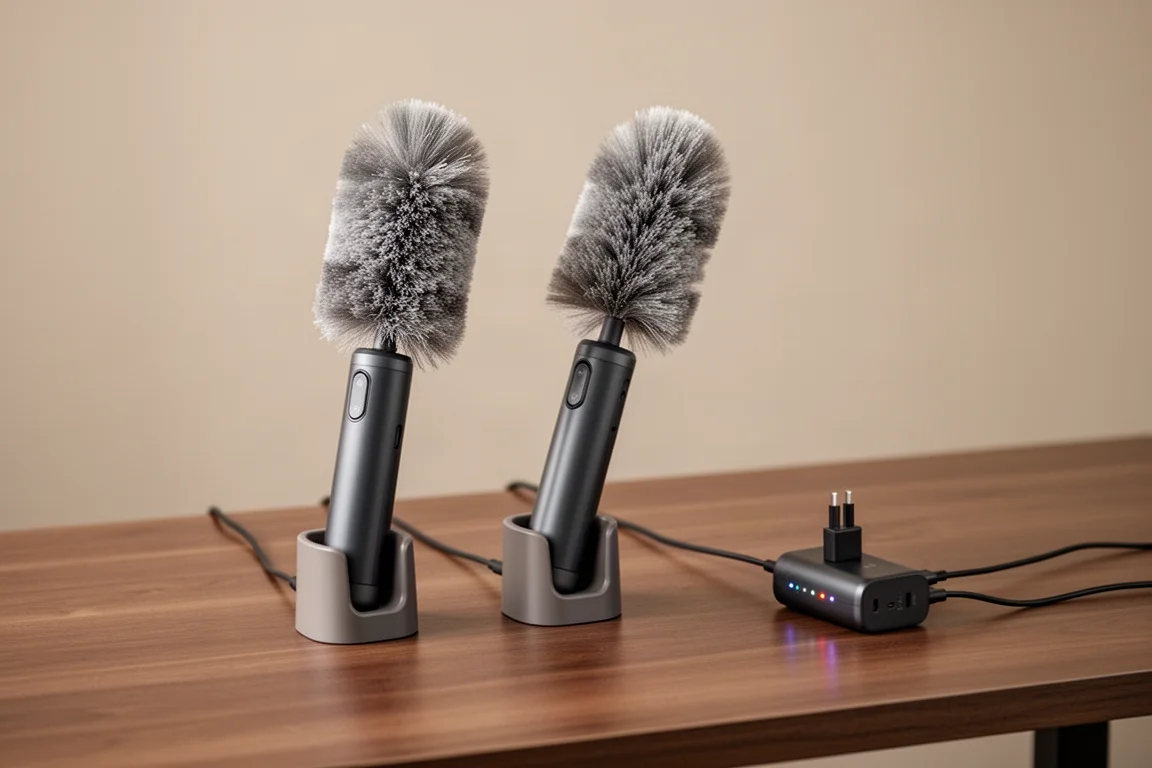
On batteries: the Nitecore’s 6,500 mAh matched its claim exactly, the Kieho advertised 3,300 mAh but measured 4,200 mAh, and the Lor/TR delivered 6,000 mAh at that remarkable 3.5-amp charge rate.
Buying Advice
For most people, the Lor/TR at its lower price is the easiest recommendation: near the top of the rankings, quiet for its power, and by far the fastest charging. The Nitecore is the pick if design, fit and finish, and honest specs matter most. The DataVac remains the corded benchmark if PC cases are your main target and you do not mind noise and a power cable. Skip the Ra unless you specifically value its quietness and solid feel, and the Kieho only if budget is the priority.
Conclusion
The cordless duster category has matured fast. Canned air still wins on raw jet speed for a few seconds, but its 1 CFM of volume, rapid fade, and recurring cost make the better cordless models a clear upgrade. The Lor/TR and Nitecore show that you can now beat a corded standard quietly and affordably, and that alone is worth watching this category.
Further reading
Related Reviews

Tech
Apple MacBook Neo Review: A Surprisingly Capable Budget Laptop
The MacBook Neo brings M1-equivalent performance to a $599 entry-level laptop. We tested it across real workflows to see if it's worth considering over pricier alternatives.

Tech
ASUS ZenBook 16 With Snapdragon and RTX 4060: Can an ARM Laptop Game With an External GPU?
An early look at pairing an Nvidia RTX 4060 with a Snapdragon-powered laptop using a Thunderbolt 5 eGPU dock, including real gaming results.

Tech
GPD G2 eGPU Dock Review: A Sturdy, Future-Ready Boost for Your Handheld or Mini PC
The GPD G2 eGPU dock brings new connectivity standards, a robust build, and desktop-class graphics to laptops, handhelds, and mini PCs.