Cookware
Best Cookware Sets Worth Buying: All-Clad, Made In, and Goldilocks Compared
Three fully clad stainless steel cookware sets that survived testing, plus what to check before buying any set.
Introduction
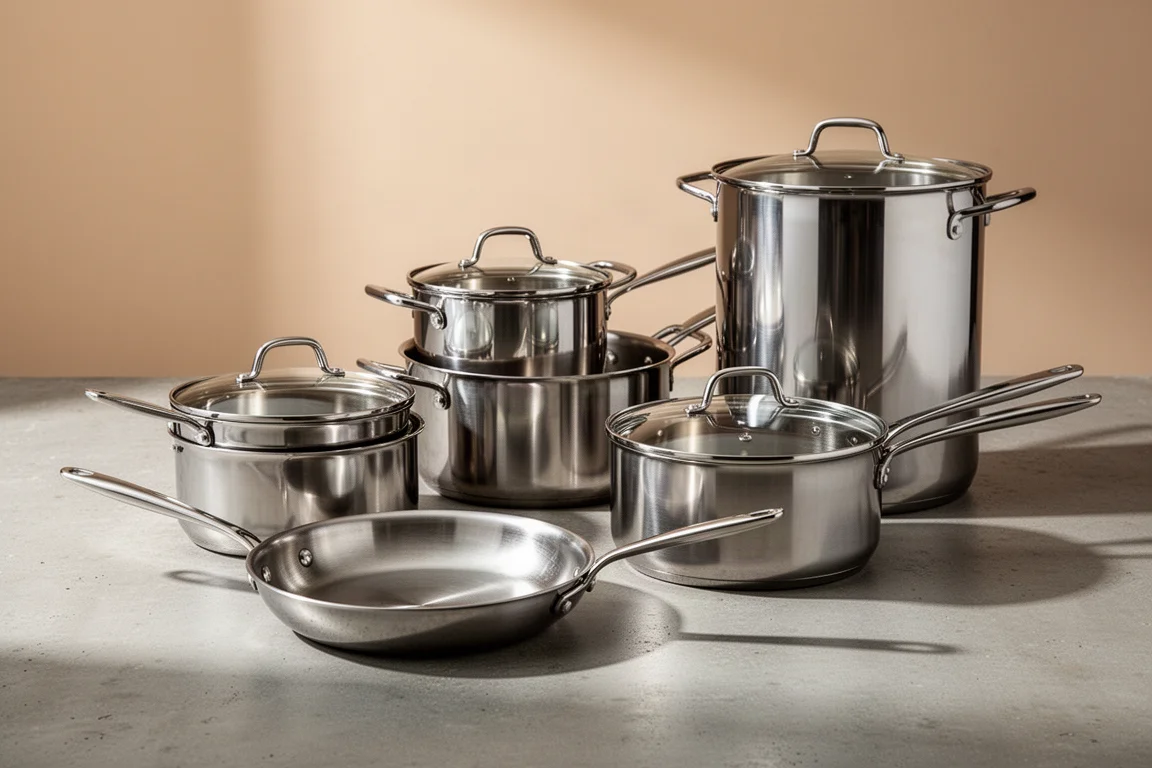
Cookware sets get a bad reputation, and often for good reason. The typical budget set pads its piece count with plastic utensils, lids, and oddball mini pans you would never have chosen yourself, then coats everything in non-stick that will wear out in a couple of years. After years of advising cooks to buy pans one at a time, we set out to find out whether any sets are actually worth buying. The answer: most are not, but three fully clad stainless steel sets genuinely earned their place.
What Makes a Good Cookware Set
The single most important spec is fully clad construction. That means every pan is built from three or more layers of stainless steel and aluminum bonded together rim to rim, with steel sandwiching the aluminum core. Avoid pans with so-called encapsulated or clad bottoms, where a plate of cast aluminum is fixed only to the base of a thin single-layer pan. That seam across the bottom is the telltale sign, and those pans heat slowly, unevenly, and are prone to burning food at the edges.
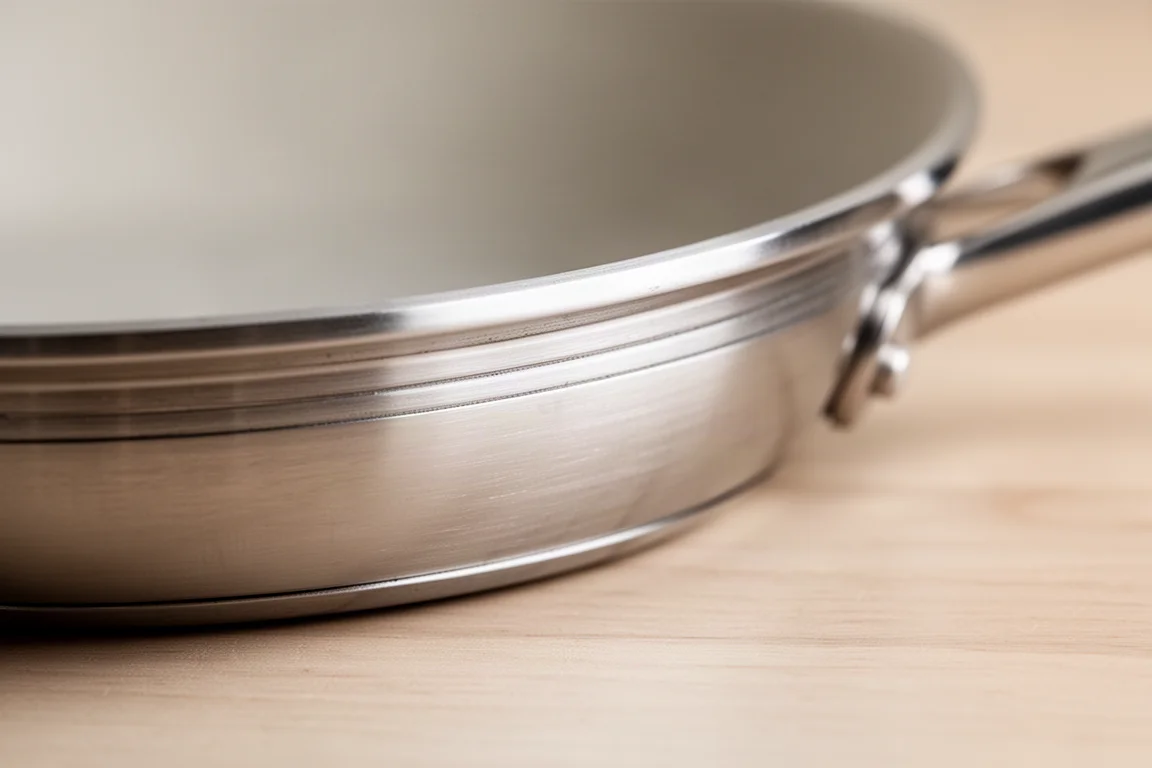
Do not assume more layers means better performance. Five-ply or seven-ply pans are sometimes simply heavier, or built with such thin layers that a well-made three-ply pan is actually thicker. What matters is full cladding, which delivers even heating without hotspots, resists rust and acidic food, needs almost no maintenance, and can last a lifetime.
Beyond construction, look for useful sizes: large 10 and 12-inch skillets, two and three-quart sauce pans, and a genuine six to eight-quart stock pot.
Pan Shapes, Handles, and Capacity
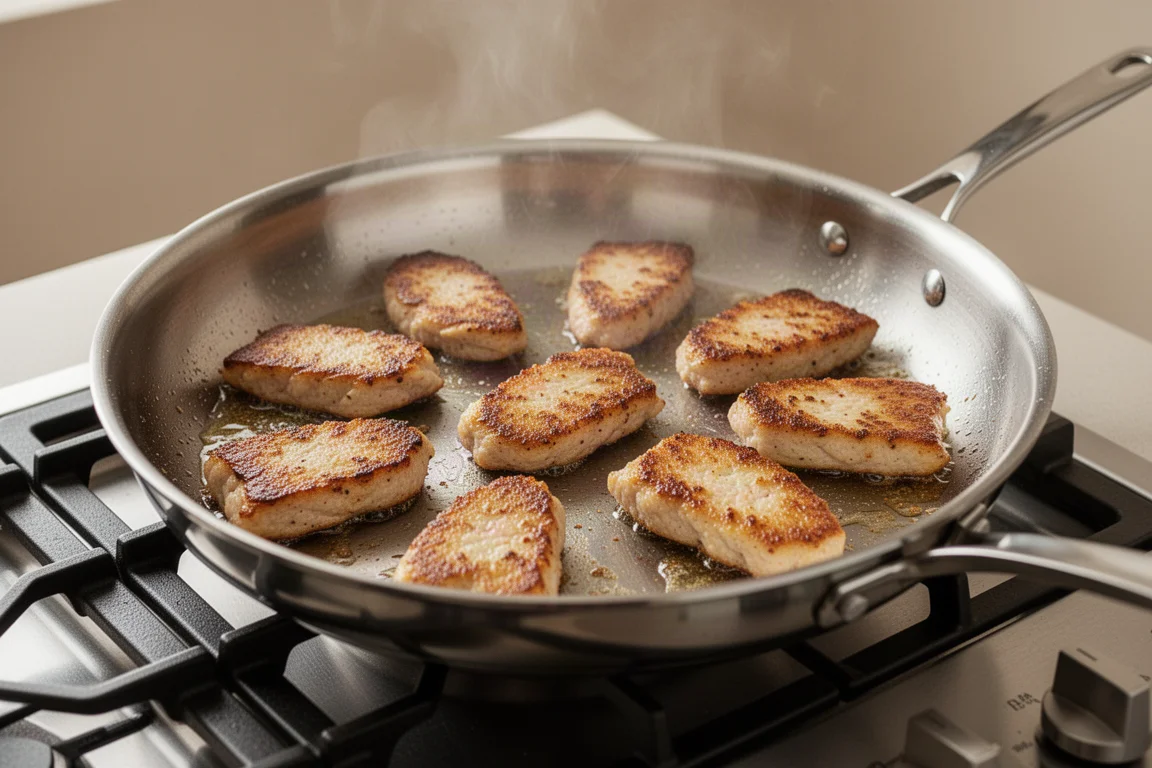
Shape matters more than most shoppers realize. Two pans both marketed as 10-inch skillets can differ dramatically in actual cooking surface, because manufacturers measure rim to rim rather than the flat bottom that contacts the heat. A pan shaped too much like a bowl crowds food into the middle, traps steam, and produces gray, bubbly browning instead of a golden crust. Wide, open pan shapes let moisture evaporate and give food room to brown properly.
Handles deserve equal scrutiny. All-steel handles stay cooler on the stovetop than aluminum, which conducts heat almost instantly. Handle shape matters too: a smooth, rounded handle that feels luxurious in the store can rotate dangerously in your hand when the pan is hot, full of food, and greasy. A cupped handle with defined edges, even if less plush to grip, locks into your hand and keeps the pan from spinning when you are scraping out dinner.
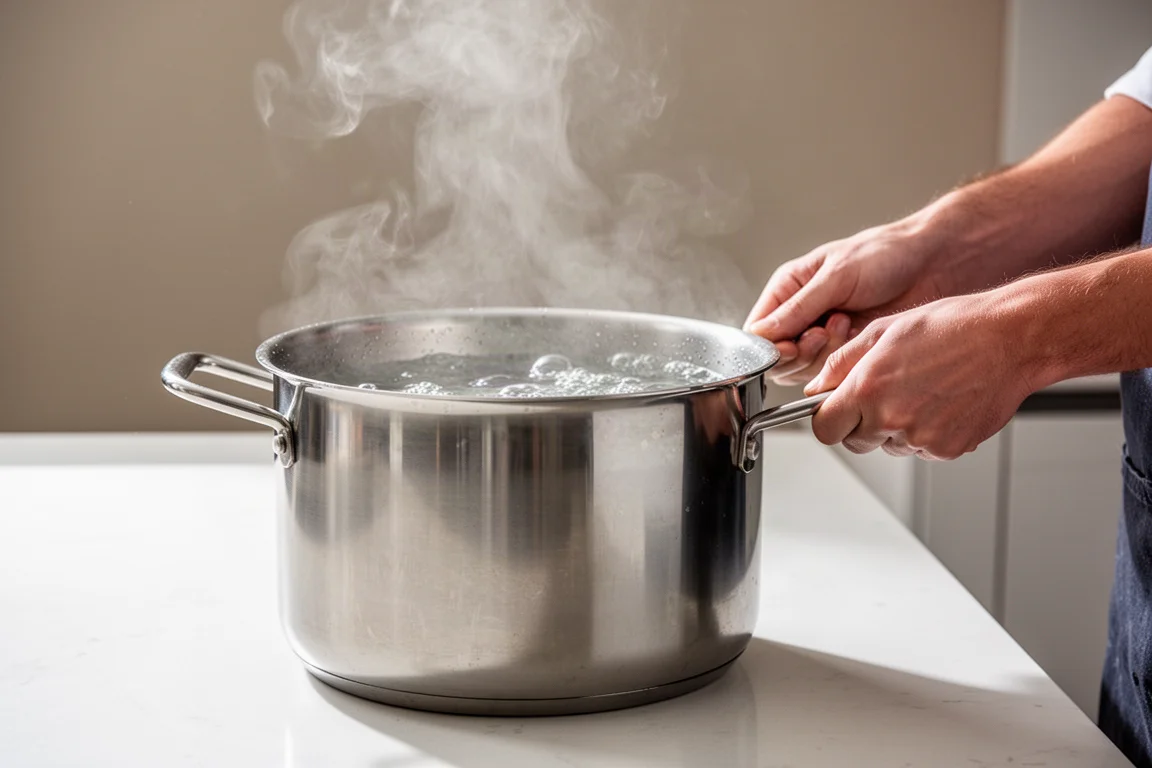
Capacity is where many sets quietly cut corners. A five-quart pot filled to the rim leaves no room for a pound of pasta once you add four quarts of water, and its narrower bottom forces more batches when browning beef for stew, adding time and risking scorched flavors. Overly heavy cookware creates its own problems: a stock pot that weighs eight pounds empty becomes hazardous when full of boiling water, especially for anyone with reduced strength.
How the Sets Were Tested
The testing lineup was narrowed to six fully clad stainless steel sets, most with two skillets, two sauce pans, a saute pan, and a stock pot. Each pan type was tested against its counterparts across sets and against long-standing category winners. The cooking was extensive: browned butter in small skillets, pan-roasted asparagus and skillet chicken in lemon sauce in the large ones, mashed potatoes in big sauce pans, pickled jalapenos in small ones, dozens of Swedish meatballs in the saute pans, and beef stew plus angel hair pasta in the stock pots.
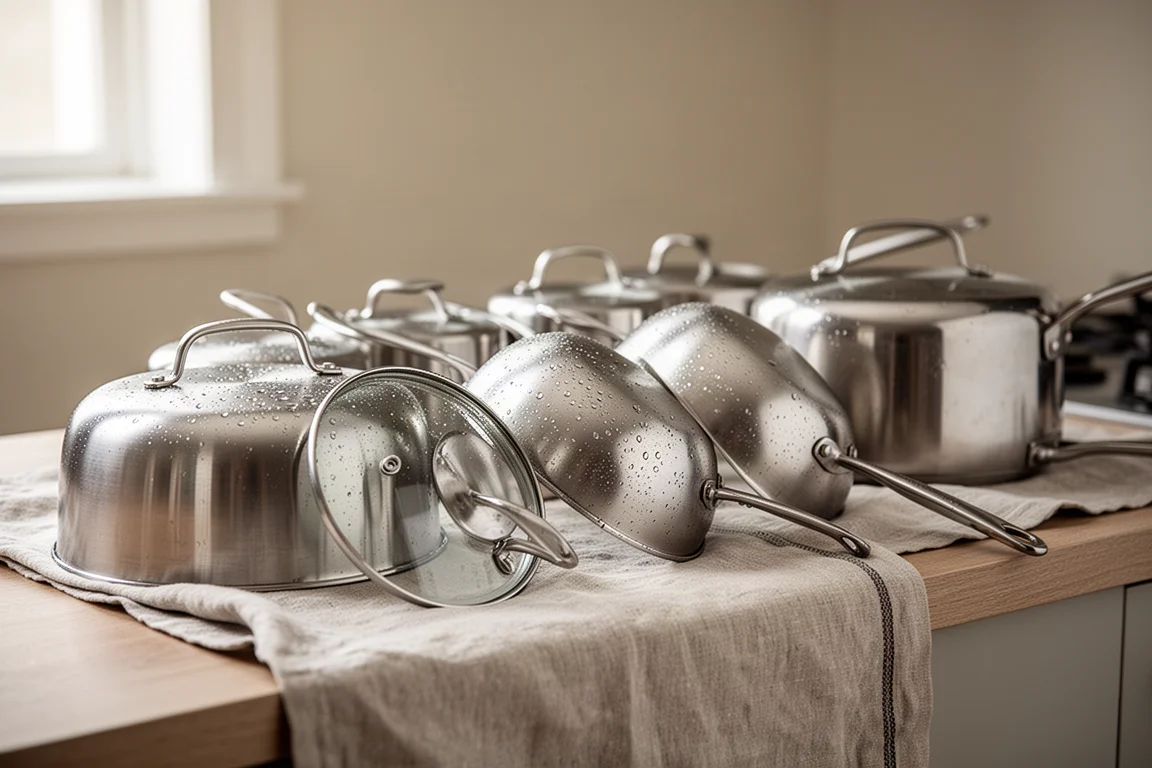
Every pan was hand washed after each test to evaluate cleanup. Skillets then faced a brutal durability gauntlet: heated to 500 degrees, plunged into ice water, and whacked three times against a concrete block. All the skillets survived, but some dented badly, and one warped slightly under the thermal shock. Any warping matters on induction or glass-top stoves where flat, full contact is essential. Infrared camera analysis confirmed the payoff of full cladding: every skillet heated remarkably evenly.
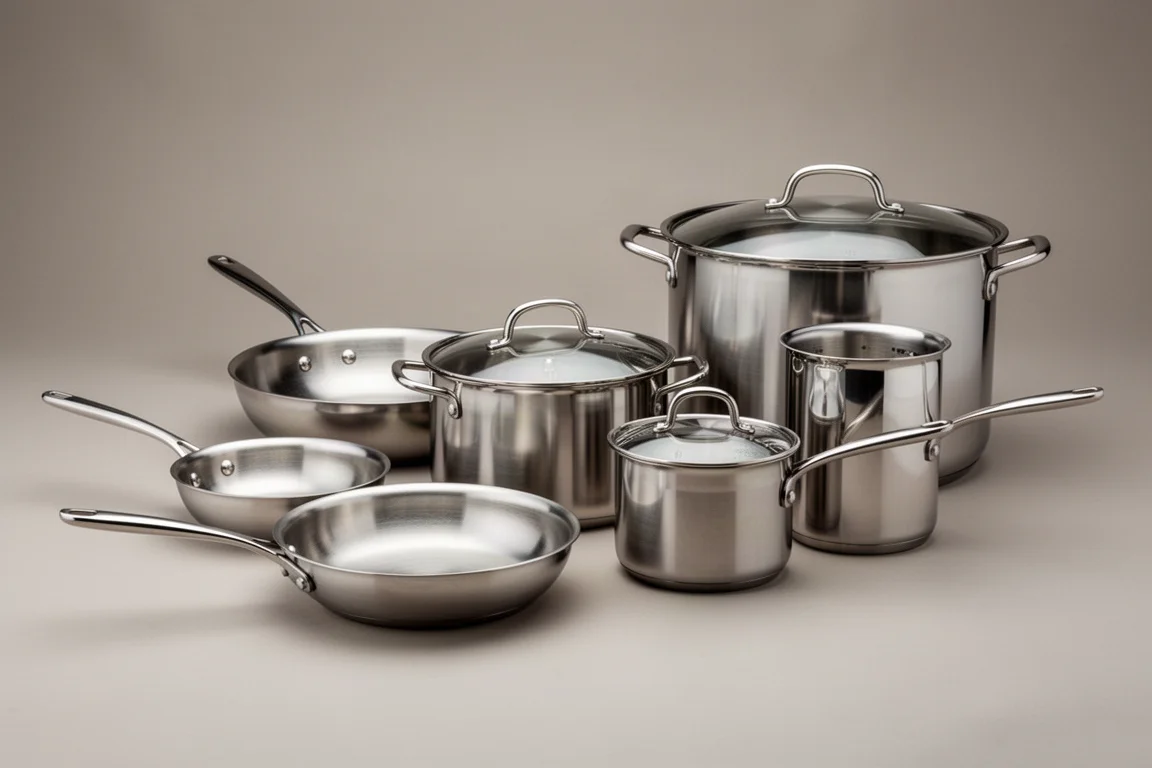
All-Clad 10-Piece Set
The All-Clad 10-piece set costs about $700 and represents roughly a 29% saving versus buying each piece individually. It is restaurant-grade cookware built to last for decades; the kind of set that still looks brand new after 13 years of regular use. It includes eight and 10-inch skillets, a covered saute pan, a one-quart sauce pan, and a large four-quart sauce pan with a helper handle, which is an ideal size, plus an eight-quart stock pot.
Its famously unforgiving handle is actually a feature in disguise: the cupped shape anchors in your hand so the pan cannot rotate dangerously when full and hot. Fully stainless steel handles stay cool enough to grab without pot holders during stovetop cooking. Many of the individual pieces are long-standing favorites in their own categories, including the winning four-quart sauce pan and a recommended saute pan. Gaps remain: there is no 12-inch skillet and no four-quart sauce pan in the box, so budget for add-ons.
Made In 10-Piece Set
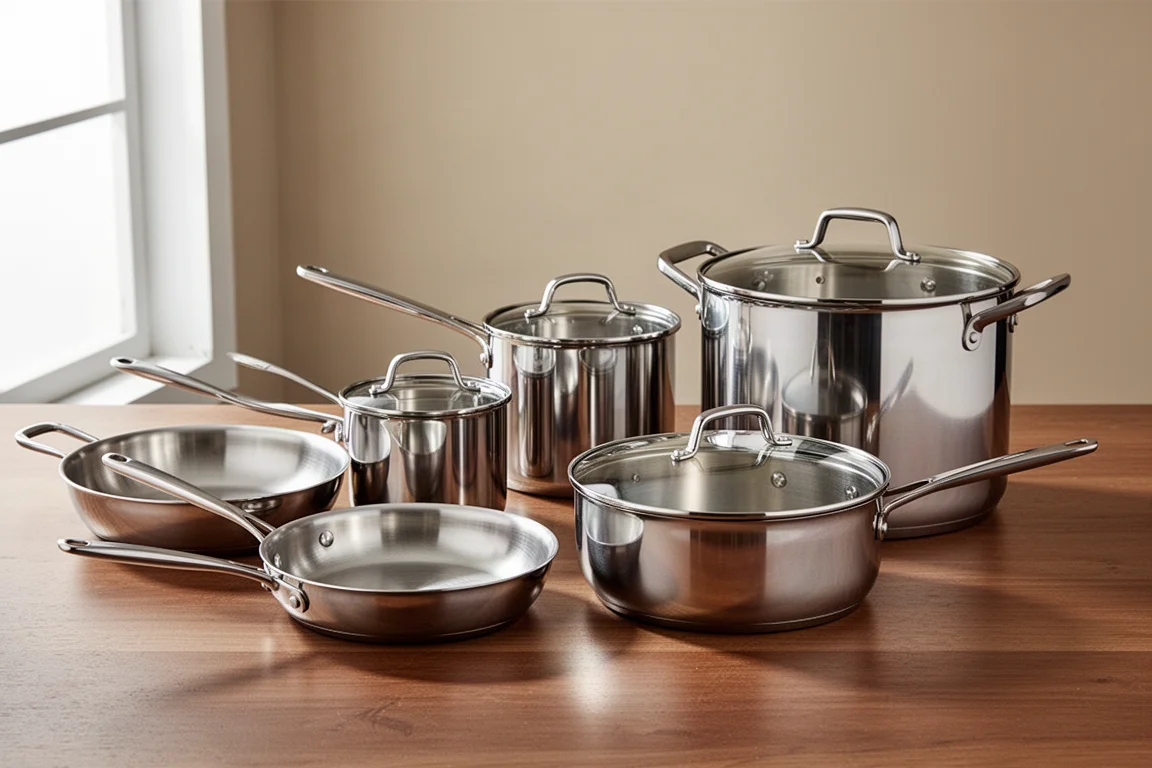
The Made In 10-piece set runs about $800, or roughly 16% below the cost of buying the pieces separately. Like the All-Clad, it is superbly constructed, aced every test, and features fully stainless steel handles that stay cool on the stovetop. The set includes eight and 10-inch skillets, a saucier, a three-quart sauce pan, a covered saute pan, and an eight-quart stock pot.
The differences from the All-Clad come down to detail. Its sauce pan is a three-quart rather than the preferred four-quart size, and it also lacks a 12-inch skillet. At the higher price with a smaller per-piece saving, it makes the most sense if you specifically want Made In’s construction and handle feel and are happy to add a larger skillet later.
Goldilocks 8-Piece Set
At around $300, the Goldilocks 8-piece set is the Best Buy, and a genuine bargain for a fully clad set. It is beautifully made and, in some respects, closer to ideal sizing than its premium rivals: it includes a full eight-quart stock pot, a 10-inch and a 12-inch skillet (finally, a 12-incher), plus three-quart and one-and-a-half-quart sauce pans.
The sauce pans are slightly smaller than the ideal two and three-quart sizes but perfectly usable, and the set is marginally less durable than the two premium options. For anyone who wants a complete, well-constructed stainless steel setup without the premium price, this is the set to start with.

Which Cookware Set Should You Buy
A set is only a good deal if you genuinely need a full set and want the exact pieces it contains. If you get pans you do not need, they are not a bargain, no matter how large the discount. Sets shine in specific scenarios: equipping a first kitchen, upgrading everything at once, or as a wedding or graduation gift, with the option to add specific pans afterward.
If you prefer maximum value and ideal sizing, the Goldilocks set delivers fully clad performance at a fraction of the cost. If you want restaurant-grade gear with proven category-winning pieces and are willing to pay for it, the All-Clad set is the strongest of the premium options, with Made In close behind for those who prefer its approach.
Conclusion
Most cookware sets remain a trap of inflated piece counts, useless extras, and short-lived non-stick. But fully clad stainless steel sets from All-Clad, Made In, and Goldilocks prove that a well-chosen set can be durable, even-heating, and worth the money, provided the pieces match what you actually cook.
Further reading
Related Reviews
Cookware
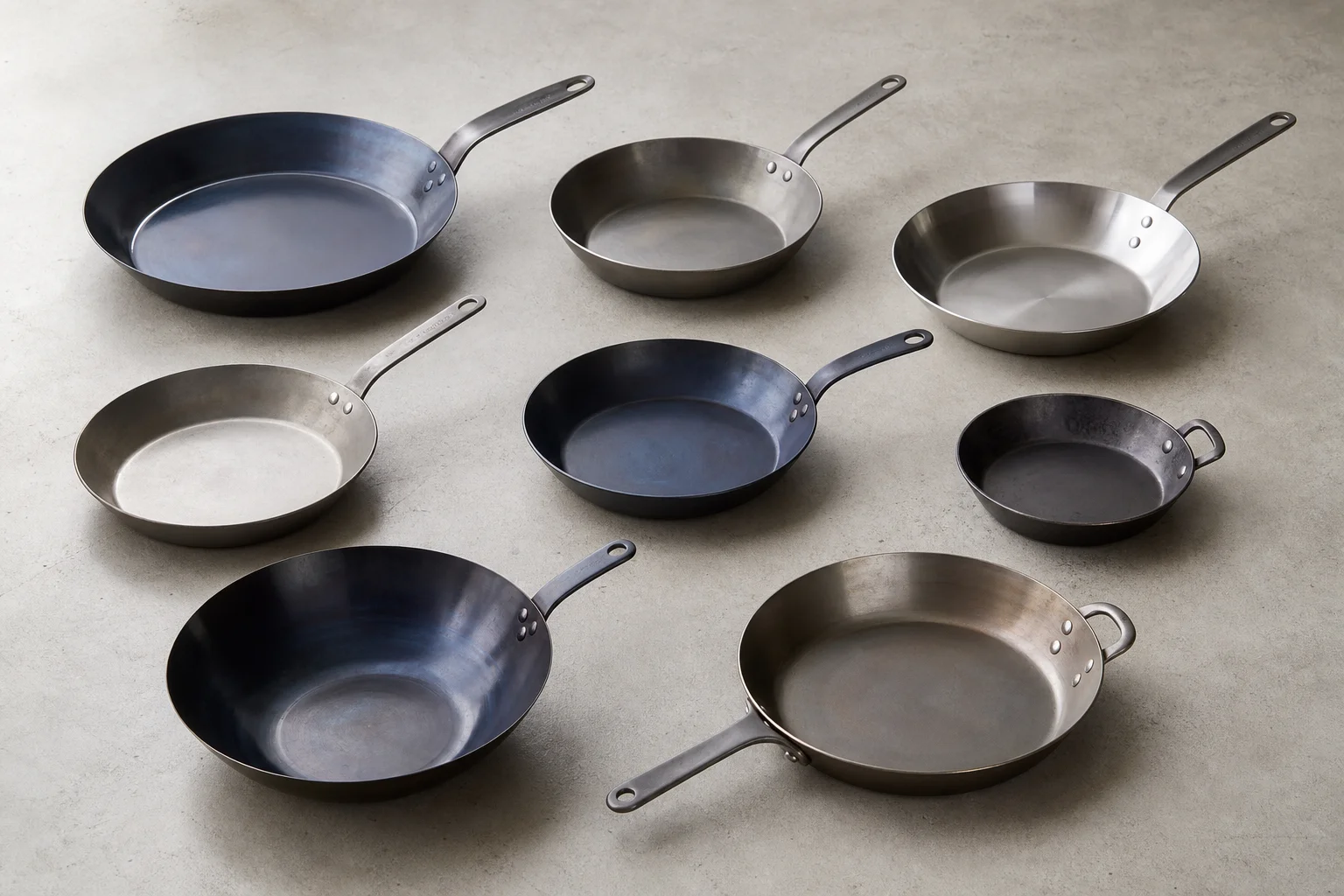
Best Carbon Steel Pans Tested: Which Brands Deliver Real Value
We tested eight popular carbon steel pans with controlled durability, heat, and cooking tests. Here's which ones perform best and which to avoid.
Cookware
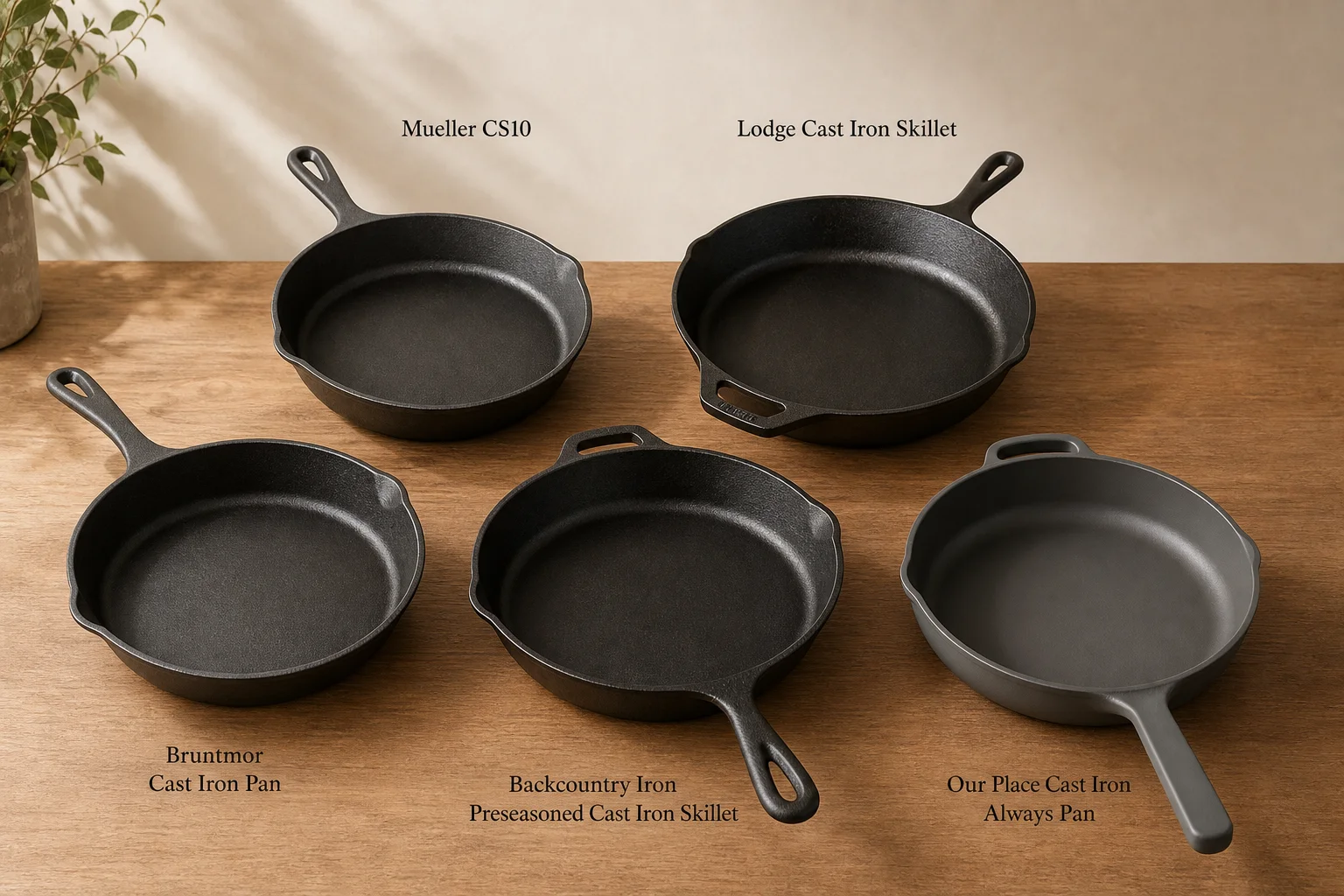
Best Cast Iron Pans 2026: Five Options from Budget to Premium
A practical breakdown of five cast iron skillets, from affordable Mueller to premium Our Place, with clear strengths and trade-offs for different cooking needs.
Cookware
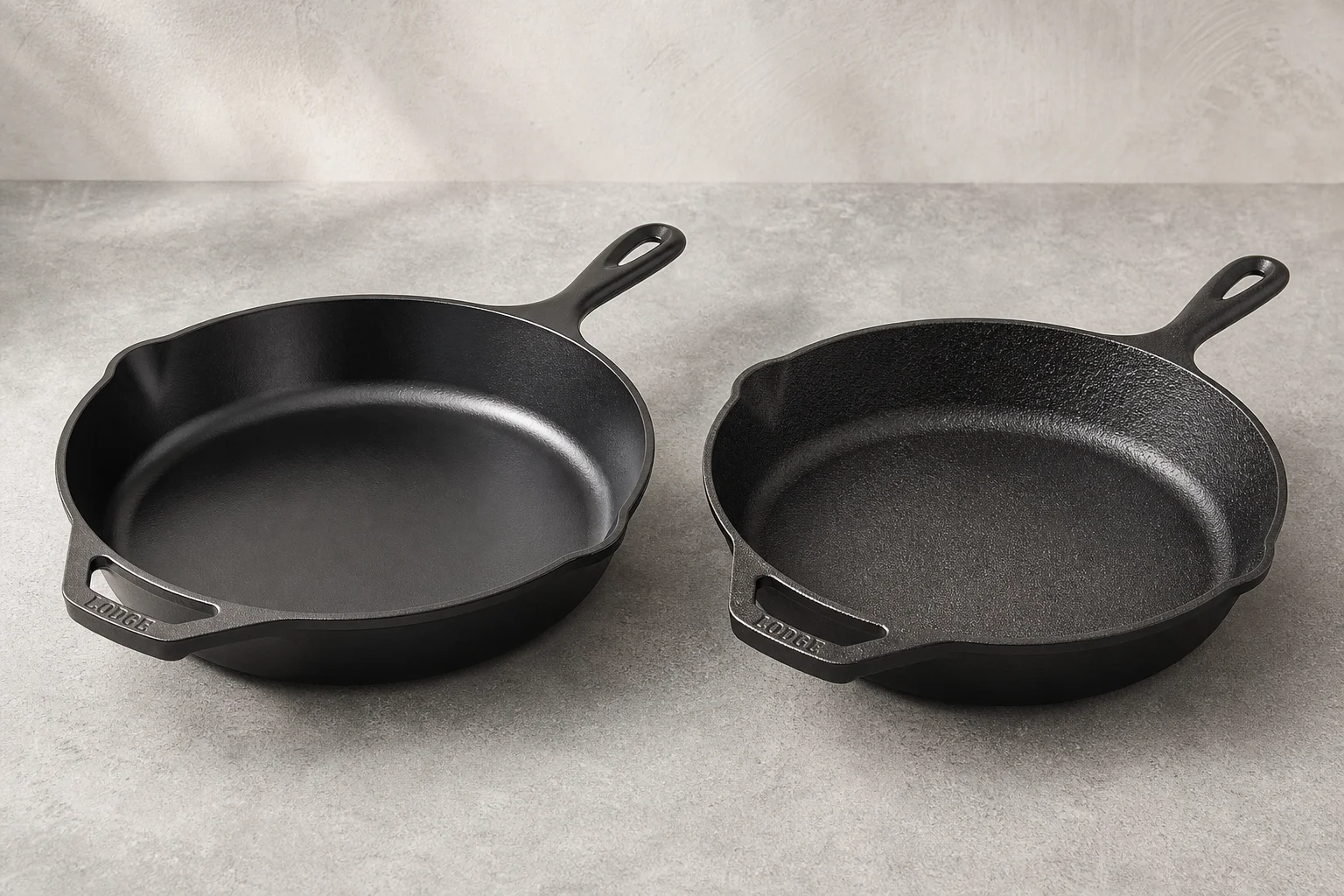
Best 12-Inch Cast Iron Skillets: Premium Craftsmanship vs. Reliable Budget Option
Two standout 12-inch cast iron skillets tested for heat retention, surface finish, and durability. One premium choice and one budget-friendly alternative that both deliver.