Cookware
Best Cookware Brands Tested: Five Popular Brands Compared
Five heavily marketed cookware brands put to the test. Which ones deliver on their promises, and which ones don't quite live up to the hype.
Introduction
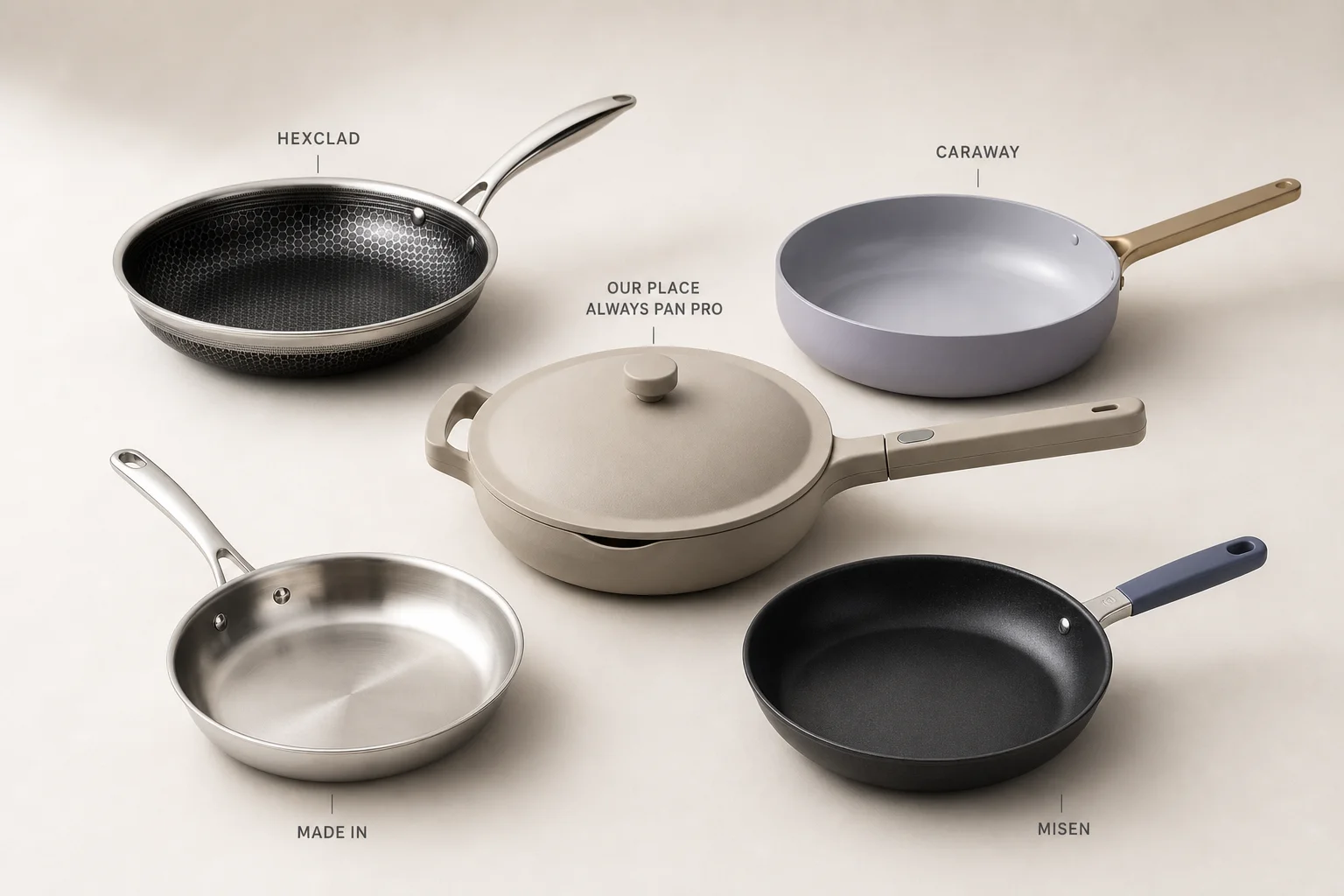
Five cookware brands dominate online marketing and social media. One raised $2 million on Kickstarter. Another partnered with Michelin-starred restaurants. One convinced millions that their old pans are unsafe. Yet beneath the marketing campaigns, celebrity endorsements, and viral moments, the question remains: do these brands actually deliver quality cookware?
After years of hands-on testing, including durability trials, heat distribution analysis, and real-world cooking, the answer is more nuanced than the marketing suggests. Some brands excel in specific categories while falling short in others. Some live up to their promises. Others don’t.
HexClad: Hybrid Steel and Non-Stick
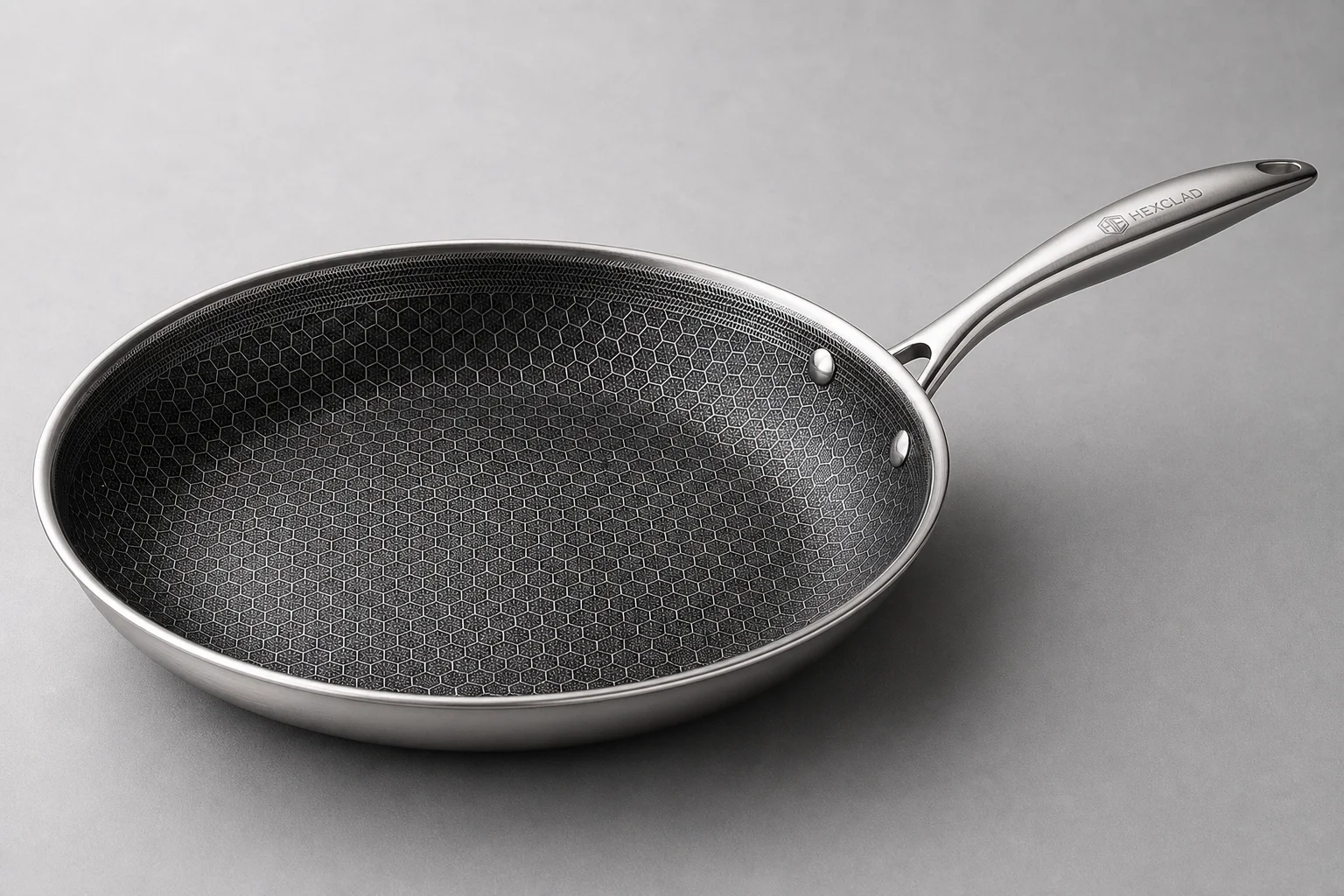
HexClad is the most searched cookware brand online and features celebrity chef Gordon Ramsay as its face. The brand’s core appeal is straightforward: combine the searing power and durability of stainless steel with the convenience of non-stick in a single pan.
The cooking surface features raised stainless steel hexagons with ceramic non-stick coating in the valleys between them. The theory is that the steel protects the coating from scratching, extending the non-stick lifespan beyond traditional non-stick pans.
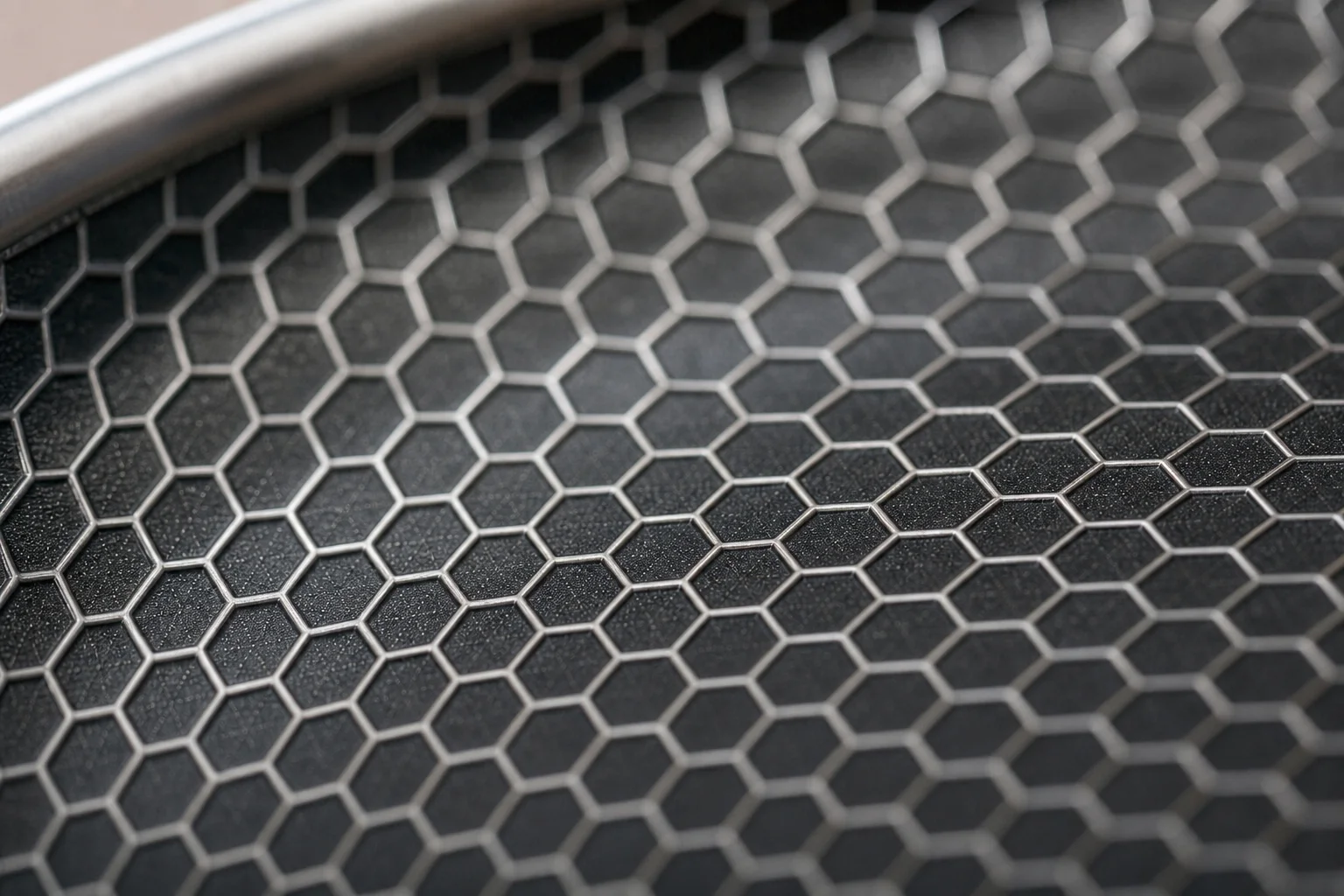
Testing revealed that the hybrid concept does work, but with limitations. The pan sears well, cooks evenly, and food releases without sticking when the surface is properly greased. However, if you attempt to cook an egg with no butter or oil, it will stick. The steel hexagons do protect the coating from spatulas and spoons, but thin utensils can slip between the ridges and scratch the underlying ceramic coating. During testing with a whisk, this exact damage occurred.
The rounded handles are comfortable but problematic when greasy or wearing oven mitts, as the pan can rotate when tilted. At its core, HexClad remains a non-stick pan. The steel pattern provides more protection than traditional non-stick, but the ceramic coating underneath will still wear down over time from heat, use, and contact with utensils that reach between the ridges. It is not a forever pan.
The 12-inch frying pan costs over $150, while similar construction and performance is available from other brands at a fraction of the cost. Customer service was fast and thorough, though the response to a technical question about how the hybrid surface actually works lacked detail.
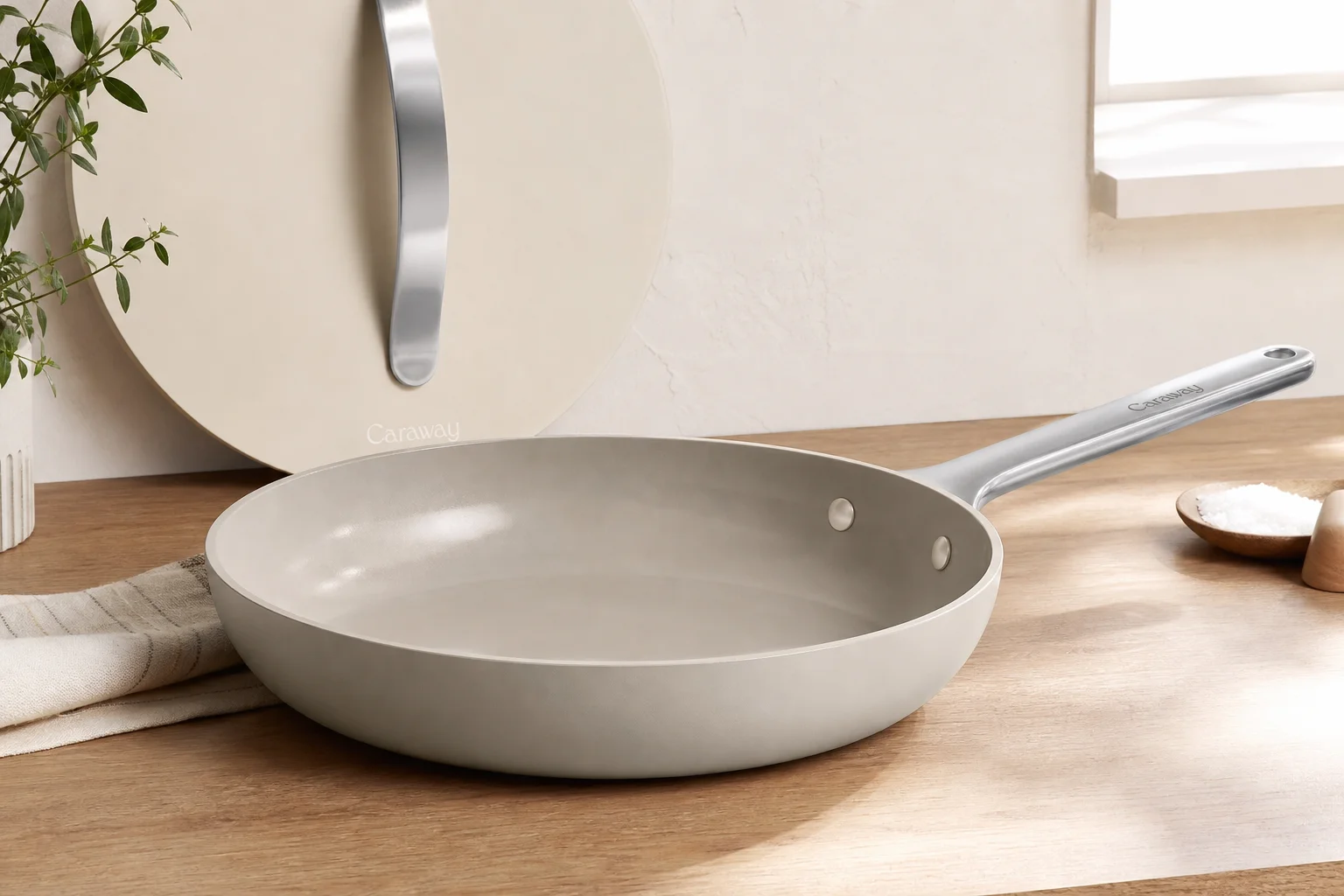
Caraway: Non-Toxic and Colorful
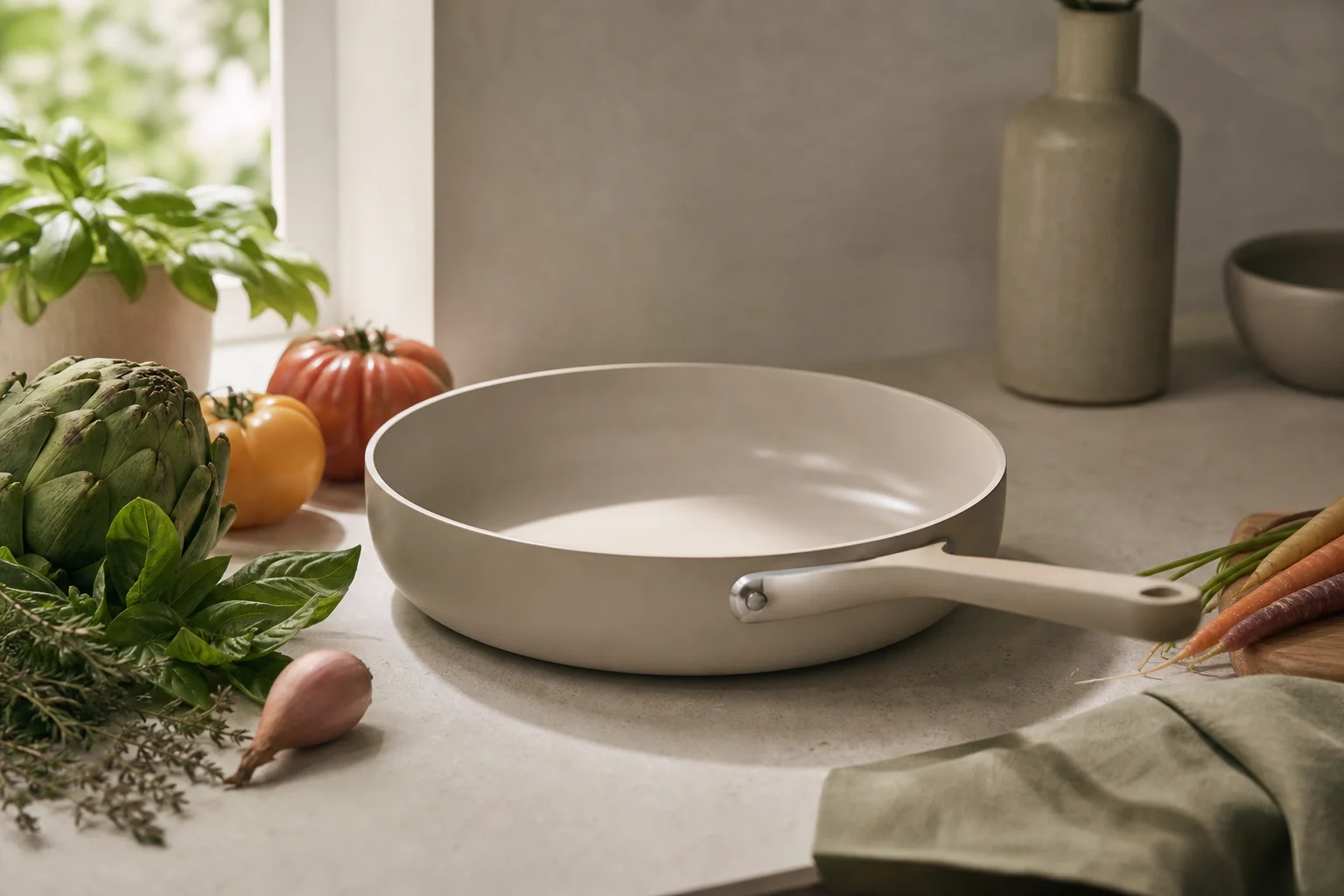
Caraway built its brand around the promise of non-toxic, clean, and safe cookware. Unlike HexClad, which emphasizes durability, Caraway openly admits that their ceramic non-stick pans won’t last forever. What they sell is peace of mind, and this message has resonated with a massive following.
The cookware line includes colorful ceramic non-stick pans, stainless steel options, enameled cast iron, bakeware, knives, and food storage containers. When brand new, the ceramic non-stick pans look attractive and perform well. The coating is slick, eggs slide freely, and cleanup is easy. However, the non-stick properties degrade with use, and the exterior coating chips and flakes over time.
Testing also revealed that the cooking surface dips slightly near the edge, causing eggs and oil to pull toward the side rather than staying centered. The stainless steel line has issues: handles get hot, rims are not flared, and the rounded handle is prone to rotating when tilting the pan. One tested unit arrived with a dented handle straight from the box.
The enameled Dutch oven performed poorly in moisture and heat retention tests, and the side handles are too small. Food storage containers are difficult to open, lack transparent sides, and the lid trim began separating on the tested unit. However, the bakeware performs well. The muffin tin and sheet pan both held up during testing, with the sheet pan showing no warping.
Customer service provided an excellent response to a technical question with a detailed layer-by-layer breakdown of construction. However, the opinion email avoided committing to a recommendation, and the warranty response was vague about coverage and timelines.
Our Place Always Pan Pro: Titanium Innovation
Our Place built its brand on the Always Pan, marketed as a 10-in-1 all-purpose pan that went viral on social media. In reality, it is an aluminum pan with ceramic non-stick coating and taller walls than most frying pans. Like Caraway’s ceramic line, the non-stick properties degrade with use. The handle is thick, squared, and uncomfortable.
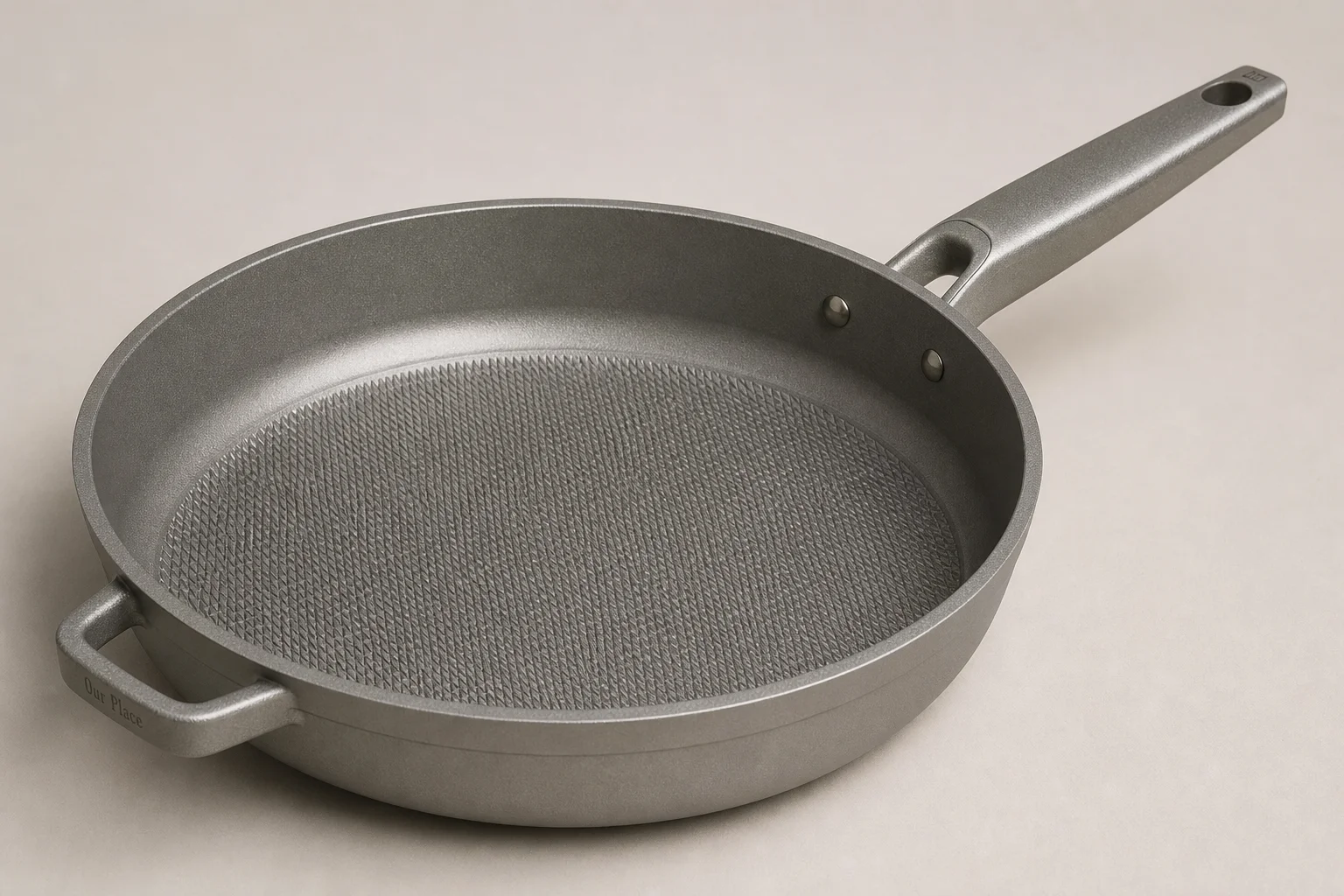
More recently, Our Place released the Always Pan Pro, featuring a completely different cooking surface. Instead of ceramic non-stick, the surface is titanium with a textured pattern. Our Place calls this “no co technology,” short for no coating. The company claims the texture creates airflow between food and pan, delivering non-stick performance without chemical coating. They also claim the surface is 300 percent harder than stainless steel and will last a lifetime.
The first version had design flaws: a boxy uncomfortable handle, a lid gap that blasted steam onto the handle, and a peg requiring constant cleaning. Our Place has since updated the design, removing the peg, closing the lid gap, and refining the handle shape.
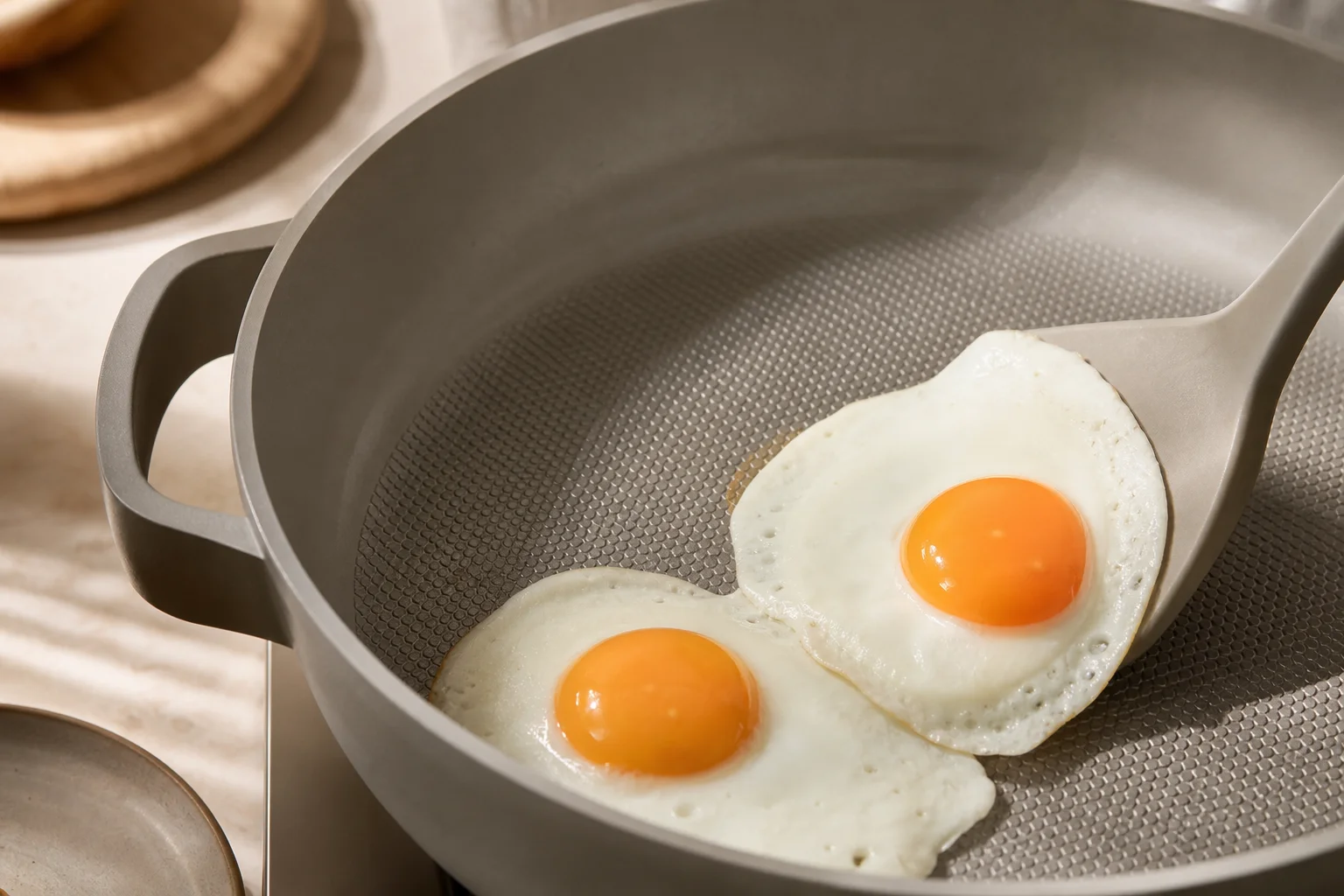
Performance testing showed impressive results. Eggs cooked with oil and butter released without sticking. Remarkably, eggs cooked without any grease still released, which almost never happens with traditional non-stick pans. The pan sears well, cooks evenly, and has above-average heat retention. Durability testing showed no degradation in non-stick properties.
Our Place has stated that the surface is pure titanium undergoing heat treatment and polishing. During heat treatment, the entire surface oxidizes, then the raised areas are polished back down, leaving darker oxidized titanium visible only in the textured valleys. Some online debate exists about whether a sprayed-on coating is present, with a law firm investigating. However, based on company statements and testing results, the performance holds up.
Customer service was strong. The technical response was thorough, the opinion email gave honest answers about ceramic versus titanium differences, and the warranty response arrived in three minutes with clear, detailed information.
Made In: Professional Quality for Home Cooks
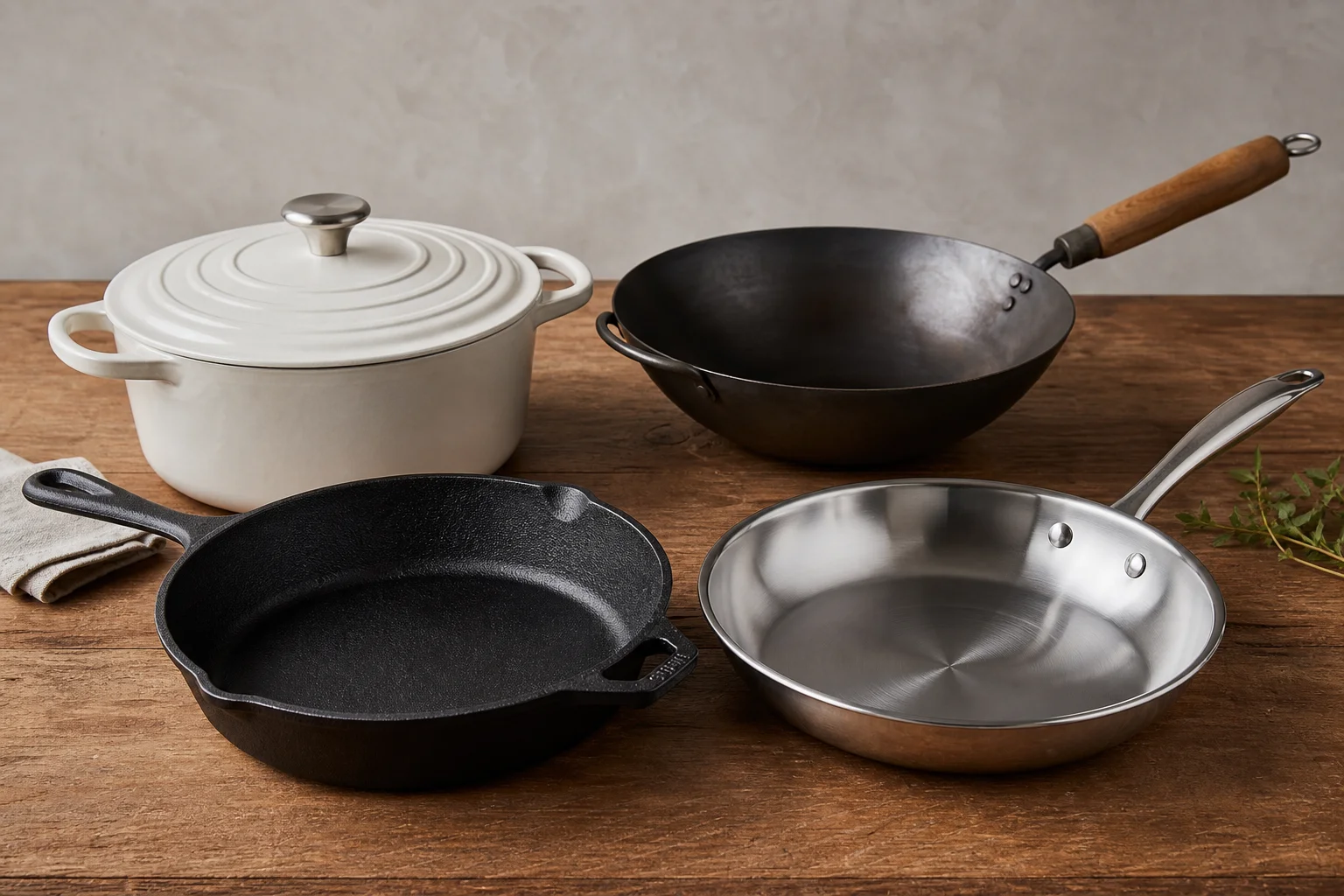
Made In offers the widest variety of cookware in this group, including stainless steel, carbon steel, enameled cast iron, ceramic non-stick, traditional non-stick, and knives. The brand’s pitch is professional-quality cookware for the home cook.
The stainless steel frying pan is a top recommendation in the $100 to $200 range. It has the widest cooking surface of all tested 12-inch stainless steel frying pans, heats fast, and features a secure, comfortable handle. The saucepan is excellent, with tall walls, a large helper handle, and the fastest boil time on induction among 13 tested saucepans. The Dutch oven rivals Le Creuset and Staub, with the second-best heat retention, second-best moisture retention, the lowest knob temperature, and the widest cooking surface among seven tested Dutch ovens in the 5 to 6-quart size. The carbon steel griddle is the top pick across all tested griddles and works on any cooktop, grills, and even over fire pits.
However, not all Made In products are winners. The carbon steel fry pan had the worst heat retention and heat distribution of any tested carbon steel pan and warped during testing. The CeramiClad ceramic non-stick performs well and is made in the USA, but it is one of the most expensive ceramic non-stick pans on the market. Like other ceramic non-stick lines, the coating will eventually wear out.
Customer service was the strongest among all five brands. All three emails received responses within an hour and a half with thorough, accurate answers. The opinion response was exceptional, providing personalized recommendations and a custom five-piece set tailored to the stated cooking style.
Misen: Carbon Non-Stick and Stainless Steel
Misen markets cookware to the average home cook seeking high performance at a fair price. The stainless steel frying pan delivers on this promise. It is five-ply, 3 millimeters thick, has a wide cooking surface, and is one of the few pans with sealed rims that does not cost hundreds of dollars. The rounded handle is not ideal, but otherwise it is an excellent pan at a good price.
The Dutch oven features a cast iron grill pan lid and performed well in testing. You get two pans for less than the price of one Le Creuset or Staub. However, the product Misen is most known for is the carbon non-stick pan, launched on Kickstarter and raising over $2 million from more than 15,000 backers.
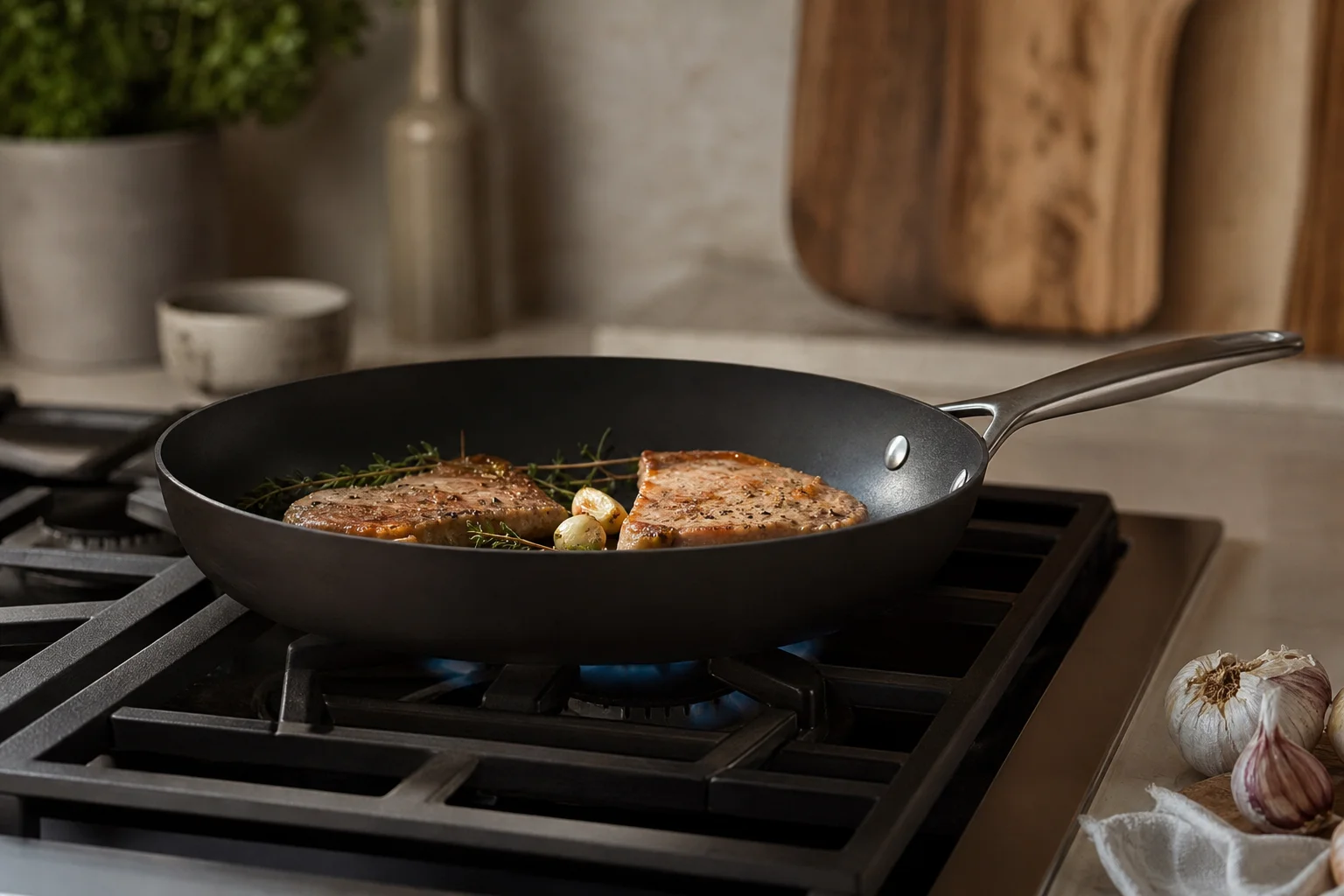
Misen promised the carbon non-stick would be non-stick out of the box, require no seasoning, not rust, and last forever. When first tested 10 months ago, it lived up to these claims. Eggs slid freely, simmering tomato sauce did not damage the surface, it did not rust when left wet overnight, and metal utensils did not scratch it. At the four-month mark, no real sticking issues appeared.
However, after 10 months of use, performance changed. If heat was not optimal or the surface was not adequately greased, sticky foods like eggs did not release and move as freely as initially. Two theories explain this change. First, Misen ships the pan with a thin layer of corn oil for transit protection, which may explain the ultra-slippery feel of new pans. Once that washes off, the surface remains non-stick but far less slick. Second, the nitrided carbon steel surface does not season like traditional carbon steel. Intentional seasoning actually works against it. Scrubbing clean and avoiding intentional seasoning keeps the surface smoother and better for eggs.
The bigger issue is marketing. Calling it carbon non-stick sets the expectation of Teflon-like performance. The reality is a carbon steel pan that does not need seasoning and handles acidic foods well. It handles sticky foods reasonably but is less forgiving than traditional non-stick.
Customer service is fast but relies on AI. All three emails were answered by an AI named Meisy. The technical response was accurate and helpful, but the opinion email gave definitions instead of recommendations. When asked for starter set advice, it recommended three different 10-inch pans. The warranty email was helpful but included an odd upsell attempt.
Overall Buying Advice
Made In is clearly the strongest brand in this group. The stainless steel and enameled cast iron cookware is excellent, and the carbon steel griddle is the top pick across every tested griddle. Customer service is fast, accurate, and helpful. However, Made In offers a wide variety of products, and not all are winners. Better options exist for sheet pans, cutting boards, carbon steel pans, and knives.
Misen’s stainless steel pan is an excellent value, and the carbon non-stick is worth considering if you have the right expectations. The Our Place titanium Always Pan Pro is also impressive, and if the materials are as stated, the performance should last.
For the other brands, value is the key consideration. HexClad, Caraway, the original Our Place Always Pan, and Made In’s CeramiClad non-stick all perform well when new, but they are still coated non-stick pans. The coating will eventually wear down and the pan will need replacement. Similar performance is available from other brands for much less. It does not make sense to spend over $100 on a single non-stick pan, even with steel ridges protecting the coating.
If buying from one of these brands, focus on uncoated cookware that will actually last. Stainless steel, carbon steel, and enameled cast iron from these brands offer better long-term value than ceramic or hybrid non-stick options.
Conclusion
After extensive testing, the cookware market reveals a clear divide between marketing promises and real-world performance. The brands that invest most heavily in advertising do not always deliver the best cookware. Instead, the best choices come from understanding what each brand does well and avoiding the products that rely on non-stick coatings that will eventually wear out. Choose based on your actual cooking needs, not the marketing message.
Further reading
Related Reviews
Cookware
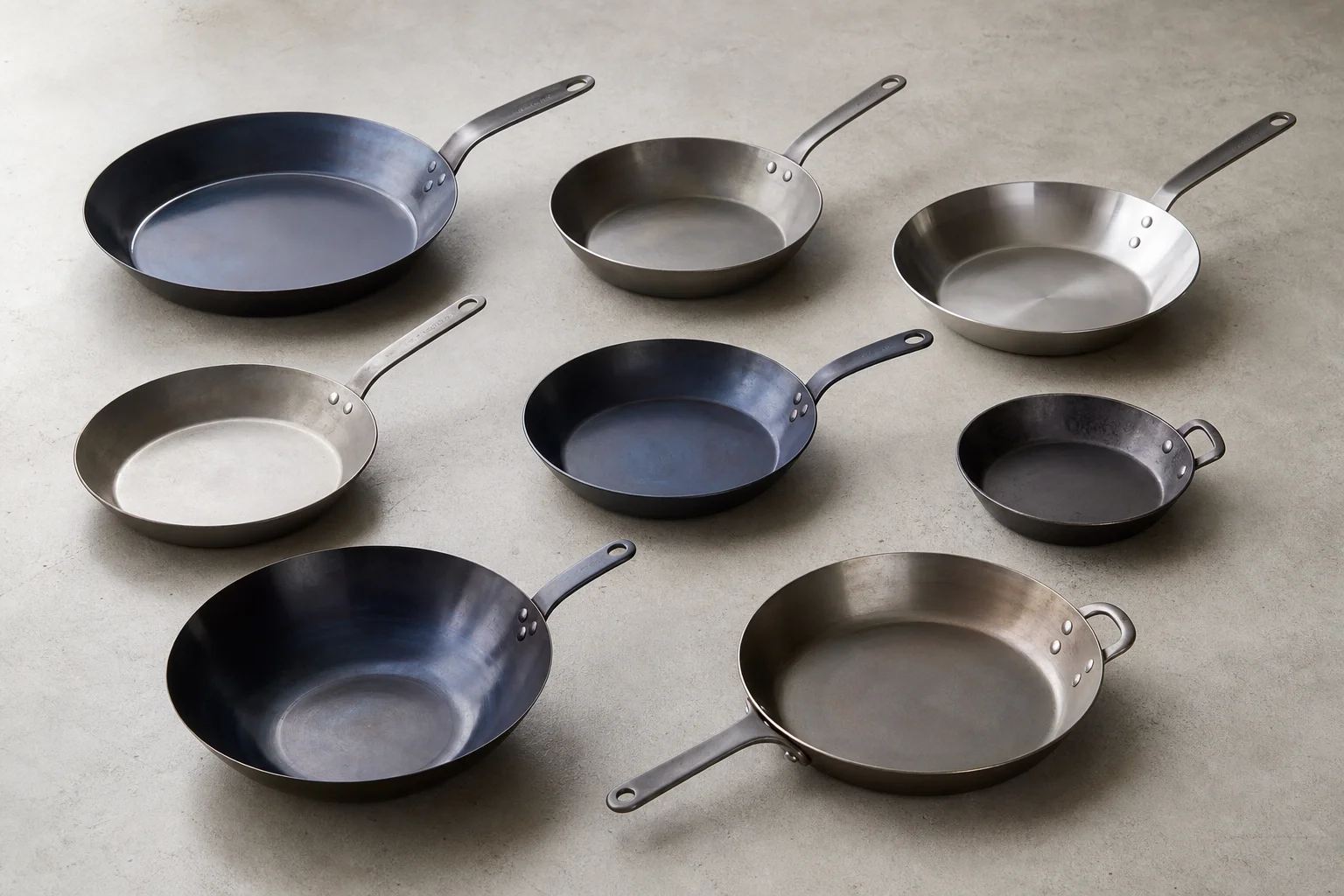
Best Carbon Steel Pans Tested: Which Brands Deliver Real Value
We tested eight popular carbon steel pans with controlled durability, heat, and cooking tests. Here's which ones perform best and which to avoid.
Cookware
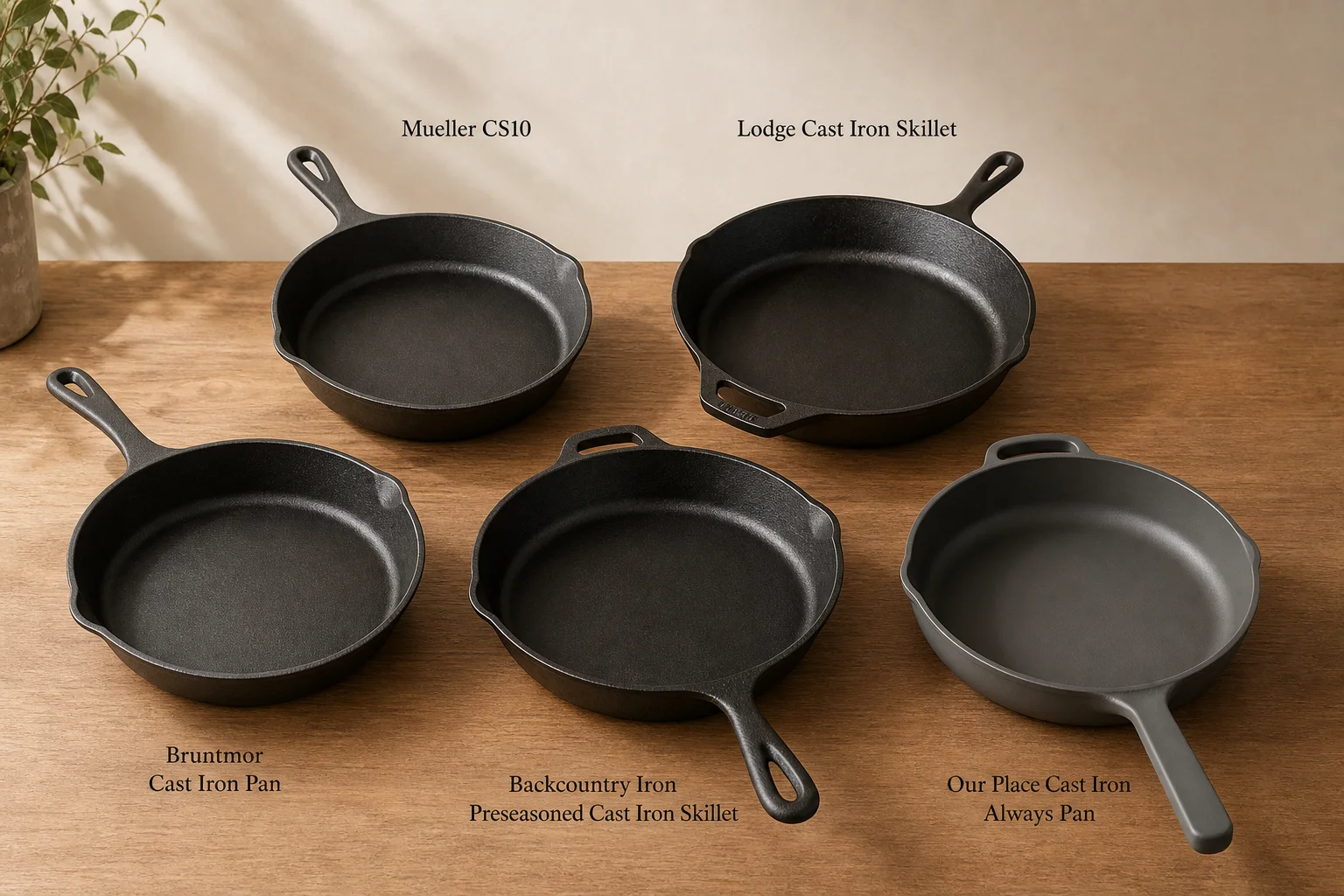
Best Cast Iron Pans 2026: Five Options from Budget to Premium
A practical breakdown of five cast iron skillets, from affordable Mueller to premium Our Place, with clear strengths and trade-offs for different cooking needs.
Cookware
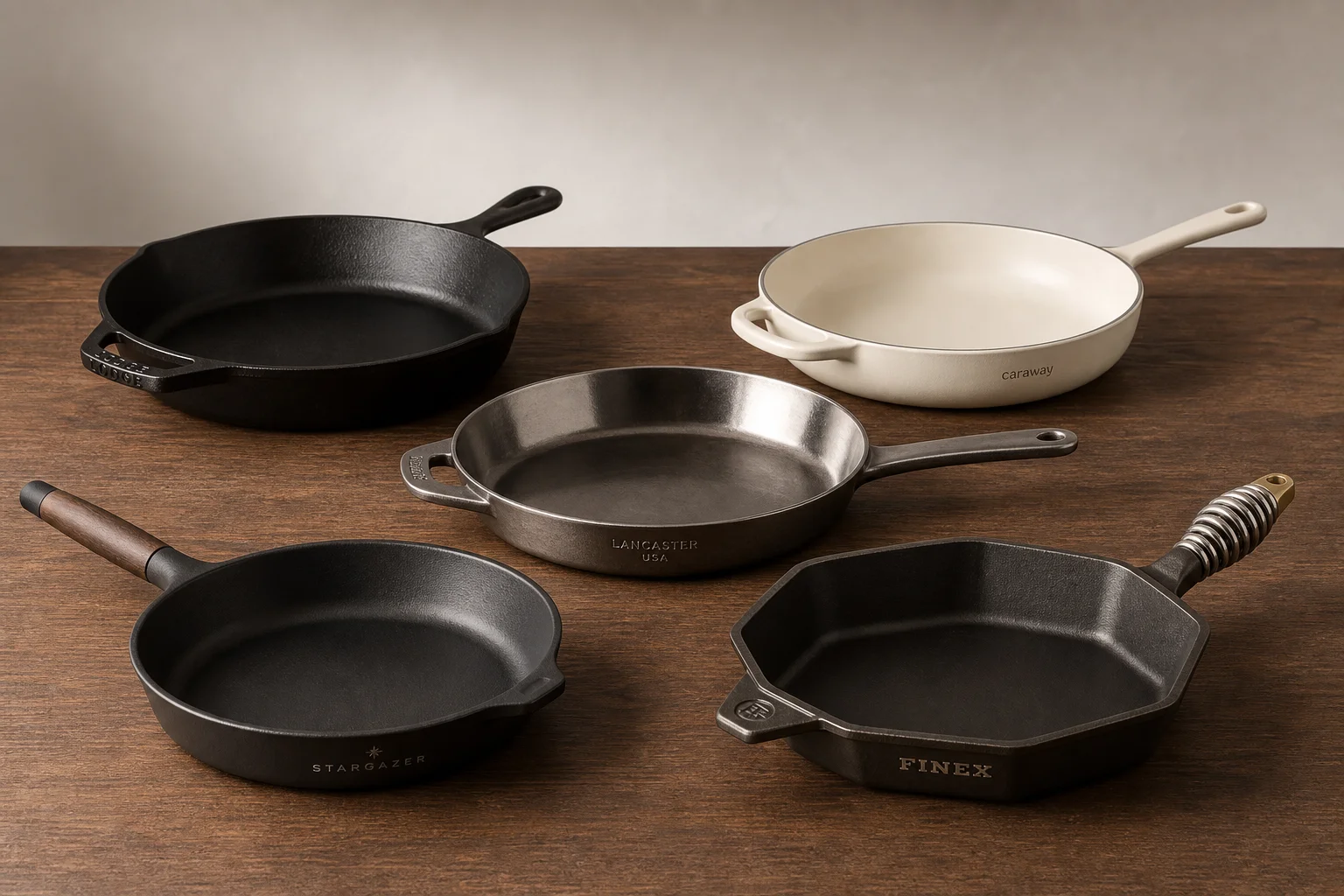
Best Cast Iron Skillets: Five Options for Every Kitchen
A comprehensive guide to five cast iron skillets, from budget-friendly classics to premium handcrafted options, each with distinct strengths and use cases.