Camping Gear
Best Cold Weather Camping Gear: Six Pieces Tested in Wind and Frost
Six pieces of cold-weather camping gear put through an exposed alpine night, from a new four-season shelter to a satellite communicator with photo and voice messaging.
Introduction
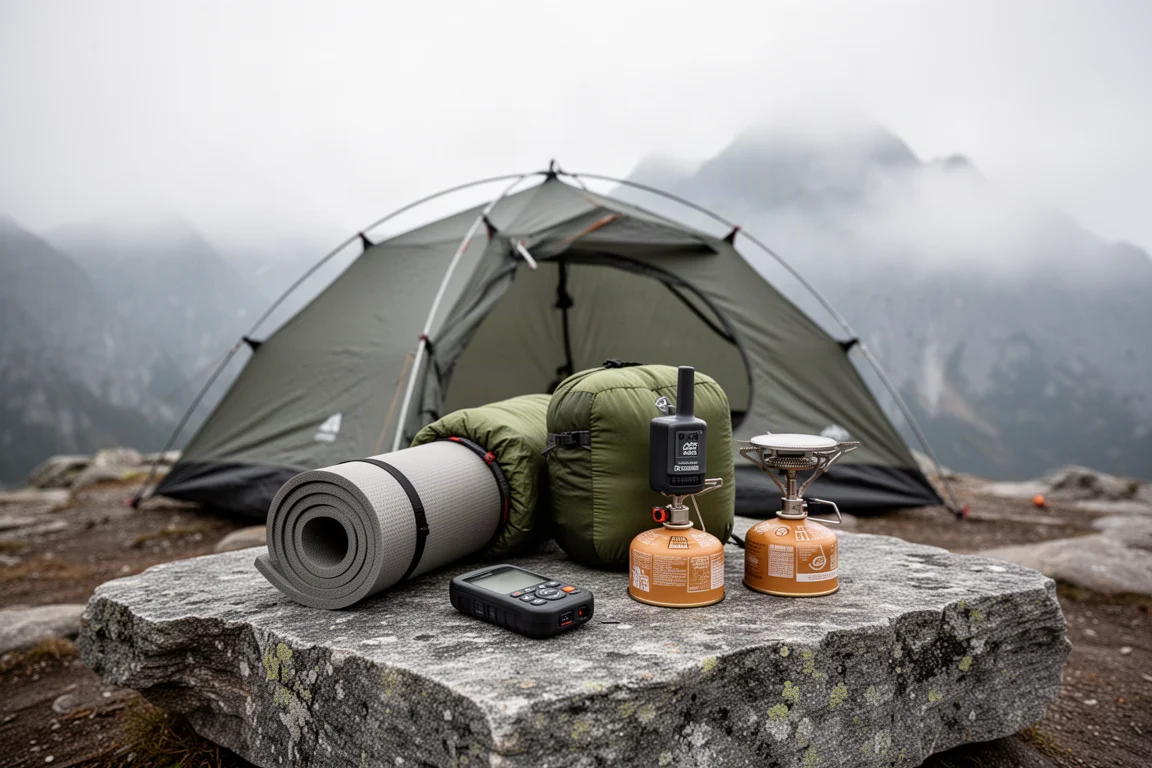
Cold-weather camping gear has a way of revealing itself. A shelter that feels rock solid in a sheltered forest can start to behave like a sail once it is pitched on an exposed ridge, and a sleeping pad that feels plush at home can lose warmth the moment you let air out of it.
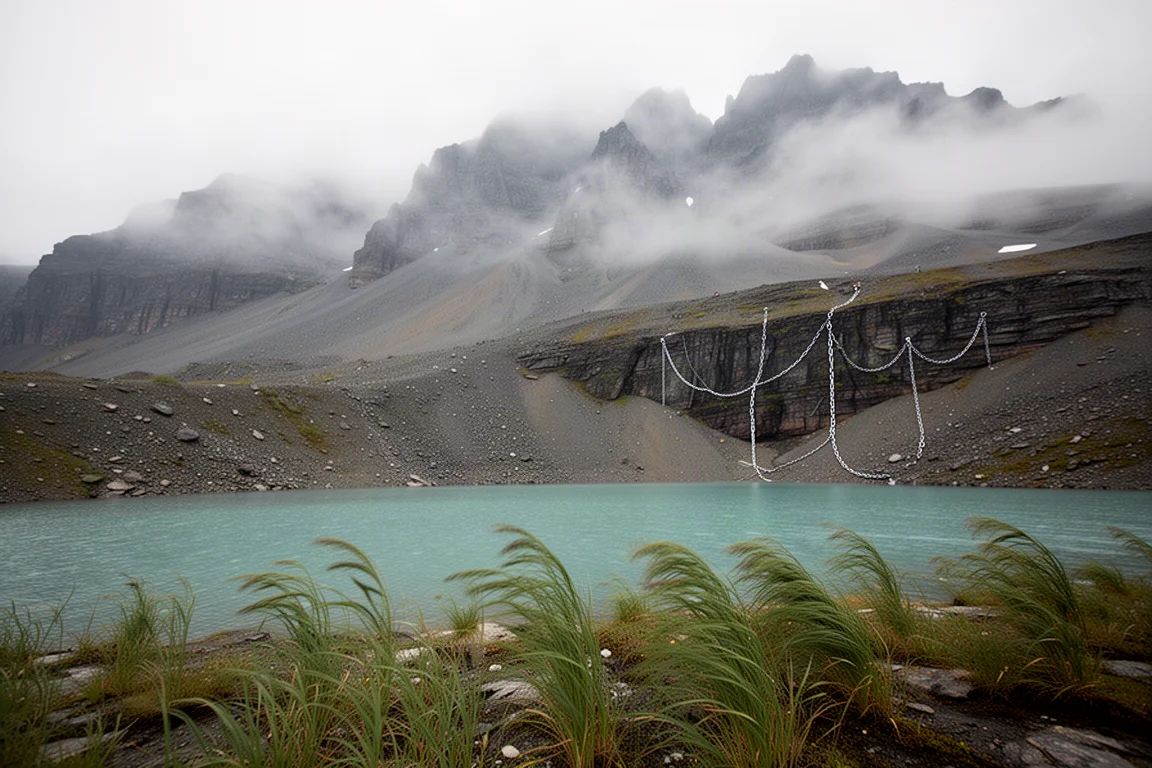
To put a group of cold-and-wind-focused pieces through a real test, six items were carried into an alpine area of the Canadian Rockies. The route climbed a chain-assisted cliff section, skirted a lake, and finished on a plateau with wide views and almost no natural shelter. Wind built through the evening and kept building overnight, strong enough to keep the whole tent moving. Overnight temperatures fell to around minus two degrees Celsius, a modest but genuinely useful test for gear rated at and just below freezing.
What follows is a plain look at how each piece behaved, where it impressed, and where it still needs work.
What We Looked For
Six things mattered most across the trip:
- Wind performance. Guy-out coverage, how low a shelter sits to the ground, and whether a stove can hold a flame in moving air.
- Warmth. Real-world insulation and how a rated value holds up once you start adjusting the gear.
- Comfort. Thickness, shape and how a product feels after a full night of use.
- Weight. Whether a piece earns its place in a pack on a long approach.
- Setup and takedown. Small fiddly details become much worse when your hands are cold or gloved.
- Value. Whether the price lines up with what the product actually delivers.
Tarptent Arc Dome: A New Take on Four-Season Shelter
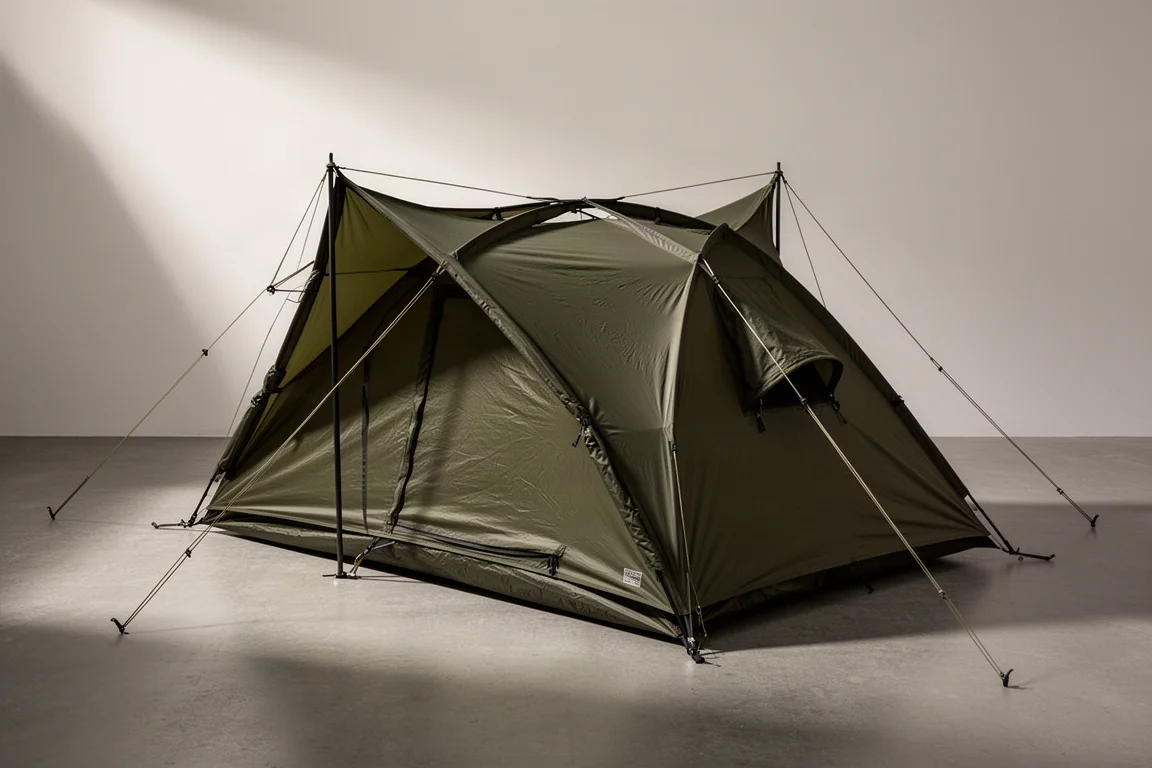
The Arc Dome takes its name from its pole structure. Two poles run corner to corner, forming a cross that gives the tent its shape. Setup starts by staking out all four corners to create a rectangle, then threading the poles through full-length sleeves. Those sleeves are more work than clips, but they add a lot of structural support, which matters when snow is loading the roof or wind is pressing on the panels.
The guy-out system is extensive: two points on each pole sleeve, one at the midpoint of every panel and one at the bottom of every panel, twelve in total. The tent sits low to the ground, so very little wind gets underneath the fly. Two doors make it a genuine two-person shelter, and the interior is wide enough for two 25-inch pads. A solid inner is available alongside a mesh version, and the solid inner was the right choice for a cold, windy night. The inner can also be attached to the outer fly, which stops it ballooning inward when wind pushes on the tent.
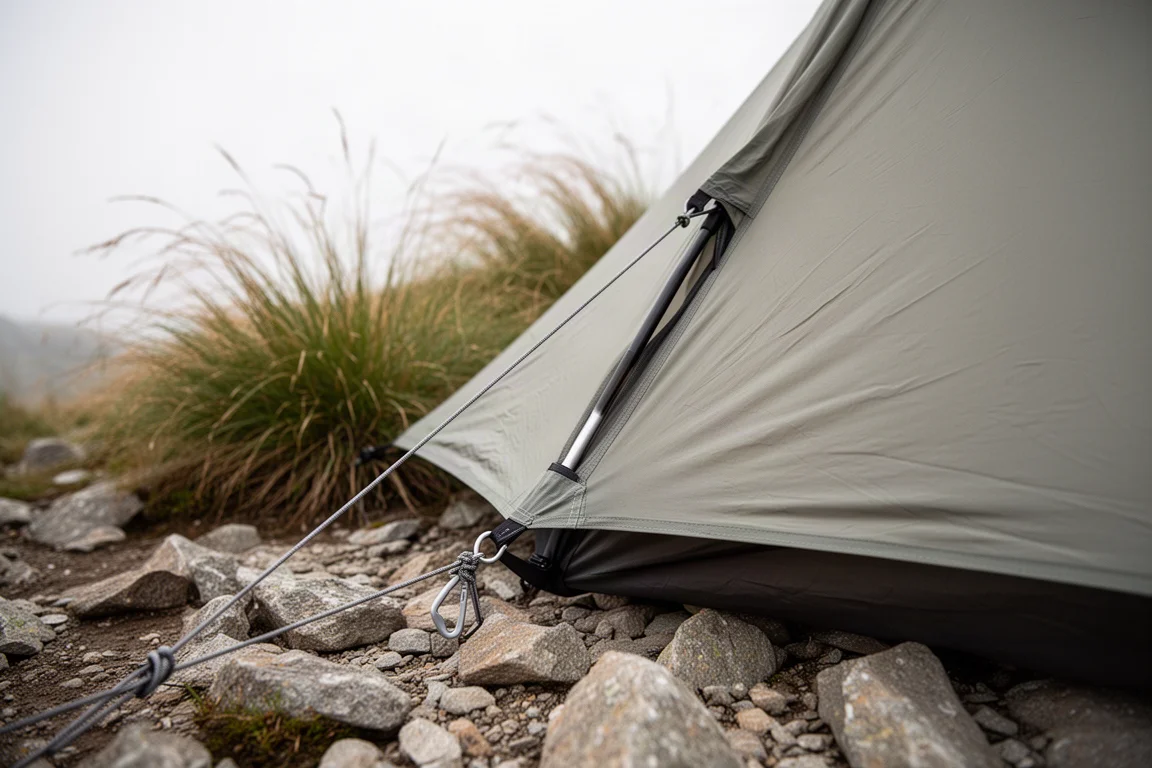
Two carbon fibre tubes prop open the vents, one on each side, opened with a velcro pull and a cinch. They are noticeably more robust than the flimsy props found on many tents, and they stayed quiet through the night instead of tapping against the fabric. Interior storage is generous: large pockets at each end plus two small pockets overhead, which matters because two wide pads leave little floor space for loose items. Roof-loading capacity also stood out, with the structure taking a substantial amount of weight when leaned on.
The quirks are concentrated in one place. The sleeve entry is narrow, which is manageable in a backyard but awkward with bulky winter gloves. There is a gap of roughly four inches between the two sleeve sections, so the pole has to be threaded, guided across and threaded again. The corners are not colour-coded either, which makes finding the pole insertion point slower when everything is flapping. In strong overnight wind, one line-lock hook on a guy line snapped with a loud pop. That hook sits on a large panel and carries a lot of load, and no other failure points appeared even as the wind strengthened. It is also worth noting that only four of the twelve guy-out points were in use, which says a lot about how much headroom the structure has.
Therm-a-Rest NeoLoft: Comfort First, Weight Second
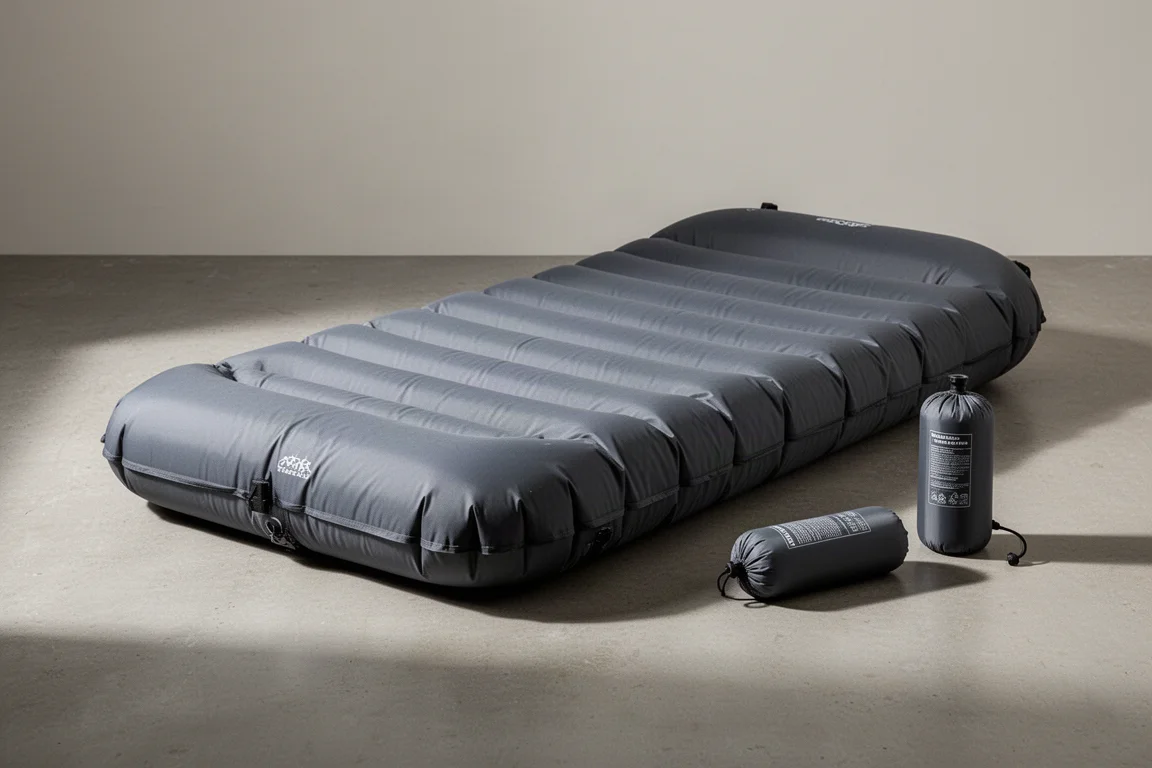
The NeoLoft is the rare backpacking pad built around comfort rather than grams. It is thick, wide at 26 inches, and still carries an R-value of 4.7. The weight is the trade-off at around 850 grams, which is heavy for something you have to carry. In scale it sits closer to a car-camping pad than a typical backpacking one.
What makes it work is the combination of thickness and stretch. Because there is so much air volume, you can deflate the pad to roughly 60 percent and still stay well off the ground, which softens the feel considerably. The fabric has real give, so you do not get the hard, drum-like sensation of a taut pad. Horizontal baffles are used here, a design that has often felt uncomfortable in the past, but the stretch and the partial deflation made them largely unnoticeable.
The catch is that deflating the pad lowers its effective insulation. The rating is 4.7, and letting air out reduces what you actually get. On ground that dropped below freezing the pad stayed warm enough, but it did not feel as toasty as a dedicated cold-weather pad. Keep that in mind if you are looking at the rating and planning to take the pad well below freezing.
Therm-a-Rest Boost 650: A Versatile Bag With a Warmth Boost
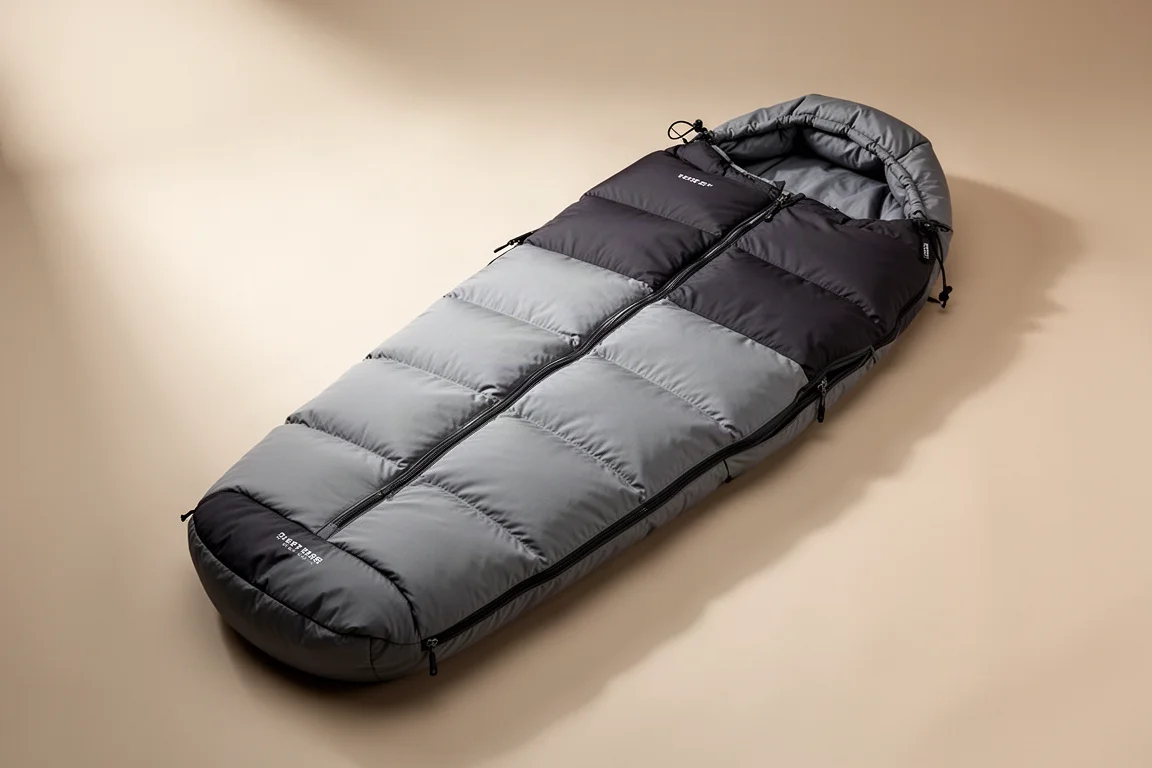
The Boost 650 does two unusual things. The first is a pair of side zips that create arm holes, so you can sit up, read or send a message without unzipping the whole bag. That feature is common on winter bags and arguably more useful on a three-season bag like this one.
The second is a central zipper that changes how warm the bag sleeps. With that zip fully open, the bag carries a comfort rating of zero degrees Celsius. Close it and the rating is said to improve by roughly four to six degrees, taking it toward minus four. On a night that fell to about minus two, closing the centre zip did appear to add warmth, though the gain felt smaller than the full claimed range. The shape suits an average build well, the hood has a little extra room, and the zippers run smoothly by sleeping bag standards.
Weight is the main compromise. The bag uses 650 fill power down and a thicker shell fabric rather than premium materials, so it weighs over a kilogram, close to a dedicated winter bag. The hood and neck baffle are controlled by two separate cords that are hard to tell apart in the dark, a familiar annoyance with sleeping bags generally. For anyone who does not count grams, though, the range is genuinely useful: zip it up for cold nights, or open it out and vent when conditions are milder.
MSR WindBurner: The Wind-Proof Benchmark
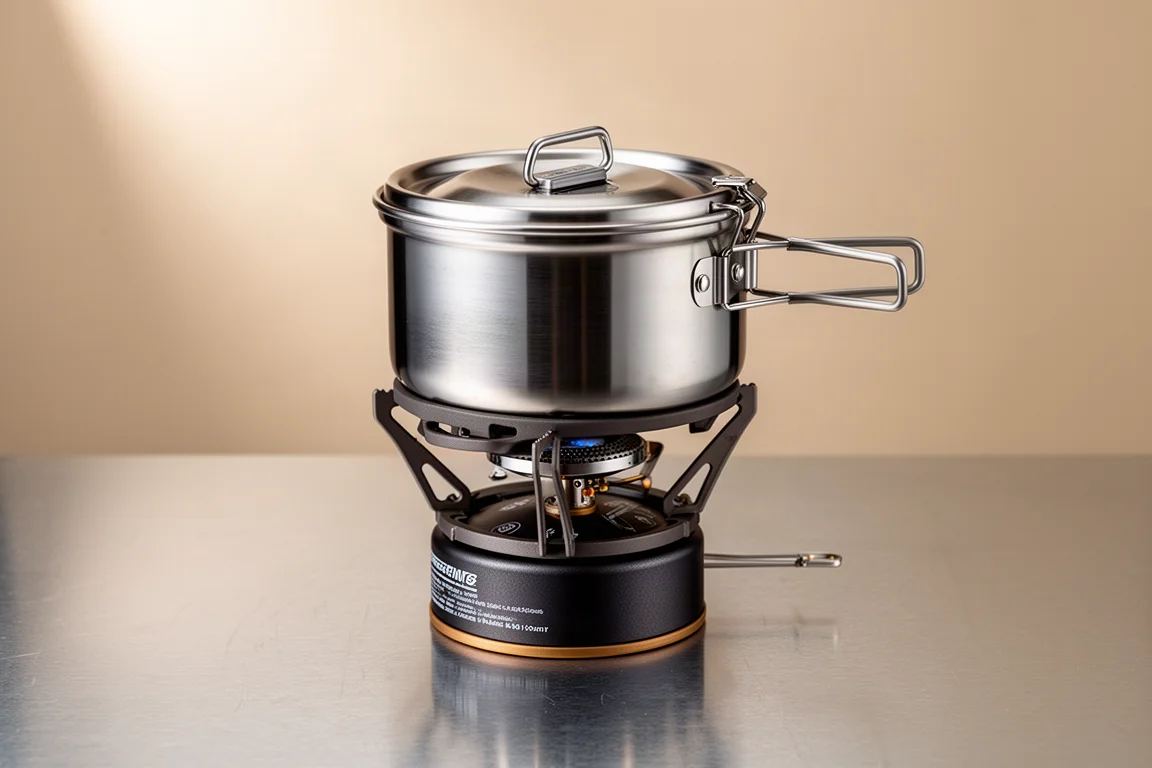
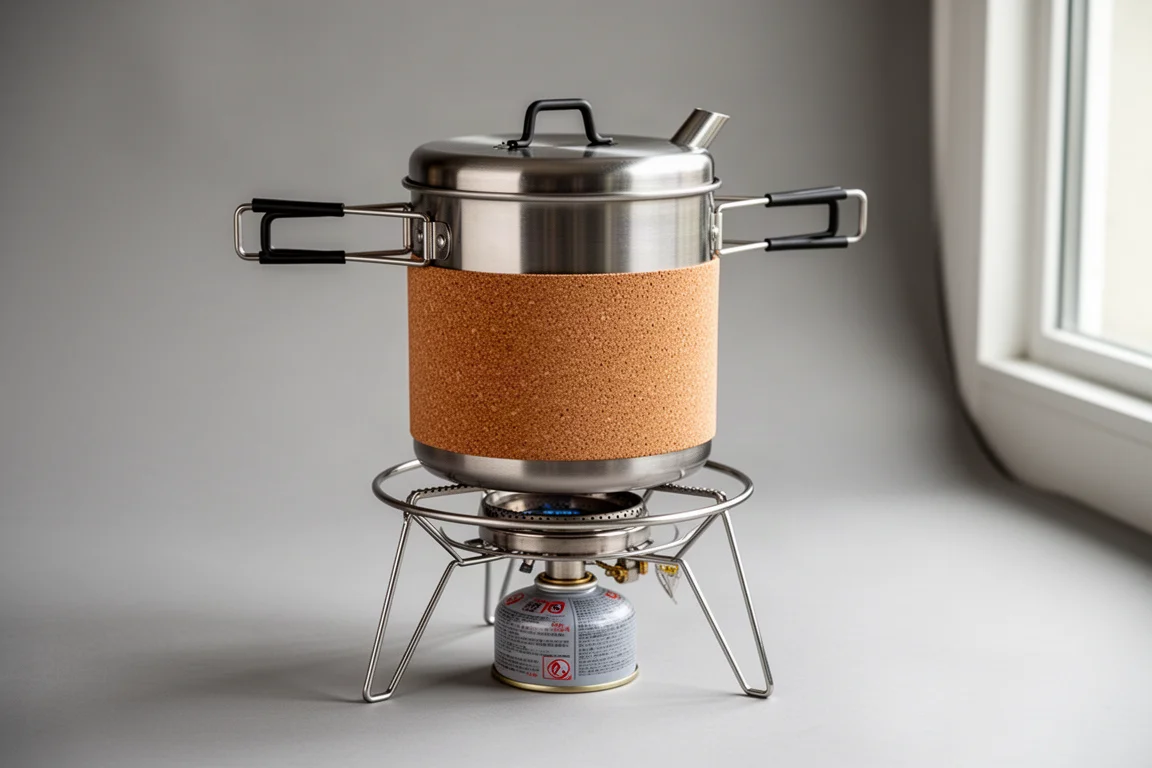
The WindBurner is an integrated stove system, and it is built for exactly the conditions on this trip. In gusty air it brought the same volume of water to a boil in roughly half the time the comparison system needed. Its burner and pot are designed as a matched pair, with the pot sitting down over the burner so the flame is shielded from moving air.
The trade-off of an integrated system is flexibility: you cook with the pot that comes with it rather than whatever happens to be in the pack. What the WindBurner does well is the thing it was designed for, and on a night when the wind never really dropped, that reliability was the difference between a hot meal and a long wait.
MSR Switch: An All-In-One That Struggled in the Wind
The Switch is positioned as a more affordable all-in-one option, though at $130 it is still expensive for a stove system. The interesting design choice is the curved base of the pot, which is meant to absorb more heat and pass it into the water instead of relying on a heat exchanger. The burner itself is essentially a Pocket Rocket 2 with a piezo igniter and a ring that supports the pot, and the system includes wind protection.
Side by side with the WindBurner, using the same volume of water in similar gusty conditions, the Switch took about five minutes and fifteen seconds to boil, roughly twice as long as the other stove. The wind was not extreme, with gusts perhaps reaching 10 to 15 km/h, which makes the gap harder to excuse in a system that appears to be designed for exposed cooking.
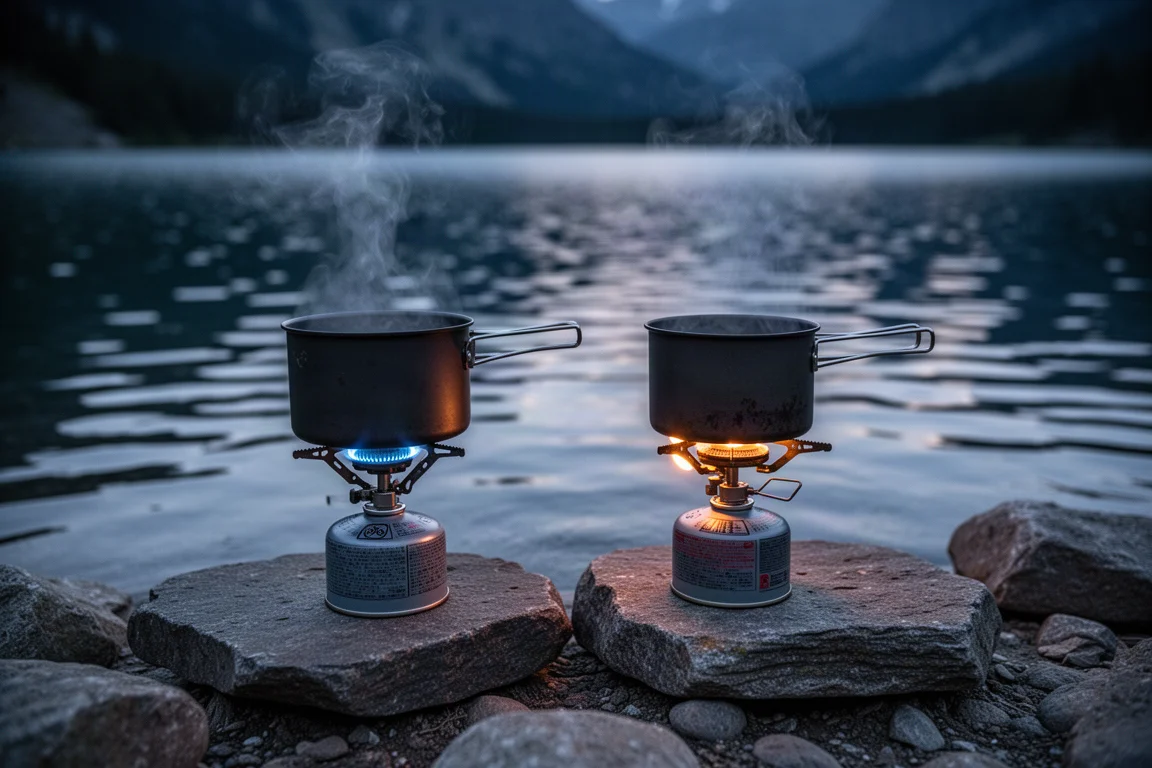
Add weight and price to that performance and the Switch becomes a hard recommendation. It is heavy enough that most backpackers would leave it at home, and there are cheaper options that boil faster. It may suit someone who wants a recognisable brand’s all-in-one kit at the lower end of that category’s pricing, but on this evidence it does not earn a place in a cold-weather kit.
Garmin inReach Messenger Plus: Pictures and Voice From the Backcountry
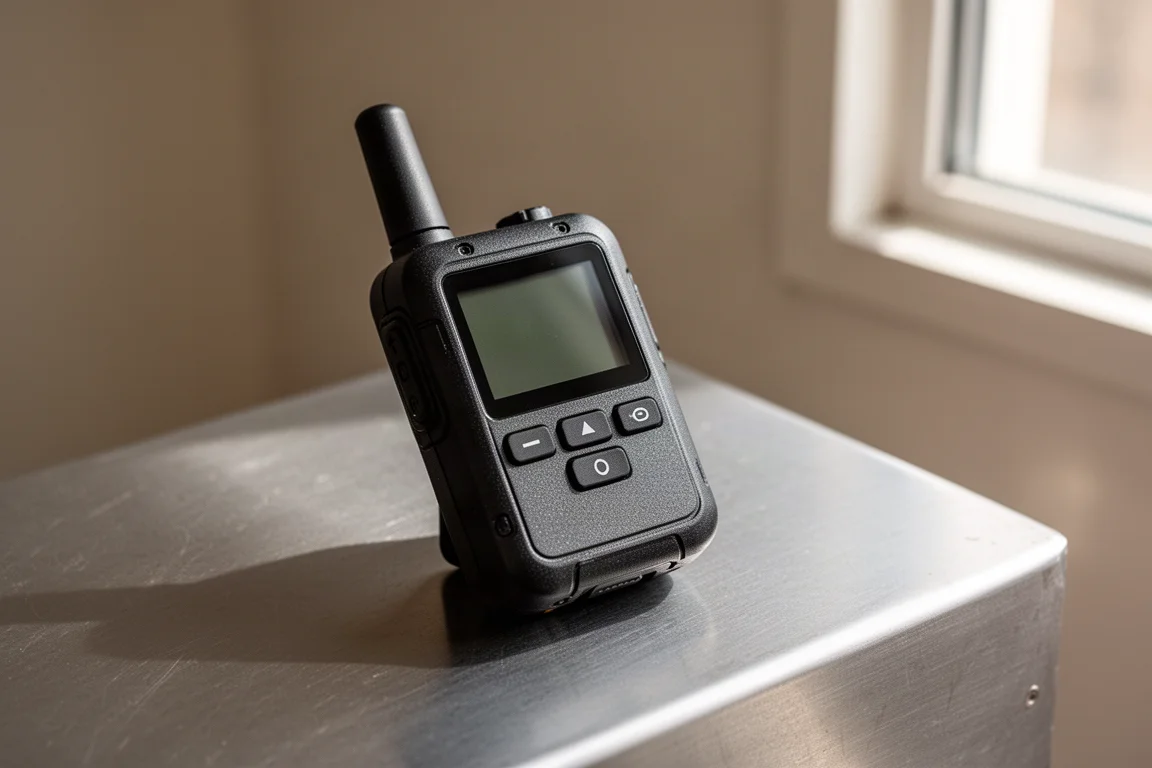
The Messenger Plus adds two capabilities to satellite messaging: photo messages and voice messages. Text messages travelled almost instantly. Photos took about five minutes each way, which is quicker than expected, and they arrive at roughly 0.5 to 1 megapixel. That is a long way below what a phone camera captures, but for viewing on a phone screen it is good enough.
The cost structure is worth understanding. The upfront price is around $200 more than the standard version, while the plan costs are the same. For most people the extra features will not justify that premium. For anyone who spends a lot of time out of signal range with family at home, though, being able to see a photo and send a voice message back is a different kind of value, and it is the reason this device stayed interesting throughout the trip.
Buying Advice
Cold and wind change what good gear means. A shelter that is easy to pitch in a backyard can become a wrestling match when the panels are being pushed sideways, and a stove that simmers nicely on a calm evening can lose a fight with a gust.
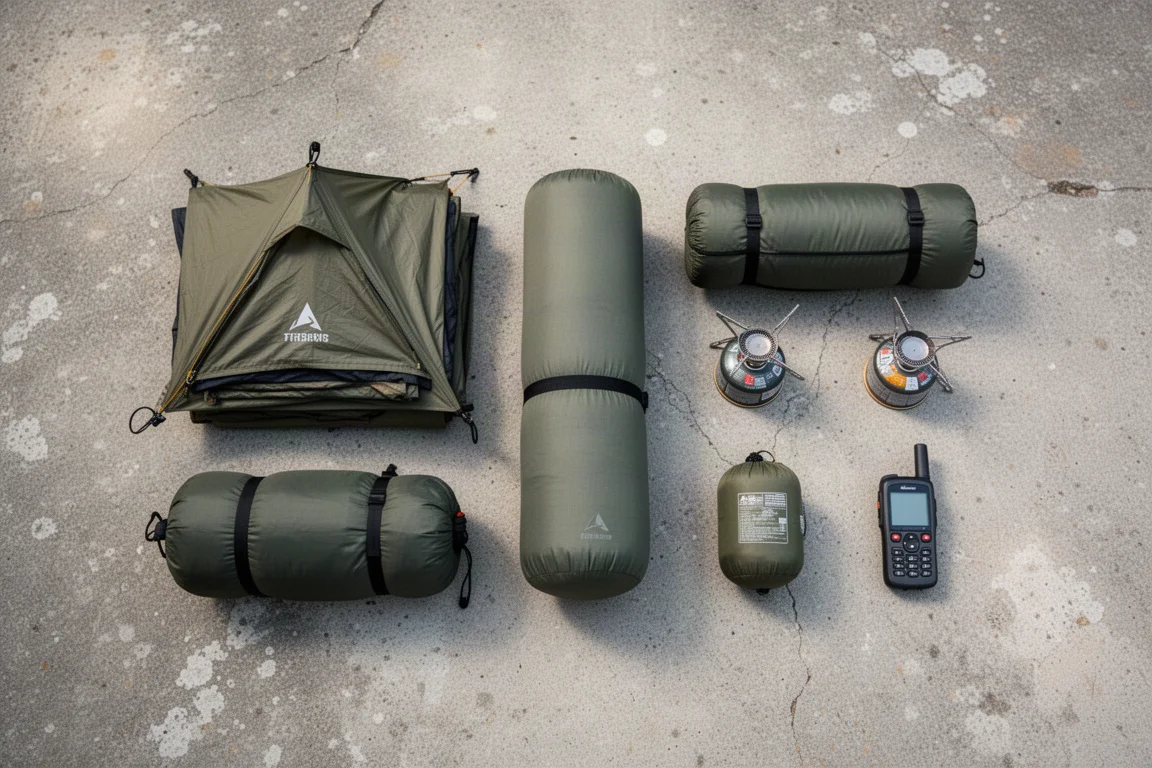
If you camp in exposed places and want one tent that covers shoulder season and winter, the Arc Dome is the most interesting piece here, provided you are willing to practise the sleeve system before you rely on it. If comfort at night matters more than pack weight, the NeoLoft is the clear standout. The Boost 650 is the right answer for anyone who wants one bag to handle a wide temperature range and does not mind carrying more of it. For cooking in wind, the WindBurner is the proven performer, while the Switch is difficult to recommend at its price and weight. The Messenger Plus is a narrower proposition: it earns its premium for people who travel often and want photos and voice messages from home, and it is harder to justify for occasional trips.
Conclusion
This was a trip built around one question: does gear designed for cold and wind actually perform when both arrive at once? The Arc Dome answered most convincingly, holding its shape through a night of strong gusts with only a third of its guy-out points deployed, even if its sleeve system and one failed guy-line hook show there is still polish to add. The NeoLoft and the Boost 650 both delivered warmth and comfort at the cost of weight. The WindBurner confirmed its reputation as the stove to trust in moving air, the Switch did not, and the Messenger Plus proved that photo and voice messaging from the backcountry works well enough to matter to the right person.
None of these pieces are for every camper. They are for the ones who camp where the weather is the point.
Further reading
Related Reviews
Camping Gear
3FUL Ultralight Ground Sheet Review: A Two-Person Footprint Worth Packing
A 6.7 oz two-person ground sheet in ripstop silnylon, priced around $30. Here is what it protects, what it does not do, and who should pack it.
Camping Gear
Backcountry Light Dual-Function Tarp and Floor Review: A Footprint First
A dual-purpose tent floor and tarp that keeps falling rain off you, but cannot block wind. Here is where it works and where it does not.
Camping Gear
Best 2-Person Camping Mattresses for Couples: 10 Options Compared
A practical comparison of ten two-person camping mattresses, covering self-inflating pads, air pads and air mattresses for couples.