Kitchen Appliances
Best Cold Press Juicers 2026: Four Top Models Tested and Compared
Four leading cold press juicers tested for juice yield, cleaning speed, and pulp content. Find the right juicer for your needs with real performance data.
Introduction
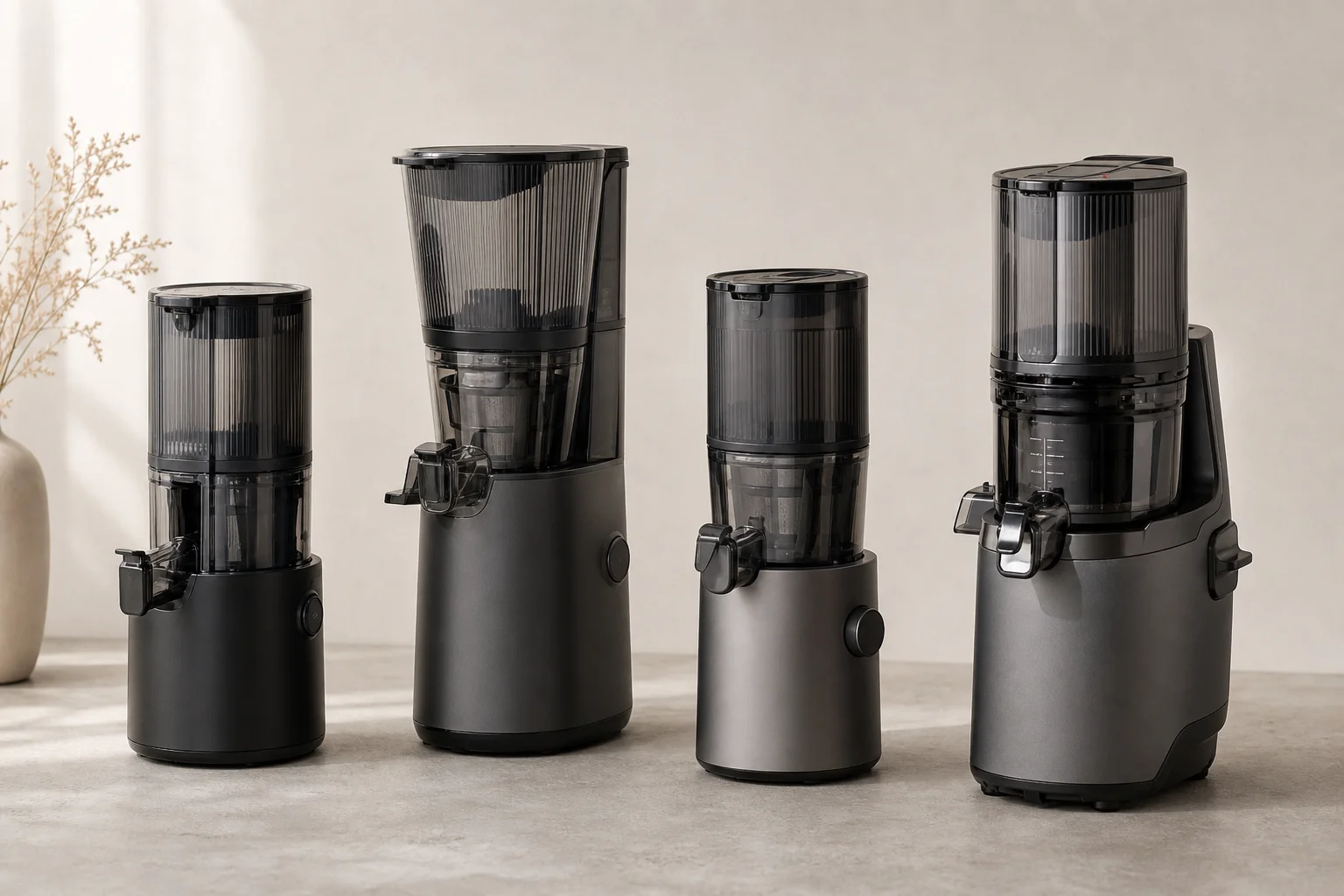
Finding the right cold press juicer means balancing cleaning convenience, juice quality, batch size, and cost. After testing the leading models from top brands, four juicers stand out for different reasons and budgets. This guide includes exclusive performance data on juice yield, cleaning speed, and pulp content to help you choose the best fit.
Hurom H400: Easy Clean Technology
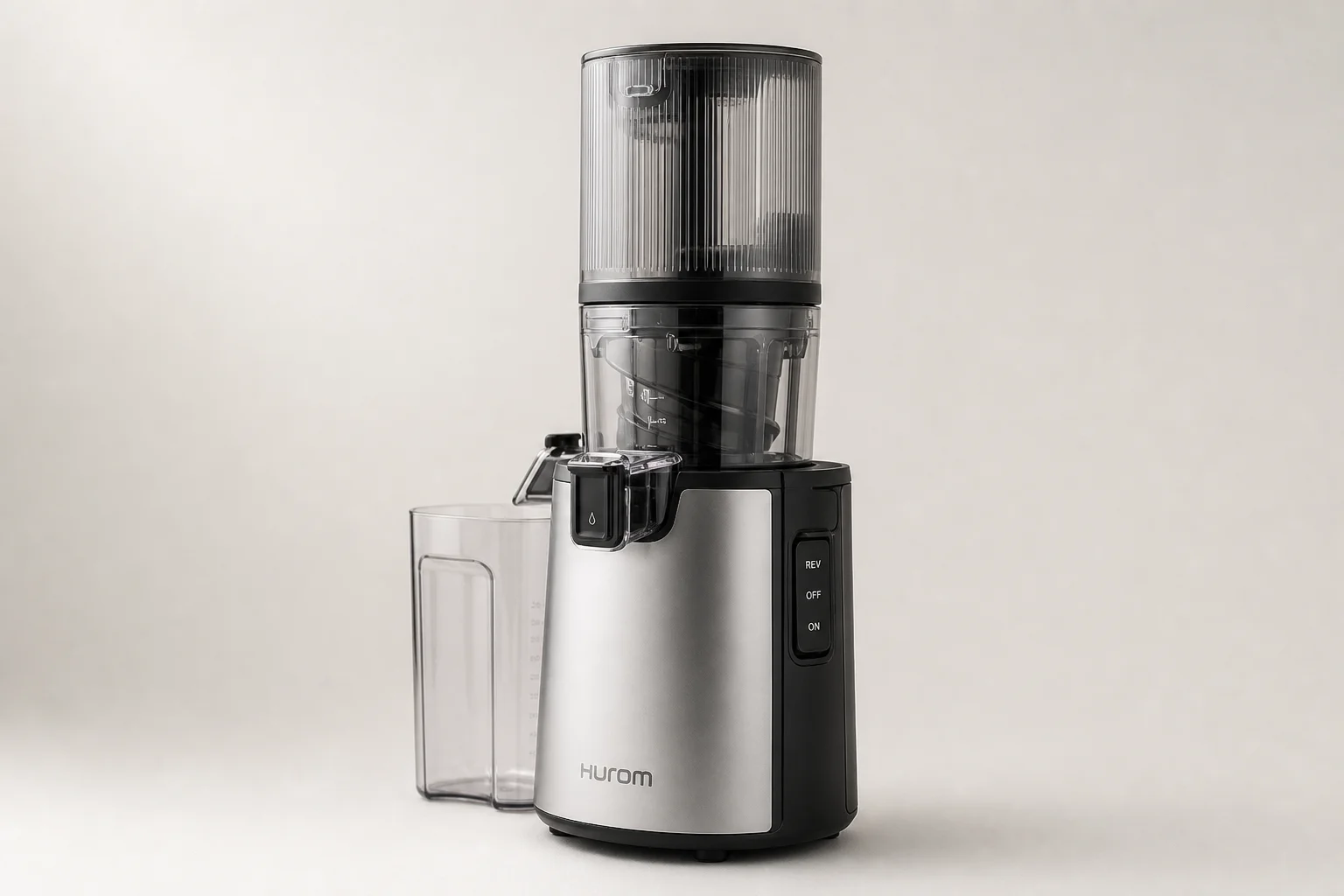
The Hurom H400 leads the pack for cleaning convenience. Its Easy Clean technology sets it apart from traditional cold press juicers that require scrubbing stainless steel screens. The auger pulls apart into two pieces and rinses clean in under 90 seconds with just water. No mess, no fuss.
The massive hopper accepts whole apples, entire celery stalks, and full oranges without pre-cutting. This means you can produce two to three cups of juice in a single batch, making it ideal for preparing juice for the entire week.
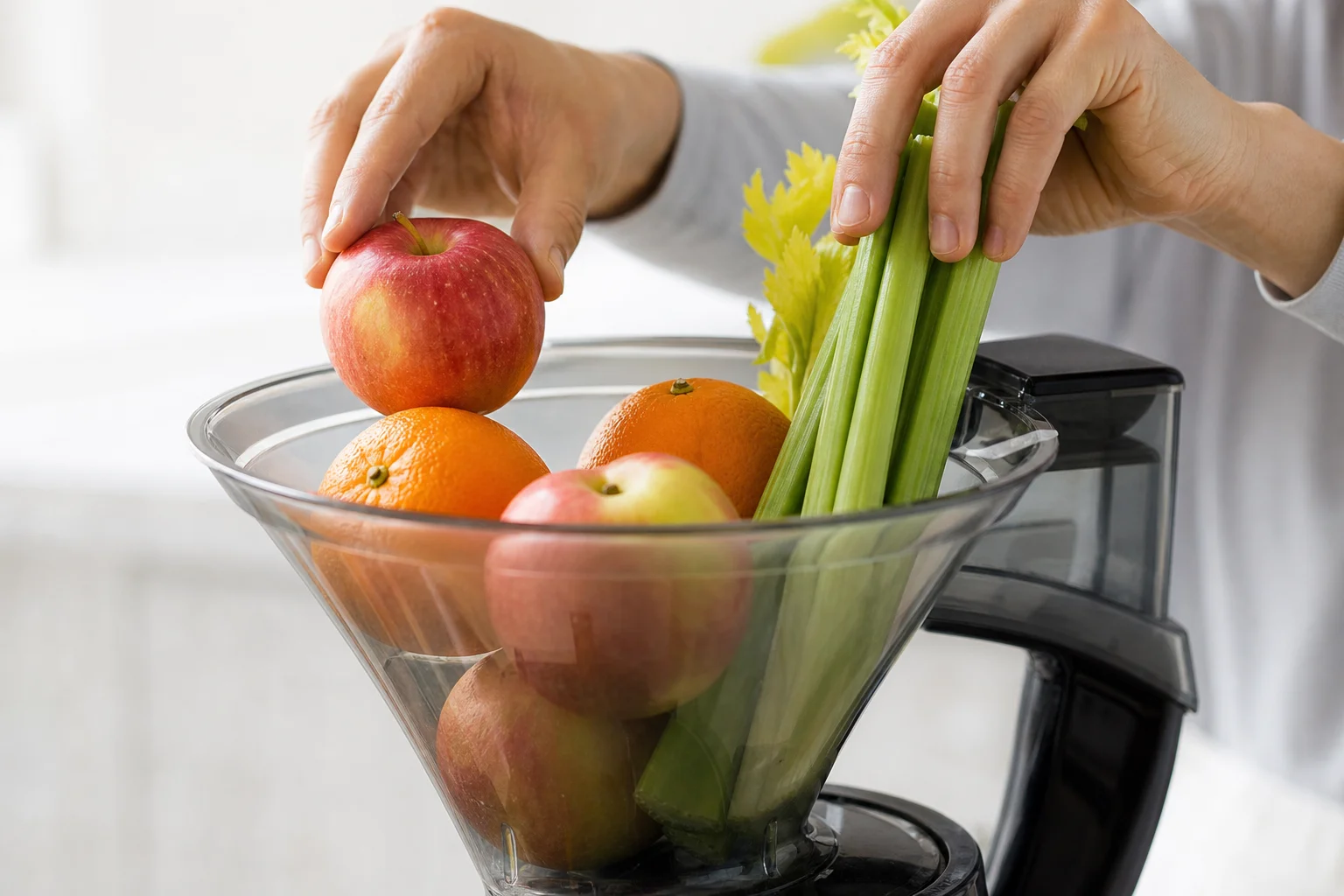
The trade-off is that the H400 leaves slightly more pulp in the juice compared to models using stainless steel screens. For most users, this is not a deal-breaker given the dramatic time savings during cleanup. The pulp container attaches directly to the machine, keeping your counter organized.
Nama J2: Quiet Performance and Customization
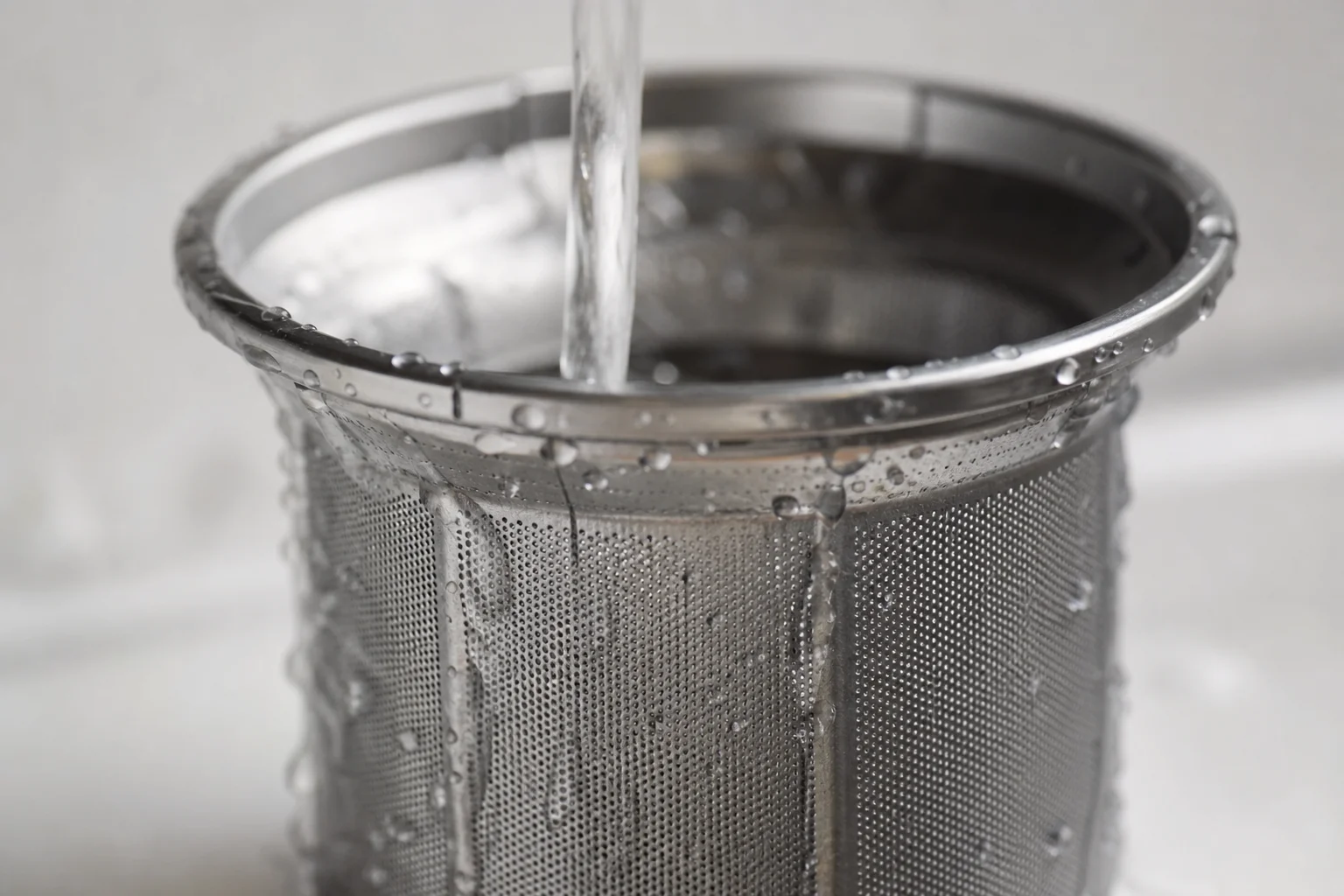
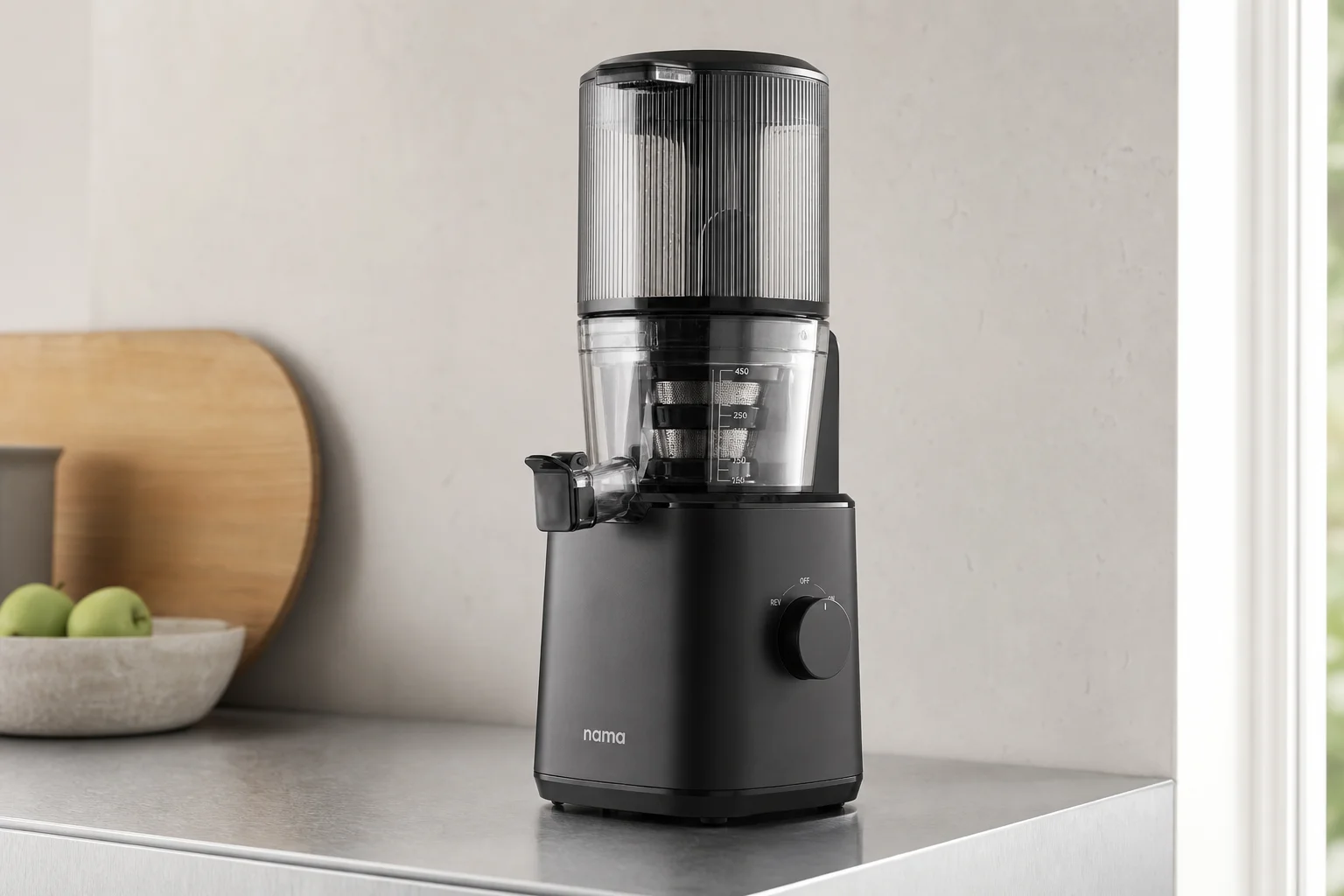
The Nama J2 has become a popular choice, partly due to strong marketing but also because it genuinely delivers. It produces two to three cups of juice per batch and operates as the quietest machine in this comparison. The J2 uses a traditional stainless steel juicing screen, which means higher yields and lower pulp content than the H400, but requires more thorough cleaning.
What makes the J2 stand out is its ecosystem of add-ons and accessories. You can add a sorbet maker, expand the hopper capacity, upgrade to premium juice bottles with built-in strainers, or attach a stainless steel citrus juicer on top. This modular approach lets you customize your juicing journey without buying an entirely new machine.
The J2 costs about $150 less than most premium cold press juicers, and the ability to add features over time makes it a smart long-term investment. The juice bottles feel premium, and the included accessories suggest thoughtful design.
Hurom H70: The Compact Alternative
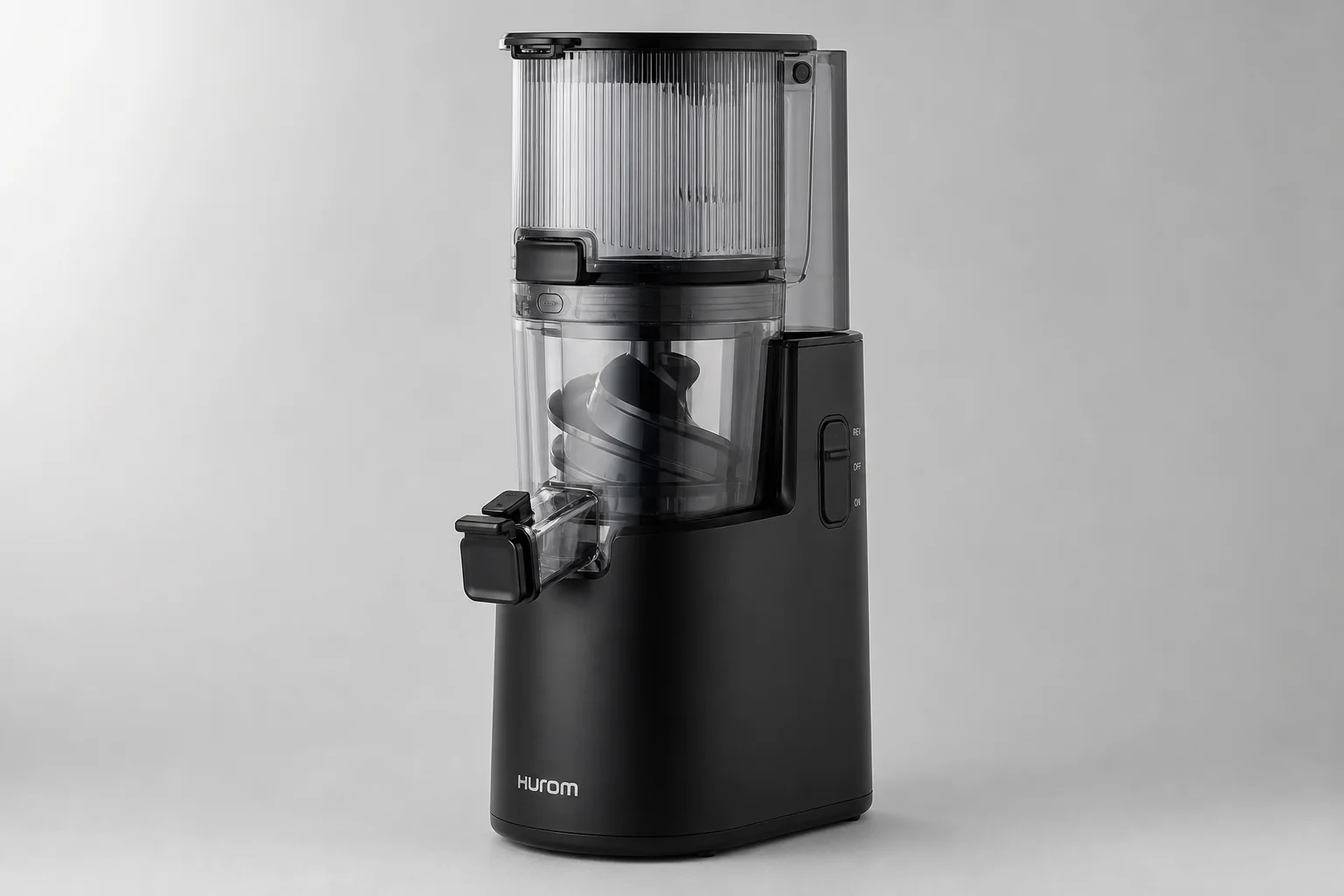
The Hurom H70 is the smaller sibling to the H400 and often overlooked, yet it may offer the best value. It shares the same Easy Clean technology as the H400, meaning cleanup takes roughly one minute with just water and no scrubbing. In testing, the H70 was the fastest to clean of all four machines.
The catch is a smaller hopper that produces about two cups maximum per batch instead of the H400’s two to three cups. The H70 is also more compact and does not include an attached pulp container, requiring a bit more counter management. At $100 less than the H400, these trade-offs may not matter if you prioritize speed and convenience over batch size.
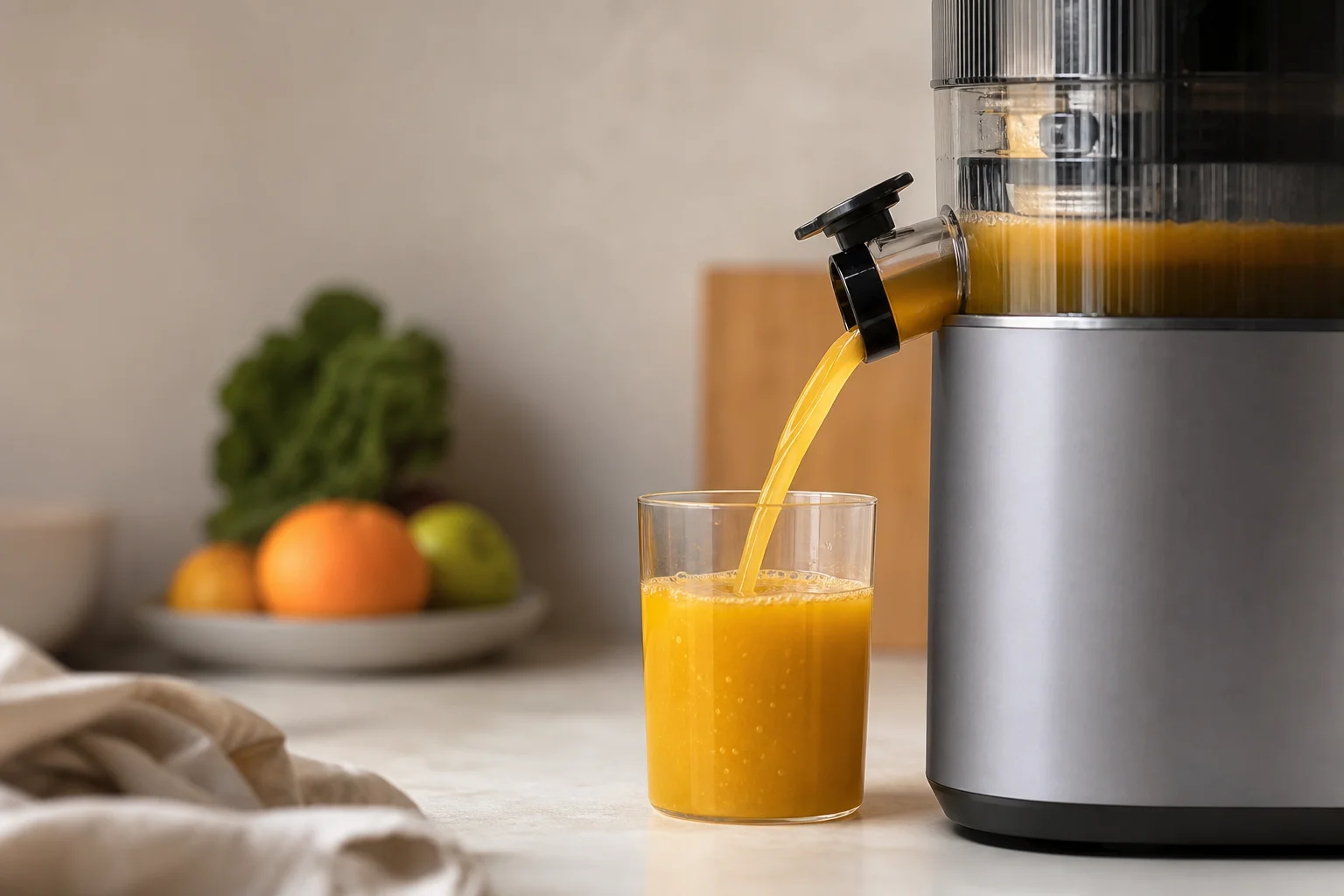
The H70 works well for juice shots, sorbet, and regular batch juicing. If you do not need to make large quantities at once, this juicer delivers the same cleaning advantage as its larger sibling at a lower price.
Kuvings AUTO10: Power and Capacity
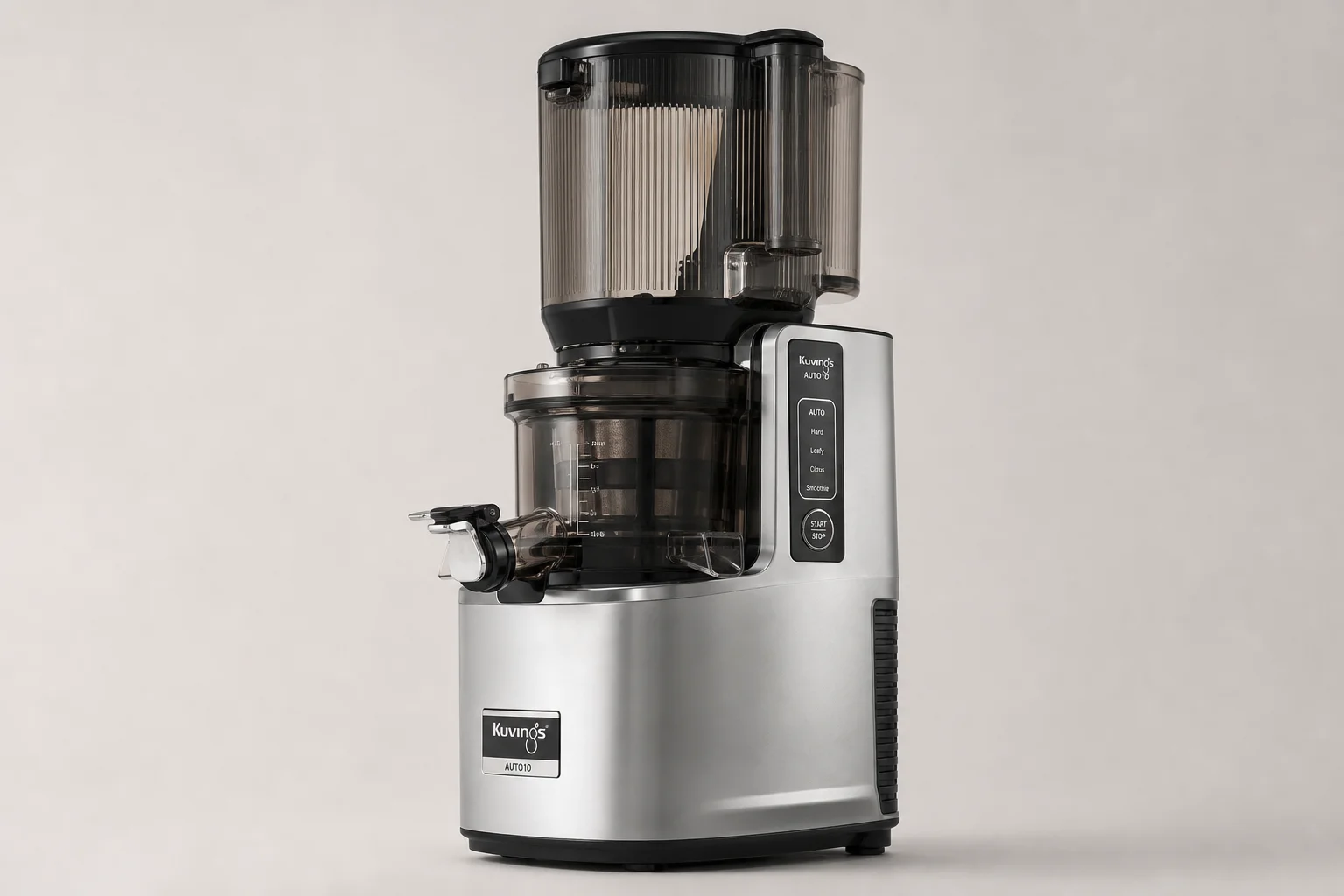
The Kuvings AUTO10 is one of the most expensive juicers on this list and built like a tank. It claims the largest hopper on the market at nearly 100 ounces, though the Nama J2 with its large hopper add-on comes close at about 95 ounces. The AUTO10’s real strength is raw power: it can run continuously for 60 minutes without stopping, capable of producing roughly 120 cups of juice in a single hour.
This power comes with trade-offs. At 16.5 pounds, it is one of the heaviest machines, especially compared to the J2 at 12 pounds. It also runs louder at 76 decibels versus the low 60s for other models. Cleanup is not as fast or simple as the H400 or H70, and it sits between home and commercial use in terms of design.
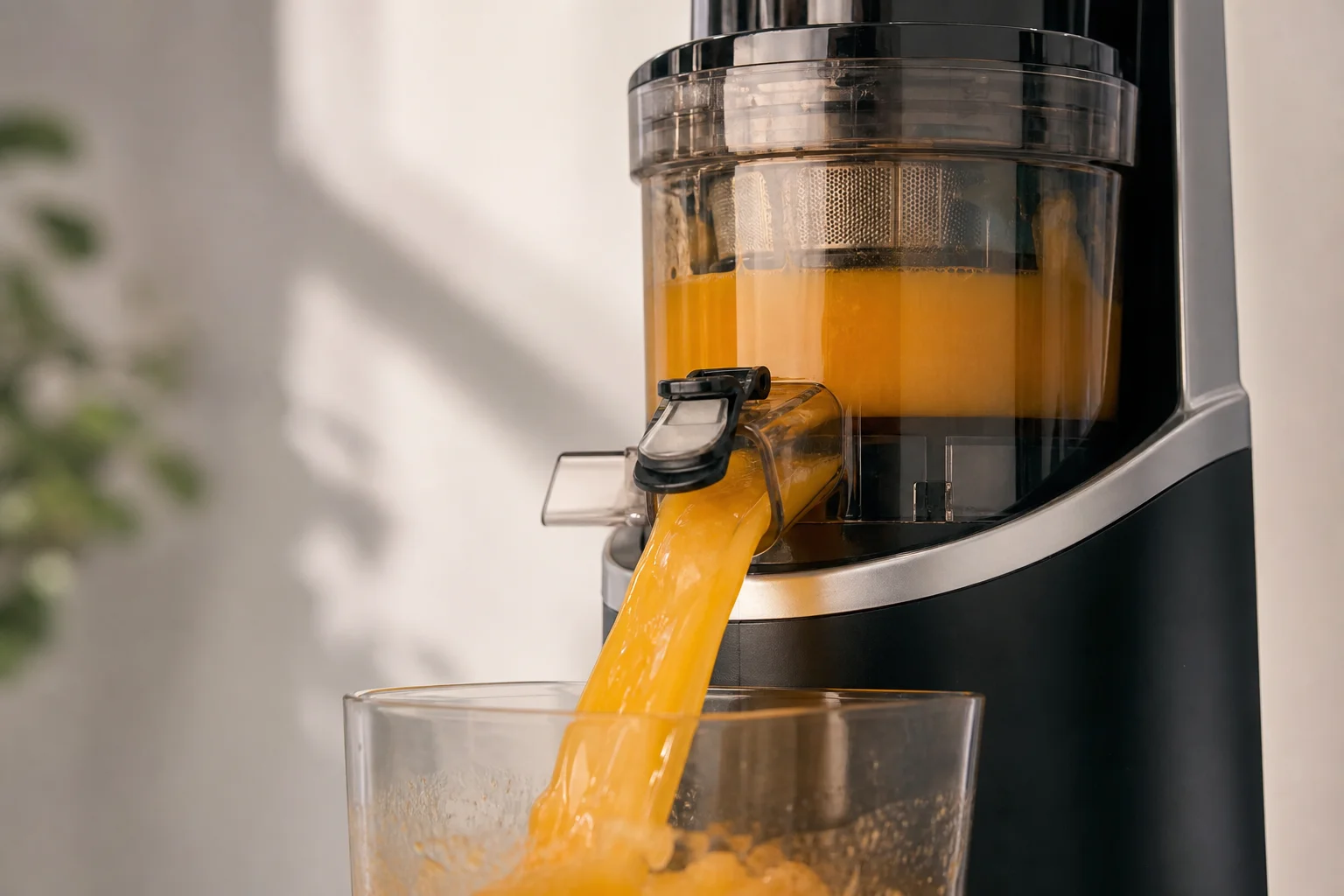
The AUTO10 is a solid machine, but most home users do not need to juice continuously for an hour. The J2 offers quieter operation, lower cost, and comparable yields with the large hopper add-on. An AUTO10 Plus variant adds a steel chopping blade and expands the hopper to 135 ounces for an extra $40, but the base model remains the better choice for most households.
Performance Data and Recommendations
Testing revealed clear patterns in juice yield, cleaning speed, and pulp content. The H400 excels with celery, while the AUTO10 dominates with ginger. The J2 and H70 offer the most balanced yields across different produce types. Pulp content favors the J2 and AUTO10, while the H70 and H400 leave slightly more pulp due to their Easy Clean design.
For lightning-fast cleanup and solid juice quality, the H70 is the best value. For ultra-low pulp, a larger hopper, and a customizable accessory ecosystem at a mid-range price, the Nama J2 stands out. Both deliver excellent results without the premium price tag of the AUTO10 or the higher pulp of the H400.
Conclusion
The best cold press juicer depends on your priorities. If cleaning speed matters most, choose the H70. If you want the lowest pulp and room to grow with add-ons, the J2 is the smarter pick. The H400 suits those who want the largest batches with easy cleanup, while the AUTO10 appeals to serious enthusiasts or small commercial operations. Check the links below for current discounts on all four models.
Further reading
Related Reviews
Kitchen Appliances
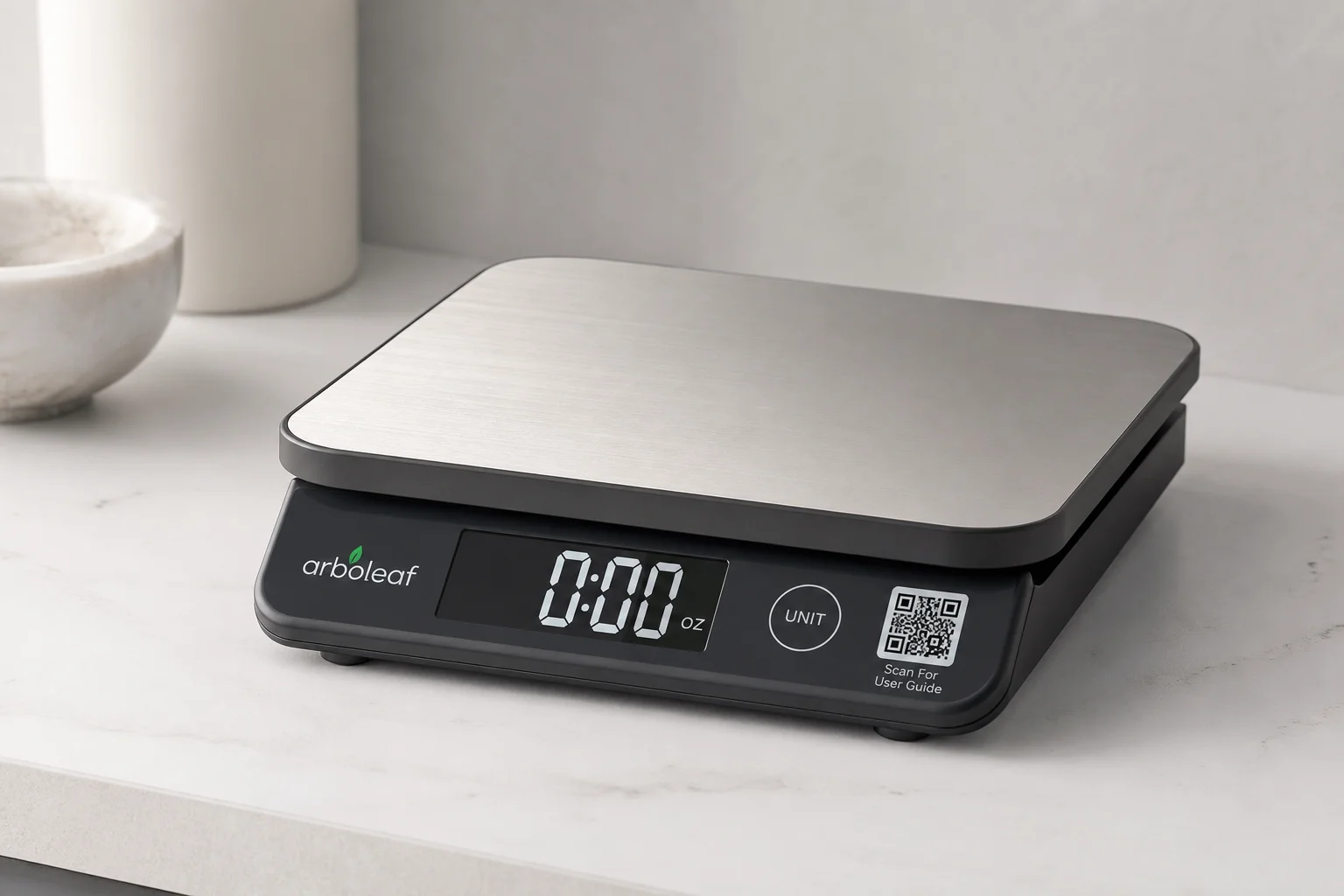
Arboleaf Smart Kitchen Scale Review: Connected Cooking Made Simple
A Bluetooth-enabled kitchen scale that syncs with a nutrition-tracking app, offering real-time weight monitoring and recipe guidance for home cooks.
Kitchen Appliances
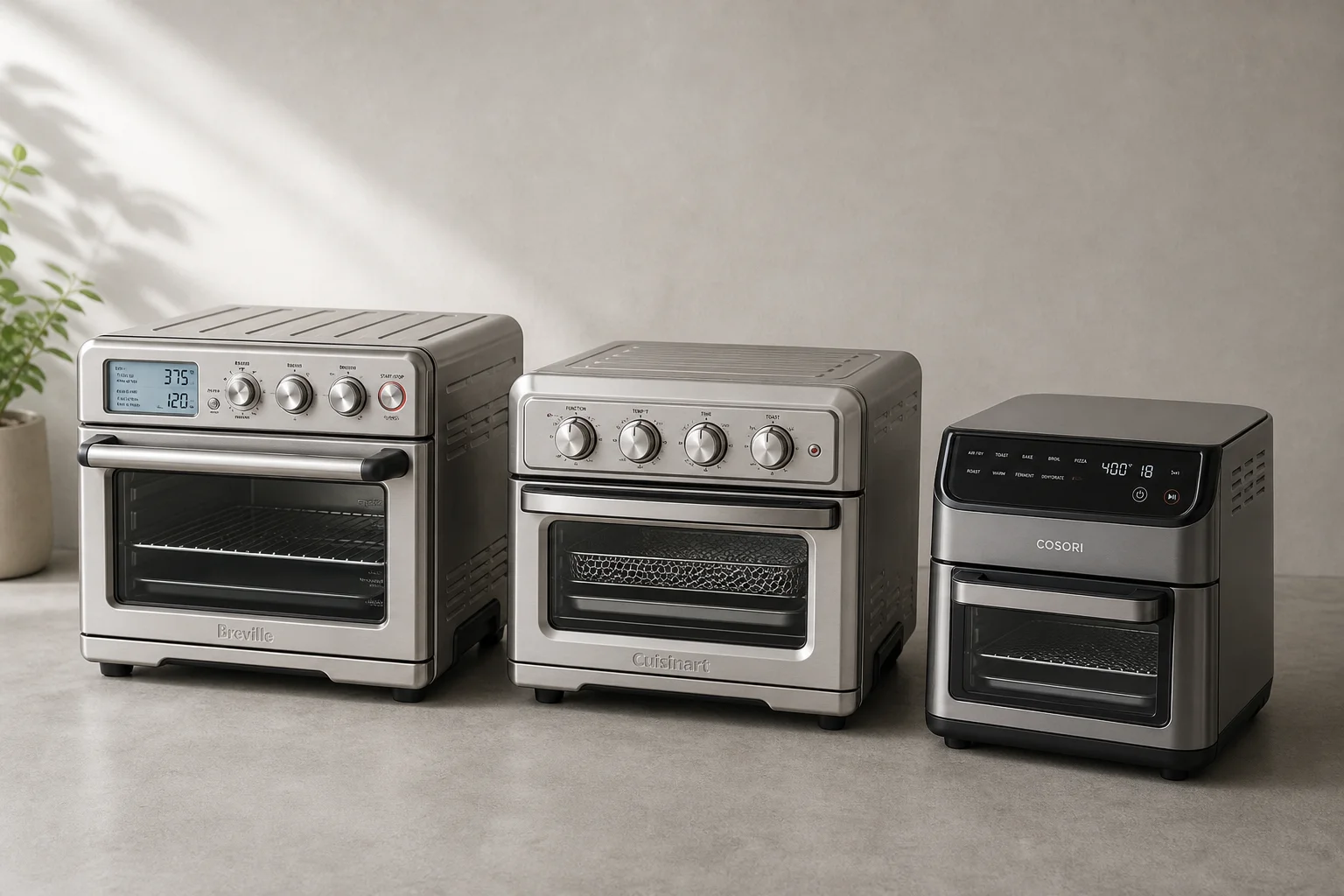
Best Air Fryer Toaster Ovens: Three Top Picks for Multi-Function Cooking
Three high-performing air fryer toaster ovens tested for versatility, ease of use, and real-world cooking results. Find the right fit for your kitchen.
Kitchen Appliances
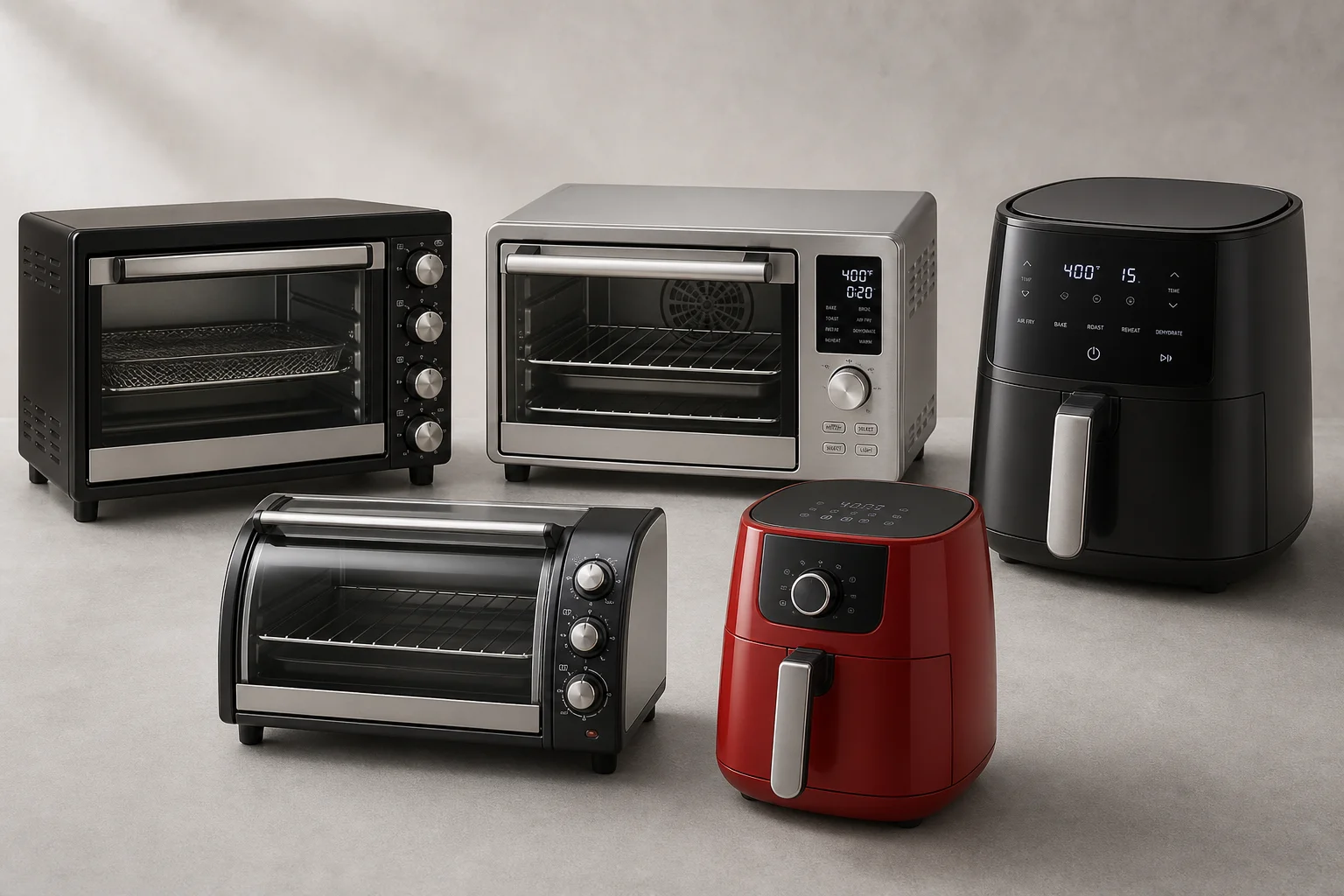
Best Air Fryer Toaster Ovens Under 100: Five Practical Options for Budget-Conscious Kitchens
Five air fryer and toaster oven combinations that deliver real cooking performance without breaking the bank, each with distinct strengths for different kitchen needs.